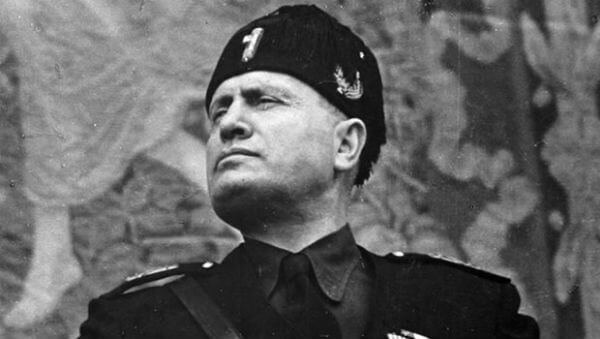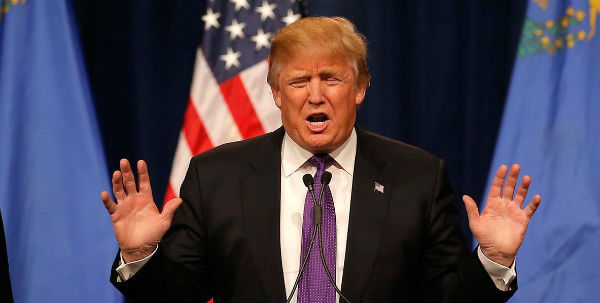
Jeffrey Herf writes: Is Donald Trump, now with the results of Super Tuesday the Republican presidential nominee-apparent, a fascist? It is stunning even to pose the question in the context of a national-scale American election, but many people are posing it, and they are not entirely wrong to do so. The short answer to the question is “no, but.” But the “but” begs an historically tutored explanation, the conclusion to which should not make us feel too good about the “no” part of the answer.
When an historian asks a question like this, methodological fragilities rush to consciousness. Context is critical, so much so that in some ways it is impossible to state in any simple fashion what the similarities and differences are between Donald Trump and the fascist and Nazi dictators of Europe’s 20th century. But we can sketch out the domains in which a comparison might make sense. Those domains include, most prominently, attitudes toward democracy, political violence, press freedoms, and the role of the state within society and culture.
When Trump asserts that politicians are “all talk and no action” he casts doubt on a great virtue of elected legislatures in democracies—namely, the creation of a public sphere in which people with divergent views can talk with and to one another. Trump does not, as Hitler and Mussolini did, openly denounce the institutions of liberal democracy. Yet like them he accuses those institutions of failing to adequately address political and economic crises. The classic dictators denounced democracy itself, especially the peaceful democratic competition among political parties, as a formula for national weakness. Trump has not done so, but his dictatorial personality suggests that he can do singlehandedly what American political institutions have failed to do for many years running. [Continue reading…]
Category Archives: 2016 President Election
Limit the next president’s power to wage drone warfare
Jameel Jaffer and Brett Max Kaufman write: When Barack Obama took office as the reluctant heir to George W. Bush’s “war on terror,” he renounced some of his predecessor’s most extreme policies. There is one Bush-era policy, though, that President Obama made emphatically his own: the summary killing of suspected militants and terrorists, usually by drone.
In less than a year, the president will bequeath this policy, and the sweeping legal claims that underlie it, to someone who may see the world very differently from him. Before that happens, he should bring the drone campaign out of the shadows and do what he can to constrain the power he unleashed.
President Bush started the drone wars, but Mr. Obama vastly expanded them. Almost entirely on his watch, United States strikes have killed as many as 5,000 people, possibly 1,000 of them civilians. The president approved strikes in places far from combat zones. He authorized the C.I.A. to carry out “signature strikes” aimed at people whose identities the agency did not know but whose activities supposedly suggested militancy. He approved the deliberate killing of an American, Anwar al-Awlaki.
The president also oversaw an aggressive effort to control the public narrative about drone strikes. Even as senior officials selectively disclosed information to the news media, his administration resisted Freedom of Information Act lawsuits, arguing that national security would be harmed if the government confirmed drone strikes were taking place. [Continue reading…]
From Trump to Merkel: How the world is divided between fear and openness

Ulrich Speck writes: Two major concepts define the political struggle in the west today. One can be termed “globalism”, which is currently most prominently represented by the German chancellor, Angela Merkel. The other is “territorialism”, a view that the very likely Republican candidate for the US elections in November, Donald Trump, represents.
At the core of the debate is the meaning of borders: should they be porous or tightly controlled? Are they mainly an obstacle to the free and productive flow of ideas, people, goods and information and should therefore be largely dismantled? Or are massive borders welcome and indispensable as a protection against all kinds of real or perceived threats such as competition and terrorism?
For globalists such as Merkel, interconnectedness is a good thing because it is what drives progress towards more prosperity and freedom everywhere. For territorialists such as Trump, interconnectedness is mainly a threat. What is good and healthy is attributed to the natives and what is dangerous comes from outside: unfair Chinese competition, dangerous Mexican immigrants and Middle Eastern terrorists. [Continue reading…]
The violence Trump incites
Peter Beinart writes: Asked last August about a Bernie Sanders event in which Black Lives Matters protesters spoke at length from the stage, Trump called the senator from Vermont’s response “disgusting.” He added: “That will never happen with me! I don’t know if I’ll do the fighting myself or other people will, but that was a disgrace. I felt badly for him. But it showed that he was weak. Believe me, that’s not going to happen to Trump.”
It’s no coincidence that Trump raised the specter of violence. The Black Lives Matter disruptions had been peaceful. But as Trump’s campaign took off in the summer and fall of last year, he began depicting entire categories of overwhelmingly peaceful people as a physical threat. Undocumented Mexican immigrants were potential “rapists.” Syrian refugees were “strong, powerful men” who might be a “trojan horse” for ISIS.
Trump’s supporters exhibit high levels of what political scientists call “authoritarianism.” Authoritarians are unusually fearful of disorder and favor simple, brutal methods of quashing it. As Amanda Taub has noted, “When many Americans perceived imminent physical threats, the population of authoritarians could seem to swell rapidly.” So by fanning popular fears of chaos, especially violent chaos, Trump wins yet more votes.
He does this, in part, by turning his treatment of the activists who seek to disrupt his events into a parable for how he would restore order in society at large. [Continue reading…]
Trump on ISIS: ‘You have to play the game the way they’re playing the game’
When the Bush administration developed its torture program, it deployed legal arguments to obscure the fact that the techniques being used, such as waterboarding, were indeed forms of torture.
Where it appears to have been non-deceptive was in claiming that the purpose — ill-conceived as this might have been — was gathering intelligence. (Abu Graib, on the other hand, demonstrated the inevitable proliferation of abuse that followed from presidentially sanctioned torture.)
The use of extreme methods was justified, the proponents of what were euphemistically described as “harsh interrogation techniques” said, because of the magnitude of threat posed by terrorist plots.
In contrast, when Donald Trump talks about torture and about reducing the legal restrictions on what is currently permitted, he’s not talking about interrogation. He’s talking about the use of torture as a weapon of intimidation.
ISIS doesn’t decapitate its captives in order to extract information. It’s use of brutality is designed to intimidate its opponents and to force populations into submission.
Like ISIS, Trump sees all things in terms of the power dynamics of domination.
Since brutality has been one of the most effective weapons in ISIS’s arsenal, when Trump says, “You have to play the game the way they’re playing the game,” he is arguing that the United States needs to become as capable of provoking terror as are any of the terrorists it wants to combat.
The Donald Trump show
Trump admires leaders like Putin — even if they murder their opponents
Leon Neyfakh writes: Marco Rubio attacked Donald Trump at Thursday’s debate for expressing admiration for Vladimir Putin. “Wrong, wrong, wrong!” Trump said, before explaining that it had been the other way around.
“Putin said about me — I didn’t say about Putin — Putin said very nice things about me. And I say, very nicely, ‘Wouldn’t it be nice if actually we could get along with Russia?’ ”
First of all, Trump has most certainly spoken glowingly about Putin. In December 2015, on MSNBC’s Morning Joe, he said, “I’ve always felt fine about Putin. He’s a strong leader, he’s a powerful leader. … He’s actually got popularity within his country.”
Trump was impressed with Putin’s popularity: “I think he’s up in the 80s. You see where Obama’s in the 30s and low 40s and [Putin’s] up in the 80s.”
Morning Joe host Joe Scarborough brought up the fact that Putin has been accused of ordering the killing of journalists and political rivals. “He’s running his country, and at least he’s a leader, unlike what we have in this country,” Trump replied. [Continue reading…]
Russian ultranationalist Aleksandr Dugin: ‘Vote for Trump’
At the Russian site, Katehon.com, the ultranationalist ideologue, Aleksandr Dugin, writes:
[Donald Trump] is an extremely successful ordinary American. He is crude America, without gloss and the globalist elite. He is sometimes disgusting and violent, but he is what he is. It is true America.
Most likely, Donald Trump is another designed product, a virtual figure. However, it is him who makes people feel fresh and hopeful. He is trustworthy: the black peacekeeper promised to change everything, but was unable to change anything, nothing at all, and Hilary Clinton, with a quickly aging poker face, doesn’t promise to change anything, maybe Trump will be able to get America’s natural borders back.
Maybe, that redhead rude Yankee from the saloon will get back to the problems inside the country and will leave humanity alone, which is tired of American hegemony and its destructive policy of chaos, bloody rivers and color revolutions?
Trump is a leader. Most likely, he is fake, but even if he is not fake, he has no chance of winning, as the globalist elites and financial oligarchy control practically everything in the USA.
But we want to put trust in Donald Trump.
Vote for Trump, and see what will happen.
[I]n spring 2015, when I traveled to Moscow, I found the once-triumphant Duginists and ultranationalists no longer saw Putin as an ally, and even considered him a traitor to the cause. Some had been pressured by security services, which they took as a sign that their views were no longer tolerated. Meanwhile, Putin had largely dropped his grand Eurasianist rhetoric.
In retrospect, it seems likely that Putin’s short-lived embrace of Duginism was opportunistic and superficial. In other words, Putin decided to invade Ukraine for narrow political reasons, then reached for Eurasianism and neo-imperialism in order to justify his actions and to whip up public support.
But when Putin’s Novorossiya project floundered — his actions in eastern Ukraine succeeded in destabilizing the country but not in dominating it outright — he shifted strategies, seeking to maintain a low-level conflict rather than to escalate. The neo-imperialist ideological justifications no longer fit the strategy. And far-right movements, newly empowered, were pushing Putin to go further than he wanted to. So Putin turned on them.
It turned out that Dugin’s apparent importance to the Kremlin’s ideology had been overstated. This is not to criticize those who considered Dugin important — it was a reasonable conclusion to draw at the time — but rather just to say that we now know Dugin’s ideas were never all that important, and that today he is at the nadir of his influence.
Therefore, we should probably not conclude that Dugin’s Trump endorsement tells us anything useful about the Kremlin’s view of the US presidential race. It’s true that Trump has praised Putin and that Putin has returned the favor, but Trump likely appeals to these two Russians on different grounds and for different reasons.
Donald Trump embodies how great republics meet their end

Martin Wolf writes: In creating the American republic, the founding fathers were aware of the example of Rome. Alexander Hamilton argued in the Federalist Papers that the new republic would need an “energetic executive”. He noted that Rome itself, with its careful duplication of magistracies, depended in its hours of need on the grant of absolute, albeit temporary, power to one man, called a “dictator”.
The US would have no such office. Instead, it would have a unitary executive: the president as elected monarch. The president has limited, but great, authority. For Hamilton, the danger of overweening power would be contained by “first, a due dependence on the people, secondly, a due responsibility”.
During the first century BC, the wealth of empire destabilised the Roman republic. In the end, Augustus, heir of the popular party, terminated the republic and installed himself as emperor. He did so by preserving all the forms of the republic, while he dispensed with their meaning.
It is rash to assume constitutional constraints would survive the presidency of someone elected because he neither understands nor believes in them. Rounding up and deporting 11m people is an immense coercive enterprise. Would a president elected to achieve this be prevented and, if so, by whom? What are we to make of Mr Trump’s enthusiasm for the barbarities of torture? Would he find people willing to carry out his desires or not?
It is not difficult for a determined leader to do the previously unthinkable by appealing to conditions of emergency. Both Abraham Lincoln and Franklin Delano Roosevelt did some extraordinary things in wartime. But these men knew limits. Would Mr Trump also know limits? Hamilton’s “energetic” executive is dangerous. [Continue reading…]
The white supremacists fully emboldened and energized by Trump
The full story of the white supremacists who assaulted this Black student at a Trump rally.https://t.co/WPywX72tVOhttps://t.co/vpJrCxH1bP
— Shaun King (@ShaunKing) March 2, 2016
Shaun King reports: On Monday, 30 black students attending a Donald Trump rally at Valdosta State University in rural Georgia were forcefully ejected — simply for being black.
On Tuesday, in Louisville, Kentucky, what happened to young black protestors at another Trump rally wasn’t just racist — it appears to be outright criminal.
While we have already widely reported that white supremacists are openly proclaiming that they are fully emboldened and energized by Trump, the natural progression of their romance with Trump is now on full display.
A man wearing a make America great again hat — thought to be Matthew Heimbach, a leader of the Traditionalist Worker Party — can be seen next to a protestor at the Trump rally in Louisville.
While Trump was giving his typical campaign speech about making America great again, several different predominantly black groups of protestors, who were simply there to hold up signs, began having those signs snatched and getting cursed by the white Trump supporters surrounding them.We now know that those Trump supporters are open bigots, Neo-Nazi’s, and white supremacists belonging to many different groups including the Traditionalist Worker Party — a well-documented hate group. Their social media profiles are full of Nazi photos, KKK and white supremacist references, and some of the most insulting, despicable hate speech you’ll ever see. [Continue reading…]
As Europe falls apart, America clowns around
Fred Hiatt writes from Adasevci, Serbia: It is hard to watch the desperate, dignified families huddling around the phone-charging stations in the government shelter in this Balkan village as the clownish spectacle of a presidential campaign unfolds at home.
Foot soldiers of misery, they tumble out of buses and their first request is not for water, food or diapers. They have been on the move for weeks, in some cases months, and they need to connect — with relatives they’ve left behind and may never see again, with comrades who can relay rumors on the dangers of the road ahead.
They are escaping the wreckage of entire countries. A million have washed into Europe in the past year, and another million are on the threshold. The continent’s leaders see the mass migration as their starkest test since World War II. Far-right xenophobic parties are on the rise. Longtime commitments to free speech, tolerance and open borders are eroding. Many of the leaders despair at the absence of U.S. leadership and the rise of Russian meddling.
Whatever your politics, you cannot fail to grasp that the problems are deadly serious, and any remedies complex and elusive. Meanwhile, the Republican presidential debates unfold like some grotesque game of playground taunting, with real problems, to the extent they are discussed at all, presented as amenable to easy solution. [Continue reading…]
Bernie Sanders might be discouraging his own supporters from voting
Jake Flanagin writes: Voters go to the polls for the issues they care about most — right?
For Bernie Sanders, things may not be so simple. The Vermont senator’s campaign to highlight income inequality and the pervasive influence of Big Money in politics may be inadvertently suppressing the very votes he needs to defeat Hillary Clinton in the Democratic presidential primary.
Adam Seth Levine, an assistant professor of government at Cornell University and author of American Insecurity: Why Our Economic Fears Lead to Political Inaction (Princeton University Press, 2015), thinks that Sanders’s twin themes might actually be discouraging Americans in “the broad middle class” from participating in politics altogether. [Continue reading…]
Donald Trump’s strongman strategy

To the mild frustration of reporters and commentators, Donald Trump has thus far run a presidential campaign that is virtually content-free when it comes to policy substance.
The main thing he promises to deliver if he becomes president is Donald Trump. He isn’t asking voters to support what he stands for; he wants Americans to support him.
And as for why anyone should support him, his reason is plain: I’m the man. I’m stronger than anyone who tries to challenge me. I can make America great because I am great.
Each time Trump casually generates outrage, he demonstrates his growing power. He parades his ability to act without constraint and baits the media which promptly and obediently declares, “this time Trump’s gone too far.”
Yet as both he and they know, on the contrary, he’s just shown that none of his rivals or critics have the power to rein him in. Like a boxing champion, he continues waiving his fist in the air to the delight of his admirers.
When Trump refused to disavow the Ku Klux Klan this weekend, did this have anything to do with his views about the KKK? I very much doubt it. Instead, it much more likely revealed what he thinks of Jake Tapper and CNN. Trump wasn’t about to jump through a disavowal hoop on the command of a journalist.
Trump has made it abundantly clear how he views the media, not only through his countless verbal expressions of contempt, but also through demeaning the press at campaign rallies by forcing them into pens, like farmyard animals — a humiliation that news organizations accept because of their own greed.
Since Trump is running as a strongman for America, all he has to do is pick fights and win them. It doesn’t matter what the fight is about — just that he’s the one who comes out on top.
When the pope seemed to be picking a fight with him, Trump backed down — that was a fight that offered no reward.
When Trump runs as the Republican candidate in the general election, he won’t need to be the most popular candidate in order to win — he’ll just need to get the most votes. In other words, it probably won’t matter who he is running against if he is successful in generating a higher turnout from his supporters than that of his opponent.
In this regard, Trump’s trump card is the fact that he mostly appeals to Americans who are loyal to strong leaders and obedient to their commands.
Last month, Max Ehrenfreund wrote:
One of the reasons that Donald Trump has flummoxed pollsters and political analysts is that his supporters seem to have nothing in common. He appeals to evangelical and secular voters, conservative and moderate Republicans, independents and even some Democrats. Many of his supporters are white and don’t have a college degree, but he also does well with some highly educated voters, too.
What’s bringing all these different people together, new research shows, is a shared type of personality — a personality that in many ways has nothing to do with politics. Indeed, it turns out that your views on raising children better predict whether you support Trump than just about anything else about you.
Matthew MacWilliams, a doctoral candidate at the University of Massachusetts, Amherst, conducted a poll in which Republicans were asked four questions about child-rearing. With each question, respondents were asked which of two traits were more important in children:
- independence or respect for their elders;
- curiosity or good manners;
- self-reliance or obedience;
- being considerate or being well-behaved.
Psychologists use these questions to identify people who are disposed to favor hierarchy, loyalty and strong leadership — those who picked the second trait in each set — what experts call “authoritarianism.” That many of Trump’s supporters share this trait helps explain the success of his unconventional candidacy and suggests that his rivals will have a hard time winning over his adherents.
When it comes to politics, authoritarians tend to prefer clarity and unity to ambiguity and difference. They’re amenable to restricting the rights of foreigners, members of a political party in the minority and anyone whose culture or lifestyle deviates from their own community’s.
“For authoritarians, things are black and white,” MacWilliams said. “Authoritarians obey.”
When Donald Trump calls out his troops on November 8, they will obey.

Andrew Bacevich: Donald Trump and the remaking of America
As a child of the 1980s, certain touchstones, figures, and moments are seared into my brain: Pac-Man and Michael Jackson, the personal computer, Yuppies, crack hysteria, AIDs, the Challenger disaster, and in the waning days of the decade, the fall of the Berlin Wall. Two newsmakers also stand out in my mind. From my local area, there was Mafioso John Gotti, the “Teflon Don,” who always seemed to be mugging for the camera and beating the rap. On the national front, there was Ronald Reagan, the “Teflon president,” who slipped and slid (and maybe slept) through one scandal after another: the Iran-Contra Affair, influence-peddling at the Department of Housing and Urban Development , the Ill Wind Pentagon fraud scandal, Sewergate at the Environmental Protection Agency, the Inslaw Affair, and so on.
Something else stands out from those years, a commercial that always seemed to be playing on TV, perhaps even between stories about the two Teflon newsmakers. It began with a team of horses charging through the night pulling a carriage. As the coach comes to a stop, a clone of Henry VIII steps forth, his eyes wide, his mouth open, awed by the utter 1980s opulence arrayed before him. “You’re the king, you’re the king of the castle,” sings a woman with a cruise-ship-quality voice. “Trump Castle, hotel and casino, and baby, baby, do we know how to treat a king!” What follows is a barrage of a montage: a tux-clad maître d’, Vegas-style showgirls, a cork popping from a bottle of champagne. And then Henry’s back. “Now this is a castle!” he booms, his arms lifted to the sky as the camera pans to take in the gaudy “elegance” of Donald Trump’s Atlantic City pleasure palace.
For decades, that commercial, or at least the horrible jingle sung by Trump’s sequin-clad chanteuse, never quite left my brain. Still, who could have imagined that the man who sired that ad would emerge as a “serious” presidential candidate of the party of the Teflon president and prove to be, at least to this moment, more resilient, more Teflonesque, no matter what he says or does, than Dutch Reagan and John Gotti combined? What started as a joke has become a disaster-in-the-making and the wink offered by a tiara-wearing cocktail waitress at that ad’s end has taken on a new resonance for me.
Trump’s Castle was rebranded out of existence in the 1990s and The Donald’s Atlantic City empire — the Trump Taj Mahal (now owned by activist investor Carl Icahn), Trump Plaza, and the Trump Marina (the old Castle) — crumbled. But Trump himself has somehow emerged stronger than ever. The man who sought to lure all aspiring monarchs to A.C. (“welcome to a kingdom where everybody’s treated like a king”) has whipped up a heady mix of xenophobia, political bromides, and so-light-it-floats policy proposals into a movement. Call it Trumpism, or maybe even Trumpismo. And should he ride this populist wave of fear and loathing to the Republican nomination for president, the American political system will never be the same — so says TomDispatch regular Andrew Bacevich whose monumental new book, America’s War for the Greater Middle East, is due out this April. If the Teflon doesn’t wear thin soon, you might want to start preparing yourself for this once-improbable candidate to become, as Bacevich suggests, America’s very own Juan Perón, though he might prefer to be called the king of the castle. Nick Turse
Don’t cry for me, America
What Trumpism means for democracy
By Andrew J. BacevichWhether or not Donald Trump ultimately succeeds in winning the White House, historians are likely to rank him as the most consequential presidential candidate of at least the past half-century. He has already transformed the tone and temper of American political life. If he becomes the Republican nominee, he will demolish its structural underpinnings as well. Should he prevail in November, his election will alter its very fabric in ways likely to prove irreversible. Whether Trump ever delivers on his promise to “Make America Great Again,” he is already transforming American democratic practice.
Trump takes obvious delight in thumbing his nose at the political establishment and flouting its norms. Yet to classify him as an anti-establishment figure is to miss his true significance. He is to American politics what Martin Shkreli is to Big Pharma. Each represents in exaggerated form the distilled essence of a much larger and more disturbing reality. Each embodies the smirking cynicism that has become one of the defining characteristics of our age. Each in his own way is a sign of the times.
‘We know what the U.S. can do with bombs,’ a Libyan student said. ‘What else can you do?’
In a 12,000-word two-part report for the New York Times on the U.S. intervention in Libya and Hillary Clinton’s role in it, Jo Becker and Scott Shane write: President Obama has called failing to do more in Libya his biggest foreign policy lesson. And Gérard Araud, the French ambassador to the United Nations during the revolution, is deeply troubled by the aftermath of the 2011 intervention: the Islamic State only “300 miles from Europe,” a refugee crisis that “is a human tragedy as well as a political one” and the destabilization of much of West Africa.
“You have to make a moral choice: a blood bath in Benghazi and keeping Qaddafi in power, or what is happening now,” Mr. Araud said. “It is a tough question, because now Western national interests are very much impacted by what is happening in Libya.”
It was late afternoon on March 15, 2011, and Mr. Araud had just left the office when his phone rang. It was his American counterpart, Susan E. Rice, with a pointed message.
France and Britain were pushing hard for a Security Council vote on a resolution supporting a no-fly zone in Libya to prevent Colonel Qaddafi from slaughtering his opponents. Ms. Rice was calling to push back, in characteristically salty language. Continue reading
If you want a revolution, you have to vote for it
Derek Thompson writes: Because Generation Y is the largest generation in American history, it’s a big deal if it remains one of the most liberal generations ever. But there’s a huge, inescapable problem with the viability of Millennial politics today: Young people just don’t vote. Between 1964 and 2012, youth voter turnout in presidential elections has fallen below 50 percent, and Baby Boomers now outvote their children’s generation by a stunning 30 percentage points. Millennials might make a lot of noise between presidential elections, but in November, politicians remember what young people are: All throat and no vote.
The liberal revolution would require more than quadrennial thrills. It would require a sustained focus on filling congressional and Senate seats with liberals so that a left-leaning president can sign bills approved by left-leaning majorities. Instead, this generation hasn’t shown that it can sustain interest in politics through non-presidential elections. Voting among people under 30 in non-presidential elections is hovering around its lowest rate in the last half-century.
A lasting revolution would require even more than that. At a time when the federal government is dragging its feet on every issue, the most significant policy decisions often come at the local and state level. But Republicans control more than half of state legislatures and governor’s mansions, in part because Millennials simply don’t show up to vote. One study found that the median age of voters in mayoral elections is 60.You cannot create a national movement around critical local policies, like higher minimum wages, if city hall is elected exclusively by voters born before Dwight Eisenhower’s reelection. [Continue reading…]
Trump inspired by Mussolini

.@realDonaldTrump retweeted a #Mussolini quote from @ilduce2016 whose account tweets out quotes as if said by Trump. pic.twitter.com/XDPAjwejgw
— Channel 4 News (@Channel4News) February 28, 2016
Jean-Marie Le Pen endorses Trump days after ex-KKK leader urges support
The Guardian reports: Donald Trump received a vote of confidence on Saturday from Jean-Marie Le Pen, the former leader of France’s Front National who in the past has said the Nazi occupation was not “particularly inhumane” and suggested Ebola could solve Europe’s “immigration problem”.
“If I were American, I would vote Donald Trump,” Le Pen tweeted on Saturday about the Republican frontrunner for president. “But may God protect him!”
Trump’s ascendance in American politics began with his promises to build a “big, beautiful wall” along the US-Mexican border, derogatory comments about Mexicans, and a promise to deport 11 million undocumented people.
Le Pen founded Front National, a far-right party that campaigns mostly on anti-immigration policies. [Continue reading…]