Category Archives: climate change

Greenland’s ice sheet is melting so fast right now, scientists thought the data was wrong

Meteorologist Eric Holthaus writes: On Monday, Greenland began to melt. Parts of Greenland melt every year and the whole thing freezes again each winter, but lately, thanks to global warming, the melting has come earlier and then peaked in the summer at higher levels than usual.

Even in light of these trends, Monday’s melt was unlike anything the scientists studying Greenland have ever seen — it was so different, in fact, that they thought the data was wrong.

“We had to check that our models were still working properly,” Peter Langen, a climate scientist at the Danish Meteorological Institute, told Polar Portal, a Danish government website which chronicles monitoring of the ice sheet. Sure enough, thermometers on and around the ice showed temperatures as high as 64 degrees Fahrenheit on Monday — more than 35 degrees warmer than normal for this time of year, and more typical of a warm day in July. [Continue reading…]


Facebooktwittermail

Oil industry knew of ‘serious’ climate concerns more than 45 years ago

The Guardian reports: The oil industry’s knowledge of dangerous climate change stretches back to the 1960s, with unearthed documents showing that it was warned of “serious worldwide environmental changes” more than 45 years ago.

The Stanford Research Institute presented a report to the American Petroleum Institute (API) in 1968 that warned the release of carbon dioxide from burning fossil fuels could carry an array of harmful consequences for the planet.

The emergence of this stark advice follows a series of revelations that the fossil fuel industry was aware of climate change for decades, only to publicly deny its scientific basis.

“Significant temperature changes are almost certain to occur by the year 2000 and these could bring about climatic change,” the 1968 Stanford report, found and republished by the Center for International Environmental Law, states. “If the Earth’s temperature increases significantly, a number of events might be expected to occur including the melting of the Antarctic ice cap, a rise in sea levels, warming of the oceans and an increase in photosynthesis.

“It is clear that we are unsure as to what our long-lived pollutants are doing to our environment; however, there seems to be no doubt that the potential damage to our environment could be severe.” [Continue reading…]

Facebooktwittermail

People still don’t get the link between high meat consumption and climate change

Annick de Witt writes: Over the last decade or so, the media have slowly but steadily fed the public information about the staggering impact of our meat-eating habits on the environment, and on climate change in particular. For instance, one recent study found that a global transition toward low-meat diets could reduce the costs of climate change mitigation by as much as 50 percent by 2050. From scientific reports and articles in magazines, to viral Facebook videos to documentaries like Cowspiracy and Meat the Truth, the news about the exorbitant contribution of a carnivorous to the greenhouse problem is clearly spreading.

However, despite all these messages, new research by my colleagues and myself shows that most people are still not aware of the full extent of meat’s climate impacts. We examined how citizens in America and the Netherlands assess various food and energy-related options for tackling climate change. We presented representative groups of more than 500 people in both countries with three food-related options (eat less meat; eat local and seasonal produce; and eat organic produce) and three energy-related options (drive less; save energy at home; and install solar panels). We asked them whether they were willing to make these changes in their own lives, and whether they already did these things. While a majority of the surveyed people recognized meat reduction as an effective option for addressing climate change, the outstanding effectiveness of this option, in comparison to the other options, was only clear to 6% of the US population, and only 12% of the Dutch population.

That is remarkably low! Considering that climate change is one of the greatest challenges of our time, wouldn’t we want people to know the power of a simple solution that is in their own hands? [Continue reading…]

Facebooktwittermail

Climate-related death of coral around world alarms scientists

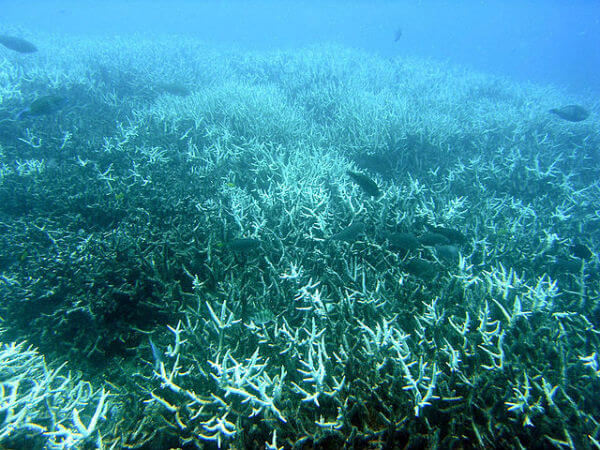
bleached-coral

The New York Times reports: Kim Cobb, a marine scientist at the Georgia Institute of Technology, expected the coral to be damaged when she plunged into the deep blue waters off Kiritimati Island, a remote atoll near the center of the Pacific Ocean. Still, she was stunned by what she saw as she descended some 30 feet to the rim of a coral outcropping.

“The entire reef is covered with a red-brown fuzz,” Dr. Cobb said when she returned to the surface after her recent dive. “It is otherworldly. It is algae that has grown over dead coral. It was devastating.”

The damage off Kiritimati is part of a mass bleaching of coral reefs around the world, only the third on record and possibly the worst ever. Scientists believe that heat stress from multiple weather events including the latest severe El Niño, compounded by climate change, has threatened more than a third of Earth’s coral reefs. Many may not recover.

Coral reefs are the crucial incubators of the ocean’s ecosystem, providing food and shelter to a quarter of all marine species, and they support fish stocks that feed more than one billion people. They are made up of millions of tiny animals, called polyps, that form symbiotic relationships with algae, which in turn capture sunlight and carbon dioxide to make sugars that feed the polyps.

An estimated 30 million small-scale fishermen and women depend on reefs for their livelihoods, more than one million in the Philippines alone. In Indonesia, fish supported by the reefs provide the primary source of protein.

“This is a huge, looming planetary crisis, and we are sticking our heads in the sand about it,” said Justin Marshall, the director of CoralWatch at Australia’s University of Queensland. [Continue reading…]

Facebooktwittermail

Climate change is altering how the poles drift

Climate Central reports: The spin of the earth is a constant in our lives. It’s quite literally why night follows day.

And while that cycle isn’t going away, climate change is messing with the axis upon which our fair planet spins. Ice melting has caused a drift in polar motion, a somewhat esoteric term that tells scientists a lot about past and future climate and is crucial in GPS calculations and satellite communication.

Polar motion refers to the periodic wobble and drift of the poles. It’s been observed for more than 130 years, but the process has been going on for eons driven by mass shifts inside the earth as well as ones on the surface. For decades, the north pole had been slowly drifting toward Canada, but there was a shift in the drift about 15 years ago. Now it’s headed almost directly down the Greenwich Meridian (sorry Canada no pole for you, eh).

Like many other natural processes large and small, from sea levels to wildfires, climate change is also playing a role in this shift.

“Since about 2000, there has been a dramatic shift in this general direction,” Surendra Adhikari, a researcher at NASA’s Jet Propulsion Laboratory, said. “It is due to climate change without a doubt. It’s related to ice sheets, in particular the Greenland ice sheet.” [Continue reading…]

Facebooktwittermail

Big oil spent $115m ‘obstructing’ climate laws in 2015, NGO says

Climate Change News reports: Giants of the oil and gas industry spent millions of dollars last year to manipulate lawmakers and public discourse on climate change, an NGO claimed on Thursday.

Exxon, Shell and three trade associations spent US$114 million, according to data compiled by London-based non-profit organisation Influence Map.

Lobby group the American Petroleum Institute spent the most at $65 million, followed by Exxon Mobil on $27m and Shell on $22m last year.

Two smaller trade groups, the Western States Petroleum Association (WSPA) and the Australian Petroleum Production and Exploration Association totalled about $9m. [Continue reading…]

Facebooktwittermail

China wants to power the world through a global grid

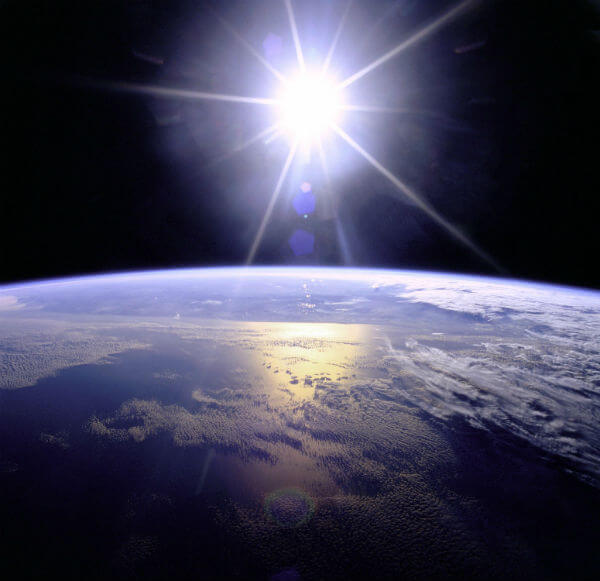
Earth

Adam Minter writes: China’s State Grid Corporation, the world’s biggest power company, is on an impressive buying binge. As Bloomberg News reports, the company is “actively in bidding” for power assets in Australia, hoping to add them to a portfolio of Italian, Brazilian, and Filipino companies. The goal isn’t simply to invest, however. State Grid’s Chairman Liu Zhenya has a plan that he believes will stall global warming, put millions of people to work and bring about world peace by 2050.

The idea is to connect these and other power grids to a global grid that will draw electricity from windmills at the North Pole and vast solar arrays in Africa’s deserts, and then distribute the power to all corners of the world. Among other benefits, according to Liu, the system will produce “a community of common destiny for all mankind with blue skies and green land.”

It’s a crazy idea, of course. And if this so-called Global Energy Interconnection had been proposed by anyone other than the chairman of the world’s wealthiest power company, it wouldn’t deserve much consideration. But the $50 billion in cash generated by State Grid last year gives the company the deep pockets and political standing to put its priorities on the international energy agenda.

Last September, no less than Chinese President Xi Jinping publicly called for talks on establishing a global grid, while leading research organizations — including the Argonne National Laboratory and the Edison Electrical Institute — have participated in conferences looking at what would be needed to establish one. And whether or not it’s ever built, the technologies that underlie Liu’s big idea are already changing how power will be generated and transmitted in coming decades. [Continue reading…]

Facebooktwittermail

Climate change will blow a $2.5tn hole in global financial assets, study warns

The Guardian reports: Climate change could cut the value of the world’s financial assets by $2.5tn (£1.7tn), according to the first estimate from economic modelling.

In the worst case scenarios, often used by regulators to check the financial health of companies and economies, the losses could soar to $24tn, or 17% of the world’s entire assets, and wreck the global economy.

However, the research also showed the financial sense in taking action to keep climate change under the 2C danger limit agreed by the world’s nations. In this scenario, the value of financial assets would fall by $315bn less, even when the costs of cutting emissions are included.

“Our work suggests to long-term investors that we would be better off in a low-carbon world,” said Prof Simon Dietz, at the London School of Economics, the lead author of the study. “Pension funds should be getting on top of this issue, and many of them are.” But he said awareness in the financial sector was low.

Mark Campanale, at the thinktank Carbon Tracker Initiative, said the actual financial losses from unchecked global warming could be higher than estimated by the financial model behind the new study: “It could be a lot worse. The loss of financial capital can be a lot higher and faster than the GDP losses [used to model the costs of climate change in the study]. Just look at value of coal giant Peabody Energy: it was worth billions just a few years ago and now it is worth nothing.” [Continue reading…]

Facebooktwittermail

Climate model predicts West Antarctic ice sheet could melt rapidly

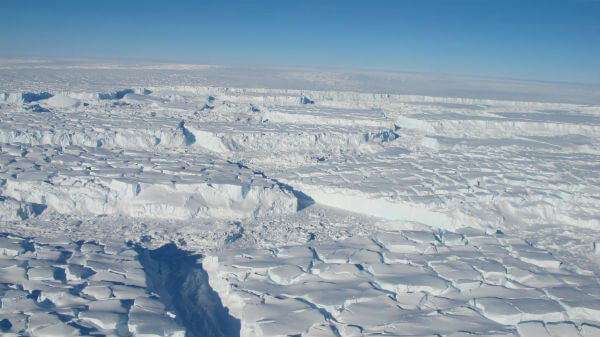
Thwaites-ice-shelf

The New York Times reports: For half a century, climate scientists have seen the West Antarctic ice sheet, a remnant of the last ice age, as a sword of Damocles hanging over human civilization.

The great ice sheet, larger than Mexico, is thought to be potentially vulnerable to disintegration from a relatively small amount of global warming, and capable of raising the sea level by 12 feet or more should it break up. But researchers long assumed the worst effects would take hundreds — if not thousands — of years to occur.

Now, new research suggests the disaster scenario could play out much sooner.

Continued high emissions of heat-trapping gases could launch a disintegration of the ice sheet within decades, according to a study published Wednesday, heaving enough water into the ocean to raise the sea level as much as three feet by the end of this century.

With ice melting in other regions, too, the total rise of the sea could reach five or six feet by 2100, the researchers found. That is roughly twice the increase reported as a plausible worst-case scenario by a United Nations panel just three years ago, and so high it would likely provoke a profound crisis within the lifetimes of children being born today. [Continue reading…]

Facebooktwittermail

Global warming’s terrifying new chemistry

Bill McKibben writes: Global warming is, in the end, not about the noisy political battles here on the planet’s surface. It actually happens in constant, silent interactions in the atmosphere, where the molecular structure of certain gases traps heat that would otherwise radiate back out to space. If you get the chemistry wrong, it doesn’t matter how many landmark climate agreements you sign or how many speeches you give. And it appears the United States may have gotten the chemistry wrong. Really wrong.

There’s one greenhouse gas everyone knows about: carbon dioxide, which is what you get when you burn fossil fuels. We talk about a “price on carbon” or argue about a carbon tax; our leaders boast about modest “carbon reductions.” But in the last few weeks, CO2’s nasty little brother has gotten some serious press. Meet methane, otherwise known as CH4.

In February, Harvard researchers published an explosive paper in Geophysical Research Letters. Using satellite data and ground observations, they concluded that the nation as a whole is leaking methane in massive quantities. Between 2002 and 2014, the data showed that US methane emissions increased by more than 30 percent, accounting for 30 to 60 percent of an enormous spike in methane in the entire planet’s atmosphere. [Continue reading…]

Facebooktwittermail

Scientists warn of perilous climate shift within decades, not centuries

pattern4

The New York Times reports: The nations of the world agreed years ago to try to limit global warming to a level they hoped would prove somewhat tolerable. But leading climate scientists warned on Tuesday that permitting a warming of that magnitude would actually be quite dangerous.

The likely consequences would include killer storms stronger than any in modern times, the disintegration of large parts of the polar ice sheets and a rise of the sea sufficient to begin drowning the world’s coastal cities before the end of this century, the scientists declared.

“We’re in danger of handing young people a situation that’s out of their control,” said James E. Hansen, the retired NASA climate scientist who led the new research. The findings were released Tuesday morning by a European science journal, Atmospheric Chemistry and Physics.

A draft version of the paper was released last year, and it provoked a roiling debate among climate scientists. The main conclusions have not changed, and that debate seems likely to be replayed in the coming weeks.

The basic claim of the paper is that by burning fossil fuels at a prodigious pace and pouring heat-trapping gases into the atmosphere, humanity is about to provoke an abrupt climate shift.

Specifically, the authors believe that fresh water pouring into the oceans from melting land ice will set off a feedback loop that will cause parts of the great ice sheets in Greenland and Antarctica to disintegrate rapidly. [Continue reading…]

Facebooktwittermail

Carbon emissions highest they have been in 66 million years

Scientific American reports: The rate of carbon emissions is higher than at any time in fossil records stretching back 66 million years to the age of the dinosaurs, according to a study on Monday that sounds an alarm about risks to nature from man-made global warming.

Scientists wrote that the pace of emissions even eclipses the onset of the biggest-known natural surge in fossil records, 56 million years ago, that was perhaps driven by a release of frozen stores of greenhouse gases beneath the seabed.

That ancient release, which drove temperatures up by an estimated 5 degrees Celsius (9 Fahrenheit) and damaged marine life by making the oceans acidic, is often seen as a parallel to the risks from the current build-up of carbon in the atmosphere from burning fossil fuels.

“Given currently available records, the present anthropogenic carbon release rate is unprecedented during the past 66 million years,” the scientists wrote in the journal Nature Geoscience. [Continue reading…]

Facebooktwittermail

‘A tipping point’: Record number of Americans see global warming as threat

The Guardian reports: A record number of Americans believe global warming will pose a threat to their way of life, new polling data shows, amid strengthening public acceptance that rising temperatures are being driven by human activity.

“I think a shift in public opinion and consciousness has been underway for several years now,” Michael Mann, a prominent climate scientist at Pennsylvania State University, told the Guardian.

A spokesman for 350 Action, the political arm of climate activist group 350.org, said meanwhile that politicians who cast doubt on climate science would soon have to take such polling into account. Republicans, he said, “are going to be screwed if they don’t change their tune”.

Polling firm Gallup, which has been tracking public sentiment on the topic annually since 1997, found that 41% of US adults feel warming will pose a “serious threat” to them during their lifetimes. This is the highest level recorded by Gallup, a 4% increase on 2015. [Continue reading…]

Facebooktwittermail

How the world has changed since Paris climate pact

Earth

Climate Central reports: The relatively good news overall is new data showing that annual rates of emissions of the world’s main greenhouse gas may be stabilizing, though not yet falling. One of the goals of the Paris Agreement is to pursue “rapid reductions” to yearly pollution output following a plateau.

Preliminary International Energy Agency figures published Wednesday showed 35 billion tons of carbon dioxide pollution was released in 2015 — about the same amount that was released in 2014, which was similar to the amount from 2013.

“In the more than 40 years in which the IEA has been providing information on CO2 emissions, there have been only four periods in which emissions stood still or fell compared to the previous year,” the agency said. “Three of those – the early 1980s, 1992 and 2009 – were associated with global economic weakness. But the recent stall in emissions comes amid economic expansion.”

The bad news since December has been record-smashing global temperatures. Not only was 2015 the hottest on record, boosted by greenhouse gas pollution and warm phases in ocean cycles, but the first month of 2016 was the warmest January on record. A month after that, February was the most unusually warm month in 135 years of NASA records. [Continue reading…]

Facebooktwittermail

Surge in renewable energy stalls world greenhouse gas emissions

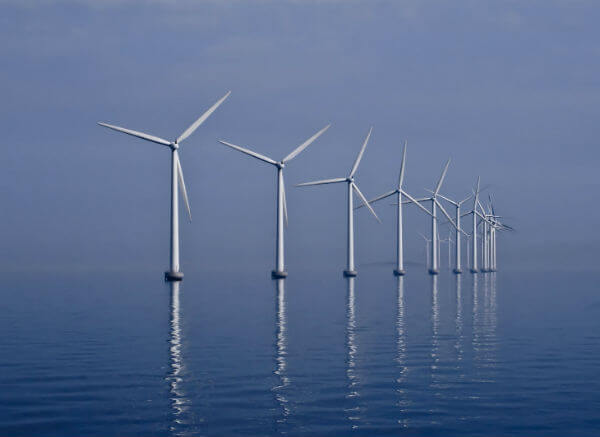
denmark-wind-power

The Guardian reports: Falling coal use in China and the US and a worldwide shift towards renewable energy have kept greenhouse gas emissions level for a second year running, one of the world’s leading energy analysts has said.

Preliminary data from the International Energy Agency (IEA) showed that carbon dioxide emissions from the energy sector have levelled off at 32.1bn tonnes even as the global economy grew over 3% .

Electricity generated by renewable sources played a critical role, having accounted for around 90% of new electricity generation in 2015. Wind power produced more than half of all new electricity generation, said the IEA. [Continue reading…]

Facebooktwittermail

Meltdown Earth: The shocking reality of climate change kicks in – but who is listening?

By James Dyke, University of Southampton

And another one bites the dust. The year 2014 was the warmest ever recorded by humans. Then 2015 was warmer still. January 2016 broke the record for the largest monthly temperature anomaly. Then came last month.

February didn’t break climate change records – it obliterated them. Regions of the Arctic were were more than 16℃ warmer than normal – whatever constitutes normal now. But what is really making people stand up and notice is that the surface of the Earth north of the equator was 2℃ warmer than pre-industrial temperatures. This was meant to be a line that must not be crossed.

Two degrees was broadly interpreted as the temperature that could produce further, potentially runaway warming. You can think of it as a speed limit on our climate impact. But it’s not a target speed. If you are driving a car carrying a heavy load down a steep hill you’re often advised to change down from top gear and keep your speed low, as if you go too fast your brakes will fail and you will be unable to stop. Less braking means more speed which means less braking – a dangerous runaway feedback loop. Hopefully the hill flattens out and you have enough straight road ahead to recover. If you don’t then you will be stopping much more abruptly.

Continue reading

Facebooktwittermail

February smashes Earth’s all-time global heat record by a jaw-dropping margin

antarctica

Jeff Masters and Bob Henson write: On Saturday, NASA dropped a bombshell of a climate report. February 2016 has soared past all rivals as the warmest seasonally adjusted month in more than a century of global recordkeeping. NASA’s analysis showed that February ran 1.35°C (2.43°F) above the 1951-1980 global average for the month, as can be seen in the list of monthly anomalies going back to 1880. The previous record was set just last month, as January 2016 came in 1.14°C above the 1951-1980 average for the month. In other words, February has dispensed with this one-month-old record by a full 0.21°C (0.38°F)–an extraordinary margin to beat a monthly world temperature record by. Perhaps even more remarkable is that February 2015 crushed the previous February record–set in 1998 during the peak atmospheric influence of the 1997-98 “super” El Niño that’s comparable in strength to the current one–by a massive 0.47°C (0.85°F). [Continue reading…]

Facebooktwittermail