Category Archives: climate change

America’s climate-change exodus

shadow16

Jeremy Miller writes: In a rumpled suit jacket and faded jeans, Giles Slade stands atop an earthen levee and looks out over a vast expanse of water. It’s mid-November, and the Fraser River runs gray and glasslike into the Salish Sea. Overhead, airplanes flash through low clouds, descending into Vancouver International Airport. To our backs is the city of Richmond, British Columbia, splayed out on the table-flat delta, the majority of its homes and buildings set just a few feet above sea level. “You can begin to see the scale of our problems from right here,” he says, waving a hand across the gray swath of water and sky.

Slade, 62, resembles a svelter John Goodman. He wears hip glasses, and his sentences are delivered in a calm, professorial baritone. But his mellow demeanor belies a deep anxiety, rooted in the threats posed by climate change to the Pacific Northwest, and to his flood-prone town of 190,000. He’s channeled that angst into a gripping work of non-fiction titled American Exodus (the title is an homage to An American Exodus, a book about the Dust Bowl published in 1939 by economist Paul Taylor, with photographs by Dorothea Lange). Slade’s book offers a disaster-movie account of the days ahead for North America  — a future defined by epic drought, megafires, colossal hurricanes, rising seas, and the massive human migrations that such events are likely to spawn.

The idea for the book dates back to the late 2000s, when Slade began to note numerous climate-driven migrations happening in the developing world. “There was a lot of material on climate migrations in Somalia and some other parts of the world,” he recalls. But at the time he could find no resources exploring how climate change might affect human populations in North America. Could things here reach a sort of climatic tipping point, Slade wondered, forcing people to move suddenly and in large numbers? “I was surprised to find that there were things that were already happening,” he says, mentioning Mexico and Central America, where prolonged drought, combined with violence and economic and political instability, has triggered the movement of tens of thousands of people northward over recent decades.

As he pored over the climate data, he became obsessed with one particular scenario. With drought intensifying in California, Slade envisioned a new Dust Bowl situation, in which tens of thousands of people evacuate the drought-ravaged southwestern United States and stream into the Pacific Northwest. Would the Oregon state line become like the U.S.-Mexico border? “That scenario,” Slade says, “seems closer and closer every day.”

For years, publishers weren’t interested in his ideas. “I was told by several U.S. publishers that climate change wasn’t happening,” he says. “Others viewed it as a boring disaster book with an unlikely prediction.” Things changed in October of 2012, when Superstorm Sandy blasted New York, forcing thousands of evacuations from the U.S.’s most populous and high-profile city. “I got a call and an offer the same week.”

One might be inclined to dismiss his predictions as the products of an overactive imagination (Slade spent his early years writing military novels for Harlequin Books)  —  that is, if the book weren’t so meticulously researched and reported. And then there’s the fact that Slade is no longer the only one talking in such stark terms about climate-driven migrations.

“What we’re seeing in Europe now with mass migrations, that will happen in California,” declared California Governor Jerry Brown last fall at a press conference. “Central America and Mexico, as they warm, people are going to get on the move.” In a recent talk to U.S. ambassadors, Secretary of State John Kerry painted a similar scene: “There’ll be climate refugees that all of you will be coping with at some point  — if not now, in the not-too-distant future.”

Recent data underscores these predictions. A study from the Centre for Research on the Epidemiology of Disasters estimated that, between 1994 and 2014, as many as 3.5 billion people worldwide were affected by flooding and drought. More recently, a study in the journal Science Advances estimated that four billion people  —  roughly two-thirds of the entire human population  — experience severe water shortages for at least one month out of every year.

And yet, here in the U.S., we tend to think of severe climate disruption as something that is happening elsewhere. According to recent Gallup polls, 60 percent of Americans accept that climate change is happening, and 57 percent believe that it is caused by human activities — but only 36 percent believe it poses a threat to their way of life. [Continue reading…]

Facebooktwittermail

Bill and Melinda Gates Foundation divests entire holding in BP

The Guardian reports: The Bill and Melinda Gates Foundation has sold off its entire holding in oil giant BP, in a move welcomed by fossil fuel divestment campaigners.

Bill Gates has called the selling off of coal, oil and gas stocks a “false solution” to climate change, but the known investments of his foundation in major fossil fuel companies has fallen by 85% since 2014.

The foundation, which has spent many billions of dollars improving global health, sold its $187m stake in BP between September and December 2015, according to recent regulatory filings to the US Securities and Exchange Commission (SEC).

It had previously dumped its entire $824m holding in ExxonMobil. BP posted a record $6.5bn annual loss in February while ExxonMobil is under investigation about whether it lied in the past to investors about the threat of climate change.

The Guardian’s Keep it in the Ground campaign has called on the Gates foundation to divest its $40bn endowment from fossil fuels. [Continue reading…]

Facebooktwittermail

WHO report: Europe trails U.S. in cutting air pollution

trafficbw (1)

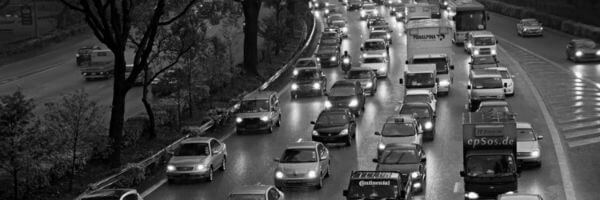
The New York Times reports: European countries, which rely heavily on diesel-fueled vehicles, remain far behind the United States in their efforts to reduce harmful air pollution, according to a report to be issued Thursday by the World Health Organization.

The report, which compiled air quality readings from 3,000 cities in 103 countries, found that more than 80 percent of people in those cities were exposed to pollution exceeding the limits set by W.H.O. guidelines, above which air quality is considered to be unhealthy. And in poorer countries, 98 percent of cities with more than 100,000 inhabitants were out of compliance with the health organization’s guidelines.

Lower levels of pollution were far more prevalent in North America and higher-income European countries than in most other places, especially countries like India, Pakistan and China.

But in Europe, a higher percentage of cities exceeded the limits set by the W.H.O. than in North America.

That disparity was greatest in wealthier countries; more than 60 percent of European cities failed to meet the guidelines, compared with less than 20 percent in North America. [Continue reading…]

Facebooktwittermail

World’s carbon dioxide concentration teetering on the point of no return

Earth

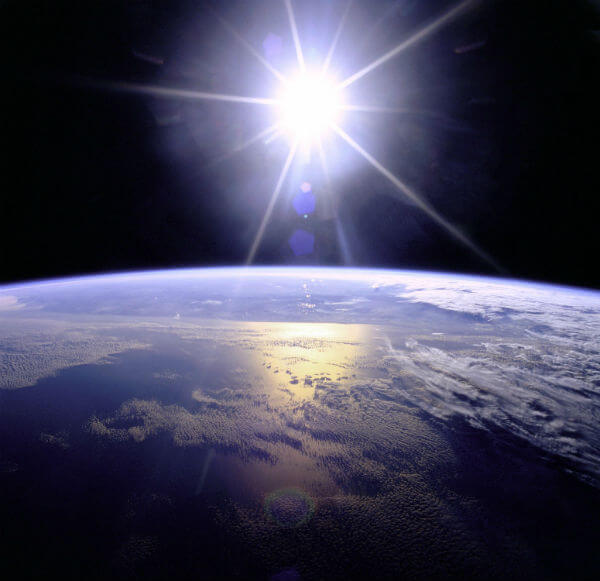
The Guardian reports: The world is hurtling towards an era when global concentrations of carbon dioxide never again dip below the 400 parts per million (ppm) milestone, as two important measuring stations sit on the point of no return.

The news comes as one important atmospheric measuring station at Cape Grim in Australia is poised on the verge of 400ppm for the first time. Sitting in a region with stable CO2 concentrations, once that happens, it will never get a reading below 400ppm.

Meanwhile another station in the northern hemisphere may have gone above the 400ppm line for the last time, never to dip below it again.

“We’re going into very new territory,” James Butler, director of the global monitoring division at the US National Oceanographic and Atmospheric Administration, told the Guardian.

When enough CO2 is pumped into the atmosphere from burning fossil fuels, the seasonal cycles that drive the concentrations up and down throughout the year will eventually stop dipping the concentration below the 400ppm mark. The 400ppm figure is just symbolic, but it’s psychologically powerful, says Butler.

The first 400ppm milestone was reached in 2013 when a station on the Hawaiian volcano of Mauna Loa first registered a monthly average of 400ppm. But the northern hemisphere has a large seasonal cycle, where it increases in summer but decreases in winter. So each year since it has dipped back below 400ppm.

Then, combining all the global readings, the global monthly average was found to pass 400ppm in March 2015.

In the southern hemisphere, the seasonal cycle is less pronounced and atmospheric levels of CO2 hardly drop, usually just slowing in the southern hemisphere summer months. This week scientists revealed to Fairfax Media that Cape Grim had a reading of 399.9ppm on 6 May. Within weeks it would pop above 400ppm and never return.

“We wouldn’t have expected to reach the 400ppm mark so early,” said David Etheridge, an atmospheric scientist from the CSIRO, which runs the Cape Grim station. “With El Nino, the ocean essentially caps off it’s ability to take up heat so the concentrations are growing fast as warmer land areas release carbon. So we would have otherwise expected it to happen later in the year.

“No matter what the world’s emissions are now, we can decrease growth but we can’t decrease the concentration. [Continue reading…]

Facebooktwittermail

Are oxygen-depleted oceans from California to Namibia a harbinger of the next mass extinction?

hypoxia-dead-zones

Moises Velasquez-Manoff writes: It was crabbers who first reported something amiss. In 2002, they began pulling in traps full of corpses. (Crabs should be alive when you catch them.) And they mentioned something else: Little octopuses had followed their crab lines to the surface, as if fleeing inhospitable conditions below.

Then heaps of dead crustaceans began washing ashore along a stretch of Oregon’s coast. When scientists sent a robotic submersible offshore, they discovered mile upon mile of dead crustaceans, the water brown and murky with detritus.

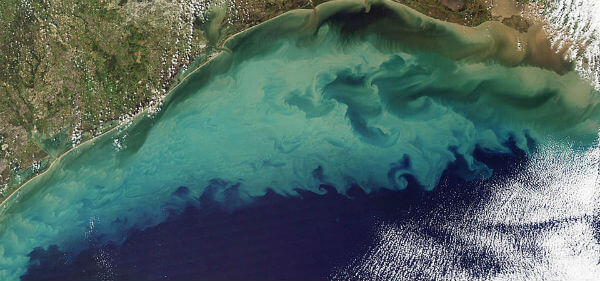
The killer was low oxygen, or hypoxia. Nearly all animals require oxygen to live, and, that year, dissolved oxygen had fallen so low off Oregon’s coast that whatever mobile creatures could had fled, while more-sessile life had simply suffocated.

Every year since, those hypoxic waters have appeared in late summer and early autumn. In 2006, they became anoxic, meaning they lost all their oxygen. “You didn’t see a single fish in a day,” says Jack Barth, a professor at Oregon State University, “just the piles of crab carcasses and worms that had come out of the bottom, sort of wafting in the current.” When scientists examined the roughly 50-year record of oxygen measurements from the region, they couldn’t find a single comparable event in the past. The hypoxia, it seemed, was unprecedented.

And then it spread.

In 2013, low-oxygen water showed up off the California coast just north of San Francisco. The following year, crabbers pulled in dead crabs in Half Moon Bay, just below San Francisco. Further south, the Monterey Bay Aquarium registered a decline in the oxygen content of the water it pumps in from the ocean.

“It seems like something has changed,” says John Largier, head of the Coastal Oceanography Group at the University of California-Davis. He tries to remain skeptical, but he suspects “large-scale global change.”

These suffocated patches of ocean aren’t just bad for fishermen and their catch; they represent a change in the ocean that has, at times in Earth’s past, heralded mass extinction. [Continue reading…]

Facebooktwittermail

One in five of world’s plant species at risk of extinction

lichen8

Phys.org reports: The first annual State of the World’s Plants report, which involved more than 80 scientists and took a year to produce, is a baseline assessment of current knowledge on the diversity of plants on earth, the global threats these plants currently face, as well as the policies in place and their effectiveness in dealing with threats.

“This is the first ever global assessment on the state of the world’s plants. We already have a ‘State of the World’s …birds, sea-turtles, forests, cities, mothers, fathers, children even antibiotics’ but not plants. I find this remarkable given the importance of plants to all of our lives- from food, medicines, clothing, building materials and biofuels, to climate regulation. This report therefore provides the first step in filling this critical knowledge gap.” said Professor Kathy Willis, Director of Science at the Royal Botanic Gardens, Kew at the report launch on Monday.

“But to have effect, the findings must serve to galvanise the international scientific, conservation, business and governmental communities to work together to fill the knowledge gaps we’ve highlighted and expand international collaboration, partnerships and frameworks for plant conservation and use,” she added.

The status of plants outlined in the report is based on the most up to date knowledge from around the world as of 2016 and is divided into three sections; describing the world’s plants, global threats to plants and policies and international trade. [Continue reading…]
Facebooktwittermail

Why we need to tackle the growing mountain of ‘digital waste’

By Chris Preist, University of Bristol

We are very aware of waste in our lives today, from the culture of recycling to the email signatures that urge us not to print them off. But as more and more aspects of life become reliant on digital technology, have we stopped to consider the new potential avenues of waste that are being generated? It’s not just about the energy and resources used by our devices – the services we run over the cloud can generate “digital waste” of their own.

Current approaches to reducing energy use focus on improving the hardware: better datacentre energy management, improved electronics that provide more processing power for less energy, and compression techniques that mean images, videos and other files use less bandwidth as they are transmitted across networks. Our research, rather than focusing on making individual system components more efficient, seeks to understand the impact of any particular digital service – one delivered via a website or through the internet – and re-designing the software involved to make better, more efficient use of the technology that supports it.

We also examine what aspects of a digital service actually provide value to the end user, as establishing where resources and effort are wasted – digital waste – reveals what can be cut out. For example, MP3 audio compression works by removing frequencies that are inaudible or less audible to the human ear – shrinking the size of the file for minimal loss of audible quality.

This is no small task. Estimates have put the technology sector’s global carbon footprint at roughly 2% of worldwide emissions – almost as much as that generated by aviation. But there is a big difference: IT is a more pervasive, and in some ways more democratic, technology. Perhaps 6% or so of the world’s population will fly in a given year, while around 40% have access to the internet at home. More than a billion people have Facebook accounts. Digital technology and the online services it provides are used by far more of us, and far more often.

Continue reading

Facebooktwittermail

Fort McMurray and the fires of climate change

Elizabeth Kolbert writes: No one knows exactly how the fire began — whether it was started by a lightning strike or by a spark provided by a person — but it’s clear why the blaze, once under way, raged out of control so quickly. Alberta experienced an unusually dry and warm winter. Precipitation was low, about half of the norm, and what snow there was melted early. April was exceptionally mild, with temperatures regularly in the seventies; two days ago, the thermometer hit ninety, which is about thirty degrees higher than the region’s normal May maximum. “You hate to use the ​cliché, but it really was kind of a perfect storm,” Mike Wotton, a research scientist with the Canadian Forest Service, told the CBC.

Though it’s tough to pin any particular disaster on climate change, in the case of Fort McMurray the link is pretty compelling. In Canada, and also in the United States and much of the rest of the world, higher temperatures have been extending the wildfire season. Last year, wildfires consumed ten million acres in the U.S., which was the largest area of any year on record. All of the top five years occurred in the past decade. In some areas, “we now have year-round fire seasons,” Matt Jolly, a research ecologist for the United States Forest Service, recently told the Times.

“You can say it couldn’t get worse,” Jolly added, but based on its own projections, the forest service expects that it will get worse. According to a Forest Service report published last April, “Climate change has led to fire seasons that are now on average 78 days longer than in 1970.” Over the past three decades, the area destroyed each year by forest fires has doubled, and the service’s scientists project that it’s likely to “double again by midcentury.” A group of scientists who analyzed lake cores from Alaska to obtain a record of forest fires over the past ten thousand years found that, in recent decades, blazes were both unusually frequent and unusually severe. “This extreme combination suggests a transition to a unique regime of unprecedented fire activity,” they concluded.

All of this brings us to what one commentator referred to as “the black irony” of the fire that has destroyed most of Fort McMurray.

The town exists to get at the tar sands, and the tar sands produce a particularly carbon-intensive form of fuel. (The fight over the Keystone XL pipeline is, at its heart, a fight over whether the U.S. should be encouraging — or, if you prefer, profiting from — the exploitation of the tar sands.) The more carbon that goes into the atmosphere, the warmer the world will get, and the more likely we are to see devastating fires like the one now raging. [Continue reading…]

Bloomberg reports: Wildfires raging through Alberta have spread to the main oil-sands facilities north of Fort McMurray, knocking out an estimated 1 million barrels of production from Canada’s energy hub. Fire officials say the out-of-control inferno may keep burning for months without significant rainfall.

The blaze, forecast to expand to more than 2,500 square kilometers (965 square miles) in the next few days, made an “unexpected” move to the north Saturday, rapidly encroaching bitumen mining operations run by Suncor Energy Inc. and Syncrude Canada Ltd. The fires may soon cover an area the size of Luxembourg.

“It is a dangerous and unpredictable and vicious fire that is feeding off an extremely dry Boreal forest,” federal Public Safety Minister Ralph Goodale told reporters Saturday in Regina, Saskatchewan. He said the swirling fire is not yet a threat to any additional communities.

The wildfires have led to combined productions cuts of more than 1 million barrels of oil a day, or about 40 percent of the region’s output of 2.5 million barrels, based on IHS Energy estimates. The cuts, and the mass exodus of more than 80,000 people from the fires raging in Fort McMurray, represent another blow to an economy already mired in recession from the oil price collapse. [Continue reading…]

The Los Angeles Times reports: Though the cause of the fire has not been determined, the inferno has become symbolic of the tension within Canada over its role in climate change.

Some Canadians see the fire as nature lashing back at those who mistreat it in the name of profit.

Others see the hard science: a wildfire formed in conditions consistent with climate change striking with academic irony, not vengeance, in a place that helps supply the world with a fossil fuel. The evacuees were really climate refugees, they say.

Still others view it as just very bad luck, a setback the oil industry will find a way to overcome.

The debate reflects a country wrestling within itself at a difficult moment — and it is testing that famous Canadian civility.

A provincial politician who called the fire “karmic” was quickly castigated and later apologized. When Canadian Green Party leader Elizabeth May said the fire was “very related to the global climate crisis,” Prime Minister Justin Trudeau suggested she was making “a political argument.”

Some environmentalists have been accused of lecturing to or, worse, condemning people who have lost everything. In Fort McMurray, more than 2,000 structures were consumed by the flames.

“I wish I could kick every person posting ‘That’s what you get for living by the oil sands’ comments,” a young Edmonton woman tweeted Tuesday evening at the peak of the evacuation, when flames were whipping across Highway 63, the only road out of Fort McMurray. “You’re terrible people.”

Janet Keeping, the Green Party leader within Alberta, was among several people who invoked climate change early in the week — and did so without clearly expressing support for fire victims. She soon tried to strike a new chord.

“Caring about people means caring about #climatechange,” Keeping wrote Thursday on Twitter.

Alberta’s oil sands are said to hold the third largest reserves in the world, after Saudi Arabia and Venezuela. They made Alberta rich even as they have made Canada uneasy.

Conservation groups have long despised the intensive extraction process involved in gleaning crude from the sands — Alberta would have been the source for the Keystone XL oil pipeline that President Obama rejected last year — and many Canadians loathe what they view as an excessively capitalist culture in Fort McMurray. [Continue reading…]

Facebooktwittermail

World Bank: The way climate change is really going to hurt us is through water

shadow14

The Washington Post reports: As India, the world’s second-most populous country, reels from an intense drought, the World Bank has released a new report finding that perhaps the most severe impact of a changing climate could be the effect on water supplies.

The most startling finding? The report suggests that by 2050, an inadequate supply of water could knock down economic growth in some parts of the world a figure as high as 6 percent of GDP, “sending them into sustained negative growth.” Regions facing this risk — which can at least partly be averted by better water management, the document notes — include not only much of Africa but also India, China and the Middle East.

“When we look at any of the major impacts of climate change, they one way or another come through water,” said Richard Damania, a lead economist at the bank and the lead author of the report, on a call with reporters Tuesday. “So it will be no exaggeration to claim that climate change is really in fact about hydrological change.”

Climate change hits water supplies in multiple ways. Warm temperatures can cause more evaporation of water from landscapes, while changes in precipitation can lead to both more intense individual downpours but also swings into drought conditions. The threat from all this is not just to what people drink but what they eat: The human activity that consumes the most water is agriculture.

And then, there’s sea-level rise: It can push into coastal aquifers, as is happening today in the state of Florida, and thus threaten to make them more saline and less usable for human needs. So it isn’t only surface waters that may be depleted by climate swings, but also groundwater.

The World Bank report says that 1.6 billion people on Earth already live in nations that are subject to water scarcity. [Continue reading…]

Facebooktwittermail

Wildfire near Canada’s oil sands may have been fueled by global warming

Brian Kahn writes: An unusually intense May wildfire roared into Fort McMurray, Alberta, Canada, on Tuesday, forcing the largest wildfire evacuation in province history. The flames rode the back of hot, windy weather that will continue through Wednesday and could pick up again this weekend.

The wildfire is the latest in a lengthening lineage of early wildfires in the northern reaches of the globe that are indicative of a changing climate. As the planet continues to warm, these types of fires will likely only become more common and intense as spring snowpack disappears and temperatures warm.

“This (fire) is consistent with what we expect from human-caused climate change affecting our fire regime,” Mike Flannigan, a wildfire researcher at the University of Alberta, said. [Continue reading…]

Facebooktwittermail

Lakota lead the fight against the Dakota Access Pipeline

Jason Coppola reports: As the start of 2016 shatters last year’s record as the hottest year on record, the Oceti Sakowin (Seven Council Fires of the Great Sioux Nation) once again find themselves on the front lines of the battle against the fossil fuel industry.

Members of the Standing Rock Sioux Tribe have established a Spirit Camp at the mouth of the Cannonball River in North Dakota as a means of bringing attention and awareness to a proposed pipeline and act as an enduring symbol of resistance against its construction.

The Dakota Access Pipeline (DAPL) is set to cut through several US states, delivering hundreds of thousands of barrels of crude oil from the Bakken and Three Forks oil fields in North Dakota to Patoka, Illinois.

The Dallas-based Energy Transfer Partners pipeline will cross the Ogallala Aquifer — a million-year-old shallow water table spanning eight US states, which provides fresh water for drinking and agriculture — while twice crossing the Missouri River and running alongside the Standing Rock Indian Reservation.

A spill could contaminate the Ogallala Aquifer, one of the worlds largest, which is already in crisis and under threat of running dry in the coming decades. [Continue reading…]

Facebooktwittermail

You’re more likely to die in a human extinction event than a car crash

destruction9

Robinson Meyer writes: Nuclear war. Climate change. Pandemics that kill tens of millions.

These are the most viable threats to globally organized civilization. They’re the stuff of nightmares and blockbusters — but unlike sea monsters or zombie viruses, they’re real, part of the calculus that political leaders consider everyday. And according to a new report from the U.K.-based Global Challenges Foundation, they’re much more likely than we might think.

In its annual report on “global catastrophic risk,” the nonprofit debuted a startling statistic: Across the span of their lives, the average American is more than five times likelier to die during a human-extinction event than in a car crash.

Partly that’s because the average person will probably not die in an automobile accident. Every year, one in 9,395 people die in a crash; that translates to about a 0.01 percent chance per year. But that chance compounds over the course of a lifetime. At life-long scales, one in 120 Americans die in an accident.

The risk of human extinction due to climate change — or an accidental nuclear war — is much higher than that. The Stern Review, the U.K. government’s premier report on the economics of climate change, estimated a 0.1 percent risk of human extinction every year. That may sound low, but it also adds up when extrapolated to century-scale. The Global Challenges Foundation estimates a 9.5 percent chance of human extinction within the next hundred years. [Continue reading…]

Facebooktwittermail

VW and Shell accused of trying to block EU push for electric cars

The Guardian reports: VW and Shell have been accused of trying to block Europe’s push for electric cars and more efficient cars, by saying biofuels should be at heart of efforts to green the industry instead.

The EU is planning two new fuel efficiency targets for 2025 and 2030 to help meet promises made at the Paris climate summit last December.

But executives from the two industrial giants launched a study on Wednesday night proposing greater use of biofuels, CO2 car labelling, and the EU’s emissions trading system (ETS) instead.

In reality, such a package would involve the end of meaningful new regulatory action on car emissions for more than a decade, EU sources say. But Shell insisted it is not trying to block an EU push for electric cars. [Continue reading…]

Facebooktwittermail

World heading for catastrophe over natural disasters, risk expert warns

The Guardian reports: The world’s failure to prepare for natural disasters will have “inconceivably bad” consequences as climate change fuels a huge increase in catastrophic droughts and floods and the humanitarian crises that follow, the UN’s head of disaster planning has warned.

Last year, earthquakes, floods, heatwaves and landslides left 22,773 people dead, affected 98.6 million others and caused $66.5bn (£47bn) of economic damage (pdf). Yet the international community spends less than half of one per cent of the global aid budget on mitigating the risks posed by such hazards.

Robert Glasser, the special representative of the secretary general for disaster risk reduction, said that with the world already “falling short” in its response to humanitarian emergencies, things would only get worse as climate change adds to the pressure. [Continue reading…]

Facebooktwittermail

Fate of world’s coastlines rests on melting Antarctic ice

marshland

John Upton writes: Councilmembers of an island town in Georgia met in a police station near sandy beaches last week to mull a plan for coping with worsening floods. The meeting followed unprecedented king tide floods in the fall that inundated the island and nearby Savannah, and shut down the highway that connects them.

“We’ve had more frequent flooding in areas that haven’t flooded before,” said Jason Buelterman, mayor of the beach town on the eastern shore of Tybee Island, where the population of a few thousand residents swells each summer with vacationers. “In November, water was coming into people’s garages and stuff. It had never happened before.”

The meeting was held eight days before world leaders were due to converge in New York this Friday to ratify a United Nations treaty, aiming to avert the worst impacts of climate change. If the treaty succeeds, Tybee Island and other coastal communities may flood terribly in the coming decades, but will most likely remain mostly above sea level, recent Antarctic modeling suggests. Vast scientific uncertainties, however, mean even that cannot be assured.

Mayors from small towns, planners from the world’s largest cities and U.N. diplomats are being guided on the details of a looming coastal crisis by sea level projections compiled by a U.N. science panel. The panel’s work includes warnings about the amount of flooding that could be caused by melting in Antarctica, and those warnings have been growing bleaker.

The barren continent — the planet’s greatest reservoir of ice — remains shrouded in frigid mystery, and a lack of scientific knowledge about its ice sheet means scientists can’t yet predict how much flooding it could cause as temperatures continue to climb. A recent study, though, added to concerns that it could begin disintegrating, inundating coastal neighborhoods around the world, unless the heady goals of the new U.N. climate pact are achieved.

The Intergovernmental Panel on Climate Change’s most recent findings, from three years ago, appear to have underestimated the potential seriousness of the Antarctic problem, with sweeping implications for the urgency of pollution cuts — and for the futures of coastal communities like Tybee Island’s.

Instead of the anticipated several feet of sea level rise this century if current pollution rates continue, the latest modeling-based science warns that melting could lead to twice that amount. That sobering estimate is a rough one. [Continue reading…]

Facebooktwittermail

2016 U.S. election critical to success of Paris climate pact

Climate Central reports: The 2016 presidential election is likely to be enormously consequential to the success of the Paris climate agreement, due to be signed Friday at the United Nations, and the ability of the United States to lead the world in reducing greenhouse gas emissions to keep global warming to “well below” 2°C (3.6°F).

Climate Central asked more than a dozen climate and political scientists and other experts how the outcome of that election will affect the climate pact.

The consensus was clear: If a Republican administration is elected in November, the Paris agreement would be severely undermined and any efforts to cut greenhouse gas emissions on a global scale will be cast into doubt. If a Democratic administration is elected, the Paris agreement will remain intact. [Continue reading…]

Facebooktwittermail

How the Paris Agreement is driving climate action

Climate Nexus reports: This past December, representatives from 195 nations gathered in Paris to negotiate an historic agreement to combat climate change and accelerate the transition to a sustainable, low-carbon future. After two weeks of negotiations, the nations unanimously agreed to adopt the international climate pact. On April 22, 2016, nations will again gather, this time at the United Nations headquarters in New York, to formally sign the Paris Agreement.

The world has already seen a significant shift towards stronger climate action, in the ensuing months since the adoption of the Agreement.

The adoption of the Paris negotiations delivered a signal to governments, businesses and the global public: All parties, from national governments to small businesses, must do their part to minimize the risks and impacts of climate change.

This signal has mobilized actions by public and private sector institutions to move away from fossil fuels, which drive climate change, and towards an economy powered by renewable energy. [Continue reading…]

Facebooktwittermail

March temperature smashes 100-year global record

The Guardian reports: The global temperature in March has shattered a century-long record and by the greatest margin yet seen for any month.

February was far above the long-term average globally, driven largely by climate change, and was described by scientists as a “shocker” and signalling “a kind of climate emergency”. But data released by the Japan Meteorological Agency (JMA) shows that March was even hotter.

Compared with the 20th-century average, March was 1.07C hotter across the globe, according to the JMA figures, while February was 1.04C higher. The JMA measurements go back to 1891 and show that every one of the past 11 months has been the hottest ever recorded for that month.

Data released released later on Friday by Nasa confirmed last month was the hottest March on record, but the US agency’s data indicated February had seen the biggest margin. The Nasa data recorded March as 1.65C above the average from 1951-1980, while February was 1.71C higher.

The World Meteorological Organisation, the UN body for climate and weather, said the March data had “smashed” previous records. [Continue reading…]

Facebooktwittermail