Laura Rozen reports: Israel’s Defense Minister raised some eyebrows in the United States when he told Israel Radio Thursday that a new, previously undisclosed U.S. intelligence assessment shares Israel’s sense of heightened urgency about Iran’s nuclear program.
Ehud Barak told Israel Radio that there is “apparently a report by American intelligence agencies – I don’t know if it’s under the title NIE or under another title – which is making the rounds of high offices,” in Washington, CBS News reported.
“As far as we know, it comes very close to our own estimate, I would say, as opposed to earlier American estimates,” Barak continued. “It transforms the Iranian situation to an even more urgent one and it is even less likely that we will know every development in time on the Iranian nuclear program.”
Generally, foreign leaders don’t publicly disclose allied nations’ classified intelligence reports in such a provocative manner, intelligence experts said.
“The rules of the spy game are clear,” former US Navy intelligence analyst John Schindler wrote on his blog. “When intelligence services share information, as they do every day, you don’t pass it to third parties without clearance. Ever. And if you do, eventually you will get burned and nobody will want to play marbles with you.”
A cavalcade of top American officials have traveled to Israel in recent weeks to confer on Iran, and President Obama this month signed a $70 million US military aid package for Israel. Israeli officials have expressed growing impatience with US reluctance to endorse military action on Iran at this time.
Category Archives: Iran deal
The secret history of America’s thirty-year conflict with Iran
Barbara Slavin writes: A new book on the long confrontation between the US and Iran blames the George W. Bush administration for squandering opportunities to improve relations with Tehran and invading Iraq in 2003 without recognizing that Iran would wind up being the power broker in that country.
These criticisms are remarkable given their source: David Crist, author of The Twilight War: The Secret History of America’s Thirty-Year Conflict With Iran is a US Defense Department historian, lieutenant colonel in the US Marine Corps Reserve and the son of one of the early leaders of US Central Command (CENTCOM).
Crist argues that the US has been too soft when it should have retaliated for Iran-backed terrorism, and too hard when it should have embraced Iranian diplomatic overtures. The book is based on reams of US government documents, private papers and interviews with 400 former officials and includes severally previously unreported nuggets including:
- The George W. Bush administration considered cooperating with Iran over removing the regime of Saddam Hussein in 2003, but opposition from Defense Secretary Donald Rumsfeld and his top civilian aides, as well as Vice President Dick Cheney, torpedoed a draft proposal by then national security adviser Condoleezza Rice. Instead, Rumsfeld’s office advocated getting rid of the Iranian government, too, in part by supporting an “Iranian National Congress” of exiles on the model of Ahmed Chalabi’s Iraqi National Congress. At loggerheads internally, the Bush administration failed to approve any policy toward Iran in its first term. Iraq became a quagmire and Iran-backed militias killed hundreds of Americans.
- In Bush’s second term, Cheney’s daughter, Elizabeth, a deputy assistant secretary of State, lectured US Foreign Service officers “including those fluent in Farsi” about “the nature of Iranian society and its government” even though she “had no background on Iran,” Crist writes. The lectures were delivered to the “Iran-Syria Working Group, an interagency body co-chaired by Cheney and Elliott Abrams, a neoconservative in the Bush White House. The working group produced an “Iran Action Plan” in 2005 that sought “to drive a wedge between the Iranian population and its government” even as Rice, who was Secretary of State, offered to join European talks with Iran. Rice also set preconditions — Iranian suspension of uranium enrichment — that Iran would not accept. The two-headed policy went nowhere.
- In an earlier era, France denied permission for the US to overfly that country in attacking Libya in 1986 out of anger that the Ronald Reagan administration reneged on joint retaliation for 1983 bombings in Beirut that killed dozens of French soldiers, as well as 241 US Marines. Armed with intelligence that Iran had backed the Beirut bombings, France went ahead with the attack on an Iranian Revolutionary Guard outpost near Baalbek, but it was an “abject failure.” Crist quotes former Reagan national security adviser John Poindexter as saying “the French never forgave us for not backing them.” (The US bombed Libya in 1986 to retaliate for a Libyan-backed terrorist bombing in Berlin that killed US military personnel.) [Continue reading…]
Israel’s envoy to U.S. blames Iran for Sinai attack, but evidence is lacking

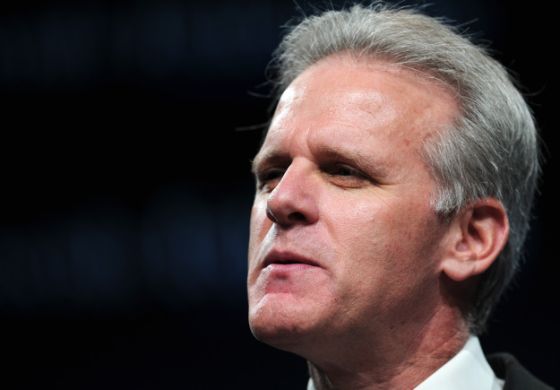
Michael Oren with lips pursed. Something's rolling around on his tongue. Did he just cough up some phlegm or come up with his latest lie?
I know it’s one of the most worn-out jokes in existence but never more true than when applied to Israel’s ambassador to the US. How can you tell when Michael Oren is lying? You can see his lips move.
At Haaretz, Barak Ravid writes:
Israel’s ambassador to the U.S Michael Oren, who is no stranger to gaffes, provided yet another strange headline on Sunday. Only hours after the attack on the Kerem Shalom crossing, before the fog of war had time to dissipate, the ambassador announced on his Twitter account that Iran was behind the assault.
“Iranian backed terrorists again struck at our Southern border today killing 15 Egyptian guards and attempting to massacre Israeli civilians,” Oren wrote in a Twitter post. On his Facebook page he wrote that “terrorists also shelled Israeli farms and towns along the border… the thwarted attack underscores the length to which the extremist regime in Iran will attempt to kill innocent Israelis.”
It is unclear what prompted Oren to release these statements, as it is clear he was in no possession of evidence linking Iran to the attack. Just how unfounded these allegations are was further underscored by a briefing given Monday morning by Defense Minister Ehud Barak at the Knesset Foreign Affairs and Defense Committee. In the briefing, Barak said the insurgents were operatives in an organization affiliated with Al-Qaida, “apparently some kind of global Jihad, with unclear connections.”
Oren’s gaffe brings to mind a statement made last month by his boss, Prime Minister Benjamin Netanyahu – shortly after the terror attack in Burgas, Bulgaria. While it was still unclear whether the attack was carried out by a suicide bomber or caused by hidden explosives, Netanyahu wasted no time in pointing a finger at Iran. A day later Netanyahu corrected himself, saying Hezbollah was behind the attack. It is worth noting, however, that two weeks after the Bulgaria attack, Israeli, Bulgarian and U.S. officials are still searching for a lead on the identity of the perpetrator.
Like Netanyahu, Oren’s statements on Twitter and Facebook are part of an Israeli propaganda campaign aimed at smearing Iran’s image. Yet like everything in life – it is all about dosage. Sometimes the urge to galvanize the world against the Iranians can lead to nothing more than baseless exaggerations.
New sanctions, old postures as U.S.-Israel-Iran stalemate drags on
Tony Karon writes: Did Mitt Romney’s hawkish posture in Israel last weekend increase the likelihood of an Israeli attack on Iran? Unlikely. Will Defense Secretary Leon Panetta’s visit to Israel to discuss “various contingencies and how we would respond” hasten the prospect of confrontation over Iran’s nuclear program? Probably not. And will Iran capitulate in response to the increasingly painful economic sanctions tightened by the Obama Administration on Tuesday? Don’t bet on it. Although surprises are always possible given the cast of characters involved, all indications are that the Iran nuclear standoff is set to remain locked in an increasingly tense stalemate, at least through November’s U.S. presidential election.
Panetta’s visit coincides with an executive order signed Tuesday by President Barack Obama imposing punishments on any entities and countries that help Tehran circumvent sanctions imposed over the past year that are driving down living standards in Iran. A new raft of sanctions have also been approved by Congress this week to block Iran from receiving the proceeds of its oil sales, further tightening the economic stranglehold that U.S. officials hope will compel Iran’s leaders to accept Western terms for resolving the nuclear dispute.
There’s no sign of that happening at the negotiating table, however, as the bottom lines of the two sides remain so far apart that they’ve agreed only to keep a perfunctory channel of communication open. But the Administration’s emphasis is clearly on sanctions rather than diplomacy, having made clear to the Iranians that there’ll be no easing of the most painful pressure until Tehran is willing to heed all demands being put to it — something Iran stresses it has no intention of doing, even if it was willing to consider compromise options. Sanctions, of course, are a waiting game.
Obama’s new executive order may have been timed to help Panetta’s mission, which appears to be restraining the Israelis from taking unilateral military action by reassuring them not only that Iran faces the toughest economic sanctions ever imposed on any nation during peacetime, but also that the chokehold is being constantly tightened. It also appears intended to show that the Obama Administration is willing and ready to take military action to stop Iran building a nuclear weapon if the Islamic Republic proceeds down that path.
In a ritual that is familiar by now, U.S. officials plead that Israel allows more time for sanctions to inflict the economic pain that will compel the Iranian leadership to reconsider its defiance of Western demands, while Israeli leaders express public skepticism that sanctions will be enough to change the mind of the leadership in Tehran and question the value of further talks. Their skepticism and implied readiness to take unilateral military action combine to create pressure for still more sanctions and pressure. [Continue reading…]
U.S. presents Netanyahu with plans for war against Iran
Haaretz reports: The U.S. national security adviser has shared with Prime Minister Benjamin Netanyahu the United States’ contingency plans for a possible attack on Iran.
According to a senior American official, National Security Advisor Tom Donilon briefed Netanyahu on the plans during Donilon’s visit to Israel two weeks ago. According to the official, who requested anonymity, Netanyahu hosted Donilon at a three-hour dinner. For part of the time, Israel’s national security adviser, Yaakov Amidror, was on hand.
Donilon sought to make clear that the United States is seriously preparing for the possibility that negotiations will reach a dead end and military action will become necessary. He said reports of such preparations were not just a way to assuage Israel’s concerns.
Donilon’s talks in Jerusalem were the most significant so far between American and Israeli officials here in recent weeks. Secretary of State Hillary Clinton and Deputy Secretary of State William Burns have been in Israel as well.
Reuters reports: A senior Israeli official denied on Sunday a newspaper report that President Barack Obama’s national security adviser had briefed Israel’s Prime Minister Benjamin Netanyahu on a U.S. contingency plan to attack Iran should diplomacy fail to curb its nuclear programme.
[…]
“Nothing in the article is correct. Donilon did not meet the prime minister for dinner, he did not meet him one-on-one, nor did he present operational plans to attack Iran,” the senior official, who declined to be named given the sensitivity of the issue, told Reuters.
Note: the Haaretz report does not claim this was a one-on-one meeting. Perhaps Donilon did not meet Netanyahu for dinner — maybe it was brunch. And Donilon wasn’t, according to Haaretz, presenting operational plans — he was presenting contingency plans.
While the Israelis present this non-denial denial, more significantly the White House is saying nothing. Why would Obama want to offer any revisions to this self-serving narrative while his competitor is in Israel?
Mitt Romney is shut behind closed doors hustling up donations from casino boss Sheldon Adelson and his buddies while Obama is pledging billions in aid, access to military technology previously withheld and the promise of a long-threatened war — all music to the ears of Netanyahu and the Israel lobby.
Obama or Romney? Who’s most likely to start a war against Iran?
Glenn Greenwald writes: When it comes to praising President Obama’s foreign policy skill and Toughness (in the neocon sense of that term: i.e., a willingness to risk other people’s lives with the use of military force against foreigners), The Atlantic‘s Jeffrey Goldberg has been one of the most reliable and vocal voices. Considered by Obama aides “as the ‘official therapist’ of the U.S.-Israel relationship,” Goldberg has been particularly important in vouching for Obama to Israelis and American Jews on the ground that nobody will be Tougher on Iran than Obama (in return for this service, Goldberg — like all helpful journalists are — has been rewarded by the White House with substantial career-boosting access). In his Bloomberg column this morning, Goldberg argues that Israeli officials should pray for Obama’s victory in the November election, and makes this argument in support:
On the matter of Iran, however, Netanyahu would be wrong to root for Romney. Barack Obama is the one who’s more likely to confront Iran militarily, should sanctions and negotiations fail. He has committed himself to stopping Iran by any means necessary, and he has a three-year record as president to back his rhetoric. Romney has only rhetoric, and he would be hamstrung in many ways if he chose military confrontation.
He goes on to argue that despite the GOP challenger’s Tough rhetoric, “Romney would face several critical challenges in a conflict with Iran that Obama would not”; specifically:
The insanity of anti-Iran propaganda
A Times of Israel article that I referred to yesterday turns out to have been total bunk — surprise, surprise. (At least I covered my ass a tiny bit by acknowledging I had no idea whether the translations of quotes by Mahmoud Ahmadinejad were accurate.)
Nima Shirazi provides the details:
The Times of Israel, the same “news” outfit that was quick to identify former Guantanamo detainee Mehdi Ghezali as the bomber based on half-baked Bulgarian media reports (a claim immediately denied by all intelligence agencies involved in the case) is back at it, this time with a report declaring that Iranian president Mahmoud Ahmadinejad has revealed (and reveled in) Iran’s culpability for the attack in Bulgaria.
The Times opens its piece with what could not be mistaken for anything other than what it presents as a clear statement of fact: “Iran’s President Mahmoud Ahmadinejad gloated publicly on Thursday over the deaths of Israelis in a terror bombing in Bulgaria, and hinted that Iran was responsible for the attack.” Claiming that, just hours after the attack itself, “Ahmadinejad described the attack as ‘a response’ to Israeli ‘blows against Iran,'” the report continues:
“The bitter enemies of the Iranian people and the Islamic Revolution have recruited most of their forces in order to harm us,” he said in a speech reported by Israel’s Channel 2 TV. “They have indeed succeeded in inflicting blows upon us more than once, but have been rewarded with a far stronger response.”
He added: “The enemy believes it can achieve its aims in a long, persistent struggle against the Iranian people, but in the end it will not. We are working to ensure that.”
Ahmadinejad’s speech was interpreted in Israel as asserting that the Burgas bombing was a revenge attack for the killing of Iranian nuclear scientists, for which Iran has repeatedly blamed Israel.
This report spread like wildfire around the internet, from right-wing sites like The Blaze and Commentary to progressive outlets like Paul Woodward’s War in Context.
But it’s a lie.
Ahmadinejad’s speech, delivered in commemoration of World Mosque Day, has absolutely nothing to do with the bus bombing in Bulgaria. The quotes cherry-picked and bizarrely analyzed by the Israeli media have nothing to do with boasting or bragging about the attack. [Continue reading…]
What did Ahmadinejad just say?
Soon after the Burgas bombing, the Times of Israel was quick to jump on a story first appearing in Bulgarian media claiming that the culprit was a former Guantanamo detainee and Swedish citizen. It didn’t take long before that story was shown to be false, so, I’m not sure how much weight to attach to the following report, “Gloating Ahmadinejad hints at Iranian responsibility for Burgas terror attack.”
All I can say is that it doesn’t look good. So far this has not been picked up by other media outlets, but if it turns out that Mahmoud Ahmadinejad has been quoted accurately and that he is indeed claiming responsibility for the attack, then it looks like he effectively just issued an invitation for Israel to strike back.
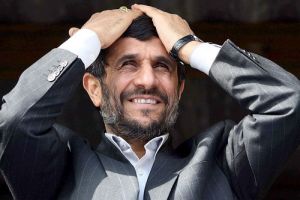
Iran’s President Mahmoud Ahmadinejad gloated publicly on Thursday over the deaths of Israelis in a terror bombing in Bulgaria, and hinted that Iran was responsible for the attack.
Speaking hours after Israel’s Prime Minister Benjamin Netanyahu had publicly blamed the bombing Wednesday at Bulgaria’s Burgas airport on “Hezbollah, directed by Iran,” Ahmadinejad described the attack as “a response” to Israeli “blows against Iran.”
“The bitter enemies of the Iranian people and the Islamic Revolution have recruited most of their forces in order to harm us,” he said in a speech reported by Israel’s Channel 2 TV. “They have indeed succeeded in inflicting blows upon us more than once, but have been rewarded with a far stronger response.”
He added: “The enemy believes it can achieve its aims in a long, persistent struggle against the Iranian people, but in the end it will not. We are working to ensure that.”
Ahmadinejad’s speech was interpreted in Israel as asserting that the Burgas bombing was a revenge attack for the killing of Iranian nuclear scientists, for which Iran has repeatedly blamed Israel.
His remarks contrasted with a condemnation of the Burgas bombing by the Iranian Foreign Ministry earlier Thursday.
“The Islamic republic, the biggest victim of terrorism, believes terrorism endangers the lives of innocents… is inhumane and so strongly condemns” it, the Arabic-language television channel Al-Alam cited foreign ministry spokesman Ramin Mehmanparast as saying. “Iran’s position is to condemn all terrorist acts in the world,” he added.
Earlier in the day, Iran’s state TV rejected accusations of Tehran’s involvement in the attack.
Iran’s president has a habit of making provocative statements and it is possible in this instance that he made the ill-judged choice of praising an attack even when Iran had not in fact instigated it.
A suicide attack of this type would seem to fit the profile of a jihadist operation rather than tit-for-tat revenge in response to Israel’s bombing attacks on Iranian nuclear scientists. Indeed, less than a month ago, European intelligence services warned that a Norweigian man trained by al Qaeda was ready to strike.
A trained terrorist from Norway is awaiting orders to carry out an attack on the West, officials from three European security agencies have revealed.
The man is believed to have received terrorist training from Al Qaeda’s offshoot in Yemen and is ready to strike.
Western intelligence officials have long feared such a scenario – a convert to Islam who is trained in terrorist methods and can blend in easily in Europe and the U.S., traveling without visa restrictions.
Officials from three European security agencies confirmed the man is ‘operational,’ meaning he has completed his training and is about to receive a target.
All spoke on condition of anonymity because they were not authorized to discuss the case publicly. They declined to name the man, who has not been accused of a crime.
‘We believe he is operational and he is probably about to get his target,’ one security official said. ‘And that target is probably in the West.’
A security official in a second European country confirmed the information, adding: ‘From what I understand, a specific target has not been established.’
European security services, including in Norway, have warned in recent years of homegrown, radicalised Muslims traveling to terror training camps in conflict zones. Many of the known cases involve young men with family roots in Muslim countries.
But the latest case involves a man in his 30s with no immigrant background, the officials said.
After converting to Islam in 2008, he quickly became radicalized and traveled to Yemen to receive terror training, one of the officials said.
The man spent ‘some months’ in Yemen and is still believed to be there, he said.
The official said the man has no criminal record, which would also make him an ideal recruit for Al Qaeda.
‘Not even a parking ticket,’ he said. ‘He’s completely clean and he can travel anywhere.’
Living under siege in Iran
Mohammad Ali Shabani writes: Hassan is in his late 40s. He has worked at an Iranian state bank all his life and is about to retire. His son is in his late teens and his daughter is still in primary school. Two years ago, around the same time a fourth round of UN sanctions was imposed on Iran over its nuclear programme, he was diagnosed with stomach cancer. After extensive treatment in Tehran, which included chemotherapy, he beat the disease.
But late this spring, the cancer came back – with a vengeance. Last month, when the New York Times’ Nicholas Kristof argued that he was in favour of sanctions after having toured Iran and wrote about the great generosity and hospitality he had experienced, I got a frantic call from Hassan’s wife. The drugs he needed were nowhere to be found.
I joined her in her hunt all around Tehran for the needed medicines, to no avail. Repeatedly, we were told that there was a shortage of many foreign drugs because of the sanctions, even though the West’s punitive measures don’t directly target supplies such as medicines.
This is only one of the many stories of how ordinary Iranians are bearing the brunt of the West’s economic war against the Islamic Republic. Since Iran came under scrutiny over its nuclear energy programme in 2002, it has come under several sets of UN Security Council sanctions, and life has become progressively more difficult for all but the wealthy. In Tehran, the dominant perception is that the aim of the sanctions is to create pressure from below so the leadership will back down on the nuclear issue. In this context, how are Iranians to interpret the US and the EU’s move to target oil exports and shipping; the main artery of Iran’s economy?
The latest US and EU sanctions on Iran are set to inflict serious hardship on the people. The International Energy Agency estimates that Iranian oil exports have been cut by around 40 per cent this year. Meanwhile, the excision of Iran from many international banking channels means it is finding it difficult to pay for basic items that are not targeted by sanctions, such as food. The pressure Iran is facing is unprecedented. However, things need to be put into perspective. The ruling elite in Tehran has survived eight years of war, punitive measures for decades and most recently, widespread civil turmoil. Suffice to say, the Islamic Republic is resilient. [Continue reading…]
Nuclear-armed Iran would bring ‘stability’ but risks
John Mearsheimer and Dov Zakheim discuss the conclusion of Kenneth N. Waltz’s Foreign Affairs article, “Why Iran should get the bomb.”
Watch Nuclear-Armed Iran Would Bring ‘Stability’ But Risks on PBS. See more from PBS NewsHour.
Video: Daniel Levy on Israel’s perspective on Iran
America’s war on Iran: the plan revealed
At Open Democracy, Paul Rogers writes: The United States is more seriously preparing for military action against Iran than is widely realised. An attack – obviating the need for one by Israel – may not be immediate and is not yet certain, but it is being intensively planned.
The third round of talks between Iran and the “P5+1” group, held in Moscow on 18-19 June 2012, ended in stalemate. A formal process will continue at a lower level, but amid an atmosphere of continuing mutual suspicion and in a situation where United States electoral politics work against compromise. Iran believes that most of the P5+1 is bargaining that sanctions increase their impact until Tehran bends to its will, whereas Washington holds that it is the Iranians who are happy to prolong matters while they accelerate uranium enrichment (see “Syria and Iran: a diplomatic tunnel“, 25 June 2012).
Alongside these calculations, at least some European (especially German) politicians recognise that any substantial delay in negotiations could well create the space for a unilateral Israeli military strike on Iran, an act that would inaugurate a lengthy period of deep instability and perhaps an intensely destructive war.
The high European commitment to diplomacy over Iran has in part been motivated by the risk of Israel attacking Iran. There is little doubt that Israel would be prepared to make such a move at a time of its choosing. It is of even greater concern to the Europeans, then, that indications have emerged in recent weeks of the Pentagon’s own serious engagement in comprehensive multi-option war-planning.
The belief underpinning this hawkish approach seems to be that a short, sharp military action directed very precisely at Iran’s nuclear and missile facilities is the only way to force a weakened Iran to “come in from the cold” and – once and for all – abandon its nuclear ambitions.
There is no settled consensus in elite US circles about to handle the Iran problem. Several powerful voices, including within the Pentagon, argue that the best option is to continue the mix of sanctions and sustained cyber-warfare (the latter in collaboration with Israel). Others, however, argue that there is a need to plan for war, with the question of optimum timing a central issue (see David Fulghum, “Bombing Iran: U.S. military planners ponder when a kinetic attack might make sense“, Aviation Week, 25 June 2012).
The Pentagon advocates of a strike on Iran believe that the early part of 2013 might be the best moment. In their eyes, this offers three advantages. First, the presidential and congressional elections of November 2012 would be out of the way, with nearly two years to the next mid-sessional elections; thus any political controversy would have plenty of time to diminish. Second, the months between now and the point of decision would make clear whether there was any possibility of a political compromise. Third, keeping the war option open – and informing the Israelis well in advance – would make a lone Israeli attack less likely. The most hardline of the US planners hold the view that it is much better that the US “does the job properly” than lets Israel, with its much smaller forces, take the lead. [Continue reading…]
Iran ‘ready to fire missiles at U.S. bases’
The Guardian reports: Iran is prepared to launch missiles at US bases throughout the Gulf within minutes of an attack on the Islamic Republic, according to a commander of the country’s Revolutionary Guards.
In an apparent response to reports that the US has increased its military presence in the Gulf, the commander of the Revolutionary Guards’ air force said on Wednesdaythat missiles had been aimed at 35 US military bases in the Gulf as well as targets in Israel, ready to be launched in case of an attack.
The semi-official Fars news agency reported Brigadier General Amir Ali Hajizadeh as saying: “We have thought of measures to set up bases and deploy missiles to destroy all these bases in the early minutes after an attack.”
Hajizadeh’s remarks were made on the sidelines of a three-day war game called Great Prophet Seven, which Iranian officials claimed was a show of defiance against western pressure, including the US and EU embargo against imports of Iranian oil that came into effect on 1 July.
“These [US] bases are all in range of our missiles, and the occupied lands [a reference to Israel] are also good targets for us,” Hajizadeh said.
For Iran, sanctions are a price worth paying to preserve the Islamic republic
Hadi Kahalzadeh and John Schiemann write: The latest wave of sanctions against Iran comes into effect today. Such measures are largely predicated on a “rational actor model” in which the west hopes Iran’s leaders will eventually find it in their own interests to give up their nuclear programme. The problem with such a strategy is not that Iran’s leaders are irrational but that such a game only works if the west knows how Iran evaluates costs and benefits and the options Iran believes it has available.
After the failure of previous sanctions, the west has imposed a new set of much tougher sanctions while Iran has adopted a more assertive stance vis-a-vis the west, stating that it will respond to economic and military threats with its “own threats”. Why, then, has Iran failed to respond to international pressure?
According to the basic sanctions model, the target of sanctions will alter its behaviour in the desired direction when the costs of defiance become greater than its perceived costs of compliance. Yet despite Iran’s reliance on oil, the structural weakness of its economy, and deep economic costs such as the sharp rise in inflation, negative economic growth and increasing unemployment, it has failed to bend. This should prompt policymakers to ask how Iran evaluates the costs of sanctions and defying the west. [Continue reading…]
Israel continues its effort to drag America into a war on Iran
From Jerusalem, David Ignatius writes: A popular new slogan making the rounds among government ministers here is that in dealing with Iran, Israel faces a decision between “bombing or the bomb.” In other words, if Israel doesn’t attack, Iran will eventually obtain nuclear weapons.
This stark choice sums up the mood among top officials of the government of Prime Minister Benjamin Netanyahu: It’s clear that Israel’s military option is still very much on the table, despite the success of economic sanctions in forcing Iran into negotiations.
“It’s not a bluff, they’re serious about it,” says Efraim Halevy, a former head of the Mossad, Israel’s intelligence service. A half-dozen other experts and officials made the same point in interviews last week: The world shouldn’t relax and assume that a showdown with Iran has been postponed until next year. Here, the alarm light is still flashing red.
Israeli leaders have been warning the Obama administration that the heat isn’t off for 2012. When a senior Israeli politician visited Washington recently and was advised that the mood was calmer than in the spring, the Israeli cautioned that the Netanyahu government hadn’t changed its position “one iota.”
The negotiations with Iran by the group of leading nations known as the “P5+1,” rather than easing Israel’s anxieties, may actually have deepened them. That’s not just because Netanyahu thinks the Iranians are stalling. He fears that even if negotiators won their demand that Iran stop enriching uranium to 20 percent and export its stockpile of fuel already enriched to that level, this would still leave more than 6,000 kilograms of low-enriched uranium that, within a year or less, could be augmented to bomb-grade material.
Netanyahu wants to turn back the Iranian nuclear clock, by shipping out all the enriched uranium. And if negotiations can’t achieve this, he may be ready to try by military means.
The numbers game on enrichment reveals a deeper difference: For President Obama, the trigger for military action would be a “breakout” decision by Iran’s supreme leader to go for a bomb, something he hasn’t yet done. For Netanyahu, the red line is preventing Iran from ever reaching “threshold” capability where it could contemplate a breakout. He isn’t comfortable with letting Tehran have the enrichment capability that could be used to make a bomb, even under a nominally peaceful program.
Netanyahu sees his country’s very existence at stake, and he’s prepared for Israel to go it alone because he’s unwilling to entrust the survival of the Jewish state to others.
As Halevy says, a war against Iran would be “an event that would affect the course of this century,” but when Ignatius says Netanyahu is prepared for Israel to go it alone, the columnist is merely parroting his sources.
If Israel really has the ability or intention to go it alone, what is it waiting for? Netanyahu’s red line of threshold capability has almost certainly already been reached. In spite of this, Israel threatens military action yet doesn’t act.
What Netanyahu can do is trigger a war that Americans must then fight. Israel’s war will then become America’s war for the simple reason that no one in Washington has the guts to let Israel do what it claims it can: go it alone.
When Halevy says that the threats of war are not a bluff, what he should really be saying is that Netanyahu is willing to start a war, but he’s not willing to accept responsibility for its consequences.
Dennis Ross and the pro-war lobby see little point in continued talks with Iran
The New York Times reports: With high-stakes negotiations over Iran’s nuclear program at an impasse, the Obama administration is under mounting pressure to rethink a diplomatic exercise that many argue is simply stringing along the rest of the world.
After two days of fruitless talks in Moscow, negotiators for the United States and other major powers did not even schedule another high-level meeting with Iran, committing only to a lower-level session in July to go over the technical details of a proposal to suspend the enrichment of uranium that Iran has already rejected in principle.
Dennis B. Ross, a former senior White House adviser on Iran, said he believed the negotiations had become a trap, allowing Iran to continue enriching nuclear fuel while the two sides fail to agree on even interim measures to slow the Iranian program. The major powers, he said, should scrap the step-by-step approach in favor of a comprehensive deal that would test Iran’s sincerity, but could also hasten a military confrontation.
“The issue here is, ‘How do you deal with a process that’s going to be harder and harder to justify?’ ” said Mr. Ross, who left the administration in December and is now a senior fellow at the Washington Institute for Near East Policy. “If it looks like you’re engaging in a process for the sake of process, that’s a bigger problem.”
Other critics are even blunter, labeling the talks a “charade” and demanding that Congress pass another round of sanctions against Iran. On Friday, 44 Republican and Democratic senators sent a letter to President Obama urging him to abandon the negotiations if the Moscow meeting failed to produce any concessions from Iran.
Video: Apple, Iran sanctions, and discrimination
Why Iran should get the bomb
Kenneth N Waltz, Emeritus Professor of Political Science at UC Berkeley and Adjunct Senior Research Scholar at Columbia University, writes: Israel’s regional nuclear monopoly, which has proved remarkably durable for the past four decades, has long fueled instability in the Middle East. In no other region of the world does a lone, unchecked nuclear state exist. It is Israel’s nuclear arsenal, not Iran’s desire for one, that has contributed most to the current crisis. Power, after all, begs to be balanced. What is surprising about the Israeli case is that it has taken so long for a potential balancer to emerge.
Of course, it is easy to understand why Israel wants to remain the sole nuclear power in the region and why it is willing to use force to secure that status. In 1981, Israel bombed Iraq to prevent a challenge to its nuclear monopoly. It did the same to Syria in 2007 and is now considering similar action against Iran. But the very acts that have allowed Israel to maintain its nuclear edge in the short term have prolonged an imbalance that is unsustainable in the long term. Israel’s proven ability to strike potential nuclear rivals with impunity has inevitably made its enemies anxious to develop the means to prevent Israel from doing so again. In this way, the current tensions are best viewed not as the early stages of a relatively recent Iranian nuclear crisis but rather as the final stages of a decades-long Middle East nuclear crisis that will end only when a balance of military power is restored.
One reason the danger of a nuclear Iran has been grossly exaggerated is that the debate surrounding it has been distorted by misplaced worries and fundamental misunderstandings of how states generally behave in the international system. The first prominent concern, which undergirds many others, is that the Iranian regime is innately irrational. Despite a widespread belief to the contrary, Iranian policy is made not by “mad mullahs” but by perfectly sane ayatollahs who want to survive just like any other leaders. Although Iran’s leaders indulge in inflammatory and hateful rhetoric, they show no propensity for self-destruction. It would be a grave error for policymakers in the United States and Israel to assume otherwise.
Yet that is precisely what many U.S. and Israeli officials and analysts have done. Portraying Iran as irrational has allowed them to argue that the logic of nuclear deterrence does not apply to the Islamic Republic. If Iran acquired a nuclear weapon, they warn, it would not hesitate to use it in a first strike against Israel, even though doing so would invite massive retaliation and risk destroying everything the Iranian regime holds dear.
Although it is impossible to be certain of Iranian intentions, it is far more likely that if Iran desires nuclear weapons, it is for the purpose of providing for its own security, not to improve its offensive capabilities (or destroy itself). Iran may be intransigent at the negotiating table and defiant in the face of sanctions, but it still acts to secure its own preservation. Iran’s leaders did not, for example, attempt to close the Strait of Hormuz despite issuing blustery warnings that they might do so after the EU announced its planned oil embargo in January. The Iranian regime clearly concluded that it did not want to provoke what would surely have been a swift and devastating American response to such a move.
Nevertheless, even some observers and policymakers who accept that the Iranian regime is rational still worry that a nuclear weapon would embolden it, providing Tehran with a shield that would allow it to act more aggressively and increase its support for terrorism. Some analysts even fear that Iran would directly provide terrorists with nuclear arms. The problem with these concerns is that they contradict the record of every other nuclear weapons state going back to 1945. History shows that when countries acquire the bomb, they feel increasingly vulnerable and become acutely aware that their nuclear weapons make them a potential target in the eyes of major powers. This awareness discourages nuclear states from bold and aggressive action. Maoist China, for example, became much less bellicose after acquiring nuclear weapons in 1964, and India and Pakistan have both become more cautious since going nuclear. There is little reason to believe Iran would break this mold.
As for the risk of a handoff to terrorists, no country could transfer nuclear weapons without running a high risk of being found out. U.S. surveillance capabilities would pose a serious obstacle, as would the United States’ impressive and growing ability to identify the source of fissile material. Moreover, countries can never entirely control or even predict the behavior of the terrorist groups they sponsor. Once a country such as Iran acquires a nuclear capability, it will have every reason to maintain full control over its arsenal. After all, building a bomb is costly and dangerous. It would make little sense to transfer the product of that investment to parties that cannot be trusted or managed.
Another oft-touted worry is that if Iran obtains the bomb, other states in the region will follow suit, leading to a nuclear arms race in the Middle East. But the nuclear age is now almost 70 years old, and so far, fears of proliferation have proved to be unfounded. Properly defined, the term “proliferation” means a rapid and uncontrolled spread. Nothing like that has occurred; in fact, since 1970, there has been a marked slowdown in the emergence of nuclear states. There is no reason to expect that this pattern will change now. Should Iran become the second Middle Eastern nuclear power since 1945, it would hardly signal the start of a landslide. When Israel acquired the bomb in the 1960s, it was at war with many of its neighbors. Its nuclear arms were a much bigger threat to the Arab world than Iran’s program is today. If an atomic Israel did not trigger an arms race then, there is no reason a nuclear Iran should now. [Continue reading…]

Iran’s President Mahmoud Ahmadinejad gloated publicly on Thursday over the deaths of Israelis in a terror bombing in Bulgaria, and hinted that Iran was responsible for the attack.