Category Archives: Iran deal

ANALYSIS & OPINION: The storm after the storm

Bombing Iran wouldn’t be just that

Iran’s ability to retaliate against the United States and its interests abroad spans the gamut from economic, by driving up the price of oil, to political, by spurring restive Shiite populations in Saudi Arabia and other Gulf countries to openly revolt against regimes that, for now, are American allies. Iran can also hit back militarily, against American troops in Iraq and Afghanistan.

Finally, Iran could target America’s closest ally in the Middle East—Israel. While Israel has a missile defense system that can shoot down ballistic missiles, Iran’s military rulers might try to provoke an Israeli response anyway. Saddam Hussein tried that during the first Gulf War and failed, because the first Bush administration successfully pressured Israel to exercise restraint, and Israeli casualties were minimal.

But it’s impossible to know if Israel would keep its powder dry under a similar assault, and an Israeli response could bring us back to the problem with the Arab street. “If Iran were to attack Israel, and cause the Israelis to retaliate, it would no longer be the United States against Iran, it would be a Western-Jewish alliance against another Muslim country, and that’s not going to play well on the Arab street,” said Trita Parsi, the author of “Treacherous Alliance: The Secret Dealings of Israel, Iran, and the U.S.” [complete article]

Walking into Iran’s trap

If we look at what’s going on behind the scenes in the two capitals, we can begin to disentangle the strands of this crisis. First, the military option: Despite all the saber rattling from Bush and Vice President Cheney, the United States doesn’t have good military choices now — and the Iranians know it. That’s one reason they are being so provocative; they believe that a U.S. military strike would hurt America more than Iran.

Here’s how one Gulf official sums up the problems with use of force against Iran: “When you look at it seriously, what’s the objective and what are the consequences? People talk about a bombing campaign, but in six weeks of bombing in the Gulf War in 1991, you didn’t take out the [Iraqi] Scud missiles. If the Iranians fire a missile across the Gulf, what happens to the price of oil? Or suppose they sink a tanker in the Gulf. And then they have Hezbollah, they have sleeper cells. What is your target?”

Many Arabs argue that the Iranians actually want America to attack. Politically, that would help the hard-liners rally support. And militarily, it would lure the United States onto a battlefield where its immense firepower wouldn’t do much good. The Iranians could withdraw into the maze of their homeland and keep firing off their missiles — exacting damage on the West’s economy and, most important, its will to fight. [complete article]

See also, Will Bush really bomb Iran? (The Sunday Times), ‘War on terror’ is now war on Iran (Pepe Escobar), and Europe faces tough choices on Iran (LAT).


Facebooktwittermail

NEWS: Bush and Cheney drive up oil prices

Strike on Iran would roil oil markets, experts say

A U.S. military strike against Iran would have dire consequences in petroleum markets, say a variety of oil industry experts, many of whom think the prospect of pandemonium in those markets makes U.S. military action unlikely despite escalating economic sanctions imposed by the Bush administration.

The small amount of excess oil production capacity worldwide would provide an insufficient cushion if armed conflict disrupted supplies, oil experts say, and petroleum prices would skyrocket. Moreover, a wounded or angry Iran could easily retaliate against oil facilities from southern Iraq to the Strait of Hormuz.

Oil prices closed at a record $90.46 a barrel in New York yesterday as the Bush administration tightened U.S. financial sanctions on Iran over its alleged support for terrorism and issued new warnings about Tehran’s nuclear program. Tension between Turkey and Kurds in northern Iraq, and fresh doubts about OPEC output levels also helped drive the price of oil up $3.36 a barrel, or 3.8 percent. [complete article]

Facebooktwittermail

NEWS, ANALYSIS & EDITOR’S COMMENT: Targeting Iran

Attack Iran and you attack Russia

The apparent internal controversy on how exactly Putin and the Supreme Leader are on the same wavelength belies a serious rift in the higher spheres of the Islamic Republic. The replacement of Larijani, a realist hawk, by Jalili, an unknown quantity with an even more hawkish background, might spell an Ahmadinejad victory. It’s not that simple.

The powerful Ali Akbar Velayati, the diplomatic adviser to the Supreme Leader, said he didn’t like the replacement one bit. Even worse: regarding the appalling record of the Ahmadinejad presidency when it comes to the economy, all-out criticism is now the norm. Another former nuclear negotiator, Hassan Rowhani, told the Etemad-e Melli newspaper, “The effects of the [UN] sanctions are visible. Our situation gets worse day by day.”

Ahmadinejad for the past two months has been placing his former IRGC brothers-in-arms in key posts, like the presidency of the central bank and the Oil, Industry and Interior ministries. Internal repression is rife. On Sunday, hundreds of students protested at the Amir-Kabir University in Tehran, calling for “Death to the dictator”.

The wily, ultimate pragmatist Hashemi Rafsanjani, now leader of the Council of Experts and in practice a much more powerful figure than Ahmadinejad, took no time to publicly reflect that “we can’t bend people’s thoughts with dictatorial regimes”. [complete article]

Editor’s Comment — A possibility that doesn’t seem to fit into Washington’s calculations is that Ahmadinejad may go faster than they expect or would even want. Faced then with a more pragmatic Iranian government which may at the same time be just as unwilling to bow to American demands, Iran could score some major victories in the international arena, leaving the neocon rhinos with nothing more than can do than snort and kick up dust. (Semantic note: It’s time to stop applying the hawk metaphor to the Cheney gang. Hawks have excellent sight, superb flying skills and know how to launch a precision strike with perfect timing. Dick Cheney and Norman Podhoretz are not hawks.)

U.S. imposes new sanctions against Iran

The Bush administration announced an unprecedented package of unilateral sanctions against Iran today, including the long-awaited designations of its Revolutionary Guard Corps as a proliferator of weapons of mass destruction and of the elite Quds Force as a supporter of terrorism.

The package, announced jointly by Secretary of State Condoleezza Rice and Treasury Secretary Henry M. Paulson Jr., marks the first time that the United States has tried to isolate or punish another country’s military. It is the broadest set of punitive measures imposed on Tehran since the 1979 takeover of the U.S. Embassy, and included a call for other countries and firms to stop doing business with three major Iranian banks.

The sanctions recognize that financing for groups like the Revolutionary Guard have become closely entwined with Iran’s economy, making it difficult to disrupt the one without targeting the other. [complete article]

Bomb Iran? U.S. requests bunker-buster bombs

Tucked inside the White House’s $196 billion emergency funding request for the wars in Iraq and Afghanistan is an item that has some people wondering whether the administration is preparing for military action against Iran.

The item: $88 million to modify B-2 stealth bombers so they can carry a newly developed 30,000-pound bomb called the massive ordnance penetrator, or, in military-speak, the MOP.

The MOP is the the military’s largest conventional bomb, a super “bunker-buster” capable of destroying hardened targets deep underground. The one-line explanation for the request said it is in response to “an urgent operational need from theater commanders.” [complete article]

Iran becomes an issue in Democratic contest

Edwards, who, like Clinton, supported the 2002 Iraq war resolution, said she failed to learn a lesson from that episode. “I think it’s an enormous mistake to give George Bush the first step in the authority to move militarily on Iran,” Edwards said in a telephone interview from Iowa yesterday. “My view is that the resolution on the Iranian Revolutionary Guard did that.”

Biden, in a session with Washington Post editors and reporters yesterday, said labeling the IRGC as a terrorist group was a “serious, serious mistake” because it could force the United States to back up the designation with action. “Big nations can’t bluff,” he said.

Clinton has been steadfast in her contention that the amendment to the defense authorization bill was not a vote for war but, instead, a call for robust diplomatic action to deal with Iran. “I oppose any rush to war but also believe doing nothing is not acceptable — diplomacy is the right path,” she said in her campaign mailer. [complete article]

Facebooktwittermail

FEATURE: The U.S. has been gearing up for a war with Iran for years

The secret history of the impending war with Iran that the White House doesn’t want you to know

This is what Leverett and Mann fear will happen: The diplomatic effort in the United Nations will fail when it becomes clear that Russia’s and China’s geopolitical ambitions will not accommodate the inconvenience of energy sanctions against Iran. Without any meaningful incentive from the U.S. to be friendly, Iran will keep meddling in Iraq and installing nuclear centrifuges. This will trigger a response from the hard-liners in the White House, who feel that it is their moral duty to deal with Iran before the Democrats take over American foreign policy. “If you get all those elements coming together, say in the first half of ’08,” says Leverett, “what is this president going to do? I think there is a serious risk he would decide to order an attack on the Iranian nuclear installations and probably a wider target zone.”

This would result in a dramatic increase in attacks on U.S. forces in Iraq, attacks by proxy forces like Hezbollah, and an unknown reaction from the wobbly states of Afghanistan and Pakistan, where millions admire Iran’s resistance to the Great Satan. “As disastrous as Iraq has been,” says Mann, “an attack on Iran could engulf America in a war with the entire Muslim world.”

Mann and Leverett believe that none of this had to be. [complete article]

Facebooktwittermail

OPINION: The invention of a global threat

Stalin, Mao and … Ahmadinejad?

At a meeting with reporters last week, President Bush said that “if you’re interested in avoiding World War III, it seems like you ought to be interested in preventing [Iran] from having the knowledge necessary to make a nuclear weapon.” These were not the barbs of some neoconservative crank or sidelined politician looking for publicity. This was the president of the United States, invoking the specter of World War III if Iran gained even the knowledge needed to make a nuclear weapon.

The American discussion about Iran has lost all connection to reality. Norman Podhoretz, the neoconservative ideologist whom Bush has consulted on this topic, has written that Iran’s President Mahmoud Ahmadinejad is “like Hitler … a revolutionary whose objective is to overturn the going international system and to replace it in the fullness of time with a new order dominated by Iran and ruled by the religio-political culture of Islamofascism.” For this staggering proposition Podhoretz provides not a scintilla of evidence.

Here is the reality. Iran has an economy the size of Finland’s and an annual defense budget of around $4.8 billion. It has not invaded a country since the late 18th century. The United States has a GDP that is 68 times larger and defense expenditures that are 110 times greater. Israel and every Arab country (except Syria and Iraq) are quietly or actively allied against Iran. And yet we are to believe that Tehran is about to overturn the international system and replace it with an Islamo-fascist order? What planet are we on? [complete article]

Facebooktwittermail

NEWS & OPINION: Cheney’s effort to emulate Stalin

Cheney, like president, has a warning for Iran

“The Iranian regime needs to know that if it stays on its present course, the international community is prepared to impose serious consequences,” Mr. Cheney said, without specifying what those might be. “The United States joins other nations in sending a clear message: We will not allow Iran to have a nuclear weapon.”

Mr. Cheney delivered his warnings during a wide-ranging foreign policy speech to the Washington Institute for Near East Policy, a research organization. During the 35-minute talk, he also took aim at Syria, accusing Damascus of using “bribery and intimidation” to influence the coming elections in Lebanon, and he presented the case for the administration’s muscular approach to investigating suspected terrorists.

But Mr. Cheney reserved his harshest language for Iran. Calling it “the world’s most active state sponsor of terrorism,” he said, “our country, and the entire international community, cannot stand by as a terror-supporting state fulfills its most aggressive ambitions.” [complete article]

Serious consequences

As time passed, the terrorists believed they’d exposed a certain weakness and lack of confidence in the West, particularly in America. Dr. Bernard Lewis explained the terrorists’ reasoning this way: “During the Cold War,” Dr. Lewis wrote, “two things came to be known and generally recognized in the Middle East concerning the two rival superpowers. If you did anything to annoy the Russians, punishment would be swift and dire. If you said or did anything against the Americans, not only would there be no punishment; there might even be some possibility of reward, as the usual anxious procession of diplomats and politicians, journalists and scholars and miscellaneous others came with their usual pleading inquiries: ‘What have we done to offend you? What can we do to put it right?'” End quote.

It’s really an appallingly strange time in our country. We have a singularly powerful Vice-President (compared to any of his predecessors)–openly quite enamored by the tactics employed by the Soviet Union–our former arch-foe whose human rights standards we derided. Indeed, we fought a decades-long Cold War so that Western style constitutional freedoms would trump Soviet authoritarianism. But yes, from this Sovietophile posture, use of torture and black-sites and detention without habeas corpus protections makes all the sense in the world, doesn’t it? Because we have a Vice-President all but openly emulating and cheer-leading the tactics of the KGB, not in the wilds of Wyoming, but to a soi disant sophisticated audience in Washington DC. Put differently, he is very proud of his world-view, indeed eager to share it with Beltway ‘elites’. Who will clear this dangerous rot out of Washington and help us restore our good name? [complete article]

Facebooktwittermail

NEWS: British raiders enter Iran to kill gunrunners

SAS raiders enter Iran to kill gunrunners

British special forces have crossed into Iran several times in recent months as part of a secret border war against the Iranian Revolutionary Guard’s Al-Quds special forces, defence sources have disclosed.

There have been at least half a dozen intense firefights between the SAS and arms smugglers, a mixture of Iranians and Shi’ite militiamen.

The unreported fighting straddles the border between Iran and Iraq and has also involved the Iranian military firing mortars into Iraq. UK commanders are concerned that Iran is using a militia ceasefire to step up arms supplies in preparation for an offensive against their base at Basra airport.

An SAS squadron is carrying out operations along the Iranian border in Maysan and Basra provinces with other special forces, the Australian SAS and American special-operations troops. [complete article]

Facebooktwittermail

ANALYSIS: Bush’s Iran war rhetoric

Bush’s war rhetoric reveals the anxiety that Iran commands

When President Bush this week raised the specter of World War III if Iran manages to build nuclear weapons, he not only roiled the diplomatic world, he also underscored how much Iran has come to shadow the political dialogue both here in Washington and on the presidential campaign trail.

While Iraq has faded from the Beltway debate for now, Iran has emerged as the top foreign policy topic of the moment. Democratic candidates are arguing about Bush’s efforts against Iran, with underdogs accusing front-runner Hillary Rodham Clinton of giving the president a blank check. Republican candidates, on the other hand, are vying over who would be toughest on Iran, with each vowing to take military action if necessary.

Bush’s comments at his Wednesday news conference only fueled the discussion and may have also signaled a shift in his personal redline in Tehran’s progress toward a nuclear weapon. With most attention focused on the doomsday scenario he invoked, another part of his answer may be telling. Although in the past he has said it is “unacceptable” for Iran to possess a nuclear bomb, Bush said Wednesday that it is unacceptable for it to even know how to build a bomb.

The talk of military options has led to sometimes feverish speculation that a strike may be imminent, a notion dismissed by administration officials who say that Bush is committed to diplomacy at this point. But with 15 months left in office, Bush may eventually confront the choice of dealing with Iran’s program or passing the problem onto a successor. [complete article]

Mullen: US action in Iran last resort

While military action against Iran is a last resort, the U.S. has the resources to attack if needed despite the strains of wars in Iraq and Afghanistan, the top U.S. military officer said.

Navy Adm. Michael Mullen, the chairman of the Joint Chiefs of Staff, said Thursday the focus now is on diplomacy to stem Iran’s nuclear ambitions and its support for insurgents in Iraq.

But, he told reporters, “there is more than enough reserve to respond (militarily) if that, in fact, is what the national leadership wanted to do.” [complete article]

Facebooktwittermail

NEWS: Nuclear-armed Iran risks world war, Bush says

Nuclear-armed Iran risks world war, Bush says

President Bush issued a stark warning on Iran on Wednesday, suggesting that if the country obtained nuclear arms, it could lead to “World War III.”

“We got a leader in Iran who has announced that he wants to destroy Israel,” Mr. Bush said at a White House news conference, referring to a remark by the Iranian president, Mahmoud Ahmadinejad, that Israel “will disappear soon.” Mr. Bush said he had “told people that if you’re interested in avoiding World War III, it seems like you ought to be interested in preventing them from having the knowledge necessary to make a nuclear weapon.”

Mr. Bush has said in the past that he would never “tolerate” a nuclear-armed Iran. But the comment on Wednesday was another sign that he did not accept a view stated last month by Gen. John P. Abizaid, who retired this year as the top American commander in the Middle East. The general said that “there are ways to live with a nuclear Iran.” [complete article]

Facebooktwittermail

NEWS & ANALYSIS: Iran and its neighbors

Caspian summit a triumph for Iran

Few regional summits have drawn closer attention, by both the media and world governments, than this week’s summit of leaders of Caspian littoral states in Tehran.

The two day summit, coinciding with twin nuclear crises and escalating US-Iran tensions relating to Iraq and the Middle East, is bound to be regarded as a milestone in regional cooperation, with serious ramifications for a broad array of issues transcending the Caspian Sea region.

Billed as a “great leap toward progress” by Mehdi Safari, Iran’s Deputy Foreign Minister in charge of Iran’s Caspian affairs, the summit has been a great success for Iran as well as Russia and the other participants (Azerbaijan, Kazakhstan and Turkmenistan), and Tehran is likely to capitalize on it as a stepping stone for full membership of the Shanghai Cooperation Organization (SCO), considered a security counterweight to NATO and US “hegemony”. [complete article]

Putin stands by Iran

Russian President Vladimir V. Putin, appearing side by side with his Iranian counterpart at a five-nation summit here Tuesday, made a powerful show of support for America’s regional archenemy, drawing the line against any attack on Iran and reaffirming Tehran’s right to a civilian nuclear program.

At the same time, Putin stopped short of unconditional support for the Iranian regime, although the tenor of his remarks appeared at odds with earlier suggestions from the Bush administration that Putin might take a more pro-Western stance. [complete article]

Facebooktwittermail

ANALYSIS: The sparks of a conflagration

Ticking clocks and ‘accidental’ war

Whilst Washington looks at the Iranian prospects through the prism of a binary, to bomb or to acquiesce decision, facing President Bush over the remainder of his presidency, the actors in the region see the conflict as imminent and arriving in a roundabout way, through the backdoor – either via escalation of Western and Israeli tension with Syria; or from events in Lebanon, or a combination of both interacting with each other. All these key actors are convinced that conflict, should it occur, will convulse the entire region. They see the Wursmer ‘engineered’ war that ultimately will extend to Iran, as almost upon them; and they wonder at the silence from Europe and from informed observers in the US. Is it, they speculate, that everyone is so focused on Iraq, and so convinced that Iraq will be the arena in which the decision on Iran will be shaped, that they have forgotten to attend to the backdoor that David Wurmser (until last month Dick Cheney’s Middle East adviser) already has a foot around? [complete article]

Facebooktwittermail

ANALYSIS & EDITOR’S COMMENT: Cheney takes a sabbatical

Pre-emptive caution: the case of Syria

It was President Bush who, a year after the Sept. 11 terrorist attacks, rewrote America’s national security strategy to warn any nation that might be thinking of trying to develop atomic weapons that it could find itself the target of a pre-emptive military strike.

But that was the fall of 2002, when the world looked very different from how it does in the fall of 2007. Now, the case of Syria, which Israeli and American analysts suspect was trying to build a nuclear reactor, has become a prime example of what can happen when Mr. Bush’s first-term instincts run headlong into second-term realities.

Five years later, dealing with nations that may have nuclear weapons ambitions — but are also staying within the letter of the Nuclear Nonproliferation Treaty — looks a lot more complicated than it once did. [complete article]

Editor’s Comment — If it depends on journalists like David Sanger, he’s probably right in predicting that, “It may be months or years before all the mysteries surrounding the attack on Syria become clear.” Meanwhile, Sanger seems happy to keep on drinking the White House Kool-Aid. Should we be concerned about the chances for a U.S. attack on Iranian nuclear facilities? Far from it, Sanger reports, since those ubiquitous senior officials he’s been hanging out with assure him that the administration is far too prudent. “Iran, they say, has too many ways to strike back at American interests — in Iraq, in the oil markets and throughout the Middle East.” Does the vice president know that? In Sanger’s analysis, Cheney in conspicuously absent. The administration is now being controlled by pragmatic realists, while the president is focused on his diplomatic achievements.

Getting a deal with North Korea to disgorge its own nuclear fuel and weapons may require looking past whatever North Korea might have sold to another country. And it may mean engaging the Syrians, even before they answer the question of what, exactly, they were building in the desert.

Who could have predicted such a sunny turn of events? The only question now is, how can the Israelis be persuaded to sign up with the diplomatic program. What Sanger implies is that a White House, sobered by experience, may offer Israel wise council but that there’s not much chance they’ll listen.

And as for those readers who still have nagging questions about what happened on September 6, the latest word from Israel is that it is “plausible” and “logical” that a nuclear reactor under construction was hit. The IAEA has put in a request for information.

Facebooktwittermail

OPINION & EDITOR’S COMMENT: The phoenix of preventive war arises from Syrian ashes

Preemption, Israeli style

Last month, one of the more mysterious episodes in the history of the Arab-Israel conflict began to leak slowly into the news. Although the facts are still unconfirmed, what seems to have happened has major implications not only for the region but even more for the laws of war and preemption that President Bush has been trying to redefine ever since his 2002 national security strategy paper.

First, Syrian spokesmen complained that Israeli planes had violated their country’s airspace on Sept. 6 — and had been driven off, or so they said. Within a few days came stories — mostly from anonymous sources — that the planes had fired into Syria; these were followed by still other stories that a target had in fact been hit. But what was it?

After further journalistic digging, the most plausible accounts said that the Syrian targets were related to nuclear weapons activity and may even have been manned by North Koreans. Later reports suggest some dispute within the U.S. government about how far Syria had progressed in achieving its nuclear ambitions, but these same reports confirm that this is what Israel was targeting.

The obscurity of this episode results in part from uncharacteristically tight lips in Jerusalem and Damascus. But that is not the whole of the reason. There has also been a deafening silence from the international community and especially from the other states of the region. This highly unusual reaction is one of the oddest parts of the whole episode and, in some ways, the most meaningful. [complete article]

Editor’s Comment — The neoconservatives and their Iraqi allies famously predicted that American soldiers would be greeted in Baghdad with sweets and flowers. As if to outdo themselves in making wild predictions, with Iran now the target, the suggestion being floated by Joshua Muravchik and other neocons is that alarming predictions about the consequences of a US/Israeli attack on Iran are being vastly overstated. The lesson from Syria, so we are supposed to believe, is that a strike on Iran’s nuclear facilities will be greeted by deafening silence.

Eager to boost her stock in the Israel lobby and implying to neocons that there is such a thing as life-after-Cheney, Hillary Clinton was unequivocal in expressing her support for the Israeli attack:

“We don’t have as much information as we wish we did. But what we think we know is that with North Korean help, both financial and technical and material, the Syrians apparently were putting together, and perhaps over some period of years, a nuclear facility, and the Israelis took it out. I strongly support that.”

Clinton’s Iran vote: the fallout

Senators Joe Biden and Chris Dodd voted against it. Senator Barack Obama said he would have voted against it if he had voted. Former Senator John Edwards implied he would have voted against it if he could vote.

And Senator Hillary Rodham Clinton? She voted in favor of the measure in question, which asked the Bush administration to declare Iran’s 125,000-member Revolutionary Guard Corps a foreign terrorist organization. Such a move — more hawkish than even most of the Bush administration has been willing to venture so far — would intensify America’s continuing confrontation with Iran, many foreign policy experts say.
[…]
Think of it as Iran declaring that the United States military is a terrorist organization because it carries out President Bush’s orders. Such a move, say some Iran experts — including some advisers to the Clinton campaign who declined to publicly criticize their possible boss — runs the risk of further alienating the Iranian population, because many Iranians are tied to the Revolutionary Guard or its many offshoots and enterprises in some way.

“What Senator Clinton and the other legislators who voted for this bill don’t seem to realize is that the Revolutionary Guards are not Al Qaeda,” said Karim Sadjapour, an Iran expert at the Carnegie Endowment for International Peace. “They’re not a group of voluntary jihadists signing up to fight the United States. Many are conscripts taken from the regular army.” [complete article]

Facebooktwittermail

FEATURE: Bush administration strengths the regime they oppose

Meddling aggressively in Iran

Covert action to undermine the Tehran regime has already been under way intermittently for the past decade. Until now, however, the CIA has operated without a finding (authorisation for covert action) by using proxies. Pakistan and Israel, for example, provide weapons and money to insurgent groups in southeast and northwest Iran, where the Baluch and Kurdish ethnic minorities, both Sunni Muslim, have long fought against the repression of Shia-dominated Persian regimes.

The presidential finding [in April] was necessary to permit accelerated non-lethal activities by US agencies. Besides expanded propaganda broadcasts, a media disinformation campaign and the use of US and European-based Iranian exiles to promote political dissent, the programme focuses on economic warfare, especially currency rate manipulation and the disruption of Iran’s international banking and trade.

Although the finding was nominally secret, it did not stay secret for long after it was reported to the House and Senate Intelligence Committees, as required by law.

On a recent visit to Tehran, everyone was talking about it, and both conservatives and reformers agreed that it came at an unusually damaging moment of genuine opportunity for cooperation with the United States in Iraq and Afghanistan. Senior officials in the foreign ministry, the National Security Council, the office of President Mahmoud Ahmadinejad, and pro-government think tanks all said that stability in Iraq and Afghanistan is in Iran’s interest. Cooperation with the US is possible, they said, but only in return for a gradual accommodation between Washington and Tehran, starting with a complete cessation of covert and overt regime change policies.

“The United States is like a fox caught in a trap in Iraq,” said Amir Mohiebian, editor of the conservative daily Reselaat. “Why should we free the fox so he can eat us? Of course, if the US changes its policy, there is scope for cooperation.” [complete article]

Facebooktwittermail

NEWS: Democracy cannot be imported

Cut Iran democracy funding, groups tell U.S.

More than two dozen Iranian American and human rights groups have launched an appeal to Congress to reduce or eliminate new financial support of up to $75 million aimed at promoting democracy inside Iran.

The U.S. program, launched in 2006, backfired in its first year, undermining democracy efforts in Iran and leading to wider repression against activists as foreign agents or traitors, the groups said. Among those detained were four Iranian Americans, all charged with “crimes against national security” linked to the U.S. program. A second year of funding will further endanger democracy efforts, the groups added.

“Iranian reformers believe democracy cannot be imported and must be based on indigenous institutions and values. Intended beneficiaries of the funding — human rights advocates, civil society activists and others — uniformly denounce the program,” according to an open letter organized by the National Iranian American Council, the American Conservative Defense Alliance and the Center for Arms Control and Non-Proliferation. The letter was signed by 23 other liberal and conservative pro-democracy groups. [complete article]

Facebooktwittermail

ANALYSIS & EDITOR’S COMMENT: Iran – Israel’s enemy of convenience

Iran, the inflatable bogey

If Iran is, as Netanyahu and his allies in the U.S. suggest, irrationally aggressive, prone to a suicidal desire for apocalyptic confrontation, then both diplomacy and deterrence and containment are ruled out as policy options for Washington. The “Mad Mullahs,” as the neocons call them, are not capable of traditional balance of power realism. In the arguments of Netanyahu and such fellow travelers as Norman Podhortez and Newt Gingrich, to imagine that war against the regime in Tehran is avoidable is to be as naïve as Chamberlain was in 1938.

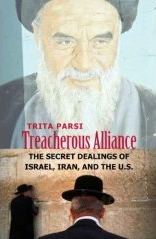
treaterousalliance.jpgHowever, as I discovered in the course of researching my book Treacherous Alliance – the Secret Dealings of Israel, Iran and the United States, not only does Netanyahu’s characterization of Iran have little relationship to reality; Netanyahu himself knows this better than most. Outside of the realm of cynical posturing by politicians, most Israeli strategists recognize that Iran represents a strategic challenge to the favorable balance of power enjoyed by Israel and the U.S. in the Middle East over the past 15 years, but it is no existential threat to the Israel, the U.S. or the Arab regimes.

And that was the view embraced by the Likud leader himself during his last term as prime minister of Israel. In the course of dozens of interviews with key players in the Israeli strategic establishment, a fascinating picture emerged of Netanyahu strongly pushing back against the orthodoxy of his Labor Party predecessors, Yitzhak Rabin and Shimon Peres, which treated Iran as one of Israel’s primary enemies. Not only that, he initiated an extensive discreet program of reaching out to the Islamic Republic. [complete article]

Editor’s Comment — Without wanting to understate Israel’s capacity for irrational behavior, it’s worth asking whether for the Israeli right there is one issue to which all others are subordinate. I would say that there is and that it is the consolidation of the territorial expansion that Israel has been engaged in for the last 40 years through building settlements in the West Bank. Even today, The Guardian reports on yet more seizure of Palestinian land that will allow a huge expansion of settlements. The greatest threat to this ongoing expansionist enterprise would come from the revival of the long-stalled peace process. The relentless construction of settlements, the construction of an apartheid road system separating Israeli and Palestinian traffic, and the construction of the so-called security barrier — these are all ways of making it clear, declarations to the contrary notwithstanding, that Israel has no intention of withdrawing to the 1967 borders.

And how does Iran fit into this equation? It presents a useful diversion through which in the shadow of a supposed existential threat, the development of the West Bank can continue all the way to the end of a window of opportunity — otherwise known as the Bush administration.

While Netanyahu’s neoconservative supporters in Washington can’t wait to see the bombs rain down on Iran, my suspicion (and it’s nothing more than that) is that Bibi will play the 1938 rhetoric for all it’s worth even while the prospect of a nuclear-armed Iran doesn’t cause him to loose a wink of sleep. Indeed, a silver-lining for Israel from a nuclear Iran is that that would provide the Jewish state with the perfect opportunity to come out of its own nuclear closet. It could claim that it was remaining true to its assertion that it would not have been the first state to “introduce” nuclear weapons to the region even if it was the first to deploy them — it simply didn’t make a fanfair about the fact; there was no declaration, no introduction. And with the balance of power having shifted towards Iran, the Israel lobby in Washington would have an easy time sustaining the United States’ financial commitment to Israel’s defense into perpetuity.

Having said that, a line that’s almost as popular as Netanyahu’s “1938”, is John McCain’s, “There is only one thing worse than the United States exercising a military option, that is a nuclear armed Iran.” The question thus remains, does the US and/or Israel truly believe that in such an attack the benefits outweigh the risks?

If Israel’s recent incursion into Syrian airspace was really as momentous an event as all the neocon chest-thumping would suggest, how come we still don’t know what happened? What might have been seen as a muscle-flexing exercise directed at Iran, at this point looks more like a very cautious dip of one toe in some icy water. While its success as a PR exercise is beyond question, its military significance remains in doubt.

And while the Iran-baiting rhetoric coming from American officials in Iraq has been escalating for months and months, it remains possible that the threshold will never be crossed from words to war. Everyone is playing an extremely dangerous game, yet the contest between those competing for the title, “master of destiny,” is a struggle between men, not one of whom has a clear view of the future.

Facebooktwittermail

NEWS & EDITOR’S COMMENT: The longer this goes on, the less we know

An Israeli strike on Syria kindles debate in the U.S

It has long been known that North Korean scientists have aided Damascus in developing sophisticated ballistic missile technology, and there appears to be little debate that North Koreans frequently visited a site in the Syrian desert that Israeli jets attacked Sept. 6. Where officials disagree is whether the accumulated evidence points to a Syrian nuclear program that poses a significant threat to the Middle East.

Mr. Cheney and his allies have expressed unease at the decision last week by President Bush and Ms. Rice to proceed with an agreement to supply North Korea with economic aid in return for the North’s disabling its nuclear reactor. Those officials argued that the Israeli intelligence demonstrates that North Korea cannot be trusted. They also argue that the United States should be prepared to scuttle the agreement unless North Korea admits to its dealing with the Syrians.

During a breakfast meeting on Oct. 2 at the White House, Ms. Rice and her chief North Korea negotiator, Christopher R. Hill, made the case to President Bush that the United States faced a choice: to continue with the nuclear pact with North Korea as a way to bring the secretive country back into the diplomatic fold and give it the incentive to stop proliferating nuclear material; or to return to the administration’s previous strategy of isolation, which detractors say left North Korea to its own devices and led it to test a nuclear device last October.

Mr. Cheney and Stephen J. Hadley, the national security adviser, also attended the meeting, administration officials said.

The Israeli strike occurred at a particularly delicate time for American diplomatic efforts. In addition to the North Korean nuclear negotiations, the White House is also trying to engineer a regional Middle East peace conference that would work toward a comprehensive peace accord between Arabs and Israelis.

The current and former American officials said Israel presented the United States with intelligence over the summer about what it described as nuclear activity in Syria. Officials have said Israel told the White House shortly in advance of the September raid that it was prepared to carry it out, but it is not clear whether the White House took a position then about whether the attack was justified. [complete article]

Editor’s Comment — Never has a story been told at such length while revealing so little.

Ever since this story broke, among the neocons, the engine that has kept it running is this bizarre proposition: the unprecedented Israeli veil of secrecy concerning the nature of its target is what “proves” that the target was so significant. But on the contrary, what the secrecy has done is create on open field for speculation ranging from this being a “dry run” in preparation for an attack on Iran (though since that would have undermined the element of surprise, a bit of Iran-directed saber rattling is more plausible); a demonstration of Israel’s ability to disable Syria’s air defenses (though it’s hard to understand why, if they could do this, Israel would want to publicize the fact and thereby give their adversaries a heads-up); and of course, an attack on a “nuclear facility.” And whereas last month it was being reported that Israeli commandos had gathered “samples” at the site providing forensic evidence of the connection to North Korea (North Korean mud off a North Korean boot?), we’re now told that “officials disagree … whether the accumulated evidence points to a Syrian nuclear program that poses a significant threat to the Middle East.” Strip away New York Times waffle, and that can be read as, there is no clear evidence that there is anything qualified to be called a Syrian nuclear program.

When it comes to the known facts, at this point we don’t actually know for a fact that Israel did anything more than penetrate Syrian air space. One of the few journalists who has actually attempted to report this story by visiting the location of the “strike” was told by locals that they heard sonic booms but no explosions.

How many more weeks do we have to wait before the neocon rumor mill runs out of steam and we can conclude what could have been assumed well before now: the reason the veil of secrecy has been held down so tight is because there’s nothing behind it!

As for my own theory about what happened, it is this: Israel’s new defense minister and would-be future prime minister, Ehud Barak, wanted to demonstrate that he’s a man of action who can restore Israel’s military pride after last year’s disastrous performance in Lebanon. The “strike” was a fake act of war in which the IAF gambled that Syria would not rise to the bait. The absolute secrecy was intended to hide this risky charade. Instead it provided an open season for neocon rumormongering about North Korea, Iran, the State Department and any other conceivable target of opportunity.

Facebooktwittermail

NEWS & OPINION: Putin, Clinton, and the GOP buffoons on Iran and the end of the world

Putin: no proof Iran is trying to make nuclear weapons

There is no proof Iran is pursuing a nuclear weapons programme, the Russian president, Vladimir Putin, said today.

But he said Tehran should make its atomic activity “as transparent as possible”.

“We do not have data that says Iran is trying to produce nuclear weapons. We do not have such objective data,” Mr Putin told a news conference in Paris after talks with the French president, Nicolas Sarkozy. [complete article]

Bomb, bomb Iran

Hillary seemed rattled.

Up until now, she has displayed remarkable imperturbability — gliding along with the help of good lighting, a hearty guffaw and a clever husband.

But on Sunday in New Hampton, Iowa, Hillary lost her cool at last. Sparring with a voter on Iran, she sounded defensive and paranoid.

A Democrat, Randall Rolph, asked Senator Clinton why he should back her when she did not learn her lesson after voting to authorize W. to use force in Iraq. He did not understand how she could have voted yea to urge W. to label Iran’s Revolutionary Guard a terrorist organization, possibly setting the stage for more Cheney chicanery. [complete article]

Thompson warns of ‘Islamic fascism’

Fred Thompson, the actor and ex-senator who has joined the Republican race for the US presidency, has vowed to halt the spread of “Islamic fascism” during a televised debate with his party rivals.

Thompson said “It is a global war – Islamic fascism has declared it upon us,” during the debate with his eight rivals in Michigan on Tuesday.

“They play by no rules and they are intent on bringing down Western civilisation and the United States of America,” said Thompson, famous for his role in the Law & Order television series.

Mitt Romney, a frontrunner, said Mahmoud Ahmadinejad, the Iranian president, was a “rogue and a buffoon”. [complete article]

Facebooktwittermail