Category Archives: human rights

Britain’s legacy of torture

David M. Anderson writes: The British do not torture. At least, that is what we in Britain have always liked to think. But not anymore. In a historic decision last week, the British government agreed to compensate 5,228 Kenyans who were tortured and abused while detained during the Mau Mau rebellion of the 1950s. Each claimant will receive around £2,670 (about $4,000).

The money is paltry. But the principle it establishes, and the history it rewrites, are both profound. This is the first historical claim for compensation that the British government has accepted. It has never before admitted to committing torture in any part of its former empire.

In recent years there has been a clamor for official apologies. In 2010, Britain formally apologized for its army’s conduct in the infamous “Bloody Sunday” killings in Northern Ireland in 1972, and earlier this year Prime Minister David Cameron visited Amritsar, India, the site of a 1919 massacre, and expressed “regret for the loss of life.”

The Kenyan case has been in process for a decade in London’s High Court. The British fought to avoid paying reparations, so the decision to settle is a significant change of direction. The decision comes months ahead of the 50th anniversary of the British departure from Kenya — once thought of as the “white man’s country” in East Africa. [Continue reading…]

Facebooktwittermail

The shooting of Ibragim Todashev: is the lawlessness of Obama’s drone policy coming home?

George Monbiot writes: Did the FBI execute Ibragim Todashev? He appears to have been shot seven times while being interviewed at home in Orlando, Florida, about his connection to one of the Boston bombing suspects. Among the shots was the assassin’s hallmark: a bullet to the back of the head. What kind of an interview was it?

An irregular one. There was no lawyer present. It was not recorded. By the time Todashev was shot, he had apparently been interrogated by three agents for five hours. And then? Who knows? First, we were told, he lunged at them with a knife. How he acquired it, five hours into a police interview, was not explained. How he posed such a threat while recovering from a knee operation also remains perplexing.

At first he drew the knife while being interviewed. Then he acquired it during a break from the interview. Then it ceased to be a knife and became a sword, then a pipe, then a metal pole, then a broomstick, then a table, then a chair. In one account all the agents were in the room at the time of the attack; in another, all but one had mysteriously departed, leaving the remaining officer to face his assailant alone.

If – and it remains a big if – this was an extrajudicial execution, it was one of hundreds commissioned by US agencies since Barack Obama first took office. The difference in this case is that it took place on American soil. Elsewhere, suspects are bumped off without even the right to the lawyerless interview Ibragim Todashev was given. [Continue reading…]

Facebooktwittermail

Guantánamo hunger strikers demand new doctors in letter of protest

The Guardian reports: Thirteen Guantánamo Bay detainees on hunger strike have written an open letter to their military doctors insisting they receive independent, non-military medical treatment – and appealing to the conscience of their physicians.

“I cannot trust your advice, because you are responsible to your superior military officers who require you to treat me by means unacceptable to me, and you put your duty to them above your duty to me as a doctor,” the detainees write in an open letter from the detention center obtained by the Guardian. “Your dual loyalties make trusting you impossible.”

The signatories, who include former UK resident Shaker Aamer, protest that the force-feedings administered by military physicians at Guantánamo are “extremely painful” and “in violation of the ethics of your profession.” The May 30 letter was co-ordinated by attorneys for the 13 detainees, nine of whom signed the statement directly. Four signed through their lawyers.

Another nine lawyers, some of whom represent Guantánamo detainees, added their names to the letter. [Continue reading…]

Facebooktwittermail

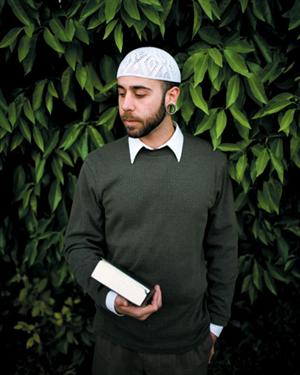
Guantanamo Bay prison guard converts to Islam because of the living faith of Muslim detainees

The Huntsville Times reports: Terry Holdbrooks Jr., 29, wears the beard of a bald Amish guy, the tattoos of a punk kid, and the twitchy alertness of a military policeman. Take him to a restaurant, and he’ll choose the chair with its back against the wall. Take his photo, and he’ll prefer to look away from the camera.

Part of that wariness Holdbrooks learned while guarding detainees from 2003 to 2004 at Guantanamo Bay, the U.S. holding tank for military prisoners on the southeastern point of Cuba.

And part of that wariness he developed after he converted to Islam while stationed at Guantanamo after months of midnight conversations with the Muslim detainees – a conversion that prompted several of his fellow soldiers to try several times to talk some “sense” into him so he wouldn’t “go over to the enemy,” as they put it.

Holdbrooks told the story of his conversion and of his observations of the controversial detention center to an audience of about 80 people at the Huntsville Islamic Center in Huntsville Saturday night, May 25, 2013. The camp, he said, tramples on every human right the U.S. has said it is against. The current hunger strike by 102 of the 166 prisoners has crossed 100 days. Many of those men were cleared to go home five or six years ago, Holdbrooks said. Their home countries tell their lawyers the U.S. won’t release them, and the U.S. tells them their home countries won’t receive them.

“They’ve lost hope. They’ve decided it’s better to die,” Holdbrooks said. “One of them is down to 70 pounds.”

Holdbrooks is traveling with Khalil Meek, a co-founder and executive director of the Texas-based Muslim Legal Fund of America. They are raising money for that non-profit civil rights organization, which helps pay for legal help for Muslims who are American citizens and who have been accused of vague crimes or placed on no-fly lists and other restrictions under the increasingly broad “anti-terrorism” provisions.

Even more than raising money for legal defense, Holdbrooks said, he wants to stir Americans to action. Holdbrooks’ self-published account of his experience at Guantanamo, “Traitor?,” was published this month. It’s available for sale online at www.GtmoBook.com.

“I tell this story and I wrote the book so idiot-simple that anyone could read and understand that the existence of Guantanamo is something to be ashamed of,” Holdbrooks said. [Continue reading…]

Facebooktwittermail

UK provided more support for CIA rendition flights than thought, says study

The Guardian reports: The UK’s support for the CIA’s global rendition programme after the September 11 terrorist attacks on the US was far more substantial than has previously been recognised, according to a new research project that draws on a vast number of publicly available data and documentation.

Evidence gathered by The Rendition Project – an interactive website that maps thousands of rendition flights – highlight 1,622 flights in and out of the UK by aircraft now known to have been involved in the agency’s secret kidnap and detention programme.

While many of those flights may not have been involved in rendition operations, the researchers behind the project have drawn on testimony from detainees, Red Cross reports, courtroom evidence, flight records and invoices to show that at least 144 were entering the UK while suspected of being engaged in rendition operations. [Continue reading…]

Facebooktwittermail

Revised Guantanamo force-feed policy exposed

Jason Leopold reports: Hunger striking Guantanamo prisoners who are force-fed a liquid nutritional supplement undergo a brutal and dehumanising medical procedure that requires them to wear masks over their mouths while they sit shackled in a restraint chair for as long as two hours, according to documentation obtained by Al Jazeera. The prisoners remain this way, with a 61cm – or longer – tube snaked through their nostril until a chest X-ray, or a test dose of water, confirms it has reached their stomach.

At the end of the feeding, the prisoner is removed from the restraint chair and placed into a “dry cell” with no running water. A guard then observes the detainee for 45-60 minutes “for any indications of vomiting or attempts to induce vomiting”. If the prisoner vomits he is returned to the restraint chair.

That’s just a partial description of the “chair restraint system clinical protocol” which medical personnel are instructed to follow when administering a nutritional supplement to prisoners who have been selected for force-feeding by Guantanamo Commander Rear Admiral John Smith.

Standard operating procedure

The restraint system, published here for the first time, along with the feeding procedures policy, was contained in a newly revised Standard Operating Procedure (SOP) for Guantanamo hunger strikers, obtained exclusively by Al Jazeera from United States Southern Command (SOUTHCOM), which has oversight of the joint task force that operates the prison.

The 30-page manual contains the most detailed descriptions to date pertaining to the treatment of hunger strikers and prisoners who undergo force-feedings. The SOP replaced a previous SOP issued in 2003 – revised in 2005 – which was declassified several years ago by the Pentagon, albeit with redactions. The new, unredacted policy obtained by Al Jazeera went into effect March 5 – one month after Guantanamo prisoners launched their protest over the inspection of their Qurans.

The procedure appears to have been revised and implemented in order to deal with a mass hunger strike. [Continue reading…]

Facebooktwittermail

Outsourcing assassination

Micah Zenko writes: “Outsourcing” is a dirty word in Washington these days. But officials are strangely silent when it involves targeted killings. This column has repeatedly focused on the scope, distinction, legality, and strategic effectiveness of America’s Third War of non-battlefield targeted killings in Pakistan, Yemen, Somalia, and the Philippines. Among the most widely promulgated criticisms of U.S. drone strikes is the absence of any transparency in decision making, limited congressional and judicial oversight, and the potential for civilian harm without any apparent corrective action. Policymakers and analysts have offered suggestions for how — over 10 years after they began — the Obama administration could comprehensively reform its targeted killing policies. Finally, President Barack Obama and Attorney General Eric Holder promised some reforms related to transparency “in the months ahead.” That was several months ago. Given the Obama administration’s refusal to provide witnesses to recent congressional hearings on drones — or answer clarifying questions posed by journalists and policymakers — it is likely that forthcoming announcements will fall short of the president’s repeated goal of making his, “the most transparent administration in history.”

However, if you’re concerned by the Obama administration’s targeted killing policies, don’t overlook similar attacks conducted by allies and partners who receive U.S. money, weapons, or actionable intelligence. When the United States provides other states or non-state actors with the capabilities that enable lethal operations — without which they would not happen — it bears primary responsibility for the outcome. Whatever drone strike reforms the White House offers, or if additional congressional hearings are held, they must take into account America’s troubling role in client-state targeted killings. Consider some of the most egregious recent examples which the United States directly abetted: [Continue reading…]

Facebooktwittermail

Guantanamo detainee says prison ‘shakedown’ sparked hunger strike

The Los Angeles Times reports: Obaidullah, an Afghan villager captured with diagrams of improvised bombs, has marked nearly 11 years as a detainee at the U.S. naval base on Guantanamo Bay, Cuba.

Three months ago, outraged by what he called another prison “shakedown,” he joined a hunger strike there, and now is locked in solitary confinement with at least 100 fellow detainees.

“I have seen men who are on the verge of death being taken away to be force-fed,” Obaidullah said in a federal court affidavit declassified Friday. “I have also seen some men coughing up blood, being hospitalized, losing consciousness, becoming weak and fatigued.”

His observations are the most extensive yet by a detainee about conditions at the military prison and what prompted the hunger strike. He and others tell of a Feb. 6 search when guards confiscated toiletries, family pictures and copies of the Koran. For the detainees, the trigger was “U.S. soldiers rifling through the pages of many Korans and handling them roughly.”

Military officials said about four dozen doctors and nurses had been deployed to Guantanamo Bay to help the detainees stay alive and maybe start eating again. And Col. John Bogdan, who runs the prison, recently told reporters that the raid, which he defended, unearthed contraband including crudely fashioned weapons made out of mop handles. [Continue reading…]

Facebooktwittermail

Guantanamo burns through $900,000 a year per inmate

Reuters reports: It’s been dubbed the most expensive prison on Earth and President Barack Obama cited the cost this week as one of many reasons to shut down the detention centre at Guantanamo Bay, which burns through some $900,000 (£577,886) per prisoner annually.

The Pentagon estimates it spends about $150 million each year to operate the prison and military court system at the U.S. Naval Base in Cuba, which was set up 11 years ago to house foreign terrorism suspects. With 166 inmates currently in custody, that amounts to an annual cost of $903,614 per prisoner.

By comparison, super-maximum security prisons in the United States spend about $60,000 to $70,000 at most to house their inmates, analysts say. And the average cost across all federal prisons is about $30,000, they say.

Facebooktwittermail

As long as it stays open, Guantánamo is a stain on America’s reputation

Morris Davis, former chief prosecutor for the military commissions at Guantánamo, writes: I am going to say something I have not said as often as I would have liked: I agree with President Obama. Despite indications to the contrary – such as fighting me tooth and nail in court the past three years (and counting) over my firing by the Library of Congress for writing op-eds critical of his and President Bush’s detainee policies – he apparently came to the same realization I had several years ago that, in his words, “we’ve got to close Guantánamo.”

At a press conference on Tuesday, the president said that Guantánamo is unnecessary to keep America safe; it is expensive and inefficient; it diminishes the standing of the United States in the international community; it hampers cooperation with allies on counterterrorism efforts; and it serves as a recruitment tool for extremists. He is right on all counts. How, then, could anyone find an upside to perpetuating the Guantánamo fiasco?

Well, some see advantage in pandering to fear, particularly politicians on the far right of the ideological spectrum. They argue that anyone who would consider moving the “crazy bastards” out of Guantánamo and closing it is soft on terrorism. They are wrong: they are the ones who are soft … in the head and the spine. American law enforcement agencies, prison systems and judicial processes have proven themselves quite capable of dealing with “crazy bastards” of all types. They can handle a Khalid Sheikh Mohammed. It is time to stop wasting the taxpayers’ money and squandering what credibility America has left keeping a folly afloat. [Continue reading…]

Facebooktwittermail

How to close Guantanamo

Laura Pitter writes: President Barack Obama finally broke his long silence on Tuesday on the need to close Guantanamo. Echoing comments he made four years ago — when, on his second day in office he promised to close the facility within a year — he said “Guantanamo is not necessary to keep America safe. It is expensive. It is inefficient…. It needs to be closed.”

Welcome words, but it’s unlikely they will brighten the day of the 100 men currently on hunger strike at the facility. Twenty-one are currently being tube-fed, a procedure that entails being put in a restraint chair while a lubricated plastic tube is inserted down a detainee’s nose and into his stomach. (Detainees are then held in the chair for approximately two hours to make sure the liquid supplement fed into the tube is digested.) Obama’s words might carry more resonance with those who have been lobbying for closure of the facility for the better part of a decade, though perhaps more so if he didn’t seem so keen to apportion blame elsewhere.

In his remarks, made in response to questions at the White House press briefing, Obama pointed the finger at Congress saying it had been “determined” not to let him close the facility, and that he promised to “re-engage with Congress” on the issue. While it’s true that Congress has certainly placed obstacles in the way of closing the facility, such as restricting the use of funds to transfer detainees to the United States for trial, there are still a number of steps the Obama administration could have taken — and can still take now — to begin closing the facility and ending indefinite detention without trial. [Continue reading…]

Facebooktwittermail

U.S. drone strikes being used as alternative to Guantánamo, lawyer says

The Guardian reports: The lawyer who first drew up White House policy on lethal drone strikes has accused the Obama administration of overusing them because of its reluctance to capture prisoners that would otherwise have to be sent to Guantánamo Bay.

John Bellinger, who was responsible for drafting the legal framework for targeted drone killings while working for George W Bush after 9/11, said he believed their use had increased since because President Obama was unwilling to deal with the consequences of jailing suspected al-Qaida members.

“This government has decided that instead of detaining members of al-Qaida [at Guantánamo] they are going to kill them,” he told a conference at the Bipartisan Policy Center.

Obama this week pledged to renew efforts to shut down the jail but has previously struggled to overcome congressional opposition, in part due to US disagreements over how to handle suspected terrorists and insurgents captured abroad.

An estimated 4,700 people have now been killed by some 300 US drone attacks in four countries, and the question of the programme’s status under international and domestic law remains highly controversial. [Continue reading…]

Facebooktwittermail

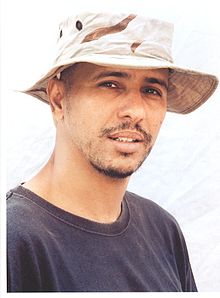
The Guantánamo memoirs of Mohamedou Ould Slahi

Mohamedou Ould Slahi has been held without charge in Guantánamo for 11 years. He was kidnapped by the U.S. government in November 2001, flown to Jordan where he was held for eight months. The Jordanians concluded he had not engaged in terrorism but the U.S. nevertheless transferred him to Bagram Air Base in Afghanistan and then two weeks later to Guantánamo.

Larry Siems writes:

What followed was one of the most stubborn, deliberate, and cruel Guantánamo interrogations on record. Secretary of Defense Donald Rumsfeld personally signed Slahi’s interrogation plan. Like Mohamed al-Qahtani, the Pentagon’s other “Special Project,” Slahi would be subjected to months of 20-hour-a-day interrogations that combined sleep deprivation, severe temperature and diet manipulation, and total isolation with relentless physical and psychological humiliations. He was told his mother had been detained and would soon be at the mercy of the all-male population at Guantánamo. He was threatened with death and subjected to a violent mock rendition. Declassified files, including the Defense Department’s Schmidt-Furlow Report, the Justice Department’s investigation of FBI involvement in Guantánamo interrogations, and the Senate Armed Services Committee’s report on the treatment of detainees, document the Pentagon’s plan and its meticulous and malicious implementation.

That all this abuse was fruitless is clear from the 2010 decision of U.S. District Court Judge James Robertson granting Slahi’s habeas corpus petition and ordering his release. Once there had been talk of trying Slahi as a key 9/11 recruiter, a capital crime, but no criminal charges were ever prepared against him. The man first assigned to prosecute him, Marine Corps Lt. Col. Stuart Couch, withdrew from the case when he discovered Slahi had been tortured. When Couch’s boss, former Guantánamo chief prosecutor Col. Morris Davis, met with the CIA, the FBI, and military intelligence in 2007 to review Slahi’s case, the agencies conceded they could not link him to any acts of terrorism. During Slahi’s habeas corpus proceedings, the government still alleged he played a role in recruiting the 9/11 hijackers, though by then it was acknowledging, as Robertson notes in a footnote to his opinion, “that Slahi probably did not even know about the 9/11 attacks.” The only evidence the government offered to support allegations of Slahi’s involvement in terrorist plots came, Robertson found, from statements he made in the course of his brutal interrogation.

Slahi testified by closed video link to Washington during the habeas corpus proceedings. What he said remains classified. Until now, one of the few documents we had of Slahi describing his ordeal, in his own words, is the declassified transcript of his November 2005 Administrative Review Board hearing. The document is remarkable for the characteristic clarity and sly humor of Slahi’s voice; a masked interrogator, he tells the board, “had gloves, OJ Simpson gloves on his hands.” It is also exceptionally earnest. Early in his statement, he tells the board, “Please, I want you guys to understand my story okay, because it really doesn’t matter if they release me or not, I just want my story understood.”

At the time, Slahi was already working on his memoir. When his pro bono attorneys met him for the first time in April 2005, he greeted them with 100 handwritten pages. With their encouragement, he delivered additional installments over the next year, complaining at one point in a letter, “You ask me to write you everything I told my interrogators. Are you out of your mind! How can I render uninterrupted interrogation that has been lasting the last 7 years? That’s like asking Charlie Sheen how many women he dated.” And yet Slahi’s writing is much more than a litany of abuses. It is driven by something much deeper: not just the desire to “be fair,” as he puts it, but to understand his guards, his interrogators, and his fellow detainees as protagonists in their own right, and to show that even the most dehumanizing situations are composed of individual, and at times harrowingly intimate, human exchanges. The result is an account that is both damning and redeeming.

From Slahi’s memoir, May, 2003 — some names and other words have been redacted:

In the block the recipe started. I was deprived of my comfort items, except for a thin iso-mat and a very thin, small, and worn-out blanket. I was deprived of my books, which I owned. I was deprived of my Quran. I was deprived of my soap. I was deprived of my toothpaste. I was deprived of the roll of toilet paper I had. The cell — better, the box — was cooled down so that I was shaking most of the time. I was forbidden from seeing the light of the day. Every once in a while they gave me a rec time in the night to keep me from seeing or interacting with any detainees. I was living literally in terror. I don’t remember having slept one night quietly; for the next 70 days to come I wouldn’t know the sweetness of sleeping. Interrogation for 24 hours, three and sometimes four shifts a day. I rarely got a day off.

“We know that you are a criminal.”

“What have I done?”

“You tell me, and we reduce your sentence to 30 years. Otherwise you will never see the light again. If you don’t cooperate we are going to put you in a hole and wipe your name out of our detainees database.” I was so terrified because I knew, even though he couldn’t make such decision on his own, he had the complete backup of the high government level. He didn’t speak from the air.

“I don’t care where you take me, just do it.”

When I failed to give him the answer he wanted to hear, he made me stand up, with my back bent because my hands were shackled with my feet and waist and locked to the floor. [ ? ? ? ? ?] turned the temp control all the way down, and made sure that the guards maintained me in that situation until he decided otherwise. He used to start a fuss before going to his lunch, so he kept me hurt during his lunch, which took at least two to three hours. [ ? ? ? ? ?] likes his food; he never missed his lunch. I was wondering, how could [ ? ? ? ? ?] have possibly passed the fitness test of the Army? But I realized he is in the Army for a reason.

The fact that I wasn’t allowed to see the light made me “enjoy” the short trip between my freakin’ cold cell and the interrogation room. It’s just a blessing when the warm GTMO sun hit me. I felt the life sneaking back into every inch of my body. I always had this fake happiness, though for a very short time. It’s like taking narcotics.

“How you been?” said one of the Puerto Rican escorting guards, with his weak English.

“I’m OK, thanks, and you?”

“No worry, you gonna back to your family,” he said. When he said so I couldn’t help breaking into [ ? ? ? ? ?]. Lately, I had become so vulnerable. What’s wrong with me? Just a soothing word in this ocean of agony was enough to make me cry. [Continue reading…]

Facebooktwittermail

Obama: Guantánamo is ‘not sustainable’

The presidential commentator-in-chief says that Guantánamo is not sustainable — and 100 prisoners on hunger strike seems to reinforce that observation. But Obama used to like to talk about the Israeli-Palestinian conflict and say “the status quo is not sustainable”. Both of these sound like the observations of a powerless bystander — someone who can see what’s wrong but has no ability to fix it.

The office of the president of the United States might not be all-powerful, but it surely possesses more power than Obama often seems willing to employ.

The New York Times reports: President Obama on Tuesday recommitted to his years-old vow to close the Guantánamo Bay prison following the arrival of “medical reinforcements” of nearly 40 Navy nurses, corpsmen and specialists amid a mass hunger strike by inmates who have been held for over a decade without trial.

“It’s not sustainable,” Mr. Obama said at a White House news conference. “The notion that we’re going to keep 100 individuals in no man’s land in perpetuity,” he added, made no sense. “All of us should reflect on why exactly are we doing this? Why are we doing this?”

Citing the high expense and the foreign policy costs of continuing to operate the prison, Mr. Obama said he would try again to persuade Congress to lift restrictions on transferring inmates to the federal court system. Mr. Obama was ambiguous, however, about the most difficult issue raised by the prospect of closing the prison: what to do with detainees who are deemed dangerous but could not be feasibly prosecuted.

Mr. Obama’s existing policy on that subject, which Congress has blocked, is to move detainees to maximum-security facilities inside the United States and continue holding them without trial as wartime prisoners; it is not clear whether such a change would ease the frustrations fueling the detainees’ hunger strike.

Yet at another point in the news conference, Mr. Obama appeared to question the policy of indefinite wartime detention at a time when the war in Iraq has ended, the one in Afghanistan is winding down and the original makeup of Al Qaeda has been decimated. “The idea that we would still maintain forever a group of individuals who have not been tried,” he said, “that is contrary to who we are, contrary to our interests, and it needs to stop.”

But in the short term, Mr. Obama indicated his support for the force-feeding of detainees who refused to eat.

“I don’t want these individuals to die,” he said.

As of Tuesday morning, 100 of the 166 prisoners at Guantánamo were officially deemed by the military to be participating in the hunger strike, with 21 “approved” to be fed the nutritional supplement Ensure through tubes inserted through their noses. [Continue reading…]

Facebooktwittermail

Despair drives Guantánamo detainees to revolt

The New York Times reports: In the early afternoon quiet, guards in camouflage fatigues walked the two-tiered cellblocks of Camp Six, where the most cooperative of the 166 terrorism suspects held in the military prison here are housed. From a darkened control room, other guards watched banks of surveillance monitors showing prisoners in white clothing — pacing, sleeping or reading — in their cells.

But the relative calm on display to visiting reporters last week was deceiving. Days earlier, guards had raided Camp Six and locked down protesting prisoners who had blocked security cameras, forbidding them to congregate in a communal area. A hunger strike is now in its third month, with 93 prisoners considered to be participating — more than half the inmates and twice the number before the raid.

“They are not done yet, and they will not be done until there is more than one death,” said a Muslim adviser to the military, identified as “Zak” for security reasons, who fears there may be suicides. Only one thing, he predicted, will satisfy the detainees: if someone is allowed to leave.

The spark for the protest is disputed. Detainees, through their lawyers, say that when guards conducted a search of their cells on Feb. 6, they handled their Korans in a disrespectful way. Prison officials dispute that.

But both military officials and lawyers for the detainees agree about the underlying cause of the turmoil: a growing sense among many prisoners, some of whom have been held without trial for more than 11 years, that they will never go home. [Continue reading…]

Facebooktwittermail

Ex-Bush official willing to testify Bush, Cheney knew Gitmo prisoners innocent

Jason Leopold reports: Former Secretary of Defense Donald Rumsfeld once declared that individuals captured by the US military in the aftermath of 9/11 and shipped off to the Guantanamo Bay prison facility represented the “worst of the worst.”

During a radio interview in June 2005, Rumsfeld said the detainees at Guantanamo, “all of whom were captured on a battlefield,” are “terrorists, trainers, bomb makers, recruiters, financiers, [Osama Bin Laden’s] body guards, would-be suicide bombers, probably the 20th hijacker, 9/11 hijacker.”

But Rumsfeld knowingly lied, according to a former top Bush administration official.

And so did then Vice President Dick Cheney when he said, also in 2002 and in dozens of public statements thereafter, that Guantanamo prisoners “are the worst of a very bad lot” and “dangerous” and “devoted to killing millions of Americans, innocent Americans, if they can, and they are perfectly prepared to die in the effort.”

Now, in a sworn declaration obtained exclusively by Truthout, Col. Lawrence Wilkerson, who was chief of staff to former Secretary of State Colin Powell during George W. Bush’s first term in office, said Bush, Cheney, and Rumsfeld knew the “vast majority” of prisoners captured in the so-called War on Terror were innocent and the administration refused to set them free once those facts were established because of the political repercussions that would have ensued. [Continue reading…]

Facebooktwittermail