The Guardian reports: Libya has demanded an explanation for the “kidnapping” of one of its citizens by American special forces, hours after a separate US military raid on a terrorist target in Somalia ended in apparent failure and retreat.
In Tripoli the US army’s delta force seized alleged al-Qaida leader Nazih Abdul-Hamed al-Ruqai, known by his alias Abu Anas al-Liby and wanted for the 1998 bombings of the US embassies in Kenya and Tanzania that killed more than 220 people.
But US navy Seals suffered a major setback when they launched an amphibious assault to capture an Islamist militant leader said to be Ahmed Godane, described as Africa’s most wanted man and the architect of last month’s attack on the Westgate shopping mall in Kenya. The elite Seals were beaten back by heavy fire and apparently abandoned equipment that the Somali militants photographed and posted on the internet.
As dramatic details of Saturday’s twin operations emerged, US secretary of state John Kerry insisted that terrorists “can run but they can’t hide”, but faced growing questions about America’s military reach in Africa and the consequences of unilateral aggression.
Al-Liby was captured outside his family home at 6.15am in Noufle’een, a quiet suburb in eastern Tripoli, according to witnesses, but there were conflicting reports over who took him. His brother, Nabih, told the Associated Press that al-Liby was parking when a convoy of three vehicles encircled his car. Armed gunmen smashed the car’s window and seized al-Liby’s gun before grabbing him and taking him away, the report said. The brother said al-Liby’s wife saw the kidnapping from her window and described the abductors as foreign-looking armed “commandos”.
But al-Liby’s son Abdullah insisted that Libyan forces were involved. Appearing on Tripoli’s Nabir TV station, he said: “The people who took my father were Libyan, not Americans – they spoke with Tripoli accents. [Continue reading…]
Category Archives: human rights
Like David Miranda, I was interrogated at a British airport
Baraa Shiban writes: On Monday night I was held and questioned at an airport because of my work investigating western counter-terrorism abuses in Yemen. But this did not happen in Sanaa or at the hands of some tyrannical regime. It happened at Gatwick. British officials interrogated me under the controversial schedule 7 provision of the Terrorism Act 2000 – the same provision recently used to chilling effect to detain David Miranda.
Not satisfied with clamping down on attempts to report on blanket surveillance and the “war on terror”, the UK government seems to have branched out to people like me – activists working to uncover and prevent such abuses.
I have visited the UK before without incident. I have long admired British culture – I spent part of my education in Wales. This time I came at the invitation of Chatham House to speak at a seminar on Yemen. Standing at passport control, bleary eyed from the long flight, I expected another routine trip.
The border agent asked what my job is. When I explained I was the Yemen project co-ordinator for London-based legal charity Reprieve he said, “Sir, please come with me. We have a Terrorism Act and I have some questions I need to ask you.”
I was then taken away from the desk and interrogated for over an hour. The suited man quizzed me about my political opinions. When I suggested that these should have no bearing on whether I am allowed into the country, the agent threatened to hold me for the maximum extent of his powers. “I am authorised to detain you for up to nine hours,” he said. “We have only been here for an hour, but we can be here for up to nine. So you understand what this can lead to.”
He took my Reprieve business card and disappeared. When he returned – I would guess having made use of a computer and a popular search engine – he suggested he had detained me not merely because I was from Yemen, but also because of Reprieve’s work investigating and criticising the efficacy of US drone strikes in my country.
A telling exchange followed: “So,” he asked, “does your organisation have anything to do with terrorism in Yemen?”
I replied, “My organisation addresses counter-terrorism abuses inside the country.”
“Exactly!” He said. “Why doesn’t your organisation do something about the terrorism that happens in your country, instead of focusing on the counter-terrorism abuses?”
What could I reply? Of course I oppose terrorism. But I also oppose the secret air war in my country – waged by the US, apparently with covert support from the UK and others. [Continue reading…]
Abu Ghraib torture victims sued by their torturers
Common Dreams: ‘Defense’ contractor CACI International has taken the shocking step of suing four former Abu Ghraib detainees who are seeking redress in U.S. courts for the company’s role in torturing, humiliating and dehumanizing them, with the U.S. corporation recently requesting that the judge order the plaintiffs—all of whom are Iraqi—to pay CACI for legal costs.
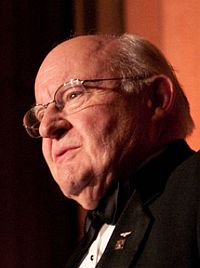
CACI is demanding over $15,000 in compensation, mostly for witness fees, travel allowances and deposition transcripts, according to court documents.CACI Chairman Dr. J.P. (Jack) London
“Given the wealth disparities between this multi-billion dollar entity and four torture victims, given what they went through, it’s surprising and appears to be an attempt to intimidate and punish these individuals for asserting their rights to sue in U.S. courts,” Baher Azny, legal director for the Center for Constitutional Rights, which is working on the case, told Common Dreams.
Just weeks ago, a federal judge dismissed the former Abu Ghraib prisoners’ lawsuit against CACI International on the grounds that because Abu Ghraib is oversees, it is beyond the jurisdiction of U.S. courts.
The plaintiffs are appealing the decision, with their lawyers arguing that a U.S. corporation operating in a U.S. military prison should be subject to U.S. law.
The ruling is expected to have far-reaching ramifications for the shadowy networks of private contractors who operate in war-torn Iraq under veils of secrecy and with near-immunity, despite widely documented war crimes.
After Guantánamo, another injustice
John Grisham writes: About two months ago I learned that some of my books had been banned at Guantánamo Bay. Apparently detainees were requesting them, and their lawyers were delivering them to the prison, but they were not being allowed in because of “impermissible content.”
I became curious and tracked down a detainee who enjoys my books. His name is Nabil Hadjarab, and he is a 34-year-old Algerian who grew up in France. He learned to speak French before he learned to speak Arabic. He has close family and friends in France, but not in Algeria. As a kid growing up near Lyon, he was a gifted soccer player and dreamed of playing for Paris St.-Germain, or another top French club.
Tragically for Nabil, he has spent the past 11 years as a prisoner at Guantánamo, much of the time in solitary confinement. Starting in February, he participated in a hunger strike, which led to his being force-fed.
For reasons that had nothing to do with terror, war or criminal behavior, Nabil was living peacefully in an Algerian guesthouse in Kabul, Afghanistan, on Sept. 11, 2001. Following the United States invasion, word spread among the Arab communities that the Afghan Northern Alliance was rounding up and killing foreign Arabs. Nabil and many others headed for Pakistan in a desperate effort to escape the danger. En route, he said, he was wounded in a bombing raid and woke up in a hospital in Jalalabad.
At that time, the United States was throwing money at anyone who could deliver an out-of-town Arab found in the region. Nabil was sold to the United States for a bounty of $5,000 and taken to an underground prison in Kabul. There he experienced torture for the first time. To house the prisoners of its war on terror, the United States military put up a makeshift prison at Bagram Air Base in Afghanistan. Bagram would quickly become notorious, and make Guantánamo look like a church camp. When Nabil arrived there in January 2002, as one of the first prisoners, there were no walls, only razor-wire cages. In the bitter cold, Nabil was forced to sleep on concrete floors without cover. Food and water were scarce. To and from his frequent interrogations, Nabil was beaten by United States soldiers and dragged up and down concrete stairs. Other prisoners died. After a month in Bagram, Nabil was transferred to a prison at Kandahar, where the abuse continued. [Continue reading…]
It don’t Gitmo worse than this
Molly Crabapple reports: A T-shirt emblazoned with the slogan IT DON’T GITMO BETTER THAN THIS is perhaps the definitive physical manifestation of globalization. Sewn in Honduras and sold by Jamaican contractors on land rented from Cuba, the shirt celebrates an American prison holding Muslims who’ve been declared enemies in the war on terror. It’s a popular item in the Gitmo gift shop (yes, Gitmo has a gift shop), displayed next to the stuffed banana rats and shot glasses engraved with GUANTÁNAMO BAY: DIVE IN.
Built in 1898, the Guantánamo Bay Naval Base looks like a US suburb. There’s a McDonald’s, a Subway, and even a Christmas parade. On Halloween, military members dressed as zombies complete a 5K run. Winners of the Mr. and Ms. Gitmo Figure and Fitness Competition arch their backs on the cover of the Wire, the base’s in-house magazine. The Team Gitmo outdoor movie theater screens all the big blockbusters (when I visited it was World War Z), and in the evenings, visitors can eat jerk chicken next to swaying banyan trees, get drunk at O’Kelly’s (“the only Irish pub on Communist soil”), or sing karaoke.
But since the Joint Task Force (JTF) arrived in 2002, Guantánamo Bay has been home to the world’s most notorious prison.
Gitmo’s prison camps were built, in principle, to hold and interrogate captives outside the reach of US law. Nearly 800 Muslim men have been imprisoned since it opened, and the vast majority of them have never been charged with any crime. Since he was inaugurated in 2008, President Obama has twice promised to close Gitmo, but 166 men still languish in indefinite detention. It is a place where information is contraband, force-feeding is considered humane care, staples are weapons, and the law is rewritten wantonly.
Nabil Hadjarab arrived at Gitmo 11 years ago, in an orange jumpsuit and a diaper, his head covered by a hood, eyes blinded by blackout goggles, mouth gagged, and with headphones blaring white noise into his ears.
At 34, Nabil is four years my senior. We both speak French, draw pictures, and, in our youths, liked to travel to desolate places and have adventures. But Nabil’s days of wanderlust may be over forever. Although he’s been cleared for release since 2007, the US will not return him to his family in France. He has vowed to remain on a hunger strike till he finds freedom or death, whichever happens first. [Continue reading…]
Guantanamo tab $5.2 billion and counting
Carol Rosenberg reports: New number-crunching by Democrats campaigning for Guantanamo’s closure says the Pentagon spends nearly a half-billion dollars a year – a whopping $2.7 million per prisoner – to operate its offshore prison complex in southeast Cuba.
The figure is by far the largest per-prisoner cost ever calculated and apparently, for the first time, includes troop costs. The ostensibly temporary Pentagon prison has, since it opened in 2002, been staffed largely by troops trained up on their way to Guantanamo for rotations of nine months to a year.
The cost for this year – $454.1 million to operate, staff and build at the prison complex – comes from a report by the Defense Department’s Office of the Comptroller.
It was first provided to Congress on June 27 by Secretary of Defense Chuck Hagel and made public last week.
The report says the Pentagon will have spent $5.242 billion by the end of 2014.
The total costs, however, are likely higher. The accounting does not appear to include the prison camps’ state-of-the-art headquarters, built in 2004 for $13.5 million, or a secret lockup for ex-CIA prisoners, called Camp 7, the price tag of which is considered classified.
In addition, the Justice Department and FBI have devoted staff to detainee operations, and probably the CIA.
At Guantanamo, the prison camps spokesman, Navy Capt. Robert Durand, said the $2.7 million-per-prisoner figure apparently represents “fully loaded costs” of maintaining what is today a 2,000-strong staff at the sprawling detention center zone where 166 captives are confined to seven different lockups – including the hospital and psychiatric wards. [Continue reading…]
Ex-CIA officer reveals lies and distortions behind Milan kidnapping
A former CIA officer involved in the 2003 kidnapping of a Muslim cleric, Osama Mustapha Hassan Nasr, in Milan, spoke to McClatchy: Confirming for the first time that she worked undercover for the CIA in Milan when the operation took place, Sabrina De Sousa provided new details about the “extraordinary rendition” that led to the only criminal prosecution stemming from the secret Bush administration rendition and detention program launched after the Sept. 11, 2001, attacks.
The cleric, Osama Mustapha Hassan Nasr, was snatched from a Milan street by a team of CIA operatives and flown to Egypt, where he was held for the better part of four years without charges and allegedly tortured. An Egyptian court in 2007 ruled that his imprisonment was “unfounded” and ordered him released.
Among the allegations made by De Sousa in a series of interviews with McClatchy:
– The former CIA station chief in Rome, Jeffrey Castelli, whom she called the mastermind of the operation, exaggerated Nasr’s terrorist threat to win approval for the rendition and misled his superiors that Italian military intelligence had agreed to the operation.
– Senior CIA officials, including then-CIA Director George Tenet, approved the operation even though Nasr wasn’t wanted in Egypt and wasn’t on the U.S. list of top al Qaida terrorists.
– Condoleezza Rice, then the White House national security adviser, also had concerns about the case, especially what Italy would do if the CIA were caught, but she eventually agreed to it and recommended that Bush approve the abduction. [Continue reading…]
Senate and CIA spar over secret report on torture
The New York Times reports: The chairwoman of the Senate Intelligence Committee says she is planning a push to declassify hundreds of pages of a secret committee report that accuses the Central Intelligence Agency of misleading Congress and the White House about the agency’s detention and interrogation program, which is now defunct.
The 6,000-page report, which took years to complete and cost more than $40 million, is the only detailed account to date of a program that set off a national debate about torture. The report has been the subject of a fierce partisan fight and a vigorous effort by the C.I.A. to challenge its conclusions, and last month, the agency’s director, John O. Brennan, delivered a lengthy rebuttal to the report to committee leaders.
But the committee’s chairwoman, Senator Dianne Feinstein, Democrat of California, said in a statement this week that the report was on “firm ground” and that she planned to ask the White House and C.I.A. to declassify its 300-page executive summary after “making any factual changes to our report that are warranted after the C.I.A.’s response.”
The committee’s top Republican, Senator Saxby Chambliss of Georgia, said he believed the report was deeply flawed and agreed with the intelligence agency’s critique. But he said he believed that a summary of the report could be made public, as long as it was accompanied by a summary of the agency’s response and a dissenting statement from committee Republicans.
The clash over the report is, at its core, a fight over who writes the history of what is perhaps the most bitterly disputed part of the American government’s response to the Sept. 11, 2001, terrorist attacks. More than four years have passed since the C.I.A. closed its secret prisons, and nearly a decade since agency interrogators subjected Qaeda detainees to the most brutal interrogation methods, including the near-drowning technique known as waterboarding. [Continue reading…]
Fugitive former CIA officer arrested in Panama
Edward Snowden is accused of breaking the law, but Robert Seldon Lady, the former CIA chief in Milan, was convicted of kidnapping and given a nine-year prison sentence.
In 2003, Lady initially claimed diplomatic immunity but after that was rejected by an Italian judge in 2005 and he has been on the run ever since. It’s now reported that he ended up in Panama where he was arrested yesterday.
Panama and Italy don’t have an extradition treaty and so it remains to be seen whether Lady will be able to continue evading his prison sentence.
President Obama has zero tolerance for whistleblowers but he still thinks kidnapping is cool, so in this particular case it doesn’t look like the U.S. government will show any interest in justice.
Washington casts a friendly eye on those who commit crimes at its request, but anyone who dares to expose the government’s criminality will be made to suffer the consequences.
Obama’s secret kill list — ‘the disposition matrix’
The Guardian reports: When Bilal Berjawi spoke to his wife for the last time, he had no way of being certain that he was about to die. But he should have had his suspicions.
A short, dumpy Londoner who was not, in the words of some who knew him, one of the world’s greatest thinkers, Berjawi had been fighting for months in Somalia with al-Shabaab, the Islamist militant group. His wife was 4,400 miles away, at home in west London. In June 2011, Berjawi had almost been killed in a US drone strike on an al-Shabaab camp on the coast. After that he became wary of telephones. But in January last year, when his wife went into labour and was admitted to St Mary’s hospital in Paddington, he decided to risk a quick phone conversation.
A few hours after the call ended Berjawi was targeted in a fresh drone strike. Perhaps the telephone contact triggered alerts all the way from Camp Lemmonier, the US military’s enormous home-from-home at Djibouti, to the National Security Agency‘s headquarters in Maryland. Perhaps a few screens also lit up at GCHQ in Cheltenham? This time the drone attack was successful, from the US perspective, and al-Shabaab issued a terse statement: “The martyr received what he wished for and what he went out for.”
The following month, Berjawi’s former next-door neighbour, who was also in Somalia, was similarly “martyred”. Like Berjawi, Mohamed Sakr had just turned 27 when he was killed in an air strike.
Four months later, the FBI in Manhattan announced that a third man from London, a Vietnamese-born convert to Islam, had been charged with a series of terrorism offences, and that if convicted he would face a mandatory 40-year sentence. This man was promptly arrested by Scotland Yard and is now fighting extradition to the US. And a few weeks after that, another of Berjawi’s mates from London was detained after travelling from Somalia to Djibouti, where he was interrogated for months by US intelligence officers before being hooded and put aboard an aircraft. When 23-year-old Mahdi Hashi next saw daylight, he was being led into a courtroom in Brooklyn.
That these four men had something in common is clear enough: they were all Muslims, all accused of terrorism offences, and all British (or they were British: curiously, all of them unexpectedly lost their British citizenship just as they were about to become unstuck). There is, however, a common theme that is less obvious: it appears that all of them had found their way on to the “disposition matrix”. [Continue reading…]
Senators tell Obama to stop violating international law at Guantanamo
In a letter sent to President Obama on Wednesday, Senators Dianne Feinstein and Dick Durbin said: We write to urge you to use your Presidential authority to end the unnecessary force-feedings of detainees at the Guantanamo Bay detention facility.
Earlier this week, U.S. District Court for the District of Columbia Judge Gladys Kessler also expressed concern about the force-feeding of Guantanamo Bay detainees. The Court denied detainee Jihad Dhiab’s motion for a preliminary injunction to stop force-feeding due to lack of jurisdiction, but in her order, Judge Kessler noted that Dhiab has set out in great detail in his court filings “what appears to be a consensus that force-feeding of prisoners violates Article 7 of the International Covenant on Civil and Political Rights (ICCPR) which prohibits torture or cruel, inhumane, and degrading treatment.” The United States has ratified the ICCPR and is obligated to comply with its provisions. Judge Kessler also wrote, “it is perfectly clear from the statements of detainees, as well as the statements from the [medical] organizations just cited, that force-feeding is a painful, humiliating, and degrading process.” (emphasis added).
The judge concluded by correctly pointing out that you, as Commander in Chief, have the authority to intercede on behalf of Dhiab, and other similarly-situated detainees at Guantanamo. The court wrote: “Article II, Section 2 of the Constitution provides that ‘[t]he President shall be the Commander in Chief of the Army and Navy of the United States. …’ It would seem to follow, therefore, that the President of the United States, as Commander-in-Chief, has the authority—and power—to directly address the issue of force-feeding of the detainees at Guantanamo Bay.”
Furthermore, on May 23, 2013, in your national security speech at the National Defense University you raised the issue of force-feeding and asked “Is this who we are? Is that something our Founders foresaw? Is that the America we want to leave our children?” (emphasis added). We don’t believe it is. And we agree with your comment in the speech that “[o]ur sense of justice is stronger than that.” [Continue reading…]
Video: Letters from Guantanamo
In secret report, CIA claims torture was ‘effective’
The Washington Post reports: The CIA has completed a report that challenges the findings of a Senate investigation of the agency’s interrogation program, according to U.S. officials who said the response cites errors in the congressional probe and disputes its central conclusion that harsh methods used against al-Qaeda detainees failed to produce significant results.
The classified CIA document is expected to be delivered to the Senate Intelligence Committee on Thursday by Director John Brennan during a closed-door meeting with the committee’s chairman, Sen. Dianne Feinstein (D-Calif.), and ranking Republican Saxby Chambliss (Ga.).
The agency’s rebuttal is the most detailed defense that the CIA has assembled to date of one of the more controversial programs in its history, one that employed simulated drowning and other brutal measures to get information from al-Qaeda captives before the agency was ordered to close its secret prisons in 2009.
But the agency’s response and the 6,000-page congressional report it addresses both remain classified, making it unclear whether portions of either document will be made public. A CIA spokesman declined to comment on the agency’s response, but current and former U.S. intelligence officials said it is sharply critical of the course of the committee’s investigation as well as its conclusions.
Despite lawmakers’ conclusions that harsh interrogations were ineffective, “anyone who was around and involved in the program knows that’s not right,” said a former high-ranking U.S. intelligence official. “I don’t know how they could fail to say that actually it was effective, and you can separate that from whether you approve of it or not.” [Continue reading…]
And why is a former high-ranking U.S. intelligence official being quoted? Why? Because he/she is a former high-ranking U.S. intelligence official. The statement itself is worthless. It refers to what anyone who was around knows, without actually saying whether that includes the source. And then it asserts that torture was effective, implying that it resulted in intelligence being gathered that could not have been gathered in any other way. That’s an unprovable assertion because if you use torture, you close off the possibility of finding out what you could have learned without the use of torture.
Torture continues at Guantánamo under Obama’s watch
The Guardian reports: Increasingly brutal tactics are being used in an attempt to break the hunger strike by detainees at Guantánamo Bay, according to fresh testimony from the last British resident still held in the camp.
Shaker Aamer claims that the US authorities are systematically making the regime more hardline to try to defuse the strike, which now involves almost two-thirds of the detainees. Techniques include making cells “freezing cold” to accentuate the discomfort of those on hunger strike and the introduction of “metal-tipped” feeding tubes, which Aamer said were forced into inmates’ stomachs twice a day and caused detainees to vomit over themselves.
The 46-year-old from London tells of one detainee who was admitted to hospital 10 days ago after a nurse had pushed the tube into his lungs rather than his stomach, causing him later to cough up blood. Aamer also alleges that some nurses at Guantánamo Bay are refusing to wear their name tags in order to prevent detainees registering abuse complaints against staff.
Speaking last week from the camp in Cuba, exactly four months after he joined the hunger strike, Aamer said: “The administration is getting ever more angry and doing everything they can to break our hunger strike. Honestly, I wish I was dead.” [Continue reading…]
Meanwhile, the Associated Press reports: Calls for the doctors who force-feed hunger-striking prisoners at Guantánamo Bay to refuse to perform the practice on ethical grounds have got nowhere, a spokesman for the prison said on Thursday.
No doctors, nurses or corpsman had balked at feeding the prisoners or even voiced a concern about the military’s policy of using what’s known as enteral feeding to prevent any of the hunger strikers starving to death, said Navy Captain Robert Durand.
“They signed up to carry out lawful orders,” Durand said. “This is a lawful order.”
The hunger strike at the US base in Cuba is nearing a fourth month amid increasing pressure on the defence department to reconsider its response to the protest.
Guantánamo and the intelligence agency that hides in the shadows
The Miami Herald reports: The military judge in the Sept. 11 conspiracy trial abruptly cleared the court Thursday after a defense attorney said he was threatened by a prosecutor during a tense standoff over what U.S. intelligence agencies are working at the base.
Navy Cmdr Walter Ruiz, a veteran death-penalty defense attorney, was questioning Rear Adm. David Woods, a former prison commander, when a Department of Justice attorney interrupted. Court stopped. Ruiz huddled with several prosecutors.
“You’re playing with fire,” one said.
At issue in the hearing is who and what organizations influenced Woods as he restricted attorney-client communications ahead of last May’s arraignment of the five men accused of orchestrating the Sept. 11, 2001 hijackings that killed 2,976 people.He was in charge of the prison, even what the accused could or could not wear to court, a year ago when the alleged 9/11 mastermind, Khalid Sheik Mohammed, and four other alleged conspirators were arraigned. Thursday Woods testified by video teleconference from San Diego while Mohammed sat in court wearing a jungle camouflage hunting jacket that Woods had banned.
Woods already had testified that nobody ever told him that the CIA had input into an order that regulated the work of defense attorneys for the 9/11 accused and other former CIA captives. Ruiz, defense lawyer for Mustafa al Hawsawi, was asking the admiral what intelligence organizations he knew operated at Guantánamo during Woods’ 10-month tenure, which ended a year ago.
The line of questioning apparently so alarmed the Department of Justice’s attorney with expertise in state secrets, Joanna Baltes, that she mistakenly referred to Ruiz as “Commander Reyes,” another Navy lawyer from another war court case in which the accused was waterboarded.
Ruiz turned to the judge, Army Col. James Pohl, in exasperation. “If she wants me to use the term ‘agency who shall remain nameless’ I can do that.” [Continue reading…]
Guantánamo prosecutors say arguments on waterboarding should be in secret session
The Miami Herald reports: The prosecution in the Sept. 11 conspiracy trial put the judge on notice Wednesday that it wants to hold secret pretrial motions in the death-penalty case — and exclude both the public and five alleged terrorists during discussion of their years in CIA custody.
Exclusion must be handled on a case by case basis, said Department of Justice attorney Joanna Baltes. But, she argued, the accused don’t have an absolute right to hear legal arguments that discuss classified information before a military jury starts hearing evidence.
Defense lawyers disagreed. At issue, noted attorney David Nevin for alleged mastermind Khalid Sheik Mohammed, is the Bush administration’s Rendition, Detention and Interrogation program, in which his client was waterboarded 183 times.
“Mr. Mohammad has a right to be present when we’re talking about matters that deal with his torture,” he said. Nevin invoked the 8th Amendment prohibiting cruel and unusual punishment, and said Mohammed has a right to see evidence the against him. [Continue reading…]
Guantánamo’s 48 secret ‘indefinite detainees’ named for first time
The Miami Herald reports: The Obama administration Monday lifted a veil of secrecy surrounding the status of the detainees at Guantánamo, for the first time publicly naming the four dozen captives it defined as indefinite detainees — men too dangerous to transfer but who cannot be tried in a court of law.
The names had been a closely held secret since a multi-agency task force sifted through the files of the Guantánamo detainees in 2009 trying to achieve President Barack Obama’s executive order to close the detention center. In January 2010, the task force revealed that it classified 48 Guantánamo captives as dangerous but ineligible for trial because of a lack of evidence, or because the evidence was too tainted.
They became so-called “indefinite detainees,” a form of war prisoner held under Congress’ 2001 “Authorization for Use of Military Force.”
The Defense Department released the list to The Miami Herald, which, with the assistance of Yale Law School students, had sued for it in federal court in Washington, D.C. The Pentagon also sent the list to the House and Senate Armed Services Committees on Monday, a Defense Department official said.
According to the list, the men designated for indefinite detention are 26 Yemenis, 12 Afghans, 3 Saudis, 2 Kuwaitis, 2 Libyans, a Kenyan, a Moroccan and a Somali.
Human rights groups denounced the existence of such a list.
Amnesty International’s Zeke Johnson called “fundamentally flawed” the notion of classifying captives as indefinite detainees. “Under international human rights law,” he said, “all of the detainees should either be charged and fairly tried in federal court, or released.” [Continue reading…]
Guantanamo doctors are violating medical ethics
In the New England Journal of Medicine, Dr George Annas, Dr Sondra Crosby and Dr Leonard Glantz write: American physicians have not widely criticized medical policies at the Guantanamo Bay detainment camp that violate medical ethics. We believe they should. Actions violating medical ethics, taken on behalf of the government, devalue medical ethics for all physicians. The ongoing hunger strike at Guantanamo by as many as 100 of the 166 remaining prisoners presents a stark challenge to the U.S. Department of Defense (DOD) to resist the temptation to use military physicians to “break” the strike through force-feeding.
President Barack Obama has publicly commented on the hunger strike twice. On April 26, he said, “I don’t want these individuals [on hunger strike] to die.” In a May 23 speech on terrorism, the President said, “Look at our current situation, where we are force-feeding detainees who are . . . on a hunger strike. . . . Is this who we are? . . . Is that the America we want to leave our children? Our sense of justice is stronger than that.” How should physicians respond? That force-feeding of mentally competent hunger strikers violates basic medical ethics principles is not in serious dispute. Similarly, the Constitution Project’s bipartisan Task Force on Detainee Treatment concluded in April that “forced feeding of detainees [at Guantanamo] is a form of abuse that must end” and urged the government to “adopt standards of care, policies, and procedures regarding detainees engaged in hunger strikes that are in keeping with established medical professional ethical and care standards.” Nevertheless, the DOD has sent about 40 additional medical personnel to help force-feed the hunger strikers.
The ethics standard regarding physician involvement in hunger strikes was probably best articulated by the World Medical Association (WMA) in its Declaration of Malta on Hunger Strikers. Created after World War II, the WMA comprises medical societies from almost 100 countries. Despite its checkered history, its process, transparency, and composition give it credibility regarding international medical ethics, and its statement on hunger strikers is widely considered authoritative. The WMA’s most familiar document is the Declaration of Helsinki — ethical guidelines for human-subjects research. The Declaration of Malta states that “Forcible feeding [of mentally competent hunger strikers] is never ethically acceptable. Even if intended to benefit, feeding accompanied by threats, coercion, force or use of physical restraints is a form of inhuman and degrading treatment.” The Declaration of Malta aims to set the same type of ethical norm as the Helsinki document. Physicians can no more ethically force-feed mentally competent hunger strikers than they can ethically conduct research on competent humans without informed consent. [Continue reading…]