Category Archives: Israel-Palestinian conflict

Why it is essential for Jews to speak out, as Jews, on Israel

Why it is essential for Jews to speak out, as Jews, on Israel

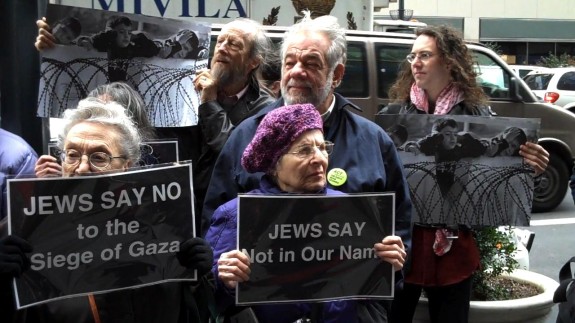
Whether we like it or not, as Jewish Americans we are in the middle of this mess. Not only do our taxes pay for the Israeli occupation of Palestine, but our very bodies have been appropriated by Israel, which claims to speak for Jews everywhere. Certainly it can be said this is an American issue—which of course it is—and certainly religion and ethnicity can be tiresome and traditional. But I think the end result of taking this position and not supporting a Jewish voice against the occupation would abrogate our responsibility to resist injustice and would, in fact, hurt the anti-occupation struggle.

I have participated in several demonstrations in the last few years where just the sight of self-identified Jews denouncing Israel’s policies causes jaws to drop. This visual breaking of the stereotype—of Jews unendingly supporting whatever Israel does—seems to fry the synapses of bystanders. Of course it is met with abuse by some frantic and hysterical Jews who see this as the height of disloyalty. For instance, in addition to the constant refrain of “fuck you,” certain words seem to predominate: “ugly bitch,” “Nazi,” and “traitor.” (The vocabulary of hatred seems to be quite limited.)

But the sight of us doing the unthinkable has many benefits: There are a few Jews who are happy and relieved to see us because it opens the door for them. They have felt uneasy about Israeli policies for a long time, and seeing us seems to give them more courage to speak their minds. There are also some gentiles who are happy to see us because they have been afraid for a long time of being called anti-Semites if they criticize Israel. [continued…]

Facebooktwittermail

US must choose between the two voices of Hamas

US must choose between the two voices of Hamas

When will President Obama abandon the Bush doctrine of isolating Hamas? During a press conference in Gaza City a few weeks ago, Ismail Haniya, the Hamas leader in the Gaza Strip, declared: “If there is a real project that aims at resolving the Palestinian cause on establishing a Palestinian state on 1967 borders, under full Palestinian sovereignty, we will support it.” And in an interview shortly after, Khaled Meshaal, the exiled leader of Hamas’s political bureau, welcomed the “new language towards the region” from President Obama.

Hamas is trying to convey to the US its willingness to accept a two-state solution to the Israeli-Palestinian conflict, and that it is willing to play a productive rather than obstructionist role in the peace process. But is the US listening?

It depends on what the US is listening for. If the US is waiting for Hamas to accept its three demands to renounce violence, honour past agreements and recognise Israel’s right to exist, it will probably be disappointed. To expect your opponent to give up all of its leverage before negotiations actually begin is hardly realistic. Rather, the US should interpret Hamas’s statements with two points in mind. [continued…]

Report: No sign of West Bank settlement slowdown

There is no sign of a slowdown in the construction of homes for Jewish settlers in the West Bank despite Israel’s announcement that it has stopped approving new building, the Israeli settlement watchdog Peace Now said in a report issued Sunday.

Under U.S. pressure to freeze settlements, Israel indicated last week it had stopped green-lighting new construction projects, part of an attempt to bridge the gap between the two allies. The efforts to achieve an elusive agreement on settlements will continue this week at a London meeting between Prime Minister Benjamin Netanyahu and U.S. Mideast envoy George Mitchell.

But while Peace Now confirms the freeze on approval for new projects, the group’s report says settlement construction is continuing and that settlers can easily build thousands of housing units based on old plans that have already been approved.

There is existing permission for the construction of up to 40,000 housing units, the report said. Construction has begun on around 600 new housing units in 2009, it said. [continued…]

Facebooktwittermail

Israel’s visa rule: if you visit Palestine, stay there

Israel’s visa rule: if you visit Palestine, stay there

When Canadian businessman Sam Ismail brought his wife and five children to visit his brother’s family in Ramallah last week, he planned to stay for 10 days and tour both Israel and the Palestinian territories. They had flown into Amman, crossed over to the West Bank. Knowing that Palestinian Authority license plates are banned in Israel, Ismail reserved a car at an Israeli rental company. But, when he got to Israeli border control, he was shocked to discover that his Canadian passport was stamped “Palestinian Authority Only.” “Last time they came, they visited Acre, Haifa, Jerusalem — the whole country,” Ismail’s brother Nedal, who lives in the West Bank, told TIME. “This time they packed up after 96 hours and spent the extra week in Jordan instead.”

Ismail had fallen afoul of an Israeli border policy, quietly begun in June, that bars foreigners who say they are visiting the Palestinian Authority from entering Israel. Israel says the visa helps to exclude visitors who threaten security. According to Israeli Interior Ministry spokeswoman Sabine Haddad, the procedure is based on an unpublished 2006 decision by the Israeli interior and defense ministers that “any foreign national who wants to enter the Palestinian Authority must have a permit issued by the army, and entry is permitted only into PA territory.” [continued…]

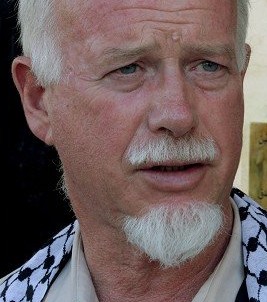
Why Israeli Jew Uri Davis joined Fatah to save Palestine

Uri Davis is used to denunciations. A “traitor”, “scum”, “mentally unstable”: those are just some of the condemnations that have been posted in the Israeli blogosphere in recent days. As the first person of Jewish origin to be elected to the Revolutionary Council of the Palestinian Fatah movement, an organisation once dominated by Yasser Arafat, Davis has tapped a deep reserve of Israeli resentment. Some have even called for him to be deported.

He has been here before, not least as the man who first proposed the critique of Israel as an “apartheid state” in the late 1980s. Davis’s involvement in the first UN World Conference Against Racism in Durban in 2001 was condemned by the Anti-Defamation League. During a career of protest he has been described – inevitably – as a “self-hating Jew”. He calls himself an “anti-Zionist”. And his personal history is a fascinating testimony to the troubled history of the postwar Israeli left and forgotten trajectories in the story of Israel itself.

The man elected to the Revolutionary Council in 31st place from a field of 600 has been as much shaped by the tidal forces of recent Jewish history – not least his own family’s sufferings in the Holocaust – as any fellow citizen of Israel. But he disputes a largely manufactured account of that experience that he believes has been used deliberately “to camouflage” its “apartheid programme”. Now he enjoys an extraordinary mandate to explain his own views. And he hopes, too, that just as the small number of white members of the ANC widened its legitimacy during the apartheid era in South Africa, other Jews can be attracted to participate in Fatah, transforming it into a broader-based movement that stands for equal rights for both Arabs and Jews in a federated state. [continued…]

Facebooktwittermail

Behind Hamas’ own war on terror

Behind Hamas’ own war on terror

Eyebrows were raised around the world Aug. 14 when Hamas security forces in Rafah swiftly, and brutally, destroyed an al-Qaeda-inspired group that had proclaimed the southern Gaza town an “Islamic emirate.” After all, Hamas is listed by the U.S. and the European Union as a terrorist organization, and many in the West don’t expect an avowedly Islamist political organization to forcefully suppress jihadist groups.

Yet, that’s exactly what happened when pro-al-Qaeda cleric Abdel Latif Moussa gathered about 100 of his heavily armed supporters in a mosque to denounce Hamas rule and declared himself the “Islamic prince” of the new “emirate.” Hamas security men moved in to disarm the group, and 24 people, including Moussa and about 20 of his followers, were killed in the ensuing firefight. Their group, Jund Ansar Allah, claimed inspiration from al-Qaeda, and condemned Hamas both for maintaining a cease-fire with Israel and for its failure to impose Islamic Shari’a law after taking full control of Gaza in 2007. It had mounted small-scale attacks on rivals inside Gaza, and two months ago failed in a bizarre cavalry charge by mounted fighters against Israeli border guards. Following the Rafah showdown, the fringe group has vowed to wage war on Hamas, turning Gaza’s rulers into an unlikely ally against Osama bin Laden.

The horsemen of Jund Ansar Allah on training exercises in preparation for their quixotic attack on an Israeli border post in June:

Still, there was little surprise about the Rafah confrontation for longtime observers of Palestinian politics. Hamas, in fact, has always been at odds with al-Qaeda. Despite its Islamist ideology, Hamas is first and foremost a nationalist movement, taking its cue from Palestinian public opinion and framing its goals and strategies on the basis of national objectives, rather than the “global” jihadist ideology of al-Qaeda. For example, Hamas has periodically debated the question of whether to attack American targets in its midst, and each time has reiterated the insistence of the movement’s founders that it confine its resistance activities to Israeli targets.

“What distinguishes Hamas — as well as organizations like Hizballah and Egypt’s Muslim Brotherhood — from groups like al-Qaeda is that they recognize, whether out of principle or practical necessity, that the will of the people they claim to represent is paramount,” says Mouin Rabbani, an Amman-based analyst with the Center for Palestine Studies. “In deciding their actions, they’re ultimately more responsive to their environment than to their principles.” [continued…]

Hamas official upbeat on Fatah reconciliation

A Hamas representative said on Thursday the Palestinian Islamist group was still positive about reconciliation with its rival Fatah, days ahead of an expected new round of Egyptian-brokered talks.

“We are going to continue the dialogue with a positive mentality, but we must settle the question of (Hamas) political prisoners in the West Bank,” Hamas official Osama Abu Khaled told AFP. [continued…]

Israel still strangles the Palestinian economy

Palestinians are as eager as anyone to see positive economic development for their tormented country. But they know full well that real economic progress awaits their release from Israeli military occupation (West Bank, East Jerusalem) and siege (Gaza Strip).

Consider the recent media promotion of the Netanyahu government’s view that the occupied West Bank is witnessing rapid economic growth. Thomas Friedman picked up on that theme in his New York Times column, as did Michael Oren, Israel’s ambassador to the United States, in this newspaper. The selective economic data they provide ignore the reality: Occupied Palestinian territory is not a sovereign country where traditional economic measures apply.

I was the manager who oversaw the establishment of the first modern mall in the West Bank—the Plaza Shopping Center in El Bireh. I can attest that the success of a West Bank mall rests on a thin layer of elite consumer privilege poised precariously over a chasm of widespread disempowerment. Until West Bank Palestinians gain free and open access to the world economy, beyond the markets of the occupying power, major enterprises in Palestinian towns will suffer. [continued…]

Facebooktwittermail

An Israeli comes to the painful conclusion that a boycott is the only way to save his country

Boycott Israel

Israeli newspapers this summer are filled with angry articles about the push for an international boycott of Israel. Films have been withdrawn from Israeli film festivals, Leonard Cohen is under fire around the world for his decision to perform in Tel Aviv, and Oxfam has severed ties with a celebrity spokesperson, a British actress who also endorses cosmetics produced in the occupied territories. Clearly, the campaign to use the kind of tactics that helped put an end to the practice of apartheid in South Africa is gaining many followers around the world.

Not surprisingly, many Israelis — even peaceniks — aren’t signing on. A global boycott can’t help but contain echoes of anti-Semitism. It also brings up questions of a double standard (why not boycott China for its egregious violations of human rights?) and the seemingly contradictory position of approving a boycott of one’s own nation.

It is indeed not a simple matter for me as an Israeli citizen to call on foreign governments, regional authorities, international social movements, faith-based organizations, unions and citizens to suspend cooperation with Israel. But today, as I watch my two boys playing in the yard, I am convinced that it is the only way that Israel can be saved from itself. [continued…]

Facebooktwittermail

Netanyahu’s defiance of US resonates at home

Netanyahu’s defiance of US resonates at home

For five months, Israeli Prime Minister Binyamin Netanyahu has been fending off U.S. pressure to halt the expansion of West Bank settlements. Now he is reaping dividends for his defiance.

Although Israeli leaders have historically been reluctant to publicly break with the United States for fear of paying a price in domestic support, polls show that Netanyahu’s strategy is working. And that means that after months of diplomacy, the quick breakthrough that President Obama had hoped would restart peace talks has instead turned into a familiar stalemate.

Arab states largely have rebuffed Obama’s request for an overture to Israel until the settlement issue is resolved — a stand that Egyptian President Hosni Mubarak emphasized in a meeting with Obama on Tuesday — and the Palestinians have said a settlement freeze is a precondition for resuming negotiations. Meanwhile, the Israeli public seems to have rallied around Netanyahu’s refusal to halt all settlement construction, a backlash that intensified when the Obama administration made clear that it wanted Israel to stop building Jewish homes in some parts of Jerusalem as well as in the occupied West Bank. [continued…]

Obama says Mideast peace process is in a ‘rut’

President Obama said Tuesday that the Middle East peace process was in a “rut,” and prodded Egyptian President Hosni Mubarak to help break an Arab-Israeli standoff that has frustrated the administration’s effort to restart talks.

“If all sides are willing to move off of the rut that we’re in currently, then I think there is an extraordinary opportunity to make real progress,” Obama said in an appearance with Mubarak at the White House. “But we’re not there yet.” [continued…]

Facebooktwittermail

American teens gathering in Middle East pose terrorist threat

American teens are fighting back in Israel

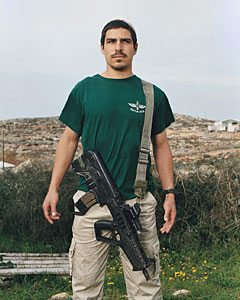
Later this year, 21-year-old Ephraim Khantsis will pack a couple of suitcases, say good-bye to his mother, leave his home in Brooklyn, and move to Israel. On arrival in Jerusalem he will enroll in a yeshiva, or religious school, that is popular with Americans. After a few months he will make his way north, to a place this young American feels is his true home: the Jewish settlement of Kfar Tapuach.

Perched on a hill just off Route 60, the main north-south road in the occupied West Bank, Kfar Tapuach is known as a particularly hard-line community. Home to about 600 people, the settlement has a history of welcoming American immigrants whose beliefs and acts raise alarms among Israeli intelligence agencies, leading them to monitor it as a haven for suspected terrorists.

Khantsis, who is in the process of applying for Israeli citizenship, will fit right in. Like the assassinated Brooklyn-born rabbi Meir Kahane, the man some in Kfar Tapuach consider their spiritual leader, Khantsis believes that all Arabs and Palestinians should be forcibly removed from territory controlled by Israel, including the West Bank.

“It’s the most humane way to solve the situation,” Khantsis—who has just graduated from Stony Brook University, on Long Island, with a degree in computer science—says, sipping a soda in an Israeli-run kosher pizzeria in Bensonhurst, Brooklyn, this past June. He acknowledges that he is advocating ethnic cleansing. Continue reading

Facebooktwittermail

Israeli officials: New West Bank projects frozen (briefly)

Israeli officials: New West Bank projects frozen

Israel has quietly stopped approving new building projects in the West Bank while publicly still refusing U.S. demands for a formal settlement freeze, officials, peace activists and settlers said Tuesday.

Prime Minister Benjamin Netanyahu’s office denied there was any agreement among senior ministers to freeze new construction. But settlement watchdog Peace Now said no new building had been approved since Netanyahu took office in March.

President Barack Obama’s administration has been prodding Israel to shelve all settlement construction on land Palestinians want for a future state, a demand Israel has said it cannot accept. The issue has grown into a rare public disagreement between the two close allies.

However, several government officials said Tuesday that Israel has decided to temporarily stop green-lighting new projects because of the international pressure.

The move falls short of the U.S. demand because it doesn’t amount to a full freeze — projects approved in the past are still being built, and groups tracking settlements say the pace of construction in the settlements has not slowed. [continued…]

Israel agrees to freeze settlement construction as gesture to US

Despite pressure from right-wing ministers, the housing minister has yet to issue one building tender in the settlements, including in the large settlement blocs, since Netanyahu has taken office. This has been confirmed by Prime Minister Netanyahu’s office. The ministry also did not issue new tenders in the final days of Olmert’s administration. The right-wing and the haredi sector have expressed their disappointment over this quiet policy.

Right-wing ministers claim that this policy has been forced upon Israel and undermines the country’s sovereignty in areas over which there should not be any dispute.

Habayit Hayehudi Chairman Daniel Hershkowitz attacked the settlement freeze policy: “The State of Israel is not a satellite of the US. We have a strategic alliance and close friendly relations with the Americans, but it is a two-way alliance. They need us, too, and we must stand our ground, even more so since the Palestinians show their true face anew each and every time proving that theirs is not a face of peace. As long as this remains the situation in the Middle East, the Americans must halt their pressure on the settlement and not prevent natural growth just as we do not get involved in building in Arizona. The natural growth in Judea and Samaria and the building in the settlement blocs and Jerusalem are a red line that must not be crossed.” [continued…]

U.S. group invests tax-free millions in East Jerusalem land

American Friends of Ateret Cohanim, a nonprofit organization that sends millions of shekels worth of donations to Israel every year for clearly political purposes, such as buying Arab properties in East Jerusalem, is registered in the United States as an organization that funds educational institutes in Israel.

The U.S. tax code enables nonprofits to receive tax-exempt status if they engage in educational, charitable, religious or scientific activity. However, such organizations are forbidden to engage in any political activity. The latter is broadly defined as any action, even the promotion of certain ideas, that could have a political impact.

Financing land purchases in East Jerusalem would, therefore, seem to violate the organization’s tax-exempt status. Continue reading

Facebooktwittermail

Quiet slicing of the West Bank makes abstract prayers for peace obscene

Quiet slicing of the West Bank makes abstract prayers for peace obscene

When peace-loving Israeli liberals present their conflict with Palestinians in neutral, symmetrical terms – admitting that there are extremists on both sides who reject peace – one should ask a simple question: what goes on in the Middle East when nothing is happening there at the direct politico-military level (ie, when there are no tensions, attacks or negotiations)? What goes on is the slow work of taking the land from the Palestinians on the West Bank: the gradual strangling of the Palestinian economy, the parcelling up of their land, the building of new settlements, the pressure on Palestinian farmers to make them abandon their land (which goes from crop-burning and religious desecration to targeted killings) – all this supported by a Kafkaesque network of legal regulations.

Saree Makdisi, in Palestine Inside Out: An Everyday Occupation, describes how, although the Israeli occupation of the West Bank is ultimately enforced by the armed forces, it is an “occupation by bureaucracy”: it works primarily through application forms, title deeds, residency papers and other permits. It is this micro-management of the daily life that does the job of securing slow but steady Israeli expansion: one has to ask for a permit in order to leave with one’s family, to farm one’s own land, to dig a well, or to go to work, to school, or to hospital. One by one, Palestinians born in Jerusalem are thus stripped of the right to live there, prevented from earning a living, denied housing permits, etc.

Palestinians often use the problematic cliché of the Gaza strip as “the greatest concentration camp in the world”. However, in the past year, this designation has come dangerously close to truth. This is the fundamental reality that makes all abstract “prayers for peace” obscene and hypocritical. The state of Israel is clearly engaged in a slow, invisible process, ignored by the media; one day, the world will awake and discover that there is no more Palestinian West Bank, that the land is Palestinian-frei, and that we must accept the fact. The map of the Palestinian West Bank already looks like a fragmented archipelago. [continued…]

The Holocaust’s shadow over Israel’s choices

No people mourn better than the Jewish people. For seven days after death, the family sits shiva, a vigil at home for loved ones to comfort one another and reflect on the life lost. During the following year and then beyond, the stages of mourning develop to allow next of kin to continue their lives while still remembering who is gone from them.

The process is successful for Jews, but it is failing the Jewish state. Six decades since the gravest of their tragedies, Jews have collectively yet to find a sustainable way of moving on without forgetting the Holocaust. The inability to do so poses dire consequences for Israel and the possibility for peace.

For Israel, the Holocaust didn’t end in 1945, but reconstituted itself in the country’s political and social cultures. It’s no accident that Yad Vashem, Israel’s Holocaust museum, is physically connected to Har Hertzl, Israel’s national cemetery. The symbolism hits you over the head: Israel was born out of the Holocaust, and the price to protect the Jewish people from another one is steep. There is truth in that, but also danger. Binding too tightly the slaughter of Jewish civilians by Nazis and the deaths of Israeli soldiers by Arabs turns every threat to Israel into another Holocaust. [continued…]

Facebooktwittermail

Big challenges ahead for Mahmoud Abbas

Big challenges ahead for Mahmoud Abbas

Mahmoud Abbas, the 74-year-old leader of the Palestinian Fatah movement, registered a significant achievement in holding the movement’s Sixth General Conference, which has been wrapping up its business in Bethlehem in the Israeli-occupied West Bank this week.

But veteran Palestinian analysts say Abbas’s biggest internal political challenges still lie ahead. Many of these challenges, they note, stem directly from the compromises he made to be able to convene the conference at all – and to ensure that it presented the trappings of success in the form of a political platform and leadership elections.

One of the biggest compromises was linked to the decision to hold the conference inside the Israeli-occupied West Bank. That meant there were numerous long time Fatah activists from the demographically weighty Palestinian diaspora – and from Gaza – who were barred from attending by Israel. [continued…]

Growing threat to Hamas: Gazans who think it has sold out

Two years after its takeover of the Gaza strip, Hamas has faced down its greatest challenger: A militant, Al Qaeda-inspired organization that says Hamas is not Islamic enough.

Last Friday, Hamas forces and the Jund Ansar Allah (Soldier of God) movement fought a day-long gun and artillery battle that killed about 30 in the southern Gaza town of Rafah after the group’s spiritual leader, Sheikh Abdel Latif Moussa, declared an Islamic emirate in Gaza and denounced Hamas. Mr. Moussa was killed in the fighting, centered on the mosque where he and his followers had gathered.

It was the first time an Al Qaeda-inspired group had directly challenged Hamas’ rule in the Gaza Strip but it may not be the last. Fueled by the failure of Hamas to address the area’s growing poverty and isolation, and Hamas’ relative recent restraint in its confrontation with Israel, analysts say such organizations are growing in the territory. [continued…]

Facebooktwittermail

Mubarak to tell U.S. Israel must make overture

Mubarak to tell U.S. Israel must make overture

In White House meetings beginning Monday, President Hosni Mubarak of Egypt is expected to tell the Obama administration that Arab nations want peace, but are unwilling to abide Mr. Obama’s call to make good-faith concessions to Israel until Israel takes tangible steps like freezing settlements, an Egyptian official said.

As part of its effort to resuscitate the peace process, the Obama administration has asked Arab countries to make small but symbolic gestures to normalize relations with Israel, like allowing planes to fly through their airspace or improving cultural ties. The administration has also asked Israel to freeze all growth in settlements.

So far, neither side has agreed to Mr. Obama’s proposed first steps, and so the president is expected to look to Mr. Mubarak for help in breaking the latest Middle East deadlock, regional analysts said. [continued…]

Too gung-ho? Israel military rabbis draw criticism

Most Israelis expect their military rabbis to confine themselves to such tasks as making sure the army provides kosher food and respects the Sabbath. But lately, some of them are asserting their own idea of Jewish virtue at the risk of stepping into the country’s culture wars.

Some critics worry that the rabbinate and its charismatic chief, Brig. Gen. Avichai Rontzki, are infusing a militant mix of Judaism and nationalism into a traditionally secular institution that embodies the Israeli consensus.

On the Palestinian side, Islamic hard-liners already see their war with Israel through an uncompromising religious lens, and the rabbinate’s critics warn that the Jewish state must not follow suit and risk pushing the conflict closer to a zero-sum holy war. [continued…]

Facebooktwittermail

If they won’t make peace we may have to make it for them

If they won’t make peace we may have to make it for them

Until now the Obama administration has clung to the basic assumptions of the Oslo process: incremental steps on both sides build the confidence necessary to negotiate a bilateral agreement on final-status issues such as borders, Jerusalem and refugees. Plainly that approach has failed so far, and it’s hard to see it succeeding simply because there is a new cast of actors in the lead roles. The problem may be in the script rather than the casting.

There is no domestic political pressure on Netanyahu to make the territorial compromises necessary for a deal. On the contrary, his once precarious domestic political position has been strengthened by his resistance to the settlement freeze demands, and Israelis are unlikely to accept the conflict that would erupt if their government tried to evict thousands of West Bank settlers under a peace agreement. Nor are the Palestinians inclined to make compromises that the refugees would consider surrender of their rights.

In the absence of domestic pressure on either side to force a compromise, restarting talks would be either a repeat of the Annapolis failure or a demonstration that the gap between the two sides cannot be bridged by mutual consent. Either way, the parameters of a two-state solution will have to be prescribed by the international community, just as they were in 1947 – except this time with enough international clout and domestic support to prevent a repeat of the tragedy that followed the last UN partition of Palestine. [continued…]

Facebooktwittermail

Obama is not delivering the goods

Obama’s America is not delivering the goods

With great sorrow and deep consternation, we hereby declare the death of the latest hope. Perhaps rumors of its death are greatly exaggerated, to paraphrase the famous quote by Mark Twain, but the fears are being validated day after day. Barack Obama’s America is not delivering the goods. Sharing a glass of beer with a racist cop and a pat on the back of Hugo Chavez are not what we hoped for; wholesale negotiations on freezing settlement construction are also not what we expected. Just over six months after the most promising president of all began his term, perhaps hope has a last breath left, but it is on its deathbed.

He came into office amid much hoopla. The Cairo speech ignited half the globe. Making settlements the top priority gave rise to the hope that, finally, a statesman is sitting in the White House who understands that the root of all evil is the occupation, and that the root of the occupation’s evil is the settlements. From Cairo, it seemed possible to take off. The sky was the limit.

Then the administration fell into the trap set by Israel and is showing no signs of recovery.

A settlement freeze, something that should have been understood by a prime minister who speaks with such bluster about two states – a peripheral matter that Israel committed to in the road map – has suddenly turned into a central issue. Special envoy George Mitchell is wasting his time and prestige with petty haggling. A half-year freeze or a full year? What about the 2,500 apartment units already under construction? And what about natural growth? And kindergartens?

Perhaps they will reach a compromise and agree on nine months, not including natural growth though allowing completion of apartments already under construction. A grand accomplishment.

Jerusalem has imposed its will on Washington. Once again we are at the starting point – dealing with trifles from which it is impossible to make the big leap over the great divide.

We expected more from Obama. Menachem Begin promised less, and he made peace within the same amount of time after he took office. When the main issue is dismantling the settlements, the pulsating momentum that came with Obama is petering out. Instead, we are paddling in shallow water. Mitchell Schmitchel. What’s in it for peace? Prime Minister Benjamin Netanyahu will once again meet him in London at the end of the month. A “magic formula” for a settlement freeze may be found there, but the momentum is gone.

Not in Israel, though. Here people quickly sensed that there is nothing to fear from Obama, and the fetters were taken off. Defense Minister Ehud Barak was quick to declare that there is no Palestinian partner, even after the Fatah conference elected the most moderate leadership that has ever been assembled in Palestine. Afterward, in a blatant act of provocation, he brought a Torah scroll into the heart of the Muslim Quarter in the Old City of Jerusalem, in full view of television cameras, just so America can see who’s boss around here.

Deputy Prime Minister Eli Yishai and Knesset Speaker Reuven Rivlin, another two politicians who smell American weakness, were quick to declare during a visit to Ma’aleh Adumim that Israel will not freeze any construction. To hell with Obama. The settlers continue to move into more homes in East Jerusalem, Netanyahu is silent and Israelis sense that the “danger” has passed. Israel is once again permitted to do as it pleases. The landlord has once again gone insane. Except that the landlord has gone insane because the real landlord is showing signs of weakness, signs of folding, signs of losing interest in events in the region that most endangers world peace.

Nothing remains from the speeches in Cairo and Bar-Ilan University. Obama is silent, and Yishai speaks. Even “Israel’s friends” in Washington, friends of the occupation, are once again rearing their heads.

One source familiar with Obama’s inner circle likened him this week to a man who inflates a number of balloons every day in the hope that one of them will rise. He will reach his goal. The source compared him to Shimon Peres, an analogy that should insult Obama. The trial balloons the U.S. president sends our way have yet to take off. One can, of course, wait for the next balloon, the Obama peace plan, but time is running out. And Israel is not sitting idly by.

The minute Jerusalem detected a lack of American determination, it returned to its evil ways and excuses. “There is no partner,” “Abu Mazen is weak,” “Hamas is strong.” And there are demands to recognize a Jewish state and for the right to fly over Saudi Arabia – anything in order to do nothing.

An America that will not pressure Israel is an America that will not bring peace. True, one cannot expect the U.S. president to want to make peace more than the Palestinians and Israelis, but he is the world’s responsible adult, its great hope. Those of us who are here, Mr. President, are sinking in the wretched mud, in “injury time.”

Editor’s Comment — When an 11 year-old gets the privilege of going to The White House to interview the president and the kid respectfully observes, “I notice as president you get bullied a lot,” it’s time to sit up straight.

Obama’s lack of backbone is apparent to a child and his method for handling getting bullied — “if I’m doing a good job, I’m doing my best, and I’m trying to always help people, then that keeps me going” — might make him feel better but it does little to push back those who are emboldened by his weakness.

Is Obama capable of imposing his will? After six months we should know the answer to that question. The fact that we don’t is a problem.

Facebooktwittermail

Israeli ‘white flag’ shootings of Gaza civilians

Israeli ‘white flag’ shootings of Gaza civilians

During Israel’s recent Gaza offensive, Israeli soldiers unlawfully shot and killed 11 Palestinian civilians, including five women and four children, who were in groups waving white flags to convey their civilian status, Human Rights Watch said in a report released today. The Israeli military should conduct thorough, credible investigations into these deaths to tackle the prevailing culture of impunity, Human Rights Watch said.

The 63-page report, “White Flag Deaths: Killings of Palestinian Civilians during Operation Cast Lead,” is based on field investigations of seven incident sites in Gaza, including ballistic evidence found at the scene, medical records of victims, and lengthy interviews with multiple witnesses – at least three people separately for each incident.

The Israel Defense Forces (IDF) declined repeated Human Rights Watch requests for a meeting to discuss the cases and did not respond to questions submitted in writing. [continued…]

Account of life in the West Bank

My wife, Lamia, once asked me: “Why can’t we live like other people?” It was a very difficult question for me to answer. All the Palestinians of my generation were born under military occupation, so this is the only life we know.

As I write these words, it’s almost midnight and we are sitting on the roof of my house, on the look-out for the Israeli army. It’s been two months since the most recent wave of night raids began, with the army now employing a new strategy of arresting every villager who attends the demonstrations, in an attempt to crush our campaign of nonviolent resistance. Up until now eleven people have been arrested, but the list of those wanted is much, much longer. So in Bi’lin, no one goes to sleep before four or five in the morning. We stay awake all night, observing the movements of the Israeli military, fearing that we may be the next person to be kidnapped and thrown in jail. Our nights have become our days, and our days have become our nights. For some it is more difficult than others because of work commitments, but we have no choice.

But it’s not only the adults who stay awake. Our children can’t sleep either, afraid that the army will burst into his or her room in the middle of the night. They don’t knock on the door during the night raids. So imagine the horror for a child to wake up to find a stranger with a painted face pointing his gun in their face. We don’t stay up so much to avoid arrest, but to avoid facing this terrible moment. [continued…]

Hamas got wood!

Spending a few weeks in Gaza and seeing the full extent of the Hamas media control in Gaza, you can’t help but notice the success of Hamas and its propaganda efforts in the Palestinian territories and beyond. As someone who does not hold much affection toward Hamas and its ideology (their militia killed my first cousin and mutilated his body in front of cameras) I have to give credit where credit is due:

1) For starters, there’s the Al-Aqsa TV station, a Hamas run satellite TV that has upbeat programming and a wonderful lineup of shows that keep audiences interested and tuned in. The station broadcasts educational, religious, social and political programming, the last of which really shows the extent to which Hamas makes things clear that they’re serious about propaganda. Compare that with the official, Ramallah-run Palestine channel where audiences would have to be paid in Euros to be kept in their seats. Boring and old-fashioned messages with too much political rhetoric just turns off those who tune in. [continued…]

Facebooktwittermail

The Palestinians aren’t suckers, either

The Palestinians aren’t suckers, either

Look at that Mahmoud Abbas – another Palestinian who never misses an opportunity to miss an opportunity. Here Binyamin Netanyahu has accepted the two-state solution, he’s offering to negotiate peace without preconditions, and all Abbas can say is nyet. He’s waiting for Barack Obama to do all the work for him, to force concessions out of Israel while he sits there fanning himself. This is no partner for peace. This is no “moderate.”

So goes the Israeli consensus on the leader of the Palestinian Authority. I agree with one part – that he’s missing an opportunity. But I think the one he’s missing is the opportunity to call Bibi’s bluff.

If I were Abbas, I would take Netanyahu up on his offer for peace talks without preconditions. I would negotiate from a simple, reasonable principle: equal rights for Palestinians and Israelis. Fair is fair. [continued…]

Abandoning reason to demonise Obama

Does Barack Obama represent the best hope for a just and final settlement of the Israel-Palestine conflict or will his Middle East policy lead directly to the destruction of Israel?

I would guess that most Palestinians faced with this question would regard it as ridiculous. Notwithstanding the president’s Cairo speech and his insistence on a total freeze on the expansion of Israeli settlements in the West Bank and East Jerusalem, they would be deeply sceptical about the US president’s ability to make any fundamental changes in US Middle East policy. Even were he to make such an adjustment, they would have grave doubts about whether it would seriously take on board Palestinian concerns. And they would be incredulous that anyone could argue that he is doing anything that could be interpreted as against Israel’s interests. Once again, they would say, the Palestinians are being written out of the script.

But to many American Jews, as well as to many Israeli Jews and to some Jews in the UK, the question would seem to reflect a very real and stark choice. While some who are taking sides on the issue are presenting their arguments in a reasonable manner, for others the issue is positively Manichean in its consequences, giving licence to quite staggering levels of rhetorical bitterness, vilification and hyperbole in an area where debate is already dangerously polarised. [continued…]

Facebooktwittermail

The two-state solution doesn’t solve anything

The two-state solution doesn’t solve anything

The two-state solution has welcomed two converts. In recent weeks, Benjamin Netanyahu, the Israeli prime minister, and Khaled Meshal, the head of Hamas’s political bureau, have indicated they now accept what they had long rejected. This nearly unanimous consensus is the surest sign to date that the two-state solution has become void of meaning, a catchphrase divorced from the contentious issues it is supposed to resolve. Everyone can say yes because saying yes no longer says much, and saying no has become too costly. Acceptance of the two-state solution signals continuation of the Israeli-Palestinian struggle by other means.

Bowing to American pressure, Mr. Netanyahu conceded the principle of a Palestinian state, but then described it in a way that stripped it of meaningful sovereignty. In essence, and with minor modifications, his position recalled that of Israeli leaders who preceded him. A state, he pronounced, would have to be demilitarized, without control over borders or airspace. Jerusalem would remain under Israeli sovereignty, and no Palestinian refugees would be allowed back to Israel. His emphasis was on the caveats rather than the concession.

As Mr. Netanyahu was fond of saying, you can call that a state if you wish, but whom are you kidding? [continued…]

Hoyer: E. J’lem not same as W. Bank

US House Majority leader Steny Hoyer praised Prime Minister Binyamin Netanyahu, called for the Palestinian Authority to drop any preconditions to negotiations, and said that Congress differentiated between building in east Jerusalem and in the West Bank, during an interview with The Jerusalem Post on Monday.

Hoyer, currently in the country leading a delegation of 29 Democratic legislators, also said the rhetoric coming out of the Fatah General Assembly in Bethlehem was “unfortunate.”

The delegation, sponsored by the American Israel Education Foundation, a charitable organization affiliated with the American Israel Public Affairs Committee, arrived on Sunday evening and met Monday with President Shimon Peres, Foreign Minister Avigdor Lieberman and US security coordinator Lt.-Gen. Keith Dayton.

Lieberman told the group that the continued control of Gaza by Hamas, along with the rhetoric coming out of the Fatah conference in Bethlehem, essentially buried chances of peace for the near future. [continued…]

Israel PM vows never to evict settlers

Prime Minister Benjamin Netanyahu pledged on Sunday that he will never evict Jewish settlers from occupied Palestinian land as Israel did in 2005 in the Gaza Strip.

“The withdrawal from the Gaza Strip brought us neither peace nor security. The territory has become a base for the pro-Iranian Hamas movement and we will never make the same mistake again,” Netanyahu said at the weekly cabinet meeting.

“We will not evict any more people from their homes,” he added in comments carried by public radio. [continued…]

Netanyahu’s sister-in-law detained by police; calls Sheikh Jarrah evictions an unjust folly

Even compared to the low ethical standards which most people, outside the United States, ascribe to the actions of the Israeli government of occupation, the recent decision of their Supreme Court to evict long-time residents of Arab neighborhoods and to replace them with Jewish Israelis signals a particularly low point in the Jewish state’s brutally harsh treatment of Palestinians.

In a sparsely reported incident which occurred on Sunday, August 1,Ofra Ben-Artzi, the sister-in-law of Israeli Prime Minister Binyamin Netanyahu, was detained by police in the Sheikh Jarrah neighborhood in East Jerusalem. The 58 year-old Ben-Artzi, an editor for the anti-occupation magazine, HaKibush, spent several hours in police custody before being released without any charges being filed. Her apparent crime was her sympathy with the Palestinians who had recently been evicted from their homes. [continued…]

Facebooktwittermail

Jewish Fatah delegate nominated to Revolutionary Council

Jewish Fatah delegate nominated to Revolutionary Council

A Jewish member of Fatah was nominated for a spot on the movement’s Revolutionary Council on Saturday.

Vowing to step up lobbying efforts worldwide if elected, Dr Uri Davis told Ma’an one of Fatah’s weakest attributes has been its failure to establish ties with international parties, movements and human rights organizations.

In an interview, Davis played down the significance of his nomination to the Revolutionary Council, Fatah’s 120-member governing body. Each member of the movement has the right to run for office despite one’s religion, race or color, the Fatah delegate noted. [continued…]

Dahlan, Qureia vie to succeed Abbas as Fatah chief

Elections for Fatah’s main governing bodies, the Central Committee and the Revolutionary Council, were expected to take place on Sunday, with two party strongmen, Mohammed Dahlan and Ahmed Qureia leading the nominee list for leadership posts.

On Saturday, Palestinian President Mahmoud Abbas was re-elected to chair the Central Committee at the party’s first convention in two decades, held in the West Bank city of Bethlehem since last Tuesday.

Sunday’s election was to name the 18 members of the Central Committee, who will be joined by four members to be named by the committee itself. In addition, elections for the 120-member Fatah Revolutionary Council were also scheduled for Sunday.

Qureia was the first Palestinian Prime Minister, and is currently heading the peace negotiations team for the Palestinian Authority. Dahlan, the former head of the Palestinian Authority Preventative Security Forces in Gaza, left the Strip in 2007 shortly before rival party Hamas violently seized control over Gaza.

The two have waged a tough political battle, as both are considered candidates to succeed Abbas. The two haven’t expressly announced any plans to succeed the Palestinian president, but they are considered to be the two strongest Fatah members after Abbas. Assuming that Marwan Barghouti, also considered a strong candidate to head the Palestinian Authority, remains in Israeli jail, one of the two will likely be named president once Abbas steps down for whatever reason.

On Saturday, Fatah adopted a position paper stating that the Palestinian national enterprise will not reach fruition until all of Jerusalem, including the outlying villages, come under Palestinian sovereignty.

Also Saturday, the Palestinian news agency Ma’an reported that for the first time, a Jewish candidate had been nominated for a post on the Revolutionary Council. According to Ma’an, Jerusalem-born Dr. Uri Davis explained that every Fatah member can run for a post on the party’s 120-member Revolutionary Council regardless of religion, race or color.

“Breaking the Silence” or silencing the critics?

“Breaking the Silence” is a member of the Israeli human rights, peace and social justice community. The group’s only crime, so it seems, lies in its effort to offer an alternative ethical voice in a society that is arguably losing its way. Breaking the Silence provides a platform for soldiers to testify to acts of violence and other violations of Palestinian rights that they may have witnessed or taken part in during their service in the Occupied Palestinian Territory. The group’s most recent report details soldier testimonies that raised serious concerns about Israeli military behavior during the war on Gaza, “Operation Cast Lead.” The publication is unique but it is only one example of many public statements, reports and legal advocacy in response to the prosecution of the war, which Israel consistently maintains was both moral and legal. Why then is the Israeli government waging a battle against this organization, trying to thwart its funding and, essentially, to shut it down?

The answer, perhaps, lies in the genealogy of the occupation. For 42 years Israel has argued its one acceptable and official truth: “Israel is not an occupier and it is not violating international law.” The problem is that this narrative has been accepted only by Israel, tolerated by the United States, and perpetuated by a broad spectrum of Israel’s “supporters,” largely in North America and Western Europe. In the aftermath of the war the Netanyahu government feels threatened by US President Barack Obama’s demands to halt one of Israel’s most visible violations of international law, settlement building. Part of the Israeli reaction is to try to manipulate discourse and impugn those who have exposed Israeli infractions over the years, choosing to begin with an organization that provides the public with direct insight into the behavior of soldiers. Ironically in its actions the government actually corroborates the group’s work and that of other organizations who report and represent the voices of the Palestinian abject Other, the torture victims, those evicted from their homes, denied access to their fields and those beaten by settlers with impunity. [continued…]

Freezing for failure

It should be said from the onset: Do not freeze settlement construction, do not stop it in part or periodically, not for six months, not for a single day. As long as the U.S. administration does not present a comprehensive plan that explains its endgame – what the end will look like and what the shape and character of the Palestinian state will look like – the demand for a cessation of construction is pointless. It is a pathetic return to the doctrine of “confidence-building measures,” which led nowhere. The demand to freeze settlement construction is like the demand to remove roadblocks or cease razing homes; all these demands and similar ones mean only one thing: making the continuation of the occupation a little more pleasant.

The demand for a cessation of settlement construction will have no impact on the political process as long as they are not telling the Israeli and Palestinian public what will happen with the half-million Israelis who already live in the West Bank and East Jerusalem. How many of them will have to be evacuated? How much money will this cost and who will pay for it? Evacuating 7,000 Jews from the Gaza Strip cost more than NIS 10 billion.

Even if only 100,000 Jews are evacuated from the West Bank the move will cost, on the basis of this estimate, some NIS 150 billion – about 50 percent of the national budget for an entire year. It is true that it amounts to “only” about 8 percent of the cost of the American war in Iraq to date, and maybe for the sake of peace in the Middle East the U.S. administration would be willing to invest another 8 percent in the area, but someone in Washington must articulate this clearly. That would be much more convincing than halting the work of a crane.

American pressure yielded an impressive achievement when they twisted Prime Minister Benjamin Netanyahu’s arm and got him to say that he wants “two states for two peoples.” But what comes next? Are Netanyahu’s two states the same two as Palestinian President Mahmoud Abbas’ and the same two as Washington’s? Where will the border be demarcated? After all, if it is agreed that the end of the process will leave the settlement blocs in Israel’s hands, and if indeed the Palestinians accept this in return for an exchange of territory, why is it necessary to cease construction in those blocs?

Logic dictates that construction should continue in the blocs and if possible at a faster pace, so that it will be possible to absorb those evacuated from other settlements. But when there is no plan or agreement on the border, not to mention that negotiations are not even taking place, the demand for ceasing construction appears to be some sort of independent aim – isolated from its political context and whose sole intention is to display America’s ability to impose “something” on Israel. Meanwhile, the removal of illegal outposts is not something Washington has proved it is able to impose on Israel, despite Israel’s promises to the Americans and despite all the brouhaha caused by Defense Minister Ehud Barak on the matter last month.

The attempt to understand the American move as an action from the periphery inward – a tactical move meant to lead to further moves, one slice at a time – is leading toward a dead end and might even be dangerous as well. Assuming Israel freezes construction and negotiations resume, and that (although there is no evidence to support it) some Arab states agree to grant Israel grace in the form of normalization, the desired result is that such confidence-building measures will encourage the government to convince the Israeli public to support the process and agree to a withdrawal. But it is not the public that needs to be encouraged; it is the right-wing government for whom the remnants of the Labor Party are serving as apologists. What is worse is that this government may agree to a gradual and temporary cessation of settlement construction, and at the same time will make every effort to prove that there is no worthwhile partner for this “sacrifice” on the other side. At the end of the settlement construction freeze, the government will be able to celebrate the failure of the negotiations and prove to the Americans that the pressure had been put on the wrong side. The chance of restarting the process from there will then be nil.

An honest government would not have to rely on the Arab safety belt in order to shake off the process. It would have taken advantage of the long period of calm in the West Bank and Gaza Strip, the efficiency the Palestinian security forces have exhibited in the West Bank in combating terrorism, and the willingness of Abbas to negotiate seriously in order to tell the public that the quota of confidence-building measures has been fulfilled and the time has come for withdrawing and reaching an agreement. But this is not the sort of government that is running Israel. Washington knows this, as every Israeli citizen does. Hence the need for a comprehensive plan that will be managed with precision and determination. Freezing the settlements is not a plan and is not a prescription.

Lieberman summons envoy in U.S. over leaked rebuke of government

The Foreign Ministry on Saturday summoned for consultation a senior Israeli diplomat who in a confidential memo criticized the government for harming ties with the U.S. last week.

A ministry statement said that Israel’s consul-general in Boston, Nadav Tamir, would arrive in Jerusalem next week to give a clarification to the ministry’s director-general.

The memo, which was addressed to the Foreign Ministry in Jerusalem, stressed that the public spat with the U.S. over the issue of a settlements freeze has alienated a significant number of American Jewish supporters.

Tamir, a veteran well respected diplomat, wrote the memo under the heading “melancholy thoughts on Israel-U.S. relations.”

Tamir’s missive is considered unusual given the blunt, pointed nature of the criticism against the premier’s policies.

“The manner in which we are conducting relations with the American administration is causing strategic damage to Israel,” Tamir wrote. “The distance between us and the U.S. administration has clear consequences for Israeli deterrence.”

“There are American and Israeli political elements who oppose [U.S. President Barack] Obama on an ideological basis and who are ready to sacrifice the special relationship between the two countries for the sake of their own political agendas,” the consul general in Boston wrote.

“There has always been a discrepancy in the approaches of both states [on the issue of settlements], but there was always a level of coordination between the governments,” Tamir wrote. “Nowadays, there is a sense in the United States that Obama is forced to deal with the obduracy of the governments in Iran, North Korea, and Israel.”

“The administration is making an effort to lower the profile of the disagreements, and yet it is [Israel] that is the source which is highlighting the differences,” Tamir wrote.

Tamir accused Netanyahu of endangering American Jewish backing for Israel by publicly sparring with the Obama administration over construction of Jewish housing in the West Bank and East Jerusalem.

A spokesperson for Netanyahu issued a statement to Channel 10 which accused Tamir of violating protocol by expressing “political views” against the premier.

Tamir refused a Haaretz request for comment. The Israeli consulate in Boston said the memorandum is an internal Foreign Ministry document that was not for the media’s consumption.

Foreign Ministry spokesman Yigal Palmor told the Associated Press late Thursday, “We don’t comment on leaked reports.”

In a bid to jumpstart the moribund Middle East peace process, the Obama administration has repeated its demand that Israel cease construction in West Bank settlements. The policy is a sharp departure from the tone and substance of Israel-U.S. relations during the presidency of George W. Bush.

Facebooktwittermail

Fatah: We’ll sacrifice victims until Jerusalem is ours

Fatah: We’ll sacrifice victims until Jerusalem is ours

The status of Jerusalem as the future capital of a Palestinian state is a red line that no Palestinian leader is permitted to cross, President Mahmoud Abbas’ ruling Fatah faction declared in the West Bank on Saturday.

According to Israel Radio, the Fatah general conference, which convened in Bethlehem for a three-day gathering, adopted a position paper which also states that the Palestinian national enterprise will not reach fruition until all of Jerusalem, including the outlying villages, come under Palestinian sovereignty.

Fatah, which rules the West Bank but was ousted from power in Gaza by the Islamist Hamas movement, also ruled out any interim agreements with Israel.

“Fatah will continue to sacrifice victims until Jerusalem will be returned [to the Palestinians], clean of settlements and settlers,” the paper states.

According to Israel Radio, the paper does not make a distinction between the eastern and western halves of the capital, nor does it distinguish between the territories within the Israeli side of the Green Line and the areas captured by Israel in the 1967 Six-Day War.

Abbas relected to lead Fatah
Mahmoud Abbas was re-elected on Saturday to lead Fatah by consensus at the party conference.

There was no vote taken because no other Fatah member challenged Abbas’ five-year rule of the party. Hundreds of delegates cheered and clapped as Fatah leader Tayib Abdul Rahim announced that Abbas was chosen to lead the party.

Technically Abbas can only lead the party for five years, until a new conference is announced, but this is the first time Fatah members have met in 20 years, so it isn’t clear how long his mandate will last.

Also Saturday, Ahmed Qureia, also known as Abu Alla, told reporters that delegates meeting in Bethlehem would elect a new Central Committee and a Revolutionary Council on Sunday or Monday.

Qureia said the convention would hold the elections for both the Gaza Strip and the West Bank at the same time, adding that “some Gaza members will contest the elections.”

He said the modalities of the election were still under discussion. Changes to Fatah’s platform were being discussed during Saturday’s sessions, he said.

Abbas Zaki, a Fatah representative from Lebanon said “100 candidates are running for membership of the Central Committee and 646 for the Revolutionary Council.

Voting by the some 2,500 delegates for the 18-member Central Committee, and 120-member Revolutionary Council had originally been expected to start on Saturday morning.

The convention is meeting for the first time in 20 years to elect a new leadership for the organization founded by Yasser Arafat.

However, Fatah rival Hamas, which has ruled the Gaza Strip since June 2007, banned scores of Fatah members there from traveling to the West Bank to attend the gathering.

On Friday, Central Committee member Nabil Shaath announced an agreement reached with the convention’s leadership that would allow Gaza delegates to vote by telephone.

Fatah said in a statement that Hamas security forces had placed several Gaza convention delegates under house arrest and prevented them from leaving their homes.

It said that on Friday and Saturday, Hamas security personnel detained several Fatah leaders for questioning before releasing them. Hamas Interior Ministry spokesman Ihab al-Ghussein denied there were any detentions.

U.S. to demand Israel, Palestinian deal with borders
The U.S. administration will demand that Israel and the Palestinians address the issue of borders as the first step in the Middle East peace plan, senior Palestinian officials said Thursday.

Defense Minister Ehud Barak said Wednesday that Washington will present its new plan for a comprehensive Middle East peace soon.

The Americans will also outline proposals for an Israeli peace with Syria and Lebanon, the Palestinian officials said Thursday.

The American plan will not specify step-by-step actions for an Israeli-Palestinian solution, but will address final status issues – borders, Jerusalem and refugees.

The Americans will set a timetable of about a year and a half for the negotiations and demand the sides first solve the border issue, under the belief that this will lead to solutions for other issues, such as the settlements and water. After that the sides will discuss the other fundamental issues – Jerusalem and the refugees.

The negotiations between the Israelis and the Palestinians probably will be conducted in the presence of American officials, the sources said. The American administration is likely to present its plan before or during the UN General Assembly set for September.

Facebooktwittermail