Category Archives: Issues

Politicians to blame for rise of ‘respectable racism’ in Britain, says Lady Warsi

The Guardian reports: Politicians have allowed xenophobia, Islamophobia and antisemitism to enter the mainstream as a result of their toxic and divisive campaigning, according to Lady Warsi.

The Conservative peer and former party co-chair told the Guardian she was deeply worried about the current political climate, claiming a surge in “respectable racism” was feeding the far right.

“I was still disgusted but more comfortable with the racism of the 70s and 80s that was overt and thuggish, than this new form of respectable xenophobia where it is done in political circles, journalism and academia,” she said.

Warsi argued that the EU referendum and London mayoralty campaigns had helped create a climate in which people feel it is acceptable to tell long-established British communities “it’s time for you to leave”. [Continue reading…]

Facebooktwittermail

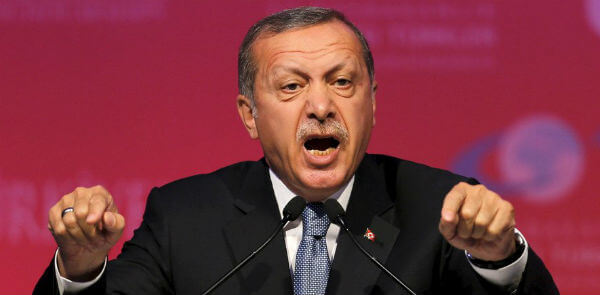
Turkey’s president is destroying the democracy that Turks risked their lives to defend

erdogan

The Economist: Much is unknown about the attempted military coup in Turkey on the night of July 15th. Why was it botched so badly? How far up the ranks did the conspiracy reach? Were the putschists old-style secularists, as their initial communiqué suggested; or were they followers of an exiled Islamist cleric, Fethullah Gulen, as the government claims?

But two things are clear. First, the people of Turkey showed great bravery in coming out onto the streets to confront the soldiers; hundreds died (see article here and here). Opposition parties, no matter how much they may despise President Recep Tayyip Erdogan, united to denounce the assault on democracy. Better the flawed, Islamist-tinged strongman than the return of the generals for the fifth time since the 1960s.

The second, more alarming conclusion is that Mr Erdogan is fast destroying the very democracy that the people defended with their lives. He has declared a state of emergency that will last at least three months. About 6,000 soldiers have been arrested; thousands more policemen, prosecutors and judges have been sacked or suspended. So have academics, teachers and civil servants, though there is little sign they had anything to do with the coup. Secularists, Kurds and other minorities feel intimidated by Mr Erdogan’s loyalists on the streets.

The purge is so deep and so wide — affecting at least 60,000 people — that some compare it to America’s disastrous de-Baathification of Iraq. It goes far beyond the need to preserve the security of the state. Mr Erdogan conflates dissent with treachery; he is staging his own coup against Turkish pluralism. Unrestrained, he will lead his country to more conflict and chaos. And that, in turn, poses a serious danger to Turkey’s neighbours, to Europe and to the West.

The failed putsch may well become the third shock to Europe’s post-1989 order. Russia’s annexation of Crimea and invasion of eastern Ukraine in 2014 destroyed the idea that Europe’s borders were fixed and that the cold war was over. The Brexit referendum last month shattered the notion of ineluctable integration in the European Union. Now the coup attempt in Turkey, and the reaction to it, raise troubling questions about the reversibility of democracy within the Western world — which Turkey, though on its fringe, once seemed destined to join. [Continue reading…]

Facebooktwittermail

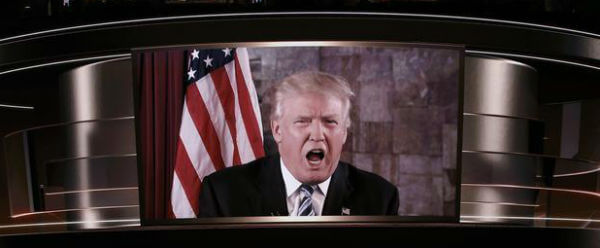
Trump camp inciting murderous hatred of Hillary Clinton

trump-trance

If an assassination attempt is made on Hillary Clinton, will Donald Trump come under investigation for inciting murder?

Al Baldasaro, a New Hampshire state representative who advises Donald Trump on veterans’ issues, says that Clinton is “a piece of garbage,” and says that she should be “put in the firing line and shot for treason.”

The Guardian reports: “Trump campaign spokeswoman Hope Hicks said Trump and his campaign did not agree with Baldasaro’s remarks.”

There’s a difference between disavowing such a statement and not agreeing with it. Maybe the disagreement is on the method of execution. Perhaps like West Virginia Republican lawmaker, Mike Folk, Trump prefers public hangings to firing squads.

Although Baldasaro’s statement grabbed headlines and has caught the attention of the Secret Service, the sentiment he expressed is far from being out of line with the unmeasured hostility towards Clinton that is constantly being fueled by the Trump campaign.

The comments, coming from a chief adviser for a signature issue of Trump’s campaign, are far from the only incendiary remarks directed at the former secretary of state during the Republican national convention, where Clinton has loomed large. On Superior Avenue in downtown Cleveland, men hawking T-shirts reading “Trump This Bitch!” and “Hillary Sucks, But Not Like Monica” have done brisk business.

The anti-Clinton fervor has often dominated the primetime stage of the convention itself. During a highly charged speech on Tuesday night, New Jersey governor Chris Christie presided over arena-wide chants of “Guilty!” and “Lock her up!” as the former federal prosecutor argued in a mock trial “the case now, on the facts, against Hillary Clinton”.

Later that evening, the former presidential candidate Ben Carson departed from his prepared remarks to imply that Clinton admired Satan.

Whenever Trump and the tone of his campaign inspire individuals to engage in acts of violence, the Republican presidential campaign can always claim he had no intention of having this effect.

The more relevant question, however, is what if anything he has done to discourage violence and the growth of hatred. In that regard, the evidence seems clear that he has done little to nothing.

This gets to the heart of incitement: It’s not simply about outsourcing criminal behavior, but it’s about doing this in such a way that a false separation is constructed between the direct and indirect perpetrators of the crime.

Trump may never face prosecution, but that does nothing to absolve him from responsibility for spreading lethal rage across this country.

Facebooktwittermail

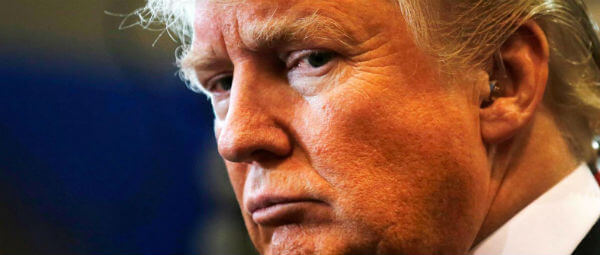
Donald Trump’s threat to NATO

trump-frown

Buzzfeed reports: The head of NATO has called for solidarity and warned that European security is tied to the safety of the United States, following remarks by Donald Trump that he would intervene to help only NATO allies who “fulfilled” their obligations to the US.

“Solidarity among allies is a key value for NATO. This is good for European security and good for US security. We defend one another,” Secretary General‎ Jens Stoltenberg told BuzzFeed News.

The Republican presidential candidate’s comments to the New York Times at the Republican National Convention in Cleveland are also expected to send a chill through Baltic members of NATO, which have witnessed growing Russian aggression on their borders in the past two years.

Asked explicitly whether the US would come to the aid of Baltic nations that are threatened by Russia, Trump responded, “If they fulfill their obligations to us, the answer is yes.”

Article 5 of the NATO treaty states that the 28 members – the US was a founding member in 1949 – agree to come to the aid of any member should they be attacked. [Continue reading…]

The only time Article 5 has been invoked was after Al Qaeda’s attack on Trump’s home town, in response to which America’s NATO allies showed no hesitation in coming to this country’s defense.

NBC News reports: NATO’s treaty states that an attack on one member state constitutes an attack on all, a principle enshrined in Article 5 of the alliance’s treaty.

“If Trump wants to put conditions through Article 5, he would endanger the whole alliance,” said Beyza Unal, a fellow at the London-based Chatham House think tank.

Sarah Lain, a fellow at the Royal United Services Institute, agreed. She said that Article 5 is the “core” of NATO’s defense strategy.

“The suggestion that Trump may consider abandoning a guarantee of protection to fellow NATO countries would in some ways indeed make NATO obsolete,” Lain told NBC News in an email. [Continue reading…]

Facebooktwittermail

Donald Trump’s de facto alliance with Vladimir Putin

Jeffrey Goldberg writes: The Republican nominee for president, Donald J. Trump, has chosen this week to unmask himself as a de facto agent of Russian President Vladimir Putin, a KGB-trained dictator who seeks to rebuild the Soviet empire by undermining the free nations of Europe, marginalizing NATO, and ending America’s reign as the world’s sole superpower.

I am not suggesting that Donald Trump is employed by Putin — though his campaign manager, Paul Manafort, was for many years on the payroll of the Putin-backed former president of Ukraine, Viktor Yanukovych. I am arguing that Trump’s understanding of America’s role in the world aligns with Russia’s geostrategic interests; that his critique of American democracy is in accord with the Kremlin’s critique of American democracy; and that he shares numerous ideological and dispositional proclivities with Putin—for one thing, an obsession with the sort of “strength” often associated with dictators. Trump is making it clear that, as president, he would allow Russia to advance its hegemonic interests across Europe and the Middle East. His election would immediately trigger a wave of global instability — much worse than anything we are seeing today — because America’s allies understand that Trump would likely dismantle the post-World War II U.S.-created international order. Many of these countries, feeling abandoned, would likely pursue nuclear weapons programs on their own, leading to a nightmare of proliferation.

Trump’s sympathy for Putin has not been a secret. Trump said he would “get along very well” with Putin, and he has pleased Putin by expressing a comprehensive lack of interest in the future of Ukraine, the domination of which is a core Putinist principle. The Trump movement also agrees with Putin that U.S. democracy is fatally flawed. A Trump adviser, Carter Page, recently denounced — to a Moscow audience — America’s “often-hypocritical focus on democratization, inequality, corruption and regime change.” Earlier this week, Trump’s operatives watered down the Republican Party’s national-security platform position on Ukraine, removing a promise to help the Ukrainians receive lethal aid in their battle to remain free of Russian control.

Now, in an interview with Maggie Haberman and David Sanger of The New York Times, Trump has gone much further, suggesting that he and Putin share a disdain for NATO. [Continue reading…]

Facebooktwittermail

Why we’re post-fact

decaycol

Peter Pomerantsev writes: As his army blatantly annexed Crimea, Vladimir Putin went on TV and, with a smirk, told the world there were no Russian soldiers in Ukraine. He wasn’t lying so much as saying the truth doesn’t matter. And when Donald Trump makes up facts on a whim, claims that he saw thousands of Muslims in New Jersey cheering the Twin Towers coming down, or that the Mexican government purposefully sends ‘bad’ immigrants to the US, when fact-checking agencies rate 78% of his statements untrue but he still becomes a US Presidential candidate – then it appears that facts no longer matter much in the land of the free. When the Brexit campaign announces ‘Let’s give our NHS the £350 million the EU takes every week’ and, on winning the referendum, the claim is shrugged off as a ‘mistake’ by one Brexit leader while another explains it as ‘an aspiration’, then it’s clear we are living in a ‘post-fact’ or ‘post-truth’ world. Not merely a world where politicians and media lie – they have always lied – but one where they don’t care whether they tell the truth or not.

How did we get here? Is it due to technology? Economic globalisation? The culmination of the history of philosophy? There is some sort of teenage joy in throwing off the weight of facts – those heavy symbols of education and authority, reminders of our place and limitations – but why is this rebellion happening right now?

Many blame technology. Instead of ushering a new era of truth-telling, the information age allows lies to spread in what techies call ‘digital wildfires’. By the time a fact-checker has caught a lie, thousands more have been created, and the sheer volume of ‘disinformation cascades’ make unreality unstoppable. All that matters is that the lie is clickable, and what determines that is how it feeds into people’s existing prejudices. Algorithms developed by companies such as Google and Facebook are based around your previous searches and clicks, so with every search and every click you find your own biases confirmed. Social media, now the primary news source for most Americans, leads us into echo chambers of similar-minded people, feeding us only the things that make us feel better, whether they are true or not.

Technology might have more subtle influences on our relationship with the truth, too. The new media, with its myriad screens and streams, makes reality so fragmented it becomes ungraspable, pushing us towards, or allowing us to flee, into virtual realities and fantasies. Fragmentation, combined with the disorientations of globalization, leaves people yearning for a more secure past, breeding nostalgia. ‘The twenty-first century is not characterized by the search for new-ness’ wrote the late Russian-American philologist Svetlana Boym, ‘but by the proliferation of nostalgias . . . nostalgic nationalists and nostalgic cosmopolitans, nostalgic environmentalists and nostalgic metrophiliacs (city lovers) exchange pixel fire in the blogosphere’. Thus Putin’s internet-troll armies sell dreams of a restored Russian Empire and Soviet Union; Trump tweets to ‘Make America Great Again’; Brexiteers yearn for a lost England on Facebook; while ISIS’s viral snuff movies glorify a mythic Caliphate. ‘Restorative nostalgia’, argued Boym, strives to rebuild the lost homeland with ‘paranoiac determination’, thinks of itself as ‘truth and tradition’, obsesses over grand symbols and ‘relinquish[es] critical thinking for emotional bonding . . . In extreme cases it can create a phantom homeland, for the sake of which one is ready to die or kill. Unreflective nostalgia can breed monsters’.

The flight into techno-fantasies is intertwined with economic and social uncertainty. If all the facts say you have no economic future then why would you want to hear facts? If you live in a world where a small event in China leads to livelihoods lost in Lyon, where your government seems to have no control over what is going on, then trust in the old institutions of authority – politicians, academics, the media – buckles. Which has led to Brexit leader Michael Gove’s claim that British people ‘have had enough of experts’, Trump’s rants at the ‘lamestream’ media and the online flowering of ‘alternative news’ sites. Paradoxically, people who don’t trust ‘the mainstream’ media are, a study from Northeastern University showed, more likely to swallow disinformation. ‘Surprisingly, consumers of alternative news, which are the users trying to avoid the mainstream media “mass-manipulation”, are the most responsive to the injection of false claims.’ Healthy scepticism ends in a search for wild conspiracies. Putin’s Kremlin-controlled television finds US conspiracies behind everything, Trump speculates that 9/11 was an inside job, and parts of the Brexit campaign saw Britain under attack from a Germano-Franco-European plot. [Continue reading…]

Facebooktwittermail

‘We feared the worst’: Turkey’s failed coup a relief for Syrian refugees

The Guardian reports: When tanks rolled across Istanbul and Ankara on Friday night, at the start of Turkey’s botched coup, many in the country were frightened. But few in Turkey had more reason to be afraid than its 2.7 million Syrians, the largest Syrian diaspora community in the world.

“When we first heard about the coup attempt, we felt an unprecedented fear,” remembers Hussein Qassoum, a 30-year-old logistics manager living in Istanbul. “Most of my friends started asking: ‘Which other country should we go to now?’”

Like many Turks, Syrians feared the violence that broke out in the early hours of Saturday might spiral into something more sustained. But Syrians also had more specific concerns about what might happen to them if the president, Recep Tayyip Erdoğan, was toppled.

Life is hard for Syrians in Erdoğan’s Turkey, where they do not have full rights. Despite recent legislative changes, the vast majority are not allowed to work. Hundreds of thousands of Syrian children are not in school, with many working in sweatshops instead. Syrians are denied official refugee status, since Turkey does not recognise key parts of the UN refugee convention.

But Erdoğan’s government has at least given about 2.7 million Syrians a basic level of sanctuary. None of his political opponents has promised to be as accommodating and there is a fear that without Erdoğan, life could get even tougher for Syrians in Turkey. [Continue reading…]

Facebooktwittermail

Turkish aid flows into besieged Gaza Strip

Al Jazeera reports: The night before Eid, Basem Abu Attia received a call from a local official with some good news: His food package was ready for pick-up.

“I was very surprised,” Abu Attia told Al Jazeera. “I wasn’t expecting anything … I had nothing to give my family, so when the aid came I was overjoyed.”

More aid from Turkey has started flowing into Gaza this week under the terms of the recent Turkey-Israel deal, after the Social Affairs Ministry spent weeks organising the material. Distribution to about 75,000 families dependent on government subsidies began on Tuesday, although delivery was previously expedited to some of the neediest families, including Abu Attia’s.

The aid package included rice, oil, olives, dates and flour – basic items that Abu Attia, who lives in the Nuseirat refugee camp, cannot afford himself. His 10 children, the youngest of whom is three, were elated, he said – “especially with the chocolates”. He hopes that later deliveries will include toys for his children.

Just a week into receiving the package, however, all that remained was a bag of rice and a can of olives.

“We need a long-term programme, and we’re hoping the Turks will help us with this,” said Talla Abu Jomaa, the Social Affairs Ministry representative in Nuseirat camp, who delivered the aid package to Abu Attia.

Uncertainty was cast over the Turkey-Israel deal after a failed coup attempt by members of the Turkish military last week. But as President Recep Tayyip Erdogan emerged in control, Turkish officials confirmed that the agreement remains on course. [Continue reading…]

Facebooktwittermail

The consequences of Durand’s border blunder continue to shape world politics

Rafia Zakaria writes: By the year 1871, British officials stationed in India had learned to ride elephants. This was in fact exactly what Sir Henry Durand, Lieutenant Governor of Punjab, was doing when he fell to his death. In the sad record of the event, Sir Henry is described riding in a howdah atop an elephant while traveling through the North-West Frontier Province, ‘which was in his charge’. The elephant, which belonged to an Indian chief, was led through a covered gateway that was ‘too low for it to pass through’. As a result, Durand the younger writes: ‘My father, a man of great height, was forced backward and thrown out across a low wall, which so injured his spine that he died the same day.’

The unceremonious death of Durand the elder, the ‘man of great height’, can well be a study of the British in India at the time. They had quashed a mutiny in 1857, and conquered both the fertile province of Punjab and the southern province of Sindh. Yet they remained curiously vulnerable to surprises on the wild edge of the northwestern corner of their empire. Mortimer Durand, then in his 20s, would attempt to tame the frontier which had taken his father. It was Mortimer, and not the elephant-riding Sir Henry, who would be the architect, and namesake, of a border that remains a frontline for battles between superpowers to this day.

Durand the son arrived in India not long after his father’s death. He was searching not simply for accolades as a diplomat and colonial administrator, but also for a connection with his much adored but distant, and now late, father. Durand left his mark on the land, literally carving a border where there was none. [Continue reading…]

Facebooktwittermail

Trump could seek new law to purge government of Obama appointees

trump-purge

Reuters reports: If he wins the presidency, Republican presidential nominee Donald Trump would seek to purge the federal government of officials appointed by Democratic President Barack Obama and could ask Congress to pass legislation making it easier to fire public workers, Trump ally, Chris Christie, said on Tuesday.

Christie, who is governor of New Jersey and leads Trump’s White House transition team, said the campaign was drawing up a list of federal government employees to fire if Trump defeats Democratic rival Hillary Clinton in the Nov. 8 presidential election.

“As you know from his other career, Donald likes to fire people,” Christie told a closed-door meeting with dozens of donors at the Republican National Convention in Cleveland, according to an audio recording obtained by Reuters and two participants in the meeting.

Christie was referring to Trump’s starring role in the long-running television show “The Apprentice,” where his catch-phrase was “You’re fired!”

The Trump campaign did not respond to requests for comment.

Trump’s transition advisers fear that Obama may convert these appointees to civil servants, who have more job security than officials who have been politically appointed. This would allow officials to keep their jobs in a new, possibly Republican, administration, Christie said. [Continue reading…]

Facebooktwittermail

U.S. nuclear weapons stored in Turkey aren’t safe anymore

Jeffrey Lewis writes: Among the candidates for most iconic image of this past weekend’s attempted coup in Turkey has to be the many videos of Turkish F-16s, hijacked by the mutineers, flying low over Istanbul and Ankara. Eventually, those planes seem to have bombed the parliament. There were rumors that they considered shooting down the plane of President Recep Tayyip Erdogan.

What’s clear is that mutineers managed to keep the F-16s in the air only because they were able to refuel them mid-flight using at least one tanker aircraft operated out of Incirlik Air Base. Eventually Turkish authorities closed the airspace over Incirlik and cut power to it. The next day, the security forces loyal to the government arrested the Turkish commander at the base. (The images of him being escorted away in handcuffs are in the contest to qualify as the weekend’s most iconic.)

In retrospect, it is understandable why the Turkish government closed the airspace over Incirlik, even if it did temporarily disrupt air operations against the Islamic State in Syria. But that is in retrospect. In the moment, it raised a disquieting thought. There are a few dozen U.S. B61 nuclear gravity bombs stored at Incirlik. Does it seem like a good idea to station American nuclear weapons at an air base commanded by someone who may have just helped bomb his own country’s parliament? [Continue reading…]

Facebooktwittermail

Stephen Hawking says pollution and ‘stupidity’ still biggest threats to humanity

The Independent reports: Professor Stephen Hawking says he believes pollution and human “stupidity” remain the biggest threats to mankind, while also expressing his concerns over the use of artificial intelligence in warfare.

The world’s leading theoretical physicist argued “we have certainly not become less greedy or less stupid” in our treatment of the environment over the past decade, during an interview on Larry King Now, which is hosted on Ora TV.

Professor Hawking said: “Six years ago, I was warning about pollution and overcrowding, they have gotten worse since then. The population has grown by half a billion since our last interview, with no end in sight.

“At this rate, it will be eleven billion by 2100. Air pollution has increased by 8 percent over the past five years. More than 80 percent of inhabitants of urban areas are exposed to unsafe levels of air pollution.

“The increase in air pollution and the emission of increasing levels of carbon dioxide. Will we be too late to avoid dangerous levels of global warming?”

The cosmologist was speaking at the Starmus science conference in Tenerife, themed this year as a tribute to his life’s work.

Professor Hawking went on to outline his concerns about the future of artificial intelligence technologies, and specifically their primary use in weaponry. [Continue reading…]

Facebooktwittermail

How terrorism in the West compares to terrorism everywhere else

Since the beginning of 2015, in the Middle East, Africa and Asia there have been 50 times more deaths from terrorism than occurred in Europe and the Americas. Yet when it comes to news coverage, no doubt that ratio is inverted to an even greater extreme, creating the impression among much of the population in the U.S. and Europe that we are the primary target of global terrorism.

These are the raw numbers:

Europe and the Americas: 658 deaths in 46 attacks

The rest of the world: 28,031 deaths in 2,063 attack

Here in a graph, along with further analysis, the Washington Post provides some of the details.

Facebooktwittermail

Afghan teenager who attacked passengers on German train ‘wanted revenge’ for friend’s death

BBC News reports: Prosecutors in Germany say a teenager who attacked train passengers with an axe in Wuerzburg had learnt that a friend had been killed in Afghanistan, and wanted to get revenge.

The 17 year-old, who arrived in Germany a year ago as an unaccompanied refugee, injured four people, two critically, in the attack on Monday evening.

He was shot dead by police as he fled. [Continue reading…]

Deutsche Welle reports: The Afghan teenager, who travelled to Germany unaccompanied to seek asylum, had been staying with a foster family in the town of Ochsenfurt. The assault sparked concerns among other Afghan asylum seekers in Germany who now fear it could further delay their asylum application process.

“I condemn the incident in the strongest of words. I also want to stress that it is an act of an individual and it should be treated as such,” said 19-year-old Abdullah, who has been living in Germany for six months.

Abdullah is worried that the situation for Afghan asylum seekers could deteriorate even further following a series of attacks by radicalized Muslims across the world.

“It is becoming worse for Afghan asylum seekers, especially after what happened recently in the US and France. People in Europe will now have a more skeptical view of the refugees,” said 27-year-old Jawid, another asylum seeker.

Jawid, who like many other Afghans has only one name, was referring to the recent terrorist attacks in these countries – the Orlando shooting in the US which killed 49 people, and the truck attack in the French city of Nice that claimed 84 lives. The Orlando shooter was also of Afghan origin.

But these incidents are isolated cases and should not be attributed to all Afghan migrants, said Zargar Haroon, a refugee. “The German people should understand that it is the same violence that made us flee our own country,” he added. [Continue reading…]

The Washington Post reports: Germany’s “welcoming culture” that defined 2015 has largely disappeared, and Monday’s attack could mark another significant new development in the country’s public debate about refugees.

Skepticism had particularly risen after the sexual assaults of about 1,200 women on New Year’s Eve, which put the country into a shock mode for weeks and sparked a backlash against refugees after authorities said that many of the suspects were asylum seekers from North Africa.

So far, concerns focused primarily on young male refugees who had come to the country alone. Monday’s axe-attack has raised new questions over whether German authorities are too overwhelmed to provide adequate support for those refugees, and particularly for unaccompanied minors.

Authorities in Bavaria, the southern German region where the attack occurred, said on Tuesday that they had put a particular focus on Salafist recruitment efforts of unaccompanied minors for months. It was unclear whether those efforts had been taken based on specific information indicating that recruiters were targeting minors, or whether they were part of more general precautions.

“Maybe we need to take care of unaccompanied minors even more so that they can overcome their trauma,” said Friedhelm Hofmann, the bishop of Würzburg, which is located in the proximity of where the attacker lived. Hofmann was quoted by local German newspapers as saying that it would be wrong to put all asylum seekers under general suspicion, following the attack. [Continue reading…]

At a time when there is a global refugee crisis — a crisis that has been exacerbated in the Middle East by Western interventionism and anti-interventionism — the Western attitude towards refugees fleeing conflict has ranged from compassionate, to charitable, to fearful.

There is a prevailing sentiment that to the extent that the needs of refugees are met, refugees themselves are expected to be grateful for whatever help they receive. No doubt, most are.

But suppose the Trump mentality — xenophobic, fearful, and mean-spirited — was applied to all people in need: to children with behavioral problems, teenagers in foster care, the homeless, drug addicts, victims of domestic violence, and so forth.

Suppose that whenever an individual from such a segment of the population committed an act of violence or other crime, the public and political response was to declare that we can’t help these people. There would be no social services. There would be no philosophy of care. The guiding principle upon which society would function would be that those in need should be shunned and cast aside. There would in effect be no such thing as society.

Facebooktwittermail

The misguided logic of keeping calm in the face of terror

Emile Simpson writes: Statistically, there is a minuscule individual chance of being killed by terrorism in the West.

Commentators will delight in finding comparisons that capture the apparent absurdity of being frightened by terrorism — perhaps telling us that more people are killed by bee stings than terrorism, or that there is more chance of being killed in a car crash than having your kids crushed by a terrorist-driven truck, or such like. Be resilient, they’ll say. Statistically speaking, we’re good here. Statistically speaking, we should all calm down, keep cool heads, and celebrate peace in the West.

But the statistical approach utterly misses the point. The essence of terrorism is that it is not just any sort of crime. It is a crime against the very fabric of the state, as the timing of the attack on Bastille Day was perhaps intended to emphasize.

To view terrorism through the lens of the personal risk of death implies an impoverished, almost nonexistent, view of the state — that is, the community of citizens that is the basis of all political life. In the statistical view, the state evaporates into a collection of atomized individuals who care only about themselves. A peace that requires — even applauds — a sort of numb, cold acceptance in the face of events like Thursday’s and calls it resilience is a rather pathetic peace to celebrate.

Peace depends on the stability of the political order. That political order has an identity in its own right. There is, in other words, a nation behind the state; when the state is attacked, the nation is attacked. Responding to terror with a cold, individualized, statistical message only opens the doors to Europe’s populists, who then appear the only ones not allergic to the recognition that the nation, a body with its own history, culture, and identity, has been wounded. Their response to that is identity politics, which is the path to social disaster. But until the political mainstream stands up for the idea that the state does have certain basic values that demand the loyalty of all its citizens — not just in terms of the law but in spirit as well — they can’t expect to tame today’s populist zeitgeist. [Continue reading…]

Facebooktwittermail