Category Archives: Issues

56 percent of Americans disapprove of FBI decision to exonerate Hillary Clinton

The Washington Post reports: A majority of Americans reject the FBI’s recommendation against charging Hillary Clinton with a crime for her State Department e-mail practices and say the issue raises concerns about how she might perform her presidential duties, according to a new Washington Post-ABC News poll.

Six in 10 voters say the outcome will have no impact on their vote this November, even as those who do largely say it discourages them from backing the presumptive Democratic nominee.

Last week’s decision by FBI Director James B. Comey resulted in the Justice Department’s decision that Clinton would not face criminal prosecution which could have derailed her presidential bid. But Comey’s sharp critique of Clinton’s email practices and systematic dismantling of her public defenses stocked critics with fresh ammunition for the general election campaign. [Continue reading…]

Facebooktwittermail

The war in Iraq gave birth to today’s ‘trust no one’ politics

Andrew Rawnsley writes: The domestic consequences of Iraq were beyond Chilcot’s remit, but they should be in our scope when we try to explain how Britain ended up in the dark place where it stands today.

The Iraq war is a crucial element of the context that put the Labour party in the hands of Jeremy Corbyn. Anger about the war on the left has played a huge role in obscuring the achievements of New Labour’s time in office. The minimum wage. The peace settlement in Northern Ireland. The record sums invested in public services. The resources redistributed to the less privileged. Continuous economic growth for every quarter of the Blair premiership.

In many minds, the shadow of Iraq loomed so large and so black that it eclipsed many other things that progressives ought to have been proud of. In the leadership contest that followed the 2010 election defeat, the most damaging charge against David Miliband was that he had voted for the war. His brother, Ed, who was conveniently not in parliament at the time, exploited that and won the contest. Eddism then begat Corbynism.

In the leadership contest after the 2015 defeat, Jeremy Corbyn made a large feature of his opposition to the war, successfully tapping the fury that still burns so intensely among many on the left. As I write, Mr Corbyn is continuing to insist that he can carry on as leader even when four out of five of his parliamentary colleagues have publicly declared him unfit for the job. Tom Watson, the fixer of fixers, has just declared that even he cannot broker a way out of the deadlock. It is quite possible that the outcome of the struggle to unseat Mr Corbyn will also be decided by positions taken on Iraq.

It is said by those who think Angela Eagle should not be the leadership challenger that she is disqualified from the role because she voted for the invasion. A war begun more than a decade ago still has that much reverberation in Labour politics.

The long after-tremors of the Iraq war were also felt in the vote to leave the European Union. One seismic event was a trigger for another earthquake 13 years later. We know that a fierce element of the motivation of many Out voters was anger with political “elites”. That building of rage has had many drivers over recent years from the parliamentary expenses scandal to the pain of austerity. One of those sources was surely Iraq, an episode notably corroding of public faith in government because the war was sold on the basis that Saddam Hussein had weapons of mass destruction that didn’t exist.

I have never bought the simplistic explanation that Tony Blair simply made it all up. Sir John Chilcot directs most of the blame towards MI6 for supplying intelligence that turned out to be wrong or sheer fabrication by duplicitous sources. Mr Blair’s culpability was representing that intelligence as sound when it was the opposite. Had the mistakes just been down to one over-messianic leader, as many of the other players have sought to suggest to displace culpability from themselves, it would not have been such a damaging episode in our public life. It wasn’t just the infamous dossier and it wasn’t just his personal miscalculations. Iraq was a collective failure of the political, diplomatic, intelligence and military establishments.

I don’t agree with the nihilistic ridiculing of expertise that powered the Out campaign to victory, but I sure can see why “trust no one” had such appeal to such a large audience. [Continue reading…]

Facebooktwittermail

Tony Blair could face contempt of parliament motion over Iraq war

The Guardian reports: Tony Blair could face a motion of contempt in the House of Commons over the 2003 invasion of Iraq – a motion that Jeremy Corbyn has said he would probably support.

The Conservative MP David Davis, backed by the SNP’s Alex Salmond, has said he will present on Thursday the motion accusing the former prime minister of misleading parliament. MPs could debate the issue before the summer if it is accepted by the Commons Speaker, John Bercow.

Sir John Chilcot said in his long-awaited report on the Iraq invasion that the legal basis for the war was reached in a way that was “far from satisfactory”, but he did not explicitly say the war was illegal.

Davis told BBC1’s Andrew Marr Show on Sunday that the motion would say Blair held the house in contempt over the 2003 invasion. He said that if his motion was accepted by Bercow it could be debated before parliament’s summer recess.

Davis said: “It’s a bit like contempt of court, essentially by deceit. If you look just at the debate alone, on five different grounds the house was misled – three in terms of the weapons of mass destruction, one in terms of the UN votes were going, and one in terms of the threat, the risks. He might have done one of those accidentally, but five?”

Salmond said he believed Corbyn’s support would mean the motion had enough cross-party support. “No parliament worth its salt tolerates being misled,” Scotland’s former first minister told ITV’s Peston on Sunday.

He said Blair’s promise to George Bush that he would be “with you, whatever” meant Blair had been “saying one thing to George W Bush in private, and a totally different thing to parliament and people in public”. He said Blair’s actions were “a parliamentary crime, and it’s time for parliament to deliver the verdict”. [Continue reading…]

Facebooktwittermail

Is America repeating the mistakes of 1968?

Julian E Zelizer writes: “All of us, as Americans, should be troubled by these shootings, because these are not isolated incidents,” said President Barack Obama following the horrific shootings of Alton Sterling and Philando Castile. “They’re symptomatic of a broader set of racial disparities that exist in our criminal-justice system.” In an American tragedy of the nation’s own making, Obama will end his historic presidency with racial turmoil rocking the nation. The person whose election brought so much hope about the trajectory of race relations in the United States, a country that has perpetually suffered from the original sin of slavery, is spending these days desperately trying to calm the anger over police killings of African Americans and the protests and violence that have ensued.

Today, America has a president who understands the urgent need to address the problems of institutional racism that have been broadcast to the entire world through smartphones and exposés of a racialized criminal-justice system. But this conflict is taking shape right in the middle of a heated election season—one that includes a candidate who has made draconian proposals for national security and who appeals to the “Silent Majority.” Following the events in Dallas, Donald Trump released a statement that read: “We must restore law and order. We must restore the confidence of our people to be safe and secure in their homes and on the street.”

This is not the first time this has happened. When questions over race and policing were front and center in a national debate in 1968, the federal government failed to take the steps necessary to make any changes. The government understood how institutional racism was playing out in the cities and how they exploded into violence, but the electorate instead was seduced by Richard Nixon’s calls for law and order, as well as an urban crackdown, leaving the problems of institutional racism untouched. Rather than deal with the way that racism was inscribed into American institutions, including the criminal-justice system, the government focused on building a massive carceral state, militarizing police forces, criminalizing small offenses, and living through repeated moments of racial conflict exploding into violence. [Continue reading…]

Facebooktwittermail

America remains an intentionally segregated society

Natalie Y Moore writes: After the shooting of Philando Castile in Minnesota last Wednesday, the state’s appalled governor, Mark Dayton, said police wouldn’t have killed Castile if he had been white. Here’s a white politician recognising racism and not swatting it away like a pesky mosquito. But we need to recognise that a rigged, racist system of police brutality is indicative of deep-seated institutionalised racism.

Many of our cities are defined by entrenched residential segregation that created black ghettos and continues to perpetuate inequity. This was not by accident. In the 20th century, the government created housing policies that discriminated against black people and favoured white people in terms of wealth building. Despite the idea of “separate but equal” being struck down by our courts, the ideology still lingers in housing and public education. This isn’t about hokey ideas of harmony, of black and white people smiling and getting along just for the sake of getting along. Instead, if we start to address segregationist policies, we may have some hope of creating fairness.

After racial uprisings in US cities in the 1960s, the Kerner Commission released a report, which asserted that our country was moving towards two societies: one black, one white, separate and unequal. The report said: “Segregation and poverty have created in the racial ghetto a destructive environment totally unknown to white Americans. What white Americans have never fully understood – but the Negro can never forget – is that white society is deeply implicated in the ghetto. White institutions created it, white institutions maintain it and white society condones it.”

These words still ring true today.

Police brutality isn’t isolated from other forms of racism. Segregation is about division, disinvestment and uneven resources based on race. In policing, we often see white officers who grew up in homogenous white places placed in black urban settings. These officers enter without understanding racial and cultural differences. It’s a set-up for failure.

Segregation isn’t about choosing to live among like-minded or racially similar people. American segregation is historic and intentional and must be a part of any conversation on race as the root of many of our problems. [Continue reading…]

Facebooktwittermail

With a hint of regret, Obama describes new kind of endless quasi-war

The Washington Post reports: President Obama, who had pledged to end America’s wars, described the landscape he was leaving to his successor as a state of quasi-war that could extend for years to come.

Obama, who was speaking Saturday to reporters at the NATO summit here, noted with pride that he has cut the size of the U.S. forces in Iraq and Afghanistan from 180,000 troops to fewer than 15,000.

But U.S. drones and fighter jets are striking targets in seven countries on a regular basis, a span of geography that is virtually unprecedented in American history outside of major wars. U.S. Special Operations forces are still conducting dangerous raids in countries such as Iraq, Afghanistan and Syria. [Continue reading…]

Facebooktwittermail

War reporter Marie Colvin was tracked, targeted and killed by Assad’s forces, family says

The Washington Post reports: American war correspondent Marie Colvin was deliberately targeted and killed by artillery fire in 2012 at the direction of senior Syrian military officers seeking to silence her reporting on civilian casualties in the besieged city of Homs, according to a civil lawsuit filed Saturday on behalf of her sister and other heirs.

Based on information from high-level defectors and captured government documents, the 32-page complaint alleges that the military was able to electronically intercept Colvin’s communications from a clandestine media center operating out of an apartment in the densely populated Baba Amr neighborhood in Homs. Syrian officials paired the intercepts with detailed information from a female informant to pinpoint the location of the reporter who worked for the Sunday Times of London.

Then, the suits says, military forces under the direction of President Bashar al-Assad’s brother, Maher, commander of Syrian army’s 4th Armored Division, launched a series of “bracketing” artillery attacks that came progressively closer to the media center, a classic artillery targeting tactic. [Continue reading…]

Facebooktwittermail

A week from hell

Charles Blow writes: This was yet another week that tore at the very fiber of our nation.

After two videos emerged showing the gruesome killings of two black men by police officers, one in Baton Rouge, La., and the other in Falcon Heights, Minn., a black man shot and killed five officers in a cowardly ambush at an otherwise peaceful protest and wounded nine more people. The Dallas police chief, David O. Brown, said, “He was upset about Black Lives Matter” and “about the recent police shootings” and “was upset at white people” and “wanted to kill white people, especially white officers.”

We seem caught in a cycle of escalating atrocities without an easy way out, without enough clear voices of calm, without tools for reduction, without resolutions that will satisfy.

There is so much loss and pain. There are so many families whose hearts hurt for a loved one needlessly taken, never to be embraced again.

There is so much disintegrating trust, so much animosity stirring.

So many — too many — Americans now seem to be living with an ambient terror that someone is somehow targeting them. [Continue reading…]

Facebooktwittermail

Death in black and white

Michael Eric Dyson writes: We, black America, are a nation of nearly 40 million souls inside a nation of more than 320 million people. And I fear now that it is clearer than ever that you, white America, will always struggle to understand us.

Like you, we don’t all think the same, feel the same, love, learn, live or even die the same.

But there’s one thing most of us agree on: We don’t want cops to be executed at a peaceful protest. We also don’t want cops to kill us without fear that they will ever face a jury, much less go to jail, even as the world watches our death on a homemade video recording. This is a difficult point to make as a racial crisis flares around us.

We close a week of violence that witnessed the tragic deaths of two black men — Alton B. Sterling and Philando Castile — at the hands of the police with a terrible attack in Dallas against police officers, whose names we’re just beginning to learn. It feels as though it has been death leading to more death, nothing anyone would ever hope for.

A nonviolent protest was hijacked by violence and so, too, was the debate about the legitimate grievances that black Americans face. The acts of the gunman in Dallas must be condemned. However, he has nothing to do with the difficult truths we must address if we are to make real racial progress, and the reckoning includes being honest about how black grievance has been ignored, dismissed or discounted. [Continue reading…]

Facebooktwittermail

Justice is indivisible

Gary Younge writes: In a country where it’s easier to obtain a semi-automatic gun than to obtain healthcare, a fragile mind can wreak havoc on a fragile political culture. So it was on Thursday night when a sniper opened fire on police at a Black Lives Matter demonstration killing five officers and wounding at least seven others.

Even as events in Dallas unfold there are three key things one can say. The first is that these murders are vile and should be unequivocally condemned. They can in no way be understood or excused as retaliation for the well-publicised recent incidents of police shootings of African Americans. Indeed the effect of such individual acts of violence is not to support the movement against racism but sabotage it. Its enemies will smear it by association; potential allies will be more wary; those within it will be more cautious. Those believed responsible should be found, charged and prosecuted. This is the appropriate response when people cavalierly and wantonly take the life of another. Anything less would lack justice.

Which brings us to the second point. Justice is indivisible. If it is accorded to some and not others it is not justice but privilege. That is why these horrific assassinations should in no way diminish the urgency or importance of the issue of police killings of African Americans or undermine the Black Lives Matter movement. [Continue reading…]


Facebooktwittermail

Trump is wrong about Saddam Hussein

Hayder Al-Shakeri writes: As an Iraqi, I learned about the values on which the United States of America was built during an exchange semester in the US. I admired those values and respected Americans for believing in them. But Donald Trump contradicts some of those very principles. In a speech on Tuesday, I heard him praise the way Saddam killed “terrorists” without reading them rights or even letting them talk. This is not the American system that I was taught – nor these the values I respected.

“Saddam Hussein was a bad guy. Right? He was a bad guy, really bad guy. But you know what he did well? He killed terrorists. He did that so good. They didn’t read them the rights, they didn’t talk, they were a terrorist, it was over,” Donald Trump said in his speech.

It is true that Saddam killed many people. Saddam killed men and women, kids and minorities and many others who stood up to him. Most of them were not terrorists, though. Hundreds of thousands of lives have been wasted under his leadership/dictatorship. Iraq, in his opinion, might have looked better during his time, but Iraqis back then suffered greatly.

Saddam led Iraq into long wars lasting several years, during which Iraqis had to fight for what he believed in. He committed genocides against his people and eventually Iraq had up to 250 mass graves spread around in the country. Saddam went after anyone who opposed him – he didn’t care about violating basic human rights or democracy.

Through such acts, Saddam was able to instill terror in his people, making them afraid to whisper a word. That is how Saddam dealt with terrorism, by terrorizing everyone so no one would be able to speak or stand up to him. In that way, the state looked orderly and people seemed in a better place than right now. [Continue reading…]

Facebooktwittermail

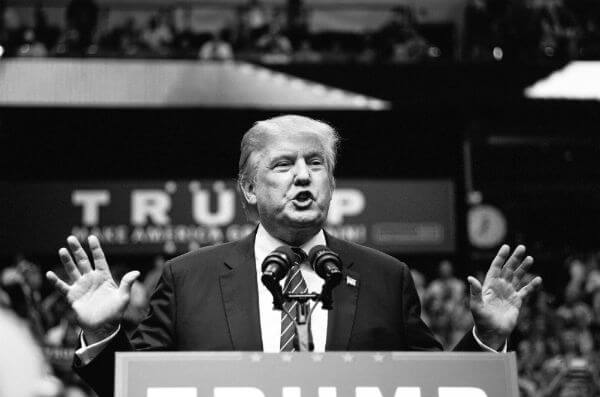
Would Donald Trump quit if he wins the election? He doesn’t rule it out

trump-bw

The New York Times reports: The traditional goal of a presidential nominee is to win the presidency and then serve as president.

Donald J. Trump is not a traditional candidate for president.

Presented in a recent interview with a scenario, floating around the political ether, in which the presumptive Republican nominee proves all the naysayers wrong, beats Hillary Clinton and wins the presidency, only to forgo the office as the ultimate walk-off winner, Mr. Trump flashed a mischievous smile.

“I’ll let you know how I feel about it after it happens,” he said minutes before leaving his Trump Tower office to fly to a campaign rally in New Hampshire.

It is, of course, entirely possible that Mr. Trump is playing coy to earn more news coverage. But the notion of the intensely competitive Mr. Trump’s being more interested in winning the presidency than serving as president is not exactly a foreign concept to close observers of this presidential race. [Continue reading…]

Facebooktwittermail

Take it from a whistleblower: Chilcot’s jigsaw puzzle is missing a few pieces

Katharine Gun writes: Following the damning Chilcot report, much will be said about the decision to go to war in Iraq. But one thing will be missing: the information I leaked in the runup to the war. It won’t get an airing because I was never questioned or asked to participate in the Chilcot inquiry.

Back in early 2003, Tony Blair was keen to secure UN backing for a resolution that would authorise the use of force against Iraq. I was a linguist and analyst at GCHQ when, on 31 Jan 2003, I, along with dozens of others in GCHQ, received an email from a senior official at the National Security Agency. It said the agency was “mounting a surge particularly directed at the UN security council (UNSC) members”, and that it wanted “the whole gamut of information that could give US policymakers an edge in obtaining results favourable to US goals or to head off surprises”.

In other words, the US planned to use intercepted communications of the security council delegates. The focus of the “surge” was principally directed at the six swing nations then on the UNSC: Angola, Cameroon, Chile, Bulgaria, Guinea and Pakistan. The Chilcot report has eliminated any doubt that the goal of the war was regime change by military means. But that is what many people already suspected in 2003.

I was furious when I read that email and leaked it. Soon afterwards, when the Observer ran a front-page story: “US dirty tricks to win vote on Iraq war”, I confessed to the leak and was arrested on suspicion of the breach of section 1 of the Official Secrets Act. I pleaded not guilty and, assisted by Liberty and Ben Emmerson QC, offered a defence of necessity – in other words, a breach of the law in order to prevent imminent loss of human life. This defence had not and, to my knowledge, has still not, been tested in a court of law.

I believed that on receiving the email, UK parliamentary members might question the urgency and motives of the war hawks, and demand further deliberations and scrutiny. I thought it might delay or perhaps even halt the march towards a war that would devastate Iraqi lives and infrastructure already crushed by a decade of unrelenting sanctions. A war that would send UK and US service men and women into harm’s way, leaving hundreds of them dead, disfigured and traumatised. Unfortunately, that did not happen. It couldn’t, for now we know via Chilcot that Blair promised George W Bush he would be “with him, whatever”. [Continue reading…]

Facebooktwittermail

Refugee who fled Boko Haram for Italy killed by ‘ultra’ football fan

The Guardian reports: A Nigerian refugee thought to have fled the terrorist group Boko Haram with his wife has died after being attacked by an “ultra” football fan in a small Italian town.

Emmanuel Chidi Namdi, 36, died of injuries he sustained when a local man, who had reportedly been racially abusing Namdi’s wife, attacked him in the town of Fermo, in central Italy.

Amedeo Mancini, 35, allegedly referred to the 24-year-old woman as a “monkey”, and attacked Namdi when he attempted to defend her, according to Italian media reports. Namdi fell into a coma and was pronounced dead on Wednesday.

Namdi and his wife, identified by her first name, Chimiary, were being hosted by Fermo town’s parish while they sought asylum. They are believed to have fled from Boko Haram and travelled through Niger and Libya before boarding a boat to Italy.

Father Vinicio Albanesi, who was hosting the couple, said they had previously lost a two-year-old daughter, and that Namdi’s wife suffered a miscarriage during the journey to Italy.

At an evening vigil on Wednesday, Chimiary cried out to her late husband: “Why do you leave me in this wicked world?” [Continue reading…]

Facebooktwittermail

‘Brave New World’: Russia’s new anti-terrorism legislation

Anna Borshchevskaya writes: On June 7, Russian president Vladimir Putin signed controversial anti-terrorism legislation known in Russia as the “Yarovaya law,” named after its leading co-author, prominent member of Putin’s United Russia party Irina Yarovaya.

The law is reminiscent of Soviet-era surveillance. It will also likely contribute to crippling the Russian economy. According to Russian and Western sources, it allows for jailing children as young as 14 for a variety of vaguely-worded reasons, and significantly raises the costs of internet and telecommunications. Russia’s human rights activists and opposition politicians described the law as “unconstitutional.” Russia’s Presidential Council on Civil Society and Human Rights urged Putin not to sign the law.

“Hello, brave new world with expensive Internet, with jails for children, with global surveillance and prison terms for non-snitching,” wrote politician Dmitry Gudkov in his Facebook page after Putin signed the law. Gudkov, one of Russia’s few real opposition parliamentarians, was outspoken in June and urged his colleagues to vote against the law last month. The Duma (lower house of parliament) began the discussion of the bill in May of this year and both the upper and lower houses of parliament approved the bill in late June without genuine debate on the issue.

Among other things, reportedly, the law requires Internet and telecom providers to store recordings of all of their customers’ data and communications for six months. In addition, the law requires them to store all metadata for three years. Russia’s Federal Security Services (FSB) would have access to this information and, as Gudkov pointed out in June, it may easily leak into the black market. This requirement, according to Russia’s cellphone providers, for example, will increase costs for consumers at least two- to three-fold.

The law also introduces criminal liability for “failure to report a crime” that someone “has been planning, is perpetrating, or has perpetrated.” Moreover, under the new law, children as young as 14 can face up to a year in prison for such a “failure” and for other reasons related to extremism, terrorism and participation in massive riots (all of which can be virtually anything in Russia, since the law is vague). As Tanya Lokshina, Russia program director Human Rights Watch Russia program director pointed out in June before Putin signed the law, “it’s not clear what ‘planning’ stands for or what level of knowledge needs to be proved to hold a person liable.” Such ambiguity is the hallmark of Russia’s laws in the last several years when Putin began a massive crackdown on Russia’s civil society when he returned to his third presidential term in 2012 amidst the largest protests since the break-up of the Soviet Union. [Continue reading…]

Facebooktwittermail

The era of the angry voter is upon us

Der Spiegel reports: Paula Heap and Joel Coe live 6,400 kilometers apart. They don’t even know each other, but they share the same sense of outrage.

She voted for Brexit and he intends to vote for Donald Trump in November. She hails from Preston, a city in northwest England that never truly recovered from the decline of the textiles industry. He’s an American from the small town of Red Boiling Springs in northern Tennessee. His textiles factory, Racoe Inc., is the last of its kind still in business in the area.

It’s Heap’s view that globalization has created a lot of winners and a lot of losers, and that Preston is among the losers. She describes the EU as an “empire” that regulates her electric water kettle but doesn’t create any prosperity. She’s riled by the many immigrants, saying the pressure on the labor market and the health system is increasing. “We want to retain control over immigration,” she says.

Heap is a career advisor, whose motto could be “Make the UK great again,” to borrow a line from Donald Trump’s US presidential election campaign.

Coe, the Trump backer with bulky upper arms and a bushy, reddish beard, blames the NAFTA free trade agreement for the fact that jobs in his industry have been relocated from Tennessee to Mexico. A little bit more of the America of the clattering sewing machines — which are still standing behind him, operated by around 50 women who sew jackets and pants for the US military — disappears each year.

Coe says he plans to vote for trump because the candidate has “never been a politician.” Hillary Clinton, on the other hand, has been “bought by large corporations and is corrupt.” He says if Trump weren’t in the picture, he would probably vote for Bernie Sanders. Both candidates, he says, are running against “the system.”

He says he doesn’t know a lot about Britain, but he has the feeling that the British vote against the EU is somehow related to his own battle. “It’s good that Britain is leaving the EU,” he says. “Each country has its own identity.”

The phenomenon of the angry voter currently appears to be making significant strides toward conquering Western democracies at the moment. The outrage is directed against elites in politics and in the business community, against the established political parties, against the “mainstream media,” against free trade and, of course, against immigration. Many Brexiteers are among these angry voters, as are Trump supporters in the United States or Le Pen voters in France.

“Take back control” was one of the main slogans used by Brexit supporters in the United Kingdom. It could stand is as the cry for help from angry voters all around the world. In an era when increasingly complex free trade agreements or unknown EU commissioners are determining peoples’ own living conditions, voters once again yearn for borders, national legislative control and closed economies.

It’s a phenomenon that didn’t just pop up yesterday. But the rage has reached a boiling point this year, fueled by the financial and euro crises, by destabilization in the Middle East and the refugee flows it has spawned, by the rise of China and by the deindustrialization that has taken place in recent decades in many Western countries. In the Internet, this rage has found a forum where it can thrive. [Continue reading…]

Facebooktwittermail

The Syria that Trump and Clinton aren’t talking about

Janine di Giovanni writes: Last month, a convoy of aid trucks reached Daraya, a suburb of Damascus, where an estimated 8,000 residents and 1,000 rebel fighters have been slowly starving for four years. Before the Syrian civil war started, Daraya had a population of almost 80,000. But that was before Bashar Assad’s troops encircled the town and his planes began the daily bombardments that have reduced much of the city to rubble and devastated the wheat fields and farmlands that once sustained it. Many who are left in Daraya subsist on grass and grape leaves, whatever they can forage.

The United Nations has been trying to get food through for a while now, but Assad has blocked it every time. On this occasion, for no stated reason, he waved the U.N. through. When the trucks finally reached the center of Daraya, they were swarmed by desperate people, who quickly became angered when they realized the trucks were packed with mostly inedible things like mosquito nets and anti-lice shampoo.

Ten days later, the U.N. sent another convoy. This one, at least, was carrying food, though it wasn’t sufficient to feed everyone. But it was enough for U.N. officials to claim that they had tried. One senior U.N. official, off the record, told me wearily that it was “impossible to get the numbers right of how many people are actually inside.” This fatalist excuse roughly translates as: People are going to starve, but there’s nothing more to do.

As soon as the aid convoy left the town, the barrel bombs started again. Twenty-eight of them, by the count of Ahmad, a 23-year-old former engineering student, whom I spoke to by Skype Messenger. Ahmad works as a volunteer in the “media center” in Daraya. I asked him if he had gotten any of the 480 rations of food.

“No, I have not eaten today,” he told me. “I don’t understand how the world can watch this,” he said. “We’re starving.”

The truth is that the world, at least much of the United States, is not watching.

For Americans, caught up in a circus-like presidential election driven by fear and anger — about lost jobs, about terrorist attacks, about immigrants — Syria is simply part of an indefinite mass of Middle Eastern chaos and danger. Though Syria has endured five years of war, and suffered more than 400,000 dead, it manages to arouse as much suspicion as pity. And when it has been discussed at all by presidential candidates often it has been to argue over the need for an immigration ban on all Muslims to prevent terrorists from hiding among the trickle of Syrians entering the country. No one talks about Daraya, or the 18 other besieged towns across Syria just like it where starvation is being used as a tool of war. [Continue reading…]

Facebooktwittermail