The Associated Press reports: Israeli Cabinet ministers on Sunday gave preliminary approval to a bill that imposes new disclosure requirements on nonprofit groups that receive foreign funding — drawing accusations it is cracking down on pro-peace groups, rattling relations with Europe and deepening an increasingly toxic divide between liberal and hawkish Israelis.
Critics said the regulations are meant to stifle dovish organizations critical of Prime Minister Benjamin Netanyahu’s government policies toward the Palestinians, since such nonprofits tend to rely heavily on donations from European countries.
In contrast, pro-government and nationalistic nonprofit groups tend to rely on wealthy private donors, who are exempt from the measures under the bill. The legislature is expected to approve the bill as early as this week.
Opposition leader Isaac Herzog quickly blasted the bill as a “muzzling law” that would bring about “thought police.” [Continue reading…]
Category Archives: Issues
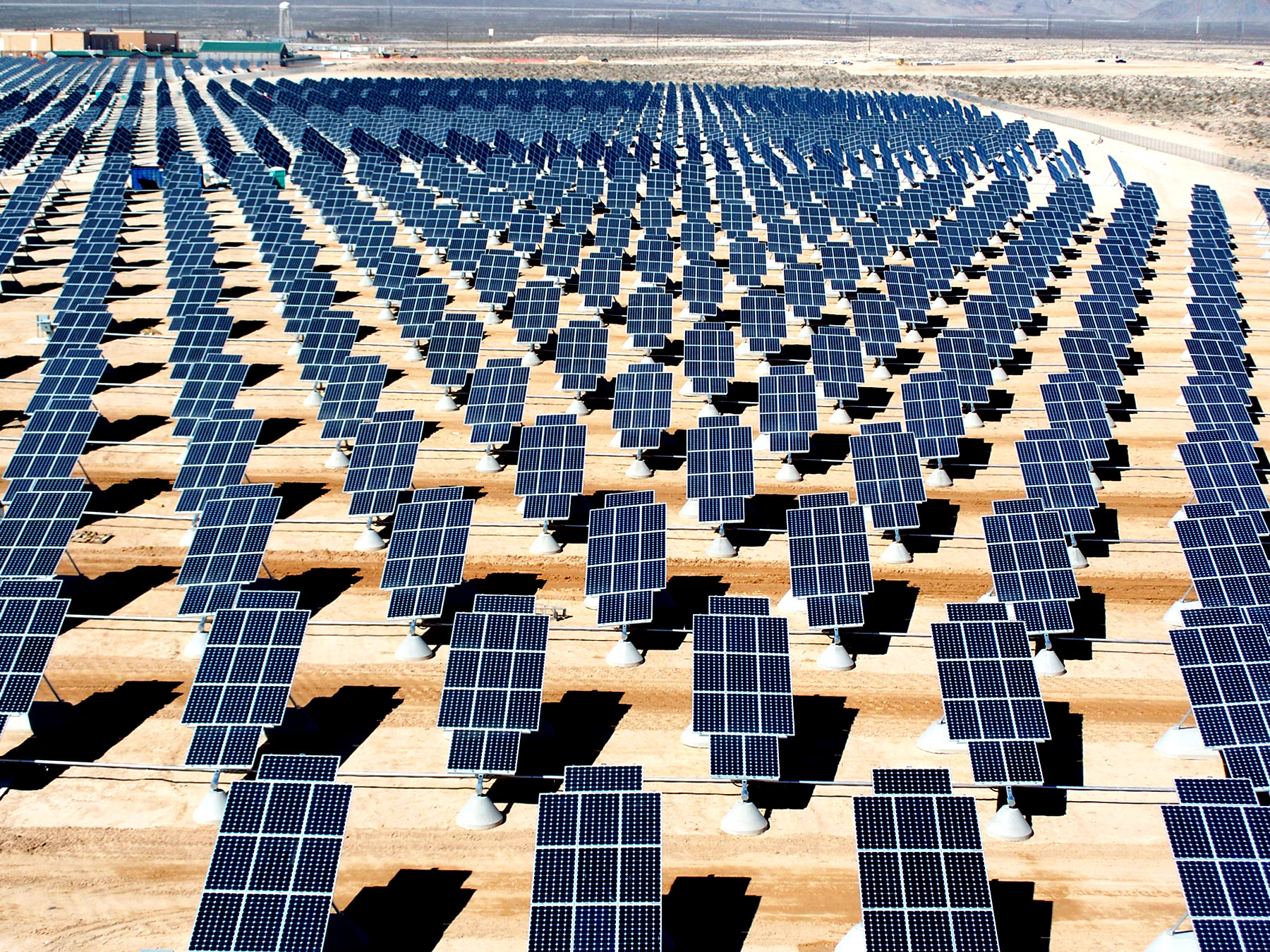
Elon Musk: We can power America by covering a small corner of Utah with solar panels

EcoWatch reports: Billionaire entrepreneur Elon Musk has once again championed the incredible potential of renewable energy.
During an interview Tuesday at the American Geophysical Union’s fall meeting in San Francisco, the 44-year-old CEO of Tesla Motors and SpaceX said that the U.S. could meet its electricity needs just by covering a small corner of Utah or Nevada with solar panels.
His remark was captured in this tweet from Nature News reporter Lauren Morello, who was at the event:
Musk: "You could take a corner of Utah and Nevada and power the entire United States with solar power." #AGU15
— Lauren Morello (@lmorello_dc) December 15, 2015
Musk made a similar statement during his speech at the Sorbonne University in Paris on Dec. 2.“Let’s say if the only thing we had was solar energy — if that was the only power source — if you just took a small section of Spain you could power all of Europe,” he said. “It’s a very small amount of area that’s actually needed to generate the electricity we need to power civilization. Or in the case of the U.S., like a little corner of Nevada or Utah would power the United States.”
While Musk’s statement might sound a little too good to be true, as Tech Insider reporter Rebecca Harrington noted, we already have the technology to do it. More power from the sun hits the Earth in a single hour than humanity uses in an entire year, yet solar only provided 0.39 percent of the energy used in the U.S. last year. [Continue reading…]
Over a million migrants and refugees have reached Europe this year

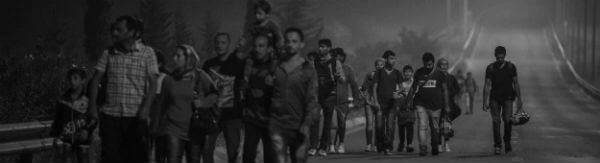
The Guardian reports: More than a million people have now reached Europe through irregular means in 2015, the International Organisation for Migration has announced, in what constitutes the continent’s biggest wave of mass migration since the aftermath of the second world war.
Out of a total of 1,005,504 arrivals by 21 December, the vast majority – 816,752 – arrived by sea in Greece, the IOM said. A further 150,317 arrived by sea in Italy, with much smaller figures for Spain, Malta and Cyprus. A total of 34,215 crossed by land routes, such as over the Turkish-Bulgarian border.
The overall figure is a four-fold increase from 2014’s figures, and has largely been driven by Syrians fleeing their country’s civil war. Afghans, Iraqis and Eritreans fleeing conflict and repression are the other significant national groups.
The European migration flow is nevertheless far more manageable than in the Middle East, where roughly 2.2 million Syrian refugees live in Turkey alone. In Lebanon, 1.1 million Syrians form about one-fifth of the country’s total population, while Jordan’s 633,000 registered Syrian refugees make up around a tenth of the total.
The denial of basic rights to refugees in those countries, where almost all Syrians do not have the right to work, is one of the causes of Europe’s migration crisis. Refugees who have lived for several years in legal limbo are now coming to Europe to claim the rights bestowed on them by the 1951 UN refugee convention. [Continue reading…]
The mercenaries commanding UAE forces in Yemen
Middle East Eye reports: An Australian citizen is the commander of an elite UAE military force deployed in Yemen as part of the Saudi-led coalition, which human rights groups accuse of war crimes.
Mike Hindmarsh, 59, is a former senior Australian army officer who is publicly listed as commander of the UAE’s Presidential Guard.
The Presidential Guard is a unit of marines, reconnaissance, aviation, special forces and mechanised brigades, according to the US State Department website.
Hindmarsh oversaw the guard’s formation in early 2010 shortly after he took up his estimated $500,000-a-year, tax-free job in Abu Dhabi, where he reports directly to Crown Prince Mohammed bin Zayed al-Nahyan.
The Presidential Guard has been lauded for playing a key role in the Saudi-led coalition seeking to reinstall the exiled Yemeni government of President Abd Rabbuh Mansour Hadi. [Continue reading…]
Pope Francis attacks consumerist society in midnight mass at Vatican
The Guardian reports: Pope Francis returned to one of his favoured themes in his homily at midnight mass on Christmas Eve at the Vatican, castigating a hedonistic and consumerist society and a culture of indifference.
Meanwhile, one of his senior cardinals, Vincent Nichols, the archbishop of Westminster and the leader of the Catholic church in England, focused his Christmas Eve message on “gratuitous violence” in the home and the suffering of persecuted Christians around the world.
Neither Catholic leader mentioned the continuing refugee crisis, a surprising omission at the end of a year in which the plight of those fleeing conflict, persecution and hardship has dominated international headlines. In September, Francis called on every religious community across Europe to offer sanctuary to refugee families. [Continue reading…]
Americans use more energy on Christmas lights than is used to power entire countries
AFP reports: American household Christmas lights, a favorite holiday tradition, use up more electricity than some poorer countries — such as El Salvador or Ethiopia — do in a year.
Bright lights strung on American trees, rooftops and lawns account for 6.63 billion kilowatt hours of electricity consumption every year, according to a recent blog post by the Center for Global Development.
That’s more than the national electricity consumption of many developing countries. El Salvador for one, uses 5.35 billion kilowatt hours, while Ethiopia consumes 5.30 billion and Tanzania 4.81 billion. [Continue reading…]
FBI listed It’s a Wonderful Life as suspected Communist propaganda
Quartz reports: It’s a Wonderful Life is a staple of the holiday season in the United States, but it was once considered un-American by the government.
From the film’s release in 1946 until 1956, it was listed by the Federal Bureau of Investigation as suspected Communist propaganda. Mr. Potter, the villainous banker who nearly drives George Bailey to financial ruin and suicide, “represented a rather obvious attempt to discredit bankers by casting Lionel Barrymore as ‘scrooge-type’ so that he would be the most hated man in the picture,” according to an FBI report (pdf, pg. 14) in 1947.
The report called it “a common trick used by Communists.” [Continue reading…]
America moving left — and right

Peter Beinart writes: By the time Barack Obama defeated Hillary Clinton for the Democratic presidential nomination in 2008, in part because of her support for the Iraq War, the mood inside the party had fundamentally changed. Whereas the party’s most respected thinkers had once urged Democrats to critique liberal orthodoxy, they now criticized Democrats for not defending that orthodoxy fiercely enough. The presidency of George W. Bush had made Democrats unapologetically liberal, and the presidency of Barack Obama was the most tangible result.
But that’s only half the story. Because if George W. Bush’s failures pushed the Democratic Party to the left, Barack Obama’s have pushed it even further. If Bush was responsible for the liberal infrastructure that helped elect Obama, Obama has now inadvertently contributed to the creation of two movements — Occupy and Black Lives Matter — dedicated to the proposition that even the liberalism he espouses is not left-wing enough.
Given the militant opposition Obama faced from Republicans in Congress, it’s unclear whether he could have used the financial crisis to dramatically curtail Wall Street’s power. What is clear is that he did not. Thus, less than three years after the election of a president who had inspired them like no other, young activists looked around at a country whose people were still suffering, and whose financial titans were still dominant. In response, they created Occupy Wall Street.
When academics from the City University of New York went to Zuccotti Park to study the people who had taken it over, they found something striking: 40 percent of the Occupy activists had worked on the 2008 presidential campaign, mostly for Obama. Many of them had hoped that, as president, he would bring fundamental change. Now the collapse of that hope had led them to challenge Wall Street directly. “Disenchantment with Obama was a driver of the Occupy movement for many of the young people who participated,” noted the CUNY researchers. In his book on the movement, Occupy Nation, the Columbia University sociologist Todd Gitlin quotes Jeremy Varon, a close observer of Occupy who teaches at the New School for Social Research, as saying, “This is the Obama generation declaring their independence from his administration. We thought his voice was ours. Now we know we have to speak for ourselves.”
For a brief period, Occupy captured the nation’s attention. In December 2011, Gitlin notes, the movement had 143 chapters in California alone. Then it fizzled. But as the political scientist Frances Fox Piven has written, “The great protest movements of history … did not expand in the shape of a simple rising arc of popular defiance. Rather, they began in a particular place, sputtered and subsided, only to re-emerge elsewhere in perhaps a different form, influenced by local particularities of circumstance and culture.”
That’s what happened to Occupy. The movement may have burned out, but it injected economic inequality into the American political debate. (In the weeks following the takeover of Zuccotti Park, media references to the subject rose fivefold.) The same anger that sparked Occupy — directed not merely at Wall Street but at the Democratic Party elites who coddled it—fueled Bill de Blasio’s election and Elizabeth Warren’s rise to national prominence. And without Occupy, it’s impossible to understand why a curmudgeonly Democratic Socialist from Vermont is seriously challenging Hillary Clinton in the early primary states. The day Bernie Sanders announced his candidacy, a group of Occupy veterans offered their endorsement. In the words of one former Occupy activist, Stan Williams, “People who are involved in Occupy are leading the biggest group for Bernie Sanders. Our fingers are all over this.”
It’s true that Americans have grown more conservative on some issues over the past few years. Support for gun control has dropped in the Obama era, even as the president and other Democrats have pursued it more aggressively. Republicans also enjoy a renewed advantage on combatting international terrorism, an issue whose salience has grown with the rise of the Islamic State. Still, in an era when government has grown more intrusive, African American activists have grown more confrontational, and long-standing assumptions about sexual orientation and gender identity have been toppled, most Americans are not yelling “stop,” as they began doing in the mid-1960s. The biggest reason: We’re not dealing with the same group of Americans.
On issue after issue, it is the young who are most pleased with the liberal policy shifts of the Obama era, and most eager for more. In 2014, Pew found that Americans under 30 were twice as likely as Americans 65 and older to say the police do a “poor” job of “treating racial, ethnic groups equally” and more than twice as likely to say the grand jury in Ferguson was wrong not to charge Darren Wilson in Michael Brown’s death. According to YouGov, more than one in three Americans 65 and older think being transgender is morally wrong. Among Americans under 30, the ratio is less than one in five. Millennials — Americans roughly 18 to 34 years old — are 21 percentage points less likely than those 65 and older to say that immigrants “burden” the United States and 25 points more likely to say they “strengthen” the country. Millennials are also 17 points more likely to have a favorable view of Muslims. [Continue reading…]
Still, these measures are relative.
In a recent poll of support for Trump among Millennials, 32.2% of young adults aged 18-24 said they would support his ban on Muslims entering the U.S. They were outnumbered by 46.4% being opposed, but the fact that opposition was not found in an overwhelming majority is telling.
As much as it might be true that the Bush era provoked a backlash that pushed America leftward, the ideology of the war on terrorism can be viewed by its advocates as a success in this sense: the core issue perceived by most Americans is their experience of insecurity and any remedy for that insecurity must make them feel safe.
Many Americans express opposition to policies instituted in the name of counterterrorism and yet simultaneously harbor the multifaceted fears which have become a core component in American consciousness.
Insecurity comes in many forms — economic insecurity, fear of police brutality, fear of terrorism, fear of immigrants — but whenever the problem is fear, the remedy is security.
The fact that fear has become the foundation of the American zeitgeist is evident in the varieties of isolationism found across the political spectrum.
Isolationism on the right calls for increased defense spending and stronger borders, while on the left it promotes anti-interventionism and a broad disengagement from global affairs.
This inward turning has happened not only collectively, but also individually. No generation has become less trusting of others than are Millennials.
Where trust is so lacking, how can mass movements grow? Where will a sense of human solidarity take root?
Consider the tepid response to Donald Trump’s proposal to exclude Muslims from America. As much as he might have provoked many expressions of principled outrage, why has he not been countered by calls for a massive increase in refugee intake?
The United States is almost 30 times the size of Germany and has four times the population. If the U.S. was to match Germany in its willingness to welcome refugees, President Obama, following Chancellor Merkel’s lead, would be saying we need to accept four million and not a paltry 10,000.
There are 300 cities larger than 100,000 population across America and if all were to accept an average of 500 refugees, this would only amount to a modest intake of 150,000.
The number of Syrian refugees granted asylum in the U.S. in 2015 amounted to one per 172,000 Americans.
Let’s suppose that Americans were to feel collectively strong enough that 1,000 would still feel safe if they were to welcome just one refugee in their communities. This would result in an intake of 322,000 refugees.
The issue here has much less to do with an economic burden or national security, than it has with xenophobic paranoia.
That paranoia might be at its highest concentration in Trump’s America, but it seems to exist in varying dilutions across much of the rest of this nation.
Among the presidential candidates, as the self-declared socialist, Bernie Sanders should have taken the boldest stand on Syrian refugees and he has called on his supporters to sign a petition saying “we should not turn our backs on these refugees escaping violence in the Middle East” — a feel-good sentiment. But when it comes to a call for action, all he appealed for was this:
Support continuing the refugee program that promises to resettle 10,000 Syrians, mostly women and children, who are escaping violence in their home country.
Perhaps he and those in his campaign who arrived there from the Occupy movement personally favor a more radical response to the refugee crisis but have refrained from advocating for this because they believe it would undermine Sander’s electoral viability. Or perhaps this timidity is their own.
Either way, this purported antidote to “anti-immigrant hysteria” nevertheless seems to accommodate rather than challenges America’s more pervasive fears.

ISIS’s countercultural appeal is real

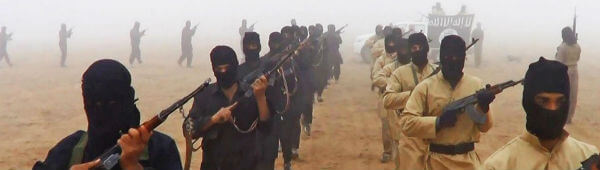
Simon Cottee writes: If you want to get a sense of what attracts westernized Muslims to ISIS, you could do worse than listen to one of its sympathizers, as opposed to its legion of opponents, who are liable to pathologize the group’s appeal as an ideological contagion that infects the weak, instead of taking it seriously as a revolutionary movement that speaks to the young and the strong-minded.
Check out, as just one of many examples, the Twitter user “Bint Emergent”: an apparent ISIS fangirl and keen observer of the jihadist scene. (Bint Emergent has not disclosed her identity, or gender, but bint is an honorific Arabic word for girl or daughter; like umm — mother in Arabic — bint features prominently in the Twitter display names of female ISIS sympathizers.)
“Jihadis,” she explains on her blog BintChaos, “look cool — like ninjas or video game warriors — gangstah and thuggish even — the opposition doesnt.” She concedes that “There aren’t a lot of jihadist ‘poster-girls’ displayed—they all wear niqab [face veil], but sometimes its tastefully accessorized with an AK47 or a bomb belt.” By contrast, “Team CVE [a reference to Countering Violent Extremism, or Anglo-American counterterrorism entrepreneurs whose role, state- or self-appointed, is to challenge “extremist” narratives],” consists “mostly [of] middleaged white guys with a smidgin of scared straight ex-mujahids [ex-jihadists] and a couple middleaged women.” [Continue reading…]
Turkey’s Kurdish cities become war zones
The Wall Street Journal reports: Turkey’s stepped-up military campaign to crush Kurdish insurgents has reduced some urban neighborhoods in the southeast of the country to battle zones, raising fears the conflict could escalate and spread elsewhere in the country unless peace talks resume.
Since the government last week declared what it called a “decisive” campaign to end five months of limited violence between Kurds and government security forces, young Kurdish militants in the cities of Diyarbakir, Cizre, Silopi and Nusaybin have been targeted by Turkish tanks, helicopters, artillery and snipers, according to local residents and news reports from the region.
Militants in the mainly Kurdish cities have erected barricades to seal off neighborhoods they’ve declared outside the authority of the Turkish state, and are using AK-47s, rocket launchers and homemade bombs to defend the enclaves, these residents say.
Turkish officials said Wednesday that about 170 Kurdish militants and at least 11 members of Turkey’s security services have been killed since the government’s announcement last week.
The rising death toll has raised concerns among human-rights groups, the U.S. and the European Union that the fighting could expand beyond southeastern Turkey and become more indiscriminate if both sides fail to heed appeals by Washington and Brussels to stop fighting and return to negotiations. [Continue reading…]
A Christmas of despair for Syrian Christian refugees in Lebanon

The Washington Post reports: Not so many years ago, Christmas Day for the Kouriehs began with Mass at the village church. The family would return home for an afternoon feast of rice and meat with sides of salad and hummus.
Neighbors would stop by to extend holiday greetings. Children would play next to the Christmas tree.
That was before the Islamic State and other extremists started kidnapping Christians like the Kouriehs, before the relentless violence, before civil war tore apart their country.
That was before the Kouriehs had to flee Syria for their lives.
“It used to be beautiful there,” Joseph Kourieh, 57, recalled from the dilapidated apartment in Lebanon’s capital, Beirut, where he, his wife and five of his grown children now live.
More than a million Syrians have taken refuge in neighboring Lebanon, a country of barely 4 million people that can hardly cope with the influx. Among the mostly Muslim refugees are hundreds and possibly thousands of Syrian Christian families that also endure the hardship and humiliation of displacement. [Continue reading…]
Refugees who had fled from murderers and drought will be forced to return home
The Washington Post reports: The Department of Homeland Security has begun preparing for a series of raids that would target for deportation hundreds of families who have flocked to the United States since the start of last year, according to people familiar with the operation.
The nationwide campaign, to be carried out by U.S. Immigration and Customs Enforcement (ICE) agents as soon as early January, would be the first large-scale effort to deport families who have fled violence in Central America, those familiar with the plan said. More than 100,000 families with both adults and children have made the journey across the southwest border since last year, though this migration has largely been overshadowed by a related surge of unaccompanied minors.
The ICE operation would target only adults and children who have already been ordered removed from the United States by an immigration judge, according to officials familiar with the undertaking, who spoke on the condition of anonymity because planning is ongoing and the operation has not been given final approval by DHS. The adults and children would be detained wherever they can be found and immediately deported. The number targeted is expected to be in the hundreds and possibly greater.
The proposed deportations have been controversial inside the Obama administration, which has been discussing them for several months. DHS Secretary Jeh Johnson has been pushing for the moves, according to those with knowledge of the debate, in part because of a new spike in the number of illegal immigrants in recent months. Experts say that the violence that was a key factor in driving people to flee Central America last year has surged again, with the homicide rate in El Salvador reaching its highest level in a generation. A drought in the region has also prompted departures. [Continue reading…]
Fanatical Trump supporter arrested on suspicion of threatening to kill Muslims
San Jose Mercury News reports: On Dec. 4, William Celli stood outside the Islamic Society of West Contra Costa County and yelled “I’m going to kill you all” at worshipers as they left a prayer service, the mosque’s leader said Monday.
Members of the mosque alerted police, and they launched an investigation into the local plumber and self-proclaimed Donald Trump supporter who posted on Facebook that he would follow the Republican presidential candidate “to the end of the world.” On Sunday, police said, they arrested Celli, 55, after learning he posted a photo of a pipe bomb on social media. Inside his Richmond home, investigators said they found a pipe bomb-type device that was not armed with explosives.
The mosque, which is attended by several hundred people, has hired private security guards to ensure the safety of its worshipers, said Imam Hamza Mehter, adding it’s the first time in the nearly two decades the mosque has been in that neighborhood that threats have been made.
It also marks the latest in a string of alleged incidents targeting Bay Area Muslims in the wake of the Paris and San Bernardino attacks — and amid a heated presidential campaign dominated by Trump’s controversial remarks surrounding Muslims. [Continue reading…]
The ‘No Fly List’ operates in secret, and its power to exclude is vast
Jeffrey Kahn writes: The No Fly List is not a government program easily challenged. Indeed, it operates in secrecy, from an undisclosed location, administered by an office – the Terrorist Screening Center – that doesn’t accept public inquiries. When challenged in court, the watchlisters routinely declare their methods safe but secret and fight the disclosure of their standards and criteria for inclusion.
The British Muslim family recently denied travel to Disneyland might soon discover this, despite the fact that Prime Minister David Cameron has been called upon to examine the case.
The Guardian reported that, despite prior US approvals, the entire family was turned away from Gatwick’s departure lounge. Without warning or a hearing, their freedom to travel was stripped away at great expense and deep humiliation. Instantly, they were reduced to the status of suspected terrorists by anonymous US officials working without any judicial oversight.
Imagine your family in their shoes. If you can’t, then you don’t understand the power of the US No Fly List. [Continue reading…]
The British Muslim family’s refused entry reveals America’s hypocrisy
Ali Gharib writes: The Mahmood family’s ordeal at Gatwick airport in London, where the Disneyland-bound group of 11 UK citizens was pulled out of the boarding line by American officials and had their tickets cancelled, speaks to more than just the apparent institutional prejudices of the American government’s security measures.
Also laid bare are the paradoxes of the fight over Islamophobia here at home. How can we ask Muslim communities the world over – including in the US – to forcefully reject the extremists among them and, more onerously, reveal themselves as the peace-loving people they are when at the same time we fail to treat them this way at our borders?
After the San Bernardino, California, attack, where armed assailants took the lives of 14 innocent people after reportedly being radicalized, Barack Obama demanded that Muslims take on more responsibility in the ideological fight against terrorists.
There is no, Obama said,
denying the fact that an extremist ideology has spread within some Muslim communities. This is a real problem that Muslims must confront, without excuse. Muslim leaders here and around the globe have to continue working with us to decisively and unequivocally reject the hateful ideology that groups like [the Islamic State] and al-Qaida promote; to speak out against not just acts of violence, but also those interpretations of Islam that are incompatible with the values of religious tolerance, mutual respect and human dignity.
That’s a nice thought. But how can one ask that of Muslims when one arbitrarily denies them entry to our country on the apparent basis of little more than their religion? Mutual respect and human dignity are not words that spring to mind when considering the recent spate of seemingly arbitrary denials of entry that barred British Muslims seeking to do no more than visit the US. [Continue reading…]
Christmas message in UK will be delivered by father of drowned Syrian boy
Channel 4 News reports: Abdullah Kurdi, the father of the drowned Syrian boy whose body was photographed on a Turkish beach, will deliver Channel 4’s Alternative Christmas message.
The heartbreaking images, which will be shown as part of the broadcast, shocked the world and came to symbolise the horror of the refugee crisis.
They prompted European leaders to do more to tackle the stark reality of the desperate situation facing many refugees. Abdullah lost his wife Rehanna and two sons: Alan, 3 and Galeb, 5, as they attempted to flee the war ravaging their Syrian homeland.
Over 4 million people have fled the country since the start of the civil war. More than 250,000 have been killed. This year alone 500,000 Syrian refugees attempted to reach Europe and North America.
In the Alternative Christmas Message, which will be broadcast on Christmas Day at 3.35pm on Channel 4, Kurdi calls for empathy and understanding for those caught up in the current refugee crisis:
My message is I’d like the whole world to open its doors to Syrians. If a person shuts a door in someone’s face, this is very difficult. When a door is opened they no longer feel humiliated.
Kurdi appeals as a parent, speaking of the desperation of the Syrian people:
At this time of year I would like to ask you all to think about the pain of fathers, mothers and children who are seeking peace and security.
We ask just for a little bit of sympathy from you.
Kurdi’s powerful words are interspersed with footage of the refugee crisis and the dangerous Mediterranean crossings from Libya to Italy and from Turkey to Greece. [Continue reading…]
The Taliban winter offensive bodes ill for Afghanistan’s future
By Amalendu Misra, Lancaster University
The world will mark the 15th anniversary of its military operations in Afghanistan under a dark cloud. After all the efforts of a coalition of 40 powerful countries, over US$1 trillion spent and thousands of uniformed lives lost, the primary objective of the mission undertaken in 2001 has not been met – and war has become the seemingly insurmountable status quo for Afghanistan.
And as the UK announced it was deploying personnel to help try and save the troubled Helmand province and the town of Sangin, one cannot but accept the fact that the dreaded Taliban is back with a bang – and that the rest of the world is nowhere near defeating it. The Taliban would appear to be in a resurgent mode across the country, and many Afghans now believe it’s winning. How did we get it so horribly wrong? Who screwed it up?
A chorus of events has helped the Taliban’s consolidation in recent years. While the end of NATO-led combat operations in 2014 removed any large strategic challenges, it is the fact that Afghanistan is a dysfunctional state, which has proved to be the biggest boon to the Taliban’s revival.
‘Critical slowing down’ — nature’s early warning signal of system failure

Natalie Wolchover writes: Nestled in the northern Wisconsin woods, Peter Lake once brimmed with golden shiners, fatheads, and other minnows, which plucked algae-eating fleas from the murky water. Then, seven years ago, a crew of ecologists began stepping up the lake’s population of predatory largemouth bass. To the 39 bass already present, they added 12, then 15 more a year later, and another 15 a month after that. The bass hunted down the minnows and drove survivors to the rocky shoreline, which gave fleas free rein to multiply and pick the water clean. Meanwhile, bass hatchlings — formerly gobbled up by the minnows — flourished, and in 2010, the bass population exploded to more than 1,000. The original algae-laced, minnow-dominated ecosystem was gone, and the reign of bass in clear water began.
Today, largemouth bass still swim rampant. “Once that top predator is dominant, it’s very hard to dislodge,” said Stephen Carpenter, an ecologist at the University of Wisconsin, Madison, who led the experiment. “You could do it, but it’s gonna cost you.”
The Peter Lake experiment demonstrated a well-known problem with complex systems: They are sensitive beasts. Just as when the Earth periodically plunges into an ice age, or when grasslands turn to desert, fisheries suddenly collapse, or a person slumps into a deep depression, systems can drift toward an invisible edge, where only a small change is needed to touch off a dramatic and often disastrous transformation. But systems that exhibit such “critical transitions” tend to be so complicated and riddled with feedback loops that experts cannot hope to calculate in advance where their tipping points lie — or how much additional tampering they can withstand before snapping irrevocably into a new state.
At Peter Lake, though, Carpenter and his team saw the critical transition coming. Rowing from trap to trap counting wriggling minnows and harvesting other data every day for three summers, the researchers captured the first field evidence of an early-warning signal that is theorized to arise in many complex systems as they drift toward their unknown points of no return.
The signal, a phenomenon called “critical slowing down,” is a lengthening of the time that a system takes to recover from small disturbances, such as a disease that reduces the minnow population, in the vicinity of a critical transition. It occurs because a system’s internal stabilizing forces — whatever they might be — become weaker near the point at which they suddenly propel the system toward a different state. [Continue reading…]