Ethan Watters: The Globalization of the American Psyche from Berkeley Arts and Letters and Berkeley Arts and Letters on FORA.tv
(H/t Beyond Meds)




Donald Macintyre reports: Hafez Rajabi was marked for life by his encounter with the men of the Israeli army’s Kfir Brigade five years ago this week. Sitting beneath the photograph of his late father, the slightly built 21-year-old in jeans and trainers points to the scar above his right eye where he was hit with the magazine of a soldier’s assault rifle after the patrol came for him at his grandmother’s house before 6am on 28 August 2007.
He lifts his black Boss T-shirt to show another scar running some three inches down his back from the left shoulder when he says he was violently pushed – twice – against a sharp point of the cast-iron balustrade beside the steps leading up to the front door. And all that before he says he was dragged 300m to another house by a unit commander who threatened to kill him if he did not confess to throwing stones at troops, had started to beat him again, and at one point held a gun to his head. “He was so angry,” says Hafez. “I was certain that he was going to kill me.”
This is just one young man’s story, of course. Except that – remarkably – it is corroborated by one of the soldiers who came looking for him that morning. One of 50 testimonies on the military’s treatment of children – published today by the veterans’ organisation Breaking the Silence – describes the same episode, if anything more luridly than Hafez does. “We had a commander, never mind his name, who was a bit on the edge,” the soldier, a first sergeant, testifies. “He beat the boy to a pulp, really knocked him around. He said: ‘Just wait, now we’re taking you.’ Showed him all kinds of potholes on the way, asked him: ‘Want to die? Want to die right here?’ and the kid goes: ‘No, no…’ He was taken into a building under construction. The commander took a stick, broke it on him, boom boom. That commander had no mercy. Anyway the kid could no longer stand on his feet and was already crying. He couldn’t take it any more. He cried. The commander shouted: ‘Stand up!’ Tried to make him stand, but from so much beating he just couldn’t. The commander goes: ‘Don’t put on a show,’ and kicks him some more.”
Two months ago, a report from a team of British lawyers, headed by Sir Stephen Sedley and funded by the UK Foreign Office, accused Israel of serial breaches of international law in its military’s handling of children in custody. The report focused on the interrogation and formal detention of children brought before military courts – mainly for allegedly throwing stones.
For the past eight years, Breaking the Silence has been taking testimonies from former soldiers who witnessed or participated in human rights abuses in the occupied territories. Most of these accounts deal with “rough justice” administered to minors by soldiers on the ground, often without specific authorisation and without recourse to the military courts. Reading them, however, it’s hard not to recall the Sedley report’s shocked reference to the “belief, which was advanced to us by a military prosecutor, that every Palestinian child is a ‘potential terrorist'”.
The soldier puts it differently: “We were sort of indifferent. It becomes a kind of habit. Patrols with beatings happened on a daily basis. We were really going at it. It was enough for you to give us a look that we didn’t like, straight in the eye, and you’d be hit on the spot. We got to such a state and were so sick of being there.”
Some time ago, after he had testified to Breaking the Silence, we had interviewed this soldier. As he sat nervously one morning in a quiet Israeli beauty spot, an incongruous location he had chosen to ensure no one knew he was talking, he went through his recollections about the incident – and several others – once again. His account does not match the Palestinian’s in every detail. (Hafez remembers a gun being pressed to his temple, for example, while the soldier recalls that the commander “actually stuck the gun barrel in the kid’s mouth. Literally”.) [Continue reading…]
Rami G Khouri writes: Mass demonstrations in Tahrir Square and street battles in Syria form the dramatic heart of the uprisings and revolutions that define many Arab lands these days, but the soul and the brain of the Arab world to come are being shaped in the epic battles now taking place to write new constitutions.As has happened regularly since December 2010, we must look back to Tunisia and Egypt for insights into this critical realm. The lessons to date are enlightening and heartening, as we see these days from passionate debates about issues like the status of women, the role of journalists, and the place of Islam and religion in state institutions and public life.
The fine points of writing new constitutions are often tedious and just slightly more captivating than Law of the Sea deliberations. So it is surprising perhaps to see street demonstrations and much political passion in Egypt and Tunisia over elements of the constitutional process, whether the composition of the bodies drafting the constitutions or the actual texts being formulated. This is not so surprising, though, in view of the widespread demands for constitutional reform across the entire Arab world, even in countries where no significant street demonstrations have taken place.
One of the telltale signs of the high importance that Arabs attach to this process is that calls for changing or reforming governments across the region have always been coupled with demands for new constitutions. These are important to the citizenry because they spell out in concrete and unambiguous terms the equal rights of every citizen, and they provide enforcement and accountability mechanisms to make sure that those rights are actually practiced. Arab constitutions for the past century (in fact since the first modern Arab constitution was promulgated in 1861 in … Tunisia) have all promised a full range of rights and freedoms; but these rights were never fully enforced, leaving it to security-minded governments and narrow ruling elites to monopolize power in a manner that deeply disenfranchised most citizens.
So it is important to note that beyond Tunisia, Egypt, Libya and Yemen, where lifelong autocratic leaders and their elites are being replaced by more legitimate elected governments, countries like Jordan, Morocco and Oman have started tinkering with their mechanisms of power and rule, in response to populist demands for constitutional reform and more egalitarian and participatory governance systems. The changes are limited and often superficial, but they do reflect both the nature of the populist demands for constitutional changes and the reality that long-serving regimes must respond to those demands in some manner. [Continue reading…]
Tony Karon writes: “Just don’t talk about the war!” was the motto evinced by John Cleese’s comic British innkeeper Basil Fawlty when entertaining German tourists at his establishment. The same motto seems to have been embraced by both candidates in the 2012 U.S. presidential election — and not simply because it’s difficult to detect significant differences on their policies for ending the longest war in America’s history. Neither President Barack Obama, nor Governor Mitt Romney can offer the electorate the prospect of a plausible outcome in Afghanistan that won’t leave many Americans wondering what was achieved in 11 years of a war that this week claimed its 2,000th American combat casualty. Opinion polls routinely find a substantial majority of Americans opposed to remaining militarily engaged in Afghanistan, which may be why the bipartisan consensus envisages most U.S. troops coming home by the end of 2014, handing security responsibility to the Afghan forces whose training and mentoring is rapidly becoming the mission’s prime focus. The Taliban won’t be defeated by the time the U.S. leaves, in other words, and it takes a leap of faith to envisage Afghan security forces finding the political will to fight the Taliban on behalf of a widely discredited Afghan regime once the U.S. leaves — and that was before the emergence of what the U.S. military calls a “systemic problem” of uniformed Afghans turning their weapons on their U.S. and NATO mentors. Afghanistan, for U.S. presidential campaign purposes, is a huge downer.
At least 40 times this year alone, U.S. and NATO soldiers have been killed by gunfire from allied security personnel in ostensibly safe bases. And the scale of of “green-on-blue” violence — although the Pentagon now prefers “insider attacks” — is difficult to determine, because such attacks are only reported when Western personnel are killed.
Insider attacks, deemed a “systemic problem” by the Pentagon, have already killed 23 Americans this year. And the vulnerability of Western troops is expected to actually increase in the coming months as a combat mission continues its transformation into one that deploys smaller groups of U.S. and NATO troops to mentor Afghan forces, exposing them to greater risk of attack from uniformed Afghans. [Continue reading…]
M.J. Rosenberg writes: A couple of years before Binyamin Netanyahu was elected prime minister of Israel in 2009, I participated in a small meeting with him as a staffer for Israel Policy Forum, an organization that lobbied for the “two-state” solution.
Netanyahu was ebullient. He seemed certain that he would soon be prime minister and was bursting with plans he had developed for his return to the job he had in the late 1990s. All of those plans were about the economy (standard Milton Friedman boilerplate).
In those heady days before the worldwide economic crash of 2008, Netanyahu said he was looking forward to sustained economic growth of 8 percent, a very impressive figure. He said that Israel would soon be in the same economic category as the so-called Asian Tiger economies of South Korea, Taiwan, Hong Kong and Singapore.
Netanyahu spoke for 10 minutes and devoted not a single word to security issues. It was all economics without even a reference to the Palestinians, Iranians or effects of the occupation.
When he opened up for questions, the leader of our delegation asked if his sunny view of the future allowed for the possibility of war or another intifada. He shrugged at that, merely noting that obviously security developments would have an effect. But he didn’t foresee any problems that would alter his forecast.
Netanyahu seemed utterly sincere. He clearly believed that Israel’s security situation was fine, that there were no obvious threats looming. As for Iran, a standard component of Netanyahu speeches then as now, he didn’t even bother with his usual gloom and doom in this intimate setting with people he knew well. He talked about the economy because that is what he was focused on. He wanted to dismantle the remnants of the Labor Party-created welfare state and let business run the show.
That is, in fact, what he has done as prime minister (which is one reason why Israel is now, for the first time, the scene of mass protests against growing economic inequality).
Given his focus on the economy, it is odd that Netanyahu seems oblivious to the likely economic effects of an attack on Iran. [Continue reading…]
Harvey Morris writes: The smirk on Anders Behring Breivik’s face was an indication that the Norwegian mass murderer got the verdict he wanted. By sentencing him to 21 years in jail, an Oslo court judged he was sane when he killed 77 people in a bomb and gun rampage a year ago.
It raises the alarming question of how many other sane people might be out there, prepared to murder and maim in pursuit of their far-right extremist beliefs.
Far-right groups and individuals in Europe, including those cited as sources of inspiration in Mr. Breivik’s manifesto, ran for cover in the wake of the Norway killings, distancing themselves from his murderous response to multiculturalism, if not from his ideas.
But the shock felt in Norway and elsewhere when Mr. Breivik struck appears to have done little to reverse the growth of the far-right groups in Europe, where their activities are seen as posing an enduring threat to the Continent’s democratic societies.
A day before the Norwegian verdict, the German police launched raids across the state of North Rhine-Westphalia that were aimed at breaking up a network of far-right extremists, as my colleague Melissa Eddy reported from Berlin.
“These groups are dangerous,” Burkhard Freier, the head of the state’s domestic intelligence agency, said. “We have noticed they are attracting ever more young people to their ideals.”
The rise of the far right has been variously cited to explain Europe’s harsh economic climate and on an Islamophobic response to fundamentalist Islamist terrorism that post-dates the Qaeda attacks of Sept. 11, 2001.
Matthew Goodwin, a British expert on the far right, challenged those assumptions in an academic paper last September that noted populist extremist parties continued to rally large and durable levels of support and had even joined coalition governments.
“They emerged before the terrorist attacks on 11 Sept. 2001 and the recent financial crisis,” Dr. Goodwin wrote. “They have rallied support in some of the most economically secure and highly educated regions of Europe.”
He said supporters of all these groups shared one core feature: their profound hostility towards immigration, multiculturalism and rising cultural and ethnic diversity. “Contrary to the conventional wisdom that these citizens are motivated by feelings of economic competition from immigrants and minority groups, feelings of cultural threat are the most important driver of their support.” [Continue reading…]
The Times of Israel reports: Last week’s attack on Arab youth in the heart of Jerusalem was a symptom of a larger national issue, Knesset Speaker Reuven Rivlin (Likud) said on Thursday.
Rivlin visited 17-year-old Jamal Julani, who was hospitalized after being severely beaten by a group of Jewish teenagers last week in the widely publicized incident.
“I came here to apologize,” Rivlin told Julani and his parents, who hail from East Jerusalem. “We believed that incidents like this were on the fringes, but that is not the case.”
Rivlin called the occurrence, in which a group of Arabs were assaulted by around 15 Jewish teenagers in the heart of Jerusalem while dozens of bystanders looked on, a “microcosm of a national problem that could endanger Israeli democracy.”
Yossi Gurvitz amplifies on the nature of the problem: Israel officially condemned last week the fact Jewish terrorists attacked a Palestinian vehicle with Molotov cocktails, wounding six of its passengers. Prime Minister Netanyahu quickly had an envoy call Palestinian President Abbas, and promised him Israel would put those responsible on trial. If Abbas is buying this, given Israel’s record regarding the price-taggers, then I have some juicy bridges to sell him at very reasonable prices.
This attack took place on Thursday afternoon. Several hours later, a gang of proud Jewish hoodlums tried to lynch three Palestinians in Jerusalem. The attackers, most of whom appear to have been juveniles, were uttering cries like “a Jew is a soul, an Arab is a son of a whore” and the all-time crowd pleaser, “Death to Arabs.” The goons also tried to prevent emergency forces from treating the victims. One of them is critically wounded.
During the attack on the dorms of Palestinian students in Safed two years ago, inspired by the town’s rabbi Shmuel Eliahu’s ban on renting apartments to non-Jews, the calls of “A Jew is a soul” were heard (Hebrew). The same cry is common (Hebrew) among the fans of racist group Beitar Jerusalem (which sidelines as a soccer team). The supremacists we’re dealing with have nothing to be proud of aside from the fact of their Jewishness, used in the minimalist Orthodox sense of thinking every Jew is a priori superior to every non-Jew.
Hence the speaking of “souls” as a battle cry: a common Orthodox concept is that non-Jews do not have souls. This concept is very strong in Kabbalah (I guess Madonna is in for some nasty shock; being not just a gentile but a woman makes her a particular object of hatred), but exists elsewhere (such as in the Talmudic concept of “you [Jews] are human, they [non-Jews] are not, and Yehuda Halevi’s Kuzari, which rates being on an “inanimate-vegetable-animal-speaking being-Jew” scale).
The attackers quickly spread the lie that they went on the warpath because one of the victims tried to flirt with a Jewish girl. This fiction, the attempt to violate a pure-blooded female of the master race, is well known to us from any racism regime, from the American South to Nazi Germany. [Continue reading…]
The New York Times reports: His war was almost over. Or so Marina Buckley thought when her son Lance Cpl. Gregory T. Buckley Jr. told her that he would be returning from southern Afghanistan to his Marine Corps base in Hawaii in late August, three months early.
Instead, Lance Corporal Buckley became the 1,990th American service member to die in the war when, on Aug. 10, he and two other Marines were shot inside their base in Helmand Province by a man who appears to have been a member of the Afghan forces they were training.
A week later, with the death of Specialist James A. Justice of the Army at a military hospital in Germany, the United States military reached 2,000 dead in the nearly 11-year-old conflict, based on an analysis by The New York Times of Department of Defense records. The calculation by The Times includes deaths not only in Afghanistan but also in Pakistan and other nations where American forces are directly involved in aiding the war.
Nearly nine years passed before American forces reached their first 1,000 dead in the war. The second 1,000 came just 27 months later, a testament to the intensity of fighting prompted by President Obama’s decision to send 33,000 additional troops to Afghanistan in 2010, a policy known as the surge.
In more ways than his family might have imagined, Lance Corporal Buckley, who had just turned 21 when he died, typified the troops in that second wave of 1,000. According to the Times analysis, three out of four were white, 9 out of 10 were enlisted service members, and one out of two died in either Kandahar Province or Helmand Province in Taliban-dominated southern Afghanistan. Their average age was 26.
The dead were also disproportionately Marines like Lance Corporal Buckley. Though the Army over all has suffered more dead in the war, the Marine Corps, with fewer troops, has had a higher casualty rate: At the height of fighting in late 2010, 2 out of every 1,000 Marines in Afghanistan were dying, twice the rate of the Army. Marine units accounted for three of the five units hardest hit during the surge. [Continue reading…]
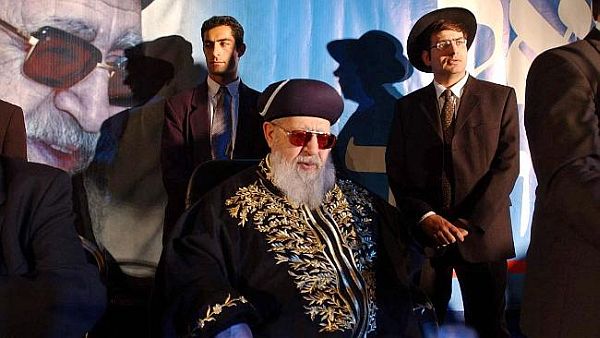
Haaretz reports: Senior defense officials have recently been visiting the ultra-Orthodox Shas party’s spiritual leader, Rabbi Ovadia Yosef, to discuss a possible Israeli attack on Iran.
Some want the 91-year-old rabbi to support it, others to oppose it. At least one visit, in which the rabbi was briefed on Iran’s nuclear program, came at the behest of Prime Minister Benjamin Netanyahu, who is battling for support in the cabinet to strike Iran.
One of the visitors to Yosef’s Jerusalem home was National Security Council head Ya’akov Amidror, accompanied by Interior Minister and Shas political leader Eli Yishai, the Kikar Hashabat website reported.
Yishai reportedly objects to an Israeli attack on Iran in the current circumstances, although he has not made his position clear in public.
It is not known whether Amidror or any of the others succeeded in persuading Yosef. However, on Saturday evening, a day after his meeting with Amidror, Yosef said in his weekly sermon: “You know what situation we’re in, there are evil people, Iran, about to destroy us. … We must pray before [the almighty] with all our heart.”
Two years ago Yosef was very blunt in expressing his visceral contempt for non-Jews. The Jerusalem Post reported:
The sole purpose of non-Jews is to serve Jews, according to Rabbi Ovadia Yosef, the head of Shas’s Council of Torah Sages and a senior Sephardi adjudicator.
“Goyim were born only to serve us. Without that, they have no place in the world – only to serve the People of Israel,” he said in his weekly Saturday night sermon on the laws regarding the actions non-Jews are permitted to perform on Shabbat.
According to Yosef, the lives of non-Jews in Israel are safeguarded by divinity, to prevent losses to Jews.
“In Israel, death has no dominion over them… With gentiles, it will be like any person – they need to die, but [God] will give them longevity. Why? Imagine that one’s donkey would die, they’d lose their money.
This is his servant… That’s why he gets a long life, to work well for this Jew,” Yosef said.
“Why are gentiles needed? They will work, they will plow, they will reap. We will sit like an effendi [master] and eat.
That is why gentiles were created,” he added.
I guess from Yosef’s perspective Americans are useful because we pay taxes that help support Israel, but Iranians? It sounds like they would fall into the category of Goyim who “have no place in the world.”
This comes from a spiritual leader in the only nuclear-armed nation in the Middle East and yet we are told it’s the “mad mullahs” we are supposed to worry about.
Who knows what pronouncement Yosef might make. What’s scary is that he’s even been asked.

The Washington Post reports: Alaa Namiq doesn’t want to talk about it. Or he’s dying to. It’s hard to tell. One minute he’s shaking his head, stone silent. Then he starts bragging about it and he won’t stop talking.
“I dug the hole for him,” he says, his eyes burning with pride.
“The hole,” known to the world as the “spider hole,” is the tiny underground bunker on Namiq’s farm where former Iraqi dictator Saddam Hussein was captured by U.S. soldiers on Dec. 13, 2003.
Namiq and his older brother Qais have rarely spoken publicly about how they helped hide the world’s most sought-after fugitive for nearly nine months after the U.S.-led invasion.
But now, sipping tea in the modest little restaurant he opened this summer, a couple of football fields away from “the hole,” Alaa Namiq seems willing.
Maybe enough time has passed. Maybe few have asked. But for whatever reason, Namiq now folds his tall, broad-shouldered frame into a little plastic chair, tugs on a cigarette and talks about hiding the man his family had known for decades.
“He came here and he asked us for help and I said yes,” says Namiq, 41, wearing a long white dishdasha robe. “He said, ‘You might be captured and tortured.’ But in our Arab tribal tradition, and by Islamic law, when someone needs help, we help him.”
Hussein was born in a village near Tikrit, just north of this little town on the banks of the Tigris River. When the U.S. military was searching for him, it became convinced, correctly, that he would find shelter among his Tikriti clansmen in these lush orchards of date palms and orange and pear trees.
Namiq says he and Qais were arrested along with Hussein and spent a miserable six months in Abu Ghraib prison. Once a driver and an aide to Hussein, he has spent the past few years driving a taxi, finally saving enough to open his family restaurant a few weeks ago.
At his restaurant on the riverbank, Namiq greets an American reporter graciously, offering grilled chicken and sweet tea on a sweltering evening. The restaurant is a small cinder-block shack, with a couple of grills and a few plastic tables set outside. Four of his brothers cook and wait tables for customers watching a big flat-screen TV showing Turkish dramas and men’s volleyball.
“I won’t tell you everything,” Namiq says, over and over, during the course of a couple of hours. “Someday I will say all I know. Maybe I will write a book. Maybe a movie. But I won’t tell you everything.”
Then he starts talking.
Namiq says his family, mainly he and Qais (who declined to be interviewed), helped move Hussein among various houses in the area after the March 2003 invasion.
Hussein never used a phone, he says, knowing that the Americans were listening for his voice. Namiq says that Hussein read and wrote extensively, prose and poetry, and that his writings were confiscated by the U.S. troops who captured him.
Namiq says Hussein wrote to his wife and daughters but he never saw them. His only visitors were his sons Uday and Qusay — Namiq says he helped arrange their secret trips to the farm.
Hussein released several fiery speeches during the time he was in hiding, exhorting his supporters to fight the Americans. Namiq says he and Hussein recorded them together on a small tape recorder.
Knowing the Americans would be analyzing the recordings for clues to Hussein’s whereabouts, Namiq says he once drove 10 miles to the city of Samarra, parked on the side of the road and recorded the sounds of urban traffic.
“I wanted to make the Americans feel dizzy and confused,” he says.
Namiq clearly still reveres Hussein, who was hanged in 2006.
“Saddam knew there would be a day that he would be captured and executed,” Namiq says. “In his heart, he knew that everything was gone and that he was no longer president. So he started something new — jihad against the occupiers. He sacrificed everything he had, including his two sons, for the sake of the country.” [Continue reading…]
Shai Feldman argues that the push for war led by Benjamin Netanyahu and Ehud Barak has stalled, but not so much because of fears about the regional repercussions in the event of an Israeli strike on Iran. The balance has been tipped because of what are now widely held fears inside Israel’s political and security establishment that such an attack would present a serious threat to U.S.-Israeli relations.
For all practical purposes this weekend ended the Israeli debate on attacking Iran. What tipped the scales were two developments. The first was the decision of the country’s president, Shimon Peres, to make his opposition to a military strike public. The second was an interview given by a former key defense advisor of Defense Minister Ehud Barak, questioning for the first time publically whether his former superior and Prime Minister Benjamin Netanyahu are fit to lead Israel in time of war.
Using every possible media outlet on the occasion of his 89th birthday, President Peres made clear last Thursday that “going it alone” — attacking Iran without a clear understanding with the United States — would be catastrophic. Peres did a great service to his country by focusing the debate away from some of the weaker arguments offered by opponents of a strike. Thus, the supposedly limited time that would be gained by such a strike was never convincing because in both previous experiences with such preventive action — against Iraq’s nuclear reactor in 1981 and against the Syrian reactor in 2007 — Israel ended up gaining more time than even the most optimistic proponents of these strikes had anticipated.
Similarly, the warnings that an attack on Iran’s nuclear installations would ignite a regional war were not persuasive in the absence of Arab states volunteering to join such a war. Iran’s only regional state ally is Syria, but President Bashar al-Assad would not be able to direct his armed forces to attack Israel when these forces are mired in a civil war and barely control a third of the country’s territory.
Hezbollah, Iran’s principle non-state ally, might react to an Israeli strike by launching its rockets against Israel, but with Iran weakened from the attack and Syria unable to protect it, such an assault would be suicidal. Certainly none of the region’s Sunni Arab countries — Egypt, Jordan, Saudi Arabia, and the smaller Gulf Cooperation Council (GCC) states — will come to Iran’s aid. None of these countries uttered a word when in 2007 Israel destroyed the nuclear reactor of Sunni-Arab Syria. Why the same countries would be expected to ignite the region in the event that the nuclear facilities of a Shiite Persian country would be attacked, was never clear.
Avoiding repetition of these weak arguments, Peres clarified what is really at stake in the event of an attack on Iran’s nuclear facilities in the next few months: Israel’s relations with the United States. The basic divide is not the two countries’ different time constraints due to very different capacities to deal militarily with Iran’s nuclear installations. Instead, it has to do with two issues. The first is the U.S. electoral timetable. The presidential election creates an imperative for U.S. President Barack Obama to avoid any unexpected fallouts — economic or otherwise — of a military strike against Iran. Peres understands that ignoring Obama’s concerns and instead banking on a victory by Republican candidate Mitt Romney in November, as Netanyahu seems to have done, is very risky if not irresponsible.
The second issue concerns the timeline for the drawdown of U.S. forces in the region. Clearly, the Joint Chiefs are worried about the prospects of becoming embroiled in a military conflict with another Muslim country as long as U.S. forces continue to be deployed in Afghanistan and hence exposed to Iranian retaliation. [Continue reading…]
Peter Beinart writes: For years now, Israelis have been noisily debating military action against Iran. And their conclusion, according to polls, is that America should do it. That’s somewhat ironic given that self-reliance — never again putting Jewish destiny in non-Jewish hands — is core to the Zionist ideal. But it’s also quite rational: an American strike would likely set back Tehran’s nuclear progress far more than an Israeli one would. And an American strike would not leave Israel as isolated in the world.
The problem is that back here in the United States, we haven’t been noisily debating military action against Iran. Yes, we’ve watched the Israeli debate voyeuristically. Countless pundits have weighed in on whether the Iranian regime would really risk its own survival to end Israel’s, on what Israel’s military capacities really are, on how Iran might strike back. But there’s been much less discussion of whether an attack on Iran is in America’s interest. And that needs to change.
It needs to change because Israel keeps nudging the U.S. closer to war. During his trip to Washington this spring, Benjamin Netanyahu hinted that Israel was close to launching a strike and reportedly urged President Obama to more explicitly pledge military action to prevent Iran from attaining a nuclear bomb. Obama did just that, rejecting a policy of containing a nuclear Iran and telling The Atlantic’s Jeffrey Goldberg that his threat to use military action to prevent Iran from going nuclear was not a “bluff.”
Now Israel reportedly is on the verge of attacking yet again and pushing for an even blunter pledge that America will attack, perhaps by next summer. “They are aiming for a specific thing,” former Obama defense official Colin Kahl recently told The Washington Post. “They may be trying to push the Obama administration into a much greater declaration of red lines, an even more declarative statement about the use of force.”
This is nuts. In our political system, presidents are not empowered to promise to launch wars in backroom negotiations with foreign leaders. [Continue reading…]
Attila Somfalvi writes: Once every few years Israel needs a slap in the face to remember where it stands in the world. On Tuesday it was US Chairman of the Joint Chiefs of Staff General Martin Dempsey who assumed the role of the responsible adult and slapped Prime Minister Benjamin Netanyahu and Defense Minister Ehud Barak, the duo orchestrating the national hysteria surrounding the possibility of an attack in Iran.
Israel can “delay but not destroy Iran’s nuclear capabilities,” he said while sitting next to Defense Secretary Leon Panetta, who visited Israel a few weeks ago to allay the concerns of the leadership in Jerusalem.
Dempsey’s comments should be taken seriously, as should the stern message conveyed by Panetta, the White House and the American security establishment: If we can’t reason with you, the Israelis, we will have to get tough.
The general’s remark was not a slip-of-the-tongue. It was a calculated statement from a general of Irish descent and character. His words constituted a slap in Israel’s face, a punch in the face, and a kick to the most sensitive part of the body. To be more precise, the US slammed Israel’s head against the wall and said: “Shut up. Stop babbling about Iran. Without us there is not much you can do, and don’t assume for a second that we are dancing to your tune. You shouldn’t do anything stupid, and stop driving the entire world crazy.”
This was the message behind Dempsey’s comment. You don’t believe it? Just imagine what would have happened had an American general, after decades of ambiguity, would have held a press conference and announced that Israel does not have nuclear weapons, or that it does.
Now think again about the meaning of Dempsey’s statement, which was made after months and even years in which Israel was building up its image as an omnipotent power in the Middle East. Dempsey’s comments can even be considered earth-shattering: The US, Israel’s closest ally and confidante, has decided to bring the Jewish state’s leadership to its knees and hurt our exaggerated self-confidence and undermine our deterrence. No less.
Dempsey was painfully clear. He basically said that Israel should not disregard the opinions of its top security officials, stop the constant chatter on Iran and refrain from any acts that may have an adverse effect on the global economy. The general also meant to tell Israel that it mustn’t believe that Netanyahu has any control over the US because he has friends in the Republican Party. Dempsey laid down the facts: Israel is not America, it does not possess the same capabilities, and if Netanyahu and Barak continue wreaking havoc – Israel won’t have America either.
It will take a while before we will be able to gauge the depth of the current crisis between Israel and the US (and between Netanyahu and Obama). Washington made a strategic decision to show Israel who is the mentor and who is the protégé. The US hit Israel’s most sensitive nerve: The pride in its military power. But it appears that the US had no other choice. After weeks of belligerent headlines, President Obama had enough of Netanyahu’s inclination to play with fire. We should start getting used to it.
When the United States invaded Iraq in 2003, the neocons were so intoxicated by own assessment of the breadth and depth of American global power, they overlooked an outcome to the war that anyone could predict: that Iraq’s Shia majority, if provided with the power to rule, would forge close ties with Iraq’s Shia neighbor, Iran. The fact that Iraq now falls within Iran’s sphere of influence and largely outside America’s sphere of influence, has many implications. The New York Times reports on one:
When President Obama announced last month that he was barring a Baghdad bank from any dealings with the American banking system, it was a rare acknowledgment of a delicate problem facing the administration in a country that American troops just left: for months, Iraq has been helping Iran skirt economic sanctions imposed on Tehran because of its nuclear program.
The little-known bank singled out by the United States, the Elaf Islamic Bank, is only part of a network of financial institutions and oil-smuggling operations that, according to current and former American and Iraqi government officials and experts on the Iraqi banking sector, has provided Iran with a crucial flow of dollars at a time when sanctions are squeezing its economy.
The Obama administration is not eager for a public showdown with the government of Prime Minister Nuri Kamal al-Maliki over Iran just eight months after the last American troops withdrew from Baghdad.
Still, the administration has held private talks with Iraqi officials to complain about specific instances of financial and logistical ties between the countries, officials say, although they do not regard all trade between them as illegal or, as in the case of smuggling, as something completely new. In one recent instance, when American officials learned that the Iraqi government was aiding the Iranians by allowing them to use Iraqi airspace to ferry supplies to Syria, Mr. Obama called Mr. Maliki to complain. The Iranian planes flew another route.
In response to questions from The New York Times, David S. Cohen, the Treasury Department’s under secretary for terrorism and financial intelligence, provided a written statement saying that Iran “may seek to escape the force of our financial sanctions through Iraqi financial institutions.” But he added that “we will pursue, and are actively pursuing, efforts to prevent Iran from evading U.S. or international financial sanctions, in Iraq or anywhere else.”
Some current and former American and Iraqi officials, along with banking and oil experts, say that Iraqi government officials are turning a blind eye to the large financial flows, smuggling and other trade with Iran. In some cases, they say, government officials, including some close to Mr. Maliki, are directly profiting from the activities.
“Maliki’s government is right in the middle of this,” said one former senior American intelligence official who now does business in Iraq.
In announcing that he was “cutting off” Elaf Islamic Bank, Mr. Obama said it had “facilitated transactions worth millions of dollars on behalf of Iranian banks that are subject to sanctions for their links to Iran’s illicit proliferation activities.”
But the treatment the bank has received in Baghdad since it was named by Mr. Obama suggests that the Iraqi government is not only allowing companies and individuals to circumvent the sanctions but also not enforcing penalties for noncompliance. [Continue reading…]
Haaretz reports: A report by the U.S. State Department defines, for the first time, violence perpetrated by Israeli settlers in the West Bank as acts of terrorism.
The Country Reports on Terrorism, which under U.S. law is produced annually by the State Department and presented to the U.S. Congress, was published two weeks ago. It contained a chapter on Israel, the West Bank and Gaza.
A section of the report entitled “Countering Radicalization and Violent Extremism” addressed so-called “price-tag” attacks, which are committed primarily against Palestinians and their property by West Bank settlers.
The report mentions an attack carried out by a group of Israeli settlers against the IDF’s Efraim Regional Brigade headquarters in the West Bank.
That attack “sparked a public debate in Israel on the phenomenon of settler violence; political and security officials pledged to implement several steps to curb and punish these violent attacks,” according to the report.
The report also notes that Israeli Defense Minister Ehud Barak labeled such attacks as having the characteristics of terrorist acts. Former IDF Head of Central Command Avi Mizrahi is also mentioned describing attacks against Palestinians and against their property as “terror.”
During 2011, the report says, ten mosques in the West Bank and in Jerusalem were set on fire – a dramatic increase compared to past years, following “six such incidents in 2010 and one in 2009.” The report also states that Israeli authorities believe that the attacks were “perpetrated by settlers.”
The Associated Press reports: Six Palestinians have been wounded in a suspected firebomb attack by Jewish extremists in the West Bank, the Israeli military said.
The six were traveling in a taxi Thursday night when the firebomb was allegedly thrown into the car. The military suspects Jewish extremists to be behind the attack.
Prime Minister Benjamin Netanyahu condemned the firebombing, saying Israel “will do everything to catch those responsible and bring them to justice.”
Haaretz reports: Dozens of Jewish youths attacked three young Palestinians in Jerusalem’s Zion Square early on Friday morning, in what one witness described as “a lynch” on Facebook.
One of the Palestinians was seriously wounded and hospitalized in intensive care in Hadassah University Hospital, Ein Karem. Acting Jerusalem police chief General Menachem Yitzhaki has set up a special team to investigate the incident and detain the suspects.
The three were allegedly attacked by youths shouting “Death to the Arabs” at them, as well as other racial slurs. One of them fell on the floor, and his attackers continued to beat him until he lost consciousness. They subsequently fled from the scene.
Noam Sheizaf lays out the reasons why, in spite of the rhetoric of Israel’s prime minister and defense minister, he believes an attack on Iran won’t come this fall, and probably not at all.
The debate is becoming very political. Leading Israeli politicians – Shimon Peres and Shaul Mofaz being two examples from this week – are taking a public stand against the attack. This is very uncommon in Israeli political culture when real wars are on the line. I think that the political system is sensing that Netanyahu is bluffing.
The voices coming from Barak and Netanyahu feel more like a lament, rather than actual mobilisation for war. Nahum Barnea of Yedioth Ahronoth, who was one of the authors’ of last week’s expose on Barak’s effort to get the army to support the war, wrote in an op-ed on Monday that he got the feeling Barak was preparing his “I told you so” argument for the next elections. It makes sense.
By leading the camp of hawks on Iran, Netanyahu and Barak are making sure that nobody can accuse them in the future of not being active enough. Barak was criticised in the past of his alleged opposition to the strike on the Syrian nuclear facilities committed by the Olmert government. He won’t let that happen again.
Barak didn’t fire or replace any of the generals that opposed the war (or more importantly, leaked their positions to the media). I don’t think that any officer would refuse the order to attack, but a reluctant military is a real problem for the defense minister. Could Iraq have happened if the entire military was against it, unanimously and publicly?
The window for an attack is here, yet nobody seems to care. Life goes on as usual. No foreign country has issued travel warnings for the next three months. No events were cancelled. Maybe I am over-speculating here, but if the United States was truly convinced that an attack is imminent, evacuating citizens or simply warning those planning to travel seems like the obvious thing to do, no? Even the not-so-apocalyptic scenarios Barak is throwing around (300-500 civilian casualties) should make the diplomatic corps or the Birthright kids disappear back home. As it happens, they are all still on the Tel Aviv beach.
Civil Defense preparations are not taking place outside the army, the public wasn’t instructed to prepare bomb shelters, and the minister for home front defense was even replaced this week. The army’s civil defense corps is currently airing a prime time TV commercial regarding… what to do in the event of an earthquake.