Category Archives: Issues

Israeli defense minister pushing for war against Iran

Noam Sheizaf writes: The top stories in all Israeli dailies this weekend discuss a coming strike on Iran’s nuclear facilities. Thirty-seven percent of Israelis think President Obama would stop Iran from developing a bomb, while only 29 percent doubt it.

The front page headlines in all major daily papers in Israel deal with the increased likelihood of a war with Iran.

Yedioth Aharonoth has an important expose: the paper’s diplomatic correspondents, Nahum Barnea and Shimon Shifer, report that Defense Minister Ehud Barak has gathered senior army generals twice (the latest meeting took place at Mossad headquarters) in order to obtain their support for a military strike on Iran’s nuclear facilities. He met fierce opposition on both occasions; the army is very reluctant to carry out the attack in the absence of American support, it seems. “Not a single security chief supports the attack,” Barnea and Shiffer write. Yedioth’s headline declares: “Barak and Natanyahu are determined to strike Iran in the autumn.”

The pro-Netanyahu tabloid Israel Hayom claims that “Iran has speed up its effort to gain a bomb.”

Maariv has a poll according to which 37 percent of the public think that an Iranian bomb would mean “a second Holocaust.” Forty percent of the Jewish public – that’s 33 percent of the population – believes that Israel should strike the Iranian nuclear facilities on its own. Forty-one percent think that Israeli should leave the mission of stopping Iran to the United States and the international community.

More Israelis (37 percent) believe that president Obama will prevent Iran from getting a nuclear bomb than those who think he won’t keep his promise (29) percent.

Haaretz cites a senior Israeli official speaking in favor of an Israeli attack on Iran (“Iran nuclear threat bigger than one Israel faced before Six Day War”). It’s not hard to figure out that the official is Defense Minister Ehud Barak. [Continue reading…]

Facebooktwittermail

U.S. still believes Iran not on verge of nuclear weapon

Reuters reports: The United States still believes that Iran is not on the verge of having a nuclear weapon and that Tehran has not made a decision to pursue one, U.S. officials said on Thursday.

Their comments came after Israeli media reports claimed U.S. President Barack Obama had received a new National Intelligence Estimate saying Iran had made significant and surprising progress toward military nuclear capability.

Later, Israeli Defense Minister Ehud Barak suggested that the new U.S. report, which he acknowledged might be something other than a National Intelligence Estimate, “transforms the Iranian situation into an even more urgent one.”

But a White House National Security Council spokesman disputed the Israeli reports, saying the U.S. intelligence assessment of Iran’s nuclear activities had not changed since intelligence officials delivered testimony to Congress on the issue earlier this year.

“We believe that there is time and space to continue to pursue a diplomatic path, backed by growing international pressure on the Iranian government,” the spokesman said. “We continue to assess that Iran is not on the verge of achieving a nuclear weapon.”

U.S. officials would not directly comment on whether there was a new National Intelligence Estimate on Iran, which is a compilation of views of the various U.S. intelligence agencies.

Facebooktwittermail

Israeli defense minister publicly divulges U.S. intelligence report

Laura Rozen reports: Israel’s Defense Minister raised some eyebrows in the United States when he told Israel Radio Thursday that a new, previously undisclosed U.S. intelligence assessment shares Israel’s sense of heightened urgency about Iran’s nuclear program.

Ehud Barak told Israel Radio that there is “apparently a report by American intelligence agencies – I don’t know if it’s under the title NIE or under another title – which is making the rounds of high offices,” in Washington, CBS News reported.

“As far as we know, it comes very close to our own estimate, I would say, as opposed to earlier American estimates,” Barak continued. “It transforms the Iranian situation to an even more urgent one and it is even less likely that we will know every development in time on the Iranian nuclear program.”

Generally, foreign leaders don’t publicly disclose allied nations’ classified intelligence reports in such a provocative manner, intelligence experts said.

“The rules of the spy game are clear,” former US Navy intelligence analyst John Schindler wrote on his blog. “When intelligence services share information, as they do every day, you don’t pass it to third parties without clearance. Ever. And if you do, eventually you will get burned and nobody will want to play marbles with you.”

A cavalcade of top American officials have traveled to Israel in recent weeks to confer on Iran, and President Obama this month signed a $70 million US military aid package for Israel. Israeli officials have expressed growing impatience with US reluctance to endorse military action on Iran at this time.

Facebooktwittermail

America’s drought of political will on climate change

Naomi Wolf writes: As the US faces record drought and an Old Testament-level pestilential heatwave in the midwest, American environmental denialism may be starting to change. The question is: is it too late?

America has led the world in climate change denial, a phenomenon noted with amazement by Europeans, not to mention thinking people around the world. Year after year, the US has failed to sign global treaties or curb emissions, even as our status as a source of a third of the world’s carbon emissions goes unchanged.

It is fairly well-known what has been behind that climate change denial in America: vast sums pumped into an ignorance industry by the oil and gas lobbies. Entire thinktanks to obfuscate manmade climate change have been funded by these interests, as have individual congressmen and women. Entirely typical, for instance, is Louisiana Representative John Fleming, whose campaigns, according to blogger John Henry, accept about $200,000 a year from oil and gas lobbyists, and who uses his social media pages to deny global warming.

It is weird to live inside that US denial about climate change. Last year, for example, as tropical storm Irene approached New York, we duly boarded up windows, put in emergency supplies, and heard endless alarming bulletins from the mayor’s office about which neighborhoods were likely to be submerged if the tides surged – without ever hearing from local officials or the media a word connecting rising sea levels with manmade global warming. All the more weird because New Yorkers weren’t writing off portions of their downtown neighborhoods to overflowing seawater a century ago.

It is weird, too, to watch the leaves turn red earlier and earlier in the fall in the American northeast and have absolutely everyone say, “the weather is strange” – yet never see mainstream media reflect any interest in the connection between human industrial activity and that strangeness. And this weather map shows how widespread and extensive that extreme weather is in the US.

But could our denial be cracking, this summer, as, in the heartland – that most iconic of American landscapes – broiling temperatures injure humans and cook fish in the water? [Continue reading…]

Facebooktwittermail

Mitt the twit confuses ‘Sikh’ with ‘Sheik’

The Washington Post reports: Mitt Romney mistakenly confused the words “Sikh” and “sheik” at a fundraiser here Tuesday night when he offered his condolences to the victims of last weekend’s shooting at a Sikh temple in Wisconsin.

The presumptive Republican presidential nominee correctly spoke of the Sikh religion earlier in the day when he observed a moment of silence at a campaign event in Illinois. But at the Iowa fundraiser, he instead talked about the “sheik temple” and the “sheik people.” Sheik is an Arabic honorific, whereas Sikh is a religion with roots in South Asia.

Referencing his earlier event in the Chicago area, Romney said: “We had a moment of silence in honor of the people who lost their lives at that sheik temple. I noted that it was a tragedy for many, many reasons. Among them are the fact that people, the sheik people, are among the most peaceable and loving individuals you can imagine, as is their faith. And of course, the person who carried out this heinous act was a person motivated by racial hatred and religious intolerance.”

While referring to Sikhs as peace-loving people can be an appropriate way of saying that no one deserves to get slaughtered by a gun-wielding American bigot, there is without doubt an Islamophobic undercurrent in the ‘peace-loving’ meme that has permeated public discourse since the Wisconsin shootings. There’s a constant sub-audible whisper: they were Sikhs, not Muslims.

Whether among Sikhs or any other community of faith, there is no religious code observed so perfectly that peaceful religious tenets will always prevent individual acts of violence. India’s former prime minister, Indira Gandhi, was gunned down by her Sikh bodyguards in 1984. Multiple hijackings in India have been conducted by sword-wielding Sikhs.

Sikhs have always distinguished themselves as warriors. Among the officers and ranks of the Indian National Army that fought for independence against the British, 60% were Sikhs.

As a religious commandment, Sikhs are required to carry a sword or dagger called a kirpan which can be used to defend the defenseless. In just such an act of courage, Sadwant Singh Kaleka, the 65-year old head of the Sikh temple used his sword to confront Wade Michael Page before being gunned down himself.

Attempting to characterize the degree of innocence of Page’s targets is simply another way of turning attention away from looking at a much more challenging issue: why violence is so deeply woven into the American way of life.

Facebooktwittermail

Guns, violence, and American identity

Michael Vlahos writes: Though painful, this statement cannot be avoided: The gun-massacre of innocents is integral to the American way of life. Call it part of our foundational myth. It is the red reality through which a continent was taken and settled.

Today, we call an act like the mass shooting in Aurora, Colorado, or the even more recent one in Oak Creek, Wisconsin, “senseless.” Yet, we should face these events as what they really are, a much bigger national tradition. Ritual slaying is everywhere in our American history, especially sacrificial killing with guns.

Even if we cannot admit this, American exceptionalism is never better illustrated than in ritual human execution. Other cultures have slaughterers. Only we have made ritual killers such a mirror of us. In our history and our cinema, there are a few — like John Brown — we even celebrate.

Our gun-slinging killing rituals are also dark expressions of a political ethos that surrounds the theology of the citizen’s relationship to the state. “Citizen and state” is the most contentious creedal element in national identity, and is itself argued through the symbolic venue of killing with a gun. Pro-gun and anti-gun sectarianism remains the deepest fissure, a split almost, in our national identity today.

Fast food and strip mall, school and university shootings around the country should raise an existential national question: Why are gun-massacres so rooted in the American way of life — and so tied to the political struggle over collective identity?

In recent weeks, so many of us argued these bitter contentions, without ever being able to engage the core question. The anti-gun sect rails against “the gun culture,” while pro-gun acolytes hold high the banner of liberty and virtue put at risk by the evil deranged.

Neither of these partisan visions — almost religious in their incanted rhetoric — want to admit that America’s cultural mix of gun and justice, liberty and order, has embedded within all of us a collective national vision of righteous violence — which is all too often revealed to us in the dark mirror of deranged killing. It is not a gun culture, but rather an ethos in which the gun is both instrument and symbol: That we all share. [Continue reading…]

Facebooktwittermail

The secret history of America’s thirty-year conflict with Iran

Barbara Slavin writes: A new book on the long confrontation between the US and Iran blames the George W. Bush administration for squandering opportunities to improve relations with Tehran and invading Iraq in 2003 without recognizing that Iran would wind up being the power broker in that country.

These criticisms are remarkable given their source: David Crist, author of The Twilight War: The Secret History of America’s Thirty-Year Conflict With Iran is a US Defense Department historian, lieutenant colonel in the US Marine Corps Reserve and the son of one of the early leaders of US Central Command (CENTCOM).

Crist argues that the US has been too soft when it should have retaliated for Iran-backed terrorism, and too hard when it should have embraced Iranian diplomatic overtures. The book is based on reams of US government documents, private papers and interviews with 400 former officials and includes severally previously unreported nuggets including:

  • The George W. Bush administration considered cooperating with Iran over removing the regime of Saddam Hussein in 2003, but opposition from Defense Secretary Donald Rumsfeld and his top civilian aides, as well as Vice President Dick Cheney, torpedoed a draft proposal by then national security adviser Condoleezza Rice. Instead, Rumsfeld’s office advocated getting rid of the Iranian government, too, in part by supporting an “Iranian National Congress” of exiles on the model of Ahmed Chalabi’s Iraqi National Congress. At loggerheads internally, the Bush administration failed to approve any policy toward Iran in its first term. Iraq became a quagmire and Iran-backed militias killed hundreds of Americans.
  • In Bush’s second term, Cheney’s daughter, Elizabeth, a deputy assistant secretary of State, lectured US Foreign Service officers “including those fluent in Farsi” about “the nature of Iranian society and its government” even though she “had no background on Iran,” Crist writes. The lectures were delivered to the “Iran-Syria Working Group, an interagency body co-chaired by Cheney and Elliott Abrams, a neoconservative in the Bush White House. The working group produced an “Iran Action Plan” in 2005 that sought “to drive a wedge between the Iranian population and its government” even as Rice, who was Secretary of State, offered to join European talks with Iran. Rice also set preconditions — Iranian suspension of uranium enrichment — that Iran would not accept. The two-headed policy went nowhere.
  • In an earlier era, France denied permission for the US to overfly that country in attacking Libya in 1986 out of anger that the Ronald Reagan administration reneged on joint retaliation for 1983 bombings in Beirut that killed dozens of French soldiers, as well as 241 US Marines. Armed with intelligence that Iran had backed the Beirut bombings, France went ahead with the attack on an Iranian Revolutionary Guard outpost near Baalbek, but it was an “abject failure.” Crist quotes former Reagan national security adviser John Poindexter as saying “the French never forgave us for not backing them.” (The US bombed Libya in 1986 to retaliate for a Libyan-backed terrorist bombing in Berlin that killed US military personnel.) [Continue reading…]
Facebooktwittermail

Embracing Sheldon Adelson

Thomas B. Edsall writes: There is a succinct answer to the question of why Romney would take the risk of closely associating himself with the immensely controversial Adelson: 10 million dollars — the amount Adelson and his wife have contributed to the super Pac supporting Romney, Restore Our Future.

The Adelsons are the largest donors to the Romney PAC. They have providing just over 12 percent of the $82.2 million Restore Our Future has raised so far. Romney’s personal wealth is an estimated $250 million, but the former governor is determined not to self-finance his quest for the presidency.

Adelson’s cash is more than enough to persuade Romney to swallow his pride and embrace the man who, earlier in the campaign, spent millions on a different candidate. It was Adelson who financed Newt Gingrich’s populist attack ads, which portrayed Romney, the former C.E.O. of Bain Capital, as a “predatory capitalist.” The Adelson-financed attacks were instrumental in bringing about Romney’s defeat in the South Carolina primary in January and they laid the groundwork for the attacks Obama is subjecting Romney to now.

The source of Adelson’s huge campaign contributions would appear to create a conflict with Romney’s Mormon convictions. The official website of the Church of Jesus Christ of Latter-Day Saints states: “The Church opposes gambling in any form, including government-sponsored lotteries.”

What Mormons Believe, an unofficial web site explicating the positions of the Church declares:

The Mormon Church has always opposed gambling in every form, including government-sponsored lotteries. Mormon prophets and leaders have counseled the members over time, to avoid gambling of any type. Doing so, leads one away from righteousness and into the hands of Satan. The Mormon belief is that it is an addictive behavior and leads only to destructive habits and practices. It undermines the value of work and motivates one to think that they can get something for nothing. In time, the gambler will deny themselves, as well as their family the basic needs of life. They will oft times steal from others to finance their addiction, which in turn leads to stealing, robbery, etc.

Adelson is number eight on the Forbes 400, a list of the 400 richest people in America, with a fortune of $21.5 billion amassed largely through an international collection of gambling venues. [Continue reading…]

Facebooktwittermail

Libya, Syria, and Islamophobia on the Left

For some of those of us who grew up taking the inclusive, pluralistic, internationalist, and egalitarian values of the Left for granted, it’s hard to fathom that bigotry fueled by post 9/11 fear-mongering would not only have empowered men like Wade Michael Page, but that it would have also fostered the development of the Left’s own peace-loving, anti-imperialist Islamophobes.

Fear of Islam might seem subtler on the Left than the Right yet it has the crudeness of any other form of bigotry in the ease with which people can be stereotyped and dehumanized. If a man with a beard has a gun and can be heard shouting “Allahu Akbar,” then it goes without question — so the thinking goes — he must be a terrorist.

No doubt those who might feel like I’m pointing an accusatory finger at them will now feel duly outraged. But look around your ranks. Look at the comment threads where you find yourself among the like-minded. Are there many or any Muslims? Are there many or any Syrians or Libyans? I know you are convinced you know exactly what is going on inside each of those countries, but do you ever pause to consider why your views are not being articulated and amplified even more forcefully by the very people you presume to speak for?

Louis Proyect writes about the issue of Islamophobia on the Left and does so while employing a delicious amount of irony. I post his observations here, not in the hope of provoking debate with those who will now feel under attack. I have engaged in enough of those debates myself and found them to be fruitless. No matter how varied and nuanced the input might be, ideological robots have the irksome habit of endlessly repeating the same talking points.

What’s the point of trying to speak with those who cannot hear?

There are others however, who might find this exploration useful, having already observed a strange contradiction evident among some in their midst who one minute are champions of the revolutionary Occupy Movement and yet the next display transparently counter-revolutionary tendencies when it comes Libya and Syria, and whose views are colored by a measured skepticism about the Arab Spring in general.

In his brilliant analysis of leftist hostility to the revolutions in Libya and Syria titled Blanket Thinkers, Robin Yassin-Kassab described the way that the Syrian rebels are viewed in those quarters:

They are also depicted as wild Muslims, bearded and hijabbed, who do not deserve democracy or rights because they are too backward to use them properly. Give them democracy and they’ll vote for the Muslim Brotherhood, and slaughter the Alawis and drive the Christians to Beirut.

Exactly.

This has been on my radar screen ever since the struggle against Qaddafi got off the ground, but Yassin-Kassab’s article persuaded me to investigate a bit further. Basically what seems to be taking place is a hatred for Islamism that is reminiscent of what we heard from Christopher Hitchens and Paul Berman during the heights of the war in Iraq, but deployed on behalf of an “anti-imperialist” narrative.

Perhaps the most prominent exponent of left Islamophobia is Asia Times’s Pepe Escobar. In an article on Libya titled How al-Qaeda got to rule in Tripoli, Abdelhakim Belhaj became an object of hate:

Abdelhakim Belhaj, aka Abu Abdallah al-Sadek, is a Libyan jihadi. Born in May 1966, he honed his skills with the mujahideen in the 1980s anti-Soviet jihad in Afghanistan.

He’s the founder of the Libyan Islamic Fighting Group (LIFG) and its de facto emir – with Khaled Chrif and Sami Saadi as his deputies. After the Taliban took power in Kabul in 1996, the LIFG kept two training camps in Afghanistan; one of them, 30 kilometers north of Kabul – run by Abu Yahya – was strictly for al-Qaeda-linked jihadis.

After 9/11, Belhaj moved to Pakistan and also to Iraq, where he befriended none other than ultra-nasty Abu Musab al-Zarqawi – all this before al-Qaeda in Iraq pledged its allegiance to Osama bin Laden and Ayman al-Zawahiri and turbo-charged its gruesome practices.

(For what it is worth, Escobar’s article contains an ad for the Central Intelligence Agency. Talk about crowning ironies.)

Escobar adds that “In Iraq, Libyans happened to be the largest foreign Sunni jihadi contingent, only losing to the Saudis.” Well, how despicable, Libyans going to Iraq to fight against the American occupation. He also considers Belhaj a rather shifty sort, “not remotely interested in relinquishing control just to please NATO’s whims.” What an ingrate.

Not long after the overthrow of Qaddafi, left Islamophobes held up a magnifying glass to detect any evidence of Jihadist influence in the new Libya. Last November word went out that the al-Qaeda flag was flying over the Benghazi courthouse. Not surprisingly, this became a cause celebre for the rightwing but the vanguard of the “anti-imperialist” left got just as worked up. Voltairenet.org, a website devoted to 9/11 conspiracy-mongering and the defense of Qaddafi and al-Assad, alerted its readers through an article that included a graphic of the flag:

Mustafa Abdul Jalil, the former Justice Minister of the Libyan Arab Jamahiriya who became chairman of the National Transitional Council, announced the rebels’ intention to turn Libya into an Islamic state and implement Sharia as the only law.

For some odd reason, the Libyan people were never clued in that they were about to willingly accept such a state of affairs. As it turned out, the vote for the Libyan branch of the Muslim Brotherhood was a paltry 130,000 nationally, just 21.3%. Today’s Australian explained the low total:

But another reason for the strong “liberal” turnout is the “blood” factor. “I am not giving my family’s votes to the MB. Two of my cousins died because of them,” Mohamed Abdul Hakim, a voter from Benghazi, told me. He agrees that Islam should be the source for legislation, and his wife wears a niqab. Nonetheless, he voted liberal: his cousins were killed in a confrontation in the 1990s, most likely between the Martyrs Movement (a small jihadist group operating in his neighborhood at the time) and Gaddafi’s forces.

But many average Libyans, including Hakim, do not distinguish between Islamist organisations and their histories. For them, all Islamists are “Ikhwan” (MB). The “stain” of direct involvement in armed action, coupled with fear of Taliban-like laws or a civil war like Algeria’s in the 1990′s harmed Islamists of all brands.

A third reason for the Islamists’ defeat had to do with their campaign rhetoric. “It is offensive to tell me that I have to vote for an Islamic party,” Jamila Marzouki, an Islamic studies graduate, told me. Marzouki voted liberal, despite believing that Islam should be the ultimate reference for Libyan laws. “In Libya, we are Muslims. They can’t take away my identity and claim that it’s only theirs.”

So much for Libya turning into a Taliban state.

Without skipping a beat, the dreadful Pepe Escobar now has Syria in his sights, using the same hackneyed analysis:

Syria, the new Libya

A Kalashnikov in Iraq, until recently, sold for US$100. Now it’s at least $1,000, and most probably $1,500 (those were the days when Sunnis joining the resistance in 2003 could buy a fake Kalashnikov made in Romenia [sic] for $20).

Destination of choice of the $1,500 Kalashnikov in 2012: Syria. Network: al-Qaeda in the Land of the Two Rivers, also known as AQI. Recipients: infiltrated jihadis operating side-by-side with the Free Syrian Army (FSA).

Also shuttling between Syria and Iraq is car bombing and suicide bombing, as in two recent bombings in the suburbs of Damascus and the suicide bombing last Friday in Aleppo.

Who would have thought that what the House of Saud wants in Syria – an Islamist regime – is exactly what al-Qaeda wants in Syria?

Christopher Hitchens couldn’t have put it better.

For left Islamophobes, the idea of a secular, nationalistic and populist Syria serves as a kind of rallying point in the same way that “existing socialism” in the USSR once was for a gullible left, whether or not either proposition was true.

Syria Freedom Forever, an antidote to the stupidity found in Escobar’s columns, Global Research, MRZine, Voltairenet.com et al (Counterpunch fortunately never bought into this junk for the most part), had an article titled Understand the Syrian regime and the dialectics of the Syrian revolutionary process that is most useful for separating the truth from bullshit. [Continue reading…]

Facebooktwittermail

An all-American racist

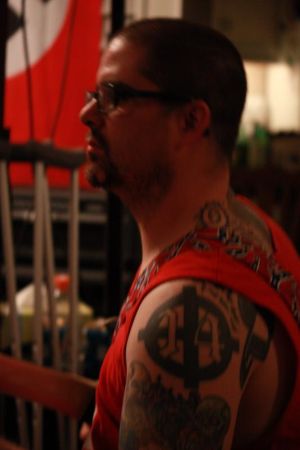
Wade Michael Page, vocalist and guitarist in the band 'End Apathy' and suspected gunman in the Sikh temple shooting. Note Page's Confederate flag design guitar-strap and the Nazi flag draped behind his band.

Is there much chance that America will own its latest mass murderer?

I doubt it.

When a white man picks up a gun and slaughters a bunch of fellow Americans, the most predictable feature of the subsequent process through which everyone else tries to come to terms with what happened is that it will be seen as an isolated event. We will look at it through the narrow prism of the personal history of the gunman and his idiosyncratic pathology and refuse to acknowledge that the killing might also have been shaped by some of the darker contours of the surrounding culture.

In the case of Wade Michael Page, the suspect in the Sikh temple shootings that took place in Wisconsin yesterday, there are already a few indications that this time some cultural context becomes inescapable.

The Southern Poverty Law Center has already pointed out some of the white supremacist connections that surely say a great deal about why Page chose his targets.

The man who allegedly murdered six people at a Sikh temple in suburban Milwaukee yesterday, identified in media reports as Wade Michael Page, was a frustrated neo-Nazi who had been the leader of a racist white-power band.

In 2010, Page, then the leader of the band End Apathy, gave an interview to the white supremacist website Label 56. He said that when he started the band in 2005, its name reflected his wish to “figure out how to end people’s apathetic ways” and start “moving forward.” “I was willing to point out some of my faults on how I was holding myself back,” Page said. Later, he added, “The inspiration was based on frustration that we have the potential to accomplish so much more as individuals and a society in whole.” He did not discuss violence in the interview.

Page told the website that he had been a part of the white power music scene since 2000, when he left his native Colorado on a motorcycle. He attended white power concerts in Georgia, North Carolina, West Virginia and Colorado. At various times, he said, he also played in the hate rock bands Youngland (2001-2003), Celtic Warrior, Radikahl, Max Resist, Intimidation One, Aggressive Force and Blue Eyed Devils. End Apathy, he said, included “Brent” on bass and “Ozzie” on drums; the men were former members of Definite Hate and another band, 13 Knots.

In 2000, the Southern Poverty Law Center has found that Page also attempted to purchase goods from the neo-Nazi National Alliance, then America’s most important hate group.

The fact that many (most?) Americans are too ignorant to know the difference between a Sikh and a Muslim is reason, some observers infer, to think that Page wrongly believed the people he was killing were Muslims. But given the other indications of his racist xenophobia, it seems quite likely that Page bore equal animosity towards everyone who in his eyes did not look like an ‘American.’

If American xenophobia does not frequently express itself through mass murder on American soil, the tentacles of racism — particularly fear and hatred of Muslims — nevertheless spread far and wide.

Pastor John Hagee, Pastor Terry Jones, Robert Spencer, Pamela Geller, Sam Harris, Frank Gafney, David Yerushalmi, Daniel Pipes, Steven Emerson, Geert Wilders, Michael Savage — all would no doubt disavow Page’s action, yet they share a kind of spiritual kinship. At one end of the spectrum are those who can apply varying degrees of intellectual sophistication to soften the edges of their fear of Islam and to dampen the flames of hatred with what appears like cool rationality. Yet the underlying message they promote is that Islam is a pathogen and individual Muslims are infecting America.

Once in a while this message gets translated into physical action as individuals such as Wade Michael Page take it upon themselves to engage in a barbaric act of ‘cultural defense.’ And at such moments all attention turns to the brutality on display while very little goes to the tendrils of the mycelium through which the fungus of hatred permeates this society.

Where pluralism has demanded that Americans broaden their knowledge of the world, instead political correctness has provided effective tools through which hatred can be kept alive, yet largely out of sight.

American racists have found it much easier to change the way they talk than change the way they think. And while Page most likely, in his actions, speaks for far too many, unlike him, most of them will continue to harbor their hatred in silence.

Facebooktwittermail

Israel’s envoy to U.S. blames Iran for Sinai attack, but evidence is lacking

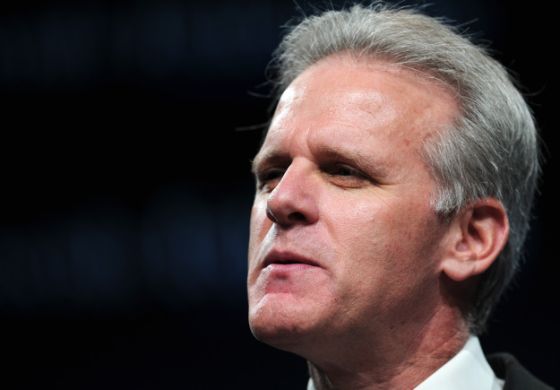
Michael Oren with lips pursed. Something's rolling around on his tongue. Did he just cough up some phlegm or come up with his latest lie?

I know it’s one of the most worn-out jokes in existence but never more true than when applied to Israel’s ambassador to the US. How can you tell when Michael Oren is lying? You can see his lips move.

At Haaretz, Barak Ravid writes:

Israel’s ambassador to the U.S Michael Oren, who is no stranger to gaffes, provided yet another strange headline on Sunday. Only hours after the attack on the Kerem Shalom crossing, before the fog of war had time to dissipate, the ambassador announced on his Twitter account that Iran was behind the assault.

“Iranian backed terrorists again struck at our Southern border today killing 15 Egyptian guards and attempting to massacre Israeli civilians,” Oren wrote in a Twitter post. On his Facebook page he wrote that “terrorists also shelled Israeli farms and towns along the border… the thwarted attack underscores the length to which the extremist regime in Iran will attempt to kill innocent Israelis.”

It is unclear what prompted Oren to release these statements, as it is clear he was in no possession of evidence linking Iran to the attack. Just how unfounded these allegations are was further underscored by a briefing given Monday morning by Defense Minister Ehud Barak at the Knesset Foreign Affairs and Defense Committee. In the briefing, Barak said the insurgents were operatives in an organization affiliated with Al-Qaida, “apparently some kind of global Jihad, with unclear connections.”

Oren’s gaffe brings to mind a statement made last month by his boss, Prime Minister Benjamin Netanyahu – shortly after the terror attack in Burgas, Bulgaria. While it was still unclear whether the attack was carried out by a suicide bomber or caused by hidden explosives, Netanyahu wasted no time in pointing a finger at Iran. A day later Netanyahu corrected himself, saying Hezbollah was behind the attack. It is worth noting, however, that two weeks after the Bulgaria attack, Israeli, Bulgarian and U.S. officials are still searching for a lead on the identity of the perpetrator.

Like Netanyahu, Oren’s statements on Twitter and Facebook are part of an Israeli propaganda campaign aimed at smearing Iran’s image. Yet like everything in life – it is all about dosage. Sometimes the urge to galvanize the world against the Iranians can lead to nothing more than baseless exaggerations.

Facebooktwittermail

Turkey: 115 Kurdish rebels killed in offensive

The Associated Press reports: Turkey’s security forces have killed as many as 115 Kurdish rebels during a major security offensive over the past two weeks, the country’s interior minister said Sunday.

Idris Naim Sahin said the rebels were killed in an airpower backed offensive near the town of Semdinli, in Hakkari province which sits on the border with Iraq. He said the offensive began on July 23.

Sahin provided few other details on the ongoing operation but said the security forces were trying to block the rebels’ escape routes into northern Iraq.

Private NTV television said earlier that as many as 2,000 troops were taking part in the offensive and that public access to some roads in the area were blocked.

Earlier Sunday, Kurdish rebels raided three military posts in simultaneous attacks in Hakkari, sparking a clash at one paramilitary outpost that left six soldiers and 14 rebels dead. Two government-paid village guards assisting the Turkish military were also killed.

Facebooktwittermail

How about quantitative easing for the people?

Anatole Kaletsky writes: Through an almost astrological coincidence of timing, the European Central Bank, the Bank of England and the U.S. Federal Reserve Board all held their policy meetings this week immediately after Wednesday’s publication of the weakest manufacturing numbers for Europe and America since the summer of 2009. With the euro-zone and Britain clearly back in deep recession and the U.S. apparently on the brink, the central bankers all decided to do nothing, at least for the moment. They all restated their unbreakable resolution to do “whatever it takes” – to prevent a breakup of the euro, in the case of the ECB, or, for the Fed and the BoE, to achieve the more limited goal of economic recovery. But what exactly is there left for the central bankers to do?

They have essentially two options. They could do even more of what the Fed and the BoE have been doing since late 2008 – creating new money and spending it on government bonds, in the policy known as “Quantitative Easing.” Or they could admit the policies of the past three years were not working, at least not well enough. And try something different.

There is, admittedly, a third option – to do nothing, on the grounds that public bodies should stop interfering with the private economy and instead leave financial markets to restore economic prosperity and full employment of their own accord. This third idea is based on the economic theory that if governments and central bankers leave well enough alone, “efficient” and “rational” financial markets will keep a capitalist economy growing and automatically return it to a prosperous equilibrium after occasional hiccups. This theory, though still taught in graduate schools and embedded in economic models, is implausible, to put it mildly, especially after the experience of the past decade. In any case, experience shows that the option of government doing nothing in deep economic slumps simply doesn’t exist in modern democracies.

Returning, therefore, to the two realistic alternatives, central bankers and financiers are overwhelmingly in favor of the first: keep trying the policy that has failed. [Continue reading…]

Facebooktwittermail

The Obama administration has torpedoed the arms trade treaty

Amy Goodman writes: What is more heavily regulated, global trade of bananas or battleships? In late June, activists gathered in New York’s Times Square to make the absurd point that, unbelievably, “there are more rules governing your ability to trade a banana from one country to the next than governing your ability to trade an AK-47 or a military helicopter”. So said Amnesty International USA’s Suzanne Nossel at the protest, just before the start of the UN conference on the Arms Trade Treaty (ATT), which ran from 2 July to 27 July. Thanks to a last-minute declaration by the United States that it “needed more time” to review the short, 11-page treaty text, the conference ended last week in failure.

There isn’t much that could be considered controversial in the treaty. Signatory governments agree not to export weapons to countries that are under an arms embargo, or to export weapons that would facilitate “the commission of genocide, crimes against humanity, war crimes” or other violations of international humanitarian law. Exports of arms are banned if they will facilitate “gender-based violence or violence against children” or be used for “transnational organised crime”. Why does the US need more time than the more than 90 other countries that had sufficient time to read and approve the text? The answer lies in the power of the gun lobby, the arms industry and the apparent inability of Barack Obama to do the right thing, especially if it contradicts a cold, political calculation.

The Obama administration torpedoed the treaty exactly one week after the massacre in Aurora, Colorado. In Colorado, Obama offered promises of “prayer and reflection”. As New York City mayor Michael Bloomberg said, commenting on Obama and Mitt Romney both avoiding a discussion of gun control: “Soothing words are nice, but maybe it’s time the two people who want to be president of the United States stand up and tell us what they’re going to do about it.” Gun violence is a massive problem in the US, and it only seems to pierce the public consciousness when there is a massacre. Gun-rights advocates attack people who suggest more gun control is needed, accusing them of politicising the massacre. Yet some elected officials are taking a stand. Governor Pat Quinn of Illinois is seeking a ban on assault weapons, much like the ones in place in California, Connecticut, Massachusetts, New Jersey and New York. [Continue reading…]

Facebooktwittermail