The Guardian reports: Human rights advocates have warned of a “summer of litigation” in response to the US supreme court’s decision to partially reinstate Donald Trump’s travel ban.
The ban applies to people from six Muslim-majority countries and refugees, but one clause in the court’s order has raised more questions than it answers about who will actually be allowed entry into the US.
People from Iran, Libya, Somalia, Sudan, Syria and Yemen and all refugees are not allowed to enter the US unless they have “a credible claim of a bona fide relationship with a person or entity in the United States”, according to the court.
Naureen Shah, the director of Amnesty International USA’s Security and Human Rights Program, said that even as trained lawyer she had difficulty interpreting its meaning.
“As a bare minimum it introduces uncertainties into life-and-death decisions for people,” Shah said. “It’s so brazenly dismissive to that chaos it is going to unleash.”
For instance, if one American doctor agrees to provide medical care to a child injured in a refugee camp, does the child have a bona fide relationship with the doctor, or the hospital the doctor works at?
In addition, it is not yet clear how the departments of state and homeland security will explain the definition of a bona fide relationship to airports abroad.
Conservative supreme court Justice Clarence Thomas warned in his opinion on the case that the court’s decision “will invite a flood of litigation”.
Human rights advocates agreed. [Continue reading…]
Category Archives: Issues
At 15 I was tortured in Assad’s prisons. I escaped, but thousands still suffer
An anonymous Syrian torture victim writes: For the 10 months I spent as a detainee in the prisons of Bashar al-Assad, I only saw my family in my dreams. At night, the screams would stop for an hour or two, and I could close my eyes and remember what it was like to be human. When I slept, I would return to my life.
Today is the UN’s International Day for Support of Victims of Torture. Unfortunately in Syria, there is no shortage of victims of torture. Tens of thousands of us have been thrown in Assad’s prisons and tortured beyond what our bodies and minds can take. Many of us die there. Those of us who have survived will spend the rest of our lives being reminded of just how evil humanity is capable of being.
I was only 15 when I was arrested and subjected to months of physical and psychological torture.
I am lucky to have survived. There were times I wished for death. As happy as I am to return to life again, I am equally gripped by sadness and pain knowing more than 200,000 prisoners are still there. My freedom feels incomplete as long as my Syrian brothers and sisters suffer behind those high walls. I am a hostage of my memory.
Aleppo is my home. I was forced to leave there in 2013 to try to escape the barrel bombs and besiegement of the city by Assad and his allies. My mother, siblings and I fled to Lebanon. At the age of 14, I had to leave school and begin working to try to sustain our family. At the end of 2014, we were forced to return to Syria because we could not afford Lebanese residence and working permits.
On the way home, I was arrested by members of a political security branch in Damascus. They accused me of taking part in the peaceful demonstrations at the beginning of the popular Syrian revolution against Assad.
This is a regime known for its oppression, its tyranny, and its corruption. But it is also a regime that stands against humanity. It is a regime that could arrest a 15-year-old, a kid, and subject him to months of torture and starvation and psychological trauma. And I am not by any means a unique story in Syria. [Continue reading…]
China breaks ground on first ‘Forest City’ that fights air pollution
inhabitat reports: A pollution-fighting green city unlike any before is springing to life in China. Designed by Stefano Boeri Architetti, the first “Forest City” is now under construction Liuzhou, Guangxi Province. The futuristic city will use renewable energy for self sufficiency and be blanketed in almost 1 million plants and 40,000 trees—a sea of greenery capable of absorbing nearly 10,000 tons of carbon dioxide and 57 tons of pollutants annually.
Commissioned by Liuzhou Municipality Urban Planning for the north of Liuzhou along the Liujiang river, the 175-hectare Liuzhou Forest City will be the first of its kind that, if successful, may raise the bar for urban design worldwide. This first Chinese Forest City will host 30,000 people in a community where all buildings are entirely covered in nearly a million plants of over 100 species, as well as 40,000 trees, that produce approximately 900 tons of oxygen. The use of greenery-covered facades builds on Stefano Boeri’s previous works, including the Vertical Forest residential building in Milan. [Continue reading…]
Carbon in atmosphere is rising, even as emissions stabilize
The New York Times reports from Cape Grim, Tasmania: On the best days, the wind howling across this rugged promontory has not touched land for thousands of miles, and the arriving air seems as if it should be the cleanest in the world.
But on a cliff above the sea, inside a low-slung government building, a bank of sophisticated machines sniffs that air day and night, revealing telltale indicators of the way human activity is altering the planet on a major scale.
For more than two years, the monitoring station here, along with its counterparts across the world, has been flashing a warning: The excess carbon dioxide scorching the planet rose at the highest rate on record in 2015 and 2016. A slightly slower but still unusual rate of increase has continued into 2017.
Scientists are concerned about the cause of the rapid rises because, in one of the most hopeful signs since the global climate crisis became widely understood in the 1980s, the amount of carbon dioxide that people are pumping into the air seems to have stabilized in recent years, at least judging from the data that countries compile on their own emissions.
That raises a conundrum: If the amount of the gas that people are putting out has stopped rising, how can the amount that stays in the air be going up faster than ever? Does it mean the natural sponges that have been absorbing carbon dioxide are now changing? [Continue reading…]
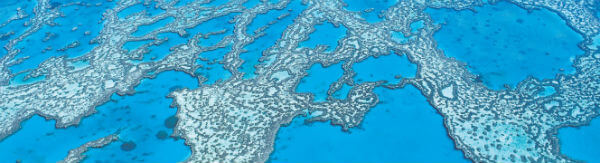
Great Barrier Reef valued at A$56bn as report warns it’s ‘too big to fail’

The Guardian reports: A new report has valued the Great Barrier Reef at A$56bn and warns of vast economic consequences for Australia unless more is done to protect it.
The Deloitte Access Economics report says the world heritage-listed reef underpins 64,000 direct and indirect jobs, and contributes $6.4bn to the national economy each year.
But without ramped-up protection efforts, it warns much of that could be at risk as the reef suffers from repeated mass coral bleaching events, poor water quality and climate change.
“The reef is critical to supporting economic activity and jobs in Australia,” says the report, prepared for the Great Barrier Reef Foundation. “The livelihoods and businesses it supports across Australia far exceeds the numbers supported by many industries we would consider too big to fail.”
Of the 64,000 jobs linked to the reef, 39,000 are direct jobs – making the reef a bigger “employer” than the likes of Telstra, the Qantas Group, National Australia Bank and the oil and gas extraction industry. [Continue reading…]
FBI has questioned Trump campaign adviser Carter Page at length in Russia probe
The Washington Post reports: FBI agents have repeatedly questioned former Trump campaign adviser Carter Page about his contacts with Russians and his interactions with the Trump campaign, according to people familiar with the investigation.
Over a series of five meetings in March, totaling about 10 hours of questioning, Page repeatedly denied wrongdoing when asked about allegations that he may have acted as a kind of go-between for Russia and the Trump campaign, according to a person familiar with Page’s account.
The interviews with the FBI are the most extensive known questioning of a potential suspect in the probe of possible Russian connections to associates of President Trump. The questioning of Page came more than a month before the Russian investigation was put under the direction of Special Counsel Robert S. Mueller III. [Continue reading…]
Trump’s bullshit on Russia frustrates even his allies
The New York Times reports: In the span of 72 hours, President Trump described the email hacking that roiled the 2016 campaign as a Democratic “hoax” and as clear aggression by Russia that his predecessor, President Barack Obama, failed to address.
Other times, Mr. Trump has said the hacking might have been done by China.
Or, as he claimed during the first general election debate, the hacking could have been the work of a lone wolf weighing 400 pounds, sitting on his bed at home.
Then there was the time Mr. Trump blamed “some guy in his home in New Jersey.”
Or, as Mr. Trump has also suggested, there might not even have been hacking at all…
On Saturday, Mr. Trump tried again to focus attention on Mr. Obama.
“Since the Obama Administration was told way before the 2016 Election that the Russians were meddling, why no action?” Mr. Trump wrote on Twitter. “Focus on them, not T!”
He followed that up with: “Obama Administration official said they ‘choked’ when it came to acting on Russian meddling of election. They didn’t want to hurt Hillary?”
Government officials, members of Congress from both parties and even some Trump supporters had hoped that, with the campaign behind him, Mr. Trump would finally speak declaratively about the email hacking and recognize the threat Russian cyberattacks present, without asterisks, wisecracks, caveats or obfuscation.
That hope has dissipated. The latest presidential tweets were proof to dismayed members of Mr. Trump’s party that he still refuses to acknowledge a basic fact agreed upon by 17 American intelligence agencies that he now oversees: Russia orchestrated the attacks, and did it to help get him elected. [Continue reading…]
Europe has been working to expose Russian meddling for years
The Washington Post reports: As the United States grapples with the implications of Kremlin interference in American politics, European countries are deploying a variety of bold tactics and tools to expose Russian attempts to sway voters and weaken European unity.
Across the continent, counterintelligence officials, legislators, researchers and journalists have devoted years — in some cases, decades — to the development of ways to counter Russian disinformation, hacking and trolling. And they are putting them to use as never before.
Four dozen officials and researchers interviewed recently sounded uniformly more confident about the results of their efforts to counter Russian influence than officials grappling with it in the United States, which one European cyber-official described as “like watching ‘House of Cards.’ ”
“The response here has been very practical,” observed a senior U.S. intelligence official stationed in Europe. “Everybody’s looking at it.”
In the recent French elections, the Kremlin-friendly presidential candidate lost to newcomer Emmanuel Macron, who was subjected to Russian hacking and false allegations in Russian-sponsored news outlets during the campaign. In Germany, all political parties have agreed not to employ automated bots in their social media campaigns because such hard-to-detect cybertools are frequently used by Russia to circulate bogus news accounts. [Continue reading…]
Kushner firm’s $285 million Deutsche Bank loan came just before Election Day
The Washington Post reports: One month before Election Day, Jared Kushner’s real estate company finalized a $285 million loan as part of a refinancing package for its property near Times Square in Manhattan.
The loan came at a critical moment. Kushner was playing a key role in the presidential campaign of his father-in-law, Donald Trump. The lender, Deutsche Bank, was negotiating to settle a federal mortgage fraud case and charges from New York state regulators that it aided a possible Russian money-laundering scheme. The cases were settled in December and January.
Now, Kushner’s association with Deutsche Bank is among a number of financial matters that could come under focus as his business activities are reviewed by special counsel Robert S. Mueller III, who is examining Kushner as part of a broader investigation into possible Russian influence in the election.
The October deal illustrates the extent to which Kushner was balancing roles as a top adviser to Trump and a real estate company executive. After the election, Kushner juggled duties for the Trump transition team and his corporation as he prepared to move to the White House. The Washington Post has reported that investigators are probing Kushner’s separate December meetings with the Russian ambassador to the United States, Sergey Kislyak, and with Russian banker Sergey Gorkov, the head of Vnesheconombank, a state development bank. [Continue reading…]
How Putin seduced Oliver Stone — and Trump
Masha Gessen writes: Watching four hours of Oliver Stone interviewing President Vladimir Putin of Russia is not a lesson in journalism. Mr. Stone is an inept interviewer, and he does not get Mr. Putin to say anything the world hasn’t heard from him before. Watching the interviews for entertainment is a questionable proposition, too: The four-part series contains many dull exchanges and even more filler, like footage of the two men watching “Dr. Strangelove” together.
Still, “The Putin Interviews,” which were released this month by Showtime, may be worth watching for the view they provide of a particular kind of relationship.
Many Americans have been looking for an explanation for Mr. Trump’s apparent adoration of Mr. Putin. How can a powerful, wealthy American man hold affection for the tyrannical, corrupt leader of a hostile power?
Oddly, “The Putin Interviews” provide psychological and intellectual answers to that question. For Mr. Stone appears to have the same sort of breathless admiration for Mr. Putin as Mr. Trump does. In filming their interaction, he has broadcast the conditions on which this kind of admiration rests. Should you ever wish to experience affection for a dictator, you too should make sure that these conditions are in place. [Continue reading…]
Authoritarianism is making a comeback. Here’s the time-tested way to defeat it
Maria J Stephan and Timothy Snyder write: After the spread of democracy at the end of the 20th century, authoritarianism is now rolling back democracy around the globe. In the US, supporters of democracy disarmed themselves by imagining an “end of history” in which nothing but their own ideas were possible. Authoritarians, meanwhile, keep practicing their old tactics and devising new ones.
It is time for those who support democracy to remember what activists from around the world have paid a price to learn: how to win.
Modern authoritarians rely on repression, intimidation, corruption and co-optation to consolidate their power. The dictator’s handbook mastered by Orban in Hungary, Erdogan in Turkey, Maduro in Venezuela, Zuma in South Africa, Duterte in the Philippines and Trump here provides the traditional tactics: attack journalists, blame dissent on foreigners and “paid protestors,” scapegoat minorities and vulnerable groups, weaken checks on power, reward loyalists, use paramilitaries, and generally try to reduce politics to a question of friends and enemies, us and them.
Yet tyrants’ tactics require the consent of large numbers of people. The first lesson, then, is not to obey in advance. If individuals make the basic effort to consider their own sense of values and patriotism rather than subconsciously adjusting to the new reality, aspiring authoritarians have a major problem. Good citizens will then ask: but what should we do? History provides an answer: civil resistance.
Unarmed civilians using petitions, boycotts, strikes, and other nonviolent methods have been able to slow, disrupt and even halt authoritarianism. Civil resistance has been twice as effective as armed struggle. [Continue reading…]
The race to solar power Africa
Bill McKibben writes: The cacao-farming community of Daban, in Ghana, is seven degrees north of the equator, and it’s always hot. In May, I met with several elders there to talk about the electricity that had come to the town a few months earlier, when an American startup installed a solar microgrid nearby. Daban could now safely store the vaccine for yellow fever; residents could charge their cell phones at home rather than walking to a bigger town to do it. As we talked, one of the old men handed me a small plastic bag of water, the kind street venders sell across West Africa—you just bite off a corner and drink. The water was ice-cold and refreshing, but it took me an embarrassingly long moment to understand the pleasure with which he offered it: cold water was now available in this hot place. There was enough power to run a couple of refrigerators, and so coldness was, for the first time, a possibility.
I’d come to Daban to learn about the boom in solar power in sub-Saharan Africa. The spread of cell phones in the region has made it possible for residents to pay daily or weekly bills using mobile money, and now the hope is that, just as cell phones bypassed the network of telephone lines, solar panels will enable many rural consumers to bypass the electric grid. From Ghana, I travelled to Ivory Coast, and then to Tanzania, and along the way I encountered a variety of new solar ventures, most of them American-led. Some, such as Ghana’s Black Star Energy, which had electrified Daban, install solar microgrids, small-scale versions of the giant grid Americans are familiar with. Others, such as Off-Grid Electric, in Tanzania and Ivory Coast, market home-based solar systems that run on a panel installed on each individual house. These home-based systems can’t produce enough current for a fridge, but they can supply each home with a few lights, a mobile-phone charger, and, if the household can afford it, a small, super-efficient flat-screen TV.
In another farming town, in Ivory Coast, I talked to a man named Abou Traoré, who put his television out in a courtyard most nights, so that neighbors could come by to watch. He said that they tuned in for soccer matches—the village tilts Liverpool, but has a large pocket of Manchester United supporters. What else did he watch? Traoré considered. “I like the National Geographic channel,” he replied—that is, the broadcast arm of the institution that became famous showing Westerners pictures of remote parts of Africa.
There are about as many people living without electricity today as there were when Thomas Edison lit his first light bulb. More than half are in sub-Saharan Africa. Europe and the Americas are almost fully electrified, and Asia is quickly catching up, but the absolute number of Africans without power remains steady. A World Bank report, released in May, predicted that, given current trends, there could still be half a billion people in sub-Saharan Africa without power by 2040. Even those with electricity can’t rely on it: the report noted that in Tanzania power outages were so common in 2013 that they cost businesses fifteen per cent of their annual sales. Ghanaians call their flickering power dum/sor, or “off/on.” Vivian Tsadzi, a businesswoman who lives not far from the Akosombo Dam, which provides about a third of the nation’s power, said that most of the time “it’s dum dum dum dum.” The dam’s head of hydropower generation, Kwesi Amoako, who retired last year, told me that he is proud of the structure, which created the world’s largest man-made lake. But there isn’t an easy way to increase the country’s hydropower capacity, and drought, caused by climate change, has made the system inconsistent, meaning that Ghana will have to look elsewhere for electricity. “I’ve always had the feeling that one of the main thrusts should be domestic solar,” Amoako said. “And I think we should put the off-grid stuff first, because the consumer wants it so badly.” [Continue reading…]

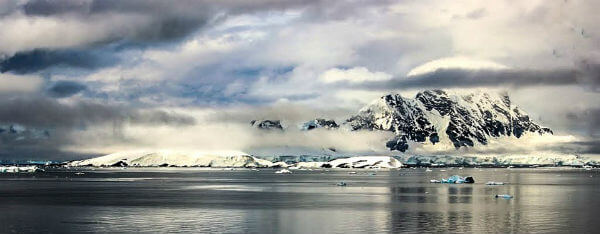
Antarctica is melting, and giant ice cracks are just the start

National Geographic reports: Seen from above, the Pine Island Ice Shelf is a slow-motion train wreck. Its buckled surface is scarred by thousands of large crevasses. Its edges are shredded by rifts a quarter mile across. In 2015 and 2016 a 225-square-mile chunk of it broke off the end and drifted away on the Amundsen Sea. The water there has warmed by more than a degree Fahrenheit over the past few decades, and the rate at which ice is melting and calving has quadrupled.
On the Antarctic Peninsula, the warming has been far greater—nearly five degrees on average. That’s why a Delaware-size iceberg is poised to break off the Larsen C Ice Shelf and why smaller ice shelves on the peninsula have long since disintegrated entirely into the waters of the Weddell Sea. But around the Amundsen Sea, a thousand miles to the southwest on the Pacific coast of Antarctica, the glaciers are far larger and the stakes far higher. They affect the entire planet.
The Pine Island Ice Shelf is the floating terminus of the Pine Island Glacier, one of several large glaciers that empty into the Amundsen Sea. Together they drain a much larger dome of ice called the West Antarctic Ice Sheet, which is up to two and a half miles thick and covers an area twice the size of Texas. The ice sheet is draped over a series of islands, but most of it rests on the floor of a basin that dips more than 5,000 feet below sea level. That makes it especially vulnerable to the warming ocean. If all that vulnerable ice were to become unmoored, break into pieces, and float away, as researchers increasingly believe it might, it would raise sea level by roughly 10 feet, drowning coasts around the world. [Continue reading…]
Vladimir Putin is suddenly on the defensive against corruption
Stephen Sestanovich writes: For years now, Putin has claimed — with brazen but disarming candor — to be fighting hard against corruption and the abuse of state power. In his 2015 speech to parliament, he complained that the bullying of legitimate businesses by bribe-seeking officials was a blight on the Russian economy. In his April 2016 call-in, he took questions about shakedowns by government inspectors, about real estate scams enabled by the courts, about the enslavement of workers in a fish cannery (ignored by the police), about the illegal seizure of a Moscow research institute by officials who wanted its land, and more. Putin has said that without fundamental reforms, the country’s economic growth will “hover around zero.” Last summer he told parliamentary candidates of his own party, United Russia, that they had to work harder to win the people’s trust.
Most of this was, of course, meaningless rhetoric. Any serious follow-through would threaten the system Putin has created.
But that’s why we should pay attention when he changes course. On the program last week, Putin announced that corruption is simply “not among the top” issues bothering Russians. When an earnest high school student complained about light punishment meted out to corrupt officials, the president’s initial, prickly response was to suggest that someone else had written the question. His lame concluding plea: “Let us rely on the work of the judicial system.”
Dismissing corruption and the abuse of power didn’t keep Putin from playing his usual role as national problem solver. Was a young teacher paid too little? The president said he’d look into it. Was a single mother in Siberia homeless after forest fires? Putin said he’d talk to the governor of her region. And the woman who lost her home to floods in southern Russia? Again, he promised to talk to her governor.
Yet through all this Putin kept repeating that there was something “strange” about the problems being raised. After all, money had been budgeted to help victims of natural disasters. Maybe, he volunteered, one of the governors was just new on the job? He steered consistently clear of the need for systemic reform or stronger anti-corruption initiatives. Sure, officials at all levels sometimes made wrong decisions, Putin admitted, adding, “I will reprimand them for this” (a typical response). And when asked what he did when people cheated him, the president modeled acceptance: “I try not to make a fuss.”
It’s obvious why Putin has gotten nervous about the corruption issue. His most visible political opponent, Alexei Navalny, has made it the centerpiece of hugely popular online videos and of recent rallies against the “crooks and thieves” of the current regime. It was always a bit shocking that Putin thought he could claim to be a champion of clean government, but somehow he got away with it. Now, apparently, he worries that even talking about corruption will validate Navalny’s critique. [Continue reading…]
Evidence is mounting that Russia took four clear paths to meddle in the U.S. election
Business Insider reports: It was September 2015 when the FBI first noticed that Russian hackers had infiltrated a computer system belonging to the Democratic National Committee.
It was the first sign that Moscow was attempting to meddle in the presidential election.
Nearly a year later, further reporting and testimony from current and former intelligence officials have painted a portrait of Russia’s election interference as a multifaceted, well-planned, and coordinated campaign aimed at undermining the backbone of American democracy: free and fair elections.
Now, as FBI special counsel Robert Mueller and congressional intelligence committees continue to investigate Russia’s election interference, evidence is emerging that the hacking and disinformation campaign waged at the direction of Russian President Vladimir Putin took at least four separate but related paths.
The first involved establishing personal contact with Americans perceived as sympathetic to Moscow — such as former Defense Intelligence Agency chief Michael Flynn, former Trump campaign chairman Paul Manafort, and early Trump foreign-policy adviser Carter Page — and using them as a means to further Russia’s foreign-policy goals.
The second involved hacking the Democratic National Committee email servers and then giving the material to WikiLeaks, which leaked the emails in batches throughout the second half of 2016.
The third was to amplify the propaganda value of the leaked emails with a disinformation campaign waged predominantly on Facebook and Twitter, in an effort to use automated bots to spread fake news and pro-Trump agitprop.
And the fourth was to breach US voting systems in as many as 39 states leading up to the election, in an effort to steal registration data that officials say could be used to target and manipulate voters in future elections. [Continue reading…]
Trump White House has taken little action to stop next election hack
NBC News reports: The Trump administration has taken little meaningful action to prevent Russian hacking, leaking and disruption in the next national election in 2018, despite warnings from intelligence officials that it will happen again, officials and experts told NBC News.
“This attack is really the political equivalent of 9/11 — it is deadly, deadly serious,” said Michael Vickers, a career intelligence official who was the Pentagon’s top intelligence official in the Obama administration. “The Russians will definitely be back, given the success they had…I don’t see much evidence of a response.”
According to recent Congressional testimony, Trump has shown no interest in the question of how to prevent future election interference by Russia or another foreign power. Former FBI Director James Comey told senators that Trump never asked him about how to stop a future Russian election cyber attack, and Attorney General Jeff Sessions, who sits on the National Security Council, testified that he has not received a classified briefing on Russian election interference.
Dozens of state officials told NBC News they have received little direction from Washington about election security. [Continue reading…]
Trump’s Twitter feed is a gold mine for foreign spies
Nada Bakos writes: Every time President Trump tweets, journalists and Twitter followers attempt to analyze what he means. Intelligence agencies around the world do, too: They’re trying to determine what vulnerabilities the president of the United States may have. And he’s giving them a lot to work with.
Trump’s Twitter feed is a gold mine for every foreign intelligence agency. Usually, intelligence officers’ efforts to collect information on world leaders are methodical, painstaking and often covert. CIA operatives have risked their lives to learn about foreign leaders so the United States could devise strategies to counter our adversaries. With Trump, though, secret operations are not necessary to understand what’s on his mind: The president’s unfiltered thoughts are available night and day, broadcast to his 32.7 million Twitter followers immediately and without much obvious mediation by diplomats, strategists or handlers.
Intelligence agencies try to answer these main questions when looking at a rival head of state: Who is he as a person? What type of leader is he? How does that compare to what he strives to be or presents himself as? What can we expect from him? And how can we use this insight to our advantage?
At the CIA, I tracked and analyzed terrorists and other U.S. enemies, including North Korea. But we never had such a rich source of raw intelligence about a world leader, and we certainly never had the opportunity that our adversaries (and our allies) have now — to get a real-time glimpse of a major world leader’s preoccupations, personality quirks and habits of mind. If we had, it would have given us significant advantages in our dealings with them. [Continue reading…]
Trump just ended a long tradition of celebrating Ramadan at the White House
The Washington Post reports: In the early days of December 1805, a handful of prominent politicians received formal invitations to join President Thomas Jefferson for a White House dinner.
Such entreaties were not uncommon: Jefferson frequently hosted lawmakers for political working dinners at the White House, almost always commencing them about 3:30 in the afternoon, shortly after the House or Senate had adjourned for the day.
But this gathering, scheduled for Dec. 9, would be slightly different.
“dinner will be on the table precisely at sun-set — ” the invitations read. “The favour of an answer is asked.”
The occasion was the presence of a Tunisian envoy to the United States, Sidi Soliman Mellimelli, who had arrived in the country just the week before, in the midst of America’s ongoing conflict with what were then known as the Barbary States.
And the reason for the dinner’s later-than-usual start was Mellimelli’s observance of Ramadan, a holy month for Muslims in which observers fast between dawn and dusk. Only after sunset do Muslims break their fast with a meal, referred to as an iftar.
Jefferson’s decision to change the time of the meal to accommodate Mellimelli’s observance of Ramadan has been seized on by both sides in the 21st-century debate over Islam more than 200 years later. Historians have cited the meal as the first time an iftar took place in the White House — and it has been referenced in recent White House celebrations of Ramadan as an embodiment of the Founding Father’s respect for religious freedom. Meanwhile, critics on the far right have taken issue with the characterization of Jefferson’s Dec. 9, 1805, dinner as an iftar.
Whatever Jefferson could have foreseen for the young country’s future, it appears the modern-day White House tradition of marking Ramadan with an iftar dinner or Eid celebration has come to an end. [Continue reading…]