Category Archives: Issues

Israel’s effort to silence political protest

Israel deports US journalist

Israeli authorities today deported an American journalist who was working as an editor for a Palestinian news agency.

Jared Malsin, who is Jewish and in his late 20s, was detained at Tel Aviv’s Ben Gurion airport eight days ago as he returned from a holiday in Prague.

His girlfriend, a Lutheran church volunteer who flew back with him, was deported two days later., but Malsin was held in detention at a cell in the airport while he began a legal challenge to his deportation order.

Early today Malsin, who has worked with the Ma’an news agency for two years as its English news editor, spoke by telephone to a colleague to say he was being deported and was then put on a flight to New York. “He was not in a good place. He sounded very confused,” said George Hale, a staff writer at Ma’an.

Sabine Hadad, a spokeswoman for the Israeli interior ministry, said Malsin had refused to answer questions and co-operate with security staff when he landed at the airport last week. “It is the minimal right of every immigration authority to ask questions or to clarify things that are not clear about every person who wants to enter Israel,” she said. “He refused to co-operate and we told him if he continued to refuse he would not enter Israel.”

Hadad said they did not know Malsin was a journalist until they were contacted by the press about his detention.

However, Hale said Malsin was interrogated repeatedly and was asked about articles he had written from the occupied West Bank that were critical of Israeli policies. Hale said Malsin had briefly overstayed his last tourist visa, but was registered as a journalist with the Palestinian Authority and with the authority’s labour ministry. He had applied for an Israeli government-issued press card, which most foreign journalists here carry, but was told it would not be granted because he was based in Bethlehem, in the West Bank. [continued…]

Israel accused of silencing political protest

Israel is arresting a growing number of prominent opponents to its policies toward the Palestinians, say critics who are accusing the government of trying to crush legitimate dissent.

In the most high-profile case yet, Jerusalem police detained the leader of a leading Israeli human rights group during a vigil against the eviction of Palestinian families whose homes were taken by Jewish settlers. [continued…]

What the Gaza war meant for Israel

Last month the Association of Civil Rights in Israel (ACRI) revealed an alarming trend in its annual survey on the protection of human rights in Israel and the Occupied Territories – the conditioning of rights.

“The realisation of the entire spectrum of rights is now more than ever dependent on what we say or believe, what ethnic group we belong to, how much money we have, and more,” says the ACRI.

“We have the freedom to express ourselves and demonstrate – only if we don’t say anything displeasing; we have the right to equal treatment and opportunities – only if we are “loyal” to the state.”

In the streets, the Israeli security forces are waging a war against protests by Jewish left wing and human rights activists, who non-violently protest against Israel’s separation barrier or against Jewish settlers taking over Palestinian homes in East Jerusalem.

Many have been arrested and some were attacked by the security forces.

However, right-wingers protesting against the government’s decision to temporarily freeze building in settlements are accorded much more leniency by Israeli law enforcement agencies.

During Operation Cast Lead about 800 Israeli citizens, most of them Arab, were arrested, with criminal charges brought against most of them.

In a recent editorial, the Israeli daily newspaper Ha’aretz called the arrests “an evil omen regarding the state’s attitude toward protesters” and said that as a result, “concern is growing over Israel’s image as a free and democratic country”. [continued…]

Israel withholding NGO employees’ work permits

The Interior Ministry has stopped granting work permits to foreign nationals working in most international nongovernmental organizations operating in the Palestinian territories, including East Jerusalem, Haaretz has learned.

In an apparent overhaul of regulations that have been in place since 1967, the ministry is now granting the NGO employees tourist visas only, which bar them from working.

Organizations affected by the apparent policy change include Oxfam, Save the Children, Doctors Without Borders, Terre des Hommes, Handicap International and the Religious Society of Friends (a Quaker organization). [continued…]

Israel targets Palestinian anti-wall activists

Jamal Juma’ could not help but laugh at one of the accusations he said he had been threatened with while in Israeli detention.

“They said they would indict me for links to Hizbollah. They didn’t like it when I started laughing,” Mr Juma’, a lifelong communist, said on Sunday, five days after his release.

He was talking in an office in Ramallah at the headquarters of the Stop the Wall organisation, of which he is a coordinator. Stop the Wall is a Palestinian grassroots effort dedicated to peaceful and popular resistance against the separation barrier Israel is building up and down the occupied territories. [continued…]


Facebooktwittermail

New wave of warlords bedevils U.S.

New wave of warlords bedevils U.S.

In his teen years, Sirajuddin Haqqani was known among friends as a dandy. He cared more about the look of his thick black hair than the battles his father, a mujahideen warlord in the 1980s, was waging with Russia for control of Afghanistan.

The younger Mr. Haqqani is still a stylish sort, say those who know him. But now, approaching middle age and ensconced as the battlefield leader of his father’s militant army, he has become ruthless in his own pursuit of an Afghanistan free from foreign influence. This time the enemy is the U.S. and its allies.

From outposts along the border between Pakistan and Afghanistan, his Haqqani network is waging a campaign that has made the Afghan insurgency deadlier. He has widened the use of suicide attacks, which became a Taliban mainstay only in the past few years. U.S. officials believe his forces carried out the dramatic Monday gun, grenade and suicide-bomb attack in Kabul on Afghan government ministries and a luxury hotel. The assault claimed five victims plus seven attackers. [continued…]

Afghanistan’s holy violence

The Taliban’s spectacular attacks in Kabul yesterday took place just as the new cabinet members were taking their oath of office. In a report posted online on the Taliban website, their spokesman Zabiullah Mujahid listed the ministries under attack: the ministry of mining, the ministry of justice, and the ministry of finance. The Taliban’s message was clear: even though the ministers were taking charge of Hamid Karzai’s cabinet, the power in control of Kabul was not Karzai but the Taliban.

The ministers might not be used to the idea of dual governments, but outside Kabul Afghans have long learned to live under two parallel regimes, a daytime government run by President Karzai and a nighttime one run by the Taliban and other local strongmen. Ministers living in Kabul had been spared this unsettling reality until now, hiding as they do in bullet-proof cars, on blocked roads and behind the protective walls of Kabul’s green zone. But the reality outside the capital is otherwise and ordinary Afghans have learned to negotiate their daily routine around avoiding random violence by the Taliban and other troublemakers. Monday’s attacks might have given the ministers a taste of what life is like for a majority of Afghans, especially those who live in restive regions. [continued…]

After attack, Afghans question motives or see conspiracies

Twenty-four hours after seven insurgents stormed a shopping center in downtown Kabul and immobilized the city, the shoemakers who ply their trade in front of the mall were back in business on Tuesday.

Nearby, shopkeepers returned to hawk tapes of Madonna alongside recordings of Afghan and Bollywood stars, and a crowd of men joked with a man wearing a large shawl, because that was the same outfit the attackers wore on Monday to hide their guns.

Stoic about the assault, convinced that it would happen again and lacking faith in the government’s ability to stop such attacks, those who work near the sites that were attacked were most interested in the question of why the insurgents had not killed more civilians. [continued…]

Corruption widespread in Afghanistan, UNODC survey says

overty and violence are usually portrayed as the biggest challenges confronting Afghanistan. But ask the Afghans themselves, and you get a different answer: corruption is their biggest worry. A new UNODC survey reveals that an overwhelming 59 per cent of Afghans view public dishonesty as a bigger concern than insecurity (54 per cent) and unemployment (52 per cent).

Corruption in Afghanistan: Bribery as Reported by Victims [PDF] is based on interviews with 7,600 people in 12 provincial capitals and more than 1,600 villages around Afghanistan. It records the real experiences (rather than just perceptions) of urban as well as rural residents, men and women, between autumn 2008 and autumn 2009. [continued…]

Facebooktwittermail

The Guantánamo “suicides”: A Camp Delta sergeant blows the whistle

The Guantánamo “suicides”: A Camp Delta sergeant blows the whistle

When President Barack Obama took office last year, he promised to “restore the standards of due process and the core constitutional values that have made this country great.” Toward that end, the president issued an executive order declaring that the extra-constitutional prison camp at Guantánamo “shall be closed as soon as practicable, and no later than one year from the date of this order.” Obama has failed to fulfill his promise. Some prisoners are being charged with crimes, others released, but the date for closing the camp seems to recede steadily into the future. Furthermore, new evidence now emerging may entangle Obama’s young administration with crimes that occurred during the Bush presidency, evidence that suggests the current administration failed to investigate seriously—and may even have continued—a cover-up of the possible homicides of three prisoners at Guantánamo in 2006.

Late in the evening on June 9 that year, three prisoners at Guantánamo died suddenly and violently. Salah Ahmed Al-Salami, from Yemen, was thirty-seven. Mani Shaman Al-Utaybi, from Saudi Arabia, was thirty. Yasser Talal Al-Zahrani, also from Saudi Arabia, was twenty-two, and had been imprisoned at Guantánamo since he was captured at the age of seventeen. None of the men had been charged with a crime, though all three had been engaged in hunger strikes to protest the conditions of their imprisonment. They were being held in a cell block, known as Alpha Block, reserved for particularly troublesome or high-value prisoners. [continued…]

Facebooktwittermail

FBI broke law for years in phone record searches

FBI broke law for years in phone record searches

The FBI illegally collected more than 2,000 U.S. telephone call records between 2002 and 2006 by invoking terrorism emergencies that did not exist or simply persuading phone companies to provide records, according to internal bureau memos and interviews. FBI officials issued approvals after the fact to justify their actions.

E-mails obtained by The Washington Post detail how counterterrorism officials inside FBI headquarters did not follow their own procedures that were put in place to protect civil liberties. The stream of urgent requests for phone records also overwhelmed the FBI communications analysis unit with work that ultimately was not connected to imminent threats.

A Justice Department inspector general’s report due out this month is expected to conclude that the FBI frequently violated the law with its emergency requests, bureau officials confirmed. [continued…]

Facebooktwittermail

A Palestinian state has become impossible

A Palestinian state has become impossible

For the pacifist Palestinian Sari Nusseibeh, Israel will soon have no choice but to integrate its Arab population. Sari Nusseibeh, Dean of al-Quds University in Jerusalem and committed Palestinian intellectual, was the author in 2002 of a peace plan co-written with Ami Ayalon, former head of Shin Bet, the Israeli security service.

LE FIGARO – Doesn’t the issue of Jerusalem, which resurfaced in 2009, complicate the resumption of negotiations between Israelis and Palestinians?

SARI NUSSEIBEH – Everyone kept putting off the issue of Jerusalem. Suddenly they rediscovered that it is undoubtedly the main problem. And also that the parameters of this problem are no longer the same. While the negotiators were working in their bubble towards a peaceful solution, the city was fundamentally changing: the 1967 state of affairs no longer exists today, and sharing it has become much more difficult.

What are these changes?

Geographically, the area of Jerusalem and its suburbs has grown from 20 sq km to 50 sq km: in the eastern part of this Greater Jerusalem, the Israelis have built 13 new neighborhoods, where 250 000 Jews now live, linked together by freeways. They encircle the Arab areas of East Jerusalem and separate them from one another. The Israelis have also invented the concept of the “holy basin”, which includes the Muslim Quarter of the Old City and the surrounding areas, which form the core of Arab Jerusalem. They are carrying out an active policy of expulsions, destruction and expropriation, making an eventual partition of Jerusalem much more difficult.

And yet the two-state solution is supported by the whole world?

In 1967, one of the first advocates of the two-state solution was Uri Avnery (historic figure on the Israeli pacifist left). He had no support at that time. Four decades later, his ideas have been immensely successful, as they are shared today by the entire world, even Bush. But in the meantime, the possibility of creating two states has faded away. Even if I do not rule out the possibility of a miracle, I do not personally believe anymore that the prospect is achievable. [continued…]
(H/t to Mondoweiss)

Facebooktwittermail

The United States, Israel and the retreat of freedom

The United States, Israel and the retreat of freedom

Freedom House’s approach to Israel provides the starkest example of the abyss into which liberal thinking has fallen on the relationship between colonialism and freedom. Israel, we are told, “remains the only country in the [Middle East] region to hold a Freedom in the World designation of Free.” We are informed euphemistically that “The beginning of the year [2009] was marred by fierce fighting between the Israeli military and the Hamas movement in the Gaza Strip.”

There is no mention of the deliberate targeting by Israel of Gaza’s civilian infrastructure and the resulting massive destruction, and death and injury to thousands of Palestinian civilians. Nothing is said of the denial of fundamental political, civil and human rights, or freedom of movement, association and education to four million Palestinians living under Israeli military occupation and siege in the West Bank and Gaza Strip. There is no mention of the systematic discrimination, and social and political exclusion faced by 1.5 million Palestinian citizens of Israel, nor of the denial of the right of return of millions of Palestinian refugees.

There is an acknowledgment that “Hundreds of people were arrested during demonstrations against the Gaza conflict, and the parliamentary elections committee passed a measure banning two political parties from national elections, though the ban was quickly overturned by the Supreme Court.”

Despite this, on the tables accompanying the report, “Israel” receives the highest score of “1” for political rights, and a very respectable “2” for civil liberties — on a par with Italy and Japan. The overall impression is of minor glitches that could occur in any exemplary “Western” democracy. [continued…]

Palestine under the shadow of the wall

Sabah Haider visited the West Bank for ten days over Christmas and New Year 2010 to teach filmmaking to more than a hundred children at the SOS Village orphanage in Bethlehem. Here are some of the photographs that she took in Bethlehem, Jerusalem, Hebron and Nablus. [continued…]

Facebooktwittermail

Kabul attack shows resilience of Afghan militants

Kabul attack shows resilience of Afghan militants

A team of militants launched a spectacular assault at the heart of the Afghan government on Monday, with two men detonating suicide bombs and the rest fighting to the death only 50 yards from the gates of the presidential palace.

The attack paralyzed the city for hours, as hundreds of Afghan commandos converged and opened fire. The battle unfolded in the middle of Pashtunistan Square, a traffic circle where the palace of President Hamid Karzai, the Ministry of Justice and the Central Bank, the target of the attack, are located.

As the gun battle raged, another suicide bomber, this one driving an ambulance, struck a traffic circle a half-mile away, sending a second mass of bystanders fleeing in terror. Afghan officials said that three soldiers and two civilians — including a child — were killed, and at least 71 people were wounded.

The assault was the latest in a series of audacious operations by insurgents meant to shatter the calm of the Afghan capital. The Taliban are a mostly rural phenomenon in a mostly rural country; the overwhelming majority of United States troops are deployed in small outposts in the countryside. On most days, the war does not reach the urban centers.

But increasingly the Taliban are bringing the fight into the cities, further demoralizing Afghans and lending to the impression that virtually no part of the country is safe from the group’s penetration. [continued…]

Taliban leaders unlikely to accept offer, Gates says

Defense Secretary Robert M. Gates said Monday that there could be a surge of Taliban followers willing to reintegrate with the Afghan government of President Hamid Karzai, but that for now an Afghan government reconciliation with the Taliban leadership was unlikely.

Mr. Gates, who made his comments on his plane en route to India, was reacting to the announcement on Sunday of a major new Afghan initiative to offer jobs, security, education and other social benefits to Taliban followers who defect. The plan is in the final stages of preparation and has qualified support from American officials, who see luring large numbers of Taliban supporters to change sides as critical to success in Afghanistan.

But Mr. Gates, like other American officials, effectively ruled out reconciliation with the Taliban leader, Mullah Muhammad Omar. Mr. Karzai has offered repeatedly to talk directly with Mullah Omar, with little result, but Afghan officials are now considering removing his name from the United Nations list of terrorists. Those placed on the list are barred from international travel and their bank accounts can be frozen. [continued…]

Facebooktwittermail

Dr Aafia Siddiqui goes on trial

Dr Aafia Siddiqui goes on trial

As Dr Aafia Siddiqui goes on trial in a federal court in New York City her case is unknown to most Americans yet in her native Pakistan the frail neuroscientist, mother of three and reputed al Qa’eda associate has become a cause célèbre.

Last week Pakistan’s Prime Minister Yousuf Raza Gilani said that he had been in direct communication with Pakistan’s mission in the United States for the provision of all possible assistance and cooperation for her release, News International reported. He said that the government had also engaged lawyers to defend her in the court.

At a pre-trial hearing last week the defence team rejected the charge of shooting at FBI agents since there were no fingerprints or other forensic evidence that she even picked up the gun, the Associated Press of Pakistan reported. “We’re not saying she did it in self-defence. We’re not saying it was an accident. We’re saying she simply did not do it,’ defence attorney Linda Moreno told US District Judge Richard Berman.

In The Guardian, Decan Walsh told the story whose plausibility will be weighed in the Manhattan courtroom. [continued…]

Facebooktwittermail

Iran praises West’s ‘realism’ on nuclear issue

Iran praises West’s ‘realism’ on nuclear issue

Ian on Tuesday welcomed what it called the West’s newfound “realism” on Tehran’s nuclear programme after world powers failed to decide on new sanctions.

China, meanwhile, urged flexibility on the standoff over Iran’s nuclear drive and a return to negotiations.

However, Defence Minister Ahmad Vahidi renewed a warning that Iran’s forces could hit Western warships in the Gulf if it comes under attack over the nuclear standoff.

On the diplomatic front, foreign ministry spokesman Ramin Mehmanparast told reporters: “Speaking of sanctions is repetitive and it is not constructive.

“Some Western countries … should correct their approach and be realistic about our (nuclear) rights. And we feel there are traces of realism to be seen,” he added. [continued…]

China urges flexibility over Iran

China on Tuesday urged flexibility in the standoff over Iran’s nuclear drive, as well as a return to negotiations, after world powers failed to reach a decision on whether to hit Tehran with new sanctions.

“China has all along proposed the proper settlement of the Iran nuclear issue through dialogue and consultation,” foreign ministry spokesman Ma Zhaoxu told reporters.

“We hope relevant parties can enhance consultations, show flexibility and promote the early peaceful solution of the relevant issue in a proper manner.”

Ma was speaking after representatives of six world powers who met in New York on Saturday failed to reach a decision on whether to impose new sanctions on Iran over its long-standing nuclear defiance.

The meeting brought together senior officials from four of the five permanent UN Security Council members — Britain, France, Russia and the United States — as well as Germany.

But the fifth member China, signalling its reluctance to back tougher sanctions pushed by the West, sent a lower-level diplomat, winning praise from Tehran. [continued…]

Facebooktwittermail

Unholy alliance at war with Obama’s foreign policy

Unholy alliance at war with Obama’s foreign policy

Mr Cheney’s outburst [as he recently accused Barack Obama of being soft on terrorism]… is part of a bigger story in Washington. The aim reaches beyond self-exculpation for his lead role in the calamities of George W. Bush’s administration. It represents the sharp tip of a broader assault on Mr Obama’s foreign policy.

The proposition is that the world’s superpower has a binary choice – between aggression and appeasement – in the conduct of foreign policy. It can get its way by beating up enemies and bullying friends; or it can sacrifice the national interest to weak-kneed engagement and soggy multilateralism. Mr Obama has chosen appeasement.

On one level, there is nothing new in the charge. Republicans have accused the Democrats of being weak on defence ever since the end of the second world war, even if the attacks have rarely been infused with as much partisan vitriol. Soft on terrorism has become a substitute for soft on communism.

For all that, one might have thought that the events of the past few years would have given even the most partisan ideologues on the right pause for thought. The war in Iraq did more than any military adventure since the Vietnam war to drain American power and prestige. It was Mr Cheney and his chums who allowed the Taliban to return to Afghanistan and Mr bin Laden to escape. How did any of this make America safer?

The critics have moved on. The underlying charge now is that Mr Obama has decided that the US should accommodate the big shifts in global power that presage a relative weakening – relative is a vital qualification – in US primacy. Simply put, the president stands accused of standing idly by while other nations rise. America should be blocking the advance of future adversaries rather than inviting them to join a new global order.

Beguiling though the thought might be that history can be stopped in its tracks to preserve the west’s global hegemony for another couple of centuries, there is no accompanying explanation of how precisely Mr Obama can turn back the geopolitical tides. [continued…]

Editor’s Comment — At his inauguration, President Obama evinced an understanding that the primary challenge facing America is not whether it can retain its power but whether it has the flexibility to adapt — as he said: “the world has changed, and we must change with it.”

With the New American Century having lasted less than a decade, Obama recognized that the neoconservative vision of American hegemony was a fundamentally unrealistic imposition of the past on the present. But he has yet to clearly articulate a new vision of America’s role in the world and all too frequently falls back on familiar references to America’s greatness.

The strange thing about America’s enduring imperial pretensions is that they are rooted in an underlying sense of inferiority. What other nation engages in such frequent declarations about its own virtues? It’s as though in the absence of continuous self-praise, American pride would rapidly melt into a pool of self-doubt.

For America to meaningfully engage with the world, it also needs to engage with itself. In that process it must begin to move towards an era of national adulthood where it can look in the mirror and see its real face, without having to cling to a childish fantasy.

Facebooktwittermail

Netanyahu: We’re a small country with a big heart

Netanyahu: We’re a small country with a big heart

Referring to the Israeli aid delegation sent to Haiti, the prime minister said that “the moment the dimensions of the disaster became known, I instructed the immediate deployment of an aid delegation on behalf of the State of Israel, which has already reached the place.

“This includes supplies, medication, doctors, a field hospital, an x-ray machine and many other vital things.”

According to the prime minister: “This is the true heritage of the State of Israel and the Jewish people. This act joins similar action we have taken in the past in Mexico, Kenya, and Turkey. We may be a small country, but we are a country with a big heart. This is the expression of Jewish ethics and heritage – to help others.” [continued…]

Eyes in Gaza


(h/t Mondoweiss)

Israel’s compassion in Haiti can’t hide our ugly face in Gaza

Who said we are shut up inside our Tel Aviv bubble? How many small nations surrounded by enemies set up field hospitals on the other side of the world? Give us an earthquake in Haiti, a tsunami in Thailand or a terror attack in Kenya, and the IDF Spokesman’s Office will triumph. A cargo plane can always be found to fly in military journalists to report on our fine young men from the Home Front Command.

Everyone is truly doing a wonderful job: the rescuers, searching for survivors; the physicians, saving lives; and the reporters, too, who are rightfully patting them all on the back. After Deputy Foreign Minister Danny Ayalon became the face we show the world, the entire international community can now see Israel’s good side.

But the remarkable identification with the victims of the terrible tragedy in distant Haiti only underscores the indifference to the ongoing suffering of the people of Gaza. Only a little more than an hour’s drive from the offices of Israel’s major newspapers, 1.5 million people have been besieged on a desert island for two and a half years. Who cares that 80 percent of the men, women and children living in such proximity to us have fallen under the poverty line? How many Israelis know that half of all Gazans are dependent on charity, that Operation Cast Lead created hundreds of amputees, that raw sewage flows from the streets into the sea? [continued…]

Arab taxi station attacked by Jews; police fail to come

Abdu opened the business about a year and a half ago, and employed Arab drivers. About a year later, a competitor opened a business about 200 meters away employing Jews and began making his life miserable, he said.

“They straight away began conspiring against me. They come every week, shouting ‘death to Arabs’, ‘we don’t want you here’, ‘we’ll murder you’.”

He added that only a month ago he was attacked by a “large group.” “They came with knives, clubs and stones, and caused a lot of damage. Many people were beaten. The attackers are all known to the police, but despite all the complaints against them, the police don’t do anything. They keep coming and damaging my business.”

Abdu added that he is certain that if it were Jews being attacked, the police would act differently. “In our village they bring investigators and police in response to the smallest incident, but here nothing happens. It makes me crazy. My drivers are scared. They don’t want to work here. It is destroying my business. I am a father of five – how else can I support them?”

Jerusalem city councilor Laura Wharton (Meretz) also criticized police behavior.

“I am shocked that pogroms are carried out in Jerusalem and the police don’t do anything,” she said. “I am concerned for the Arab residents, of course, but also for Jewish morality and the principles upon which the state should be based. It’s clear that the incidents are racist in nature, and if it was the other way round, everyone would call it a pogrom.” [continued…]

To the victor go the street names

Walking along the beachfront street in Akko recently with a social activist from the town’s Arab community, I looked up at a sign and saw I was at the corner of Shlomo Ben-Yosef Street. Then I looked again just to make sure. Really, I’m embarrassed I was surprised. Naming the street after Ben-Yosef showed an entirely predictable blend of bad taste and flagrant educational incompetence.

Akko, on the northern Israeli coast, is an ethnically mixed city: Arab citizens of Israel make up a little more than a quarter of the town’s 53,000 residents. The rest are Jews. Today’s relations between the two communities are just short of explosive, but I’ll leave that story for another time. Akko was entirely Arab until May 1948, when the Haganah — the proto-army of Israel — conquered it. Afterward, those Arabs who stayed in the town lived in the walled Old City, later spreading to nearby neighborhoods. The beachfront thoroughfare, which runs into the Old City, is named after the Haganah. This must be painful for Arab residents, but it follows an old, unwritten principle: To the victors go the street names.

Shlomo Ben-Yosef Street, just outside the walls, is a more egregious insult. In 1938, Ben-Yosef and two comrades from the ultra-nationalist Irgun underground attacked a bus full of Arab civilians on a mountain road, seeking to kill them all. (Historian Avi Shlaim gives details). The attack failed; the British rulers of Palestine captured, tried, and hanged Ben-Yosef, turning him into a martyr of the Zionist right wing. A smaller, nearby street is called Shnei Eliahu, “Two Eliahus.” It commemorates Eliahu Hakim and Eliahu Bet Zouri, two members of the even more extreme Lehi (Stern Gang) underground. In 1944 they assassinated Lord Moyne, the British Minister Resident in Egypt. They, too, died by hanging and became martyrs of the right. The Comprehensive Arab High School of Akko is on the street of the assassins, and you’d take the street of the bus ambusher to get there. I doubt those who picked the names thought of all the possible lessons that their choice might teach. [continued…]

Israel releases Palestinian boycott activists

M agda Mughrabi, the Advocacy Officer at Addameer Prisoners Support and Human Rights Association, which represented Othman at some of his court hearings, argued Othman’s case exemplifies Israel’s use of administrative detention as a tactic to punish non-violent activism.

“Israeli is using detention as an arbitrary policy as opposed to something founded on strong evidence,” Magda Mughrabi, Advocacy Officer with Addameer Prisoners Support and Human Rights Association, told The Media Line. “Mohammad Othman wasn’t charged with anything.”

“Representatives of the British, Norwegian and German governments all attended the hearings and there was no substantiated evidence,” she claimed. “They issued an administrative detention order against him saying he posed a security threat to the area and his detention was necessary to neutralize the threat. Then later the judge said Mr Othman still poses a security threat but that there is no progress in his interrogation.”

“This is contradictory,” Mughrabi maintained. “Legally administrative detention can only be used for preventative purposes when there is information that there is an imminent threat to the security of the state. So if they say that his administrative detention should be shortened because there is no progress in the investigation that means they are not holding him for preventative purposes but as a substitute for prosecution because they don’t have evidence against him.”

“This is a war between the campaign and the Israeli authorities,” she added. “The human rights community has written a lot about the arbitrary use of administrative detention. It’s not used as a preventive measure but as a punitive measure when they don’t have enough evidence to prosecute someone.”

There are over 7,000 Palestinians currently held by Israel as ‘security prisoners’, around 290 of them administrative detainees and many of whom, Palestinians claim, have been arrested solely for political reasons.

Palestinian groups claim that Israel has arrested a number of non-violent activists in reprisal for their international advocacy efforts or involvement in demonstrations. Most notable has been the detention of dozens of Palestinian activists arrested in nighttime raids in the West Bank villages of Ni’ilin and Bil’in, the sites of weekly demonstrations against Israel’s separation barrier. Many of those arrested have been accused by Israel of incitement and put in administrative detention based on secret evidence. Very few have been charged. [continued…]

Facebooktwittermail

Taliban launch bold attack in central Kabul

Taliban launch bold attack in central Kabul

A team of militants launched a spectacular assault at the heart of the Afghan government Monday, with two men detonating suicide bombs and the rest fighting to the death only 50 yards from the gates of the presidential palace.

The attacks, the latest in a series targeting the Afghan capital, paralyzed the city for hours, as hundreds of Afghan commandos converged and opened fire. The battle unfolded in the middle of Pashtunistan Square, a traffic circle that holds the palace of President Hamid Karzai, the Ministry of Justice and the Central Bank, the target of the attack.

As the gun battle raged, another suicide bomber — this one driving an ambulance — struck a traffic circle a half-mile away, sending a second mass of bystanders fleeing in terror.

Five hours after the attack began, gunfire was still echoing through the downtown, as commandos searched for holdouts in a nearby office building. Afghan officials said that three soldiers and two civilians — including one child — were killed, and at least 71 people were wounded. The Faroshga market, one of the city’s most popular shopping malls, lay in ruins, shattered and burning and belching black smoke. [continued…]

Karzai closing in on Taliban reconciliation plan

The Afghan government will soon unveil a major new plan offering jobs, security, education and other social benefits to Taliban followers who defect, according to the spokesman for President Hamid Karzai.

The plan, in the final stages of preparation, will go beyond the government’s previous offers to the Taliban, Waheed Omer, the spokesman, said at a news conference on Sunday. “The mistakes we have committed before have been considered in developing this new plan,” he said. “We have not done enough.”

The reconciliation and reintegration plan is aimed at luring large numbers of the Taliban’s followers, estimated by NATO officials at 25,000 to 30,000 active fighters, to change sides, and has qualified support from American officials. Afghan officials are hoping to finance the plan through pledges from the international community to be made at a London conference on Afghanistan planned for Jan. 28.

Even if such a plan wins international support, serious questions remain about Afghanistan’s ability to carry it out, especially without a functioning national government, a prospect that remained distant on Sunday. [continued…]

Facebooktwittermail

Israel threatened a “seond Gaza” in the West Bank

Diskin to Abbas: Defer UN vote on Goldstone or face “second Gaza”

The request by Palestinian President Mahmoud Abbas to the United Nations Human Rights Council last year to postpone the vote on the Goldstone report followed a particularly tense meeting with the head of the Shin Bet security service, Haaretz has learned. At the October meeting in Ramallah, Shin Bet chief Yuval Diskin told Abbas that if he did not ask for a deferral of the vote on the critical report on last year’s military operation, Israel would turn the West Bank into a “second Gaza.” [continued…]

Lebanese protest Egypt’s Gaza barrier

Lebanese protesters accused Egypt’s president Sunday of acting like an agent of Israel over his country’s construction of an underground steel wall along the Gaza border.

The Egyptian barrier could deprive Gaza’s Hamas rulers of their only lifeline by blocking hundreds of smuggling tunnels. [continued…]

Israel is engaging in gangster diplomacy

Now we have also shown the Turks who we are, because when it comes to the Jewish, Zionist honor of a nation that endured the Holocaust and the Goldstone report, no one will make a movie about us – certainly not the Turks – portraying us as war criminals. If Turkish Prime Minister Recep Tayyip Erdogan thinks he can reprimand us without a reaction, we’ll show him and all the other countries of the world.

There’s no choice because they only understand force. Britain wants to boycott Israeli goods? We’ll summon the British ambassador and have him sit on a bed of nails. The United States handles the settlements unfairly? We’ll point an unloaded gun at the American ambassador’s head and pull the trigger, just to scare him. We’re not murderers. We’re just trying to frighten, which, as is well known, creates respect. Just ask the Godfather. [continued…]

So who is Israel’s one true friend? Clue: it isn’t the US

Friends don’t let friends drive drunk, an old American slogan says. By that measure the US has hardly been a real friend to Israel over the past decade. It has enabled a pattern of Israeli behaviour so reckless as to endanger Israel’s prospects of ever achieving peaceful coexistence with the states and peoples around it.

An aggressive drunk often reserves his most toxic invective for those of his friends who tell him the truth: that his behaviour is intolerable, is dangerous to himself and others, and can’t be allowed to continue.

So it should come as no surprise that the most belligerent of Israel’s leaders are shaking their fists at Turkey, most recently in last week’s adolescent stunt in which the deputy foreign minister deliberately humiliated the Turkish ambassador. The specific complaint was a negative portrayal of Israelis in a Turkish TV drama. The deeper grievance is that Turkey, a long-time friend of Israel, has started to deliver a message no longer heard from the US or most of Europe: that normal relations with Israel depend on Israel pursuing a policy of peace. [continued…]

Detained American journalist Jared Malsin goes to court today to fight deportation from Israel

Four days ago we posted on the the case of Jared Malsin, the chief English editor at the Palestinian Ma’an News Agency. Malsin was detained at the Ben Gurion Airport for the past four days and is in danger of deported from Israel/Palestine today. Apparently, the primary reason for his detention was his critical reporting of Israeli policy. Here is a timeline of Malsin’s case so far. People who have been in touch with Malsin say he has been kept in a windowless room for five days. [continued…]

Facebooktwittermail

Elite US troops ready to combat Pakistani nuclear hijacks

Elite US troops ready to combat Pakistani nuclear hijacks

The US army is training a crack unit to seal off and snatch back Pakistani nuclear weapons in the event that militants, possibly from inside the country’s security apparatus, get their hands on a nuclear device or materials that could make one.

The specialised unit would be charged with recovering the nuclear materials and securing them.

The move follows growing anti-Americanism in Pakistan’s military, a series of attacks on sensitive installations over the past two years, several of which housed nuclear facilities, and rising tension that has seen a series of official complaints by US authorities to Islamabad in the past fortnight.

“What you have in Pakistan is nuclear weapons mixed with the highest density of extremists in the world, so we have a right to be concerned,” said Rolf Mowatt-Larssen, a former CIA officer who used to run the US energy department’s intelligence unit. “There have been attacks on army bases which stored nuclear weapons and there have been breaches and infiltrations by terrorists into military facilities.” [continued…]

Facebooktwittermail

Obama confidant’s spine-chilling proposal

Obama confidant’s spine-chilling proposal

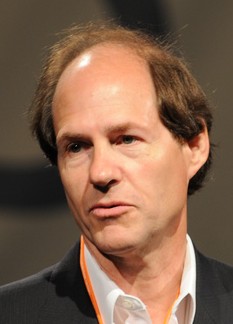
Cass Sunstein has long been one of Barack Obama’s closest confidants. Often mentioned as a likely Obama nominee to the Supreme Court, Sunstein is currently Obama’s head of the Office of Information and Regulatory Affairs where, among other things, he is responsible for “overseeing policies relating to privacy, information quality, and statistical programs.” In 2008, while at Harvard Law School, Sunstein co-wrote a truly pernicious paper proposing that the U.S. Government employ teams of covert agents and pseudo-“independent” advocates to “cognitively infiltrate” online groups and websites — as well as other activist groups — which advocate views that Sunstein deems “false conspiracy theories” about the Government. This would be designed to increase citizens’ faith in government officials and undermine the credibility of conspiracists. The paper’s abstract can be read, and the full paper downloaded, here.

Sunstein advocates that the Government’s stealth infiltration should be accomplished by sending covert agents into “chat rooms, online social networks, or even real-space groups.” He also proposes that the Government make secret payments to so-called “independent” credible voices to bolster the Government’s messaging (on the ground that those who don’t believe government sources will be more inclined to listen to those who appear independent while secretly acting on behalf of the Government). This program would target those advocating false “conspiracy theories,” which they define to mean: “an attempt to explain an event or practice by reference to the machinations of powerful people, who have also managed to conceal their role.” Sunstein’s 2008 paper was flagged by this blogger, and then amplified in an excellent report by Raw Story’s Daniel Tencer. [continued…]

Editor’s Comment — Glenn Greenwald’s whole analysis is well worth reading but I’ll make a couple of points. If Sunstein gave more attention to where conspiracy theories come from, he’d come at this issue from a completely different direction.

Buried deep in his paper is the following remark:

… we have conjectured that there is a causal link between the prevalence of conspiracy theories and the relative absence of civil liberties and a well-functioning marketplace of ideas, so it is unsurprising that such theories are even more widespread in the Muslim world than in the United States.

But as soon as has he makes this important observation he goes on to imply that the US government can exploit political repression overseas to its advantage. He notes that in the foreign arena “the U.S. enjoys greater freedom of action, in part because domestic U.S. politics will tolerate some actions abroad that it would not tolerate if taken at home.”

What Sunstein fails to do is look at the psychological dynamics in play in situations that provide fertile ground for the proliferation of conspiracy theories.

The US, relative the Middle East, might enjoy the protection of civil liberties and a marketplace of ideas — though I don’t know that anyone could seriously describe the latter as well-functioning — yet the appetite for conspiracy theories here, particularly relating to 9/11, is huge.

This is a reflection of two things:
1. Massive and historically deep-rooted mistrust of government, and
2. The widespread and well-founded belief that the citizens of this country exercise little influence over the workings of government.

Both of these factors (and especially the second one) serve to reinforce a profound sense of the grossly inequitable distribution of political power and a subjective experience in which government appears all-powerful and the individual essentially powerless.

The instinctive response to feelings of powerlessness is to grasp hold of a narrative of agency. Rather than feel that we are living in a world out of control, we prefer to believe that the control we lack is possessed by someone or something else. That might be a supposedly benign entity such as a loving God, or alternatively a cloaked and dangerous entity: the US government, a global Zionist conspiracy, aliens… you name it.

The psychological comfort that a belief in malevolent agency provides, is that it tells us we are not truly impotent but we have been deprived of the opportunity to exert our natural power. We are imprisoned but we can still rattle the bars.

Circling back to the problem that Sunstein wants to address, a real solution would not involve any of his preferred Orwellian machinations.

If the US government wants to challenge dangerous conspiracy theories it needs to pursue two far-reaching political goals:

1. Make government more trustworthy.
2. Turn “government of the people, by the people, for the people” into a reality.

For as long as neither of these goals have effectively been accomplished, conspiracy theories will remain popular. They should be seen for what they are: a symptom of an underlying socio-political disease; not the disease itself. People who think like Sunstein are part of the problem; not the solution.

Facebooktwittermail

Welcome to Hebron

Leila Sarsour, who is 17 years old, lives in Hebron in the Israeli-occupied West Bank in Palestine. She has a dream that everyone can live in peace, but she and her schoolmates are exposed daily to harassment, violence and intimidation from Israeli settlers.

For the Palestinian school girls in the city of Cordoba School in Hebron in the West Bank, it is impossible to remain unaffected by the Israeli occupation. The school is surrounded by military checkpoints, barbed wire and fanatical Israeli settlers. The path to school has become a path of degradation. Leila and her classmates are exposed daily to the indifference of the Israeli soldiers and laughter and stones from settlers. But in spite of constant harassment and racist slogans, Leila retains a belief and hope in peace and justice. She refuses to let bitterness and hatred to control her life: “We can all live together. Muslim, Jew or Christian, there is no reason to hate each other,” she says in Terje Carlsson’s documentary Welcome to Hebron.

Facebooktwittermail

Turkish human rights group: Arrest Barak when he arrives here

Turkish human rights group: Arrest Barak when he arrives here

espite the intensifying crisis between Israel and Turkey, Defense Minister Ehud Barak is insisting to follow through with his scheduled plans to visit Turkey next week. However, on Thursday it became clear that an arrest warrant may await him there.

One of the major human rights organizations in Turkey, Mazlumder, requested from the Turkish state prosecution to order that Barak be arrested upon landing in the country for what they call “his responsibility for war crimes during Operation Cast Lead.”

A statement published Wednesday night by the Istanbul branch of Mazlumder claimed that the request is rooted in the right of universal jurisdiction and Article CMK98 of Turkish law. [continued…]

U.S. to store $800 million in emergency gear in Israel

The U.S. Army will double the value of emergency military equipment it stockpiles on Israeli soil, and Israel will be allowed to use the U.S. ordnance in the event of a military emergency, according to a report in Monday’s issue of the U.S. weekly Defense News.

The report, written by Barbara Opall-Rome, the magazine’s Israel correspondent, said that an agreement reached between Washington and Jerusalem last month will bring the value of the military gear to $800 million.

This is the final phase of a process that began over a year ago to determine the type and amount of U.S. weapons and ammunition to be stored in Israel, part of an overarching American effort to stockpile weapons in areas in which its army may need to operate while allowing American allies to make use of the ordnance in emergencies. [continued…]

Bomb in Jordan misses convoy of Israeli diplomats

A roadside bomb exploded near a convoy of vehicles carrying Israeli diplomats in Jordan on Thursday, but no one was injured, according to Israeli and Jordanian officials.

“All I can say at this moment is there was an attack that targeted an Israeli embassy vehicle,” foreign-ministry spokesman Yigal Palmor said. “The Israeli embassy staff in the vehicle were not injured. The vehicle proceeded.”

A senior Israeli official said Israel’s ambassador to Jordan, Danny Nevo, wasn’t in the convoy, but refused to specify who was. [continued…]

Facebooktwittermail

Suicide attack reveals threat to Obama’s Afghanistan plan

Suicide attack reveals threat to Obama’s Afghanistan plan

The bombing has focused new attention on the Haqqani network, an Afghan insurgent group that U.S. intelligence officials said is based in North Waziristan, has ties to members of the Pakistani military’s Inter-Services Intelligence agency and probably played a key role in the suicide bombing.

The relative sophistication of the attack, especially in contrast to the attempted Christmas Day bombing of a Northwest Airlines jet, suggests that the militants who been planned and ran it may have received some training or advice from rogue ISI officers, the officials said.

For example, they said, the bomber, 32-year-old Jordanian Humam Khalil Abu Mulal al Balawi, spent most of 2009 in Pakistan and traveled to Khost from Pakistan, and he managed to evade the counter-intelligence tools that customarily are used to assess whether a potential agent is reliable, they said.

“Pakistan has to decide whether Haqqani is an asset or a liability. At the moment, I think they’re veering towards liability, but it’s not clear,” said a Western official in Afghanistan, who couldn’t be named because he isn’t authorized to discuss the subject publicly. [continued…]

Facebooktwittermail