Israel stands accused of perpetrating a series of war crimes during a sustained 12-hour assault on a village in southern Gaza last week in which 14 people died.
In testimony collected from residents of the village of Khuza’a by the Observer, it is claimed that Israeli soldiers entering the village:
attempted to bulldoze houses with civilians inside;
killed civilians trying to escape under the protection of white flags;
opened fire on an ambulance attempting to reach the wounded;
used indiscriminate force in a civilian area and fired white phosphorus shells.
If the allegations are upheld, all the incidents would constitute breaches of the Geneva conventions. [continued…]
“We won,” Ehud Olmert declared to the Israel public on Saturday night. His declaration of victory coincided with the implementation of a unilateral ceasefire — it might better simply be called a fleeting Inauguration lull. A tourniquet will be applied to Gaza for just along enough that Israel can claim it did its best not shower blood on Washington’s parade.
It is important for Israel that this be a unilateral ceasefire because for its current leadership there is greater political jeopardy in being perceived as having made a deal with Hamas than there is in the likelihood that the fighting will drag on without any clear resolution.
Israel’s ideological investment in the claim that Hamas cannot be negotiated with provides the conceptual bedrock for the argument that the organization must be crushed. For that reason, Israel has been concerned that Hamas’ solid record in being able to enforce last year’s truce must now be obscured (as I previously documented) and negotiations at establishing a real truce take place without Israel demonstrating good faith.
Obama’s challenge, once in three days he is forced to engage in a crisis that he has thus far merely “monitored,” is quite simple: Can he approach this issue in the same spirit with which he has already demonstrated he intends to confront every other issue — by being practical, pragmatic and empirical?
The roadblock to political progress right now is ideological intransigence — on the Israeli-US side. This has led to the current implausible situation: the idea that a ceasefire can be set in place without Hamas’ agreement. It’s like watching a driver who is stuck in the mud and who insists the best way of getting out is by spinning his wheels even faster. This is not a practical, pragmatic or empirical way of dealing with the problem.
Obama’s inclination at this point may well be that he does not want to rush into a situation where the risks seem high and the rewards elusive. Yet he is surely realistic enough to be able to see that Israel’s myopic leaders are incapable of digging themselves out of the crisis they have created.
On one point Obama needs to be absolutely clear right from the outset: the charade in which the US and its allies persist in talking about making “progress” in the “peace process” needs to be abandoned. The process has broken down; it has failed. Those who still claim that they are inching the process forward have as much credibility as the auto executives in Detroit who claim they are the visionaries who can save America’s car industry.
By Amjad Atallah and Daniel Levy, The Guardian, January 18, 2009
The unilateral nature of the Israeli declaration is no coincidence. In Saturday’s declaration of a ceasefire, Israel is hoping to send the message that Hamas is not a legitimate actor.
So who is the ceasefire actually with? It is, not coincidentally, consistent to some extent with the Egyptian-Turkish-Hamas negotiations which called for a ceasefire for 10 days during which the parties would agree to border crossing mechanisms, followed by an Israeli withdrawal, and an opening of the borders to humanitarian and economic aid.
However, by making the ceasefire a unilateral affair, accompanied only by an arrangement with the US (with whom Israel signed a memorandum of understanding (MoU) on Friday regarding the prevention of weapons smuggling), Israel can continue its attempts to politically isolate and ostracise the Hamas government in Gaza.
That obviously serves the election campaign narrative of the Israeli governing coalition – yet if Hamas has no political stake in maintaining the ceasefire, it obviously will have little incentive to keep the peace. No one watching the news in the last weeks will have missed Hamas officials shuttling back and forth to Cairo and Doha for both the private and public relations component of preparing a ceasefire. There was a practical reason for the diplomatic activity that included them – they were the ones ruling Gaza. [continued…]
Barack Obama said last month that his election offered “a unique opportunity to reboot America’s image around the world and in the Muslim world in particular”, and that he planned to make a speech in a Muslim capital during his first 100 days in office denouncing terrorism and emphasising shared values. In the wake of the three-week bloodbath Israel has inflicted on Gaza, it should be clear to Mr Obama that he would be wasting his breath.
Hostility towards the US in the Muslim world is not based on a misunderstanding of America’s values: it is based on a clear vision of America’s policies. The bombs and missiles that destroyed Gaza, and the aircraft that delivered them, are American. And Washington blocked ceasefire efforts, in line with Israel’s wishes, to give its military efforts more time.
Seeking the overthrow of Hamas through an economic blockade of Gaza while boosting Mahmoud Abbas in the West Bank has been the main thrust of US policy there for the past three years. Gaza has demonstrated the bloody futility of that policy, and Mr Obama will be judged in the Muslim world largely by how he reacts to that failure. Responding in an effective and balanced way requires a decisive break from the policies of his predecessors, which is not something he has shown a great willingness to do And yes, that’s predecessors, plural: a new policy needs to avoid the errors of both the Bush administration and the Clinton one before it. [continued…]
The diplomatic timing for the war looked lovely. The U.S. president who loved military action was still in power, though fading into the shadows. The new president, dynamic and popular, hadn’t yet entered office. There was no one to interfere, to pressure us to stop.
We don’t know if the Olmert-Livni-Barak triumvirate deliberately picked that window of opportunity. If so, it already looks like another of the war’s mistakes – perhaps the only welcome miscalculation. For instead of preventing American involvement, their decision to go to war on the eve of Barack Obama’s inauguration may well force him to intervene in the Israeli-Palestinian arena and push for a diplomatic solution.
In recent months, foreign-policy experts from Obama’s camp have debated whether there’s any point in a new peace initiative. Robert Malley, known as the most dovish veteran of Bill Clinton’s peace team, has written – surprisingly – that such an effort is hopeless. In an article in the New York Review of Books (written with Hussein Agha), Malley argues that the weakness of Israel’s leadership and the Palestinian political rift will prevent a two-state solution at present. Arguing the opposite, former ambassador Martin Indyk – who is likely to join the Obama administration – writes in Foreign Affairs of the “urgent need for a diplomatic effort.” The Middle East can’t be ignored, say Indyk and co-author Richard Haass. It will “force itself onto the U.S. president’s agenda.”
The Gaza War proves Indyk’s thesis. After the years of neglect under Bush, the Israeli-Palestinian conflict has blown up again, on Obama’s doorstep. Grim photos appear in the media. Relations between Israel and Turkey, both American allies, are crumbling. While careful not to conduct foreign relations before the inauguration, Obama promised last week that his team would become “immediately engaged in the Middle East peace process.” At her confirmation hearing for secretary of state, Hillary Clinton spoke of the “tragic humanitarian costs” borne by Gazans and of the incoming administration’s “determination to seek a peace agreement.” [continued…]
Hamas rising By Fawaz A. Gerges, Middle East Online, January 17, 2009
I have just returned from the Middle East and witnessed how Israel’s assault on Gaza is radicalizing mainstream Muslim opinion. Shown endlessly on Arab and Muslim television stations, the massive killing of civilians is fueling rage against Israel and its superpower patron, the United States, among mainstream and moderate voices who previously believed in co-existence with the Jewish state. Now, they are questioning their basic assumptions and raising doubts about Israel’s future integration into the region.
Many professionals, both Christian and Muslim Arabs, previously critical of Hamas, are bitter about what they call Israel’s “barbaric conduct” against Palestinian noncombatants, particularly women and children. No one I have encountered believes Israel’s narrative that this is a war against Hamas, not the Palestinian people. A near consensus exists among Arabs and Muslims that Israel is battering the Palestinian population in an effort to force it to revolt against Hamas, just as it tried to force the Lebanese people to revolt against Hezbollah in the summer of 2006. But Hezbollah weathered that Israeli storm, acquired a sturdier immune system and became the most powerful institution in Lebanon. In so doing it shattered Israeli deterrence, delivered a blow to US Mideast policy and expanded the influence of Iran, Hezbollah’s main supporter in the region.
In my recent travels I was struck by the widespread popular support for Hamas — from college students and street vendors to workers and intellectuals. Very few ventured criticism of Hamas, and many said they felt awed by the fierce resistance put forward by its fighters. Israel’s onslaught on Gaza has effectively silenced critics of Hamas and politically legitimized the militant resistance movement in the eyes of many previously skeptical Palestinians and Muslims. Regardless of how this war ends, Hamas will likely emerge as a more powerful political force than before and will likely top Fatah, the ruling apparatus of President Mahmoud Abbas’s Palestinian Authority. [continued…]
In most of the world, the Israeli attack on Gaza is viewed as an intensely controversial act and, more commonly, an excessive, unjustifiable, and brutal assault on a trapped civilian population. But not in the United States—at least not among America’s political and opinion-making elite. Here one finds a bipartisan consensus as simplistic as it is unquestioned: Israel’s bombing campaign and invasion of Gaza are right and just, and it is the duty of the U.S. to support these actions unequivocally.
From the moment Israel began dropping bombs on Gaza, leaders of America’s two major political parties rushed to announce their total support, competing to see who could most fulsomely praise the offensive. So complete was the agreement that they all seemed to be reading from the same script. While other Western governments issued even-handed statements condemning both Israel and Hamas and their diplomats worked furiously to forge a ceasefire agreement, America’s political leaders stood on the sidelines, cheering with increasing fervor.
When it comes to Israel’s various military actions, there is far more dissent within Israel, where one commonly finds prominent, vehement criticism of the Israeli government, than there is within the U.S., where such criticism is all but nonexistent. Indeed, in the U.S. Congress, there is far more unqualified support for Israel’s wars than for America’s own. [continued…]
Israel’s message By Ilan Pappe, London Review of Books, January 14, 2009
In 2004, the Israeli army began building a dummy Arab city in the Negev desert. It’s the size of a real city, with streets (all of them given names), mosques, public buildings and cars. Built at a cost of $45 million, this phantom city became a dummy Gaza in the winter of 2006, after Hizbullah fought Israel to a draw in the north, so that the IDF could prepare to fight a ‘better war’ against Hamas in the south.
When the Israeli Chief of General Staff Dan Halutz visited the site after the Lebanon war, he told the press that soldiers ‘were preparing for the scenario that will unfold in the dense neighbourhood of Gaza City’. A week into the bombardment of Gaza, Ehud Barak attended a rehearsal for the ground war. Foreign television crews filmed him as he watched ground troops conquer the dummy city, storming the empty houses and no doubt killing the ‘terrorists’ hiding in them.
‘Gaza is the problem,’ Levy Eshkol, then prime minister of Israel, said in June 1967. ‘I was there in 1956 and saw venomous snakes walking in the street. We should settle some of them in the Sinai, and hopefully the others will immigrate.’ Eshkol was discussing the fate of the newly occupied territories: he and his cabinet wanted the Gaza Strip, but not the people living in it. [continued…]
What prompts the fantasy that you can “kill all the terrorists” without sowing the seeds of new terrorism? Partly, the fantasy comes from the idea that any civilian deaths you cause will be forgiven; but, much more, it derives from the secondary fantasy that civilian deaths will go mainly unwitnessed. They will be recorded as numbers, perhaps, but they will pass out of the awareness of the world. That is not the way things work, of course. There are people in the world — not hundreds, not thousands, but hundreds of millions — who feel more closely allied to the killed than they do to the killers.
“Those to whom evil is done, do evil in return.” In every culture and every civilization, to kill the innocent is evil. Fifty civilians who live in a neighborhood where one terrorist has built a hidden sniper’s nest are understood to be innocent. If you kill the fifty, you have done something worse than not killing the one.
Yet to put it like that brings up the revaluation of state terror that entered our language with the Sharon-Bush doctrine, first propounded in 2001-02. According to the Sharon-Bush doctrine, if you harbor a terrorist — that is, if you live anywhere in the vicinity of a terrorist — you are yourself as blamable as the terrorist and are as appropriate a target of destruction. This, no matter what the impediments on your freedom of movement, no matter how unconscious you may be of the existence of the terrorist, no matter how much your toleration of him may have been driven by fear. [continued…]
I was brought up as an orthodox Jew and a Zionist. On a shelf in our kitchen, there was a tin box for the Jewish National Fund, into which we put coins to help the pioneers building a Jewish presence in Palestine.
I first went to Israel in 1961 and I have been there since more times than I can count. I had family in Israel and have friends in Israel. One of them fought in the wars of 1956, 1967 and 1973 and was wounded in two of them. The tie clip that I am wearing is made from a campaign decoration awarded to him, which he presented to me.
I have known most of the Prime Ministers of Israel, starting with the founding Prime Minister David Ben-Gurion. Golda Meir was my friend, as was Yigal Allon, Deputy Prime Minister, who, as a general, won the Negev for Israel in the 1948 war of independence.
My parents came to Britain as refugees from Poland. Most of their families were subsequently murdered by the Nazis in the Holocaust. My grandmother was ill in bed when the Nazis came to her home town of Staszow. A German soldier shot her dead in her bed.
My grandmother did not die to provide cover for Israeli soldiers murdering Palestinian grandmothers in Gaza. The current Israeli Government ruthlessly and cynically exploit the continuing guilt among gentiles over the slaughter of Jews in the holocaust as justification for their murder of Palestinians. The implication is that Jewish lives are precious, but the lives of Palestinians do not count.
On Sky News a few days ago, the spokeswoman for the Israeli army, Major Leibovich, was asked about the Israeli killing of, at that time, 800 Palestinians—the total is now 1,000. She replied instantly that
“500 of them were militants.”
That was the reply of a Nazi. I suppose that the Jews fighting for their lives in the Warsaw ghetto could have been dismissed as militants.
The Israeli Foreign Minister Tzipi Livni asserts that her Government will have no dealings with Hamas, because they are terrorists. Tzipi Livni’s father was Eitan Livni, chief operations officer of the terrorist Irgun Zvai Leumi, who organised the blowing-up of the King David hotel in Jerusalem, in which 91 victims were killed, including four Jews.
Israel was born out of Jewish terrorism. Jewish terrorists hanged two British sergeants and booby-trapped their corpses. Irgun, together with the terrorist Stern gang, massacred 254 Palestinians in 1948 in the village of Deir Yassin. Today, the current Israeli Government indicate that they would be willing, in circumstances acceptable to them, to negotiate with the Palestinian President Abbas of Fatah. It is too late for that. They could have negotiated with Fatah’s previous leader, Yasser Arafat, who was a friend of mine. Instead, they besieged him in a bunker in Ramallah, where I visited him. Because of the failings of Fatah since Arafat’s death, Hamas won the Palestinian election in 2006. Hamas is a deeply nasty organisation, but it was democratically elected, and it is the only game in town. The boycotting of Hamas, including by our Government, has been a culpable error, from which dreadful consequences have followed.
The great Israeli Foreign Minister Abba Eban, with whom I campaigned for peace on many platforms, said:
“You make peace by talking to your enemies.”
However many Palestinians the Israelis murder in Gaza, they cannot solve this existential problem by military means. Whenever and however the fighting ends, there will still be 1.5 million Palestinians in Gaza and 2.5 million more on the West Bank. They are treated like dirt by the Israelis, with hundreds of road blocks and with the ghastly denizens of the illegal Jewish settlements harassing them as well. The time will come, not so long from now, when they will outnumber the Jewish population in Israel.
It is time for our Government to make clear to the Israeli Government that their conduct and policies are unacceptable, and to impose a total arms ban on Israel. It is time for peace, but real peace, not the solution by conquest which is the Israelis’ real goal but which it is impossible for them to achieve. They are not simply war criminals; they are fools.
Sir Gerald Kaufman has been a Member of Parliament since 1970 and when the Labour Party was in the oppostion served as Shadow Environment Secretary, (1980-1983), Shadow Home Secretary (1983-1987) and Shadow Foreign Secretary (1987-1992). Since 1992 he has been one of the Labour Party’s most influential back-benchers.
Hamas will not accept Israeli conditions for a cease-fire in Gaza and would continue armed resistance until the offensive ends, Khaled Meshal, the leader of the Palestinian Islamist group, said on Friday.
Speaking at the opening of an emergency meeting on Gaza in Doha, Meshal called on the leaders present to cut all ties with Israel.
Meshal joined Iranian President Mahmoud Ahmadinejad in making the surprise appearance at the summit, aiming to show their weight in diplomatic efforts surrounding the Gaza crisis.
Hamas is set to send a delegation to Cairo later on Friday to discuss Egyptian efforts to mediate a cease-fire in Gaza, a Hamas official told Al Jazeera television. [continued…]
Turkey’s prime minister on Friday said Israel should be barred from the United Nations while it ignores the body’s calls to stop fighting in Gaza.
“How is such a country, which totally ignores and does not implement resolutions of the U.N. Security Council, allowed to enter through the gates of the UN (headquarters)?” Recep Tayyip Erdogan said.
Erdogan’s comments reflected a growing anger in Turkey, Israel’s best friend in the Muslim world, over Israel’s Gaza operation.
He spoke before U.N. Secretary-General Ban Ki-moon was due to arrive in Ankara to discuss the conflict. Ban is on a weeklong trip to the region to promote a truce after both sides ignored a U.N. resolution demanding an immediate cease-fire.
“The U.N. building in Gaza was hit while the U.N. secretary-general was in Israel,” Erdogan said. “This is an open challenge to the world, teasing the world.” [continued…]
Editor’s Comment — Erdogan is right: Israel is thumbing its nose at global opinion with a conviction — so far well-founded — that it can act with impunity. Likewise, the killing of Hamas’ Interior Minister Said Sayyam, one of the group’s three most senior leaders, in an airstrike on Thursday, was, Haaretz reported: “apparently an attempt by Israel to deliver an image of victory in its offensive against Hamas.”
A victory blow in the minds of Israel’s leaders, but is this the way to secure a ceasefire? Israel’s leaders seem to have acquired the diplomatic finesse of the Soprano Family.
By mid-week, it seemed as though the imminent inauguration of Obama along with Israel’s desire to cut a deal on an intelligence agreement for which Condoleezza Rice’s signature would be needed before she left office today — that these factors in combination with a widening consensus that Israel could not accomplish any more militarily, seemed to suggest that before the end of the week an agreement would be reached on an initial ceasefire.
What the Israel’s don’t seem to have grasped is that is that if a ceasefire comes into effect before Obama takes office, this will serve Israel’s interests much more than Hamas’.
Israel now appears to be acting out a victory lust. Israel and its leaders have become intoxicated by their destructive capabilities to a point where they have lost their grip on reality. Israel is in a state of national psychosis.
“The Palestinians must be made to understand in the deepest recesses of their consciousness that they are a defeated people”, said Moshe Yaalon, the then Israel Defence Forces (IDF) chief-of-staff in 2002. The war launched by Israel in the Gaza strip at the end of 2008 is designed in part to force the Hamas movement too to internalise this belief. It will not and cannot work; indeed, it is my argument that the war will have the opposite effect.
After three weeks of intense and round-the-clock attacks by air, land and sea, Israel is far from achieving either its immediate aim of halting rocket-attacks from Gaza or the larger “psychological” aim enunciated by Moshe Yaalon. It has become apparent that the war itself will instead convince many more Palestinians that their ability again to withstand an assault by the fourth most powerful army in the world is a source of their power rather than their weakness.
In this, the 1.5 million Palestinians under siege in Gaza are writing a new chapter in their own uncompleted modern history. They are also demonstrating a more general lesson of warfare: that wars and armed conflicts have unexpected consequences, including often the creation of a new reality quite different from what it was launched to achieve. [continued…]
Someone has to stop this rampant madness. Right now. It may seem as though the cabinet hasn’t decided on the “third stage” of the war yet, Amos Gilad is discussing a cease fire in Cairo, the end of the fighting seems close – but all this is misleading.
The streets of Gaza Thursday looked like killing fields in the midst of the “third stage” and worse. Israel is arrogantly ignoring the Security Council’s resolution calling for a cease-fire and is shelling the UN compound in Gaza, as if to show its real feeling toward that institution. Emergency supplies intended for Gaza residents are going up in flames in the burning warehouses. Thick black smoke is rising from the burning flour sacks and the fuel reserves near them, covering the streets.
In the streets, people are running back and forth in panic, holding children and suitcases in their hands, helpless as the shells fall around them. Nobody in the diplomatic corridors is in any hurry to help those unfortunates who have nowhere to run. [continued…]
Pressure is mounting on Israel and Hamas to find a way of ending the war in Gaza. Both sides have responded positively, if tentatively, to Egyptian proposals for a phased truce that would begin with a lull in fighting for a defined period (10 days by some accounts). That interlude would then allow for the brokering of a more comprehensive cease-fire. But each side’s goals from any truce remain antagonistic to those of the other, and reaching an agreement that bridges the vast gap between them remains a Herculean diplomatic challenge.
Even before the Israeli invasion began late December, Hamas had offered to renew its six-month cease-fire with Israel on condition that the border crossings from Egypt and Israel into Gaza be opened. Those crossings have been closed as part of a strategy of imposing economic deprivation on the people of Gaza in the hope that they would turn on Hamas; Israel remains reluctant to agree to reopen them as part of a cease-fire deal, since that would be claimed as a victory by Hamas. Hamas also insists on a full and immediate withdrawal of all Israeli forces from Gaza. Israel is reluctant to comply until mechanisms are in place to prevent Hamas rearming.
Israel’s declared purpose in launching Operation Cast Lead was to halt Palestinian rocket fire from Gaza, and prevent Hamas from being able to rearm through smuggling weapons from Egypt. Israel remains committed, however, to a long-term goal of ending Hamas control of Gaza, and it insists that the movement should gain no “recognition” or “legitimacy” as part of any truce — a tough call since Hamas is the key combatant on the Palestinian side. [continued…]
Inquiries with people uninvolved in the spat between Prime Minister Ehud Olmert and U.S. Secretary of State Condoleezza Rice reveal that his version of the lead-up to America’s vote on last week’s Security Council resolution is closer to the truth than hers.
Last Wednesday, the only proposal on the council’s table was a completely one-sided Libyan resolution. Since it was clear to everyone that the United States would veto it, Israel had no reason to worry. But then, Palestinian Authority Prime Minister Salam Fayyad, a former senior World Bank official, decided that this was the moment to make use of his Washington connections.
Fayyad persuaded the Americans to support a softened version of the resolution, which called for a prompt cease-fire, hoping that such a resolution would speed up the ongoing truce talks. He asked the British and French for help, and they agreed. Rice signaled her French and British counterparts, Bernard Kouchner and David Miliband, that she was on board. [continued…]
The election war By Paul Woodward, War in Context, January 14, 2009
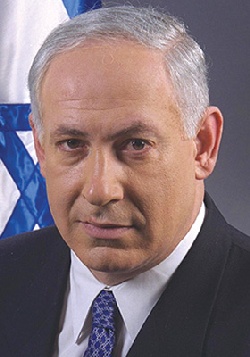
How many Palestinians do you need to kill in order to become prime minister of Israel? It seems like a legitimate question right now. It’s also a Goldilocks kind of question: What’s just right — enough but not and too many?
As Israel’s February election comes closer, the contours of the campaign argument are starting to emerge. The deadline for wrapping up the war — the US Presidential Inauguration — is just days away and after that comes the task that for Livni, Barak and Olmert may prove far more difficult to accomplish than was their success in selling the war.
Right now, even if outside Israel in places such as the British parliament where they have been branded as “war criminals” and “mass murderers,” inside Israel the war triumvirate is riding high. Serious trouble though is looming ahead.
Once the fighting stops the global media is eventually going to be let inside Gaza and the scale of devastation and carnage is not only going to be broadcast around the world but will also filter into Israel. Rocket fire into Israel, even if only sporadic, is likely to continue.
For Israelis, the question: Is this a just war? (to which they have almost universally answered yes), will shift to the much more difficult question: What have we accomplished?
Already it is becoming clear that the IDF and the war triumvirate are going to have a hard time giving a positive answer to this question. From the get-go everyone was disciplined about managing expectations by claiming that the destruction of Hamas was not the goal of the war. It wasn’t for lack of such a desire but because no rational analysis foresaw such a possibility.
The rational goal — the one adopted because it was felt that this is what could make this a “winnable” war — was deterrence.
The dictionary definition of deterrence is simple and familiar: Measures taken by a state or an alliance of states to prevent hostile action by another state.
That clearly requires some modification when applied to a non-state actor but the outcome should nevertheless be the same. If deterrence is working, then the enemy is deterred from acts of hostility — but this isn’t the idea that the authors of the war on Gaza want to sell. This is why the post-war effort is going to be much more difficult than the war itself.
Under the Livni-Barak-Olmert command the definition of deterrence is all about changing the enemy’s perceptions of Israel without necessarily fundamentally changing the enemy’s behavior. This is a way — it bears a certain legalistic brilliance — through which it is supposed to be possible to say “we won”, even though Hamas is still firing rockets at Sderot, or at the very least still retains the capacity to do so.
Senior defense establishment officials believe that Israel should strive to reach an immediate cease-fire with Hamas, and not expand its offensive against the Palestinian Islamist group in Gaza.
During meetings of the Israel Defense Forces General Staff and of the heads of the state’s other security branches, officials have said that Israel achieved several days ago all that it possibly could in Gaza.
The officials expressed reservations about launching the third phase of Operation Cast Lead, preferring for it to remain a threat at this stage.
They added that it is better to cease the offensive now, just several days before the inauguration of new U.S. President Barack Obama.
Israel has proven, the officials said, that it is no longer deterred from either launching such an operation, from a confrontation with Hamas, from deploying ground forces or from using reservists.
What does that mean in plain English? If Hamas thought that Israel was hamstrung by a policy of restraint, the government of Gaza now knows that Israel is willing to let loose without fear of causing huge civilian casualties or receiving international condemnation. Israel is no longer deterred from liberating the full force of its violent capabilities.
This is about deterrence and how to become free from it. It’s not that Hamas has been deterred; it’s that Israel is now undeterred.
For a government and a population that, irrespective of what might objectively seem to be the case, felt shackled in challenging its enemies, there might be something persuasive about this non-deterrence argument.
Benjamin Netanyahu however — the man still likely to become Israel’s next prime minister — has a rather simple counter argument. Unless Israel has a “clear victory” meaning that Hamas’ capability to attack Israel has been “crippled”, then the war has not been won.
Once again, Israel will go to the polls and Hamas will have the casting vote. Can Tzipi Livni provide any convincing argument as to why Hamas should not vote for Netanyahu?
Olmert’s bitch By Paul Woodward, War in Context, January 13, 2009
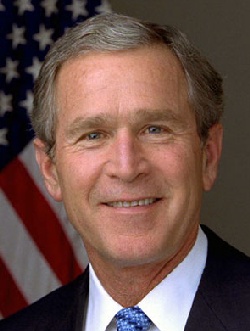
Many Americans cherish a vicarious pride in the power of the US presidency.
The idea that the President of the United States holds the most powerful office in the world, translates into a sense of immense collective power. Were these same Americans to discover that the president takes his marching orders from a petty crook who governs a country of seven million, they would be shocked, outraged and humiliated as American power was exposed as being hollow at its core. Yet how else can we interpret the play of power between Israel and the United States, if Ehud Olmert can be taken at this word?
Last week, as global leaders felt compelled to respond to a popular outcry of rage provoked by Israel’s barbaric assault of Gaza, the UN Security Council became the focal point of unavoidable pressure to act — even if its action was utterly symbolic and totally ineffectual. But what was unprecedented was that for once, the United States was prepared to stand in solidarity with other nations calling for an immediate ceasefire.
Israel’s prime minister saw the danger of an awkward precedent being set and thus made it clear that Israel would not tolerate what it seemed to regard as a diplomatic act of insubordination.
“In the night between Thursday and Friday, when the secretary of state wanted to lead the vote on a ceasefire at the Security Council, we did not want her to vote in favor,” Olmert said.
“I said ‘get me President Bush on the phone’. They said he was in the middle of giving a speech in Philadelphia. I said I didn’t care. ‘I need to talk to him now’. He got off the podium and spoke to me.
“I told him the United States could not vote in favor. It cannot vote in favor of such a resolution. He immediately called the secretary of state and told her not to vote in favor.”
As Olmert recounted this course of events while giving a speech in the southern Israeli city of Ashkelon, it seemed apparent that he took a certain pride in the fact that Condoleezza Rice had been “shamed” by the about-face that the US, under her leadership at the UN, was forced by Israel to take.
A State Department official felt compelled to assert that, “The government of Israel does not make US policy.”
As Israel’s barbaric war in Gaza enters its third week, there are four main reasons why its wholesale slaughter of Palestinian civilians continues unchecked.
The first is the terrible weakness of the UN Security Council in carrying out its declared task of maintaining international peace and security. Its inability to halt Israel’s aggression is largely due to the overly-intimate — some would say unhealthy — U.S.-Israeli relationship.
The second reason is that, as Hamas is the only Palestinian movement putting up armed resistance to Israel, it is the only remaining obstacle to Israel’s mastery of the whole of historic Palestine. Israel knows that if it fails to secure Hamas’ unconditional surrender, it will in due course have to enter into peace talks, and cede territory to an eventual Palestinian state — something it has long sought to avoid. At this decisive moment in the 100-year old Israeli-Palestinian struggle, there is, therefore, much at stake for both sides.
The third reason is the debilitating divisions in the Arab and Muslim world, which have robbed it of any effective leverage on events. These divisions are myriad — between so-called ‘moderate’ Arab states and their ‘radical’ rivals; between those who have made peace with Israel and those who have not; between those who rely on American aid and protection and those who do not; between those who loathe and fear Iran and those who rely on it for support; between Sunni and Shi‘a Muslims. This is by no means an exhaustive list. [continued…]
Iraeli troops advanced into Gaza suburbs for the first time early Tuesday, residents said, hours after Prime Minister Ehud Olmert warned Islamic militants of an “iron fist” unless they agree to Israel’s terms to end the fighting. Hamas showed no signs of wavering, however, with its leader, Ismail Haniyeh, saying the militants were “closer to victory.”
Despite the tough words, Egypt said it was making slow but sure progress in brokering a truce, and special Mideast envoy Tony Blair said elements were in place for a cease-fire.
Sounds of the battle could be heard clearly before dawn Tuesday around the city of 400,0000 as the Israeli forces, backed by artillery and attack helicopters, moved into neighborhoods east and south of Gaza City. Israeli gunboats shelled the coast from the west. [continued…]
Hamas’ Al-Qassam Brigades said they captured an Israeli solider, who was taken to a safe location which was then bombed by the Israeli military.
Militants took the captured soldier to a home in Gaza, which was tracked by the Israeli army and targeted by Israeli warplanes only hours after the Israeli soldier was taken to the building, Brigades members clamied.
The Israeli military has made no comment on the report.
The soldier was killed instantly, the statement said, and presumed that Israeli military commanders would prefer to have their soldiers killed than have to negotiate their release or admit their failure at the hands of the Palestinian brigades. [continued…]
Editor’s Comment — Is this report a piece of Hamas psy-ops as it fights the information war? Quite possibly. Even so, it points to what is likely the IDF’s — and equally the Israeli government’s — greatest fear: that at the end of this war Gilad Shilat is no longer the only Israeli prisoner of war.
At a cabinet meeting on Sunday, the Israeli prime minister Ehud Olmert said: “Israel is nearing its goal [of changing] the security situation in the south so that our citizens can experience security and stability in the long term. We must not, at the last minute, squander what has been achieved in this unprecedented national effort that has restored a spirit of unity to our nation.”
Absent from that spirit are Israel’s Arab political parties and as a consequence they have been banned from Israel’s upcoming elections, The Associated Press reported.
After the 27-member Central Elections Committee reached its decision, Member of the Knesset, Ahmad Tibi, from the United Arab List-Ta’al told MK David Tal (Kadima), “You went to war as an elections campaign strategy. Every vote for Kadima is a bullet in the chest of a Palestinian child.” The Balad chairman, Jamal Zahalka, told the Kadima member: “You drink Palestinian blood. You are a racist.”
Mr Tibi later told the press in response to the decision that “this is a racist country. We are accustomed to these types of struggles and we will win,” Ynet said. [continued…]
The Israeli onslaught in Gaza is having a “profoundly acute and unhealthy” effect on British Muslim communities and “patience is running out”, a government minister has said.
The justice minister, Shahid Malik, told the Guardian there was “immense anger” in British Muslim communities over developments in the Middle East. He said: “There is a real feeling of helplessness, hopelessness and powerlessness among Britain’s Muslims in the context of Gaza and the sense of grievance and injustice is both profoundly acute and obviously profoundly unhealthy.”
The comments by Malik, the first Muslim to be made a minister in any British government, were echoed by the Conservative shadow security minister, Pauline Neville-Jones, who said she was concerned at the effect the conflict was having on radicalism in the wider Arab world. David Miliband, the foreign secretary, is to make a statement to the Commons on Gaza later today. [continued…]
Editor’s Comment — While Israel currently indulges in the apparent intoxication of its war fever, convinced by its own sense of righteousness that it is immune from any lasting damage from an international backlash, governments such as that in Britain are aware that the dangers of a domestic backlash are very real.
The next time we see a “martyrdom” video created by some hapless Western-born jihadist who decided to inflict his rage on innocent passers-by, it seems almost certain that high if not uppermost among the grievances he will be expressing will be his outrage at having witnessed the massacre of fellow Muslims in Gaza — a massacre that neither Arab nor Western governments had either the will or the power to prevent.
Mindful of this danger, the governments that Israel now takes for granted as its allies will sooner or later be forced to reconsider whether this strategic alliance has become an unacceptable liability.
If Israel’s go-it-alone spirit becomes a lonely reality, the hubris with which it is now buoyed up will evaporate as it wakes up to the fact that it has placed itself in a strategically untenable position.
Israel is facing growing demands from senior UN officials and human rights groups for an international war crimes investigation in Gaza over allegations such as the “reckless and indiscriminate” shelling of residential areas and use of Palestinian families as human shields by soldiers.
With the death toll from the 17-day Israeli assault on Gaza climbing above 900, pressure is increasing for an independent inquiry into specific incidents, such as the shelling of a UN school turned refugee centre where about 40 people died, as well as the question of whether the military tactics used by Israel systematically breached humanitarian law.
The UN’s senior human rights body approved a resolution yesterday condemning the Israeli offensive for “massive violations of human rights”. A senior UN source said the body’s humanitarian agencies were compiling evidence of war crimes and passing it on to the “highest levels” to be used as seen fit. [continued…]
Allegations about Israeli or Hamas abuses during the conflict in Gaza need to be investigated, David Miliband told MPs today.
In a statement on the Gaza crisis, the foreign secretary said more than 800 Palestinians had been killed, “apparently 250 of them children – the most terrible statistic of all”.
He reiterated the government’s demands for an immediate ceasefire and said allegations of war crimes needed to be properly investigated. [continued…]
The Obama team is tight with information, but I’ve got the scoop on the senior advisers he’s gathered to push a new Middle East policy as the Gaza war rages: Shibley Telhami, Vali Nasr, Fawaz Gerges, Fouad Moughrabi and James Zogby.
This group of distinguished Arab-American and Iranian-American scholars, with wide regional experience, is intended to signal a U.S. willingness to think anew about the Middle East, with greater cultural sensitivity to both sides, and a keen eye on whether uncritical support for Israel has been helpful.
O.K., forget the above, I’ve let my imagination run away with me. Barack Obama has no plans for this line-up on the Israeli-Palestinian problem and Iran.
In fact, the people likely to play significant roles on the Middle East in the Obama Administration read rather differently.
They include Dennis Ross (the veteran Clinton administration Mideast peace envoy who may now extend his brief to Iran); James Steinberg (as deputy secretary of state); Dan Kurtzer (the former U.S. ambassador to Israel); Dan Shapiro (a longtime aide to Obama); and Martin Indyk (another former ambassador to Israel who is close to the incoming secretary of state, Hillary Clinton.)
Now, I have nothing against smart, driven, liberal, Jewish (or half-Jewish) males; I’ve looked in the mirror. I know or have talked to all these guys, except Shapiro. They’re knowledgeable, broad-minded and determined. Still, on the diversity front they fall short. On the change-you-can-believe-in front, they also leave something to be desired. [continued…]
Israel on Monday banned Arab political parties from running in next month’s parliamentary elections, drawing accusations of racism by an Arab lawmaker who said he would challenge the decision in the country’s Supreme Court.
The ruling by parliament’s Central Election Committee reflected the heightened tensions between Israel’s Jewish majority and Arab minority caused by Israel’s offensive in the Gaza Strip. Arabs have held a series of demonstrations against the offensive.
Parliament spokesman Giora Pordes said the election committee voted overwhelmingly in favor of the motion, accusing the country’s Arab parties of incitement, supporting terrorist groups and refusing to recognize Israel’s right to exist. Arab lawmakers have traveled to some of Israel’s staunchest enemies, including Lebanon and Syria.
The 37-member committee is composed of representatives from Israel’s major political parties. The measure was proposed by two ultranationalist parties but received widespread support. [continued…]
If almost 1,000 Israelis had just been killed and another 3,000 wounded, Israel as a nation would take justifiable offense at anyone who suggested to them that now was the time to return to the negotiating table. To approach ones enemy in such a moment is the ultimate expression of defeat.
For Palestinians in this moment, with no state, with no practical support from their vocal allies, a refusal to accept defeat is the thread upon which hangs their dignity and their hopes for a self-determined national identity.
If the Obama administration wants to grasp the political opportunity created by the current crisis, a clear and meaningful starting point can come through adopting new language for framing the issues.
“Choosing talks over terror” (see Richard Haass’ commentary below) is a repudiation of the Bush paradigm that has consistently devalued negotiation yet it reaffirms the language of the war on terrorism.
For over two weeks, a 1.5 million Palestinians have been terrorized. It would be absurd to claim otherwise. At any other time in any other location, if a state was raining down missiles and bombs on a population that was being encouraged to flee even while it was simultaneously being caged in, such a state would be accused of mercilessly terrorizing that population.
The choice that Palestinians — and Israelis — need to be persuaded to make is between negotiation and armed confrontation.
Only when our language refrains from taking sides can we begin to be seen as even-handed.
Secondly, if the US wants to grade the region’s actors in a meaningful way, it’s time to toss out another key element in the Bush paradigm: the idea that the Middle East is divided between “moderates” and “extremists.”
Instead of flattering US allies by calling them moderates, we should be paying attention to which countries and populations have a greater appetite for democracy and which regimes are nurturing or supressing that appetite. While none of America’s friends count well on that score, as the global Democracy Index indicates the most fertile ground for democratic development in the Middle East is among Palestinians.
When the seeds of Palestinian democracy started to take root in 2006, it was the US, Israel and Europe who were intent on aborting the birth of democracy (see the Christian Science Monitor commentary below for an excellent account of the US-sponsored sabotage of Palestinian democracy). The mistrust this democratic betrayal has engendered has created a huge obstacle that can only be removed by a new and tangible demonstration by the so-called facilitators of peace that they are now pursuing this goal in good faith. So far, the only clear message that has gone out across the region is that Israel enjoys unequivocal Western support however it chooses to act. That message provides no basis for a peace process.
Hamas never called for the elections that put them in power. That was the brainstorm of Secretary Rice and her staff, who had apparently decided they could steer Palestinians into supporting the more-compliant Mahmoud Abbas (the current president of the Palestinian authority) and his Fatah Party through a marketing campaign that was to counter Hamas’s growing popularity – all while ignoring continued Israeli settlement construction, land confiscation, and cantonization of the West Bank.
State Department staffers helped finance and supervise the Fatah campaign, down to the choice of backdrop color for the podium where Mr. Abbas was to proclaim victory. An adviser working for the United States Agency for International Development (USAID) explained to incredulous staffers at the Embassy in Tel Aviv how he would finance and direct elements of the campaign, leaving no US fingerprints. USAID teams, meanwhile, struggled to implement projects for which Abbas could claim credit. Once the covert political program cemented Fatah in place, the militia Washington was building for Fatah warlord-wannabee Mohammed Dahlan would destroy Hamas militarily.
Their collective confidence was unbounded. But the Palestinians didn’t get the memo. Rice was reportedly blindsided when she heard the news of Hamas’s victory during her 5 a.m. treadmill workout. But that did not prevent a swift response.
She immediately insisted that the Quartet (the US, European Union, United Nations, and Russia) ban all contact with Hamas and support Israel’s economic blockade of Gaza. The results of her request were mixed, but Palestinian suffering manifestly intensified. The isolation was supposed to turn angry Palestinians against an ineffective Hamas. As if such blockades had not been tried before.
Simultaneously, the US military team expanded its efforts to build the Mohammed Dahlan-led militia. President Bush considered Dahlan “our guy.” But Dahlan’s thugs moved too soon. They roamed Gaza, demanding protection money from businesses and individuals, erecting checkpoints to extort bribes, terrorizing Dahlan’s opponents within Fatah, and attacking Hamas members.
Finally, in mid-2007, faced with increasing chaos and the widely known implementation of a US-backed militia, Hamas – the lawfully elected government – struck first. They routed the Fatah gangs, securing control of the entire Gaza Strip, and established civil order. [continued…]
Every crisis holds within it the seeds of opportunity, and this one is no exception. But to take advantage of it, Washington must give Palestinians a reason for choosing talks over terror. The only way to do this is to demonstrate that talking—negotiating—will deliver more than fighting.
Sooner rather than later the new president should publicly articulate the contours of what the United States believes would constitute a just settlement of the Middle East conflict. This means calling for the establishment of a viable Palestinian state based on 1967 lines, with territorial compensation for those borders altered to take into account Israel’s large settlement blocs and legitimate security requirements. Palestinian refugees would receive financial compensation and the right to settle in the new country of Palestine but, with few exceptions, not in Israel. Palestinians would enjoy some foothold in Greater Jerusalem (so that they could claim it as their capital) and authority over Muslim holy places.
Aid and investment can also strengthen the hands of moderates, although it needs to be complemented by easing the movement of goods and people in and out of the West Bank and Gaza. It is essential to rein in Israeli settlement activity lest Palestinians conclude their state will never be viable. And it’s worth trying to drive a wedge between Hamas and Syria. The United States should join with Turkey in mediating between Syria and Israel. A deal ought to be possible in which Israel returns all of the Golan Heights (which are then demilitarized for a set period of time) in exchange for peace and a halt to Syrian support for Hizbullah and Hamas. The United States would then ease economic sanctions against Damascus.
We have learned in Iraq and elsewhere that political and economic progress cannot take place without security. This means we should continue to build up Palestinian police and military forces. It could also mean creating an international force, possibly one drawn from Arab and Islamic countries, to maintain calm in Gaza. The alternative is to depend on Israeli deterrence and Hamas’s restraint, which as recent events demonstrate are prone to breaking down.
It is too soon to know whether the moderates would win out over the radicals or, as happened in Northern Ireland, many of the radicals would evolve and become more moderate. This should be encouraged; over time, elements of Hamas might conclude that their only hope of realizing a Palestinian state is by trading in their guns. Those willing to embrace this approach could become part of a Palestinian coalition government. [continued…]
My war hero likes to eat at Acre’s famed Uri Burri restaurant. He thinks it’s the best fish restaurant in the world, and told me as much yesterday from the porch of the central Gaza City office building from which he has broadcast every day for the past two weeks, noon and night, almost without rest.
My war hero is Ayman Mohyeldin, the young correspondent for Al Jazeera English and the only foreign correspondent broadcasting during these awful days in a Gaza Strip closed off to the media. Al Jazeera English is not what you might think. It offers balanced, professional reporting from correspondents both in Sderot and Gaza. And Mohyeldin is the cherry on top of this journalistic cream. I wouldn’t have needed him or his broadcasts if not for the Israeli stations’ blackout of the fighting. Since discovering this wunderkind from America (his mother is from the West Bank city of Tul Karm and his father from Egypt), I have stopped frantically changing TV stations. [continued…]
The Israel Defense Forces has learned from past wars. Take the Falklands War – in 1982 the British Navy sailed thousands of kilometers to liberate, 19th century-style, the remote and scarcely populated islands, which had been seized by the Argentine Army. British war correspondents were on board, plied with Defense Ministry briefings, on which they depended to write their reports. If those reports did not meet censorship criteria, they were simply tossed out. Journalists were turned into hostages.
The IDF has not gone so far in placing limitations on the media, nor has it had to. It was enough that during most of the of war it prevented journalists from entering Gaza. Instead of direct and independent reporting, the Israeli public is receiving partial coverage that has passed through the monitoring and filtration of the military censors and IDF press officers. [continued…]
Yeela Raanan says she would prefer not to know about the war in Gaza. She doesn’t want to see the pictures of dead children cut down by Israeli shells or read of the allegations of war crimes by her country’s army as it kills Palestinians by the hundreds.
But there is no escape. Raanan can hear the relentless Israeli bombardment by air, sea and land from her home, just three miles from the Gaza border. Hamas rockets keep hitting her community. And somewhere in the maelstrom of Gaza, her 20-year-old son is serving as an Israeli soldier.
“I’d rather not know. I can’t do anything about it. We didn’t see the pictures of the Palestinian kids who were killed. It’s easier not to feel,” she said. “I just turn on the news for five minutes a day and that’s it, just to see if anybody says anything about my kid.”
But when Raanan thinks about her son – whom she prefers not to name – she also thinks about Palestinian mothers and their sons in Gaza. And that’s when she finds her herself out of sync with the neighbours. “I don’t talk to the neighbours about it any more,” she said. “Hamas is violent. Hamas is stupid. I don’t like what they are. But I don’t feel angry towards them. I understand why they were elected, I understand why they act as they do.” [continued…]
Israel apologists, in defending Israel’s war on Gaza, repeatedly return to the same question: what would you do? Is Israel not acting in exactly the same way that any other country would when under attack?
Implicit in this question is the notion of Israel as a stable, democratic, fundamentally peaceable nation whose only serious problem is the hostility of its neighbors.
The fact that Israel has existed in a near perpetual state of war since its creation is treated as being descriptive of the region in which Israel exists and not descriptive of Israel itself.
At the same time, look anywhere else on the planet at any government and any nation whose political system is profoundly molded by warfare and it is clear that relentless war and sustainable democratic governance are incompatible.
Any nation that perpetually focuses on threats from outside, simultaneously rots from within.
When thoughtful, open-minded Israelis such as Tom Segev have reached the conclusion that peace is no longer possible — that the best that Israelis and Palestinians can hope for is better conflict management — isn’t it time to declare the Zionist project a failure?
To say that Zionism has failed is not to suggest that the state of Israel can or should be dismantled but to say that Israel will never become what it was hoped to be.
Without this recognition of failure, Israel will remain in a state of paralysis. In its state of partial birth it will become progressively more disfigured.
At the end of the 10th day of Israel’s operation in the Gaza Strip, I was zapping between Israeli, Arab and international TV channels. The pictures grew more gruesome from moment to moment. Then a friend called to tell me that Mezzo, a French concert channel, had just started playing “Christ on the Mount of Olives,” a rather obscure oratorio by Beethoven.
It happened that I had been on the Mount of Olives a few hours earlier with a Palestinian friend whose 11-year-old son, Ahmed, needed some treatment at the Augusta Victoria Hospital. It wasn’t easy to get the two through the Israeli checkpoint separating their West Bank village from east Jerusalem. As we drove up the hillside, we had to navigate around burning tires that Palestinian protesters had left on the road. We were not hurt, but Ahmed was scared.
As I listened to the Beethoven on Mezzo for a while, I was doing what more and more Israelis tend to do these days, even as the atrocious events in Gaza continue: escaping the news and taking refuge in cultural and other non-political activities. That escapism reflects the new Israeli fatalism.
I belong to a generation of Israelis who grew up believing in peace. At the end of the Six-Day War of 1967, I was 23, and I had no doubt that 40 years later, the Israeli-Arab war would be over. Today, my son, who is 28, no longer believes in peace. Most Israelis don’t. They know that Israel may not survive without peace, but from war to war, they have lost their optimism. So have I.
The latest operation in Gaza was expected and practically inevitable; the timing seemed perfect. Palestinian Hamas rockets fired from Gaza had been falling on southern Israeli towns with increasing frequency after an Egyptian-backed ceasefire expired; public pressure on the government to act mounted as the general elections scheduled for next month drew closer. Israel took advantage of the Bush administration’s last days in office; the holiday season kept the international community uninterested for a few days; and the clear skies over Gaza allowed for uninterrupted air strikes.
Most Israelis believed that the operation would be short and decisive, but many feared a repetition of the disastrous adventure in Lebanon in the summer of 2006. Israelis are very spoiled. We like our wars to be short and successful.
Like any other country, Israel has a duty to defend its citizens. While the latest operation may never make it into the official count of Arab-Israeli wars, it is already another round in an endless continuum of reciprocal violence. They hit us, we hit them and vice versa; they usually miss, we usually don’t.
From my perspective, the immediate blame for the latest events rests with Egypt, for it was Egyptian corruption and inefficiency that enabled Hamas to smuggle its rocket arsenal into Gaza. Yet there is a sad familiarity to all this. Apart from the conflict’s cruelty — particularly toward civilians, including numerous children — the present eruption is most likely to be remembered as yet another step in a long march of folly that began in 1967.
Following the Six-Day War, the Israeli government contemplated moving hundreds of thousands of Palestinians from Gaza and resettling them in the West Bank. That could have made the present situation infinitely less convoluted. But the plans remained on paper because some of the most powerful members of the Israeli government, including the right-wing leader Menachem Begin and Defense Minister Moshe Dayan, believed that the West Bank should be reserved exclusively for Jewish settlement.
This was probably the worst mistake in Israel’s history. With nearly 300,000 Israelis living in the West Bank today and an additional 200,000 living in the formerly Arab part of Jerusalem, it is almost impossible to draw sensible borders and achieve peace.
In addition to the staggering difficulty of pulling out of the West Bank and sharing Jerusalem, there is the Palestinian demand for “the right of return” to Israel proper for the Palestinian refugees who fled or were driven out of their homes during the fighting in 1948-49. Many of them and their descendants live in Gaza.
For many years, Israel has adhered to a number of basic assumptions that have never proven right. Some of these theories contributed to the operation in Gaza this time. According to one such assumption, inflicting hardship on Palestinian civilians will make the population rise up against its leaders and choose more “moderate” ones. Hence, when Hamas took over Gaza in 2007, after a short, sharp struggle with its secular rivals in Fatah, Israel imposed a blockade on the strip, pushing 1.5 million Palestinians to the verge of a humanitarian catastrophe. But Hamas has only become stronger. And here’s another false Israeli assumption: that Hamas is a terrorist organization. In fact, it’s also a genuine national and religious movement supported by most of the people in Gaza. It cannot be simply bombed away.
The latest violence hasonce again brought reporters from all over the world to the region. Many of them wonder why Israelis and Palestinians don’t simply agree to divide the land between them. Indeed, Israeli leaders support a two-state solution, which had previously been advocated only by the extreme left. Palestinian leaders, though not the heads of Hamas, have agreed to accept this solution. Apparently, only the details of the agreement have to be worked out. If only it were that simple.
This conflict is not merely about land and water and mutual recognition. It is about national identity. Both the Israelis and the Palestinians define themselves by the Holy Land — all of it. Any territorial compromise would compel both sides to relinquish part of their identity.
In recent years, with the rise of Hamas and the increasing militance of some Jewish settlers, this precariously irrational conflict has also assumed a more religious character — and thereby become even more difficult to solve. Islamic fundamentalists, as well as Jewish ones, have made control of the land part of their faith, and that faith is dearer to them than human life.
So I find myself among the new majority of Israelis who no longer believe in peace with the Palestinians. The positions are simply too far apart at this time.
I no longer believe in solving the conflict. What I do believe in is better conflict management — including talks with Hamas, which is a taboo that must be broken. The need for U.S. engagement has led me, along with many other Israelis, to harbor high hopes for the administration of Barack Obama. The Bush administration was mainly concerned with keeping alive a diplomatic fiction called “The Peace Process.” But there really was no such “process.” Instead, the oppression of the Palestinians continued and intensified, even after Israel had evacuated several thousand settlers from Gaza in 2005. More settlements were put up in the West Bank.
The friendliest thing that President Obama can do for Israel in the long run would be to induce her to return to her original purpose: to be a Jewish and democratic country. Rather than design another fictitious “road map” for peace, the Obama administration may be more useful and successful by trying merely to manage the conflict, aiming at a more limited yet urgently needed goal: to make life more livable for both Israelis and Palestinians.
President Bush deflected a secret request by Israel last year for specialized bunker-busting bombs it wanted for an attack on Iran’s main nuclear complex and told the Israelis that he had authorized new covert action intended to sabotage Iran’s suspected effort to develop nuclear weapons, according to senior American and foreign officials.
White House officials never conclusively determined whether Israel had decided to go ahead with the strike before the United States protested, or whether Prime Minister Ehud Olmert of Israel was trying to goad the White House into more decisive action before Mr. Bush left office. But the Bush administration was particularly alarmed by an Israeli request to fly over Iraq to reach Iran’s major nuclear complex at Natanz, where the country’s only known uranium enrichment plant is located.
The White House denied that request outright, American officials said, and the Israelis backed off their plans, at least temporarily. But the tense exchanges also prompted the White House to step up intelligence-sharing with Israel and brief Israeli officials on new American efforts to subtly sabotage Iran’s nuclear infrastructure, a major covert program that Mr. Bush is about to hand off to President-elect Barack Obama. [continued…]
Editor’s Comment — This report raises a host of questions but perhaps the most pressing one is this: Have the New York Times and its reporter, David Sanger, knowingly or unwittingly made themselves instruments in promoting an agenda by the CIA, elements inside the agency, the US government and/or the Israeli government?
To publicize the covert program described in this report would seem to be a way of forcing Obama’s hand as his administration attempts to lay the groundwork for a diplomatic approach to Iran. If George Bush thwarted Israel’s aim of bombing Iran’s nuclear facilities in 2008, is Israel now attempting to undermine any diplomatic initiative in 2009?
When the neocons start issuing desperate appeals to Israel – don’t stop fighting now – it becomes obvious the war is close to its predictably inconclusive end.
Even the Bush administration, loyal deliverer of Security Council vetoes could not turn back a wave of international pressure last night in New York. By abstaining from the ceasefire resolution last night essentially told Israel, we’re here for you, but we can’t give you any more cover.
Even Israel’s well-oiled media campaign is losing its wheels.
After more than 40 civilians died in a UN school in the Jabalya refugee camp, Israel has now retracted its claim that it was responding to fire from Hamas. “The IDF admitted in that briefing that the attack on the UN site was unintentional,” UNRWA spokesman Chris Gunness told Haaretz.
Pointing to the likelihood that by the end of this war, Israel will have accomplished nothing — at a tremendous price — an editorial in Haaretz said:
Substantive gaps are emerging between Livni, on the one hand, and Barak and Olmert on the other. The latter two want to reach, with the help of Egypt and the United States, an agreement that will secure calm for some time in the south and prevent Hamas from getting stronger in the Gaza Strip. In other words, they will make do with a calm similar to the one that existed on the eve of Operation Cast Lead. Livni insists that a deal should not be allowed to be interpreted as recognition of Hamas. She is concerned that returning to the framework of the lull, which allowed Hamas to arm itself, could restore the group’s military advantage, and she would support a unilateral withdrawal from the Strip, without an agreement, with the understanding that any attempt to attack Israel will be met with severity.
The two positions are reasonable and backed by good arguments, but the conclusion of both is the same: The fighting needs to stop now and the IDF should exit Gaza immediately. After all, while they are debating, the pressure from within and from without is growing. The head of Military Intelligence said yesterday that the IDF is fighting in Gaza in areas that “are crowded and full of traps, between schools and mosques.”
By this he bolstered the assumption, which appears to be self evident, that the more the forces advance, the more complicated the situation will become, fraught with dangers, for both the military and civilians.
Israel needs instead to abandon its military concept of deterrence in favor of a more pragmatic political one. What could deter Hamas is the fear that by using violence it will lose support among its people.
How to create this? It is worth remembering that Israel launched its operation after the breakdown of a cease-fire that had held, reasonably well, for several months. Each side accused the other of breaching it, both with some justification. Instead of trying to re-establish the cease-fire, Israel’s leaders, driven by the need to bolster their ratings ahead of an election in February, decided to try to strike a decisive blow against Hamas.
What Israel should do now is work for a cease-fire on terms that allow both sides to save some face. It should then do something it has done far too little of in the past: improve Gazans’ living conditions significantly. The aim should be to construct a long-lived state of calm in which Hamas has more to lose by breaching the cease-fire than by sticking to it.
In the longer term Israel will have to accept that Hamas is no fringe movement that can be rooted out and destroyed, but a central part of Palestinian society. This will be the hard part, not least because of the opposition from Hamas’ secularist Palestinian rivals, Fatah.
But even though Hamas’s stated goal is Israel’s destruction, it has said many times that it would accept a truce extending decades. Some former Israeli security chiefs argue that such an accommodation – a peace treaty in all but name – would eventually oblige Hamas to accept Israel’s existence, or else lose its own base of support. It is a gamble, certainly. But the alternative is more innocent lives lost, more extremism and ultimately more trouble for Israel.
Repeating behaviors that have produced catastrophic failures and expecting a different result is insane; and when a person’s psychotic behavior puts himself those around him in immediate physical danger, the responsibility of those who claim to be his friends is to restrain him. But even as Waltz With Bashir shows in multiplexes across the world as a grim reminder of the precedent for Israel’s brutal march of folly in Gaza, the U.S. (and the editors of the New York Times and Washington Post) insist that there is a sanity and rationality to sending one of the world’s most powerful armies into a giant refugee camp to rend the flesh and crush the bones of those who stand in its way — whether in defiance or by being unlucky enough to have been born of the wrong tribe and be huddling in the wrong place. By fighting its way to their citadel, they would have us believe, Israel can destroy Hamas and usher in a golden age of peace. Or, to borrow from the casual callousness of Condi Rice during the last such display of futile brutality, we are witnessing, again, the “birth pangs of a new Middle East.” Israel failed in 2006, just as in 2002 and 1982. This time, they tell us, will be different.
And then the horror unfolds, as it always does — the hundreds of civilians butchered as they cowered in what they were told were places of safety, mocking the Israel’s torrent of self congratulation over its restraint and its brilliant intelligence — and the hopelessly out-gunned enemy manages to survive, as he does every time. And by surviving, grows stronger politically. No matter how many are killed, the leaders targeted by Israel’s military are endlessly regenerated in the fertile soil of grievance and resentment born of the circumstances Israel has created. Circumstances it has created, but which it, and its most fervent backers refuse to acknowledge, much less redress. [continued…]
“We had no choice,” has become Israel’s national mantra.
But to say “we had no choice,” is to say our actions are not the fruit of our intentions. We are now the instrument of the will of others. Hamas made us do this.
There would be more moral clarity in simply declaring that Israel is a mighty power that has no compunction about the effects of its ruthless efforts to crush its enemies.
Instead, Israel wants to have it both ways: to demonstrate its might even while portraying itself as a helpless victim.
From Avi Shlaim we learn that this moral two-step actually has a name in Hebrew: bokhim ve-yorim. It means “crying and shooting.”
As always, mighty Israel claims to be the victim of Palestinian aggression but the sheer asymmetry of power between the two sides leaves little room for doubt as to who is the real victim. This is indeed a conflict between David and Goliath but the Biblical image has been inverted – a small and defenceless Palestinian David faces a heavily armed, merciless and overbearing Israeli Goliath. The resort to brute military force is accompanied, as always, by the shrill rhetoric of victimhood and a farrago of self-pity overlaid with self-righteousness. In Hebrew this is known as the syndrome of bokhim ve-yorim, “crying and shooting”.
In one of the latest examples of Israel’s abnigation of responsibility for its own actions, we learn that several children have spent the last few days starving as they huddle next to the bodies of their dead mothers. The Washington Post reports:
The International Committee of the Red Cross said Thursday that it had found at least 15 bodies and several children — emaciated but alive — in a row of shattered houses in the Gaza Strip and accused the Israeli military of preventing ambulances from reaching the site for four days.
Red Cross officials said rescue crews had received specific reports of casualties in the houses and had been trying since Saturday to send ambulances to the area, located in Zaytoun, a neighborhood south of Gaza City. They said the Israeli military did not grant permission until Wednesday afternoon.
In an unusual public statement issued by its Geneva headquarters, the Red Cross called the episode “unacceptable” and said the Israeli military had “failed to meet its obligation under international humanitarian law to care for and evacuate the wounded.”
When rescue workers from the Red Cross and the Palestinian Red Crescent arrived at the site, they found 12 corpses lying on mattresses in one home, along with four young children lying next to their dead mothers, the Red Cross said. The children were too weak to stand and were rushed to a hospital, the agency said.
This is what happens when a military force, its commanders, its government and the population cheering on this war believes that it has “no choice.”
This is the twilight zone of moral paralysis in which evil takes on the disguise of “necessity.”
This website or its third-party tools use cookies, which are necessary to its functioning. By closing this banner, you agree to the use of cookies.




 ow many Palestinians do you need to kill in order to become prime minister of Israel? It seems like a legitimate question right now. It’s also a Goldilocks kind of question: What’s just right — enough but not and too many?
 any Americans cherish a vicarious pride in the power of the US presidency.
 e had no choice,” has become Israel’s national mantra.