Category Archives: Iran

The opening up of Iran will mean a return to barbarity as usual

Paul Mason writes: “This is a good day,” said Barack Obama, announcing the end of nuclear sanctions against Iran, “because, once again, we’re seeing what’s possible with strong American diplomacy.” The deal, accompanied by a prisoner swap and the release of frozen Iranian funds, signals the end of Iran’s nuclear ambitions.

But it is not a triumph of “strong American diplomacy”. It is testimony to America’s weakness and incoherence, in the very region where it has concentrated its military and diplomatic force for decades. As for Iran, with the nuclear programme gone, and its iconic American prisoners released, normal levels of barbarity can now be resumed.

First, there is the ordinary repression: convicts – two-thirds of them drug dealers or drug users according to the UN – were being executed at the rate of three per day last year, the highest per-capita execution rate in the world. Then there’s the suppression of trade unions. Iran arrested 233 labour activists in the year to May 2015. All strikes and labour agitation are treated as threats to national security by the Revolutionary Guards, the hardline military force that enforces Islamic discipline at home while spearheading military operations abroad. Finally, there is the outright political repression that has left two presidential candidates from the “green” protests of 2009 – Mehdi Karroubi and Mir Hossein Mousavi – under house arrest, and hundreds of other human rights activists, lawyers, journalists and scientists detained.

As western businesses rub their hands at the prospect of renewed access to this market of 78 million consumers, it’s worth remembering what the purpose of all this repression is. Industry is militarised: huge swathes of the economy are owned by the Revolutionary Guards themselves. With their front companies de-listed and given new access to the international bank clearing system, many of the Guards’ leaders will now get very rich. The workforce, deprived of all basic rights to organise, their jobs totally precarious, and with 70% earning less than the official poverty level, will get the chance to be exploited by global capital, not just the Guards, the mullahs and their cronies.

You could lament all of the repression, yet still celebrate the Iran deal as a diplomatic achievement and de-escalation of conflict, if Washington was demonstrating any sign of a coherent regional policy. But it is not.

On the same day Obama lifted nuclear sanctions, he imposed a whole new set of sanctions on Iran for testing a long-range missile. At the same moment, Iran’s Lebanese proxy, Hezbollah, was fighting alongside its ally President Assad in Syria – against both Islamic State and the moderate opposition backed by America. Soldiers from Iran’s Quds force continue to prop up the Shia dominated government in Iraq. And the west’s regional ally, Saudi Arabia, continues to escalate its standoff with Iran after failing to scupper the nuclear deal by executing a Shia cleric.

If your brain is struggling to impose coherence on this picture of half-alliances, provocations and incessant death, that is no accident. Even those with intricate knowledge of the region cannot fathom what the Obama administration is trying to achieve. [Continue reading…]

Facebooktwittermail

Madaya: A huge concentration camp where Hezbollah starves people to death

madaya

Azzam Tamimi writes: Lebanon’s Hezbollah was, until a few years ago, an inspiration to millions of people in the Middle East and around the world. It was a symbol of heroic resistance putting up a long fight to liberate the occupied territories of south Lebanon and continuing to stand up to Israeli aggression post-liberation.

There was a time when Hassan Nasrallah, Hezbollah’s leader, was hailed as “master of the resistance”. His pictures were posted all over Palestinian refugee camps in Lebanon and were treasured by households across the Arab world. When he gave one of his usually long speeches, people were glued to TV sets and his Almanar satellite TV channel was no less popular than Al Jazeera itself. Many Palestinians truly believed Nasrallah was such a great resistance leader and they wished they had someone like him to lead their own resistance.

Yet today Hezbollah has lost much of the popular support and sympathy it once enjoyed and its leader Nasrallah is ridiculed and condemned by many of those who previously adored him. It is fighting a completely different type of war. Acting upon instructions from its sponsors in Tehran, where a reactionary clerical regime reigns, it is fighting a war in defence of a corrupt despotic regime that reigns in Damascus.

Unlike Hezbollah, Hamas, the Palestinian Islamic Resistance Movement – which saw itself as a partner of Hezbollah in the struggle against Zionism, refused to bow to pressure from the Iranians. Although Syria was, according to Hamas leader Khaled Meshaal, the best haven Hamas ever had outside Palestine, the movement opted to sacrifice all the privileges it had there so as to avoid taking any part in oppressing the Syrian people.

Since leaving Damascus four years ago, Meshaal turned down several invitations from the Iranians to visit Tehran, whose rulers made his visit a precondition for the resumption of any financial aid. Undoubtedly, the Syrian crisis drove deep a wedge between Hamas on the one hand and Hezbollah and Iran on the other. [Continue reading…]

Facebooktwittermail

Iran parliament candidates: 99% of reformists rejected

AFP reports: Around 60 percent of would-be candidates for Iran’s parliamentary vote in February including many reformists have been rejected by the authorities, official media reported Monday.

“Out of more than 12,000 registered candidates, 4,700 — or about 40 percent — were approved,” Siamak Rah-Peyk, a spokesman for the Central Elections Supervising Committee was quoted as saying by state television.

The committee is dependent on the Guardian Council, a panel of conservative clerics and jurists, to vet registered candidates and overseeing the elections.

Reformist parties have protested against the rejections.

“Out of over 3,000 reformist candidates across the country, only 30 have been approved — only one percent,” Hossein Marashi, an official from the reformist camp, was quoted as saying in the Shaugh daily. [Continue reading…]

Facebooktwittermail

U.S. prisoner swap may help Iran arm Assad

Josh Rogin writes: In exchange for the release of four American prisoners, the Barack Obama administration agreed to free seven Iranians in U.S. custody and stop trying to arrest 14 others, two of whom the U.S. government had accused of funneling weapons to the Bashar al-Assad regime and Hezbollah in Syria.

For years, Iran’s privately-owned Mahan Air has been using its planes to bring soldiers and arms directly to the Syrian military and the Lebanese terrorist group Hezbollah by flying them from Tehran to Damascus, according to the U.S. Treasury Department. In 2013, Treasury sanctioned Mahan’s managing director, Hamid Arabnejad, for overseeing the company’s efforts to evade U.S. and international sanctions and aiding the Iranian Revolutionary Guards Corps’ elite Quds Force.

“Arabnejad has a close working relationship with IRGC-QF personnel and coordinates Mahan Air’s support and services to the paramilitary group,” the Treasury Department said. “He has also been instrumental in facilitating the shipment of illicit cargo to Syria on Mahan Air aircraft.” [Continue reading…]

Facebooktwittermail

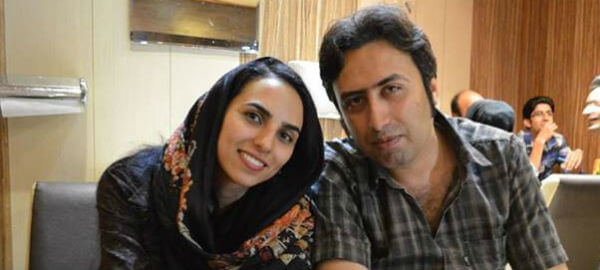
Two Iranian poets, facing lashings and prison, escape country

Fatemeh-Ekhtesari-Mehdi-Mousavi

The Associated Press reports: Two Iranian poets who face lashings and prison sentences have fled Iran, one of the writers said Monday, a rare escape for local artists and activists ensnared in an ongoing crackdown on expression in the country.

Fatemeh Ekhtesari and Mehdi Mousavi’s freedom came as world powers lifted sanctions on Iran over its contested nuclear program and as the country separately freed four Iranian-Americans in exchange for seven Iranians held in the U.S.

The poets’ escape is a reminder that despite the growing detente with the West, hard-liners still exert control over much of life in the Islamic Republic.

Ekhtesari told The Associated Press on Monday that both she and Mousavi escaped from Iran in recent days and made it to another country. She declined to elaborate out of continuing concerns about their safety.

Ekhtesari faced an 11½-year prison sentence, while Mousavi faced nine years on charges ranging from propaganda against the state to “insulting sanctities.” Each was sentenced to 99 lashings. They likely were targeted because their work is known abroad. Both are self-described “postmodern Ghazal” poets who seek to revive the traditional Persian love sonnet by applying it to contemporary political and social issues. [Continue reading…]

Facebooktwittermail

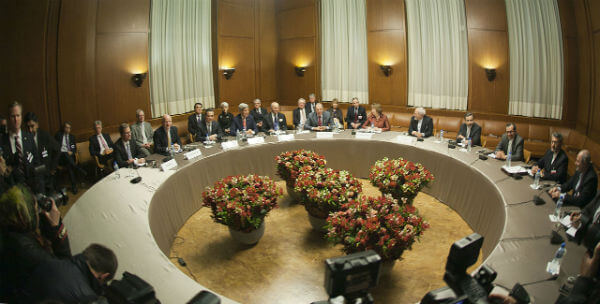
Was the Iran deal worth it?

iran-deal

Last July, after the Joint Comprehensive Plan of Action agreement on Iran’s nuclear program had been reached in Vienna, Shadi Hamid wrote: It was clear from the start of the uprising [in Syria] that Obama did, in fact, have a clear objective – minimizing U.S. involvement as much as possible. But there are other places, such as Iraq, where the Obama administration was pulled back in despite (or, more likely, because of) its best efforts. The unwillingness to rethink Syria strategy in any serious way has been reinforced by the momentum of the Iran negotiations. Why rock the boat and potentially provoke a major international incident, when progress was being made on Iran’s nuclear program? Why even take the chance with so much at stake? “Linkage,” moreover, was been built in to the policy process. As the journalist Josh Rogin noted: “All Syria proposals at State must go through the office of the undersecretary for political affairs, Wendy Sherman, who is also the administration’s lead negotiator over a nuclear deal with Iran.”

On the specifics of a deal, I tend to think, like many, that the U.S. made too many concessions, without getting enough in return. According to the New York Times, in the final days of talks, a television anchor on a hardline Iranian channel said: “The fact is, Obama needs this deal much more than we do.” She went on: “The American president needs a victory, and only a deal with Iran can give him that. They have retreated on several issues and compromised on their own red lines.” Whether or not this perception is fair, it’s a perception nonetheless, and perceptions drive behavior.

Others have noted that Iran, due to its deteriorating economy, needed a deal more than the U.S. did. This is almost certainly true. But while Iran may have needed it more, the U.S. wanted it more – or, at the very least, seemed like it did. Some of this, to be fair, was outside the U.S.’s control. The perception had already solidified throughout the region, drawing on 6 years of observing the Obama administration’s handling of various crises, most notably the backing down from stated “red lines” in Syria. Allies, such as Egypt, and enemies, such as Syria, have grown confident that we’ll blink first in a staring contest, in part because we usually do. This was why I was skeptical that any final deal could ever be the best possible deal. The administration has had tendency to misuse and/or underestimate its leverage in some of our most important bilateral relationships. As the negotiations wrapped to a close, there was no obvious way to address this. It was too late. We couldn’t change how Iran viewed the Obama administration.

There was a related asymmetry during the negotiations. As Pollack writes, “I don’t think that Iran values a nuclear deal as much as it does its positions in these various countries.” With us, it was the reverse: we cared less about Iran’s positions in various countries and more about its nuclear program. This, too, was built in to the talks.

Some are troubled that most people had strong opinions about the deal before reading the actual text of the agreement. One certainly hopes that legislators will eventually read at least some of it. But the specifics of the deal aren’t, ultimately, as important as the broader issues and implications, and those aren’t anywhere to be found in the text. Here, I tend to agree with my colleague Jeremy Shapiro who argued in April that that the devil wasn’t in the details. The details “really don’t matter.” He goes on: “At heart, this is a fight over what to do about Iran’s challenge to U.S. leadership in the Middle East and the threat that Iranian geopolitical ambitions pose to U.S. allies.”

In other words, your position on the Iran deal is likely to depend on how you view the Middle East and America’s role in it more broadly. If you see the Syrian civil war as a, or even the, core regional conflict, then you’re probably worried about the $100 billion in potential sanctions relief. Iran, even we assume it chooses butter over guns as American officials hope and uses, say, only 3 percent of that total, will have $3 billion more to prop up the Syrian regime and other regional allies and proxies. It also depends on your starting assumptions about the nature of the Iranian regime. Are Iranian leaders “rational,” and do you think it matters whether “moderates,” such as President Rouhani and Foreign Minister Zarif, are empowered over their “hardline” counterparts?

For me, at least one other issue comes into play, and it’s a factor which has pushed me to be more supportive of the Iran deal than I expected to be. It’s striking how little discussion there has been about what Iranians think and want. As small-d democrats, Americans should always at least take into account public opinion in other countries. Presumably, Iranians know their country better than American politicians do. According to opinion polls, a majority of Iranians favor a deal. We all saw the pictures of ordinary Iranians celebrating the framework agreement in April. This time around, the regime has been more careful, closing off public spaces, with hardliners warning of the dangers of Iran Deal-induced “happiness.” Importantly, as Nader Hashemi notes, “some of the most vociferous defenders of a nuclear deal with the West are Iranian civil society and human rights activists.” It makes little sense for us to say that an Iran deal will make progress on human rights less likely, when Iran’s own human rights activists seem to think the opposite. In a survey of 22 leading human rights activists, support for ongoing negotiations was “unanimous,” while over half believed that a deal would lead to a significant improvement in human rights in Iran. Of course, they could be wrong, but we shouldn’t bet on that.

To be sure, the link between a deal and the empowerment of Iranian reformers, as intuitive as it might seem, is far from guaranteed. As many have noted, conservatives may be just as likely to gain from a deal for any number of reasons. What seems inescapable, however, is that the failure of negotiations would have been a major, perhaps even decisive loss for Iran’s reformist trend. President Hassan Rouhani, who buoyed expectations with his come-from-behind election victory two years ago, has been losing popularity and goodwill. On human rights, he pledged to expand personal freedoms and broaden space for civil society. As for the economy, it can sputter along, as it has, but without sanctions relief, Rouhani’s hands are tied. His raison d’etre, then, depends on a successful deal. Without one, we would have likely had more of the same: conservatives in control and dominating the country’s politics. Now at the least there is a glimmer of possibility, even if the road toward substantive reforms remains a difficult one.

Taking these various, and very different, factors into account, the deal is, on balance, a mixed bag. I don’t think an Iran nuclear deal deserved the near-obsessive focus it received from this administration. Too much was subsumed and compromised due to the desire for a deal, an administration priority which took precedence over nearly everything else. Now that a deal has been concluded, U.S. officials may have more room to maneuver. Of course, the implementation of a deal will still require constant attention, to say nothing of the domestic fight which is still to come. But perhaps, at some point, the U.S. will be able to act and think beyond Iran’s nuclear program and re-focus attention on the broader issues and conflicts in which Iran plays a major role. The U.S. will now come under pressure to “compensate” (or overcompensate depending on your perspective). It will need to reassure skeptical Gulf allies that it will do more to counter Iran’s regional designs. I agree with Ken Pollack that the best place to do this is probably in Syria. As he writes: “In the aftermath of an Iranian nuclear deal, finally executing the Administration’s proclaimed strategy for Syria, may be the best and only way to regain control over the dangerous confrontation escalating between Iran and America’s Arab allies.”

Now that President Obama’s legacy, however controversial, is secure (both on domestic and foreign policy), he can afford to do the very things he wasn’t willing to do when Iran negotiations were the overwhelming focus. That doesn’t mean he will do them, but that’s where, I hope, the debate over a post-Iran deal Middle East can now turn.

Even after the deal was signed, Obama may have felt his hands remained tied on at least two counts: it remained to be seen whether Iran would follow through in implementing the requirements for sanctions to be lifted, and as we have now just learned, secret negotiations were still under way to secure the release of five Americans imprisoned in Iran. They have now been released and sanctions have been lifted.

One thing that no one was anticipating last July was the impact of Russia’s unforeseen intervention in Syria.

Iran’s president today tweeted:


But stock markets across the Middle East just saw “£27bn wiped off their value” in anticipation of the new wave of Iranian oil flowing into an already flooded market.

Al Jazeera reports:

With the sanctions now removed, Iran is ready to increase its crude oil exports by 500,000 barrels a day, Deputy Oil Minister Amir Hossein Zamaninia was quoted as saying by the Shana news agency on Sunday.

Iran’s return to an already glutted oil market is one of the factors contributing to a global rout in oil prices, which fell below $30 a barrel last week for the first time in 12 years. Iran is the world’s fourth largest oil producer.

The administration sold the Iran deal by claiming that no deal would make another major war inevitable. The ongoing war in Syria was left out of the equation.

The question now is whether that war is any closer to ending or whether, on the contrary, its conclusion is even further away.

I’m inclined to believe that Shadi Hamid’s assessment last July — that Obama’s objective has always been to minimize U.S. involvement in Syria as much as possible — is just as accurate today as it was then.

If Obama is preoccupied with his legacy, he should be asking himself whether his presidency will be remembered more for what he accomplished through negotiations with Iran or more for what he failed to do as the rest of the region unraveled.

Facebooktwittermail

Iran sanctions: Middle East stock crash wipes £27bn off markets as Tehran enters oil war

oil-industry

The Telegraph reports: Stock markets across the Middle East saw more than £27bn wiped off their value as the lifting of economic sanctions against Iran threatened to unleash a fresh wave of oil onto global markets that are already drowning in excess supply.

All seven stock markets in the Gulf states tumbled as panic gripped traders. London shares are now braced for a second wave of crisis to hit when they open on Monday morning after contagion from China sent the FTSE 100 to its worst start in history last week.

Dubai’s DFM General Index closed down 4.65pc to 2,684.9, while Saudi Arabia’s Tadawul All Share Index, the largest Arab market, collapsed by 7pc intraday, before recovering to end down 5.44pc at 5,520.41, its lowest level in almost five years. [Continue reading…]

Facebooktwittermail

Prisoner swap: Obama’s secret second channel to Iran

Robin Wright writes: urteen months ago, President Obama authorized a top-secret, second diplomatic channel with Tehran to negotiate freedom for Americans who had disappeared or been imprisoned in Iran. It was a high-risk diplomatic gamble. The initiative grew out of nuclear negotiations, launched in the fall of 2013, between Iran and the world’s six major powers. On the margins of every session, Wendy Sherman, the top American negotiator, pressed her Iranian counterparts about the American cases. The Iranians countered with demands for the release of their citizens imprisoned in the United States for sanctions-busting crimes. More than a year of informal discussions between Sherman and her counterpart, Majid Takht Ravanchi, the Iranian Foreign Ministry official in charge of American and European affairs, led to an agreement, in late 2014, that the issue should be handled separately — but officially — through a second channel. After debate within the Administration, Obama approved the initiative. But it was so tightly held that most of the American team engaged in tortuous negotiations on Iran’s nuclear program were not told about it.

What heightened the risk was the fact that the new Iranian team was headed by a senior intelligence official, a sharp departure from the traditional but still tentative diplomatic channels with the Iranian Foreign Ministry developed in the nuclear talks. The involvement of Iranian intelligence made prospects far more unpredictable — and potentially controversial. Brett McGurk, a senior State Department official, headed the small American team, which also included officials from the Department of Justice, the F.B.I., and the intelligence community. The meetings — facilitated by the Swiss government and often held in Geneva — repeatedly hit snags, complications, legal hurdles, and last-minute demands. The swap — officially referred to as a “humanitarian gesture” — came close to fruition three times over more than a year of secret meetings, only to collapse again and again, an Iranian official said. [Continue reading…]

Facebooktwittermail

Old myths perpetuate poor analysis of Saudi Arabia

Hassan Hassan writes: Economic sanctions on Iran have been lifted. The removal of sanctions, which will release billions of dollars worth of frozen assets and bring Iran in from the cold, comes exactly two weeks after a diplomatic spat with Saudi Arabia brought the region to boiling point.

Both of these events could have profound international implications for Saudi Arabia. After the diplomatic row, the kingdom came under fierce media attack and was generally portrayed as an irresponsible regional player that deliberately provoked Iran by executing the Saudi religious cleric Nimr Al Nimr. Such depictions do not bode well for the kingdom as it prepares for the entry of a regional rival into the international arena.

Broadly speaking, much of the punditry about Saudi Arabia and the Gulf states at large tends to rely on old facts and myths – mostly dating back to the 1990s.

Perpetuating old stereotypes about Saudi Arabia’s foreign policy ignores the progress –and indeed the drastic changes – that have taken place over the past decade. More importantly, they also reduce Iran’s role in the neighbourhood to a geopolitical rivalry with its neighbours, rather than casting this role in its true light, as an aggressive sectarian agenda that claimed the lives of thousands of people and perpetuated conflict and civil strife.

To better understand Iran’s behaviour, consider the policies of the two countries since the eruption of the Arab uprisings five years ago. [Continue reading…]

Facebooktwittermail

Iran’s swift release of U.S. sailors hailed as a sign of warmer relations

The New York Times reports: Iran’s release of 10 United States Navy sailors on Wednesday, less than 24 hours after they were detained on the Persian Gulf, is being hailed in both countries as a sign that their relations have evolved since the signing of the nuclear accord last summer.

Secretary of State John Kerry thanked the Iranians “for their cooperation in swiftly resolving this matter” and suggested in a statement that the quick resolution of the issue was a product of the nearly daily back-and-forth that now takes place between Washington and Tehran, after three decades of hostility and stony silence.

In an appearance later Wednesday at the National Defense University in Washington, Mr. Kerry said that his focus on diplomacy with a country “we hadn’t talked to for 35 years” before the nuclear negotiations had paid off.

“These are always situations that as everybody knows, if not properly handled, can get out of control,” Mr. Kerry said. “We can all imagine how a similar situation might have played out three or four years ago.” [Continue reading…]

Facebooktwittermail

ISIS has been driven out of Ramadi, but does Iraq have a future?

Emma Sky talked to Jaber al-Jaberi, a former member of the Iraqi parliament for Anbar province, about how ISIS gained control of his native city, Ramadi. She writes: I peppered Jaber with questions: How had everything gone so badly wrong in Ramadi? How had Daesh been able to take over? Who were these people?

Looming large is the question of how to break the corrosive cycle of revenge and retribution.
Jaber described a subculture in Ramadi of uneducated men in their twenties and thirties. Some were thieves and petty criminals. Others had developed fundamentalist thinking. And when al-Qaeda in Iraq came into existence after the fall of the former regime, it was within that organization that they found a sense of power and identity.

However, when the Sahwa, the Anbar Awakening, turned against al-Qaeda, and aligned with US forces during the Surge in 2007, many of these same young men were drawn away from the insurgency and swapped sides, turning themselves into local police. And that was why the violence in Anbar had dramatically declined from 2007 onwards and stability had returned to the province.

The agreement that my former boss, Gen. Raymond Odierno, the then-commander of U.S. forces in Iraq had negotiated with former Prime Minister Nuri al-Maliki was that 20 percent of the Sahwa would be integrated into the security forces and 80 percent into civilian jobs. But the deal was never implemented.

Rather, as U.S. forces withdrew, Maliki reneged on his promises to the Sahwa and arrested its leaders. He accused Sunni politicians of terrorism, driving them out of the political process. In response, Sunnis set up protest camps. But Maliki refused to meet their demands and sent in security forces to violently crush the demonstrations.

With the citizens of Ramadi so at odds with the central government once again, it had been easy for Daesh to rise up out of the ashes of al-Qaeda in Iraq and proclaim itself as the defender of the Sunnis. Daesh had taken over Anbar university and converted it into a prison.

Jaber explained that the tribes in Anbar had lost trust in the government and refused to fight Daesh. They remembered only too clearly how the Sahwa had been betrayed. “We could not convince them that the experience would be different from before.”

Finally, 9,000 tribesmen were persuaded to join the tribal al-Hashd, the popular mobilization force, and received training from U.S. troops in bases at Taqqadum and al-Asad. And it was these tribesman who had supported the counter-terrorism forces in their efforts to liberate Ramadi from Daesh at the end of 2015.

Governor al-Rawi has been nominated as the head of the Crisis Committee, which includes representatives of ministries, and is tasked with cleaning up the city, removing explosives, and restoring basic services to make Ramadi inhabitable once more so that its displaced citizens will return.

But difficult times remain ahead. There are huge challenges to rebuilding Ramadi, particularly with scarce resources available from the government due to the steep drop in oil prices to under $35 a barrel.

And looming large is the question of how to break the corrosive cycle of revenge and retribution that has led to so many deaths and displacement.

Jaber was recently appointed to the new Higher Committee for National Reconciliation established under the auspices of Iraq’s prime minister, the president, and the speaker of parliament, and with the mandate to promote “historic national reconciliation.”

Reconciliation has been talked about continually in Iraq over the last decade—but little has been done to address the structural challenges facing the country, to agree on a workable system of government and to reinvent an inclusive national identity to which Iraqi’s diverse peoples can relate.

Many observers believe that Iraq is finished: the Kurds are moving increasingly towards independence; Shia militias dominate the Iraqi government; Iranian influence is pervasive; and Sunni leadership is weak and fragmented. [Continue reading…]

Facebooktwittermail

Iran ‘fills Arak nuclear reactor core with concrete’

BBC News reports: Iran has removed the core of its Arak heavy-water nuclear reactor and filled it with cement, according to the country’s Fars news agency.

The fate of the reactor was one of the toughest sticking points in Iran’s long nuclear negotiations last year.

Under the terms of the deal, Iran agreed the heavy-water reactor would be reconfigured so it was not capable of yielding material for a nuclear weapon.

The removal of the core is one of the final steps required by the deal. [Continue reading…]

Facebooktwittermail

On the issue of executions, Iran has as much moral authority as the U.S. has on gun control

Sharif Nashashibi writes: There are several grounds on which to oppose the Saudi execution of Shia cleric Nimr al-Nimr. One can do so due to a principled opposition to capital punishment in general. One can criticise the country’s judicial system – Human Rights Watch said this week that it “has documented longstanding due process violations in Saudi Arabia’s criminal justice system that make it difficult for a defendant to get a fair trial even in capital cases.”

One can criticise Nimr’s trial in particular, which Amnesty International called “grossly unfair”. One can argue that he should not have been arrested in the first place – HRW cited “vague charges that do not resemble recognisable crimes”.

One can oppose his execution because of the repercussions it will have regionally and beyond. One can even do so out of concern for Saudi Arabia itself, not just in terms of domestic unrest among its Shia population, but also its foreign interests.

However, in any situation, condemnation is meaningless when based on hypocrisy. As such, Iran – which has arguably been most vocal about Nimr’s execution – does not have a leg to stand on. “It is perhaps surprising that a regime which imprisons journalists, censors cartoonists and holds activists without charge for years on end should be in any position to moralise against another,” wrote Evan Bartlett, news editor at The Independent newspaper.

It is galling – almost comical – for the world’s second-biggest executioner after China to criticise the third-biggest on the subject of executions. It carries the same moral authority as the US lecturing others about gun control, or Japan discouraging other countries from whale-hunting. [Continue reading…]

Facebooktwittermail

Iran won’t surrender militias that conduct Assad’s war

Hassan Hassan writes: Not long before the Riyadh-Tehran diplomatic row that followed the execution of Saudi Shia cleric Nimr Al Nimr, a showdown between the two countries unfolded in New York. While it is difficult to draw a direct correlation between the two events, the incident can help us understand the depth of the continuing crisis.

On December 18, heated debate ensued between representatives of the two countries at a meeting in New York over the listing of armed groups operating in Syria for possible determination as terrorist organisations. The list, which Jordan was asked to develop, would name extremist groups that must be defeated as part of the UN-sponsored political process for Syria.

A month earlier in Vienna, Saudi Arabia had insisted on including in the list foreign Shia militias fighting on the side of president Bashar Al Assad. Riyadh argued that all foreign fighters must leave Syria, regardless of which side they supported. In New York, Iran, joined by Russia, strongly objected to the demand and the standoff caused a deeper rift between the two countries.

For now, the designation of terror groups in Syria has been referred to a committee comprising several European and regional countries. They first determined indicators and criteria of what constitutes a terrorist organisation, then named armed groups currently fighting in Syria. There is a preliminary list of more than 160 Sunni and Shia organisations.

Iran categorically rejects including any Shia groups in the list. For Tehran, the fate of the Assad regime it supports is critically tied to the presence of those Shia militias. It is a fact that adds to the many issues that compound the conflict in Syria – issues that the international community would seemingly rather sweep under the carpet instead of deal with head on. [Continue reading…]

Facebooktwittermail

Ten ways on how not to think about the Iran/Saudi conflict

Omid Safi writes: In order to understand this conflict, do not start with Sunni/Shi‘a seventh century succession disputes to Prophet. This is a modern dispute, not one whose answers you are going to find in pre-modern books of religious history and theology. Think about how absurd it would be if we were discussing a political conflict between the U.S. and Russia, and instead of having political scientists we brought on people to talk about the historical genesis of the Greek Orthodox Church.

Probably the most succinct elaboration of this point came from Marc Lynch:

“The idea of an unending, primordial conflict between Sunnis and Shiites explains little about the ebbs and flows of regional politics. This is not a resurgence of a 1,400-year-old conflict.”

The attempt to explain the Iranian/Saudi conflict, or for that matter every Middle Eastern conflict, in purely religious terms is part of an ongoing Orientalist imagination that depicts these societies as ancient, unchanging, un-modern societies where religion is the sole determining factor (allegedly unlike an imagined “us,” who have managed to become modern and secular.) Watch this four-part series by the late, great Edward Said on how Orientalism operates (skip the introduction):

There is no disputing that religion is a factor in understanding the Middle East. In some conflicts, it might even be a primary factor. But it is never, ever the only factor. Most often it is the other factors (history, economics, ideology, demographics) that are much more important.

Religion, religious traditions, and human societies never stay static and unchanging. There is no such thing as an eternal, unchanging human tradition. [Continue reading…]

Facebooktwittermail

Iraq faces take-over by Iran-backed militias if ISIS is defeated, coalition commanders fear

The Telegraph reports: Coalition commanders in Iraq fear that Iran-backed Shia militias may stage an armed takeover of the country if Isil is defeated, a new report has warned.

Senior figures in the US-led mission believe there is a high likelihood of a “war after the war” because of the Iraqi government’s reliance on Shia militias in its fight against Isil.

The move has hugely boosted the strength of such militias, to the point where they are now in a position to challenge the elected government for control of the country.

The warnings are revealed in research compiled by one Britain’s foremost experts on Iraq, Professor Toby Dodge, who served as an adviser to General David Petraeus, America’s former top commander in Baghdad.

Prof Dodge’s findings are based on meetings with high-level coalition commanders and Iraqi politicians conducted during a recent study trip to Iraq for the Middle East Centre at the London School of Economics.

They told him that recent defeats against Isil in Ramadi and Sinjar had shifted “the balance of power” to the Shia militias, who lead around 70 per cent of all military operations.

“Against a background of positive military news, there was near unanimity amongst the senior Iraqi political figures and the military commanders of the American-led, multilateral coalition that that the military defeat of (Isil) in Iraq would trigger another military conflict, which would in effect, mark the country’s return to civil war,” said the report. [Continue reading…]

Facebooktwittermail

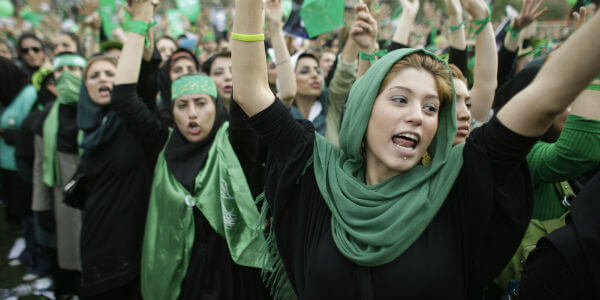
In pursuit of a nuclear deal, Obama shunned Iran’s democracy movement

green-movement

The Wall Street Journal reports: Iranian opposition leaders secretly reached out to the White House in the summer of 2009 to gauge Mr. Obama’s support for their “green revolution,” which drew millions of people to protest the allegedly fraudulent re-election of President Mahmoud Ahmadinejad.
The demonstrations caught the White House off guard, said current and former U.S. officials who worked on Iran in the Obama administration.

Some U.S. officials pressed Mr. Obama to publicly back the fledgling Green Movement, arguing in Oval Office meetings that it marked the most important democratic opening since the 1979 Islamic revolution.

Mr. Obama wasn’t convinced. “‘Let’s give it a few days,’ was the answer,” said a senior U.S. official present at some of the White House meetings. “It was made clear: ‘We should monitor, but do nothing.’ ”

The president was invested heavily in developing a secret diplomatic outreach to Mr. Khamenei that year, sending two letters to the supreme leader in the months before the disputed election of Mr. Ahmadinejad, said current and former U.S. officials.

Obama administration officials at the time were working behind the scenes with the Sultan of Oman to open a channel to Tehran. The potential for talks with Iran — and with Mr. Khamenei as the ultimate arbiter of any nuclear agreement — influenced Mr. Obama’s thinking, current and former U.S. officials said.

U.S. officials said the White House also was getting conflicting messages from Green Movement leaders. Some wanted Mr. Obama to publicly warn Mr. Khamenei against using force. Others said such a declaration would give Iran’s supreme leader an excuse to paint the opposition as American lackeys.

Mr. Obama and his advisers decided to maintain silence in the early days of the 2009 uprising. The Central Intelligence Agency was ordered away from any covert work to support the Green Movement either inside Iran or overseas, said current and former U.S. officials involved in the discussions.

“If you were working on the nuclear deal, you were saying, ‘Don’t do too much,’ ” said Michael McFaul, who served as a senior National Security Council official at the White House before becoming ambassador to Russia in 2012.

After a week of demonstrations, Iran’s security forces went on to kill as many as 150 people and jail thousands of others over the following months, according to opposition and human rights groups. Mr. Khamenei accused the U.S. of instigating the uprising. Iran denied killing protesters.

Some of Mr. Obama’s closest advisers, including former Secretary of State Hillary Clinton, said in retrospect the U.S. should have backed the Green Movement. “If we could do it again, I would give different counsel,” said Dennis Ross, Mr. Obama’s top Mideast adviser during his first term. At the time, he said, he argued against embracing the protests.

A senior U.S. official said this week that the Obama administration argued against covert support for the Green Movement because it risked undermining its credibility domestically, not out of fear of Mr. Khamenei’s reaction. “We did not want to tar the movement,” the official said. [Continue reading…]

Facebooktwittermail

The Saudi–Iran rift over Syria

Syria Deeply sought the opinion of several experts. Nader Hashemi said: In broad terms, the recent fallout only serves to entrench existing positions. These positions have long solidified over the course of the past five years. The recent deterioration of relations and antagonism between Saudi Arabia and Iran do not, in my reading, fundamentally change this dynamic.

The fallout at this stage does not completely undermine the Vienna Peace Process. Both Saudi and Iran, over a series of several meetings, basically agreed to a broad framework that was enshrined in a U.N. Security Council Resolution 2254 on December 18. Now the ball is out of the court of the Iranians and Saudis and is in the court of the Syrian actors and Staffan de Mistura. That’s the next stage of the Vienna process – to try and bring Syrians from both the Assad regime and the opposition around the table. Thus, at this stage, Iran and Saudi Arabia really don’t have much to contribute. Perhaps, as a result of recent events, they might decide to take a more hardline stance when it comes to determining which Syrian rebel groups are terrorists and can have a seat at the table and which cannot.

I’m very skeptical about the Vienna Process. I think it was essentially dead on arrival because it assumes that after five years of a neo-genocidal war, and having already gone down this road before in Switzerland in January 2014 with Lakhdar Brahimi, that somehow something substantial has changed. Why should anyone assume that just because the regional and international powers have agreed to a broad framework, all of the Syrian participants in this conflict are going to meet in Geneva at the end of January, kiss and make up, and agree to some unity government and peace plan? There is little room for optimism on this point. [Continue reading…]

Facebooktwittermail