Category Archives: Iran

New details emerge on coercion of Iranian ‘Happy’ youths during detention

International Campaign for Human Rights in Iran: The morality police pressured the participants in the “Happy in Tehran” video during their detention to implicate Reyhaneh Taravati and Sassan Soleimani and file complaints against them, the International Campaign for Human Rights in Iran has learned.

On May 19, 2014, six youths were arrested by the morality police and taken to the unit’s station at Vozara (Khaled Eslamboli) Street in Tehran for their role in the video. They were released two days later on bail amounts of between $10,000 and $16,600 each.

Sassan Soleimani, said to be the video’s director, was arrested on May 20 at his home. Judicial authorities set his bail at $16,600. However, when the family went to post the bail, the prison authorities would not accept it and told the family they could return next week for a visit. As of this writing, Soleimani remains held at Rajaee Shahr Prison. [He is now reported to have been released.]

The other individuals arrested in the case were Neda Motemani, Afshin Sohrabi, Bardia Moradi, Roham Shamekhi, and ”Sepideh.”

Last year Soleimani told “Zendegi Ideal” (Ideal Life) magazine that following his photo shoot for Hassan Rouhani’s presidential campaign, he was asked to suggest a color for the campaign and he picked purple, which became the campaign’s official symbol.

“During the first hours of interrogation, agents coerced the detainees to blame everything on Sassan Soleimani as the mastermind and Reyhaneh Taravati as the person who uploaded the video on YouTube,” a source told the Campaign. [Continue reading…]

Facebooktwittermail

Arrests over the Happy dance video in Iran reflect hardliners’ frustration

Following the arrest and release of six young Iranians who joined the Pharrell Williams “Happy” phenomenon by making their own video in Tehran, Azadeh Moaveni explains, the arrests had much less to do with a struggle between Westernized Iranians and their religiously conservative rulers than a contest within the regime’s political elites.

The police went after the Happy dancers, whose clip had been drawing attention on YouTube for a month, just three days after [President Hassan] Rouhani demanded Iran abandon its paranoid digital censorship and embrace the internet. “The era of the one-sided pulpit is over,” he said. The message of the Happy arrests was: if you seek to enact digital freedom, we will torment those Iranians who exercise that right. The head of the judiciary, Sadeq Larijani, declared this week that the internet was a swamp that must be cordoned off with barbed wire.

The question is whether the hardliners are pursuing this radical agenda on anyone’s behalf. The vast majority of Iranians – including the traditionally pious, the merchants, the working poor – are comfortable with a healthy measure of social openness. Iran isn’t Afghanistan or Saudi Arabia. Even many deeply religious young people don’t believe in mandating observance for others. The children of senior officials post selfies of themselves wearing skinny jeans and heels on Facebook.

Most Iranians watch western films, hungrily consume Turkish soaps on satellite TV, and access the internet with filter-busting software. Every presidential candidate since the mid-1990s who has promised to relax social strictures has swept the board. Even Ahmadinejad, when he won roundly in 2005, scoffed at the importance of the hijab as a relevant issue during his campaign.

Through various acts of civil disobedience – from online activism to holding hands in a park or dressing fashionably – young Iranians from all social classes have shown where they stand on liberalism. Rouhani knows that, which is why he confidently tweeted in support of the Happy kids, a genuine exchange between a president and those who elected him.

The real battle is between popular politicians and an entrenched elite that is frightened by its electoral defeat. Cornered and nervous, it is striking back in any way it can.

Facebooktwittermail

Tehran’s ‘Happy’ dancers are released on bail

IranWire reports:

happy-iranians“Thanks for thinking about us,” says Neda, one of the six Iranians arrested for posting a music video for Pharrell Williams’s “Happy” on YouTube, in a message on Instagram. “We’re finally released after three days in prison. We’re waiting for the court date. Thanks a lot for caring about us.”

“My sister and her friends wanted to show the world that we still have moments of happiness, even though we face so many problems in Iran,” said Siavash Taravati, whose sister Reyhaneh was one of those arrested. “They were only showing their happiness and were arrested for that,” he said. He told Iranwire that his sister had not left the court, but it had been announced that she would be released after her family paid a bail of 40 million toman. Others in the video were due for release after settling a bail of 30 million toman (approx. ten-thousand dollars).
[…]
Taravati also told IranWire that although the group’s release documents had been signed and the group had received official warnings, they were likely to be summoned to the court again. He also said that police authorities were still going through personal items that were confiscated at the time of their arrest. Items included mobile phones, computers and cameras taken from their homes.

IranWire adds:

New details have emerged about the treatment of the six Tehran “happy” youth while in detention. According to a source close to the group, police raided the home of artist and photographer Rayhaneh Taravati three days ago. The officers covered the peephole of the door so that their faces would be obscured, and Taravati opened the door. Armed officers streamed inside, bashing and damaging everything in sight, videotaping all the while. Taravati’s paintings and photographs were destroyed.

They took the group to the Vozara police station, where they were not permitted to use toilet facilities, and were transferred to solitary confinement on the second day. Police interrogated the group extensively about their video clip and comments to foreign media, including this publication. During their detention the young women were forced to strip naked and perform squats in front of female police officers.

The International Campaign for Human Rights in Iran said:

These arrests are indicative of growing struggle in Iran between hardliners, who dominate the judicial and security arms of government, and more moderate forces within society, supported by the Rouhani administration. Social media, and the freedom to use it to communicate and express oneself, is a key arena in which this struggle is being played out. Hardliners are keen to demonstrate their continued strength and ward off any move toward a domestic opening, given Rouhani’s huge electoral win.

Thomas Erdbrink, the New York Times’ Tehran bureau chief tweeted:


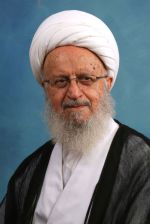
ayatollah-marakem-shiraziApparently the ayatollah is unaware that the makers of the “Happy” video were laughing loudly for a reason:

“We want to tell the world that Iran is a better place than what they think it is. Despite all the pressures and limitations, young people are joyful and want to make the situation better. They know how to have fun, like the rest of the world.”

Facebooktwittermail

After #FreeHappyIranians get arrested, Khamenei says ‘Be angry with us and die in your anger’!

After authorities arrested six young men and women who produced a Tehran version of Pharrell Williams’ “Happy” video, Iran’s Supreme Leader Ayatollah Khamenei’s message at a graduation ceremony of miltary cadets was, “Be angry with us and die in your anger.”

Iran’s President Rouhani, in a reflection of his trademark smile, is perhaps better aligned with Tehran’s happy youth.

Following the video makers’ arrests, IranWire reports:

The group appeared on state television’s evening news broadcast, grouped in a row facing Tehran Chief of Police Hossein Sajedinia, and confessed to being deceived into appearing in the clip by an unnamed man and woman. Sajedinia advised the young people during the broadcast not to be deceived into appearing in corrupt film productions, and with a smile complimented the swift reaction of his security forces. “These [agents] were able to identify [these young people] within two hours, and within six hours had arrested them all,” he said.

While complimenting the speed of his forces, Sajedinia neglected to mention during the broadcast that the clip has been on YouTube for a month, had over 100,000 views. Though at the time of their arrest access to the clip in Tehran had been disrupted.

IranWire reached a source informed about the nature of the arrests. “All of the young producers received phone calls informing them that a friend had suffered a car accident and required their help. When they arrived at the address they had been given over the phone, security forces were waiting to arrest them.” Security forces have also allegedly threatened the families of those arrested that if they speak to any media about the detentions, their children will not be released.

The source said that each family has paid a bail of 30 million toman, the equivalent of $10,000, and been told if they comply with the demand not to speak to any media outlets, their children will be released tomorrow, Wednesday.

Among some quarters of the anti-Western anti-imperial left, I imagine this story will be deemed unnewsworthy. Perhaps there will even be suggestions that — as Iranian authorities claim — the videomakers were duped. If you believe that, you might as well get all your news on Iran from Press TV.

Some people think they have to shout in anger to change the world, but the shouts more often come from those who have a clearer view of what they want to destroy than a vision of what they want to create.

No doubt the #FreeHappyIranians wanted to have fun, but they also knew they were pushing boundaries. Theirs was an act of joy, defiance and courage.

Negar Mortazavi, an Iranian freelance journalist based in Washington, D.C., told Mashable that she wasn’t surprised the six people were arrested. When Mortazavi first saw the video, she thought it was dangerous to upload it online, considering its content. “Not wearing hijabs and dancing, boys and girls together — that’s three big red flags,” she said.

But being happy, wanting to dance, finding joy in life — these are not trivial indulgences of a Westernized elite or symptoms of a corrupted youth. These are universal human desires.

Ayatollah Khamenei might hold the most power in Iran, but six young men and women whose names we might never know seem to better represent a nation that too often gets reduced to crude stereotypes by its enemies — and its own leaders.

Update: Rouhani just slipped on his dancing shoes:

Facebooktwittermail

Young Iranians arrested for being too ‘Happy in Tehran’

Robert Mackey writes: Just days after Iran’s president denounced Internet censorship as “cowardly,” six young Iranians were arrested and forced to repent on state television Tuesday for the grievous offense of proclaiming themselves to be “Happy in Tehran,” in a homemade music video they posted on YouTube last month.

By uploading their video, recorded on an iPhone and promoted on Facebook and Instagram, the group was taking part in a global online phenomenon, which has resulted, so far, in hundreds of cover versions of the Pharrell Williams song “Happy” recorded in more than 140 countries. “Happy in Tehran” was viewed more than 165,000 times on YouTube before it was made private.

In a speech over the weekend, President Hassan Rouhani argued that Iran should embrace the Internet rather than view it as a threat, Reuters reported. His remarks were also summarized on a Twitter account updated by his aides.


“We must recognize our citizens’ right to connect to the World Wide Web,” the president said, according the official IRNA news agency. “Why are we so shaky? Why have we cowered in a corner, grabbing onto a shield and a wooden sword, lest we take a bullet in this culture war?” he asked.

“Even if there is an onslaught, which there is,” he added, “the way to face it is via modern means, not passive and cowardly methods.” [Continue reading…]

Facebooktwittermail

Iran’s drone war in Syria

The Daily Beast reports: Iran has been providing Syria’s regime with drones—some of them inspired by American technology—and they’re already playing a significant role in keeping Bashar Assad in power. On Sunday, Tehran announced it had replicated a top-of-the-line U.S. drone it claimed it captured in 2011, raising the possibility it will send still more sophisticated aerial robots into the skies over Damascus.

In some respects, this shouldn’t come as a surprise. Iran’s robust drone program dates back to the early 1980s, and it first tried to weaponize the birds some 30 years ago, long before American Predators and Reapers first soared aloft.

The Middle East was the first great proving ground for unmanned aerial vehicles, or UAVs, as they’re called. During the 1980s, Israel flew drones over Lebanon’s Bekaa Valley to spot Syrian artillery and anti-aircraft positions, allowing the Israeli Air Force to knock out the Syrian air defenses with minimal risks to its pilots. At about the same time, Iran began using drones to spy on Iraqi positions in its epic war against Saddam Hussein. It was during that bitter conflict that Iranian engineers crudely mounted Soviet rocket-propelled grenades on their drones and fired them at Iraqi troops. [Continue reading…]

Facebooktwittermail

Saudi Arabia moves to settle differences with Iran

The Guardian reports: Saudi Arabia has invited the Iranian foreign minister to Riyadh for the first senior meeting between the regional heavyweights since the start of the Arab Awakenings in which the two countries have engaged in a proxy war for influence.

The Saudi foreign minister, Saud al-Faisal, contacted his counterpart in Tehran on Tuesday after months of lower level communications between the countries, aiming to bring an end to a series of regional crises in which both are invested, principally in Syria.

“Iran is a neighbour, we have relations with them and we will negotiate with them,” the minister said.

“We will talk with them in the hope that, if there are any differences, they will be settled to the satisfaction of both countries. Our hope is that Iran becomes part of the effort to make the region as safe and as prosperous as possible, and not part of the problem of the insecurity of the region.”

The US has been attempting to persuade Riyadh to reach an accommodation with Iran, despite deep distrust between the two powers. [Continue reading…]

Facebooktwittermail

Saudi Arabia’s military exercise was a goodbye wave to America

Faisal Al Yafai writes: When one of the most powerful militaries in the Middle East holds the largest military exercise in its history, the region and allies would be wise to look beyond the explosions and manoeuvres at the political intent.

Last week’s “Abdullah Sword” military exercises in the north-east of Saudi Arabia brought together 130,000 troops, as well as military jets, helicopters and ships. With the notable exception of Qatar, all the GCC countries were there to observe the exercises, as well as the head of Pakistan’s army.

On the surface, the exercises were timed to coincide with the ninth anniversary of the accession of King Abdullah of Saudi Arabia. But military movements of this order send messages. But to whom?

The obvious answer is Iran, Saudi’s great regional rival, or one of the three states that the Saudis are most concerned about – Syria, Iraq or Yemen. And it will not have escaped Tehran’s notice that the CSS-2 ballistic missiles that Riyadh paraded for the first time last week can easily reach any part of Iran.

Certainly, a message of strength was being telegraphed to the region. But there was also another one, over the heads of the region, to the United States: if you leave, the region can defend itself. [Continue reading…]

Facebooktwittermail

They don’t just wear blue jeans in Iran

“I think if the Iranian people had their way, they’d be wearing blue jeans, they’d have Western music, they’d have free elections.” Benjamin Netanyahu, October, 2013

Zoe Mendelson writes: It was a Thursday night in Istanbul and I was sitting on a patio at a going away party with three Persian cousins: two men living in Istanbul for graduate school and a woman living there who works as a journalist. I didn’t want to turn playtime into work time but the opportunity seemed too ripe to relinquish. How often do Americans actually meet Iranians? How often do we get to share a beer and actually try to understand each other? I had no idea what I was in for.

I told them that I was writing about dating cultures in different countries. They agreed to interviews but definitely, absolutely did not want me to use their names; they said it could end up preventing them from re-entering Iran at all. Deal. They laughed because dating is illegal in Iran.

“Iranian rules are based on Islamic rules. So it’s forbidden by law, informal dating when you’re not married. But you know, everything forbidden is more interesting.”

I asked how dating is different for them in Istanbul than it is back home and both men instantly replied that it was way easier to date back home in Iran.

“Maybe people are much more in the mood?” One said and laughed, but then added more seriously, “Maybe they feel more freely. When you’re in a closed place and you’re under pressure, you want to experience something that is illegal.” The other chimed in, “Yes, I have had 15 girlfriends and I’m only 30! And I had many one-night stands in Iran. But here, it’s much harder to get girls.”

I asked if girls in Iran have sex before marriage and one of the men speculated that 10 or 15 years ago only 10 percent of girls would, but that now the percentage is probably closer to 90. I was genuinely shocked, and tried to play it off like I wasn’t such an ignorant American thinking that Persian women were just bundled up virginal victims. And then things got even realer.

The woman chimed in, “In Iran it’s hard core. People think they’re so repressed. But because they are so repressed, they go to extremes to compensate. Have you seen what Iranian girls look like? They’re totally dressed up and made up and with the hair… they take advantage of things more. They’ve got like three boyfriends, they’re always screwing around… it’s like intense. It’s like orgies and shit. Seriously.”

I was dumbfounded. “Three boyfriends?” I asked. “Yes! More!” Replied one of the men, “They’re always lying!” he said, feigning spite, and then in a high-pitched voice said, “I love you. I love you. You’re the only man for me.” The other man laughed and nodded.

“How do they do that, if there’s no bars —” I started to ask. They were starting to catch on to my astonishment and were all smiling. [Continue reading…]

Facebooktwittermail

Former U.S. officials detect shift in Israel on Iran nuclear deal

Laura Rozen reports: Israel increasingly expects that a nuclear deal between Iran and six world powers will be reached, and has raised concerns with U.S. interlocutors about monitoring and enforcement of the deal, former American officials and Iran policy experts involved in recent discussions with the Israelis tell Al-Monitor.

While Israel’s official position remains that the only acceptable Iran nuclear deal would be “zero, zero, zero,” — meaning no centrifuges, domestic uranium enrichment or plutonium, or the facilities to produce them — former American officials and experts involved in recent consultations with the Israelis detect that Israel’s position on the matter has shifted as the prospect of a deal being reached has increased. Israeli officials are now focusing on concerns of what happens if a deal is reached, how can monitoring and verification be sufficient to detect if there is a violation, and how would such violations of an agreement be deterred or punished, at a time when Israel assesses U.S. credibility as weakened on the world stage, including because of events in Ukraine and Syria.

Most Israeli officials and experts “seem to understand that ‘zero, zero, zero’ is not going to happen,” a member of a US group of experts and former senior officials recently in Israel for consultations, speaking not for attribution, told Al-Monitor in an interview this week. They seem “to understand that there is a need for a domestic, indigenous civil nuclear program….for the Iranians to” deal with their domestic opposition. [Continue reading…]

Facebooktwittermail

In Iran, nuclear deal brings little economic relief

The Los Angeles Times reports: When Iran’s leaders signed a preliminary nuclear deal with world powers in November, they promised the six-month agreement would quickly start “melting the iceberg” of Western sanctions, lead to new trade ties and lift the lives of ordinary Iranians.

Opponents of the deal in the United States and the Middle East said much the same thing, warning that it would rapidly erode the international sanctions that have crippled Iran’s economy.

It hasn’t worked out that way. More than four months into the deal, many Iranians think the interim accord has done little to help them.

“The deal has not brought any economic breakthrough for the common people,” said Mohammed Hydari, editor of Khandani, a political and economic journal. The “meager” funds released by world powers each month under the deal, he said, “are not helping the people, but the government.”

Dwindling popular support in Iran for the preliminary accord, coupled with perennial resistance to any nuclear compromise from hard-liners, raises doubt about how long Iranian President Hassan Rouhani can push ahead with his effort to reach a final deal. [Continue reading…]

Facebooktwittermail

Assad: ‘The project of political Islam has failed’

AFP reports: The “project of political Islam has failed,” Syria’s President Bashar al-Assad said on Monday, calling for the separation of religion from politics, state television said.

Assad’s regime has been battling an uprising that has come to be dominated by Islamists, ranging from moderates to radicals, who want to see Syria run as an Islamic state.

“The project of political Islam has failed, and there should be no mixing between political and religious work,” he said in comments on the 67th anniversary of the founding of his Baath party.

These are the observations of a man whose life has been saved by the Islamic Republic of Iran and Hezbollah. If Assad really opposes the mixing of political and religious work, how could two of the region’s preeminent proponents and practitioners of political Islam still be his chief allies?

Facebooktwittermail

Obama administration confidant lays out possible Iran nuclear deal

Barbara Slavin writes: Robert Einhorn, a former senior U.S. official who is well regarded by the Obama administration and retains close ties to its top nuclear negotiator, has proposed parameters for a long-term nuclear agreement with Iran that would allow it to continue enriching uranium at low levels and would ask Congress to pre-authorize military action in response to Iran violating the accord.

Einhorn’s proposal — unveiled Monday at the Brookings Institution where he is currently a senior fellow — seeks to marry Iran’s current limited need for nuclear fuel to the scope of its nuclear infrastructure, and provide confidence that Iran will not develop nuclear weapons.

In publishing his ideas, Einhorn — who left the Obama administration less than a year ago and retains close ties to chief U.S. negotiator Wendy Sherman and other administration officials — is illustrating that the fate of a long-term nuclear agreement with Iran rests not just on the negotiators meeting in Vienna, but on how political elites in the United States and Iran approach the compromises that will be realistically required to reach an accord. U.S. officials have compared the process of broadening the current six-month interim agreement to solving a Rubik’s Cube, in which changes in any one provision affect all others. [Continue reading…]

Facebooktwittermail

Is Syria becoming Iran’s Vietnam?

Syria

Deborah Amos reports: [I]n Iran, discussions about Syria are surprisingly frank, complex and demonstrate growing divisions over how to handle a costly war that has no end in sight.

At Tehran University, students of international relations study the Syria-Iran alliance, one of the most enduring in the region. Yet there are now more questions about Iran’s recent role in the Syrian bloodshed.

“What is happening in Syria, it’s related to us; it is an obvious catastrophe,” says one student in a discussion on campus. He didn’t give his name because discussing Syria is sensitive.

Iran is reportedly spending billions to prop up Syrian President Bashar Assad. Saudi Arabia backs the rebels. The student believes Syrian civilians are paying the price. Innocent children are dying, he says, his voice rising. “But nothing is being declared as a solution,” he says, “because of the balance of power.”

Another student, Masa, 23, says she follows the news of the Syrian uprising on Iranian television. When it comes to insurgents, she says, “For me, I think they are just people, but Iran TV wants to show them as terrorists. Our media is not neutral.”

Iranian student activists launched a website and a Facebook page in Farsi and English last month to promote news from Syria for Iranians.

“The Iranian regime is supporting a dictator hated by most Syrians,” reads the founding statement on the site, “and is wasting economic resources desperately needed by Iranians at home.”

The regional rivalry between Saudi Arabia and Iran is now at the core of the Syrian conflict, says New York University academic Mohamad Bazzi, who is writing about the war. The Iranians have put money and manpower behind the Assad regime, he says.

“The Iranians are helping the regime survive day to day,” he adds.

But Iran’s investment has come with unexpected costs. The war has destabilized Iraq and Lebanon, where Tehran has allies and interests; and Tehran’s image has been tarnished in the Arab world. [Continue reading…]

Facebooktwittermail

Doubts surface on Gaza destination of rockets seized by Israel

n13-iconReuters reports: Some U.S. intelligence analysts and Middle East security officials believe that a rocket shipment seized by the Israeli navy in the Red Sea this month was destined for the Egyptian Sinai and not for the Gaza Strip, as Israel says.

A U.S. official and two non-Israeli regional sources said Israel appeared to be insisting on the Gaza destination in order to spare the military-backed interim Egyptian administration embarrassment as it struggles to impose order in the Sinai.

Israel has little compunction about drawing scrutiny to the rocket arsenals of Gaza’s governing Hamas Islamists and other armed Palestinian factions, with whom it has regularly clashed.

“Were the Israelis to say the rockets were going to Sinai, then they would also have had to say who in Sinai was going to receive the rockets,” one source told Reuters, adding that such a statement would draw attention to the insurgents resisting Egypt’s security sweeps in northern Sinai. [Continue reading…]

Facebooktwittermail

Crimea crisis could reduce sanctions pressure on Iran

Barbara Slavin writes: As a short round of nuclear talks wound up Wednesday in Vienna, much of the world media’s focus has remained on the East-West standoff over Crimea. For Iran watchers, that has posed the question of whether the fallout from the Ukraine crisis will affect Russia’s behavior in multilateral negotiations with Iran.

For now, it appears that the impact on the talks themselves has been negligible. Catherine Ashton, the chief European negotiator, told reporters that the discussions had been “substantive and useful” and that negotiators from the five permanent members of the U.N. Security Council plus Germany (the P5+1) would meet their Iranian counterparts again in Vienna next month.

Having achieved an interim accord last November, negotiators have made some progress but remain far from resolving the complex technical issues that make a long-term agreement, in the words of a senior Obama administration official, akin to a “Rubik’s Cube.”

A more worrisome impact of the Ukraine crisis, however, may be that Russia is tempted to soften its compliance with multilateral sanctions against Iran if the United States and the European Union escalate what so far have been limited measures to punish about two dozen Russians and pro-Moscow Ukrainians for Russia’s reabsorption of Crimea. This becomes more likely if, as now seems probable, a long-term nuclear accord with Iran has not been achieved by July 20, at which point last year’s interim deal would have to be renewed if negotiations are to continue. [Continue reading…]

Facebooktwittermail

Hamas’ ‘unfortunate’ disagreement on Syria is on the road to being resolved

n13-icon“I salute all people of the Arab Spring, or Islamic winter, and I salute the heroic people of Syria who are striving for freedom, democracy and reform,” head of the Hamas government in Gaza, Ismail Haniya, told worshippers at a mosque in Cairo on February 24, 2012.

Two days later Abu Marzouk, Hamas’ deputy political leader, told the Associated Press: “Our position on Syria is that we are not with the regime in its security solution, and we respect the will of the people.”

In an interview with Britain’s Channel 4 News in May 2013, the leader of Hamas, Khaled Meshaal, said: “After the start of the crisis I said to all Syrian political, security and military leaders in very clear words, the demands of your people for freedom, democracy and reform are legitimate. The military approach is wrong. It makes the crisis worse.”

Ali Hashem, a columnist for Al-Monitor, now writes that Hamas appears ready to patch up its differences with the Assad regime, and Meshaal will soon be visiting Syria’s closest ally, Iran.

A senior Hamas official who met with Al-Monitor in Tehran last week confirmed that the visit is indeed on the agenda. He asserted, “Our relationship with Iran is back as it was, and maybe better. Enemies who are betting on the end of the resistance bloc should know that this bloc is getting bigger and stronger, from North Africa to Tehran.”

Osama Hamdan, Hamas’ international relations officer, explained that the “unfortunate” disagreement on Syria is on the road to being resolved and that positive options are on the table with respect to his organization’s relations with Damascus. Hamdan added that ties with Hezbollah are good and that he continues to carry out his work from his office in Beirut’s southern suburbs, a Hezbollah stronghold.

Facebooktwittermail

Cyber-war: In deed and desire, Iran emerging as a major power

a13-iconChristian Science Monitor reports: As high-level international talks in Vienna over Iran’s nuclear program edged closer to a deal last fall, something curious happened – massive cyber-attacks that had hammered Wall Street bank websites repeatedly for about a year slowed to a near stop.

While banking industry officials were relieved, others wondered why those Iran-linked “distributed denial of service” attacks that had so regularly flooded bank websites with bogus Internet traffic were shut off like a faucet. One likely reason, say US experts on cyber-conflict: to reduce friction, at least temporarily, at the Vienna nuclear talks.

Yet, even as the “distributed denial of service” attacks abated for apparently diplomatic reasons, overall Iranian cyber-spying on US military and energy corporation networks has surged, these experts say.

Iran was fingered last fall, for instance, for infiltrating the US Navy Marine Corps Intranet. It then took the Navy nearly four months to root out the Iranian hackers infesting its largest unclassified computer network, the Wall Street Journal reported in February.

This litany of Iranian activity is evidence, say experts, that after years as a cyber also-ran, Iran is morphing swiftly into a major threat in the rapidly evolving era of cyber-conflict. [Continue reading…]

Facebooktwittermail