Category Archives: Iran

Death of Iran’s top dissident cleric prompts protests

Death of Iran’s top dissident cleric prompts protests

Iran’s top dissident cleric, Grand Ayatollah Hossein Ali Montazeri, 87 years old, died in his sleep on Saturday night, his family said, drawing supporters to the holy city of Qom on Sunday to pay their respects.

The impromptu mourning — with reformist supporters reportedly streaming in from Tehran and further afield — threatens to set the stage for another confrontation between opposition protesters and government forces. Antiregime demonstrators have used government-sanctioned holidays and Islamic holy days to rally publicly against President Mahmoud Ahmadinejad, who won contested presidential elections in June.

Spontaneous protests erupted across several cities in Iran and at university campuses, according to video circulating on the Internet Sunday afternoon. In one clip in Najaf-Adad, Mr. Montezeri’s home town, crowds chanted, “Our green Montazeri, congratulations on your freedom,” and “Montazeri, your path will continue.” [continued…]

The doctor who defied Tehran

At the height of Iran’s bloody civil unrest this year, a young doctor named Ramin Pourandarjani defied his superiors. He refused to sign death certificates at a Tehran prison that he said were falsified to cover up murder.

He testified to a parliamentary committee that jailers were torturing and raping protesters, his family says. He told friends and family he feared for his life.

And on Nov. 10, the 26-year-old doctor was found dead in the military clinic where he lived and worked. [continued…]

Facebooktwittermail

Iran claims an oil field it seized

Iran claims an oil field it seized

The Iranian government said Saturday that an oil field that its troops occupied a day earlier was on its side of the border with Iraq, despite Iraqi claims to the contrary.

A group of about 11 Iranian soldiers seized a portion of the remote Fakka oil field in Maysan Province in southeastern Iraq early Friday, according to Iraq.

Government officials in Baghdad said they had summoned the Iranian ambassador to protest the military action, but diplomatic efforts had so far failed to resolve the dispute. [continued…]

Iraqi troops in standoff with Iran near oil well

Iraq deployed security forces Saturday near a remote oil well seized by Iran, officials said, and its government pressed Tehran to withdraw its forces from the area along their disputed southern border.

U.S. officials applauded Iraq for standing its ground against Iran — an uneasy ally that analysts said was aiming to remind its neighbor of its economic and political pull in its takeover of the oil well Thursday. The site is located in one of the largest oil fields in Iraq and has about 1.5 billion barrels in reserves.

The standoff was a dramatic display of the occasionally tense relations between the two oil-rich nations that fought an eight-year war in the 1980s but now share common ground in Shiite-led governments. [continued…]

Facebooktwittermail

In Iran, nuclear issue is also a medical one

In Iran, nuclear issue is also a medical one

Ruhollah Solook, a retired electrician living in Santa Monica, Calif., was in a desperate bind. He urgently needed a kidney transplant, as well as a series of radiation therapy diagnoses and treatments. The nuclear medicine was available in the United States, but the kidney was not.

Solook, 78, an Iranian Jew who emigrated decades ago, never expected to find both in his native country. But there he was this month, recovering in an isolated room in Tehran’s oldest hospital with a new kidney donated by a friend.

“They have saved my life here,” he said. “Now I hope they can cure me.”

In Iran, an estimated 850,000 kidney, heart and cancer patients are facing a race against time. Although these patients are in need of post-surgery treatment with nuclear medicine, doctors and nuclear scientists here say domestic production will dry up when a research reactor in Tehran runs out of fuel, perhaps as soon as this spring. [continued…]

Deep South calls in Iran to cure its health blues

As Marie Pryor shuffles along a Mississippi roadside collecting discarded drink cans to sell for a few cents, her breath comes in short puffs caused by a congenital heart defect. The same condition caused her granddaughter’s death earlier this year.

The last place on earth she would look for help is Iran, a country widely regarded in America as the enemy. The US and Iran have not had diplomatic relations for 30 years and the two governments trade daily insults over Iran’s nuclear programme. Last week Tehran charged three American hikers with espionage after they apparently strayed across the border.

But with Congress acrimoniously debating the reform of healthcare, it is to Iran that one of America’s poorest communities is turning to try to resolve its own health crisis.

A US doctor and a development consultant visited Iran in May to study a primary healthcare system that has cut infant mortality by more than two-thirds since the Islamic revolution in 1979.

Then, in October, five top Iranian doctors, including a senior official at the health ministry in Tehran, were quietly brought to Mississippi to advise on how the system could be implemented there. [continued…]

Facebooktwittermail

The inertia option

The inertia option

I hope Iran policy makers in Washington and Europe are reading histories of that world-changing year, 1989. I hope so because the time has come to do nothing in Iran.

As Timothy Garton Ash has written of the year Europe was freed, “For the decisive nine months, from the beginning of Poland’s roundtable talks in February to the fall of the Wall in November, the United States’ contribution lay mainly in what it did not do.”

That inaction reflected the first President Bush’s caution and calculations. Its effect was to deprive hardliners in Moscow of an American scapegoat for Eastern European agitation and allow revolutionary events to run their course.

The main difference between Moscow 1989 and Tehran 2009 is that the Islamic Republic is still ready to open fire. The main similarities are obvious: tired ideologies; regimes and societies marching in opposite directions; and spreading dissent both within the power apparatus and among the opposition. [continued…]

Facebooktwittermail

U.S. imprisoned Iranian engineer secretly for two years before sentencing

U.S. imprisoned Iranian engineer secretly for two years before sentencing

In a case drawing criticism from outside lawyers, an Iranian engineer sentenced to prison Monday for violating arms control laws was lured to the nation of Georgia by American authorities for a fake arms deal, arrested, extradited to the U.S., and held in prison for two years — including months in solitary confinement before his guilty plea last year — all totally in secret, according to the Justice Department and media reports.

Export control lawyers told Politico’s Laura Rozen the politically-charged case of Amir Hossein Ardebili — which was under seal until this month — is troubling for two reasons: first, he was an Iranian who never left Iran, nonetheless lured out of the country and targeted by U.S. law enforcement; and, second, that he was sentenced after two years of secret imprisonment.

The Justice Department says the case was kept under seal for so long to protect ongoing investigations based on information obtained in the Ardebili probe. [continued…]

Facebooktwittermail

Evidence of Iran’s nuclear arms expertise mounts

Evidence of Iran’s nuclear arms expertise mounts

Long denied access to foreign technology because of sanctions, Iran has nevertheless learned how to make virtually every bolt and switch in a nuclear weapon, according to assessments by U.N. nuclear officials in internal documents, as well as Western and Middle Eastern intelligence analysts and weapons experts.

Iran’s growing technical prowess has been highlighted by a secret memo, leaked to a British newspaper over the weekend, that purportedly shows Iranian scientists conducting tests on a neutron initiator, one of the final technical hurdles in making a nuclear warhead, weapons analysts said Monday.

There was no way to establish the authenticity or original source of the document, which is being assessed by officials at Western intelligence agencies and the U.N. nuclear watchdog. Even so, former intelligence officials and arms-control experts said that if it is a genuine Iranian government document, it is a worrisome indication of an ongoing, clandestine effort to acquire nuclear weapons capability. Iran has steadfastly denied seeking nuclear arms. [continued…]

Israeli MI chief: Iran has enough nuclear material for bomb

Military Intelligence Chief Amos Yadlin said Tuesday that Iran has over the last year accumulated enough materials to create a nuclear bomb and warned: “The technological clock has almost finished winding.”

Speaking at The Institute for National Security Studies, Yadlin said that Iran had embarked on a “measured and sophisticated strategy for a solid nuclear infrastructure, by spreading out in facilities both overt and covert, while simultaneously developing a military capability that would allow a breakthrough when it so decides.”

According to Yadlin, there are three clocks now ticking with regard to Iran’s contentious nuclear program — those of technology, diplomacy, and of the stability of the Islamic regime. [continued…]

Iran intends to go forward with espionage trial of 3 Americans

Three Americans who were accused of espionage after entering Iran illegally during a hiking trip will be put on trial, Iran’s foreign minister said Monday, raising the stakes in a case likely to exacerbate tensions with the United States.

The announcement comes after Iran last week demanded the release of 11 Iranians who it says are being held by the United States — a possible signal that Tehran wants to use the Americans as bargaining chips. The development also coincides with an international stalemate over Tehran’s nuclear program. The Obama administration has warned Iran that it faces tougher sanctions over its uranium-enrichment activities unless it accepts a proposed deal by Dec. 31.

Foreign Minister Manouchehr Mottaki did not say when the trial would begin or specify the charges, saying only that the Americans had “entered Iran illegally, with suspicious objectives.” [continued…]

Ayatollah Rafsanjani? Not anymore, it appears

“Fararu,” an Iranian news website, has posted a directive that is said to be from the deputy news director of Iran’s official news agency IRNA.

The directive reportedly calls on the agency’s news sections to refer to Iran’s former President Akbar Hashemi Rafsanjani, an ayatollah and a rival of Iran’s current president, Mahmud Ahmadinejad, as hojatoleslam, which is a lower religious title.

The directive also notes that Rafsanjani’s job title is the head of Iran’s Expediency Council and says the move is aimed at unifying the reporting of Rafsanjani’s titles by the new agency. (Rafsanjani also heads the Assembly of Experts, which is in charge of selecting and dismissing Iran’s supreme leader.)

But some analysts believe the IRNA directive is part of a government campaign against Rafsanjani. Rafsanjani has backed the opposition, criticized the crackdown against opposition members, and said publicly that the Islamic republic is facing a crisis. [continued…]

Facebooktwittermail

Iran’s worst enemy

Iran’s worst enemy

Even among Israel’s tough security chiefs, Meir Dagan has always been known for his raw nerve. As a military trainee he would wander around the base during his off hours flinging a knife at trees and telephone poles like a circus entertainer, one fellow soldier recalls. He earned one of his first decorations as a young commando in Gaza, for snatching a live grenade from the hands of an enemy fighter. Long-haired and confident, Dagan would sometimes bring his pet Doberman, Paco, along on raids. His propensity for solving problems by force continued even after he retired from the military. He was leading a task force on terrorist financing in 2001 when his men told him they had discovered a European bank being used to channel money from Iran to Hamas. “We have the address, no?” Dagan asked his intel officers, according to a participant in the meeting, who asked not to be named for fear of angering Dagan. “Burn it down!” The horrified intelligence officers stalked out of the room in protest. (Dagan declined any comment for this story.)

Soon afterward Dagan was brought in to rejuvenate the Mossad, Israel’s storied foreign intelligence serv-ice. Eight years later, after a string of covert successes attributed to the agency, he has become the country’s longest-serving and most influential spy chief. His men revere him (an affection that does not extend to all their bosses, according to a recent internal survey cited by Mossad sources); even Israel’s civilian leaders heed his strategic advice. But critics say his influence has been achieved at a cost: Dagan, 64, has systematically reoriented the Mossad to focus almost exclusively on what he (and most Israelis) see as the dominant threat to the country—Iran. He views almost all of Israel’s national-security challenges through that prism. [continued…]

Facebooktwittermail

Nuclear Iran: stop the clock ticking and start talking

Nuclear Iran: stop the clock ticking and start talking

Instead of the breakthrough he had hoped for in nuclear diplomacy with Iran, Barack Obama has allowed himself to be painted into a corner. But so, too, have his Iranian counterparts, with neither side now capable of breaking the deadlock.

Mr Obama, under pressure from sceptics of engagement in Washington, Paris and Jerusalem, created an artificial deadline of December 2009 for his diplomatic efforts. The clock is ticking, warn the hawks, with Iran supposedly racing full-tilt to build nuclear weapons (although evidence of this remains scant). So Mr Obama turned a deal to send much of Iran’s stockpile of low-enriched uranium abroad for processing into a take-it-or-leave-it ultimatum. Iran’s leadership has been unable to accept this, insisting on renegotiating the terms even as it faces its own internal paralysis.

Abiding by the deadline, Mr Obama is now pressing for new sanctions against Tehran. But Russia and China remain sceptical, despite being critical of Tehran’s behaviour, and the UN is unlikely to adopt anything close to the “crippling sanctions” which the Secretary of State Hillary Clinton has threatened. [continued…]

Facebooktwittermail

In Iran, protests gaining a radical tinge

In Iran, protests gaining a radical tinge

In the video, one of hundreds filmed during Iran’s nationwide demonstrations on Monday, an enraged woman’s voice can be heard as a paramilitary truck runs a motorbike off the road amid a crowd of fleeing protesters.

“This is the Islamic Republic!” she shouts, gesturing at the vehicle.

That message has grown increasingly common in recent protests, as demonstrators have made it clear that their target is not just President Mahmoud Ahmadinejad, or the disputed election that returned him to power in June, but the entire foundation of Iran’s theocracy.

During Monday’s demonstrations, the civil tone of many earlier rallies was noticeably absent. There was no sign of the opposition leader Mir Hussein Moussavi, a moderate figure who supports change within the system, and few were wearing the signature bright green of his campaign. [continued…]

Thousands flee Iran as noose tightens

Sadegh Shojai fled Iran after government agents raided his Tehran apartment, seizing his computer and 700 copies of a book he published on staging revolutions.

Now, he and his wife spend their days in this isolated Turkish town in a cramped, coal-heated apartment that lacks a proper toilet. But Mr. Shojai, 28 years old, continues to churn out articles on antigovernment Web sites about Iranian political prisoners, and helps to link students in Tehran with fellow students in Europe.

“I feel very guilty that I have abandoned my friends and countrymen, so I make up for it by burying myself in activism here,” he says.

He’s part of a small but spreading refugee exodus of businesspeople, dissidents, college students, journalists, athletes and other elite Iranians that is transforming the global face of Iran’s resistance movement. [continued…]

Facebooktwittermail

Iran accuses U.S. and Saudis of kidnapping a nuclear scientist

Iran accuses U.S. and Saudis of kidnapping a nuclear scientist

Iran’s top diplomat accused the United States and Saudi Arabia on Tuesday of kidnapping one of its nuclear scientists.

Foreign Minister Manouchehr Mottaki told reporters that Shahram Amiri, who worked for Iran’s Atomic Energy Organization, disappeared during a summer religious pilgrimage to Saudi Arabia. He said Tehran had evidence that the U.S. was involved in the disappearance.

“The U.S. should give back our compatriots based on the call of their family and people,” Mottaki told reporters during an appearance with his United Arab Emirates counterpart, according to the Islamic Republic News Agency. [continued…]

Iran: no sanctions!

Back in the spring, and several times since then, President Obama suggested that if progress hasn’t been made in the talks with Iran, he’d move toward harsher measures, including what Secretary of State Clinton has called “crippling sanctions.” That time is drawing near, and assorted hawks are clamoring now for Obama to put up or shut up. “You said you’d get tough with Iran,” they’re saying. “The time is now.”

Of course, the time isn’t now. After the October 1 session in Geneva, where some limited success was achieved, the talks have stalled, exactly as I (and many others) predicted. Iran’s internal politics is muddled, and neither the Leader, Ayatollah Ali Khamenei, nor President Ahmadinejad, are in a position to strike a deal with the Great Satan just now. They’re under attack from conservatives and reformists opposed to the Oct. 1 deal, which would have sent the bulk of Iran’s enriched uranium to Russia and France for processing, and the anti-Ahmadinejad opposition is showing renewed signs of strength, as evidenced by this week’s round of demonstrations by students and others.

But, in spite of the apparent consensus among the big powers – which produced a tough new resolution by the International Atomic Energy Agency last month – there’s zero chance that either Russia or China will support anything like the embargo on refined oil and gasoline that Obama, in the past, has said he supports. And other key countries, such as India, which has good relations with Iran, and the United Arab Emirates, through which much of Iran’s gasoline imports are transshipped, aren’t likely to back sanctions either. The very best Obama could get, if he goes to the UN Security Council for yet another round of sanctions, is another symbolic set of sanctions that have no force at all. [continued…]

Violent protests in Iran carry into second day

Iran’s broadest and most violent protest in months spilled over into a second day on Tuesday, as bloody clashes broke out on university campuses between students chanting antigovernment slogans and the police and Basij militia members.

As the scale of Monday’s demonstrations became clearer, Tehran’s police chief announced that 204 people had been arrested in the capital, the semiofficial Mehr news agency reported. The clashes took place on campuses in cities across the country, as students and opposition members took advantage of National Student Day to vent their rage despite a lengthy and wide-ranging government effort to forestall them.

The violence continued Tuesday on the campus of Tehran University, where security forces were using tear gas and arresting students, according to reports and video clips relayed through Twitter and Internet postings. There were protests at large squares near the university as well, witnesses said. Iran’s official IRNA news agency reported that the clashes began after groups of pro-government students carrying pictures of Iran’s supreme leader, Ayatollah Ali Khamenei, clashed with protesters on campus. [continued…]

Facebooktwittermail

Iran is no existential threat

Iran is no existential threat

After months of halfhearted, fruitless attempts at engagement, the United States and its European partners are effectively re-enacting George W. Bush’s Iran policy. In 2006, after Iran had ended a nearly two-year voluntary suspension of uranium enrichment, then-U.S. president pushed the International Atomic Energy Agency (IAEA) to send Iran’s nuclear file to the U.N. Security Council, which duly imposed sanctions on the Islamic Republic. But the sanctions did not prove “crippling,” as Bush had hoped: Iran continued to expand its nuclear infrastructure, and the risks of a military confrontation between the United States and Iran climbed.

Unfortunately, Barack Obama’s administration has decided to repeat this sorry history. Last Friday, the IAEA passed a resolution urging Iran to send most of its current stockpile of low-enriched uranium abroad. It also reported Iran once again to the Security Council. Iran has wasted no time in upping the ante rather than backing down, saying it would restrict cooperation with the IAEA only to those measures “statutorily” required. Iranian President Mahmoud Ahmadinejad also announced that the Islamic Republic would build 10 new enrichment facilities in coming years. He later added, “Iran will produce fuel enriched to a level of 20 percent,” the level required for Iran’s research reactor in Tehran. This would be well above the 3 to 4 percent level that Iran has already achieved in producing low-enriched uranium and would take Iran closer to the 90 percent-plus level required for weapons-grade fissile material. [continued…]

Facebooktwittermail

Iran will not quit treaty, its nuclear chief asserts

Iran will not quit treaty, its nuclear chief asserts

Urging moderation after a week of harsh rhetoric over Iran’s nuclear program, the head of the country’s nuclear agency emphasized Saturday that Iran would not seek to pull out of the international Nuclear Nonproliferation Treaty, Iran’s state-run Press TV reported.

The comments by Ali Akbar Salehi, the head of Iran’s Atomic Energy Organization, came just a day after the government ratcheted up tensions with the West by saying that it would keep the details of 10 planned uranium enrichment sites secret until six months before they would become operational.

The announcement on Nov. 29 that Iran would seek to build the new sites was taken as defiance of a resolution by the United Nations’ nuclear agency pushing Iran to halt all uranium enrichment activity immediately. Several hard-line members of the Iranian Parliament went even further, demanding that Iran pull out of the nonproliferation treaty and stop complying with international inspections under the agreement.

On Saturday, Mr. Salehi sought to assure that Iran had no interest in pulling out of the treaty, and he implied that any other suggestion was an attempt by Western countries to force Iran into a corner. “I think the West is trying to force us out of the N.P.T.,” he was quoted as saying on the Press TV Web site. [continued…]

Facebooktwittermail

Imposing idiot sanctions on Iran is a direct route to war

Imposing idiot sanctions on Iran is a direct route to war

What is the difference between Iraq, Afghanistan and Iran? The answer, future historians may relate, is none. At the dawn of the 21st century, all three states were ruled by nasty undemocratic regimes to which America and its allies took exception. Antagonism began with hectoring ostracism. This led to economic sanctions, diplomatic isolation and bloodcurdling threats of “other measures”. Finally a pretext was drummed up for military intervention, for bombing, invasion, occupation and appalling destruction.

Will Iran really be on this list? At present the west, covered in blood and expense, is trying to leave Iraq and Afghanistan, yet at the same time it stumbles into an identical trap in Iran.

The casus belli is the same. There is a declared ongoing threat and this is inextricably linked to a “humanitarian” need for regime change. In Afghanistan the trigger was the harbouring of Osama bin Laden. In Iraq it was a tenuous claim that Saddam possessed a nuclear capability and was preparing to use missiles against western targets. [continued…]

Facebooktwittermail

Washington can give an Israeli attack on Iran the red light

Washington can give an Israeli attack on Iran the red light

On August 2, 1990, almost a year after the fall of the Berlin Wall and the end of the Iron Curtain divide, Iraq invaded Kuwait. Within months, the George H. W. Bush administration carefully assembled a coalition of states under the UN flag and defeated the Iraqi army and restored Kuwait’s ruling family, the House of Sabah. The Bush senior administration saw particular value in ensuring that the international coalition contained numerous Arab states. But to get the Arab’s to join a war alongside the US and against another Arab power, Israel needed to be kept out of the coalition.

This turned out to be a tricky issue, particularly when Saddam Hussein hurled thirty-four Scud missiles at Tel Aviv and other Israeli cities, in an obvious attempt to lure Israel into the war. Then-National Security Advisor, General Brent Scowcroft, told me in an interview that the United States told Israel “in the strongest possible words” that it needed to keep itself out of the Iraq operation because Israeli retaliation would cause the collapse of Washington’s alliance against Iraq.

For the government of Prime Minister Yitzhak Shamir, this was a very tough decision. Saddam’s missile attacks damaged Israel’s public morale; the country’s otherwise lively and noisy capital quickly turned into a ghost town. Bush sent Undersecretary of State Lawrence Eagleburger to Israel to assure Israeli leaders that the United States was doing all it could to destroy the Iraqi missile launchers.

But neither the Israel Defense Forces nor the Ministry of Defense was convinced. Instead, a feeling prevailed among Israel’s leaders that Washington was untrustworthy and that it could not be relied upon when it came to Israel’s existence. Bad blood was created between Israel and the United States, according to Efraim Halevi, the former head of the Mossad. Washington’s protection of Israel was ineffective, and the image that Israel was relying on the United States for protection was hard to stomach for ordinary Israelis. Shamir’s decision to accommodate the Americans was extremely unpopular, because it was believed that it “would cause irreparable damage to Israel’s deterrent capabilities,” Halevi told me. To make matters worse, people around Shamir felt that the United States did not reward Israel for, in their view, effectively enabling the coalition to remain intact by refusing to retaliate against Iraq.

Just as Israeli retaliation against Iraq in 1991 would have been devastating for the US, an Israeli preventive attack against Iran today would spell disaster for US national security. [continued…]

A defiant Iran vows to build nuclear plants

Iran angrily refused Sunday to comply with a demand by the United Nations nuclear agency to cease work on a once-secret nuclear fuel enrichment plant, and escalated the confrontation by declaring it would construct 10 more such plants.

The response to the demand came as Iran’s president, Mahmoud Ahmadinejad, said his cabinet would also order a study of what it would take for Iran to further enrich its existing stockpile of nuclear fuel for use in a medical reactor — rather than rely on Russia or another nation, as agreed to in an earlier tentative deal.

On Monday, Russia, a sponsor of the nuclear agency’s resolution, said it was “seriously concerned by the latest statements from the Iranian leadership,” according to news reports. France, which also supported the resolution by the United Nations International Atomic Energy Agency in Vienna last week, said Iran should be given a “last chance” to discuss the future of its nuclear program, Reuters reported. But, referring to the agency by its initials, Foreign Minister Bernard Kouchner said Monday, “The fact that Iran persists in ignoring the demands of a big independent agency like the I.A.E.A., that’s very dangerous.”

The agency’s move also drew criticism from a former Iranian president and still influential politician, Ali Akbar Hashemi Rafsanjani, who said the demand had been made “out of sheer spite,” the state-run broadcaster, Press TV, said Monday. “This resolution targets the entire panoply of Iran’s feats and accomplishments in nuclear research and technology,” he said, urging that Iran respond with “active diplomacy on the international scale.” [continued…]

Iran seizes five British sailors to raise stakes in stand-off with West

Diplomatic tension between Britain and Iran deepened yesterday with the news that Tehran is holding five British sailors after their yacht apparently strayed into Iranian waters.

The Foreign and Commonwealth Office said that the crew members were taken from their yacht Kingdom of Bahrain on November 25 after she was stopped by Iranian naval vessels while sailing from Bahrain to Dubai.

Sources named the five Britons as Oliver Smith, 31, an experienced sailor from Southampton, as well as Sam Usher, Oliver Young, 21, from Saltash in Cornwall, Luke Porter, 21, from Weston-super-Mare and Dave Bloomer, a presenter on Radio Bahrain. Mr Porter is reported to have spoken to his father Charles yesterday. [continued…]

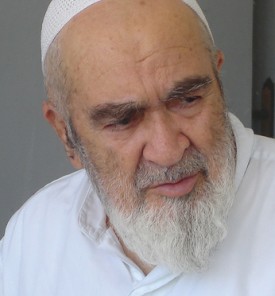
Senior cleric denounces Iranian militia for crackdown

Iran’s most senior cleric denounced the role of the volunteer militia force known as the Basij in the crackdown against protesters, saying the force’s actions were against religion and “in the path of Satan.”

The cleric, Grand Ayatollah Hossein Ali Montazeri, condemned the force in a statement posted on an opposition Web site, mowjcamp.com, decreeing that “the assailants have acted against religion and must pay blood money” to those who were wounded or to their families.

It was the harshest criticism of the militia to date by the ayatollah, who has sided with the opposition leaders. The Basij militia has played an instrumental role in the crackdown; the opposition has said that at least 73 people have been killed since the post-election protests began in June. [continued…]

Facebooktwittermail

Why we should still talk with Iran

Why we should still talk with Iran

Since I was released from Tehran’s notorious Evin Prison last month, the questions have come again and again: Can we still talk to these people? Should the Obama administration engage in dialogue with Iran? What should the West do in nuclear negotiations? After being jailed, interrogated and beaten by the Revolutionary Guards for 118 days for reporting honestly on the disputed June 12 presidential elections, I am often expected to oppose any dialogue. But the West still needs Iran and should continue talking to it — no matter what it has done to people like me.

Inside Evin, I was forced to confess that I was part of an insidious Western media conspiracy to overthrow the regime. I was forced to apologize to Iran’s supreme leader, Ayatollah Khamenei. I was released as suddenly as I was arrested, without explanation. But my interrogator told me to send a message to the world: “We are a superpower. America’s power is waning, and we will soon overtake them. Now that Americans have started this war against us, we will not let them rest in peace.” He paused, perhaps realizing that he sounded defensive. I was a jailed journalist wearing a blindfold, not some sort of spy. (I’m not even American.) He changed the subject to “soft” war, a term Tehran uses to refer to an imaginary war that it says is promoted by the media against the “holy government of the Islamic Republic.” “We will answer their attacks with all our might,” he said.

The Revolutionary Guards are a schizophrenic bunch, plagued by both deep insecurities and a superiority complex. They have ambitions to take over the government and expand their business empire in Iran. At the same time, they are terrified of individuals and groups that question their grip on power. The Guards are the real power base of Khamenei. They are the main supporters of his claim to be Allah’s representative on Earth. One of the most serious charges against me was insulting Khamenei. In a private e-mail I had wondered whether Khamenei has been blinded by power and had lost touch with his people, and if that was why he was answering people’s peaceful demands with brute force. That was enough for my interrogator to kick and punch me for days and to threaten me with execution. [continued…]

Iranian-American faces new spying charge

An Iranian-American scholar, Kian Tajbakhsh, already serving a 15-year prison sentence for spying, is facing a new charge of spying, a family member said Wednesday.

Mr. Tajbakhsh told his wife during a visit at Evin prison in Tehran that he was taken before the Revolutionary Court on Monday, where a judge read new charges against him of “spying for the George Soros foundation,” a reference to the Open Society Institute, a pro-democracy group founded by Mr. Soros, a prominent financier and philanthropist. The accusation was brought by the intelligence section of the Revolutionary Guards, said the family member, who spoke on condition of anonymity for fear of complicating the case.

Mr. Tajbakhsh, an urban planner with a doctorate from Columbia University, was arrested in June after protests broke out over that month’s disputed presidential election, which the opposition says was fraudulent. [continued…]

Hezbollah’s Man in Iran

Ever since his right arm was blown off in Iran’s Damascus embassy in the early 1980’s, he has become more careful about where he goes, and whom with. Some Iranians believe that the beautiful book on Shiite Islam which contained the bomb was sent by the Israelis to Iran’s embassy in Damascus, where he had been working. According to Mohtashamipour, he is lucky that he placed the book on the table first, and opened it sideways. Had he opened it in front of his face, his head would have been ripped off from the explosion.

Although it cannot be confirmed, there is reason to believe the accusations suggesting Israel’s involvement. Ali Akbar Mohtashamipour is, after all, the Iranian who established Hezbollah in Lebanon. The first man who tried and failed was Mostafa Chamran. The U.S.-educated Chamran had a Ph.D. in Electrical Engineering from the University of California, Berkeley. He was then hired as a senior research staff scientist at Bell Laboratories and NASA. However, once the Islamic opposition against the Shah grew, the religious Chamran found his calling back in Iran amongst his fellow revolutionaries. A fervent Islamist who later became Iran’s Defense Minister, he tried at the beginning of 1980 to establish a pro-Iranian group amongst Lebanon’s Shiites. His main target was the Amal movement, which back then was the main representative of the Shiites in Lebanon’s political arena. However, he found that he was unable to convince them to accept Iran’s Velayat-e Faqih (Guardianship of the Jurists) system, whereby Iran’s Supreme Leader would be accepted by them as God’s representative on earth to all the Shiites. Chamran was killed on the battlefront during the war against Iraq in 1981.

In 1982, Mohtashamipour succeeded where Chamran had failed by convincing the new Hezbollah movement to accept Ayatollah Khomeini’s religious authority. The rest, as they say, is history.

You would be forgiven for thinking that Mohtashamipour is treated like a hero in Iran, but the reality is quite different. Many conservatives hate him; despite the fact that he created what many believe is Islamic Iran’s most successful political and military ally in the Middle East. The reason is simple: he is a reformist. [continued…]

Facebooktwittermail

Iran expanding effort to stifle the opposition

Iran expanding effort to stifle the opposition

After last summer’s disputed presidential election, Iran’s government relied largely on brute force — beatings, arrests and show trials — to stifle the country’s embattled opposition movement.

Now, stung by the force and persistence of the protests, the government appears to be starting a far more ambitious effort to discredit its opponents and re-educate Iran’s mostly young and restive population. In recent weeks, the government has announced a variety of new ideological offensives.

It is implanting 6,000 Basij militia centers in elementary schools across Iran to promote the ideals of the Islamic Revolution, and it has created a new police unit to sweep the Internet for dissident voices. A company affiliated with the Revolutionary Guards acquired a majority share in the nation’s telecommunications monopoly this year, giving the Guards de facto control of Iran’s land lines, Internet providers and two cellphone companies. And in the spring, the Revolutionary Guards plan to open a news agency with print, photo and television elements.

The government calls it “soft war,” and Iran’s leaders often seem to take it more seriously than a real military confrontation. It is rooted in an old accusation: that Iran’s domestic ills are the result of Western cultural subversion and call for an equally vigorous response. The extent of the new campaign underscores just how badly Iran’s clerical and military elite were shaken by the protests, which set off the worst internal dissent since the country’s 1979 Islamic Revolution. [continued…]

Facebooktwittermail

Why Iran’s opposition movement muddles nuclear talks

Why Iran’s opposition movement muddles nuclear talks

After more than five months of going it alone, Iran’s opposition Green Movement is reaching out to the United States for help. Via public and private channels, the Obama Administration has received several appeals in recent weeks to take a stronger stand against human-rights abuses in Iran, avoid military action and impose more aggressive and rapid-fire sanctions against the Revolutionary Guards and its vast business interests.

The opposition’s outreach comes as the Administration weighs the next move in its diplomatic effort to resolve the nuclear standoff with Iran. Tehran has effectively rebuffed a confidence-building deal that would ship out the bulk of Iran’s enriched-uranium stockpile to be converted into fuel rods for a medical-research reactor — which would also have added about a year to the time frame within which Iran could weaponize nuclear material. The deal would have offered more time for longer-term diplomatic negotiations. As a result, President Obama has begun trying to rally international support for a new round of sanctions. (See pictures of people around the world protesting Iran’s election.)

Washington has struggled since the disputed June 12 presidential election to figure out how to engage the regime without undermining the opposition. Now it has begun to hear answers from the Green Movement itself. [continued…]


Watch CBS News Videos Online

Iran’s death penalty is seen as a political tactic

A flurry of executions and death sentences in Iran has raised concern that the government is using judicially sanctioned killing to intimidate the political opposition and quell pockets of ethnic unrest around the nation, human rights groups and Iran experts said.

In Iran, where there is precedent for executions to surge in the wake of a crisis, human rights groups said there was mounting evidence that the trend had emerged in response to the political tumult that followed the June presidential election. This month, a fifth person connected to the protests was sentenced to death.

In at least one instance, a Kurdish activist was hanged after the government added a new charge, raising concerns that cases with political overtones were drawing more serious penalties.

In the short period between the disputed June election and the inauguration of President Mahmoud Ahmadinejad in August, 115 people were executed, according to statistics compiled by human rights groups from Iranian news agencies. Though the executions mostly involved violent criminals and drug dealers, the number and pace of the killings appeared to be sending a message to the opposition, said human rights groups and Iran experts. [continued…]

Facebooktwittermail