The New York Times reports: Sunni militants consolidated and extended their control over northern Iraq on Wednesday, seizing Tikrit, the hometown of Saddam Hussein, threatening the strategic oil refining town of Baiji and pushing south toward Baghdad, their ultimate target, Iraqi sources said.
As the dimensions of the assault began to become clear, it was evident that a number of militant groups had joined forces, including Baathist military commanders from the Hussein era, whose goal is to rout the government of Prime Minister Nuri Kamal al-Maliki. One of the Baathists, Izzat Ibrahim al-Douri, was a top military commander and a vice president in the Hussein government and one of the few prominent Baathists to evade capture by the Americans throughout the occupation.
“These groups were unified by the same goal, which is getting rid of this sectarian government, ending this corrupt army and negotiating to form the Sunni Region,” said Abu Karam, a senior Baathist leader and a former high-ranking army officer, who said planning for the offensive had begun two years ago. “The decisive battle will be in northern Baghdad. These groups will not stop in Tikrit and will keep moving toward Baghdad.”
The sudden successes of the militant forces sent hundreds of thousands of people running, some literally, from the new outbursts of violence, panicked leaders in Turkey and Syria and revived memories of bloody American struggles to wrest the same places — Mosul and Tikrit — from jihadist fighters a decade ago.
By late Wednesday, the Sunni militants, many aligned with the radical Islamic State of Iraq and Syria, were battling loyalist forces at the northern entrance to the city of Samarra, about 70 miles north of Baghdad. The city is known for a sacred Shiite shrine that was bombed in 2006, during the height of the American-led occupation, touching off a sectarian civil war between the Sunni minority and Shiite majority.
Militant commanders were reportedly threatening to destroy the shrine if its defenders refused to lay down their arms, while hundreds of Shiite fighters were said to be heading north from Baghdad to confront the attackers.
As Iraqi government forces crumbled in disarray before the assault, there was speculation that they may have been ordered by their superiors to give up without a fight. One local commander in Salahuddin Province, where Tikrit is located, said in an interview Wednesday: “We received phone calls from high-ranking commanders asking us to give up. I questioned them on this, and they said, ‘This is an order.’ ”
Residents of Tikrit reported remarkable displays of soldiers handing over their weapons and uniforms peacefully to militants who ordinarily would have been expected to kill government soldiers on the spot. [Continue reading…]
Category Archives: Iraq
Will Iran intervene in Iraq?
IranWire reports: “The border patrol has increased its vigilance on the Iran-Iraq border,” said Iran’s Police Chief, Esmail Ahmadi Moghaddam. “The country’s Supreme National Security Council would consider intervening to protect Shia shrines and cities.”
Ahmadi-Moghaddam has been the only high-ranking Iranian official to comment on the advances made by the Sunni extremist group Islamic State in Iraq and Syria (ISIS). According to IranWire sources, Iranian officials have been ordered to remain quiet about the events in neighboring Iraq and ISIS victories. “Iranian officials have been told not to comment, or else,” said a wary former high-ranking Iranian diplomat to IranWire.
According to the former diplomat Iranian plans in Iraq are summarized in the wisdom of one man, “We all know that Haj Ghassem is hard at work trying to control the situation,” referring to Ghassem Suleimani, the legendary commander of the Quds Force, Iran’s Revolutionary Guards Extraterritorial Force, and perhaps the closest person to Iran’s Supreme Leader Ayatollah Ali Khamenei. “Our forces will do whatever it takes to protect the border, and the holy shrines from this bunch of thugs. And ISIS are nothing, but a group of hooligans. They know what can happen if Iran gets involved in the situation, and that is why they are in such a hurry to carry out their dirty acts.”
Iran’s designs in Iraq, and the rest of the Middle East, have been looked at with a degree of cynicism and fear. Many Arab diplomats regard Persian Iranians as untrustworthy neighbors who secretly ally themselves with anyone to protect their interests.
Last week a member of Syrian opposition accused Iran of secretly helping ISIS. According to Abdul Halim Khaddam, the former vice president to Syria’s Bashar Assad, Iran is arming ISIS in order to undermine the Syrian opposition. By strengthening ISIS, Khaddam claimed, Iran was seeking to draw Syrian public sentiment back toward Assad, recasting the battle as Bashar’s battle against extremist onslaught.
Iranian Foreign Minister Mohammad Javad Zarif categorically denied this accusation. He said Iran has been battling Salafi extremists and Al-Qaeda itself for years, and would never stoop to such measures. [Continue reading…]
Kurdish troops in control of Kirkuk
The New York Times reports: Kurdish officials said on Thursday that their forces had taken full control of the strategic oil city of Kirkuk in northern Iraq, after government troops abandoned their posts there and disappeared, introducing a new dimension into the swirling conflict propelled by Sunni militants pressing south toward Baghdad.
“The army disappeared,” said Najmaldin Karim, the governor of Kirkuk.
[…]
Unlike the Iraqi national army, the Kurdish forces, known as pesh merga, are disciplined and very loyal to their leaders and their cause: autonomy and eventual independence for a Kurdish state. The Kurds’ allegiance to the Shiite Arab-led Iraqi central government is limited, but neither are they known to be allied with the Sunni Arab militants. Many of the tens of thousands of Mosul residents who fled the militant takeover of the city have sought safety in Kurdish-controlled areas. [Continue reading…]
The rapid advance of ISIS across Iraq
For those who say ISIS doesn’t have a strategy. #blackgold pic.twitter.com/ILeEko1W0L
— Aaron Y. Zelin (@azelin) June 11, 2014
At Blogs of War, John Little describes: the massive upsurge in ISIS’s strength and capabilities. The group now:
- Controls significant territory in northern and central Iraq
- Has seized an untold, but undoubtedly significant, amount of operations-fueling cash from Iraqi banks.
- Has captured vast amounts of military hardware and weapons from Iraqi forces – much of it supplied by the United States.
- Controls a significant portion of Iraq’s oil production facilities and will likely control more soon.
- Is surprisingly close to realizing their goal of an Islamic state that spans Iraq and Syria.
I could go on. Bad news is flooding in around the clock. This is a tremendously worrying destabilization that will create an environment in which only really terrible things happen. Jessica Lewis and Ahmed Ali of ISW have given some thought to where all of this is heading and paint a pretty dire picture:
Iraq’s security forces will not be able to retake all of the ground they have lost. They may not even be able to hold what they still have. The best-case scenario is a stalemate in which Iraqis manage to contain the ISIS state and army for now. The more likely case is the creation of another Syrian-style conflict pitting ISIS with increasing international support against desperate and increasingly brutal Iraqi Shi’a militias and ISF elements. The two civil wars, which have now completely merged, will continue to expand, destabilizing an already unstable Middle East and inviting further intervention by the Sunni Arab states and Iran. In the very worst case, the fall of Mosul could be a step down the path to outright regional war.
If there is any hope at all, and I am not sure that there is, it might be in that ISIS has overextended itself and the terrible performance by Iraqi forces has made them appear far more formidable than they actually are. [Continue reading…]
Bloomberg reports: As his army flees from an al-Qaeda splinter group, Iraqi Prime Minister Nouri al-Maliki is rallying Shiite militias to defend his government, raising the specter of civil war in OPEC’s second-biggest oil producer.
In a televised news conference yesterday Maliki urged citizens to take up arms after the Islamic State of Iraq and Levant group seized control of the northern city of Mosul, stealing weapons and helicopters from police and army bases as Iraqi government forces fled. He vowed to build an army of volunteers to “pull the thorns out by ourselves.”
By countering Sunni militants with elements of his own Shiite support, Maliki risks reigniting the sectarian conflict that flared after the 2003 U.S. invasion that led to the ouster of Saddam Hussein. At its worst, in 2006 and 2007, thousands of civilians were losing their lives every month.
“The unleashing of the Shia militias was a driver of the civil war,” said Julien Barnes-Dacey, a senior Middle East and North African analyst at the European Council on Foreign Relations, in a telephone interview. “The question is, will Maliki try to maintain order over these militias or will the level of conflict spiral into something deeper?” [Continue reading…]
Fred Kaplan writes: The collapse of Mosul, Iraq’s second-largest city, has little to do with the withdrawal of American troops and everything to do with the political failure of Prime Minister Nouri al-Maliki.
As the U.S. pullout began under the terms of a treaty signed in 2008 by then-President George W. Bush, Maliki, the leader of a Shiite political party, promised to run a more inclusive government — to bring more Sunnis into the ministries, to bring more Sunnis from the Sons of Iraq militia into the national army, to settle property disputes in Kirkuk, to negotiate a formula on sharing oil revenue with Sunni districts, and much more.
Maliki has since backpedaled on all of these commitments and has pursued policies designed to strengthen Shiites and marginalize Sunnis. That has led to the resurgence of sectarian violence in the past few years. The Sunnis, finding themselves excluded from the political process, have taken up arms as the route to power. In the process, they have formed alliances with Sunni jihadist groups — such as the Islamic State of Iraq and Syria, or ISIS, which has seized not just Mosul but much of northern Iraq — on the principle that the enemy of their enemy is their friend. [Continue reading…]
Much as many Americans inside and outside government may now be inclined to view the advance of ISIS as Iraq’s problem, it shouldn’t be forgotten that the jihadist group’s leader, Abu Bakr al-Baghdadi, was held in American custody until his release in 2009.
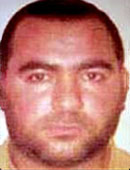
The FBI “most wanted” mugshot shows a tough, swarthy figure, his hair in a jailbird crew-cut. The $10 million price on his head, meanwhile, suggests that whoever released him from US custody four years ago may now be regretting it.
Taken during his years as a detainee at the US-run Camp Bucca in southern Iraq, this is the only known photograph of Abu Bakr al-Baghdadi, the new leader of al-Qaeda in Iraq and Syria. But while he may lack the photogenic qualities of his hero, Osama bin Laden, he is fast becoming the new poster-boy for the global jihadist movement.
For anyone who has any doubts about the brutality of ISIS, then if you can stomach it, watch some of “The Clanging of the Swords.” This recently released movie could be described as Tarantino-style jihad — repulsive to most people, but presumably appealing to young men who want to kill in the name of Islam.
Increased use of barrel bombs in Mideast, Africa
The Associated Press reports: Governments in the Mideast and Africa, in desperate efforts to gain battlefield ground, are using barrel bombs against their enemies, launching the cheap, quickly manufactured weapons as a crude counter to roadside blasts and suicide explosions that insurgents have deployed for years.
New evidence of their use in Iraq, after being dropped on civilians in Syria and Sudan, has raised concerns that governments in unstable nations will embrace them.
Described as “flying IEDs,” or improvised explosive devices, barrel bombs have the power to wipe out a row of buildings in a single blast. They can kill large numbers of people, including those not targeted.
“It’s fair to say that a lot of governments are losing control of the counterinsurgency,” said Michael Knights, an analyst at the Washington Institute for Near East Policy. “They’re also watching what they see in Syria, and they feel like their air power is what is making the difference.” [Continue reading…]
Iraq’s Maliki ‘wins most seats in parliamentary polls’
BBC News reports: Prime Minister Nouri Maliki’s alliance won last month’s parliamentary elections in Iraq, but fell short of a majority, preliminary results show.
The electoral commission said State of Law had taken 92 of the 328 seats in the Council of Representatives.
Its two main Shia rivals, Ammar al-Hakim’s Muwatin and the Ahrar movement loyal to Moqtada al-Sadr, followed with a combined 57 seats.
Mr Maliki wants a third term, but other parties have voiced strong opposition.
They blame him for the sectarian violence that has left more than 3,000 people dead this year, and accuse him of trying to monopolise power. [Continue reading…]
Thousands flee Iraq assault on opposition-held Fallujah
Reuters reports: Thousands of civilians have fled Fallujah since last week after the Iraqi military intensified shelling in a new bid to crush a five-month old Sunni uprising, killing scores of people in what residents describe as massive indiscriminate bombardment.
The mortars, artillery and what residents call “barrel bombs” rained for at least seven days on Fallujah — a city that was the nemesis of US troops a decade ago and is now the main battle ground in a war pitting the Shiite-led government against rebellious Sunni tribal chiefs and an al-Qaeda offshoot.
More than 420,000 people have already escaped the two main cities of western Anbar province, Fallujah and Ramadi, in fighting since the start of the year. Residents say the new pounding of Fallujah’s residential neighborhoods appears aimed at driving out all remaining civilians in preparation for an all-out assault to defeat armed groups once and for all.
Prime Minister Nouri al-Maliki, who is trying to cobble together a coalition to keep himself in office for a third term after an April 30 parliamentary election, has vowed to destroy fighters who seized parts of Anbar province last year. [Continue reading…]
ISIL jihadists open new front in Baghdad push
AFP reports: A powerful jihadist group inspired by Al-Qaeda has opened a new battlefront with Iraqi security forces that could see it try to push into Baghdad, officials and analysts warn.
The latest clashes, just weeks before parliamentary elections, raise key questions over the capacity of the army and police to repel militant attacks.
Anti-government fighters currently hold all of Fallujah, a town that is just a short drive from Baghdad, and other pockets of territory.
The push by the Islamic State of Iraq and the Levant (ISIL) into the Abu Ghraib area, sparking clashes in nearby Zoba and Zaidan, as well as a failed assault on a military camp in Yusifiyah, illustrate the group’s ambition, even with Fallujah under military siege.
In perhaps the most worrying sign of ISIL’s capabilities, anti-government fighters paraded with dozens of vehicles last week in broad daylight in Abu Ghraib, just 20 kilometres (12 miles) from the capital, according to witnesses and videos posted to YouTube. [Continue reading…]
How Assad created a haven for al Qaeda in Syria
Peter Neumann lays out the history of Bashar al-Assad’s nurturing and manipulation of jihadists in Syria, as a consequence of which for most of 2003 the bulk of foreign fighters joining the insurgency in Iraq were Syrians.
The most significant, long-term consequence of Assad’s policy arose from the opening up of Syria to international jihadist networks. Before he turned his country into a transit point for foreign fighters, Syrian jihadists had been largely homegrown. If international links existed, they were to neighbouring countries. Al-Qaida had always had prominent Syrians as members – the strategist Abu Musab al-Suri, for example, or Abu Dahdah, who was sentenced to a lengthy prison term in Spain – but they had fled the country in the early 1980s, and there is no evidence that they directed jihadist activities inside Syria, sought to organise them, or even showed any interest in doing so. The terrorism experts were not entirely wrong, therefore, in believing that – for some time at least – Syria was outside al-Qaida’s orbit.
This changed in 2003 when Assad allowed the jihadists in his country to link up with Zarqawi and become part of a foreign fighter pipeline stretching from Lebanon to Iraq, with way points, safehouses and facilitators dotted across the country. With the active help of Assad’s intelligence services, Syria was opened to the influx – and influence – of experienced and well-connected jihadists from Libya, Saudi Arabia, Algeria, Tunisia, Yemen and Morocco, who brought with them their contact books, money and skills. Within a few years, the country ceased to be a black spot on the global jihadist map: by the late 2000s it was familiar terrain to foreign jihadists, while jihadists from Syria had become valued members of al-Qaida in Iraq, where they gained combat experience and acquired the international contacts and expertise needed to turn Syria into the next battlefront.
When the current conflict broke out, it was hardly surprising that jihadist structures first emerged in the eastern parts of the country, where the entry points into Iraq were located, and in places like Homs and Idlib, which were close to Lebanon; or that it was jihadists – not the Muslim Brothers – who could offer the most dedicated and experienced fighters with the skills, resources, discipline and organisation to hit back at the government. They were also the ones who found it easiest to prevail on international networks of wealthy sympathisers, especially in the Gulf, to supply weapons and funding. The clearest example is the Islamic State of Iraq and Greater Syria (ISIS), a viciously sectarian player in the current conflict, descended from Zarqawi’s al-Qaida in Iraq, which draws on the same networks and supply lines that enabled the transfer of fighters from Syria to Iraq – except that now, of course, the traffic flows in both directions.
Given the history and genesis of groups like ISIS, many Syrian opposition figures now claim that the jihadist groups in Syria are puppets of Assad, and that they continue to be used and manipulated by Syrian intelligence in its efforts to discredit the revolution, divide the opposition and deter the West from intervening on their behalf. Indeed, there can be little doubt that many of the older and more senior figures in groups like ISIS will have records with Syrian intelligence, and that some are likely to be collaborating with the regime. Nor is there any question that the Syrian government, which is fighting large numbers of secular defectors from its own forces, has an interest in portraying the opposition as crazy fanatics, or that some of its actions – such as releasing more Islamists from Sednaya prison, or sparing ISIS-controlled areas from attack – have been designed to strengthen the jihadists vis-à-vis their rivals. There still is no solid evidence, however, that the jihadists as a whole are controlled by the regime, despite repeated announcements by opposition figures that such evidence would be forthcoming. No one doubts that jihadist groups in Syria draw on external support and international networks, including foreign fighters from across the Middle East and even Europe. But the reason they were able to mobilise them – and mobilise them quickly – is that Assad’s government had helped to set them up.
Once an Arab model, Baghdad now world’s worst city
AFP reports: As recently as the 1970s, Baghdad was lauded as a model city in the Arab world. But now, after decades of seemingly endless conflict, it is the world’s worst city.
That is, at least, according to the latest survey by the Mercer consulting group, which when assessing quality of life across 239 cities, measuring factors including political stability, crime and pollution, placed Baghdad last.
The Iraqi capital was lumped with Bangui in the conflict-hit Central African Republic and the Haitian capital Port-au-Prince, the latest confirmation of the 1,250-year-old city’s fall from grace as a global intellectual, economic and political centre.
Residents of Baghdad contend with near-daily attacks, a lack of electricity and clean water, poor sewerage and drainage systems, rampant corruption, regular gridlock, high unemployment and a myriad other problems.
“We live in a military barracks,” complained Hamid al-Daraji, a paper salesman, referring to the ubiquitous checkpoints, concrete blast walls and security forces peppered throughout the city.
“The rich and the poor share the same suffering,” the 48-year-old continued. “The rich might be subjected at any moment to an explosion, a kidnapping, or a killing, just like the poor.
“Our lives are ones where we face death at any moment.”
It was not always so for the Iraqi capital. [Continue reading…]
Iraqi forces, images testify to atrocities in new fighting
Reuters reports: The video shows a male corpse lying in the dirt, one end of a rope tied around his legs, the other fastened to the back of an armored Humvee.
Men in Iraqi military uniforms mingle by the vehicle. Someone warns there might be a bomb on the body. One hands another his smartphone. Then he stands over the body, smiles, and offers a thumbs-up as his comrade takes a photo. The Humvee starts to move, dragging the dead man behind it into the desert.
The short video was shown to Reuters last week by an Iraqi national police officer. It captures what appear to be Iraqi soldiers desecrating the corpse of a fighter from the Islamic State of Iraq and Levant (ISIL), a group reconstituted from an earlier incarnation of al Qaeda in Iraq.
“This is very normal,” said the Baghdad-based police officer, who has many friends now fighting around the Sunni city of Ramadi. “Our guys get killed at the hands of al Qaeda. Why don’t we do the same to them? This is self-defense.”
Almost three months after Prime Minister Nuri al-Maliki declared war on Sunni militants in Iraq’s western Anbar province, the fighting seems to have descended into a series of brutal atrocities, often caught on video and in photographs by both militants and Iraqi soldiers. [Continue reading…]
Muqtada al-Sadr lambastes Maliki as dictator, looter and resigns from politics (again)
Mustafa Habib writes: He ended his ten year-long political campaign in a televised speech lasting around 11 minutes. In that speech Iraqi cleric Muqtada al-Sadr said a number of disturbing things: that current Iraqi Prime Minister Nouri al-Maliki is a dictator, that Iraq’s Parliament is paralyzed and that the country’s judiciary is too politicized.
But perhaps the most disturbing things were the questions left unanswered. And there were many.
Al-Sadr was born in 1973, the child of a well known and well respected Shiite Muslim family, based in Najaf. As the Middle East Quarterly reported back in 2004, he is “the fourth son of Ayatollah Muhammad Sadiq al-Sadr, who was, between 1992 and 1999, one of the most renowned leaders in the Hawza, the centre of Shiite religious seminaries and scholarship”. Muqtada’s father “cultivated good relations with the predominantly Shiite tribes of central and southern Iraq, even publishing a book on tribal Islamic jurisprudence,” the journal wrote.
The Sadr family were persecuted during the regime of former Iraqi leader Saddam Hussein and after the death of his father and two brothers at, most likely, the hands of government assassins, Muqtada assumed a leadership role in the family – and therefore with their many followers.
And after many years of guiding those followers – in both bad, violent times that saw them take military action against the US as well as in calmer times, when he disarmed the Sadrist militia – it appears that al-Sadr is now ready to stand down.
“I will not interfere in political affairs,” al-Sadr said in his statement of resignation on Saturday. “There is no political entity that represents me anymore nor any position in parliament or government.”
In order to clarify his decision, al-Sadr then made a televised speech on Tuesday in which he said his decision was irreversible. [Continue reading…]
Iraq offers $17,200 reward for killing jihadists
BBC News reports: Iraq’s government has offered a reward of $17,200 (£10,300) for each foreign militant killed from al-Qaeda or the Islamic State in Iraq and the Levant (ISIS), a former affiliate.
A larger reward of $25,800 (£15,500) is being offered for the capture of militants belonging to the two groups.
The announcement was made on the website of the ministry of defence.
Al-Qaeda and ISIS have been blamed by the authorities for the surge in sectarian violence over the past year.
Moqtada al-Sadr quits politics
AFP reports: Powerful Shiite cleric Moqtada al-Sadr, leader of a major political movement and a key figure in post-Saddam Iraq, has announced his exit from politics two months before elections.
The decision, if confirmed as permanent, brings to a close a political career that began with his fierce opposition to the US military presence in Iraq, and has spanned more than a decade.
“I announce my non-intervention in all political affairs and that there is no bloc that represents us from now on, nor any position inside or outside the government nor parliament,” Sadr said in a written statement received by AFP on Sunday.
Ahead of legislative elections in April, Sadr’s movement currently holds six cabinet posts as well as 40 seats in the 325-member parliament.
He also said his movement’s political offices will be closed, but that others related to social welfare, media and education will remain open.
It was not immediately clear if the move was temporary or permanent, with Sadrist officials saying they had been taken by surprise and could not clarify. [Continue reading…]
ISIS suicide bomb instructor kills most of his Iraqi students by accident
The New York Times reports: A group of Sunni militants attending a suicide bombing training class at a camp north of Baghdad were killed on Monday when their commander unwittingly conducted a demonstration with a belt that was packed with explosives, army and police officials said.
The militants belonged to a group known as the Islamic State of Iraq and Syria, or ISIS, which is fighting the Shiite-dominated army of the Iraqi government, mostly in Anbar Province. But they are also linked to bomb attacks elsewhere and other fighting that has thrown Iraq deeper into sectarian violence.
Twenty-two ISIS members were killed, and 15 were wounded, in the explosion at the camp, which is in a farming area in the northeastern province of Samara, according to the police and army officials. Stores of other explosive devices and heavy weapons were also kept there, the officials said. [Continue reading…]
The Iraqi re-awakening
Mark Perry writes: Gen. Raad al-Hamdani holds a unique place among Iraqi military commanders: He openly confronted Saddam Hussein — and lived.
The incident occurred during a high-level briefing in the summer of 2002. A war with the U.S. was looming, but Saddam told Hamdani not to worry. There won’t be a war, he said confidently, because the American people “have no taste for blood.”
Hamdani, who commanded six divisions in Saddam’s elite Republican Guard Corps and was viewed as one of his country’s toughest fighters, disagreed. The Americans would not only invade, he responded — their plan was to occupy Baghdad after a lightning campaign. The only way to fight them, he argued, was to “bleed them slowly” in a series of delaying actions.
Saddam might easily have lost his temper, but he smiled and dismissed his general’s prediction. After all, there was good reason to value Hamdani’s knowledge: He not only owned a library filled with books on America’s World War II campaigns, he was known for his obsessive study of U.S. military tactics. Saddam regularly taunted him about his obsession, calling him “my American General.”
After his conference with Saddam, Hamdani returned to his command. Less than a year later, his divisions fought the U.S. Marines in Nasiriyeh, but failed to hold the southern Iraqi city’s bridges. Without air power, Hamdani’s army didn’t stand a chance; most of his units were destroyed. After Saddam was toppled, Hamdani returned to his home in Baghdad where, one night, American soldiers burst through his door, wrestled him to the ground, and questioned him. Hamdani was enraged.
The experience didn’t rob Hamdani of his courage. After his questioning — and after receiving death threats from Iraq’s new Shiite-dominated government — he moved to Amman. From there, he worked with Anbar tribal leader Talal al-Gaood to kick-start a political opening with the U.S. military that led to the Anbar Awakening. Hamdani’s idea, proposed in a quiet meeting with U.S. Marine Corps officers in an Amman hotel in July 2004, was to arm Anbar’s Sunni militias to face off against Islamic extremists flooding into the province from Syria. Anbar’s insurgents, he told his U.S. military interlocutors, had at least one thing in common with their American occupiers — they both hated al Qaeda.
Gaood established a think tank called the Iraq Futures Foundation in Amman in the summer of 2005, and signed Hamdani on as the organization’s military advisor. The think tank’s goal was to unite Anbar’s tribes against the al Qaeda threat. While it took many months for this vision to be realized, their pioneering work — alongside officers of the U.S. 1st Armored Division — resulted in the formation of the Anbar Awakening Council. The council fought off al Qaeda, empowered Anbar’s Sunnis, and returned the province to political and economic stability.
Hamdani, who is still living in Amman, is now increasingly concerned that his achievements in Anbar are unraveling. Over the last few months, he’s watched with growing alarm as Prime Minister Nouri al-Maliki cracked down on an anti-government protest movement in the province, laying the groundwork for the resurgence of al Qaeda.
His worries are shared by current and former U.S. military officials, who believe that Iraq will need to build another Awakening to defeat al Qaeda, but are convinced the obstacles to doing so will be even more daunting this time around.
Maliki appears to be preparing the Iraqi Army for a renewed assault on Anbar province. His forces shelled the outskirts of the cities of Fallujah and Ramadi on Monday, Feb. 3, and the Iraqi Defense Ministry claimed that the attacks killed 57 militants.
The violence has returned Anbar to the dark days of 2004 and 2005, when hundreds of U.S. soldiers lost their lives battling a jihadist insurgency there.
“People who know Iraq and Anbar best saw this coming as early as this last summer,” a former senior advisor to both Donald Rumsfeld and Robert Gates told me. “Maliki kept poking at Anbar, inflaming the tribes. It was an absolutely cynical power play. He figured the angrier Anbar got, the more he could pose as Iraq’s strongman. He thought he’d be viewed as the defender of the Shias and win himself another term as prime minister.”
But by cracking down on Anbar’s Sunnis, the Iraqi premier set the stage for a full-blown uprising. [Continue reading…]
Iraq: Execution of SWAT forces furthers crimes against humanity
Human Rights Watch: The execution-style killing of four members of Iraq’s SWAT forces, apparently by the ISIS armed group, is the latest atrocity in a campaign of widespread and systematic murder that amounts to crimes against humanity, Human Rights Watch said today.
Men presenting themselves as members of the Islamic State of Iraq and the Sham (ISIS) claimed responsibility for the killings, which took place near Ramadi on January 20, 2014. A video posted online showed ISIS members firing on and disabling the last truck of a SWAT convoy.The ISIS members then take four SWAT members into custody, interviewing them in front of an ISIS flag, and shooting them in the back of their heads.
“These abhorrent killings are the latest in a long list of ISIS atrocities, at a time when civilians in Anbar province are stuck in the fighting and getting abused by all sides,” said Joe Stork, deputy Middle East director at Human Rights Watch. “Together with the ISIS car bombs and suicide attacks targeting civilians, they are further evidence of crimes against humanity.” [Continue reading…]
With Assad regime in stronger position, chemical weapons disarmament stalls
The Institute for the Study of War has released a new report: The Assad regime’s military position is stronger in January 2014 than it was a year ago and remains committed to fighting for Damascus, Homs, and Aleppo. Nonetheless, the conflict remains at a military and political deadlock.
In the spring of 2013 the regime lacked the necessary manpower to conduct simultaneous operations on multiple fronts against rebel groups that were quickly making gains throughout the north, south, and Damascus countryside. The Syrian Arab Army (SAA) had sustained more losses than it could replenish. It relied on air assets to resupply besieged troops in its Aleppo and Idlib outposts because it lacked overland logistical lines connecting those outposts. The regime had contracted its military footprint to Damascus and Homs in order to its secure supply lines while rebels contested Homs, the lynchpin of the regime’s logistics system that connected Damascus to Aleppo and to the coast.
The Syrian regime has since been resuscitated by infusions of men and materiel from Iran, Hezbollah, and Russia and from the formalization of pro-regime militias under the National Defense Forces. This report will lay out the changes in the regime’s strategy and conduct of the campaign that allowed it to regain some of its strength. It will also lay out how opposition movements have attempted to conduct multiple, sometimes competing campaigns of their own against the regime. [See the complete report.]
Reuters reports: Syria has given up less than 5 percent of its chemical weapons arsenal and will miss next week’s deadline to send all toxic agents abroad for destruction, sources familiar with the matter said on Wednesday.
The deliveries, in two shipments this month to the northern Syrian port of Latakia, totaled 4.1 percent of the roughly 1,300 tonnes of toxic agents reported by Damascus to the Organisation for the Prohibition of Chemical Weapons (OPCW), said the sources, who spoke on condition of anonymity.
“It’s not enough and there is no sign of more,” one source briefed on the situation said.
Meanwhile, the Washington Post reports: In his battle against an al-Qaeda-led insurgency in western Iraq, Prime Minister Nouri al-Maliki’s is providing arms and funds to unnatural bedfellows – Sunni tribesmen who complain of being neglected by his Shiite-dominated government.
The government has trucked weapons and approved millions of dollars in payments to tribesmen in Anbar province in a bid to win their help ousting al-Qaeda-linked fighters who took over the cities of Fallujah and Ramadi earlier this month. The United States is also speeding up its supply of small arms to Iraq, urging them to pass them on to tribesmen.