



The Guardian reports: The past six months have not been good for Isis. In addition to mounting losses on the battlefield, the organisation has been struggling to dominate the information war despite the enormous resources it devotes to shaping its message.
Central to Isis’s anger has been the activist group Raqqa Is Being Slaughtered Silently (RBSS). It numbers roughly 100 members who for more than a year have chronicled airstrikes, terror attacks, executions and other events in the Syrian city, often in real time. Life in the so-called caliphate is detailed without gloss or spin. No one else has been able to offer such insight into the organisation’s stronghold. And none have paid a bigger price for trying.
Late last year, Isis cut the internet and satellite television connections to Raqqa. It announced that anyone caught collaborating with the group would be killed, and it set about trying to weed out agents across the city and within its own ranks. According to one Isis member spoken to by the Guardian, the group has put extra resources into counter-espionage.
Since then at least four prominent activists and journalists have been killed, including three who were living and working in Turkey.
“The situation is getting more and more difficult, especially after the assassinations in Turkey,” said one member of the Raqqa group. “We are under immense pressure inside and outside Syria. Many activists have shut down their accounts and reduced their work in the areas under Isis control. Others [have remained] more driven to challenge Isis and continue their work relying on Thuraya phones and constantly changing their locations and contact details. We can still manage to get information from inside Isis but video has become more difficult now. They have built tremendous fear inside people.”
Another member of the group, who also insisted on remaining anonymous, said: “We have been receiving lots of death threats since 2012 but the situation right now is extremely dangerous. All I can do is move house every month or so and move cities. We ran away from Syria to Turkey for a safe place to work and live in but now Turkey has become as dangerous as Syria. [Continue reading…]
Syria Deeply sought the opinion of several experts. Nader Hashemi said: In broad terms, the recent fallout only serves to entrench existing positions. These positions have long solidified over the course of the past five years. The recent deterioration of relations and antagonism between Saudi Arabia and Iran do not, in my reading, fundamentally change this dynamic.
The fallout at this stage does not completely undermine the Vienna Peace Process. Both Saudi and Iran, over a series of several meetings, basically agreed to a broad framework that was enshrined in a U.N. Security Council Resolution 2254 on December 18. Now the ball is out of the court of the Iranians and Saudis and is in the court of the Syrian actors and Staffan de Mistura. That’s the next stage of the Vienna process – to try and bring Syrians from both the Assad regime and the opposition around the table. Thus, at this stage, Iran and Saudi Arabia really don’t have much to contribute. Perhaps, as a result of recent events, they might decide to take a more hardline stance when it comes to determining which Syrian rebel groups are terrorists and can have a seat at the table and which cannot.
I’m very skeptical about the Vienna Process. I think it was essentially dead on arrival because it assumes that after five years of a neo-genocidal war, and having already gone down this road before in Switzerland in January 2014 with Lakhdar Brahimi, that somehow something substantial has changed. Why should anyone assume that just because the regional and international powers have agreed to a broad framework, all of the Syrian participants in this conflict are going to meet in Geneva at the end of January, kiss and make up, and agree to some unity government and peace plan? There is little room for optimism on this point. [Continue reading…]
TSG IntelBrief: In a region beset with chronic and widespread problems, ranging from poor governance, war, violent extremism, and resource scarcity, one threat stands above the rest in terms of potential for destruction and cost in opportunity: the use of sectarianism as a geopolitical weapon. Sectarianism encourages extremist rhetoric and violence and serves to distract a populations from economic and social concerns by providing a convenient enemy on which to focus. While the Sunni-Shi’a divide is as old as Islam, current divisions are driven far more by regional rivalries and political gamesmanship than by religion, though the latter remains a primary factor.
While sectarianism as a geopolitical weapon is nothing new, its use is reaching new heights while its consequences find new lows. The current era of sectarianism stems, in part, from the 2003 Iraq War. The shift in Sunni-Shi’a power dynamics in Iraq triggered regional quakes that are still being felt today. It is difficult to overstate how Saudi Arabia’s fears of an ascendent Iran—now, with an Iraqi ally—have led to more than a decade of Saudi maneuvers driven by sectarian concerns. The sectarian war wanted so badly by Abu Mus’ab al-Zarqawi—founder of the group that would become the so-called Islamic State—has metastasized far from Anbar and Baghdad, and morphed into both direct and proxy warfare. [Continue reading…]
Guy Verhofstadt writes: t is highly likely that David Cameron’s British referendum on membership of the European Union will take place at some point in 2016. Despite the fact that the respective “leave” and “remain” campaigns have yet to begin in earnest, a host of world leaders, including Barack Obama and those of most European and many commonwealth countries, have been privately urging David Cameron and his Conservative party against a “Brexit”.
Despite the economically illiterate central tenets of the leave campaign – that a Brexit will somehow enable Britain to “go global” – it is striking that very few countries, if any, have been campaigning for Britain to leave the EU. This is perhaps because a significant number of countries have committed time and resources to negotiating trade agreements with the EU, of which Britain is such an important part.
Thanks to the hard work of the many British civil servants in Brussels, the EU is now negotiating fully fledged free-trade agreements with Australia, New Zealand, Japan and the US. A deal with Canada is already concluded. The notion that these countries would relish the possibility of negotiating a separate trade agreement with Britain, or indeed that Britain would secure preferential trade deals by leaving the world’s largest common market, is absurd.
British people should reflect on the fact that the only leader who would stand to gain from a British withdrawal from the European Union is Vladimir Putin. There are several reasons for thinking this. [Continue reading…]
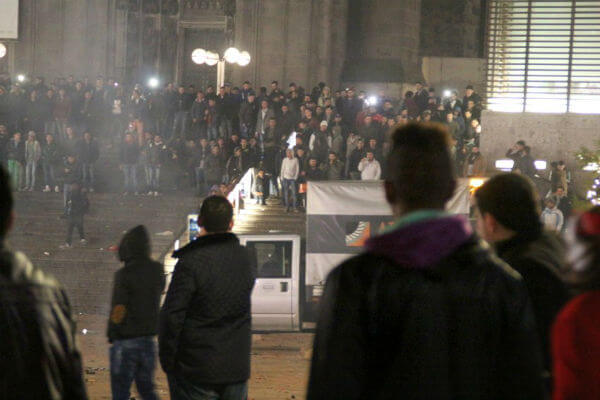
On New Year’s Eve, as many as 1,000 young men who according to police and witnesses were of north African and Arab appearance, took part in mass sexual violence and assaults on women outside the railway station in the German city of Cologne. BBC News reports that more than 100 women and girls have come forward with reports of sexual assault and robbery.
One victim, named as Busra, spoke of a sense of lawlessness outside the station, where the attackers felt they could do as they pleased.
“They felt like they were in power and that they could do anything with the women who were out in the street partying,” she said.
“They touched us everywhere. It was truly terrible.”
One of the most obvious parallels that is now being drawn is with the mass sexual assaults in Cairo that, as The Guardian reported in 2013, “have been endemic at Tahrir protests since at least the 2011 revolution”.
An internal report by Germany’s national police, the Bundespolizei, obtained by Der Spiegel, lists police officers’ experiences including one who quoted a suspect as saying: “I’m a Syrian! You have to treat me kindly! Mrs. Merkel invited me.”
Cologne’s mayor, Henriette Reker, has drawn scorn by suggesting that young women and girls need to protect themselves by adopting a code of conduct which includes, as The Independent reports, “maintaining an arm’s length distance from strangers, to stick within your own group, to ask bystanders for help or to intervene as a witness, or to inform the police if you are the victim of such an assault.”
As the accounts of victims of the attacks make clear, such a code would have been impossible to adopt on New Year’s Eve:
One woman, whose identity has been protected, told German television how gangs of men assaulted her in the crowd.
“All of a sudden these men around us began groping us,” she said. “They touched our behinds and grabbed between our legs. They touched us everywhere.
“So my girlfriend wanted to get out of the crowd. When I turned around one guy grabbed my bag and ripped it off my body.”
She said she felt in extreme danger, but there were no police officers to help.
“I thought to myself that if we stay here in this crowd they could kill us, they could rape us and nobody would notice. I thought we simply had to accept it.
“There was no one around us who helped or was in a position to help. All I wanted was to get out.
“I was scared that I wouldn’t leave this crowd alive. I was scared that if someone showed up with a knife I could be raped in the middle of the street.”
In another account reported by BBC News, a 17-year-old British girl described what she witnessed:
I was at Cologne on New Year’s Eve with my boyfriend. Upon arriving at 10pm at the train station, I felt afraid the moment I saw the strange behaviour of the people around me.
The main station was full of wobbly teenagers and young adults, of all ages, some possibly below 18, very drunk and unaware of their whereabouts. Some had already passed out on the floor in their own vomit.
Bottles were smashed on the ground and you could feel shards of glass crunching beneath your feet with every step.
Fights had taken place in the station and police were trying to contain them, but the amount of fighting made it difficult for the police to focus on every individual dispute.
We walked towards the exit of the station towards the cathedral, only to be welcomed by a huge crowd blocking the exits.
We heard a woman screaming and crying somewhere in the midst of this crowd, appearing to be escaping from a foreign man, who was shouting back and pointing his finger at her and chasing her with his accomplices.
Later on, we saw two men corner women at the cathedral and touch them while they were screaming for help and trying to fight back.
For those in Europe and North America who want to gin up fears of immigrants and refugees, the events in Cologne will seem to demonstrate that their fears are warranted, that Donald Trump’s proposed ban on Muslims is justifiable, and that those of us who repeat the slogan, “refugees welcome!” are naive.
Understandably, the attacks have sent shock-waves through Germany.
In an interview by Human Rights Watch reporting on sexual violence in Egypt in 2013, a young man in typical Western attire with gelled hair, says: “It’s not a good habit, it’s wrong, but they [women] lead us to do this. From the way they dress. From the way they walk. Everything. They push Egyptian men to do this.”
A young woman, in hijab, says: “It has happened to me several times but I don’t always react, because I’m afraid of the reaction from the guy in front of me. And I’m afraid the people around me won’t back me up.”
Al Jazeera reported in 2014:
Many Egyptian men, including members of the police force, either downplay or shrug off sexual harassment, reflecting popular views that women either should remain at home or bring trouble on themselves by dressing provocatively if they go out on the street.
“She can’t go anywhere without me,” Capt. Ahmed Mahmoud, a police officer in a working-class Cairo neighborhood, told the Huffington Post in May, speaking about his wife. “If a woman is wearing provocative clothing, the change needs to come from her.”
If this blame-the-victim mentality represented a distinctive feature of Middle Eastern societies, it might be difficult to counter the arguments being made by those in the West who want to block the entry of refugees, especially young men.
The fact is, however, that a pandemic of sexual violence involves the same factors:
The perpetrators of most of this violence are not mobs on the rampage; they are the victims’ own intimate partners.
Both on the streets and behind closed doors, alcohol is often a contributing factor.
A 2014 report by the European Union Agency for Fundamental Rights which found that an estimated 3.7 million women in the EU had been the targets of sexual violence during the preceding 12 months, noted:
Prevalence of physical and/or sexual violence by a current partner is also markedly higher among women whose partner gets drunk frequently. If a current partner is said never to drink, or never to drink so much as to get drunk, the prevalence of this type of violence was 5%. The prevalence climbs, however, to 23% for women whose current partner gets drunk once a month or more often.
In the 1991 Tailhook scandal involving the U.S. Navy and Marines, 83 women and seven men were victims of sexual assault and harassment. The 4,000 attendees in Las Vegas “viewed the annual conference as a type of ‘free fire zone’ wherein they could act indiscriminately and without fear of censure or retribution in matters of sexual conduct or drunkenness,” according to a Pentagon investigation.
While cultural factors in sexual violence should not be ignored, there are ultimately two reasons why this kind of conduct is so commonplace:
Those who now claim that in defense of “our women” we need to guard against a foreign threat, are choosing to ignore the fact that the far more pervasive threat is much closer to home in the familiar face of a former boyfriend, an ex-husband, boyfriend, husband, father, step-father, brother, cousin, friend, or a neighbor.
Guys, the collective failure here is ours.

Patrick Tucker writes: Shortly after North Korea claimed it had tested a hydrogen bomb—a weapon potentially hundreds of times more powerful than the fission bombs the country had already set off—seismologists at the United States Geological Survey, or USGS, went to work trying to understand the event. Their early findings suggest that a nuclear-bomb test did occur but that it wasn’t a hydrogen bomb. So how do you tell the difference?
First, you try to rule out the possibility that North Korea was just trying to claim credit for an earthquake. Geologists and seismologists look at several factors to determine whether a seismic event is natural or manmade. One is the location: Is it on a known fault line, a place where there’s a lot of mining activity, etc.? Another factor is the seismological waveform itself—the waving lines that appear on the seismograph. An explosion forms wiggles that are different from the ones generated by an earthquake, according to USGS seismologist Paul Earle.
Lay a Slinky on the floor, grab one end, and move it back and forth to create a wave that propagates down its length. This is called shear wave propagation, the kind created by tectonic plates slipping beneath the surface of the earth. “That side-to-side motion, you’ll get less of it in an explosion,” said Earle. [Continue reading…]
Isaac Chotiner interviewed Karim Sadjadpour on Saudi Arabia’s relationship with Iran:
Chotiner: Some analysts have suggested that Saudi Arabia and Iran are in a sense seeking out this crisis because it is helpful for hard-liners in both countries. Do you agree with that analysis?
Sadjadpour: I sometimes think we ascribe too much strategic forethought to governments in the Middle East. I don’t share the view that Saudi Arabia had a sophisticated regional strategy in executing Sheikh Nimr. They were executing about four dozen Sunni radicals, which was going to alienate some segment of society. So they executed a few prominent Shia at the same time.
So there was no broader strategic thinking? It was a pretty big decision.
I think when you look at the arenas where Saudi Arabia and Iran are in conflict, whether Syria or Bahrain or Lebanon or Yemen or Iraq, Iran has an upper hand. When you look at it in a broader regional context, the increasing prevalence of sectarianism benefits Saudi Arabia because they have more numbers. Eighty-five percent of the region’s Muslims are Sunni. For the Saudis, if sectarian politics outweigh anti-imperialist politics, that is beneficial. But at the same time, we are not talking about a Saudi government run by Wahhabi Kissingers or Brzezinskis. This government does not have a deep bench of strategic thinkers. They are not playing a game of chess. [Continue reading…]
The New York Times reports: Amid mounting international dismay over reports of starvation deaths and images of skeletally thin children in the besieged, rebel-held Syrian town of Madaya, the Syrian government agreed Thursday to allow the delivery of humanitarian aid, according to the United Nations.
But no firm date was set, and senior United Nations officials said that while they welcomed the government’s decision to allow the aid to enter, 42,000 people in Madaya remained “at risk of further hunger and starvation, citing “credible reports of people dying from starvation and being killed while trying to leave.”
The announcement came after Syrian opposition leaders issued a blistering statement declaring that silence and inaction from powerful nations and international organizations made them “complicit in starving civilians.” In recent days, Syrians had mounted a social media campaign sharing painful photos and videos: an 8-year-old boy who said he had not eaten for 10 days and longed for sweets; the shriveled body of a man who starved to death, his rib cage jutting out over a caved-in stomach.
Numerous residents of Madaya interviewed in recent days described living on grass and leaves, and seeing family members dying of hunger or killed by snipers as they tried to escape the town, which is surrounded by pro-government forces, primarily from Hezbollah, the Lebanese Shiite group that is allied with the Syrian president, Bashar al-Assad. [Continue reading…]
Human Rights Watch reports: Saudi Arabia-led coalition forces airdropped cluster bombs on residential neighborhoods in Yemen’s capital, Sanaa, early on January 6, 2016. It is not yet clear whether the attacks caused civilian casualties, but the inherently indiscriminate nature of cluster munitions makes such attacks serious violations of the laws of war. The deliberate or reckless use of cluster munitions in populated areas amounts to a war crime.
“The coalition’s repeated use of cluster bombs in the middle of a crowded city suggests an intent to harm civilians, which is a war crime,” said Steve Goose, arms director at Human Rights Watch. “These outrageous attacks show that the coalition seems less concerned than ever about sparing civilians from war’s horrors.”
Residents of two Sanaa neighborhoods described aerial attacks consistent with cluster bomb use. A resident of al-Zira`a Street told Human Rights Watch that his family was awakened at 5:30 a.m. on January 6 by dozens of small explosions. He said that he had been at work, but that his wife told him that when the family fled they saw many homes and a local kindergarten with newly pockmarked walls and broken windows. [Continue reading…]
Paula J. Dobriansky and David B. Rivkin Jr. write: Although international relations are not conducted under Marquess of Queensberry rules and political satire can be expected from one’s foes, intensely personal attacks on foreign leaders are uncommon except in wartime. While Soviet-era anti-American propaganda could be sharp, it did not employ slurs. But in recent years racist and scatological salvos against foreign leaders have become a staple of official Russian discourse.
Turkish, German and Ukrainian officials are cast as sycophantic stooges of the United States. While slamming Ankara at a December news conference for shooting down a Russian plane that violated Turkish airspace, Russian President Vladimir Putin opined that “the Turks decided to lick the Americans in a certain place.” Sergey Glaziev, a senior adviser to Putin, has called Ukrainian President Petro Poroshenko “a Nazi Frankenstein,” and Deputy Prime Minister Dmitry Rogozin compared Ukrainian Prime Minister Arseniy Yatsenyuk to “a rubber doll from a sex shop.”
The ugliest vilification campaign, however, has been reserved for President Obama. Anti-Obama tweets come openly from government officials. Rogozin, while commenting on Obama’s 2015 State of the Union address, compared Obama to a Tuzik, Russian slang for a pathetic small dog. Irina Rodnina , a well-known Duma member, tweeted doctored images of Barack and Michelle Obama staring longingly at a banana.
Nobody in Russia gets to freelance propaganda-wise. Thus, anti-Obama rants, even when coming from prominent individuals outside government, have Putin’s imprimatur. Russian media personalities, including Dmitry Kiselyov, the host of the widely viewed “News of the Week” TV roundup, often deliver racist slurs, as compiled by Mikhail Klikushin on the Observer Web magazine. Evgeniy Satanovskiy, a Russian academic and frequent guest on Kiselyov’s program, recently also referred to Obama as a “monkey,” prompting derisive laughter and applause from the audience. Meanwhile, the famous nationalist comedian Mikhail Zadornov regularly deploys the term “schmoe” — a slang Russian prison acronym for a person who is so debased he deserves to be defecated upon — alongside Obama’s name. “Obama schmoe” has become ubiquitous enough to be scrawled on the runway of Russia’s Latakia air base in Syria. [Continue reading…]
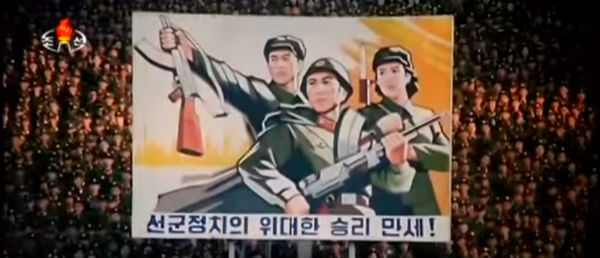
North Korea claims to have successfully tested a miniaturized hydrogen nuclear device which, if this indeed happened, would mark a major advance in its weapons program. The announcement is being viewed with some skepticism.
Reuters reports: South Korean intelligence officials and several analysts, however, questioned whether Wednesday’s explosion was indeed a full-fledged test of a hydrogen device.
The device had a yield of about 6 kilotons, according to the office of a South Korean lawmaker on the parliamentary intelligence committee – roughly the same size as the North’s last test, which was equivalent to 6-7 kilotons of TNT.
“Given the scale, it is hard to believe this is a real hydrogen bomb,” said Yang Uk, a senior research fellow at the Korea Defence and Security Forum.
“They could have tested some middle stage kind (of device) between an A-bomb and H-bomb, but unless they come up with any clear evidence, it is difficult to trust their claim.”
Joe Cirincione, a nuclear expert who is president of Ploughshares Fund, a global security organization, said North Korea may have mixed a hydrogen isotope in a normal atomic fission bomb.
“Because it is, in fact, hydrogen, they could claim it is a hydrogen bomb,” he said. “But it is not a true fusion bomb capable of the massive multi-megaton yields these bombs produce”.
The United States Geological Survey reported a 5.1 magnitude quake that South Korea said was 49 km (30 miles) from the Punggye-ri site where the North has conducted nuclear tests in the past.
North Korea’s last test of an atomic device, in 2013, also registered at 5.1 on the USGS scale.
The test nevertheless may mark an advance of North Korea’s nuclear technology. The claim of miniaturizing, which would allow the device to be adapted as a weapon and placed on a missile, would also pose a new threat to the United States and its regional allies, Japan and South Korea. [Continue reading…]
Comparison: 2016 North Korean nuclear test and 2005 M5.0 earthquake, both at similar distances from seismometer. pic.twitter.com/1ZuMYBJbZN
— Andy Frassetto (@drrocks1982) January 6, 2016
Jeffrey Lewis, who teaches a class on the evolution of China’s nuclear weapons program at the Middlebury Institute of International Studies, points out that current assessments of North Korea’s technical capabilities should not lead to false assumptions about their aspirations. He writes:
One of the major themes of the early part of China’s nuclear program is how committed China was to matching the other nuclear powers in the possession of intercontinental-range ballistic missiles armed with multi-megaton thermonuclear weapons. A lot of Americans had trouble accepting this idea. We thought of China as being too backward to have such aspirations. That was, I argue, precisely why China wanted such weapons: because China’s communist leaders had a different vision of China’s place in the world and the development of thermonuclear weapons was a way of achieving that vision.
I think something similar is happening with North Korea. We think of the country as impoverished, both in terms of economy and leadership. Well, that’s not how the government in North Korea sees itself—and anyone who does, keeps such thoughts to himself. Pyongyang’s propaganda apparatus argues—and this is what Kim was saying—that North Korea is a technological powerhouse. The North Korean propaganda line argues that this power is demonstrated by a series of achievements culminating in space launches, nuclear weapons and, yes, even thermonuclear weapons.
So, while a staged thermonuclear weapon is likely more than North Korea can, at the moment, achieve technically, it is a mistake to rule out the aspiration by Pyongyang. An H-bomb might not conveniently fit our perception of North Korea, but perhaps that is Kim’s point.
This is today’s announcement being made on North Korean state television:

IBT reports: A home for the blind and the Chamber of Commerce in Sanaa are among the sites that have been destroyed by the latest round of Saudi Arabia-led airstrikes in Yemen. The conflict between Iranian-backed Houthi fighters and the Saudi-led coalition has re-intensified after a short ceasefire ended on 2 January.
Airstrikes on Tuesday 5 January damaged a number of military and civilian sites, although no casualties were reported.
Abdullah Ahmed Banyan, a patient at the Noor Centre for the Blind, said: “People with disabilities are being struck in their residence. Around 1.30am, two missiles hit the live-in quarters of a home for the blind. Can you imagine they are striking the blind? What is this criminality? Why? Is it the blind that are fighting the war?” [Continue reading…]
Lost count, too many bombs dropped & too many jets past hour. It's not Saudi's monstrosity many won't forget, it's world's silence. #Yemen
— Hisham Al-Omeisy (@omeisy) January 6, 2016
#PT Bomblets used in Sanaa today were BLU-63 A/B with suspected secondary incendiary effect. via @akramyemeni1 pic.twitter.com/KFdUedRv7q
— Green lemon (@green_lemonnn) January 6, 2016
This war has displaced 2.5 million people so far and left 21.2 million (82% of #Yemen's population) in need of humanitarian assistance. #Sad
— Mohammed Al-Asaadi (@alasaadim) January 6, 2016
Der Spiegel reports: British-American terror expert Charles Lister believes that al-Qaida ally Jabhat al-Nusra is more dangerous than Islamic State. In an interview, he warns that most Syrian rebel groups will abort the peace process should Bashar Assad remain in power.
SPIEGEL: A surprising conclusion in your new book [The Syrian Jihad: Al-Qaeda, the Islamic State and the Evolution of an Insurgency] is that while Islamic State (IS) and the regime of Syrian President Bashar Assad are obvious obstacles to ending the Syrian war, in your view the biggest problem is Jabhat al-Nusra, which is allied with al-Qaida. Why is that?
Charles Lister: In the West, the threat posed by IS has become an understandable, but convenient obsession. However, Jabhat al-Nusra has embedded itself so successfully within the Syrian opposition — within the revolution for a long time — that in my view it has become an actor that will be much more difficult to uproot from Syria than IS. Islamic State is all about imposing its will on people, whereas al-Nusra has for the last five years been embedding itself in popular movements, sharing power in villages and cities, and giving to people rather than forcing them to do things. That has lent it a power IS just doesn’t have. The reason I call IS a convenient obsession is that I don’t think anybody in the West knows what to do about Jabhat al-Nusra. There was a period of time where it was relatively clear that al-Nusra had a foreign attack wing that was plotting attacks in the West. They have never let go of their foreign vision, they have explicitly said they want to establish Islamic emirates in Syria, and they belong to an organization, al-Qaida, whose avowed goal is to attack and destroy the West. Not to establish an “Islamic State” and gradually expand it like IS, but explicitly to destroy the West.
SPIEGEL: Yet it was IS that killed 130 people in Paris on Nov. 13, carrying out the bloodiest terrorist attack on foreign soil since 9/11. Are these attacks a sign of strength or a sign of them being under pressure in Syria?
Lister: If these attacks were indeed centrally planned by IS, they have to be a sign of strength. Islamic State certainly is not weakening in Syria and Iraq. Yes, it has lost territory, but as a movement it is in no weaker position than it was 18 months ago. It still has sustainable sources of income, it has large amounts of territory under its control, and now, for the first time it has demonstrated a real ability to carry out what one might call spectacular attacks in the West, with real geopolitical repercussions. It shows its ability to shape international affairs. That in itself is a sign of strength. [Continue reading…]
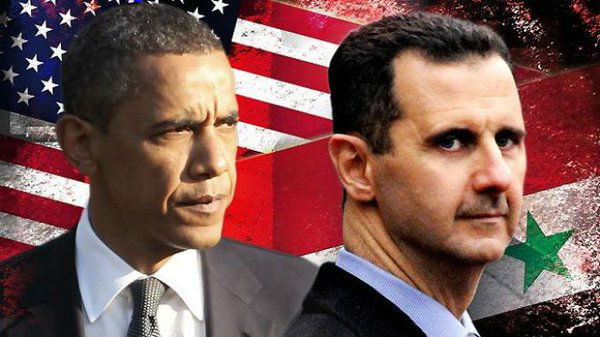
The Associated Press reports: The Obama administration’s best-case scenario for political transition in Syria does not foresee Bashar Assad stepping down as the country’s leader before March 2017, outlasting Barack Obama’s presidency by at least two months, according to a document obtained by The Associated Press.
An internal timeline prepared for U.S. officials dealing with the Syria crisis sets an unspecified date in March 2017 for Assad to “relinquish” his position as president and for his “inner circle” to depart. That would be more than five years after Obama first called for Assad to leave.
The timeline is based on a broad U.N.-endorsed plan that was initially laid out at an international conference in Vienna in November. Syria, according to that strategy, would hold elections for a new president and parliament in August 2017 — some 19 months from now. In the interim, Syria would be run by a transitional governing body. [Continue reading…]

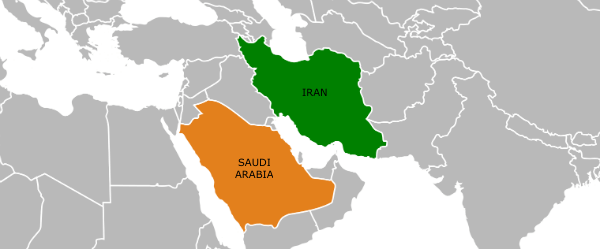
The New York Times reports: For all the diplomatic dominoes that have fallen across the Middle East in recent days, with ambassadors from different countries flying home as a result of the explosive rift between Saudi Arabia and Iran, the map of allegiances has not significantly altered.
Certainly, several countries offered muscular shows of solidarity to Saudi Arabia after an Iranian mob attacked its embassy in Tehran over the weekend, prompting a crisis that has put the United States in a bind and has threatened to set back the prospects for a resolution to the conflict in Syria.
By Tuesday, Kuwait had recalled its ambassador to Iran, the United Arab Emirates had downgraded its diplomatic relationship, and Bahrain and Sudan had joined Saudi Arabia in severing its relationship with Tehran entirely.
Yet many other Sunni Muslim countries signaled that they intended to take a more measured approach to the argument — sympathizing with Saudi Arabia, a rich and powerful ally, but also determined to avoid getting sucked into a harmful conflict with Iran, a country governed by Shiite clerics, with potentially grave costs.
“The smaller Gulf states are worried they will get caught in the middle,” said Michael Stephens, a research fellow at the Royal United Services Institute in London. “It worries them greatly that things could go badly.”
Some countries, like Turkey, Egypt and Pakistan, are already battling their own domestic insurgencies. Others are keen to guard their strategic interests or to keep the door open to trade with Iran while there is a prospect of American sanctions being lifted.
Qatar, which shares with Iran access to the world’s largest natural gas field in the Persian Gulf, has yet to declare its hand. Oman has also been quiet, sticking to its longstanding position of neutrality on Saudi Arabia and Iran.
In Turkey, where senior officials have warned about the impact of the crisis on a “powder keg” region, Prime Minister Ahmet Davutoglu offered his country’s services to help resolve the conflict peacefully. [Continue reading…]

Phillip Smyth writes: Ever since Tehran started beating the drum over Nimr, its Shiite Islamist proxies across the Middle East have followed suit.
In early January 2015, Kataib Hezbollah, an Iraqi Shiite militia and Iran proxy group listed by the U.S. State Department as a terrorist organization, released a propaganda song that threatened the Saudis with an attack if they carried out the sentenced execution. The tune also included the rare addition of English translations and was likely aimed at Western, particularly American, audiences. The song blared, “The enemies of God will not be safe.… Ali’s [Shiite Islam’s first imam’s] enemies fear him [Nimr].… We will avenge Sheikh Nimr if he is executed.… Our brigades will roar like a lion.”
It wasn’t the only time that Kataib Hezbollah would threaten Saudi Arabia over Nimr’s fate. In March, the Iraqi militia posted another video showing trucks loaded with rockets and balaclava-wearing armed militiamen driving up to the Iraqi-Saudi border.
Iran’s other proxies in the region have adopted a similar stance. Starting in July, Kataib Sayyid al-Shuhada, another Iranian-sponsored Shiite militia in Iraq, ran a promotional video to show support for Nimr, and Lebanese Hezbollah pushed solidarity campaigns for the Saudi cleric.
Following Nimr’s execution, Iran’s allies in the region issued nearly matching statements condemning Saudi Arabia and at times blaming the United States for the cleric’s death. Lebanese Hezbollah, Iraq’s Asaib Ahl al-Haq, the Badr Organization, Harakat Hezbollah al-Nujaba, Kataib Hezbollah, and Kataib Sayyid al-Shuhada are just some of the Iranian-backed and ideologically loyal Shiite militias that toed Iran’s line on the issue.
The Iraqi Shiite militias loyal to Iran claimed they would retaliate against Saudi Arabia at a time and place of their choosing. Kataib Hezbollah later announced that the execution had given it the “green light” to target Saudi interests in Iraq. These Iran proxies also amplified threats by shadowy organizations: Harakat Hezbollah al-Nujaba, an Iraqi Shiite militia and Iran proxy active in Iraq and Syria, for instance, claimed that an otherwise unspecified “Resistance in Qatif” had threatened to attack the Ras Tanura refinery, an important oil port in Saudi Arabia’s majority Shiite Eastern Province.
The campaign has not simply been limited to mere threats. In mid-December, around 26 Qatari hunters — some of whom are members of the Qatari royal family — were kidnapped by some 100 armed men on the Iraq-Saudi border. While nine were released, the rest are still being held by the gunmen. One of the conditions for the detained Qataris’ release had been the Saudi government’s release of Nimr. (Kataib Hezbollah has been accused of kidnapping the Qataris, but has denied it.)
These messages are part and parcel of Tehran’s geopolitical strategy — a way of asserting that it can and will protect its Shiite coreligionists. The fact that the factions of the Shiite “Islamic Resistance” across the Middle East acted as one further demonstrates Iranian power and the Islamic Resistance’s ability and willingness to project power on behalf of Iran’s regional goals. [Continue reading…]
Alex Rowell writes: Lebanon’s Prime Minister Tammam Salam may have declared himself hopeful for positive change in 2016, but if the year continues in the vein of its first five days, he appears destined for disappointment. The execution by Saudi Arabia of leading Shiite cleric and opposition activist, Sheikh Nimr al-Nimr, and the subsequent torching of the Saudi embassy in Tehran, which in turn led Riyadh and a number of its allies to sever or downgrade diplomatic relations with Iran, had by Tuesday escalated into bloodshed, with Sunni mosques bombed and a muezzin gunned down by suspected Shiite militants in Iraq; a Shiite resident of Saudi’s eastern province also fatally shot; and a reported intensification of Saudi air strikes on Shiite rebel targets in Yemen.
In Lebanon, no violence has yet broken out, but the political atmosphere has been considerably poisoned. On Sunday, Tehran ally Hezbollah’s Secretary-General Hassan Nasrallah gave an extraordinarily foul-tempered speech, going far further in criticisms of Saudi Arabia than he ever has previously. Likening the “takfiri and terrorist” state to both ISIS and Israel, he accused the ruling family of being a mass-murdering agent of Western imperialism and Zionism, drawing multiple outbursts of “Death to the Saud family!” chants from the crowd. In an unabashedly sectarian analogy, he compared Sheikh Nimr al-Nimr to the Prophet’s granddaughter, Zainab bint Ali, “speaking truth to Ibn Ziad and Yazid bin Mu`awiya,” thereby overtly tying the controversy into a 1,300-year-old Sunni-Shiite conflict.
Perhaps unsurprisingly, then, officials from Hezbollah’s main Lebanese rival, the Saudi-backed Future Movement, told NOW the new state of affairs would complicate the resolution of various pressing matters, including the twenty-month-long presidential vacuum. [Continue reading…]
