Gideon Levy writes: “The European Court for Anti-Semitic Crimes. Court Execution squad.
“Re: Proceedings against participants in anti-Israeli activities.
“The Court has been asked to look at the activities against Israel by Gideon Levy, journalist.
“Witness Number 1 showed the article ‘Lowest deeds from loftiest heights’ (Haaretz, July 15, 2014) … Chairman of the court: The court has been convinced that pro-Nazi propaganda has taken place. Once this has been proved, the court has no discretion whatsoever as to the verdict, therefore the above culprit is convicted to death. Given the amount of damage he created, his elimination should take place shortly. Death by ‘accident’: poison, wasps, snakes, viruses, etc.
“P.S: The Pulsa Denura court has no connection with the Israeli security systems … This court is chasing the enemies of Israel wherever they are and verdicts are carried out by the court’s execution squads … Please place this letter in several places in your offices.”
This letter, written in English, arrived last week at Haaretz, in an envelope mailed in Tel Aviv. This letter was not written by a Muslim. At the bottom was written: “Orange pips mean death.” Pips had been stuck to the other side of the letter.
A Sherlock Holmes story is called “The Five Orange Pips,” and revolves around a death-threat letter. This is not the first threat against an Israeli journalist, and not the last.
The attack on the Charlie Hebdo magazine last week was preceded by death threats. The massacre came in its wake. It could happen here, too. Anyone who was shocked by the attack on the freedom of the press in France needs to examine what is happening in Israel. [Continue reading…]
Category Archives: Lands
Give democratic Tunisia the U.S. support it needs and deserves
Vance Serchuk writes: Tunisia is rightly hailed as the lone success story of the Arab Spring: the only country that has threaded a path from the uprisings of 2011 to genuine multiparty democracy today. Yet the future of freedom in Tunisia is far from assured. With the election of a new parliament and president in recent weeks, the most important experiment in Arab democracy is entering a difficult and potentially perilous new phase — one in which greater U.S. support and attention are urgently needed.
Tunisians are quick to cite a litany of challenges that could still derail their transition, including an unreformed economy that generates too few jobs and a persistent threat from terrorist groups such as Ansar al-Sharia. There’s also the failed state next door in Libya, a volcano of Syria-like potential that threatens to kick up a cloud of instability over its neighbors.
Yet easily the most significant question facing Tunisia concerns its new elected leadership and its commitment to democratic principles, human rights and inclusive, tolerant governance. [Continue reading…]
America snubs historic Paris rally
What's missing in this picture? American leaders. Even Palestinian and Israeli leaders in front line of Paris march. pic.twitter.com/6BtNk5s6Ml
— Shibley Telhami (@ShibleyTelhami) January 11, 2015
"I want the people of France to know that the United States stands with you." —President Obama
— The White House (@WhiteHouse) January 9, 2015
The Daily Mail reports: President Obama was missing in action today when world leaders linked arms to lead an anti-terrorism march of more than a million people in Paris.
While the president’s a busy man, his absence at the show of international solidarity was strange considering his schedule was wide open today.
Vice President Joe Biden often fills in for the president at events like this, but he was no where to be seen either, despite his similarly empty schedule.
In fact, the only recognizable Obama official in the city was Attorney General Eric Holder, who attended a terrorism summit with world leaders on Sunday – but skipped the rally.
CNN’s Jake Tapper said on air: “I’m a little disappointed personally, this is me speaking personally, not as a representative of CNN, as an American that there isn’t more of a display of unity here. Because this is one of the most incredible events I have ever attended and the positivity that these people of France are embracing. This is not a rally — even though there was an ugly racist element in this society, as there is in every society — this is not a rally that is embracing jingoism, or anger, or any sort of hatred. This is a rally that is expressing brotherhood and sisterhood and it is a beautiful thing to behold.”
Paris march: RWB condemns presence of representatives of states that suppress press freedom
Reporters Without Borders welcomes the participation of many foreign leaders in today’s march in Paris in homage to the victims of last week’s terror attacks and in defence of the French republic’s values, but is outraged by the presence of officials from countries that restrict freedom of information.
On what grounds are representatives of regimes that are predators of press freedom coming to Paris to pay tribute to Charlie Hebdo, a publication that has always defended the most radical concept of freedom of expression?
Reporters Without Borders is appalled by the presence of leaders from countries where journalists and bloggers are systematically persecuted such as Egypt (which is ranked 159th out of 180 countries in RWB’s press freedom index), Russia (148th), Turkey (154th) and United Arab Emirates (118th).
In France, there is not a Muslim community, but a Muslim population
Olivier Roy writes: The attack against the Paris satirical newspaper Charlie Hebdo has re-launched an ongoing debate in France about the compatibility between Islam and the West. The issue is more fraught in Western Europe than in the United States because of the huge number of Muslims who are not only settled there, but who also have citizenship.
By a strange coincidence, on the same day of the deadly attack on Charlie Hebdo, we saw the long awaited release of the most recent novel by the bestselling French author Michel Houellebecq, titled “Submission.” The book imagines the victory of a moderate Muslim party in the 2022 French presidential and parliamentary elections.
The issue of the compatibility between Islam and French or Western political culture is no longer confined to the usual suspects: the populist right, conservative Christians or staunch secularists from the left. The issue has become emotional and now pervades the entire political spectrum. The Muslim population — which does not identify with the terrorists — now fears an anti-Muslim backlash.
Roughly speaking, two narratives are conflicting: the dominant one claims that Islam is the main issue, because it puts loyalty toward the faith community before loyalty to the nation, it does not accept criticism, does not compromise on norms and values and condones specific forms of violence like jihad. For the adherents of this narrative, the only solution is a theological reformation that would generate a “good” Islam that is a liberal, feminist and gay-friendly religion. Journalists and politicians are always tracking the “good Muslims” and summoning them to show their credentials as “moderate.”
On the other side, many Muslims, secular or believers, supported by a multiculturalist left, claim that radicalization does not come from Islam but from disenfranchised youth who are victims of racism and exclusion, and that the real issue is Islamophobia. They condemn terrorism while denouncing the backlash that could in turn radicalize more Muslim youth.
The problem is that both narratives presuppose the existence of a French “Muslim community” of which the terrorists are a sort of “vanguard.” [Continue reading…]
Paris policeman’s brother: ‘Islam is a religion of love. My brother was killed by terrorists, by false Muslims’
The Guardian reports: Ahmed Merabet, the police officer gunned down in the Charlie Hebdo attack, was killed in an act of barbarity by “false Muslims” his brother said in a moving tribute on Saturday, where he also appealed for unity and tolerance.
Speaking for a group of relatives gathered in Paris, Malek Merabet said the terrorists who ignored his brother’s plea for mercy as he lay wounded on the street may have shared his Algerian roots, but had nothing else in common.
“My brother was Muslim and he was killed by two terrorists, by two false Muslims,” he said. “Islam is a religion of peace and love. As far as my brother’s death is concerned it was a waste. He was very proud of the name Ahmed Merabet, proud to represent the police and of defending the values of the Republic – liberty, equality, fraternity.”
Malek reminded France that the country faced a battle against extremism, not against its Muslim citizens. “I address myself now to all the racists, Islamophobes and antisemites. One must not confuse extremists with Muslims. Mad people have neither colour or religion,” he said.
“I want to make another point: don’t tar everybody with the same brush, don’t burn mosques – or synagogues. You are attacking people. It won’t bring our dead back and it won’t appease the families.” [Continue reading…]
Muslim worker saved kosher store hostages
RFI reports: A Muslim employee saved the lives of hostages at the Paris kosher supermarket taken over by armed Islamist Amedy Coulibaly on Friday. His mother joined the family of slain police officer Ahmed Merabet in an appeal against Islamophobia and anti-Semitism in the aftermath of the Charlie Hebdo attacks.
Between 15 and 20 hostages held in the Hyper Cacher supermarket on Friday owe their lives to one man: Lassana Bathily.
The 24-year-old Malian born grocery store employee was working when the assailant Amedy Coulibaly stormed in and he quickly took everyone downstairs to the cold store. [Continue reading…]
Charlie Hebdo shooting: Hamyd Mourad ‘in shock’ after wrongly linked to attack on newspaper
AFP reports: Hamyd Mourad describes himself as a normal 18-year-old who lives with his parents, but on the day France was gripped by the Charlie Hebdo massacre, he became known as “the third suspect” – even though he was in class at the time of the shooting.
The brother-in-law of one of the two gunmen turned himself in to police on Wednesday, horrified and baffled to hear his name circulating in the news and on social media, and he was released without charge on Friday evening, relieved but badly shaken.
“I was stunned, completely overwhelmed by the events but the police officers were very correct with me,” the visibly tired high school student told AFP in the presence of his lawyer Marie Calleghaer and several family members.
Numerous witnesses verified he was in school when brothers Cherif and Said Kouachi gunned down 12 people at the Paris office of the satirical magazine Charlie Hebdo, kicking off three days of violence that left a total of 17 people dead and traumatised a nation.
“I’m in shock, people said horrible and false things about me on social media even though I am a normal student who lives quietly with his parents,” said the bespectacled teenager who one day hopes to study medicine.
“The attack was horrific and my thoughts are with the victims,” he added. [Continue reading…]
In the new era of terrorism, Anwar al-Awlaki’s voice can still be heard
The New York Times reports: For more than five years now, as Western terrorism investigators have searched for critical influences behind the latest jihadist plot, one name has surfaced again and again.
In the failed attack on an airliner over Detroit in 2009, the stabbing of a British member of Parliament in London in 2010, the lethal bombing of the Boston Marathon in 2013 and now the machine-gunning of cartoonists and police officers in Paris, Anwar al-Awlaki has proved to be a sinister and durable inspiration.
Two of those four attacks took place after Mr. Awlaki, the silver-tongued, American-born imam who joined Al Qaeda’s branch in Yemen, was killed by a C.I.A. drone strike in September 2011.
In the age of YouTube, Mr. Awlaki’s death — or martyrdom, in the view of his followers — has hardly reduced his impact. The Internet magazine Inspire, which he oversaw along with another American, Samir Khan, has continued to spread not just militant rhetoric but also practical instructions on shooting and bomb-making.
Times reporters and editors are providing live updates from the march in Paris that comes in the wake of the attacks on a satirical newspaper and a kosher grocery last week.
In effect, Mr. Awlaki has become a leading brand name in the world of armed jihad. [Continue reading…]
The road that led from tough Paris estate to radical Yemen training
Jason Burke reports: The path is well-trodden: from a tough housing estate in a western city, through a scruffy, colourful, traffic-choked capital 3,500 miles away, on to one of the country’s religious schools, and eventually into a violent extremist organisation.
The journey has been made by thousands of young western Muslim men over the two decades or more that contemporary Islamic militancy has posed a deadly international threat. Many are converts, including some of the most wanted militants today. Some are followers, rather than leaders. Some are already committed to an extremist agenda, even if they have yet to act. Many return with a dogmatic, sometimes hate-filled, world view, but remain non-violent. Others return with the skills and contacts necessary to implement their, or their new leaders’, ambitions to kill and maim.
This weekend at least one new name, probably two, have been added to the list: Chérif and Saïd Kouachi, the brothers who killed 12 people in the Paris offices of satirical magazine Charlie Hebdo last week. Details of the Kouachis’ travels are still unclear but it appears both spent time in Yemen over the past five years.
Speaking to French TV channel BFM on Friday afternoon, as police commandoes prepared for the final assault, Chérif, 32, said he had travelled to Yemen in 2011. His expenses were paid by the American-Yemeni extremist preacher Anwar al-Awlaki, who was influential within al-Qaida in the Arabian Peninsula (Aqap) and one of the most popular radical propagandists in the world. “It was a while ago, before al-Awlaki was killed,” he told BFM. Al-Awlaki died in a suspected US drone strike in September 2011.
Saïd, 34, had also travelled to Yemen, attending the Iman University, which is headed by fundamentalist preacher Abdel Majeed al-Zindani, whose name figures on a US terror blacklist, according to a former Yemeni classmate interviewed by AFP. The classmate said he had lost track of Saïd between 2010 and 2013, when local rebel Houthi militiamen, who are from the Shia minority strand of Islam, overran a religious school in the small town of Dammaj, to the north of the capital Sa’ana, run by conservatives from the Sunni majority. The school, well- known in jihadi circles and to security agencies, was a destination for hundreds of foreigners, former students have said. [Continue reading…]
Paris attacks: Video shows grocery gunman pledging allegiance to ISIS

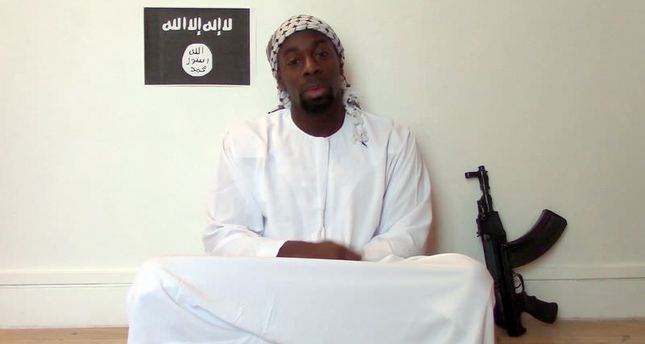
The Associated Press reports: Posthumous video emerged Sunday of the gunman who killed a policewoman and four hostages at a kosher grocery, pledging allegiance to the Islamic State group and defending the attacks on the satirical newspaper and the Jewish store.
Speaking fluent French and broken Arabic in the video, apparently filmed over several days, Amedy Coulibaly can be seen with a gun, exercising and giving speeches in front of an Islamic State emblem. He defends the attacks carried out on the satirical newspaper Charlie Hebdo, police and the Jewish store.
“What we are doing is completely legitimate, given what they are doing,” Coulibaly tells the camera. “You cannot attack and not expect retribution so you are playing the victim as if you don’t understand what’s happening.” [Continue reading…]
A statement alleged to be from Coulibaly has been posted on JustPaste.it
Turkish spy agency planning false-flag terror acts in crowded areas, whistleblower claims
13. Terror acts are planned to take place in malls and AKP buildings so it could increase rancor and violence against the Gülen movement.
— Fuat Avni Eng (@FuatAvniEng) January 10, 2015
Before getting to today’s report in the Turkish daily, Today’s Zaman, why should a prediction of a false-flag terror attack be viewed as credible if this is coming from a Twitter user whose real identity remains unknown? Here’s why:
Foreign Policy reported on December 16: Fuat Avni — who has 670,000 followers on his Turkish-language account and nearly 23,000 on a related English-language account — is believed by some observers to be an insider in the administration of President Recep Tayyip Erdogan. He has captivated the country with his mostly reliable predictions of events, including two rounds of mass arrests of police officers involved in an anti-government wiretapping probe.
Today’s Zaman now reports: A Turkish whistleblower, who has a credible record of predicting police operations and government policies, has made a shocking claim, arguing that the Turkish spy agency is planning false-flag operations to blow up crowded areas to frame the Gülen movement as a terrorist organization.
Fuat Avni said early on Saturday that the President Recep Tayyip Erdoğan initially planned to use Dec. 14 raids against the media to announce the Gülen movement as a terrorist organization, but he had to resort to other ways as the previous plan failed. The whistleblower said Erdoğan approved of the false-flag operations.
“After the fiasco,” Avni tweeted, “Erdoğan tasked the spy agency [National Intelligence Organization] MİT with labeling the Gülen movement as a terrorist organization.” He claimed that Erdoğan has difficult time after France shootings for his support for the Islamic State of Iraq and Levant (ISIL) and al-Qaeda. “To get out of this difficult period and turn the tide in his favor, Erdoğan is making new evil plans,” Avni tweeted.
Evidence points to continued existence of Syrian nuclear program
34°30'43"N, 36°24'31"E @SPIEGEL_English Evidence Points to Syrian Push for Nuclear Weapons http://t.co/446cbaTDsR pic.twitter.com/dveirGbaYb
— Jeffrey Lewis (@ArmsControlWonk) January 9, 2015
Der Spiegel reports: According to intelligence agency analysis, construction of the facility began back in 2009. The work, their findings suggest, was disguised from the very beginning, with excavated sand being disposed of at various sites, apparently to make it more difficult for observers from above to tell how deeply they were digging. Furthermore, the entrances to the facility were guarded by the military, which turned out to be a necessary precaution. In the spring of 2013, the region around Qusayr saw heavy fighting. But the area surrounding the project in the mines was held, despite heavy losses suffered by elite Hezbollah units stationed there.
The most recent satellite images show six structures: a guard house and five sheds, three of which conceal entrances to the facility below. The site also has special access to the power grid, connected to the nearby city of Blosah. A particularly suspicious detail is the deep well which connects the facility with Zaita Lake, four kilometers away. Such a connection is unnecessary for a conventional weapons cache, but it is essential for a nuclear facility.
But the clearest proof that it is a nuclear facility comes from radio traffic recently intercepted by a network of spies. A voice identified as belonging to a high-ranking Hezbollah functionary can be heard referring to the “atomic factory” and mentions Qusayr. The Hezbollah man is clearly familiar with the site. And he frequently provides telephone updates to a particularly important man: Ibrahim Othman, the head of the Syrian Atomic Energy Commission.
The Hezbollah functionary mostly uses a codename for the facility: “Zamzam,” a word that almost all Muslims know. According to tradition, Zamzam is the well God created in the desert for Abraham’s wife and their son Ishmael. The well can be found in Mecca and is one of the sites visited by pilgrims making the Hajj. Those who don’t revere Zamzam are not considered to be true Muslims.
Work performed at the site by members of Iran’s Revolutionary Guard is also mentioned in the intercepted conversations. The Revolutionary Guard is a paramilitary organization under the direct control of Iran’s Supreme Leader Ali Khamenei. It controls a large part of the Iranian economy and also plays a significant role in Iran’s own nuclear activities. Not all of its missions abroad are cleared with the government of moderate President Hassan Rohani. The Revolutionary Guard is a state within a state.
Experts are also convinced that North Korea is involved in Zamzam as well. Already during the construction of the Kibar facility, Ibrahim Othman worked closely together with Chou Ji Bu, an engineer who built the nuclear reactor Yongbyon in North Korea.
Chou was long thought to have disappeared. Some thought that he had fallen victim to a purge back home. Now, though, Western intelligence experts believe that he went underground in Damascus. According to the theory, Othman never lost contact with his shady acquaintance. And experts believe that the new nuclear facility could never have been built without North Korean know-how. The workmanship exhibited by the fuel rods likewise hints at North Korean involvement.
What approach will now be taken to Zamzam? How will the West, Assad and Syria’s neighbors react to the revelations?
The discovery of the presumed nuclear facility will not likely be welcomed by any of the political actors. It is an embarrassment for everybody. [Continue reading…]

To combat terrorism, better community relations may help police more than greater surveillance powers
Better police relations w Muslim community – rather than more surveillance powers- might have prevented Paris attacks http://t.co/VkqoIuXUoR
— Mark MacKinnon (@markmackinnon) January 10, 2015
Mark MacKinnon writes: France already had some of Europe’s toughest anti-terrorism measures in place, yet its security services failed dramatically this week when confronted by a plot hatched between two brothers in the confines of their shared apartment on the outskirts of Paris. The hard truth is there’s often little a Western democracy – even one such as France that has been confronting radical Islamist attacks for decades – can do to stop such a small cell from carrying out its plan until it is already unfolding.
Even as gunfire echoed through Dammartin-en-Goële and in the eastern fringe of Paris where a second, linked shootout took place, experts here were bemoaning the security services’ heavy focus on surveillance powers, and the seeming absence of old-fashioned good relations between police and the Muslim communities in the suburbs, or banlieues, which surround the French capital. While “counter-terrorism” will be the talk of the days ahead, stepped up efforts to integrate and deradicalize young Muslims must follow.
“These people, they don’t drop from the sky,” said Daniel Koehler, an expert on deradicalization in Berlin who has spent years counselling families how to dissuade relatives from the path of extremism. “Even if they are lone actors, they leave tracks, they interact with other people.”
A reconstruction of the lives of Saïd and Chérif Kouachi makes it clear, in hindsight, that better co-operation – and trust – between police and the Muslim community in the middle-class Paris suburb of Gennevilliers would have gone further in revealing what the brothers were planning than any additional surveillance measures.
The brothers were known locally for their overt displays of religiosity, as well as their loud opposition to the French state. Interviews conducted in Gennevilliers this week by The Globe and Mail revealed that [at] least some of their neighbours had been aware as long as two months ago that the Kouachi brothers (and another man and woman who shared an apartment with them) were stockpiling weapons.
Those anecdotes – had they been passed to police – make a compelling case for intervention when combined with other, publicly known facts about the two brothers. Chérif was convicted on terrorism charges in 2008, and both brothers were later named in court in relation to a 2010 plot to break the mastermind of the deadly 1995 Paris metro bombings out of jail. [Continue reading…]
Charlie Hebdo attack chills satirists and prompts a debate
The New York Times reports: The killing of a dozen people in Wednesday’s attack on the French satirical newspaper Charlie Hebdo has prompted an outpouring of tributes from cartoonists around the world, who have flooded the Internet with images ranging from the elegiac to the scabrously rude.
One showed a Kalashnikov facing off against a phalanx of pencils. Another, originally drawn several years ago and widely recirculated, depicted a hulking figure in a turban holding a sword over the head of a cartoonist hard at work at a desk, above the caption, “As if we needed more humorless editors looking over our shoulders, threatening cuts!”
But amid all the “I Am Charlie” marches and declarations on social media, some in the cartooning world are also debating a delicate question: Were the victims free-speech martyrs, full stop, or provocateurs whose aggressive mockery of Islam sometimes amounted to xenophobia and racism?
Such debates unfold differently in different countries. But the conversation could be especially acute in the United States, where sensitivities to racially tinged caricatures may run higher than in places like France, where historically tighter restrictions on speech have given rise to a strong desire to flout the rules.
Charlie Hebdo has had “a much more savage, unforgiving, doing-it-for-the-sake-of-doing-it” spirit than any American publication, said Tom Spurgeon, the author of The Comics Reporter, a website that tracks comics news from around the world.
“That’s not so much an American impulse,” he said. Especially today, “there’s a sophisticated dialogue about what privilege means, and a feeling that you don’t need to insult people, especially downtrodden people, to make your points.”
Political cartooning’s emphasis on “kicking up” against authority goes back to its origins in the 17th century, when the end of Europe’s religious wars opened up political space where iconoclastic irreverence could flourish, the historian Simon Schama, a professor at Columbia, said in an interview. [Continue reading…]
Cartoonist scoffs at support from people who’ve never seen Charlie Hebdo
AFP reports: A prominent Dutch cartoonist at Charlie Hebdo heaped scorn on the French satirical weekly’s “new friends” since the massacre at its Paris offices, in particular far-right National Front leader Marine Le Pen.
“We have a lot of new friends, like the pope, Queen Elizabeth and (Russian President Vladimir) Putin. It really makes me laugh,” Bernard Holtrop, whose pen name is Willem, told the Dutch centre-left daily Volkskrant.
“Marine Le Pen is delighted when the Islamists start shooting all over the place,” said Willem, 73, a longtime Paris resident who also draws for the French leftist daily Liberation.
He added: “We vomit on all these people who suddenly say they are our friends.”
Commenting on the global outpouring of support for the weekly, Willem scoffed: “They’ve never seen Charlie Hebdo.”
Hamas condemns Charlie Hebdo attack
AFP reports: Palestinian Islamist group Hamas condemned Saturday the killing of 12 people in a shooting attack this week on French satirical weekly Charlie Hebdo’s offices by two French Islamists.
A statement in French said Hamas “condemns the attack against Charlie Hebdo magazine and insists on the fact that differences of opinion and thought cannot justify murder.”
It also rejected Israeli Prime Minister Benjamin Netanyahu’s comments, in which he compared the Paris attack to Hamas firing rockets from the Gaza Strip at civilians in Israel.
“Hamas condemns the desperate attempts by… Netanyahu to make a connection between our movement and the resistance of our people on the one hand and global terrorism on the other,” it said.
Nigeria: 2,000 feared killed in Boko Haram’s ‘deadliest massacre’
The Guardian reports: Hundreds of bodies – too many to count – remain strewn in the bush in Nigeria from an Islamic extremist attack that Amnesty International described as the “deadliest massacre” in the history of Boko Haram.
Fighting continued on Friday around Baga, a town on the border with Chad where insurgents seized a key military base on 3 January and attacked again on Wednesday.
“Security forces have responded rapidly, and have deployed significant military assets and conducted air strikes against militant targets,” said a government spokesman.
District head Baba Abba Hassan said most victims are children, women and elderly people who could not run fast enough when insurgents drove into Baga, firing rocket-propelled grenades and assault rifles on town residents.
“The human carnage perpetrated by Boko Haram terrorists in Baga was enormous,” Muhammad Abba Gava, a spokesman for poorly armed civilians in a defence group that fights Boko Haram, told the Associated Press.
He said the civilian fighters gave up on trying to count all the bodies. “No one could attend to the corpses and even the seriously injured ones who may have died by now,” Gava said.
An Amnesty International statement said there are reports the town was razed and as many as 2,000 people killed.
If true, “this marks a disturbing and bloody escalation of Boko Haram’s ongoing onslaught,” said Daniel Eyre, Nigeria researcher for Amnesty International. [Continue reading…]