Category Archives: Russia

Russia accused of invading Crimea as U.S. warns against ‘grave mistake’

n13-iconThe Guardian reports: Russia and the west are on a collision course over Crimea after Moscow was accused of orchestrating a “military invasion and occupation” of the peninsula, as groups of apparently pro-Russian armed men seized control of two airports and Russian troop movements were reported across the territory.

The new authorities in Kiev, installed following the removal of the pro-Moscow president this week, accused Russia of “an attempt to seize airports”, and on Friday evening the main Crimean air hub at Simferopol was still guarded by unidentified, uniformed men. Later it was announced that the airport had been closed and incoming flights diverted.

“I see what has happened as a military invasion and occupation in violation of all international treaties and norms,” said the new Ukrainian interior minister, Arsen Avakov. “This is a direct provocation aimed at armed bloodshed on the territory of a sovereign state.”

The White House warned that any Russian military intervention in Ukraine would be a “grave mistake”. The UN security council took up the issue at a session last night. The sudden escalation of the crisis amounts to the most dangerous stand-off in the former Soviet Union since the Russia-Georgia war six years ago. [Continue reading…]

The Daily Beast adds: Private security contractors working for the Russian military are the unmarked troops who have now seized control over two airports in the Ukrainian province of Crimea, according to informed sources in the region. And those contractors could be setting the stage for ousted President Viktor Yanukovich to come to the breakaway region.
[…]
Paul Saunders, the executive director of the Center for the National Interest, said that the Obama administration faces a particularly bad set of choices when it comes to responding to the airport takeovers, especially if is confirmed they are Russian government controlled security contractors.

“If the Obama administration takes a public position that they are Russian forces, then they need to explain what they plan to do. This will be quite similar to the red line in Syria, in that they will have to choose between imposing the ‘consequences’ that administration officials have warned about, repeating statements that have been ignored, or saying that it is not really an ‘invasion,’” he said. [Continue reading…]

Luke Harding writes: Moscow’s military moves so far resemble a classically executed coup: seize control of strategic infrastructure, seal the borders between Crimea and the rest of Ukraine, invoke the need to protect the peninsula’s ethnic Russian majority. The Kremlin’s favourite news website, Lifenews.ru, was on hand to record the historic moment. Its journalists were allowed to video Russian forces patrolling ostentatiously outside Simferopol airport.

Wearing khaki uniforms – they had removed their insignia – and carrying Kalashnikovs, the soldiers seemed relaxed and in control. Other journalists filming from the road captured Russian helicopters flying into Crimea from the east. They passed truckloads of Russian reinforcements arriving from Sevastopol, home to Russia’s Black Sea fleet.

The Kremlin has denied any involvement in this very Crimean coup. But Putin’s playbook in the coming days and months is easy to predict. On Thursday, the Crimean parliament announced it would hold a referendum on the peninsula’s future status on 25 May. That is the same day Ukraine goes to the polls in fresh presidential elections.

The referendum can have only one outcome: a vote to secede from Ukraine. After that, Crimea can go one of two ways. It could formally join the Russian Federation. Or, more probably, it might become a sort of giant version of South Ossetia or Abkhazia, Georgia’s two Russian-occupied breakaway republics – a Kremlin-controlled puppet exclave, with its own local administration, “protected” by Russian troops and naval frigates. Either way, this amounts to Moscow’s annexation of Crimea, de facto or de jure.

Ewen MacAskill adds: But a Russian takeover of the Crimea could turn out to be disastrous in the long run. The Kremlin would be underestimating the impact of the sizeable population of Tartars who were forcibly deported from the Crimea by Stalin in 1944 and not allowed to return until the beginning of Perestroika in the 1980s.

[Igor] Sutyagin, who is at the London-based Royal United Services Institute, said: “The Tartars are very anti-Russian. They will do anything not to be under the Russians. They will be determined to fight for Ukraine. It would be a second Chechnya. There are a lot of mountains in Crimea, just as in Chechnya.”


Facebooktwittermail

The new Great Game: Why Ukraine matters to so many other nations

a13-iconBloomberg Businessweek reports: Ukraine doesn’t seem like the kind of place that world powers would want to tussle over. It’s as poor as Paraguay and as corrupt as Iran. During the 20th century it was home to a deadly famine under Stalin (the Holomodor, 1933), a historic massacre of Jews (Babi Yar, 1941), and one of the world’s worst nuclear disasters (Chernobyl, 1986). Now, with former President Viktor Yanukovych in hiding, it’s struggling to form a government, its credit rating is down to CCC, a recession looms, and foreign reserves are running low. Arseniy Yatsenyuk, head of the opposition party affiliated with former Prime Minister Yulia Tymoshenko, said on Feb. 24 in Parliament, “Ukraine has never faced such a terrible financial catastrophe in all its years of independence.”

But Ukraine is also a breadbasket, a natural gas chokepoint, and a nation of 45 million people in a pivotal spot north of the Black Sea. Ukraine matters—to Russia, Europe, the U.S., and even China. President Obama denied on Feb. 19 that it’s a piece on “some Cold War chessboard.” But the best hope for Ukraine is that it will get special treatment precisely because it is a valued pawn in a new version of the Great Game, the 19th century struggle for influence between Russia and Britain.

Russia, which straddles Europe and Asia, has sought a role in the rest of Europe since the reign of Peter the Great in the early 18th century. An alliance with Ukraine preserves that. “Without Ukraine, Russia ceases to be a Eurasian empire,” the American political scientist Zbigniew Brzezinski wrote in 1998. Russian President Vladimir Putin wants Ukraine to join his Eurasian Union trade bloc, not the European Union. Russia’s Black Sea naval fleet is headquartered in Sevastopol, a formerly Russian city that now belongs to Ukraine. [Continue reading…]

Facebooktwittermail

Russia sees humanitarian aid as a threat to Syria’s sovereignty

a13-iconNick Bryant reports: In a conflict where 140,000 people have been killed, including more than 7,000 children, while 250,000 civilians are still trapped in besieged communities, it must beggar belief to those unused to the geopolitics of the United Nations that a proposed resolution boosting humanitarian relief should be a matter of angry contention.

The draft resolution put before the UN Security Council in New York has the potential to be a game-changer on the ground.

It demands a lifting of the sieges, condemns starvation as a strategy of war, singles out the barbarity of the barrel bombs dropped on civilian populations by the Assad regime and, most crucially of all perhaps, calls for aid convoys to be allowed to cross the Syrian border from neighbouring countries such as Turkey and Iraq.

It also criticises opposition forces that have besieged areas, though on a smaller scale, and expresses concern about the rise of al-Qaeda-affiliated terror groups in Syria.

However, it is by no means certain that the draft will ever emerge from the Security Council.

The resolution, which was drafted by Australia, Luxembourg and Jordan, has exposed the longstanding division within the Security Council. Three of its permanent members, France, Britain and the US, are pushing hard for its passage because of the alarming deterioration in recent months of Syria’s humanitarian crisis.

Russia, which has stymied efforts in the past to boost humanitarian aid and vetoed three previous UN resolutions on Syria, has again been resistant. [Continue reading…]

Facebooktwittermail

Russia and China skip UN meeting on aid to Syria

n13-iconThe New York Times reports from the UN: The morning after an aid convoy came under fire when it tried to reach a besieged Syrian city, a meeting here on a draft resolution that would force all parties in the bloody conflict to allow access for humanitarian organizations fell apart when representatives from Russia and China failed to show up, Security Council diplomats said.

On Monday afternoon, the Russian ambassador to the United Nations, Vitaly I. Churkin, did not directly say he would veto the draft if it came up for a vote, but called it “one of those political things” that would not be adopted by the Security Council. “This text would not have any practical, positive impact on the situation,” Mr. Churkin said.

The Chinese Mission declined to comment.

A United Nations spokesman said that 11 people were killed as aid workers delivered food and medicine over the weekend to the old city of Homs. About 800 people, mainly women, children and elderly people, have been evacuated so far, and some of them told United Nations officials that they had resorted to eating grass and weeds to survive. [Continue reading…]

Facebooktwittermail

Russia expels American journalist without explanation

For the first time since the end of the Cold War, Russia has expelled an American journalist. David Satter, a former correspondent for the Financial Times, spoke to The Guardian:

He said the manner of his expulsion – without any explanation – suggested the security services regarded him as a risk. “This is a formula used for spies,” he said. “To apply it to a journalist is something I have not seen in nearly four decades of writing and reporting on Russia. It is indicative that they consider me, for whatever crazy reasons, to be a security threat.”

Satter first visited Moscow in 1969 as an Oxford graduate student. Between 1976-82 he was the FT’s correspondent in the city. In 1979, the authorities threatened to expel him for “hooliganism”, only to back down later. He returned to post-communist Russia in the early 1990s and went back to Moscow from the US for another stint last autumn.

Satter’s new role was an adviser to the broadcaster Radio Europe/Radio Free Liberty, which is funded by the US Congress. He was also working on a book on Russia’s post-communist history. Satter said he had been unable to collect his notes, clothes and other belongings, which remain in his flat in central Moscow.

Asked why Russia had kicked him out, Satter said he did not know the answer. But he speculated that the FSB’s decision may be linked to his writings on Russia’s 1999 apartment bombings – one of the murkiest episodes in the country’s post-Soviet history.

More than 300 people were killed in a series of unprovoked explosions in Moscow and two other cities. Putin blamed the bombings on Chechen terrorists. He immediately seized on the blasts to justify a second, punitive and devastating war in Chechnya.

Satter, and others, believe the bombings may have been an undercover FSB operation, designed to boost Putin’s popularity and to secure his election as president. In his 2003 book, Darkness at Dawn: The Rise of the Russian Criminal State, Satter concluded that the evidence of the FSB being behind the blasts was “overwhelming”.

Facebooktwittermail

Why Russia might be crazy enough to buy Iranian oil and undermine nuclear talks

Quartz: Moscow privately denies a report that it is conducting barter negotiations that would increase Iranian crude oil exports by up to 50%, a source privy to US State Department communications has told Quartz. But if Russian president Vladimir Putin has in fact sanctioned such discussions, it is because of the attractions of a sweet deal and a chance yet again to flaunt his foreign policy independence.

The report — a Jan. 10 exclusive by Reuters — is taken seriously enough in Washington that US secretary of state John Kerry raised it with Russian foreign minister Sergei Lavrov. The idea is that Iran would ship as many as 500,000 barrels of oil a day to Russia, which would pay in the form of goods. The volume is eye-popping since Iran currently exports just 1 million barrels a day, one-third of its 2011 shipments, because of sanctions.

The Russian side denied the Reuters report to US officials, the source told Quartz. But the reason Kerry reacted so sharply was that it coincided almost precisely with a Jan. 12 final agreement by Iran and US-led negotiators to scale back Tehran’s nuclear enrichment program in exchange for some sanctions relief. The two sides agreed to activate that deal Jan. 20. If Iran could hike its oil shipments significantly, with Russia’s help, it would weaken other countries’ leverage for getting it to agree to a planned final and much more stringent agreement in six months. [Continue reading…]

Facebooktwittermail

Russia says Arafat died of natural causes

Reuters reports: Russia said on Thursday former Palestinian leader Yasser Arafat died of natural causes, not radiation poisoning, but a Palestinian official called the finding “politicized” and said an investigation would continue.

Samples were taken from Arafat’s body last year by Swiss, French and Russian forensics experts after an al Jazeera documentary said his clothes showed high amounts of deadly polonium 210.

The Swiss said last month their tests were consistent with polonium poisoning but not absolute proof of the cause of death. The Russian finding was in line with that of French scientists who said earlier this month that Arafat had not been killed with polonium.

“Yasser Arafat died not from the effects of radiation but of natural causes,” Vladimir Uiba, head of Russia’s state forensics body, the Federal Medico-Biological Agency, was quoted as saying by the Interfax news agency.

Facebooktwittermail

As Syrian chemical attack loomed, missteps doomed civilians

The Wall Street Journal reports: As Syrian troops battled rebel forces in the Damascus suburbs Aug. 18, U.S. eavesdropping equipment began picking up ominous signals.

A special Syrian unit that handles chemical weapons was ordered closer to the front lines, officials briefed on the intelligence say, and started mixing poisons. For two days, warning signs mounted until coded messages went out for the elite team to bring in the “big ones” and put on gas masks.

U.S. intelligence agencies didn’t translate the intercepts into English right away, so White House officials didn’t know what the Syrian regime was planning until the assault began. Just before 2:30 a.m. on Aug. 21, the first salvo of poison-filled rockets streaked through the clear night sky and crashed into rebel strongholds.

Sarin gas, which kills almost instantly by attacking the nervous system, spread across sleeping farms. Pushed down by falling temperatures, the poison settled in low-lying areas and penetrated homes.

Men, women and children began coughing and gagging, with little more than wet handkerchiefs and T-shirts to hold over their mouths. Neighborhood doctors quickly ran out of antitoxins, and, in a desperate effort to wash away the poison, flooded clinic floors and dragged unconscious victims through the water. More than 1,400 people died, according to U.S. estimates, making it the worst chemical-weapons strike in a quarter century.

A final report is due soon from the United Nations. The Wall Street Journal has pieced together a reconstruction of that fateful day from battlefield reports and dozens of interviews with eyewitnesses, rebels, medics, activists and Western intelligence officials. It reveals both the horror of the attack and the months of miscalculations by the Syrian regime, opposition groups and U.S. government that left them all unprepared for what happened.

U.S. and Israeli communications intercepts reveal chaos inside the Syrian regime that night. When the reports of mass casualties filtered back from the field, according to the officials briefed on the intelligence, panicked Syrian commanders shot messages to the front line: Stop using the chemicals!

Calls came in to the presidential palace from Syrian allies Russia and Iran, as well as from Hezbollah, the Lebanese militant group whose fighters were inadvertently caught up in the gassing, according to previously undisclosed intelligence gathered by U.S., European and Middle Eastern spy agencies. The callers told the Syrians that the attack was a blunder that could have profound international repercussions, U.S. officials say.

The Obama administration had been closely monitoring Syria’s chemical-weapons stockpile since the conflict began in 2011, and had watched the regime carry out about a dozen small-scale chemical attacks before the big one, U.S. officials say. Even if they had translated the intercepts before the Aug. 21 strike, these officials say, they likely wouldn’t have acted because there were no indications it would be out of the ordinary.

Top policy makers had little appetite for getting more deeply involved in the conflict, and questions loomed large about the legality of providing support to the rebels and the best strategy for managing the chemical-weapons threat, these officials say. Rebel leaders and their allies in the U.S. government say the White House failed to act on requests for gas masks, antidote injectors and other protective gear until it was too late.

All told, the events of Aug. 21 changed the Middle East and U.S. policy in ways likely to reverberate for years. It prompted the U.S. to consider and then pull back from military action. The eventual deal to avert a strike, in which Syria agreed to destroy its chemical-weapons stockpiles, elevated Russia, for now, to a leadership position in the region.

President Bashar al-Assad has tightened his hold on power. His regime has denied using chemical weapons, blaming the attacks on the rebels. In exchange for giving up his chemical arsenal, he avoided an American military intervention and likely will get even more support from Russia and Iran. Mr. Assad has pressed ahead with his offensive using conventional arms. U.S. intercepts show a Russian official later boasting to a Syrian counterpart about how easy it had been to get the U.S. to back off strike plans, officials briefed on the intelligence say.

Syrian opposition leaders made their first formal appeal to the U.S. for protection from chemical weapons back in June 2012. At a meeting in Washington, opposition representatives handed administration officials a request for various nonlethal supplies, including 2,500 gas masks, say people who attended.

Samantha Power, then the White House’s top human-rights official and now U.S. ambassador to the United Nations, was receptive, these people say. But other White House advisers, they say, questioned whether the masks would make much of a difference. Some worried that if Islamic extremists in the opposition got their hands on them they might try to seize poison gas from the regime. Administrative lawyers worried about potentially running afoul of domestic and international law.

“It was never ‘no.'” says one opposition representative about what would become a series of requests. “But it would never happen.”

A senior administration official says, “Decisions that were made on assistance to the opposition were made in consultation with them as to what their priorities were.”

That July, American and Israeli spy agencies for the first time intercepted fragmentary intelligence about regime forces using chemical weapons on a small scale. The evidence wasn’t conclusive—there were no physical traces—but some top military officials say they found it persuasive and wanted to make it clear right away to Syria the U.S. wouldn’t tolerate even small attacks.

Then-White House Deputy National Security Adviser Denis McDonough and other officials told their agency counterparts that the top-secret information shouldn’t be made public, but congressional committees were briefed, according to officials. Mr. McDonough also decided to restrict the distribution of such “raw” intelligence inside the government because of its sensitivity, these people say. White House officials didn’t want to set off a chain reaction that would restrict their ability to decide how active a role to play, senior U.S. officials say.

The following month, on Aug. 20, President Barack Obama said the regime would cross the U.S.’s “red line” if it started moving or using “a whole bunch of chemical weapons.”

Last December, the U.S. intercepted an unusually complete communication in which Syrian officials spoke about a potentially larger-scale chemical attack involving aircraft. The White House sent private messages to the Russian government, which in turn asked Iran to lean on the Syrians to scrap the plan, according to current and former U.S. officials involved in the matter. Iran did just that, the officials say. A spokesperson for Iran’s U.N. mission said Iran had made it clear it opposed the use of chemical weapons. [Continue reading…]

Facebooktwittermail

Snowden asks U.S. to stop treating him like a traitor

The New York Times reports: Edward J. Snowden, the fugitive American security contractor granted temporary asylum by Russia, has appealed to Washington to stop treating him like a traitor for revealing that the United States has been eavesdropping on its allies, a German politician who met with Mr. Snowden said on Friday.

Mr. Snowden made his appeal in a letter that was carried to Berlin by Hans-Christian Ströbele, a veteran member of the Green Party in the German Parliament. Mr. Ströbele said he and two journalists for German news outlets met with Mr. Snowden and a person described as his assistant — probably his British aide, Sarah Harrison — at an undisclosed location in or near Moscow on Thursday for almost three hours.

Mr. Ströbele had gone to Moscow to explore whether Mr. Snowden could or would testify before a planned parliamentary inquiry into the eavesdropping. Any arrangements for Mr. Snowden to testify would require significant legal maneuvering, as it seemed unlikely that he would travel to Germany for fear of extradition to the United States.

In his letter, Mr. Snowden, 30, also appealed for clemency. He said his disclosures about American intelligence activity at home and abroad, which he called “systematic violations of law by my government that created a moral duty to act,” have had positive effects.

Yet “my government continues to treat dissent as defection, and seeks to criminalize political speech with felony charges that provide no defense,” Mr. Snowden wrote. “However, speaking the truth is not a crime. I am confident that with the support of the international community, the government of the United States will abandon this harmful behavior.” [Continue reading…]

Facebooktwittermail

Edward Snowden’s shadowy life in Russia

The New York Times reports: On very rare occasions, almost always at night, Edward J. Snowden leaves his secret, guarded residence here, somewhere, in Russia. He is always under close protection. He spends his days learning the language and reading. He recently finished “Crime and Punishment.”

Accompanying him is Sarah Harrison, a British activist working with WikiLeaks. With far less attention, she appears to have found herself trapped in the same furtive limbo of temporary asylum that the Russian government granted Mr. Snowden three months ago: safe from prosecution, perhaps, but far from living freely, or at least openly.

Andrei Soldatov, a journalist who has written extensively about the security services, said that the F.S.B., the domestic successor to the Soviet-era intelligence service, clearly controlled the circumstances of Mr. Snowden’s life now, protecting him and also circumscribing his activities, even if not directly controlling him.

“He’s actually surrounded by these people,” said Mr. Soldatov, who, with Irina Borogan, wrote a history of the new Russian security services, “The New Nobility.”

Hints of his life nonetheless flitter in and out of the public eye. On Thursday, his lawyer, Anatoly G. Kucherena, said that Mr. Snowden had agreed to take a job with one of the country’s major Internet companies, beginning Friday. Mr. Kucherena would not disclose the company or any other details, and he declined to discuss Mr. Snowden’s life in exile “because the level of threat from the U.S. government structures is still very high,” he said in a telephone interview. [Continue reading…]

Facebooktwittermail

Egypt ‘looking to Russia’ for arms after U.S. aid freeze

The Times of Israel reports: Egypt is looking to Russia to supply it with arms now that the US has frozen much of its military aid to the Egyptians, Israeli television reported Friday night.

The “historic achievement,” under which the US brought Egypt into its orbit in the years since the 1979 Camp David Israel-Egypt peace treaty, is about to “go down the drain,” the Channel 2 report said.

It referred to comments earlier this week by Egypt’s Foreign Minister Nabil Fahmy, who said ties between Cairo and Washington were in “turmoil” and told CNN that Egypt would have to “find other sources” to meet its national security needs.

By “other sources,” said the TV report, Fahmy was referring to Russia, with whom Egypt was now looking to conclude a major arms deal.

This would represent a major change of orientation for Egypt, since its entire army had been built on US equipment for the past three decades.

The news came four days after reports that Israel had argued “directly and bluntly” with the Obama administration against US aid cuts to Egypt, telling Washington it was making “a strategic error” in reducing financial assistance to Cairo in the wake of the military’s ouster of president Mohammed Morsi. [Continue reading…]

U.S. military support for Egypt is much like that it provides to other countries: it’s involves the desire to foster political cooperation through dependence. However much independence Egypt’s current rulers might now want to assert, military support from Russia won’t remove the need for American hardware. With its F-16 fighters, Apache and Black Hawk helicopters, and C-130 Hercules transport aircraft, the Egyptian military remained tied to the U.S.

Facebooktwittermail

Snowden says he took no secret files to Russia

The New York Times reports: Edward J. Snowden, the former National Security Agency contractor, said in an extensive interview this month that he did not take any secret N.S.A. documents with him to Russia when he fled there in June, assuring that Russian intelligence officials could not get access to them.

Mr. Snowden said he gave all of the classified documents he had obtained to journalists he met in Hong Kong, before flying to Moscow, and did not keep any copies for himself. He did not take the files to Russia “because it wouldn’t serve the public interest,” he said.

“What would be the unique value of personally carrying another copy of the materials onward?” he added.

He also asserted that he was able to protect the documents from China’s spies because he was familiar with that nation’s intelligence abilities, saying that as an N.S.A. contractor he had targeted Chinese operations and had taught a course on Chinese cybercounterintelligence.

“There’s a zero percent chance the Russians or Chinese have received any documents,” he said.

American intelligence officials have expressed grave concern that the files might have fallen into the hands of foreign intelligence services, but Mr. Snowden said he believed that the N.S.A. knew he had not cooperated with the Russians or the Chinese. He said he was publicly revealing that he no longer had any agency documents to explain why he was confident that Russia had not gained access to them. He had been reluctant to disclose that information previously, he said, for fear of exposing the journalists to greater scrutiny.

In a wide-ranging interview over several days in the last week, Mr. Snowden offered detailed responses to accusations that have been leveled against him by American officials and other critics, provided new insights into why he became disillusioned with the N.S.A. and decided to disclose the documents, and talked about the international debate over surveillance that resulted from the revelations. The interview took place through encrypted online communications. [Continue reading…]

Facebooktwittermail

Putin critic sentenced to detention in psychiatric ward

Reuters reports: A Russian court on Tuesday ordered a critic of President Vladimir Putin confined to a psychiatric ward indefinitely over clashes with police at a protest, a ruling likened by rights activists to abuses of psychiatry during the Soviet era to jail dissidents.

Mikhail Kosenko, who had undergone outpatient psychiatric treatment before his arrest, was among more than two dozen accused of rioting at a protest in Moscow on May 6, 2012, the eve of Putin’s inauguration to a new six-year term.

They are held up by the opposition as victims of a Kremlin crackdown on dissent. Critics accuse Putin of using the courts to sideline opponents since he rose to power in 2000, citing the imprisonment of former oil tycoon Mikhail Khodorkovsky and members of punk group Pussy Riot.

A Russian judge sentenced Kosenko, who has been in pre-trial detention for 16 months, to indefinite detention and compulsory treatment in a psychiatric institution. [Continue reading…]

Facebooktwittermail

The murder of Alexander Litvinenko

Will Storr writes: Tucked into the Millennium Hotel on London’s Grosvenor Square, the Pine Bar is a place of hush and shadows. Dark wood panelling, leather seats and black shaded chandeliers cosset those who seek discretion in style. Head barman Norberto Andrade has hidden many celebrities in its recesses during his 27 years of service, including James Bond stars Sean Connery and George Lazenby.

The three Russians who ordered drinks on the chilly afternoon of November 1, 2006 had little of the lethal glamour one might expect of spies. True, two of them were smoking cigars and drinking gin. But the other, a fair-haired man whose slightly angelic face and wide eyes gave him a look of worried alertness, was dressed inelegantly in a khaki t-shirt, jeans and denim jacket. He sipped green tea as the smokers, complaining about the small British measures, ordered several rounds of drinks at once. Andrade placed their orders on a tray, but when he reached their table, one of the men obstructed him. The moment had an unforgettably hostile edge to it. He struggled to put the drinks down, finally managing to sit them next to the tea pot.

The men eventually left, and Andrade cleared the table. As he poured the remaining tea away, he noticed that the consistency of the liquid that tipped into the sink was strange. Gooey. He couldn’t have known it as he puzzled over its weird yellow tinge, but the man who’d been sipping the tea was a 43-year-old Russian dissident called Alexander Litvinenko, and the tea itself, draining away into the London sewers, was lethally radioactive.

Litvinenko lived in north London’s desirable Muswell Hill; he left the Pine Bar and arrived back home around seven. He changed his clothes, sat down to a chicken dinner prepared by his wife, Marina, and spent the evening watching Russian news online. Four hours later, he went to bed.

Before long, however, he was up again — vomiting with such violence that Marina began to panic. She brought him wet towels, dosed him with magnesium tablets. Nothing seemed to work. During the night, his temperature plummeted, yet he begged for the windows to be opened so he could gulp down more of the freezing November air. “It looks like they’ve poisoned me,” he said to his wife.

The next night she called an ambulance: doctors took a cursory look, diagnosed a stomach infection and sent him home. But two days later he was sicker yet. His doctor immediately sent him to Barnet General, a bright local hospital not far from his home. When Litvinenko told the medics his theory — that he’d been poisoned by the Russian security services — they suggested he call a psychiatrist. The probability, they thought, was that his sickness had a far more routine cause: food poisoning from an unfortunate lunchtime dose of sushi.

The doctors treated Litvinenko with a heavy dose of antibiotics. And yet his body continued to break down. Three days after admission, he was being fed through a tube. His hair was falling out, and Marina gathered it in little bundles from his pillow and pyjamas. As the medics tested Litvinenko for AIDS and hepatitis, he kept telling them: I’ve been poisoned. [Continue reading…]

Facebooktwittermail

The bloody Islamic insurgency in Russia’s backyard

Anna Nemtsova writes: The officers nervously cocked their rifles as the crowd began to swell. The Kirovsky police station in the capital city of Russia’s Dagestan region was now under siege. But the angry cohort outside the station walls on May 27 wasn’t composed of the bearded, gun-toting militants one might expect in this insurgency-racked region, but a crowd of enraged women in hijabs and ankle-length dresses. It wasn’t the first angry mob the officers had faced down, but a crowd of only women was unprecedented. Their dry faces wrinkled by sleepless nights, the women stormed the courtyard looking for their husbands and sons, locked in the basement cells, where they were thought to be beaten or, worse, tortured with electricity.

Yelling at the top of their lungs, the women, mostly Salafi Muslims, demanded that police let in their lawyers. Desperate to make sure that one of the women’s sons, a 19-year-old named Abdurakhman Magomedov, detained a few hours earlier, was not hidden in a trunk of a police car, the women blocked the driveway. They yelled that they would blow themselves up if the authorities didn’t answer their demands. After a few phone calls and text messages went out, hundreds of the women’s infuriated male relatives and friends drove up to the police checkpoint. With iPads and cell phones held aloft, they began taking photos of the men in uniform.

The Dagestan insurgency began with the spillover of militant activity following Russia’s harsh crackdown on neighboring Chechnya in the late 1990s. Although the region is traditionally Sufi, militant Salafi imams have been making inroads in the North Caucasus since the collapse of the Soviet Union. In recent years, the region has been the scene of a vicious cycle of violence and repression: police and special forces have arrested thousands of young Salafists throughout the North Caucasus republics, which in turn has driven more young men — and increasingly women — to various jihadi groups that aim to establish an Islamic state encompassing the entire North Caucasus. With thousands of active fighters, the insurgency in Dagestan is now reportedly the largest in the Caucasus. [Continue reading…]

Facebooktwittermail

Russian general threatens pre-emptive attacks on missile-defense sites

The New York Times reports: A senior Russian general threatened on Wednesday pre-emptive attacks on missile-defense sites in Poland and elsewhere in Eastern Europe in the event of a crisis, underscoring the Kremlin’s opposition to the Obama administration’s plans and further undermining relations between the countries.

While Russian officials have said previously that the antimissile sites could become targets in the event of war, the threat of a pre-emptive attack was new.

The remarks from the general, Nikolai Makarov, the chief of the General Staff of the Russian armed forces, coming just days before Prime Minister Vladimir V. Putin is set to assume the presidency again, might signal a move to a more muscular foreign policy than that pursued by the departing president, Dmitri A. Medvedev.

They also seem likely to further inflame an already tense relationship. In recent months, the Kremlin has resisted Washington’s entreaties to pressure the government of President Bashar al-Assad in Syria and has given a cold shoulder to the new American ambassador, Michael A. McFaul, with prominent commentators and politicians accusing him of trying to foment revolution in Russia.

General Makarov was speaking at a conference in Moscow on antiballistic missile policy, hosted by the Russian Ministry of Defense. In his speech, one of many spelling out opposition to the plan, he went on to specify the type of Russian short-range missiles that might target locations in Eastern Europe.

Facebooktwittermail

Vladimir Putin’s world is falling apart

Masha Gessen writes: Watching an authoritarian regime disintegrate is like watching an episode of the American television series House, MD. Someone who was enjoying an active lifestyle at the beginning of the series is experiencing multiple organ failure 15 minutes later, with the doctors frantically trying to figure out why, and which vital organ is going to go next.

A friend sent me a link to a programme broadcast on Russian national television recently (the link was to a YouTube clip, since most people I know do not have actual working television sets – the habit of watching TV has quietly died among the educated class here over the last 10 years). For over 10 minutes it made fun, crudely and openly, of Vladimir Putin’s annual televised Q&A session. “What do you make of this?” my friend wrote. “Is this fake?” It was not fake. And what I made of it is that television, the most vital of organs in a state like Russia, is failing.

NTV, the channel on which the show was broadcast, is owned by the state gas monopoly, Gazprom, which has a large press holding. Technically, the channel does not have to take orders from the Kremlin, but in the past 10 years (since it was wrested away from its founder) it just has. And now it is just going to stop.

The thing about harsh authoritarian regimes is it’s not laws, or courts, or the rigid government hierarchy that makes them run. It is fear. And once the fear is taken out of the equation – suddenly, for the vanishing of fear is always sudden – it becomes clear that these courts, laws and hierarchies do not work. Everything just starts falling apart.

That is what happened here 20 years ago: institutions just stopped taking orders from the Kremlin. The media stopped fearing the censors who still sat in their offices at every media outlet. The police stopped applying absurd regulations, enabling the birth of private enterprise. Ultimately, the heads of the Soviet Union’s 15 constituent republics lost their fear – and the empire fell apart, in what by history’s standards was the blink of an eye.

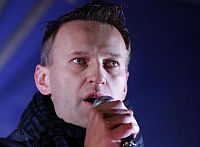
Alexei Navalny

The Associated Press reports: Alexei Navalny has done more than any other opposition leader to lay the groundwork for the protest movement now challenging Prime Minister Vladimir Putin’s 12-year grip on power. His reward came last weekend when he took the stage before tens of thousands of cheering demonstrators.

Working the crowd like a firebrand preacher, Navalny had people responding to his calls with cries of “Yes” and “We are the Power!” His role now looks set only to grow.

The 35-year-old corruption-fighting lawyer and popular blogger has inspired and mobilized many in Russia’s young Internet generation, who until recently had seemed reluctant to get up from their laptops.

He reaches tens of thousands through his blog, consistently among the top three on Live Journal, and has more than 167,000 followers on Twitter.

He has tapped into deep anger throughout society, particularly over the corruption that pervades public life and the generous subsidies sent to the restive mostly Muslim regions in southern Russia. Navalny’s description of Putin’s political party as the “party of crooks and thieves” and his call to “Stop feeding the Caucasus” have become catchphrases of the opposition.

The Kremlin has woken up to the threat posed by the charismatic and ambitious Navalny, but efforts to silence him have only added to his stature.

Navalny was arrested after leading a protest march in defiance of police the day after Dec. 4 parliamentary elections. The shameless falsifications that had helped Putin’s United Russia party retain its majority outraged many Russians, and more than 5,000 joined what turned into the largest anti-Putin demonstration in years. Navalny was jailed for 15 days, but the protests only grew.

When he was released last week, Navalny said he felt that he had been “jailed in one country and freed in another.” Dozens of camera crews had waited into the early hours of the morning for his release, in a sign of his growing fame.

He was one of the most anticipated speakers at Saturday’s rally, which drew an estimated 70,000 to 100,000 people in the largest protest in the country since the demonstrations that swept away the Soviet Union two decades ago.

Reuters reports: Putin said on Wednesday that he was ready for dialogue with the opposition after the biggest protest against his 12-year rule at the weekend but added he was at a loss for a leader to hold talks with.

“The dialogue should take place,” Putin told reporters. “In what form? I will think about it. They should formulate some kind of shared platform … Who do we talk to?”

Facebooktwittermail