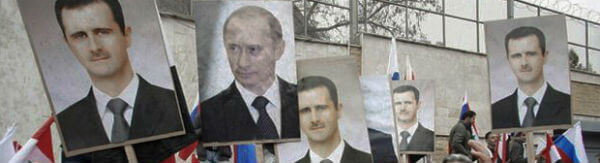
Amnesty reports: Russian air strikes in Syria have killed hundreds of civilians and caused massive destruction in residential areas – striking homes, a mosque and a busy market, as well as medical facilities – in a pattern of attacks that show evidence of violations of international humanitarian law, said Amnesty International in a new report published today (23 December).
Amnesty’s 28-page report – ‘Civilian objects were not damaged’: Russia’s statements on its attacks in Syria unmasked – highlights the high price civilians have paid for suspected Russian attacks across the country, focusing on six attacks in Homs, Idleb and Aleppo between September and November, attacks which killed at least 200 civilians and around a dozen fighters.
The report includes evidence suggesting that Russian authorities may have lied to cover up civilian damage to a mosque from one air strike and a field hospital in another. It also documents evidence suggesting Russia’s use of internationally-banned cluster munitions and of unguided bombs in populated residential areas. [Continue reading…]
Category Archives: Russia
Russia endorsed and then immediately violated the UN resolution on Syria
An editorial in the Washington Post begins: The UN Security Council unanimously passed a resolution Friday demanding that “all parties immediately cease any attacks against civilians and civilian objects” as well as “any indiscriminate use of weapons, including through shelling and aerial bombardment.” Less than 48 hours later, Russian planes carried out at least six airstrikes on civilian targets in the northern Syrian provincial capital of Idlib, killing scores of people. It was a blatant violation of the resolution Russia had just voted for — and an indication of how Vladimir Putin actually regards the diplomatic deals on Syria the Obama administration has been pushing.
According to local sources cited by Reuters and The Post’s Hugh Naylor, the Russian bombing struck a marketplace in the heart of Idlib as well as a courthouse. Rescue workers told Reuters they had confirmed 43 dead and that dozens more bodies had yet to be identified or pulled from the rubble. While the town is controlled by a rebel alliance composed mostly of Islamist factions, it is nowhere near territory held by the Islamic State. And few would argue that a souq was not a civilian target.
Not just the Security Council’s ambassadors should be embarrassed by this outrage. There is also Secretary of State John F. Kerry, who just last Tuesday emerged from a meeting with Mr. Putin saying that the Russian ruler would “take on board” Mr. Kerry’s objections to airstrikes on Syrian targets outside Islamic State-held land. Perhaps Mr. Putin tossed the U.S. concerns back overboard once Mr. Kerry had left Moscow. More likely, he never had any intention of altering Russia’s policy of proclaiming war against the Islamic State while focusing its fire on the forces opposed to Syrian dictator Bashar al-Assad. [Continue reading…]
Russia’s airstrikes on Syria appear futile with little progress on ground
The Guardian reports: When Russia launched an air campaign to support Bashar al-Assad, it was banking on a ground force of Syrian troops to finish what its warplanes started.
However, more than 12 weeks later, Syria’s army and the large numbers of Shia militias that back it have made few meaningful gains on the ground. Meanwhile, Moscow’s jets have added a new layer of carnage, reportedly killing at least 600 Syrian citizens, including 70 in Idlib on Sunday.
In Syria’s north and in opposition-held parts of the cities of Hama and Damascus, the destruction wrought on civilian infrastructure and population centres over the past fortnight is more intense than at any point in almost five years of war, residents of the communities and observers outside Syria say.
Meanwhile, the US has claimed that a once-broad gap with Russia over how to end the war has been narrowing, with both sides last week championing a peace process that aims to defuse a conflict that has killed at least 250,000 people and left Syria in ruins.
On the ground in rebel areas, there is little faith in the process. “Where are these reasonable Russians that Kerry claims are starting to see the light?” said a doctor in an Idlib hospital who was treating casualties, referring to the US secretary of state, John Kerry. “Bashar’s jets never bombed us like the Russians do. Isis never hunted us down like this.”
Damage from airstrikes is intensifying, but the Syrian ground forces are showing few signs of being able to use this to their advantage. With opposition anti-tank rockets taking a heavy toll on regime armour between Hama and Latakia, conscription of military-age males is stepping up across government-held parts of the country in an attempt to boost national forces. [Continue reading…]
Who killed Hezbollah’s Samir Qantar?
According to Hezbollah’s Al-Manar, Samir Qantar, a Lebanese commander who had become a high-profile figure in the group, was killed by an Israeli airstrike in Damascus on Saturday.
Israeli officials welcomed the news but did not confirm responsibility for the attack.
While Hezbollah had no hesitation in accusing Israel, as Raed Omari notes, Syrian officials have been more circumspect:
Remarkably enough, the Syrian account of the incident resembled to a greater degree that of Israel – no confirmation and no refuting.
But the Syrian statements on Qantar’s killing were worded with a heavy Russian military presence in the background and they were inseparable from new political developments on Syria and the new international coalitions in the making.
It can’t be that the Israelis launched an airstrike on Syria now without coordination with their Russian allies who now control Syria’s airspace. And if the Syrians confirmed that Israeli jets killed Qantar, then they would appear as either having prior knowledge of the plan or have no sovereignty over their country.
Who actually killed the 54-year-old Qantar? In my opinion, Israel is a likely perpetrator but the question is how its jets flew over Syria now without being spotted by the Russian satellites and space power. The Russian silence on the incident is also worth-noting.
Meanwhile, a Syrian rebel group has released a statement claiming that they were responsible for Qantar’s death.
The New York Times quotes a Druze militia group that said the building which was targeted had been hit by “four long-range missiles.”
An Israeli columnist quotes “Western sources” claiming that Qantar was a “ticking bomb.”
The sources said Kuntar had recently not been working on behalf of Hezbollah, but rather acting with increasing independence alongside pro-Assad militias in Syria.
The attack in Damascus comes at a moment when, according to Israeli sources, “Iran has withdrawn most of the Revolutionary Guards fighters it deployed to Syria three months ago.”
Assuming that this was indeed an Israeli airstrike, it appears to have not only been aimed at an individual, but also intended to send some additional messages: that Israel is not unduly constrained by Russia’s air operations in Syria and that the Hezbollah fighters propping up the Assad regime are more expendable than their Iranian counterparts.
Creede Newton writes:
Regardless of who fired the missile, Sayed Hassan Nasrallah, the secretary-general of Hezbollah, has already made his decision: this was Israel. Now, the question is, how will Nasrallah respond to another high-level assassination?
Some think Hezbollah’s falling popularity with the Sunni majority in the Middle East due to its meddling in the Syrian conflict could use a boost, and a conflict with Israel would help.
Others say Hezbollah is stretched, and a war with the powerful Israeli military is the last thing the Shia group needs.
Nicholas Blanford writes:
The current situation mirrors the immediate aftermath of an Israeli pilotless drone strike on 18 January in the Golan that killed Jihad Mughniyeh — son of former Hezbollah military commander Imad Mughniyeh — an Iranian general and five other Hezbollah fighters. Hezbollah struck back 10 days later with an anti-tank missile ambush against an Israeli army convoy at the foot of the Shebaa Farms hills, killing an officer and a soldier.
Following the ambush, Hezbollah Secretary General Hassan Nasrallah said in a speech that the rules of engagement that had defined the tit-for-tat conflict between Hezbollah and Israel were over.
“From now on, if any Hezbollah resistance cadre or youth is killed in a treacherous manner, we will hold Israel responsible and it will then be our right to respond at any place and at any time and in the manner we deem appropriate,” he said.
Nasrallah is due to speak Monday night and will probably reaffirm that commitment, which will ensure a state of tension along Israel’s northern border in the coming days.
The concept of reciprocity is a cornerstone of Hezbollah’s defense strategy against Israel, which may offer a clue as to the party’s response to Kuntar’s assassination. In the years following the 2006 War, Nasrallah has articulated on several occasions Hezbollah’s strategy of retaliating in kind for Israeli actions against Lebanon in a future conflict — if Israel bombs Beirut, Hezbollah bombs Tel Aviv; if Israel blockades Lebanese ports, Hezbollah will blockade Israeli ports with its long-range anti-ship missiles; if Israel invades Lebanon, Hezbollah will invade Galilee.
Even on a tactical level, Hezbollah has sought to achieve reciprocity against Israel. In October 2014, Hezbollah mounted a roadside bomb ambush in the Shebaa Farms that wounded two Israeli soldiers in response to the death a month earlier of a party military technician who died when a booby-trapped Israeli wire-tapping device exploded.
The January anti-tank missile attack against the Israeli convoy in the Shebaa Farms also sought to echo Israel’s deadly drone missile strike in the Golan 10 days earlier.
“They killed us in broad daylight, we killed them in broad daylight… They hit two of our vehicles, we hit two of their vehicles,” Nasrallah said at the time.
Ex-ambassador: Syria negotiations going to go ‘nowhere’
The Hill reports: A respected former career diplomat who served under the Obama administration doubts the U.S. can achieve a political resolution of the war in Syria without taking more dramatic measures — particularly imposing no-fly zones.
Retired Amb. Ryan Crocker, who President Obama picked as ambassador to Afghanistan in 2011, predicts the negotiations will go “nowhere” as long as Syrian President Bashar Assad, who is backed by Russia, believes he will prevail in the five-year civil war.
“I have the highest regard for Secretary Kerry, but this effort at a political negotiation is going to go nowhere because the Russians, the Iranians and Bashar Al-Assad think they’re on a roll — why should they negotiate?” Crocker said earlier this week at a breakfast in Washington.
The Obama administration has long insisted that Assad must leave in order for there to be peace in Syria, but the president seemed to soften his tone Friday during his last press conference of the year.In contrast to his 2011 declaration that “Assad must go,” the president said Friday that “I think that Assad is going to have to leave.” [Continue reading…]
Is Turkey responsible for ISIS?
Kyle Orton writes: Turkey concluded its biggest investigation to date into Islamic State (IS) operatives on its territory on Friday, and blacklisted sixty-seven people. This provides a good moment to review what Turkey’s role has been in the rise of IS, especially amid the escalating accusations from Russia that Turkey is significantly responsible for financing IS. The reality is that while Turkish policy has, by commission and omission, made IS stronger than it would otherwise have been, so has Russia’s policy—and Russia’s policy was far more cynical than Turkey’s, deliberately intended empower extremists to discredit the rebellion against Bashar al-Assad. Turkey’s focus on bringing down Assad and Ankara’s fear of Kurdish autonomy led it into these policies and now—having seemingly found the will to act to uproot IS’s infrastructure on Turkish territory—there is the problem of actually doing so, when IS can (and has) struck inside Turkey. The concerns about these external funding mechanisms for IS, while doubtless important, obscure the larger problem: IS’s revenue is overwhelmingly drawn from the areas it controls and only removing those areas of control can deny IS its funds.
Turkey shot down a Russian jet on November 24, the first time since 1952 a NATO member had brought down a Russian military aircraft. Ankara claimed that its airspace had been violated and numerous requests to withdraw were ignored. The Russian plane landed in northern Syria: one pilot, Oleg Peshkov, was killed in the descent by the Turkoman rebels of Alwiya al-Ashar (The Tenth Brigade) and one, Konstantin Murakhtin, was later rescued. In the wake of this, Moscow took retribution with economic sanctions against Turkey, including limiting tourism and banning charter flights to Turkey and also trade in certain foodstuffs.
Russia’s ruler, Vladimir Putin, then raised the stakes on November 30 by accusing Turkey of perpetrating the shoot-down in order to protect IS, with which the Turkish government has commercial interests, notably oil, but also weapons. Moscow subsequently accused the Turkish President Recep Tayyip Erdogan of being a personal profiteer from the criminal trade in oil with IS. The reality is quite otherwise, of course. As David Butter of Chatham House put it, given Turkey’s reliance on Russia for energy, “if oil was a consideration for the Turkish authorities … it would have had good reason to hold fire.” [Continue reading…]
Optimism on Syria is misplaced. Here’s why

Hassan Hassan writes: One of the common sentences repeatedly said by Syrians from the two main warring sides is that the solution to the conflict is attainable when the “big guys” decide to end it. Those big guys – at the UN Security Council – passed a unanimous decision on Friday calling for peace negotiations and a ceasefire to steer the country towards a political settlement.
“This council is sending a clear message to all concerned that the time is now to stop the killing in Syria and lay the groundwork for a government that the long-suffering people of that battered land can support,” the US secretary of state, John Kerry, proclaimed after the successful vote.
Both inside and outside Syria, the resolution has raised hopes that this may indeed mark the start of a serious process to find a solution. And much can be achieved, at least in preventing the conflict from spiralling further out of control.
But the optimism seems to be misplaced, mostly because it is not based on any progress or attainable objectives in the foreseeable future. Instead of the usual focus on the difficulty of rallying the opposition around one vision to end the conflict, one aspect related to the regime can help illuminate the intractability of the process: the fate of Bashar Al Assad. [Continue reading…]
Putin says Russia ready to increase military role in Syria
The Guardian reports: Vladimir Putin has warned that Russia is ready to to scale up its military intervention in Syria, less than a day after Moscow signed off on an ambitious UN plan to end the war.
The peace roadmap lays out a two-year path to elections for a new government, starting with a January ceasefire, and marks the first time America and Russia have reached broad consensus on Syria’s future after years of conflict that has cost more than 250,000 lives and made millions more into refugees.
But the pact was so broad that it sidestepped one of the biggest questions at the heart of Syria’s troubles, the future of President Bashar al-Assad, and several other key issues. It was also drawn up without consulting Assad or the opposition groups fighting him on the ground.
The question of whether, when and how the Syrian leader might step down will hang over any attempts to broker long-term peace. The US says he must go, while Russia has doubled down on support for him, sending bombers, weapons and cash to support his troops. [Continue reading…]
Russia/Syria: Extensive recent use of cluster munitions
Human Rights Watch reports: The military offensive that the Russian and Syrian government forces opened against armed groups opposed to the government on September 30, 2015, has included extensive use of cluster munitions – inherently indiscriminate and internationally banned weapons.
The use violates United Nations resolution 2139 of February 22, 2014, which demanded that all parties involved in Syria end “indiscriminate employment of weapons in populated areas,” Human Rights Watch said. It also contradicts a statement issued by the Syrian Ministry of Foreign Affairs and Expatriates on November 9, 2015, in which it insisted that the Syrian Arab Armed Forces do not and will not use indiscriminate weapons.
“Syria’s promises on indiscriminate weapons ring hollow when cluster munitions keep hitting civilians in many parts of the country,” said Ole Solvang, deputy emergencies director. “The UN Security Council should get serious about its commitment to protect Syria’s civilians by publicly demanding that all sides stop the use of cluster munitions.” [Continue reading…]
Inside Putin’s cold war with Turkey
Anna Nemtsova reports: In a favorite Russian corner of old Istanbul, Laleli, the streets and stores are eerily quiet. The little boutiques, stores, stands and outlets selling leather and fur coats are just about empty. The prostitutes from the former Soviet empire and from Africa are lonely as well.
Until recently there were crowds of Russian shoppers and Russian clients here. Now, in vain, shop assistants run out of their stores yelling, “Devushka, kurtki, dublenki!” They’re begging a woman to buy a fur coat, in hopes of attracting Russian clients, famous for their generous purchases. But there are none.
Such are the local symptoms of the growing cold war between two countries, or perhaps better said, two leaders who seemed until recently to be fraternal allies.
Yes, one of them is the commander in chief of NATO’s second biggest military, Turkish President Recep Tayyip Erdogan, and the other is Russian President Vladimir Putin, but over the years they had found so many common interests, from tourism to oil shipments, that they seemed almost inseparable.
Then Putin entered the Syria war to defend his client, Syrian President Bashar al-Assad, whom Erdogan is sworn to depose. And on Nov. 24, one of Erdogan’s American-made F-16s shot a Russian Mig-24 out of the air on the serrated edge of the frontier between Syria and Turkey.
And, so, the Turkish-Russian cold war began, and is growing worse.
On Thursday, speaking at a press conference, Putin said that at the state-to-state level the relations between the two countries were damaged beyond repair. The Turkish leadership, he said, “decided to lick Americans in a certain place.”
Putin’s coarse language, reminiscent of his threats to hang other regional enemies “by the balls,” picked up on weeks of vitriol spewed at Erdogan. The ever-vituperative State Duma deputy, Vladimir Zhirinovsky, claimed that if Turkey “acts as a hooligan” its northern neighbor would answer with destructive bombing, “so that half of Turkey would lie in ruins.” [Continue reading…]
Saudi Arabia’s ‘coalition’ is a brazen challenge to Syria, Iran, and the U.S.
By Scott Lucas, University of Birmingham
Deputy crown prince and minister of defense of Saudi Arabia Mohammed bin Salman’s announcement of a new Saudi-led counter-terrorism coalition surprised allies like the US, adversaries such as Iran, and other interested parties including Russia.
Prince Mohammed said the Saudis had formed a 34-nation “Islamic military coalition” to fight Islamic State (IS) and other terrorist groups. A headquarters in Riyadh will provide military, intelligence, logistics, and other support to members as needed.
This was so surprising that countries in the new coalition said they were unaware they were founding members. Pakistan’s foreign secretary Aizaz Chaudhry said he had only learned of the initiative when he read the prince’s statement, and that he had asked Pakistan’s ambassador in Riyadh to get a clarification from Saudi officials.
The Indonesian Foreign Ministry was only slightly more diplomatic, saying that “the government is still observing and waiting to see the modalities of the military coalition”. Malaysian defence minister Hishammuddin Hussein, while supporting the coalition, ruled out “any military commitment”.
So this was hardly the unveiling of a grand military initiative. Instead, it was a political message – not just to Russia and Iran, but to Riyadh’s nominal allies in Washington.
Russia’s family business
Reuters reports on the rewards Kirill Shamalov gained after marrying Vladimir Putin’s daughter, Katerina, in February, 2013: Within 18 months, Kirill acquired a large chunk of shares in a major Russian oil and petrochemical processor called Sibur – a stake now worth an estimated $2.85 billion, based on the value of recent share deals. He also quit his job as a business manager and set up a company to run his personal investments.
How did such a young businessman go so far, so fast? A Reuters examination of Shamalov’s career shows that in the summer of 2013, months after he married Putin’s daughter, Kirill opened discussions about buying shares in Sibur from one of the president’s wealthiest friends.
A year later, he was able to borrow more than $1 billion, judging by the published accounts of his investment company. The loan came from a bank headed by another longtime associate of Putin, and where Shamalov’s brother holds a senior position. The money was used to make an investment in Sibur that within months proved highly profitable for Kirill.
Asked about his business deals and the wedding, Kirill Shamalov and Sibur declined to comment.
The trajectory of Kirill’s fortunes sheds new light on how people close to Putin have taken commanding positions in key companies – and how such opportunities are now being extended to a new generation. [Continue reading…]
Donald Trump gets strong endorsement from Vladimir Putin
CNN reports: Donald Trump has said that he would “get along very well” with Russian President Vladimir Putin.
The feeling is apparently mutual.
Putin offered high praise for the billionaire businessman-turned-Republican presidential front-runner on Thursday during an annual news conference with reporters.
“He is a bright and talented person without any doubt,” Putin said, adding that Trump is “an outstanding and talented personality.”
And in remarks closely mirroring Trump’s assessment of the campaign, the Russian leader called Trump “the absolute leader of the presidential race,” according to the Russian TASS news agency. [Continue reading…]
Russia’s goals in Syria
Joseph Bahout writes: it would be premature to assume that there is a grand design behind Russia’s Syrian intervention. It is more realistic to envision what Putin has in mind as a series of incremental endgames, a succession of contingency plans, and a cascade of defense lines, in a Russian nesting doll fashion, that are adaptable and playable as events unfold on the ground and on the diplomatic battlefield.
The first and most highly valued of these objectives would be the restoration, to the greatest extent possible, of the central Syrian state such as it existed before 2011. Putin bets on a revamping of the Syrian army, which relies on cadres trained (and sometimes married) in Russia or the ex-Soviet bloc. This objective does not exclude a whitewashing of the regime’s façade through early elections, the formation of a “national unity government,” and cosmetic revisions of the president’s prerogatives. That is probably what Putin discussed with Assad during his recent and very odd visit to the Kremlin.
If this proves impossible or too costly, a second option is to fall back to the defensible parts of useful Syria after guaranteeing the safety of the Alawi canton. This is perhaps already a consideration, as the majority of Russian airstrikes concentrate on the contours of this area. From there on, Putin, like in Ukraine and Crimea, could freeze the conflict and embark on a long war of attrition. The rest of Syria would fragment and fall into chaos. The central desert would be left for the West and the Gulf States to sort out, fought over by various rebel groups and the Islamic State, which would prosper in such a scenario. Russia’s expectation is that its rivals would ultimately be exhausted and come back to Putin begging for a solution—the one that he always had in mind.
The last contingency scenario is to seek to make the second option quasi-permanent. Useful Syria would be solidified as an enclave into which minorities would progressively flow, seeking protection or shelter from the chaotic rest of the country. This would become the launching pad of a negotiated long-term solution that would consolidate the partition of Syria, granting Moscow influence over a statelet on the coast, where its military bases lie. While the economic viability of such a region would be uncertain, it could potentially be ensured by the exploration and exploitation of undersea gas fields. [Continue reading…]
Kerry in Moscow says Syrian opposition should not push for Assad’s immediate departure
The New York Times reports: The United States, Russia, the European Union and Middle Eastern countries had agreed in Vienna last month on a timeline of two years to hold new elections in Syria but left the question of Mr. Assad’s fate unsettled.
Last week, a wide range of Syrian opposition figures formed a new body to oversee peace negotiations and insisted that Mr. Assad step down.
Mr. Kerry appeared, more carefully than on previous occasions, to couch America’s insistence that Mr. Assad leave office as a recondition of any settlement.
The United States, he said, was not seeking Mr. Assad’s ouster per se, but rather considers it unlikely that he could preside over a successful settlement.
“The United States and our partners are not seeking regime change in Syria,” Mr. Kerry said. Syrian opposition groups arriving for talks Friday in New York should not demand as a condition of sitting down that Mr. Assad depart immediately, Mr. Kerry said, a position Russia calls a nonstarter for negotiations.
“We see Syria fundamentally very similarly,” Mr. Kerry said. “We want the same outcomes, we see the same dangers, we understand the same challenges.” He added that the countries are “honest with differences.” [Continue reading…]
Obama’s dispassion and Kerry’s wishful thinking on Syria
Frederic C. Hof writes: President Obama recently told reporters in Manila that he cannot “foresee a situation in which we can end the civil war in Syria while Assad remains in power.” But according to the president, “it may take some months for the Russians and the Iranians and frankly some members of the Syrian government and ruling elites within the regime to recognize the truths that I just articulated.” Syrian President Bashar al- Assad himself told Italian state television that the diplomatic process supposedly launched in Vienna to transition away from him is nonsense. According to Syria’s barrel-bomber in chief, “nothing can start before defeating the terrorists who occupy parts of Syria.” “Terrorist,” according to Assad, is anyone opposing him.
So much of Washington’s Syria policy has rested on wishing and hoping that others would recognize objective truths and act accordingly. The list goes back to 2011: Assad should choose to be part of the solution rather than the problem; Assad should step aside for the good of Syria; Assad should not use chemical weapons on his own people lest he cross a bright red line; Assad should read the words of the 2012 Geneva Final Communique and prepare to pack; Moscow should realize its military intervention in Syria will alienate it from the Sunni Muslim world; Iran should grasp the chance to become a normal state and a force for regional stability; everyone should recognize the incompatibility of uniting Syrians against the Islamic State with a continuing political role for Assad.
No doubt Syrians, Russians and Iranians would be much better off, and the world a safer place, if the president’s “truths” were taken to heart by their political leaders. Alas, these truths are not regarded by his adversaries — and, yes, they are his adversaries — as true. And even if they are objectively true, they are not self-actualizing. Yet this administration sometimes sees the alpha and omega of foreign policy as delivering the lecture and hoping the students get it. [Continue reading…]
Russian airstrikes force a halt to aid in Syria, triggering a new crisis
The Washington Post reports: Aid agencies are warning of a worsening humanitarian crisis in northern Syria as sharply intensified Russian airstrikes paralyze aid supply routes, knock out bakeries and hospitals and kill and maim civilians in growing numbers.
Air attacks have escalated significantly since Turkey shot down a Russian warplane along the Turkey-Syria border on Nov. 24, the aid agencies say, with Russia responding to the incident by stepping up its effort to crush the anti-government rebellion in the insurgent-held provinces bordering Turkey.
Among the targets that have been hit are the border crossings and highways used to deliver humanitarian supplies from Turkey, forcing many aid agencies to halt or curtail their aid operations and deepening the misery for millions of people living in the affected areas, according to a report this month by the U.N. Office for the Coordination of Humanitarian Affairs.
Hospitals and health facilities also have been struck, reducing the availability of medical care for those injured in the bombings. According to the U.N. report, at least 20 medical facilities have been hit nationwide in Syria since Russia launched its air war on Sept. 30. [Continue reading…]
Russia grapples with its own ‘Jihadi John’ as Moscow steps up role in Syria
The Wall Street Journal reports: For Russia, it was a shock: A blue-eyed Siberian with shaggy brown hair raged against his homeland in an Islamic State video before slicing the throat of a fellow Russian accused of being a spy.
The executioner, identified by Russian media and his friends as a 28-year-old named Anatoly Zemlyanka from the city of Noyabrsk, has risen to infamy in Russia since Islamic State released the undated video from Syria on Dec. 2.
Russian authorities, while not confirming his identity in the propaganda video, have put him on Interpol’s wanted list. Russian media have dubbed him Jihadi Tolik, based on the Russian nickname for Anatoly, in describing his apparent transformation from Siberian college student to the Slavic face of Islamic State brutality.
Mr. Zemlyanka’s image has spurred comparisons to Jihadi John, or Mohammed Emwazi—the British militant whose appearances in videos presiding over the beheadings of Western hostages while leveling demands at President Barack Obama made him a prime propaganda tool for Islamic State. But instead of speaking English and condemning Mr. Obama, Mr. Zemlyanka is speaking in Russian and berating Russian President Vladimir Putin.
“Listen to me, Putin, you dog, and let your henchmen hear me too!” Mr. Zemlyanka says in the video. “Before your arrival, the Assad regime bombed us, then America bombed us with its cowardly coalition, and now you’re bombing us. But nothing has come of it, apart from the fortitude and conviction that we’re on the side of truth.”Islamic State is increasingly pointing its propaganda apparatus at Russia, as the Kremlin steps up its military support for Syrian leader Bashar al-Assad. The campaign appears aimed at raising Russian fears of possible further retribution from Islamic State, particularly after the suspected Oct. 31 bombing of a Russian charter flight traveling to St. Petersburg from Egypt’s Sharm El Sheikh. [Continue reading…]