The Associated Press reports: Syrians could soon overtake Afghans as the world’s biggest refugee population, with their numbers expected to pass 4 million by year’s end, a top U.N. official said Tuesday.
High Commissioner for Refugees Antonio Guterres spoke as the international community sharply urged Syria to comply with a new Security Council resolution demanding that President Bashar Assad and the opposition provide immediate access for humanitarian aid.
Opposition activists say more than 140,000 people have died in the conflict, which enters its fourth year next month. The U.N. says 9.3 million Syrians are in need of humanitarian assistance.
The number of Afghan refugees was 2.6 million at the end of 2012, UNHCR says. Syrians, with nearly 2.5 million registered as refugees, should overtake that long before the end of the year. About one-half of the refugees are children.
Category Archives: Syria
Syria aid still stalled after U.N. resolution

Reuters reports: World powers have passed a landmark Security Council resolution demanding an end to restrictions on humanitarian operations in Syria, but aid workers doubt it has the punch to make Damascus grant access and let stuck convoys deliver vital supplies.
President Bashar al-Assad’s administration and to a lesser extent rebels fighting to overthrow him have been accused of preventing food and medical care from reaching a quarter of a million people in besieged areas.
Russia, Assad’s ally on the Security Council, and China have vetoed three resolutions that would have condemned him or threatened sanctions since Syrian forces cracked down on a pro-democracy uprising in 2011 that has since turned into a civil war. More than 140,000 have been killed in the fighting, which has forced half the population to flee from their homes.
Saturday’s resolution threatened unspecified “further steps” if Damascus does not comply. [Continue reading…]
A jihadist’s account of how ‘Al Qa’eda mediator’ Abu Khaled Al-Suri was assassinated
Abu Khaled al-Suri, a senior figure in the insurgent faction Ahrar al-Sham and a representative of Al Qa’eda leader Ayman al-Zawahiri, was killed on Sunday by a suicide attack in Aleppo. EA Worldview has posted a translation of a jihadist’s account of al-Suri’s death:
May Allah damn these suicides and may those who sent them be damned.
(Al-Suri) was a remarkable man. He was a colleague and friend of Osama Bin Laden, a fellow campaigner and representative of Ayman al-Zawahiri in Syria. He was given the task of making peace between the Mujahideen in Syria.
We met him more than once when our brigade was in Hama. He gave us great, extensive help when we were there. I did not meet a more pleasant man. Joyful, pleasant, his face shone with goodwill and wisdom.
In conversation he was very gracious and attentive to the person to whom he was talking. He was very simple and direct with people. When any questions arose that demanded his participation he said, “I am a slave of Allah and your servant. Speak, ask, and I will do everything in my power for you.”
He waged jihad for over 20 years. The infidels were trying to kill him for many years already. The USA’s CIA put a price on his head.
Now he is no more. This is not just a loss for his brigade and for Syria but it is no exaggeration to say for the Ummah as well.
That gang of arrogant villains who planned this evil act will be sorry for it.
Of course everyone is asking, who did it?
Right now it’s hard to say. It’s only possible to describe those who did it. Their arrogance is good for cowardice and stupidity. Dumb and brainless agents carrying out the orders of the arrogant.
Obama sees limited options for cyberwar in Syria
The New York Times reports: Not long after the uprising in Syria turned bloody late in the spring of 2011, the Pentagon and the National Security Agency developed a battle plan that featured a sophisticated cyberattack on the Syrian military and President Bashar al-Assad’s command structure.
The military’s ability to launch airstrikes was a particular target, along with missile production facilities. “It would essentially turn the lights out for Assad,” said one former official familiar with the planning.
For President Obama, who has been adamantly opposed to direct American intervention in a worsening crisis in Syria, such methods would seem to be an obvious, low-cost, low-casualty alternative. But after briefings on variants of the plans, most of which are part of traditional strikes as well, he has so far turned them down.
Syria was not a place where he saw the strategic value in American intervention, and even such covert attacks — of the kind he had ordered against Iran during the first two years of his presidency — involved a variety of risks. [Continue reading…]
As a commenter at the Times says, people who live in glass houses shouldn’t throw stones.
How the United States legitimized mass killing in Syria
The political unrest in the Ukraine has been a news topic which falls outside the loosely defined scope of this site. Nevertheless, popular uprisings wherever they occur catch my attention for similar reasons that they resonate with most people.
Unless you subscribe to an ideology or identify with a social group that is so marginal that the very idea of the people evokes some sense of otherness, then to see people en masse challenging the power of the state, generally seems indicative of a social fracture in response to which it shouldn’t be too hard to take sides.
Do you side with the state and its agents who are willing to kill civilians in order to defend the state? Or do you side with the civilians who are risking their lives in order to defend their country?
That doesn’t sound like a tough choice, yet gain and again I encounter individuals who on the one hand challenge and view with suspicion virtually every action of the U.S. government and are tireless in their expressions of dissent, and yet on the other hand will just as tirelessly defend any other government if that government happens to be one not favored by the U.S..
This is what I would call a pathological anti-Americanism, because it elevates criticisms of the U.S. government (many of which are perfectly legitimate criticisms) to a point where they overshadow all other considerations. Worst of all, they view everything going on in the world through a U.S.-centric prism, oblivious to the possibility that the negative U.S.-centric prism is just as distorted and limiting as its pro-U.S.-centric counterpart.
Post-Iraq, the catastrophes that virtually everyone wants to guard against are the unintended effects of American military adventurism, while much less attention is given to the unintended effects of American inattention.
In one of Michael Vlahos’s characteristically deep analyses he describes the mythic significance of a citizens’ uprising — in response to which the state is in jeopardy of destroying itself.
But then he goes on to describe how in the case of Syria, the state has assumed an “inalienable right to kill.” Moreover, America’s acquiescence to Syria’s adoption of a strategy of mass atrocity has been instrumental in making that strategy effective.
To intervene or not intervene is not the question, because this frames global events in terms of American domination. Yet we fool ourselves if we imagine that the boundaries of our concerns also define the scope of our influence.
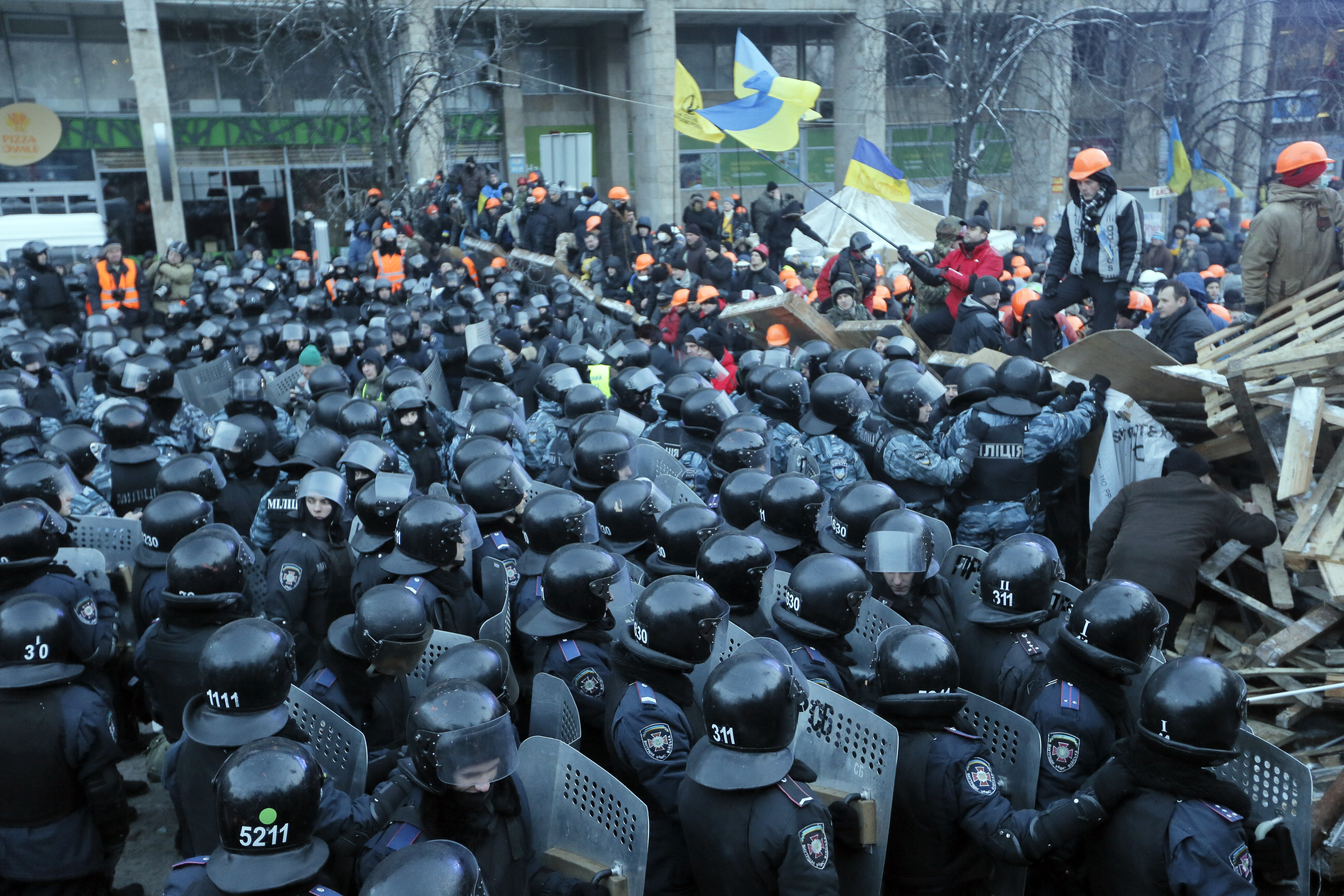
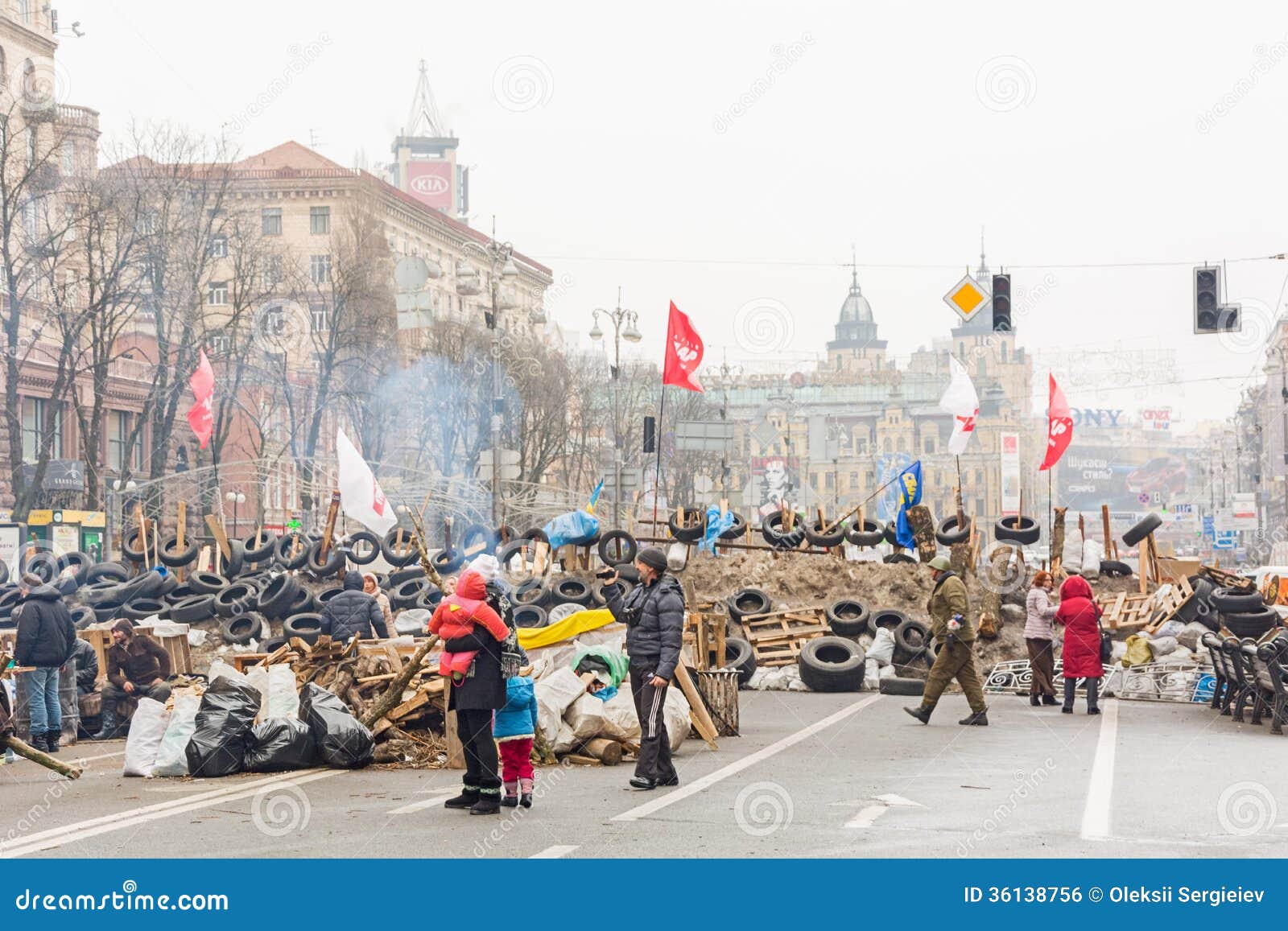
Michael Vlahos writes: Why do the photos, video, and tweets out of Kiev have such mythic power? Why do demonstrations, and barricades, and people shot down, young and old, men and women alike, wring such enduring emotion (like Les Miserables)? Why do citizen risings in big, capital cities have such a hold on us?
For a start, citizen-risings in cities are not war. Even when there is lots of fighting, it is never a fair fight, and we are rooting for the underdog, where the force against them is always unfairly superior, professional, and heavily armed. Plus a group of poorly armed citizens are unlike an army in almost every way. But especially this way — Together, they are the whole community: Men, women, and children fighting together. Their backs are against the family hearth itself. Nothing could be more existential, or more motivating.
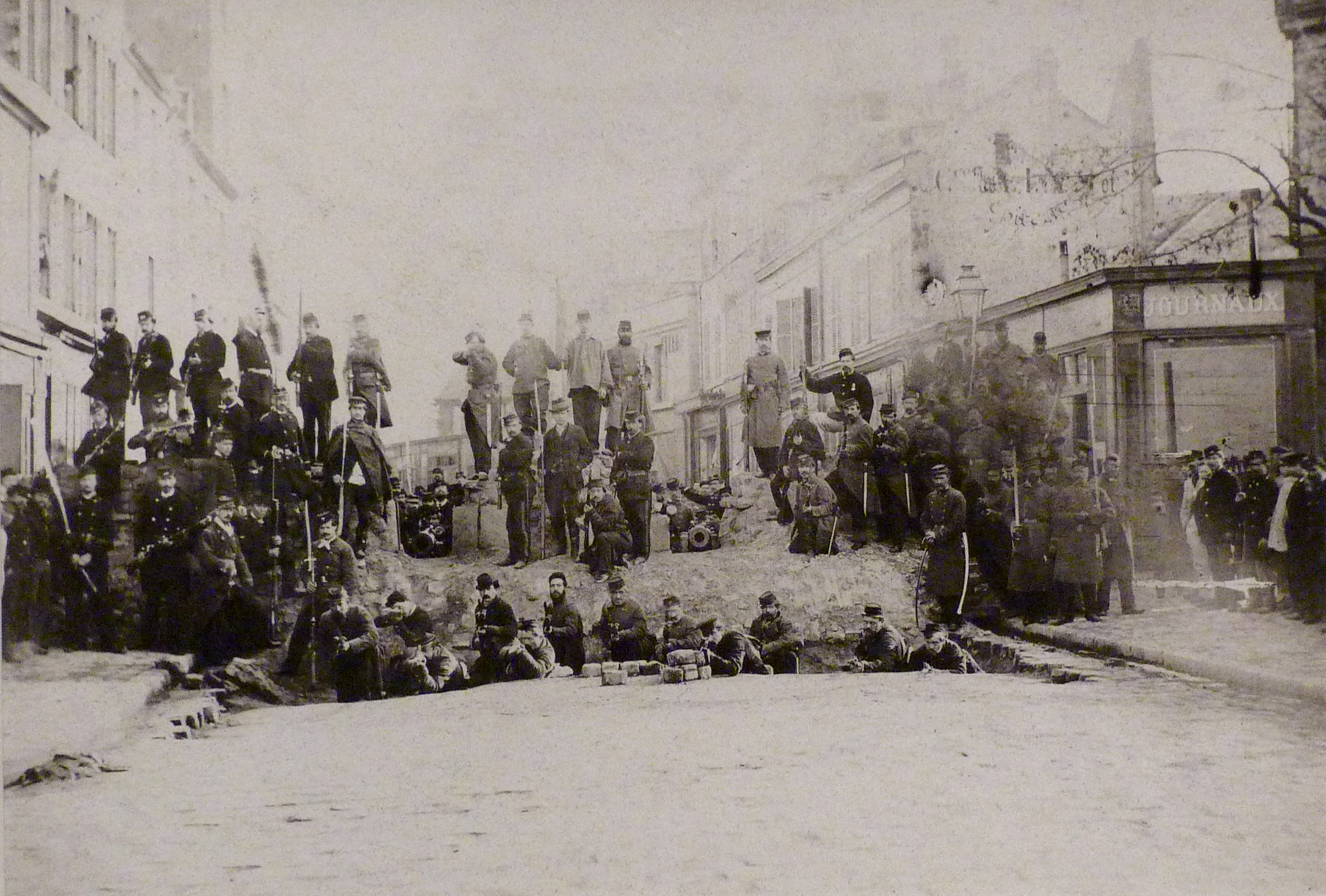
Hence their entire defense is an improvisation that seeks survival in destroying the very appearance of what they fight for, as they willingly demolish their homes (cutting passages and loopholes in their townhouse rows), their streets (ripping pavers and dragging their own vehicles into barricades), their centers of civic life — thus their very way of life — to resist the invader. Yet the material things of life mean nothing now compared to the preciousness of community and identity.
Because their defense is always existential — victory or death, freedom or slavery — and their enemy is always implacable and sure to win: If only they can kill enough.
Yet the mission of the citizen rising, though existential, is never hopeless, because the citizens know they can win through martyrdom.
The operational goal of the barricades is to successfully repel the armed might of the state — but the strategic goal is to overturn (or at least compromise) the very legitimacy of the state by forcing it to kill large numbers of its own citizens. This is why putting down a citizen rising is so risky for a state regime.
It is risky on two levels. On one level, soldiers will try to break down barricaded positions by killing civilians, reasoning that bravado — and thus resistance — will melt away as people see friends and family killed in front of them.
But this is the secret of community martyrdom: It cements social bonds stronger than any glue. In Kiev we have seen acts of heroism and sheer courage that convention typically associates only with soldiers in battle. Like the woman who tweeted after being shot in the neck, we have felt heartrending moments of pathos.
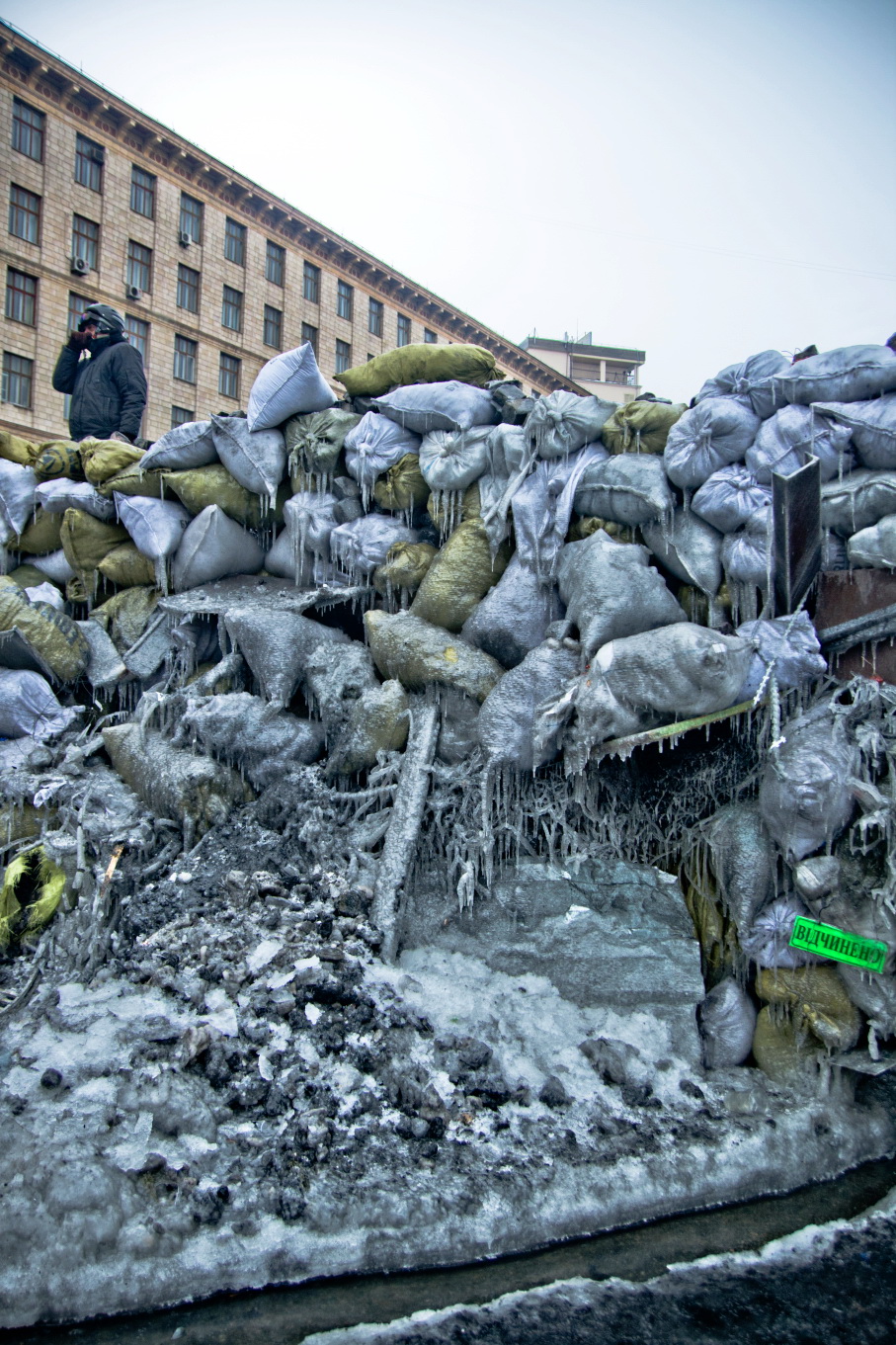
Truth is, a citizen rising that survives its first casualties (or atrocities) becomes potentially as strong as any army in any prepared, defensive position. Its barricades then suddenly are splendid field fortifications, the righteously occupied city blocks and squares like immoveable castles of concrete, rubble, and rubber.
So now the state’s arm of enforcement had better be an army, because they now face an army in a fortified place, ready to fight to the death.
But remember, these are still citizens of the republic, and the army of the republic cannot escape its sworn oath to defend them. And because the assembled and resistant are men and women and children together, killing them is like killing your own community: Your own family. Moreover, a state that would wantonly kill its own people is not simply guilty of crimes against humanity: It is guilty (at least incipiently) of attempting to kill itself. [Continue reading…]
There is no arm’s-length solution for Syria
Frederic C. Hof writes: Geneva II was an attempt to fill that which nature abhors: a vacuum. Yet the vast emptiness of US policy toward Syria swallowed the effort itself, making it seem tiny, silly, and futile. President Bashar al-Assad’s regime calculated that it could treat the initiative with contempt. Although the opposition delegation in Geneva acted with competence and dignity, it could not alter or avoid facts on the ground; it could not dispel the belief on the part of the regime, Tehran, and Moscow that there is indeed a military solution for the Syrian crisis, a solution that is very much a work in progress.
The supposed absence of a military remedy to Syria’s travails has been the central talking point of a strategy-free approach to the crisis by the West, led—if that is the proper word—by the United States. The regime, Russia, and Iran may well be wrong that the uprising against crime family rule can be beaten by force of arms. Yet the West’s incantation to the contrary is by no means the product of rigorous, dispassionate analysis. Rather the United States and its allies simply have no appetite for trying seriously to affect the military situation inside Syria. The West has offered no meaningful counter to those who supply strategic arms, inject foreign fighters, and facilitate war crimes and crimes against humanity, all in an attempt to win a war outright. Ergo there is no military solution. It is as if the fact that one chooses not to play somehow means that the game itself does not exist.
That one side thinks it can win a battlefield decision gives it a perfectly logical sense of what a diplomatic outcome should entail: the other (losing) side suing for peace. The West, going into Geneva II, aimed to break new ground in the theory and practice of diplomacy: the party prevailing on the battlefield should do the decent thing and yield power. The self-serving doctrine of no military solution for Syria was even projected onto Russia in the hope that Moscow would prevail on its murderous client to stop shooting and graciously step aside. US leaders now voice disappointment in Russia’s Geneva II performance, suggesting a degree of surprise. One might just as usefully express shock over the dietary habits of the hyena.
Rather than speciously proclaiming the impossibility of a military decision in Syria, the administration might instead argue that US interests are not engaged by what happens in Syria; at least not to the extent that a serious effort to affect the military situation would be merited. One could argue that although regime atrocities against civilians easily represent the premier human rights abomination of the twenty-first century, there are similar (albeit smaller scale) abuses around the globe, so on what basis would one intervene in one place and not others? One could maintain that the only sort of military gesture that would really matter in Syria would be the Iraq-like invasion and occupation of the country. One could warn that even a military mission aimed precisely at killing the delivery systems that drop barrel bombs and other explosives on the defenseless would put the United States on a slippery slope to yet another Middle Eastern war.
Indeed, all of these arguments—or excuses for inaction—have already been made, some quite explicitly by President Barack Obama. One of his top aides reportedly even advanced the argument that Syria would be a wonderful place for Iran to have a bloody, drawn-out, Vietnam-like experience: a morality-free proposition offering Syrians a twist on the Will Rogers observation that, “Anything’s funny as long as it’s happening to someone else.” Perversely, however, the hand-wringing and excuse-making—the transformation of “never again” to “well, maybe just this once”—has made a bad situation incalculably worse and is now forcing the administration to reconsider the “no military solution” cop-out and its corollaries. [Continue reading…]
New Syrian chemical-arms removal plan slammed
Al Jazeera reports: Syria has submitted a new 100-day plan for the removal of its chemical weapons after failing to meet a February 5 deadline, but the international mission overseeing the operation believes it can be done in a shorter timeframe, diplomats have said.
The Organisation for the Prohibition of Chemical Weapons (OPCW) executive committee met on Friday in The Hague to discuss the joint OPCW and UN mission amid growing international frustration at Damascus falling behind on its commitments, the Reuters news agency reported.
The Syrian government, locked in a three-year-old war with rebels seeking President Bashar al-Assad’s overthrow, failed to meet the February 5 OPCW deadline to move all of its declared chemical substances and precursors out of the country. [Continue reading…]
Why Assad will eventually lose
Balint Szlanko writes: The National Defense Force — Syria’s main pro-government militia — is thought to number around 50,000 local recruits, but the government camp also includes foreign Shia militias. The Lebanese group Hezbollah has thousands of fighters in Syria, and Iran’s Islamic Revolutionary Guard Corps is sending officers both for advisory and direct combat roles, while Iraqi Shia volunteers number around 5,000, according to an estimate by Valerie Szybala of the Institute for the Study of War (ISW).
This influx of irregular forces has to some extent allowed the government to deal with its biggest problem: a shortage of manpower in general and a shortage of reliable and effective infantry in particular. This has plagued the regime since the beginning of the conflict, due to questionable loyalty among and huge desertions from army units made up mostly of Sunni Muslim conscripts.
The problem hasn’t quite gone away, however, and it continues to affect operations. The push into rebel areas east of Aleppo, for instance, has come at the price of pulling out of areas south of Damascus, such as the town of Jasim, and going slow on the big clearing operation by the Lebanese border.
It also means that the regular army no longer appears to be able to conduct maneuver warfare, where all its different arms—infantry, artillery, armored units, and air force—are integrated into coordinated operations. It now mainly serves to provide heavy-weapons support to the militias. “We are not seeing regular military operations at and above the battalion level anymore,” Jeffrey White, senior defense analyst at the Washington Institute for Near East Policy, told me.
This has led government troops to rely on what Christopher Harmer, a military analyst at the ISW, calls siege warfare. “They identify rebel neighborhoods, encircle them and then shell and starve them into submission, trying to deny the rebels a safe haven,” he says. “They have enough infantry to go head-to-head in very specific places only.” The brutal barrel bombing of Aleppo, the starvation tactics that have left thousands of people without food in Damascus and Homs, and the razing of entire neighborhoods in these cities are only the most striking examples of this.
It also means that no success is final. “They just don’t have the capacity to completely destroy the rebels or stop them from leaking back in,” says White. Even as regime forces are working to envelop Aleppo, rebel fighters remain active in the government’s core areas, including Damascus and stretches of the crucial north–south highway.
In the final analysis, the problem is simply that the rebels have far more men. Syria’s population is 70 percent Sunni Muslim, and within this group most are overwhelmingly hostile to the regime. Alawites, the backbone of Syrian President Bashar al-Assad’s rule, make up just over one-tenth of the population, though the regime can rely on some support from the Christian and Druze communities as well. In a war of attrition — which is what his siege tactics amount to — Assad is bound to be the loser in the long run. [Continue reading…]
Iran boosts military support in Syria to bolster Assad
Reuters reports: As Syria’s war nears the start of its fourth year, Iran has stepped up support on the ground for President Bashar al-Assad, providing elite teams to gather intelligence and train troops, sources with knowledge of military movements say.
This further backing from Tehran, along with deliveries of munitions and equipment from Moscow, is helping to keep Assad in power at a time when neither his own forces nor opposition fighters have a decisive edge on the battlefield.
Assad’s forces have failed to capitalise fully on advances they made last summer with the help of Iran, his major backer in the region, and the Hezbollah fighters that Tehran backs and which have provided important battlefield support for Assad.
But the Syrian leader has drawn comfort from the withdrawal of the threat of U.S. bombing raids following a deal under which he has agreed to give up his chemical weapons.
Shi’te Iran has already spent billions of dollars propping up Assad in what has turned into a sectarian proxy war with Sunni Arab states. And while the presence of Iranian military personnel in Syria is not new, military experts believe Tehran has in recent months sent in more specialists to enable Assad to outlast his enemies at home and abroad.
Analysts believe this renewed support means Assad felt no need to make concessions at currently deadlocked peace talks in Geneva. [Continue reading…]
U.S. plans to inch up role in Syria
Howard Fineman reports: Kiev is burning, but Damascus, Homs and Aleppo are dying.
There’s little the U.S. can do about Ukraine — it’s literally Russia’s backyard. But the Obama administration is working quietly on a plan to inch up America’s role in dealing with the disaster that is Syria.
Wary of getting trapped in another war in another Muslim country, administration officials and President Barack Obama himself are moving cautiously ahead on a plan to augment and protect humanitarian aid to the millions of “internally displaced” and often starving citizens of Bashar al-Assad’s brutal regime.
At one White House meeting recently, the idea of using military resources to assure the flow of humanitarian aid was described as “the least-bad option,” according notes given to an official in a cabinet agency that would be involved in carrying out the proposal.
One option — quickly dismissed –- called for using American airpower to help secure land routes into Syria. It was deemed too risky and too unpalatable to Pentagon brass.
According to high-ranking administration officials, the plan at this point calls for the U.S. to use land-based military assets in Turkey and Jordan, and perhaps Navy ships in the Mediterranean and Persian Gulf, as staging areas to facilitate the flow of food and medicine.
“We’d stay on the other side of the border,” one official told The Huffington Post, meaning that U.S. soldiers and airmen would not enter or fly over Syria. [Continue reading…]
Russia sees humanitarian aid as a threat to Syria’s sovereignty
Nick Bryant reports: In a conflict where 140,000 people have been killed, including more than 7,000 children, while 250,000 civilians are still trapped in besieged communities, it must beggar belief to those unused to the geopolitics of the United Nations that a proposed resolution boosting humanitarian relief should be a matter of angry contention.
The draft resolution put before the UN Security Council in New York has the potential to be a game-changer on the ground.
It demands a lifting of the sieges, condemns starvation as a strategy of war, singles out the barbarity of the barrel bombs dropped on civilian populations by the Assad regime and, most crucially of all perhaps, calls for aid convoys to be allowed to cross the Syrian border from neighbouring countries such as Turkey and Iraq.
It also criticises opposition forces that have besieged areas, though on a smaller scale, and expresses concern about the rise of al-Qaeda-affiliated terror groups in Syria.
However, it is by no means certain that the draft will ever emerge from the Security Council.
The resolution, which was drafted by Australia, Luxembourg and Jordan, has exposed the longstanding division within the Security Council. Three of its permanent members, France, Britain and the US, are pushing hard for its passage because of the alarming deterioration in recent months of Syria’s humanitarian crisis.
Russia, which has stymied efforts in the past to boost humanitarian aid and vetoed three previous UN resolutions on Syria, has again been resistant. [Continue reading…]
Saudi Arabia replaces key official in effort to arm Syria rebels
The Wall Street Journal reports: Saudi Arabia has sidelined its veteran intelligence chief, Prince Bandar Bin Sultan, as leader of the kingdom’s efforts to arm and fund Syrian rebels, replacing him with another prince well-regarded by U.S. officials for his successes fighting al Qaeda, Saudi royal advisers said this week.
The change holds promise for a return to smoother relations with the U.S., and may augur a stronger Saudi effort against militants aligned with al Qaeda who have flocked to opposition-held Syrian territory during that country’s three-year war, current and former U.S. officials said.
Prince Bandar, an experienced but at times mercurial ex-diplomat and intelligence chief, presided over Saudi Arabia’s Syria operations for the past two years with little success, as a rift opened up with the U.S. over how much to back rebels fighting Syrian President Bashar al-Assad.
Interior Minister Prince Mohammed bin Nayef, who has won praise in Washington for his counterterror work against al Qaeda in Yemen and elsewhere, is now a main figure in carrying out Syria policy, a royal adviser and a security analyst briefed by Saudi officials said Tuesday. [Continue reading…]
Nation writer throws his support behind Assad — says U.S. should ‘give up’ on Syria
Bob Dreyfuss writes: It’s time for the United States to surrender on Syria. The embattled government of Bashar al-Assad hasn’t won the war, exactly, but it’s demonstrated that it isn’t going anywhere. The rebels, increasingly dominated by hard-core Islamists and Al Qaeda types, aren’t fit to take over. For Washington, the only way out of the crisis, other than to give up the fight, would be conduct a military operation on the scale of the invasion of Iraq in 2003, and not only would that be a regional disaster for the United States, Syria and its neighbors, but it’s also out of the question, politically. Using American air power to dislodge Assad won’t work, though it could cause vast casualties, and it would force Russia and Iran to step up their military aid to Damascus in response. And simply upping the ante, by giving the rebels more and heavier weapons, will only prolong the carnage.
According to The New York Times, President Obama is deeply “frustrated” with the crisis in Syria, though it’s a crisis partly of his own making. The US-Russia diplomacy, including two rounds in Geneva since January, has not moved forward, and today the Times quotes an official involved in the discussion of what to do about Syria thus:
The Russian view is that their guy is winning, and they may be right. So we’re back to the question we faced a year ago: How do you change the balance and force the Syrians to negotiate?
Answer: you don’t. You give up.
Like quite a few other observers trapped by their own ideological presuppositions, Dreyfuss views Syria through the prism of “regime change” and so all Washington has to do to extricate itself from a crisis that is supposedly of its own making is to give up the hope of toppling Assad.
Stuck in an Iraq-based time-warp, the columnist and those fixed in the same mindset, don’t seem to have noticed that declarations from Washington that Assad “must go” have never been coupled with a coherent strategy to make that happen. These have been expressions of a desired conclusion and little more.
At the beginning of the recent peace talks in Geneva, Secretary of State John Kerry rejected the idea of Assad being included in a transitional government, saying: “There is no way… that the man who led the brutal response to his own people could regain the legitimacy to govern.” That’s a rather uncontroversial statement — unless one imagines the Syrian ruler could win a fair election.
But maybe for Dreyfuss, Assad is the kind of strongman Syria needs — someone who can hold the “hard-core Islamists and Al Qaeda types” at bay. Maybe Bashar should be seen as our man in Damascus fighting the good war against terrorism.
Either Assad stays in power, or never again will it be safe to fly on El Al.
What about the Syrian people? At least for Dreyfuss, they aren’t even worth a mention.
Don’y worry about the millions of Syrian refugees — it turns out Marwan had not lost his parents
The Guardian reports: A heart-rending picture of a four-year-old Syrian boy apparently alone in the desert, separated from his family and clutching a tattered plastic bag of possessions, seemed to epitomise the refugee crisis caused by the civil war.
The image went viral after it was tweeted by United Nations staff who helped the child find his family, with the caption: “Here 4 year old Marwan, who was temporarily separated from his family …”, and then retweeted to a wider audience by a CNN International anchor with the caption “UN staff found 4 year-old Marwan crossing desert alone after being separated from family fleeing #Syria”.
But it was not quite what it seemed at first glance. A second photograph, posted by UN staff on Tuesday, showed that the boy was straggling behind a larger group of refugees. “He is separated – he is not alone,” Andrew Harper, head of the refugee agency UNHCR in Jordan, who took the first picture, clarified. Marwan had been reunited with his mother within 10 minutes.
The picture triggered a wave of sympathy on social media, swiftly followed by scepticism and anger at the perceived misrepresentation of Marwan’s plight.
I posted Hala Gorani’s first tweet yesterday and also included a link to her second tweet which said Marwan had been reunited with his family. Her two tweets were separated by a whopping six minutes!
A Storify analysis in which both tweets are embedded, each showing the time they were posted — the first at 9.54AM and the second at 10.02AM — nevertheless claims “Gorani followed up, 30 minutes later”.
It seems like the sticklers for accuracy aren’t too hot about ensuring the accuracy of their own reporting.
To the extent that clarifications about the Marwan story then provoked a “backlash” (though I can’t say I’ve been able to find an abundance of backlash tweets), this would seem to represent one of the pathologies of Twitter: that it empowers cantankerous nitpickers.
The Pulizer-prize winning photograph of Phan Thị Kim Phúc — a naked girl who was a victim of a napalm attack during the Vietnam War — was selective in highlighting one of the most heart-rending moments of her distress. There were other photos that showed her running but not crying. Did the choice of one moment of anguish make a photo that became one of the most famous icons of the whole war in some way a misrepresentation?
To focus on ostensible discrepancies of this nature is to some extent simply the product of pettiness — an unwillingness or inability to look at the big picture.
But it also seems to represent a deficit in the very ability to recognize and use icons — a consequence of an overly literal way of thinking that narrowly circumscribes meaning.
Marwan may not have trudged across the desert alone, but the image of a lost child in the desert remains emblematic of a people who have been largely forgotten by the world.
Syria and the parable of the poisoned arrow
A Buddhist scripture recounts a parable in which the Buddha said:
Suppose a man is struck by a poisoned arrow and the doctor wishes to take out the arrow immediately. Suppose the man does not want the arrow removed until he knows who shot it, his age, his parents, and why he shot it. What would happen? If he were to wait until all these questions have been answered, the man might die first.
Translate this to Syria and this parable takes an ugly twist:
Suppose a man is struck by a poisoned arrow and he asks a doctor to take out the arrow immediately. Suppose the doctor does not want the arrow removed until he knows who shot it, his age, his parents, and why he shot it. What would happen? If the doctor were to wait until all these questions have been answered, the man might die first.
The principle, do no harm, applies just as well to politics as it does to medicine, yet it’s a mistake to view this as a choice between action and inaction. If conceived in those terms, the balance will always incline towards inaction because we can’t know the future. We can never say with certainty that our actions will cause no harm.
Yet if we endeavor to do no harm, we have to recognize that inaction has effects. A passive bystander who actually possesses a significant amount of power yet declines to wield it in any meaningful way, is not lacking in agency. More often, he is simply climbing through the moral escape-hatch which every day affords people across the globe some fragile peace of mind: it’s not my problem. I don’t need to worry about it.
In an op-ed for the Washington Post last week, Stephen Hawking wrote:
What’s happening in Syria is an abomination, one that the world is watching coldly from a distance. Where is our emotional intelligence, our sense of collective justice?
When I discuss intelligent life in the universe, I take this to include the human race, even though much of its behavior throughout history appears not to have been calculated to aid the survival of the species. And while it is not clear that, unlike aggression, intelligence has any long-term survival value, our very human brand of intelligence denotes an ability to reason and plan for not only our own but also our collective futures.
We must work together to end this war and to protect the children of Syria. The international community has watched from the sidelines for three years as this conflict rages, engulfing all hope. As a father and grandfather, I watch the suffering of Syria’s children and must now say: No more.
Hawking is clearly frustrated with global inaction, he sees the suffering of the Syrian population as an affront to any conception of universal justice, and he is appealing for the war to end. What he fails to do is propose any course of action which might lead to that outcome.
A theoretical physicist can reasonably claim he is unqualified to outline such a plan. Nicholas Burns, on the other hand, was a career diplomat and was the U.S. Under Secretary of State for Political Affairs in the Bush administration. We might expect that while appealing for action he would go further than offer a McCainish something must be done.
Burns writes:
There are no easy answers to the Syria crisis. A US-led ground invasion would require something on the scale of the 1991 Gulf War — hundreds of thousands of troops. That’s not in the cards for a president, Congress, and public emerging from two major wars since 9/11. Russia and China continue to shield Syrian President Bashar Assad from international pressure at the UN, going so far as to object to proposals to facilitate the delivery of humanitarian aid. For now, the main, and mainly vain, hope is UN-led talks for a ceasefire and transition from Bashar Assad’s rule. At its current languid pace, that could take years to materialize.
Washington finds itself in an uncharacteristically weak position to drive events in Syria. President Obama has taken force off the table, refusing to strike last September following Assad’s use of chemical weapons against civilians. Obama has still not provided effective, lethal support to moderate rebels or threatened strikes on Assad’s air force if the brutal killings continue. As a result, the United States lacks the leverage and credibility to intimidate Assad. The administration plods along the diplomatic path, remaining a responsible contributor of humanitarian aid but lacking the strength to produce a solution on its own.
The one country that could make a decisive difference to stop the fighting is Vladimir Putin’s Russia. But Putin, aligned with Iran’s Revolutionary Guard and Hezbollah, prefers to run arms to the Syrian government and serve as Assad’s de facto lawyer in Geneva.
[…]
Putin will never reach a “Srebrenica moment” on Syria. That leaves the rest of us to consider once more — how many more lives will be claimed by Syria’s ceaseless civil war before we are finally shamed to stop the killings?
The question is: how?
Opponents of war, who nowadays seem to be much more concerned about avoiding involvement in other people’s wars than in ending wars — let’s call them the Not-Our-War-ists — seem to commonly have a kind of organic perspective on Syria.
If allowed to, the war will follow its natural course — though no one’s particularly clear about where that leads. In one breath the conflict in Syria involves no “good guys” and thus there is no basis for taking sides. Yet in the next breath, the conflict is driven by external powers and the Assad regime is resisting Western imperialism.
While it’s impossible to construct a coherent picture from these elements, the unifying theme is that Syria must not become another Iraq.
On those terms, since there has been no invasion, no bombs dropped nor cruise missiles launched from American warships, I guess — at least for now — Syria counts as one success story in the campaign to end U.S.-led wars in the Middle East.
While 140,000 have been killed and 6 million Syrians have lost their homes, this hasn’t become America’s war.
If this is mission accomplished, this is the kind of victory that leads to ruin.
So what’s the alternative?
One of the many reasons Americans tend to have a twisted view of war is because the continuation or end of a war has often had so little impact on life in America. Ending a war is a political choice here, but the physical implications play out elsewhere. America and American civilians collectively, face no existential threats.
The day the war ends is not the day the bombs stop dropping because for most Americans during wartime the bombs were always dropping somewhere else. War thus appears to be nothing more than the product of the callous calculations of governments — governments which might just as easily choose to end such wars as they chose to start them.
In Syria, on the other hand, both sides see themselves as facing an existential threat. There can be no return to a status quo ante bellum.
But as much as this is true for the Assad regime, it is not true for its principal supporters. Iran’s future does not depend on its alliance with Syria and neither does Russia’s. And while Hezbollah’s dependence may be the greatest, its involvement in Syria is actually serving to postpone its greatest existential challenge: whether it can ever fully evolve into a political entity, or whether it will always need weapons to compensate for a deficit in its popularity.
Without these three pillars of support, Assad is finished, and everyone knows that all four will not all rise or fall together.
Burns is right that Putin will never reach a “Srebrenica moment” on Syria — but neither will the U.S. and its allies. That moment came and went last August.
So what’s left?
Assad rules Syria from the air and now more than ever through barrel bombs which plummet aimlessly from helicopters. This crude use of power utterly depends on the weakness of his opponent, but that may soon change.
Last week, the Wall Street Journal, quoting Western and Arab diplomatic sources, reported that Saudi Arabia is about to supply Syrian rebel forces with “Chinese man-portable air defense systems, or Manpads, and antitank guided missiles from Russia”.
[I]f the Manpads are supplied in the quantities needed, rebels said it could tip the balance in the stalemated war in favor of the opposition. The antiaircraft and Russian Konkurs antitank weapons would help them chip away at the regime’s two big advantages on the battlefield—air power and heavy armor.
“New stuff is arriving imminently,” said a Western diplomat with knowledge of the weapons deliveries.
Rebel commanders and leaders of the Syrian political opposition said they don’t know yet how many of the Manpads and antiaircraft missiles they will get. But they have been told it is a significant amount. The weapons are already waiting in warehouses in Jordan and Turkey.
Earlier in the conflict, rebels managed to seize a limited number of Manpads from regime forces. But they quickly ran out of the missiles to arm them, the Western diplomat said.
Following the logic that more weapons means more violence, the supply of Manpads would have to be viewed as an unwelcome development. Moreover, no one can plausibly claim that Saudi Arabia has an interest in promoting democracy in the region. Yet assuming that the Manpads do in fact materialize, the most immediate and likely effect they will have is to bring a sudden end to the regime’s use of barrel bombs. Perhaps a broader shift in the balance of power will follow.
An end to this war depends less on finding enough people willing to give peace a chance than it does on changing the status quo.
And while some observers will always be inclined to see nefarious motives in all Saudi actions, their decision at this time, along with Washington’s quiet acquiescence, provides yet another telltale sign of AIPAC’s dwindling power.
The most vociferous opposition to Manpads circulating in Syria comes from Israel — which also happens to be the power that appears most content with a continuing stalemate.

Separation from Syria
UN staff found 4 year-old Marwan crossing desert alone after being separated from family fleeing #Syria. pic.twitter.com/YdCt7gZrcN
— Hala Gorani (@HalaGorani) February 17, 2014
Marwan, found today, was later reported to have been reunited with his family, yet this image of a child alone in the desert seems like an icon representing the connection between Syria and the rest of the world.
Hezbollah leader Nasrallah vows to keep fighters in Syria
BBC News reports: The leader of the Lebanese Shia militant Hezbollah movement, Hassan Nasrallah, says his members will continue to fight alongside government forces in Syria’s civil war.
In a televised address on Sunday, he called on “political forces in the Arab world” to “stop the war on Syria”.
He said if this happened, then “of course” his forces would also leave.
Hezbollah’s presence on the ground has fuelled sectarian tensions back home, with violence spilling over the border.
Hezbollah forces have been fighting in support of President Bashar al-Assad in Syria, while Lebanese Sunni Muslims tend to back the Syrian opposition.
Dozens of people have been killed in a string of deadly suicide blasts in the Lebanese capital, Beirut, and the northern city of Tripoli in recent months, with both Sunni and Shia militants blamed for the attacks. [Continue reading…]
Syria’s jihadist Twitter wars
The Daily Beast reports: In March 2012, Omar Hammami, the American jihadist who called himself Abu Mansour al Amriki and fought for Shabaab, al-Qaeda’s branch in Somalia, released a short videotape claiming his life was in danger. But Hammami wasn’t fearful that American or Somali forces were pursuing him. Instead, he feared that Shabaab’s emir might kill him him due to differences with strategy and the implementation of Islamic law.
Shabaab responded on its Twitter account, and denied that Hammami was targeted for death. Hammami followed his video by taking to Twitter to lash out at Shabaab and its emir. Hammami even released his autobiography via Twitter.
The Twitter War between Hammami and Shabaab continued for 18 months until Shabaab finally tired of the American’s critiques and sent its secret intelligence unit to execute him and a Brit follower.
The Hammami/Shabaab Twitter war was one of the first instances in which jihadists, who once were voiceless or confined to more structured forums, have aired their dirty laundry in public. [Continue reading…]

May Allah damn these suicides and may those who sent them be damned.