Category Archives: Syria

How Israel assisted Russia’s military intervention in Syria

The Daily Beast reports: Russia’s sort-of-but-not-really withdrawal from Syria passed without the world noticing that it featured aerial technology from a surprising source —Israel, which provided the high-tech surveillance drones that apparently help the Russian warplanes find and strike their targets on the ground.

The Russian air force acquired a number of 20-foot-long Searcher drones from Israel Aerospace Industries, one of the world’s leading manufacturers of unmanned aerial vehicles, starting in 2010.

Russia also acquired from IAI, which is wholly owned by the Israeli government, a license to make its own copies of the propeller-driven Searcher, a rough equivalent of the U.S. military’s own Predator drone. [Continue reading…]

Facebooktwittermail

Defeats in Mideast raise ISIS threat to the West

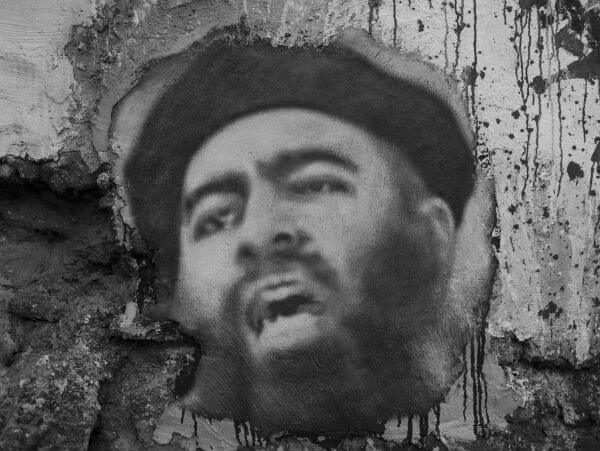
Baghdadi-bw

The Wall Street Journal reports: When European Islamists started streaming into Syria and Iraq a few years ago, some European counterterrorism officials viewed it as a blessing in disguise. Better to have them pulverized on a Middle Eastern battlefield, they argued, than dispersed and plotting mischief at home.

Today, that battlefield has become more dangerous than ever for Islamic State, which is reeling under U.S.-backed military campaigns in both Syria and Iraq. One consequence of this progress is that trained and battle-hardened foreign fighters from Europe are more likely to head back to home ground.

That is the alarming paradox of the U.S.-led campaign against the radical group: In the months and even years ahead, an Islamic State defeated in a conventional war may pose a far greater danger to the West than when it was focused on conquering villages in the Euphrates river valley or the hill country of Aleppo.

“It’s going to get worse before it gets better,” warned Bruno Tertrais, senior fellow at the Foundation for Strategic Research in Paris and former policy adviser at the French Defense Ministry.

“If you manage to deflate Islamic State’s narrative of inevitable expansion, this would eventually reduce its attractiveness, at least for some recruits. But in the short term, as it finds itself in difficulty on one field it will try attacking another,” Mr. Tertrais said.

In the long run, of course, protecting Europe and the U.S. from the kinds of attacks witnessed in Brussels and Paris would be impossible without strangling Islamic State in its cradle.

“The frequency and magnitude of these operations is increasing as refugees are flooding Europe and elsewhere, and as [Islamic State] recruits and brainwashes people already in Europe,” said Ayad Allawi, the former Iraqi prime minister who heads a major parliamentary bloc. “This will have to be dealt with at source, and the source is here in the greater Middle East.”

In the region, there is no doubt that Islamic State’s mantra of “persisting and advancing,” which fueled its aura of invincibility just a year ago, no longer reflects reality on the ground. [Continue reading…]

Facebooktwittermail

The Brussels attacks hint at a worrying ‘iceberg’ theory about terror networks in Europe

Business Insider reports: At least 30 people were reported killed and dozens more wounded after explosions ripped through Zaventem Airport and a metro station in Brussels on Tuesday morning.

The attacks came days after Saleh Abdeslam, a suspect in last year’s Paris attacks, was arrested in the Belgian capital, which is also the de facto capital of the European Union.

Clint Watts, a senior fellow at the George Washington University Center for Cyber and Homeland Security, said on Tuesday that the Brussels attacks were in line with an “iceberg” theory of terrorist plots.

That theory purports that, just as for every iceberg seen above water, the underlying mass of a terror network and its plots are not immediately visible — or, “for every attacker, there are usually three to four additional people who helped facilitate the plot.”

“That the eight attackers in Paris used more explosive belts than ever before seen in the West suggests a sizeable European terrorist facilitation network,” Watts wrote for War on the Rocks in November.

He added: “The iceberg theory of terrorist plots suggests we should look for two, three, or possibly four dozen extremist facilitators and supporters between Syria and France. This same network is likely already supporting other attacks in the planning phase.” [Continue reading…]

Facebooktwittermail

The Syrian refugees of Gaza

Creede Newton reports: On a bustling Gaza street lined with restaurants, juice vendors and shawarma stands, one facade immediately catches the eye: A large, modernist black cube sits atop the entrance to Syriana – Arabic for ‘our Syria’.

“The rest should be here soon,” says Wareef Kaseem Hamdeo, the visibly tired chef and proprietor of the restaurant, as he sits down for his first break of the day. It is early afternoon and he has been here since early morning.

The 35-year-old Syrian left Aleppo in 2012 when the bombs of President Bashar al-Assad’s forces began falling onto the city in an attempt to stamp out the then-nascent armed resistance to his rule.

He travelled to Turkey and then to Egypt, enduring a 44-hour voyage across the Mediterranean Sea. As a seasoned chef with his own restaurant in Aleppo and a degree in mechanical engineering, Hamdeo felt confident that he would find work in Egypt.

He did. It was mostly informal employment – cooking and decorating hotels. But after two months, a Syrian who had eaten in his restaurant back in Aleppo offered him work as a chef in Cairo. A second opportunity came along to open a restaurant in Poland. Both options were tempting, but as he pondered over each one, a third emerged: a job in Gaza.

He immediately and resolutely refused. But when a Palestinian acquaintance urged him to visit, he tentatively obliged. Hamdeo fell in love with the seaside enclave. “It reminded me of Syria,” he says.

Now, three years after he first travelled through the dark, damp tunnels connecting Egypt and Gaza, which are constantly at risk of collapse or flooding by the Egyptian military, his life has changed considerably: He has survived Israel’s 2014 attack on the Gaza Strip, found love with a Palestinian journalist who had interviewed him shortly after his arrival, and successfully opened his own restaurant.

In spite of this, Hamdeo feels he has to leave, and it is now or never. He reads the news and hears that relations between Hamas, which governs the Gaza Strip, and Egypt are deteriorating; he sees growing tensions with Israel and believes further trouble is looming. He is, simply, tired of war. [Continue reading…]

Facebooktwittermail

FBI adds two Syrian hackers to its most-wanted list for cybercriminals

The Atlantic reports: In late April 2013, a tweet from the Associated Press claimed that a pair of explosions at the White House had injured President Barack Obama. Markets reacted nearly instantly, sending stocks plunging. But when, a short time later, Press Secretary Jay Carney told reporters there was no explosion, the market quickly righted itself.

The news organization’s Twitter account was hacked, it turned out. A group calling itself the Syrian Electronic Army claimed credit. In only a few minutes, their rogue tweet demonstrated the market-moving power of 140 characters sent from a credible source.

The Syrian Electronic Army has also defaced websites belonging to the U.S. Marines, Harvard University, and Human Rights Watch, as well as websites and Twitter feeds of other major news organizations like the BBC, CNN, and The Washington Post. The group’s members remained anonymous, going by pseudonyms like “The Shadow” and “The Pro.”

But on Tuesday, the Justice Department revealed the identity of three members of the group, charging them with computer hacking and placing two of them on the FBI’s “Cyber’s Most Wanted” list. The FBI is offering a $100,000 bounty for information leading to their arrest. [Continue reading…]

Facebooktwittermail

Russian jets destroying Palmyra, say activists

NOW reports: An activist group has accused Russian airstrikes of causing widespread damage in Palmyra amid a regime offensive that has seen the Syrian army and allied militias advance to the entrance of the UNESCO World Heritage Site.

“Russia’s systematic bombing and destruction of the ancient city of Palmyra has continued for twenty consecutive days,” the Palmyra Revolution Coordination alleged in a statement issued Tuesday.

The pro-revolution activist group accused Russia of arbitrarily shelling the ISIS-held city “without differentiation between humans and stones.”

“More than 900 raids targeted the city in the past two weeks, more than half of them [using] [internationally-proscribed] cluster bombs.”

The Palmyra Revolution Coordination group also claimed that Russian raids have destroyed more than half of the town’s neighborhoods, levelling “schools, hospitals and mosques.”

“Russia is destroying our city and our civilization.”

An activist who escaped from the town last week echoed these claims in an interview with the Syria Direct news website, saying that the regime has been using a “scorched earth policy” on the city. [Continue reading…]

Facebooktwittermail

Is the Kurdish plan foolhardy or first-rate?

Hassan Hassan writes: The Syrian Kurdish Democratic Union Party, or PYD, made history last week when it announced a federal system in northern Syria. The declaration is both symbolic and catalytic, and there are reasons to believe it is not as foolhardy as many think. Although Syrian and Iraqi Kurds differ on many issues, the move has linked the adjoining territories controlled by Kurds, who prevail over a combined territory the size of Sri Lanka.

In Syria, the PYD controls approximately 10,000 square miles, roughly two-thirds of the territory ruled by Iraqi Kurds. In October, the party seized more territory after gains against ISIL in northern Syria. Since then, the group’s military wing, the YPG, drove out ISIL from southern Hasaka. This has galvanised Kurdish activists who dream of statehood for “the world’s largest stateless nation”.

On the other hand, the news agitated almost everyone else involved in the conflict in Syria, including putative Kurdish allies such as Haitham Mannaa, a Syrian opposition figure who has distanced himself from mainstream rebels. The US too stated it would not recognise the federacy. Turkey, unsurprisingly, rejected it.

Local populations in northeastern Syria also fear the YPG’s nationalist project, particularly after incidents, documented by Amnesty International, of home demolition and forced displacement by the Kurdish militia against Arab families.

From the outside, the project appears to be a fool’s errand. In Iraq, Kurds carved out a semi-autonomous region after the US-led coalition forces declared a safe haven inside Iraq in 1991. In Syria, the Kurds are outnumbered and surrounded by hostile Arab demographics and armed groups, not to mention Turkey. Kurdish-majority areas are also scattered throughout northern Syria. [Continue reading…]

Shiar Neyo writes: I do support the right of Kurds and other minorities in Syria to self-determination, and I do believe that federalism is better than a centralist state. However, federalism by definition requires all concerned units or parts to agree to this system of governance because they believe it is better for all of them.

Not only were other parts of Syria and other Syrian political and military forces not consulted and not involved, even people and political parties within the so-called self-administration areas were not involved in the process.

There should have been a long process of consultation and negotiation followed by a general referendum, which are clearly not possible at the moment, rather than a hasty two-day conference clearly dominated by the PYD to ‘discuss’ and agree an equally badly written and quite confused founding document deciding important issues that affect all Syrians. It was clearly a politically motivated move.

The declaration came soon after the PYD forces attacked Syrian opposition factions and took over some areas in north Syria with the support of Russian air strikes and Iranian-led ground assaults. It is indeed telling that the founding document dedicates a whole section to the “historical development of the societal problems in the Middle East and Syria and the current situation,” tracing them back to Mesopotamia. (!) Yet it does not even mention the ongoing Syrian revolution. It only talks about war and Islamist forces backed by regional powers. [Continue reading…]

Facebooktwittermail

Voices from a different Syria

Robyn Creswell writes: As the Syrian conflict passes its fifth anniversary, a partial cease-fire and the withdrawal of some Russian forces has brought what many are calling the best chance in years for peace to begin to take hold. And yet as international negotiators try to bring together the government with dozens of different opposition groups, a larger question about the deeply divided country remains: What do Syrians themselves want? The lead-up to possible talks has been dominated by geopolitical and strategic considerations rather than appeals to popular will. Many foreign observers, confronted by daily images of violence and its victims, may wonder if there still is a Syria at all beyond the war.

The work of the anonymous Syrian film collective Abounaddara provides a strikingly different picture of Syrians and their country. The members of Abounaddara, an Arabic phrase meaning “the man with glasses,” began making films in 2010, but it was Syria’s version of the Arab Spring that gave them an urgent sense of purpose. For the past five years, they have posted a new documentary film every week, resulting in an archive of nearly four hundred shorts that can be watched for free on Vimeo. By contrast with the ghoulish habits of television coverage of the war, Abounaddara’s films, which typically run two to three minutes, show individual Syrians who speak — often directly to the camera — rather than mute collectives of the dead.

These films, whose subjects include soccer players for the Syrian national team, bereaved parents, former prisoners of ISIS, intellectuals, and refugees, are powerful portraits of individual Syrians, yet they can also be hard to read, in part because we’re told so little about the subjects and settings. This withholding of information is clearly by design. The films often begin and end in medias res, leaving the viewer to puzzle out their significance. They require one to think as well as to look. [Continue reading…]

Facebooktwittermail

The inside story of the Paris attack

CNN reports: The night that shook Paris started with three rental cars: three cars with three teams of terrorists maneuvering through the Friday evening traffic armed with the weapons of war.

A little before 9 p.m., a Renault Clio driven by Salah Abdeslam, the Paris plotter captured on Friday in Brussels, pulled up outside the national stadium. An international soccer friendly match between France and Germany was just kicking off and 80,000 fans, including French President Francois Hollande, were already inside. Three men exited the car and headed toward the stands.

One of them — Bilal Hadfi, a young French citizen living in Belgium — can be seen on surveillance video speaking into a cell phone. The other two were Iraqis who had slipped into Europe weeks before by posing as refugees. One of the trio was dressed in a Bayern Munich jogging suit. Concealed underneath their clothes were shrapnel-filled suicide vests held together with tape.

A few miles away, a black Seat Leon weaved toward the busy cafe district of Paris. The man behind the wheel, an already notorious Belgian ISIS operative called Abdelhamid Abaaoud, was on the phone speaking to Hadfi at the stadium to make sure everything went according to plan. In the passenger seats, two of his childhood friends, Chakib Akrouh and Saleh Abdeslam’s older brother, Brahim, clutched their Kalashnikovs, readying themselves. [Continue reading…]

Facebooktwittermail

Refugees lament as deal with Turkey closes door to Europe

The New York Times reports: Smoking cigarettes and huddling against the midnight chill, a group of Syrian men sat outside a mosque waiting for a smuggler’s call. It was their last chance, they said, to reach Europe.

It was late Friday, hours after they watched news reports from cafes and hotel lobbies that the Europe Union and Turkey had struck a deal that would send refugees from war-torn countries back to Turkey, from the shores of Greece. Time was running short: Officials said the deal would take effect Sunday.

“One hour ago,” said Milad Ameen, 19, when asked when he decided to set off for Europe. He had a life jacket, an inner tube and small bag containing his passport and school certificates he hoped would help him land a job in Europe.

As the men waited, they lamented a deal that they believe shuts the door on the last way out of their misery. “It’s for Turkey’s good, but not for the good of the Syrian people,” Mr. Ameen said.

A man standing next to him, who gave only his first name, Raafat, said he was from Aleppo, Syria. Raafat said he was demoralized that Europe no longer seemed to welcome Syrians. When he heard news of the pending deal, he rushed from Istanbul, where he had worked in a textile factory, to this coastal city. “We aren’t going to Europe to destroy Europe,” he said, explaining that he wished to assimilate and learn the language in whichever country would take him. “We are going in peace. [Continue reading…]

Facebooktwittermail

Syria: An unviable regime facing a divided opposition

Aron Lund writes: While Syria’s Sunni Arab rebels share many goals and allies, and infighting among them remains relatively rare, these factions have never managed to find a center of gravity around which to unify. Forceful international support is often portrayed as the means to change this, but in fact, it has had the opposite effect. The West and its allies have intervened to empower rivals to the jihadi bloc that would otherwise dominate, thus cementing the insurgency’s fragmentation instead of ending it. This dynamic is unlikely to go away. The large Islamist rebel factions that could tip the scales in a non-jihadi direction, such as Ahrar al-Sham, seem unwilling and unable to disentangle themselves from the Nusra Front. This leaves the Sunni Arab insurgency stuck in a position from which it cannot win.

That leaves Bashar al-Assad. While he has so far succeeded in preventing the emergence of a credible competitor and blocking all proposals for a political transition, the president has not yet offered a positive plan for how to reunify and stabilize Syria. At this point, his regime seems at once inevitable and unviable.

Even with strong Russian and Iranian support, Assad’s government seems too weak to reconquer the country by force. The president could theoretically compensate for this weakness by engaging in effective diplomacy or striking deals with his opponents, but he has so far shown neither the inclination nor the ability to do so. Indeed, the resistance to a full-blown Assad restoration would be massive; hatred of Assad and his family is a main motivating cause of the insurgency as well as its international support networks.

Assad might, however, be able to engineer international acquiescence to his continued dominance of a fractured country. If things continue to go the government’s way militarily, as they have since Russia intervened on September 30, and if international resistance to him subsides, Assad could potentially lock down the core regions of what has become known as “useful Syria.” This could include Damascus, Homs, Hama, Tartous, Latakia, and Aleppo, plus parts or all of Deir Ezzor, Daraa, and Raqqa. International economic and military support channeled through the central government could then sustain, and to some extent revive, the state apparatus. In so doing, it would help to reconnect some, though not all, of the peripheral areas to Damascus.

But even in this scenario, the bloodshed would not be over. There would certainly be flare-ups between Assad and other actors. In some areas, notably those now controlled by jihadists, the war would be likely to last for a long, long time. Human rights abuses in government-held territory would of course continue unabated and Syrians would be doomed to kiss the boot of the Assad family for another generation. Even beyond that, political stability would be of only a relative nature. Over time, the government would struggle to re-create a functioning economy, survive internal challenges, and retain basic cohesion. Still, this is probably the direction in which Russian President Vladimir Putin is trying to nudge the Geneva peace process, arguing that it is the only way of avoiding a permanent state collapse. And no other major actor has offered a credible way forward. It is entirely possible that such a victory for Assad, if it can be called that, would only postpone rather than prevent complete state failure. [Continue reading…]

Facebooktwittermail

‘This is a new Syria, not a new Kurdistan’

Wladimir van Wilgenburg writes: They have been locked out of Syrian peace talks, and by extension a future Syrian government, despite controlling much of northern Syria, being the only force to successfully oppose the Islamic State and having the favour of both the United States and Russia.

On Thursday the Syrian Kurds decided on their answer to this outsider status: the formation of a new Federation of Northern Syria that would take in Kurdish-majority areas of Jazeera, Kobane and Afrin, knowns as Rojava, plus Arab towns currently under Kurdish control.

Syria’s government, opposition and regional powers have rejected the new system, saying the Kurds have no right to carve up Syria for their own purposes.

But Salih Muslim Mohammed, the co-leader of the Democratic Union Party (PYD), the largest Kurdish party in Syria, said the federation should not be seen as an autonomous Kurdistan region, but rather a blueprint for a future decentralised and democratic country, where everyone is represented in government.

“There is no autonomous Kurdish region, so there is no question of recognising it or not,” he said. “It is part of a democratic Syria, and it might expand all over Syria. We want to decentralise Syria, in which everyone has their rights.

“The name is not important, we call it a democratic Syrian federalism,” he told Middle East Eye. [Continue reading…]

Facebooktwittermail

Syria shows that Russia built an effective military. Now how will Putin use it?

The Washington Post reports: As Russia turned the Syrian conflict into an exhibition ground for its newly robust military over the past six months, its neighbors were watching with rapt interest.

This, after all, was a sterling opportunity to assess Russia’s new battlefield capabilities, in the form of ship-based cruise missiles, improved logistics and elite units. And on display, too, were Russia’s weaknesses.

“It is like a game of football,” said Janis Berzins, the managing director at the Center for Security and Strategic Research of the National Defense Academy of Latvia, a NATO member nation that borders Russia. “If you’re playing against Germany, then you go watch Germany play, right? It’s the natural thing to do.”

No one expects Russia and NATO to engage in a conventional war anytime soon. But with limited, consequential interventions in two conflicts, Ukraine and Syria, in the past two years, President Vladimir Putin had shown the Russian military’s growing proficiency as well as his appetite to use force to achieve his greater geopolitical goals. [Continue reading…]

Facebooktwittermail

Putin calls Syria operation a success and says it will lead to peace

The New York Times reports: President Vladimir V. Putin of Russia said on Thursday that his country’s more than five-month military operation in Syria had been a success, with the upper hand on the battlefield returned to the Syrian government and with President Bashar al-Assad ready to make the compromises necessary for a peaceful settlement.

As the Russian leader spoke, Kurdish leaders in northern Syria were putting the final touches on a plan that would unite territories controlled by Kurdish forces within an autonomus entity within a federated Syria.

The new entity is to be called the Democratic Federation of Rojava-North Syria, Kurdish leaders said at a news conference later in the day, and its structure and bylaws are to be hashed out by an executive council with 31 members, half of them female.

Anticipating criticism, a spokeswoman for the group, Hediye Yusif, said this was not intended as a first move toward the partition of the country. “We are against the division of Syria,” she said. “Federalism doesn’t mean partition. It’s the opposite; we see it as a positive step towards a democratic Syria for all.”

In Mr. Putin’s first extensive remarks on Syria since he ordered the bulk of Russian forces to return home on Monday night, he said that the Russian military would remain engaged in what he called the fight against terrorism, but added that it could return if needed.

“If necessary, literally within a few hours, Russia can build its contingent in the region to a size proportionate to the situation developing there,” Mr. Putin said.

Russian forces remain engaged in efforts to take back the ancient Syrian city of Palmyra, Mr. Putin said, adding that he expected it to be liberated soon. The city was captured from government forces last May by the Islamic State, which has destroyed temples, triumphal arches and other landmarks. [Continue reading…]

Facebooktwittermail

In Syria, peaceful protesters demonstrate again Assad and Jabhat al-Nusra

The Associated Press reports: With Syria’s shaky cease-fire holding, peaceful protesters have yet again taken to the streets in opposition-held areas of the country. But this time, in addition to President Bashar Assad’s government, they have another despised authority they seek to topple — al-Qaida’s affiliate in the country, the oppressive Nusra Front.

The developments have raised questions as to whether the al-Qaida branch can be sidelined — or in fact even completely eradicated — from any future scenarios for Syria.

In the northwestern province of Idlib, protesters recently set fire to an office belonging to the Nusra Front after major fighting in the area saw the al-Qaida-linked militants crush a division of the U.S.-backed rebel Free Syrian Army, which has become popular with residents in the town of Maaret al-Numan and elsewhere across the province.

The nearly three-week truce — which excludes the Nusra Front and its rival, the Islamic State group, both designated by the United Nations as terrorist organizations — and the peace talks currently underway in Geneva between the Syrian government and Western-backed rebels have increased pressure on the Nusra Front.

According to Charles Lister, a Middle East Institute fellow who has written a book on jihadist dynamics in the Syria conflict, the truce “was a test of exactly how much” the Nusra Front would succeed in casting itself as a political force and a heavyweight in the conflict.

Apparently, not much. [Continue reading…]

Facebooktwittermail

‘In Iraq I would have died quickly. Here I feel I am dying, but very slowly’

Millennial refugees describe their lives to The Guardian, first, Akeel, 28, from Baghdad, who is now in Calais, France: I have been in the camp for six months now. It feels like such a long time. I get embarrassed when I speak to people who aren’t in my position. They probably just see me as a refugee and look at me with sympathy. If we had met in Baghdad I might have seemed quite cool.

I had a good life there. My life was probably very similar to that of anyone else my age. I wasn’t always living in a tent on my own, eating food from tins. I had such good friends. I really miss laughing with them. I adored my family, I still do. All my relationships are carried out on my phone now. I am on it all the time. It’s the only way to have any kind of life outside of this place.

I used to be a teacher. I taught maths and English. I wanted to be headmaster one day and run teaching camps for disadvantaged children in Iraq but who knows what I will do now, if anything. It’s hard being young in the camp – I mean, it’s hard being any age. It is just so, so boring. I feel like my 20s are going before my eyes. I feel 50, not 28.

I used to look at life with excitement, and wonder what would happen in the future – that’s what it’s like when you’re young. You have so many possibilities. I wanted to do a lot of good in my country. Now I feel like I am just a lot of needs: someone who needs a home, who needs food and on and on. Not someone who can do something for other people. That is the worst part of it.

I try to keep up the things I like. I love football. I try to play here and sometimes we watch matches on our phones. But we are all now thinking constantly about what life will be for us.

In Iraq I would have died quickly. Here I feel like I am just dying, but very slowly. [Continue reading…]

Facebooktwittermail