Category Archives: Syria

The feeling of guilt engulfing Syria’s revolutionaries

Haid N Haid writes: Many Syrians carry with them mixed feelings about starting the revolution, especially those who lost loved ones in the war. Even the famous chant in solidarity with the city that started the uprising against the regime, has changed. “Ya Daraa hina maaki la almout” [oh Daraa, we stand by you until the end] has become “Ya Daraa sho kan bidna bi ha al saraa” [oh Daraa, what were we thinking to start this nightmare].

Although the latter chant was first used as a joke to “blame” Daraa city for starting protests in 2011, which began the wider uprising against Assad, for some the message was, in part, a serious consideration.

Feelings of guilt about the war are [to] similar survivors’ syndrome after people experience traumatic events while those around them did not survive. There are two main types of guilt; one is regret that they failed to do more and the other is about what they did do. These feelings vary in reasons and intensity, although the two sometimes overlap.

Some people feel guilty for starting the revolution and consider it the main factor which led to the catastrophic situation we face today in Syria. Something you will often hear from people who share this feeling is that “Syria could still be the same if we would have accepted the situation as it is.” [Continue reading…]

Facebooktwittermail

Jabhat al-Nusra threatened by peace

Charles Lister writes: Ten days ago, under the relative calm of Syria’s cessation of hostilities, hundreds of civilians gathered in the Idlib town of Maarat al-Numan to celebrate the continuation of their populist revolution. For the first time in many months, the world heard Syrian people peacefully protesting in favor of change: “the people are one, and united, the revolution continues!” they chanted, while waving the three star revolutionary flag made popular by the moderate Free Syrian Army (FSA). Similar demonstrations took place in over 100 other towns across the country that day, in a stark reminder to the world that five years of being brutally suppressed by their own government had not defeated their zeal for a just and socially representative future for Syria.

In addition to this heartening protest rebirth, Syria’s two-week cessation of hostilities — or more accurately, its dramatic reduction of hostilities — revealed something else significant. While al-Qaeda may have successfully exploited the Syrian crisis in order to establish a concrete foothold in the heart of the Levant, its affiliate Jabhat al-Nusra lay particularly vulnerable when faced with constrained levels of violence. Although militarily preeminent amid total war with the Assad regime and Russia’s devastating and indiscriminate air bombardment, relative peace saw Jabhat al-Nusra become virtually impotent overnight.

The widespread re-emergence of the revolutionary flag in towns like Maarat al-Numan, where major FSA leaders like Ahmed Saoud and Fares al-Bayoush appeared alongside famed activist Hadi al-Abdullah to lead protests on Friday, March 4, represented a serious challenge to al-Qaeda’s perception of control. Weeks earlier, Jabhat al-Nusra and al-Qaeda front group Jund al-Aqsa had issued an Idlib-wide ban on the flying of anything except white and black flags of Islamic character. [Continue reading…]

Facebooktwittermail

German elections: AfD’s remarkable gains don’t tell the whole story

The Guardian reports: The results for German anti-refugee party Alternative für Deutschland in Sunday’s regional elections are remarkable: it won 15% of the vote in Baden-Württemberg, 12.5% in Rhineland-Palatinate and more than 24% in the east German state of Saxony-Anhalt – the strongest showing for a rightwing, populist party since the end of the second world war.

The last time these three states voted (in 2011), AfD didn’t even exist. Whatever way you look at the numbers, the AfD result is significant. However, the prevailing narrative in swaths of the press on Monday morning – that the results are a rejection of Angela Merkel’s refugee policy – is simplistic.

Here’s why. In Saxony-Anhalt, where the AfD did best, the vote for Merkel’s CDU held. The party dropped less than three points compared with 2011.

According to an exit poll for the state, a substantial majority of voters across all parties, except the AfD, prefers an open and tolerant society to a traditional one. The strongest source of AfD support, in the east German state and elsewhere, were previous non-voters (in all three states turnout was up by 10 points): [Continue reading…]

The Guardian reports: The German government will stick by its existing refugee policy, a spokesman has said, after the anti-immigrant Alternative für Deutschland made strong gains in regional elections on Sunday.

Asked if the results in three German states, where support for chancellor Angela Merkel’s conservatives dwindled, would lead to a change in policy, Steffen Seibert said: “The German government will continue to pursue its refugee policy with all its might both at home and abroad.” [Continue reading…]

Facebooktwittermail

Putin orders ‘main part’ of Russian army to start Syria pullout

Bloomberg reports: President Vladimir Putin ordered the “main part” of Russia’s military forces to begin withdrawing from Syria, saying it’s completed its primary objectives after an almost six-month campaign.

Russia, which has urged Syrian leader Bashar Al-Assad to be “constructive” during the latest round of peace talks, should begin the pullout on Tuesday, Putin said. A Russian air base and a naval facility will continue to function, he said in Moscow. Assad has been informed of the withdrawal, said Putin’s spokesman, Dmitry Peskov.

“The effective work of our military created the conditions for the beginning the peace process,” Putin said during talks with Foreign Minister Sergei Lavrov and Defense Minister Sergei Shoigu. “I hope today’s decision will be a good signal to all the conflicting sides. I hope this will significantly increase the level of confidence of all participants of the settlement process in Syria and will contribute to the solution of the Syrian issue through peaceful means.” [Continue reading…]

Facebooktwittermail

Obama blithely sells out his allies and millions of Syrians in legacy interview

By Scott Lucas, University of Birmingham

In the last months of his administration, US President Bill Clinton tried to resolve the Israel-Palestine dispute. The effort fell short, but it was the closest anyone came to resolving the conflict since the creation of the Israeli State in 1948.

In the last months of his administration, President Barack Obama is giving interviews to explain how everyone else is to blame for the five-year Syrian conflict – which has supplanted the Israeli-Palestinian issue as the region’s destabilising centre and shows no sign of receding.

Rather than evaluate what could be done to mitigate the damage, Obama has chided allies such as Britain, Germany, and France. He has implicitly lashed out at his former Secretary of State, Hillary Clinton, as she campaigns to succeed him. And he has shown little regard for the hundreds of thousands of Syrians who have been killed and the millions who have been displaced, and who will continue to die and flee in his final months in office.

Continue reading

Facebooktwittermail

How the Syrian revolt went so horribly, tragically wrong

Syria1

Liz Sly reports: From Egypt to Yemen, Libya to Bahrain, the brief flowering of freedom and hope that surged across the Middle East five years ago has failed more spectacularly than could have been imagined back when people chanting for freedom thronged the streets of towns and cities regionwide.

Syria marks the fifth anniversary of its first peaceful protest Tuesday in the shadow of a brutal war that has sucked in global powers and fueled the rise of radicals such as the Islamic State. Libya and Yemen are likewise locked in savage conflicts.

In other countries, such as Egypt, autocratic regimes have reasserted their control with a vengeance, clamping down on liberties even more fiercely than had been the case before the demonstrations were held.

In all of them, except Tunisia, the moderates who dominated the early days of the revolts have been silenced, imprisoned, hunted down or driven into exile, either by the governments that sought to repress them or the extremists who moved into the vacuum created when state authority collapsed.

Whether those early protesters were ever truly representative is in question, said Rami Nakhla, one of the most prominent leaders of the early Syrian protests, directing the Local Coordination Committees from exile in Beirut. He now lives in the southern Turkish city of Gaziantep near Syria’s border, a hub for many of the activists who have been forced to flee.

But he also wonders whether they ever stood a chance. “We are hostage to two choices: either the authoritarians or the extremist Islamists,” he said. “Should we accept this equation? That we endorse either dictatorship or Islamic extremism?”

It is a false choice, but it has served to sustain the twin tyrannies that proved the undoing of the Arab Spring, said Shadi Hamid of the Washington-based Brookings Institution. Since well before the revolts, the region’s dictators have raised the specter of Islamist extremism to scare ordinary citizens into submission and justify their harsh oppression to foreign powers. And extremists exploit the climate of fear to win recruits and justify their own brutal tactics.

“Authoritarian regimes and groups like ISIS both rely on violence and oppression to promote their political objectives,” he said, using another term for the Islamic State. “For regimes, it’s actually a successful strategy, at least in the case of Egypt and Syria. The Assad regime has been able to promote its own narrative very successfully, and many members of the international community say the armed opposition is primarily a radical opposition, that there are no moderate rebels.” [Continue reading…]

Facebooktwittermail

One-third of Syrian children were born during war, Unicef report finds

The New York Times reports: One-third of all Syrian children were born in the five years that conflict has convulsed their country, the United Nations said on Monday in a report that suggests a new lost generation.

More than 300,000 of these children, who total about 3.7 million, were born as refugees, according to the report by Unicef, the United Nations Children’s Fund. It said their lives had been “shaped by violence, fear and displacement.”

In all, Unicef estimated that 8.4 million Syrian children, or 80 percent of Syria’s 18-and-under population, are in urgent need of humanitarian aid, either in Syria or in neighboring countries. [Continue reading…]

Facebooktwittermail

161 chemical weapons attacks in Syria’s war, new report says

The Associated Press reports: As Syria marks five full years of civil war this month, a new report claims that chemical weapons have been used at least 161 times through the end of 2015 and caused 1,491 deaths. It says such attacks are increasing, with a high of at least 69 attacks last year, and 14,581 people have been injured in all.

The Syrian American Medical Society says its report released Monday is the most comprehensive listing of chemical weapons attacks in Syria so far. The U.S.-based nonprofit, which supports more than 1,700 workers at over 100 medical centers in Syria, says the list is based primarily on the reports of medical personnel who have treated victims, aided by NGOs and other local sources.

The organization is asking the 15-member U.N. Security Council and the international community to quickly identify perpetrators and hold them accountable through the International Criminal Court or other means. Much of the report’s documentation has been shared with the global chemical watchdog, the Organization for the Prohibition of Chemical Weapons.

Syria’s government has been repeatedly accused by the United States and other Western countries of using chemical weapons on its own people, even after the Security Council in 2013 ordered the elimination of its chemical weapons program following an attack on a Damascus suburb that killed hundreds of civilians.

The council last year also condemned the use of toxic chemicals like chlorine after growing reports of barrel bombs filled with chlorine gas being dropped on opposition-held areas. Chlorine is widely available and not officially considered a warfare agent, but its use as a weapon is illegal. The new report notes at least 60 deaths from chlorine attacks.

The report also says 77 percent of the chemical weapons attacks it documented occurred after the Security Council’s order in 2013, and 36 percent occurred after the council condemned the use of chlorine last year. [Continue reading…]

Facebooktwittermail

The war on the Syrian insurgency continues in plain sight

Faysal Itani and Hossam Abouzahr write: It has been two weeks since a US-Russia brokered cessation of hostilities in Syria came into effect. Many analysts including these authors were skeptical about its prospects, due to the agreement’s terms and the regime’s perceived interests. Skeptics expected the regime and its allies to exploit a clause allowing attacks on the al-Qaeda affiliate Nusra Front, using it as cover for continuing the air campaign on non-jihadist opposition groups. There is substantial evidence, however, that something rather different is happening. Even as overall violence is greatly reduced, regime forces are openly bombing and in some cases launching ground operations to capture key rebel territory, without making any pretense of attacking the Nusra Front. This behavior offers some insight into long-term regime plans, and highlights how little leverage outside powers including the United States will have in shaping the new status quo in Syria.

The Syria Campaign established the Syria Ceasefire Monitor to monitor military operations and report alleged violations during the cessation of hostilities. It compiles data from multiple local sources including the Syrian Civil Defense, the Syrian Network for Human Rights, and local coordination committees in opposition-held territory. The standard caveats about the reliability of reporting from the Syrian war zone apply. Nevertheless the Syrian Ceasefire Monitor seems to be the best open-source monitoring effort on ceasefire violations, covering geography, weapons used, casualties inflicted, and identifying violators and whether they had aimed to capture ground.

The Syria Ceasefire Monitor reports 111 violations as of March 9–almost all perpetrated by regime or Russian forces. Attacks mostly targeted insurgent territory in Homs, Hama, Idlib, Latakia, Aleppo, Damascus, and Deraa. Air strikes and ground operations in Idlib very likely targeted the Nusra Front, but the regime and Russia also attacked opposition territory in which the Nusra Front had little or no presence. The clearest examples were attacks on a large, encircled opposition pocket in southern Hama and northern Homs provinces. [Continue reading…]

Facebooktwittermail

Al-Qaida seizes weapons, bases from U.S.-backed Syrian rebels

The Associated Press reports: Al-Qaida militants swept through a rebel-held town in northern Syria in a display of dominance Sunday, arresting U.S.-backed fighters and looting weapons stores belonging to the Free Syrian Army.

The militants belonging to the al-Qaida-affiliated Nusra Front along with allied jihadists have been moving to exert their authority over rebel-held areas in Idlib province since a partial ceasefire to the country’s five-year conflict took effect two weeks ago, extinguishing patriotic demonstrations and sidelining nationalist militias.

The FSA’s 13th Division said on Twitter Sunday that Nusra fighters were going door to door in the town of Maarat Numan and arresting its cadres after Nusra, alongside fighters from the Jund al-Aqsa faction, seized Division 13 posts the night before. [Continue reading…]

Facebooktwittermail

To many in the Middle East, Trump looks like their own rulers: heavy-handed, vain, and rich

trump

Joyce Karam writes: When Donald Trump announced his candidacy on June 16, 2015, my editors at the London-based pan-Arab newspaper Al-Hayat, like most Americans, shrugged it off. “This is not serious; send something very small to page eight,” I was told.

Nine months later, Trump’s rise is the story in the Middle East when it comes to the American presidential race. My work as a journalist for Al-Hayat sends me traveling frequently in the region, and when people hear I cover US politics, their first instinct has often been to ask me about Donald Trump: “Is Trump for real?” “Why is he winning?” “Is he going to be president?” and “What will happen to us if he does?”

As Trump attracts more support in America, he gets more attention in the Middle East. And there are a few reactions to Trump that I hear over and over. Almost all are negative, some are as much about the US as they are about Trump himself, and all are a revealing look at how the Middle East perceives and thinks about American politics.

Some see in Trump a reflection of their own political figures, from dictators to buffoonish and controversial entertainers. Some take him more seriously and see him, should he become president, as a nightmare for the Middle East. [Continue reading…]

Facebooktwittermail

Obama’s disastrous handling of the Syrian conflict

Hisham Melhem writes: For more than three decades, I have tried to interpret America to the Arabs and to explain the Arabs to Americans. I have never seen such disillusionment with an American president and his policies expressed by people in the region, ordinary citizens as well as public figures. In private, I have heard Arab officials express critical views of Obama and his style of leadership bordering on utter contempt; some Israeli officials did that publicly. For his Arab allies, Obama was too deferential to Iran and too quick to dump President Hosni Mubarak of Egypt — views also held by Israeli officials. Arabs feel Obama also mishandled Syria, a view strongly held also by Turkey. It is rarely the case for an American president to find that his relationships with Arabs, Israelis, and Turks are simultaneously troubled and in some cases very bitter.

Nor is Obama popular with the region’s ordinary citizens. A Pew Research Center poll in June 2015 shows that Obama’s image in the Middle East is mostly negative, with more than eight in ten Palestinians and Jordanians saying that they have no confidence in Obama to do the right thing in world affairs. In Lebanon 64 percent have no confidence in Obama’s leadership, with only 50 percent of Israelis saying they have confidence in the American president. In Turkey Obama’s fortune is better, but not by much where 46 percent of Turks have a negative assessment of his leadership. There is much anecdotal evidence showing that Arab youth in general have soured on Obama, accusing him of reneging on his early pledges to oppose Arab despotism and to stand by those who sought peaceful change in Egypt and Bahrain, and of abandoning Libya after the fall of the Gadhafi regime. However, what angers many Arabs is Obama’s disastrous handling of the Syrian conflict; they blame his indecisiveness on challenging the Bashar Al-Assad regime’s predations, and halfhearted measures toward helping the Syrian opposition, for the worst human tragedy in the twenty-first century. [Continue reading…]

Facebooktwittermail

How Iraq warped Obama’s worldview

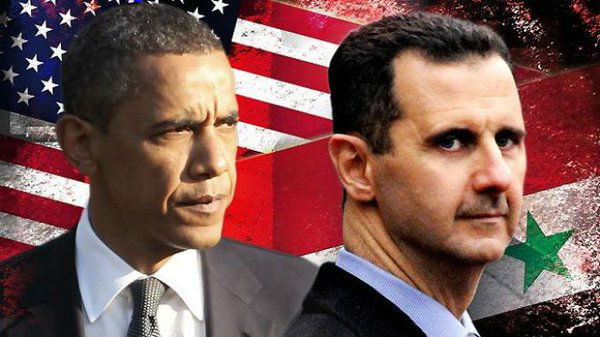
obama-assad

Shadi Hamid writes: On October 2, 2002, Barack Obama gave a speech opposing war in Iraq—perhaps, in retrospect, the most important speech he ever gave. He was right, of course, and the foreign-policy establishment was largely wrong. The problem is that politicians who were right about Iraq tend to overestimate what that says about their foreign-policy judgment. For Obama, the effects of being right are magnified. He became president, in part, because of Iraq and the considerable damage the conflict had done to the country. Obama offered the promise of a decisive correction and, for true believers, a kind of spiritual atonement.

It is unclear what being right on Iraq would mean for your likelihood of being right on Syria, since the contexts in question are, in a way, opposites: Civil war in Iraq began after the United States intervened. Civil war in Syria happened in the absence of intervention. History will have to judge, but it may actually be the case that being right on Iraq made you more likely to be wrong about subsequent interventions. The tragedy of Iraq, if you weren’t careful, was likely to distort your perception of everything that followed, for wholly understandable reasons.

Iraq’s dark shadow seems to be everywhere in Jeffrey Goldberg’s fascinating yet unsettling exchanges with Obama. “Multilateralism regulates hubris,” Obama says. And he is right: It does. What is left unsaid is why, exactly, regulating hubris should, seven years after the conclusion of the Bush era, remain a primary preoccupation. It is hard to imagine any world leader citing the hubris of overextension as the problem that the United States, today, must take extra care to correct for or guard against. Obama has already corrected for it, many times over. [Continue reading…]

Facebooktwittermail

Syrians return to the streets against Assad

assad-dumped

An editorial for The Guardian says: Syrians have used the truce as an opportunity not just to relish a moment of relative calm, with fewer bombs and rockets falling on cities, but to make clear that the demands they formulated in 2011 for political change at the top have not gone away. This serves as a reminder of what the Syrian crisis was all about to start with: a popular revolt against a dictator, against a family clan that has been in power for decades, and against a security apparatus whose central tenet has been to spread terror. After five years of a civil war which has caused an estimated 300,000 to 470,000 deaths and uprooted over half of the population, the very gesture of coming out on the streets with persistent political claims stands out as an admirable act of resilience. The message coming from these protesters, under skies that could yet prove to be only briefly clear of bomber planes, is one which should guide diplomacy. No sustainable peace agreement can afford to ignore the mood on the streets.

The Syrian uprising started five years ago almost to the day, on 18 March 2011, at a time when the Arab spring seemed to hold so much promise. Peaceful protests in Tunisia and Cairo’s Tahrir Square served as powerful inspiration. But as the Syrian protests grew, the regime started firing live ammunition at crowds, and arresting and torturing protesters, sometimes just teenagers. It is the scale of the repression that led anti-Assad groups to take up arms – initially to protect demonstrators. What started as a movement of democratic aspirations morphed into a relentless conflict, with foreign powers weighing in.

Syrians have endured a state policy of mass murder on a scale that arguably has no precedent in recent times: Scud missiles, barrel bombs, chemical weapons, torture chambers, starvation, sieges. After the seizure of parts of the country by a complex web of Islamist groups, the west is focusing narrowly on Islamic State, and Russia has been substantially freed to dictate its terms for a truce.

But nothing has diminished the hunger, inside Syria and among its refugee diaspora, for an end to autocracy. The bravery of protesters must be acknowledged. And their message heard. [Continue reading…]

Facebooktwittermail

No way out: How Syrians are struggling to find an exit

refugee5

Eleonora Vio reports: Over the last five years, close to 4.8 million Syrians have fled the conflict in their country by crossing into Jordan, Lebanon and Turkey. But as the war drags on, neighbours are sealing their borders. Forced from their homes by airstrikes and fighting on multiple fronts, the vast majority of Syrian asylum seekers now have no legal escape route.

Earlier this week, EU leaders reached a hard-won deal with Turkey aimed at ending a migration crisis that has been building since last year, and that in recent weeks has seen tens of thousands of migrants and refugees stranded in Greece. But the agreement turns a blind eye to the fact that even larger numbers of asylum seekers are stranded back in Syria, unable to reach safety.

Syrians hoping to apply for asylum in Europe first have to physically get there. EU member states closed their embassies in Syria at the start of the conflict, and even embassies and consulates in neighbouring countries have been reluctant to process visa and asylum applications.

When Syria’s war erupted in March 2011, it was initially relatively easy for most refugees to leave the country. Those without the means to fly poured out in waves of tens of thousands across land borders into Jordan, Lebanon, and Turkey. But one by one, these exits have been restricted or closed off entirely. [Continue reading…]

Facebooktwittermail

Key powers mulling possibility of federal division of Syria

Reuters reports: Major powers close to U.N.-brokered peace talks on Syria are discussing the possibility of a federal division of the war-torn country that would maintain its unity as a single state while granting broad autonomy to regional authorities, diplomats said.

The resumption of Geneva peace talks is coinciding with the fifth anniversary of a conflict that began with protests against President Bashar al-Assad before descending into a multi-sided civil war that has drawn in foreign governments and allowed the growth of Islamic State militants in Syria and Iraq.

Fighting in Syria has slowed considerably since a fragile “cessation of hostilities agreement” brokered by the United States and Russia came into force almost two weeks ago. But an actual peace deal and proper ceasefire remain elusive.

As the United Nations’ peace mediator Staffan de Mistura prepares to meet with delegations from the Syrian government and opposition, one of the ideas receiving serious attention at the moment is a possible federal division of Syria. [Continue reading…]

Facebooktwittermail

The Obama doctrine: The Middle East doesn’t matter but even if it did, there’s nothing the U.S. can do to fix it

Jeffrey Goldberg writes: Inside the West Wing, officials say that Obama, as a president who inherited a financial crisis and two active wars from his predecessor, is keen to leave “a clean barn” to whoever succeeds him. This is why the fight against isis, a group he considers to be a direct, though not existential, threat to the U.S., is his most urgent priority for the remainder of his presidency; killing the so-called caliph of the Islamic State, Abu Bakr al-Baghdadi, is one of the top goals of the American national-security apparatus in Obama’s last year.

Of course, isis was midwifed into existence, in part, by the Assad regime. Yet by Obama’s stringent standards, Assad’s continued rule for the moment still doesn’t rise to the level of direct challenge to America’s national security.

This is what is so controversial about the president’s approach, and what will be controversial for years to come—the standard he has used to define what, exactly, constitutes a direct threat.

Obama has come to a number of dovetailing conclusions about the world, and about America’s role in it. The first is that the Middle East is no longer terribly important to American interests. The second is that even if the Middle East were surpassingly important, there would still be little an American president could do to make it a better place. The third is that the innate American desire to fix the sorts of problems that manifest themselves most drastically in the Middle East inevitably leads to warfare, to the deaths of U.S. soldiers, and to the eventual hemorrhaging of U.S. credibility and power. The fourth is that the world cannot afford to see the diminishment of U.S. power. Just as the leaders of several American allies have found Obama’s leadership inadequate to the tasks before him, he himself has found world leadership wanting: global partners who often lack the vision and the will to spend political capital in pursuit of broad, progressive goals, and adversaries who are not, in his mind, as rational as he is. Obama believes that history has sides, and that America’s adversaries — and some of its putative allies — have situated themselves on the wrong one, a place where tribalism, fundamentalism, sectarianism, and militarism still flourish. What they don’t understand is that history is bending in his direction.

“The central argument is that by keeping America from immersing itself in the crises of the Middle East, the foreign-policy establishment believes that the president is precipitating our decline,” Ben Rhodes told me. “But the president himself takes the opposite view, which is that overextension in the Middle East will ultimately harm our economy, harm our ability to look for other opportunities and to deal with other challenges, and, most important, endanger the lives of American service members for reasons that are not in the direct American national-security interest.”

If you are a supporter of the president, his strategy makes eminent sense: Double down in those parts of the world where success is plausible, and limit America’s exposure to the rest. His critics believe, however, that problems like those presented by the Middle East don’t solve themselves — that, without American intervention, they metastasize.

At the moment, Syria, where history appears to be bending toward greater chaos, poses the most direct challenge to the president’s worldview. [Continue reading…]

Facebooktwittermail

The Syrian revolution is not a holy war

assad-2

Hind Kabawat writes: The church bells in Daraya, a Damascus suburb that has seen some of the worst fighting in the war, no longer ring. To understand the tragic trajectory of Syria today one must look at how this town, doggedly held by rebels for the past four years, a mere half-hour drive to Bashar al-Assad’s palace, has transformed over the years.

Before the uprising, Daraya was a sleepy middle-class suburb for Damascus residents. By 2011, it had become an epicenter of peaceful protests, as thousands marched in the streets calling for Assad to step down from power. As a member of the Syrian Christian community, I was overwhelmed with excitement to join this grassroots people’s movement that called for democracy, freedom and rights for all Syrians, no matter our differences.

Syrians were united then. The church bells rang in Daraya in solidarity with the protesters. From their balconies in the narrow streets, Syrian Christians showered protesters below with rice and flowers. They marched hand in hand.

A holy war, this was not.

By 2012, the Assad regime intensified its armed crackdown against the unarmed protesters in Daraya. A terrible massacre occurred there on Aug. 24, 2012, as Assad’s regime sent troops, secret police, and members of the elite 4th Division to prevent residents from fleeing the city by any means necessary. Families were executed in their homes, whole buildings of women and children were machine-gunned in the streets, and residents were even decapitated — long before the so-called Islamic State even existed.

The state-run media launched an aggressive propaganda campaign claiming Muslims were massacring Christians, aiming to stoke fear of the opposition in the Christian community. As regime soldiers went door to door, searching for people to murder, it was the Christian community of Daraya that opened theirs to protect those fleeing the atrocities. One Catholic church treated the injured and prepared food for them.

Assad attempted to break Daraya with chemical weapons in 2013, launching a horrific sarin gas attack that killed over 1,000 across the Damascus suburbs — many were children still in their pajamas when the nighttime attack happened. Images of asphyxiated children lined up on the ground are etched in our memories of that night. The international community was on the verge of holding Assad accountable for that atrocity, but the Russians intervened at the eleventh hour with a negotiated settlement. Before the ink was dry, Assad instituted a brutal starvation siege upon Daraya and neighboring Moadamiya. [Continue reading…]

Facebooktwittermail