Category Archives: Syria

No government is more responsible for ISIS’s growth than Assad’s

Raqqa1

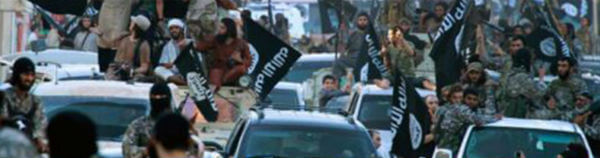
Kyle Orton writes: Last week, a judgment in United States District Court in Washington, D.C., awarded nearly $350 million to the families of two Americans killed in Jordan in 2005 by the predecessor organization to the Islamic State (ISIS). The important point of the case was who the court found liable: the regime of Bashar al-Assad, currently presenting itself to the world as the last line of defense to a terrorist takeover of Syria. This case highlights a neglected history, which began in 2002, where the Assad regime underwrote ISIS and fostered its growth, first to destabilize post-Saddam Iraq and later Lebanon, and since 2011 to discredit and destroy the uprising against Assad in Syria.

The group now known as ISIS was founded in early 2000 with Al-Qaeda seed money at a camp in Taliban-controlled Afghanistan. ISIS’ founder, Abu Musab al-Zarqawi, did not formally swear allegiance to Osama bin Laden until 2004, but the two pooled resources, notably on the Millennium Plot, which was meant to target Zarqawi’s Jordanian homeland and Los Angeles International Airport.

After the U.S. overthrew the Taliban in the wake of 9/11, Bin Laden went to Pakistan and Zarqawi went to Iran. Zarqawi then moved into Iraqi Kurdistan in April 2002, joining Ansar al-Islam, a group he and Al-Qaeda had co-sponsored, which was waging war against the elected Kurdish government that was protected by the Anglo-American no-fly zone. Ansar was penetrated at senior levels by agents of the Saddam Hussein regime, according to Kurdish intelligence, which also caught Saddam providing “logistical support, money, weapons, transportation [and] safe houses” to Ansar. Any enemy of the Kurds was a friend of Saddam’s — even before the reorientation of Saddam’s foreign policy in the mid-1980s toward instrumentalizing Islamist groups for the Baathist government’s own ends (which was later extended to internal policy).

By May 2002, Zarqawi was in Baghdad with a group of more than a dozen Al-Qaeda-affiliated jihadists, including: Zarqawi’s successor, Abu Hamza al-Muhajir, a long-time Qaeda-affiliated Egyptian who was arrested in 2014 while training jihadists in Libya, Thirwat Shehata, and Abu Humam al-Suri, who went on to become the military chief of Jabhat al-Nusra (Al-Qaeda in Syria). Zarqawi, who had “relatively free” movement within Iraq, departed Iraq in the early summer of 2002 to go on a recruitment-drive in the Levant.

First, Zarqawi went to Ain al-Hilweh, a Palestinian camp in southern Lebanon known for its Islamist militancy, and then to Syria. Zarqawi recruited numerous Syrians, notably ISIS’ current spokesman, Taha Falaha, better known as Abu Mohammed al-Adnani. From Syria, Zarqawi organized — with the complicity of Assad — the assassination of a U.S. diplomat, Laurence Foley, in Jordan. More importantly, Zarqawi set up, in collaboration with the Syrian secret police, the networks that would bring the foreign jihadists into Iraq after the fall of Saddam.

During the invasion of Iraq, Mahmoud al-Aghasi (pseudonym: Abu al-Qaqa), a Salafi agitator in Aleppo, had gone door-to-door rounding up young men to go and wage jihad in Iraq, who were then allowed to pass into Iraq unhindered by Syrian border guards. Al-Aghasi was an asset of Assad’s intelligence. Throughout the entire U.S.-led occupation of Iraq, Syria was the main conduit for ISIS’ foreign volunteers who formed the overwhelming majority of the suicide bombers. [Continue reading…]


Facebooktwittermail

Eating leaves, and other ways besieged Syrians try to survive

The New York Times reports: Medical workers in parts of Syria have been forced to let the wounded bleed to death for lack of bandages, and have opted to use catheter bags meant for urine to administer intravenous fluids to newborns because proper drip bags are gone.

Expectant mothers in areas vulnerable to shelling and bombing give birth by cesarean section rather than risk natural childbirth in an attack. Malnourished children are eating animal feed and leaves, in some cases only miles from warehouses full of food. Families are burning mattress stuffing and plastic scraps for heat.

Those are among some of the details in a Save the Children report issued Tuesday night about the challenges confronting Syrian civilians in 18 areas across the country that the United Nations has defined as besieged, meaning they are surrounded by armed antagonists who have severely restricted aid delivery and freedom of movement.

At least a quarter-million children are among the inhabitants of such areas, which have been effectively turned into “open-air prisons,” the report said. It drew on data from the United Nations and other organizations, as well as Save the Children’s interviews with local aid groups, doctors, teachers and civilians, including 126 mothers, fathers and children who reside in these areas. [Continue reading…]

Facebooktwittermail

EU woos Turkey for refugee help, ignoring rights crackdown

The New York Times reports: The contrast was jarring: Just days after the police broke into the offices of an opposition newspaper using tear gas and water cannons, Turkey’s prime minister was greeted in Brussels with offers of billions in aid, visa-free travel for Turks in Europe and renewed prospects for joining the European Union.

The juxtaposition highlighted the conundrum Europe faces as it seeks solutions to its worst refugee crisis since World War II. To win Turkey’s desperately needed assistance in stemming the flow of migrants to the Continent, European officials seem prepared to ignore what critics say is President Recep Tayyip Erdogan’s steady march toward authoritarianism.

It is a moment of European weakness that the Turkish leadership seems keen to capitalize on. As Prime Minister Ahmet Davutoglu arrived in Brussels this week, he upped the ante, asking for more financial aid than was previously negotiated and demanding visa-free travel by June, while offering to take back some migrants who had crossed into Europe. [Continue reading…]

Facebooktwittermail

Truce tests relations between Islamist giants in Syria

Aron Lund writes: The U.S.-Russian brokered truce remains deeply controversial among rebels. Hardline jihadis have condemned the peace process, while more pragmatic Islamists have endorsed it. Now, a jihadi crackdown on demonstrators in rebel-held Idlib is testing the alliance between two of the insurgency’s most powerful factions

For Syria’s rebel movement, relations between its two most powerful Islamist factions is a life or death issue. Two large salafist factions, the Nusra Front and Ahrar al-Sham, dominate the insurgency in the Idlib region, and they play a key part in the Hama and Aleppo governorates as well. While these groups are close allies on the battlefield and have often worked hand in hand politically, there are important distinctions between them. The terrorist-listed Nusra Front is outspokenly salafi-jihadi, many of its leaders are foreigners, and the group has pledged allegiance to the international al-Qaida movement. While equally committed to establishing Syria as a Sunni theocracy, Ahrar al-Sham is an indigenously Syrian group, renounces foreign attacks, and courts international support. It is particularly close to Turkey and Qatar.

The Russian-American agreement brokered on February 22, which led to a partial cessation of hostilities in Syria that began on February 27, has tested their alliance and brought previously latent conflicts of interest to the fore. The Nusra Front is explicitly opposed to the deal, indeed to the political process as a whole, describing it as a ”crusader” scheme to extinguish the Syrian uprising. The group has called for continued attacks on the government of President Bashar al-Assad, although it has in practice exercised restraint since February 27, probably for fear of alienating Syrian civilians or drawing the ire of local allies such as Ahrar al-Sham. Nusra fighters describe this as a waiting game, telling a Reuters correspondent that they are ”convinced that it will not work and it is only a matter of time before it officially ends.” Recently, some reports point to increased Nusra activity south of Aleppo, but it is difficult to know what side actually initiates fighting – the Assad government and its Russian allies have not fully ceased their skirmishing with the rebels either. [Continue reading…]

Facebooktwittermail

An ‘empire of women’ in Lebanon’s Bekaa Valley

Dylan Collins writes: As young Syrian refugee students celebrated International Women’s Day in the Bekaa Valley this week, education advocate Nora Jumblatt highlighted the increasingly important role of women throughout the refugee community. The war in Syria, despite its chaos and sadness, she said, has given rise to a “little miracle”

The war in Syria has brought about an “empire of women” in Lebanon’s Bekaa Valley, said civil society leader and education advocate Nora Jumblatt during a celebration of International Women’s Day.

Hundreds of young Syrian refugee girls participated in the festivities held at the Kayany Foundation’s Malala School in Bar Elias, a town equidistant from Beirut and Damascus that sits along the Syrian-Lebanese border. With the help of international organizations, local universities and volunteers, the foundation is empowering a new generation of Syrian women, equipping them with the tools and knowledge they’ll need to rebuild their country. [Continue reading…]

Facebooktwittermail

Turkey cracks down on foreign fighters

The Washington Post reports: The plea for help came from Sweden: Two young Muslim males had left Stockholm for Syria and would soon be terrorists-in-training unless authorities in Turkey could intercept them.

Turkish security caught the men arriving at an airport in Istanbul with one-way tickets and camouflage gear, officials said. The two were sent back to Sweden and the trouble averted — until eight days later, when the same duo turned up at a Turkish seaport, this time arriving by ferry from the Greek island of Kos.

The back-to-back deportations of those would-be militants last year were in some ways a sign of substantial progress in the cooperation between Western governments and Turkey in sharing intelligence and stemming the flow of foreign fighters to Syria.

But the sequence and hundreds of similar cases have also fueled rising levels of frustration in Turkey, which has been accused of enabling the migration of fighters into Syria even while being called upon to block militants on behalf of other governments unwilling or unable to do the job themselves. [Continue reading…]

Facebooktwittermail

Refugee crisis magnified by European divisions

refugees1

Der Spiegel reports: A rickety gate of galvanized wire is all that separates desperation from hope. The gate is part of the fence erected in the farming village of Idomeni on the border between Greece and Macedonia. At this moment, some 12,000 people are waiting for it to be opened.

It’s the gateway to Europe and the gateway to Germany.

A woman in boots and a blue uniform stands guard in front of the gate. Her name is Foteini Gagaridou and she is an official with the Greek border police — and she looks exhausted. All it would take for her to open the border would be to pull a thin metal pin out of the latch, but she’s not allowed to.

If it were up to her, she says, she would let every single one of these people pass through, just as they were able to do just a few weeks earlier — across the border to Macedonia and on through Serbia, Croatia and Slovenia to Austria, where they could continue their journey to Germany on what is known as the Balkan Route. It’s the same path chosen by hundreds of thousands of refugees last year, but the Balkan Route is now closed. It ends at Gagaridou’s wire gate.

This is where Fortress Europe begins, secured with razor wire and defended with tear gas. Desperate scenes played out here on Monday, reminiscent of those witnessed in Hungary back in September. A group of young men used a steel beam as a battering ram to break down the gate. Rocks flew through the air as the gate flew off its hinges, prompting the volleying of tear gas cartridges and stun grenades from the Macedonian side. Men could be seen running and children screaming. One woman lay on the ground with her daughter, crying.

This frontier has become Europe’s new southern border, with Greece serving as Europe’s waiting room — and the possible setting for a humanitarian disaster. Around 32,000 migrants are currently stranded in the country, a number that the Greek Interior Ministry says could quickly swell to 70,000. The aid organization Doctors Without Borders is even expecting 200,000 refugees. Greece’s reception camps are already full, and the highly indebted country is stretched well beyond its capacity.

The decision as to whether and how many refugees will be able to cross the border isn’t one for border guard Gagaridou to make. Rather, it will be taken by the Macedonian government. Macedonia, for its part, is pointing fingers at countries further to the north, noting it is they who have tightened their borders, especially Austria, which created a chain reaction of border closures last week. The countries apparently felt they could wait no longer for the broader European solution German Chancellor Angela Merkel has promised will result from a special EU summit scheduled for March 7.

Merkel wants to see Turkey stem the flow of refugees and put a stop to the exodus to Europe. European leaders agreed on Feb. 18 that this plan remains the “priority.” But Austria and the Balkan states nevertheless moved ahead and closed their borders.

Idomeni has become a symbol of the current political chaos in Europe and the crumbling of a joint European refugee policy. The town is emblematic of the new Europe of fences. It is here that German Chancellor Angela Merkel’s open border policies have met their end. Under Austria’s leadership, the Balkan Route has been closed in the precise move Berlin had hoped to avoid.

Merkel has begun warning of the EU’s disintegration “into small states” that will be unable to compete in a globalized world, as well as of the possibility that border controls might soon be reintroduced all across Europe.

Were Europe in agreement, it would be unproblematic to accommodate 2-3 million refugees, given the Continent’s population of a half billion people. From such a perspective, the current spat actually seems somewhat ridiculous. But in the run up to next week’s EU summit, Europe is gripped by strife. Europe’s greatest achievement, the opening of its borders through the Schengen agreement, is at stake, and the increasingly toxic atmosphere between countries has reached alarming dimensions. [Continue reading…]

Facebooktwittermail

Migration evidence shows how badly the EU needs to rethink its strategy

By Vicki Squire, University of Warwick and Nina Perkowski, University of Warwick

European leaders continue to be stumped by the so-called migration crisis. Fences are going up in the east and warnings are being issued that there is no more room. But people keep coming.

Europe’s agenda on migration is primarily focused on preventing people from reaching Europe. It seems to rest on the assumption that an unending number of people want to come to the EU, and that deterrent measures are therefore necessary.

But our new research shows that these are flawed assumptions. It suggests that people don’t always move with the aim of reaching Europe as an ideal end goal. Often they simply seek a place of safety.

Continue reading

Facebooktwittermail

The Arab revolutions have been misunderstood or even wilfully mischaracterised by Western leftists

assad-2

In a review of Burning Country: Syrians in Revolution and War, by Robin Yassin-Kassab and Leila al-Shami, Joe Gill writes: As well as a non-orthodox telling of the conflict from the point of view of the activists and fighters who took part in the revolution, the book also speaks to the confusion and reluctance of western progressives to engage in the reality of Syria. “What’s happening is of immense human, cultural importance, not just for Syria and the Middle East but for the whole world. We do actually live in age of very messy revolutions,” says Yassin-Kassab.

Western suspicion of Islamists of whatever hue colours how the Syrian revolution is perceived, leading to potentially disastrous conclusions as to how the war might be ended. “There are a huge range of Islamists – we don’t at all agree with them, but nevertheless they are there. Some are foreigners and criminals, some of them are Syrians and represent a constituency,” said Yassin-Kassab.

By late 2013, and certainly by 2015, a consensus had emerged in the West, if not in the Gulf and Turkey, that there were no good opposition forces left on the ground who could take the reigns if and when Assad fell.

The Arab revolutions, because they do not conform to a traditional Marxist or anti-colonial narrative of liberation struggles, and in the case of Syria and Libya are ranged against nominally “anti-imperialist” regimes, have also been misunderstood or even wilfully mischaracterised by western leftists, according to al-Shami and Yassin-Kassab. “I actually fail to see the difference between the left and right as a result of all this. You don’t hear anything about [the Syrian revolutionary movement] in western leftist circles. You need to go to the grassroots to what people are really thinking and feeling.” Without this bottom up approach, the author says that outsiders are “open to the first propagandist narrative that comes along.” [Continue reading…]

Facebooktwittermail

Reports of uprising against ISIS in Raqqa are false, Syrian activists say

The Independent reports: Syrian activists say media reports of a popular uprising against Isis in Raqqa are false.

It has been reported that 200 Isis militants had switched sides to fight against their former comrades, securing at least five neighbourhoods in the city and replacing the black flag of Isis with the Syrian national flag.

​”About 200 Syrian militants of Daesh took the side of residents of Raqqa, which forced the terrorists to organize roadblocks at the entrance to the city,” one source told Sputnik, the Russian government’s news agency.

However, the reports are false according to Raqqa is Being Slaughtered Silently (RBSS), a group of citizen journalists reporting on life under Isis. [Continue reading…]

Facebooktwittermail

Former Petraeus adviser, Lt Col David Kilcullen: ‘No ISIS if we didn’t invade Iraq’

In a review of Kilcullen’s new book, Blood Year: Islamic State and the Failures of the War on Terror, David Gardner writes: “The greatest strategic screw-up since Hitler’s invasion of Russia” is how David Kilcullen describes George W Bush’s invasion of Iraq in 2003. If anyone thinks that is a throwaway line they should read on. For it comes from one of the architects of the 2007-08 “surge” into Iraq that sought to restore security to a society the US-led occupation broke, and to create space to rebuild a state it destroyed.

Kilcullen was a young lieutenant colonel in the Australian army who had served in Iraq and Afghanistan, a scholar steeped in counter-insurgency theory, “watching closely and keeping notes as this enormous slow-motion train wreck took place”. In 2007 he was seconded to US forces as chief adviser to General David Petraeus, commander of the surge. This strategy combined a big influx of American troops with co-opted Sunni tribal fighters to defeat al-Qaeda. The jihadis, later to transmute into the far greater threat of Isis, had virtually no presence in Iraq prior to the invasion — but used it to turn the country into a charnel house and trigger the region-wide war between Sunni and Shia Islam that has now ripped Syria apart.

Put simply, Kilcullen argues we should never have gone into Iraq, with the job still unfinished in Afghanistan after 9/11. But the US and its allies were morally and legally obliged afterwards to try to “halt the carnage and restore some normality”. Like many soldiers, Kilcullen does not do gore. So when he mentions, in the sparest of prose given the depravity of the sectarian bloodletting, the “commercial kidnapping gangs auctioning off terrified children for slaughter, in a makeshift night market that operated under lights near the soccer stadium”, it is a kick in the stomach.

The surge sharply reduced the violence. But the US, now under President Barack Obama, had exhausted its attention span. Meanwhile, Iraqi leaders twisted by sectarianism would not use the space this success created for reconciliation.

Mr Obama, to be fair, was elected on a pledge to extract Americans from Middle East wars. Yet in Kilcullen’s judgment, he left Iraq irresponsibly early. He failed to register how Nouri al-Maliki, the Shia Islamist premier and joint protégé of the US and Iran, was stampeding Iraq’s Sunni minority into jihadi arms by his sectarian power grab. With al-Qaeda wounded by its “near death experience” with the surge, few noticed its rebirth in the ashes of Syria. Recklessness in Iraq was followed by fecklessness in Syria — “passivity in the face of catastrophe” that spells strategic disaster for the US and the west. [Continue reading…]

Facebooktwittermail

As airstrikes ease, Syrian revolution continues

The New York Times reports: Street protests erupted across insurgent-held areas of Syria on Friday, as demonstrators took advantage of the relative lull in airstrikes during a partial truce, coming out in the largest numbers seen in years to declare that even after five punishing years of war they still wanted political change.

Under the slogan “The Revolution Continues,” demonstrators waved the green, white and black pre-Baathist flag adopted during the early, largely peaceful stages of the revolt, before the proliferation of armed Islamist factions with black jihadist banners.

It was impossible to gauge what percentage of Syrians the demonstrators represented, out of the millions living in insurgent-held areas or, for that matter, in government-held areas or living as refugees abroad. But many protesters, reached by telephone and text message, said they aimed to show that they were determined to resume demonstrations asking for the ouster of President Bashar al-Assad as soon as there was even a partial respite from airstrikes by the government and its Russian allies.

The protests were all the more surprising in that the insurgency is on the back foot militarily, squeezed between pro-government forces and those of the extremist group Islamic State. [Continue reading…]

Facebooktwittermail

The EU risks major ructions if Greece is offered no help with its refugees

Costas Lapavitsas writes: he current influx of refugees into Greece has major humanitarian implications but it also poses a direct threat to the European Union. Together with the neverending eurozone crisis and the Brexit referendum, it could throw the EU into an existential crisis in 2016. Visionary leadership is called for, which at present looks in short supply.

According to the UNHCR, in 2014 Syria was the main source of refugees in the world, and 95% of Syrian refugees were located in surrounding countries. Turkey held the largest number at roughly 1.6 million. It is worth noting that developing countries took 86% of the world’s refugees in 2014. The poor proved more compassionate and generous than the rich yet again.

In 2015 Greece became the main point of entry into the EU of refugees and migrants from Turkey; it is believed 850,000 people undertook the perilous crossing of the Aegean. In January and February more than 120,000 have arrived – far more than the same period last year. At this rate there will be millions of men, women and children who will risk their lives in shoddy rubber dinghies between Turkey and Greece in 2016. Up to 90% are likely to be from Syria, Afghanistan and Iraq.

These are not economic migrants. There is absolutely no doubt that the wave of refugees and migrants into Europe is a direct result of the destruction of the three countries largely due to western intervention during the last three decades. [Continue reading…]

Facebooktwittermail

Drought in eastern Mediterranean Levant region worst in 900 years, study finds

shadow16

American Geophysical Union: A new study finds that the recent drought that began in 1998 in the eastern Mediterranean Levant region, which comprises Cyprus, Israel, Jordan, Lebanon, Palestine, Syria, and Turkey, is likely the worst drought of the past nine centuries.

Scientists reconstructed the Mediterranean’s drought history by studying tree rings as part of an effort to understand the region’s climate and what shifts water to or from the area. Thin rings indicate dry years while thick rings show years when water was plentiful.

In addition to identifying the driest years, the science team discovered patterns in the geographic distribution of droughts that provides a “fingerprint” for identifying the underlying causes. Together, these data show the range of natural variation in Mediterranean drought occurrence, which will allow scientists to differentiate droughts made worse by human-induced global warming. The research is part of NASA’s ongoing work to improve the computer models that simulate climate now and in the future.

“The magnitude and significance of human climate change requires us to really understand the full range of natural climate variability,” said Ben Cook, lead author and climate scientist at NASA’s Goddard Institute for Space Studies and the Lamont Doherty Earth Observatory at Columbia University in New York City. [Continue reading…]

Facebooktwittermail

Who owns the Syrian revolution?

kobane

Naila Bozo writes: I recognized the importance of Syria in my life through my separation from it. The hours before going to the airport made me feel weak. The departure from Syria was a small but recurring trauma. I was not merely putting kilometers between Syria and myself; I felt I had travelled for centuries, travelled through galaxies as soon as I landed in Europe. Only a few hours after leaving the country, Syria felt like nothing but a hazy memory.

I do not know if I can put a claim to Syria as my home but that sunbaked, dusty country with the coincidental palm trees scattered by the roads, with the empty red bags of potato chips blowing in the gutter and the sound of Umm Kulthum owns me. I can still conjure the warmth of the yellow taxis’ leather seats under my fingers.

The claim to a home has grown more complex with the war in Syria. On one hand, there is a wish to be united with all Syrians against the dictatorial regime of Bashar al-Assad but on the other hand, one cannot ignore the Syrian armed and political opposition’s dubious alliance with Turkey, a state that has violated Kurdish rights for decades and recently intensified its crackdown upon Kurdish civilians and fighters. Today, the mutual mistrust between Syrian rebels and Kurdish fighters has intensified due to the former being a loose coalition that includes several formations within the so-called moderate Free Syrian Army that have varying degrees of affiliations with groups like Islamist rebel group Ahrar al-Sham and al-Qaeda’s branch in Syria, Jabhat al-Nusra while the latter is being accused of carrying out an expansionist agenda facilitated by U.S. and Russian airstrikes. [Continue reading…]

Facebooktwittermail

Syrian and Russian forces have deliberately targeted hospitals near Aleppo

Amnesty: Russian and Syrian government forces appear to have deliberately and systematically targeted hospitals and other medical facilities over the last three months to pave the way for ground forces to advance on northern Aleppo, an examination of airstrikes by Amnesty International has found.

Even as Syria’s current fragile ceasefire deal was being hammered out, Syrian government forces and their allies intensified their attacks on medical facilities.

Amnesty has gathered compelling evidence of at least six deliberate attacks on hospitals, medical centres and clinics in the northern part of the Aleppo Countryside governorate in the past 12 weeks. The attacks, which killed at least three civilians including a medical worker, and injured 44 more, continue a pattern of targeting health facilities in various parts of Syria which amounts to war crimes. [Continue reading…]

Facebooktwittermail

Russia intel chief died in Beirut, diplomat tells Al-Akhbar

NOW reports: A Lebanese daily has further fueled the rumors swirling around the January death of Russia’s military intelligence chief, publishing an article alleging that Colonel-General Igor Sergun died in Lebanon.

In a report published on Thursday, Al-Akhbar’s Jean Aziz spoke to an unnamed diplomat based in London, who speculated on the circumstances of the intelligence chief’s mysterious death.

Russia’s Defense Ministry announced that Sergun had died suddenly at age 58 on January 3, 2016, but did not specify the location or cause of his death. The terse nature of the statement sparked rumors over what had happened to him, while reports in Russian media said that an acute heart attack brought on by stress had killed the high-ranking officer.

For his part, the diplomatic source told Al-Akhbar that “information in London suggests that the top Russian military and intelligence official died in Beirut.”

The source also said that he could not “rule out that his death could have been the result of a complicated intelligence security operation in which several Arab and Middle Eastern intelligence actors may have participated.” [Continue reading…]

Facebooktwittermail