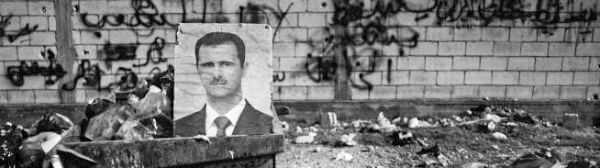
Asaad Hanna writes: Last October the UN special envoy for Syria, Steffan de Mistura, invited Syrian military factions to engage in dialogue with the regime through the so-called Four Committees Initiative. The initiative was rejected by the factions out of mistrust, but it did reveal the elevated number of opposition fighters that were active in Syria: 74 military factions signed the rejection statement, the smallest of which numbered 1,000, while others totalled more than 10,000.
Crucially, none of these 74 are internationally classified as extremists. The moderate opposition is not a myth. Syrians do not need foreign fighters to help them fight Isis; they have indigenous fighters, better acquainted with the land and able to confront any aggressor, particularly where there is firm international will to support them to do so.
The Syrian armed opposition is fighting a war on two fronts: against Assad and against Daesh. Assad’s barbarity has driven Syrians from their homes and resulted in the deaths of hundreds of thousands of Syrians over the past five years.
On the other side, we are facing Daesh, a terrorist group whose creation Assad must take some of the responsibility for. Daesh is helping the Assad regime by fighting us, the armed moderate opposition. The relationship between the two should not be in doubt.
Whenever we have made advances and secured victories, Daesh has defended the Assad regime. For example, we have seen Daesh launch offensives in order to draw Free Syrian Army forces away from battle, to ease pressure on the regime. During a battle near Qardaha – the birthplace of Bashar al-Assad – the armed opposition was achieving great victories until Daesh suddenly launched an attack on a key military position in the nearby city of Aleppo, killing a number of Free Syrian Army commanders. Just three days later they withdrew, at which point they handed the area over to regime forces. [Continue reading…]
Category Archives: Syria
Russia is exploiting Syria’s Kurds and U.S. frustrations to complicate the fight against ISIS
Huffington Post reports: As Syria peace talks begin in Geneva, America’s key partners on the ground feel neglected, excluded and increasingly receptive to a man who says the U.S has the war-torn country all wrong — Russian President Vladimir Putin.
Putin’s government this week used the process of deciding who would attend the negotiations to endear Russia to the Syrian Kurds, whose militia has chalked up high-profile victories against the self-described Islamic State group with U.S. air support.
Moscow repeatedly demanded that the talks should include the most powerful Kurdish political organization, the radically leftist PYD. Its co-president Salih Muslim said this week that the party — controversial among Western and Muslim-backed Syrian Arab nationalist groups — did not receive an invitation. The Middle East Eye reported Friday that he stopped by Geneva and then promptly left.
Conversely, Washington stayed relatively silent.
The Kurds now feel that though they have become close enough to the United States to host America’s Special Operations troops, receive U.S. weapons through a Pentagon-vetted program for an Arab-Kurdish rebel force and share Islamic State targets with American intelligence, the Obama administration abandoned them in the run-up to the high-profile talks, according to analysts close with Kurdish leaders.
“These talks started in a very troublesome manner with the Kurds not being there,” said Mutlu Civiroglu, a Washington-based analyst who monitors the Syrian Kurds. “Kurds being the pioneers of the fight against ISIS, having lost more than 4,000 fighters, were sure they were going to be invited.”
Michael Werz, a senior fellow at the Center for American Progress who just returned from a major Kurdish conference in Brussels, told The Huffington Post the current view among some in the PYD is, “we know that the Russians are going to betray us, but they’re the only ones actually lobbying for us to be part of the Geneva talks.”
“‘We are the only secular fighting force, we are the only movement giving freedom to women, and the United States doesn’t even stand up to the Turks when it comes to participating in the peace negotiations,” Werz added in his summing up of Kurdish sentiment. “‘Nobody is publicly supporting us, so what are we supposed to do?'”
The popularity of that thinking is a problem for Washington because it could bolster distrust among Syrian Kurds already nervous about their fledgling relationship with the U.S. [Continue reading…]
Syrian peace talks — fake diplomacy is no diplomacy

An editorial in The Guardian says: There can be no more urgent matter than putting an end to the terrible human tragedy and the lethal regional destabilisation produced by the Syrian conflict. This is a war in which 300,000 people have died, which has internally displaced half the country’s population and which has caused more than 4 million to flee the country altogether. Syria has become the worst humanitarian catastrophe of our time. The plight of its people is also dangerously destabilising Europe and exposing weaknesses in its institutions. If the humanitarian crisis were not enough on its own, then the need to resolve Europe’s refugee crisis at its source would be reason enough to pay close attention to the peace talks that are scheduled to begin on Friday in Geneva. Yet even getting everyone round the table is looking fraught.
In the current climate, the stated aim of the talks appears breathtakingly ambitious. Mandated by a UN resolution passed in December, their purpose is to organise a gathering of representatives of both the Assad regime and opposition groups, in the hope that it could eventually lead to the formation of a new government, and later, elections. At this stage of a devastating war, it is tempting to see the very possibility of talks as an achievement in itself. Yet for several reasons there is a danger that they amount to nothing more than fake diplomacy.
First, the question of protecting Syrian civilians has all but fallen off the agenda. There can be no progress without attention to their plight. Second, western powers seem to have made key political concessions to Russia and Iran, the main enablers of the Assad regime. As as result, the Syrian dictator will feel even more empowered to pursue the mass targeting of his own countrymen and to continue a war of attrition in the belief that he will ultimately come out the winner. [Continue reading…]
How the politics of fear and the crushing of civil society imperil global rights

Kenneth Roth writes: Fear stood behind many of the big human rights developments of the past year. Fear of being killed or tortured in Syria and other zones of conflict and repression drove millions from their homes. Fear of what an influx of asylum seekers could mean for their societies led many governments in Europe and elsewhere to close the gates. Fear of mounting terrorist attacks moved some political leaders to curtail rights and scapegoat refugees or Muslims. And fear of their people holding them to account led various autocrats to pursue an unprecedented global crackdown on the ability of those people to band together and make their voices heard.
In Europe and the United States, a polarizing us-versus-them rhetoric has moved from the political fringe to the mainstream. Blatant Islamophobia and shameless demonizing of refugees have become the currency of an increasingly assertive politics of intolerance.
These trends threatened human rights in two ways, one well known, the other less visible. The high-profile threat is a rollback of rights by many governments in the face of the refugee flow and the parallel decision by the self-declared Islamic State, or ISIS, to spread its attacks beyond the Middle East. The less visible threat is the effort by a growing number of authoritarian governments to restrict civil society, particularly the civic groups that monitor and speak out about those governments’ conduct. [Continue reading…]
Danish migration law: A sign of things to come?
UN launches Syria peace talks despite opposition boycott — updated
Update below — Reuters reports: The first Syria peace talks for two years were a “complete failure” before they started on Friday, a Western diplomat said, after the United Nations announced it would press ahead with them despite an opposition boycott.
Opponents of President Bashar al-Assad said they were far more concerned with fending off a Russian-backed military onslaught, with hundreds of civilians reported to be fleeing as the Syrian army and allied militia tried to capture a suburb of Damascus and finish off rebels defending it.
U.N. envoy Staffan de Mistura has invited the Syrian government and an opposition umbrella group to Geneva for “proximity talks”, in which they would meet in separate rooms.
But so far the main opposition High Negotiations Committee (HNC) has refused to attend, insisting it wanted an end to air strikes and sieges of towns before talks can start. The boycott defies Washington, which has urged the opposition to take up the “historic opportunity” for the talks, without preconditions. [Continue reading…]
UPDATE — Reuters reports: The main Syrian opposition grouping agreed to attend United Nations-sponsored peace talks which began in Geneva on Friday, reversing a boycott that had threatened to wreck the first attempt to find a diplomatic solution to the war in two years. [Continue reading…]
Joint statement regarding the main principles of any negotiation process in Syria
Over 200 Syrian organisations and more than 790 individuals, including civil society organisations, local councils, NGOs and refugee groups, have laid out their expectations of the Geneva III peace process, and demanded the immediate implementation of confidence building measures, in a new declaration released this week.
The Syrian cause is at a pivotal moment following recent political and field developments coupled with regional and international agreements – including the Vienna Declaration and Security Council Resolution 2254 – that have called for the launch of a negotiated political process between the Syrian opposition and regime.
In preparation for a political process, international envoys and diplomats tasked with the Syrian file have continuously engaged representatives of Syrian civil society on the political process and issued multiple proposals calling for the participation of civil society in any discussions or negotiations between the Syrian regime and opposition.
The signatories of this declaration – both organizations and individuals – hereby affirm that Syrian civil society would not have emerged but for the March 2011 revolution; a revolution that resisted all tyrannical restrictions of a regime that consistently suppressed calls for basic freedom and the formation of civil society since 2000 through the sacrifices of its people, the suffering of its detainees and the souls of its martyrs.
The signatories also affirm that the main conflict in Syria remains with the leadership of the ruling regime based in Damascus and its repressive policies that have led the country down a catastrophic path.
The signatories of this declaration further affirm that in order for Syria to be put on the road to salvation, the Syrian people and what remains of Syrian state institutions must be liberated from this brute force and that civil society, in its many manifestations, must play a key role in furthering the March 2011 revolution and its values. Only then can Syrians realize peace through justice and thereby transition to a democratic pluralistic system where equal rights and responsibilities are granted to all Syrians. And if indeed civil society is to participate in the political process, it must be those members of civil society who emerged from the womb of the struggle for freedom and dignity and sided with the people’s just demands who should participate. [Read the complete declaration with list of signatories.]
Iran forcing Afghan refugees to fight in Syria
Human Rights Watch: Iran’s Revolutionary Guards Corps (IRGC) has recruited thousands of undocumented Afghans living there to fight in Syria since at least November 2013, Human Rights Watch said today, and a few have reported that Iranian authorities coerced them. Iran has urged the Afghans to defend Shia sacred sites and offered financial incentives and legal residence in Iran to encourage them to join pro-Syrian government militias.
Human Rights Watch in late 2015 interviewed more than two dozen Afghans who had lived in Iran about recruitment by Iranian officials of Afghans to fight in Syria. Some said they or their relatives had been coerced to fight in Syria and either had later fled and reached Greece, or had been deported to Afghanistan for refusing. One 17-year-old said he had been forced to fight without being given the opportunity to refuse. Others said they had volunteered to fight in Syria in Iranian-organized militias, either out of religious conviction or to regularize their residence status in Iran.
“Iran has not just offered Afghan refugees and migrants incentives to fight in Syria, but several said they were threatened with deportation back to Afghanistan unless they did,” said Peter Bouckaert, emergencies director at Human Rights Watch. “Faced with this bleak choice, some of these Afghan men and boys fled Iran for Europe.” [Continue reading…]
Almost half a million people at risk of starvation in Syria
The New York Times reports: Two top United Nations relief officials expressed growing frustration on Wednesday over the organization’s inability to deliver aid to destitute Syrians trapped by war, saying that the number of besieged areas has risen to 18 from 15 in the past few weeks and that nearly half a million people may be at risk of starving to death.
The officials, Stephen O’Brien and Ertharin Cousin, delivered their warnings to the United Nations Security Council two days before the scheduled convening of talks in Geneva aimed at halting the war in Syria, which has raged for nearly five years. Whether those talks will proceed as hoped remains unclear.
Mr. O’Brien, the United Nations emergency relief coordinator, told Council members that roughly 4.6 million people lived in besieged or hard-to-reach areas, and that combatants had ignored the Council’s resolutions requiring aid convoys be given safe passage. Ms. Cousin, the executive director of the World Food Program, echoed Mr. O’Brien’s admonitions and said that “close to half a million” Syrians were completely cut off from all assistance. [Continue reading…]
Syrians fleeing Russian airstrikes and regime forces have nowhere to go

Syria Direct reports: This past weekend, regime forces backed by “unprecedented Russian airstrikes” captured the last rebel stronghold of Jabel Turkman in northern Latakia, the director of the majority-Turkman, Free Syrian Army affiliated Second Army of the Coast’s media office told Syria Direct earlier this week.
For those fleeing the advance, the Syrian side of the Turkish border is as far as they can go. The border with Turkey in this area is no longer open, and anyone willing to cross must produce valid and current passports and identification.
Nearly six years into this war, documentation has expired, been destroyed or gotten lost. For young children, they were likely born with no birth certificates or any formal recognition that they exist. All of which begs the question posed by Abu Ahmed, who fled to the Turkish border from his home in Jabal al-Akrad after Russian airstrikes intensified and regime forces captured Salma. “Where do we go now?”
“Our children left school, there is no firewood or water, we are dying from the cold, and now we have become a target of the bombing since the regime is approaching,” said Abu Ahmad, who, along with his family slept in sewage pipes for the first two days after fleeing their mountain village.
“From the beginning, the regime has been taking revenge on civilians,” said Umr, the resident from Jabal Turkman now living in a north Latakia camp. [Continue reading…]
Russian bombs damage British-funded bakery designed to help 18,000 Syrians
The Telegraph reports: Russian warplanes severely damaged a British-funded bakery in northern Syria a few hours before the facility was due to start providing food for 18,000 people.
Hundreds of civilians have been killed by Russian air strikes since the onset of the Kremlin’s intervention on Sept 30. The targets of Russian bombs have included mosques, field hospitals and schools – all of which should enjoy protection under international humanitarian law.
The raid on the rebel-held village of Hazano in Idlib province was the latest occasion when a British-funded humanitarian facility was hit. Eight people were killed – including three children – during this air strike on Jan 20.
The attack took place at around 3pm on the day the bakery was due to open. Russian warplanes fired two rockets into a residential apartment just 30ft from the bakery, killing two families inside and injuring over 100 people. [Continue reading…]
Senator calls on Obama administration to stop UN from letting Assad regime censor aid plans
BuzzFeed reports: Sen. Bob Casey has told the Obama administration he is “appalled” that the United Nations allowed the regime of Syrian President Bashar al-Assad to censor parts of a humanitarian aid plan, in a letter being sent to the State Department on Thursday and obtained in advance by BuzzFeed News.
The letter follows reporting by BuzzFeed News last week that the U.N. had changed parts of a humanitarian aid plan for Syria after consulting with the Assad regime, removing the words “besieged” and “sieged,” references to a de-mining program, and references to violations of international law.
The censorship came to light after revelations of extreme starvation in the Syrian town of Madaya, which has been besieged by regime forces.
Casey, a Democrat from Pennsylvania, is urging the State Department to “insist that UN-produced assessments and humanitarian aid plans accurately reflect conditions on the ground, not the political concerns of the Assad regime.” Casey’s letter, addressed to Secretary of State John Kerry and U.S. Ambassador to the U.N. Samantha Power, states that he is “appalled” by the reports that the Assad regime was allowed to censor parts of the document, which lays out a $3.1 billion aid plan. [Continue reading…]
Syria: YPG international brigade in recruit call for foreigners to attack Turkey
IBT reports: Westerners fighting alongside Kurdish militants have urged other foreigners sympathetic to their struggle to carry out attacks against Turkey in an online video that threatens to complicate upcoming peace talks on Syria.
An English-speaking man with the face covered by a scarf is seen delivering the international call to arms in a six-minute clip titled Revolutionaries! Join the Resistance of Bakur! – a reference to Kurdish areas in south-eastern Turkey. “We call on all revolutionaries worldwide – join the resistance. This is not the time to sit at home and ponder what might be,” he says, reading from a written statement, while standing with a Kalashnikov leaning on his leg.
The man is flanked by other gunmen, who, according to Kurdish news agency ANF, are all members of an international brigade within the Popular Protection Units (YPG), a large Kurdish militia in Syria. “Attack the institutions of the Turkish state all over the world. Come to Kurdistan and join the forces of YPJ, YPS and the guerrillas,” he says. [Continue reading…]
How a former Lebanese politician was caught on tape plotting terrorism on behalf of Bashar al-Assad — and still got away with it
The Daily Beast reports: Rarely does a criminal case fall into a judge’s lap as open-and-shut as Michel Samaha’s.
Yanked out of his bed by Lebanese police in a dawn raid on August 9, 2012, within one day the four-time cabinet minister had confessed to conspiring with Syrian officials, up to and including President Bashar al-Assad himself, to blow up Sunni Muslim Lebanese politicians, religious figures, and bystanders at Ramadan fast-breaking gatherings. Thanks to a series of videos leaked to the media, a flabbergasted nation could watch with their own eyes as Samaha, a veteran politician and household name, produced bags of explosives, timers, and detonators from his car, and spoke casually of plans to murder an MP, members of the MP’s family, and senior clerics (“let them be buried”), with express indifference to additional civilian casualties (“whoever departs along the way, departs!”). There seemed no conceivable way out of a severe punishment, and at his formal indictment in February 2013, the judge sought the death penalty.
And yet, on the 14th of this month, Samaha walked out of Lebanon’s Rayhanieh prison and returned to his family home in Beirut an almost-free man, released on $100,000 bail. Despite the gravity of the charges brought against him in 2013 — plotting to carry out “terrorist acts” using explosive devices; planning assassinations of political and religious figures; instigating sectarian conflict; and forming an armed group—he was sentenced to just four and a half years’ imprisonment in May 2015, in a decision legal observers said reeked of Syrian influence over the judiciary. [Continue reading…]
‘Politics of fear’ threatens human rights around the globe
Human Rights Watch: The politics of fear led governments around the globe to roll back human rights during 2015.
In the 659-page World Report 2016, its 26th edition, Human Rights Watch reviews human rights practices in more than 90 countries. In his introductory essay, Executive Director Kenneth Roth writes that the spread of terrorist attacks beyond the Middle East and the huge flows of refugees spawned by repression and conflict led many governments to curtail rights in misguided efforts to protect their security. At the same time, authoritarian governments throughout the world, fearful of peaceful dissent that is often magnified by social media, embarked on the most intense crackdown on independent groups in recent times.
“Fear of terrorist attacks and mass refugee flows are driving many Western governments to roll back human rights protections,” Roth said. “These backward steps threaten the rights of all without any demonstrated effectiveness in protecting ordinary people.”
Significant refugee flows to Europe, spurred largely by the Syrian conflict, coupled with broadening attacks on civilians in the name of the extremist group Islamic State (also known as ISIS), have led to growing fear-mongering and Islamophobia, Human Rights Watch said. But as European governments close borders, they are reviving old patterns of shirking responsibility for refugees by passing the problem to countries on Europe’s periphery that are less equipped to house or protect refugees. The emphasis on the potential threat posed by refugees is also distracting European governments from addressing their homegrown terrorist threats and the steps needed to avoid social marginalization of disaffected populations.
Policymakers in the United States have used the terrorism threat to try to reverse recent modest restrictions on intelligence agencies’ ability to engage in mass surveillance, while the United Kingdom and France have sought to expand monitoring powers. That would significantly undermine privacy rights without any demonstrated increase in the ability to curb terrorism. Indeed, in a number of recent attacks in Europe, the perpetrators were known to law enforcement authorities, but the police were too overwhelmed to follow up, suggesting that what’s needed is not more mass data but more capacity to pursue targeted leads, Human Rights Watch said.
“The tarring of entire immigrant or minority communities, wrong in itself, is also dangerous,” Roth said. “Vilifying whole communities for the actions of a few generates precisely the kind of division and animosity that terrorist recruiters love to exploit.” [Continue reading...]
As U.S. expands military operations in Iraq and Syria it is withholding detailed information about civilian casualties
The Washington Post reports: As the U.S. military prepares to expand its operations against the Islamic State militant group in Iraq and Syria, it has altered how and when it discloses sensitive information about when it kills civilians with airstrikes.
In recent days, U.S. Central Command, which oversees operations in the Middle East from its headquarters at MacDill Air Force Base in Tampa, Fla., announced the results of investigations into 10 airstrikes “alleged to have resulted in civilian casualties and determined to be credible.” The first five were announced Jan. 15, and the second five were disclosed a week later. In each case, military officials released just a sentence or two of information.
The recent disclosures varied from earlier cases of civilian casualties because the military did not release documents detailing what happened in the incidents. Air Force Col. Patrick Ryder, a Central Command spokesman, said that was by design. [Continue reading…]
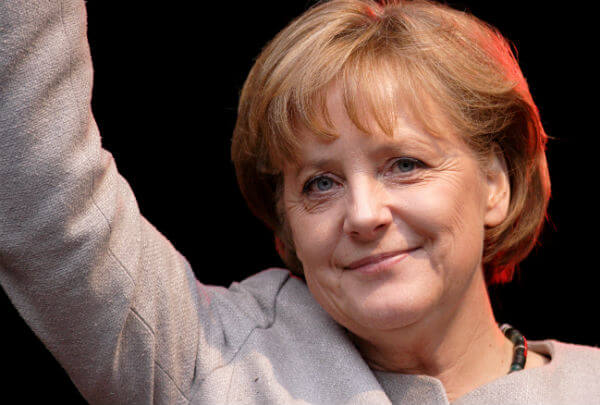
In the face of mounting opposition, Angela Merkel holds to her principles on accepting refugees

Der Spiegel reports: On a Sunday evening in early January, Angela Merkel went to a piano concert by Antonio Acunto in the Konzerthaus on Berlin’s beautiful Gendarmenmarkt. The program included works from Chopin, Rachmaninoff and Schumann, but the chancellor didn’t just come for the music. It was also for a good cause and to show support. The concert was a benefit for the refugees. Her refugees.
Shortly before the concert began, Merkel saw an old acquaintance: Reverend Rainer Eppelmann. In 1990, Eppelmann was head of the Democratic Awakening, a party formed in East Germany soon after the fall of the Berlin Wall, and Merkel was its spokesperson. The party was ultimately folded into the Christian Democratic Union, of which Merkel is now the head.
At the concert, Eppelmann told Merkel how courageous and wonderful he thought her refugee policies were. Given the situation in which Merkel is now in, Eppelmann said, he finds himself thinking often about his favorite quote from the former Czech president and writer Vaclav Havel. “Hope is not the conviction that something will turn out well, but the certainty that something makes sense, regardless of how it turns out.”
The concert began and Merkel listened to a melancholic Chopin ballad in G-minor. When the intermission arrived, she jumped up from her chair and walked directly over to Eppelmann. She asked: “How did that quote about hope go again?”
It is completely unclear how the experiment will end that the German chancellor has forced upon the European Continent, upon her fellow citizens and, not least, upon her party. Her decision late last summer to open the German border to refugees transformed Merkel into a historic figure. It was the most consequential decision of her entire decade in office. [Continue reading…]
Syria’s next election: A practical path forward
Bassam Barabandi and Sasha Ghosh-Siminoff write: Negotiations between the Syrian opposition and governing regime start in just a few days. The challenges are numerous and many analysts are quick to proclaim the process already dead. Despite the momentum of the Vienna process, a myriad of factors continues to make Syria a complicated case: a messy situation on the battlefield, an unwillingness to compromise, political dynamics among the opposition, hostility between Iran and Saudi Arabia, Russia’s backing of Assad — take your pick.
While somewhat less than enthused by the framework set out by the UN Security Council resolution, which leaves Assad in power, Syrian opposition groups are meeting in Riyadh to prepare for negotiations. Apart from selecting members of their negotiation committee, the opposition groups are discussing their negotiation goals, including principles for political reform — reform which cannot include Assad as head of any transitional government. This is a tall order, which was once supported by the international community but apparently abandoned in the face of reality on the ground.
The focus on Assad’s role (or lack thereof) in a transitional government is understandable. Nevertheless, it might be pragmatic to review the timeline of transition as presently framed and propose a slightly different approach. With or without Assad, in the case of successful negotiations and an even somewhat effective ceasefire, a genuine deal will include constitutional reform and elections. [Continue reading…]