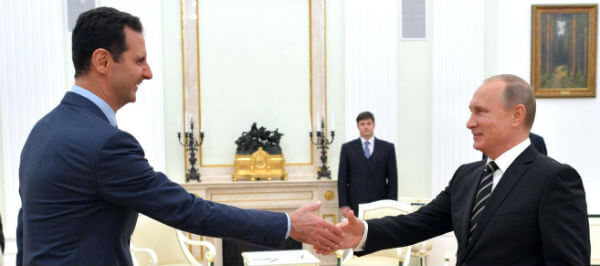
Barak Barfi writes: The execution of a Shiite cleric in Saudi Arabia and the burning of Riyadh’s embassy in Iran has one again flamed Sunni-Shiite tensions and set the tiny Arab oil sheikhdoms on edge. Leaders from Lebanon to Yemen are fretting about Iranian machinations in Arab countries. But it is Tehran’s involvement in Syria that worries them the most. Tehran has bolstered its client state by dispatching senior military figures, pressing its Lebanese client Hezbollah to send fighters, providing much-needed petroleum products and extending Syria a hefty line of credit.
Without Iran’s help, the regime would likely have collapsed. Some believe Tehran has backed Syria to the hilt because of their common religious roots. Both ruling cliques claim affinity with the heterodox Shia, who are a minority in an Islamic world populated by orthodox Sunnis.
But Iran’s Syrian strategy derives less from spurious religious ties than it does from geopolitical factors. Surrounded by hostile pro-Western nations, Iran needs all the allies it can find to ensure that its regional interests are protected. [Continue reading…]
Category Archives: Syria
The UN repeats mistakes of the past in Madaya

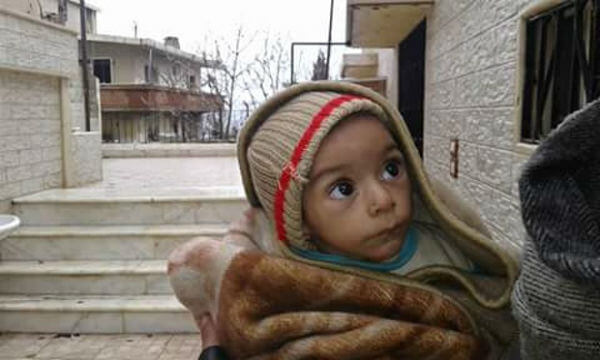
Muhammad Idrees Ahmad writes: Two weeks before an aid convoy delivered food and medicine to the 42,000 people of Madaya, a representative for the town’s council made an urgent appeal to the UN office responsible for the region. The town had been strangled since July 2015 by Bashar Al Assad’s army and the Lebanese Hizbollah. The condition was precarious: inhabitants were subsisting on grass, cats, dogs, insects, salt and water. At least 28 had died of starvation since the beginning of December. The council representative received an automated reply: the staff were away until January 5.
On New Year’s Eve, when the UN chief Ban Ki-moon wished his Twitter followers a peaceful 2016, he made no mention of the unfolding tragedy.
The inertia was broken when a determined social media campaign forced Madaya on the world’s attention and, eventually, the UN relented. On January 7, the regime agreed to allow a one-off supply of aid. The UN was quick to praise the regime for this concession, but it took another four days before it delivered aid to the town. The delay resulted from the “complexity” of synchronising deliveries to the 12,000 inhabitants of Al Fu’a and Kefraya, two pro-regime villages in Idlib encircled by rebels. On entering the town, aid workers were shocked by the “horrifying” conditions. “There are people in Madaya, but no life,” said Sajjad Malik, the UNHCR chief in Syria. “They are fighting for survival. No food, no electricity, no heating, no medicines. People did not even have the energy to complain.”
The representative for the UN’s Office of Coordination of Humanitarian Affairs in Syria, Yacoub El Hillo, too was moved: “We saw a people that are desperate; a people that are cold; a people that are hungry; a people that have almost lost hope”.
But in a curious statement, Mr El Hillo added that before entering Madaya, “it was at times difficult to determine whether what we were seeing was actually fabricated or exaggerated”.
It is unclear why Mr El Hillo should’ve faced such difficulty. The conditions in Madaya had been known to the UN for months. This scepticism may be unfounded but it is consistent with the state-centric bias of the UN’s humanitarian practices. UN agencies are required to respect state sovereignty regardless of legitimacy. And in Syria, they have been reluctant to act without the consent of the regime. This has turned the UN into an unwitting agent of the status quo, allowing the regime to politicise aid. [Continue reading…]
Rebels in north-western Syria buckle under Russian bombardment
Aron Lund writes: Syria news right now is all about the peace process that is set to start on Friday in Geneva, Switzerland, despite its limited chances of success. But even as they talk, the parties continue to fight and the Russian-Iranian military intervention continues to wear down Syrian rebels. On September 30, the Russian Air Force dropped its first bombs in Syria. The government of Iran joined in by raising an expeditionary corps of Iranian, Iraqi, and Afghan Shia Islamists for the front south of Aleppo.
In a recent article for Vice News, the American freelance writer and Syria expert Sam Heller notes a flurry of desperate-sounding calls for outside support from rebels in northwestern Syria. Though most frontlines have held with little or limited change, four months of relentless Russian bombardment and offensives by the Syrian Arab Army and its Shia allies seem to have left the insurgents exhausted.
In early December, I tried to evaluate the extent of government progress in a post on Syria in Crisis. As far as I could tell, it was clear then that Assad stabilized his positions, but overall progress seemed underwhelming and the picture was mixed. We would have to wait and see.
Since then, however, the wind has continued to blow Assad’s way. General Joseph F. Dunford Jr., the chairman of the U.S. Joint Chiefs of Staff, recently noted that “the regime is in a better place now” compared to before the intervention. Indeed, after four months, the effects of the concerted Russian-Iranian-Syrian campaign have begun to surface. [Continue reading…]
Robin Yassin-Kassab talks about the emergence of grassroots democracy in Syria
Robin Yassin-Kassab blogs at Qunfuz.
More Syrian children die as Assad’s sieges intensify
The Telegraph reports: Fresh evidence has emerged of how starving Syrians are being forced to eat grass to survive as President Bashar al-Assad’s regime defies the UN to tighten sieges across Syria.
International aid agencies say that the regime is using humanitarian aid – which is supposed to be delivered freely under both international law and United Nations resolutions – as a bargaining chip.
Aid workers claim the crisis has now spread well beyond the town of Madaya, north west of Damascus, where photographs of emaciated children caused an international outcry earlier this month.
Omar Hakim, a doctor in Syrian capital, reported similar scenes of horror in the south-west suburb of Moadhamiya last week.
“Twelve people died last week, six of them children,” he told The Sunday Telegraph.“There are 1,500 patients here suffering chronic diseases which require treatment or medicine which is not available. Six hundred children need breast-feeding but their mothers can’t feed them because they’re malnourished too.
“People are eating grass, and rice if it’s available. The aid which has been sent is not enough to keep people alive.”
Sieges have been used as a weapon since the start of the war, but the situation has worsened in recent weeks. [Continue reading…]
America shouldn’t remain indifferent to the crisis in Europe
Natalie Nougayrède writes: In 1947 George Marshall, the US secretary of state, went to Europe. He was shocked by what he saw: a continent in ruins, and rampant hunger. The mood in Paris, Berlin and other capitals was resigned and doom-laden. On returning to Washington, Marshall told President Truman that something dramatic needed to be done – and very soon. The initiative would have to come from Washington, he said.
On 5 June, in a speech to students at Harvard, Marshall announced his European recovery programme. It became, in the words of the British politician Ernest Bevin, “a lifeline to sinking men”. The Marshall plan not only helped Europe back on its feet, it laid the groundwork for the cooperation that ultimately led to the creation of the European Economic Community, the European Union’s predecessor.
In Davos this week Joe Biden, the US vice-president, may well have had a shock similar to Marshall’s. Of course today’s gloom in Europe is not comparable to the devastation left by the second world war – but alarmist language is being heard all the same. Manuel Valls, the French prime minister, has spoken of a risk of European “dislocation”. “Europe has forgotten that history is fundamentally tragic,” he said. Joachim Gauck, the German president, also used the word “tragic” when describing Europe’s difficulties over the refugee crisis.
Europe today is in such a shambles that it is not absurd to ask whether the US should again do something about it, or whether the old continent even matters to American strategic interests any more. The answer to both questions should be a resounding “yes”.
It is obviously unrealistic to think the US is likely to repeat the kind of assistance it deployed in 1947. But the US urgently needs to seriously re-engage on European matters. Failing that, it risks seeing the European project unravel, with more disorder pouring into and across the continent and, ultimately, the loss of key allies.
Europe is currently struggling with the danger of Brexit and major security threats (which include terrorism, and Russian aggression), as well as the political fallout of the refugee crisis. It’s not that US action in itself would miraculously solve all these problems, but its aloofness has arguably contributed to making them worse. [Continue reading…]
Update in response to comments: Natalie Nougayrède’s reference to the Marshall Plan seems to have led readers to conclude the lifeline she’s calling for is financial. After all, that’s what foreigners always do, isn’t it: beg for money from the U.S.!
Actually, her first appeal is for Obama to be forthright in making it clear that the U.S. has a strong interest in Britain remaining in the EU. The British naively and nostalgically cling on to the UK’s (one-sided) “special relationship” with the U.S.. A wake up call from Washington might alienate a few people, but I think they’d be outnumbered by those who recognized that this kind of counsel was well-intentioned and realistic. Moreover, departure from the EU would have much larger repercussions than diminishing the value of U.S.-UK relations. It may well lead to the rapid breakup of the UK as Scotland seeks swift independence so that it can remain in the EU.
How much would this piece of political engagement cost the U.S.? Nothing.
Second, she calls for “more US political leverage” in supporting a common European defense policy. Cost? Nothing.
Third, “the US cannot continue to treat the refugee crisis destabilising Europe as if it were a far-flung problem that doesn’t affect its direct interests. Around 4.5 million refugees have fled the Syrian civil war. The US has taken just 2,600.”
Refugees are not only fleeing from Syria but also Iraq and Afghanistan (and many other countries).
Instability across the Middle East cannot be attributed solely to American meddling and yet in the last two decades there was no single action that had a more destabilizing effect than the decision to invade Iraq.
Americans who supported the war and many of those who opposed it are now apparently unified in believing that, like a hit-and-run driver, the best course of action is to flee the scene of the crime.
Certainly, those who argue that America’s military interventions invariably seem misguided have plenty of evidence to support their argument.
But when it comes to the issue of helping Europe handle the refugee crisis, the primary impediment in the U.S. is not financial; it’s Islamophobic cowardice.
After the United States had finished carpet-bombing Vietnam and dousing its jungles with Agent Orange and the war’s failure had become undeniable, part of the aftermath of that unconscionable and delusional intervention was that there was sufficient decency in the U.S. to accept what eventually amounted to 1.3 million refugees settling here.
For the U.S. to now step up and welcome tens or even hundreds of thousands more refugees from the Middle East is not to make some unreasonable demand on American generosity. It’s part of paying the price of war.
It’s one thing to argue in advance against meddling in the affairs of other countries and on that basis to promote a relatively benign insularity, but when the meddling has been rampant and long-running, then insularity is just another name for irresponsibility. The United States doesn’t have the option of becoming Switzerland.
Having said that, Nougayrède’s appeal here is less blaming and by no means strident: it is for the U.S. to recognize that it really does have a stake in Europe’s future and it should not remain a mute bystander watching the European project fall apart.
Is that too much to ask?

Assad is dividing his enemies and counting on his ability to pick off one at a time
Joshua Landis and Steven Simon write: Three months ago, Assad’s army was beleaguered. A large confederation of jihadist and Islamist militias calling themselves the Victory Army had achieved something resembling unity. Built around Syria’s two strongest militias — al-Nusra, al Qaeda’s Syria franchise; and Ahrar al-Sham, the most powerful Salafi militia in the country — the Victory Army conquered two strategic northern cities, Idlib and Jisr al-Shughour, in quick succession this spring. These victories attracted many other militias into their orbit and promised success. The expulsion of regime forces from Jisr al-Shughour not only meant the independence of Idlib more generally but put Latakia, a regime stronghold, in serious jeopardy. The new resistance army seemed to overcome the opposition’s chronic fragmentation; it was also well armed and supported by the region’s Sunni states.
But Assad’s greatest advantage — a fragmented opposition divided into more than 1,000 constantly feuding militias — seems to be back. Recently, over 20 rebel militia leaders have been assassinated, most by a breakaway faction of the Victory Army. The militias that the United States trained and armed at great expense have been crushed, not by Assad but by other rebels.
Meanwhile, Russia’s advanced aircraft, helicopters, and tanks have been pounding the Victory Army for months. Russian aircrews fly close to 200 sorties a day, allowing Assad and his allies to go on the offensive in both the north and south of Syria. Ahrar al-Sham has agreed to go to talks in Geneva, an about-face, after snubbing the UN envoy Staffan de Mistura as an Assad lackey only months ago. Al Qaeda’s Syria leader pronounced those who head to Geneva guilty of “high treason,” a clear death threat but also an indicator of clear anxiety. Another sign of desperation was the call put out by the Victory Army to foreign fighters to come join their ranks. Non-jihadist members of the coalition were infuriated by this tactic, which would inevitably associate them with the self-proclaimed Islamic State (also known as ISIS), and withdrew from the coalition. Assad, in short, is dividing his enemies and counting on his ability to pick off one at a time. [Continue reading…]
Origins of the Syrian Democratic Forces
Aron Lund writes: The Syrian Democratic Forces, or SDF, is a coalition of Kurdish, Sunni Arab and Syriac Christian fighters, but is completely dominated by its Kurdish element, which is a powerful and well organized militia known as the Popular Defense Units, YPG, with an all-female branch called the Women’s Defense Units, or YPJ. These organizations, in turn, are Syrian front groups for the Kurdistan Workers’ Party or PKK. The other militias involved in the Syrian Democratic Forces are either long-standing PKK allies or proxies, such as the armed wing of the Syriac Union Party, or more recent allies drawn from the Sunni Arab tribal landscape in this part of Syria and from the remains of small Sunni Arab rebel groups crushed by the so-called Islamic State.
The coalition as a whole receives American air support for operations against Islamic State, as did the YPG/J before it. That started in the Battle of Kobane that began in autumn 2014, which was enormously successful — really the first major battlefield defeat inflicted on Islamic State. It has provided the template for US-PKK cooperation. In addition, the Pentagon has picked out a number of these little Arab groups that work under the SDF umbrella as favored recipients of arms and support. It terms them, collectively, the Syrian Arab Coalition, though no one else seems to use that name.
The idea is to use the SDF as an incubator to breed Sunni Arab militias able to take over where Kurdish territory ends and push deep into Islamic State’s heartland, which is in the Sunni Arab tribal region that connects Syria with Iraq. Relying on the Kurds in that region would create resentment among other Syrian and regional allies, and it would risk pushing locals into the arms of the jihadis. Also, it’s not obvious that the Kurds are interested in dying for U.S. interests that far away from their own home areas. They have many other priorities, chief among them to try to secure their population, to keep Turkey out of Syria and to link the Kurdish enclaves in Kobane and Efrin, which are separated by territory held by Islamic State and rival Turkey-backed Sunni Arab rebels north of Aleppo. In those battles in northwestern Syria, the SDF fighters seem to have received some level of Russian support, but they do not enjoy any U.S. backing – though they like to pretend they do, in order to sell their war on Turkey’s allies as part of the “War on Terror.” Of course, this has embarrassed the Pentagon in front of other American allies, but what can be done? All sides in Syria, including the United States, must balance between allies that do not fully share their own interests. [Continue reading…]
How Saudi Arabia bankrolls the CIA
The New York Times reports: When President Obama secretly authorized the Central Intelligence Agency to begin arming Syria’s embattled rebels in 2013, the spy agency knew it would have a willing partner to help pay for the covert operation. It was the same partner the C.I.A. has relied on for decades for money and discretion in far-off conflicts: the Kingdom of Saudi Arabia.
Since then, the C.I.A. and its Saudi counterpart have maintained an unusual arrangement for the rebel-training mission, which the Americans have code-named Timber Sycamore. Under the deal, current and former administration officials said, the Saudis contribute both weapons and large sums of money, and the C.I.A takes the lead in training the rebels on AK-47 assault rifles and tank-destroying missiles.
The support for the Syrian rebels is only the latest chapter in the decadeslong relationship between the spy services of Saudi Arabia and the United States, an alliance that has endured through the Iran-contra scandal, support for the mujahedeen against the Soviets in Afghanistan and proxy fights in Africa. Sometimes, as in Syria, the two countries have worked in concert. In others, Saudi Arabia has simply written checks underwriting American covert activities. [Continue reading…]
Vladimir Putin asked Bashar al-Assad to go

Financial Times reports: Just weeks before his death on January 3, Colonel-General Igor Sergun, director of Russia’s GRU military intelligence agency, was sent to Damascus on a delicate mission.
The general, who is believed to have cut his teeth as a Soviet operative in Syria, bore a message from Vladimir Putin for President Bashar al-Assad: the Kremlin, the Syrian dictator’s most powerful international protector, believed it was time for him to step aside.
Mr Assad angrily refused.
Two senior western intelligence officials have given the FT details of Sergun’s mission. The Russian foreign ministry referred a request for comment to the defence ministry, which said it was unable to comment.
Russia’s failed gamble in Damascus left Mr Assad more entrenched than before, and hopes for a diplomatic solution to the vicious civil war appear again to be ebbing away.UN officials have spent the past week lowering expectations that the talks between the warring factions planned for January 25 in Geneva will go ahead, let alone produce a diplomatic breakthrough.
It is a dramatic reversal of fortunes. News of the secret proposal delivered by Sergun — a choreographed transition of power that would maintain the Alawite regime but open the door to realistic negotiations with moderate rebels — added to a growing mood of optimism among western intelligence agencies in late 2015. [Continue reading…]
UN accused of allowing Assad regime to censor Syria aid plan
BuzzFeed reports: The United Nations altered a key humanitarian aid plan for Syria after consultation with the Assad regime, including deleting references to “besieged” areas such as Madaya where thousands of people are starving, Buzzfeed News can reveal.
UN insiders in the region and NGOs have accused the organisation of pandering to the regime by allowing it to censor the document.
A leaked copy of an original draft of the Syria Humanitarian Response Plan shows that a number of key changes were made to the final report after it was sent to the regime by the Damascus arm of the UN Office for the Coordination of Humanitarian Affairs.
The proposal, which will form the basis of a $3.1 billion global aid appeal, was written in consultation with other UN teams and NGOs working in Syria, but the changes were made after it had been sent to the government by the Damascus office without consultation with the other authors. [Continue reading…]
French PM Manuel Valls says refugee crisis is ‘destabilising’ Europe

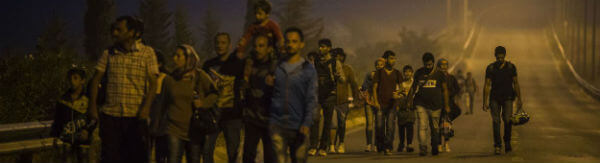
The Guardian reports: The French prime minister, Manuel Valls, has said Europe cannot take in all the refugees fleeing wars in Iraq and Syria and that the crisis was putting the concept of Europe itself in grave danger.
Speaking to the BBC at the economic forum in Davos, Valls said Europe needed to take urgent action to control its external borders. “Otherwise,” he said, “our societies will be totally destabilised.”
Asked about border controls inside Europe, which many fear put the passport-free Schengen zone at risk, Valls said the concept of Europe was in jeopardy. “If Europe is not capable of protecting its own borders, it’s the very idea of Europe that will be questioned,” he said.
He said a message to refugees that says “Come, you will be welcome”, provoked major shifts in population. “Today, when we speak in Europe, a few seconds later it is mainly on the smartphones in the refugee camps,” Valls said.
The large numbers of refugees in Europe has been a persistent theme of the Davos summit. The Dutch prime minister, Mark Rutte, on Thursday said Europe was close to breaking point and needed to come up with a common response or run the risk that one of the European Union’s founding principles would start to unravel. [Continue reading…]
Iraqi Kurdistan president: Time has come to redraw Middle East boundaries
The Guardian reports: The president of Iraq’s autonomous Kurdish north has called on global leaders to acknowledge that the Sykes-Picot pact that led to the boundaries of the modern Middle East has failed, and urged them to broker a new deal paving the way for a Kurdish state.
Massoud Barzani, who has led the troubled country’s Kurds for the past decade, said the international community had started to accept that Iraq and Syria in particular would never again be unified and that “compulsory co-existence” in the region had been proven wrong.
“I think that within themselves, [world leaders] have come to this conclusion that the era of Sykes-Picot is over,” Barzani told the Guardian. “Whether they say it or not, accept it or not, the reality on the ground is that. But as you know, diplomats are conservatives and they give their assessment in the late stages of things. And sometimes they can’t even keep up with developments.”
The political map of northern Iraq has changed drastically in the 18 months since Islamic State overran Iraq’s second city, Mosul. Kurdish forces are now in full control of Kirkuk and Sinjar and have claimed control of thousands more miles of land that had been under control of Iraq’s central government. [Continue reading…]
Yassin al-Haj Saleh: ‘Syria is a unique symbol of injustice, apathy and amnesia’
How do you feel when you see so many of your fellow citizens on the run from the most horrible conflict of our time? Did you expect an exodus like that?
Weeks ago, I helped smuggle my sister-in-law and my nephew from Turkey to Greece. As a beginner, I consulted friends, met smugglers, and chose one.
I was anxious about their safety, and was relieved when they arrived in a European country, even if it was not the one they wanted to go to. The other half of my brother’s family, he and his two younger sons, are to join the first half someday. With the help of friends, we are trying to arrange things for another brother and his family to take refuge in another European country, after a mutual friend of ours, the journalist and film maker Naji Jerf, was assassinated in Turkey on 27 December 2015.
We are helping ourselves to a world that did not help to liberate us at home. Never had I contemplated the possibility of such an exodus. I did not expect that the regime would kill hundreds of thousands of people and that its chances of staying in power would grow bigger as the numbers of its victims soared. I did not expect the emergence of a monstrous creature like Da’esh [ISIS]. I did not expect that around 70 countries would be partners in bombing my country: not against the ruling criminal, but against an offshoot of his monstrosity.
How do you see the European handling of the refugee crisis?
I am impressed by many people from many European countries, mostly individual volunteers. Their generosity, courage and humanity dignify the human race. I was touched by a message from a Norwegian woman who was in Lesbos helping refugees. As for governments, while it is not fair to include all of them in one category – Germany is not like Hungary, Sweden is not Denmark – I think they are unified in building higher walls in the face of the influx of refugees, specifically the poorest and most vulnerable ones.
For months now, European governments have been pressuring Ankara not to allow refugees to depart from Turkey. In November, they promised to pay €3 billion to the Turkish governments to guard European borders.
With all this blood that has been spilt over the past five years right under the world’s nose, humanity has led itself down the path to full ethical numbness. I suppose the indifference the world showed towards the Syrian ordeal will lead to even less sensitivity to human suffering in political institutions everywhere. [Continue reading…]
Russian airstrikes in Syria have ‘killed more than 1,000 civilians’
AFP reports: Russian airstrikes in Syria have killed more than 1,000 civilians since they were launched almost four months ago, a monitoring organisation has said.
The raids, which started on 30 September, have killed 1,015 civilians, including more than 200 children, the Britain-based Syrian Observatory for Human Rights (SOHR) said on Wednesday.
The group, which relies on a network of sources on the ground for its reports, said the strikes had also killed 893 Islamic State jihadis and 1,141 other opposition militants, including members of al-Qaida affiliate al-Nusra Front.
The toll of 3,049 includes almost 700 deaths in just three weeks. [Continue reading…]
UN envoy says Syria peace talks may be delayed, pressure needed
Reuters reports: Internationally brokered talks between Syria’s government and opposition groups due to start on Jan. 25 may be delayed, but major powers must keep up the pressure to bring participants to the table, the United Nations envoy said on Wednesday.
A Syrian opposition council backed by Saudi Arabia said on Wednesday it will not attend the negotiations in Geneva with the government if a third group takes part, a reference to a Russian bid to widen the opposition team.
U.N. Special Envoy Staffan de Mistura spoke in an interview with broadcaster CNN, hours after U.S. Secretary of State John Kerry and Russian Foreign Minister Sergei Lavrov held talks in Zurich despite no sign of agreement on who should represent the opposition. [Continue reading…]
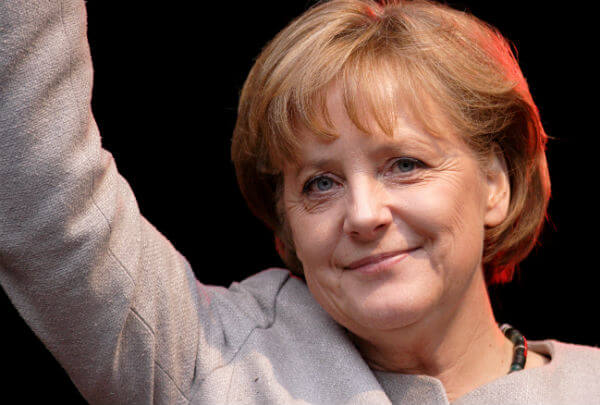
Can Angela Merkel save Europe?

An interview of George Soros by Gregor Peter Schmitz of the German magazine WirtschaftsWoche: Gregor Peter Schmitz: When Time put German Chancellor Angela Merkel on its cover, it called her the “Chancellor of the Free World.” Do you think that is justified?
George Soros: Yes. As you know, I have been critical of the chancellor in the past and I remain very critical of her austerity policy. But after Russian President Vladimir Putin attacked Ukraine, she became the leader of the European Union and therefore, indirectly, of the Free World. Until then, she was a gifted politician who could read the mood of the public and cater to it. But in resisting Russian aggression, she became a leader who stuck her neck out in opposition to prevailing opinion.
She was perhaps even more farsighted when she recognized that the migration crisis had the potential to destroy the European Union, first by causing a breakdown of the Schengen system of open borders and, eventually, by undermining the common market. She took a bold initiative to change the attitude of the public. Unfortunately, the plan was not properly prepared. The crisis is far from resolved and her leadership position—not only in Europe but also in Germany and even in her own party—is under attack.
Schmitz: Merkel used to be very cautious and deliberate. People could trust her. But in the migration crisis, she acted impulsively and took a big risk. Her leadership style has changed and that makes people nervous.
Soros: That’s true, but I welcome the change. There is plenty to be nervous about. As she correctly predicted, the EU is on the verge of collapse. The Greek crisis taught the European authorities the art of muddling through one crisis after another. This practice is popularly known as kicking the can down the road, although it would be more accurate to describe it as kicking a ball uphill so that it keeps rolling back down. The EU now is confronted with not one but five or six crises at the same time.
Schmitz: To be specific, are you referring to Greece, Russia, Ukraine, the coming British referendum, and the migration crisis?
Soros: Yes. And you haven’t even mentioned the root cause of the migration crisis: the conflict in Syria. Nor have you mentioned the unfortunate effect that the terrorist attacks in Paris and elsewhere have had on European public opinion.
Merkel correctly foresaw the potential of the migration crisis to destroy the European Union. What was a prediction has become the reality. The European Union badly needs fixing. This is a fact but it is not irreversible. And the people who can stop Merkel’s dire prediction from coming true are actually the German people. I think the Germans, under the leadership of Merkel, have achieved a position of hegemony. But they achieved it very cheaply. Normally hegemons have to look out not only for their own interests, but also for the interests of those who are under their protection. Now it’s time for Germans to decide: Do they want to accept the responsibilities and the liabilities involved in being the dominant power in Europe?
Schmitz: Would you say that Merkel’s leadership in the refugee crisis is different from her leadership in the euro crisis? Do you think she’s more willing to become a benevolent hegemon?
Soros: That would be asking too much. I have no reason to change my critical views on her leadership in the euro crisis. Europe could have used the kind of leadership she is showing now much earlier. It is unfortunate that when Lehman Brothers went bankrupt in 2008, she was not willing to allow the rescue of the European banking system to be guaranteed on a Europe-wide basis because she felt that the prevailing German public opinion would be opposed to it. If she had tried to change public opinion instead of following it, the tragedy of the European Union could have been avoided.
Schmitz: But she wouldn’t have remained chancellor of Germany for ten years.
Soros: You are right. She was very good at satisfying the requirements and aspirations of a broad range of the German public. She had the support of both those who wanted to be good Europeans and those who wanted her to protect German national interest. That was no mean feat. She was reelected with an increased majority. But in the case of the migration issue, she did act on principle, and she was willing to risk her leadership position. She deserves the support of those who share her principles.
I take this very personally. I am a strong supporter of the values and principles of an open society because of my personal history, surviving the Holocaust as a Jew under the Nazi occupation of Hungary. And I believe that she shares those values because of her personal history, growing up under Communist rule in East Germany under the influence of her father, who was a pastor. That makes me her supporter although we disagree on a number of important issues. [Continue reading…]
Canadians learning Arabic to welcome Syrian refugees
CBC News reports: Many Syrian refugees have already arrived and more are coming to the Waterloo Region [in Southern Ontario], leading some to wonder about what we can do to make these people feel at home in a new country.
In Waterloo Region, a crash course in conversational Arabic is available to residents and several have leaped at the opportunity to learn new language while becoming more useful to those arriving. The workshop is meant to teach private refugee sponsors and volunteers.
An organization known as Bring Back Hope, which was founded by Iman Arab, is working in association with Muslim Social Services to put together the four-hour course. The sessions are facilitated by Dr. Amir Al-Azraki, who teaches Arabic at the University of Waterloo and is also a lecturer and playwright.
Leanne Brown works with Carizon Family and Community Services as a school mental health co-ordinator and told CBC’s Melanie Ferrier that the opportunity to help others makes her feel really good.
“I’m here to learn Arabic because of the new refugees coming into our city and just to know how to make them feel welcome,” Brown said. “It’s pretty easy, actually. And I guess for me, learning a new language is very exciting.” [Continue reading…]