Category Archives: United States

America’s never-ending war against the world — 1999-2004

Since its creation, the United States has made eleven formal declarations of war, yet from 1798 to the present day, this country has used its armed forces abroad hundreds of times.

The Congressional Research Service has compiled a list of America’s use of military force abroad. The report is in a PDF which for the convenience of readers I have converted into five sections: 1798-1899, 1900-1985, 1986-1998, 1999-2004, and 2005-2012.

When viewed in its totality, this record makes clear that military force has in varying degrees always been the prism through which the U.S. government views the world. And keep in mind: this is just a list of the use of armed forces — it does not include the use of the CIA to topple governments, the support of proxy wars, the arming of insurgencies or the supply of the global weapons market which fuels conflict around the world.

  • 1999 Bosnia.
    On January 19, 1999, President Clinton reported to Congress that he was continuing to authorize the use of combat-equipped U.S. Armed Forces in Bosnia and other states in the region as participants in and supporters of the NATO-led Stabilization Force (SFOR). He noted that the U.S. SFOR military personnel totaled about 6,900, with about 2,300 U.S. military personnel deployed to Hungary, Croatia, Italy and other regional states. Also some 350 U.S. military personnel remain deployed in the Former Yugoslav Republic of Macedonia (FYROM) as part of the U.N. Preventive Deployment Force (UNPREDEP).
  • 1999 Kenya.
    On February 25, 1999, President Clinton reported to Congress that he was continuing to deploy U.S. military personnel in that country to assist in providing security for the U.S. embassy and American citizens in Nairobi, pending completion of renovations of the American embassy facility in Nairobi, subject of a terrorist bombing in August 1998.
  • 1999 Yugoslavia.
    On March 26, 1999, President Clinton reported to Congress that, on March 24, 1999, U.S. military forces, at his direction, and in coalition with NATO allies, had commenced air strikes against Yugoslavia in response to the Yugoslav government’s campaign of violence and repression against the ethnic Albanian population in Kosovo.
  • 1999 Yugoslavia/Albania.
    On April 7, 1999, President Clinton reported to Congress, that he had ordered additional U.S. military forces to Albania, including rotary wing aircraft, artillery, and tactical missiles systems to enhance NATO’s ability to conduct effective air operations in Yugoslavia. About 2,500 soldiers and aviators are to be deployed as part of this task force. The President also reported the deployment of U.S. military forces to Albania and Macedonia to support humanitarian disaster relief operations for Kosovar refugees.
  • Continue reading

Facebooktwittermail

America’s never-ending war against the world — 1986-1998

Since its creation, the United States has made eleven formal declarations of war, yet from 1798 to the present day, this country has used its armed forces abroad hundreds of times.

The Congressional Research Service has compiled a list of America’s use of military force abroad. The report is in a PDF which for the convenience of readers I have converted into five sections: 1798-1899, 1900-1985, 1986-1998, 1999-2004, and 2005-2012.

When viewed in its totality, this record makes clear that military force has in varying degrees always been the prism through which the U.S. government views the world. And keep in mind: this is just a list of the use of armed forces — it does not include the use of the CIA to topple governments, the support of proxy wars, the arming of insurgencies or the supply of the global weapons market which fuels conflict around the world.

  • 1986 Libya.
    On March 26, 1986, President Reagan reported to Congress that, on March 24 and 25, U.S. forces, while engaged in freedom of navigation exercises around the Gulf of Sidra, had been attacked by Libyan missiles and the United States had responded with missiles.
  • 1986 Libya.
    On April 16, 1986, President Reagan reported that U.S. air and naval forces had conducted bombing strikes on terrorist facilities and military installations in Libya.
  • 1986 Bolivia.
    U.S. Army personnel and aircraft assisted Bolivia in anti-drug operations.
  • 1987-88 Persian Gulf.
    After the Iran-Iraq War resulted in several military incidents in the Persian Gulf, the United States increased U.S. joint military forces operations in the Persian Gulf and adopted a policy of reflagging and escorting Kuwaiti oil tankers through the Gulf. President Reagan reported that U.S. Navy ships had been fired upon or struck mines or taken other military action on September 23, October 10, and October 20, 1987 and April 19, July 4, and July 14, 1988. The United States gradually reduced its forces after a cease-fire between Iran and Iraq on August 20, 1988.
  • 1988 Panama.
    In mid-March and April 1988, during a period of instability in Panama and as pressure grew for Panamanian military leader General Manuel Noriega to resign, the United States sent 1,000 troops to Panama, to “further safeguard the canal, U.S. lives, property and interests in the area.” The forces supplemented 10,000 U.S. military personnel already in Panama.
  • Continue reading

Facebooktwittermail

America’s never-ending war against the world — 1900-1985

Since its creation, the United States has made eleven formal declarations of war, yet from 1798 to the present day, this country has used its armed forces abroad hundreds of times.

The Congressional Research Service has compiled a list of America’s use of military force abroad. The report is in a PDF which for the convenience of readers I have converted into five sections: 1798-1899, 1900-1985, 1986-1998, 1999-2004, and 2005-2012.

When viewed in its totality, this record makes clear that military force has in varying degrees always been the prism through which the U.S. government views the world. And keep in mind: this is just a list of the use of armed forces — it does not include the use of the CIA to topple governments, the support of proxy wars, the arming of insurgencies or the supply of the global weapons market which fuels conflict around the world.

  • 1900 China.
    May 24 to September 28. American troops participated in operations to protect foreign lives during the Boxer rising, particularly at Peking. For many years after this experience a permanent legation guard was maintained in Peking, and was strengthened at times as trouble threatened.
  • 1901 Colombia (State of Panama).
    November 20 to December 4. U.S. forces protected American property on the Isthmus and kept transit lines open during serious revolutionary disturbances.
  • 1902 Colombia.
    April 16 to 23. U.S. forces protected American lives and property at Bocas del Toro during a civil war.
  • 1902 Colombia (State of Panama).
    September 17 to November 18. The United States placed
    armed guards on all trains crossing the Isthmus to keep the railroad line open, and
    stationed ships on both sides of Panama to prevent the landing of Colombian troops.
  • 1903 Honduras.
    March 23 to 30 or 31. U.S. forces protected the American consulate and the steamship wharf at Puerto Cortez during a period of revolutionary activity.
  • 1903 Dominican Republic.
    March 30 to April 21. A detachment of marines was landed to protect American interests in the city of Santo Domingo during a revolutionary outbreak.
  • 1903 Syria.
    September 7 to 12. U.S. forces protected the American consulate in Beirut when a local Muslim uprising was feared.
  • 1903-04 Abyssinia.
    Twenty-five marines were sent to Abyssinia to protect the U.S. Consul General while he negotiated a treaty.
  • 1903-14 Panama.
    U.S. forces sought to protect American interests and lives during and following the revolution for independence from Colombia over construction of the Isthmian Canal. With brief intermissions, United States Marines were stationed on the Isthmus from November 4, 1903, to January 21, 1914, to guard American interests.
  • Continue reading

Facebooktwittermail

America’s never-ending war against the world — 1798-1899

Since its creation, the United States has made eleven formal declarations of war, yet from 1798 to the present day, this country has used its armed forces abroad hundreds of times.

The Congressional Research Service has compiled a list of America’s use of military force abroad. The report is in a PDF which for the convenience of readers I have converted into five sections: 1798-1899, 1900-1985, 1986-1998, 1999-2004, and 2005-2012.

When viewed in its totality, this record makes clear that military force has in varying degrees always been the prism through which the U.S. government views the world. And keep in mind: this is just a list of the use of armed forces — it does not include the use of the CIA to topple governments, the support of proxy wars, the arming of insurgencies or the supply of the global weapons market which fuels conflict around the world.

  • 1798-1800 Undeclared Naval War with France.
    This contest included land actions, such as that in the Dominican Republic, city of Puerto Plata, where marines captured a French privateer under the guns of the forts. Congress authorized military action through a series of statutes.
  • 1801-05 Tripoli.
    The First Barbary War included the U.S.S. George Washington and Philadelphia affairs and the Eaton expedition, during which a few marines landed with United States Agent William Eaton to raise a force against Tripoli in an effort to free the crew of the Philadelphia. Tripoli declared war but not the United States, although Congress authorized U.S. military action by statute.
  • 1806 Mexico (Spanish territory).
    Capt. Z. M. Pike, with a platoon of troops, invaded Spanish territory at the headwaters of the Rio Grande on orders from Gen. James Wilkinson. He was made prisoner without resistance at a fort he constructed in present day Colorado, taken to Mexico, and later released after seizure of his papers.
  • 1806-10 Gulf of Mexico.
    American gunboats operated from New Orleans against Spanish and French privateers off the Mississippi Delta, chiefly under Capt. John Shaw and Master Commandant David Porter.
  • 1810 West Florida (Spanish territory).
    Gov. Claiborne of Louisiana, on orders of the President, occupied with troops territory in dispute east of the Mississippi River as far as the Pearl River, later the eastern boundary of Louisiana. He was authorized to seize as far east as the Perdido River.
  • 1812 Amelia Island and other parts of east Florida, then under Spain.
    Temporary possession was authorized by President Madison and by Congress, to prevent occupation by any other power; but possession was obtained by Gen. George Matthews in so irregular a manner that his measures were disavowed by the President.
  • 1812-15 War of 1812.
    On June 18, 1812, the United States declared war between the United States and the United Kingdom of Great Britain and Ireland.
    Among the issues leading to the war were British interception of neutral ships and blockades of the United States during British hostilities with France.
  • 1813 West Florida (Spanish territory).
    On authority given by Congress, General Wilkinson seized Mobile Bay in April with 600 soldiers. A small Spanish garrison gave way. The U.S. advanced into disputed territory to the Perdido River, as projected in 1810. No fighting.
  • 1813-14 Marquesas Islands.
    U.S. forces built a fort on the island of Nukahiva to protect three prize ships which had been captured from the British.
  • 1814 Spanish Florida.
    Gen. Andrew Jackson took Pensacola and drove out the British with whom the United States was at war.
  • Continue reading

Facebooktwittermail

Our romance with guns

David Cole writes: When James Holmes, a twenty-four-year-old neuroscience student from the University of Colorado, walked into a midnight premiere of The Dark Knight Rises in late July in Aurora, Colorado, and opened fire, killing twelve and injuring fifty-eight, the national spotlight was, once again, trained on America’s peculiar romance with guns, and gun violence. As after the shootings at Columbine, Virginia Tech, and a Tucson shopping mall, gun control advocates revived their calls to ban guns and gun rights advocates renewed their arguments that if more people carried guns, killers like James Holmes might have been stopped. National politicians, meanwhile, including President Barack Obama and Republican nominee Mitt Romney, expressed sympathy but steered clear of proposing any specific reforms, apparently unwilling to take on the National Rifle Association. When, just a few weeks after the Aurora killings, a white supremacist gunned down six worshipers in a Sikh temple in Oak Creek, Wisconsin, the response was virtually identical: plenty of sympathy, but no solutions.

While the Aurora and Oak Creek massacres justifiably sparked the nation’s horror and sympathy, the deeper tragedy is that every single day in this country, more than thirty people are killed by guns. Few of these everyday victims generate national headlines; indeed, gun homicide is so routine that many do not even warrant a local news story. But it is the decidedly nonglamorous, quotidian infliction of death and serious injury by gun owners that deserves our focused and sustained attention. And politicians’ cowardice in the face of the NRA is not the only obstacle to meaningful reform; an even greater hurdle lies in the fact that we seem willing to accept an intolerable situation as long as the victims are, for the most part, young black and Hispanic men.

The United States has had a long romance with firearms. Evidence of the affair can be found as far back as the Constitution, which contains a hotly disputed right to bear arms as the Second Amendment in the Bill of Rights, following only the First Amendment’s protections of speech and religion. Our infatuation with guns pervades popular culture, from Gunsmoke and The Rifleman to gangsta rap, Dirty Harry, and Sam Peckinpah’s glorification of self-defense in Straw Dogs. The NRA has over four million members. Americans own 280 million guns, an average of close to one gun per person in the country. Forty-five percent of American households possess a gun.

The United States also has a long history of gun violence. In 2009, there were 11,493 gun homicides in the US. In a comprehensive review of the social science literature, the Harvard Injury Control Research Center found solid evidence that the more guns that are available in a jurisdiction, the higher its homicide rate will be. If George Zimmerman had not been permitted to carry a gun, much less “stand his ground,” Trayvon Martin would probably be alive today.

Like so much else in the United States, the costs of our infatuation with guns are not evenly distributed. In 2008 and 2009, gun homicide was the leading cause of death for young black men. They die from gun violence—mainly at the hands of other black males—at a rate eight times that of young white males. From 2000 to 2007, the overall national homicide rate remained steady, at about 5.5 per 100,000 persons. But over the same period the homicide rate for black men rose 40 percent for fourteen- to seventeen-year-olds, 18 percent for eighteen- to twenty-four-year-olds, and 27 percent for those twenty-five and up. In 1995, the national homicide rate was about 10 per 100,000; the rate for Boston gang members, mainly black and Hispanic, was 1,539 per 100,000. In short, it is not the typical NRA member, but young black and Hispanic men in the inner city, who bear the burden of America’s gun romance. [Continue reading…]

Facebooktwittermail

Nobody’s Century: The American prospect in post-imperial times

In a speech given at The National Press Club in Washington DC on Tuesday, Ambassador Chas W. Freeman, Jr. (USFS, Ret.), said: In 1941, as the United States sat out the wars then raging in both the Atlantic and Pacific, Henry Luce argued that our destiny demanded that we, “the most powerful and vital nation in the world,” step up to the international stage and assume the position of global leader. “The 20th Century must be to a significant degree an American Century,” he declared.

And so it proved to be, as America entered the war and led the world to victory over fascism, then created a new world order that promoted the rule of law and parliamentary institutions as the basis of global governance. Americans altered the human condition with a dazzling array of new technologies, fostered global opening and reform, contained and outlasted communism, and saw the apparent triumph of democratic ideals over their alternatives. But that era came to an end in 1989, with the fall of the Berlin Wall, the end of the Cold War, and the establishment of the United States as the only global power.

Americans then indulged in a dozen intercalary years of narcissistic confusion. We celebrated our unrivaled military power and proclaimed ourselves “the indispensable nation,” but failed to define a coherent vision of a post-Cold War order or an inspiring role for our country within it. These essential tasks were deferred to the 21st Century, which finally began eleven years ago, with the shock and awe of 9/11. In the panic and rage of that moment, we made the choices about our world role we had earlier declined to make.

Since 9/11, Americans have chosen to stake our domestic tranquility on our ability – under our commander-in-chief – to rule the world by force of arms rather than to lead, as we had in the past, by the force of our example or our arguments. And we appear to have decided in the process that it is necessary to destroy our civil liberties in order to save them and that abandoning the checks and balances of our Constitution will make us more secure. Meanwhile, our military-industrial complex and its flourishing antiterrorist sidekick have been working hard to invent a credible existential challenge to match that of the Cold War. This has produced constantly escalating spending on military and antiterrorist projects, but it has not overcome the reality that Americans now face no threat from abroad comparable to Nazi Germany, Imperial Japan, or the USSR. The only real menace to our freedoms is our own willingness to supplant the rule of law with ever more elements of a garrison state.

The so-called “global war on terror” or “militant Islam,” as so many now openly describe it, has become an endless run in a military squirrel cage that is generating no light but a lot of future anti-American terrorism. It turns out that all that is required to be hated is to do hateful things. Ironically, as we “search abroad for monsters to destroy,” we are creating them – transforming our foreign detractors into terrorists, multiplying their numbers, intensifying their militancy, and fortifying their hatred of us. The sons and brothers of those we have slain know where we are. They do not forget. No quarter is given in wars of religion. We are generating the very menace that entered our imaginations on 9/11. [Continue reading…]

Facebooktwittermail

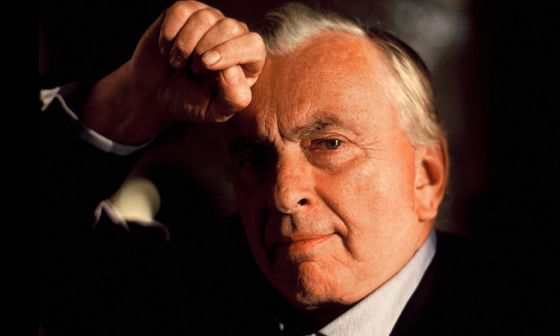
Remembering Gore Vidal — ‘Change is the nature of life and its hope’

Gore Vidal: 1925-2012

Gore Vidal: Unlike most Americans who lie all the time, I hate lying. And here I am surrounded with these hills [in Hollywood] full of liars — some very talented.

Melvyn Bragg: What do you mean by lying in that sense? Do you mean telling fictions?

Vidal: Yeah, about themselves, about their beliefs, about their histories. Degrees, from universities — this is piled up lies.

Americans are not interested in the truth about anything. They assume everybody is lying because they go out and lie everyday about the automobile they are trying to sell you…

This is a country of hoax. P.T. Barnum is the god of this republic, which is no longer a republic alas. It is an oligarchy and a rather vicious one.

Bragg: Can I quote a bit from Montaigne — something from Montaigne that you quote and refer to several times in these memoirs [of yours], from his essay on lying —

Vidal: yes, wonderful…

Bragg: “Lying is an accursed vice. It is only our words which bind us together and make us human. If we realized the horror and weight of lying, we would see that it is more worthy of the stake than other crimes.”

Vidal: … and I’ll drop the match [to set aflame the convict].

Yes, it is … — you see this whole American society is based on advertising, which in turn grabbed on to something called television which could just perpetrate lies everywhere into this society and does and did.

So I have lived in a rather troubling time.

Gore Vidal, who died yesterday evening, was interviewed by Melvyn Bragg on the South Bank Show in 2008. The interview lasts 48 minutes and is worth watching from beginning to end — you will never see an interview and portrait of this quality and depth on American television.

Facebooktwittermail

Batman movies don’t kill. But they’re friendly to the concept.

David Dobbs writes: We don’t know what led Holmes to do this, whether he was, to use David Eagleman’s distinction, psychotic or psychopathic or something else altogether. But unlike Anthony Lane and many other commenters, I don’t think we can give the movies a free ride here by saying they had nothing to do with it and just provided a stage. They gave this actor his lines and stage directions.

I’m not saying the movies made Holmes crazy or psychopathic or some such. But the movies are a enormous, constant, heavily influential part of an American culture that fetishizes violence and glamorizes, to the point of ten-year wars, a militarized, let-it-rain approach to conflict resolution. And culture shapes the expression of mental dysfunction — just as it does other traits. This is why, say, relatively ‘simple’ schizophrenia — not the paranoid sort — takes very different forms in Western and some Eastern cultures. On an even simpler level, this is why competitive athleticism is more likely to express itself as football (the real kind) in Britain but as basketball in the U.S. Culture shapes the expression of behavioral traits. The traits don’t rise inherent as an urge to play basketball or a plan to shoot up a Batman movie. A long conversation between the trait and the surrounding culture shape those expressions. Culture gives the impulse form and direction.

Facebooktwittermail

How America’s death penalty murders innocents

David A Love writes: The US criminal justice system is a broken machine that wrongfully convicts innocent people, sentencing thousands of people to prison or to death for the crimes of others, as a new study reveals. The University of Michigan law school and Northwestern University have compiled a new National Registry of Exonerations – a database of over 2,000 prisoners exonerated between 1989 and the present day, when DNA evidence has been widely used to clear the names of innocent people convicted of rape and murder. Of these, 885 have profiles developed for the registry’s website, exonerationregistry.org.

The details are shocking. Death row inmates were exonerated nine times more frequently than others convicted of murder. One-fourth of those exonerated of murder had received a death sentence, while half of those who had been wrongfully convicted of rape or murder faced death or a life behind bars. Ten of the inmates went to their grave before their names were cleared.

The leading causes of wrongful convictions include perjury, flawed eyewitness identification and prosecutorial misconduct. For those who have placed unequivocal faith in the US criminal justice system and believe that all condemned prisoners are guilty of the crime of which they were convicted, the data must make for a rude awakening.

“The most important thing we know about false convictions is that they happen and on a regular basis … Most false convictions never see the light of the day,” said University of Michigan law professors Samuel Gross and Michael Shaffer, who wrote the study.

Facebooktwittermail

We’re all minorities now

For the hotchpotch of Americans who are preoccupied by the odd concept of “whiteness”, July 2011 will be marked as an ominous but long anticipated turning point in this nation’s history: the Census Bureau now says that that was when non-white births for the “first time” outnumbered white births.

This might be the first time in the history of the Census Bureau although there must also have been another first time (not recorded) when white births first outnumbered those within the indigenous population, probably sometime in the mid-1700s.

The point at which this ceases to be a white dominated culture nevertheless does not appear to be near at hand. Even so, in anticipation of that event and in order to make that transition to a post-white America as unfraught as it should be, now would be a good juncture to start whittling away in earnest at the concept of a white race. Maybe by the time self-identified whites are no longer in charge we will have already discarded this ugly fabrication.

From an anthropological perspective the white race is pure fiction. We use Caucasian as a synonym for white but genetically Aasif Mandvi is just as Caucasian as Reese Witherspoon.

For those attached to the idea of an intrinsically European ethnicity, the only group who have a strong claim to such a thing are the Basques. Their ancestry is not only uniquely European but can be traced to the Cro-Magnon. Mind you, even if the Cro-Magnon qualify as the first modern humans in Europe, they didn’t originate from Europe.

And even if a tiny number of us can claim through Basque ancestry to possess a smidgen of Cro-Magnon blood, the fact remains that ultimately, without exception, our roots can all be traced to Africa.

The Associated Press reports: For the first time, racial and ethnic minorities make up more than half the children born in the U.S., capping decades of heady immigration growth that is now slowing.

New 2011 census estimates highlight sweeping changes in the nation’s racial makeup and the prolonged impact of a weak economy, which is now resulting in fewer Hispanics entering the U.S.

“This is an important landmark,” said Roderick Harrison, a former chief of racial statistics at the Census Bureau who is now a sociologist at Howard University. “This generation is growing up much more accustomed to diversity than its elders.”

The report comes as the Supreme Court prepares to rule on the legality of a strict immigration law in Arizona, with many states weighing similar get-tough measures.

“We remain in a dangerous period where those appealing to anti-immigration elements are fueling a divisiveness and hostility that might take decades to overcome,” Harrison said.

As a whole, the nation’s minority population continues to rise, following a higher-than-expected Hispanic count in the 2010 census. Minorities increased 1.9 percent to 114.1 million, or 36.6 percent of the total U.S. population, lifted by prior waves of immigration that brought in young families and boosted the number of Hispanic women in their prime childbearing years.

But a recent slowdown in the growth of the Hispanic and Asian populations is shifting notions on when the tipping point in U.S. diversity will come the time when non-Hispanic whites become a minority. After 2010 census results suggested a crossover as early as 2040, demographers now believe the pivotal moment may be pushed back several years when new projections are released in December.

Facebooktwittermail

Incarceration America

Fareed Zakaria writes: Something caught my eye the other day. Pat Robertson, the high priest of the religious right, had some startling things to say about drugs.

“I really believe we should treat marijuana the way we treat beverage alcohol,” Mr. Robertson said in a recent interview. “I’ve never used marijuana and I don’t intend to, but it’s just one of those things that I think: this war on drugs just hasn’t succeeded.”

The reason Robertson is for legalizing marijuana is that it has created a prison problem in America that is well beyond what most Americans imagine.

“It’s completely out of control,” Mr. Robertson said. “Prisons are being overcrowded with juvenile offenders having to do with drugs. And the penalties, the maximums, some of them could get 10 years for possession of a joint of marijuana. It makes no sense at all.”

He’s right. Here are the numbers: The total number of Americans under correctional supervision (prison, parole, etc.) is 7.1 million, more than the entire state of Massachusetts. Adam Gopnik writes in the New Yorker, “Over all, there are now more people under ‘correctional supervision’ in America. . .than were in the Gulag Archipelago under Stalin at its height.”

Facebooktwittermail

Schools in the Texas police state

Chris McGreal reports: The charge on the police docket was “disrupting class”. But that’s not how 12-year-old Sarah Bustamantes saw her arrest for spraying two bursts of perfume on her neck in class because other children were bullying her with taunts of “you smell”.

“I’m weird. Other kids don’t like me,” said Sarah, who has been diagnosed with attention-deficit and bipolar disorders and who is conscious of being overweight. “They were saying a lot of rude things to me. Just picking on me. So I sprayed myself with perfume. Then they said: ‘Put that away, that’s the most terrible smell I’ve ever smelled.’ Then the teacher called the police.”

The policeman didn’t have far to come. He patrols the corridors of Sarah’s school, Fulmore Middle in Austin, Texas. Like hundreds of schools in the state, and across large parts of the rest of the US, Fulmore Middle has its own police force with officers in uniform who carry guns to keep order in the canteens, playgrounds and lessons. Sarah was taken from class, charged with a criminal misdemeanour and ordered to appear in court.

Each day, hundreds of schoolchildren appear before courts in Texas charged with offences such as swearing, misbehaving on the school bus or getting in to a punch-up in the playground. Children have been arrested for possessing cigarettes, wearing “inappropriate” clothes and being late for school.

In 2010, the police gave close to 300,000 “Class C misdemeanour” tickets to children as young as six in Texas for offences in and out of school, which result in fines, community service and even prison time. What was once handled with a telling-off by the teacher or a call to parents can now result in arrest and a record that may cost a young person a place in college or a job years later.

Facebooktwittermail

Harder for Americans to rise from lower rungs

The New York Times reports: Benjamin Franklin did it. Henry Ford did it. And American life is built on the faith that others can do it, too: rise from humble origins to economic heights. “Movin’ on up,” George Jefferson-style, is not only a sitcom song but a civil religion.

But many researchers have reached a conclusion that turns conventional wisdom on its head: Americans enjoy less economic mobility than their peers in Canada and much of Western Europe. The mobility gap has been widely discussed in academic circles, but a sour season of mass unemployment and street protests has moved the discussion toward center stage.

Former Senator Rick Santorum of Pennsylvania, a Republican candidate for president, warned this fall that movement “up into the middle income is actually greater, the mobility in Europe, than it is in America.” National Review, a conservative thought leader, wrote that “most Western European and English-speaking nations have higher rates of mobility.” Even Representative Paul D. Ryan, a Wisconsin Republican who argues that overall mobility remains high, recently wrote that “mobility from the very bottom up” is “where the United States lags behind.”

Liberal commentators have long emphasized class, but the attention on the right is largely new.

“It’s becoming conventional wisdom that the U.S. does not have as much mobility as most other advanced countries,” said Isabel V. Sawhill, an economist at the Brookings Institution. “I don’t think you’ll find too many people who will argue with that.”

One reason for the mobility gap may be the depth of American poverty, which leaves poor children starting especially far behind. Another may be the unusually large premiums that American employers pay for college degrees. Since children generally follow their parents’ educational trajectory, that premium increases the importance of family background and stymies people with less schooling.

Facebooktwittermail

Welcome to Incarceration America

Sadhbh Walshe writes: We like locking people up in America. If incarceration were an Olympic sport, the United States would come away with every gold medal available and break a few world records in the process. On average, Americans are locked up at a rate (pdf) four times higher than any other nationality, and we have the world’s largest female prison population by a considerable margin.

Before the “get tough” policies adopted in the 1970s, less than 200,000 on average were behind bars. Now that number is closer to 2 million. That may make you feel more safe, or less, if you consider that all of our chances of ending up in prison someday have increased exponentially. With that in mind, we kind of owe it to ourselves to at least know what goes on behind prison walls.

With this new series, we hope to shed some light on what life is like inside our prisons by hearing directly from inmates, their families, correction officers and anyone else whose life is impacted by the practice of incarceration. So far, my correspondence with inmates has revealed a fascinating world of endurance, resourcefulness, terrible choices, terrible cruelty and a lot of pain and suffering.

The most disturbing aspect of the corrections model, as it currently stands, however, is how much it has failed to either rehabilitate offenders or deter them from re-offending. No matter how harsh the prison stay, at least four in ten inmates will end up back inside (pdf), soon after their release – usually on a more serious charge and for a longer, and more expensive, stay.

Facebooktwittermail

Climate change — our real bequest to future generations

Dean Baker writes: The guiding philosophy on this issue in the United States is pretty much that we can inflict whatever harm we want on people elsewhere in the world because we are powerful and they are not. This is certainly true today, but will it still be true 60 or 70 years from now? Do we expect that the United States will still be able to act unilaterally without regard to the consequences that our actions have on the rest of the world?

Before anyone tries to answer this question, they should consider that the International Monetary Fund’s projections show China’s economy surpassing the US economy before the end of the next presidential term. And China is not the only country whose growth is substantially outpacing ours.

The point is not that we should worry about an invasion from hostile powers, but instead, that we should not imagine that we will be able to inflict great harm on the rest of the world with impunity. In other words, our children and grandchildren may well be forced to pay a substantial price for the damage caused by our greenhouse gas emissions today.

Those who want to worry about questions of generational equity might start to wrap their heads around combating global warming. Global warming threatens to do far more damage to the wellbeing of future generations than the social security and Medicare benefits going to baby-boomers, no matter how much the deficit hawks try to twist the numbers to claim otherwise.

Facebooktwittermail

America builds wealth without common wealth

Umair Haque suggests that to measure the welfare of America, it’s time to focus less on GDP — a measure of the national income — and consider instead an equation that says “real human welfare equals natural capital, plus financial capital, plus intellectual capital, plus human capital, plus social, emotional, and organizational capital.” If one was to assess these different kinds of capital:

You might see social capital — the wealth of relationships — crashing. According to Ohio State University’s Pamela Paxton, declines in trust among individuals of half a percent per year from 1975 to 1994. A life rich in relationships and connections seems to be a more and more elusive goal.

You might notice human capital — the wealth in people — splintering. Perhaps the most essential component of human capital is education. Yet, the Brookings Institution found that, for the first time, older generations have attained more higher education than younger ones. That points to an inflection point in human capital, marking a peak in American educational attainment.

Human capital is also composed of mental and physical health. Both mental illness and obesity rates have risen steadily for the last century in America. And rates of happiness in the United States, United Kingdom, and Japan have flatlined — and by some measures, fallen — over recent decades.

You might see intellectual capital — the wealth of ideas — struggling to develop. Intellectual capital is often assessed simply by looking at the sheer number of patents, but I’d choose a higher bar: the creation not merely of patents, but of new industries, sectors, and markets. Fewer industries were created in the noughties than in any decade since 1930: just two, by my count — search and nanotech. Though patent applications have skyrocketed, patent quality has dropped. They are now less expressions of true intellectual wealth than tools for strategic control.

You might see organizational capital — the wealth that harmonizes and synchronizes the other kinds of wealth — cratering. Organizational capital is the toughest kind of capital to measure and observe. I’d roughly gauge it by looking at the creation rate of new jobs, because new jobs often represent new roles, gains in the division of labor, the raw stuff of organizational capital. America is often said to be the most dynamic economy in the world, but the net creation rate of new jobs has dropped steadily since 1970. I’d also look at an alternative measure of organizational capital: political decision-making. Here, we find more “gridlock”: filibusters in the Senate have risen exponentially over the last three decades to an unprecedented high.

Here’s what the glimpse I’ve given suggests: the state of the Common Wealth is in crisis. In terms of an authentically good life, we’re going nowhere fast.

Facebooktwittermail