Hassan Hassan writes: Over the past five years in Syria, Ahrar al-Sham has emerged as an important political and religious experiment. As one of the most powerful groups in Syria, Ahrar al-Sham has struggled to reconcile the legacy of many of its founders as jihadi veterans with the need for an acceptable political discourse in the war-ravaged country. As the group engages cautiously in the political process for a transition, it is also important to understand whether it has really broken away from Salafi-jihadism.
The ideology of the group is further muddled by the fact that it works closely with al-Qaeda affiliate Jabhat al-Nusra, though Ahrar al-Sham participates in political conferences and pacts that appear to deviate from the canons of jihadist organizations. After the death of its top leaders in an explosion that took place during a high-level meeting in September 2014, Ahrar al-Sham has also sought to present itself to the outside world as a moderate group and an indispensable fighting force on the ground.
Countries involved in the conflict in Syria are split about the organization. Some, primarily Russia and Iran, are pushing for its designation as a terrorist organization. Others, such as Qatar and Turkey, tried to present the organization as a moderate group and include it in the international funding scheme for nationalist rebel forces. The latter effort entailed the involvement of sponsors and clerics close to the group to steer it in that direction, combined with a public relations offensive to present the group as such.
But is Ahrar al-Sham merely a conservative Syrian faction immersed in an armed struggle against the regime of Bashar al-Assad? Or is it still a bastion of Salafi-jihadism, the movement to which its top echelon once subscribed? Ali al-Omar, the group’s deputy leader, answered some of these questions during an hour-long talk he gave on Friday, “The Place of Ahrar al-Sham Among Islamist Currents.” [Continue reading…]
Category Archives: News
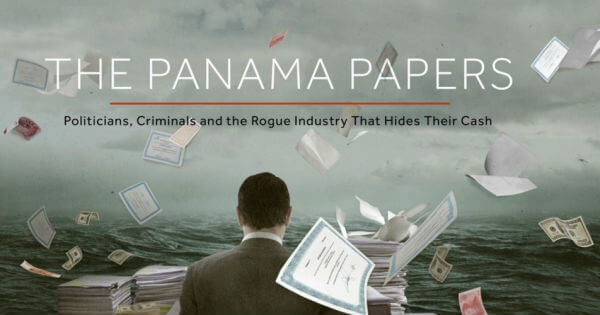
Panama Papers show how rich American clients hid millions abroad

The New York Times reports: Over the years, William R. Ponsoldt had earned tens of millions of dollars building a string of successful companies. He had renovated apartment buildings in the New York City area. Bred Arabian horses. Run a yacht club in the Bahamas, a rock quarry in Michigan, an auto-parts company in Canada, even a multibillion-dollar hedge fund.
Now, as he neared retirement, Mr. Ponsoldt, of Jensen Beach, Fla., had a special request for Mossack Fonseca, a Panama-based law firm well placed in the world of offshore finance: How could he confidentially shift his money into overseas bank accounts and use them to buy real estate and move funds to his children?
“He is the manager of one of the richest hedge funds in the world,” a lawyer at Mossack Fonseca wrote when the firm was introduced to Mr. Ponsoldt in 2004. “Primary objective is to maintain the utmost confidentiality and ideally to open bank accounts without disclosing his name as a private person.”
In summary, the firm explained: “He needs asset protection schemes, which we are trying to sell him.”
Thus began a relationship that would last at least through 2015 as Mossack Fonseca managed eight shell companies and a foundation on the family’s behalf, moving at least $134 million through seven banks in six countries — little of which could be traced directly to Mr. Ponsoldt or his children.
These transactions and others like them for a stable of wealthy clients from the United States are outlined in extraordinary detail in the trove of internal Mossack Fonseca documents known as the Panama Papers. The materials were obtained by the German newspaper Süddeutsche Zeitung and the International Consortium of Investigative Journalists, and have now been shared with The New York Times. [Continue reading…]
‘I just wanted to be free’: The radical reverberations of Muhammad Ali
Dave Zirin writes: The reverberations. Not the rumbles, the reverberations. The death of Muhammad Ali will undoubtedly move people’s minds to his epic boxing matches against Joe Frazier and George Foreman, or there will be retrospectives about his epic “rumbles” against racism and war. But it’s the reverberations that we have to understand in order to see Muhammad Ali as what he remains: the most important athlete to ever live. It’s the reverberations that are our best defense against real-time efforts to pull out his political teeth and turn him into a harmless icon suitable for mass consumption.
When Dr. Martin Luther King came out against the war in Vietnam in 1967, he was criticized by the mainstream press and his own advisors who told him to not focus on “foreign” policy. But Dr. King forged ahead and to justify his new stand, said publicly, “Like Muhammad Ali puts it, we are all—black and brown and poor—victims of the same system of oppression.”When Nelson Mandela was imprisoned on Robben Island, he said that Muhammad Ali gave him hope that the walls would some day come tumbling down.
When John Carlos and Tommie Smith raised their fists on the medal stand in Mexico City, one of their demands was to “Restore Muhammad Ali’s title.” They called Ali “the warrior-saint of the Black Athlete’s Revolt.”
When Student Non-Violent Coordinating Committee (SNCC) volunteers in Lowndes County, Alabama launched an independent political party in 1965, their new group was the first to use the symbol of a black panther. Beneath the jungle cat’s black silhouette was a slogan straight from the champ: “WE Are the Greatest.”
When Billie Jean King was aiming to win equal rights for women in sports, Muhammad Ali would say to her, “Billie Jean King! YOU ARE THE QUEEN!” She said that this made her feel brave in her own skin.
The question is why? Why was he able to create this kind of radical ripple? The short answer is that he stood up to the United States government… and emerged victorious. But it’s also more complicated that that. [Continue reading…]
Muhammad Ali, Thomas Hobbes, and the politics of fear
Corey Robin writes: When Muhammad Ali famously said, “Man, I ain’t got no quarrel with them Vietcong…they never called me nigger,” he wasn’t just refusing to serve in Vietnam. Nor was he peddling an anodyne “We’re all human beings, let’s be friends” piece of feel-good agitprop. He was challenging the ability of the state to define for its citizens whom they should fear and who were their enemies. He was usurping that power and claiming it for himself. As Ali said to a group of white college students, who had challenged his position on serving in Vietnam, “You my enemy. My enemy is the white people, not Viet Congs or Chinese or Japanese.”
From the time of Hobbes, one of the leading attributes of sovereignty has been the right of the state to define and determine what threatens a people and how that threat will be responded to. In the state of nature, Hobbes wrote in Elements of the Law, “every man…is judge himself of the necessity of the means, and of the greatness of the danger” he faces. But once we submit to the state, we are forbidden “to be our own judges” of the threats we are facing and how to respond to them. Except in cases of immediate physical threat to ourselves, we must now accede to the sovereign’s assessment of and decision about these threats. The sovereign, as Hobbes says in Leviathan of the state’s control over matters theological, is he “to whom in all doubtfull cases, wee have submitted our private judgments.”
This is why Ali’s challenge to the Vietnam War was so formidable. He wasn’t merely claiming conscientious objector status, though he was. He wasn’t simply claiming the authority of a higher being, though he was. He was asserting the right of the citizen to be the final judge of what threatens or endangers him. In asserting that right, Ali was posing the deepest, most fundamental challenge to the power and authority of the state. [Continue reading…]
Shunned by white America, how Muhammad Ali found his voice on campus tour
The Guardian reports: Time had sanitized the past. Portraits of Muhammad Ali’s activism in the wake of his death at 74 on Friday paint a picture of a fighter who helped change American culture with his refusal to be drafted into the US military but cannot explain how dire his situation actually was in 1967.
Much of America hated and feared him. He was facing five years in prison for saying no to the military. He was through as a fighter, stripped of his license by the New York State Athletic Board and facing a long court fight to overturn his conviction.
“Everyone turned on him,” fellow boxer George Foreman told CNN on Saturday. “I mean literally everyone. I hadn’t even gone into boxing yet. No one wanted to be in his presence. No one wanted to be his friend and he was dropped.”
This was one of the toughest parts of Ali’s life. As his backers in the Nation of Islam pushed him further into activism, much of white American shunned him. His passport had been taken away. He complained, at one point that: “I’m not allowed to work in America and I’m not allowed to leave America.”
And yet the three-year period – at the height of his sporting powers, from when he refused to step forward as draft officials in Houston called his name to 1971 when the supreme court overturned his conviction and five-year sentence – helped shape the Ali who would later become beloved. It became the time that he grew into his voice. [Continue reading…]
Muhammad Ali taught me to be proud of my skin and Muslim faith
Omar Musa writes: Once, when I was a child growing up in Australia, I got teased by another kid because I had brown skin. The kid told me my skin was the same colour as shit. I went home in tears and, for the only time in my life, I said to my parents that I wished I wasn’t brown.
My parents sat me down and told me to be proud of my skin and of being Muslim, even if other people put you down for it. I don’t know if it was connected but soon afterwards my dad began to show me tapes of a charismatic, handsome black boxer from America, a proto rapper who spat rhymes and cracked jokes, who drove a pink Cadillac, who stood up for his people and his convictions, all the while dancing on the canvas like no one before and no one to come.
And he was Muslim, like us, and proud of it! And a poet! And he had even fought in Malaysia (where my dad came from) once!
I went to the Queanbeyan library and photocopied pictures of him to stick in my school diary and on my wall. I could never be a boxer but I could have that unfuckwithable attitude.
Ali taught me to be brave, to stand up for myself, to fight for the underdog and that, even if society was against you, your conviction for what was right would be vindicated by history. That there was something radical in being completely and utterly yourself. That my brown skin was not the colour of shit – it shone brighter than gold. He taught me to be proud. [Continue reading…]
Assad’s media adviser might be even more evil than the man burning Syria
David Blair writes: If there is a Marie Antoinette of our age, it must be Bouthaina Shaaban, the odious “media adviser” to Syria’s regime. When asked about the medieval sieges currently being imposed on a million Syrians in rebel-held enclaves by her master, Bashar al-Assad, she did not actually say “let them eat cake” – but she might as well have done.
There was “no need” for food aid in Syria, declared Ms Shaaban during a press briefing last Thursday, and the inhabitants of the towns and refugee camps blockaded by her regime could do without “macaroni” and “tin fruits” from the United Nations.
One suburb of Damascus, known as Daraya, has been subjected to a particularly pitiless siege since November 2012: during the whole of that time, the regime has allowed only one aid convoy into the area – and even that was prevented from carrying any food.
But the well-nourished Ms Shaaban blithely described Daraya as the “food basket of Damascus”, adding: “There’s nobody starving in Daraya.” [Continue reading…]
Is Ennahda following in AKP footsteps?
Mustafa Akyol writes: It is no secret that in the midst of the ongoing turmoil in the Middle East, Tunisia has emerged as the brightest spot. It is also no secret that Tunisia’s success has been made possible in part by the moderate stance of its main Islamist party, Ennahda, which on May 21 at its party congress announced that it was officially abandoning political Islam. The longtime leader of the party, Rachid Ghannouchi, who was re-elected at the event, vowed to “keep religion far from political struggles” and announced that Ennahda would abandon all its religious activities, including preaching in mosques.
Naturally, this news reminded some of the founding of Turkey’s Justice and Development Party (AKP) 15 years ago. At that time, the AKP, which came from an “Islamist” political tradition, had also declared a major change in perspective. Similar to Ennahda’s new self-identification as “Muslim democrats,” the AKP’s founders called themselves “conservative democrats.” The term “conservative” in Turkey is often another way of saying “practicing Muslim.” Moreover, Ghannouchi had in the past spoken about the “Turkish experience” and pointed to it as a positive frame of reference.
It is also no secret, however, that the so-called Turkish experience has not been going well lately. The AKP of today, heavily criticized for authoritarianism, is a far cry from the AKP of the early 2000s that was widely praised for its reforms. The common perception of the party, especially its iron-willed leader, Recep Tayyip Erdogan, is that it was “moderate” when weak but turned autocratic after consolidating power. One could therefore argue that if Ennahda is really following in the footsteps of the AKP, it is not a reassuring step. [Continue reading…]
The outsized life of Muhammad Ali
David Remnick writes: What a loss to suffer, even if for years you knew it was coming. Muhammad Ali, who died Friday, in Phoenix, at the age of seventy-four, was the most fantastical American figure of his era, a self-invented character of such physical wit, political defiance, global fame, and sheer originality that no novelist you might name would dare conceive him. Born Cassius Clay in Jim Crow-era Louisville, Kentucky, he was a skinny, quick-witted kid, the son of a sign painter and a house cleaner, who learned to box at the age of twelve to avenge the indignity of a stolen bicycle, a sixty-dollar red Schwinn that he could not bear to lose. Eventually, Ali became arguably the most famous person on the planet, known as a supreme athlete, an uncanny blend of power, improvisation, and velocity; a master of rhyming prediction and derision; an exemplar and symbol of racial pride; a fighter, a draft resister, an acolyte, a preacher, a separatist, an integrationist, a comedian, an actor, a dancer, a butterfly, a bee, a figure of immense courage.
In his early career, when he declared his allegiance to Elijah Muhammad’s Nation of Islam, rid himself of his “slave name,” and lost his heavyweight title rather than fight in Vietnam, Ali was vilified as much as he was admired. Millions hated Ali; he threatened a sense of the racial order; he was, in his refusal to conform to any type, as destabilizing to many Americans as he was to the many heavyweights who could not understand why he would just not come to the center of the ring and fight like a real man. He was, for many years, a radical figure for many Americans. For years, many refused to call him by his new name. “I pity Clay and abhor what he represents,” the columnist Jimmy Cannon wrote. Even Red Smith, the most respected of all sports columnists, compared Ali to the “unwashed punks” who dared to march against the war. But in recent decades, as Parkinson’s disease began to overwhelm his gifts for movement and speech, and as the country’s attitudes changed, Ali became a focus of almost universal affection. The people who encountered him at charity dinners, in airports, at sporting events approached him as they would a serene Pope Francis or the Dalai Lama, and, if he could summon a whispered joke or flirt for a moment or just widen his eyes in that old vaudeville way of his, people left with a sense of having met a source of wonder. [Continue reading…]
Muhammad Ali knocked Trump’s Muslim ban before he died
Marlow Stern writes: The late Muhammad Ali, who passed away Friday evening at the age of 74, was proudly, unapologetically black. He fought for the civil rights of African Americans, and famously refused to serve in the Vietnam War with the following ardent proclamation: “I ain’t got nothing against no Viet Cong; no Viet Cong never called me nigger.”
He was also a devout Muslim and dedicated member of the Nation of Islam, having fallen under the tutelage of Malcolm X in 1962. When rumors began circulating that year that he’d joined the Nation of Islam, one of his bouts was nearly canceled, and when he officially joined in 1964, he had his boxing titles stripped from two organizations, including the WBA. Shortly thereafter, Nation of Islam leader Elijah Muhammad—who became a surrogate father to Ali—announced that the man formerly known as Cassius Clay would henceforth be “Muhammad Ali,” with “Muhammad” meaning “one who is worthy of praise” and Ali the cousin and son-in-law of the Prophet Muhammad, as well as the fourth caliph. He later left the NOI after experiencing a falling out when Elijah Muhammad stepped down and, in 1975, converted to Sunni Islam (he later embraced Sufism).
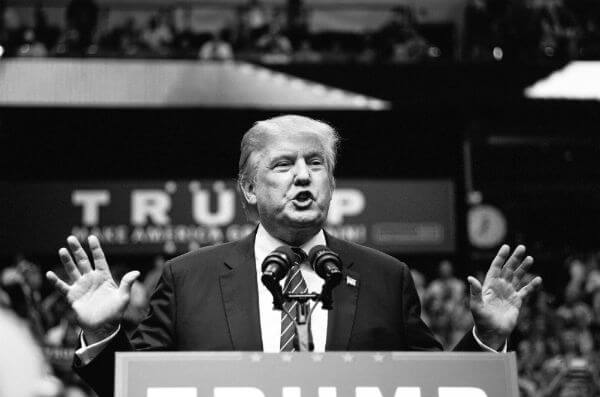
In the wake of the deadly mass shooting in San Bernardino, California, by two ISIS-affiliated terrorists, presidential candidate Donald Trump called for a ban on all Muslims entering the United States.
“Donald J. Trump is calling for a total and complete shutdown of Muslims entering the United States until our country’s representatives can figure out what is going on,” he announced in a campaign press release.
This was, of course, after a rash of other anti-Muslim comments Trump had made, including that he wanted American mosques to be surveilled, considered establishing a database monitoring all Muslims in the U.S., and his bogus claim that he saw “thousands” of Muslims in New Jersey celebrating as the Twin Towers fell on 9/11 (then again, Trump also claimed he saw people jump from the Towers on 9/11 from a “view in my apartment that was specifically aimed at the World Trade Center,” even though he lives in midtown Manhattan, more than four miles from Ground Zero).
Ali, who was cordial with Trump in years past, and even gave him the Muhammad Ali award at his Celebrity Fight Night XIII in 2007, had strong words for the reality star turned politician’s proposed Muslim ban. [Continue reading…]
Deadly hatred fractures anti-ISIS alliance in Iraq
Christoph Reuter reports: For over a year, the US has been pushing for the launch of an offensive on IS-held Mosul and has been bombing the city almost daily. But despite repeated announcements that an attack was imminent, very little has happened on the ground aside from the recapture of a handful of surrounding towns and villages. Nevertheless, Iraqi commanders have already made competing claims on the expected spoils.
“Nothing and nobody will stop us from marching into Mosul,” says Hadi al-Ameri, the top commander of a conglomerate of Shiite militias that are officially called the Popular Mobilization Units but which are widely known as Hashd.
“All areas of Mosul east of the Tigris belong to Kurdistan,” counters Brigadier Halgord Hikmat, spokesman of the Ministry of Peshmerga Affairs, which controls the Kurdish fighting force. “We aren’t demanding any more than that, and the river is a clear border.”
What’s more, the Sunni ex-governor of Mosul — together with several thousand fighters and the support of 1,200 Turkish troops whose presence in Iraq is tolerated by the Kurds — is planning to invade the city from the north. Under Sunni leadership.
The government in Baghdad, under the leadership of the respectable yet weak Prime Minister Haider al-Abadi, has mostly stayed out of it — despite the fact that the Iraqi army would seem best positioned to prevent a fight among the allies over the spoils of Mosul. But Abadi has been fighting for political survival ever since followers of the Shiite leader Muqtada al-Sadr stormed the government quarter in Baghdad a short time ago, the second such incident in a month. Instead of recapturing Mosul, once Iraq’s second-largest city, the military has now been tasked with first liberating Fallujah, the much smaller IS stronghold west of Baghdad.
Right in the middle, located at the halfway point between Baghdad and Mosul, is Tuz Khurmatu — the harbinger of Iraq’s future. It is a place where those groups fighting together to defeat IS are killing each other away from the front lines. [Continue reading…]
U.S. gives Egypt free armored vehicles while Egyptian military sees U.S. as its enemy
Jackson Diehl writes: This month, the United States delivered the first batch of 762 Mine Resistant Ambush Protected (MRAP) vehicles to Egypt free of charge. That’s on top of the $1.3 billion in military aid the Obama administration has allocated to the regime of Abdel Fatah al-Sissi this year. The White House refuses to condition these gifts on an improvement in Egypt’s horrendous human rights record. So herewith a more modest proposal: Obama should ask Sissi to publicly explain how the MRAPs fit into the “fourth-generation war.”
Most people are unfamiliar with that esoteric term — unless they have been following the rhetoric of Egypt’s military leaders since the coup of 2013. Fourth-generation warfare, Sissi once explained to cadets at Egypt’s military academy, occurs when “modern communication channels, psychology and the media are . . . deployed to create divisions and harm Egypt from within,” according to the website Mada Masr.
Who is the enemy in this war? According to the Egyptian military, that would be the United States — the same country providing the army with those free armored vehicles and billions in aid. In March, the Defense Ministry’s Nasser Military Academy briefed the parliament about fourth-generation warfare. According to the outline, reported by Mada Masr, the subjects included “Egypt’s defense strategy and Western plans to divide the Middle East.” [Continue reading…]
America’s secret engagement with Khomeini
Kambiz Fattahi writes: On 27 January, 1979, Ayatollah Ruhollah Khomeini – founder of Iran’s Islamic Republic, the man who called the United States “the Great Satan” – sent a secret message to Washington.
From his home in exile outside Paris, the defiant leader of the Iranian revolution effectively offered the Carter administration a deal: Iranian military leaders listen to you, he said, but the Iranian people follow my orders.
If President Jimmy Carter could use his influence on the military to clear the way for his takeover, Khomeini suggested, he would calm the nation. Stability could be restored, America’s interests and citizens in Iran would be protected.
At the time, the Iranian scene was chaotic. Protesters clashed with troops, shops were closed, public services suspended. Meanwhile, labour strikes had all but halted the flow of oil, jeopardising a vital Western interest.
Persuaded by Carter, Iran’s autocratic ruler, Mohammad Reza Shah Pahlavi, known as the Shah, had finally departed on a “vacation” abroad, leaving behind an unpopular prime minister and a military in disarray – a force of 400,000 men with heavy dependence on American arms and advice.
Khomeini feared the nervous military: its royalist top brass hated him. Even more worrying, they were having daily meetings with a US Air Force General by the name of Robert E Huyser, whom President Carter had sent on a mysterious mission to Tehran.
The ayatollah was determined to return to Iran after 15 years in exile and make the Shah’s “vacation” permanent. So he made a personal appeal.
In a first-person message, Khomeini told the White House not to panic at the prospect of losing a strategic ally of 37 years and assured them that he, too, would be a friend.
“You will see we are not in any particular animosity with the Americans,” said Khomeini, pledging his Islamic Republic will be “a humanitarian one, which will benefit the cause of peace and tranquillity for all mankind”. [Continue reading…]
Donald Trump could threaten U.S. rule of law, scholars say

The New York Times reports: Donald J. Trump’s blustery attacks on the press, complaints about the judicial system and bold claims of presidential power collectively sketch out a constitutional worldview that shows contempt for the First Amendment, the separation of powers and the rule of law, legal experts across the political spectrum say.
Even as much of the Republican political establishment lines up behind its presumptive nominee, many conservative and libertarian legal scholars warn that electing Mr. Trump is a recipe for a constitutional crisis.
“Who knows what Donald Trump with a pen and phone would do?” asked Ilya Shapiro, a lawyer with the libertarian Cato Institute.
With five months to go before Election Day, Mr. Trump has already said he would “loosen” libel laws to make it easier to sue news organizations. He has threatened to sic federal regulators on his critics. He has encouraged rough treatment of demonstrators.
His proposal to bar Muslims from entry into the country tests the Constitution’s guarantees of religious freedom, due process and equal protection.
And, in what was a tipping point for some, he attacked Judge Gonzalo P. Curiel of the Federal District Court in San Diego, who is overseeing two class actions against Trump University. [Continue reading…]
Once threatened by Mexican drug cartels, judge now faces attacks from Trump
The New York Times reports: For much of a year, Gonzalo P. Curiel, then a federal prosecutor in California, lived officially in hiding.
He hunkered down for a while on a naval base and in other closely guarded locations under the protection of United States marshals. Even his siblings did not know exactly where he was at times.
The reason: In a secretly taped conversation inside a San Diego prison, a man accused of being a gunman for a Mexican drug cartel said that he had received permission from his superiors to have Mr. Curiel assassinated.
“It was kind of scary,” said Mr. Curiel’s brother Raul. “He had to be protected. He always had one or two bodyguards with him.”
Nearly 20 years later, Gonzalo Curiel, now a federal judge, is being targeted in a very different way.
The presiding judge in a lawsuit filed by former students of Trump University, he has been called a “hater” of Mr. Trump by the presumptive Republican presidential nominee himself. At a rally last week, Mr. Trump said the judge “happens to be, we believe, Mexican,” suggesting that he was biased because of Mr. Trump’s calls to build a wall along the border to prevent illegal immigration. Angry supporters have been calling the judge’s chambers. [Continue reading…]
Syria: UN won’t break sieges with airdrops without permission from the government imposing those sieges
The New York Times reports: The United Nations on Thursday dimmed any prospect of immediate airdrops of aid to Syrian civilians trapped by the war, despite an expired deadline imposed on Syria’s government to allow unfettered humanitarian access by land.
United Nations officials said the World Food Program, its anti-hunger agency, had no imminent plans for airdrops even though the organization had known for more than two weeks about the deadline, which expired on Wednesday.
Moreover, the officials said, it would be necessary for security reasons for any airdrops to have the consent of the Syrian government.
They also emphasized what they called the logistical challenges and expense of airdropping aid into congested urban settings controlled by insurgents, where thousands of civilians lack access to food and medicine.
The deadline was imposed by the International Syria Support Group, a multinational effort that includes the United States and Russia — Syria’s most important ally — which was thought to have given the demand some coercive effect.
The group said on May 17 that if land access were not granted by President Bashar al-Assad, the World Food Program should “immediately carry out a program for air bridges and airdrops for all areas in need.” [Continue reading…]
ISIS at real risk of losing much of the territory it holds
The Guardian reports: For the first time in the two years since the leader of Islamic State, Abu Bakr al-Baghdadi, proclaimed the existence of an “Islamic caliphate” straddling Syria and Iraq, the jihadi group is at real risk of losing much of the territory it holds.
Four Isis strongholds – two in Syria and two in Iraq – are now under concerted attack, and in all cases the militants defending them are struggling to contain well-organised and resourced assaults planned over many months.
The attacks are heavily backed by the US, which since April has stepped up its campaign to “destroy and degrade” the terrorist organisation in its self-declared heartland of eastern Syria and western Iraq. A two-year project that had been derided by allies and proxies alike as being too limited and cautious now has military momentum. [Continue reading…]
The Falluja offensive risks handing a propaganda victory to ISIS
Janine di Giovanni writes: My memory of Falluja is of roads leading to the city, of fields of swaying date palm trees, which my Iraqi friend Thaier once told me represented the souls of the country’s people. “They are symbols of our hopes and dreams,” he said, pointing to the lush fields along the Euphrates, on a trip we took crossing Iraq east to west and north to south, in the late winter of 2003. It was shortly before the invasion that crushed all those hopes and dreams.
Today, more than a week into the US-backed Iraqi forces offensive on Falluja, that trip seems very long ago, in the distant land that once was Iraq. The road north of Falluja is a road of bleak war – of mortars, rockets and bullets. It is brown and gutted and veined in places with tunnels built by Islamic State during their occupation there for the past two years. An Australian farmer who came to Baghdad in 2010 told me, as he sifted the dirt in his hands, that the land was so “traumatised” by war it would take generations for nutritious food to grow.
While the US-backed Iraqi forces, aided by Shia militias (backed by Iran), are now pushing back Isis in Falluja, farming or any form of ordinary life has vanished. Along with Isis, there are also 50,000 civilians trapped in the centre of the city who might become (that horrible phrase) collateral damage.
They are vulnerable to mortar and rocket attacks, and terror: reports of Shia death squads roaming the streets conjure up memories of another heavy-handed military “clearing operation” – in Tikrit in 2015, when many civilians fled their homes as Isis positions were encircled and pounded. [Continue reading…]