Category Archives: News

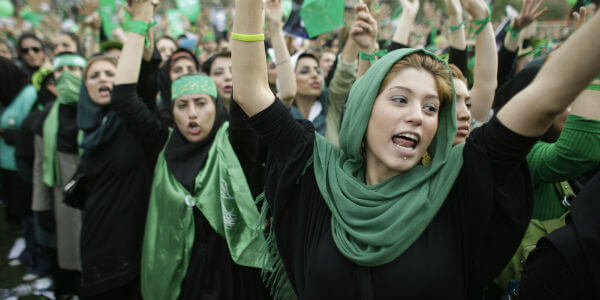
In pursuit of a nuclear deal, Obama shunned Iran’s democracy movement

green-movement

The Wall Street Journal reports: Iranian opposition leaders secretly reached out to the White House in the summer of 2009 to gauge Mr. Obama’s support for their “green revolution,” which drew millions of people to protest the allegedly fraudulent re-election of President Mahmoud Ahmadinejad.
The demonstrations caught the White House off guard, said current and former U.S. officials who worked on Iran in the Obama administration.

Some U.S. officials pressed Mr. Obama to publicly back the fledgling Green Movement, arguing in Oval Office meetings that it marked the most important democratic opening since the 1979 Islamic revolution.

Mr. Obama wasn’t convinced. “‘Let’s give it a few days,’ was the answer,” said a senior U.S. official present at some of the White House meetings. “It was made clear: ‘We should monitor, but do nothing.’ ”

The president was invested heavily in developing a secret diplomatic outreach to Mr. Khamenei that year, sending two letters to the supreme leader in the months before the disputed election of Mr. Ahmadinejad, said current and former U.S. officials.

Obama administration officials at the time were working behind the scenes with the Sultan of Oman to open a channel to Tehran. The potential for talks with Iran — and with Mr. Khamenei as the ultimate arbiter of any nuclear agreement — influenced Mr. Obama’s thinking, current and former U.S. officials said.

U.S. officials said the White House also was getting conflicting messages from Green Movement leaders. Some wanted Mr. Obama to publicly warn Mr. Khamenei against using force. Others said such a declaration would give Iran’s supreme leader an excuse to paint the opposition as American lackeys.

Mr. Obama and his advisers decided to maintain silence in the early days of the 2009 uprising. The Central Intelligence Agency was ordered away from any covert work to support the Green Movement either inside Iran or overseas, said current and former U.S. officials involved in the discussions.

“If you were working on the nuclear deal, you were saying, ‘Don’t do too much,’ ” said Michael McFaul, who served as a senior National Security Council official at the White House before becoming ambassador to Russia in 2012.

After a week of demonstrations, Iran’s security forces went on to kill as many as 150 people and jail thousands of others over the following months, according to opposition and human rights groups. Mr. Khamenei accused the U.S. of instigating the uprising. Iran denied killing protesters.

Some of Mr. Obama’s closest advisers, including former Secretary of State Hillary Clinton, said in retrospect the U.S. should have backed the Green Movement. “If we could do it again, I would give different counsel,” said Dennis Ross, Mr. Obama’s top Mideast adviser during his first term. At the time, he said, he argued against embracing the protests.

A senior U.S. official said this week that the Obama administration argued against covert support for the Green Movement because it risked undermining its credibility domestically, not out of fear of Mr. Khamenei’s reaction. “We did not want to tar the movement,” the official said. [Continue reading…]


Facebooktwittermail

Assad/Hezbollah supporters share food photos to taunt starving civilians trapped in Madaya

The Independent reports: Supporters of the Syrian regime are sharing photos of their dinners to taunt thousands of starving civilians in a besieged town.

The hashtag #متضامن_مع_حصار_مضايا, meaning “solidarity with the siege of Madaya”, has sparked a new wave of outrage over the continuing crisis, with those using it condemned as “sadistic” and “unbelievably disgusting”.

Photos showed people posting with sumptuous-looking spreads of food including kebabs, grilled prawns, whole fish, chips, salad and mountains of bread. [Continue reading…]

Facebooktwittermail

How New Year’s Eve in Cologne has changed Germany

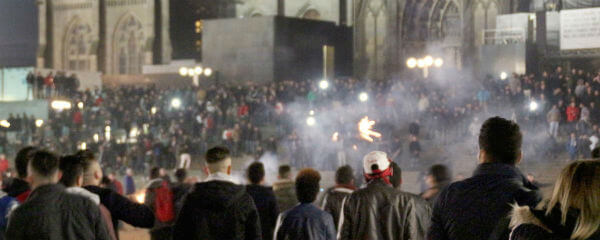
cologne-attacks2

Der Spiegel reports: A lot happened on New Year’s Eve in Cologne, much of it contradictory, much of it real, much of it imagined. Some was happenstance, some was exaggerated and much of it was horrifying. In its entirety, the events of Cologne on New Year’s Eve and in the days that followed adhered to a script that many had feared would come true even before it actually did. The fears of both immigration supporters and virulent xenophobes came true. The fears of Pegida people and refugee helpers; the fears of unknown women and of Chancellor Angela Merkel. Even Donald Trump, the brash Republican presidential candidate in the US, felt it necessary to comment. Germany, he trumpeted, “is going through massive attacks to its people by the migrants allowed to enter the country.”

For some, the events finally bring to light what they have always been saying: that too many foreigners in the country bring too many problems along with them. For the others, that which happened is what they have been afraid of from the very beginning: that ugly images of ugly behavior by migrants would endanger what has been a generally positive mood in Germany with respect to the refugees.

As inexact and unclear as the facts from Cologne may be, they carry a clear message: Difficult days are ahead. And they beg a couple of clear questions: Is Germany really sure that it can handle the influx of refugees? And: Does Germany really have the courage and the desire to become the country in Europe with the greatest number of immigrants?

The first week of 2016 was a hectic one. Tempers flared and hysteria spread. It should be noted that an attack would have triggered similar national emotions, or the murder of a child in a park or any other crime that touched on our deepest fears and serviced our long-held stereotypes — any crime in which a foreigner was involved. On New Year’s Eve in Cologne, it was — according to numerous witness reports — drunk young men from North Africa who formed gangs to go after defenseless individuals. They humiliated and robbed — and they sexually assaulted women.

Their behavior, and the subsequent discussion of their behavior in the halls of political power in Berlin, in the media and on the Internet, could easily trigger a radical shift in Germany’s refugee and immigration policies. The pressure built up by the images and stories from Cologne make it virtually impossible to continue on as before. That, too, is a paradox: The pressure would be no less intense even if not a single one of the refugees and migrants who arrived in 2015 were among the perpetrators. [Continue reading…]

CNN reports: German authorities have identified 31 people, including 18 asylum-seekers, as suspects in mob sex attacks and muggings in Cologne on New Year’s Eve — one of several such incidents in Europe.

In Cologne, where most of the attacks took place, a police spokesman confirmed Chief Wolfgang Albers was fired Friday. Albers’ dismissal comes amid criticism of his department’s handling of the violence.

One victim of the Cologne violence told CNN there were too few police on the streets to prevent attacks.

“We ran to the police. But we saw the police were so understaffed,” the victim said. “They couldn’t take care of us and we as women suffered the price.”

Spiegel Online reported that groups of men prevented officers from reaching those crying out for help.

Interior Minister Thomas de Maiziere has slammed the response of Cologne police while German Justice Minister Heiko Maas was among many who blasted Cologne Mayor Henriette Reker for advising women to keep “more than an arm’s length” from unknown men.

Reker later complained the comments were taken out of context.

Cologne police spokeswoman Christoph Gilles told reporters Friday that some 170 criminal complaints have been filed related to the apparently coordinated attacks, “at least 120 of which have a sexual angle.”

An 80-person investigative team is looking at 250 videos (with about 350 hours of footage), Gilles added.

The suspects include nine Algerian nationals, eight people from Morocco, five from Iran and four from Syria, German interior ministry spokesman Tobias Plate said. Two are German citizens, while one each are from Iraq, Serbia and the United States.

Other German cities had similar attacks that same night, including the northern city of Hamburg, where more than 50 similar incidents were reported. Other European cities also reported attacks.

Six women in Zurich, Switzerland, told authorities they were “robbed from one side, [while] being groped … on the other side” by groups of men described as having dark skin, according to a Zurich police statement released Friday.

And in Helsinki, Finland, police said they are investigating two possible criminal offenses related to New Year’s Eve harassment centered around “a gathering of asylum-seekers.”

Both the Zurich and Helsinki allegations became public well after the incidents took place. [Continue reading…]

As well as the fact that there were significant delays in the reporting of many of these events, another element of the story has as far as I’m aware received virtually no attention: the fact that at the very time these assaults were taking place, every major city in Europe (and much of the rest of the world) was under heightened security because of the anticipated risk of an attack by ISIS.

It’s as though security services in their hypervigilance watching out for masked men brandishing AK-47s and wearing suicide belts, regarded drunken mayhem and mob violence as a distraction. By being geared towards dealing with atrocities, the task of handling law and order got downgraded. The all-important preemptive police-work of keeping the peace, failed.

Facebooktwittermail

Russia helps shift balance against rebels in southern Syria

Financial Times reports: President Bashar al-Assad’s forces are making a new push in southern Syria with the help of Russian air cover in a move that could not only weaken one of the country’s remaining rebel strongholds, but also threaten the balance of power on a combustible border with Israel.

The growing Russian role in the south has surprised many regional diplomats who believed Moscow had an understanding with Syria’s southern neighbours, Jordan and Israel, not to extend into their sphere of influence.

Rebels from Syria’s Southern Front alliance say they too were surprised to become the target of the new campaign: their forces are directly supplied by the Military Operations Command (MOC), an operations room staffed by Arab and western military forces, including the US.

“They (MOC) should be nervous,” says Abu Ghayath al-Shami, a spokesman for the Southern Front’s Seif al-Sham Brigades. “This area was one of their last cards, the one area where there was still a functioning relationship between the rebels and the international community.” [Continue reading…]

Facebooktwittermail

Seeing the starving children of Madaya is shocking – but so is the world’s neglect

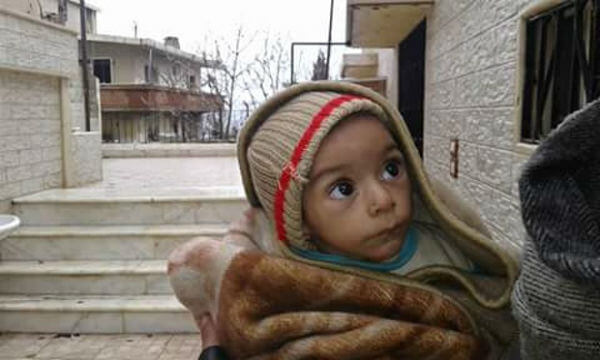
starving-child-madaya

Lina Khatib writes: Horrific images and stories of starving children have suddenly flooded the media as the reality of life in the town of Madaya in Syria, besieged by Syrian regime sources and Hezbollah, has surfaced. But what is perhaps more shocking than the images is how the deliberate targeting of the population of Madaya has been taking place since July 2015 without the international community noticing.

This is despite activists in Madaya desperately trying to direct global attention to the atrocities committed there by the Syrian regime and its ally Hezbollah. It is only when the situation in Madaya reached the level of mass starvation that the international media have paid attention.

The Syrian regime and Hezbollah have put Madaya under siege for more than six months now as a response to the siege of the northern towns of Fua and Kefraya by anti-regime forces. In besieging Madaya and neighbouring Zabadani on the Lebanese border, the regime is trying to pressure its rebel opponents to agree to a population transfer between the two sets of towns that would consolidate regime control over Syrian towns bordering Lebanon. The regime’s plan is to empty Zabadani and Madaya from Sunni residents and populate them with Shia who would be brought in from Fua and Kefraya. This “sectarian cleansing” would allow the Shia Hezbollah to consolidate its control over areas serving as supply lines for regime strongholds in Damascus and the Syrian coast (the Sahel) as well as for Hezbollah itself. [Continue reading…]

Facebooktwittermail

For activists fighting ISIS, Turkey has become as dangerous as Syria

The Guardian reports: The past six months have not been good for Isis. In addition to mounting losses on the battlefield, the organisation has been struggling to dominate the information war despite the enormous resources it devotes to shaping its message.

Central to Isis’s anger has been the activist group Raqqa Is Being Slaughtered Silently (RBSS). It numbers roughly 100 members who for more than a year have chronicled airstrikes, terror attacks, executions and other events in the Syrian city, often in real time. Life in the so-called caliphate is detailed without gloss or spin. No one else has been able to offer such insight into the organisation’s stronghold. And none have paid a bigger price for trying.

Late last year, Isis cut the internet and satellite television connections to Raqqa. It announced that anyone caught collaborating with the group would be killed, and it set about trying to weed out agents across the city and within its own ranks. According to one Isis member spoken to by the Guardian, the group has put extra resources into counter-espionage.

Since then at least four prominent activists and journalists have been killed, including three who were living and working in Turkey.

“The situation is getting more and more difficult, especially after the assassinations in Turkey,” said one member of the Raqqa group. “We are under immense pressure inside and outside Syria. Many activists have shut down their accounts and reduced their work in the areas under Isis control. Others [have remained] more driven to challenge Isis and continue their work relying on Thuraya phones and constantly changing their locations and contact details. We can still manage to get information from inside Isis but video has become more difficult now. They have built tremendous fear inside people.”

Another member of the group, who also insisted on remaining anonymous, said: “We have been receiving lots of death threats since 2012 but the situation right now is extremely dangerous. All I can do is move house every month or so and move cities. We ran away from Syria to Turkey for a safe place to work and live in but now Turkey has become as dangerous as Syria. [Continue reading…]

Facebooktwittermail

Babies have more acute powers of perception than adults

Science News reports: Six-month-old babies can spot subtle differences between two monkey faces easy as pie. But 9-month-olds — and adults — are blind to the differences. In a 2002 study of facial recognition, scientists pitted 30 6-month-old babies against 30 9-month-olds and 11 adults. First, the groups got familiar with a series of monkey and human faces that flashed on a screen. Then new faces showed up, interspersed with already familiar faces. The idea is that the babies would spend more time looking at new faces than ones they had already seen.

When viewing human faces, all of the observers, babies and adults alike, did indeed spend more time looking at the new people, showing that they could easily pick out familiar human faces. But when it came to recognizing monkey faces, the youngsters blew the competition out of the water. Six-month-old babies recognized familiar monkey faces and stared at the newcomers longer. But both adults and 9-month-old babies were flummoxed, and looked at the new and familiar monkey faces for about the same amount of time.

Superior visual skills don’t apply to just faces, either. Three- to 4-month-old babies can see differences in lighting that are undetectable to adults. This ephemeral superskill evaporates just months later, scientists reported in December in Current Biology. To test babies’ visual acuity, researchers led by Jiale Yang of Chuo University in Tokyo first generated a series of 3-D pictures of snails. The shiny snails were made to look as though light was hitting them from different places. Like adults, 5- to 6-month-old babies couldn’t spot the lighting differences. But younger babies could, the team found. [Continue reading…]

Facebooktwittermail

How to tell the difference between a nuclear test and an earthquake

Patrick Tucker writes: Shortly after North Korea claimed it had tested a hydrogen bomb—a weapon potentially hundreds of times more powerful than the fission bombs the country had already set off—seismologists at the United States Geological Survey, or USGS, went to work trying to understand the event. Their early findings suggest that a nuclear-bomb test did occur but that it wasn’t a hydrogen bomb. So how do you tell the difference?

First, you try to rule out the possibility that North Korea was just trying to claim credit for an earthquake. Geologists and seismologists look at several factors to determine whether a seismic event is natural or manmade. One is the location: Is it on a known fault line, a place where there’s a lot of mining activity, etc.? Another factor is the seismological waveform itself—the waving lines that appear on the seismograph. An explosion forms wiggles that are different from the ones generated by an earthquake, according to USGS seismologist Paul Earle.

Lay a Slinky on the floor, grab one end, and move it back and forth to create a wave that propagates down its length. This is called shear wave propagation, the kind created by tectonic plates slipping beneath the surface of the earth. “That side-to-side motion, you’ll get less of it in an explosion,” said Earle. [Continue reading…]

Facebooktwittermail

Deciphering the Saudi-Iranian crisis

Isaac Chotiner interviewed Karim Sadjadpour on Saudi Arabia’s relationship with Iran:

Chotiner: Some analysts have suggested that Saudi Arabia and Iran are in a sense seeking out this crisis because it is helpful for hard-liners in both countries. Do you agree with that analysis?

Sadjadpour: I sometimes think we ascribe too much strategic forethought to governments in the Middle East. I don’t share the view that Saudi Arabia had a sophisticated regional strategy in executing Sheikh Nimr. They were executing about four dozen Sunni radicals, which was going to alienate some segment of society. So they executed a few prominent Shia at the same time.

So there was no broader strategic thinking? It was a pretty big decision.

I think when you look at the arenas where Saudi Arabia and Iran are in conflict, whether Syria or Bahrain or Lebanon or Yemen or Iraq, Iran has an upper hand. When you look at it in a broader regional context, the increasing prevalence of sectarianism benefits Saudi Arabia because they have more numbers. Eighty-five percent of the region’s Muslims are Sunni. For the Saudis, if sectarian politics outweigh anti-imperialist politics, that is beneficial. But at the same time, we are not talking about a Saudi government run by Wahhabi Kissingers or Brzezinskis. This government does not have a deep bench of strategic thinkers. They are not playing a game of chess. [Continue reading…]

Facebooktwittermail

Syria agrees to food aid for starving rebel-held town, UN says

The New York Times reports: Amid mounting international dismay over reports of starvation deaths and images of skeletally thin children in the besieged, rebel-held Syrian town of Madaya, the Syrian government agreed Thursday to allow the delivery of humanitarian aid, according to the United Nations.

But no firm date was set, and senior United Nations officials said that while they welcomed the government’s decision to allow the aid to enter, 42,000 people in Madaya remained “at risk of further hunger and starvation, citing “credible reports of people dying from starvation and being killed while trying to leave.”

The announcement came after Syrian opposition leaders issued a blistering statement declaring that silence and inaction from powerful nations and international organizations made them “complicit in starving civilians.” In recent days, Syrians had mounted a social media campaign sharing painful photos and videos: an 8-year-old boy who said he had not eaten for 10 days and longed for sweets; the shriveled body of a man who starved to death, his rib cage jutting out over a caved-in stomach.

Numerous residents of Madaya interviewed in recent days described living on grass and leaves, and seeing family members dying of hunger or killed by snipers as they tried to escape the town, which is surrounded by pro-government forces, primarily from Hezbollah, the Lebanese Shiite group that is allied with the Syrian president, Bashar al-Assad. [Continue reading…]

Facebooktwittermail

Putin’s anti-Obama propaganda is ugly and desperate

Paula J. Dobriansky and David B. Rivkin Jr. write: Although international relations are not conducted under Marquess of Queensberry rules and political satire can be expected from one’s foes, intensely personal attacks on foreign leaders are uncommon except in wartime. While Soviet-era anti-American propaganda could be sharp, it did not employ slurs. But in recent years racist and scatological salvos against foreign leaders have become a staple of official Russian discourse.

Turkish, German and Ukrainian officials are cast as sycophantic stooges of the United States. While slamming Ankara at a December news conference for shooting down a Russian plane that violated Turkish airspace, Russian President Vladimir Putin opined that “the Turks decided to lick the Americans in a certain place.” Sergey Glaziev, a senior adviser to Putin, has called Ukrainian President Petro Poroshenko “a Nazi Frankenstein,” and Deputy Prime Minister Dmitry Rogozin compared Ukrainian Prime Minister Arseniy Yatsenyuk to “a rubber doll from a sex shop.”

The ugliest vilification campaign, however, has been reserved for President Obama. Anti-Obama tweets come openly from government officials. Rogozin, while commenting on Obama’s 2015 State of the Union address, compared Obama to a Tuzik, Russian slang for a pathetic small dog. Irina Rodnina , a well-known Duma member, tweeted doctored images of Barack and Michelle Obama staring longingly at a banana.

Nobody in Russia gets to freelance propaganda-wise. Thus, anti-Obama rants, even when coming from prominent individuals outside government, have Putin’s imprimatur. Russian media personalities, including Dmitry Kiselyov, the host of the widely viewed “News of the Week” TV roundup, often deliver racist slurs, as compiled by Mikhail Klikushin on the Observer Web magazine. Evgeniy Satanovskiy, a Russian academic and frequent guest on Kiselyov’s program, recently also referred to Obama as a “monkey,” prompting derisive laughter and applause from the audience. Meanwhile, the famous nationalist comedian Mikhail Zadornov regularly deploys the term “schmoe” — a slang Russian prison acronym for a person who is so debased he deserves to be defecated upon — alongside Obama’s name. “Obama schmoe” has become ubiquitous enough to be scrawled on the runway of Russia’s Latakia air base in Syria. [Continue reading…]

Facebooktwittermail

What’s the significance of North Korea’s latest nuclear test?

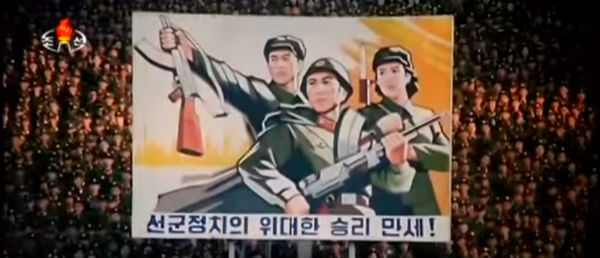
north-korea

North Korea claims to have successfully tested a miniaturized hydrogen nuclear device which, if this indeed happened, would mark a major advance in its weapons program. The announcement is being viewed with some skepticism.

Reuters reports: South Korean intelligence officials and several analysts, however, questioned whether Wednesday’s explosion was indeed a full-fledged test of a hydrogen device.

The device had a yield of about 6 kilotons, according to the office of a South Korean lawmaker on the parliamentary intelligence committee – roughly the same size as the North’s last test, which was equivalent to 6-7 kilotons of TNT.

“Given the scale, it is hard to believe this is a real hydrogen bomb,” said Yang Uk, a senior research fellow at the Korea Defence and Security Forum.

“They could have tested some middle stage kind (of device) between an A-bomb and H-bomb, but unless they come up with any clear evidence, it is difficult to trust their claim.”

Joe Cirincione, a nuclear expert who is president of Ploughshares Fund, a global security organization, said North Korea may have mixed a hydrogen isotope in a normal atomic fission bomb.

“Because it is, in fact, hydrogen, they could claim it is a hydrogen bomb,” he said. “But it is not a true fusion bomb capable of the massive multi-megaton yields these bombs produce”.

The United States Geological Survey reported a 5.1 magnitude quake that South Korea said was 49 km (30 miles) from the Punggye-ri site where the North has conducted nuclear tests in the past.

North Korea’s last test of an atomic device, in 2013, also registered at 5.1 on the USGS scale.

The test nevertheless may mark an advance of North Korea’s nuclear technology. The claim of miniaturizing, which would allow the device to be adapted as a weapon and placed on a missile, would also pose a new threat to the United States and its regional allies, Japan and South Korea. [Continue reading…]


Jeffrey Lewis, who teaches a class on the evolution of China’s nuclear weapons program at the Middlebury Institute of International Studies, points out that current assessments of North Korea’s technical capabilities should not lead to false assumptions about their aspirations. He writes:

One of the major themes of the early part of China’s nuclear program is how committed China was to matching the other nuclear powers in the possession of intercontinental-range ballistic missiles armed with multi-megaton thermonuclear weapons. A lot of Americans had trouble accepting this idea. We thought of China as being too backward to have such aspirations. That was, I argue, precisely why China wanted such weapons: because China’s communist leaders had a different vision of China’s place in the world and the development of thermonuclear weapons was a way of achieving that vision.

I think something similar is happening with North Korea. We think of the country as impoverished, both in terms of economy and leadership. Well, that’s not how the government in North Korea sees itself—and anyone who does, keeps such thoughts to himself. Pyongyang’s propaganda apparatus argues—and this is what Kim was saying—that North Korea is a technological powerhouse. The North Korean propaganda line argues that this power is demonstrated by a series of achievements culminating in space launches, nuclear weapons and, yes, even thermonuclear weapons.

So, while a staged thermonuclear weapon is likely more than North Korea can, at the moment, achieve technically, it is a mistake to rule out the aspiration by Pyongyang. An H-bomb might not conveniently fit our perception of North Korea, but perhaps that is Kim’s point.

This is today’s announcement being made on North Korean state television:

Facebooktwittermail

Saudi-led airstrikes in Yemen intensify

IBT reports: A home for the blind and the Chamber of Commerce in Sanaa are among the sites that have been destroyed by the latest round of Saudi Arabia-led airstrikes in Yemen. The conflict between Iranian-backed Houthi fighters and the Saudi-led coalition has re-intensified after a short ceasefire ended on 2 January.

Airstrikes on Tuesday 5 January damaged a number of military and civilian sites, although no casualties were reported.

Abdullah Ahmed Banyan, a patient at the Noor Centre for the Blind, said: “People with disabilities are being struck in their residence. Around 1.30am, two missiles hit the live-in quarters of a home for the blind. Can you imagine they are striking the blind? What is this criminality? Why? Is it the blind that are fighting the war?” [Continue reading…]

Facebooktwittermail

Charles Lister interview: ‘ISIS is a convenient obsession’

Der Spiegel reports: British-American terror expert Charles Lister believes that al-Qaida ally Jabhat al-Nusra is more dangerous than Islamic State. In an interview, he warns that most Syrian rebel groups will abort the peace process should Bashar Assad remain in power.

SPIEGEL: A surprising conclusion in your new book [The Syrian Jihad: Al-Qaeda, the Islamic State and the Evolution of an Insurgency] is that while Islamic State (IS) and the regime of Syrian President Bashar Assad are obvious obstacles to ending the Syrian war, in your view the biggest problem is Jabhat al-Nusra, which is allied with al-Qaida. Why is that?

Charles Lister: In the West, the threat posed by IS has become an understandable, but convenient obsession. However, Jabhat al-Nusra has embedded itself so successfully within the Syrian opposition — within the revolution for a long time — that in my view it has become an actor that will be much more difficult to uproot from Syria than IS. Islamic State is all about imposing its will on people, whereas al-Nusra has for the last five years been embedding itself in popular movements, sharing power in villages and cities, and giving to people rather than forcing them to do things. That has lent it a power IS just doesn’t have. The reason I call IS a convenient obsession is that I don’t think anybody in the West knows what to do about Jabhat al-Nusra. There was a period of time where it was relatively clear that al-Nusra had a foreign attack wing that was plotting attacks in the West. They have never let go of their foreign vision, they have explicitly said they want to establish Islamic emirates in Syria, and they belong to an organization, al-Qaida, whose avowed goal is to attack and destroy the West. Not to establish an “Islamic State” and gradually expand it like IS, but explicitly to destroy the West.

SPIEGEL: Yet it was IS that killed 130 people in Paris on Nov. 13, carrying out the bloodiest terrorist attack on foreign soil since 9/11. Are these attacks a sign of strength or a sign of them being under pressure in Syria?

Lister: If these attacks were indeed centrally planned by IS, they have to be a sign of strength. Islamic State certainly is not weakening in Syria and Iraq. Yes, it has lost territory, but as a movement it is in no weaker position than it was 18 months ago. It still has sustainable sources of income, it has large amounts of territory under its control, and now, for the first time it has demonstrated a real ability to carry out what one might call spectacular attacks in the West, with real geopolitical repercussions. It shows its ability to shape international affairs. That in itself is a sign of strength. [Continue reading…]

Facebooktwittermail

U.S. expects Assad to remain in power longer than Obama

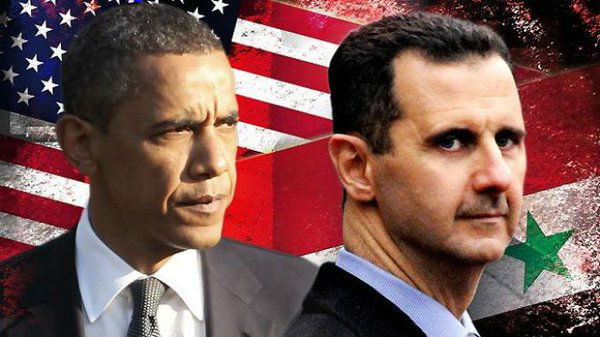
obama-assad

The Associated Press reports: The Obama administration’s best-case scenario for political transition in Syria does not foresee Bashar Assad stepping down as the country’s leader before March 2017, outlasting Barack Obama’s presidency by at least two months, according to a document obtained by The Associated Press.

An internal timeline prepared for U.S. officials dealing with the Syria crisis sets an unspecified date in March 2017 for Assad to “relinquish” his position as president and for his “inner circle” to depart. That would be more than five years after Obama first called for Assad to leave.

The timeline is based on a broad U.N.-endorsed plan that was initially laid out at an international conference in Vienna in November. Syria, according to that strategy, would hold elections for a new president and parliament in August 2017 — some 19 months from now. In the interim, Syria would be run by a transitional governing body. [Continue reading…]

Facebooktwittermail

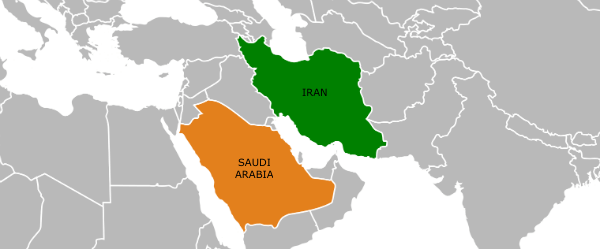
Gulf states guarding their interests in Saudi-Iran rift

iran-saudi

The New York Times reports: For all the diplomatic dominoes that have fallen across the Middle East in recent days, with ambassadors from different countries flying home as a result of the explosive rift between Saudi Arabia and Iran, the map of allegiances has not significantly altered.

Certainly, several countries offered muscular shows of solidarity to Saudi Arabia after an Iranian mob attacked its embassy in Tehran over the weekend, prompting a crisis that has put the United States in a bind and has threatened to set back the prospects for a resolution to the conflict in Syria.

By Tuesday, Kuwait had recalled its ambassador to Iran, the United Arab Emirates had downgraded its diplomatic relationship, and Bahrain and Sudan had joined Saudi Arabia in severing its relationship with Tehran entirely.

Yet many other Sunni Muslim countries signaled that they intended to take a more measured approach to the argument — sympathizing with Saudi Arabia, a rich and powerful ally, but also determined to avoid getting sucked into a harmful conflict with Iran, a country governed by Shiite clerics, with potentially grave costs.

“The smaller Gulf states are worried they will get caught in the middle,” said Michael Stephens, a research fellow at the Royal United Services Institute in London. “It worries them greatly that things could go badly.”

Some countries, like Turkey, Egypt and Pakistan, are already battling their own domestic insurgencies. Others are keen to guard their strategic interests or to keep the door open to trade with Iran while there is a prospect of American sanctions being lifted.

Qatar, which shares with Iran access to the world’s largest natural gas field in the Persian Gulf, has yet to declare its hand. Oman has also been quiet, sticking to its longstanding position of neutrality on Saudi Arabia and Iran.

In Turkey, where senior officials have warned about the impact of the crisis on a “powder keg” region, Prime Minister Ahmet Davutoglu offered his country’s services to help resolve the conflict peacefully. [Continue reading…]

Facebooktwittermail

Iran and its allies vowed to avenge Sheikh Nimr if he was executed

Phillip Smyth writes: Ever since Tehran started beating the drum over Nimr, its Shiite Islamist proxies across the Middle East have followed suit.

In early January 2015, Kataib Hezbollah, an Iraqi Shiite militia and Iran proxy group listed by the U.S. State Department as a terrorist organization, released a propaganda song that threatened the Saudis with an attack if they carried out the sentenced execution. The tune also included the rare addition of English translations and was likely aimed at Western, particularly American, audiences. The song blared, “The enemies of God will not be safe.… Ali’s [Shiite Islam’s first imam’s] enemies fear him [Nimr].… We will avenge Sheikh Nimr if he is executed.… Our brigades will roar like a lion.”

It wasn’t the only time that Kataib Hezbollah would threaten Saudi Arabia over Nimr’s fate. In March, the Iraqi militia posted another video showing trucks loaded with rockets and balaclava-wearing armed militiamen driving up to the Iraqi-Saudi border.

Iran’s other proxies in the region have adopted a similar stance. Starting in July, Kataib Sayyid al-Shuhada, another Iranian-sponsored Shiite militia in Iraq, ran a promotional video to show support for Nimr, and Lebanese Hezbollah pushed solidarity campaigns for the Saudi cleric.

Following Nimr’s execution, Iran’s allies in the region issued nearly matching statements condemning Saudi Arabia and at times blaming the United States for the cleric’s death. Lebanese Hezbollah, Iraq’s Asaib Ahl al-Haq, the Badr Organization, Harakat Hezbollah al-Nujaba, Kataib Hezbollah, and Kataib Sayyid al-Shuhada are just some of the Iranian-backed and ideologically loyal Shiite militias that toed Iran’s line on the issue.

The Iraqi Shiite militias loyal to Iran claimed they would retaliate against Saudi Arabia at a time and place of their choosing. Kataib Hezbollah later announced that the execution had given it the “green light” to target Saudi interests in Iraq. These Iran proxies also amplified threats by shadowy organizations: Harakat Hezbollah al-Nujaba, an Iraqi Shiite militia and Iran proxy active in Iraq and Syria, for instance, claimed that an otherwise unspecified “Resistance in Qatif” had threatened to attack the Ras Tanura refinery, an important oil port in Saudi Arabia’s majority Shiite Eastern Province.

The campaign has not simply been limited to mere threats. In mid-December, around 26 Qatari hunters — some of whom are members of the Qatari royal family — were kidnapped by some 100 armed men on the Iraq-Saudi border. While nine were released, the rest are still being held by the gunmen. One of the conditions for the detained Qataris’ release had been the Saudi government’s release of Nimr. (Kataib Hezbollah has been accused of kidnapping the Qataris, but has denied it.)

These messages are part and parcel of Tehran’s geopolitical strategy — a way of asserting that it can and will protect its Shiite coreligionists. The fact that the factions of the Shiite “Islamic Resistance” across the Middle East acted as one further demonstrates Iranian power and the Islamic Resistance’s ability and willingness to project power on behalf of Iran’s regional goals. [Continue reading…]

Facebooktwittermail

What now for Lebanon and Syria?

Alex Rowell writes: Lebanon’s Prime Minister Tammam Salam may have declared himself hopeful for positive change in 2016, but if the year continues in the vein of its first five days, he appears destined for disappointment. The execution by Saudi Arabia of leading Shiite cleric and opposition activist, Sheikh Nimr al-Nimr, and the subsequent torching of the Saudi embassy in Tehran, which in turn led Riyadh and a number of its allies to sever or downgrade diplomatic relations with Iran, had by Tuesday escalated into bloodshed, with Sunni mosques bombed and a muezzin gunned down by suspected Shiite militants in Iraq; a Shiite resident of Saudi’s eastern province also fatally shot; and a reported intensification of Saudi air strikes on Shiite rebel targets in Yemen.

In Lebanon, no violence has yet broken out, but the political atmosphere has been considerably poisoned. On Sunday, Tehran ally Hezbollah’s Secretary-General Hassan Nasrallah gave an extraordinarily foul-tempered speech, going far further in criticisms of Saudi Arabia than he ever has previously. Likening the “takfiri and terrorist” state to both ISIS and Israel, he accused the ruling family of being a mass-murdering agent of Western imperialism and Zionism, drawing multiple outbursts of “Death to the Saud family!” chants from the crowd. In an unabashedly sectarian analogy, he compared Sheikh Nimr al-Nimr to the Prophet’s granddaughter, Zainab bint Ali, “speaking truth to Ibn Ziad and Yazid bin Mu`awiya,” thereby overtly tying the controversy into a 1,300-year-old Sunni-Shiite conflict.

Perhaps unsurprisingly, then, officials from Hezbollah’s main Lebanese rival, the Saudi-backed Future Movement, told NOW the new state of affairs would complicate the resolution of various pressing matters, including the twenty-month-long presidential vacuum. [Continue reading…]

Facebooktwittermail