Category Archives: News

Suspects arrested after plotting New Year’s Eve attacks in Ankara and Brussels

The New York Times reports: Two Islamic State militants who were plotting a suicide attack on the Turkish capital, Ankara, on New Year’s Eve have been detained, Turkish officials said on Wednesday.

The two men were held after an early morning counterterrorism operation at a house in the Yakupabdal neighborhood of Ankara, according to the semiofficial Anadolu News Agency. Their identities and nationalities were not disclosed, but the Turkish news media reported that the men were of Turkish origin and had traveled to Syria.

They were planning attacks on the central Kizilay Square in Ankara, where large crowds gather annually to usher in the new year, a senior government official said. [Continue reading…]

CNN reports: Belgian authorities have arrested two people on suspicion of being involved in a plot to attack “emblematic sites” in Belgium’s capital during New Year’s celebrations, the country’s federal prosecutor’s office said Tuesday.

The men are members of a Muslim biker gang called the Kamikaze Riders and are suspected to have discussed attacking Brussels’ Grand Place square and other places where crowds gather as well as police and military facilities, a senior Belgian counterterrorism official told CNN on condition of anonymity. [Continue reading…]

Facebooktwittermail

How Sunni-Shia sectarianism is poisoning Yemen

Farea al-Muslimi writes: In a recent interview with Al Jazeera, Hamoud al-Mikhlafi, leader of a Taiz-based group fighting against Houthi militias and forces loyal to Yemen’s former president Ali Abdullah Saleh, described his opponents as “Persians” in reference to their Shia religious affiliation and support from Iran. In fact, both Saleh and the leaders of the Houthi militia belong to the Zaydi school of Islam, an indigenous Yemeni branch of Shia Islam that is distinct from the Twelver Shiism practiced in Iran. But Mikhlafi’s assertion fits with a growing sectarian polarization in Yemen that relies on language borrowed from the Sunni-Shia conflicts in Iraq, Syria, and Lebanon sponsored by Saudi Arabia and Iran, rather than drawing on Yemeni religious culture.

This is a rapidly growing phenomenon. Even Yemeni President Abd Rabbu Mansour Hadi has on occasion described the Houthis, who expelled him from Yemen in March 2015, as “Twelver Shia.” “And two years prior, the anti-Houthi tribal leader Hussein al-Ahmar called himself “the powerful lion of the Sunnis,” thus portraying himself as a defender of Yemen’s Sunni majorityagainst the other sect. [Continue reading…]

Saeed Al-Batati writes: Three years after they were kicked out of several cities in south Yemen, al-Qaeda in the Arabian Peninsula (AQAP) has come back and overrun two cities in the province of Abyan, local government officials and residents told Middle East Eye. But people who lived through al-Qaeda’s reign of Abyan in 2011 now talk about new “tolerant and friendly” militants.

In Zinjibar, the capital of Abyan province, a government official who spoke on condition of anonymity because of security concerns, said that early this month al-Qaeda militants quietly stormed military camps and police stations in the city without even drawing the attention of students in schools or public servants in their offices.

“Zinjibar is quiet. People are busy with their daily life,” the government officials said.

Many provinces in southern Yemen have been in a state of anarchy since the Saudi-backed forces supporting President Abd Rabbuh Mansour Hadi and local tribesmen drove out rebel Houthis. Then separatists and Islamists aligned with the Saudi-backed forces failed to fill the vacuum left by Yemeni soldiers who headed north to fight the Houthis. So al-Qaeda came in and took the place of the former government-run security agencies. [Continue reading…]

Facebooktwittermail

Kurdish leaders call for autonomy; Erdogan accuses them of treason

Reuters reports: Kurdish groups meeting in southeastern Turkey called for self-rule on Sunday amid heavy fighting in the region as the army pushed ahead with a security operation in which it says more than 200 Kurdish militants have been killed.

The Democratic People’s Congress (DTK), made up of Kurdish non-governmental organizations, made the call after a two-day meeting in Diyarbakir.

“The rightful resistance mounted by our people against the policies that degrade the Kurdish problem, is essentially a demand and struggle for local self-governance and local democracy,” said the final resolution of the meeting, titled “declaration of political resolution regarding self-rule”.

The declaration called for the formation of autonomous regions including several neighboring provinces of Diyarbakir to take account of cultural, economic and geographic affinities. [Continue reading…]

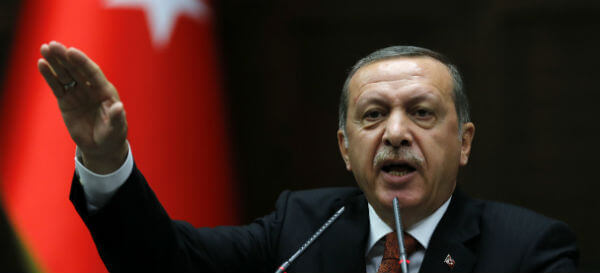
Al Jazeera reports: Turkey’s President Tayyip Erdogan said autonomy demands from a Kurdish leader were a “clear provocation” and his political party will be “taught a lesson”.

A Turkish prosecutor opened an investigation into Peoples’ Democratic Party (HDP) chief Selahattin Demirtas after he made recent calls for greater Kurdish self-governance in the country’s southeast.

Erdogan’s remarks targeting Demirtas on Tuesday could further widen the gulf between the government and the Kurdish opposition as violence increases in the region.

“A certain leader … talked nonsense and what he did is a clear provocation and treason,” Erdogan told reporters in Istanbul before departing on a trip to Saudi Arabia, adding the HDP would be “taught a lesson by our citizens and the law”. [Continue reading…]

Facebooktwittermail

I revealed the truth about President Erdogan and Syria. For that, he had me jailed

erdogan

Can Dündar writes: In Turkey, a debate as old as government itself is on the agenda again. This time, it is the Turkish government’s secret arms transfer to Syria that has revitalised the subject.

Early in 2014, a truck understood to belong to the Turkish intelligence service (MIT) was stopped near the Syrian border. The gendarmerie and the intelligence officials in control of the convoy pulled guns on each other. This was the moment the two blocks vying to rule the state came face to face. The truck was searched. Beneath the camouflage composed of medicines boxes, weapons and ammunition were found. The truck was held for a while, but following the intervention of government officials a safe passage into Syria was granted.

The government immediately discharged the prosecutor and gendarmerie who stopped the convoy and had them arrested. It was declared that the trucks contained humanitarian aid. This incident, which fuelled allegations that President Recep Tayyip Erdoğan’s government was intervening in the Syrian civil war, was rapidly covered up.

In May 2015, however, Cumhuriyet Daily, the newspaper I serve as the editor-in-chief, acquired the footage of this incident. It was clearly visible that the truck was loaded with arms. It was thus documented that the intelligence service was illegally carrying arms into the civil war raging in a neighbouring country. This was big news. We published details of the operation with photos, and uploaded the video to our website. [Continue reading…]

Facebooktwittermail

Strike that killed Syrian rebel chief complicates peace talks push, says U.S.

Reuters reports: Russian air strikes like the one that killed a top Syrian rebel leader last week send the wrong message to groups engaged in a political dialogue to end the conflict and complicate efforts to begin negotiations, the U.S. State Department said on Monday.

Syrian rebel chief Zahran Alloush, the leader of Jaysh al Islam who commanded thousands of fighters in the Damascus suburbs, was killed on Friday in an air strike that rebel sources said was carried out by Russian warplanes.

Jaysh al Islam was a participant in the Riyadh conference where Syrian opposition groups agreed on common aims for proposed political negotiations to end the country’s civil war and chose a former Syrian prime minister to represent them in the dialogue.

State Department spokesman Mark Toner said the United States did not provide support to Alloush’s group and had concerns about its “behavior on the battlefield,” but noted that Jaysh al Islam had fought Islamic State rebels and was participating in the political dialogue to end Syria’s civil war. [Continue reading…]

Facebooktwittermail

State Dept ‘pivotal foreign policy moments of 2015’: Bringing peace to Syria?

The Christmas Eve post on the U.S. State Department’s official blog, DipNote, includes this improbable accomplishment: “Bringing Peace, Security to Syria.”

Is this supposed to be an expression of the Christmas spirit — peace on Earth and all that?

Facebooktwittermail

Saudi Grand Mufti calls ISIS ‘part of the Israeli army’

Bruce Riedel writes: The most senior cleric in Saudi Arabia has called for greater Islamic cooperation against the Islamic State, while also labeling ISIS a “part of the Israeli army.” The revealing interview this week with Grand Mufti of Saudi Arabia Sheikh Abdulaziz Al Sheikh provides important insight into the Wahhabi establishment, which is the core partner of the House of Saud.

The Mufti praised the creation of an Islamic military alliance to fight terrorism, promising the alliance will defeat the Islamic State, which he labeled a heretical and un-Islamic movement. The new alliance is the brainchild of Deputy Crown Prince and Defense Minister Prince Muhammed bin Salman, the king’s favorite son.

The 72-year old cleric was asked about comments made by Abu Bakr al-Baghdadi, the self proclaimed caliph of the Islamic State, that the new alliance is not serious because it is not “killing Jews and liberating Palestine.” Al-Baghadi called the new Saudi-led alliance a pawn of the United States and Israel, promising that the “tanks of the mujahideen are moving closer to Israel day after day.”

Al Sheikh dismissed al-Baghdadi’s threat to Israel, calling it “simply a lie.” He added: “Actually Da’esh [another term for the Islamic State] is part of the Israeli soldiers,” therefore asserting a supposed relationship between the Israeli army and the Islamic State. [Continue reading…]

I imagine that among those observers who are already convinced that ISIS was created by the Saudis, the idea that it’s an Israeli creation must be equally appealing — and the Grand Mufti the least credible source for this ‘revelation.’ There are just too many conspiracy theories to choose from!

Facebooktwittermail

This Syrian filmmaker was assassinated in broad daylight after receiving death threats

Naji-al-Jerf

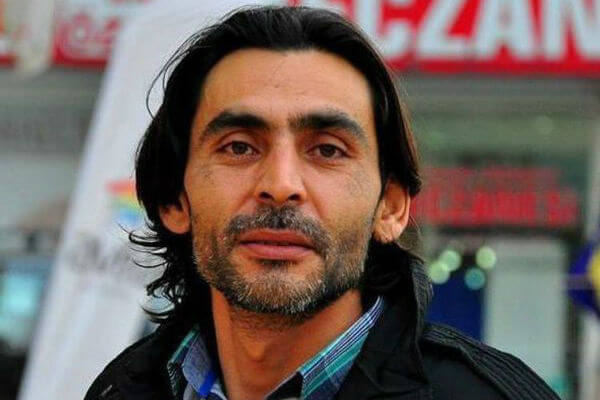
Borzou Daragahi reports: If all had gone according to plan, Syrian filmmaker and activist Naji al-Jerf, his wife, and their two daughters would be in the relative safety of France right now, 2,000 miles from Turkey’s troubled southeast.

But on Sunday, the violence increasingly spilling over from Syria into Turkey caught up with Jerf when he was gunned down in broad daylight by a masked assassin. He was 37.

Amid wailing and stunned friends and colleagues, he was buried in a hilltop cemetery plot Monday afternoon. “Congratulations, congratulations!” his anguished wife, Bushra Kashmar, cried as she gripped his coffin. “Now you will have the freedom that you wanted,” she said, wrapped in the flag of Syria’s revolution. “Now you will have the peace that you wanted.”

A foe of both ISIS and the Syrian regime, the independent filmmaker and native of Salamia, a town near the city of Hama, was among the peaceful democracy activists who spearheaded the 2011 uprising against Bashar al-Assad. They are now being subsumed by the ensuing violence and sidelined by a war that has become a regional conflagration with no end in sight. [Continue reading…]

Facebooktwittermail

Brazil rebuffs West Bank settler nominated as Israeli ambassador

Middle East Eye reports: Brazil has apparently rebuffed Israel’s nomination of a settler as its next ambassador in a move Israel says will damage diplomatic relations between the two countries.

Dani Dayan, a 60-year-old who lives in the West Bank settlement of Ma’ale Shomron, was nominated in August as Israel’s new ambassador to Brasilia.

However Brazil has yet to endorse the Argentina-born diplomat’s appointment, following lobbying in Brazil against his nomination and protests to President Dilma Rousseff about Dayan.

Ambassadorial appointments must be endorsed by the host nation – a process known as an agrément. However, if no endorsement is forthcoming within two months, it is understood that the choice has not been accepted.

Dayan was a senior member of the Yesha Council, an umbrella organisation of Jewish settlements in the West Bank, and Brazilian activists are worried that approving his selection would be seen as supporting Israel’s settlements, which are illegal under international law. [Continue reading…]

Facebooktwittermail

Qatari royals rush to Switzerland in nine planes after emir breaks leg

AFP reports: Unidentified individuals travelling in as many as nine planes belonging to Qatar’s royal family made an emergency trip to Switzerland over the weekend for medical reasons, according to a Swiss official.

A spokesman for Switzerland’s federal office of civil aviation confirmed local media reports that multiple aircraft made unscheduled landings at the Zurich-Kloten airport overnight from 25 to 26 December and that the planes were part of the Qatari royal fleet.

He gave no details as to who was on board or who any of the potential patients may have been.

“The emergency landing clearance was given by the Swiss air force,” he told AFP, explaining that the civil aviation office was closed during the hours in question.

Qatari authorities later said that the country’s former ruler, Sheikh Hamad bin Khalifa Al Thani, had been flown to Switzerland over the weekend for surgery after breaking a leg. [Continue reading…]

Facebooktwittermail

Anti-Muslim hate crimes on the rise in the U.S.

Southern Poverty Law Center reports: The year 2015 is drawing to a close with a continuing wave of firebombings and apparent hate crimes at mosques in various U.S. cities, including Christmas-weekend arson attacks in California and Texas.

There were no injuries in either of the two latest fire-bombings.

But at Houston’s Saavoy Masjid, a mosque operated by the Islamic Society of Greater Houston, damage was described as “significant.” A fire started at “multiple locations” around 2:45 p.m. on Christmas Day, just an hour after hundreds of people had been in the building for Friday prayers, authorities said.

The following day, someone threw a Molotov cocktail at a doorway of the Tracy Islamic Center in Tracy, Calif., east of Oakland, causing minor damage. [Continue reading…]

Facebooktwittermail

What’s the biggest reason to be hopeful about the climate at the end of 2015?

lichen8

Climate Central got answers from the following climate experts:
David Titley, director of Penn State’s Center for Solutions to Weather and Climate Risk: Paris, of course, but more substantively for the U.S. domestic movement is the sense more and more different groups are seeing climate change as an issue within their domain: big business, insurance and finance, multiple major religions, the divestment movement, health, national security, movies, and the media, as well as the traditional science and environmental communities. Ultimately, we have to have enough people care enough to get Congress to engage constructively and move both policies and money to transition our energy systems to non-carbon based forms as quickly as possible. Huge task, but if we’re focused we can do this.

Richard Somerville, professor emeritus at Scripps Institution of Oceanography: The biggest reason to be hopeful about the climate at the end of 2015 is the Paris Agreement reached in December 2015 at the COP21 negotiations in Paris. This agreement provides a roadmap to reducing the risk of dangerous climate change. However, when all is said and done, sometimes more is said than done, and the future of the climate system depends on the degree to which nations obey the letter and spirit of this roadmap and work to improve it.

Marshall Shepherd, director of atmospheric sciences at the University of Georgia: I am encouraged that the notion that climate change is a political issue is starting to erode. Key conservatives, major corporations, the military and faith communities recognize the challenges and opportunities. The recent Paris agreement is a bold step. It isn’t perfect, but it is an important signal.

Simon Donner, climate scientist at the University of British Columbia: We’ve thrown down the gauntlet. In Paris, the world agreed that greenhouse gas emissions must reach net zero during the second half of the century to avoid dangerous impacts from climate change. With global emissions peaking this year, and wind and solar prices at all time lows, there’s hope we can meet the ambition of Paris with action. [Continue reading…]

Facebooktwittermail

Life under siege: Inside Taiz, the Yemeni city being slowly strangled

Ghaith Abdul-Ahad writes: Ismail lies on green linoleum sheets, his black eyes too large for his gaunt face. Craning his neck, he tries to inspect the bandage covering his body, but weakness pulls him back. From the pillow, he whispers “hawan” (mortar).

Ismail, who says he is 12 but has the body of a six-year-old, used to make a few Yemeni riyals every day by washing graves in a new cemetery in the city of Taiz devoted to those killed in Yemen’s ongoing civil war.

Just before noon on one day in November, he and his two young cousins were sitting under a mango tree, cleaning the grave of a 10-year-old girl called Basma, when three mortar shells fell. A splatter of deep scars on the tree trunk and on the grave’s concrete surface mark the spot where one exploded. The two cousins, aged two and four, died instantly.

Ismail was severely injured and is now in the Rawdha, a hotel-turned-hospital in Taiz, Yemen’s second most populated city, a place being slowly strangled by a Houthi rebel siege. He is far from the only one here. One floor above, Amer recounts how he was hit by an explosion after dining in a restaurant and walking out into the street. The threads stitching folds of flesh on the stump of his left leg are black and new. [Continue reading…]

Facebooktwittermail

U.S. sees key goals met for Russia with bearable costs in Syria so far

Assad

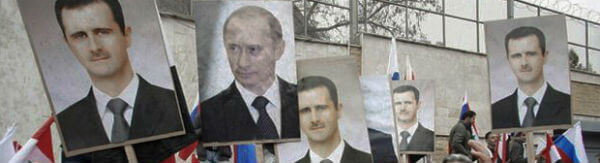
Reuters reports: Three months into his military intervention in Syria, Russian President Vladimir Putin has achieved his central goal of stabilizing the Assad government and, with the costs relatively low, could sustain military operations at this level for years, U.S. officials and military analysts say.

That assessment comes despite public assertions by President Barack Obama and top aides that Putin has embarked on an ill-conceived mission in support of Syrian President Bashar al-Assad that it will struggle to afford and that will likely fail.

“I think it’s indisputable that the Assad regime, with Russian military support, is probably in a safer position than it was,” said a senior administration official, who requested anonymity. Five other U.S. officials interviewed by Reuters concurred with the view that the Russian mission has been mostly successful so far and is facing relatively low costs.

The U.S. officials stressed that Putin could face serious problems the longer his involvement in the more than four-year-old civil war drags on.

Yet since its campaign began on Sept. 30, Russia has suffered minimal casualties and, despite domestic fiscal woes, is handily covering the operation’s cost, which analysts estimate at $1-2 billion a year. The war is being funded from Russia’s regular annual defense budget of about $54 billion, a U.S. intelligence official said. [Continue reading…]

Facebooktwittermail

Homs: Syria’s Stalingrad

Homs

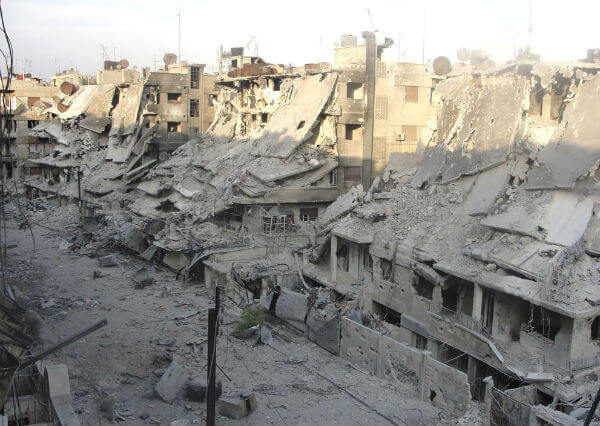
Thanassis Cambanis writes: More than four years of relentless shelling and shooting have ravaged beyond recognition this city, which once served as the symbolic capital of the revolution.

The buildings hang in tatters, concrete floors collapsed like sandcastles, twisted reinforced metal bars and window frames creaking in the wind like weather vanes. The only humans are occasional military guards, huddling in the foundations of stripped buildings. Deep trenches have been dug in thoroughfares to expose rebel tunnels. Everywhere the guts of buildings and homes face the street, their private contents slowly melting in the elements. Ten-foot weeds have erupted through the concrete.

As far as the government of Syria is concerned, the war in Homs is over. Rebel factions were defeated more than a year ago in the Old City, and the last holdouts, who carried on the revolt from the suburb of al-Waer, signed a cease-fire agreement this month. A few weeks before Christmas, busloads of fighters quit al-Waer for rebel-held villages to the north, under what the Syrian government and the United Nations hailed as a breakthrough cease-fire agreement to bring peace to one of the Syrian war’s most symbolic battlefields.

Gov. Talal al-Barazi, an energetic Assad-supporting Sunni, has been instrumental in pushing the cease-fires in Homs’s Old City and recently in al-Waer district. But almost none of the pro-uprising Sunnis who once filled its center have returned, and at times he seems to be presiding over a graveyard — an epic ruin destined to join Hiroshima, Dresden, and Stalingrad in the historical lexicon of siege and destruction.

By the end of a two-year siege of the Old City, the entire population of about 200,000 had fled, and more than 70 percent of the buildings in the area were destroyed. Today, according to the Syrian government, less than one-third of those who left have returned to the Homs area — but the ravaged city center is largely uninhabitable. Barazi said the cost of physically rebuilding the city would be enormous; without help from Russia, Iran, China, and other international donors, he said, full reconstruction would be impossible. Experts estimate it will cost upwards of $200 billion to rebuild across the entire country, or three times the country’s pre-war GDP.

And yet the Syrian government hopes to turn this shattered city into a symbol of its resurgent fortunes. Authorities showcase the reconstruction of Homs to spread a clear message: They intend to regain full control of the country. If they can tame Homs, a Sunni city where the majority of people actively embraced the revolt, they can do it anywhere.

There’s another more menacing message in the Homs settlement, however, as the neighborhoods that wholeheartedly sided with the revolution were entirely destroyed and have been left to collapse after the government’s victory. Almost no Sunnis have been allowed to return. Displaced supporters of the revolt from Homs understand that this is the regime’s second wave of punishment — they might never be allowed to go home. [Continue reading…]

Facebooktwittermail

Syria refugees: Family’s tragedy goes beyond one boy

refugees3

The New York Times reports: When Alan Kurdi’s tiny body washed up on a beach in Turkey, forcing the world to grasp the pain of Syria’s refugees, the 2-year-old boy was just one member of a family on the run, scattered by nearly five years of upheaval.

As a Turkish officer lifted the boy from the shallow waves at the edge of the Mediterranean Sea, one of Alan’s teenage cousins was alone on a bus in Hungary, fleeing the fighting back home in Damascus.

An aunt was stuck in Istanbul, nursing a baby, as her son and daughter worked 18-hour shifts in a sweatshop so the family could eat. Dozens of other relatives — aunts, uncles and cousins — had fled the war in Syria or were making plans to flee.

And just weeks after Alan’s image shocked the world in September, another aunt prepared to do what she had promised herself to avoid: set sail with four of her children on the same perilous journey.

“We die together, or we live together and make a future,” her 15-year-old daughter said, concluding, as have hundreds of thousands of other Syrians, that there was no going back, and that the way to security led through great risk. [Continue reading…]

Facebooktwittermail

Israel warns Brazil faces diplomatic downgrade unless it accepts settler as ambassador

Reuters reports: Brazil’s reluctance to accept an Israeli ambassador who is a West Bank settler has led to a standoff with Israel now warning it could downgrade diplomatic relations.

The appointment four months ago of Dani Dayan, a former head of the Jewish settlement movement, did not go down well with Brazil’s left-leaning government, which has supported Palestinian statehood in recent years.

Most world powers deem the Jewish settlements illegal.

Israel’s previous ambassador, Reda Mansour, left Brasilia last week and the Israeli government said on Sunday Brazil risked degrading bilateral relations if Dayan were not allowed to succeed him. [Continue reading…]

Facebooktwittermail

Turkey sees no normalization of Israel ties without end to Gaza blockade

Reuters reports: Turkey sees no normalization in ties with Israel unless its conditions for ending the Gaza blockade and compensation for the deaths of 10 Turkish activists in 2010 are met, a presidential spokesman said on Monday.

Relations between Turkey and Israel soured when the activists were killed in a raid by Israeli commandos on a Turkish boat, the Mavi Marmara, which was trying to breach the blockade.

Expectations of a breakthrough were intensified after senior officials met this month to try to repair ties. The talks have raised hopes of progress in negotiations to import Israeli natural gas, particularly since Turkey’s relationship with major energy producer Russia has worsened over Syria.

But comments from Presidential spokesman Ibrahim Kalin suggest Turkey may be trying to play tough in the negotiations. [Continue reading…]

Facebooktwittermail