The New York Times reports: A party of ultraconservative Islamists that emerged as an unexpected political kingmaker in Egypt after the military’s ouster of President Mohamed Morsi said on Monday that it was suspending its participation in efforts to form an interim government.
A spokesman for the Al Nour party said its decision was a reaction to a “massacre” hours earlier at an officers’ club here in which security officials said more than 30 people had been killed. The decision brought new complexities and unanswered questions to the effort to create a transitional political order.
The Al Nour party was the only Islamist party to support removing Mr. Morsi, despite his ties to the more moderate Islamists of the Muslim Brotherhood. And the sight of Al Nour’s bearded sheik, standing behind the general who announced the takeover on television, was the only signal to Egyptian voters that the move had not been an attack on Islam, as some of the ousted president’s supporters are saying.
The party played a starring role in the military’s choreographed presentation of its takeover as the chance to reunify a country on the brink of civil war between opponents and supporters of Mr. Morsi’s Muslim Brotherhood. But while Al Nour’s leaders say they intend to build bridges, some liberals say the party is pushing potentially divisive demands, from picking a new prime minister to keeping Islam prominent in any new constitution.
Over the weekend, Al Nour tested its leverage for the first time to force the retraction of an announced plan to name a liberal icon, the Nobel Prize-winning diplomat Mohamed ElBaradei, as interim prime minister.
“You just can’t do something like that, after we had appeared right next to you on the scene” at the televised announcement, Younis Makhyoun, a Nour party leader, said on Sunday. “We have grass roots,” Mr. Makhyoun added, “and they don’t agree on the choice of ElBaradei.”
Instead, state news media outlets reported on Sunday that the interim government was close to naming as acting prime minister Ziad Bahaa el-Din, a former head of Egypt’s investment authority. A Nour leader blessed him in a radio interview as “one of the liberal figures that we greatly respect.” [Continue reading…]
Video: U.S. walking a diplomatic tightrope in Egypt
Reuters reports: The United States is unlikely to pull its $1.5 billion in mostly military aid to Egypt any time soon, U.S. lawmakers said on Sunday, despite the Egyptian military takeover of the government in what the opposition has called a coup.
“We should continue to support the military, the one stabilizing force in Egypt that I think can temper down the political feuding,” U.S. Representative Mike Rogers said on CNN’s “State of the Union.”
Rogers, the Republican chairman of the House of Representatives Intelligence Committee, called instead on Washington to “help a process that will allow for more multiple factions of parties and beliefs to participate.”
Other lawmakers agreed Washington should use caution in responding to the turmoil in Egypt as it tries to transition to a democratic government.
While U.S. law calls for aid to be suspended if a country’s military ousts a democratically elected leader, the U.S. lawmakers appeared reluctant to do so.
Egypt’s powerful military ousted elected President Mohamed Mursi last week after massive street protests turned violent, blaming Mursi’s Islamist Muslim Brotherhood for the clashes.
The Brotherhood, which called for additional protests on Sunday, has called Mursi’s ouster a coup and pledged to keep protesting until he is restored.
“What we should be doing right now is urging calmness, and asking the Muslim Brotherhood to act with some degree of responsibility as it relates to what is happening,” Senator Bob Corker, the senior Republican on the Foreign Relations Committee, told “Fox News Sunday.”
Neither Corker nor Senator Jack Reed, a Democrat, agreed with a recent statement by Republican colleague John McCain that the United States should suspend aid.
Corker said there would be “plenty of time to assess the aid issue” and the focus should be on the peaceful transition to a democratic government.
Edward Snowden interview: The NSA and its willing helpers
The following interview via encrypted email, published by Der Spiegel, in which Jacob Appelbaum, a developer of encryption and security software, communicated with Edward Snowden, took place before Snowden’s identity became public.
Interviewer: What is the mission of America’s National Security Agency (NSA) — and how is the job it does compatible with the rule of law?
Snowden: They’re tasked to know everything of importance that happens outside of the United States. That’s a significant challenge. When it is made to appear as though not knowing everything about everyone is an existential crisis, then you feel that bending the rules is okay. Once people hate you for bending those rules, breaking them becomes a matter of survival.
Interviewer: Are German authorities or German politicians involved in the NSA surveillance system?
Snowden: Yes, of course. We’re in bed together with the Germans the same as with most other Western countries. For example, we tip them off when someone we want is flying through their airports (that we for example, have learned from the cell phone of a suspected hacker’s girlfriend in a totally unrelated third country — and they hand them over to us. They don’t ask to justify how we know something, and vice versa, to insulate their political leaders from the backlash of knowing how grievously they’re violating global privacy.Interviewer: But if details about this system are now exposed, who will be charged?
Snowden: In front of US courts? I’m not sure if you’re serious. An investigation found the specific people who authorized the warrantless wiretapping of millions and millions of communications, which per count would have resulted in the longest sentences in world history, and our highest official simply demanded the investigation be halted. Who “can” be brought up on charges is immaterial when the rule of law is not respected. Laws are meant for you, not for them.Interviewer: Does the NSA partner with other nations, like Israel?
Snowden: Yes. All the time. The NSA has a massive body responsible for this: FAD, the Foreign Affairs Directorate. [Continue reading…]
Ellsberg: Snowden made the right call when he fled the U.S.
Daniel Ellsberg writes: Many people compare Edward Snowden to me unfavorably for leaving the country and seeking asylum, rather than facing trial as I did. I don’t agree. The country I stayed in was a different America, a long time ago.
After the New York Times had been enjoined from publishing the Pentagon Papers — on June 15, 1971, the first prior restraint on a newspaper in U.S. history — and I had given another copy to The Post (which would also be enjoined), I went underground with my wife, Patricia, for 13 days. My purpose (quite like Snowden’s in flying to Hong Kong) was to elude surveillance while I was arranging — with the crucial help of a number of others, still unknown to the FBI — to distribute the Pentagon Papers sequentially to 17 other newspapers, in the face of two more injunctions. The last three days of that period was in defiance of an arrest order: I was, like Snowden now, a “fugitive from justice.”
Yet when I surrendered to arrest in Boston, having given out my last copies of the papers the night before, I was released on personal recognizance bond the same day. Later, when my charges were increased from the original three counts to 12, carrying a possible 115-year sentence, my bond was increased to $50,000. But for the whole two years I was under indictment, I was free to speak to the media and at rallies and public lectures. I was, after all, part of a movement against an ongoing war. Helping to end that war was my preeminent concern. I couldn’t have done that abroad, and leaving the country never entered my mind. [Continue reading…]
How the FISA court supports the security state and subverts the constitution
The New York Times reports: In more than a dozen classified rulings, the nation’s surveillance court has created a secret body of law giving the National Security Agency the power to amass vast collections of data on Americans while pursuing not only terrorism suspects, but also people possibly involved in nuclear proliferation, espionage and cyberattacks, officials say.
The rulings, some nearly 100 pages long, reveal that the court has taken on a much more expansive role by regularly assessing broad constitutional questions and establishing important judicial precedents, with almost no public scrutiny, according to current and former officials familiar with the court’s classified decisions.
The 11-member Foreign Intelligence Surveillance Court, known as the FISA court, was once mostly focused on approving case-by-case wiretapping orders. But since major changes in legislation and greater judicial oversight of intelligence operations were instituted six years ago, it has quietly become almost a parallel Supreme Court, serving as the ultimate arbiter on surveillance issues and delivering opinions that will most likely shape intelligence practices for years to come, the officials said.
Last month, a former National Security Agency contractor, Edward J. Snowden, leaked a classified order from the FISA court, which authorized the collection of all phone-tracing data from Verizon business customers. But the court’s still-secret decisions go far beyond any single surveillance order, the officials said.
“We’ve seen a growing body of law from the court,” a former intelligence official said. “What you have is a common law that develops where the court is issuing orders involving particular types of surveillance, particular types of targets.”
In one of the court’s most important decisions, the judges have expanded the use in terrorism cases of a legal principle known as the “special needs” doctrine and carved out an exception to the Fourth Amendment’s requirement of a warrant for searches and seizures, the officials said.
The special needs doctrine was originally established in 1989 by the Supreme Court in a ruling allowing the drug testing of railway workers, finding that a minimal intrusion on privacy was justified by the government’s need to combat an overriding public danger. Applying that concept more broadly, the FISA judges have ruled that the N.S.A.’s collection and examination of Americans’ communications data to track possible terrorists does not run afoul of the Fourth Amendment, the officials said. [Continue reading…]
The commercial agreements that allow the U.S. to spy on the world
The Washington Post reports: The U.S. government had a problem: Spying in the digital age required access to the fiber-optic cables traversing the world’s oceans, carrying torrents of data at the speed of light. And one of the biggest operators of those cables was being sold to an Asian firm, potentially complicating American surveillance efforts.
Enter “Team Telecom.”
In months of private talks, the team of lawyers from the FBI and the departments of Defense, Justice and Homeland Security demanded that the company maintain what amounted to an internal corporate cell of American citizens with government clearances. Among their jobs, documents show, was ensuring that surveillance requests got fulfilled quickly and confidentially.
This “Network Security Agreement,” signed in September 2003 by Global Crossing, became a model for other deals over the past decade as foreign investors increasingly acquired pieces of the world’s telecommunications infrastructure.
The publicly available agreements offer a window into efforts by U.S. officials to safeguard their ability to conduct surveillance through the fiber-optic networks that carry a huge majority of the world’s voice and Internet traffic.
The agreements, whose main purpose is to secure the U.S. telecommunications networks against foreign spying and other actions that could harm national security, do not authorize surveillance. But they ensure that when U.S. government agencies seek access to the massive amounts of data flowing through their networks, the companies have systems in place to provide it securely, say people familiar with the deals.
Negotiating leverage has come from a seemingly mundane government power: the authority of the Federal Communications Commission to approve cable licenses. In deals involving a foreign company, say people familiar with the process, the FCC has held up approval for many months while the squadron of lawyers dubbed Team Telecom developed security agreements that went beyond what’s required by the laws governing electronic eavesdropping.
The security agreement for Global Crossing, whose fiber-optic network connected 27 nations and four continents, required the company to have a “Network Operations Center” on U.S. soil that could be visited by government officials with 30 minutes of warning. Surveillance requests, meanwhile, had to be handled by U.S. citizens screened by the government and sworn to secrecy — in many cases prohibiting information from being shared even with the company’s executives and directors. [Continue reading…]
The NSA’s mass and indiscriminate spying on Brazilians
Glenn Greenwald writes: I’ve written an article on NSA surveillance for the front page of the Sunday edition of O Globo, the large Brazilian newspaper based in Rio de Janeiro. The article is headlined (translated) “US spied on millions of emails and calls of Brazilians”, and I co-wrote it with Globo reporters Roberto Kaz and Jose Casado. The rough translation of the article into English is here. The main page of Globo’s website lists related NSA stories: here.
As the headline suggests, the crux of the main article details how the NSA has, for years, systematically tapped into the Brazilian telecommunication network and indiscriminately intercepted, collected and stored the email and telephone records of millions of Brazilians. The story follows an article in Der Spiegel last week, written by Laura Poitras and reporters from that paper, detailing the NSA’s mass and indiscriminate collection of the electronic communications of millions of Germans. There are many more populations of non-adversarial countries which have been subjected to the same type of mass surveillance net by the NSA: indeed, the list of those which haven’t been are shorter than those which have. The claim that any other nation is engaging in anything remotely approaching indiscriminate worldwide surveillance of this sort is baseless.
As those two articles detail, all of this bulk, indiscriminate surveillance aimed at populations of friendly foreign nations is part of the NSA’s “FAIRVIEW” program. Under that program, the NSA partners with a large US telecommunications company, the identity of which is currently unknown, and that US company then partners with telecoms in the foreign countries. Those partnerships allow the US company access to those countries’ telecommunications systems, and that access is then exploited to direct traffic to the NSA’s repositories. Both articles are based on top secret documents provided by Edward Snowden; O Globo published several of them. [Continue reading…]
America’s role in Egypt’s military coup
The New York Times reports: As President Mohamed Morsi huddled in his guard’s quarters during his last hours as Egypt’s first elected leader, he received a call from an Arab foreign minister with a final offer to end a standoff with the country’s top generals, senior advisers with the president said.
The foreign minister said he was acting as an emissary of Washington, the advisers said, and he asked if Mr. Morsi would accept the appointment of a new prime minister and cabinet, one that would take over all legislative powers and replace his chosen provincial governors.
The aides said they already knew what Mr. Morsi’s answer would be. He had responded to a similar proposal by pointing at his neck. “This before that,” he had told his aides, repeating a vow to die before accepting what he considered a de facto coup and thus a crippling blow to Egyptian democracy.
His top foreign policy adviser, Essam el-Haddad, then left the room to call the United States ambassador, Anne W. Patterson, to say that Mr. Morsi refused. When he returned, he said he had spoken to Susan E. Rice, the national security adviser, and that the military takeover was about to begin, senior aides said.
“Mother just told us that we will stop playing in one hour,” an aide texted an associate, playing on a sarcastic Egyptian expression for the country’s Western patron, “Mother America.” [Continue reading…]
The trouble with a ‘coup for democracy’
Sumita Pahwa writes: Egyptians are fiercely divided on whether the recent army intervention to depose the increasingly unpopular president Morsi was a step forward or backward for democracy. Those who flooded Tahrir Square to cheer a ‘second revolution’ argued that the Morsi-led government may have been elected but that it had lost legitimacy with its exclusionist, illiberal exercise of power. The Brothers had stoked fears of electoral authoritarianism in the past year: their demonstration of bad faith in going back on assurances that Morsi would appoint a consensus cabinet including opposition figures, their signalling of hegemonic intent in trying to circumvent the courts with constitutional declarations, in attempting to stack institutions of state with loyalists and most importantly in pushing through a narrowly partisan constitution against the protests of the non-Islamist opposition, and their willingness to clamp down on civil society by punishing critical voices and tarring NGOs as foreign agents, revived old fears that Islamists merely saw elections as a means to an illiberal end.
Yet while a military intervention offers a chance to start over, it also entrenches anti-democratic norms and incentives in the following ways:
1) By allowing the military to cast the deciding ballot in political deadlocks, and to determine what the “voice of the people” is and to execute “the popular will,” this intervention reduces the incentive for parties to invest in electoral and political organization and to woo the army instead. This keeps praetorianism going instead of encouraging all political actors to respect democracy as the only game in town.
2) This also reduces pressure on all actors to negotiate compromises and encourages them to use protest rather than elections as a path to achieve political change. The MB-led government’s refusal to acknowledge just how fragile a mandate it had and to offer their critics and more sceptical allies channels for ongoing input and feedback was the first step in this direction: by not channeling opposition institutionally, they left anti-system protest politics as the only effective tool for the opposition. But the opposition was also largely unconvinced of the importance of party organization, seeing it as a dreary process that was stacked against them to begin with. The lesson of military intervention is: if you don’t like your government, wait till you can overthrow it. [Continue reading…]
Egypt’s new revolution puts democracy in danger
Omar Ashour writes: ‘Down with military rule” was once the most popular chant in Tahrir Square, during the time when the Supreme Council of the Armed Forces (SCAF) was ruling. Not any more. A few days ago, the place that symbolised Arab struggle for democracy and freedom celebrated a military coup. One part of Egypt was celebrating the repression of the other part. So what happened? And why do large segments of the society support a coup against Egypt’s first ever democratically elected president?
Any analysis of Egypt’s crisis won’t make sense before dissecting the anti-Morsi camp. To simplify, the camp is composed of four main players: the army, the police force, the felol (the term used for remnants of Mubarak’s status quo) and what we might call “non-Islamist revolutionary forces”.
The most powerful actor in this camp is the army, followed by the police. And indeed their intervention tilted the balance of power towards the anti-presidential forces. The felol come in third, with their tremendous wealth and resources, media outlets, connections in state institutions (which in many ways they are still part of) and powerful regional and international allies. At the bottom of the food chain lie the non-Islamist revolutionary forces; relatively limited in terms of resources, wealth and arms but not in terms of enthusiasm and energy.
Let’s go back a bit. In September 2011, I was among a group of these people, the majority of whom are liberals. The common dirty phrase then was “military rule” and the common red line was a state dominated by generals. The aim was to push the arms out of Egypt’s politics, and the strategy was to gather seven presidential candidates with one message to the army: hand over power to an elected civilian.
The initiative included moral and procedural demands: no politician would resort to arms or armed institutions to oust another politician and presidential elections should be held no later than February 2012. When the initiative was sent to the ruling generals, they ignored it and never replied.
I am telling this story for two reasons. The first is to show how belittling the army commanders were/are towards civilian politicians. Back then, candidates together had more than 90% of the votes. Despite that, they were ignored by the generals, regardless of their ideological backgrounds. The second is to show how far the situation deteriorated; from revolutionary red lines such as “no to military rule” and “no constitution under military rule” to cheering for a junta.
Why the change of heart? Three main reasons: incompetence, unmet expectations and powerful allies. [Continue reading…]
ElBaradei’s popular appeal less than certain
The Guardian reports: Egypt’s presidential office has not appointed Mohamed ElBaradei as interim prime minister despite an earlier announcement that he would be sworn in on Saturday night.
The former head of the International Atomic Energy Agency had been widely expected to take up his post three days after the ousting of president Mohamed Morsi.
Speculation had been rife for several days that ElBaradei would head the transitional government alongside the acting president, Adly Mansour.
But the presidential office backed away from an earlier announcement that the pro-reform leader would be installed.
Ahmed el-Musilamani, a spokesman for Mansour, told the media that consultations were continuing, denying that the appointment of the Nobel Peace laureate was ever certain.
However, reporters gathered at the presidential palace were ushered into a room where they were told by officials to wait for the president who would arrive shortly to announce ElBaradei’s appointment.
A senior opposition official, Munir Fakhry Abdelnur, said that the reversal was because the ultra-conservative Salafi al-Nour party objected to the appointment and mediation was underway.
Al Ahram reports: Early on Sunday prominent writer Mohamed Hassanein Heikal met interim president Adly Mansour to discuss “the current political situation,” according to Egypt’s presidency.
“Heikal advised the president appoint an economic figure to the post,” a presidential source tells Ahram Online.
Egyptian Central Bank Governor Hisham Ramez, assigned to his post earlier in the year by now-ousted president Mohamed Morsi, remains the highest contender for the job after ElBaradie. Ramez, a career banker with a solid reputation for “progressive” economic choices and with considerable inroads in the international financial and economic scene, is said to be favoured by General El-Sisi, head of the Armed Forces.
According to the sources who spoke to Ahram Online, General El-Sisi is keen to have the man entrusted and appointed by Morsi to send a message of inclusion to Egypt’s Muslim Brotherhood, who has reacted with ire to the ouster of their presidential candidate.
Ramez, according to official and independent economic sources, is also the contender with the widest recommendations from within the business community. His choice as premier is also perceived by the advisors to Interim President Adly Mansour, as well as those to El-Sisi, as sending “a strong message of stable investment policies” — something said to be “particularly crucial at the moment where Egypt is keen to attract as much investment as possible.”
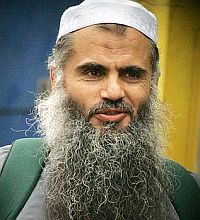
I know Abu Qatada — he’s no terrorist
Victoria Brittain, former associate foreign editor of The Guardian, writes: The voluntary departure from Britain of Omar Othman, better known as Abu Qatada, is a triumph for the independence of the judiciary over this and previous governments’ high-profile attempts to send him to face a trial in Jordan, where the evidence against him was obtained by torture. Our judiciary has safeguarded a prominent political refugee who our society chose to persecute in a disgraceful way.
Since 2007 as many as 12 senior British judges in various courts have recognised the torture origins of the evidence against him, which successive prime ministers and home secretaries have, until a few weeks ago, publicly put all their political weight into ignoring. The US, aided by the UK, on behalf of its key ally Jordan, went so far as to kidnap UK residents Jamil el-Banna and Bisher al-Rawi on a business trip in Africa, torture them in Bagram airbase in Afghanistan, and take them to Guantánamo in order to interrogate them about Othman. When those men sued the British authorities for what they had done, parliament was persuaded to create secret courts to adjudicate on secret defences.
The British judges’ success is that the Jordanian government has now made a change in its law that applies only to Othman and no one else. In his case the burden of proof is now on the prosecutor to show that any statement made against him in court was not produced by torture or any other form of ill-treatment – a reversal of the previous situation.
In addition, his safety in Jordan is enormously enhanced by the new conditions agreed, which include his detention in a civilian facility, the exclusion of the Jordanian intelligence service from any access to him, monitoring by an independent human rights body, and a commitment that Britain will be contacted if there are concerns.
But the most recent phase of this long saga has left poison in our society. The home secretary, prime minister, mayor of London, countless MPs – including senior Labour party figures – have led the media in reckless and prejudiced comments, making Othman the most demonised individual in Britain. [Continue reading…]
Russians positive on Venezuela’s offer to welcome Snowden
The Washington Post reports: Venezuela’s offer of asylum for NSA whistleblower Edward Snowden got a thumbs up from key members of the Russian parliament Saturday, even as the Kremlin and Foreign Ministry kept a studious silence.
“Sanctuary for Snowden in Venezuela would be the best decision,” Alexei Pushkov, head of the foreign affairs committee of Russia’s lower house of parliament, wrote in a tweet Saturday.
Puskhkov, who reliably reflects the government’s position on international issues, voiced what appears to be a growing official desire to see Snowden leave after 13 days holed up in transit limbo at Moscow’s Sheremetyevo airport. He wrote of Snowden, “He can’t live at Sheremetyevo.”
Another parliamentary deputy and member of Pushkov’s committee, Alexander Babakov, told the Russian News Service on Saturday that he thinks the offer of asylum Friday from Venezuelan President Nicolás Maduro was Snowden’s best recourse.
“Given that Snowden’s U.S. passport was revoked and that he has no particular alternative, the proposal, especially coming from the mouth of the head of state, is sure to be accepted,” he said.
Pushkov also argued that asylum would not cost Venezuela, because the country is already in an acute conflict with the United States. “It can’t get worse,” he wrote.
The central question, though, is how Snowden might get to Venezuela. Until now, Russia has been saying he cannot fly out without proper documents, following the revocation of his U.S. passport. On Saturday, a lieutenant colonel in the FSB reserve, Anatoly Yermolin, told the radio station Ekho Moskvy that Russia could grant Snowden status as a “stateless person,” and that would allow him to leave without further complications.
But a more difficult question is: by what route? Direct commercial flights from Moscow to Havana cross European airspace, and after the refusal of France, Italy and Spain to allow an overflight Tuesday by Bolivian President Evo Morales, that route would seem to be problematic for Snowden. He might have to rely on a private plane, following a roundabout course, if he were to reach Caracas. [Continue reading…]
Reuters reports that on Saturday, Bolivia joined Venezuela and Nicaragua in offering asylum to Snowden.
ElBaradei installed as Egypt’s new prime minister
Al Ahram reports: Prominent politician Mohamed ElBaradei is to be appointed Egypt’s new prime minister under interim President Adly Mansour, according to Constitution Party founder Khaled Daoud.
According to Daoud, ElBaradei will be sworn in before Adly at 20:00 CMT.
Nobel peace prize laureate ElBaradei had been a leading opposition figure since the 2011 revolution, having been one of the most prominent figures to foresee and call for the uprising that put an end to the 30-year rule of Hosni Mubarak.
He initially had the intention to run in last year’s presidential elections, but backtracked on his decision months ahead of the polls saying there were no guarantees that elections would be fair.
During the transitional period under interim military rule, ElBaradei grew critical of the policies of the Muslim Brotherhood, which in turn had accused him of being a US “agent.”
Recalling the U.S. president’s 2009 speech in Cairo, Robert Fisk notes: Obama made the following remarkable comment, which puts the events in Egypt today into a rather interesting perspective. There were some leaders, he said, “who advocate for democracy only when they are out of power; once in power, they are ruthless in suppressing the rights of others…you must respect the rights of minorities, and participate with a spirit of tolerance and compromise; you must place the interests of your people and the legitimate workings of the political process above your party. Without these ingredients, elections alone do not make true democracy.”
Obama did not say this in the aftermath of the coup-that-wasn’t. He uttered these very words in Egypt itself just over four years ago. And it pretty much sums up what Mohamed Morsi did wrong. He treated his Muslim Brotherhood mates as masters rather than servants of the people, showed no interest in protecting Egypt’s Christian minority, and then enraged the Egyptian army by attending a Brotherhood meeting at which Egyptians were asked to join the holy war in Syria to kill Shiites and overthrow Bashar al-Assad’s regime.
And there is one salient fact about the events of the last 48 hours in Egypt. No one is happier – no one more satisfied nor more conscious of the correctness of his own national struggle against ‘Islamists’ and ‘terrorists’ — than Assad. The West has been wetting itself to destroy Assad – but does absolutely nothing when the Egyptian army destroys its democratically-elected president for lining up with Assad’s armed Islamist opponents. The army called Morsi’s supporters “terrorists and fools”. Isn’t that just what Bashar calls his enemies? No wonder Assad told us yesterday that no one should use religion to gain power. Hollow laughter here — offstage, of course.
But this doesn’t let Obama off the hook. Those Western leaders who are gently telling us that Egypt is still on the path to “democracy”, that this is an “interim” period – like the ‘interim’ Egyptian government concocted by the military – and that millions of Egyptians support the coup that isn’t a coup, have to remember that Morsi was indeed elected in a real, Western-approved election. Sure, he won only 51 per cent — or 52 per cent — of the vote.
But did George W. Bush really win his first presidential election? Morsi certainly won a greater share of the popular vote than David Cameron. We can say that Morsi lost his mandate when he no longer honoured his majority vote by serving the majority of Egyptians. But does that mean that European armies must take over their countries whenever European prime ministers fall below 50 per cent in their public opinion polls?
Obama’s approval rating currently stands at 45%, but as yet there are no indications the Pentagon is making any preparations to replace him.
How engineered was the crisis leading to Morsi’s fall?
Evan Hill writes: [T]here were signs in Friday’s protests that the coup, though it arrived on an unprecedented wave of popular support, had inspired anger beyond the insular Brotherhood and Islamist social networks. Some who came to the Republican Guards compound said that they were not Brotherhood members or committed Morsy partisans but simply angry that their votes had been usurped. They complained that Morsy had been hamstrung by uncooperative opposition parties and subversive ministries that laid traps to make governing impossible. Some pointed with suspicion to the rolling blackouts, petrol shortages and panic over the availability of basic foodstuffs that had wracked the nation in the weeks leading up to June 30. They noted with dark irony that the crises had suddenly stopped since Morsy’s fall — though many economic problems were likely to continue under any new government.
“We went down for five elections: [including] the People’s Assembly, the Shoura Council, a referendum, presidential, and in the end, the military council…threw them in the trash,” said Ahmed Hassan, the 35-year-old owner of an IT company.
Hassan claimed the June 30 protests had been fueled by an alliance of Christians, liberals and Mubarak regime sympathizers who could not abide the idea of an Islamist president. Others said they believed the demonstrators were mostly young people who had been brainwashed by an array of hostile television netwokrs. Some pointed out that almost none of the independent stations continued to cover protests in support of Morsy following the coup.
Hassan argued that one year had hardly been enough time for Morsy’s administration to correct Egypt’s path, after three decades under Mubarak. Whatever mistakes Morsy had made, his supporters argued, were the result of a conniving bureaucracy packed with Mubarak holdovers — hardly justification for the undemocratic removal of Egypt’s first elected president.
“Why do the liberals who talk about democracy not respond with democracy? They did it by force, why?” Hassan asked. [Continue reading…]
Tewfik Aclimandos, an associate researcher at the College de France in Paris, who specialises in the Egyptian military, told the Financial Times that within the military there was a fear that Morsi would remove the the Commander-in-Chief of the Egyptian Armed Forces, General Abdel Fattah al-Sisi, and put former army leaders on trial.
“I am almost certain the military did not want to intervene, but I think a decision was taken in March or maybe a month or two ago that if conditions were right they would step in,” Aclimandos said. “They were going to wait for a pretext. A trusted source told me if there was good mobilisation [by protesters on June 30] they would move.”
Aclimandos also said officers feared Morsi’s close ties with Hamas could drag Egypt into a war with Israel.
ElBaradei pushed for Morsi’s removal; Mubarak’s attorney general is reinstated
The New York Times reports: Mohamed ElBaradei, the Nobel Prize-winning diplomat and Egypt’s most prominent liberal, said Thursday that he had worked hard to convince Western powers of what he called the necessity of forcibly ousting President Mohamed Morsi, contending that Mr. Morsi had bungled the country’s transition to an inclusive democracy.
In an interview, Mr. ElBaradei also defended the widening arrests of Mr. Morsi’s Muslim Brotherhood allies and the shutdown of Islamist television networks that followed the removal of Mr. Morsi on Wednesday by Egypt’s generals.
“The security people obviously are worried — there was an earthquake and we have to make sure that the tremors are predicted and controlled,” he said.
“They are taking some precautionary measures to avoid violence; well, this is something that I guess they have to do as a security measure,” he said. “But nobody should be detained or arrested in anticipation unless there is a clear accusation, and it has to be investigated by the attorney general and settled in a court.”
Mr. ElBaradei, whose precise role in the interim government that is replacing Mr. Morsi’s is still unclear, vowed to ensure that “everybody who is being rounded up or detained, it is by order of the attorney general — and being a member of the Muslim Brotherhood is no crime.”
In tandem with the military’s ouster of Mr. Morsi, the judicial authorities replaced the attorney general he had appointed, reinstating the prosecutor installed by Hosni Mubarak, the autocratic president ousted in Egypt’s 2011 revolution.
The Mubarak appointee, Abdel Meguid Mahmoud, spent years in office prosecuting Islamists. But Mr. ElBaradei said the generals had assured him that this time would be different because they intended to operate as an institution in a civilian democracy, with respect for due process and the rule of law. [Continue reading…]
Egypt: The future of the Muslim Brotherhood
The Guardian reports: Egyptian cities were left strewn with rocks, glass and bullet casings on Saturday morning after almost 24 hours of violence which left 30 dead and more than 1,100 injured.
Clashes erupted on Friday night between supporters and opponents of ousted president Mohamed Morsi in central Cairo and other cities across Egypt , as fears of an expected backlash against his removal materialised.
Fighting broke out shortly after the Muslim Brotherhood’s spiritual leader, Mohammed Badie – reported to have been arrested on Thursday – appeared unexpectedly at a rally in east Cairo on Friday evening to tell his followers to remain on the streets until Morsi’s return. The ousted president had once been a senior member of the Islamist party.
In Cairo, a crowd of close to 5,000 Morsi supporters crossed the Nile over the 6 October Bridge, near the hub of opposition dissent, Tahrir Square. Turning left towards Maspero, the state television centre, they were approached by anti-Morsi demonstrators and fighting broke out in the streets.
Similar scenes were also reported in Egypt’s second city, Alexandria, and there were reports of skirmishes in Luxor in the south of the country. The Sinai peninsula was placed on a state of emergency after an attack by gunmen on a local airport. There were also clashes reported in Damanhour, in Egypt’s north-east, and Beni Suef, in the south, as Islamists protested across the country at Morsi’s removal – in what the Brotherhood and other Islamist groups had billed as a “day of rejection”.
Obey conscience above law
Shamai Leibowitz, one of the first victims in Barack Obama’s war on whistleblowers, writes: The Snowden saga is a great teaching moment for the Obama administration. It is now reaping the fruit of its vindictive behavior.
Even in a democracy certain information needs to remain secret, and those with access to that information must honor their obligation to safeguard it. But Snowden and other whistleblowers have not leaked secrets for their own benefit or enrichment; rather, they sacrificed the comfort of their lives to expose lies, fraud, human rights abuses, and unconstitutionality.
As Martin Luther King pointed out, we should never forget that everything Adolf Hitler did in Germany was “legal” and everything the Hungarian freedom fighters did in Hungary was “illegal”. Of course, the abuses revealed by Snowden are a far cry from the atrocities of the Nazis, but the principle, nevertheless, is the same: obedience to the law should not be absolute. Technically, we whistleblowers broke the law, but we felt, as many have felt before, that the obligation to our consciences and basic human rights is stronger than our obligation to obey the law.

Since 2007 as many as 12 senior British judges in various courts have recognised the torture origins of the evidence against him, which successive prime ministers and home secretaries have, until a few weeks ago, publicly put all their political weight into ignoring. The US, aided by the UK, on behalf of its key ally Jordan, went so far as to kidnap UK residents