Geoffrey Aronson writes: The only time the word “peace” is mentioned in the coalition government of the newly installed Israeli government led by Prime Minister Benjamin Netanyahu is in the section promising a member of Yesh Atid a place in on the negotiations committee to be headed by Tzippi Livni. Livni, of course, will not be making policy. Netanyahu’s alter ego, Yitzhak Molcho, promises to be in the room at all times. And the rejectionist tone of the government will be set by a diplomatic mini-cabinet including Netanyahu, Minister of Defense Moshe Ya’alon and Minister of Economy and Trade Naftali Bennet, a former director of the Council of settlements in Judea and Samaria (Yesha).
This aspect of the new government’s priorities is not surprising. It promises to be the most unambiguously partisan in favor of Jewish settlement in the occupied territories of any of its predecessors. Acting so will be no mean achievement, given the record of success established by previous Israeli governments during the last four-plus decades, particularly those led by Labor Party leaders — from Golda Meir to Yitzhak Rabin and Ehud Barak.
It is not for nothing that it has long been said that “the Likud will announce 10 settlements and build one while the Labor Party will announce one and build 10.” Leaders from the heart of the Labor Zionist movement — the same one that transformed 78% of Mandatory Palestine into a Jewish state — were the principal architects of Israel’s post-1967 settlement policies in the occupied territories and employed all the instruments of Israel’s national power and authority to place the territorial future of the “liberated territories” beyond Palestinian reach. [Continue reading…]
The ‘Great Game’ in the Levant
Al-Monitor: With billions of cubic meters in estimated gas reserves, the Eastern Mediterranean, or the “Levant Basin” by another name, is turning into the stage for a contemporary version of the 19th Century “Great Game,” which has as much potential for catalyzing peace, as it does for contributing to new tensions in a region already rife with conflict.
The key event this respect came on March 30, the historic date when natural gas from the Tamar field, off the coast of Israel, started flowing to the Israeli mainland, thus kicking off a process that will not only make the Jewish state largely energy independent, but also turn it into a key supplier for European markets.
The Tamar field, discovered as recently as 2009, is said to hold 250 billion cubic meters [427 billion square feet] of gas, and is the smaller of Israel’s two offshore fields, the bigger one being the Leviathan field with its estimated 425 billion cubic meters of gas, but which has yet to be developed.
Texas-based Noble Energy and the Israeli Delek Energy, the two largest shareholders in the Israel gas fields are said to be looking for a go-ahead now from the Israel government to export the larger portion of the gas, since demand in Israel is insufficient to cover the cost of developing the Leviathan field.
This is the point at which Turkey, which has already become an important energy hub for Caspian and Iraqi oil, and which consolidated its position further through recent energy deals with the Kurdistan Regional Government in northern Iraq, enters the “Game” as a major player. Turkey is clearly a country that Israel cannot overlook while trying to work out the most profitable route to export its gas.
With one of the fastest growing economies in the world, Turkey has increasing energy needs and therefore also provides a stable market for Israel gas. It is not surprising therefore that there is a lot of talk in diplomatic circles suggesting that “the energy factor” also contributed to Israel’s recent apology to Turkey for its deadly raid on the Turkish Mavi Marmara aid ship in 2010. [Continue reading…]
How the fear of war crimes charges led the CIA to abandon torture and take up murder
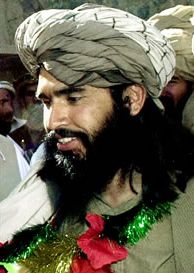
Mark Mazzetti writes: Nek Muhammad knew he was being followed.
On a hot day in June 2004, the Pashtun tribesman was lounging inside a mud compound in South Waziristan, speaking by satellite phone to one of the many reporters who regularly interviewed him on how he had fought and humbled Pakistan’s army in the country’s western mountains. He asked one of his followers about the strange, metallic bird hovering above him.
Less than 24 hours later, a missile tore through the compound, severing Mr. Muhammad’s left leg and killing him and several others, including two boys, ages 10 and 16. A Pakistani military spokesman was quick to claim responsibility for the attack, saying that Pakistani forces had fired at the compound.
That was a lie.
Mr. Muhammad and his followers had been killed by the C.I.A., the first time it had deployed a Predator drone in Pakistan to carry out a “targeted killing.” The target was not a top operative of Al Qaeda, but a Pakistani ally of the Taliban who led a tribal rebellion and was marked by Pakistan as an enemy of the state. In a secret deal, the C.I.A. had agreed to kill him in exchange for access to airspace it had long sought so it could use drones to hunt down its own enemies.
That back-room bargain, described in detail for the first time in interviews with more than a dozen officials in Pakistan and the United States, is critical to understanding the origins of a covert drone war that began under the Bush administration, was embraced and expanded by President Obama, and is now the subject of fierce debate. The deal, a month after a blistering internal report about abuses in the C.I.A.’s network of secret prisons, paved the way for the C.I.A. to change its focus from capturing terrorists to killing them, and helped transform an agency that began as a cold war espionage service into a paramilitary organization.
The C.I.A. has since conducted hundreds of drone strikes in Pakistan that have killed thousands of people, Pakistanis and Arabs, militants and civilians alike. While it was not the first country where the United States used drones, it became the laboratory for the targeted killing operations that have come to define a new American way of fighting, blurring the line between soldiers and spies and short-circuiting the normal mechanisms by which the United States as a nation goes to war.
Neither American nor Pakistani officials have ever publicly acknowledged what really happened to Mr. Muhammad — details of the strike that killed him, along with those of other secret strikes, are still hidden in classified government databases. But in recent months, calls for transparency from members of Congress and critics on both the right and left have put pressure on Mr. Obama and his new C.I.A. director, John O. Brennan, to offer a fuller explanation of the goals and operation of the drone program, and of the agency’s role.
Mr. Brennan, who began his career at the C.I.A. and over the past four years oversaw an escalation of drone strikes from his office at the White House, has signaled that he hopes to return the agency to its traditional role of intelligence collection and analysis. But with a generation of C.I.A. officers now fully engaged in a new mission, it is an effort that could take years.
Today, even some of the people who were present at the creation of the drone program think the agency should have long given up targeted killings. [Continue reading…]
Israel’s draconian system of arrest and detention
Sandy Tolan writes: Imagine being confined to a small sliver of land, in plain view of a wider homeland that you cannot touch. Your house is in a refugee camp, surrounded by fine red-roofed homes built by and for strangers who seized your territory without warning or permission.
The strangers, perched on hills that make it possible for them to spy into your home, are protected by one of the world’s most powerful armies, with its tanks, rockets and helicopter gunships supplied by the top military power on earth. The soldiers tightly restrict your movements through your own territory.
They subject your family to random searches at military posts along the road, where you are forced to submit your documents and sometimes to strip down to your underwear. At night, without warning, the army may enter your home and take your teen-aged children. In fact, they often do.
Once you finally find out where they are, they may or may not face any charges. If they are not charged, the military courts can hold them there indefinitely. If they are, the chances they will be found innocent are 1 in 400.
Imagine that you lived in such place, in a land you had long dreamt would be your own sovereign country, but which is now cut up into tiny enclaves that keep you thus confined. What would you do?
If you chose to resist, how would you do so?
Oday Khatib fought back by singing. Unlike many of the boys and young men in Al-Fawwar, the Palestinian refugee camp near Hebron, who fought occupation by throwing stones at Israeli soldiers, Oday, the internationally-recognised singer of the acclaimed Ramallah-based Al Kamandjati music school, has long found his resistance in Palestinian protest songs.
“He is not interested in throwing stones or getting involved in this,” Oday’s father, Jihad, said in an interview with my colleague Anan Abu-Shanab. Oday’s brothers have long hurled stones, but “since he was nine years old he was interested only in music”.
Nevertheless, Oday was arrested on March 19 under questionable circumstances at Al-Fawwar refugee camp.
His family says Oday was standing on hill, waiting to meet a friend. Nearby, his father said, children were throwing stones, “and when the soldiers chased the kids, it did not come to his mind that the soldiers would go for him. Otherwise he would have run away”.
The Israeli military spokesman asserts that Oday was arrested “after security forces identified him engaged in rock throwing during the course of a violent riot”. (“Violent riot” is a curious description for a clash between well-armed soldiers wearing chest protectors, helmets and face shields, who fire live ammunition at stone-throwers.)
Oday is charged under Section 212 of Military Order 1651, which states that anyone convicted of throwing stones “[a]t a person or property, with the intent to harm the person or property shall be sentenced to ten years imprisonment”. In other words, the law is so sweeping that if you throw a rock at a road sign, you could go to prison for a decade. Oday’s trial is scheduled for Monday, April 8. [Continue reading…]
Syria’s massive rape crisis
Lauren Wolfe writes: One day in the fall of 2012, Syrian government troops brought a young Free Syrian Army soldier’s fiancée, sisters, mother, and female neighbors to the Syrian prison in which he was being held. One by one, he said, they were raped in front of him.
The 18-year-old had been an FSA soldier for less than a month when he was picked up. Crying uncontrollably as he recounted his torture while in detention to a psychiatrist named Yassar Kanawati, he said he suffers from a spinal injury inflicted by his captors. The other men detained with him were all raped, he told the doctor. When Kanawati asked if he, too, was raped, he went silent.
Although most coverage of the Syrian civil war tends to focus on the fighting between the two sides, this war, like most, has a more insidious dimension: rape has been reportedly used widely as a tool of control, intimidation, and humiliation throughout the conflict. And its effects, while not always fatal, are creating a nation of traumatized survivors — everyone from the direct victims of the attacks to their children, who may have witnessed or been otherwise affected by what has been perpetrated on their relatives. [Continue reading…]
Vali Nasr dissects Obama’s foreign policy failings
Robert E. Hunter writes: Publication this month of Vali Nasr’s The Dispensable Nation: American Foreign Policy in Retreat, could not have been better timed. The US and the NATO allies are in the process of disengaging from Afghanistan — however they choose to describe the process — without first developing clarity about what comes next and how to understand or secure the West’s continuing interests there or in the region. The Syrian civil war continues, seemingly without end and without success so far in the US government to develop a coherent policy or, apparently, efforts to fit that conflagration within developments in the region as a whole. President Obama has just visited the Near East, but there is as yet no promise that serious negotiations between Israelis and Palestinians will begin anytime soon. The standoff with Iran and its nuclear program continues. And there are widespread doubts about the staying-power of US commitments and policies throughout the Middle East and Southwest Asia. For some observers, including Nasr, all this leads to serious questioning about the overall conduct of American foreign policy, summarized in his judgment: “retreat.”
The author, now Dean of the School of Advanced International Studies at Johns Hopkins University in Washington, has had a special vantage point. From January 2009 until 2011 Nasr was special advisor to Ambassador Richard Holbrooke (who died in December 2010), who was the President’s (and Secretary of State Hillary Clinton’s) Special Representative for Afghanistan and Pakistan — shortened to the more digestible “AfPak.” It is not too much to say that Dr. Nasr’s brief but intense experience in the US government at a high level was both disappointing and disillusioning — and he was not alone. His principal conclusion, at least as inferred by this reviewer, is that the Obama White House failed to take seriously the diplomatic opportunities that were afforded the US, not just toward AfPak, but in the region overall; that it continued to tolerate an excessive militarization of US policies begun by earlier administrations at the expense of a more integrated approach where diplomatic instruments could play their proper role; that the president himself was long on language — eloquently so — but short on action and in the process failed to come to grips with a number of regional developments; that the best efforts by the State Department, including by Secretary Clinton, to intervene in critical policy-making were too often either rebuffed or ignored; and that the US has failed in its essential leadership role. Indeed, the title of Nasr’s book, Dispensable Nation, is a play on a term first coined by Secretary of State Madeleine Albright to the effect that the US in the post-Cold War world remains the “indispensable nation.” [Continue reading…]
Iran nuclear talks reveal gulf between sides
Laura Rozen reports: Iran and six world powers remained far apart at the conclusion of two days of talks here without agreeing to meet again, but American and European diplomats said the Iranians had engaged more deeply than ever before on the details of a potential nuclear compromise.
“Two days of talks just concluded that were indeed quite substantive,” a senior US official, speaking not for attribution, told journalists at the conclusion of talks Saturday. “Each session involved a robust discussion….[that were] more natural and free-flowing than past talks.”
“I’ve never seen anything quite like it,” the US diplomat said. “There was intensive dialogue on key issues at the core of [the proposed confidence building measure.]. Both sides came away with better understanding of each others’ positions.” [Continue reading…]
How do you ask a jihadist to be the last jihadist to die in Afghanistan?
Sami Yousafzai and Ron Moreau report: As the spring weather warms and the snow melts off the high mountain passes separating Pakistan and Afghanistan, hundreds of Taliban fighters who spent the winter in Afghan refugee camps and other safe havens inside Pakistan are preparing to return to battle. But this year some insurgents are having second thoughts about fighting in Afghanistan at a time when it appears that peace talks between the US and the Taliban are about to resume in Qatar after a year’s hiatus.
Indeed, there are heated debates raging among the fighters as to the wisdom of returning to fight and perhaps die as peace prospects are being discussed. “The leadership hopes to dispatch a big number of fighters to Afghanistan this year,” says Zabihullah, a senior Taliban operative whose information has proved reliable in the past. “But now there is great confusion among the fighters whether to go and fight or stay behind in Pakistan and await the results of the Qatar peace talks.”
In a mosque made of mud-bricks in the middle of the Haripur Afghan refugee camp, some 40 miles north of Islamabad, five Taliban fighters are relaxing, enjoying the warm spring weather, and sipping green tea from discolored tea cups. “Take advantage of the rest and the sunshine because in less than one month we have to return to the jihad,” says Mullah Mohammad Khan, 30, the senior fighter among the group. But his comrade-in-arms, Mohidain Akhund, does not share Khan’s enthusiasm. “This year my heart really does not want to go back to the jihad,” Akhund tells Khan frankly. “Our leaders are talking to the kafirs in Qatar and then asking us to return to Afghanistan to resist the Americans. Allah, pardon me, but I cannot make up my mind whether or not to go to the jihad this year.”
Khan, a sub-commander from northern Baghlan province, tries to argue with Akhund, warning him that he’s in danger of losing his faith. “These are satanic temptations,” he says. “If you say no to the jihad then how will you answer to Allah on Judgment Day?” Akhund is still not convinced. “I am proud to have been in the jihad for the past five years in Helmand [Province] and to have lost a brother and a nephew,” he tells Khan. “But how can I continue fighting when our leaders are enjoying the Americans’ hospitality in Qatar and we’re told we have to kill Afghan soldiers?” Another fighter named Abdullah pipes up, agreeing with Akhund, saying he is also confused about what to do this year. “Our leaders are enjoying air conditioned rooms, driving luxury cars and living in good houses while we live a troubled life fighting in Afghanistan,” says Abdullah. Khan still tries to cajole them. “We do not perform jihad for this or that personality,” he says. “We offer our sweet breath for Allah and we should expect rewards from Allah, not the leaders who are human and far from perfect.” [Continue reading…]
Despair among the victims of injustice at Guantánamo
New York Times editorial: The hunger strike that has spread since early February among the 166 detainees still at Guantánamo Bay is again exposing the lawlessness of the system that marooned them there. The government claims that around 40 detainees are taking part. Lawyers for detainees report that their clients say around 130 detainees in one part of the prison have taken part.
The number matters less than the nature of the protest, however: this is a collective act of despair. Prisoners on the hunger strike say that they would rather die than remain in the purgatory of indefinite detention. Only three prisoners now at Guantánamo have been found guilty of any crime, yet the others also are locked away, with dwindling hope of ever being released.
Detainees there have gone on hunger strikes many times since the facility opened in 2002. A major strike in 2005 involved more than 200 detainees. But those earlier actions were largely about the brutality of treatment the detainees received. The protest this time seems more fundamental. Gen. John Kelly of the Marines, whose Southern Command oversees Guantánamo Bay, explained the motivation of the detainees at a Congressional hearing last month by saying, “They had great optimism that Guantánamo would be closed” based on President Obama’s pledge in his first campaign, but they are now “devastated” that nothing has changed.
For 86 detainees, this is a particular outrage. They were approved for release three years ago by a government task force, which included civilian and military agencies responsible for national security.
But Congress outrageously has limited the president’s options in releasing them, through a statute that makes it very difficult to use federal money to transfer Guantánamo prisoners anywhere. Fifty-six of those approved for release are Yemenis. The government, however, has said it will not release them to Yemen for the “foreseeable future,” apparently because they might fall under the influence of people antagonistic to the United States. That false logic would mean that no Yemenis could ever travel to this country, but that is not the case.
The other 30 detainees approved for release are from different countries, though the government will not say where they are from. Over the past decade, the government has sent detainees to at least 52 countries, The Times and NPR have determined, so it surely can find countries to take detainees who cannot be returned home.
As for the remaining 80 prisoners, the three who have been convicted and the 30 or so who are subjects of active cases or investigations can be transferred to a military or civilian prison. The rest are in indefinite detention — a legal limbo in which they are considered by the government to be too dangerous to release and too difficult to prosecute. Such detention is the essence of what has been wrong with Guantánamo from the start. The cases of these detainees must be reviewed and resolved according to the rule of law.
The government is force-feeding at least 10 of the hunger strikers. International agreements among doctors say doctors must respect a striker’s decision if he makes “an informed and voluntary refusal” to eat. But under American policy, Guantánamo doctors cannot adhere to those principles. The Obama administration justifies the force-feeding of detainees as protecting their safety and welfare. But the truly humane response to this crisis is to free prisoners who have been approved for release, end indefinite detention and close the prison at Guantánamo.
Chimpanzees can engage in metacognition — they can think about their own thinking

Georgia State University: Humans’ closest animal relatives, chimpanzees, have the ability to “think about thinking” – what is called “metacognition,” according to new research by scientists at Georgia State University and the University at Buffalo.
Michael J. Beran and Bonnie M. Perdue of the Georgia State Language Research Center (LRC) and J. David Smith of the University at Buffalo conducted the research, published in the journal Psychological Science of the Association for Psychological Science.
“The demonstration of metacognition in nonhuman primates has important implications regarding the emergence of self-reflective mind during humans’ cognitive evolution,” the research team noted.
Metacognition is the ability to recognize one’s own cognitive states. For example, a game show contestant must make the decision to “phone a friend” or risk it all, dependent on how confident he or she is in knowing the answer.
“There has been an intense debate in the scientific literature in recent years over whether metacognition is unique to humans,” Beran said.
Chimpanzees at Georgia State’s LRC have been trained to use a language-like system of symbols to name things, giving researchers a unique way to query animals about their states of knowing or not knowing.
In the experiment, researchers tested the chimpanzees on a task that required them to use symbols to name what food was hidden in a location. If a piece of banana was hidden, the chimpanzees would report that fact and gain the food by touching the symbol for banana on their symbol keyboards.
But then, the researchers provided chimpanzees either with complete or incomplete information about the identity of the food rewards.
In some cases, the chimpanzees had already seen what item was available in the hidden location and could immediately name it by touching the correct symbol without going to look at the item in the hidden location to see what it was.
In other cases, the chimpanzees could not know what food item was in the hidden location, because either they had not seen any food yet on that trial, or because even if they had seen a food item, it may not have been the one moved to the hidden location.
In those cases, they should have first gone to look in the hidden location before trying to name any food.
In the end, chimpanzees named items immediately and directly when they knew what was there, but they sought out more information before naming when they did not already know.
The research team said, “This pattern of behavior reflects a controlled information-seeking capacity that serves to support intelligent responding, and it strongly suggests that our closest living relative has metacognitive abilities closely related to those of humans.”
The research was supported in part by the National Institutes of Health and the National Science Foundation.
Evidence of universal grammar being unique to humans
Medical Xpress: How do children learn language? Many linguists believe that the stages that a child goes through when learning language mirror the stages of language development in primate evolution. In a paper published in the Proceedings of the National Academy of Sciences, Charles Yang of the University of Pennsylvania suggests that if this is true, then small children and non-human primates would use language the same way. He then uses statistical analysis to prove that this is not the case. The language of small children uses grammar, while language in non-human primates relies on imitation.
Yang examines two hypotheses about language development in children. One of these says that children learn how to put words together by imitating the word combinations of adults. The other states that children learn to combine words by following grammatical rules.
Linguists who support the idea that children are parroting refer to the fact that children appear to combine the same words in the same ways. For example, an English speaker can put either the determiner “a” or the determiner “the” in front of a singular noun. “A door” and “the door” are both grammatically correct, as are “a cat” and “the cat.” However, with most singular nouns, children tend to use either “a” or “the” but not both. This suggests that children are mimicking strings of words without understanding grammatical rules about how to combine the words.
Yang, however, points out that the lack of diversity in children’s word combinations could reflect the way that adults use language. Adults are more likely to use “a” with some words and “the” with others. “The bathroom” is more common than “a bathroom.” “A bath” is more common than “the bath.”
To test this conjecture, Yang analyzed language samples of young children who had just begun making two-word combinations. He calculated the number of different noun-determiner combinations someone would make if they were combining nouns and determiners independently, and found that the diversity of the children’s language matched this profile. He also found that the children’s word combinations were much more diverse than they would be if they were simply imitating word strings.
Yang also studied language diversity in Nim Chimpsky, a chimpanzee who knows American Sign Language. Nim’s word combinations are much less diverse than would be expected if he were combining words independently. This indicates that he is probably mimicking, rather than using grammar.
This difference in language use indicates that human children do not acquire language in the same way that non-human primates do. Young children learn rules of grammar very quickly, while a chimpanzee who has spent many years learning language continues to imitate rather than combine words based on grammatical rules.
Ban pesticides linked to bee deaths, say British MPs
BBC News reports: The UK government should suspend the use of a number of pesticides linked to the deaths of bees, a committee of MPs has said.
Members of the Commons Environmental Audit Committee are calling for a moratorium on the use of sprays containing neonicotinoids.
Britain has refused to back an EU ban on these chemicals saying their impact on bees is unclear.
But MPs say this is an “extraordinarily complacent” approach.
Wild species such as honey bees are said by researchers to be responsible for pollinating around one-third of the world’s crop production.
In their report, MPs say that two-thirds of these species have suffered population declines in the UK.
They argue that a “growing body of peer-reviewed research” points the finger at a group of pesticides called neonicotinoids. [Continue reading…]
On March 28, Agri-View reported: Last week, a year after groups formally petitioned the U.S. Environmental Protection Agency (EPA), four beekeepers and five environmental and consumer groups filed a lawsuit in Federal District Court against the agency for its failure to protect pollinators from pesticides. The coalition, represented by attorneys for the Center for Food Safety (CFS), seeks suspension of the registrations of insecticides that have repeatedly been identified as highly toxic to honey bees, clear causes of major bee kills and significant contributors to the devastating ongoing mortality of bees known as colony collapse disorder (CCD). The suit challenges EPA’s ongoing handling of the pesticides as well as the agency’s practice of “conditional registration” and labeling deficiencies.
“America’s beekeepers cannot survive for long with the toxic environment EPA has supported. Bee-toxic pesticides in dozens of widely used products, on top of many other stresses our industry faces, are killing our bees and threatening our livelihoods,” said plaintiff Steve Ellis, a Minnesota and California beekeeper. “Our country depends on bees for crop pollination and honey production. It’s time for EPA to recognize the value of bees to our food system and agricultural economy.”
On March 29, The Guardian reported: Widely used pesticides have been found in new research to block a part of the brain that bees use for learning, rendering some of them unable to perform the essential task of associating scents with food. Bees exposed to two kinds of pesticide were slower to learn or completely forgot links between floral scents and nectar.
These effects could make it harder for bees to forage among flowers for food, thereby threatening their survival and reducing the pollination of crops and wild plants.
The findings add to existing research that neonicotinoid pesticides are contributing to the decline in bee populations.
It has also been revealed that a separate government field study on the impact of the pesticides on bees was seriously compromised by contamination because the chemicals are so widespread in the environment.
The government put the field study at the heart of the UK’s resistance to a Europe-wide ban on the controversial pesticides earlier this month. The UK was one of nine out of 27 member states that opposed suspending some uses of the insecticides across the EU, after environment secretary Owen Paterson said, “I have asked the EC to wait for the results of our field trials, rather than rushing to a decision”. On Wednesday, his department said more field research was needed.
The new findings on the effect of pesticides on bee brains showed that within 20 minutes of exposure to neonicotinoids the neurons in the major learning centre of the brain stopped firing. Christopher Connolly at the University of Dundee, who led the peer-reviewed work published in the online journal Nature Communications, said it was the first to show the pesticides had a direct impact on pollinator brain physiology.
GMOs don’t merit protection
Mark Bittman writes: Genetic engineering in agriculture has disappointed many people who once had hopes for it. Excluding, of course, those who’ve made money from it, appropriately represented in the public’s mind by Monsanto. That corporation, or at least its friends, recently managed to have an outrageous rider slipped into the 587-page funding bill Congress sent to President Obama.
The rider essentially prohibits the Department of Agriculture from stopping production of any genetically engineered crop once it’s in the ground, even if there is evidence that it is harmful.
That’s a pre-emptive Congressional override of the judicial system, since it is the courts that are most likely to ask the U.S.D.A. to halt planting or harvest of a particular crop. President Obama signed the bill last week (he kind of had to, to prevent a government shutdown) without mentioning the offensive rider (he might have), despite the gathering of more than 250,000 signatures protesting the rider by the organization Food Democracy Now!
The override is unnecessary as well as disgraceful, because the U.S.D.A. is already overly supportive of genetically engineered crops. When a court tried to stop the planting of genetically engineered beets a couple of years ago pending adequate study, the U.S.D.A. allowed it. And the secretary of agriculture, Tom Vilsack – who, in fairness, does not seem happy about the rider but was powerless to stop it – was quoted in this (excellent) Politico piece as saying, “With the seed genetics today that we’re seeing, miracles are occurring every single growing season.”
True enough. But “seed genetics” refers not only to genetically engineered seeds but to seeds whose genetics have been altered by conventional means, like classical breeding. In fact, as I said up top, genetic engineering, or, more properly, transgenic engineering – in which a gene, usually from another species of plant, bacterium or animal, is inserted into a plant in the hope of positively changing its nature – has been disappointing.
In the nearly 20 years of applied use of G.E. in agriculture there have been two notable “successes,” along with a few less notable ones. These are crops resistant to Monsanto’s Roundup herbicide (Monsanto develops both the seeds and the herbicide to which they’re resistant) and crops that contain their own insecticide. The first have already failed, as so-called superweeds have developed resistance to Roundup, and the second are showing signs of failing, as insects are able to develop resistance to the inserted Bt toxin — originally a bacterial toxin — faster than new crop variations can be generated.
Nothing else in the world of agricultural genetic engineering even comes close to the “success” of these two not-entirely-successful creations. Furthermore, at least in these cases, their pattern of success (and high profits) followed by failure was inevitable.
Don’t take my word for it. Let me summarize extensive conversations I’ve recently had with Doug Gurian-Sherman, a senior scientist and plant pathologist at the Union of Concerned Scientists: Roundup Ready seeds allowed farmers to spend less time and energy controlling weeds. But the temporary nature of the gains was predictable: “There was no better way to create weeds tolerant to glyphosate (Roundup) than to spray all of them intensively for a few years,” Gurian-Sherman told me. “And that’s what was done.”
The result is that the biggest crisis in monocrop agriculture – something like 90 percent of all soybeans and 70 percent of corn is grown using Roundup Ready seed – lies in glyphosate’s inability to any longer provide total or even predictable control, because around a dozen weed species have developed resistance to it. “Any ecologist would have predicted this, and many did,” Gurian-Sherman said. [Continue reading…]
Diversity programs fabricate the appearance of corporate fairness
Science Daily: Diversity training programs lead people to believe that work environments are fair even when given evidence of hiring, promotion or salary inequities, according to new findings by psychologists at the University of Washington and other universities.
The study also revealed that participants, all of whom were white, were less likely to take discrimination complaints seriously against companies who had diversity programs.
Workplace diversity programs are usually developed by human resource departments to foster a more inclusive environment for employees, but aren’t typically tested for their effectiveness. Nonetheless, their existence has been used in courtrooms as evidence that companies treat employees fairly.
“Our fear is that companies may prematurely stop thinking about diversity among their workers because they’ve credentialed themselves with these programs,” said Cheryl Kaiser, lead author and a UW associate professor of psychology. “Our findings suggest that diversity programs can be window dressing — even those that do very little to increase diversity may still be perceived as effective.”
Music: Bugge Wesseltoft & Dhafer Youssef — ‘Hope’ (live)
France wants to keep 1,000 soldiers in Mali permanently
Reuters reports: France has proposed keeping a permanent force of 1,000 French troops in Mali to fight armed Islamist militants, Foreign Minister Laurent Fabius said on Friday.
Fabius, on a visit to Bamako, said France was pushing ahead with plans to reduce its 4,000-strong military presence from the end of this month but planned to keep a combat force in Mali to support a future U.N. peacekeeping mission.
U.N. Secretary-General Ban Ki-moon called last week for the deployment of a U.N. mission of 11,200 troops and 1,440 police in Mali once major combat ends.
This would include thousands of African troops already in Mali in support of France’s three-month military campaign, which has swept Islamist rebels out of the towns of northern Mali and into remote desert and mountain hideaways.
Kim Jong-un’s goal is simply survival
The Guardian reports: At the end of a week in which North Korean leader Kim Jong-un shattered the illusion that his rule would mark a departure from bellicosity, signs are emerging that there may be method in his apparent madness.
His motivation is not war, but simple regime survival, top-level defectors in the South have told the Guardian. And he wants his future, says one of the regime’s former fundraisers, to be guaranteed by largesse from the same country the North recently threatened with nuclear annihilation: the US.
The 20,000 North Koreans who have made new lives in the South since the end of the Korean war in 1953 are among the few people placed to give reliable insights into a country that often generates more speculative heat thananalytical light.
While they are divided on how far Kim will to go in his campaign to pressure the US and South Korea into offering talks on aid and a peace treaty, they say he is as aware as officials in Washington and Seoul that all-out war and the continuation of his dynasty are mutually exclusive.
“Kim Jong-un’s aim is to unite the North Korean military and people around his regime and win their trust,” said Jang Se-yul, a former mathematics professor who spent 10 years in the cyberwarfare unit of the North Korean army in Pyongyang. “They don’t trust Kim yet, and they’re looking for strong signals from him.”
Jang, who says he talks “two or three times a day” to North Korean workers, soldiers and high-ranking government officials near the Chinese border, where they can receive a mobile phone signal, did not know if Kim’s attempts to endear himself to his people would include military action.
The coming weeks could see more attempts to unsettle the region. Among the options open to Kim are a missile test to mark the 101st anniversary of the birth of the country’s founder, Kim Il-sung, or an attack on islands near the disputed North-South maritime border.
What is certain is that the 30-year-old leader will never abandon the North’s nuclear programme, Jang said: “He is like his father [Kim Jong-il], in that he is threatening the US until he wins a concession and can claim he has orchestrated a victory over the enemy. That is exactly what Kim Jong-un is expecting. He knows he’s causing trouble internationally, but if he steps back, he will never win the trust of his people.
“I witnessed huge celebrations after the regime conducted its first nuclear test in 2006. Now it won’t let go of the fantasy that having nuclear weapons will make it invincible.”
A credible nuclear deterrent is the first step towards extracting aid and other concessions from the US and repairing the damage UN sanctions have inflicted on an already fragile economy. [Continue reading…]
Embassies staying put in North Korea despite tension
Reuters reports: Staff at embassies in North Korea appeared to be remaining in place on Saturday despite an appeal by authorities in Pyongyang for diplomats to consider leaving because of heightened tension after weeks of bellicose exchanges.
North Korean authorities told diplomatic missions they could not guarantee their safety from next Wednesday – after declaring that conflict was inevitable amid joint U.S.-South Korean military exercises due to last until the end of the month.
Whatever the atmosphere in Pyongyang, the rain-soaked South Korean capital, Seoul, was calm. Traffic moved normally through the city centre, busy with Saturday shoppers.
South Korea’s Yonhap news agency quoted a government official as saying diplomats were disregarding the suggestion they might leave the country.

On a hot day in June 2004, the Pashtun tribesman was lounging inside a mud compound in South Waziristan, speaking by satellite phone to one of the many reporters who regularly interviewed him on how he had fought and humbled Pakistan’s army in the country’s western mountains. He asked one of his followers about the strange, metallic bird hovering above him.