Milan appeals court convicts 3 Americans in CIA kidnap case, throwing out earlier acquittals

The Associated Press reports: A Milan appeals court on Friday vacated acquittals for a former CIA station chief and two other Americans, and instead convicted them in the 2003 abduction of an Egyptian terror suspect from a Milan street as part of the CIA’s extraordinary rendition program.

The appeals court sentenced former CIA Rome station chief Jeffrey Castelli to seven years, and handed sentences of six years each to Americans Betnie Medero and Ralph Russomando. All three were tried in absentia at both levels. A lower court that convicted 23 other Americans in 2009 had previously acquitted the three citing diplomatic immunity.

The November 2009 convictions, which were held up on two levels of appeal, were the first anywhere in the world against CIA actors involved in a practice alleged to have led to torture.

None of the Americans tried in Italy have ever been in Italian custody, but they risk arrest if they travel to Europe and lawyers have in the past suggested that final verdicts would open the way for the Italian government to seek their extradition. No such action has yet been taken.

Facebooktwittermail

Tahrir Square: Where some people demand dignity for themselves even as they violently strip it from others

Last Sunday, Tom Dale, Egypt Independent‘s news editor, wrote: A woman was sexually assaulted with a bladed weapon on Friday night, leaving cuts on her genitals, in central Cairo, in the midst of what was purportedly a revolutionary demonstration.

Read that line over again a few times, and think on it.

If you have any more room in your mind for horror after the past 24 hours: After the deliverance of death sentences to 21 civilian fans of the Port Said football club (themselves accused of brutal crimes), after stadiums full of other fans cheered those same death sentences in Cairo, after the death toll in the resultant clashes surpassed 30, then keep thinking on it.

She was one among at least 19 women sexually assaulted in and around Tahrir Square on Friday night, according to accounts collated by Operation Anti-Sexual Harassment, an activist group. Several women were stripped, and raped, publicly, as men pushed their fingers inside them. There were other attacks involving bladed weapons. Six women required medical attention. No doubt there were more assaults, uncounted.

One brave survivor of such an attack last November published her story on the website of the Nazra feminist group.

“All that I knew was that there were hundreds of hands stripping me of my clothes and brutally violating my body. There is no way out, for everyone is saying that they are protecting and saving me, but all I felt from the circles close to me, sticking to my body, was the finger-rape of my body, from the front and back; someone was even trying to kiss me… I was completely naked, pushed by the mass surrounding me to an alley close to Hardee’s restaurant … I am in the middle of this tightly knit circle. Every time I tried to scream, to defend myself, to call on a savior, they increased their violence,” she wrote.

At 6 pm last Friday (25 January) I was walking in the square, in the area where the large stage normally is, just as dark was falling, when I saw another such incident.

Perhaps 30 meters away, an eddy in the crowd had formed, with a woman of perhaps 40, apparently Egyptian, at its center. Concentric rings of men swirled around her as she screamed. I tried to get close to her, pushing my way through.

The crowd around her eventually moved her to the green railings, as she continued to scream. I was just a few meters away when she disappeared from view, pushed to the floor. When I regained sight of her, she had been stripped naked, and the terror was visible on her face.

As I pushed forward it was all but impossible to work out who was part of the assault, and who was trying to help. Many claimed to be trying to help, only to become part of the attack.

I identified one young man who was certainly an attacker, grabbed him, and pulled him back. He turned to me; I expected a punch, or at least a snarl. Instead he just grinned.

At one point, her naked body was folded face forward over the green railings which divide the pavements of the square from the road.

I lost sight of her again, believed she had been pulled over the railings, and went to make my way round to the other side. I don’t know if I was mistaken, or how or why she ended up going back, but when I saw her again she was on the tarmac, finally being defended by two or three large guys using belts as whips. An ambulance eventually made its way to her, through the crowd, and she was bundled in.

As I walked away, a few people asked me what had happened: I told them, “sexual assault, very ugly, very serious.” Each time, someone chipped in to deny what had happened just a few meters away.

If evidence were needed, five minutes later it began again a few dozen meters away, the whorl, the scream, the fingers pushing. This time, a few of us managed to get one woman away, a girl in her teens, but she had been separated from her mum, and was sobbing uncontrollably.

We hid by a kiosk to try and calm her but the kiosk owners asked us to leave because we were blocking the refrigerator. Eventually, she ended up hidden behind the metal shutter of a restaurant, still without her mum.

It is neither my place nor my wish to draw conclusions about “the revolution” from all this: I do not believe that is possible or wise. But I can say that as the familiar chants resonated in the square, the demands for justice, a new government and new constitution, I felt a little sick. Tahrir Square and its environs are not just a revolutionary space, they are also the terrain of brutal sexual assault.

It is both a place in which people both demand dignity for themselves and, in some cases, violently strip it from others. [Continue reading…]

Facebooktwittermail

Rights allegations in Mali cloud visit by France’s Hollande

Reuters reports: Human rights groups said on Friday a French-led offensive against Islamists in Mali had led to civilian deaths in airstrikes and ethnic reprisals by Malian troops, a day before President Francois Hollande was due to visit the country.

France has deployed more than 3,500 ground forces in a lightning three-week campaign that has wrested control of northern Mali’s towns from an al Qaeda-linked alliance.

The aim is to prevent the Islamist fighters from using Mali’s ungoverned desert north to launch attacks in neighboring African countries and the West.

Residents in the ancient caravan town of Timbuktu have greeted their liberation by French troops with joy, after Islamist radicals had destroyed the town’s sacred Sufi mausoleums, burned ancient manuscripts and imposed a harsh form of sharia law, including whippings and amputations.

Amnesty International and Human Rights Watch, however, cited eyewitness reports of extrajudicial killings by Malian government soldiers of dozens of civilians in the central towns of Sevare and Konna.

They said the troops targeted light-skinned Arab and Tuareg ethnic groups associated with the rebels. The Malian military has denied any reprisal killings by its soldiers and the government in Bamako has publicly warned against revenge attacks.

Facebooktwittermail

Sexual violence in Mali casts shadow over peace efforts

Bloomberg reports: Rebels who had conquered northern Mali offered to pay the equivalent of $14 for a 13-year-old girl. When her family said no, they took her anyway.

A week later, she died in captivity, after she was repeatedly raped by a group of armed men.

That incident in April is one of hundreds of documented cases compiled by the United Nations in the past year that shed light on the sexual violence unleashed by insurgents — mostly Touareg separatists rather than al-Qaeda-linked Islamists — during their occupation of a sparsely populated and inhospitable Mali region the size of Texas.

Nine months later, the rebels have melted away into the desert as French intervention troops advance. For the women of the farming and cattle-herding communities, the prospect is that yet another peace deal will ignore the record of rape used as a weapon of war.

“The question of sexual violence is not treated as an urgent question, unfortunately,” Hannah Armstrong, an analyst on security in West Africa. The same Touareg fighters now clamoring for negotiations “carried out raid-style attacks during which animals were stolen, slave-caste women raped repeatedly,” she said in an interview in Bamako, the Malian capital.

A total of 211 cases of sexual violence — including gang rape, sexual slavery, forced marriages and torture — were committed during house-to-house operations or at checkpoints during 2012, according to the Office of the UN Special Representative on Sexual Violence in Conflict. [Continue reading…]

Facebooktwittermail

Historic Timbuktu texts saved from burning

The Wall Street Journal reports: French tanks were closing in on this storied caravan city on the night of Jan. 23, when the al Qaeda-backed militants who had governed Timbuktu since April left a departing blow. They broke into one of the world’s most valuable libraries, ripping centuries-old manuscripts from shelves.

Then they torched these priceless artifacts, in a scene of destruction that horrified scholars around the world.

But in a relief for this beleaguered city, and in a triumph for bibliophiles, the vast bulk of the library was saved by wily librarians and a security guard—with an assist from modern technology.

An estimated 28,000 of the library’s artifacts were smuggled out of town by donkey cart, said Prof. Abdoulaye Cissé and security guard Abba Alhadi, who worked to relocate the documents. Gunmen managed to burn only a few hundred papers, but even those were backed up digitally, said the library’s bookkeepers.

“We knew that what we had here was threatened,” said Mr. Cissé, a history professor and acting director for Timbuktu’s Ahmed Baba Institute for Higher Studies and Islamic Research. “So I said, ‘We’re going to have to start moving them out.’ ”

The rescue mission for some of Africa’s most precious written history represents the latest example of Timbuktu’s collective determination to preserve its heritage, amid a long line of threats to these irreplaceable artifacts. Aside from its 14th-century mud mosques, and a fabled name, Timbuktu houses at least 100,000 ancient manuscripts that date from the 11th century, and account for some of the medieval world’s most sophisticated scholarship. Subjects include medicine, law, astronomy and botany.

Still, the treasures of Timbuktu have been looted and smashed by a succession of invading armies, the most recent being al Qaeda in the Islamic Maghreb, or AQIM. [Continue reading…]

Facebooktwittermail

Israel must withdraw all settlers or face International Criminal Court, says UN report

The Guardian reports: Israel must withdraw all settlers from the West Bank or potentially face a case at the international criminal court (ICC) for serious violations of international law, says a report by a United Nations agency that was immediately dismissed in Jerusalem as “counterproductive and unfortunate”.

All settlement activity in occupied territory must cease “without preconditions” and Israel “must immediately initiate a process of withdrawal of all settlers”, said the UN Human Rights Council (UNHRC). Israel, it said, was in violation of article 49 of the fourth Geneva convention, which forbids the transfer of civilian populations to occupied territory.

The settlements were “leading to a creeping annexation that prevents the establishment of a contiguous and viable Palestinian state and undermines the right of the Palestinian people to self-determination,” it said.

The UNHRC report broadly restated international consensus on the illegality of Israeli settlements. But its conclusions are likely to bolster the Palestinians following their admission last November to the UN as a non-member state, which potentially gives them recourse to the ICC. [Continue reading…]

Facebooktwittermail

Is Israel baiting Iran?

Last week, Ali Akbar Velayati, an aide to Ayatollah Ali Khamenei, declared that an “attack on Syria is considered attack on Iran.”

Yesterday, in a dangerous act of brinkmanship, Israel called Iran’s bluff.

But Israel doesn’t want to be perceived as risking provoking a war and so it portrayed its air strike on Syria as an imperative act of self defense necessitated by Syria’s alleged attempt to transport Russian-made SA-17 missiles to Hezbollah in Lebanon.

Syria denies that a convoy carrying such missiles was struck and even though the word of the Syrian government carries little weight these days, there are several reasons to doubt the narrative that U.S. officials have been disseminating.

Soon after Operation Orchard, an Israeli strike on a nuclear facility in Syria on September 6, 2007, U.S. officials told the New York Times that “the most likely targets of the raid were weapons caches that Israel’s government believes Iran has been sending the Lebanese militant group Hezbollah through Syria.” It was weeks later before details of the carefully planned operation became clear.

And here’s the all-important point: the timing of a strike on a convoy is going to be determined by the commanders of the convoy. Israel gets word that missiles are on the move and thus is left with “no choice” but to intervene.

But if the attack is on a stationary facility, then the timing of an attack is much more in Israel’s control.

This week there were multiple indications that Israel was preparing for military action:

So what are we supposed to believe? That in spite of the warnings, Syrian officials decided to try their luck and send a missile-carrying convoy on its way with the slim hope that it might evade attack?

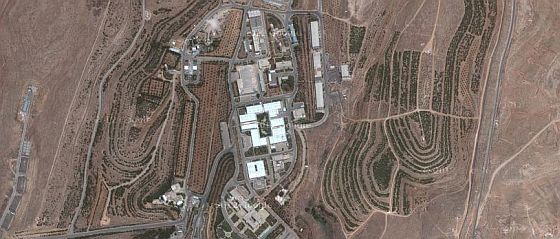
Or, that Israel knew that the target of its choice, a research facility in the area of Jamraya, northwest of Damascus, could be struck at a time of Israel’s choosing and by striking now, Iran’s earlier pledge to defend Syria would be shown as empty — or, if Iran does actually follow through, then a pretext may have been created for an attack on Iran’s nuclear facilities.

For Netanyahu, soon to lead a government that will probably be less inclined to support military muscle flexing, this week may have looked like the ideal time to place a wager that he thinks he cannot lose.

Facebooktwittermail

Israeli air strike in Syria

The site described by the Syrian government as a research center, north-west of Damascus, bombed by Israel Air Force fighter jets, according to Syrian TV.

The New York Times reports: Israeli warplanes carried out a strike deep inside Syrian territory on Wednesday, American officials reported, saying they believed the target was a convoy carrying sophisticated antiaircraft weaponry on the outskirts of Damascus that was intended for the Hezbollah Shiite militia in Lebanon.

The officials, who spoke on condition of anonymity, said the Israelis had notified the Americans about the attack, which the Syrian government called an act of “Israeli arrogance and aggression” that raised the risks that the two-year-old civil conflict in Syria could spread beyond the country’s borders.

In a statement, the Syrian military said a scientific research facility in the Damascus suburbs had been hit and denied that a convoy had been the target.

Israeli officials declined to comment on the airstrike. But they have been warning that they are monitoring the possible movement of weapons in the Syrian conflict, including chemical weapons, and would take action to thwart any possible transfers into Hezbollah’s possession.

It was the first time in more than five years that Israel’s air force had attacked a target in Syria, which has remained in a technical state of war with Israel although both sides have maintained an uneasy peace along their decades-old armistice line.

Hezbollah, which plays a decisive role in Lebanese politics, has long relied on Syria as both a source of weapons and a conduit for weapons flowing from Iran. Hezbollah has supported the Syrian government of President Bashar al-Assad throughout the uprising against him in part because it does not want to lose that weapons corridor, and some analysts say that Hezbollah may be trying to stock up on weapons now in case Mr. Assad falls. Other analysts say that Hezbollah would be cautious now about receiving arms from Syria because it does not want to risk drawing an Israeli attack or destabilizing its political position in Lebanon.

Hezbollah’s leader, Hassan Nasrallah, recently urged Lebanese citizens to welcome Syrian refugees regardless of their political affiliation, a move widely interpreted as aimed in part at preserving its relationship with Syria in the event of a rebel takeover, in addition to maintaining political calm in Lebanon. [Continue reading…]

Facebooktwittermail

Morsi rejects calls for new unity government in Egypt

The New York Times reports: President Mohamed Morsi of Egypt, meeting with Chancellor Angela Merkel on Wednesday, rejected calls for a new unity government in response to the violent demonstrations rocking his country and defended his decision to impose a state of emergency and curfew in three cities.

“In Egypt there is a stable government working day and night in the interest of all Egyptians,” Mr. Morsi said. A new government will not be formed before the upcoming parliamentary election, Mr. Morsi said.

At a moment of acute political crisis at home in Egypt, Mr. Morsi found himself on a previously scheduled visit to Berlin, where he also met with the economy minister, Philipp Rösler, and leading representatives of German businesses. Germany is Egypt’s third most important trading partner, and investment and development aid from Germany will be necessary if Egypt hopes to get back on its feet, analysts say.

His visit to Germany was controversial, with newspapers and television commentators questioning whether Egypt was on the path to democracy. In a country conscious of its responsibility for the Holocaust, Mr. Morsi’s past comments about Jews and Zionists have also raised concerns.

After the two leaders met, Mr. Morsi and Ms. Merkel held a joint news conference at the chancellery building on Wednesday afternoon. A German reporter asked Mr. Morsi about comments in which he described Zionists as “bloodsuckers” and “the descendants of apes and pigs.”

Mr. Morsi said his statements had been taken out of context. “I am not against Judaism as a religion,” he said. “I am not against Jews practicing their religion. I was talking about anybody practicing any religion who spills blood or attacks innocent people — civilians. I criticize such behavior.

“My religion instructs me to believe in all the prophets and to respect all religions as well as every person’s freedom of religion,” Mr. Morsi continued. “Everyone believes in and practices his religion the way he sees fit as long as it remains lawful in the country he lives in.”

Ms. Merkel made it clear that Germany would continue its support of Egypt’s transition to democracy only if Mr. Morsi’s government upheld certain democratic ideals.

“One thing that is important for us is that the channels of dialogue are always open with all political forces in Egypt, so that the different political forces can play their role,” Ms. Merkel said. [Continue reading…]

Facebooktwittermail

Egypt: Video of snipers in Port Said?

Issandr El Amrani writes: There have been some disturbing reports of what is described as sniper fire (although it may simply be gunfire, not actual snipers) in Port Said in the last two days. The videos below, some of which whose provenance cannot be verified, paint a rather scary picture

The one below, for instance, shows men dressed in black paramilitary garb – perhaps special forces – using a rooftop position to fire on people on the streets (or perhaps merely survey the streets). There is no way to confirm the place and date of the video, although it is an Egyptian flag that is seen and it is plausibly Port Said. The video is titled to suggest the armed men are Muslim Brothers, but there is nothing to confirm that.


Egypt Muslim Brotherhood Snipers Shoot People… by GWHH19

[Continue reading…]

Facebooktwittermail

Learning democracy in Iraq and Egypt

Rami G Khouri writes: The events in Iraq and Egypt these days are particularly important to follow and understand as best we can, because of what they tell us about how some Arab citizens and leaders behave at stages of the process in which they have the opportunity to shape their own political governance systems. For in Egypt and Iraq, most dramatically, alongside less striking events in Egypt, Syria, Yemen and other Arab countries, the most basic elements of state integrity, national identity and the legitimacy of power are all being challenged and reshaped. The bad news is that process includes political intemperance, violence and death. But the good news is that it mostly occurs nonviolently and will keep moving some Arab countries on the slow path to stable democratic republics.

It is not realistic to chart a single dynamic that explains disparate events in different Arab countries. However, the developments across half a dozen countries these days suggest to me that we can spot common features amid the political turbulence and violence all around us. The two most dramatic new examples in the past week to my mind have been the events in Fallujah and other parts of west-central Iraq, and the violence and unrest across several Egyptian cities. In both cases, local citizens have not only challenged the decisions of the democratically elected central government represented by the president of Egypt and the prime minister of Iraq; to some extent, they have also questioned the leader’s legitimacy in both cases, or at least challenged the leader to translate legitimacy into credibility. These are not isolated cases, either, for a deeper crisis of political integrity is spreading across many parts of the Arab world these days.

In Egypt, several local municipalities defiantly ignored the president’s curfew and martial law Monday, taking to the streets in the thousands to play football at 9 p.m., when the curfew was supposed to start. A few, like Mahalla, Suez and Alexandria, have even symbolically declared their autonomy or independence from the central government. They are not challenging the integrity of the Egyptian state, but rather the efficacy and equity of the central government’s policies.

The same applies to the tens of thousands of demonstrators in Iraq, who, like their Egyptian counterparts, are protesting the killing of demonstrators by the security services as well as a wider sense that the central government is not addressing the socio-economic and political rights of all citizens with diligence or fairness. In both cases, many ordinary citizens feel that one group is trying to monopolize power and seize control of the state. The Iraqi and Egyptian leaders have both acted with an authoritarianism that remind us of their predecessors’ policies in many ways., which Arabs now wish to leave behind them for good. [Continue reading…]

Facebooktwittermail

Chaos in Egypt stirs warning of a collapse

The New York Times reports: As three Egyptian cities defied President Mohamed Morsi’s attempt to quell the anarchy spreading through their streets, the nation’s top general warned Tuesday that the state itself was in danger of collapse if the feuding civilian leaders could not agree on a solution to restore order.

Thousands of residents poured into the streets of the three cities, protesting a 9 p.m. curfew with another night of chants against Mr. Morsi and assaults on the police.

The president appeared powerless to stop them: he had already granted the police extralegal powers to enforce the curfew and then called out the army as well. His allies in the Muslim Brotherhood and their opposition also proved ineffectual in the face of the crisis, each retreating to their corners, pointing fingers of blame.

The general’s warning punctuated a rash of violent protests across the country that has dramatized the near-collapse of the government’s authority. With the city of Port Said proclaiming its nominal independence, protesters demanded the resignation of Mr. Morsi, Egypt’s first freely elected president, while people across the country appeared convinced that taking to the streets in protests was the only means to get redress for their grievances.

Just five months after Egypt’s president assumed power from the military, the cascading crisis revealed the depth of the distrust for the central government left by decades of autocracy, two years of convoluted transition and his own acknowledged missteps in facing the opposition. With cities in open rebellion and the police unable to tame crowds, the very fabric of society appears to be coming undone. [Continue reading…]

Facebooktwittermail

Sunni discontent and Syria fears feed Iraqi unrest

Reuters reports: Across Iraq’s western desert, thousands of Sunni Muslims block highways, chant and pray in protests against Shi’ite Prime Minister Nuri al-Maliki that grow more defiant by the day.

Their demands are many, but the old Iraqi flags from Saddam Hussein’s era and Sunni tribal colours fluttering among them are a clear message to Maliki: Enough, our time has come again.

In Iraqi cities like Ramadi and Falluja, where tribal ties are strong, many Sunnis have harboured a sense of marginalisation ever since Saddam’s fall and the Shi’ite majority’s empowerment.

But the pent-up Sunni anger that erupted a month ago has many worried that Iraq is heading for an explosion of Shi’ite-on-Sunni violence that will divide it along sectarian faultlines.

Already protests are becoming volatile. Iraqi troops shot five people in clashes in Falluja on Friday, illustrating the room for miscalculation with sectarian hardliners and Islamist insurgents trying to steer unrest into crisis.

Just outside Ramadi, Sunni men sleep in tents and pray along a blockaded highway, wrapping themselves in old three-star Iraqi national flags, chanting slogans and waving migwars, the wooden mace that Iraqis used to fight the British in the 1920s. [Continue reading…]

Facebooktwittermail

Mission in Mali far from accomplished

Andy Morgan writes: The National Movement for the Liberation of Azwad (MNLA) are reported to have wrenched control of Kidal back from the Touareg-led Islamist militia Ansar Dine. They also claim to control a number of other strategic towns in northern Mali, including Tessalit and Leré. That’s quite a turn-around for the avowedly secular Touareg nationalist movement who were ousted from the region last June by the Islamist coalition after a bloody gun fight in the city of Gao. Most people thought they were a busted flush, outgunned and outmanoeuvered by better funded, better armed and better disciplined Islamist troops. Not so, it seems.

Although they’re now firmly entrenched in Kidal, the MNLA still fear reprisals from the remnants of the three Islamist groups – AQIM, MUJAO and Ansar Dine – who have held Northern Mali in their puritanical grasp since last April. Mujahedeen who have been fleeing as the main northern cities – Douentza, Gao and Timbuktu – have fallen like nine-pins to the advance of French and Malian forces, are said to be regrouping in the remote Tegharghar mountains north of Kidal. But I doubt they’re planning a counter attack on the town, which has been at the epicentre of all the Touareg uprisings in northern Mali since 1962. The Islamists coalition, or what’s left of it, has already switched from occupation to insurgency mode. Holding cities is no longer part of their strategy.

Somehow, the MNLA has found the finance and backing to take Kidal, from where they will try to negotiate a settlement, even some kind of collaborative partnership with the French in a desperate attempt to avoid their town being handed back to the Malian army and placed under a martial law far worse than the one imposed on it between 1964 and 1990. Either that or Alghabass Ag Intallah, the heir to the chiefdom of the local Ifoghas “nobility” and leader of the Islamic Movement of Azawad (MIA), has decided to let the MNLA back into Kidal because they see a deal with the nationalists as the best way of saving their own skins and avoiding execution/arrest/the ICC as well as the terrible vengeance of the Malian army. Yesterday’s demonstration in the town in favour of the MNLA and against Malian army occupation, with all the summary brutality against Touareg and Arabs that the local population fear it will bring, is clear proof that the secular nationalists are on the rise again and the Islamists are on the run. [Continue reading…]

Facebooktwittermail