Jonathan Freedland writes: In a week when the dead number 60,000 in Syria – a figure considered an underestimate by the UN body that produced it – it can seem like displacement activity to speak of any other topic in the region. It is Syria, surely, that matters most, a slaughter whose scale shames a world that does so little to stop it.
And yet there are other conflicts in the Middle East that cannot be ignored. Not one of the Arab-Israeli wars of 1948, 1956, 1967, 1973 or 1982 left a death toll of even half the current Syrian number, but Israel-Palestine still matters – to Israelis and Palestinians most of all, but also to the many millions around the world who feel bound up in their fate.
For now the focus is on the Israeli elections of 22 January. The polls suggest that a government ranked as one of the most rightwing in Israel’s history is set to be replaced by one even further to the right. Binyamin Netanyahu’s Likud – now merged with the party headed by his ultra-nationalist former foreign minister, Avigdor Lieberman – is losing ground to the ultra-ultra-nationalist Jewish Home party. Even the more modest projections suggest Jewish Home will emerge as the third-largest party, one that Netanyahu will find very hard to exclude from his next coalition.
And what kind of outfit is Jewish Home? Take a look at its leader, Naftali Bennett, born of American parents and a champion of the West Bank settlers. He demands immediate annexation by Israel of 60% of the West Bank. In a 2010 TV debate he dismissed a Palestinian member of the Knesset in these terms: “When you were still climbing trees, we had a Jewish state here… We were here long before you.”
Even if Bennett is kept out of coalition, Netanyahu will still head a more rightist government. The Likud’s few remaining moderates were purged in recent internal elections, replaced by hardliners such as Moshe Feiglin. Here’s what he told a reporter from the New Yorker: “You can’t teach a monkey to speak and you can’t teach an Arab to be democratic. You’re dealing with a culture of thieves and robbers … The Arab destroys everything he touches.” Not for nothing was Feiglin banned from entry to the UK in 2008.
Yet far from being ostracised, such overt racists are set to gain new seats at Israel’s ruling table. [Continue reading…]
Is a deal with Iran in the offing?
Trita Parsi writes: It is now almost exactly four years ago since President Barack Obama famously offered Iran America’s hand of friendship if Tehran would unclench its fist. Though no one is speaking of friendship today — or even mutual respect — a deal may finally be in the making. Both sides appear to be preparing the ground, in their own ways, for a compromise. The precipitating factors are a combination of realizing that the escalation game has reached a dead end and the quiet signaling of acceptance of the other’s red line.
The marginal utility of further escalation is rapidly declining. The White House is on the record opposing additional sanctions at this point, arguing that it will undercut their strategy. Sanctions have had a devastating effect on the Iranian economy and helped create medicine shortages, but there are no clear signs yet that sanctions have softened Tehran’s nuclear stance. Similarly, the Iranians appear to have realized that further escalating and accelerating their nuclear activities by increasing enrichment levels beyond 20 percent, for instance, will not provide Iran with added leverage. Rather, such measures would risk transforming a chicken race into a street fight with no honorable exit options.
Behind the tough rhetoric emanating from both sides, veiled hints at a major compromise can be found. In just the last few days, editorials in both the New York Times and the Washington Post have argued that a deal should be made which accepts limited enrichment in Iran under five percent and the lifting of some sanctions in return for unhindered inspections. The Obama administration has also hinted at this. If implemented, this would be an acceptance of Iran’s red line and the most compelling force generating a reciprocal step from Tehran (far more so than the pinch of sanctions). [Continue reading…]
Obama expected to pick Hagel as opponents prepare for a fight
The Cable: President Barack Obama is expected to name Chuck Hagel as his choice for defense secretary as early as Monday, as critics of the former Nebraska senator prepare to go to war to fight his expected nomination.
White House officials and sources close to Hagel declined to confirm to The Cable that Hagel is the president’s choice to be the replace Leon Panetta at the helm of the Pentagon, but several sources close to the process said have told The Cable that the White House and Hagel have been in touch on a regular basis and that Hagel is indeed the expected pick. Decisions about the timing and logistics of the announcement are being finalized now.
The Cable had previously confirmed that Hagel successfully complete the vetting process, as have Deputy Defense Secretary Ash Carter and former Under Secretary of Defense for Policy Michele Flournoy.
Meanwhile, Hagel’s detractors are moving forward with their campaign against the nomination, which has been expanding ever since The Cable first reported in November that Hagel was in consideration for the Pentagon post. That campaign has included anonymous Senate aides calling Hagel an anti-Semite, the Washington Post editorial board writing that, “Chuck Hagel is not the right choice for defense secretary,” and the Emergency Committee for Israel, which counts among its board members Weekly Standard editor Bill Kristol, running a television ad criticizing Hagel’s opposition to unilateral sanctions against Iran. “For secretary of defense, Chuck Hagel is not a responsible option,” the ad claims.
“Even if one left aside Chuck Hagel’s dangerous views on Iran and his unpleasant distaste for Israel and Jews, a dispassionate analyst would have to conclude that the case for Hagel is extraordinarily weak,” Kristol wrote in an editorial Friday, in which he urged Obama to choose Carter, Flournoy, or Navy Secretary Ray Mabus. [Continue reading…]
The promise of the Arab Spring
Sheri Berman writes: Two years after the outbreak of what has come to be known as the Arab Spring, the bloom is off the rose. Fledgling democracies in North Africa are struggling to move forward or even maintain control, government crackdowns in the Persian Gulf and elsewhere have kept liberalization at bay, and Syria is slipping ever deeper into a vicious civil war that threatens to ignite the Middle East. Instead of widespread elation about democracy finally coming to the region, one now hears pessimism about the many obstacles in the way, fear about what will happen next, and even open nostalgia for the old authoritarian order. Last June, when the Egyptian military dismissed parliament and tried to turn back the clock by gutting the civilian presidency, The Wall Street Journal‘s chief foreign policy columnist cracked, “Let’s hope it works.” (It didn’t.) And Egyptian President Mohamed Morsi’s attempted power grab in November made such nostalgia commonplace.
The skepticism is as predictable as it is misguided. Every surge of democratization over the last century — after World War I, after World War II, during the so called third wave in recent decades — has been followed by an undertow, accompanied by widespread questioning of the viability and even desirability of democratic governance in the areas in question. As soon as political progress stalls, a conservative reaction sets in as critics lament the turbulence of the new era and look back wistfully to the supposed stability and security of its authoritarian predecessor. One would have hoped that by now people would know better — that they would understand that this is what political development actually looks like, what it has always looked like, in the West just as much as in the Middle East, and that the only way ahead is to plunge forward rather than turn back.
The first error critics make is treating new democracies as blank slates, ignoring how much of their dynamics and fate are inherited rather than chosen. Turmoil, violence, and corruption are taken as evidence of the inherent dysfunctionality of democracy itself, or of the immaturity or irrationality of a particular population, rather than as a sign of the previous dictatorship’s pathologies. Because authoritarian regimes lack popular legitimacy, they often manipulate and deepen communal cleavages in order to divide potential opponents and generate support among favored groups. So when democratization occurs, the pent-up distrust and animosity often explode. And because authoritarian regimes rule by command rather than consensus, they suppress dissent and block the creation of political and social institutions that allow for the regular, peaceful articulation and organization of popular demands. So citizens in new democracies often express their grievances in a volatile and disorganized way, through a dizzying array of parties, extremist rhetoric and behavior, and street protests and even battles. [Continue reading…]
Will there be an independent Kurdistan?
Will the losers in the region’s post-WWI upheavals be the winners of the ‘Arab Spring’?
David Hirst writes: The Baghdad newspaper Sabah published a surprising article a few weeks ago. Its editor, Abd Jabbar Shabbout, suggested it was time to settle the “age-old problem” between Iraq’s Arabs and Kurds by establishing a “Kurdish state.” Never before had I heard such a once-heretical view so publicly expressed in any Arab quarter. And this was no ordinary quarter: Sabah is the mouthpiece of Iraqi Prime Minister Nouri Maliki. Shabbout went on to suggest a negotiated “ending of the Arab-Kurdish partnership in a peaceful way.”
He called his proposal Plan B, Plan A being the “dialogue” between Iraq’s central government and the Kurdish regional government in northern Iraq that emerged after the fall of Saddam Hussein.
But Plan A, he said, was getting nowhere. Differences over power and authority, oil and natural resources, territory and borders were so deep that the dialogue repeatedly failed. In December the Iraqi army and Kurdish peshmerga faced off in an atmosphere so tense, according to Shabbout, that hostilities could have broken out at any moment as a result of the slightest miscalculation.
And it wasn’t only Shabbout, but Maliki himself, who warned that if war did break out it wouldn’t be just a war between Kurdish rebels and Baghdad, as it used to be under Hussein, but an “ethnic war between Arabs and Kurds.”
Could it be that the “Kurdish question” has reached another critical stage in its history, one that is intimately bound up with the region-wide cataclysm that is the “Arab Spring”?
The Kurds’ destiny has always been shaped less by their own struggles than by the vagaries of regional and international politics, and the great Middle Eastern upheavals they periodically produce. With World War I and the fall of the Ottoman Empire, Britain and France promised the Kurds a state of their own, but then reneged. They fetched up as minorities, more or less severely repressed, in the four countries — Iran, Iraq, Turkey and Syria — among which their vast domains were divided. They repeatedly rebelled, especially in Iraq. But their rebellions were always crushed, the last one, under Hussein with the genocidal use of gas.
But the Kurds never ceased to dream of independent statehood. Their first breakthrough came after Hussein’s megalomaniacal invasion of Kuwait in 1990, when an internationally protected Kurdish “safe haven” was established in northern Iraq, which enabled them to take their first state-building steps in the shape of a regional assembly and a degree of self-government.
Then, after the U.S.-led invasion of Iraq in 2003, the Kurds consolidated their autonomy with broad new legislative powers, control of their own armed forces and some authority over Iraqi oil resources. But from the outset, they made it clear that they would remain committed to the “new Iraq” only if it treated them as an equal partner. [Continue reading…]
Turkey’s new thinking on Iraqi Kurdistan
Semih Idiz writes: The idea of an independent Kurdistan bordering Turkey’s predominantly Kurdish southeast, which has been wracked with separatist violence from the outlawed Kurdistan Workers Party (PKK) for over quarter of a century, would have raised official hackles only a few years back.
During those days, Kurdish leaders Jalal Talabani, the current president of Iraq, and Massoud Barzani, the current head of the Kurdistan Regional Government (KRG), were objects of Turkish vilification for their alleged backing of the PKK, and its seemingly endless campaign for separation from Turkey in a war that has resulted in over 30,000 deaths to date.
Far from ceasing, PKK attacks have escalated today due to the crisis in Syria and the turmoil in the Middle East. Based on traditional assumptions this should have driven a bigger wedge between the Iraqi Kurds and Turkey. Meanwhile, nationalist Turks still believe the Iraqi Kurdish authorities are providing refuge and logistical support to the PKK lodged in the mountains of Northern Iraq.
However, the official position of Ankara towards the Iraqi Kurds has changed so fundamentally that many are left wondering why Turkey did not come around to its current position much earlier. The change in Ankara’s stance is so significant that Massoud Barzani, in his capacity of Kurdistan Region President, was one of the honored guests at the ruling Justice and Development Party (AKP) Congress in Ankara at the end of September.
In the meantime, Prime Minister Recep Tayyip Erdogan’s March 2011 visit to Erbil, the regional Kurdish capital, was a watershed event amounting to recognition by Ankara of the KRG as a separate political entity, and resulting in the rapid normalizing of ties between Turkey and the Iraqi Kurds. So what was the driving force behind this dramatic “volte-face” by Turkey, which once had 200,000 troops on the border threatening to move into Northern Iraq, and in fact going on to do so on a number of occasions?
An irony during the period of high tension between Ankara and the Iraqi Kurds is that this tension never prevented individual Turks or Turkish companies from moving into the region and beginning to invest there heavily. One of the masterminds of this economic cooperation, which today is clearly working to mutual advantage, was KRG Prime Minister Nechirvan Barzani. [Continue reading…]
Map of ‘Syrian Kurdistan’ releases cautiously marked borders
Al Arabiya reports: The Kurdish Centre for Legal Studies and Consultancy, also known as YASA, released a map of what it described as “Syrian Kurdistan” which marks the borders of the Kurdish territories inside Syria.
According to the map, Syrian Kurdistan, also labeled Western Kurdistan by the Bonn-based center, starts from the village of Ain Diwar in the governorate of Hasakah in the northeast and extends across the Turkish borders till the far northwest near the city of Iskenderun.
The map features major cities in the northern Syria like Dêrik, Rmêlan, Tirbespiyê, Kobanî, and Afrin and the percentage of Kurds, Arabs, and Christians in each of them.
The map does not, however, specify the exact area of Syrian Kurdistan, which, according to the center, is not possible at the moment for security reasons. A second study is tp offer more accurate figures.
Based on YASA statistics, the number of Kurds in Syria is estimated at three million, mostly living in the north together with Arab and Christian minorities.
Obama and the Kurdish question: Drones are not the answer
Kevin McKiernan writes: The role of the Obama administration in suppressing the long-running Kurdish uprising in Turkey is largely unknown. But a few weeks ago a U.S. diplomat dropped an intriguing clue. Francis J. Ricciardone, Jr., Obama’s ambassador to Turkey, revealed that the U.S. had secretly offered Turkey what was, in effect, a bin Laden-style assassination of the top leadership of the PKK (Kurdistan Workers Party), the rebels who have been fighting the U.S.-equipped Turkish army since 1984.
“Your enemies are our enemies,” Ricciardone told Turkish reporters at a news conference in Ankara. “The power of the multidisciplinary approach is what got bin Laden in the end, and we would like to share that and exploit that intimately.”
When I heard the ambassador’s remarks, I had just left Syria, where a different Kurdish group is struggling for its own autonomy. I was en route at the time to Mt. Qandhil, one of the highest mountains in neighboring Iraq, where PKK rebels have a sanctuary. I was seeking reaction to news that Turkey was quietly negotiating with Abdullah Ocalan, the notorious PKK founder who was captured in 1999 with U.S. assistance, and who since then, has become a cause célèbre with many Kurds in the Middle East.
The 28-year-old Kurdish uprising in Turkey has resulted in 40,000 deaths, most of them Kurds. The U.S. considers the PKK a terrorist group, but experts say both the rebels and Turkish troops have committed human rights abuses. Today, the struggle goes beyond military conflict. Since 2009, some 8,000 Kurdish civilians have been arrested in Turkey. That includes lawyers and at least 100 journalists — more than in Iran or China.
This fall, some 700-1,000 prisoners went on hunger strike in Turkey, demanding that Ocalan be removed from solitary confinement and that Kurds receive broadcasting rights, education in their native tongue and ethnic recognition in the Turkish constitution. Turkey claims that most of the prisoners have ties to the PKK, but according to Human Rights Watch, many Kurds were arrested in a “crackdown on legal pro-Kurdish politics.”
Against this backdrop came Ambassador Ricciardone’s startling disclosure: the administration’s misguided proposal to target the Kurdish rebel leadership. In fact, the PKK is not al-Qaeda, nor has it targeted Americans — and Turkey wisely rejected the U.S. offer. [Continue reading…]
Anti-government protests rage in Iraq
The New York Times reports: Moktada al-Sadr expressed support on Tuesday for fresh protests against Prime Minister Nuri Kamal al-Maliki, a fellow Shiite but his political opponent, saying that Mr. Maliki bears “full responsibility” for the unrest in the country.
As with many developments in Iraq, the timing and venue of Mr. Sadr’s comments to reporters were as notable as their meaning. He spoke in Najaf, one of the holiest cities of his Shiite sect, just as Iraq ended its bloodiest year since 2009, a reflection of unabated ethnic, sectarian and political tensions among the country’s Kurdish, Arab, Sunni and Shiite populations.
Several times during the gathering, Mr. Sadr directed his remarks at Mr. Maliki, who has taken recent steps that suggested he was asserting greater control over many aspects of the government and that prompted fears he was cracking down on his political opponents. Mr. Sadr’s remarks could indicate that he is trying to test the political waters or possible support from the street before Iraq’s provincial elections, which are scheduled for the spring.
Mr. Sadr also tried to assert broader credibility for the anti-Maliki protests by comparing them to the movements that have swept many Arab countries in the past few years, calling for new government leaders and better representation.
“The Iraqi spring is coming,” Mr. Sadr said, in a tone that implied a warning to Mr. Maliki.
“We are with the demonstrators, and Parliament must be with them, not against them,” he said. “The legitimate demands of the demonstrators, by which people know what they want, should be met.”
Mr. Sadr was careful to appear moderate and to say he was speaking for all Iraqis in his remarks, which his media office distributed to journalists throughout the country. He said he supported the widespread demonstrations as long as they were peaceful and did not seek to create divisions, driving the last point home by adding that he was willing to go to Sunni-dominated Anbar Province to take part in protests.
How to talk to Iran
Seyed Hossein Mousavian and Mohammad Ali Shabani write: there are any two words in Persian that President Obama should learn, they are “maslahat” and “aberu.” Maslahat is often translated as expediency, or self-interest. Aberu means face — as in, saving face. In the nearly 34 years since the Islamic revolution in Iran, expediency has been a pillar of decision making, but within a framework that has allowed Iranian leaders to save face. If there is to be any resolution of the nuclear standoff, Western leaders must grasp these concepts.
Two examples illustrate this point. In 1988, after eight years of devastating war with Saddam Hussein’s Iraq, Iran’s first supreme leader, Ayatollah Ruhollah Khomeini, accepted a United Nations-brokered cease-fire agreement, deeming it to be in Iran’s maslahat. It was crucial that Iraqi forces had been pushed off Iranian soil, so Tehran could claim a victory.
Thirteen years later, after the 9/11 attacks, the United States overthrew the Taliban regime in Afghanistan, which had sheltered Al Qaeda, in a matter of weeks. American troops would never have made it to Kabul and Mazar-i-Sharif with such speed had Iran’s leaders not acquiesced to the toppling of their enemies to the east. But the George W. Bush administration squandered an opportunity for dialogue by spurning this potential diplomatic overture by Iran.
For thousands of years, Persian culture has been distinguished by customs that revolve around honor and esteem. Preserving one’s aberu is tantamount to maintaining one’s dignity. There are almost no instances in modern Iranian history when maslahat has trumped aberu. The West has poorly understood these concepts. This was particularly true under President Bush, who rewarded Iran’s tacit acceptance of the American invasion of Afghanistan by labeling Iran a member of an “axis of evil.”
Following the 2003 allied invasion of Iraq, the Swiss ambassador to Iran reached out to Washington with an unofficial outline for a “grand bargain” with Tehran that would cover everything from Iran’s nuclear program to its support for militant groups in the region. Despite this bold step, Iran was left out in the cold. Vice President Dick Cheney is said to have dismissed the initiative, reportedly asserting that “we don’t talk to evil.”
We now know, thanks to a recent memoir by the former Iranian nuclear negotiator Hassan Rowhani, that the Bush administration reached out to Tehran a year after dismissing the proposal. Not surprisingly, partly because of the blow to its pride, the Iranian government rejected the offer of direct, high-level talks as insincere. In the nine years since, Iran’s nuclear program — a major symbol of prestige for Iranians — has grown immensely. Things have gotten a lot more complicated.
The pattern of missed opportunities has persisted for more than three decades now. The result is that Barack Obama is the sixth consecutive president who has been led to view Iran as a threat rather than an opportunity. It is time for America to exit this vicious cycle and disregard irrational voices intent on sabotaging efforts to reach an understanding. [Continue reading…]
Egypt steps up campaign against critical media
Committee to Protect Journalists: “There is a growing trend of targeting independent and critical voices under President Mohamed Morsi’s government, which is especially worrying in light of a lack of protection for the press under the new constitution,” said Sherif Mansour, CPJ’s Middle East and North Africa program coordinator. “Egypt is taking a large step back toward Mubarak-era practices.”
Today, Magdi Algallad, editor of independent daily newspaper Al-Watan, was charged with insulting the president–a criminal offense–in connection with published cartoons, according to the newspaper.
Wednesday, Al-Masry al-Youm, one of Egypt’s leading independent dailies, said it is being investigated by the prosecutor-general following a complaint from the president’s office, which accused it of publishing false news. Also Wednesday, the prosecutor-general referred Abdel-Halim Qandil, editor of independent weekly Sawt al-Umma, to the North of Giza prosecutor for official investigation, according to news reports. The accusations relate to an article Qandil wrote in October under the title “You are a liar, Morsi.”Under Egypt’s legal system, complaints are filed to the prosecutor-general’s office, which does an initial investigation into whether there is enough evidence to refer the case to a judge or a local prosecutor for further investigation. Suspects can be detained during this stage of investigation. The judge or local prosecutor can then refer the case to a criminal court for formal charges. The current prosecutor-general, Talaat Abdullah, was appointed by Morsi in November.
Also this week, the prosecutor-general’s office said it referred Bassem Youssef, who hosts a satirical TV news program called “Al Bernameg” on independent channel CBC, to a judge for investigation on accusations of insulting the president by showing Morsi’s picture printed on a pillow. Youssef, who has actively criticized Morsi and Islamist groups, is widely called Egypt’s Jon Stewart in reference to the host of “The Daily Show” satirical news program in the U.S. Appearing on CNN two weeks earlier with CPJ board member Christiane Amanpour, Youssef played down risks of prosecution for his commentary.
In December, TV host Mahmoud Saad, who presents a daily news show called “End of Day” at Al-Nahar private TV station, was investigated by a Cairo prosecutor for insult because of an official complaint by Morsi, according to news reports. Saad hosted Manal Omar, an Egyptian psychiatrist who presented a psychological analysis of Morsi on the show. Saad was released on bail after six hours and no further steps have been taken.
The series of investigations and charges are the latest in a long string of attacks on Egypt’s independent press. Late in 2012, journalists who covered demonstrations against Morsi and the new constitution were physically targeted in the streets. At least five journalists were struck by rubber bullets in November, and one, Al-Hosseiny Abou Deif, died in December.
Also last month, several independent channels at Egypt’s Media Production City were besieged for nearly a week by Islamist supporters of Morsi, according to news reports. The demonstrators staged a sit-in to protest the news channels’ critical coverage of Egypt’s new constitution, which was passed by referendum despite widespread controversy and allegations by the opposition that it was rushed.
Obama allowed to keep his murder memos secret

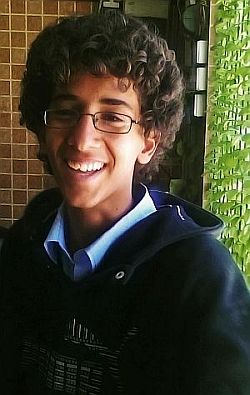
Abdulrahman al-Aulaqi, a sixteen-year-old American citizen killed by a U.S. military strike in Yemen, October 14, 2011.
Last year Attorney General Eric H. Holder Jr. contrived the notion that a citizen’s constitutional right to due process can be protected even in the absence of any judicial process.
In essence, the Obama adminstration’s answer to those who question its application of the law is: trust us, we abide by the law.
Yet if so much trust could be invested in a president’s legal authority, why bother with written laws? Why not simply say what in effect we are being told: the president’s word is law.
Conor Friedersdorf writes: To be clear, the legal fight isn’t about whether Obama can kill American citizens in secret without presenting any charges or evidence of guilt or conducting a trial. At issue is whether Americans are entitled to know what he regards as the legal justification for that power.
So far, President Obama has refused to release that legal reasoning, as prepared by the Office of Legal Counsel. He is effectively denying us the ability to know what laws we live under, and stifling an informed debate about whether the powers he is exercising are in fact proper.
Judge McMahon seems to think it is technically legal for Obama to keep mum. She nevertheless delivered a scathing rebuke. Characterizing his national security policy as an “ill-defined yet vast and seemingly ever-growing exercise,” she began by explaining that in this case he hasn’t actually run afoul of freedom of information laws, and thus cannot be compelled to explain why his controversial actions are permitted by the Constitution and do not violate the law.
But as Friedersdorf further notes, the judge’s own decision is wrapped in secrecy.
McMahon offers a stark reminder of how ruinous government secrets are to the normal functioning of the legal system. “This opinion will deal only with matters that have been disclosed on the public record,” she notes. “The Government has submitted material to the Court ex parte for an in camera review. Certain issues requiring discussion in order to make this opinion complete relate to this classified material. That discussion is the subject of a separate, classified appendix to this opinion, which is being filed under seal and is not available to Plaintiff’s counsel.” There’s a secret opinion explaining why the government’s secret argument for being able to keep secret the argument for why it can kill in secret is valid! This during the tenure of a man who pledged his administration would be the most transparent ever.
The GOP’s anti-Muslim wing is in retreat

Tim Murphy and Adam Serwer report: Over the last four years, a die-hard cadre of activists and their allies in Congress have dragged the Republican Party into a fever swamp of Islamophobia and barely-concealed anti-Muslim bigotry. In their paranoid scenario, Islamic Shariah law is creeping into American courts; the Department of Justice has come under the sway of the Muslim Brotherhood; and the president’s engagement ring includes secret writing that indicates Muslim loyalties.
But after a November election that saw three of the party’s loudest voices on “creeping Shariah” defeated — and the GOP presidential nominee ignore the issue entirely — the anti-Islam movement within the Republican party may have peaked. Wary of further alienating a once-promising conservative constituency, mainstream Republican leaders have sought, publicly and behind closed doors, to distance themselves from the loudest of the Muslim-bashers in their midst.
“They have gotten a bit of bad odor,” says GOP powerbroker Grover Norquist, who has pushed to change his party’s tone on Islam.
Randa Fahmy Hudome, a former Bush administration official, Washington lobbyist, and prominent Muslim Republican, notes: “There is a self-policing factor in the Republican Party, when some members get a little off base on some of these issues. That’s the state of play right now.”
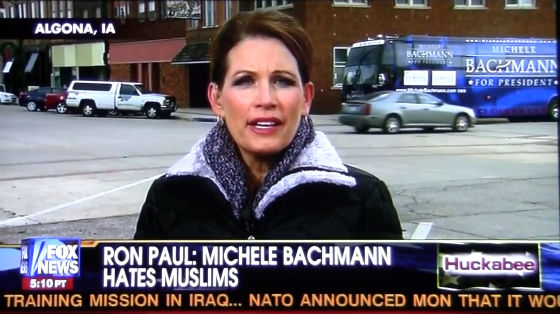
A turning point came in July, when Rep. Michele Bachmann (R-Minn.), along with four Republican colleagues, signed a letter demanding an investigation into the Muslim Brotherhood’s supposed infiltration of the State Department. The letter singled out a top aide to Secretary of State Hillary Clinton, Huma Abedin. Bachmann and her colleagues, deploying tenuous evidence and guilt-by-association, charged that Abedin should not have been given a security clearance because of alleged ties to Muslim radicals.
Days later, Sen. John McCain (R-Ariz.) had condemned Bachmann’s letter from the floor of the Senate, calling it “unwarranted and unfounded” and “scurrilous.” Speaker of the House John Boehner piled on, calling the letter “dangerous.” The chair of the House intelligence committee, Rep. Mike Rogers (R-Mich.), emphasized to USA Today that though she served on his committee, Bachmann’s allegations did not have the committee’s imprimatur. Sen. Marco Rubio, the Florida senator and tea party favorite widely touted as a potential 2016 contender, publicly denounced the allegations promoted by Bachmann and her allies, like former Reagan official and longtime anti-Shariah activist Frank Gaffney. [Continue reading…]
Time Warner Cable drops Current TV upon sale to Al Jazeera
The launch of Al Jazeera America following AJ’s acquisition of Current TV is good news for Americans who currently depend on the meager offerings from the cable news channels.
Time Warner Cable might have no corporate affiliation with Time Warner, owner of CNN, but its hard not to assume that AJ’s deeper penetration into the market is unwelcome news in many quarters of the industry.
As regular viewers of Al Jazeera English are already aware, the quality of news analysis and overall production standards at AJ are significantly superior to the crass product that has become standard fare on cable news.
The decision to stick with the Al Jazeera brand seems to me both bold and smart. To have adopted a new non-Arabic name would simply have offered new ammunition to those who regard the name as tainted or subversive. Much better will be for the audience to form its own views and discover that the Qatar-based broadcaster, far from posing a threat to America, has the potential to raise the abysmally low standards of American news television.
Huffington Post: Time Warner Cable pulled the plug on Current TV just hours after news of the cable channel’s sale to Al Jazeera became official.
“This channel is no longer available on Time Warner Cable,” read an on-screen message where Current TV used to be found.
Al Jazeera took a major step into the U.S. cable market Wednesday by acquiring beleaguered Current TV and announcing plans for a U.S.-based news network to be called Al Jazeera America. But while the new channel will soon be available in 40 million households, Al Jazeera faced a setback when Time Warner Cable — which reaches 12 million homes — announced it was dropping the low-rated Current, which occupied a spot that could have been switched to Al Jazeera America.
Joel Hyatt, who co-founded Current TV with former Vice President Al Gore, told staff in a Wednesday night memo that Time Warner Cable “did not consent to the sale to Al Jazeera.”
“Consequently, Current will no longer be carried on TWC,” Hyatt wrote. “This is unfortunate, but I am confident that Al Jazeera America will earn significant additional carriage in the months and years ahead.”
A Time Warner Cable spokesman said in a statement that “our agreement with Current will be terminated and we will no longer be carrying the channel.”
Some media observers interpreted the move as motivated by politics.
“Time-Warner cable shows abject political and journalistic cowardice by dropping Current because of Al Jazeera deal,” tweeted Dan Gilmor, a technology writer and founding director of the Knight Center for Digital Media Entrepreneurship at Arizona State University.
Video: Does spying on Americans protect the U.S.?
New guns for a new year: American anthropology and gun violence
Jason Antrosio writes: Lynyrd Skynyrd had gun violence figured out in 1975:
Hand guns are made for killin’
Ain’t no good for nothin’ else
And if you like your whiskey
You might even shoot yourself
So why don’t we dump ’em people
To the bottom of the sea
Before some fool come around here
Wanna shoot either you or me
–Lynyrd Skynyrd, Saturday Night SpecialIf they can make gun control palatable for that audience, why can’t we do it now?
As of 19 December 2012, even David Brooks and Gail Collins were in rare agreement that we were headed for some sensible gun regulations, Brooks speculating that the NRA would “get out in front of this by making some immediate concessions on gun rights, and they should promote a practical agenda on mental health and gun access” (The Newtown Aftermath). There seemed to be consensus clamor for strengthening gun laws. But as Frank Rich wisely put it, “let’s see what happens when the circus folds its tent and we are back in the bitter winds of January, redirecting our attention to the Inauguration and the Super Bowl” (America’s Other Original Sin).
We do not need to wait that long. Although many people, even Republicans, thought the NRA stance was unhelpful, disgusting, disastrous, and a thirty-round magazine of crazy, plenty of support remains for NRA-type arguments, especially in districts controlled by House Republicans. This was something I already noted before the NRA announcement, that not a single sitting House Republican had announced any change in position. The rhetoric from many places, including my own Republican representatives, had hardly budged (see Semi-Automatic Anthropology). Truthfully, for most of these representatives there is hardly any political gain from supporting even the mildest gun control regulations, and substantial backlash risk for not holding the line. [Continue reading…]
Assad could hang on till 2014
The Guardian: Bashar al-Assad is likely to stay in power until 2014, according to Syrian watcher Joshua Landis, director of the Centre for Middle East Studies at the University of Oklahoma.
Many pundits predict that the Assad regime is nearing collapse and it is difficult to find any who think Assad will survive the year as president. But Landis, author of the widely read blog Syria Comment, bucks the trend.
Asked to clarify remarks he made on Twitter earlier today about Assad’s prospects, Landis replied: “Who is going to defeat him?”
He told the Guardian that rebels remained divided, underfunded and poorly equipped. He said:
Ethnic and sectarian divisions make victory difficult. Poverty hurts the regime, but also it hurts rebels, who are scavenging and beginning to cannibalise each other.
The Syrian army, by contrast, remains cohesive, fully armed and with a clear command-and-control structure, Landis pointed out. It has also changed tactics to focus on protecting Damascus and the survival of the regime, Landis claimed.
It has learned it cannot control everything and has fallen back. The south and Damascus is much more difficult terrain for rebels than the north and Aleppo.
Aleppo has been harder to defend because of its proximity to Turkey, which offers rebels protection and short lines of retreat. “In the south [neighbouring countries] Lebanon, Israel, Iraq and Jordan are all hostile to rebels and do not allow them refuge, comfort and resupply,” Landis said.
Landis also pointed out that the international community remains divided over how to tackle the crisis. The US is concerned about supporting al-Qaida-linked groups such as Jabhat al-Nusra, which is leading the fight against the Syrian government in many areas and which the US has proscribed as a terrorist organisation.
“The US has few interests in Syria and every incentive to stay out,” Landis said.
And the main regional opponents of the Assad government – Turkey, Qatar and Saudi Arabia – lack a co-ordinated approach and have not always worked in concert.
Nasrallah warns against Syria partition
Middle East Online: War-torn Syria is threatened with “schemes of division and partition”, the head of Lebanon’s Hezbollah movement, Hassan Nasrallah, said in a televised speech on Thursday.
“We fundamentally and ideologically reject any form of partition or division of any Arab or Islamic country and call for them to preserve their unity,” said Nasrallah, whose Shiite militant group is a longstanding ally of the Damascus government of President Bashar al-Assad.
“From Yemen to Iraq to Syria, the region is threatened more than ever by partition, even in Egypt and Libya and Saudi Arabia.
“We in Lebanon and in the region are living through one of the most important and dangerous phases, an atmosphere of strife.”
Nasrallah said that Western and Arab governments which have recognised the armed opposition were responsible for the flood of Syrian refugees into Lebanon, who now number more than 125,000, according to the United Nations.
“The people who bear responsibility for the continuation of their displacement are the same ones responsible for the bloodshed that is inhibiting Syrians from reaching a political dialogue or settlement,” he said.
“If a military solution continues, there will be a long war,” he warned, calling on the Lebanese government to take a stand.
60,000 killed in Syrian war, says U.N.
The Guardian reports: At least 60,000 people have died in Syria’s conflict, the UN human rights commissioner has said, citing an “exhaustive” study which has sharply increased the number of those believed killed.
Before the latest UN-commissioned survey it had been estimated that up to 45,000 people had perished during the conflict; the up-to-date calculation increases the death toll by a third.
The revised estimate came as it was reported that dozens had been killed on Wednesday after a government war plane bombed people queuing at a petrol station in a suburb of Damascus.
According to the UN report, almost three-quarters of those listed as killed on both sides of the conflict were men. Estimating casualties is a notoriously difficult process in the midst of an ongoing war, but in this case the UN says it has established the name, place and date of death of each of those it says it has counted.
The real death toll is likely to be greater because reports containing incomplete information were excluded and a significant number of killings may not have been documented at all.
“There are many names not on the list for people who were quietly shot in the woods,” said Rupert Colville, a spokesman for the human rights commissioner, Navi Pillay.
Syria’s chaos isn’t of America’s making
Aaron David Miller writes: Who lost Syria? Comments of some U.S. senators, analysts and journalists, including the editorial board of this newspaper, suggest there is no doubt: Bashar al-Assad and his thugocracy are primarily responsible for the killings, but the tragedy of Syria is also a direct result of a terrible failure of leadership on the part of the international community, and of the United States in particular.
Syria, it is charged, is Barack Obama’s Rwanda.
Don’t believe it.
The idea that Syria was anyone’s to win or lose, or that the United States could significantly shape the outcome there, is typical of the arrogant paternalism and flawed analysis that have gotten this country into heaps of trouble in the Middle East over the years.
One of the virtues of the Arab Spring/Winter is that Arab people came to own their politics — for better or worse. This sense of ownership was often painful to watch — democracy isn’t always liberal — but it brought authority and legitimacy to the political turbulence roiling that region since late 2010. That made change real and home-grown. The United States and Israel were not central to the myths, tropes and narratives of these historic changes, nor should they be.
Some have argued for intervention by attempting to draw a parallel to Libya: We helped the rebels bring down Moammar Gaddafi, this thinking goes. Why not do the same in Syria?
Three interconnected realities provide the answer. First, there was an international consensus for action in Libya, specifically through the United Nations and NATO. Second, Libya was low-hanging fruit from a military perspective: It had a weak regime, no effective air defenses, no weapons of mass destruction and no allies. The Libyan rebels also held discrete territory, from which it was easy to organize.
Syria is fundamentally different. It combines the worst aspects of three volatile elements: civil war, sectarian violence and manipulation by external powers. The argument that the United States created this mess makes sense only if there really were good options to intercede earlier that might have averted this fate.
Yet that was never the case. Yes, we could have done more on the humanitarian side and perhaps taken a more active role far earlier in helping to organize a political opposition, even covertly.
But since this conflict began in early 2011, all of the military options for intervention have been heavily skewed toward risk rather than reward. Given the Assad regime’s firepower, its allies (Russia and China blocking actions in the U.N. Security Council; Iran supplying money and weapons), Assad’s determination to do whatever it took to survive and his success in keeping much of his Alawite military, security and intelligence forces intact, none of the suggested military options was consequential enough to bring down the regime or to give the rebels a victory.
To stop the regime’s assault, let alone to topple it, would have required direct military pressure, most likely a massive air and missile campaign and probably an intervention force. Those, quite rightly, were never under serious consideration. Half-measures such as arming the rebels and instituting a “no-fly” zone carried risks but no identifiable rewards. It was never clear how a limited military response would shape events. U.S. planners could not be certain that a military response wouldn’t have pushed Russia and Iran to up the ante with more weapons. And with Washington seeking Moscow’s support to keep pressure on Iran’s nuclear program, a major escalation over Syria wouldn’t have helped. [Continue reading…]