Videos: Obama’s state surveillance system

National Security Agency whistleblower William Binney reveals he believes domestic surveillance has become more expansive under President Obama than President George W. Bush. He estimates the NSA has assembled 20 trillion “transactions” — phone calls, emails and other forms of data — from Americans.

Jacob Appelbaum, a computer researcher who has faced a stream of interrogations and electronic surveillance since he volunteered with the whistleblowing website, WikiLeaks, describes being detained more than a dozen times at the airport and interrogated by federal agents who asked about his political views and confiscated his cell phone and laptop.

Facebooktwittermail

CIA wants to expand campaign to kill men with guns and beards

In one of the first reports on the Obama administration’s use of so-called “signature strikes,” this is how they were described in the Wall Street Journal: “Signature strikes target groups of men believed to be militants associated with terrorist groups, but whose identities aren’t always known. The bulk of CIA’s drone strikes are signature strikes.”

To say men “whose identities aren’t always known,” sounds like the manicured language government officials always favor and journalists gladly regurgitate. Probably much more accurate would be to say men whose identities are almost always unknown.

Presidential authorization is not sought for such attacks — how indeed could such a request be couched? “We spotted a bunch of guys with beards and guns. Can we kill them?” The White House is only informed after the “fact” — that x number of “terrorists” were eliminated in a drone strike. The coordinates of the location of the attack are most likely the only indisputable facts in these cases.

“Roger”, chief of the CIA’s Counterterrorism Center, who has been the driving force behind the escalation of these attacks and whose relentless approach is said to have meshed with President Obama’s mindset, gives this assessment of the scope of the campaign: “There is no end in sight.”

The massive expansion of remote warfare may turn out to be among the most lasting legacy of a president who once declared that he didn’t just want to end the war in Iraq but also end the mindset that took us to war.

The Washington Post reports: The CIA is seeking authority to expand its covert drone campaign in Yemen by launching strikes against terrorism suspects even when it does not know the identities of those who could be killed, U.S. officials said.

Securing permission to use these “signature strikes” would allow the agency to hit targets based solely on intelligence indicating patterns of suspicious behavior, such as imagery showing militants gathering at known al-Qaeda compounds or unloading explosives.

The practice has been a core element of the CIA’s drone program in Pakistan for several years. CIA Director David H. Petraeus has requested permission to use the tactic against the al-Qaeda affiliate in Yemen, which has emerged as the most pressing terrorism threat to the United States, officials said.

If approved, the change would probably accelerate a campaign of U.S. airstrikes in Yemen that is already on a record pace, with at least eight attacks in the past four months.

For President Obama, an endorsement of signature strikes would mean a significant, and potentially risky, policy shift. The administration has placed tight limits on drone operations in Yemen to avoid being drawn into an often murky regional conflict and risk turning militants with local agendas into al-Qaeda recruits.

A senior administration official, who like others spoke on the condition of anonymity to discuss sensitive internal deliberations, declined to talk about what he described as U.S. “tactics” in Yemen, but he said that “there is still a very firm emphasis on being surgical and targeting only those who have a direct interest in attacking the United States.”

U.S. officials acknowledge that the standard has not always been upheld. Last year, a U.S. drone strike inadvertently killed the American son of al-Qaeda leader Anwar al-Awlaki. The teenager had never been accused of terrorist activity and was killed in a strike aimed at other militants.

Some U.S. officials have voiced concern that such incidents could become more frequent if the CIA is given the authority to use signature strikes.

“How discriminating can they be?” asked a senior U.S. official familiar with the proposal. Al-Qaeda’s affiliate in Yemen “is joined at the hip” with a local insurgency whose main goal is to oust the country’s government, the official said. “I think there is the potential that we would be perceived as taking sides in a civil war.”

There is however one dimension of this new era that has yet to unfold: a new kind of blowback that is surely inevitable.

Drones might have become the weapon of choice for “taking out” terrorists, but sooner or later they are destined to become deadly tools of terrorism.

A few months ago, Al Jazeera had a show on drones in which the presenter and a producer demonstrated how easy small drones are to operate — though in the process they accidentally landed one on the roof of a federal building!

Josh Rushing, a former U.S. Marines captain and now AJ host, noted some of the implications about the location in Washington DC where the show’s producers were able to fly this small commercial drone:

Imagine the threat that this poses. If you look out of the window… we’re about two or three blocks from the US Capitol, about five, six blocks from the White House that way. So you’re right between the White House and the Capitol building. This has to be some of the most restricted airspace in the entire world and yet you were able to go out and fly this [drone] around without F-16s scrambling overhead.

Drones might currently frequently be deployed to target suspected terrorists, but it’s easy to imagine that a drone of the kind Al Jazeera flew could, with relatively minor adaptations, be modified into a remote-controlled weapon of assassination or a dirty bomb. Come that day, no one will be able to seriously claim, we could never have imagined this happening.

Facebooktwittermail

He’s not alone: Breivik and the rising sea of radical Islamophobia in Europe

Paul Hockenos writes: The biggest mistake that Europeans could make while watching the ongoing trial of Anders Behring Breivik in Norway is to discount his rambling tirades against Islam and multiculturism as the ravings of a crackpot. Whether clinically sane or not — the Norwegian psychiatrists at the pretrial flip-flopped on this — Breivik’s thousand-page manifesto and his convictions in general are not the bizarre product of a “delusional thought universe,” as the first psychiatric report concluded. On the contrary, Breivik’s “thought universe” bears all the staples of a political ideology that accurately reflects a potent Islamophobic discourse that has taken hold across the continent and beyond since the 9/11 attacks. Breivik’s monstrous crimes must serve as a shrill wake-up call for Europeans — and not just Europeans — to acknowledge the very real potential for violence inherent in this movement and take action to stem it, at its source.

Breivik is not a Norwegian novelty but, rather, symptomatic of a growing culture of politically motivated violence across the continent (just check out the London-based Islamophobia Watch, which chronicles anti-Muslim violence). Muslims have been assaulted and killed, their mosques and institutions smeared with graffiti and bombed. Rampages that copycat Breivik’s, say experts, aren’t out of the question. Indeed, security services have been far too lax about the threat of the far right, especially its most radical, Islam-obsessed currents.

Yet the source of the discrimination, hate speech, and violence increasingly directed at Europe’s Muslim communities lies much closer to home: Islamophobia has won an accepted presence in mainstream discourses and politics from Scandinavia to the Mediterranean. Political parties that espouse a somewhat milder version of Breivik’s thoughts sit in parliaments across Northern Europe, including in the European Parliament, and even participate in ruling coalitions. In some countries, like once proudly multikulti Denmark, these politicos have had a pronounced impact on migration, asylum, and cultural, social, and anti-terrorism policies, as well as on the entrenchment of a growing popular animus against Muslims.

Even proper democrats have capitulated to Islamophobia, unable to field the complex issues of Islam and Europe’s Muslims constructively. Last year, Denmark’s opposition Social Democrats, for example, though fiercely split, backed a landmark tightening of immigration requirements for non-Westerners, a bill the anti-Islam Danish People’s Party co-wrote and pushed. The burqa bans in France and Belgium had similar support. Acts like these stigmatize Muslims further and play straight into the hands of this new generation of Europe’s right, which includes extremists like Breivik who are inspired by its arguments. An international network of “counter-jihad” groups are expanding in reach and influence, according to a report released by the British group Hope Not Hate on the eve of Breivik’s trial. Far-right organizations are forging new alliances throughout Europe and the United States, according to the group, which documented 190 groups promoting an Islamophobic agenda. [Continue reading…]

Facebooktwittermail

How the FBI spent a decade hunting white supremacists and missed Timothy McVeigh

J.M. Berger writes: In 1990, the FBI began picking up on rumors about an effort to reconstitute a notorious terrorist-criminal gang known as The Order.

The group’s name was taken from the infamous racist 1978 novel The Turner Diaries, which told the story of a fictional cabal carrying out acts of terrorism and eventually overthrowing the U.S. government in a bloody, nihilistic racial purge. The book was an inspiration to a generation of white nationalists, including Timothy McVeigh, whose path to radicalization climaxed in the Oklahoma City bombing 17 years ago Thursday.

During the 1980s, extremists inspired by the book began robbing banks and armored cars, stealing and counterfeiting millions of dollars and distributing some of the money to racist extremist causes. Members of The Order assassinated Jewish talk radio host Alan Berg in 1984, before most of its members were arrested and its leader killed in a standoff. Less than 10 percent of the money stolen by The Order was ever recovered, and investigators feared members of the group who were still at large would use it to further a campaign of terrorism.

To prevent the rise of a “Second Order,” FBI undercover agents would become it.

Starting in April 1991, three FBI agents posed as members of an invented racist militia group called the Veterans Aryan Movement. According to their cover story, VAM members robbed armored cars, using the proceeds to buy weapons and support racist extremism. The lead agent was a Vietnam veteran with a background in narcotics, using the alias Dave Rossi.

Code-named PATCON, for “Patriot-conspiracy,” the investigation would last more than two years, crossing state and organizational lines in search of intelligence on the so-called Patriot movement, the label applied to a wildly diverse collection of racist, ultra-libertarian, right-wing and/or pro-gun activists and extremists who, over the years, have found common cause in their suspicion and fear of the federal government.

The undercover agents met some of the most infamous names in the movement, but their work never led to a single arrest. When McVeigh walked through the middle of the investigation in 1993, he went unnoticed.

PATCON is history, but it holds lessons for today. Since the attacks of Sept. 11, 2001, a series of arrests for homegrown terrorism has put a spotlight on the secretive world of government infiltration, especially in the Muslim community. Some critics have charged that these investigations, in which suspected jihadists are provided with the means and encouragement to carry out terrorist attacks before being arrested, constitute entrapment and set plots in motion that would never have emerged on their own. But these controversial tactics were around long before the FBI was restructured to prioritize terrorism. And Muslims aren’t the only targets.

Most undercover operations remain secret, especially if they do not result in prosecutions. PATCON stayed under wraps for nearly 15 years, until it was discovered in Freedom of Information Act requests by the author. The account that follows is based on thousands of pages of FBI records on PATCON and the groups it targeted, as well as interviews with FBI agents who worked on the case, former FBI informants, and members of the targeted groups. The documents and interviews reveal important lessons for the modern use of undercover agents and informants. [Continue reading…]

Facebooktwittermail

Personalizing civil liberties abuses

Glenn Greenwald writes: It’s sometimes easy — too easy — to think, talk or write about the assault on civil liberties in the United States, and related injustices, and conceive of them as abstractions. Two weeks ago, the Editorial Page Editor of The New York Times, Andrew Rosenthal, wrote that ever since the 9/11 attacks, the United States has created “what’s essentially a separate justice system for Muslims.” That should be an extraordinary observation: creating a radically different — and more oppressive — set of rules, laws and punishments for a class of people in the United States based on their religious affiliation is a disgrace of historic proportion. Yet here we have someone occupying one of the most establishment media positions in the country matter-of-factly observing that this is exactly the state of affairs that exists on American soil, and it prompts little notice, let alone protest.

There are many factors accounting for the willingness to tolerate, or even approve of, this systematic persecution, most of which I’ve written about before. But one important reason I want to highlight here is that — as is true of America’s related posture of endless wars — its victims, by design, are so rarely heard from. As is true for most groups of humans who remain hidden, they are therefore easily demonized. This invisibility also means that even those who object in principle to what is being done have difficulty apprehending in a visceral way the devastation that is wreaked in the lives of these human beings who have done nothing wrong. Their absence from our discourse can confine one’s understanding of these issues to the theoretical realm, and thus limit one’s ability to truly care.

I spent the last week traveling to several cities where, without planning to do so, I met dozens of people whose lives have been seriously impeded or fully wrecked by the abuses carried out in the name of the War on Terror. This happens whenever I travel to speak at events, and it’s one of the reasons I do it. Meeting such people isn’t the reason for my travel. These meetings usually are unplanned. But the decade-long abuses carried out in the post-9/11 era are so pervasive, so systematized, that no matter what city I visit, it’s very common for me to end up meeting people — usually though not always Muslims — whose lives have been unjustly and severely harmed by these state actions. And it’s not only the targeted individuals themselves, but entire communities of people, whose lives are substantially damaged. Being able to meet and speak with people directly affected personalizes the issues for me that are most frequently written about here, and so I want to describe several of those encounters I had just in the last week. [Continue reading…]

Facebooktwittermail

New video showing Lt. Col. Eisner’s multiple attacks on protesters

When video footage showing Lt. Col. Shalom Eisner slamming his rifle into Andreas Ias’ face first went viral, Eisner’s defenders were quick to dispute the evidence. A common refrain was that the clip lacked context, the assumption presumably being that if viewers saw more extended video then Eisner would be exonerated. Well, the context is now available and it turns out Eisner’s unprovoked attack on Ias was one of several caught on video. No wonder the IDF and Israeli government were swift to dismiss the officer rather than dig themselves into a deeper hole trying to defend the indefensible.

Facebooktwittermail

Would any modern American president ever risk getting this close to the people?

The video below shows Iran’s President Mahmoud Ahmadinejad in a face to face encounter with a young Iranian woman in Bandar Abbas on April 10. Whatever she had to say to him, he seemed pretty unfazed by the situation.

Saeed Kamali Dehghan writes: When Mahmoud Ahmadinejad took office in 2005, he pledged to visit all 31 Iranian provinces at least twice during his presidential term. The plan drew criticism from the beginning; the opposition accused him of populism by trying to promote his own profile, and said he was wasting money and time.

But many people loved it. Pictures of thousands of people in provinces waiting for the presidential motorcade, desperately running after his car to catch a glimpse or shake a hand and, as it became popular later, to hand him a letter of request, became familiar in state TV’s rolling coverage of his visits.

When it became apparent that Ahmadinejad’s office actually responded to many of the letters – often requests for grants or loans – more and more people turned out to greet him. Agency pictures showed a hardworking Ahmadinejad taking a nap on the floor on tour and a documentary was even made called Letters to the President.

But as his popularity dwindled, especially in the aftermath of the 2009 disputed presidential elections, his provincial visits became less triumphant: pictures (such as this image from the western city of Tabriz) showed humiliatingly small crowds turning out to greet him.

This week, a dramatic video was posted on YouTube showing a young woman jumping on to Ahmadinejad’s car. The footage drew a great deal of attention, with the Times describing the woman as a “motorcade heroine”. Elsewhere, the Telegraph said Ahmadinejad had been mobbed by “hungry protesters”.

Watching the video, it’s impossible to make out what the woman is actually saying to the president, but there is nothing to suggest the incident was any different from previous occasions in which petitioners have mobbed Ahmadinejad. A similar incident happened earlier this year in Hormozgan province, in which another woman sat on his car.

Facebooktwittermail

For Israel, the problem with Iran diplomacy is the prospect of nuclear compromise

Tony Karon writes: Israel’s Prime Minister Benjamin Netanyahu amplified his skepticism of President Obama’s Iran strategy on Wednesday, when he used a Holocaust remembrance speech to warn that Iran was building nuclear weapons in order to destroy Israel. “The Iranian regime is acting openly and decisively toward our destruction, and it is acting feverishly to develop a nuclear weapon to achieve this goal,” Netanyahu said, two days after accusing the Administration and its partners of giving Iran a “freebie” in last weekend’s nuclear talks in Istanbul. The combination of those statements creates an impression that the Israelis see the current diplomacy with Iran as prevarication in the face of a mortal threat to Israel — a message calculated to raise the domestic political heat on President Obama.

Of course, the U.S. and Israeli intelligence assessment is that Iran is not in fact currently embarked on a feverish dash to build nuclear weapons; it has not yet taken the strategic decision to build such weapons even as it steadily accumulates the capability to do so. And even Netanyahu’s Defense Minister, Ehud Barak, has suggested that a nuclear-armed Iran would be unlikely to launch a nuclear attack on Israel, given Israel’s own capability to “lay waste” to Iran. Administration officials believe that because Iran has not yet opted to build nuclear weapons and the pressure of steadily escalating sanctions has made Tehran more amenable to compromise, it remains possible to seek a deal to limit Iran’s nuclear work — and that if it could be achieved, such a solution represents the best and most durable solution. Still, it should come as no surprise that Israel’s leaders are agitated and openly skeptical over the U.S. entering a new process of diplomatic engagement on Iran’s nuclear program. They know that even the best-case diplomatic outcome would fall short of Israel’s demands but might do enough to de-escalate the conflict and push the issue off the international community’s crisis agenda.

The principles guiding the ongoing talks between negotiators from Iran and the P5+1 group, as laid out by chief Western negotiator and EU Foreign Policy chief Catherine Ashton on Saturday, are compliance with the Non-Proliferation Treaty (NPT) and a sustained process of step-by-step concrete actions undertaken on a basis of reciprocity. That framework alone is cause for disquiet in Israel, which is not a signatory to the NPT and which insists that Iran cannot be allowed to maintain any uranium-enrichment capability. Although the NPT obliges Iran to account for all its nuclear work to the satisfaction of the International Atomic Energy Agency (IAEA) — which Iran has yet to do — it also guarantees Iran’s right to enrich uranium for peaceful purposes. A diplomatic solution based on the NPT, therefore, would be one that strengthens the safeguards against Iran using its nuclear capability to build weapons but would not dismantle and remove Iran’s enrichment capability as Israel — as well as France and more hawkish elements in Washington — has demanded. The Obama Administration’s position on the issue has been ambiguous, having initially inherited the Bush Administration’s zero-enrichment stance but more recently spoken of Iran’s having the right to a peaceful nuclear program in line with the NPT.

Facebooktwittermail

In Breivik, troubling echoes of West’s view of Islam

Timothy Stanley writes: The trial of mass murderer Anders Breivik has confirmed one thing so far: He seems quite mad. Looking plump and dumb, with a slightly receding hairline, the Norwegian gave a right-wing salute as he entered the courtroom and smirked his way through CCTV footage of his handiwork.

Breivik claims that he killed 77 people as an act of self-defense against the Islamification of Norway, that he is a member of the Knights Templar and part of an “anticommunist” resistance to multiculturalism. Reading his insane manifesto, it is tempting to dismiss him as a nut with a gun.

Nevertheless, there’s no denying the political context to what Breivik did. Since 9/11, fringe and mainstream politicians in Europe and America have spoken of Islam as incompatible with Western values. Breivik quoted many of them in his manifesto. This is not to say that he took direct inspiration from those public figures, or that they bear personal responsibility for his crimes. But Breivik’s paranoia does conform to a popular — wholly negative — view of the twin problems of Islam and multiculturalism. Tragically, it is a view that few mainstream politicians have been willing to challenge.

Breivik makes two false claims. The first is that Islam is ethically inferior to Christianity and cannot exist peacefully within the secular democracies of the post-Enlightenment West. That is the open view of the Dutch Party for Freedom, the French National Front, the English Defense League and the Finnish True Finns. It was implicit in Republican presidential candidate Herman Cain’s aversion to the building of mosques. We might also infer it from much of the testimony presented at Rep. Peter King’s congressional hearings into the radicalization of American Muslim youth. King has opined that there are “too many mosques” in the United States and that roughly 80% of American Muslims are radical.

The mistake being made by all these people is to conflate a tiny minority of political Islamists — whose precise ideology has only really emerged in the last 30 years — with the entire global and historical community of Muslims. [Continue reading…]

Facebooktwittermail

Why I’m suing the U.S. government to protect internet freedom

Birgitta Jónsdóttir writes: Freedom for most people is something sacred, and many have been willing to sacrifice their lives for it. It is not just another word, for we measure the health of our democracies by the standard of freedom. We use it to measure our happiness and prosperity. Sadly, freedom of information, expression and speech is being eroded gradually without people paying much attention to it. Freedom of movement is permitted within certain zones, freedom of reading is disappearing, and the right to privacy is dwindling with the increased surveillance of our every move.

When the world wide web came into being, it was an unrestricted, free flowing world of creativity, connectivity and close encounters of the internet kind. It was as if the collective consciousness had taken on material (yet virtual!) form and people soon learned to use it to work, play and gather. Today’s social and democratic reform is born and bred online where people can freely exchange views and knowledge. Some of us old-school internet freedom fighters understood this value way before the web became such a part of our daily lives. One of them is John Perry Barlow, who in 1996 wrote a Declaration of the Independence of Cyberspace in a response to an attempt to legalise restrictions on this brand new world. In it he declares: “Governments of the industrial world, you weary giants of flesh and steel, I come from Cyberspace, the new home of mind. On behalf of the future, I ask you of the past to leave us alone. You are not welcome among us. You have no sovereignty where we gather.”

Barlow inspired me and others to create the Icelandic Modern Media Initiative (IMMI), a parliamentary proposal unanimously approved by the Icelandic parliament in 2010, tasking the government to make Iceland a safe haven for freedom of information and expression, where privacy online would be as sacred and guarded as it is in the real world. The spirit of IMMI is in stark contrast with the serious attacks we are currently faced with. We have legal monsters like Acta, Sopa, Pipa and now Cispa; we have anti-terrorist acts abused to tear these liberties apart; we have armies of corporate lawyers scrutinising every bit of news prior to it getting out to us before we ever get to know the real stories that should remain in the public domain.

Facebooktwittermail

Can Iran risk acquiring nuclear weapons and can the world risk Israel keeping them?

Setting aside the comic book narrative that portrays suicidal “mad mullahs” plotting to commit a second Holocaust, it is widely assumed that if Iran actually succeeded in becoming a nuclear-armed state, it’s nuclear weapons would be a strategic asset. The thinking goes that nuclear strength offers a layer of protection that will deter military adventurism among ones adversaries. But could Iran be confident that calculus would apply to Israel?

Fred Kaplan describes the reasons why deterrence is weaker if nuclear adversaries are much closer together than the U.S. and the Soviet Union. In the case of Iran and Israel however, proximity is not the only issue. In the cost-benefit analysis the Iranians have presumably had under long review, they must surely have asked and be asking themselves this question: How great is the risk that Israel might launch a nuclear strike on Iran preemptively because its leaders panicked?

As much as Israel has sought to cultivate its mad dog image, it’s hard not to also see that Israel’s political leaders have a long history of overreacting to threats that were much smaller than perceived. This tendency to overreact, far from presenting the image of a country that is supremely vigilant about its security, suggests a kind of institutionalized and culturally embedded hyper-vigilance. Israel acts like a state in perpetual trauma — a country that displays the symptoms of PTSD. If it operates on a hair-trigger now, susceptible to being “set off” by tiny “threats” like flotillas and flytillas, how much more sensitive would that hair-trigger become if the threat was the possibility of a nuclear strike from Iran?

Netanyahu and others in Israel might for political purposes frequently overstate their own fears about Iran, but the question Iranians and everyone else should be asking is whether Israel’s use of its own nuclear weapons will sooner or later become inevitable and if the consensus is that it will, then the most urgent task becomes: What would it take to disarm the most dangerous nuclear state in the world?

Fred Kaplan writes:

Moscow and Washington are 5,000 miles apart. If they were 900 miles apart (as Tehran and Jerusalem are), there probably would have been a nuclear war at some point in the last 50 years. It takes a half hour for an ICBM to fly from Moscow to Washington; that’s just barely enough time for the president to decide what to do if a blip on the radar screen suggests an attack is underway. It takes about five minutes for a short-range missile to fly from Tehran to Israel. That’s probably not enough time.

There were several times during the Cold War when America’s finely tuned radars mistook a flock of geese for a flight of Soviet missiles or when a software glitch produced a false warning of an attack. In all these instances, the leaders could afford to wait a bit to see how the signals panned out. According to David Hoffman’s frightening book The Dead Hand: The Untold Story of the Cold War Arms Race and Its Dangerous Legacy, there was an incident in 1983 when a Soviet early-warning satellite picked up signals of an American missile attack. The signal in this case was never straightened out; the system kept warning of an attack all the way until the point when the warheads would have exploded, had there really been an attack. Luckily, the Soviet lieutenant colonel at the monitoring station, thinking that this couldn’t really be happening, decided—on his own authority—to tell his commander that it was a false alarm and, therefore, there was no need to launch the Soviets’ own ICBMs. He was lying: According to the warning system, the attack was real. But by lying, he probably prevented World War III.

It’s not at all clear that an Iranian or Israeli officer would keep his cool under similar circumstances (or that he’d be so laid back to begin with)—especially if the false warning coincided with a diplomatic crisis or a military exercise or some other moment of extraordinary tension.

I don’t think the Iranian nuclear program constitutes an urgent danger. But if there is a way to nip this whole panoply of nightmare scenarios in the bud—if there’s a diplomatic route to keeping Iran from going nuclear—then it’s worth pursuing, at some effort and cost.

Facebooktwittermail

Britain’s duty to the Palestinian people

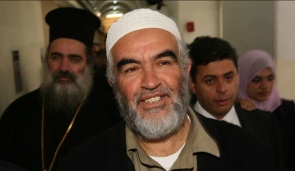
Raed Salah writes: In June 2011 I came to Britain to begin a speaking tour to draw attention to the plight of my people, the Palestinian citizens of Israel. The tour was meant to last 10 days. Instead I had to stay for 10 months in order to resist an attempt by the home secretary, Theresa May, to deport me – itself the result of a smear campaign against me and what I represent. I fought not just for my own sake, but for all who are smeared because they support the Palestinian cause.

Since 1990 I have visited the UK several times to speak publicly. On this occasion I was arrested, imprisoned, and told I was to be deported to Israel because my presence in the UK was “not conducive to the public good”. A judge later ruled that I had been illegally detained, but bail conditions continued to severely restrict my freedom, making it impossible for me to speak as I had intended.

After a 10-month legal battle, I have now been cleared on “all grounds” by a senior immigration tribunal judge, who ruled that May’s decision to deport me was “entirely unnecessary” and that she had been “misled”. The evidence she relied on (which included a poem of mine which had been doctored to make it appear anti-Jewish) was not, he concluded, a fair portrayal of my views. In reality, I reject any and every form of racism, including antisemitism.

I have no doubt that, despite this, Israel’s cheerleaders in Britain will continue to smear my character. This is the price every Palestinian leader and campaigner is forced to pay.

My people – the Palestinians – are the longstanding victims of Israeli racism. Victims of racism, anywhere, should never condone or support the maltreatment of another people, as Israel does.

The suffering of the Palestinian citizens of Israel has been ignored for decades. But there is today a growing awareness of it, which partially explains this smear campaign against me. In December 2011, EU ambassadors in Israel raised serious concerns about Israeli discrimination, noting that “not only has the situation of the Palestinian Arab minority in Israel not improved, but it has further deteriorated“. [Continue reading…]

Facebooktwittermail

BP covered up blow-out two years prior to deadly Deepwater Horizon spill

Greg Palast writes: Two years before the Deepwater Horizon blow-out in the Gulf of Mexico, another BP off-shore rig suffered a nearly identical blow-out, but BP concealed the first one from the U.S. regulators and Congress.

This week, EcoWatch.org located an eyewitness with devastating new information about the Caspian Sea oil-rig blow-out which BP had concealed from government and the industry.

The witness, whose story is backed up by rig workers who were evacuated from BP’s Caspian platform, said that had BP revealed the full story as required by industry practice, the eleven Gulf of Mexico workers “could have had a chance” of survival. But BP’s insistence on using methods proven faulty sealed their fate.

One cause of the blow-outs was the same in both cases: the use of a money-saving technique—plugging holes with “quick-dry” cement.

By hiding the disastrous failure of its penny-pinching cement process in 2008, BP was able to continue to use the dangerous methods in the Gulf of Mexico—causing the worst oil spill in U.S. history. April 20 marks the second anniversary of the Gulf oil disaster.

There were several failures in common to the two incidents identified by the eyewitness. He is an industry insider whose identity and expertise we have confirmed. His name and that of other witnesses we contacted must be withheld for their safety.

The failures revolve around the use of “quick-dry” cement, the uselessness of blow-out preventers, “mayhem” in evacuation procedures and an atmosphere of fear which prevents workers from blowing the whistle on safety problems. [Continue reading…]

Facebooktwittermail

How the Holocaust led to a life of exile in the new Jewish homeland

Gideon Levy writes: Dr. Heinz Loewy was not your classic Holocaust survivor. He did not go through any of the camps, and so did not have a number tattooed on his arm. He was a refugee, and he was my father. It seems to me that he lived most of his life as a refugee, even though he would have vehemently denied it. He lived in Israel for 60 years, but never arrived here, not really.

It’s true that on Independence Day he made sure to take out the folded flag and hang it on the balcony. It’s true that he had a good life here. But looking back, it seems to me that he never really found his place here. It wasn’t that he was trying to relive the Europe he had left behind but it’s doubtful that he found a replacement for it here. He stored his suits and ties in the closet, his Bermuda shorts replacing them in the hot summer. He also left behind the Latin he had learned, save for one proverb that he would repeat to us. Even his doctorate in law from the University of Prague was unused here.

When he arrived here, alone, after being flung about at sea for a couple of long months on an illegal immigrant ship and being jailed in Beirut, he was forced to become a door-to-door salesman, going by bicycle from house to house in Herzliya, offering the Central European pastries that he made in the bakery he owned with his sister. He looked good, baked well, and had a doctorate to boot, but surely that life was not the life he’d dreamed of as a youth.

Today, as we remember the Holocaust, we must also remember those who may not have experienced all its horrors but still had their lives changed beyond recognition, or even destroyed. The Holocaust led to the establishment of the State of Israel and the ingathering of a great many survivors to it, but not all of them felt at home. They were doomed to a life of exile in their new homeland. My father was one of them.

My father was born in Saaz, in the Sudeten region, a Yekke in every way. He left Europe, his parents and his fiancee behind, along with a promising future as a district attorney, or landes gericht rat, as he would write on the pension forms he received from Germany years after he came here.

From his parents’ house he managed to salvage one Persian rug, which became tattered over the years, and an oil painting of a vase of flowers, which hangs in my home to this day.

Here they gave him the Hebrew name “Zvi,” and after a few years of delivering cakes as well as newspapers, he became a clerk at Herut, a Histadrut labor federation-owned company, where he worked until retirement. There they called him “Dr. Levy,” with a mixture of admiration, distance and a chuckle. All his colleagues were Eastern Europeans, with whom he had difficulty connecting.

After several years of poverty, the German reparations arrived, and our lives became relatively comfortable. At age 53, my father drove his first car, which, naturally, was German-made, and he took care of it the way you take care of a child.

He never returned to his hometown. He absolutely refused to do so, which at the time I didn’t understand. He always explained it by saying that nothing remained, and there was nothing and no one to go back to – the German town had become Czech. He didn’t speak much about what he had left or what he went through, and I never asked. Today, when I so yearn to know (and I really know almost nothing ), it’s too late.

My father arrived here already pretty assimilated and he didn’t connect much to Judaism in Israel, either. I doubt he knew the difference between Shavuot and Sukkot. He also never really connected with Israeliness. I doubt he knew the difference between hummus and tehina, since he never touched either. He even wrote his family name as “Loewy,” differently than most. He read The Jerusalem Post, voted for Labor’s forerunner, Mapai, and remained a foreigner. Once a year he would go off with my mother on vacation – to Germany, of course.

What’s left in me of his foreignness? To what degree was I fashioned by his refugee-ness, and how did being a refugee’s son influence my worldview? That’s material for a different article.

Today I will merely remember Dr. Heinz Loewy, who was my beloved father, and whose life was turned upside down by the Holocaust, or perhaps even utterly destroyed.

Facebooktwittermail

Cocaine, Death Squads and the War on Terror

In a review of Oliver Villar and Drew Cottle’s new book, Cocaine, Death Squads and the War on Terror: U.S. Imperialism and Class Struggle in Colombia, Daniel Kovalik writes:

The premise of the book is that, despite the U.S. claims that it is engaged in a war against drugs in Colombia, it is in fact engaged in an anti-insurgency war against the left-wing FARC guerillas – a war which does not seek to eradicate coca growing and cocaine production in Colombia at all.

Rather, the U.S. war effort (which has cost U.S. taxpayers over $7 billion since 2000) is designed to ensure that the allies of the U.S. in Colombia — that is, the Colombian state, paramilitaries and wealthy elite who are favorable to U.S. business interests and to the U.S.’s desire for exploitation of Colombia’s vast resources — are themselves able to monopolize the drug trade so critical to their survival.

This thesis is well expressed in the Forward by Peter Dale Scott:

The CIA can (and does) point to its role in the arrest or elimination of a number of major Colombian traffickers. These arrests have not diminished the actual flow of cocaine into the United States, which on the contrary reached a new high in 2000. But they have institutionalized the relationship of law enforcement to rival cartels and visibly contributed to the increase of urban cartel violence. The true purpose of most of these campaigns, like the current Plan Colombia, has not been the hopeless ideal of eradication. It has been to alter market share: to target specific enemies and thus ensure that the drug traffic remains under the control of those traffickers who are allies of the Colombian state security apparatus and/or the CIA. This confirms the judgment of Senate investigator Jack Blum a decade ago, that America, instead of battling a narcotics conspiracy, has in a subtle way . . . become part of the conspiracy.

These may seem like wild claims at first blush, but the authors put this in context by reminding the reader of the history of U.S. war efforts since World War II, many of which have been financed, at least in part, through alliances with drug traffickers. The litany of this is a long one, with the OSS (the predecessor of the CIA) forming a strategic alliance with the Sicilian and Corsican mafia after World War II to prevent possible communist uprisings in Europe and to smash left-wing unions; the CIA’s assisting the Kuomintang with its opium trafficking operations to fund their joint anti-communist efforts in Asia; the CIA’s actual trafficking of opium out of Laos, Burma and Thailand to help fund the U.S. counter-insurgency effort in South East Asia; the CIA’s support of “the chief smugglers of Afghan opium, the anti-communist Mujahedin rebels in Afghanistan” in their efforts against the pro-Soviet government in Afghanistan, leading ultimately to Afghanistan becoming one of the largest opium suppliers in the world (a status only briefly interrupted when it was under Taliban control); and the Reagan Administration’s funding the Nicaraguan Contras (after such funding was outlawed by Congress) by, among other things, cocaine smuggling operations.

The book quotes the United Nations Drug Control Program (UNDCP) which concludes that, today, “the biggest heroin and cocaine trading institutions in the world are the militaries of Burma, Pakistan, Mexico, Peru and Colombia – ‘all armed and trained by U.S. military intelligence in the name of anti-drug efforts.’” In the case of Colombia, while the U.S., to justify its massive counterinsurgency program, vilifies the FARC guerillas as “narco-terrorists,” this title is more befitting of the Colombian state and its paramilitary allies.

Facebooktwittermail