Geert Wilders has something against Islam

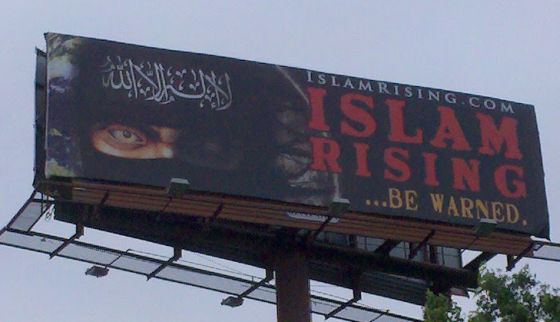
Christopher Dickey writes: A couple of years ago, a billboard appeared outside Columbia, S.C., looming above Interstate 26. Beady eyes stared out from a black balaclava emblazoned with an inscription from the Quran—clearly the eyes were meant to be those of a terrorist—and next to them were these words: “ISLAM RISING … BE WARNED.”

Erected by the Virginia-based Christian Action Network, the sign advertised the group’s documentary about a charismatic Dutch politician with dyed-blond hair, a mysterious past, and a platform of paranoid hate. South Carolina seemed to offer a ready audience for Geert Wilders’s dire warnings against the Muslim religion. Today, with the Republican road show encamped in the state for the Jan. 21 presidential primary, the 48-year-old Dutchman is more than ever a man who needs to be watched and listened to carefully. At home in the Netherlands, his explosive theme of unrelenting hostility to Islam has built his xenophobic Party for Freedom, founded in 2005, into the country’s third-largest political party; across the Atlantic his message packs serious resonance in an American heartland still shaken by the 9/11 attacks. Wilders’s name and message have been invoked repeatedly in South Carolina and at least a dozen other state legislatures as they debate measures to ban an imagined threat: Islamic law.

So does he worry about the violence his rants could inspire? Wilders is a master at capitalizing on real fears and conjuring false ones—and then dodging responsibility if people’s lives are ruined or lost. “I am responsible for my own actions and for nobody else’s actions,” he says. In a wide-ranging interview at the offices of the Dutch Parliament in The Hague, Wilders complained to Newsweek that the “naive” Obama administration wasn’t doing nearly enough to combat what Wilders regards as the Islamic threat. Expanding on his claims that the Quran should be banned, just as Mein Kampf has been in some countries, he said the United States should be “getting rid of Islamic symbols—no more mosques—and closing down Islamic schools.”

There’s no such thing as moderate Islam, Wilders insists, and he’s tired of hearing that radical Islam is something different from the mainstream faith. It means nothing to him that among Muslim believers there are many different sects and currents. “He makes no distinctions whatsoever,” says Robert Leiken, author of the just-published study Europe’s Angry Muslims. “He wants to throw out the whole Quran because of some things that are objectionable—but you could say the same thing about the Book of Joshua.” Wilders refuses to concede the point. In his view, those who follow the Quran are deluded or worse. “Totalitarian fascist ideology,” he calls it. “I have nothing against the people,” he says. “I have something against Islam.”

Facebooktwittermail

Israelis in Tehran?

The Sunday Times has a report whose details the paper cannot verify, claiming that a team of Israeli agents conducted last week’s attack in which an Iranian nuclear scientist, Mustafa Ahmadi Roshan, was blown up by a car bomb in Tehran. The report seems to have several functions:

  • To burnish Mossad’s reputation as a daring and deadly intelligence service;
  • to imply that Israelis are willing to risk their lives where Americans would not be willing to take similar risks, given that the U.S. has emphatically denied playing any role in any of the recent assassination operations;
  • and to amplify the provocation to the Iranian government by bragging that Israeli agents can kill Iranians with impunity on the streets of their own capital.

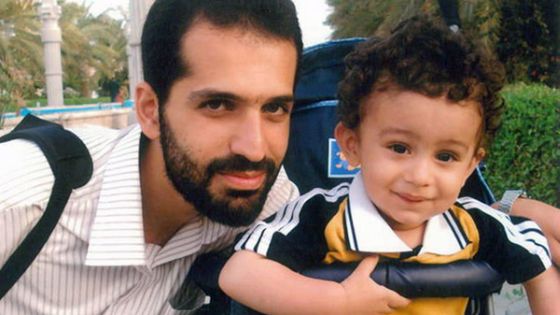
Mostafa Ahmadi Roshan with his son. Roshan is the fifth Iranian nuclear scientist whose murder is being linked to Israel.

As Roshan, 32, prepared to leave home [last Wednesday], he was monitored from a makeshift control room in a safe house nearby. Israeli agents were also watching the entrance to Iranian intelligence headquarters in the city centre. Suddenly they noticed a number of cars and people running; then they saw police rushing into the nearby streets. Another agent monitoring radio traffic between the Tehran police and security forces confirmed unusual activity. Had the operation been exposed?

In 1997 two agents of Caesarea, Mossad’s top hit squad, had bungled an attempt to kill a Palestinian leader in Jordan and were arrested before they could flee, triggering a diplomatic crisis. Jordan is relatively friendly to Israel. Iran is its bitterest enemy. There was no point in hesitation. If the agents had been rumbled, they would never escape anyway. The mission commander decided to go ahead.

Just before 8am on Wednesday, Reza Qashqai, Roshan’s bodyguard and driver, arrived. Qashqai knew the risks. He checked under the silver Peugeot 405, a state-issue car, and looked beneath the bonnet before slipping into the driver’s seat to wait for the scientist.

The house was in the Cheezar neighbourhood of northern Tehran, a village overtaken by the sprawl of the capital but still home to quiet traditional families who support the regime.

Roshan got into the car, ready for a long day as deputy head of the Natanz uranium enrichment site.
[…]
As the clock ticked towards 8am, an Israeli spotter reported via a secure text that Roshan was being driven from his home. Qashqai was at the wheel, a crucial detail because the bodyguard would be slower to respond if he was driving.

The assassins’ commander took the final decision. “Go,” he told agents who were standing by with a motorcycle in a hidden garage. They left immediately, weaving through the gridlocked streets of rush-hour Tehran.

In the five attacks on nuclear scientists, the hit squad has used a motorbike every time. The motorcyclist is ubiquitous in the capital’s traffic jams, often wearing a surgical mask for protection against the heavy pollution and able to move close to the target between the lines of stationary cars without attracting attention.

They speeded up to reach Gol Nabi Street, which Roshan always passed on his way to work.

At 8.20am they spotted the Peugeot. The masked figure on the pillion seat made a quick check that Roshan was the passenger, then attached a magnetic bomb to the car. The motorbike sped away. The plastic explosive had been shaped to deliver its full force at the passenger. Nine seconds later it exploded. The scientist was killed instantly. Qashqai, badly injured, died in hospital.

Facebooktwittermail

China walks the tightrope in the Persian Gulf

The Hindu reports: Without undermining its ties with Iran despite growing military tensions in the region, China, is seeking a deeper engagement in the oil and gas sector with Saudi Arabia and other Arab Gulf states, as part of a developing contingency plan, in order to ensure stable energy supplies.

Chinese Prime Minister Wen Jiabao has just concluded a visit to Saudi Arabia and has arrived on Monday in the United Arab Emirates (UAE), as part of a regional tour, which will also take him to Qatar, a leading international natural gas exporter.

The visit takes place shortly after Timothy Geithner, the Treasury Secretary of the United States, journeyed to Beijing to implore the Chinese leadership to scale down its energy dependence on Iran, China’s third largest supplier of oil. Washington is trying to throttle Iran’s oil exports, apparently, to dissuade Tehran to acquire nuclear weapon capability—a move that Iran has countered by threatening to close the Strait of Hormuz through which 20 per cent of the world’s oil supplies pass.

China, as was evident during Mr. Geithner’s visit has rejected acceptance of a linkage between oil exports by Iran, and its atomic programme. Nevertheless, Beijing appears to have adopted a double track approach-of keeping Iran engaged while expanding energy ties with Tehran’s Arab foes, chiefly Saudi Arabia.

“Wen’s visit shows that China is seeking to reinforce its energy security in the region, but it does not necessarily mean that Beijing no longer regards Iran as a major oil supplier,” said Han Xiaoping, chief information officer of the China Energy consultancy. Speaking to the Chinese daily Global Times, Mr. Han acknowledged that if “the Strait of Hormuz is blocked, 40 percent of China’s total oil imports will be affected, and the country would face a major energy crisis”.

Meanwhile, Bloomberg reports: China stands to be the biggest beneficiary of U.S. and European plans for sanctions on Iran’s oil sales in an effort to pressure the regime to abandon its nuclear program.

As European Union members negotiate an Iranian oil embargo and the U.S. begins work on imposing sanctions to complicate global payments for Iranian oil, Chinese refiners already may be taking advantage of the mounting pressure. China is demanding discounts and better terms on Iranian crude, oil analysts and sanctions advocates said in interviews.

“The sanctions against Iran strengthen the Chinese hand at the negotiating table,” Michael Wittner, head of oil-market research for Societe Generale SA in New York, said in a phone interview. While there are no confirmed numbers, Chinese refiners are likely to win discounts on Iranian crude contracts as buyers from other nations halt or reduce their purchases of Iranian oil to avoid being penalized under U.S. and European sanctions, he said.

Facebooktwittermail

Clay Shirky on Dan Sperber’s explanation of culture

John Brockman, creator of Edge, presents 191 answers to the question: What is your favorite deep, elegant, or beautiful explanation?

Clay Shirky responds: Why do groups of people behave the same way? Why do they behave differently from other groups living nearby? Why are those behaviors so stable over time? Alas, the obvious answer—cultures are adaptations to their environments—doesn’t hold up. Multiple adjacent cultures along the Indus, the Euphrates, the Upper Rhine, have differed in language, dress, and custom, despite existing side-by-side in almost identical environments.

Something happens to keep one group of people behaving in a certain set of ways. In the early 1970s, both E.O. Wilson and Richard Dawkins noticed that the flow of ideas in a culture exhibited similar patterns to the flow of genes in a species—high flow within the group, but sharply reduced flow between groups. Dawkins’ response was to assume a hypothetical unit of culture called the meme, though he also made its problems clear—with genetic material, perfect replication is the norm, and mutations rare. With culture, it is the opposite—events are misremembered and then misdescribed, quotes are mangled, even jokes (pure meme) vary from telling to telling. The gene/meme comparison remained, for a generation, an evocative idea of not much analytic utility.

Dan Sperber has, to my eye, cracked this problem. In a slim, elegant volume of 15 years ago with the modest title Explaining Culture, he outlined a theory of culture as the residue of the epidemic spread of ideas. In this model, there is no meme, no unit of culture separate from the blooming, buzzing confusion of transactions. Instead, all cultural transmission can be reduced to one of two types: making a mental representation public, or internalizing a mental version of a public presentation. As Sperber puts it, “Culture is the precipitate of cognition and communication in a human population.”

Sperber’s two primitives—externalization of ideas, internalization of expressions—give us a way to think of culture not as a big container people inhabit, but rather as a network whose traces, drawn carefully, let us ask how the behaviors of individuals create larger, longer-lived patterns. Some public representations are consistently learned and then re-expressed and re-learned—Mother Goose rhymes, tartan patterns, and peer review have all survived for centuries. Others move from ubiquitous to marginal in a matter of years—pet rocks, the Pina Colada song. Still others thrive only within a subcultural domain—cosplay, Civil War re-enactment. (Indeed, a sub-culture is simply a network of people who traffic in particular representations, representations that are largely inert in the larger culture.)

With Sperber’s network-tracing model, culture is best analyzed as an overlapping set of transactions, rather than as a container or a thing or a force. Given this, we can ask detailed questions about which private ideas are made public where, and we can ask when and how often those public ideas take hold in individual minds.

Facebooktwittermail

Interview with Haneen Zoabi

The Israeli Occupation Archive interviews Haneen Zoabi, a Palestinian member of Israel’s parliament who became known around the world after her participation in the Gaza Flotilla aboard the MV Mavi Marmara.

During the past year, a series of ethnocentric and other legislative initiatives were introduced in the Knesset, designed to define loyalty to the state as Jewish; severely penalize participation in non-violent BDS actions against the occupation; enable discrimination in housing and access to land via “Admission Committees” that can bar Palestinian Israelis from residing in hundreds of communities to keep them exclusively Jewish; punish NGOs that protect the civil rights of citizens by limiting or taxing international funding sources they depend on; limit the press; influence the Supreme Court; and more.

How do these efforts affect the million and a half Palestinian citizens of Israel, and how do you see future relations between Arab and Jewish citizens of Israel unfolding over the next few years?

HZ: First of all, the situation of the Palestinians in Israel is not new. I don’t agree with the [Israeli] left’s description that we are moving from a democratic to a fascist state. It is a gradual continuation of long-standing policies that confiscated my land; that discriminate against me; and that refuse to recognize me as an equal citizen and as one of the owners of this homeland.

The problem is not simply the terms of citizenship: We want to be equal to the Jews, but also, as the indigenous people, this homeland belongs to us. I want to be equal not because I immigrated or because I’m a citizen. Primarily I want to be equal because it is my homeland and nobody has the right to take it away. And when I ask for this kind of equality, not as an immigrant but as a member of the indigenous people, as the owner of this land, then I am already making a compromise, making a huge compromise. In this context, just asking for equality with the Jews is a compromise.

But there is also something new, something that really changed in the nature of the racism and discrimination. Earlier, the racism and discrimination were inherent in policies that were part of Israel’s liberal and democratic discourse.

The state really believed it could be Jewish and democratic, and defended Israel as though there was no contradiction between the values of Jewishness and democracy. When many years ago my party [the National Democratic Assembly] started pointing out that there was a contradiction between the two, its arguments seemed to many to be dangerous. We found ourselves defined as a “strategic threat.” Israelis and the world would say: What’s the contradiction? Others – the Shin Bet, the domestic intelligence service, and mainstream politicians – would say that this undermines Israel as a “Jewish and democratic state.”

Now, even Israeli policy-makers understand the problem. These [anti-democratic] laws have forced some of the Knesset members to say, “If there’s a contradiction between Jewish values and democratic values, we prefer the Jewish values.” Now it’s not even a question of which value they prefer, it’s clear they prefer to be Jewish over being democratic.

Now, this is a new reality, not just a continuation of the [old] policies of racism and Judaization. Israeli Jews don’t hesitate now to say “We prefer the Jewish values,” and they are willing to use these values to justify discrimination, racism and treating Palestinian citizens as a strategic threat.

Because, if Jewish values are at the core of policy – and this obsession with the Jewishness of the state is part of a new political culture – and we are not Jewish, and we will not give up our rights, then obviously we present not just an alternative view, but something that contradicts the state’s very legitimacy: not the religious aspects, but the political aspects, meaning Zionism. Because Jewishness here means Zionism, not Judaism. It is misleading to talk about a Jewish and democratic state; it is a Zionist state. Because we are challenging these policies, it has become natural to say that our struggle, our very existence, is threatening the state. This is new.

Facebooktwittermail

Pakistan PM faces disqualification over contempt of court action

The Guardian reports: Pakistan’s prime minister, Yousaf Raza Gilani, has been threatened with jail for contempt of court and ordered to appear before the supreme court in person, raising the possibility that he could be disqualified from office.

In the ongoing clash between the government and the courts, the judges again went on the offensive on Monday, issuing a “show cause” notice for contempt of court to Gilani. He will have to appear on Thursday to explain himself.

There was feverish speculation that the prime minister could resign before the court hearing, with the possibility discussed at an emergency meeting of the coalition.

The case hinges on the legal immunity of President Asif Ali Zardari, which Gilani is trying desperately to protect. The court had previously ordered the government to write to the Swiss authorities, asking them to reopen old corruption cases against Zardari for money laundering. The government insists, however, that the president enjoys constitutional immunity from any criminal charges.

Gilani has repeatedly refused court orders to write to the Swiss government, raising the risk that he could be found in contempt of court.

The judges were incensed with the government’s lack of response on Monday to the issue of sending the letter, saying “therefore we have no choice” but to start contempt proceedings against Gilani.

Facebooktwittermail

Obama’s assassination problem

In a column that appeared in the Jerusalem Post a few days ago, Avi Perry made this prediction about “The looming war with Iran”:

Iran, just like Nazi Germany in the 1940s, will take the initiative and “help” the US president and the American public make up their mind by making the first move, by attacking a US aircraft carrier in the Persian Gulf.

The Iranian attack on an American military vessel will serve as a justification and a pretext for a retaliatory move by the US military against the Iranian regime. The target would not be Iran’s nuclear facilities. The US would retaliate by attacking Iran’s navy, their military installations, missile silos, airfields. The US would target Iran’s ability to retaliate, to close down the Strait of Hormuz. The US would then follow by targeting the regime itself.

Elimination of Iran’s nuclear facilities? Yes. This part would turn out to be the final act, the grand finale. It might have been the major target, had the US initiated the attack. However, under this “Pearl Harbor” scenario, in which Iran had launched a “surprise” attack on the US navy, the US would have the perfect rationalization to finish them off, to put an end to this ugly game.

Unlike the latest attempt at an Iranian revolution, this time the US would not shy away, rather, it would go public, openly calling for the Iranian people to join in with the US in working to overthrow the corrupt Islamic fundamentalist regime. The Iranian people would respond in numbers.

Spring would reemerge, and the Iranian people would join the rest of the Middle East – this time with the direct support of the US.

The greatest irony behind this most significant episode in 2012 is that the Iranian regime would affect their own demise. Attacking the US navy in the open seas is equivalent to carrying out a suicide bombing.

Is there any reason to take Perry’s prediction seriously?

He is described by the Jerusalem Post as having “served as an intelligence expert for the Israeli government.” Keep in mind though that in Israel, intelligence experts come a dime a dozen.

In Perry’s case his intelligence expertise does not seem to extend further than the experience he gained as a youngster serving in the IDF during the 1967 Six-Day War. Perhaps it’s of just as much relevance that he also served as an accordionist and comedian in an army troupe that entertained the soldiers. And probably even more telling is the fact that he is now a novelist who enjoys fiction because it allows him to “play god.”

So why would I bother quoting from Perry’s column?

Firstly, because some readers who have looked no further than the biographical information the Jerusalem Post provided, believe that his prediction provides confirmation that some kind of Gulf of Tonkin Incident is about to trigger a war with Iran.

But whether Perry has any credibility is besides the point — the risk’s of such an event are very real. Unlike Vietnam, where Washington was looking for a pretext to escalate the war, this time it looks much more likely that Israel will try and drag the U.S. into a war — a war which Israel is incapable of fighting on its own.

Perry implausibly conjures up a Pearl Harbor-like trigger for war. More likely might be a USS Cole-type attack. Were such an attack to take place, given Israel’s willingness to recruit members of the terrorist group Jundallah to conduct attacks in Tehran, might it not also be willing to instigate a war-triggering incident in the Strait of Hormuz?

Secondly, the fact that a column such as this would garner any attention is in some measure a reflection of a wider problem: that few if any of the statements currently coming out of Washington can be taken at face value.

Following the assassination of the Iranian nuclear scientist, Mostafa Ahmadi Roshan, Secretary of State Hillary Clinton said: “I want to categorically deny any United States involvement in any kind of act of violence inside Iran.”

U.S. Defense Secretary Leon Panetta said: “We were not involved in any way — in any way — with regards to the assassination that took place there…. that’s not what the United States does.”

In the Foreign Policy report, “False Flag,” an American intelligence officer is quoted saying: “There’s no question that the U.S. has cooperated with Israel in intelligence-gathering operations against the Iranians, but this was different. No matter what anyone thinks, we’re not in the business of assassinating Iranian officials or killing Iranian civilians.” And a recently retired intelligence officer says: “And we don’t do political assassinations.”

The United States does not conduct assassinations.

Really?

Why exactly should the Iranian government take Clinton and Panetta at their word when it is common knowledge that President Obama has authorized multiple assassinations?

Does anyone believe that the Navy SEALs operation that resulted in Osama bin Laden being shot in the head and his body dumped in the ocean, might instead have resulted in him being arrested and put on trial? “This was a kill operation,” a U.S. national security official told Reuters.

And in Yemen in September the killing of the U.S. citizens, Anwar Awlaki and Samir Khan, both of whom operated as al Qaeda propagandists — was this not the definition of a political assassination?

The official line is that Awlaki had an operational role in planning terrorist attacks and that he could therefore be killed as an “enemy combatant” on the “battlefield,” but these are merely terms of political and legal convenience. It remains a matter of debate whether Awlaki did much more than preach — as unpalatable to American ears as much of his preaching might have been. As for Khan, when he was investigated by the FBI they couldn’t gather sufficient evidence to indict him. Neither was he on the hit list of individuals that Obama claims a right to execute.

It isn’t — as leading members of the current administration now claim — that the United States doesn’t do assassinations, but rather that it generally follows guidelines dictating who can or cannot be assassinated. Iranian nuclear scientists are currently not deemed suitable targets — at least that’s the administration’s stated position, but there are others with a more expansive view.

Even before the terrorist attack that resulted in the latest death of an Iranian nuclear scientist, GOP presidential hopeful Rick Santorum declared in November that he favored “sending out a very clear message to nuclear scientists who work on that program that they are enemy combatants similar to the Taliban and al-Qaeda.”

In the latest development, Iran says that it sent Washington evidence of the CIA’s role in this week’s assassination. Even so, given the sanctions strategy Obama is pursuing, the method of the attack, and the indications that Israel wants to provoke Iran in order to create a pretext for war, there seems to be much more reason to assume that Mossad, rather than the CIA, was behind Roshan’s killing.

But rather than implausibly assert that the U.S. is not in the assassination business, perhaps all that Obama can honestly say is that it is not currently the policy of his administration to assassinate Iranian nuclear scientists.

At the same time, anyone who wants to try and probe that policy a bit more deeply should request some amplification on a phrase that officials never hesitate to repeat: “all options are open.”

Since it’s generally understood the “all options” includes the option to bomb Iran’s nuclear facilities, why exactly would we infer that it precludes assassinating nuclear scientists? Are we to understand that the bombing would only take place outside office hours?

A U.S. president, however inspiring his rhetoric might sometimes be, should be in no doubt that at the most critical moment the power of his word hinges on its truthfulness. The president who promised hope, dialogue, transparency and an end to the mindset that took us to war, has a serious credibility problem. Since he’s willing to joke about his ability to assassinate people, why should his administration’s denials now be taken seriously?

Facebooktwittermail

Joint U.S.-Israel drill postponed to ‘defuse Iran tensions’

It sounds like the 2012 Netanyahu-led anti-Obama campaign got ahead of the administration when framing this story. Obama wants to defuse tensions with Iran and the Pentagon is hamstrung by budget cuts — the GOP candidates are going to love this one.

Ynet reports: A major joint Israel-US military drill, which was set to take place in a few weeks time with the participation of thousands of IDF and US army soldiers, has been postponed by at least six months, Ynet reported Sunday

The decision was made by Defense Ministry officials in coordination with the Pentagon.

A number of global media outlets said the exercise will likely take place in the summer – at the earliest.

Israeli officials said the Americans asked to delay the drill so as not to heighten tensions with Iran over its nuclear program and avoid draw any additional attention from the Arab countries during such a turbulent period.

Security establishment officials said the decision was also related, in part, to budgetary concerns.

The decision to postpone the drill comes after the US condemned last week’s assassination of a nuclear scientist in Tehran and after US President Barack Obama and Prime Minister Benjamin Netanyahu discussed the recent developments in the Islamic Republic.

Ron Ben-Yishai, Ynet’s military analyst, said Washington is looking to defuse tensions in the region following Iran’s military exercise in the Strait of Hormuz and the raid by Iranian protesters on the British Embassy in Tehran.

The Americans also hope the economic and diplomatic pressure on Iran will force it to engage in talks over its nuclear program, he said.

According to Ben-Yishai, the decision to delay the drill is also related to financial concerns. Washington has cut its defense budget for 2012 by $450 billion dollars – a move which is aimed at helping the US tackle its national debt, which has affected the country’s credit rating.

During the drill, which just a few days ago was dubbed as the largest drill joint US-Israel exercise ever, the countries were set to test air-defense capabilities, as well as test-fire new missiles.

Facebooktwittermail

Romney and the pathology of Bain

Gary Weiss writes: No one can make Mitt Romney look good — not even a crazy man with a program that’s slightly to the right of Juan Peron. Ron Paul, currently the second most popular Republican presidential candidate, may be nuts but Romney is arguably a lot worse: the standard-bearer of the worst aspects of borderline sociopathic, bottom-feeding American capitalism.

I don’t mean to call people names. I speak as a bona fide expert on these subject, having covered business and written a book about a sociopath and having known many professionally through the years. I’m merely trying to provide a dispassionate analysis of Romney’s life and career, especially (but not exclusively) his record as a job-destroying corporate warrior at the Bain Capital buyout firm.

Romney’s tenure at Bain, which he ran from 1984 to 1999, is currently being raked over the coals in the media and in a TV spot paid for by the stunningly hypocritical Newt Gingrich, but I’m not seeing much about what this says about him as a human being.

Here’s one of the better brief digests of Romney as a corporate job-destroyer, written by Josh Kosman, who wrote an excellent book in 2010 on the buyout industry called “The Buyout of America: How Private Equity Is Destroying Jobs and Killing the American Economy.” This book is required reading for anybody who wants to understand what Romney did for a living at Bain. He is the living embodiment of how the “job creator” Republican meme is grotesquely misleading, if not an outright lie.

You can’t really blame him. It was his job. Or as Don Vito Corleone once put it, it was “strictly business.” Romney was taught at Harvard Business School that the purpose of a corporation is not to “create jobs” but to create profits for its owners by, among other things, keeping the cost of labor at an absolute minimum. Job creation, if any, is incidental and entirely expendable, sort of the way oil-drilling rigs burn off natural gas. If profits are to be enhanced by job destruction, so much the better.

Facebooktwittermail

IBM smashes Moore’s Law, cuts bit size to 12 atoms

Computerworld reports: IBM announced Thursday that after five years of work, its researchers have been able to reduce from about one million to 12 the number of atoms required to create a bit of data.

The breakthrough may someday allow data storage hardware manufacturers to produce products with capacities that are orders of magnitude greater than today’s hard disk and flash drives.

“Looking at this conservatively … instead of 1TB on a device you’d have 100TB to 150TB. Instead of being able to store all your songs on a drive, you’d be able to have all your videos on the device,” said Andreas Heinrich, IBM Research Staff Member and lead investigator on this project.

Today, storage devices use ferromagnetic materials where the spin of atoms are aligned or in the same direction.

The IBM researchers used an unconventional form of magnetism called antiferromagnetism, where atoms spin in opposite directions, allowing scientists to create an experimental atomic-scale magnet memory that is at least 100 times denser than today’s hard disk drives and solid-state memory chips.

Facebooktwittermail

Are we entering a new era of Chinese exceptionalism?

Reaching for the heavens – China’s expanding ambitions now include sending men to the moon as well as rapid expansion of military capacity on earth. And all the while its economy continues to grow at a rate far outpacing the economies of western nations.

With increasing confidence, China’s leaders have now stepped to the center of the world stage and for many people in China that is exactly where they should be, given the country’s history and civilisation.

Does that necessarily mean that we are entering a new era of Chinese exceptionalism or even dominance?

Professor Zhang Weiwei, served as a translator for one of the key architects of China’s transformation, Deng Xiaoping.
He is now an international scholar arguing a case for China as the world’s exceptional civilisation. In his latest book, The China Wave: the Rise of a Civilizational State, he offers a robust rebuttal of critics, especially in the West, who keep emphasising China’s shortcomings.

Professor Zhang Weiwei talks to Al Jazeera’s Teymoor Nabili about the ‘China model’ and explains where China is going.

Facebooktwittermail

ElBaradei chooses truth over Egypt’s still-tainted politics

Issandr El Amrani writes: When Mohammed ElBaradei returned to Egypt after the end of his tenure at the International Atomic Energy Agency, he had a simple mission: tell truth to power. Despite a campaign to draft him to run against President Hosni Mubarak, he refused to participate in any election under the undemocratic conditions that prevailed. On Saturday, he chose to take the same path, citing the lack of a democratic framework in military-run Egypt.

In a statement to the press and a YouTube video put up by his campaign, he explained that as much as he has held high hopes for the revolution that overthrew Mr Mubarak, he cannot participate in elections held under the military-run transition process. “To achieve complete freedom, we must work outside the formal channels,” Mr ElBaradei said, looking sad but nonetheless determined.

Mr ElBaradei’s statement will be interpreted by his detractors as an ungraceful acknowledgement that his presidential campaign is going nowhere, and that an Egypt that overwhelmingly voted for Islamists is unlikely to elect a mild-mannered social democrat. Some might even accuse him of bad faith, using the excuse of the military’s excesses and a haphazard transition to cover up for the poor political prospects of Egyptian liberals like himself.

Even so, the moment is reminiscent of how, in 2010, he had shattered a taboo. Back then, he was almost alone among Egypt’s establishment grandees to dare criticise Mr Mubarak. By preferring to launch a national campaign for change rather than compete against the deposed president in a rigged system, he refused to legitimise the regime and was one of several factors that contributed to the country being ripe for an uprising. And back then, of course, that worked – even if Mr ElBaradei had never advocated such an uprising.

Mr ElBaradei’s decision comes at a crucial juncture in Egypt’s transition. Even if Egyptians are for the most part tired of protests, impatience with the military is also rising. The generals who forced Mr Mubarak out and have run the country since last February have been incompetent managers, authoritarian rulers and, perhaps most of all, shameless liars. There is a campaign now underway ahead of the anniversary of the January 25 uprising called “kazeboon” – Arabic for “liars” – that is bringing projectors to neighbourhoods to show that the military is carrying out acts of violence against protesters very much like those that took place under Mr Mubarak during the 18 days of the uprising.

Facebooktwittermail

If the Pollard incident didn’t end the U.S.-Israel relationship, then this won’t

Dimi Reider at +972 talked to Mark Perry about “False Flag,” his report in Foreign Policy yesterday which revealed that Mossad agents had posed as CIA officers in order to recruit anti-Iranian terrorists.

Quite a few readers have questioned the coincidence of the story running just days after yet another assassination of an Iranian scientist. Is it a coincidence? How long have you been working on the story?

I know there is a great deal of skepticism about the timing of the story. And I know too that people will simply not believe it is a coincidence. In fact, it is. I thought two weeks ago that, after eighteen months of work, the story was in jeopardy of being released by another publication. And in truth, I did not decide to actually publish the story until the Friday before its appearance. And even then, at the last minute, I put the story on hold — to give a number of contacts of mine a chance to weigh in, and to give the U.S. and Israeli governments a chance to respond officially — or off the record. And I made it clear to officials here that I was willing to withdraw the story if there was reason to doubt its accuracy for any reason, or if in their estimation, it would harm my country. I received no response. The story appeared yesterday because that is when I, and Foreign Policy, felt comfortable with every one of its details.

The same Haaretz report speculated the revelation could endanger Israel-US ties in the same way the Pollard affair did, and that this is why the Mossad is as a policy opposed to “adventurous endangerment of its relationship to the American community.” Is this likely?

I am an historian — that is really my first career. I have studied and written extensively about the politics of the American and British high command in World War Two (Partners In Command is my book on George Marshall and Dwight Eisenhower). During that alliance, key senior officers of both the U.S. and Great Britain held high level conferences to determine military strategy. During those conferences there was shouting, deep disagreement — in one case, nearly a fistfight. Allies disagree. Why wouldn’t the same be true now, between Israel and the U.S? No alliance is perfect, no country walks in lock step with another, and it would be naive to suppose it. There are problems between the U.S. and Israel, but that isn’t new. Nor should believe that the strategic relationship and deep friendship we have with Israel will change. My sense is that, despite the problems, there is a commitment on the part of the administration to make certain that, as with all alliances, a common purpose outweighs all disagreements. Frankly, if the Pollard incident didn’t end the U.S.-Israel relationship, then this won’t.

Facebooktwittermail

America isn’t a corporation

Paul Krugman writes: “And greed — you mark my words — will not only save Teldar Paper, but that other malfunctioning corporation called the U.S.A.”

That’s how the fictional Gordon Gekko finished his famous “Greed is good” speech in the 1987 film “Wall Street.” In the movie, Gekko got his comeuppance. But in real life, Gekkoism triumphed, and policy based on the notion that greed is good is a major reason why income has grown so much more rapidly for the richest 1 percent than for the middle class.

Today, however, let’s focus on the rest of that sentence, which compares America to a corporation. This, too, is an idea that has been widely accepted. And it’s the main plank of Mitt Romney’s case that he should be president: In effect, he is asserting that what we need to fix our ailing economy is someone who has been successful in business.

In so doing, he has, of course, invited close scrutiny of his business career. And it turns out that there is at least a whiff of Gordon Gekko in his time at Bain Capital, a private equity firm; he was a buyer and seller of businesses, often to the detriment of their employees, rather than someone who ran companies for the long haul. (Also, when will he release his tax returns?) Nor has he helped his credibility by making untenable claims about his role as a “job creator.”

But there’s a deeper problem in the whole notion that what this nation needs is a successful businessman as president: America is not, in fact, a corporation. Making good economic policy isn’t at all like maximizing corporate profits. And businessmen — even great businessmen — do not, in general, have any special insights into what it takes to achieve economic recovery.

Why isn’t a national economy like a corporation? For one thing, there’s no simple bottom line. For another, the economy is vastly more complex than even the largest private company.

Facebooktwittermail

How Obama should talk to Iran

Trita Parsi writes: Just 13 minutes into his presidency, Barack Obama indirectly reached out to Iran in his inaugural address, offering America’s hand of friendship if Tehran would unclench its fist. After eight years of the George W. Bush administration’s ideological contempt for diplomacy with America’s foes, it was a bold move born out of necessity, not desire.

But Obama’s diplomacy has fallen short. After two rounds of talks in October 2009, in which Tehran refused to accept a U.S. confidence-building measure to exchange its low-enriched uranium in return for fuel for a medical research reactor, the sanctions track was activated. Ever since, Iran and the United States have been on a confrontational path. Washington has imposed unprecedented economic sanctions and isolated Iran politically. In turn, the Iranians have threatened to close the Strait of Hormuz, amassed more low-enriched uranium and begun enrichment at a facility deep underground.

Rather than resolving the nuclear issue, Iran and the United States are inching closer to a military confrontation. But war is not inevitable. Diplomacy, which the Obama administration prematurely abandoned, can still succeed.

“Our Iran diplomacy was a gamble on a single roll of the dice,” a senior State Department official told me in 2010. In short, it either had to work right away or not at all. In fact, six months after the U.S. talks collapsed, Turkey and Brazil secured a version of the fuel swap that Obama had sought.

Fearing that the failure of the U.S. talks would eventually lead to war, Turkey and Brazil stepped in to persuade Iran to accept the American benchmarks for the fuel swap. To the surprise of many in the White House, Turkey and Brazil succeeded.

But by then, it was too late. The Obama administration was already on the path to sanctions. Brazil and Turkey felt snubbed, temporarily chilling their relations with Washington. (Brazil has since turned its focus to other issues, but Turkey is still involved as an occasional mediator with Iran.)

Instead of continuing toward a war the U.S. military doesn’t want, we should double down on diplomacy, in part by emulating Turkey and Brazil’s efforts. In light of news reports this past week that Iran would be open to talks later this month with the P5+1 negotiating group — China, France, Germany, Russia, Britain and the United States — here are five ways we can learn from Turkey and Brazil’s interactions with Iran.

Facebooktwittermail