
Open letter to the chancellor of UC Davis

18 November 2011

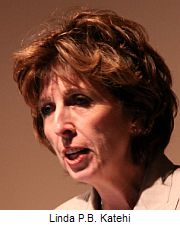
Open Letter to Chancellor Linda P.B. Katehi

Linda P.B. Katehi,
I am a junior faculty member at UC Davis. I am an Assistant Professor in the Department of English, and I teach in the Program in Critical Theory and in Science & Technology Studies. I have a strong record of research, teaching, and service. I am currently a Board Member of the Davis Faculty Association. I have also taken an active role in supporting the student movement to defend public education on our campus and throughout the UC system. In a word: I am the sort of young faculty member, like many of my colleagues, this campus needs. I am an asset to the University of California at Davis.

You are not.

I write to you and to my colleagues for three reasons:

1) to express my outrage at the police brutality which occurred against students engaged in peaceful protest on the UC Davis campus today

2) to hold you accountable for this police brutality

3) to demand your immediate resignation

Today you ordered police onto our campus to clear student protesters from the quad. These were protesters who participated in a rally speaking out against tuition increases and police brutality on UC campuses on Tuesday—a rally that I organized, and which was endorsed by the Davis Faculty Association. These students attended that rally in response to a call for solidarity from students and faculty who were bludgeoned with batons, hospitalized, and arrested at UC Berkeley last week. In the highest tradition of non-violent civil disobedience, those protesters had linked arms and held their ground in defense of tents they set up beside Sproul Hall. In a gesture of solidarity with those students and faculty, and in solidarity with the national Occupy movement, students at UC Davis set up tents on the main quad. When you ordered police outfitted with riot helmets, brandishing batons and teargas guns to remove their tents today, those students sat down on the ground in a circle and linked arms to protect them.

What happened next?

Without any provocation whatsoever, other than the bodies of these students sitting where they were on the ground, with their arms linked, police pepper-sprayed students. Students remained on the ground, now writhing in pain, with their arms linked.

What happened next?

Police used batons to try to push the students apart. Those they could separate, they arrested, kneeling on their bodies and pushing their heads into the ground. Those they could not separate, they pepper-sprayed directly in the face, holding these students as they did so. When students covered their eyes with their clothing, police forced open their mouths and pepper-sprayed down their throats. Several of these students were hospitalized. Others are seriously injured. One of them, forty-five minutes after being pepper-sprayed down his throat, was still coughing up blood.

This is what happened. You are responsible for it.

You are responsible for it because this is what happens when UC Chancellors order police onto our campuses to disperse peaceful protesters through the use of force: students get hurt. Faculty get hurt. One of the most inspiring things (inspiring for those of us who care about students who assert their rights to free speech and peaceful assembly) about the demonstration in Berkeley on November 9 is that UC Berkeley faculty stood together with students, their arms linked together. Associate Professor of English Celeste Langan was grabbed by her hair, thrown on the ground, and arrested. Associate Professor Geoffrey O’Brien was injured by baton blows. Professor Robert Hass, former Poet Laureate of the United States, National Book Award and Pulitzer Prize winner, was also struck with a baton. These faculty stood together with students in solidarity, and they too were beaten and arrested by the police. In writing this letter, I stand together with those faculty and with the students they supported.

One week after this happened at UC Berkeley, you ordered police to clear tents from the quad at UC Davis. When students responded in the same way—linking arms and holding their ground—police also responded in the same way: with violent force. The fact is: the administration of UC campuses systematically uses police brutality to terrorize students and faculty, to crush political dissent on our campuses, and to suppress free speech and peaceful assembly. Many people know this. Many more people are learning it very quickly.

You are responsible for the police violence directed against students on the UC Davis quad on November 18, 2011. As I said, I am writing to hold you responsible and to demand your immediate resignation on these grounds.

On Wednesday November 16, you issued a letter by email to the campus community. In this letter, you discussed a hate crime which occurred at UC Davis on Sunday November 13. In this letter, you express concern about the safety of our students. You write, “it is particularly disturbing that such an act of intolerance should occur at a time when the campus community is working to create a safe and inviting space for all our students.” You write, “while these are turbulent economic times, as a campus community, we must all be committed to a safe, welcoming environment that advances our efforts to diversity and excellence at UC Davis.”

I will leave it to my colleagues and every reader of this letter to decide what poses a greater threat to “a safe and inviting space for all our students” or “a safe, welcoming environment” at UC Davis: 1) Setting up tents on the quad in solidarity with faculty and students brutalized by police at UC Berkeley? or 2) Sending in riot police to disperse students with batons, pepper-spray, and tear-gas guns, while those students sit peacefully on the ground with their arms linked? Is this what you have in mind when you refer to creating “a safe and inviting space?” Is this what you have in mind when you express commitment to “a safe, welcoming environment?”

I am writing to tell you in no uncertain terms that there must be space for protest on our campus. There must be space for political dissent on our campus. There must be space for civil disobedience on our campus. There must be space for students to assert their right to decide on the form of their protest, their dissent, and their civil disobedience—including the simple act of setting up tents in solidarity with other students who have done so. There must be space for protest and dissent, especially, when the object of protest and dissent is police brutality itself. You may not order police to forcefully disperse student protesters peacefully protesting police brutality. You may not do so. It is not an option available to you as the Chancellor of a UC campus. That is why I am calling for your immediate resignation.

Your words express concern for the safety of our students. Your actions express no concern whatsoever for the safety of our students. I deduce from this discrepancy that you are not, in fact, concerned about the safety of our students. Your actions directly threaten the safety of our students. And I want you to know that this is clear. It is clear to anyone who reads your campus emails concerning our “Principles of Community” and who also takes the time to inform themselves about your actions. You should bear in mind that when you send emails to the UC Davis community, you address a body of faculty and students who are well trained to see through rhetoric that evinces care for students while implicitly threatening them. I see through your rhetoric very clearly. You also write to a campus community that knows how to speak truth to power. That is what I am doing.

I call for your resignation because you are unfit to do your job. You are unfit to ensure the safety of students at UC Davis. In fact: you are the primary threat to the safety of students at UC Davis. As such, I call upon you to resign immediately.

Sincerely,

Nathan Brown
Assistant Professor
Department of English
Program in Critical Theory
University of California at Davis

A petition can be signed here.

Facebooktwittermail

Demonstrations in Britain ‘to be banned during Olympics’

The Independent reports: Ministers are planning legal action to restrict public protests during the Olympics, amid fears that Britain could be disrupted by lengthy and high-profile demonstrations.

The Home Office is so concerned about the impact of the stalemate over the Occupy London (OLSX) encampment outside St Paul’s Cathedral that officials have been ordered to produce plans for avoiding a similar conflict during the Games next summer.

Ministers’ plans, based on the measures put in place to remove long-term protesters from outside Parliament, includes identifying “exclusion zones” around key locations, and fast-tracking the removal of protests that do not have the blessing of the authorities. It would permit police to move in and disperse encampments quickly, in line with last week’s clearance of the Occupy Wall Street camp in New York.

Protesters and legal experts condemned the moves as an assault on the right to peaceful protest. An OLSX spokeswoman, Naomi Colvin, said: “If the Government wants to do something that will restrict the right of peaceful protest, it will be in serious trouble. The coalition appears to be abandoning any attempt to behave like a democratic government.”

Facebooktwittermail

In Homs, Syria, sectarian battles stir fears of civil war

Anthony Shadid reports: A harrowing sectarian war has spread across the Syrian city of Homs this month, with supporters and opponents of the government blamed for beheadings, rival gangs carrying out tit-for-tat kidnappings, minorities fleeing for their native villages, and taxi drivers too fearful of drive-by shootings to ply the streets.

As it descends into sectarian hatred, Homs has emerged as a chilling window on what civil war in Syria could look like, just as some of Syria’s closest allies say the country appears to be heading in that direction. A spokesman for the Syrian opposition last week called the killings and kidnappings on both sides “a perilous threat to the revolution.” An American official called the strife in Homs “reminiscent of the former Yugoslavia,” where the very term “ethnic cleansing” originated in the 1990s.

“Over the past couple of weeks, we’ve seen sectarian attacks on the rise, and really ugly sectarian attacks,” the Obama administration official said in Washington. The longer President Bashar al-Assad “stays in power, what you see in Homs, you’ll see across Syria.”

Since the start of the uprising eight months ago, Homs has emerged as a pivot in the greatest challenge to the 11-year rule of Mr. Assad. Some of the earliest protests erupted there, and defectors soon sought refuge in rebellious neighborhoods. This month, government security forces tried to retake the city, in a bloody crackdown that continues.

Homs, Syria’s third-largest city, has a sectarian mix that mirrors the nation. The majority is Sunni Muslim, with sizable minorities of Christians and Alawites, a heterodox Muslim sect from which Mr. Assad draws much of his top leadership. Though some Alawites support the uprising, and some Sunnis still back the government, both communities have overwhelmingly gathered on opposite sides in the revolt.

Here it is not so much a fight between armed defectors and government security forces, or protesters defying a crackdown. Rather, the struggle in Homs has dragged the communities themselves into a battle that residents fear, even as they accuse the government of trying to incite it as a way to divide and rule the diverse country.

Fear has become so pronounced that, residents say, Alawites wear Christian crosses to avoid being abducted or killed when passing through the most restive Sunni neighborhoods, where garbage has piled up in a sign of the city’s dysfunction.

Facebooktwittermail

Syrian rebels attack Ba’ath party offices in Damascus

The Guardian reports: Insurgents in Syria have launched the most brazen attack yet on the seat of power in the capital Damascus, targeting the offices of the ruling Ba’ath party.

In an attack that tilted the country closer to all-out civil war, insurgents fired two rocket-propelled grenades at the building. The Free Syrian Army, a collection of defectors fighting to overthrow President Bashar al-Assad, claimed it had carried out the attack.

Although the grenades appeared to have done little damage, they were a symbolic blow against Assad’s embattled regime – and appeared to demonstrate a new tactical capacity on the part of anti-government forces. It was the second strike on a major target in a week. It followed a bloody Free Syrian Army assault three days ago on an air force intelligence complex in a Damascus suburb.

Facebooktwittermail

China vice premier sees chronic global recession

Reuters reports: A long-term global recession is certain to happen and China must focus on domestic problems, Chinese Vice Premier Wang Qishan has said.

“The one thing that we can be certain of, among all the uncertainties, is that the global economic recession caused by the international financial crisis will be chronic,” Wang was quoted by the official Xinhua news agency as saying at the weekend.

Wang’s comments were the most bearish forecast ever by a top Chinese decision-maker about the world economy, and Beijing’s worry about a worsening global environment could translate into an impetus for pro-growth policies at home.

China launched a massive fiscal stimulus package with a price tag of 4 trillion yuan ($650 billion) in late 2008 to avert a big impact from the global financial turmoil.

According to Xinhua, Wang did not speak this time about any major policy change but reiterated that banks should be more flexible lending to the agricultural sector and small firms.

“As for our country, which relies highly on external demands, we must see the situation clearly and get our own business done,” Xinhua quoted Wang as saying, referring to exports.

Facebooktwittermail

The capture of Saif al-Islam Gaddafi

Reuters reports: Caught exactly a month after his father met a violent end, Saif al-Islam Gaddafi is wanted by the International Criminal Court at The Hague on charges of crimes against humanity – specifically for allegedly ordering the killing of unarmed protesters last spring. Libya’s interim leaders want him to stand trial at home and say they won’t extradite him; the justice minister said he faces the death penalty.

His attempt to flee began on Oct. 19, under NATO fire from the tribal bastion of Bani Walid, 100 miles from the capital. [Ahmed] Ammar and his fellow fighters said they believed he had been hiding since then in the desolate tracts of the mountainous Brak al-Shati region.

Aides who were captured at Bani Walid said Saif al-Islam’s convoy had been hit by a NATO air strike in a place nearby called Wadi Zamzam – “Holy Water River”. Since then, there had been speculation that nomadic tribesmen once lionised by his father might have been working to spirit him across Libya’s southern borders – perhaps, like his surviving brothers, sister and mother, into Niger or Algeria.

He did not get that far. Obari is a good 200 miles from either. But his captors believe he was headed for Niger, once a beneficiary of Muammar Gaddafi’s oil-fueled largesse, which has granted asylum to Saif al-Islam’s brother Saadi.

Ammar said his unit, scouring the desert for weeks, received a tip-off that a small group of Gaddafi loyalists – they did not know who – would be heading on a certain route toward Obari. Lying in wait, they spotted two all-terrain vehicles grinding through the darkness.

“We fired in the air and into the ground in front of them,” Ammar said. The small convoy pulled up, perhaps hoping to brazen it out.

“Who are you?” Adeljwani Ali Ahmed, the leader of the squad, demanded to know of the man he took to be the main passenger in the group.

“Abdelsalam,” came the reply.

It’s a common enough name, though it means “servant of peace” in Arabic; Saif al-Islam’s real name means “Sword of Islam”.

Ahmed, sizing the man up, took Ammar aside and whispered: “I think that’s Saif.”

Turning back to the car, a Toyota Land cruiser of a type favoured on these rugged desert tracks, Ammar said: “I know who you are. I know you.”

CASH AND KALASHNIKOVS

The game was up. The militiamen retrieved several Kalashnikov rifles, a hand grenade and, one of the Zintani fighters said, some $4,000 in cash from the vehicles.

It was a tiny haul from a man whose father commanded one of the best-equipped armies in Africa and who is suspected by many of holding the keys – in his head – to billions stolen from the Libyan state and stashed in secret bank accounts abroad.

“He didn’t say anything,” Ammar said. “He was very scared and then eventually he asked where we are from, and we said we are Libyans. He asked from which city and we said Zintan.”

Zintan sits far from the spot of Gaddafi’s capture in the Western, or Nafusa, Mountains, just a couple of hours drive south of the capital. The people of Zintan put together an effective militia in the uprising, and they are seeking to parlay their military prowess into political clout as new leaders in Tripoli try to form a government.

Facebooktwittermail

In Egypt, revolution 2.0?

Ursula Lindsey writes: After the police violently cleared 100 or so demonstrators (including a group of the relatives of revolutionary martyrs and injured) from Tahrir Square today, thousands more poured into the square and began clashing with the security forces, burning one police truck and trying to reach the Ministry of Interior. The Ministry of Interior denies using any bullets, pellets or bird shot, but witnesses have widely documented their use. Hundreds are injured, and one dead confirmed so far. Tens of thousands have streamed into Downtown Cairo and are demonstrating in Alexandria, Suez and Mansoura. The fighting goes on, and people are saying that it feels like January 28 all over again.

These clashes feel almost unavoidable, given the military council’s terrible performance, the increasing vocal criticism it is facing, the rising tensions of all kinds surrounding the upcoming (poorly planned, utterly confusing) elections — given the terribly unclear transition process that has been put in place, and the fact that none of the revolution’s demands, including the reform of the security forces and real transitional justice, have been met.

Islamist leaders — the Salafist sheikh Hazem Salah Abu Ismail and the Islamist presidential candidate Mohammed Selim El Awwa — have gone to Tahrir. Mohammed El Baradei is once again calling for the creation of a “national salvation” government.

Facebooktwittermail

Homs: inside the city at the heart of Syria’s rebellion

James Harkin reports: On Thursday morning, I woke up in Homs, the city labelled by the international media as the “capital of the Syrian revolution”.

Homs has been in more or less open revolt since at least April, but in recent weeks what is going on here has acquired ominous new significance. Facing the full force of a crackdown on their demonstrations by the Syrian army and police, at least some of the city’s residents have taken up arms, either to defend themselves and their communities or to go on the attack.

Outside Syria and in the international media, the siege has become a cause célèbre. But events here show not only the courage and the forbearance of its citizens, but also the traps that lie in wait for an unhappy people suppressed by a brutal military crackdown.

I was lucky to get here. It’s not quite true that all foreign journalists are banned from Syria, but it was extremely difficult to get in, even before the uprising, and those who succeed are carefully shepherded around. It took me two journeys back and forth from Beirut even to get across the border into Damascus.

After a few days there, I went to the bus station and bought a ticket to Homs. A policeman was on hand to check foreign passports, but fortunately he didn’t bother to check mine carefully – it clearly indicates, by means of a Syrian government stamp, that I am a journalist.

My second stroke of luck was to have been befriended by an 18-year-old boy as we boarded the bus. An engineering student on his way back home to Homs, he was concerned that here was an idiotic tourist about to get himself into trouble. “There are no tourists in Homs,” he told me, looking serious. “My mother and father are afraid to go out. Yesterday my sister saw a body in the street, and she’s been crying ever since.”

On arrival, he ushered me past any prying eyes and directly into a taxi, going out of his way to take me straight to a hotel in the city centre. The city centre is the only safe place, he said.

Homs is a city of more than half a million people in the heart of the country. It’s where Syrians go to escape the hustle of Damascus, to let their hair down in its cafes and restaurants, or watch football: Homs boasts two football teams, as well as a museum where tourists can read about the famous battles that were fought here.

Nowadays it’s fighting another battle: the city is under total military lockdown. The hotel I’ve been taken to overlooks the main square and its now infamous clock tower, where the Syrian army apparently ran amok and gunned down peaceful demonstrators in April.

Since then, the violence has moved into the residential areas, and into the shadows. In the weeks before my arrival the death rate rose, making it the most violent place in the country.

Al Jazeera reports: William Hague, the British foreign minister, has announced that he would meet with Syrian opposition representatives in London next week in an intensification of contact with opponents of President Bashar al-Assad.

The Syrian opposition members would also meet senior aides of David Cameron, the UK prime minister, at his Downing Street office, the foreign ministry said on Friday.

It said that Frances Guy, the former British ambassador to Lebanon, had been appointed to co-ordinate relations with the Syrian opposition.

The delegation would include members of the opposition Syrian National Council and the National Co-ordination Committee for Democratic Change, in meetings expected to take place on Monday, a Foreign Office source said.

“We have been having regular contacts with a variety of figures in the Syrian opposition for several months. We are now intensifying these,” the Foreign Office said.

The announcement came as the Arab league said that Syria had agreed “in principle” to allow an Arab League observer mission into the country.

Facebooktwittermail

Egyptian police clash with protesters in Tahrir Square

The New York Times reports: Thousands of protesters chanting for an end to military rule battled riot police officers firing tear gas, rubber bullets and bird shot in Tahrir Square on Saturday, as the military-led interim government appeared to soften its demands for special powers and protections in the future Egyptian constitution.

Coming just nine days before the scheduled beginning of parliamentary elections, the clashes were the biggest outbreak of violence here since the ouster of President Hosni Mubarak in February, and the most violent manifestation yet of the growing anger at the ruling military council.

The clashes began midday Saturday after the police cleared out the last remnants of a large demonstration in Tahrir Square the day before. That demonstration, organized by Islamists but appearing to represent a far broader cross-section of Egyptians, drew tens of thousands of people calling for a swift end to military rule.

The fighting on Saturday began after news circulated that the security forces had moved into the square, the iconic heart of the Egyptian revolution, to force out a few hundred protesters who had spent the night. Hundreds and eventually thousands of other civilians stormed into the square to defend it, setting off battles that spread across downtown Cairo into the night.

Protesters threw rocks at police vehicles, capturing a police truck and passing out handcuffs, hats and other gear found inside. Others smashed the sidewalk into rocks to hurl at the police, and threw Molotov cocktails. Plumes of black smoke from a burning police truck wafted through the white clouds of tear gas.

Retreating riot police officers fired nonlethal weapons from their trucks to try to push back the crowd.

“Police and thugs and thieves,” the protesters chanted. Taking aim at Field Marshal Mohamed Hussein Tantawi, who leads the ruling military council, they adapted the signature chant of the Arab Spring revolts sweeping the region: “The people want to bring down the field marshal.”

Facebooktwittermail

Chas Freeman considers the global outlook for 2012

From a speech by Chas Freeman given in Macau, China, yesterday: Europe used to be boringly predictable, which was good for business. Now bits of it have reverted to being excitingly unreliable, which is bad. Repeated crises have addicted European leaders to summits, where they agree on partial solutions to problems and create new ones, then go home to think up still more ways to unnerve each other and investors. The year ahead seems certain to feature more summits and more Eurotorture of the world’s financial nervous system. The fiscal sobriety and punctiliousness of northern Europeans will not soon prevail over the bouzoukinomics and bunga bunga politics of Europe’s exuberantly irrational and overly indebted south.

More fundamentally, however, as a club of clubs, Europe has just shown itself to be much less than the sum of its far too many movable parts. In some of the clubs that make up Europe, members are seriously tired of each other as well as of the way responsibility is apportioned. The mismatch between the eurozone’s membership and that of the European Union, in particular, makes German creditworthiness, not the EU, central to the credibility of the euro. And there is an obvious contradiction between a bureaucratically administered supranational currency and the democratically exercised sovereign authority of Europe’s many nation-states.

As Greece has just demonstrated, the European project is seriously incomplete and vulnerable to disruption by reckless acts of political brinkmanship. In the absence of Europe-wide democracy, national democracy and multinational community-building no longer seem compatible. Decisions based on local interests, no matter how legitimately they are arrived at, can threaten both pan-European and global interests in market stability and economic revival. Sadly, in many ways, Europe remains more colloquium than commonwealth — more a confederation of small minds and big egos than a federal union of peoples. The incongruities and incompetencies of a still far-from-united Europe have become a problem not just for Europeans but for the world.

The destabilizing effects of financial uncertainty may now be Europe’s most notable export. But the United States seems determined to one-up the perversity of European indecisiveness. Europe has the will to act, but not the political machinery to act coherently. America has the mechanisms and the resources needed to make decisions and implement them. It lacks the wit, the will, and the spirit of political accommodation to do so. In effect, the United States now suffers from fiscal anorexia — economic self-starvation born of an obsession with curing the imagined obesity of government. But America’s civilian public sector is already too lean to sustain the nation’s socio-economic health and competitiveness. The United States is disinvesting in its human and physical infrastructure — consuming its sinews — at the very moment when it most needs to rebuild its strength. India may be the world’s largest functioning democracy but America is now seen everywhere as its largest dysfunctional one.

Ideological delusion, self-indulgence, arrogance, and unbridled greed got America — and the world economy — into their current mess. Devotion to fanciful concepts, despite their catastrophic results when actually applied, has undermined the credibility of the “full faith and credit” of the United States. Many Americans remain wedded to the bizarre notions that the redistributive functions of government are a net drag on the economy, that reducing government investment and outlays will somehow generate jobs, that financial engineering adds real value to the economy, and that unequal income distribution stimulates economic growth. In a less narcissistic political environment, people would laugh at the idea that cutting public spending — and thereby contracting the economy — could possibly create jobs and stimulate growth or that a “SuperCommittee” of the finest politicians that vested interests can keep in office could magically balance a budget that is 40 percent in the red solely by cutting non-defense expenditures, without raising revenues.

Facebooktwittermail

Vilifying rival, Wall St. rallies for Senate ally

The New York Times reports: The warning has ricocheted around the financial world in recent weeks, in conversations at Midtown restaurants and Washington fund-raisers, carrying urgent appeals for money from financial executives around the Northeast: The battle to re-elect Senator Scott P. Brown, the Republican from Massachusetts, just got a little more interesting.

“Senator Brown is a free-market advocate who believes that our strength as a nation comes from the ingenuity and hard work of its people,” read an invitation to a fund-raiser at a New Canaan, Conn., country club last week, that circulated among hedge fund and private equity executives. His Democratic opponent, the invitation noted, was all but certain to be the financial industry’s most prominent foe: “big government liberal Elizabeth Warren.”

Mr. Brown, a freshman who harnessed populist Tea Party anger to win the seat once held by Edward M. Kennedy, has taken more money from the financial industry than almost any other senator: all told, more than $1 million during the last two years, according to data from the Center for Responsive Politics.

Of the 20 companies that accounted for the most campaign donations to Mr. Brown, about half were prominent investment or securities firms like Morgan Stanley, Fidelity Investments and Bain Capital. His donors include such blue-chip names as Gary Cohn, the president of Goldman Sachs, and the hedge fund kings John Paulson and Kenneth Griffin.

Mr. Brown, in turn, has been an important ally at critical moments, using his swing vote in the Senate to wring significant concessions out of Democrats on last year’s financial regulation bill, including helping strip out a proposed $19 billion bank tax and weakening a proposal to stop commercial banks from holding large interests in hedge funds and private equity funds.

But the intensity of his relationship with Wall Street was altered in September, when Mr. Brown got a new opponent: Ms. Warren, a law professor and consumer advocate who has described herself as an intellectual godmother of the Occupy Wall Street movement.

Ms. Warren’s relentless manner and withering attacks on predatory lenders have won her enemies from Wall Street to Washington, where as a member of an oversight panel she helped usher in the largest expansion in decades of federal oversight of the financial industry. Now Mr. Brown’s support for the industry — and Ms. Warren’s battles with it — are becoming a defining issue in one of the most hotly contested Senate races and a magnet for special interest money.

Facebooktwittermail

Rep. Deutch introduces OCCUPIED constitutional amendment to ban corporate money in politics

Zaid Jilani reports: In one of the greatest signs yet that the 99 Percenters are having an impact, Rep. Ted Deutch (D-FL), a member of the House Judiciary Committee, today introduced an amendment that would ban corporate money in politics and end corporate personhood once and for all.

Deutch’s amendment, called the Outlawing Corporate Cash Undermining the Public Interest in our Elections and Democracy (OCCUPIED) [PDF] Amendment, would overturn the Citizens United decision, re-establishing the right of Congress and the states to regulate campaign finance laws, and to effectively outlaw the ability of for-profit corporations to contribute to campaign spending.

“No matter how long protesters camp out across America, big banks will continue to pour money into shadow groups promoting candidates more likely to slash Medicaid for poor children than help families facing foreclosure,” said Deutch in a statement provided to ThinkProgress. “No matter how strongly Ohio families fight for basic fairness for workers, the Koch Brothers will continue to pour millions into campaigns aimed at protecting the wealthiest 1%. No matter how fed up seniors in South Florida are with an agenda that puts oil subsidies ahead of Social Security and Medicare, corporations will continue to fund massive publicity campaigns and malicious attack ads against the public interest. Americans of all stripes agree that for far too long, corporations have occupied Washington and drowned out the voices of the people. I introduced the OCCUPIED Amendment because the days of corporate control of our democracy. It is time to return the nation’s capital and our democracy to the people.”

Facebooktwittermail

Kissinger in ’72: Jews ‘self-serving bastards’

Ynet reports: Confidential files released for publication in the United States on Friday reveal a new side to the Jewish-American politician Henry Kissinger, which might anger the Jewish community.

Kissinger, who served as the United States National Security Advisor and later as Secretary of State in the administrations of Presidents Richard Nixon and Gerald Ford, had demanded to divide the Sinai Peninsula into “security zones” prior to the Yom Kippur War in 1973.

According to the secret documents released by the State Department, back in 1972 Kissinger wished to put economic and ethical pressure on Israel, calling American Jewish groups lobbying the Nixon White House self-serving “bastards.”

The files also show that Russia had claimed the “Arabs” were willing to recognize the State of Israel at that time.

Kissinger had a huge impact on American foreign policy, helping reach certain degree of conciliation between Washington and Moscow during the cold war. As the relations between both countries grew warmer, the Jewish American lobbyists amped up the pressure on Washington in an attempt to aid their Soviet brothers.

One of Nixon’s advisors, Leonard Garment, reported he was flooded with letters and phone calls from Jews and asked for Kissinger’s advice on the matter.

According to the transcripts, Kissinger, who is Jewish, replied to Garment: “Is there a more self-serving group of people than the Jewish community?”

In response, Garment, also Jewish, said: “None in the world.”

Kissinger responded: “What the hell do they think they are accomplishing? You can’t even tell bastards anything in confidence because they’ll leak it.”

Facebooktwittermail
