A Norwegian doctor — one of only two Western doctors working in Gaza City’s Sifa hospital — exposes Israel’s lies about minimizing civilian casualties in Gaza.
Israel Defense Forces tank fire killed up to 40 Palestinians at a United Nations school in the Gaza Strip on Tuesday, medical sources at two hospitals said.
The attack brought the Palestinian death toll to nearly 600 in Israel’s 11-day offensive on the Hamas-ruled coastal territory.
Two tank shells exploded outside the Gaza school, spraying shrapnel on people inside and outside the building, where hundreds of Palestinians had sought refuge from fighting between Israeli soldiers and Hamas militants. In addition to the dead, several dozen people were wounded, the officials said.
Medical officials said all the dead were either people sheltering in the school or local residents. [continued…]
Editor’s Comment — Is this enough dead bodies to force Obama to speak? No need to make a pre-presidential statement — just provide some evidence that we elected a man with a core sense of humanity.
For 18 months my people in Gaza have been under siege, incarcerated inside the world’s biggest prison, sealed off from land, air and sea, caged and starved, denied even medication for our sick. After the slow death policy came the bombardment. In this most densely populated of places, nothing has been spared Israel’s warplanes, from government buildings to homes, mosques, hospitals, schools and markets. More than 540 have been killed and thousands permanently maimed. A third are women and children. Whole families have been massacred, some while they slept.
This river of blood is being shed under lies and false pretexts. For six months we in Hamas observed the ceasefire. Israel broke it repeatedly from the start. Israel was required to open crossings to Gaza, and extend the truce to the West Bank. It proceeded to tighten its deadly siege of Gaza, repeatedly cutting electricity and water supplies. The collective punishment did not halt, but accelerated – as did the assassinations and killings. Thirty Gazans were killed by Israeli fire and hundreds of patients died as a direct effect of the siege during the so-called ceasefire. Israel enjoyed a period of calm. Our people did not.
When this broken truce neared its end, we expressed our readiness for a new comprehensive truce in return for lifting the blockade and opening all Gaza border crossings, including Rafah. Our calls fell on deaf ears. Yet still we would be willing to begin a new truce on these terms following the complete withdrawal of the invading forces from Gaza.
No rockets have ever been fired from the West Bank. But 50 died and hundreds more were injured there last year at Israel’s hands, while its expansionism proceeded relentlessly. We are meant to be content with shrinking scraps of territory, a handful of cantons at Israel’s mercy, enclosed by it from all sides.The truth is Israel seeks a one-sided ceasefire, observed by my people alone, in return for siege, starvation, bombardment, assassinations, incursions and colonial settlement. What Israel wants is a gratuitous ceasefire.
The logic of those who demand that we stop our resistance is absurd. They absolve the aggressor and occupier – armed with the deadliest weapons of death and destruction – of responsibility, while blaming the victim, prisoner and occupied. Our modest, home-made rockets are our cry of protest to the world. Israel and its American and European sponsors want us to be killed in silence. But die in silence we will not.
What is being visited on Gaza today was visited on Yasser Arafat before. When he refused to bow to Israel’s dictates, he was imprisoned in his Ramallah headquarters, surrounded by tanks for two years. When this failed to break his resolve, he was murdered by poisoning.
Gaza enters 2009 just as it did 2008: under Israeli fire. Between January and February of last year 140 Gazans died in air strikes. And just before it embarked on its failed military assault on Lebanon in July 2006, Israel rained thousands of shells on Gaza, killing 240. From Deir Yassin in 1948 to Gaza today, the list of Israel’s crimes is long. The justifications change, but the reality is the same: colonial occupation, oppression, and never-ending injustice. If this is the “free world” whose “values” Israel is defending, as its foreign minister Tzipi Livni alleges, then we want nothing to do with it.
Israel’s leaders remain in the grip of confusion, unable to set clear goals for the attacks – from ousting the legitimately elected Hamas government and destroying its infrastructure, to stopping the rockets. As they fail to break Gaza’s resistance the benchmark has been lowered. Now they speak of weakening Hamas and limiting the resistance. But they will achieve neither. Gaza’s people are more united than ever, determined not to be terrorised into submission. Our fighters, armed with the justice of their cause, have already caused many casualties among the occupation army and will fight on to defend their land and people. Nothing can defeat our will to be free.
Once again, Washington and Europe have opted to aid and abet the jailer, occupier and aggressor, and to condemn its victims. We hoped Barack Obama would break with George Bush’s disastrous legacy but his start is not encouraging. While he swiftly moved to denounce the Mumbai attacks, he remains tongue-tied after 10 days of slaughter in Gaza. But my people are not alone. Millions of freedom-loving men and women stand by its struggle for justice and liberation – witness daily protests against Israeli aggression, not only in the Arab and Islamic region, but worldwide.
Israel will no doubt wreak untold destruction, death and suffering in Gaza. But it will meet the same fate in Gaza as it did in Lebanon. We will not be broken by siege and bombardment, and will never surrender to occupation. [continued…]
Inside Gaza City, windows are blown out, electricity is cut and drinking water scarce. While phones rang with the recorded threats against Hamas, leaflets dropped from airplanes littered the streets, saying: “Hamas is getting a taste of the power of the Israeli military after more than a week and we have other methods that are still harsher to deal with Hamas. They will prove very painful. For your safety, please evacuate your neighborhood.”
Israeli officials hope an eventual deal will be struck without engaging directly with Hamas, but Mark Regev, the spokesman for Prime Minister Ehud Olmert, said Israel would not exclude a tacit understanding with Hamas.
“The endgame for us is threefold: that Hamas’s military machine would be substantially destroyed; two, Hamas understands that shooting rockets means paying a price they don’t want to pay; and three, there are mechanisms in place to prevent Hamas from rearming,” Mr. Regev said.
But as the offensive unfolds, so, too, evidence is mounting of a severe humanitarian crisis.
Maxwell Gaylard, United Nations humanitarian affairs coordinator, said at a Jerusalem news briefing on Monday that because of the attacks, people could not reach available food.
Children are hungry, cold, without electricity and running water, he said, “and above all, they’re terrified. That by any measure is a humanitarian crisis.” [continued…]
Editor’s Comment — Are you paying attention Mr President-elect? Still “monitoring the situation” closely? Still calm? Or is that calm merely a cloak, hiding cowardice and calousness? Who would want to ruffle any feathers over a little spilt blood?
And here’s a question for all Israel apologists: Where is the much trumpeted Iranian threat? If the frequently and breathlessly repeated warnings were to be believed, by the time Israel relinquished its position of great restraint, Gaza was brissling with a massive arsenal of Iranian-supplied Katyusha and Grad rockets. For the past two years, right under the noses of Egypt’s Iran-hostile security forces, a steady flow of weaponry has been pouring through tunnels that run under the Egyptian border. But if that’s really true, how is that we now witness a mere 20 rockets a day being fired at Israel, mostly home-made Qassams and during ten days of war a mere handful of Grad rockets? Is Hamas keeping the bulk of its arsenal in reserve? Or is it possible that the whole “Iran-proxy”, “Iranian-armed Hamas” argument has been vastly overstated? Is it possible that the primary function of the so-called weapons pipeline, was instead a pipeline for everyday commodities that now fetch a premium in a siege-crippled economy?
“I keep the children away from the windows because the F-16s are in the air; I forbid them to play below because it’s dangerous. They’re bombing us from the sea and from the east, they’re bombing us from the air. When the telephone works, people tell us about relatives or friends who were killed. My wife cries all the time. At night she hugs the children and cries. It’s cold and the windows are open; there’s fire and smoke in open areas; at home there’s no water, no electricity, no heating gas. And you [the Israelis] say there’s no humanitarian crisis in Gaza. Tell me, are you normal?”
The question came from a resident of Gaza speaking by phone to the Israeli journalist Amira Hass. Like most of the foreign media she has been barred from entering Gaza by Israeli authorities in spite of the fact that Israeli Supreme Court ruled last week that eight foreign correspondents, from among the hundreds now struggling to report on this war, should be allowed to enter the Palestinian territory. [continued…]
While Americans may believe that the current violence in Gaza began Dec. 27, in fact Palestinians have been dying from bombardments for many weeks. On Nov. 4, when the Israeli-Palestinian truce was still in effect but global attention was turned to the U.S. elections, Israel launched a “preemptive” airstrike on Gaza, alleging intelligence about an imminent operation to capture Israeli soldiers; more assaults took place throughout the month.
The truce thus shattered, any incentive by Palestinian leaders to enforce the moratorium on rocket fire was gone. Any extension of the agreement or improvement of its implementation at that point would have required Israel to engage Hamas, to agree to additional trust-building measures and negotiation with our movement — a political impossibility for Israel, with its own elections only weeks away.
Not that the truce had been easy on Palestinians. In the six-month period preceding this week’s bombardment, one Israeli was killed, while dozens of Palestinians lost their lives to Israeli military and police actions, and numerous others died for want of medical care.
The war on Gaza should not be mistaken for an Israeli triumph. Rather, Israel’s failure to make the truce work, and its inevitable resort to bloodshed, demonstrate again that it cannot permit a future built on Palestinian political self-determination. The truce failed because Israel will not open Gaza’s borders, because Israel would rather be a jailer than a neighbor, and because its intransigent leadership forestalls Palestinian destiny and will not make peace with history. [continued…]
The IDF now faces two main military alternatives. The first is to step up the confrontation with Hamas in Gaza City and its environs. That will entail greater casualties among our soldiers, increase the hardships of the Palestinian population and lead to more calls from the international community to stop the fighting.
The second option is to expand the theater of operations and strive for a target that has not yet been set, which has been concealed or even denied: to bring down the Hamas government. Southern Command is capable of achieving this goal but is not enthusiastic about it, lest the Jabalya refugee camp turn into Somalia. In this context the IDF is afraid of being too successful.
In both cases it will take days before the cabinet that sent in the IDF is able to claim a lasting victory.
In these circumstances, with the IDF attempting to maneuver between two prohibitions − against bringing down Hamas on the one hand, and reaching an agreement with it on the other − Israel is dependent on the mercy of Hamas to allow it to declare victory. [continued…]
Israeli intelligence and military officials are increasingly pushing for the assault on Gaza to continue until it assures the eventual downfall of Hamas amid assertions that the 10 days of military bombardment have crippled the Islamist party’s ability to govern.
As the onslaught progresses, officials are more confident of “changing the equation” in Gaza and are predicting the collapse of the Hamas administration.
Last night, Israeli forces bombed the centre of Gaza, and there were reports of intense clashes with Hamas fighters on the edge of the city. But the fighting and the occupation of parts of the north and centre of the Gaza Strip did not stop Hamas from firing more than 40 rockets into Israel.
The death toll from 10 days of fighting has risen above 550. Those killed yesterday included 13 members of the same family killed in their house by Israeli tank fire east of Gaza city. [continued…]
Many analogies are being made between the ongoing Israeli attack against Hamas in Gaza and the 2006 war between Israel and Hezbollah in Lebanon. Here are the most important ones, in my view.
The first is about provenance: Hamas and Hezbollah did not exist before around 1982. They are the ideological step-children of the Likud Party and especially Ariel Sharon, whose embrace of violence, racism and colonization as the primary means of dealing with occupied Arab populations ultimately generated a will to resist. The trio currently carrying on Sharon’s legacy – Ehud Olmert, Ehud Barak and Tzipi Livni – seem blind to the fact that the more force and brutality Israel uses against Arabs, the greater is the response in the form of more effective resistance movements that have wider public support.
The second analogy is about technical proficiency. Hezbollah and Hamas have both consistently increased their determination and ability to use assorted rockets and missiles to harass and attack Israel. More importantly, they are better able to protect their rocket launchers from Israeli attacks.
The number of Israeli dead in recent years is in the low hundreds, compared to the thousands of Palestinians that Israel has killed. But destruction and dead body counts are not the most useful criteria to use in this analysis. The real measures of what matters politically are the nagging Israeli sense of vulnerability and the Palestinian sense of empowerment, defiance and capacity to fight back. [continued…]
If there is one issue separating Israel from its role models in the West, it is the perceived legitimacy of using force. In Europe, and in many parts of American public opinion, military power is seen as an option of last resort; a primitive, old-fashioned and often counterproductive tool of policy. To us, hitting our enemies once in a while feels like a necessary behavior in a tough neighborhood. It may backfire, as it often does, but still, most Israelis believe it’s impossible to survive in the Middle East without resorting to occasional aggression.
That is why in Washington, London or Paris, governments must sweat to build political consensus for going to war, while in Jerusalem, war resolutions enjoy wide parliamentary support. Israeli governments find it hard to pass peace treaties through the Knesset. That’s where political difficulty lies.
Israel’s military operation against Hamas in Gaza, now in its 10th day, is an excellent example of this rule. The war enjoys strong public support among Israel’s Jewish majority. Only Israel’s Arabs, identifying with their Palestinian brothers, and the far political left, which is all but pacifist, have protested against it. All the rest have united behind the government, including the more established left. The novelist Amos Oz, a moral compass for Israel’s peace camp (and an eventual critic of the 2006 war in Lebanon), gave his blessing to the war. [continued…]
A war neither Israel nor Hamas truly wanted turned into a war both are willing to wage. The six-month ceasefire that expired on 19 December was far from ideal. Israel suffered through periodic rocket fire and the knowledge that its foe was amassing lethal firepower. Hamas endured a punishing economic blockade, undermining its hopes of ruling Gaza. A sensible compromise, entailing an end to rocket launches and an opening of the crossings should have been available. But without bilateral engagement, effective third party mediation or mutual trust, it inexorably came to this: a brutal military operation in which both feel they have something to gain.
As each day goes by, Israel hopes to further degrade Hamas’s military capacity and reduce the rocket risk; Hamas banks on boosting its domestic and regional prestige. Only urgent international action by parties viewed as credible and trustworthy by both sides can end this before the human and political toll escalates or before Israel’s land incursion – which was launched as this briefing went to press – turns into a venture of uncertain scope, undetermined consequence and all-too-familiar human cost.
From Hamas’s perspective, prolonging the ceasefire was appealing but only if that arrangement was modified. Relative calm had enabled it to consolidate power and cripple potential foes. But the siege never was lifted. Increasingly, Hamas leaders were in the uncomfortable position of appearing to want the truce for personal safety at the price of collective hardship. As the expiration date approached, rocket fire intensified, an unsubtle message that Hamas would use violence to force Israel to open the crossings. In the first days, Israel’s retaliatory air campaign shook Hamas’s Qassam fighters by its timing, intensity and scale. But it did not catch them unprepared. [continued…]
Because Hamas is a movement which even if it has highly destructible physical nodes is nevertheless tied together within a missile-proof conceptual space.
The only things that bombs and bullets can destroy are human lives and property. That’s why the Israeli-American claim that this war is being fought against Hamas and not the people of Gaza is a shallow lie — it is plainly evident that Gaza itself is under attack.
The so-called “terrorist infrastructure” also happens to be a governmental infrastructure. The effort to topple Hamas (an effort that the Israeli government in its duplicity and double-talk continues to deny it is making — witness Shimon Peres claiming that Israel does not want to crush Hamas, merely teach it a lesson) is in serious jeopardy of making Gaza completely ungovernable.
Once this is over, will the residents of Sderot be able to slumber peacefully knowing that they live on the doorstep of anarchy?
And when Hamas has finished counting its dead, will those in its ranks who until recently were voices of pragmatism, favoring political engagement, be capable of or even willing to try and make themselves heard?
Israel’s drive to annihilate its enemies is borne out of a seemingly irrepressible arrogance. Yet ultimately nothing gets destroyed — it merely goes through a process of transformation.
The question Israelis should now be asking themselves is this: What are we helping Hamas become?
Israel demands that Hamas recognize the Jewish state’s right to exist. It is a farcical demand.
Someone has you pinned to the ground, is pressing the barrel of a gun against your head and says to you: “I’ll talk to you, but only if you recognize my right to exist.” At this moment, who is challenging whose right to exist?
Israel presents an existential threat to Hamas — not the other way around. It’s plain for the world to see.
However, the difference between Israel and Hamas is that Hamas does not fear its annihilation. That has nothing to do with glorifying “martyrdom”; it’s because the movement is much more durable than its constituent parts.
The conflict between Palestinians and Israelis has heightened since 2001, even as any perceived threat to Israel from Egypt, Jordan, Iraq, or even Syria, has declined. Israel, according to Chaim Herzog, Israel’s sixth President, had been “born in battle” and would be “obliged to live by the sword.” Yet, the Israeli government’s conquest and occupation of the West Bank and Gaza brought about a very difficult challenge, although armed resistance on a mass basis was only taken up years later in the Intifadha. Israel could not tolerate Palestinian Arabs’ resistance of their authority on the legal basis of denial of self-determination, and eventually preferred to grant some measures of self-determination while continuing to consolidate control of the Occupied Territories, the West Bank, East Jerusalem, and Gaza. However, a comprehensive peace, shimmering in the distance, has eluded all, even as inter-Israeli and inter-Palestinian divisions deepened as peace danced closer before retreating.
Israel’s stance towards the democratically-elected Palestinian government headed by Hamas in 2006, and towards Palestinian national coherence–legal, territorial, political, and economic–has been a major obstacle to substantive peacemaking. The reasons for recalcitrant Israeli and Hamas stances illustrate both continuities and changes in the dynamics of conflict since the Oslo period (roughly 1994 to the al-Aqsa Intifadha of 2000). Now, more than ever, a long-term truce and negotiations are necessary. These could lead in stages to that mirage-like peace, and a new type of security regime.
The rise in popularity and strength of the Hamas (Harakat al-Muqawama al-Islamiyya, or Movement of the Islamic Resistance) Organization and its interaction with Israel is important to an understanding of Israel’s “Arab” policies and its approach to counterterrorism and counterinsurgency. The crisis brought about by the electoral success of Hamas in 2006 also challenged Western powers’ commitment to democratic change in the Middle East because Palestinians had supported the organization in the polls. Thus, the viability of a two-state solution rested on an Israeli acknowledgement of the Islamist movement, Hamas, and on Fatah’s ceding power to it.
Shifts in Israel’s stated national security objectives (and dissent over them) reveal Hamas’ placement at the nexus of Israel’s domestic, Israeli-Palestinian, and regional objectives. Israel has treated certain enemies differently than others: Iran, Hizbullah, and Islamist Palestinians (whether Hamas, supporters of Islamic Jihad, or the Islamic Movement inside Israel) all fall into a particular rubric in which Islamism–the most salient and enduring socio-religious movement in the Middle East in the wake of Arab nationalism–is identified with terrorism and insurgency rather than with group politics and identity. The antipathy to religious fervor was somewhat ironic in light of Israel’s own expanding “religious” (haredim) groups. In Israel’s earlier decades, Islamic identity politics were understood and successfully repressed, as Israelis did not want to allow any repetition of the Palestinian Mufti’s nationalism or the Qassamiyya (the armed brigades in the 1936-39 rebellion).
Yet at the same time, identity politics and religious attitudes were not eradicated, but were inside of Israel, bringing about great inequality as well as physical and psychological separation of the Jewish and non-Jewish populations. This represented efforts to control politically and physically the now 20 percent Arab minority, and dealt with the demographic threat constantly spoken of in Israel by warding off intermarriage, limiting property control and rights, and physical access. Still today, some Israeli politicians call for an exodus by Palestinian-Israelis (so-called Arab-Israelis) in some areas, who they wish would resettle in the West Bank, in the permitted areas of course.
For decades, Muslim religious properties and institutions were managed under Jewish supervision–substantial inter-Israeli conflict over that supervision notwithstanding–and this allowed for a continuing stereotype of the recalcitrant, anti-modern Muslims and Arabs who were punished for any expression of Palestinian (or Arab) nationalism by replacing them–imams or qadis, for instance–with more quiescent Israeli Muslims, and by retaining Jewish control over endowment (waqf) properties and income.
Contemporary Islamism took hold in Palestinian society, as it has throughout the Middle East and has, to a great degree, supplanted secular nationalism. This is problematic in terms of the conflict between Israel and the Palestinians because the official Israeli position towards key Islamists–Iran, Hizbullah, and the Palestinian groups like Hamas, Islamic Jihad, or Hizb al-Tahrir–characterizes them as Israel-haters and terrorists. They have become the existential threat to Israel (along with Iran) since the demise of Saddam Hussein in Iraq.
Israel steadfastly rejected diplomacy and truce offers by Hamas for 8 months in 2008, despite an earlier truce that held for several years. By the spring of 2008, continued rejection of a truce was politically risky as Prime Minister Ehud Olmert teetered on the edge of indictment by his own party and finally had to announce his resignation in the summer. In fact, on his way out the door, Olmert announced a peace plan that ignores Hamas and many demands of the Palestinian Authority as a whole ever since Oslo. If the plan was merely to create a sense of Olmert’s legacy, it is not altogether clear why it offered so little compromise.
On the other hand, Israelis have for over a year been discussing the wisdom of reconquering the Gaza strip (a prospect that would aid the Fatah side of the Palestinian Authority) and also engage in “preemptive deterrence” or attacks on other states in the region. This could happen at any time if the truce between Israel and Hamas breaks down, although the risks of any of these enterprises would be high. A deal with Syria was also announced by Olmert, similarly, perhaps, to stave off his own resignation, and Syria made a counteroffer. Turkish-mediated indirect talks were to continue at the time of this writing, though they might be rescheduled. Support for an Israeli attack on Iran continues to play well in the Israeli media, despite the fact that Israelis argue fiercely about the wisdom of such a course. All of this shows flux in the region, with Israel in its customary strong, but concerned position.
Hamas emerged as the chief rival to the secularist-nationalist framework of Fatah, the dominant member of the Palestine Liberation Organization (PLO). This occurred as Palestinians rebelled against the worsening conditions they experienced following the Oslo Peace Accords. Hamas’ political and strategic development has been both ignored and misreported in Israeli and Western sources which villainizes the group, much as the PLO was once characterized as an anti-Semitic terrorist group. Relatively few detailed treatments in English counter the media blitz that reduces Hamas to its early, now defunct, 1988 charter.
Disagreements within the Israeli military and political establishments over the national security objectives of that country reveal Hamas’ placement at the nexus of Israel’s domestic, Palestinian, and regional objectives. This process can be traced back to Ariel Sharon’s formation of the KADIMA Party and decision to withdraw unilaterally from Gaza without engaging in a peace process with Palestinians. This reflected a new understanding that Arab armies were unlikely to launch any successful attack against Israel, but Israel should focus instead on protecting its Jewish citizens via barrier methods.
This new thinking coexists alongside the long-standing policies described by Yitzhak Shamir as aggressive defense; in other words, offensives aimed at increasing Israel’s strategic depth, or attacking potential threats in neighboring countries-as in the raid on the nearly completed nuclear power facility at Osirak, Iraq, in 1981, or the mysterious Operation ORCHARD carried out on a weapons cache in Syria in September 2007, or in the invasions and ground wars (1978, 1982, 2006) in Lebanon.
Israelis considered occupied Palestinian territories valuable in land-for-peace negotiations. During the Oslo process, according to Israelis, Israel was ready to withdraw entirely to obtain peace. Actually, the value of land to trade for peace and costs of maintaining security for the settlers there, as well as containing the uprisings, were complicated equations. Palestinians and others argue that, in fact, Israel offered no more in the various proposed exchanges than the less valuable portion of the western West Bank and Gaza, and refused to deal with outstanding issues such as the fate of Palestinian refugees (4,913,993 Palestinians live outside of Israel and the occupied territories; 1,337,388 UNRWA–registered refugees–live in camps, and 3,166,781 live outside of camps), prisoners, water, and the claim of Jerusalem as a capital.
Many Arabs believe that Israel never intended the formation of a Palestinian state, and that its land-settlement policies during the Oslo period provide proof of its true intentions. Either way, the “Oslo optimism” faded away between Israelis and Palestinians with the al-Aqsa (Second) Intifadha in October 2000.
The Israeli Right, and part of its Left, claimed that the diplomatic collapse, plus Arafat’s government’s corruption, showed there was no “partner to peace.” Another segment of the Israeli Left has continued until this day to argue for land-for-peace and complete withdrawal from the territories.
According to Barry Rubin, the Israeli military felt the Palestinian threat would not increase, and that if settlers could be evacuated and a stronger line of defense erected, they might better defend their citizenry. That defense could not be achieved with suicide attacks ongoing in Israeli population centers. When earlier Israeli strategies had not achieved an end to Palestinian Islamist violence, Israelis had pushed this task onto the Fatah-dominated Palestinian Authority in the 1990s. Pointing to the failures of the Palestinian Authority, the new Israeli “securitist” (bitchonist, in Hebrew, or security-focused) strategy moved away from negotiations, and called for further separation and segregation of the Israeli population from Palestinians. Neither a full-blown physical resistance by Palestinians, including suicide attacks, or the missiles launched from Gaza could be dealt with in this manner. The first depended on granting Palestinians rights to partial self-government, and the missile attacks were negotiated in Israel’s June 2008 truce.
Israel claimed significant victories in its war against Palestinians by the use of targeted killings of leadership, boycotts, power cuts, preemptive attacks and detentions, and punishments to militant’s families, relatives, and neighborhoods etc., because its counterterrorism logic is to reduce insurgents’ organizational capability. This particular Israeli analysis rejects the idea that counterterrorist violence can spark more resistance and violence, but also admitted that Israel had not “defeated the will to resistance” [of Palestinians]. This admission suggests that the tactics employed might not be indefinitely manageable, and that Palestinians, despite every possible effort made to weaken or incriminate them, to discourage or prevent their Arab non-Palestinian supporters from defending their interests, and to buy the services of collaborators, could edge Israelis back toward comprehensive negotiations, or rise up again against them. Moshe Sharett, Israel’s second Prime Minister, once asked: “Do people consider that when military reactions outstrip in their severity the events that caused them, grave processes are set in motion which widen the gulf and thrust our neighbors into the extremist camp? How can this deterioration be halted?”
Hamas and its new wave of political thought, which had supported armed resistance along with the aim to create an Islamic society, had overtaken Fatah in popularity. Fatah, with substantial U.S. support edged closer to Israeli positions over 2006-07, promising to diminish Palestinian resistance, although President Mahmud Abbas had no means to do so, and could not even ensure Fatah’s survival in the West Bank without Hamas assent, and had been routed from Gaza.
Negotiating solely with the weaker Palestinian party–Fatah–cannot deliver the security Israel requires. This may lead Israel to reconquer the Gaza strip and continue engaging in “preemptive deterrence” or attacks on other states in the region in the longer term.
The underlying strategies of Israel and Hamas appear mutually exclusive and did not, prior to the summer of 2008, offer much hope of a solution to the Israeli-Palestinian-Arab conflict. Yet each side is still capable of revising its desired endstate and of necessary concessions to establish and preserve a long-term truce, or even a longer-term peace. [See the complete 107-page monograph [PDF]]
In an appeal to Arab leaders to hold an emergency summit and take a stance to stop Israel’s assault on Gaza, the Emir of Qatar, Sheikh Hamad bin Khalifa al Thani said: “Once again, we see that the international community is not willing to listen to us and will not unless we assert our common will. Before asking the international community to listen to us, we should start by listening to the voices of our own Arab people.”
On Sunday, The Israeli president Shimon Peres ruled out the possibility of a ceasefire with Hamas as the French president Nicolas Sarkozy headed for the region on a renewed diplomatic push for a truce.
“We don’t intend neither to occupy Gaza nor to crush Hamas, but to crush terror. And Hamas needs a real and serious lesson. They are now getting it,” Mr Peres said in an American television interview. [continued…]
Egyptian officials said Monday that Cairo was set to demand an immediate cease-fire from Hamas in the Gaza Strip, as Israeli forces moved into their 10th day of a military offensive on the coastal territory.
Hamas plans to send a delegation to Egypt on Monday for the first diplomatic talks since the launch of a 10-day-old Israel Defense Forces offensive in the Gaza Strip, an official of the Islamist group has said.
Hamas official Ayman Taha said a Hamas delegation would head to Cairo “answering an Egyptian invitation to hold discussions.” A senior Palestinian official said on Friday that Egypt had launched contacts with Hamas to achieve a truce. [continued…]
Israel wants Operation Cast Lead to end in a political agreement based on a new monitoring system and the prevention of smuggling along the Egypt-Gaza border. The system would rely on an existing security committee comprising representatives from Israel, Egypt, the Palestinian Authority and the United States. Hamas would not be represented, nor would it be a party to understandings or agreements, though it is expected to continue to control the Gaza Strip.
That is the political process being advanced by Prime Minister Ehud Olmert, in conjunction with the ground incursion in Gaza. The idea was discussed at the meeting during which Olmert, Defense Minister Ehud Barak and Foreign Minister Tzipi Livni approved the ground operation, and is being handled by the Prime Minister’s Bureau, together with officials from the defense and foreign ministries. The Bush administration is maintaining contact with Israel through phone calls and e-mails, and for the moment is holding off on sending even low-level envoys to the region. [continued…]
Those who believe in the peace process tooth fairy may hope that, after Israel gives Hamas a good whack, the prospects for serious negotiations will improve, particularly under a more committed Obama administration. This isn’t likely in the near term.
Israel’s prerequisite for ending the conflict with the Palestinians — a reformed or weakened Hamas or an emboldened Palestinian President Mahmoud Abbas, ready to meet Israel’s needs and requirements — is now more elusive than ever. As long as the Palestinian house remains divided, with Hamas strong and Abbas weak, the chances of a conflict-ending Israeli-Palestinian agreement are slim to none. Should Hamas survive its war with Israel in Gaza, such an agreement will remain more elusive than ever.
Beyond the tick tock of the current fighting lies an undeniable reality: only a political deal will end the Israeli-Palestinian conflict. And right now there are many obstacles standing in the way, including divisions within Israel and big gaps between the parties on the conflict’s core issues: borders, refugees, and the future of Jerusalem, among others.
But looming largest is the crisis that confronts the Palestinian national movement. It is a badly shattered humpty-dumpty — two polities, two armies, two ideologies, two sets of patrons — and putting it back together again does not look hopeful. Nor do the prospects for fostering the unity Palestinians require to negotiate with Israel, monopolize the use of violence in their society, or even struggle successfully for a Palestinian state. [continued…]
Barack Obama’s chances of making a fresh start in US relations with the Muslim world, and the Middle East in particular, appear to diminish with each new wave of Israeli attacks on Palestinian targets in Gaza. That seems hardly fair, given the president-elect does not take office until January 20. But foreign wars don’t wait for Washington inaugurations.
Obama has remained wholly silent during the Gaza crisis. His aides say he is following established protocol that the US has only one president at a time. Hillary Clinton, his designated secretary of state, and Joe Biden, the vice-president-elect and foreign policy expert, have also been uncharacteristically taciturn on the subject.
But evidence is mounting that Obama is already losing ground among key Arab and Muslim audiences that cannot understand why, given his promise of change, he has not spoken out. Arab commentators and editorialists say there is growing disappointment at Obama’s detachment – and that his failure to distance himself from George Bush’s strongly pro-Israeli stance is encouraging the belief that he either shares Bush’s bias or simply does not care. [continued…]
Editor’s Comment — I have previously voiced my criticism of Obama’s silence and I’m not holding my breath in anticipation of him making some bold move on Day One. There is however one tiny glimmer of hope. The Wall Street Journal reported that “Mr Obama and his senior aides have declined briefings from the Israeli government on the current crisis, said two people familiar with the Israeli outreach.” That might amount to nothing more an exercise in self-protection — an effort to avoid being seen as having given a behind-closed-doors green light to the Israeli operation on the unstated but implicit understanding that it gets wrapped up before Obama takes office. But it could also mean that Obama wants the Israelis to know that they should not make any assumptions about how he will act once the Bush administration has finally been disposed of in the trashcan of history.
Still, Obama is definitely being perceived as a man who in a time of crisis chooses to look the other way. Since he has done nothing to challenge that perception, at this point it’s hard to avoid concluding that it is valid.
(UPDATE: Since the graphs appearing below have been removed from the Israeli Ministry of Foreign Affairs (MFA) website, some readers might have doubts about there authenticity. However, Jeffrey Goldberg who blogs at the Atlantic, has kindly alerted me to the source that the MFA continues to cite for its statistics on rocket fire from Gaza in 2008. The graphs I reproduced can be found in that document.
Goldberg writes: “Israel’s Ministry of Foreign Affairs cites this report [PDF] that claims that 362 rockets and mortars were fired into Israel from Gaza into Israel during what the report calls the ‘lull’ in the fighting. I think it’s fair to say that, though the numbers of rocket and mortar attacks dropped off dramatically during the ceasefire, there were, indeed, attacks.”
What Goldberg fails to point out is that of these 362 rockets and mortars fired, 324 were launched after Israel broke the ceasefire on November 4, 2008. During the period in which the ceasefire was being maintained by both Hamas and Israel from June 18 until November 4, there were a total of 38 fired. This averages 8.5 rocket and mortar attacks per month. As far as I am aware, none of these were conducted by Hamas and the level of attacks can be seen as a measure of the effectiveness (not absolute) with which Hamas was able to reign in other militant groups such as Islamic Jihad.)
_____
For four months, from Summer into Fall, the truce between Israel and Hamas was a stunning success. Indeed, if Israel doubted Hamas’ ability or willingness to engage in a truce, the Jewish state would have had no reason to request that the truce be extended as its expiration approached and passed in late December.
But now is a time of war and not only is talk of a truce being ruled out by the authors of this war but history is being re-written in order to degrade the value of a ceasefire. The memory of a period of recent calm that was the most durable peace that the residents of southern Israel have experienced in recent years must now be erased.
The Israeli government’s own graphical representation of the calm told the story in terms that even a child could understand. This is the graph that the Israel Ministry of Foreign Affairs displayed on its web site demonstrating that from July to October, rocket fire, if not reduced to a perfect zero, came stunningly close. From an average of 179 rockets per month in the preceding period of 2008, the number fell to just three per month:
Now that the Israeli propaganda machine is revved up to full throttle, the image of an effective truce no longer suits the Israeli government’s purposes. Instead it has become more convenient to try and hide the numbers — with numbers! The foreign ministry has thus removed the simple graph shown above and replaced it with this:
In the earlier image, graph blocks dramatically portrayed the rise and fall in rocket fire rates. In the revised image, blocks of equal size (containing numbers) are used to obscure the graph. The effect, clearly intended, is to try and portray the lull as really nothing more than a minor undulation in a period of unremitting attacks.
The message Israel now wants to sell is that the truce never really worked. Instead of acknowledging that the truce effectively collapsed when Israel launched Operation “Double Challenge” on November 5, the rocket fire that followed that Israeli raid is being used to obscure the fact that rocket fire had effectively been curtailed up to that point.*
On the IDF Spokesman web site, a post on rocket statistics simply omits the part of the record that Israel now finds inconvenient to acknowledge:
Between Hamas’ takeover and the start of the Tahadiya (State of Calm), (June 14, 2007 – June 16, 2008), there was an average of over 361 attacks per month—an increase of an additional 350%.
On Nov. 4 – 5, Israel launched Operation “Double Challenge”, targeting a tunnel Hamas was building as part of a plan to kidnap Israeli soldiers.
From the end of Operation “Double Challenge” until the end of the Tahadiya, (Nov. 4 – Dec. 19, 2008) a period of only a month and a half, there were 170 mortars, 255 Qassams, and 5 Grads fired upon Israel’s civilian population centers.
Since the end of the Tahadiya (Dec. 19, 2009) until the beginning of Operation “Cast Lead,” (Dec. 27, 2008) a period of little more than a week, there were approximately 300 mortars and rockets fired onto Israel.
Since the begining of Operation “Cast Lead”, there have been an additional 500 launches, 284 of which have been verified as rockets (both Qassams and Grads), and 113 as mortars.
Was four months of calm really worthless? Given that it became the precursor to war, the answer now apparently is yes.
But it didn’t have to turn out this way. The effectiveness with which Hamas enforced a truce should have provided the impetus for Israel to lift its economic siege of Gaza.
Instead, we are once again witness to Israel’s seemingly insatiable appetite for war, even while it never tires of professing its love of peace.
* Should anyone doubt that the Israeli raid (official declarations about Israel’s commitment to the truce notwithstanding) constituted a unilateral breach of the truce, consider what Israel and the world’s response would have been in the event that the raid had been launched from Gaza. Hamas gunmen conducted a raid inside Israeli territory, killing six Israeli soldiers.
That wouldn’t have been described as a breakdown in the truce; it would have been regarded as an act of war.
After the debacle of its 2006 invasion of Lebanon – not only a military disaster for Israel, but also a political and diplomatic one – the government in Tel Aviv spent months laying the groundwork at home and abroad for the assault on Gaza with quiet but energetic lobbying of foreign administrations and diplomats, particularly in Europe and parts of the Arab world.
A new information directorate was established to influence the media, with some success. And when the attack began just over a week ago, a tide of diplomats, lobby groups, bloggers and other supporters of Israel were unleashed to hammer home a handful of carefully crafted core messages intended to ensure that Israel was seen as the victim, even as its bombardment killed more than 430 Palestinians over the past week, at least a third of them civilians or policemen.
The unrelenting attack on Gaza, with an air strike every 20 minutes on average, has not stopped Hamas firing rockets that have killed four Israelis since the assault began, reaching deeper into the Jewish state than ever before and sending tens of thousands of people fleeing. Last night Israel escalated its action further, as its troops poured across Gaza’s border, part of what appeared to be a significant ground invasion. And a diplomatic operation is already in full swing to justify the further cost in innocent lives that would almost certainly result. [continued…]
Jews worry for a living; their tragic history compels them to do so. In the next few years, there will be plenty to worry about, particularly when it comes to Israel. The current operation in Gaza won’t do much to ease these worries or to address Israel’s longer-term security needs. The potential for a nuclear Iran, combined with the growing accuracy and lethality of Hamas and Hizbullah rockets, will create tremendous concern. Anxiety may also be provoked by something else: an Obama administration determined to repair America’s image and credibility and to reach a deal in the Middle East.
Don’t get me wrong. Barack Obama—as every other U.S. president before him—will protect the special relationship with Israel. But the days of America’s exclusive ties to Israel may be coming to an end. Despite efforts to sound reassuring during the campaign, the new administration will have to be tough, much tougher than either Bill Clinton or George W. Bush were, if it’s serious about Arab-Israeli peacemaking. [continued…]
The United States thwarted an effort by Libya on Sunday to persuade the UN Security Council to call for an immediate ceasefire in Gaza after Israel launched a ground invasion, diplomats said.
Several council diplomats told reporters that the U.S. refusal to back a Libyan-drafted demand for an immediate truce at a closed-door emergency session had killed the initiative, since council statements must be passed unanimously. [continued…]
On Saturday night, one week after the start of Operation Cast Lead in the Gaza Strip, the ground operation began. The Israel Defense Forces started deploying combat units to surround Hamas’ main power base. The goal is not to chase after and destroy every last rocket launcher, but rather to break the Hamas’ resistance and force it to agree to a long-term cease-fire whose terms are more reasonable from Israel’s perspective. [continued…]
As Israel has been preoccupied with Gaza throughout the entire week, nobody has asked whose blood is being spilled and why. Everything is permitted, legitimate and just. The moral voice of restraint, if it ever existed, has been left behind. Even if Israel wiped Gaza off the face of the earth, killing tens of thousands in the process, as a Chechnyan laborer working in Sderot proposed to me, one can assume that there would be no protest.
They liquidated Nizar Ghayan? Nobody counts the 20 women and children who lost their lives in the same attack. There was a massacre of dozens of officers during their graduation ceremony from the police academy? Acceptable. Five little sisters? Allowed. Palestinians are dying in hospitals that lack medical equipment? Peanuts. Whatever happened to the not-so-good old days of Salah Shahadeh? When we liquidated him in July 2002, we also killed 15 women and children. At least back then, moral qualms were raised for a moment.
Here lie their bodies, row upon row, some of them tiny. Our hearts have turned hard and our eyes have become dull. All of Israel has worn military fatigues, uniforms that are opaque and stained with blood and which enable us to carry out any crime. Even our leading intellectuals fail to speak out on what havoc we have wreaked. Amos Oz urges: “Cease-fire now.” David Grossman writes: “Hold your fire. Stop.” Meir Shalev wants “a punitive operation.” And not one word about our moral image, which has been horribly distorted. [continued…]
As a way to share time on the phone, while my friend Houda’s neighbourhood was under aerial assault for more than 40 minutes, she and I discussed at length comparisons between previous Israeli military sieges we had been under. The carefully planned and premeditated strategy of terrorising an entire population by intensive and heavy bombardment of both military and civic institutions – destroying the entire civic infrastructure of a people – was identical. What is unprecedented here is that in Gaza there is nowhere to evacuate people to safety: they are imprisoned on all sides, with an acute awareness of the impossibility of escape. Land, sea, sky: all will kill you. [continued…]
There is a word for the straightforward killing of enemies by a superior force where the victims are sparsely equipped and the odds one-sided. Much of the world is calling Israel’s actions in Gaza a massacre. By contrast the American press has been cleansed and euphemized. “3rd Day of Bombings,” said the New York Times headline on December 30, “Takes Out Interior Ministry.” Takes out. The Times paid an involuntary homage to George W. Bush: “I think it’s a good thing for the world that we took out Saddam Hussein.” Under that phrase are half a million Iraqis killed and a country destroyed. And for Israel in Gaza?
The U.S. and Israel share many things. A form of government, it is sometimes said; a set of ideals. But much more in the past ten years the U.S. and Israel have shared a fantasy. The fantasy says that the Arabs understand only force. It says we can end terrorism by killing all the terrorists. The neighbors of the terrorists will be overawed. No new terrorists will be created. Finally, when every face on the president’s fifty-two card deck is crossed out and the known composition of Hamas is dead, we can “address the social conditions” that foster terrorism. But perhaps there are no such conditions. Do the terrorists not hate for hate’s sake?
You can see the shape of the fantasy most distinctly in the writings of those journalistic enablers who move into position as soon as either country starts a war that needs interpreting. “It was Israel at its best,” writes Yossi Klein Halevy, a typical war broker, in a New Republic column posted on December 29. “In response to random attacks aimed at civilians, Israel launched precise attacks aimed at terrorists.” Halevy does not add that the precise attacks killed almost 400 persons and that one death in every four was civilian. [continued…]
Tony Karon: Many Jews, in Israel and in America, see Israel as surrounded by deadly threats, and would see the benign and peaceful world you describe as a dangerous fantasy. What do you say to your critics?
Avrum Burg: I have very low expectations of new thinking and insight emerging from the mainstream Israeli and Jewish establishment. Their role is to maintain the status quo. Israel is bereft of forward thinking. We are experts at managing the crisis rather than finding alternatives to the crisis. In Israel you have many tanks, but not many think tanks. One of the reasons I left the Israeli politics was my growing feeling that Israel became a very efficient kingdom, but with no prophecy. Where is it going?
My idea of Judaism can be represented through a classic Talmudic dilemma: You are walking along by the river and there are two people drowning. One is Rabbi [Meir] Kahane, and the other is the Dalai Lama. You can only save one of them. For whom will you jump? If you jump for Rabbi Kahane because genetically he’s Jewish, you belong to a different camp than mine, because I would jump for the Dalai Lama. As much as he’s not genetically Jewish, he’s my Jewish brother when it comes to my value system. That’s the difference between me and the Jewish establishment in Israel and America. [continued…]
“A war to the bitter end.” That is how Israel’s Defense Minister Ehud Barak described his country’s latest military campaign in the Gaza strip. It is refreshing to hear an Israeli politician refer to what the western press routinely calls “a crisis” or “a cycle of violence” as a war, for that is in fact what is taking place in Gaza. But if war is in indeed an accurate description of the current conflict between Israel and Hamas, then can we continue referring to Hamas’ attacks against Israel as acts of terrorism? If a government declares war against a terrorist group, does it not in effect transform the group’s members from terrorists into soldiers? In a battle between a state like Israel and a “non-state entity” like Hamas, are acts of terror distinguishable from acts of war? [continued…]
President-elect Barack Obama’s silence on the weeklong conflict in Gaza is drawing criticism among Arabs who have grown skeptical about hopes that his administration will break with the Mideast policies of the Bush era.
Obama, who is moving to Washington this weekend, was on vacation in Hawaii when the crisis erupted and has made no statements, either about Israel’s bombing of Gaza or Palestinian rocket attacks against Israel. His aides say that he does not wish to address foreign-policy issues in any way that could send “confusing signals” about U.S. policy as long as President George W. Bush is in office.
“President-elect Obama is closely monitoring global events, including the situation in Gaza, but there is one president at a time,” said Brooke Anderson, chief national security spokeswoman for the Obama transition team.
Arab commentators maintain, however, that Obama did comment on foreign affairs when he issued a statement condemning the terrorist attacks in Mumbai and that he has given several news conferences outlining his economic proposals. They suggest that his refusal to speak out on Gaza—where more than 400 Palestinians have died in the Israeli airstrikes, compared with four Israeli deaths from the rockets—implies indifference to the plight of Palestinians or even complicity with Israel’s bombing campaign. [continued…]
Editor’s Comment — Readers of The Huffington Post are apparently much more concerned about George Bush’s lack of leadership during his last three weeks in office than they are about Obama’s silence. As for the American blogosphere as a whole, the snapshot provided by Memeorandum suggests that a war that garnered lukewarm interest in its first week has now as it enters its second week virtually fallen off the radar.
One aspect of this “conflict” — I hesitate to call it a conflict because the Hamas counterattack at this point is little more than symbolic — is that a key component of the Israeli-US narrative on Hamas has failed to be proven.
Those who were skeptical about the viability of Israel entering into a truce with Hamas repeatedly argued that the lull would simply afford the “Iran-proxy” an opportunity to re-arm with a much more deadly arsenal of missiles.
Where are they? Are we to believe that they are being held in reserve for the right moment?
(Ashdod and Ashkelon have been struck by a handful of Grad rockets but this can hardly be compared with the fusillades of Katyushas that Hezbollah rained down on Israel in 2006.)
Israel’s YouTube “smoking gun” — “Grad rockets” being loaded into the back of a truck just before being blown up by a preemptive strike — turns out to have been bogus.
The tunnels from Egypt through which all the Iranian missiles were supposedly being funneled, appear to have really been what the residents of Gaza claimed: the supply line for everyday goods required inside a territory under economic siege.
As Obama continues to “monitor the situation” in Gaza, he should also listen to what the Organization of the Islamic Conference, meeting in Saudi Arabia, said today:
We call on the US administration, namely the US President-elect Barack Obama, to pay the utmost attention to the possible repercussions of the ongoing Israeli war and its implications on the future of peace efforts in the Middle East and establishing lasting peace between the Israelis and the Palestinians. And to pay the utmost attention to the war’s consequences on the new administration’s efforts to enhance the image of the United States within the Muslim world.
Interestingly and perhaps surprisingly the most charitable view about what the president-elect can do before he takes office comes from Hamas’ Beirut representative, Osama Hamden:
“If he talks against the Palestinians he will lose any chance before he has even started,” he told the Chicago Tribune. “And if he talks against the Israelis, this will not help him.”
Israeli air strikes claimed a Hamas military commander and destroyed a Gaza school on Saturday as an assault on Gaza which has so far killed more than 440 Palestinians entered its second week.
Troops and tanks massed at the border remained on alert to advance into Gaza after seven days that have seen more than 750 air raids launched against Hamas leaders and military targets. [continued…]
The Israeli propaganda effort is being directed to achieve two main aims.
The first is to justify the air attacks. The second is to show that there is no humanitarian calamity in Gaza.
Both these aims are intended to place Israel in a strong position internationally and to enable its diplomacy to act as an umbrella to fend off calls for a ceasefire while the military operation unfolds.
Israel has pursued the first aim by being very active in getting its story across that Hamas is to blame. The sight of Hamas rockets streaking into Israel has been helpful in this respect.
It has also allowed trucks in with food aid and has stressed that it will not let people starve, even if they go short.
Israel appears to think its efforts are working.
One of its spokespeople, who has regularly appeared on the international media, Major Avital Leibovich, said: “Quite a few outlets are very favourable to Israel.”
Israel has bolstered its approach by banning foreign correspondents from Gaza, despite a ruling from the Israeli Supreme Court. [continued…]
Editor’s Comment — It’s curious that the BBC, on the one hand provides in text the evidence that Israel mischaracterized a strike — evidence documented by the Israeli human rights organization B’Tselem — yet they only include the IDF’s video of the aerial view of the attack. This is what they left out:
Foreign and domestic television crews are lined up along Herzl Street in Sderot on a cold Thursday afternoon. A siren sounds and the crews run into crowded bomb shelter doorways as three booming thumps are heard in the distance. Kassams have just struck the Negev town.
This first-hand experience of life under rocket fire may be one of the reasons Israeli diplomats and spokesmen feel Israel is finally getting a hearing in the international media.
“We’re talking to families who have lived under this for eight years,” said a journalist from a major European outlet who asked to remain anonymous. “It’s an important part of what’s happening here,” he said.
IDF officials, too, feel the coverage has been mostly fair.
“I’m surprised for the better. The coverage has been balanced on most channels, even on some outlets not known for being pro-Israel,” said Maj. Avital Leibovich, head of the foreign press department in the IDF Spokesman’s Unit. [continued…]
Some were troubled by pictures of children and women among the casualties, others voiced trepidation about a ground invasion, but the overwhelming view among Israelis on the streets of Jerusalem yesterday was that their government was right to attack Gaza and the offensive should go on for as long as it takes.
Israel’s relentless air strikes on the Palestinian enclave may be drawing strong criticism and calls for a ceasefire in much of the rest of the world, but a common reaction of Israelis is that outsiders simply don’t understand what they have been going through.
Domestic opposition has been much more muted than in some past wars, and even in those areas deemed to be Jerusalem’s most liberal, the mood was generally uncompromising. [continued…]
Palestinian President Mahmoud Abbas has informed the Palestinian organizations that he plans to release hundreds of Hamas prisoners jailed in prisons in the West Bank, sources in Hamas claimed Saturday.
Abbas’ office has yet to respond to the report.
According to the report, Abbas is interested in making a goodwill gesture ahead of a possible renewal of the talks between the Palestinian factions and on the backdrop of the Israel Defense Forces’ offensive against the terror organizations in Gaza. [continued…]
A new Rasmussen Reports poll — the first to survey American public opinion specifically regarding the Israeli attack on Gaza — strongly bolsters the severe disconnect between American public opinion on U.S. policy toward Israel and the consensus views expressed by America’s political leadership.
Not only does Rasmussen find that Americans generally “are closely divided over whether the Jewish state should be taking military action against militants in the Gaza Strip” (44 percent to 41 percent, with 15 percent undecided), but Democratic voters overwhelmingly oppose the Israeli offensive — by a 24-point margin. By stark contrast, Republicans, as one would expect (in light of their history of supporting virtually any proposed attack on Arabs and Muslims), overwhelmingly support the Israeli bombing campaign (62 percent to 27 percent).
It’s not at all surprising that Republican leaders — from Dick Cheney and John Bolton to virtually all appendages of the right-wing noise machine — are unquestioning supporters of the Israeli attack. After all, they’re expressing the core ideology of the overwhelming majority of their voters and audience.
Much more notable is the fact that Democratic leaders — including Harry Reid and Nancy Pelosi — are just as lock step in their blind, uncritical support for the Israeli attack, in their absolute refusal to utter a word of criticism of, or even reservations about, Israeli actions. [continued…]
Not one of the nearly 450 presidents of American colleges and universities who prominently denounced an effort by British academics to boycott Israeli universities in September 2007 have raised their voice in opposition to Israel’s bombardment of the Islamic University of Gaza earlier this week. Lee C. Bollinger, president of Columbia University, who organized the petition, has been silent, as have his co-signatories from Princeton, Northwestern, and Cornell Universities, and the Massachusetts Institute of Technology. Most others who signed similar petitions, like the 11,000 professors from nearly 1,000 universities around the world, have also refrained from expressing their outrage at Israel’s attack on the leading university in Gaza. The artfully named Scholars for Peace in the Middle East, which organized the latter appeal, has said nothing about the assault.
While the extent of the damage to the Islamic University, which was hit in six separate airstrikes, is still unknown, recent reports indicate that at least two major buildings were targeted, a science laboratory and the Ladies’ Building, where female students attended classes. There were no casualties, as the university was evacuated when the Israeli assault began on Saturday.
Virtually all the commentators agree that the Islamic University was attacked, in part, because it is a cultural symbol of Hamas, the ruling party in the elected Palestinian government, which Israel has targeted in its continuing attacks in Gaza. Mysteriously, hardly any of the news coverage has emphasized the educational significance of the university, which far exceeds its cultural or political symbolism. [continued…]
There are so many words written about the “root causes” of the Arab-Israeli conflict, you might think the underlying issue is difficult to understand. But you’d be wrong. For all the mythology that interested parties want to wrap this conflict in, it’s really not difficult at all to understand the confrontation that has been going on in Palestine for more than a century now. All you have to do is try to imagine that what happened to Palestine happened instead here in the U.S. Then ask yourself, “What would Americans do in this position?”. And at that point, you find it miraculously stops being difficult to understand.
The problem with this approach is that American Exceptionalism has left us barely able to imagine being in other people’s shoes. So we explain the world to ourselves through ridiculous platitudes like we’re good and they’re evil, that actually explain nothing and leave us as confused as when we started. We just don’t do empathy very well.
But let’s try anyway. Let’s try imagining that what has been going on in Palestine for the last 100 years is going on instead here in the U.S., right now. [continued…]
Israel bombed a mosque and the homes of at least half a dozen Hamas leaders in the Gaza Strip on Friday and allowed foreign passport holders to leave the ravaged territory, as speculation rose that a ground assault could be imminent.
A day after an airstrike killed a senior Hamas leader — the first from the militant group known to have died during the Israeli assault — Hamas continued to launch rockets into Israel, with several missiles landing in the southern city of Ashkelon. No deaths or serious injuries were reported. [continued…]
Six days in, Israel’s massive bombardment of Gaza shows little sign of abating. Israeli warplanes have flown more than 500 sorties, killing over 400 Palestinians and wounding hundreds. Israeli bombs have rained down on Gaza’s 1.5 million people from air and sea.
But with fewer targets left to strike – yesterday Israel bombed a mosque, the education ministry, the transportation ministry as well as the parliament building – a ground invasion would now appear imminent. [continued…]
Thousands of Palestinians in the West Bank have joined demonstrations after a call from Hamas for a “day of wrath” against the Israeli attacks on Gaza. Protests have also been held around the Muslim world after Friday Prayers. [continued…]
Listening to the feelings expressed by Muslims around the world one gets a sentiment of anger and revolt mixed with a deep sense of helplessness. The current massacres are but a confirmation of the well-known: the “international community” does not really care about the Palestinians, and it is as if the state of Israel, with the support of the US and some European countries, has imposed a state of intellectual terror. Among the presidents and kings, nobody dares to speak out; nobody is ready to say the truth. All are paralysed by fear.
While the Israeli-Palestinian conflict is sometimes perceived, and experienced, as critical to the relationship between the west and Islam, many Muslims no longer know how to react. Is it a pure political conflict? What does Islam have to do with it? Should we make it an Islamic concern to call upon the ummah?
Muslims around the world are facing three distinctive phenomena. First, in the Muslim-majority countries or in the west, they see they can expect no reaction from governments, especially from the Arab states. Theirs is the guilty silence of the accomplice, the hypocrisy, the contempt for Palestinian lives. Second, western media coverage is alarming, with the majority buying the Israeli story: two equally powerful belligerents, with the victim of aggression (Israel) acting in self-defence. What a distortion! Yet the third phenomenon is interesting: while 73% of Europeans were backing Israel in 1967, more than 67% are supporting the Palestinians today. With time, understanding and sensitivity have moved: populations are not blindly following the games and hypocritical stands of their political elites. [continued…]
This week I spoke with my students about the Gaza war, in the context of a class on national security. One student, who had expressed rather conservative, accepted opinions – that is opinions tending slightly to the right – succeeded in surprising me. Without any provocation on my part, he opened his heart and confessed: “If I were a young Palestinian,” he said, “I’d fight the Jews fiercely, even by means of terror. Anyone who says anything different is telling you lies.”
His remarks sounded familiar – I had already heard them before. Suddenly I remembered: About 10 years ago they were uttered by our defense minister, Ehud Barak. Haaretz journalist Gideon Levy had asked him then, as a candidate for prime minister, what he would do had he been born Palestinian and Barak replied frankly: “I would join a terror organization.”
This is not my own answer; terrorism by individuals or organizations or states is always aimed at exacting casualties in a civilian population that has not drawn any blood. Not only is terror blind – consuming both the saint and the sinner – it also expands the circle of the hot-headed, whose blood rises to their brains: Our blood is on their heads, their blood is on our heads. And when an account of the blood of the innocent is opened, who can pay it in full, and when?
I hate all the terrorists in the world, whatever the purpose of their struggle. However, I support every active civil revolt against any occupation, and Israel too is among the despicable occupiers. Such revolt is both more just and more effective, and it does not extinguish one’s spark of humanity. And perhaps I’m just too much of an old codger to be a terrorist.
But, and pay attention to this but, if a normative young person has a spontaneous answer that is different from mine, and that answer also escaped the mouth of an Israeli lieutenant general, then every individual must see himself as though his son is running with the wrong crowd. If things were the other way around, our son-whom-we-loved would be a damned terrorist, almost certainly, because he is of the third and fourth generation of refugeehood and oppression, and whence cometh salvation? He has nothing to lose but his chains. [continued…]
Israel has no viable political endgame here: There’s just no clear route from bombardment to a sustainable peace. But the damage caused by this new conflagration won’t be limited to the Israelis and Palestinians. Israel’s military offensive already has sparked outrage and protests throughout the Arab world. The current crisis also may destabilize some of the more moderate Arab governments in the region — in Egypt, for instance — where leaders now face popular backlash if they don’t repudiate Israel.
And if you think that none of this really matters for us here in the U.S., you’re kidding yourself. Arab and Islamic anger over Palestine continues to fuel anti-Western and anti-U.S. terrorism around the globe.
It’s time for the United States to wake up from its long slumber and reengage — forcefully — with the Middle East peace process. Only the U.S. — Israel’s primary supporter and main financial sponsor — can push it to make the hard choices necessary for its own long-term security, as well as the region’s. In January 2001, the Taba talks between Israel and the Palestinian Authority came achingly close to a final settlement, but talks broke down after Likud’s Ariel Sharon was elected prime minister on Feb. 6, 2001. Sharon refused to meet with Yasser Arafat, and newly inaugurated President George W. Bush had no interest in pushing Israel toward peace.
Eight years later, Israel faces another election, and we’re about to swear in a new president. When he takes office, Obama needs to push both Israelis and Palestinians to sit back down, with the abandoned Taba agreements as the starting point. Here’s to a less bloody 2009. [continued…]
Editor’s Comment — It’s good that there’s at least one American columnist willing to speak about what’s happening in Gaza without being an apologist for Israel. Yet in terms of the broader political perspective, calls for renewed US engagement in the Middle East peace process beg the most important question: engagement with whom?
When the dust finally settles in Gaza, Hamas will re-emerge politically strengthened while Fatah and the Palestinian Authority will be seen by most Palestinians as having been at best, ineffectual, and at worst, quislings serving the Israeli government.
What Israel’s latest war is doing is further unmasking the chasm between Arab leaders and the people they claim to represent.
The code word “moderate” means nothing more than an Arab leader with whom a Western leader is willing to be seen shaking hands. But what these hand shakes are capable of accomplishing politically has been vastly overestimated for the simple reason that the will of the people continues being left out of the equation.
If the Obama administration wants to make a radical break with the past, it might consider not a re-engagement with what has become a hollow “peace process.” It might in fact disengage from an issue that Israel has to solve for itself. Instead, it should look across the political landscape, become better acquainted with the real locuses of emerging political power and then deliver a message of bitter political realism to its regional allies: Look hard and fast for ways to accommodate your political foes, because if you don’t they will destroy you and in the chaos that ensues the whole world will suffer.
Rarely do Egyptian demonstrations see thousands of people take to the streets. But, put together anti-Israeli and anti-government sentiments spearheaded by the powerful Muslim Brotherhood, and the result is the country’s largest street action since the first anniversary of the American invasion of Iraq in 2004.
With Israel vowing a “long” siege against the Gaza Strip, there are concerns that the already strong opposition Brotherhood could become even stronger in the face of Israel’s military action against Palestinians.
On Monday, thousands of Egyptians marched in downtown Cairo, chanting phrases such as, “Off to Gaza we go, martyrs by the million,” and “We all belong to Hamas.”
The government and the military were as much to blame as Israel, activists said. “Where is the Egyptian army?” was another slogan chanted by the throngs of demonstrators.
“It is disappointing that while our Palestinian brothers and sisters are being killed, [President Hosni] Mubarak and his cronies sit by and do nothing. Only the Brotherhood is leading this country on the right path,” says Ahmed Said, a university student who is supporting the efforts of the Brotherhood. [continued…]
“Look outside, F-16 jet fighters are smiling for you, missiles are dancing for you, zannana [the Palestinian name for pilotless drones] are singing for you. I requested them all to wish you a happy new year.” That was the darkly humorous text message Fathi Tobal, a Gaza City resident, received from a friend on his mobile phone today.
Tobal added ironically, “While other people around the world celebrate, it seems the Israeli air force is trying to save us the cost of fireworks.”
On New Year’s Eve in Gaza, 1.5 million Palestinians are confined to their homes under candlelight and with scarce food supplies, but worst of all with the constant fear of the bombs which have already killed almost 400 people, and injured 2,000. [continued…]
Israel is going after the trappings of governance, of power, of control, of rule. And the reason is the belief that the force that may eventually sweep Hamas from power is not Palestinian Authority President Mahmoud Abbas and Fatah, but pure anarchy.
If Hamas cannot rule, if it cannot provide the people with what they need, if the leaders are in hiding, if anarchy reigns, then Hamas’s legitimacy is delivered a major blow.
And this, to a large degree, explains Israel’s targets. Jerusalem wants to hit Hamas’s ability to rule, it wants to encourage anarchy that would threaten the organization.
Israel’s opening of the Gaza crossings to allow in humanitarian aid contributes somewhat to this sense of anarchy, because it makes Hamas look unable to govern. If the Palestinians must rely on Israel’s green light to let food aid in from third countries, then that undercuts Hamas’s argument that it is able to serve its public. [continued…]
Last week I was in Gaza. While I was there I met a group of 20 or so police officers who were undergoing a course in conflict management. They were eager to know whether foreigners felt safer since Hamas had taken over the Government? Indeed we did, we told them. Without doubt the past 18 months had seen a comparative calm on the streets of Gaza; no gunmen on the streets, no more kidnappings. They smiled with great pride and waved us goodbye.
Less than a week later all of these men were dead, killed by an Israeli rocket at a graduation ceremony. Were they “dangerous Hamas militant gunmen”? No, they were unarmed police officers, public servants killed not in a “militant training camp” but in the same police station in the middle of Gaza City that had been used by the British, the Israelis and Fatah during their periods of rule there.
This distinction is crucial because while the horrific scenes in Gaza and Israel play themselves out on our television screens, a war of words is being fought that is clouding our understanding of the realities on the ground. [continued…]
Hamas leader Ismail Haniyeh said on Wednesday that Israeli attacks on Gaza had to stop before any truce proposals could be considered.
“First, the Zionist aggression must end without any conditions… Second the siege must be lifted and all the crossings must be opened because the siege is the source of all of Gaza’s problems,” he said in a televised speech to Palestinians.
“After that it will be possible to talk on all issues without any exception,” Haniyeh said, referring to recent truce proposals raised by all parties, including Israel. [continued…]
Israel… – always swift to announce its imminent destruction of “terrorism” – has never won a war in a built-up city, be it Beirut or Gaza, since its capture of Jerusalem in 1967. And it’s important to remember that the Israeli army, famous in song and legend for its supposed “purity of arms” and “elite” units, has proved itself to be a pretty third-rate army over recent years. Not since the 1973 Middle East conflict – 35 years ago – has it won a war. Its 1978 invasion of Lebanon was a failure, its 1982 invasion ended in disaster, propelling Arafat from Beirut but allowing its vicious Phalangist allies into the Sabra and Chatila camps where they committed mass murder. In neither the 1993 bombardment of Lebanon nor the 1996 bombardment of Lebanon – which fizzled out after the massacre of refugees at Qana – nor the 2006 war was its performance anything more than amateur. Indeed, if it wasn’t for the fact Arab armies are even more of a rabble than the Israelis, the Israeli state would be genuinely under threat from its neighbours.
One common feature of Middle East wars is the ability of all the antagonists to suffer from massive self-delusion. Israel’s promise to “root out terror” – be it of the PLO, Hizbollah, Hamas, Islamic Jihad, Iranian or any other kind – has always turned out to be false. “War to the bitter end,” the Israeli defence minister, Ehud Barak, has promised in Gaza. Nonsense. Just like the PLO’s boast – and Hamas’ boast and Hizbollah’s boast – to “liberate” Jerusalem. Eyewash. But the Israelis have usually shown a dangerous propensity to believe their own propaganda. Calling up more than 6,000 reservists and sitting them round the Gaza fence is one thing; sending them into the hovels of Gaza will be quite another. In 2006, Israel claimed it was sending 30,000 troops into Lebanon. In reality, it sent about 3,000 – and the moment they crossed the border, they were faced down by the Hizbollah. In some cases, Israeli soldiers actually ran back to their own frontier. [continued…]
There is a conceit that has so thoroughly poisoned the minds of most Israelis that it is regarded as an unquestionable truth: we occupy the moral high ground.
This poison distorts every question, not least the most pressing issue of this moment: can a ceasefire between Israel and Hamas be restored?
Implicit in that question as it is being considered by Israel is the assumption that Israel’s willingness and ability to abide by a ceasefire is beyond question and that the only real question is whether Hamas can be trusted to do the same. But even that is not really treated as a question. The heart of the issue, Israel would have us believe, is: can Hamas be forced into a truce?
When, after ignoring the subject for several days, the New York Times finally got around to making an editorial pronouncement on the war on Gaza, it trotted out what is among most inattentive observers the conventional wisdom:
Hamas never fully observed the cease-fire that went into effect on June 19 and Israel never really lived up to its commitment to ease its punishing embargo on Gaza.
In fact, Hamas’ compliance with the ceasefire was stunningly disciplined. Don’t take my word for it. The proof comes from the Israeli government.
Look at this graph provided by the Israeli Foreign Ministry showing rocket attacks from Gaza per month during 2008. From January through June there were an average of 179 rocket attacks per month. From July through October there were an average of 3 rocket attacks per month.
For the residents of Sderot, those months were indeed a period of calm. But the calm ended when Israel unilaterally broke the ceasefire right after the US elections and just before Hamas and Fatah sat down for crucial reconciliation talks in Cairo.
If Israel, as it would currently have the world believe, was so strongly in favor of extending the six-month ceasefire, why did it attach so little value to what had already been accomplished? Why did it not acknowledge the effectiveness with which Hamas was holding up its side of the bargain? Why did it not demonstrate that it valued the calm by lifting or at least easing the economic embargo on Gaza in a significant way?
All Israel accomplished was to confirm Hamas’ suspicions – suspicions shared by most Palestinians – that Israel cannot be trusted.
Israeli leaders rejected on Wednesday a proposal to immediately pause attacks on the Gaza Strip for 48 hours, declaring that there were no guarantees Hamas fighters would in return stop firing rockets into Israel. Discussions were continuing in hopes of developing a more durable cease-fire. But after looking at the existing proposal, “we saw that it did not contain the necessary elements to make the truce permanent,” said Yigal Palmor, an Israeli Foreign Ministry spokesman. “It lacks a plan to enforce the ceasefire, to make sure Hamas won’t shoot rockets into Israel anymore, and stop the smuggling of weapons.”
“It does not contain any guarantees,” he added. “There is nothing in the proposal that if we declare a unilateral ceasefire it will mean anything to Hamas and that it will ensure a durable ceasefire afterwards.” [continued…]
While publicly declaring strong support for Israel, the Bush administration is increasingly nervous about the 4-day-old campaign in the Gaza Strip and is urging its ally to settle on a timetable and exit strategy, say foreign diplomats and Middle East experts close to the discussions.
U.S. officials are concerned that the campaign could drag on without destroying Hamas, and might even bolster support for the militant group — just as the 2006 Israeli campaign in Lebanon strengthened Hezbollah, they say.
“You’re not hearing that same confidence you did in 2006 that the Israeli military can impose a new strategic reality and should go full force,” said one Arab diplomat in Washington. “There’s a real contrast between their words then and now.”
U.S. officials were talking intensively Tuesday to Arab and European powers about the possibility of a two- or three-day cease-fire, diplomats said. U.S. diplomacy is complicated by differences between the White House and the State Department, these sources said. [continued…]
President-elect Barack Obama, with his silence on Israel’s attacks in Gaza, has confirmed Arab expectations that foreign policy changes will come small and slow when he moves into the White House next month.
On the fourth day of Israeli air strikes which have killed more than 380 people in Gaza, the U.S. President-elect has yet to take a position, though he spoke out after militants’ attacks in Mumbai and has made detailed statements on the U.S. economy.
“He wants to be cautious and I think he will remain cautious because the Arab-Israeli conflict is not one of his priorities,” said Hassan Nafaa, an Egyptian political scientist and secretary-general of the Arab Thought Forum in Amman.
“Obama’s position is very precarious. The Jewish lobby warned against his election, so he has chosen to remain silent (on Gaza),” added Hilal Khashan, a professor of political science at the American University of Beirut.
“If Obama continues to remain silent … his silence will be seen and will have the operational effect of providing an endorsement for Israel’s war on Gaza,” said Paul Woodward of Conflicts Forum, an organisation aimed at changing Western policy towards Islamist movements such as Hamas. [continued…]
Our finest young men are attacking Gaza now. Good boys from good homes are doing bad things. Most of them are eloquent, impressive, self-confident, often even highly principled in their own eyes, and on Black Saturday dozens of them set out to bomb some of the targets in our “target bank” for the Gaza Strip.
They set out to bomb the graduation ceremony for young police officers who had found that rare Gaza commodity, a job, massacring them by the dozen. They bombed a mosque, killing five sisters of the Balousha family, the youngest of whom was 4. They bombed a police station, hitting a doctor nearby; she lies in a vegetative state in Shifa Hospital, which is bursting with wounded and dead. They bombed a university that we in Israel call the Palestinian Rafael, the equivalent of Israel’s weapons developer, and destroyed student dormitories. They dropped hundreds of bombs out of blue skies free of all resistance.
In four days they killed 375 people. They did not, and could not, distinguish between a Hamas official and his children, between a traffic cop and a Qassam launch operator, between a weapons cache and a health clinic, between the first and second floors of a densely populated apartment building with dozens of children inside. According to reports, about half of the people killed were innocent civilians. We’re not complaining about the pilots’ accuracy, it cannot be otherwise when the weapon is a plane and the objective is a tiny, crowded strip of land. Our excellent pilots are effectively bullies now. As in training flights, they bomb undisturbed, facing neither an air force nor defense system. [continued…]
Understanding Gaza By Tony Karon, Rootless Cosmopolitan, December 31, 2008
It’s fear of another Holocaust that has driven Israel to bomb the crap out of the Palestinians in Gaza — at least, that’s if you believe what you read on the New York Times op ed page. (Never a good idea, of course, because as I’ve previously noted, when it comes to Israel and related fear-mongering, there simply is no hysteria deemed unworthy of the Times op ed page.)
Morris, a manic fellow at the best of times prone to intellectual mood swings — having laid bare the ethnic cleansing that created modern Israel, Morris then didn’t as much recant as complain that the problem was that Ben Gurion hadn’t finished the job. And since the 2000 debacle at Camp David, of course, he’s been a de facto editorial writer for Ehud Barak, the failed former Prime Minister nicknamed “Mr. Zig-Zag” while in office because of his inconsistency — and who, of course, is the author of the current operation in Gaza.
Barak, never shy about spewing utter rubbish when his audience is American and prone to be taken in by demagoguery, last weekend offered the priceless suggestion to Fox News that “expecting Israel to have a cease-fire with Hamas is like expecting you to have a cease-fire with al-Qaeda.” Presumably it would not occur to Fox’s anchors to ask why, then, had Barak maintained just such a cease-fire for the past six months? And why had he been seeking its renewal? [continued…]
The catastrophe unfolding in Gaza has the dark force of a recurring Middle Eastern nightmare: Scattered guerrilla-like attacks from the weak lead to massive retaliation by the strong. Excessive lethal force provokes enraged recriminations. Fresh bloodshed fuels the hard-liners on both sides.
We have seen this cycle many times before: throughout Lebanon (2006), across the occupied territories during the first intifada (1987-93), in east and west Beirut (1982), and even during the founding of modern Israel and the subsequent dispossession of the Palestinians in 1948.
When the smoke finally drifts from Gaza, and the human rights investigations begin – into the death of schoolchildren in midday rocket attacks or the demolition of a women’s dormitory – sober voices will ask why Israel has still not learned a fundamental lesson: By trying to crush your enemy, you only make him stronger. [continued…]
Throughout the years, polls consistently showed respectable Israeli and Palestinian majorities in favor of a negotiated two-state settlement. The world held its breath awaiting a breakthrough, promising wholehearted support for a resolution. Even traditionally passive and cautious Saudi Arabia put forward the Arab Peace Initiative in 2002, persuaded Arab and Islamic nations to sign onto it, and formally presented it to Israel via the Arab League. Yet throughout, regardless of set-up, content, or style, the outcome has been depressingly the same. The plans were greeted with violence, bewilderment, and, more recently, a yawn. Why would more of the same, even if more intense, more vigorous, and more sustained, produce a different outcome?
Equally striking, three of the most significant Arab–Israeli breakthroughs occurred with the US nowhere in sight: Anwar Sadat’s trip to Jerusalem, the Oslo negotiations, and Israel’s treaty with Jordan. Nor is this merely a historical reflection. When Israeli–Syrian negotiations restarted this year, they were under Turkish, not American, sponsorship and the US sought to prevent, not facilitate them. America was and will be needed to capitalize on opportunities or crown a deal. But it is worth contemplating why it has been so unfailingly inept at launching successful initiatives—the Camp David summit of 2000 and the Annapolis process of 2007 and 2008 being only the latest, saddest examples.
Obama ought to take note of another intriguing feature: arguably the most momentous shift in the Israeli–Palestinian landscape since the 1993 Oslo accords has occurred as a result not of US policy and bilateral negotiations but of a unilateral decision. Israel’s withdrawal from Gaza in 2005 has left much to be desired. But had then Prime Minister Sharon and President Abbas sought to negotiate its details with American help, Israeli tanks and settlements almost certainly would still be there, as they are in much of the West Bank, despite endless negotiations. US-sponsored bilateral negotiations have become a formula for sustaining an otherwise untenable status quo. [continued…]
Three days into Operation Cast Lead, Israel is proposing a diplomatic exit. A ground operation likely looms in an effort to increase the pressure on Hamas. At the same time, however, others argue that the air force is close to exhausting its target bank, so if Hamas can be brought to accept a cease-fire on terms convenient to Israel in the near future it would be better to do so.
Hamas intensified its rocket and mortar fire at Israel Monday. It is starting to recover from the initial shock of the assault, and the bad weather is helping to protect its launching crews from Israeli aircraft.
By 8 P.M., Hamas had fired more than 80 rockets and mortars at Israel, including a Grad Katyusha strike on Ashkelon that killed an Israeli construction worker and wounded 10 others. At 9:30 P.M., a Katyusha hit Ashdod, seriously wounding another two civilians . The Home Front Command says some of the civilian casualties of the last few days could have been prevented had people obeyed its orders and entered shelters when they heard the warning sirens.
Israel has thus far refused to officially discuss a cease-fire, but in practice it is conducting an indirect and hesitant dialogue with Hamas. As of yet, however, there is no official mediator.
Khaled Meshal, the Damascus-based head of Hamas’ political bureau, has been calling for a cease-fire for two days now. However, communications with the organization’s leadership in Gaza are hampered because all its leaders have gone underground for fear of Israeli assassination attempts, while Israel’s air strikes have disrupted the Strip’s communications networks. Paradoxically, the same measures that have hampered Hamas’ military response are also impeding efforts to end the fighting.
Israel will insist that any truce include a complete, long-term halt to the rocket fire from Gaza. In exchange, it will apparently agree to reopen the border crossings at some point, though no final decisions have been made. Some ministers want to continue the military operation, but Defense Minister Ehud Barak and the chief of staff of the Israel Defense Forces, Gabi Ashkenazi, are more cautious. [continued…]
Editor’s Comment — The war so meticulously planned not to be a re-run of Lebanon 2006 is turning into a re-run of Lebanon 2006. Hesitant to enter into a ground war in which Israel justifiably fears it would get bogged down, suffer unacceptably high casualties and ultimately face humiliation, the choice at this point is to move over to an “expanded target list.” In other words, having trumpeted the claim that this is all about “precision” strikes on Hamas (disingenuous as that claim had to be since those targets were situated in the heart of densely populated urban areas) Israel is now widening its scope to a point where its flimsy facade of discrimination falls away. The Washington Post reports:
Israeli military officials said Monday that their target lists have expanded to include the vast support network that the Islamist movement relies on to stay in power in the strip. The choice of targets suggests that Israel intends to weaken all the various facets of Hamas rather than just its armed wing.
It’s only a couple of weeks ago that 200,000 people crammed into the center of Gaza City to celebrate Hamas’ 21st anniversary. In the minds of Israeli commanders one can only assume that everyone in Gaza is now a legitimate target. “Everything is connected.”
As for the level ground on which Hamas is prepared to meet its adversary, the fact that Israel has amassed its forces on the border means it either has to advance and risk getting stuck both figuratively and literally in the Gaza mud, or it backs away. Either way, the likelihood is that Israel will once again have demonstrated the limitations of its own military power.
How easy it is to snap off the history of the Palestinians, to delete the narrative of their tragedy, to avoid a grotesque irony about Gaza which – in any other conflict – journalists would be writing about in their first reports: that the original, legal owners of the Israeli land on which Hamas rockets are detonating live in Gaza.
That is why Gaza exists: because the Palestinians who lived in Ashkelon and the fields around it – Askalaan in Arabic – were dispossessed from their lands in 1948 when Israel was created and ended up on the beaches of Gaza. They – or their children and grandchildren and great-grandchildren – are among the one and a half million Palestinian refugees crammed into the cesspool of Gaza, 80 per cent of whose families once lived in what is now Israel. This, historically, is the real story: most of the people of Gaza don’t come from Gaza.
But watching the news shows, you’d think that history began yesterday, that a bunch of bearded anti-Semitic Islamist lunatics suddenly popped up in the slums of Gaza – a rubbish dump of destitute people of no origin – and began firing missiles into peace-loving, democratic Israel, only to meet with the righteous vengeance of the Israeli air force. The fact that the five sisters killed in Jabalya camp had grandparents who came from the very land whose more recent owners have now bombed them to death simply does not appear in the story. [continued…]
… in Ramallah, anti-Israeli and American sentiment was high among a small crowd of protesters gathered, incongruously, beneath a Stars and Bucks Cafe. Even here, in Fatah’s heartland, people said they admired Hamas for its willingness to take on a regional superpower.
Challenged on the point that firing highly inaccurate rockets from Gaza into Israel carried a huge cost in retaliation, one 30-year-old Palestinian who refused to give his name compared the attacks to the impotent yet defiant gesture of the Iraqi journalist Muntader al-Zaidi, who became a folk hero across the Arab world for throwing his shoes at President Bush.
Mustafa Saleh, 37, said: “I am originally Fatah and my voice will always be Fatah. But Hamas is resisting and we are a nation under occupation. I support the resistance, even here in the West Bank.”
Hamas hopes such sentiments will bring it new supporters.
But as he watched the protesters go by, Mohanad Salah, 42, said that emotions would calm down. Palestinians were quite capable of wanting Hamas-style “resistance” with their hearts but peace talks with their heads, he said.
“The more military operations by Israel either here or in Gaza, the more it will make people go away from wanting agreements,” he said.
“But you should know that even after Israel carried out this operation yesterday, if today it says ‘We want a political solution, let’s reach an agreement,’ it would be completely accepted by the majority of the Palestinian people,” Mr. Salah added. [continued…]
Barack Obama’s aides, in explaining the US president-elect’s silence, are meanwhile sticking to their mantra that the US only has one president at a time. But as the carnage and the outrage mount, this hands-off stance begins to look less like tact and more like a sign of a man who, confronted by a raw conflict that has defeated many more experienced statesmen before him, lacks new ideas.
Obama and his replacement for Rice, Hillary Clinton, have closely followed the Bush line on the ostracism of Hamas as an illegitimate terrorist organisation. He condemned Hamas rocket attacks in emotive, personalised terms during a visit to Sderot in southern Israel earlier this year.
“If somebody was sending rockets into my house where my two daughters sleep at night, I’m going to do everything in my power to stop that. And I would expect Israelis to do the same thing,” Obama said. Arab critics suggested at the time that a balancing line or two about the impact of the Israeli army on Palestinian family life in besieged Gaza would have been welcome. [continued…]
Editor’s Comment — The balancing line is utterly obvious (even if it’s impossible to imagine Obama using it): “If somebody was sending rockets into my house in Gaza where my two daughters sleep at night, I’m going to do everything in my power to stop that. And I would expect Palestinians to do the same thing.”
Terrorism is a normative term and not a descriptive concept. An empty word that means everything and nothing, it is used to describe what the Other does, not what we do. The powerful – whether Israel, America, Russia or China – will always describe their victims’ struggle as terrorism, but the destruction of Chechnya, the ethnic cleansing of Palestine, the slow slaughter of the remaining Palestinians, the American occupation of Iraq and Afghanistan – with the tens of thousands of civilians it has killed … these will never earn the title of terrorism, though civilians were the target and terrorising them was the purpose.
Counterinsurgency, now popular again among in the Pentagon, is another way of saying the suppression of national liberation struggles. Terror and intimidation are as essential to it as is winning hearts and minds.
Normative rules are determined by power relations. Those with power determine what is legal and illegal. They besiege the weak in legal prohibitions to prevent the weak from resisting. For the weak to resist is illegal by definition. Concepts like terrorism are invented and used normatively as if a neutral court had produced them, instead of the oppressors. The danger in this excessive use of legality actually undermines legality, diminishing the credibility of international institutions such as the United Nations. It becomes apparent that the powerful, those who make the rules, insist on legality merely to preserve the power relations that serve them or to maintain their occupation and colonialism. [continued…]
Is the incoming president, world-renowned for his eloquence, about to become better known for his silence?
Barack Obama may not have assumed office yet but a war is already being conducted in his name.
Israel’s defense minister, Ehud Barak, now says that Israel is engaged in a “war to the bitter end” against Hamas in Gaza. And in justifying this war to Israel’s state assembly, the Knesset, Barak said: “Obama said that if rockets were being fired at his home while his two daughters were sleeping, he would do everything he could to prevent it.”
Barak’s war has become Barack’s war — unless he breaks his silence.
Obama chooses his words carefully. He did so when speaking to the press in Sderot in southern Israel, during the presidential election campaign this summer. While he was clearly and shamelessly pandering to American Jewish voters, his statement expressed sympathy for the Israelis being targeted by Qassam rocket fire, but it also underlined that an effective response would focus on preventing further attacks — not merely the retaliatory and bellicose response with which Israelis are so familiar, that is, a military operation whose purpose is “to teach the Palestinians a lesson.”
If Obama continues to remain silent he will implicitly be sending a message to Israelis, Palestinians, and everyone else across the Arab world. His silence will be seen and will have the operational effect of providing an endorsement for Israel’s war on Gaza. His silence will set the tone for his whole approach to the Middle East. If his plan to give a major speech in a Muslim capital has not already been put on hold, it might as well now be scrapped.
But there is an alternative. This is what Obama can and should say:
I support the Israeli government in its goal of providing security for its citizens. However, I believe that the current operation in Gaza is unlikely to serve that goal and in the long run may further undermine Israel’s security.
What can Israel do now? Pull back its troops, offer to renew the truce and lift the siege.
What we now know, is that Israel did not view the truce as a means to bring calm to southern Israel but instead used it as an aid for gathering intelligence in preparation for war.
Had the Olmert government regarded the cessation of rocket fire as a foundation upon which it could build, it would have taken clear steps to lift the siege. (But to have pursued such a course would not however have provided the Palestinian body count upon which Israel’s next prime minister hopes to ride into office.)
Instead, what we now witness is a brutal spectacle in which, using the Orwellian language of war, Israel claims that it’s target is Hamas, not the residents of Gaza.
Obama is still in a position to exert influence, but the longer he waits, the less power he will have; the more likely he will be seen as the perpetuator of George Bush’s failed approach to the Middle East.
In a third straight day of deadly air strikes against the emblems and institutions of Hamas on Monday, Israeli warplanes pounded targets in Gaza including the Interior Ministry while the Israeli army declared areas around the beleaguered enclave a “closed military zone.” [continued…]
Gaza City was a ghost town of funeral tents and nervous bread queues yesterday as shocked residents ventured out of their homes under Israel’s massive firestorm only to carry out the bare necessities of life: buying food and burying their dead.
Hospital officials said that the death toll had risen to almost 300, with more than 1,000 injured. With 150 patients in critical condition and the city’s hospitals already on the verge of collapse even before the Israeli blitz, doctors expected the numbers of dead to swell even further.
“There is no way we can handle such a catastrophe. People are dying for want of basic amenities,” Hassan Abu Tawila, of al-Shifa hospital in Gaza City, said. “A normal country would have difficulty coping with such a catastrophe. Imagine the situation for a place that has been under Israeli siege for 18 months already.” [continued…]
Israel has acted in response to pressure to protect its citizenry from rocket attacks, but there’s a strong likelihood that such attacks will continue and possibly intensify as a result. That will draw Israeli ground troops into Gaza, where they, too, will suffer casualties at the hands of Palestinian gunmen. The Palestinian civilian death toll will be far higher, which will, in turn, isolate Israel on the diplomatic front — even those Arab regimes that would have been discreetly pleased to see Hamas dealt a harsh blow (because they fear the Islamist movement is becoming a model for those challenging their own governments) will be forced to distance themselves.
The air strikes will also give President Mahmoud Abbas no choice but to break off peace talks with Israel, although neither the Israelis nor most Palestinians treated those as any kind of serious peace process. Still, the Israeli offensive is likely to boost Palestinian political support for Hamas, and to further weaken Abbas. And, in the weeks preceding the strikes, Israeli security officials were warning that there’s no end game, because a limited campaign would be unlikely to eliminate Hamas in Gaza, and if Israel launched a full-blown ground invasion it would find itself forced to reoccupy the territory on a long-term basis.
So Hamas knows that Israel’s military intervention is unlikely to be a ground war to the finish, and it will hope that, like Hizballah in Lebanon in 2006, by simply surviving an Israeli onslaught it will emerge politically victorious. Israel will hope to sufficiently bloody the movement to put it on the defensive and make its leaders prioritize their own physical survival over pressing Israel to ease the siege. And hundreds more people could die in the weeks ahead as the two sides look to win the battle of wills. [continued…]
Although many risks and uncertainties lie ahead, in particular the specter of getting bogged down in a ground war, the offensive has brought Israel to a psychological turning point, restoring a measure of the country’s confidence in its capacity to confront armed adversaries.
“Hamas is dazed and confused and has no explanation to offer its people,” Amos Gilad, a senior Israeli Defense Ministry official, told Israel Radio on Sunday. “But we must refrain from bragging and marking dramatic objectives.”
Rather than remove Hamas from power, he and other Israeli officials say, the goal is to weaken the movement and demonstrate the price it would pay for continuing to launch rockets. Sooner or later, Israel hopes to restore and strengthen an Egyptian-brokered cease-fire that worked for nearly five months before it started to break down in November.
“The army doesn’t even have the pretense of neutralizing Hamas’ ability to launch rockets. We have tried that before and failed,” said Alon Ben-David, military correspondent for Israel’s Channel 10 television.
“This operation,” he explained, “is directed at Hamas’ motivation to fire rockets at Israel rather than its actual ability to do so.”
For reasons that became evident during the Lebanon conflict, it is far from certain whether even that limited goal can be achieved. [continued…]
The war in the Gaza Strip spilled over into Egypt Sunday when dozens of Gaza residents crossed the border only to encounter Egyptian gunfire aimed at driving them back. The ongoing closure of the Rafah crossing between Gaza and Egypt has become a symbol of Cairo’s policy, which critics charge is one of collaborating with Israel to impose economic sanctions on the Strip. Judging by Arab leaders’ statements to the media,
or the slogans shouted by demonstrators in several Arab capitals, one might have thought that Egypt, not Israel, was the one waging war on Gaza.
Hamas’ demand that Egypt open Rafah to all Gazans, and not just to the wounded seeking treatment abroad, has been rejected in part because Egypt
remains committed to an Israeli-Palestinian agreement from 2005 that governs the Gaza border crossings, even though it was never a signatory to the pact. But beyond this formal reason, Egypt wants to prevent thousands of Palestinians from once again crossing the border into its territory. This past January, when hundreds of thousands of Palestinians broke through the border fence, the Egyptian government suffered harsh criticism at home for allowing Egypt’s sovereignty to be violated.
Nevertheless, it seems unlikely that Cairo will long be able to withstand the enormous pressure being generated by the Arab media and public. [continued…]
Israel’s use of its clear military superiority against Palestinians, Lebanese and other Arabs has consistently led to five parallel, linked and predictable consequences:
1. Israeli power temporarily shatters Palestinian and Arab military and civilian infrastructure, only for the bludgeoned Arabs to regroup and return a few years later – with much greater technical proficiency and political will to fight Israel. This happened when the Palestinians, who were driven out of Jordan in 1970, eventually re-established more lethal bases in Lebanon: and when Israel destroyed Fatah’s police facilities in the West Bank and Gaza a few years ago, they soon found themselves fighting Hamas’s capabilities instead.
2. Israel’s combination of military ferocity, insincerity in peace negotiations and continued colonisation sees “moderate” groups and peacemaking partners such as Fatah slowly self-destruct, to be challenged or even replaced by tougher foes. Fatah has given way to Hamas and Islamic Jihad, and to militant spin-offs from within Fatah, such Al Aqsa Martyrs’ Brigades. Hizbollah emerged in Lebanon after Israel invaded and occupied south Lebanon in 1982.
3. Israel’s insistence on militarily dominating the entire Middle East generates new enemies in lands where it once had strategic allies, such as Lebanon and Iran. Israel once worked closely with some predominantly Christian groups in Lebanon, and had deep security links with the Shah of Iran. Today – the figurative 40 years later – Israel sees its most serious, even existential, threats emanating from Hizbollah in Lebanon and the radical ruling regime in Iran. [continued…]
Israel is striking at the Palestinians to “teach them a lesson.” That is a basic assumption that has accompanied the Zionist enterprise since its inception: We are the representatives of progress and enlightenment, sophisticated rationality and morality, while the Arabs are a primitive, violent rabble, ignorant children who must be educated and taught wisdom – via, of course, the carrot-and-stick method, just as the drover does with his donkey.
The bombing of Gaza is also supposed to “liquidate the Hamas regime,” in line with another assumption that has accompanied the Zionist movement since its inception: that it is possible to impose a “moderate” leadership on the Palestinians, one that will abandon their national aspirations.
As a corollary, Israel has also always believed that causing suffering to Palestinian civilians would make them rebel against their national leaders. This assumption has proven wrong over and over. [continued…]
“I will play music and celebrate what the Israeli air force is doing.” Those chilling words were spoken on al-Jazeera on Saturday by Ofer Shmerling, an Israeli civil defence official in the Sderot area adjacent to the Gaza Strip. For days Israeli planes have bombed Gaza. Almost 300 Palestinians have been killed and a thousand injured, the majority civilians, including women and children. Israel claims most of the dead were Hamas “terrorists”. In fact, the targets were police stations in dense residential areas, and the dead included many police officers and other civilians. Under international law, police officers are civilians, and targeting them is no less a war crime than aiming at other civilians.
Palestinians are at a loss to describe this new catastrophe. Is it our 9/11, or is it a taste of the “bigger shoah” Matan Vilnai, the deputy defence minister, threatened in February, after the last round of mass killings?
Israel says it is acting in “retaliation” for rockets fired with increasing intensity ever since a six-month truce expired on 19 December. But the bombs dropped on Gaza are only a variation in Israel’s method of killing Palestinians. In recent months they died mostly silent deaths, the elderly and sick especially, deprived of food, cancer treatments and other medicines by an Israeli blockade that targeted 1.5 million people – mostly refugees and children – caged into the Gaza Strip. The orders of Ehud Barak, the Israeli defence minister, to hold back medicine were just as lethal and illegal as those to send in the warplanes. [continued…]
Again the Israelis bomb the starving and imprisoned population of Gaza. The world watches the plight of 1.5 million Gazans live, on television. The western media justifies it. Even some Arab outlets equate the Palestinian resistance with the might of the Israeli military machine. None of this is a surprise. The Israelis just concluded a round-the-world public relations campaign to gather support for their assault, gaining the collaboration of Arab states like Egypt. The international community is guilty for this latest massacre. Will it remain immune from the wrath of a desperate people?
An American journal once asked me to contribute an essay to a discussion on whether terrorism or attacks against civilians could ever be justified. My answer was that an American journal should not be asking this question: this is a question for the weak – for the Native American in the past, for the Jews in Nazi Germany, for the Palestinian today – to ask. Terrorism is an empty word that means everything and nothing. It describes what the Other does, not what We do.
The powerful – whether Israel, America, Russia or China – will always describe their victims’ struggles as terrorism. The destruction of Chechnya, the ethnic cleansing of Palestine, the slow slaughter of the remaining Palestinians, the American occupation of Iraq and Afghanistan, these will never be called terrorism. [continued…]
This website or its third-party tools use cookies, which are necessary to its functioning. By closing this banner, you agree to the use of cookies.




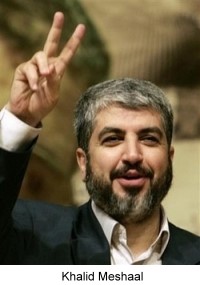 or 18 months my people in Gaza have been under siege, incarcerated inside the world’s biggest prison, sealed off from land, air and sea, caged and starved, denied even medication for our sick. After the slow death policy came the bombardment. In this most densely populated of places, nothing has been spared Israel’s warplanes, from government buildings to homes, mosques, hospitals, schools and markets. More than 540 have been killed and thousands permanently maimed. A third are women and children. Whole families have been massacred, some while they slept.
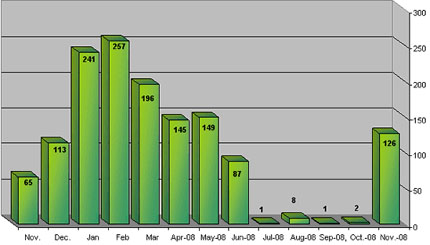
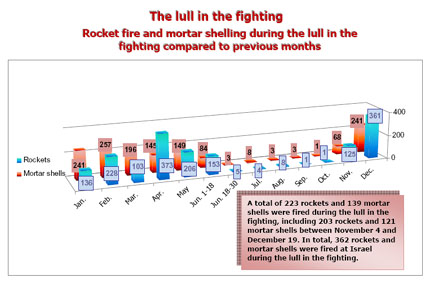


 s the incoming president, world-renowned for his eloquence, about to become better known for his silence?