NEWS & VIEWS ROUNDUP: June 7

The unraveling

[The leader of the Libyan Islamic Fighting Group, Noman] Benotman surprised his hosts [in Kandahar in the summer of 2000 at a conference of jihadists from around the Arab world] with a bleak assessment of their prospects. “I told them that the jihadist movement had failed. That we had gone from one disaster to another, like in Algeria, because we had not mobilized the people,” recalls Benotman, referring to the Algerian civil war launched by jihadists in the ’90s that left more than 100,000 dead and destroyed whatever local support the militants had once enjoyed. Benotman also told bin Laden that the Al Qaeda leader’s decision to target the United States would only sabotage attempts by groups like Benotman’s to overthrow the secular dictatorships in the Arab world. “We made a clear-cut request for him to stop his campaign against the United States because it was going to lead to nowhere,” Benotman recalls, “but they laughed when I told them that America would attack the whole region if they launched another attack against it.”

Benotman says that bin Laden tried to placate him with a promise: “I have one more operation, and after that I will quit”–an apparent reference to September 11. “I can’t call this one back because that would demoralize the whole organization,” Benotman remembers bin Laden saying.

After the attacks, Benotman, now living in London, resigned from the Libyan Islamic Fighting Group, realizing that the United States, in its war on terrorism, would differentiate little between Al Qaeda and his organization.

Benotman, however, did more than just retire. In January 2007, under a veil of secrecy, he flew to Tripoli in a private jet chartered by the Libyan government to try to persuade the imprisoned senior leadership of his former group to enter into peace negotiations with the regime. He was successful. This May, Benotman told us that the two parties could be as little as three months away from an agreement that would see the Libyan Islamic Fighting Group formally end its operations in Libya and denounce Al Qaeda’s global jihad. At that point, the group would also publicly refute recent claims by Al Qaeda that the two organizations had joined forces.

This past November, Benotman went public with his own criticism of Al Qaeda in an open letter to Zawahiri, absorbed and well-received, he says, by the jihadist leaders in Tripoli. In the letter, Benotman recalled his Kandahar warnings and called on Al Qaeda to end all operations in Arab countries and in the West. The citizens of Western countries were blameless and should not be the target of terrorist attacks, argued Benotman, his refined English accent, smart suit, trimmed beard, and easygoing demeanor making it hard to imagine that he was once on the front lines in Afghanistan.

Although Benotman’s public rebuke of Al Qaeda went unnoticed in the United States, it received wide attention in the Arabic press. In repudiating Al Qaeda, Benotman was adding his voice to a rising tide of anger in the Islamic world toward Al Qaeda and its affiliates, whose victims since September 11 have mostly been fellow Muslims. Significantly, he was also joining a larger group of religious scholars, former fighters, and militants who had once had great influence over Al Qaeda’s leaders, and who–alarmed by the targeting of civilians in the West, the senseless killings in Muslim countries, and Al Qaeda’s barbaric tactics in Iraq–have turned against the organization, many just in the past year.

Can Qatar do it again?

Having succeeded in getting erstwhile warring Lebanese factions to get their act together, Qatar is now exploring the prospects of mediating between Fatah and Hamas in the hope of restoring Palestinian national unity.

However, Qatari Emir Sheikh Hamed Bin Khalifa Al-Thani and his influential premier and foreign minister, Sheikh Hamad Bin Jasem, seem to be treading cautiously (some say too cautiously) in the more complicated “Palestinian minefield”.

According to reliable Palestinian sources, Qatar has voiced its “initial willingness” to help “the Palestinian brothers” overcome their differences and re-establish national unity. The same sources were careful, however, to add that Qatari officials — especially Bin Jasem — wouldn’t be in a position to help the Palestinians if they were not willing to help themselves.

U.S. calls a straw poll in Iraq: It may not like the result

In the TV gameshow bubble that substitutes for foreign policy discussion on the U.S. presidential campaign trial, there’s a lot of talk these days about how the U.S. is “winning” in Iraq. The evidence to back this claim is a comparative lull in the death rate in recent months, and the fact that Iraqi government forces are taking more casualties than the Americans. Those proclaiming “victory,” of course, are invariably the same crowd that enthusiastically backed the invasion of Iraq in the first place, and their desire for vindication for their part in authoring what all serious analysts agree has been the most catastrophic strategic blunder in America’s history is all too understandable. (Less understandable is the echo of this position by the Washington Post, which claims the U.S. and the Iraq government are “winning the war” and gaining full control of the country from al-Qaeda and rival militias.)

But the suggestion that a shift or fall in the pattern of violence indicates that the U.S. is “winning” in Iraq betrays the same lack of understanding of dynamics in that country as was so evident in the original decision to invade and occupy Iraq.

Democrats, put down your swords

For Democrats of all persuasions, the conclusion of the primaries should encourage reflection rather than recrimination. Now is the time to listen to the calm counsel that cannot be heard amid the roar of combat, and to think.

Hillary Clinton needs to think about how best to preserve the gains of her campaign without spoiling it all. Barack Obama must consider how best to unite his party while making choices, including a running mate, true to his own instincts and style. Meanwhile their supporters can take deep breaths and try to imagine how they will feel on Nov. 5 if John McCain has won the presidency.

Obama’s Clinton problem surfaces — in GOP ads

Months of bare-knuckled campaign fights, pitched rhetoric and debate jousting produced a treasure chest of sound bites and videos of Clinton ripping Obama as inexperienced, elitist or simply wrong on various issues.

Now that the Democratic primaries are over and Obama has clinched his party’s nomination, the Republicans are ready to pounce.

The Republican National Committee on Wednesday rolled out new ads quoting Clinton criticizing Obama, the first of what likely will be many such ads.

McCain bumbles the delivery

As Democrats buzzed this week about their new de facto nominee, his historic candidacy and the unlikely political demise of Hillary Rodham Clinton, Republican circles were humming with another topic.

The topic: Is there a way John McCain can win the presidency without giving another speech?

That’s overstated, of course, but the concern about McCain’s wooden and stumbling address before a few hundred supporters here Tuesday night – the same evening as Barack Obama’s soaring acceptance address before thousands of screaming fans – has sent something of a shudder through the party and left GOP operatives shaking their heads in dismay.

Adviser says McCain backs Bush wiretaps

A top adviser to Senator John McCain says Mr. McCain believes that President Bush’s program of wiretapping without warrants was lawful, a position that appears to bring him into closer alignment with the sweeping theories of executive authority pushed by the Bush administration legal team.

In a letter posted online by National Review this week, the adviser, Douglas Holtz-Eakin, said Mr. McCain believed that the Constitution gave Mr. Bush the power to authorize the National Security Agency to monitor Americans’ international phone calls and e-mail without warrants, despite a 1978 federal statute that required court oversight of surveillance.

Mr. McCain believes that “neither the administration nor the telecoms need apologize for actions that most people, except for the A.C.L.U. and trial lawyers, understand were constitutional and appropriate in the wake of the attacks on Sept. 11, 2001,” Mr. Holtz-Eakin wrote.

The great divide

Five years after a war allegedly launched to liberate Iraq’s Shiite majority, American forces have been bombing Shiite neighbourhoods in Basra and Baghdad while their snipers and tanks remain on the ground in places like Sadr City.

Iraq seems to have emerged from the worst phase of its civil war, but the victorious Shiite factions have turned their arms on one another in a fight over the spoils, battling for political power in advance of the upcoming provincial elections.

But as the Americans attempt to secure an agreement with the government of Nouri al Maliki to legalise the long-term presence of troops in Iraq, Muqtada al Sadr and his followers remain a formidable obstacle. Whether or not Sadr has been weakened by the clashes in Basra and Sadr City, marginalising the Sadrists will be almost impossible, for they remain the only genuine mass movement in Iraq, with roots that long predate the fall of Saddam.

America’s medicated army

Seven months after Sergeant Christopher LeJeune started scouting Baghdad’s dangerous roads — acting as bait to lure insurgents into the open so his Army unit could kill them — he found himself growing increasingly despondent. “We’d been doing some heavy missions, and things were starting to bother me,” LeJeune says. His unit had been protecting Iraqi police stations targeted by rocket-propelled grenades, hunting down mortars hidden in dark Baghdad basements and cleaning up its own messes. He recalls the order his unit got after a nighttime firefight to roll back out and collect the enemy dead. When LeJeune and his buddies arrived, they discovered that some of the bodies were still alive. “You don’t always know who the bad guys are,” he says. “When you search someone’s house, you have it built up in your mind that these guys are terrorists, but when you go in, there’s little bitty tiny shoes and toys on the floor — things like that started affecting me a lot more than I thought they would.”

Indicted Saudi gets $80 million US contract

The US military has awarded an $80 million contract to a prominent Saudi financier who has been indicted by the US Justice Department. The contract to supply jet fuel to American bases in Afghanistan was awarded to the Attock Refinery Ltd, a Pakistani-based refinery owned by Gaith Pharaon. Pharaon is wanted in connection with his alleged role at the failed Bank of Credit and Commerce International (BCCI), and the CenTrust savings and loan scandal, which cost US tax payers $1.7 billion.

The Saudi businessman was also named in a 2002 French parliamentary report as having links to informal money transfer networks called hawala, known to be used by traders and terrorists, including Al Qaeda.

Interestingly, Pharaon was also an investor in President George W. Bush’s first business venture, Arbusto Energy.

US issues threat to Iraq’s $50bn foreign reserves in military deal

The US is holding hostage some $50bn (£25bn) of Iraq’s money in the Federal Reserve Bank of New York to pressure the Iraqi government into signing an agreement seen by many Iraqis as prolonging the US occupation indefinitely, according to information leaked to The Independent.

US negotiators are using the existence of $20bn in outstanding court judgments against Iraq in the US, to pressure their Iraqi counterparts into accepting the terms of the military deal, details of which were reported for the first time in this newspaper yesterday.

Iraq’s foreign reserves are currently protected by a presidential order giving them immunity from judicial attachment but the US side in the talks has suggested that if the UN mandate, under which the money is held, lapses and is not replaced by the new agreement, then Iraq’s funds would lose this immunity. The cost to Iraq of this happening would be the immediate loss of $20bn. The US is able to threaten Iraq with the loss of 40 per cent of its foreign exchange reserves because Iraq’s independence is still limited by the legacy of UN sanctions and restrictions imposed on Iraq since Saddam Hussein invaded Kuwait in the 1990s. This means that Iraq is still considered a threat to international security and stability under Chapter Seven of the UN charter. The US negotiators say the price of Iraq escaping Chapter Seven is to sign up to a new “strategic alliance” with the United States.

Iran makes the sciences a part of its revolution

Iran’s determination to develop what it says is a nuclear energy program is part of a broader effort to promote technological self-sufficiency and to see Iran recognized as one of the world’s most advanced nations. The country’s leaders, who three decades ago wrested the government away from a ruler they saw as overly dependent on the West, invest heavily in scientific and industrial achievement, but critics say government backing is sometimes erratic, leaving Iran’s technological promise unfulfilled.

Still, Iranian scientists claim breakthroughs in nanotechnology, biological researchers are pushing the boundaries of stem cell research and the country’s car industry produces more cars than anywhere else in the region.

“Iran wants to join the group of countries that want to know about the biggest things, like space,” Richter said to the students during his speech at Sharif University, which draws many of the country’s best students. Every year, 1.5 million young Iranians take a national university entrance exam, or “concours.” Of the 500,000 who pass and are entitled to free higher education, only the top 800 can attend Sharif, considered Iran’s MIT.


Facebooktwittermail

CAMPAIGN 08 & EDITOR’S COMMENT: “Undivided” means open access

Obama clarifies united Jerusalem comment

Presumptive Democratic presidential nominee Barack Obama did not rule out Palestinian sovereignty over parts of Jerusalem when he called for Israel’s capital to remain “undivided,” his campaign told The Jerusalem Post Thursday.

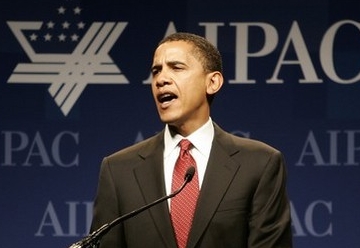
“Jerusalem will remain the capital of Israel, and it must remain undivided,” Obama declared Wednesday, to rousing applause from the 7,000-plus attendees at the American Israel Public Affairs Committee policy conference.

But a campaign adviser clarified Thursday that Obama believes “Jerusalem is a final status issue, which means it has to be negotiated between the two parties” as part of “an agreement that they both can live with.”

“Two principles should apply to any outcome,” which the adviser gave as: “Jerusalem remains Israel’s capital and it’s not going to be divided by barbed wire and checkpoints as it was in 1948-1967.”

He refused, however, to rule out other configurations, such as the city also serving as the capital of a Palestinian state or Palestinian sovereignty over Arab neighborhoods.

“Beyond those principles, all other aspects are for the two parties to agree at final status negotiations,” the Obama adviser said.

Many on the right of the political spectrum among America’s Jews welcomed Obama’s remarks at AIPAC, but the clarification of his position left several cold.

“The Orthodox Union is extremely disappointed in this revision of Senator Obama’s important statement about Jerusalem,” said Nathan Diament, director of public policy for the Union of Orthodox Jewish Congregations. He had sent out a release Wednesday applauding Obama’s Jerusalem remarks in front of AIPAC.

“In the current context, everyone understands that saying ‘Jerusalem… must remain undivided’ means that the holy city must remain unified under Israeli rule, as it has been since 1967,” Diament explained.

“If Senator Obama intended his remarks at AIPAC to be understood in this way, he said nothing that would reasonably lead to such a different interpretation.”

Morton Klein, president of the Zionist Organization of America and another Jewish activist who had originally lauded Obama’s statement, now called the candidate’s words “troubling.”

“It means he used the term inappropriately, possibly to mislead strong supporters of Israel that he supports something he doesn’t really believe,” Klein charged.

But congressman Robert Wexler, a Democrat from Florida with ties to the Jewish community and a long-time supporter of Obama, rejected the idea that the Illinois senator had been misleading with his comments.

“Everyone knows that Jerusalem is a final status issue. That is not a secret to anyone. Senator Obama says emphatically that should the Israelis and the Palestinians negotiate [an agreement], he will respect their conclusions and that he will not dictate a particular resolution.”

And some groups were pleased by the clarification on Jerusalem provided by the campaign.

“There was reaction from some of our base who were taken aback by it and thought he was undermining the peace process,” said Americans for Peace Now spokesman Ori Nir, who described his organization as “gratified” by the clarified position which seems to follow APN’s policy that sovereignty of Jerusalem could be shared in a final peace settlement.

Obama has faced questions about his support for Israel from hawkish quarters of the Jewish community, and his campaign said the speech before AIPAC, following a town hall meeting at a Florida synagogue last month, were key elements in shoring up the Jewish vote, which generally goes to the Democrats.

“We think we’ve gotten a good reaction to the speech and we’re pleased that we’ve gotten a good reaction,” said the campaign adviser of the candidate’s AIPAC address, which received multiple sustained standing ovations.

Palestinian factions though were particularly troubled by the original speech’s original language on an undivided Jerusalem.

“This statement is totally rejected,” said Palestinian Authority Chairman Mahmoud Abbas, whom a top aide described as “disappointed.”

“The whole world knows that holy Jerusalem was occupied in 1967 and we will not accept a Palestinian state without having Jerusalem as the capital of a Palestinian state,” Abbas said.

The Obama campaign adviser said that whatever the international reaction, it was important for the Illinois senator to “make his positions clear.”

“Our main audience is American voters at the moment. Other people want to know where he stands and it’s important that they do know where he stands,” he said.

Speaking generally about the speech, which also stressed the importance of a secure Israel and the need to isolate Hamas, Hamas official Sami Abu Zuhri told Reuters: “Obama’s comments have confirmed that there will be no change in the US administration’s foreign policy on the Arab-Israeli conflict.”

Prime Minister Ehud Olmert, however, called Obama’s address “moving,” adding that he was also impressed by the speeches delivered at the same conference by Democratic rival, Hillary Clinton, and presumptive Republican nominee, John McCain.

Olmert spoke to all three candidates by phone Thursday as he wrapped up a three-day visit to Washington. [complete article]

Editor’s Comment — The Washington Post said:

Obama quickly backtracked today in an interview with CNN.

“Well, obviously, it’s going to be up to the parties to negotiate a range of these issues. And Jerusalem will be part of those negotiations,” Obama said when asked whether Palestinians had no future claim to the city.

Obama said “as a practical matter, it would be very difficult to execute” a division of the city. “And I think that it is smart for us to — to work through a system in which everybody has access to the extraordinary religious sites in Old Jerusalem but that Israel has a legitimate claim on that city.”

That’s probably good enough to back him out of the cul-de-sac he drove into yesterday, but he would surely have been better off not using the word “undivided” in the first place. Anyone who has been concerned about whether Obama can be taken at his word, just got freely handed a reason to be “troubled.”

Facebooktwittermail

NEWS & VIEWS ROUNDUP: June 6

The ignorant American voter

The long Iraq war. The bungled Hurricane Katrina response. The credit crunch. A quick look at the newspapers will give many voters reason to doubt the wisdom of America’s political leaders. Unfortunately, Americans are doing little to educate themselves about their leaders and their policies, says bestselling author and George Mason University historian Rick Shenkman in his new book Just How Stupid Are We? Facing the Truth About the American Voter. Shenkman cites some damning facts to make his case that Americans are ill-prepared to guide the world’s most powerful democracy. Only 2 of 5 voters can name the three branches of the federal government. And 49 percent of Americans think the president has the authority to suspend the Constitution. But, for Shenkman, the severity of the problem snapped into focus after Sept. 11, 2001, when polls showed that a large number of Americans knew little about the attacks and the Iraq war that followed. He blames some of the public’s misunderstanding on the White House message machine, but he argues that Americans did little to seek the truth. “As became irrefutably clear in scientific polls undertaken after 9/11…millions of Americans simply cannot fathom the twists and turns that complicated debates take,” Shenkman writes. Shenkman spoke to U.S. News about the competence of the American voter.

Also, see the Just How Stupid Are We? blog.

Is Barack Obama too naive to be president?

On Tuesday, hours before Obama clinched the Democratic nomination, McCain, signaling the start of the general election, told a crowd in New Orleans, “Americans ought to be concerned about the judgment of a presidential candidate who says he’s ready to talk, in person and without conditions, with tyrants from Havana to Pyongyang.”

And so it’s worth taking a look at what Obama actually said during that July 23 debate. Here is his full reply:

I would [be willing to meet with those leaders], and the reason is this: The notion that somehow not talking to countries is punishment to them—which has been the guiding diplomatic principle of this administration—is ridiculous. … [Ronald Reagan and John Kennedy talked with Soviet leaders because] they understood that we may not trust them, and they may pose an extraordinary threat to us, but we have the obligation to find areas where we can potentially move forward.

Obama added, referring to the countries that the questioner listed, “It is a disgrace that we have not spoken with them.” For instance, he said, we need to talk with Iran and Syria, if only about Iraq, “because if Iraq collapses, they’re going to have responsibilities.”

I would submit there is nothing wrong with any of this. Obama might have done well to focus more intently, at the time, on the phrase “without preconditions”—to parse its meaning and to distinguish the lack of preconditions from the lack of preparations—but, taken in full, and in the context of the question, his reply was the acme of common sense.

Obama already mired on Middle East road

Senator Barack Obama has finally clinched the Democratic party’s nomination for the United States presidency, and already the intense pressures on him to tame broad calls for “change” in the US’s domestic and external policies have chewed away a good deal of his initial sound and fury, already making him look like a business-as-usual candidate.

Obama walks fine line at major pro-Israel meet

Obama’s speech in many ways marked a shift in the usual approach, as it seemed the Illinois senator was encouraging the AIPAC faithful to support his positions, rather than submitting to what the group’s policy agenda otherwise suggested.

“His speech was remarkably different in tone and substance from any other speaker that you heard at the conference,” said Trita Parsi, who heads the National Iranian American Council. “Instead of staying away from the issue, he made a strong case, he didn’t back down from the fact that diplomacy would not only be valuable to U.S. interests, but is also good for Israel’s security.”

Obama and Dean team up to recast the political map

Sixteen months after he launched his campaign for the White House, Sen. Barack Obama may, just now, be entering his campaign’s most perilous stage. Facing a rift of sorts within the Democratic Party and concerns over the scope of his political base, the Illinois Democrat is pursuing an unconventional path to 1600 Pennsylvania Ave: unlike those before him, he has pledged to redraw the electoral map by putting new, traditionally Republican states in play.

Secret plan to keep Iraq under US control

A secret deal being negotiated in Baghdad would perpetuate the American military occupation of Iraq indefinitely, regardless of the outcome of the US presidential election in November.

The terms of the impending deal, details of which have been leaked to The Independent, are likely to have an explosive political effect in Iraq. Iraqi officials fear that the accord, under which US troops would occupy permanent bases, conduct military operations, arrest Iraqis and enjoy immunity from Iraqi law, will destabilise Iraq’s position in the Middle East and lay the basis for unending conflict in their country.

But the accord also threatens to provoke a political crisis in the US. President Bush wants to push it through by the end of next month so he can declare a military victory and claim his 2003 invasion has been vindicated. But by perpetuating the US presence in Iraq, the long-term settlement would undercut pledges by the Democratic presidential nominee, Barack Obama, to withdraw US troops if he is elected president in November.

This raises huge questions over our independence

In 1930 the Anglo-Iraqi treaty was signed as a prelude to Iraq gaining full independence. Britain had occupied Iraq after defeating the Turks in the First World War, and was granted a mandate over the country. The treaty gave Britain military and economic privileges in exchange for Britain’s promise to end its mandate. The treaty was ratified by a docile Iraqi parliament, but was bitterly resented by nationalists. Iraq’s dependency on Britain poisoned Iraqi politics for the next quarter of a century. Riots, civil disturbances, uprisings and coups were all a feature of Iraq’s political landscape, prompted in no small measure by the bitter disputations over the treaty with Britain.

Iraq is now faced with a reprise of that treaty, but this time with the US, rather than Britain, as the dominant foreign partner. The US is pushing for the enactment of a “strategic alliance” with Iraq, partly as a precondition for supporting Iraq’s removal from its sanctioned status under Chapter 7 of the UN Charter. It is a treaty under any other name. It has been structured as an alliance partly to avoid subjecting its terms to the approval of the US Senate, and partly to obfuscate its significance. Although the draft has not been circulated outside official circles, the leaks raise serious alarm about its long-term significance for Iraq’s sovereignty and independence. Of course the terms of the alliance for Iraq will be sweetened with promises of military and economic aid, but these are no different in essence from the commitments made in Iraq’s previous disastrous treaty entanglements.

Smells of Gaza

Like most people who read and watch a lot of news, I’ve seen a fair share of photographs and television footage of the Gaza strip in my life. And unlike some of the places I’ve worked — like Goz Beida in eastern Chad or El Zapote in Guatemala — Gaza is actually a place that many people can locate on a world map, or describe to you on the basis of the images they’ve seen. I’d been expecting the stark contrast between the modern high-rise buildings and the rubble of demolished houses — the bullet holes on both a constant reminders of the ongoing violence between the Israeli military and Palestinian armed groups. So I can’t say it’s the landscapes of Gaza that caught me off guard when I first arrived in the city after crossing the sandy piece of no man’s land between Israel and the Gaza strip. More than anything, it was the smells.

Occupation has cost Israel dear, says report

Israel’s occupied territories and conflict with the Palestinians has undermined the country’s economic growth and has cost at least an extra 36.6bn shekels (£5.7bn) in defence spending over the past two decades, according to an Israeli thinktank.

Calculations by the Adva Centre, an independent policy centre in Tel Aviv, suggest Israel’s economy has been held back, inequality within the country has grown and there have been significant government budget cuts to pay for mounting defence spending.

Iran fumes as Syria nods to Arab world

The strings pulled by Qatar, which helped end the stand-off in Lebanon last May, are now working to orchestrate a rapprochement between Syria, Egypt and Saudi Arabia.

Egyptian President Hosni Mubarak, who meet King Abdullah of Saudi Arabia last weekend in Jeddah, told the Qataris he does not mind mending relations with Damascus, but wants first to see a soothing of tension between the Syrians and Riyadh.

Tension between Damascus and Cairo, after all, had stemmed from sour relations between the Syrians and Riyadh, with regard to Lebanon, and led to the no-show of both Mubarak and Abdullah at the Arab summit in Damascus held in March. Both countries accused the Syrians of prolonging the presidential crisis in Beirut and preventing the election of Michel Suleiman as president. That is now history.

It’s time to talk to Syria

After Iraq invaded Kuwait in 1991, President George H.W. Bush did the improbable and convinced Syrian President Hafez Assad to join an American-led coalition against a fellow Baathist regime.

Today, these leaders’ sons have another chance for a diplomatic breakthrough that could redefine the strategic landscape in the Middle East.

The recent announcement of peace negotiations between Israel and Syria through Turkey, and the agreement between the Lebanese factions in Qatar – both apparently without meaningful U.S. involvement – should serve as a wake-up call that our policy of nonengagement has isolated us more than the Syrians. These developments also help create new opportunities and increased leverage that we can only exploit through substantive dialogue with Syria.

Facebooktwittermail

CAMPAIGN 08 & EDITOR’S COMMENT: Obama pays homage to AIPAC

Arabs shocked by Obama speech

Arab leaders have reacted with anger and disbelief to an intensely pro-Israeli speech delivered by Barack Obama, the US Democratic presumptive presidential nominee.
Obama told the influential annual policy conference of the American Israel Public Affairs Council (Aipac): “Jerusalem will remain the capital of Israel and it must remain undivided.”

His comments appalled Palestinians who see occupied East Jerusalem as part of a future Palestinian state.

Saeb Erekat, the chief Palestinian negotiator, told Al Jazeera on Thursday: “This is the worst thing to happen to us since 1967 … he has given ammunition to extremists across the region”. [complete article]

It’s a mitzvah

As a pandering performance, it was the full Monty by a candidate who, during the primary, had positioned himself to Hillary Clinton’s left on matters such as Iran. Yesterday, Obama, who has generally declined to wear an American-flag lapel pin, wore a joint U.S.-Israeli pin, and even tried a Hebrew phrase on the crowd.

Obama even outdid President Bush in his pro-Israel sentiments. On the very day that Obama vowed to protect Jerusalem as Israel’s capital — drawing a furious denunciation from the Palestinian Authority — Bush announced that he was suspending a move of the U.S. Embassy to Jerusalem.

The transformation — mostly in tone, but occasionally in substance — might qualify as what Obama likes to call the same old Washington “okey-doke.” And the candidate is uncomfortable with such things, as evidenced by his struggle to pronounce the name of the Iranian president, Mahmoud Ahmadinejad. It came out as “Mahmoud . . . Ahmin — Ahmeninejad.”

The crowd of 7,000 loved him anyway. He received 13 standing ovations, more than twice the number granted the next act, Hillary Clinton. The AIPAC faithful gushed about his performance as they left the Washington Convention Center. “He doesn’t even read! He has an extemporaneous delivery,” one woman recounted, evidently unaware that Obama had read every word from a teleprompter. [complete article]

John McCAIPAC

When John McCain went before the American Israel Public Affairs Committee (AIPAC) on June 2, he could not have been more obsequious to this group that has done more than any other in the United States to block a just solution to the Palestinian quest for statehood.

With Joe Lieberman in tow, McCain opened by saying that “it’s a pleasure, as always, to be in the company” of AIPAC.

Tone deaf to Israel’s brutalization of the Palestinians, McCain called Israel “an inspiration to free nations everywhere.” [complete article]

Editor’s Comment — Yesterday was the day the “change” bubble burst. Obama’s performance at AIPAC shows that his grasp of Middle East politics has yet to rise to the level of George Bush’s! That’s an incredible thing to have to say (especially for someone who still intends to vote Democrat) but what Obama demonstrated was the myopia of a candidate who has thrown principle to the wind and decided he will say anything to secure votes and donations. His was a polished performance in the politics of business-as-usual, burnished with a genuflection to Zionism that was utterly uncalled for.

How did it happen?

I can only suppose that having become so deeply enmeshed in Hillary Clinton’s psyche, Obama decided he’d couldn’t hold back in parroting her down to a T if he was to win over her rightwing Jewish supporters. Having made that choice, he then thought, what the hell? I’ll see if I can pull in the whole Likudnik crowd as well. The only surprise is that he didn’t toss in a promise to totally obliterate Iran if that should become necessary.

If there’s a silver lining here — and one for which Obama deserves no credit — it is that he appears to have given a boost to Palestinian solidarity as Mahmoud Abbas reaches out to Hamas. Abbas may have finally recognized that, at least for Palestinians, the prospect of a new administration in Washington offers no basis for hope.

The idiocy to which Obama has fallen victim is that, like so many diehard supporters of Israel (whose love of Israel generally runs so deep they wouldn’t dream of living there), he is — as chief Palestinian negotiator Saeb Erekat put it — “being more Israeli than the Israelis themselves.”

And on the issue of an “undivided Jerusalem,” Obama would do well to reflect on the observations of someone who lives there, who describes himself as a Zionist and who offered these remarks to Hillary Clinton last fall after she made the same ill-conceived pledge.

Gershom Gorenberg wrote last October:

Jerusalem, Hillary, is divided by more fault lines than run under California, even if it is also stitched together by livelihoods and water mains and friendships that grow like hardy weeds.

The Israeli consensus that the city must never be divided has broken down. Vice Prime Minister Haim Ramon is reportedly pushing a plan to turn most Arab neighborhoods over to Palestinian rule, even if other members of the ruling Kadima party would rather give up less land in Jerusalem. Your position paper defends a stance that is already spoken of here in past tense, in a tone reserved for the naiveté of youth.

I’d like to believe that what you really mean by “undivided Jerusalem” is what your very closest adviser laid out in his parameters for an Israeli-Palestinian peace at the end of his term as president in January 2001: Jerusalem should be an “open and undivided city” but the capital of two independent states, with Palestinian parts of the city under Palestinian rule. Turning those parameters into reality would require inspired negotiating, with immense American investments of time and prestige, and such investments dried up completely very soon after Bill laid out his vision. As we all know, his successor doesn’t do negotiating.

I suspect, however, that you wrote what you did because advisers believe that you need to support an outdated position in order to win Jewish support. Far away as I am, I also suspect that your advisers are giving obsolete counsel. American Jews are even more fed up than other Americans are with the Republicans. In 2006, 87 percent of them voted for Democratic candidates for the House.

Let me suggest a more honest and more honorable position on Israel: The greatest contribution that America can make to Israeli security is to help it reach peace with the Palestinians, and as president you will resume that effort where it was abandoned in 2001. If asked about Jerusalem, say that the sides will have to come to an agreement, and you are committed to help them do so. The Clinton parameters are still a good basis for that. If you don’t take this position, I hope that your Democratic rivals do. It would make me more hopeful about the future of my fractured city.

And if Obama’s support for an undivided Jerusalem isn’t just shameless pandering to AIPAC, how come he didn’t make this commitment in his Israel Fact Sheet [PDF] last year when it was already spelled out in Hillary’s Plan For Israel?

Facebooktwittermail

CAMPAIGN 08: The predator state

Obama needs a better reading list

For Mr. Zakaria, the truly enlightened Americans, the ones who understand the coming order, are apparently Goldman Sachs, McKinsey & Company and assorted business chieftains. When Mr. Zakaria writes that Third World leaders “have heard Western CEOs explain where the future lies,” he means it not as a sarcastic slap at those CEOs but as homage to their wisdom.

Average Americans, meanwhile, give Mr. Zakaria fits, what with their stubborn ignorance of foreign ways and their doubts about free trade. This attitude, in turn, has opened up “a growing gap between America’s worldly business elite and cosmopolitan class, on the one hand, and the majority of the American people, on the other.”

A warning here, senator. This is not an idea that will endear you to the people of Montana, or Ohio, or Pennsylvania. Were you to integrate it into your stump speech, you might even deliver the South Side of Chicago over to John McCain.

One more reason to be leery of all this market idolatry: It’s wrong. Take the aspect of the “new era” that Mr. Zakaria most admires – “the free movement of capital,” the international loans and investments he worships as “globalization’s celestial mechanism for discipline.” In point of fact, the rise of China and India – Mr. Zakaria’s own paradigm cases – was possible only because those countries shunned global commercial credit markets in the 1970s, allowing them to avoid the interest-rate shock of the early ’80s.

How do I know this? It’s all explained in a far more worthwhile new book, “The Predator State,” by James K. Galbraith. At your next photo-op, Mr. Obama, I hope to see you half way through it. [complete article]

The predator state

Today, the signature of modern American capitalism is neither benign competition, nor class struggle, nor an inclusive middle-class utopia. Instead, predation has become the dominant feature—a system wherein the rich have come to feast on decaying systems built for the middle class. The predatory class is not the whole of the wealthy; it may be opposed by many others of similar wealth. But it is the defining feature, the leading force. And its agents are in full control of the government under which we live.

Our rulers deliver favors to their clients. These range from Native American casino operators, to Appalachian coal companies, to Saipan sweatshop operators, to the would-be oil field operators of Iraq. They include the misanthropes who led the campaign to abolish the estate tax; Charles Schwab, who suggested the dividend tax cut of 2003; the “Benedict Arnold” companies who move their taxable income offshore; and the financial institutions behind last year’s bankruptcy bill. Everywhere you look, public decisions yield gains to specific private entities.

For in a predatory regime, nothing is done for public reasons. Indeed, the men in charge do not recognize that “public purposes” exist. They have friends, and enemies, and as for the rest—we’re the prey. Hurricane Katrina illustrated this perfectly, as Halliburton scooped up contracts and Bush hamstrung Kathleen Blanco, the Democratic governor of Louisiana. The population of New Orleans was, at best, an afterthought; once dispersed, it was quickly forgotten. [complete article]

Facebooktwittermail

NEWS & VIEWS ROUNDUP: June 3

My talk with Fareed Zakaria: Obama must face a post-American world

If Barack Obama succeeds in his campaign against John McCain and becomes president of the United States, he will have to deal with much deeper issues beyond Iraq, namely the “rise of the rest” as China, India and the developing world aspire to catch up with America and want a seat at the table of global power. In such a world, the strategic vision of US leadership ought to be
to make the world safe for interdependence since we will not always be on top.

I discussed these issues recently with Fareed Zakaria, author of The Post-American World.

Republicans begin to highlight Clinton’s criticism of Obama

Hours before the polls closed Tuesday in the final two Democratic presidential primaries, the Republican National Committee began circulating a video of Hillary Clinton questioning Barack Obama’s qualifications to be commander-in-chief, and acknowledging John McCain has this important presidential credential.

“Senator McCain will bring a lifetime of experience to the campaign, I will bring a lifetime of experience and Senator Obama will bring a speech that he gave in 2002,” Clinton says in the one-minute video of CNN’s coverage of a news conference she held on March 8 – the day Obama won the Wyoming caucuses. “I think that is a significant difference. I think that since we now know Senator McCain will be the nominee for the Republican Party, national security will be front and center in this election. We all know that.

“And I think it is imperative that each of us be able to demonstrate we can cross the commander-in-chief threshold. And I believe I have done that. Certainly, Senator McCain has done that. And you will have to ask Senator Obama with respect to his candidacy.”

McCain calls Iran ‘foremost’ Middle East enemy

Sen. John McCain called Monday for broad sanctions against Iran and a South African-style worldwide divestment strategy aimed at pressuring the country’s regime to abandon efforts to acquire nuclear weapons and encourage its people’s democratic aspirations.

In a speech to the pro-Israel lobbying group AIPAC in Washington, McCain declared Iran the “foremost” enemy in the Middle East and said it could pose an “existential threat” to Israel if it succeeds in acquiring a nuclear bomb.

“A sponsor of both Hamas and Hezbollah, the leadership of Iran has repeatedly used violence to undermine Israel and the Middle East peace process,” McCain said. “It has trained, financed, and equipped extremists in Iraq who have killed American soldiers fighting to bring freedom to that country. It remains the world’s chief sponsor of terrorism and threatens to destabilize the entire Middle East, from Basra to Beirut.”

Both McCain, Obama exaggerating Iran’s nuclear program

The presumptive Republican nominee for president and the leading contender for the Democratic nomination are exaggerating what’s known about Iran’s nuclear program as they duel over how best to deal with Tehran.

Sens. John McCain, R-Ariz., and Barack Obama, D-Ill., say that Iran is developing nuclear weapons.

The U.S. intelligence community, however, thinks that Iran halted an effort to build a nuclear warhead in mid-2003, and the U.N. International Atomic Energy Agency, which is investigating the program, has found no evidence to date of an active Iranian nuclear-weapons project.

Cheney builds an explosive case

For many months, the propaganda line that explosively formed projectiles (EFPs) that could penetrate United States armored vehicles were coming straight from Iran has been embraced publicly by the entire George W Bush administration. But when that argument was proposed internally by military officials in January 2007, it was attacked by key administration officials as unsupported by the facts.

Vice President Dick Cheney was able to get around those objections and get his Iranian EFP line accepted only because of arrangements he and Bush made with General David Petraeus before he took command of US forces in Iraq.

The initial draft of the proposed military briefing on the issue of EFPs, which asserted flatly that EFPs were being manufactured and smuggled to Iraqi Shi’ite groups directly by the Iranian regime, was met with unanimous objection from the State Department, Defense Department and National Security Council staff, as administration officials themselves stated publicly.

Terror and truth

Sir Hugh Orde speaks rarely heard truth when he says that he has never heard of a terrorist campaign that was “policed out”, adding that he could not think of one that had not ended through negotiation.

There has been an unshakeable faith in Europe that western law-enforcement officers could pad around the bazaars of Rawalpindi and in the refugee camps of the Middle East hunting-down “bad actors”. It has been a fantasy fuelled by the conviction in the west that “secular” Muslim societies must at heart be pro-western – surely they must share the antipathy many in the west feel toward movements motivated by Islam? The flawed assumption has been that these seculars loathe movements such as Hizbullah, and would become the west’s ready collaborators in undermining them.

But as Sir Hugh evidently is aware from his own Irish experience of resistance movements, it was never this simple. In one family around the dinner table would sit one brother in one wing of the IRA; another would belong to Sinn Fein, and yet another would be in the employ of the British – and yet, all saw themselves as Irish nationalists.

And the winner is … the Israel lobby

They’re all here – and they’re all ready to party. The three United States presidential candidates – John McCain, Hillary Clinton and Barack Obama. Madam House speaker Nancy Pelosi. Most US senators and virtually half of the US Congress. Vice President Dick Cheney’s wife, Lynne. Secretary of State Condoleezza Rice. Embattled Israeli Prime Minister Ehud Olmert. And a host of Jewish and non-Jewish political and academic heavy-hitters among the 7,000 participants.

Such star power wattage, a Washington version of the Oscars, is the stock in trade of AIPAC – the American Israel Public Affairs Committee, the crucial player in what is generally known as the Israel lobby and which holds its annual Policy Conference this week in Washington at which most of the heavyweights will deliver lectures.

‘Syria to meet with weapons inspectors about site bombed by Israel

Nine months after Israel bombed an alleged Syrian nuclear site, the government of President Bashar al-Assad has agreed to hold talks in Damascus with the U.N. nuclear watchdog agency about the remote desert compound, the International Atomic Energy Agency announced yesterday, ending a long deadlock over access to the location.

Syria will allow international access to the al-Kibar site on the Euphrates River, but has turned down the IAEA’s request to go to at least three other facilities that U.S. intelligence says may be connected to a reactor and a clandestine nuclear weapons program, said Western diplomats familiar with the talks, which are scheduled for June 22-24. The other sites include possible reprocessing facilities, which are essential for production of fissile material.

The new face of Islam

Important Muslim thinkers, including some on whom bin Laden depended for support, have rejected his vision of jihad. Once sympathetic publics in the Middle East and South Asia are growing disillusioned. As CIA Director Michael Hayden said last week, “Fundamentally, no one really liked Al Qaeda’s vision of the future.” At the same time, and potentially much more important over the long run, a new vision of Islam, neither bin Laden’s nor that of the traditionalists who preceded him, is taking shape. Momentum is building within the Muslim world to re-examine what had seemed immutable tenets of the faith, to challenge what had been taken as literal truths and to open wide the doors of interpretation (ijtihad) that some schools of Islam tried to close centuries ago.

Facebooktwittermail

NEWS & VIEWS: June 2

We are all appeasers now

Of the major presidential candidates, only Obama has dared to unequivocally reject the Appeasement Paradigm. He has vowed to end not only the Iraq war but, crucially, also what he called “the mind-set that got us into war in the first place.”

The coming election is shaping up to be a referendum not just on Iraq but on that black-and-white mind-set. McCain and the GOP will relentlessly attack Obama as weak, inexperienced and cowardly, pointing to his willingness to talk to our enemies as evidence. But the fact is that what Obama is proposing is simply rational, realistic foreign policy. And the proof is that the rest of the world, including Israel, has defied the Bush administration and is talking to the “terrorists.”

If it’s appeasement to talk to “evildoers,” we are all appeasers now. Everywhere you look, our allies — or we ourselves — are negotiating with members of the “Axis of Evil” and their allies.

Americans favor president meeting with U.S. enemies

Large majorities of Democrats and independents, and even about half of Republicans, believe the president of the United States should meet with the leaders of countries that are considered enemies of the United States. Overall, 67% of Americans say this kind of diplomacy is a good idea.

US accused of holding terror suspects on prison ships

The United States is operating “floating prisons” to house those arrested in its war on terror, according to human rights lawyers, who claim there has been an attempt to conceal the numbers and whereabouts of detainees.

Details of ships where detainees have been held and sites allegedly being used in countries across the world have been compiled as the debate over detention without trial intensifies on both sides of the Atlantic. The US government was yesterday urged to list the names and whereabouts of all those detained.

Information about the operation of prison ships has emerged through a number of sources, including statements from the US military, the Council of Europe and related parliamentary bodies, and the testimonies of prisoners.

McCain’s McClellan nightmare

Americans don’t like being lied to by their leaders, especially if there are casualties involved and especially if there’s no accountability. We view it as a crime story, and we won’t be satisfied until there’s a resolution.

That’s why the original sin of the war’s conception remains a political flash point, however much we tune out Iraq as it grinds on today. Even a figure as puny as Mr. McClellan can ignite it. The Democrats portray Mr. McCain as offering a third Bush term, but it’s a third term of the war that’s his bigger problem. Even if he locks the president away in a private home, the war will keep seeping under the door, like the blood in “Sweeney Todd.”

Mr. McCain and his party are in denial about this. “Elections are about the future” is their mantra. On “Hardball” in April, Mr. McCain pooh-poohed debate about “whether we should have invaded or not” as merely “a good academic argument.” We should focus on the “victory” he magically foresees instead.

Iraqi officials worry about security deal with U.S.

Thousands of followers of militant Muqtada al Sadr peacefully took to the streets Friday following his call to protest a bilateral pact that would govern the economic, security and political relationship between Iraq and the United States.

The Status of Forces Agreement and an economic and political accord are expected to be completed by July and must pass the parliament before being finalized. Already voices of dissent are in the air.

The United Nation’s mandate that allows foreign forces to occupy Iraq will not be renewed at the end of the year. So any future U.S. military involvement in the war-torn nation can only continue with such an agreement.

Taliban leader flaunts power inside Pakistan

With great fanfare, the Pakistani Army flew journalists to a rugged corner of the nation’s lawless tribal areas in May to show how decisively it had destroyed the lairs of the Taliban, including a school for suicide bombers, in fighting early this year.

Then, just days later, the usually reclusive leader of the Pakistani Taliban, Baitullah Mehsud, held a news conference of his own, in the same region, to show just who was in charge.

He rolled up in an expensive-looking Toyota pickup packed with heavily armed Taliban fighters, according to the Pakistani journalists invited to attend. Squatting on the floor of a government school, Mr. Mehsud, clasping a new Kalashnikov, announced he would press his fight against the American military across the border in Afghanistan.

Bhutto dealt nuclear secrets to N. Korea, book says

Former Pakistani prime minister Benazir Bhutto, on a state visit to North Korea in 1993, smuggled in critical data on uranium enrichment — a route to making a nuclear weapon — to help facilitate a missile deal with Pyongyang, according to a new book by a journalist who knew the slain politician well.

The assertion is based on conversations that the author, Shyam Bhatia, had with Bhutto in 2003, in which she said she would tell him a secret “so significant that I had to promise never to reveal it, at least not during her lifetime,” Bhatia writes in “Goodbye, Shahzadi,” which was published in India last month.

Bhutto was slain in December while campaigning to win back the prime minister’s post.

The account, if verified, could advance the timeline for North Korea’s interest in uranium enrichment. David Albright, president of the Institute for Science and International Security, a research organization on nuclear weapons programs, said the assertion “makes sense,” because there were signs of “funny procurements” in the late 1980s by North Korea that suggested a nascent effort to assemble a uranium enrichment project.

Washington trip lets suspect be statesman

“Prime Minister Ehud Olmert’s departure for the US on Monday night may well turn out to be a tour to bid farewell to his friends in Washington. But Olmert is doing his best to make the visit look like everything is under control: He even extended his stay in the US by one day,” Barak Ravid wrote for Haaretz.

“Indeed, Olmert’s entourage is comforting itself with the strong friendship struck up with US President George W Bush. Olmert is also slated to meet with presidential hopefuls Barack Obama, Hillary Clinton and John McCain, as well as Vice President Dick Cheney and Secretary of State Condoleezza Rice.”

Jeffrey Heller writing for Reuters saw parallels with an earlier excursion: “Denying any wrongdoing in an investigation that was gathering speed, the embattled leader set off on a foreign visit to discuss issues at the heart of US-Israeli relations and the Middle East conflict.

“Richard Nixon landed in Israel in June, 1974 at the height of the Watergate scandal to a red-carpet welcome and trumpet fanfare that struck a note far different from the political discord he left back home.

A year later, Hamas rule deepens in Gaza

A year into Hamas’ rule in the Gaza Strip, courts are meting out justice, police are arresting thieves, motorists are paying for licenses and authorities are blocking Internet porn sites.

At the same time, Gazans are stocking up on vegetable oil — not for cooking, but to run their cars during a severe fuel shortage. A punishing Israeli-led blockade has forced 80 percent of the people to rely on United Nations food handouts. With sanitation services collapsing, millions of gallons of raw sewage are flowing into the sea. Enemies of the regime have been silenced.

A year after Hamas militants seized power in five days of bloody fighting that included tossing rivals off high-rise rooftops, it’s become clear that Israel’s boycott of Gaza has not significantly weakened Hamas and its control is deepening.

Saudi clerics criticize Shiites for destabilizing

Hardline Sunni clerics accused Shiites Sunday of destabilizing Muslim countries and humiliating Sunnis, just days before a Muslim interfaith conference called by Saudi Arabia’s king.

The attacks on Iran, Iraq and Hezbollah — though contrary to official policy — highlight the sharp, growing distrust between Islam’s two arms, and its potential to cause more unrest.

In a strongly worded statement, the 22 clerics savaged Iranian-backed Hezbollah militants, saying the Lebanese Shiite group has tricked other Muslims into believing it is against Jews and Americans.

Facebooktwittermail

CAMPAIGN 08 & EDITOR’S COMMENT: How much does it hurt to be scolded by the NYT’s public editor?

Entitled to their opinions, yes. But their facts?

On May 12, The Times published an Op-Ed article by Edward N. Luttwak, a military historian, who argued that any hopes that a President Barack Obama might improve relations with the Muslim world were unrealistic because Muslims would be “horrified” once they learned that Obama had abandoned the Islam of his father and embraced Christianity as a young adult…

I interviewed five Islamic scholars, at five American universities, recommended by a variety of sources as experts in the field. All of them said that Luttwak’s interpretation of Islamic law was wrong.
David Shipley, the editor of the Op-Ed page, said Luttwak’s article was vetted by editors who consulted the Koran, associated text, newspaper articles and authoritative histories of Islam. No scholars of Islam were consulted because “we do not customarily call experts to invite them to weigh in on the work of our contributors,” he said.

That’s a pity in this case, because it might have sparked a discussion about whether Luttwak’s categorical language was misleading, at best.

Editor’s Comment — The New York Times’ “public editor” (appointed by the public was he?) Clark Hoyt, describes Edward Luttwak as a military historian. Luttwak could also — and I would say with greater precision — be described as a shit stirrer. His column “President apostate?” was nothing more than a disingenuous argument with the apparent purpose of poisoning the presidential campaign.

Luttwak wrote:

…most citizens of the Islamic world would be horrified by the fact of Senator Obama’s conversion to Christianity once it became widely known — as it would, no doubt, should he win the White House. This would compromise the ability of governments in Muslim nations to cooperate with the United States in the fight against terrorism, as well as American efforts to export democracy and human rights abroad.

That an Obama presidency would cause such complications in our dealings with the Islamic world is not likely to be a major factor with American voters, and the implication is not that it should be. But of all the well-meaning desires projected on Senator Obama, the hope that he would decisively improve relations with the world’s Muslims is the least realistic.

By chance, in today’s Washington Post, Azadeh Moaveni provides some contradicting evidence right from the axis of evil:

Most Iranians belong to generations with compelling reasons to admire the United States. Those old enough to remember the shah’s era are nostalgic for the prosperity and international standing Iran once enjoyed; those born after the revolution see no future for themselves in today’s Iran and adopt their parents’ gilded memories as their own. These longings have young and old Iranians alike following the U.S. election. Most seem to favor Sen. Barack Obama, who they believe will patch up relations with Iran.

Until that is — Luttwak would have us believe — they discover Obama is an apostate.

The fact is, those who are pushing the Obama-is-or-was-a-Muslim line, have only one purpose in mind: to tap into a rich vein of Islamophobia that they hope will be able to propel John McCain into the White House.

The New York Times turned over a portion of its op-ed page to serve that purpose and now the op-ed page editor David Shipley has received a rebuke from the public editor. I imagine Shipley feels — in the immortal words of Denis Healey — like he just got savaged by a dead sheep.

Facebooktwittermail

NEWS & VIEWS ROUNDUP & EDITOR’S COMMENT: May 31

John McCain on the psycho stuff

Jeffrey Goldberg: Do you think that Israel is better off today than it was eight years ago?

John McCain: I think Israel, in many respects, is stronger economically, their political process shows progress – when there is corruption, they punish people who are corrupt. The economy is booming, they have a robust democracy, to say the least. Bin Laden has not limited his hatred and desire to destroy the United States to the Israeli-Palestinian issue, though Israel is one of the objects of his jihadist attitude. What you’re trying to do is get me to criticize the Bush Administration.

JG: No, I’m not, what I’m —

JM: Yeah, you are, but I’ll try to answer your question. Because of the rise of Islamic extremism, because of the failure of human rights and democracy in the Middle East, or whether there are a myriad of challenges we face in the Middle East, all of them severe, all of them pose a threat to the existence to the state of Israel, including and especially the Iranians, who have as a national policy the destruction of the state of Israel, something they’ve been dedicated to since before President Bush came to office.

JG: What do you think motivates Iran?

JM: Hatred. I don’t try to divine people’s motives. I look at their actions and what they say. I don’t pretend to be an expert on the state of their emotions. I do know what their nation’s stated purpose is, I do know they continue in the development of nuclear weapons, and I know that they continue to support terrorists who are bent on the destruction of the state of Israel. You’ll have to ask someone who engages in this psycho stuff to talk about their emotions.

Editor’s Comment — If there was a poll asking political stand-up comics who they want to become the next president – want, that is, in terms of who would be good for the trade – John McCain would surely be the favorite. This is a guy who’s out there every day crafting new parodies of himself. The man who disclaims any knowledge of “the psycho stuff” flashes back his instant response: it’s hatred that motivates the Iranians, and then goes on to say how he’s in no position to know what their emotions are – barring of course that they’re filled with hatred. And this coming from a man who in the same interview claims that he’d want to be “chief negotiator” for resolving the Israeli-Palestinian conflict. Level-headed, thoughtful, even-minded, well-informed, broad-minded – yep, John McCain would make a great chief negotiator!

McCain, the Surge, and ‘verb tenses’

John McCain got ahead of events this week in claiming that the United States military has gone down to “pre-surge levels” in Iraq. That will not happen until later this year, even by the most optimistic scenario. He is also wrong about the city of Mosul being “quiet”, unless you exclude car bombs and other mayhem. His advisers attempted to spin his remarks as a simple matter of “verb tense.” But there is a big difference between “Mission Accomplished” and “We expect the mission to be accomplished soon.”

Memo to Scott McClellan: Here’s what happened

Until now, we’ve resisted the temptation to post on former White House press secretary Scott McClellan’s new book, which accuses the Bush White House of launching a propaganda campaign to sell the war in Iraq.

Why? It’s not news. At least not to some of us who’ve covered the story from the start.

(Click here, here and here to get just a taste of what we mean).

Second, we find it a wee bit preposterous — and we are being diplomatic here — that a man who slavishly – no, robotically! — defended President Bush’s policies in Iraq and elsewhere is trying to “set the record straight” (and sell a few books) five years and more after the invasion, with U.S. troops still bravely fighting and dying to stabilize that country.

But the responses to McClellan from the Bush administration and media bigwigs, history-bending as they are, compel us to jump in. As we like to say around here, it’s truth to power time, not just for the politicians but also for some folks in our own business.

Former Bush donors now giving to Obama

Beverly Fanning is among the campaign donors who’ll be joining President Bush at a gala at Washington’s Ford’s Theater Sunday night, but she says that won’t dissuade her from her current passion: volunteering for Barack Obama’s presidential campaign.

She isn’t the only convert. A McClatchy computer analysis, incomplete due to the difficulty matching data from various campaign finance reports, found that hundreds of people who gave at least $200 to Bush’s 2004 campaign have donated to Obama.

The new Middle East

“Iran, Turkey, all the Arabs, Hizbollah, Hamas, and Israel all share one and only one common trait: They routinely ignore the advice, and the occasional threats, they get from Washington,” the Daily Star columnist Rami G Khouri wrote this week.

“[Condoleezza] Rice was correct in summer 2006 when she said we are witnessing the birth pangs of a new Middle East. But the emerging new regional configuration is very different from the one she fantasised about and tried to bring into being with multiple wars in Iraq, Afghanistan, Palestine, Somalia and Lebanon, and threats against Iran and Syria.”

In McClatchy Newspapers, Warren Strobel and Hannah Allam wrote: “In a week of dramatic developments in the Middle East, the most dramatic development of all may have been the fact that the United States, long considered the region’s indispensable player, was missing in action.

Iraqi officials worry about security deal with U.S.

Thousands of followers of militant Muqtada al Sadr peacefully took to the streets Friday following his call to protest a bilateral pact that would govern the economic, security and political relationship between Iraq and the United States.

The Status of Forces Agreement and an economic and political accord are expected to be completed by July and must pass the parliament before being finalized. Already voices of dissent are in the air.

The United Nation’s mandate that allows foreign forces to occupy Iraq will not be renewed at the end of the year. So any future U.S. military involvement in the war-torn nation can only continue with such an agreement.

Cowardice of silence

When I phoned Aung San Suu Kyi’s home in Rangoon yesterday, I imagined the path to her door that looks down on Inya Lake. Through ragged palms, a trip-wire is visible, a reminder that this is the prison of a woman whose party was elected by a landslide in 1990, a democratic act extinguished by men in ludicrous uniforms. Her phone rang and rang; I doubt if it is connected now. Once, in response to my “How are you?” she laughed about her piano’s need of tuning. She also spoke about lying awake, breathless, listening to the thumping of her heart.

Now her silence is complete. This week, the Burmese junta renewed her house arrest, beginning the 13th year. As far as I know, a doctor has not been allowed to visit her since January, and her house was badly damaged in the cyclone. And yet the secretary-general of the United Nations, Ban Ki-moon, could not bring himself to utter her name on his recent, grovelling tour of Burma. It is as if her fate and that of her courageous supporters, who on Tuesday beckoned torture and worse merely by unfurling the banners of her National League for Democracy, have become an embarrassment for those who claim to represent the “international community”. Why?

Hizbullah is less credible. So now what?

The Doha agreement that ended the latest round of political tension and armed clashes in Lebanon has, at best, bought 18-24 months of calm for the country, and an opportunity for the largely discredited political elite to start acting responsibly. Hizbullah remains the focus of discussion about the challenges ahead, given its military strength relative to the other Lebanese factions, including the central government and its armed forces.

The dilemma for Hizbullah is that its strength since its inception a quarter of a century ago in the early 1980s is now its weakness when it comes to its political engagement inside Lebanon. Its combination of military prowess, links with Syria and Iran, and domestic strategic political ambiguity about its ultimate aims for Lebanon are all issues that have rallied significant opposition to it among a growing circle of Lebanese.

This is not purely a question of “What does Hizbullah want?” or “Will Hizbullah give up its arms?” Hizbullah’s power and aims cannot be analyzed in a vacuum, because the party did not emerge as the most powerful military force in the country in isolation of the behavior of other national actors. Two issues are at play here: Hizbullah’s status, and the quality of Lebanese statehood. The strength and status of Hizbullah and the weakness of the Lebanese state are symbiotic developments that feed off each other, and can only be resolved together. The coming era of calm political adjustment in Lebanon, including the national unity government and the summer 2009 parliamentary elections, must address very difficult core disputed issues. The central one is the Hizbullah-state relationship, which is directly or indirectly linked to other tough issues such as Syrian-Lebanese ties, and the role of external powers such as Iran, Saudi Arabia and the United States.

Facebooktwittermail

NEWS & VIEWS ROUNDUP: MAY 30

Stop looking for ‘moderate’ Shiites and address interests

Even those in America who call for a more humble American foreign policy and recognize the need to listen to foreign populations and global public opinion persist in deploying at every possible moment the most patronizing of monikers in describing their preferred allies: “moderate.”

Over the past eight years, the condescending label of moderate has been applied to a variety of potential interlocutors in regional conflicts — with never a positive result. Negotiations with so-called “moderate Taliban” proved a failure; Taliban interests and unity certainly outweighed any incentives the U.S.-backed Karzai regime could muster. The much lauded effort in Iraq’s Anbar province to work with “moderate Sunni” may also backfire: Al-Qaida in Iraq has been weakened, but there has been no political progress on the national level and, thanks to U.S. weapons, the Anbar Sunnis are now armed to the teeth. Then there was the arming of the “moderate Palestinians” of Fatah over the “militants” of Hamas, which made the latter even more merciless in its takeover of Gaza, splintering the Palestinian state both geographically and politically.

A one-state solution for Palestinians and Israelis

In 2005, I was invited to do something most Palestinians can only dream of: visit the house from which my family had been driven in 1948. Of all people, a New York Times correspondent discovered that his apartment was built over my old home.

When I met him there, the Jewish occupants who showed me around were almost apologetic, perhaps aware how that incident encapsulated the central story of the Israeli-Palestinian conflict: the expulsion of Palestinians and their replacement by Jews. Yet when I asked the reporter how he could still write articles that betray this reality, he was evasive.

His evasion is part of an industry of denial called the Middle East “peace process.” This industry feeds the current international consensus on the two-state solution as the only “comprehensive” settlement to the conflict. But there’s a better solution, one that’s slowly picking up steam among Palestinians and Israelis: a one-state model.

Iran’s nuclear threat will be first test for new president

The slow disintegration of Israel’s Government makes it even less likely that it would attack Iran’s nuclear installations, a question that has arisen again this week after a new report cautioning that Tehran may be developing nuclear weapons. The likelihood that the US would take that course has also fallen in the past six months. The result is that the response to Iran’s determination to put nuclear weapons within reach looks more like being the first difficult decision facing the next US president, rather than the last, dramatic one of President Bush.

The prospect of a wider peace

Just two weeks ago, Lebanon was on the verge of civil war. Suddenly, it seems to be on the brink of a lasting peace. And just as Lebanon’s own troubles reflected wider tensions in the Middle East, the fractious country’s sudden mood of conciliation is sending positive ripples through the region. At least, that is how things appear on the surface.

U.S. cites big gains against al-Qaeda

Less than a year after his agency warned of new threats from a resurgent al-Qaeda, CIA Director Michael V. Hayden now portrays the terrorist movement as essentially defeated in Iraq and Saudi Arabia and on the defensive throughout much of the rest of the world, including in its presumed haven along the Afghanistan-Pakistan border.

In a strikingly upbeat assessment, the CIA chief cited major gains against al-Qaeda’s allies in the Middle East and an increasingly successful campaign to destabilize the group’s core leadership.

Facebooktwittermail

OPINION & EDITOR’S COMMENT: The moral relativism that supports torture

Where is the outrage?

Are we Americans truly savages or merely tone-deaf in matters of morality, and therefore more guilty of terminal indifference than venality? It’s a question demanding an answer in response to the publication of the detailed 370-page report on U.S. complicity in torture, issued last week by the Justice Department’s inspector general.

Because the report was widely cited in the media and easily accessed as a pdf file on the Internet, it is fair to assume that those of our citizens who remain ignorant of the extent of their government’s commitment to torture as an official policy have made a choice not to be informed. A less appealing conclusion would be that they are aware of the heinous acts fully authorized by our president but conclude that such barbarism is not inconsistent with that American way of life that we celebrate. [complete article]

Editor’s Comment — There are many reasons that torture, as a moral and political issue, has never really gained enough traction to concern Americans as much as does, for instance, the price of gasoline. It’s not simply that it’s an issue that has very little direct impact on most people’s lives. Most importantly, we live in a culture that adheres to no moral absolutes when it comes to the use of violence.

Three out of ten Americans believe that torture is never justified. That’s the same number who oppose the death penalty. So, given that most Americans do believe that the state should be invested with the power to take away someone’s life, it doesn’t seem particularly surprising that a similar number would condone the use of torture.

Although moral relativism is supposedly the sin of the secular left, nowhere is it more starkly evident than in the co-existence of the “right to life” and support for capital punishment. What this conjunction reveals is that far from any absolute value being attached to life, the key issue for those who see no contradiction between these two views is the presence or absence of innocence. If most Americans thought that the victims of torture were also innocent, then there would undoubtedly be popular outrage.

The war on terrorism as a popular cause has always relied on the willingness of the Bush administration to toss aside the legal principal, innocent until proven guilty. Willingly, the public has accepted the idea that a terrorist suspect is no different than a terrorist. And this blurring of a distinction between guilt and suspicion is rooted in the use of the word: terrorist. It labels the person rather than the action.

Facebooktwittermail

NEWS & VIEWS ROUNDUP: May 29

Could methane trigger a climate doomsday within a human lifespan?

A new paper published appearing Thursday in the prestigious scientific journal Nature presents the worst-case scenario for runaway climate change that could leave the Earth entirely ice-free within a generation.

If global temperatures continue to rise, massive amounts of methane gas could be released from the 10,000 gigaton reserves of frozen methane that are currently locked in the world’s deep oceans and permafrost. Passing this climate tipping point would result in runaway global warming that would be far worse and more rapid than scientists’ current estimates.

The new paper suggests that exactly this type of cascading release of methane reserves rapidly warmed the Earth 635 million years ago, replacing an Ice Age with a period of tropical heat. The study’s lead author suggests it could happen again, and fast — not over thousands or millions of years, but possibly within a century.

Jimmy Carter is right to say the unsayable

Jimmy Carter’s willingness to tell the world the size of Israel’s nuclear arsenal, as he did this week, is just the latest sign of his desire to say what his fellow American politicians find unsayable about US policy in the Middle East.

On the basis of Carter’s speeches in Britain this week, many Europeans would embrace the 83-year-old former President as their ideal occupant of the White House. But in the actual presidential election in November, Carter’s comments, his trip last month to meet Hamas leaders and his book two years ago in which he accused Israel of “apartheid” put him beyond the pale. So much so that Barack Obama took pains to condemn the Hamas trip, despite Carter’s supportive remarks on his campaign, lest the pro-Israel lobby’s loathing of Carter transfer to him.

That may be Carter’s fate: adored abroad and shorn of influence at home. But the divisions within the Democrats on whether to talk to Hamas and Iran, as he urges, and the speed with which the problems will confront the winner in November, mean that if the next president is a Democrat, Carter’s views may have some sway, even if no politician will risk thanking him for them.

Worse than Bush

Many foreign-policy mavens have wondered which John McCain would step to the fore once he started running for president in earnest—the McCain who consorts with such pragmatists as Richard Armitage, Colin Powell, and George Shultz; or the McCain who huddles with “neocons” like Robert Kagan, John Bolton, and William Kristol (before he started writing op-eds for the New York Times).

Last month, the Times published a story about the battle for McCain’s soul that’s being waged by those two factions.

On Tuesday, McCain cleared up the mystery: He’s with the neocons. He is, fundamentally, in sync with the foreign policy pursued by George W. Bush for his first six years in office. The clincher is that he has now broken with the president on the one issue where Bush himself reversed course more than a year ago after realizing that his policy had failed. In two op-ed articles and a speech—all of them published or delivered on Tuesday, May 27—McCain called for a return to Bush’s original, disastrous approach.

An unwanted league

A puzzle of globalization is that despite the astonishing growth in communication and information flows, Washington lives in a bubble, seeing the world through its own lens, being surprised and disappointed again and again when the world does not conform to U.S. expectations. President Bush’s foreign policy is a study in the bubble approach, marked by the constant unsuccessful projection of ideas made in the USA onto unruly foreign realities. A major question for the next administration is whether it can move out of the bubble and more effectively connect the United States to the world.

In this regard, the declarations and debates about foreign policy in the presidential campaign so far are not especially reassuring. One of the most visible proposals, the calls by experts on both sides of the political aisle and by Sen. John McCain for the establishment of a League of Democracies to tackle the world’s problems, is an example of continued thinking within the bubble.

Human rights report assails U.S.

Sixty years after the United Nations adopted the Universal Declaration of Human Rights, governments in scores of countries still torture or mistreat their people, Amnesty International said Wednesday in a report that again urged the United States to close down the Guantánamo Bay detention camp in Cuba.

In its annual report, the London-based human rights watchdog said “flashpoints” in Darfur, Zimbabwe, Gaza, Iraq/ and Myanmar “demand immediate action.”

“World leaders are in a state of denial but their failure to act has a high cost,” Irene Khan, the secretary general of Amnesty International, said in a statement accompanying the report. “As Iraq and Afghanistan show, human rights problems are not isolated tragedies, but are like viruses than can infect and spread rapidly, endangering all of us.”

The New McCarthyism: Israel imposes a 10-year ban on American critic of Israeli policies

On Friday, Israeli security forces, Shin Bet, detained Norman Finkelstein when he tried to enter Israel, kept him in an airport holding cell for 24 hours, ordered him deported from the country, and then imposed a 10-year ban on his entry. Finkelstein, the son of a Holocaust survivor, is a Jewish-American author and academic who has frequently criticized the Israeli Government and provoked extreme animosity among right-wing factions in the U.S. He had flown to Israel 15 times previously without incident and was never charged with, let alone convicted of, any crime.

This morning, I interviewed Finkelstein regarding this episode and related issues (the audio for which is here). I also interviewed Harvard Law Professor Alan Dershowitz, whose animosity towards Finkelstein is intense and long-standing. Dershowitz, to his credit (and, given the below-described events, somewhat ironically) was quite critical of Israel’s exclusion of Finkelstein. The full interview with Dershowitz can be heard here.

Syria: Olmert’s political weakness may affect recently renewed peace talks

The recently revived peace talks between Syria and Israel may be hindered by the weakness of Prime Minister Ehud Olmert, beleaguered by a political crisis, Syrian analysts said Wednesday.

The Syrian comment came shortly after Defense Minister Ehud Barak urged Olmert to step down or face early elections in light of the corruption investigation currently underway against him.

Washington’s new Jewish lobby presses Israel

Thanks in part to the influence of the pro-Israel lobby group AIPAC, the U.S. government rarely gets tough with Israel, even on issues like Jewish settlement expansion in the West Bank, which Washington views as harmful to the peace process. A new lobby group formed last month, J Street, wants to change that. Founded by a number of liberal Jews, J Street wants to see the administration press Israel not only for an end to settlement construction, but also a real peace effort between Israel and Syria and possibly talks between Israel and Hamas. The group’s name is a play on the political geography of downtown Washington, where K street is the traditional hub of lobbyists and J street doesn’t exist. Newsweek correspondent Dan Ephron sat down recently with the group’s executive director Jeremy Ben-Ami to discuss the organization’s agenda.

Why Israel is talking to its enemies

When President George W. Bush appeared before the Israeli Knesset recently and denounced those who appease “terrorists and radicals,” it was seen back home as a swipe against Democratic contender Barack Obama for saying that the U.S. should talk to its enemies. But his audience of Israeli legislators, who interrupted Bush’s speech at least 14 times with thunderclaps of applause, interpreted it otherwise. They saw it as the American President’s unswerving support of the Jewish nation on its 60th anniversary. Nevertheless, under instructions from Prime Minister Ehud Olmert, Israel envoys have been carrying out discreet talks with the very “radicals and terrorists” that Bush was warning against in his speech: Syria, the Lebanese militia Hizballah and the Palestinian militant group Hamas.

Talking to Hamas

Khalid Mishaal, the exiled leader of Hamas, isn’t packing his bags just yet, but his comfortable headquarters in a Damascus suburb could be closed down soon. In a surprise announcement last week, Israel and Syria confirmed indirect peace talks for the first time in eight years. Israel has long demanded that Syria cut ties with groups like Hezbollah and Hamas, but now the Golan Heights are on the negotiating table once again, and the stakes have changed dramatically.

In a late-night meeting, Mishaal was relaxed and smiling. He offered me green tea with ginger and a plate of semolina cookies. Mishaal recited a Quranic verse to open the hourlong interview, but that was his only reference to religion. Mishaal was all about divining the recent momentous events in the region: Israeli-Syria peace talks brokered by Turkey and an agreement, mediated by Qatar, to avert a new Lebanese civil war. The agreement confirmed Hezbollah’s power and Syria’s regional influence. It was a surprisingly peaceful conclusion to an 18-month confrontation that had escalated into a street war in West Beirut. Both deals, seemingly concluded without U.S. involvement and counter to the Bush administration’s policies, will affect Palestinian politics.

111 nations, minus the U.S., agree to cluster-bomb ban

More than 100 countries reached agreement Wednesday to ban cluster bombs, controversial weapons that human rights groups deplore but that the United States, which did not join the ban, calls an integral, legitimate part of its arsenal.

British Prime Minister Gordon Brown, whose personal intervention Wednesday led to final agreement among representatives of 111 countries gathered in Dublin, called the ban a “big step forward to make the world a safer place.”

In addition to the United States, Russia, China, Israel, India and Pakistan — all of them major producers or users of the weapons — did not sign the agreement or participate in the talks.

Facebooktwittermail

NEWS & VIEWS ROUNDUP: May 28

The Pentagon’s expansion will be Bush’s lasting legacy

A full-fledged cottage industry is already focused on those who eagerly await the end of the Bush administration, offering calendars, magnets, and t-shirts for sale as well as counters and graphics to download onto blogs and websites. But when the countdown ends and George W. Bush vacates the Oval Office, he will leave a legacy to contend with. Certainly, he wills to his successor a world marred by war and battered by deprivation, but perhaps his most enduring legacy is now deeply embedded in Washington-area politics — a Pentagon metastasized almost beyond recognition.

The Pentagon’s massive bulk-up these last seven years will not be easily unbuilt, no matter who dons the presidential mantle on January 19, 2009.

A sensible path on Iran

Given Iran’s stated goals — a nuclear power capability but not nuclear weapons, as well as an alleged desire to discuss broader U.S.-Iranian security issues — a realistic policy would exploit this opening to see what it might yield. The United States could indicate that it is prepared to negotiate, either on the basis of no preconditions by either side (though retaining the right to terminate the negotiations if Iran remains unyielding but begins to enrich its uranium beyond levels allowed by the Non-Proliferation Treaty); or to negotiate on the basis of an Iranian willingness to suspend enrichment in return for simultaneous U.S. suspension of major economic and financial sanctions.

Such a broader and more flexible approach would increase the prospects of an international arrangement being devised to accommodate Iran’s desire for an autonomous nuclear energy program while minimizing the possibility that it could be rapidly transformed into a nuclear weapons program. Moreover, there is no credible reason to assume that the traditional policy of strategic deterrence, which worked so well in U.S. relations with the Soviet Union and with China and which has helped to stabilize India-Pakistan hostility, would not work in the case of Iran. The widely propagated notion of a suicidal Iran detonating its very first nuclear weapon against Israel is more the product of paranoia or demagogy than of serious strategic calculus. It cannot be the basis for U.S. policy, and it should not be for Israel’s, either.

IAEA report puts pressure on Iran

“A report released on Monday by the UN’s nuclear watchdog organisation presents the clearest indication yet that Iran was working on a nuclear weapon through 2003. But there is no evidence that the weapons programme continued after 2004, it says, echoing a US intelligence assessment in December,” the Los Angeles Times reported.

“The International Atomic Energy Agency (IAEA) said its investigation was based on questions raised by its inspections and on allegations from intelligence reports provided by the US and other countries. The IAEA recently presented Iran with documents that depict a clandestine programme including uranium enrichment, missile development and plans for fitting missiles with nuclear warheads.

McClellan whacks Bush, White House

Former White House Press Secretary Scott McClellan writes in a surprisingly scathing memoir to be published next week that President Bush “veered terribly off course,” was not “open and forthright on Iraq,” and took a “permanent campaign approach” to governing at the expense of candor and competence.

Among the most explosive revelations in the 341-page book, titled “What Happened: Inside the Bush White House and Washington’s Culture of Deception” (Public Affairs, $27.95):

• McClellan charges that Bush relied on “propaganda” to sell the war.

• He says the White House press corps was too easy on the administration during the run-up to the war.

Report details effects of climate change across U.S.

Global warming is already affecting the nation’s forests, water resources, farmland and wildlife, and will have serious negative consequences over the next 25 to 50 years, according to a report issued yesterday by the federal government.

The scientific assessment by the U.S. Climate Change Science Program, which was commissioned by the Agriculture Department and carried out by 38 scientists inside and outside the government, provides the most detailed look in nearly eight years at how climate change is reshaping the American landscape. The report, which runs 193 pages and synthesizes a thousand scientific papers, highlights how human-generated carbon dioxide emissions from burning fossil fuels have already translated into more frequent forest fires, reduced snowpack and increased drought, especially in the West.

Iraqis losing patience with militiamen

Four summers ago, when militiamen loyal to hard-line Shiite Muslim cleric Muqtada Sadr were battling U.S. forces in the holy city of Najaf, Mohammed Lami was among them.

“I had faith. I believed in something,” Lami said of his days hoisting a gun for Sadr’s Mahdi Army militia. “Now, I will never fight with them.”

Poland stalls Bush’s ‘lame duck’ deal on missile shield

President George Bush’s hopes of sealing agreement to site parts of the Pentagon’s missile shield in central Europe before he leaves office are fading fast, according to senior Polish officials who despair of reaching to reach a deal with the United States before the end of the year.

The US has been negotiating with the Polish and Czech governments for five years over deploying missile interceptors in Poland and a radar-tracking station in the Czech Republic – the first elements of the American missile defence programme that would be stationed outside the US.

But while the Americans and the Czechs recently concluded their negotiations, the Polish government has balked at the US terms on offer, insisting on large-scale military aid from the US to modernise its armed forces in return for agreeing to host the silos for 10 interceptor rockets.

How the neo-fascists want to defend America

Does Dunkin’ Donuts really think its customers could mistake Rachael Ray for a terrorist sympathizer? The Canton-based company has abruptly canceled an ad in which the domestic diva wears a scarf that looks like a keffiyeh, a traditional headdress worn by Arab men.
more stories like this

Some observers, including ultra-conservative Fox News commentator Michelle Malkin, were so incensed by the ad that there was even talk of a Dunkin’ Donuts boycott.

“The keffiyeh, for the clueless, is the traditional scarf of Arab men that has come to symbolize murderous Palestinian jihad,” Malkin yowls in her syndicated column.

Facebooktwittermail

NEWS & VIEWS ROUNDUP: May 27

Carter urges ‘supine’ Europe to break with US over Gaza blockade

Britain and other European governments should break from the US over the international embargo on Gaza, former US president Jimmy Carter told the Guardian yesterday. Carter, visiting the Welsh border town of Hay for the Guardian literary festival, described the EU’s position on the Israeli-Palestinian dispute as “supine” and its failure to criticise the Israeli blockade of Gaza as “embarrassing”.

Referring to the possibility of Europe breaking with the US in an interview with the Guardian, he said: “Why not? They’re not our vassals. They occupy an equal position with the US.”

The blockade on Hamas-ruled Gaza, imposed by the US, EU, UN and Russia – the so-called Quartet – after the organisation’s election victory in 2006, was “one of the greatest human rights crimes on Earth,” since it meant the “imprisonment of 1.6 million people, 1 million of whom are refugees”. “Most families in Gaza are eating only one meal per day. To see Europeans going along with this is embarrassing,” Carter said.

Hamas seeks mediation from Qatar, AL for reconciliation with Fatah

Hamas on Monday confirmed it held contacts with the Arab League (AL) and Qatar to achieve reconciliation with rival Fatah movement of Palestinian President Mahmoud Abbas.

“The contacts Hamas holds with the AL and Qatar regarding the reconciliation with Fatah are not new,” said Ahmed Yousef, an advisor to deposed Hamas premier Ismail Haneya.

Haneya and Hamas’ politburo chief Khaled Mashaal asked AL secretary general Amr Moussa and the Qatari prince to arrange for the reconciliation, Yousef said, adding the recent calls were madeafter the AL and Qatar’s success in helping settling Lebanon crisis.

Barak: Israel on a collision course with Hamas

Defense minister addresses situation on Gaza border, says events in danger of escalating within days but that ‘if there is a calm, we will consider matters.’ Barak also says Syria less concerned with Golan Heights than with improving its relations with Washington.

Iran pledges to continue support of Hamas

Iran pledged to continue its military, financial, and moral support to the Hamas Movement even if Damascus abandons the latter, should a peace treaty be signed between Syria and Israel, the state of war and animosity between the two countries be ended by Israel handing the occupied Golan back to Syria, and the Syrian-Israeli border be declared secure and demilitarized. This statement was made by an Iranian source close to the talks that Hamas Movement Political Bureau Chief Khalid Mishal held in Tehran. Mishal held talks with Iranian political, security, military, and religious leaders, including Commander in Chief of the [Revolutionary] Guard Maj Gen Jafari, Commander of the Qods Force Brig Gen Qasim Sulaymani, and officials of the Defense Industries Organization, including Brig Gen Ahmad Wahid. Brig Gen Wahid promised Mishal to provide very advanced missiles that are currently being produced at the Martyr Bakiri Complex in Tehran especially for Hamas.

Master of the Senate

As Barack Obama considers his vice presidential options, he would be very wise to take Jim Webb seriously. By now the idea that Webb could help Obama connect with the Scots-Irish voters of Greater Appalachia is familiar to most of those who follow the presidential horse race. And Webb’s military experience, together with his years in Ronald Reagan’s Pentagon, give him national security expertise that few leading Democrats can match. Yet there is another reason the Virginia Senator would make an excellent vice presidential nominee. As he’s demonstrated this week, Webb can be a masterful legislative tactician.

Mid-level official steered U.S. shift on North Korea

Early in President Bush’s second term, Secretary of State Condoleezza Rice convened a series of strategy sessions on how to persuade North Korea to surrender its nuclear weapons programs. One key official, Assistant Secretary of State Christopher R. Hill, remained largely silent, four participants said, except to pipe up periodically with the same refrain.

“If you just let me go to Pyongyang, I’ll get you a deal,” the career Foreign Service officer said, prompting others to roll their eyes and move on.

In the twilight of the Bush presidency, the nuclear agreement that Hill has tirelessly pursued over the past three years has emerged as Bush’s best hope for a lasting foreign policy success. In the process, Hill has become the public face of an extraordinary 180-degree policy shift on North Korea, from confrontation to accommodation.

May 26, 1908: Mideast oil discovered — there will be blood

1908: A British company strikes oil in Persia (now Iran). It’s the first big petroleum find in the Middle East, and it sets off a wave of exploration, extraction and exploitation that will change the region’s — and the world’s — history.

Englishman William D’Arcy had obtained a license to explore for oil in Persia in 1901. He sent explorer George Reynolds, who searched fruitlessly for seven years.

Fresh investment from the Burmah Oil Co. had rescued the expedition financially in 1904, but with no results and D’Arcy’s personal fortune completely run out, he risked losing his two country houses and his London mansion. In Persia, staff was already being dismissed. Reynolds received orders from London for his last-chance well: Drill to 1,600 feet and then stop.

Sadr pursues image to match his power

When the revered head of Iraq’s largest Shiite opposition group was assassinated in 1999, the mantle of leadership passed to an unexpected heir: Moqtada al-Sadr, then a 25-year-old video game aficionado who oversaw the movement’s security forces.

Sadr, now 34, has since emerged as an ardent nationalist who commands the support of hundreds of thousands of devotees and the scorn of those who see him as a thuggish militia leader of limited intellect. He has lately sought to reposition himself as a more mainstream figure, even in the face of increasing pressure from Iraq’s Shiite-led government.

His decision last week to allow the Iraqi army to enter the capital’s Sadr City district, his base of power, was the latest in a series of calming edicts that began last summer. In August 2007, he ordered his militia, which had been responsible for some of the most horrific sectarian violence in the country, to lay down its weapons. The freeze prompted senior U.S. military officials to begin praising the young cleric, despite his steady opposition to the American presence in Iraq.

Sadr has spent the past year studying in Iran under a politically influential cleric who runs the country’s judicial system, Ayatollah Mahmoud Hashemi Shahroudi, according to several top-ranking Sadr aides. Sadr’s effort to burnish his theological credentials may offer some insight into his ambitions, since he is descended from a line of clerics who endorse “wilayat al-faqih,” the theory that high-ranking Shiite clerics should oversee affairs of state.

Mideast governments increasingly ignore U.S. views

The governments of the Middle East, from Iran to Israel and beyond, are increasingly ignoring the wishes of a U.S. administration which has only eight months left in office, going their own way in regional diplomacy.

U.S. President George W. Bush’s latest speech on Middle East policy, made in the Egyptian resort of Sharm el-Sheikh last week, shows how the gap has grown between what Washington would like and what is happening in the region.

It is part of a wider picture of Washington’s declining clout, accelerated by its debilitating deployment of more than 100,000 troops to Iraq for the past five years.

Facebooktwittermail

NEWS & VIEWS ROUNDUP & EDITOR’S COMMENT: May 26

Lebanon’s new president supports fight against Israel

The United States along with most other countries enthusiastically supported the ascent of army Chief of Staff Michel Suleiman as president of Lebanon.

To many, he appears to be a beacon of stability for the country. But don’t expect the Maronite Christian to change the country’s position on the staunchest of U.S. allies in the Middle East, Israel.

In his inaugural speech to parliament today, he affirmed the right of the Hezbollah-led “resistance” to confront Israel and obtain a disputed piece of property under Israeli occupation called the Shebaa Farms:

The continuing occupation of Shebaa Farms and the breaches and threats by the enemy [Israel] compel us to find a defense strategy that protects the nation coupled with a calm dialog to benefit from the competence of the resistance so that the achievements of the resistance are not consumed in internal struggles. And this way we can preserve its values and its national position.

He also said Lebanon would continue to refuse to grant the 400,000 Palestinians living in Lebanon passports in order to keep alive their dream of returning to a viable Palestinian state:

Our rejection of giving them nationality is not a rejection of hosting of our brothers the Palestinians and caring for their human rights, but an establishment of their right of return when a viable state is formed.

But much of Suleiman’s speech was focused on healing the country’s recent self-inflicted wounds.

Editor’s Comment — In brokering the agreement that led to Suleiman’s inauguration, much has been made about Qatar’s instrumental role. “Qatar emerges as diplomatic powerhouse,” read an earlier headline in the LAT. And Barbara Slavin writes:

You know something interesting is happening in the Middle East when a major peace agreement is brokered by Qatar. This tiny emirate (population 900,000) has accomplished what the United States, France, the United Nations and the Arab League failed to do: get Lebanon’s chronically feuding factions to agree to a deal that will at least give the country a temporary government and allow Qataris and other Gulf Arabs to spend their summer in Beirut without worrying about being caught in another civil war.

The big diplomatic victory for the little emirate makes for a good narrative, but to be realistic, how successful would Sheikh Hamad have been had he tried to intervene in Lebanon just three weeks ago? The end of the political stalemate didn’t hinge on Arab League or Qatari intervention; it came about through Hezbollah’s show of force and the reality that its power is unmatched by any of its opponents. The Lebanese government briefly imagined that it could push Hezbollah into retreat, and then just as quickly the government and its allies were disabused of that notion. The task of the peacemakers was to get all parties to formalize the balance of power in a written agreement – no small task, but one certainly made easier by virtue of the fact that no one had any illusions about the fact that Hezbollah had already won.

Price of quiet in Lebanon is Hezbollah in power

The smiles, handshakes and congratulations that followed the election of Lebanese President Michel Suleiman yesterday were unable to erase questions and fears over what Hezbollah has in store for the country, and the region as a whole. That is because the lovely principle of “no victor, no vanquished,” as the emir of Qatar described the deal reached in Doha that allowed for Suleiman’s election, does not reflect reality.

Lebanon did manage to engage the emergency brake before spiraling into civil war, and can even look forward to a period of relative quiet. But the price is liable to be Hezbollah’s long-term de facto control of Lebanon.

Suleiman’s election is not the product of a democratic compromise between a majority and an opposition; it is the product of threats and violence. The fancy swearing-in ceremony yesterday could not have taken place without the agreement of Hezbollah, which delayed the selection of a president by seven months. Hezbollah conditioned its acceptance on the establishment of a national unity government in which it and its partners will have 11 ministers. This grants Hezbollah veto power over key government decisions, since the Lebanese constitution requires important decisions to be approved by a two-thirds majority.

How we can really honor our veterans

How strange that today in our country, in a time of war, battles are raging over the need for medical care, educational benefits, employment opportunities and assistance for those who’ve served honorably and come home to begin new lives in a nation they risked their lives to defend.

The shameful thing is that most of those battles are being waged against the very government, the very bureaucracies, the very politicians who sent those young men and women to war in Iraq and Afghanistan. Maybe the right word here isn’t shameful, but criminal.

Not everyone is hailing the chief at this commencement

President Bush was probably expecting a warm welcome at Furman University, a small Baptist-rooted school in Greenville, S.C., where he is delivering the commencement address on Saturday.

It hasn’t quite turned out that way.

More than 200 faculty members and students signed a letter this month criticizing the Bush administration’s policies on the Iraq war, secret interrogations, the environment and other issues. The letter says that although it would ordinarily be “an honor” to host a president, “these are not ordinary circumstances.”

Sistani forbids feeding Americans; warns against security agreement; hundreds of Sadrists arrested

…if Sistani is laying the grounds for a Gandhi-style non-cooperation movement, he certainly could put a crimp in the American military’s style in Iraq. I can’t imagine US troops could function in the Shiite south or much of Baghdad without Shiite cooperation. Sistani still has a great deal of moral authority, and would be backed by less cautious clerics such as Muqtada al-Sadr and Ayatollah Jawad al-Khalisi.

The return of Iraq’s Ayatollah

Maliki’s visit Thursday to Najaf, where he met with Sistani, seemed to be acknowledgment of just that change in status, one that the Ayatollah did not appear to shrink from. “Sistani emphasized that everything should be done to get back total sovereignty on all levels,” said Sheik Abdul Mehdi al-Karbala’e, who summed up Sistani’s meeting with Maliki in a speech to Shi’ite follower attending Friday prayers in Karbala.

Amid calm in Sadr City, officials and cleric’s backers swap charges of weakness

As some semblance of normal life began to return to the Sadr City area on Sunday, the Iraqi government and followers of the radical Shiite cleric Moktada al-Sadr accused each other of being weak. The verbal sniping occurred despite a cease-fire that had finally brought calm to one of Baghdad’s most volatile areas.

Jimmy Carter says Israel had 150 nuclear weapons

Israel has 150 nuclear weapons in its arsenal, former President Jimmy Carter said yesterday, while arguing that the US should talk directly to Iran to persuade it to drop its nuclear ambitions.

His remark, made at the Hay-on-Wye festival which promotes current affairs books and literature, is startling because Israel has never admitted having nuclear weapons, let alone how many, although the world assumes their existence. Nor do US officials deviate in public from that Israeli line. Carter, who has immersed himself since his presidency in Israeli-Palestinian relations, was highly critical of Israeli settlers on the West Bank, and of Israel’s refusal to talk to elected officials of the Islamic party Hamas, although he said that Israel’s security was his prime concern.

Facebooktwittermail

NEWS & VIEWS ROUNDUP: May 25

Defending KSM, ‘the most hated man in the world’

Prince’s meetings with Mohammed also offer a glimpse into the defense strategy in the most high-profile American terrorism case in the post-Sept. 11 world, a trial sure to be followed by millions when it gets underway, probably many months from now.

Prince, a Southern lawyer who only a year ago was running a small civilian defense practice, expects the case to go on for years and culminate in a landmark Supreme Court decision. To him, it’s not only the welfare of his infamous client that matters, but also protecting the integrity of the Constitution, which he says the Bush administration has trampled by coercing information out of Mohammed and subjecting him to a system of military justice that is stacked against him.

“I think it’s the constitutional case of our time,” Prince, 53, said in a recent interview in his office, U.S. and Navy flags front and center on his desk. “Because in the 221st year of America, the question is whether the Constitution applies to the government.”

The waning influence of the US in the Middle East

In a week of dramatic developments in the Middle East, the most dramatic development of all may have been the fact that the United States, long considered the region’s indispensable player, was missing in action,” wrote Warren Strobel and Hannah Allam for McClatchy Newspapers.

“As its closest allies cut deals with their adversaries this week over the Bush administration’s opposition, Washington was largely reduced to watching.

“More painful for President Bush, friends he’s cultivated – and spent heavily on – in Lebanon and Iraq asked the United States to remain in the background, underlining how politically toxic an association with the US can be for Arab leaders.”

Misreading the Arab media

Arabic TV does not do our country justice,” President Bush complained in early 2006, calling it a purveyor of “propaganda” that “just isn’t right, it isn’t fair, and it doesn’t give people the impression of what we’re about.”

The president’s statement, along with the decision by the New York Stock Exchange to ban Al Jazeera’s reporters in 2003, is a prime example of how the Arab news media have been demonized since the 9/11 attacks. As a result, America has failed to make use of what is potentially one of its most powerful weapons in the war of ideas against terrorism.

For proof, in the last year we surveyed 601 journalists in 13 Arab countries in North Africa, the Levant and the Arabian Peninsula. The results, to be published in The International Journal of Press/Politics in July, shatter many of the myths upon which American public diplomacy strategy has been based.

Israel denies entry to high-profile critic Norman Finkelstein

The Shin Bet security service detained and deported an American Jewish professor who is a prominent critic of the Israeli occupation when he landed at Ben-Gurion International Airport on Friday.

Professor Norman Finkelstein was interrogated for several hours and held in an airport cell before being put on a plane back to Amsterdam, his point of departure. Finkelstein said he was told he could not return to Israel for 10 years.

The Shin Bet said Finkelstein “is not permitted to enter Israel because of suspicions involving hostile elements in Lebanon,” and because he “did not give a full accounting to interrogators with regard to these suspicions.”

However, in e-mail and phone interviews with Haaretz after leaving Israel for Amsterdam, Finkelstein said, “I did my best to provide absolutely candid and comprehensive answers to all the questions put to me. I am confident that I have nothing to hide. Apart from my political views, and the supporting scholarship, there isn’t much more to say for myself: alas, no suicide missions or secret rendezvous with terrorist organizations. I’ve always supported a two-state solution based on the 1967 borders. I’m not an enemy of Israel.”

Afghanistan adds hunger to its worries

For generations, Afghans have depended on cheap, plentiful bread as their main staple. The country’s principal crop is wheat, and its farmers produce more than 5 million tons in a good year. Although that is not enough to feed the entire population, wheat can usually be trucked in from neighboring Pakistan.

Since February, however, a combination of local drought and regional shortages has driven the price of flour here to once-unimaginable levels — as much as $50 for a 40-pound sack. Pakistan, also worried about how to feed 160 million-plus people, has closed its borders to food exports, as have a number of other largely agricultural countries anxious to stave off domestic hardship and political unrest.

Facebooktwittermail

NEWS & VIEWS ROUNDUP: May 24

Wake up, America. We’re driving toward disaster.

Everywhere I go these days, talking about the global energy predicament on the college lecture circuit or at environmental conferences, I hear an increasingly shrill cry for “solutions.” This is just another symptom of the delusional thinking that now grips the nation, especially among the educated and well-intentioned.

I say this because I detect in this strident plea the desperate wish to keep our “Happy Motoring” utopia running by means other than oil and its byproducts. But the truth is that no combination of solar, wind and nuclear power, ethanol, biodiesel, tar sands and used French-fry oil will allow us to power Wal-Mart, Disney World and the interstate highway system — or even a fraction of these things — in the future. We have to make other arrangements.

Michael Schwartz: The loss of an imperial dream

The Indian Ocean tsunami of 2004, with its 225,000 or more deaths in 11 countries, shocked the world; so, in recent weeks, has the devastation wrought by a powerful cyclone (and tidal surge) that hit the Irrawaddy Delta of Myanmar. It resulted in at least 78,000 deaths (with another 56,000 reported missing) and a display of recalcitrance on the part of a military junta focused on its own security while its people perish. Similarly, a devastating earthquake in China’s Sichuan Province that hit 7.9 on the Richter scale and whose tremors were felt 1,000 miles away has swept into the news. Its casualty count has already reached 51,000 with unknown numbers of Chinese still buried in rubble or cut off in rural areas and so, as yet, untallied, and an estimated five million people homeless.

These are staggering natural disasters, hard even to take in, and yet it’s a reasonable question whether, in terms of damage, any of them measure up to the ongoing human-made (or rather Bush administration made) disaster in Iraq. Worse yet, unlike a natural disaster, the Iraqi catastrophe seems to be without end. No one can even guess when it might be said of that country that an era of reconstruction or rebuilding is about to begin. Instead, the damage only grows week by miserable week and yet, as has often been true in the last year, Iraq continues to have trouble even cracking the top ten stories in U.S. news coverage.

The wisdom of talking

As President Bush commemorated Israel’s 60th anniversary by attacking Barack Obama from overseas, here at home he found an all-too-frequent ally: John McCain.

When Bush accused “some” — including Obama, Bush aides explained — of “the false comfort of appeasement,” McCain echoed this slander.

“What does he want to talk about with [Mahmoud] Ahmadinejad?” McCain asked, fumbling to link Obama to the Iranian president’s hateful words. Soon, a GOP talking point was born.

Lost in the rhetoric was the question America deserves to have answered: Why should we engage with Iran?

Hamas: Olmert too weak to negotiate peace agreement with Syria

Hamas Political Bureau Chief Khaled Mashaal said Prime Minister Ehud Olmert is too weak to take the necessary steps for peace with Syria and expressed doubts about Israel’s seriousness in negotiations.

Meshal’s comments came during a joint press conference with Iranian Foreign Minister Manochehr Mottaki on Saturday, in response to a question about Wednesday’s announcement that Israel and Syria had restarted direct peace negotiations.

“There is great skepticism concerning the seriousness (of Israel) to return the Golan,” he said, referring to a strategic plateau captured by Israel in 1967.

“It’s maneuvering and playing with all the (negotiating) tracks – it’s a well known game and besides, Olmert’s weakness will not allow him to take this step.”

Finkelstein arrested and deported by Israel

News just in from Monsters and Critics: Norman Finkelstein, the provocative political scientist known for his criticism of Israeli policy, arrived today at Ben Gurion Airport and was promptly arrested by the authorities and informed he would be deported tomorrow on “security grounds.” His attorney, Michael Sfrad, informs us that in usual circumstances this means that Finkelstein will be unwelcome in Israel for the next ten years. Finkelstein had been intending to visit the Occupied Territories.

Let’s get a few things out of the way before we wade into the particulars of this case. While Finkelstein is known for his criticism of the Occupation, he is an advocate of a two-state solution. So let’s immediately dismiss all the malarkey bruited about by the pro-Israel crowd that he is a Holocaust denier (he is a child of survivors) and either anti-Semitic or anti-Israel. That’s all bullcrap. There is a difference between being a critic of Israeli policy and opposed to Israel’s existence. There is a difference between criticizing Jewish groups and leaders who have done well by the Holocaust and denying the Holocaust.

Bombing Iran: the clamor persists

Listening to the questions asked of Gen. David Petraeus in the Senate Thursday, you might think the U.S. was headed for a new war in the Gulf. Senators from both sides of the aisle spent as much time asking him about Iran as they did about Iraq and Afghanistan. Sen. Joseph Lieberman of Connecticut grilled Petraeus on Iran’s anti-U.S. activities in the region. Sen. Daniel Akaka of Hawaii plaintively asked about the utility of negotiations with Iran. And Sen. Jim Webb of Virginia pressed Petraeus on what he meant by the need to “counter malign Iranian influence” and the “consequences for its illegitimate influence in the region.”

The general, whose confirmation as head of U.S. Central Command was stake in the hearing, did his best to pacify the men and women who held his appointment in their hands, emphasizing his support for “the three rounds of negotiations that have taken place” between Iran, Iraq and the U.S. in Baghdad over security issues. But the Senators’ questions how how persistent the concern is on Capitol Hill that President Bush could be secretly planning a military strike against Iran.

Will Sistani declare jihad on US?

I can only speculate, since Sistani isn’t issuing communiques that would explain what is on his mind. But let us look at the context.

First, Sistani was under a lot of pressure from his Shiite followers to denounce the US siege, blockade and aerial bombing of the civilian district of Sadr City in East Baghdad, which went on for weeks. People were actually lacking in food. And, apartment buildings were incinerated. The full horror of the siege was carefully kept from the American public, but the Shiites of Iraq knew about it all right. I think that the brutality of the US intervention against the Shiite masses, and the risk that his silence would produce a backlash against him in favor of Muqtada al-Sadr, may have helped impel Sistani toward this militancy. Aerial bombardment of civilian areas as a tactic has increased significantly this spring.

Americans tend to dismiss the aerial bombardments, in which civilians are often killed, as the cost of doing business in a war zone. But many Iraqis really, really mind these killings and you can only imagine what Sistani thinks of them. Likewise, while the incident of the US soldier using the Qur’an for firing practice only happened recently and wouldn’t be the impetus for Sistani’s new militancy, such desecrations have occurred before and the hatred of Islam by US military figures like Gen. Boykin is well known.

Facebooktwittermail

EDITORIAL: The question of Zionism

The question of Zionism

John McCain is a practical man. When he realized he’d have to dump one problematic pastor – John Hagee – he didn’t hesitate to dump the other one too – that being Rod Parsley. It’s beyond dispute that rejecting these powerful evangelical endorsements was for McCain a political necessity. At the same time, McCain’s grounds for repudiating them are far from transparent.

Both Hagee and Parsley have made well-publicized Islamophobic declarations. That hasn’t seemed to trouble the McCain campaign. Hagee was already giving McCain trouble for defaming Catholics, but while the presidential candidate appeared willing to accommodate these extremes in that they did not force him to reject these endorsements, the final straw came with Hagee’s interpretation of chapter 16 of The Book of the Prophet Jeremiah.

McCain repudiated what Hagee had said by referring to it as “crazy,” but what neither McCain nor the press have any apparent interest in is wherein lay the craziness. Does McCain believe Hagee was giving a crazy interpretation to a passage in the Bible, or was he merely drawing attention to a crazy passage in the Bible? In other words, was McCain repudiating an aberration conceived by Pastor Hagee, or was he rejecting part of the Bible?

I make no claim to be a Biblical scholar and will be upfront in saying that I believe that God was created by human beings, but simply going on what the Jeremiah text says, Hagee’s interpretation does not seem particularly strange.

Even without the Christian Zionist Biblical gloss, the idea that Zionism and Nazism could operate in a complimentary fashion is not new. Indeed, it was the father of modern Zionism, Theodor Herzl, who wrote, “The anti-Semites shall be our best friends.”

During World War Two in 1941 the Zionist terrorist organization, the Stern Gang, wrote to the German government and offered to “actively take part in the war on Germany’s side” in return for German support for “the establishment of the historic Jewish state on a national and totalitarian basis, bound by a treaty with the German Reich.” The Germans didn’t respond to the offer.

The irony in the current situation is that Hagee’s reference to Hitler carries with it an implicitly anti-Semitic undertone, whereas his vigorous support of Israel is being cited as evidence that he is not anti-Semitic. A bridge that is way too long to cross in the simplistic discourse of presidential politics is the idea that Zionism and Christian Zionism, in as much as they posit a necessity for Jews to live in Israel, are by that virtue, anti-Semitic. They suggest that being Jewish and choosing to live outside Israel is either bad for Judaism or bad for the fulfillment of Biblical prophesy.

Is there any possibility that there might be a serious debate about Zionism any time soon? Not a chance.

Facebooktwittermail