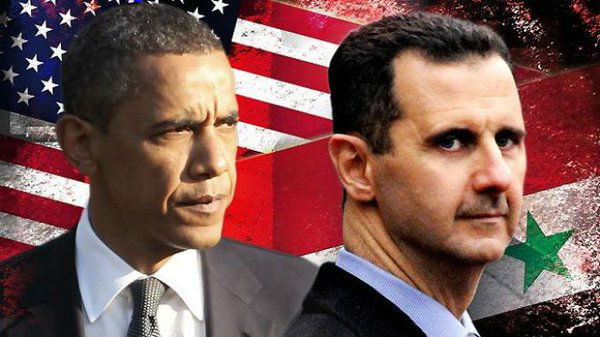
FBI backs CIA view that Russia intervened to help Trump win election

The Washington Post reports: FBI Director James B. Comey and Director of National Intelligence James R. Clapper Jr. are in agreement with a CIA assessment that Russia intervened in the 2016 election in part to help Donald Trump win the presidency, according to U.S. officials.

Comey’s support for the CIA’s conclusion reflects the fact that the leaders of the three agencies have always been in agreement on Russian intentions, officals said, contrary to suggestions by some lawmakers that the FBI disagreed with the CIA.

“Earlier this week, I met separately with (Director) FBI James Comey and DNI Jim Clapper, and there is strong consensus among us on the scope, nature, and intent of Russian interference in our presidential election,” CIA Director John Brennan said in a message to the agency’s workforce, according to U.S. officials who have seen the message.

“The three of us also agree that our organizations, along with others, need to focus on completing the thorough review of this issue that has been directed by President Obama and which is being led by the DNI,” Brennan’s message read. [Continue reading…]

Facebooktwittermail

Assad’s lesson from Aleppo: Force works, with few consequences

The New York Times reports: For months, the bodies have been piling up in eastern Aleppo as the buildings have come down, pulverized by Syrian and Russian jets, burying residents who could not flee in avalanches of bricks and mortar.

And now it is almost over, not because diplomats reached a deal in Geneva, but because President Bashar al-Assad of Syria and his foreign allies have won the city. Cold, hungry and scarred by the deaths of loved ones, tens of thousands of civilians and fighters are awaiting buses to take them from their homes to uncertain futures.

It is not the first victory that Mr. Assad has secured with overwhelming force in the Syrian conflict. But his subjugation of eastern Aleppo has echoed across the Middle East and beyond, rattling alliances, proving the effectiveness of violence and highlighting the reluctance of many countries, perhaps most notably the United States, to get involved.

President Obama, on Friday at his final news conference of the year, acknowledged that the nearly six-year-old war in Syria had been among the hardest issues he has faced, and that the world was “united in horror” at the butchery in Aleppo. But Mr. Obama — who came into office committed to reducing America’s military entanglements in the Middle East — also defended his decision not to intervene more forcefully.

To do otherwise, he said, would have required the United States to be “all in and willing to take over Syria.”

The message for autocratic leaders in the region and elsewhere is that force works — and brings few consequences, said Maha Yahya, the director of the Carnegie Middle East Center in Beirut.

The lesson for the victims of that force is that they are on their own. [Continue reading…]

Facebooktwittermail

My friends in Aleppo would rather die than face capture by Assad’s militias

Zaina Erhaim writes: Bustan al-Qasr is falling into the hands of the regime and its militias.” As I read these words, a multitude of images and thoughts pass through my mind. What has happened to those familiar faces living in that neighbourhood in Aleppo, with whom I shared a smile but also fear? I can only imagine the horror they are feeling, trapped there right now.

Those of us who are in exile, elsewhere in Syria or beyond, haven’t slept for the last four days, since receiving news of the city’s fall. We are scattered all over the world now, glued to our phones for the latest update. A notification can shake your heart with relief: “We are coming out of the siege.” Another can cause you to break down: “The deal is cancelled, we are being attacked again.” And the appearance of a few words on your screen is like being struck by lightning: “Your […] has been killed.” It is the end. Goodbye.

New levels of helplessness have developed over these last few terrible days. But we are the lucky ones. We have got out and have to be strong enough to give hope to our friends who are still there. A good imagination is necessary in these circumstances. For example, while reading that the Russian defence ministry is declaring that the “Syrian national army” will take over the besieged areas within two days, I translate this as: “They are using this as justification to get a better deal in the negotiations.” I reassure friends: “I am in touch with people, you will get out, it’s a matter of time, believe me.”

“I want nothing any more but to see my new daughter. My wife, Rania, is due next month,” my friend Malek told me. “I want to get out and be there for both of them.” Rania is 5km (three miles) away from him, and they haven’t seen each other for five months.

My husband, Mahmoud Rashwani, who is still in Syria, is busy keeping a record of all the wills he has received from his besieged friends and comrades. One common theme is that they would all prefer to be killed than captured by Assad militias. “I would have wanted the same, otherwise I will be wishing for death without getting it,” he tells me, speaking about the torture practised in Assad’s prisons that he knows too well from his own experiences. [Continue reading…]

Facebooktwittermail

Is Donald Trump a threat to democracy?

Steven Levitsky and Daniel Ziblatt write: Donald J. Trump’s election has raised a question that few Americans ever imagined asking: Is our democracy in danger? With the possible exception of the Civil War, American democracy has never collapsed; indeed, no democracy as rich or as established as America’s ever has. Yet past stability is no guarantee of democracy’s future survival.

We have spent two decades studying the emergence and breakdown of democracy in Europe and Latin America. Our research points to several warning signs.

The clearest warning sign is the ascent of anti-democratic politicians into mainstream politics. Drawing on a close study of democracy’s demise in 1930s Europe, the eminent political scientist Juan J. Linz designed a “litmus test” to identify anti-democratic politicians. His indicators include a failure to reject violence unambiguously, a readiness to curtail rivals’ civil liberties, and the denial of the legitimacy of elected governments.

Mr. Trump tests positive. In the campaign, he encouraged violence among supporters; pledged to prosecute Hillary Clinton; threatened legal action against unfriendly media; and suggested that he might not accept the election results.

This anti-democratic behavior has continued since the election. With the false claim that he lost the popular vote because of “millions of people who voted illegally,” Mr. Trump openly challenged the legitimacy of the electoral process. At the same time, he has been remarkably dismissive of United States intelligence agencies’ reports of Russian hacking to tilt the election in his favor. [Continue reading…]

Facebooktwittermail

Chinese naval ship seizes U.S. underwater research robot in South China Sea

The Washington Post reports: A Chinese naval ship seized an underwater naval drone that was being used by the U.S. Navy to test water conditions in the South China Sea, the Pentagon said Friday.

Navy Capt. Jeff Davis, a Pentagon spokesman, said the incident occurred on Dec. 15 about 50 nautical miles northwest of Subic Bay, in international waters in the South China Sea.

The USNS Bowditch, an oceanographic survey vessel with a mostly civilian crew, was in the process of recovering two unmanned ocean gliders, which are used to collect information about water conditions that can help U.S. vessels operate. A Chinese ship, a Dalang-III class submarine rescue vessel, approached the area, coming within about 500 yards of the Bowditch before dropping a small boat in the water. It seized one of the gliders and brought it aboard, Davis said.

The Bowditch contacted the Chinese ship and asked for the glider to be returned. Officials aboard the Chinese ship acknowledged the radio communication, Davis said, but said they were returning to normal operations. The ship then left the area.

“We would like it back and we would like this not to happen again,” Davis said, referring to the underwater drone. The incident occurred around 1:45 p.m. local time, the Navy said. [Continue reading…]

Facebooktwittermail

Donald Trump’s war on science

Lawrence M. Krauss writes: Last week, the Space, Science, and Technology subcommittee of the House of Representatives tweeted a misleading story from Breitbart News: “Global Temperatures Plunge. Icy Silence from Climate Alarmists.” (There is always some drop in temperature when El Niño transitions into La Niña — but there has been no anomalous plunge.) Under normal circumstances, this tweet wouldn’t be so surprising: Lamar Smith, the chair of the committee since 2013, is a well-known climate-change denier. But these are not normal times. The tweet is best interpreted as something new: a warning shot. It’s a sign of things to come — a declaration of the Trump Administration’s intent to sideline science.

In a 1946 essay, George Orwell wrote that “to see what is in front of one’s nose needs a constant struggle.” It’s not just that we’re easily misled. It’s that, by “impudently twisting the facts,” we can convince ourselves of “things which we know to be untrue.” A whole society, he wrote, can deceive itself “for an indefinite time,” and the only check on that mass delusion is that “sooner or later a false belief bumps up against solid reality.” Science is one source of that solid reality. The Trump Administration seems determined to keep it at bay, and the consequences for society and the environment will be profound.

The first sign of Trump’s intention to spread lies about empirical reality, “1984”-style, was, of course, the appointment of Steve Bannon, the former executive chairman of the Breitbart News Network, as Trump’s “senior counselor and strategist.” This year, Breitbart hosted stories with titles such as “1001 Reasons Why Global Warming Is So Totally Over in 2016,” despite the fact that 2016 is now overwhelmingly on track to be the hottest year on record, beating 2015, which beat 2014, which beat 2013. Such stories do more than spread disinformation. Their purpose is the creation of an alternative reality — one in which scientific evidence is a sham — so that hyperbole and fearmongering can divide and conquer the public. [Continue reading…]

Facebooktwittermail

Aleppo’s fall is Obama’s failure

Leon Wieseltier writes: Contemplating the extermination of Aleppo and its people, I was reminded of a sentence that I read this summer. It appeared in an encomium to Elie Wiesel shortly after his death. It was a sterling sentence. It declared: “We must never be bystanders to injustice or indifferent to suffering.” That was Wiesel’s teaching, exactly. The problem with the sentence is that it was issued by the White House and attributed to President Obama. And so the sentence was not at all sterling. It was outrageously hypocritical.

How dare Obama, and members of his administration, speak this way? After five years and more in which the United States’ inaction in Syria has transformed our country into nothing other than a bystander to the greatest atrocity of our time, they have forfeited the right to this language. Their angry and anguished utterances are merely the manipulation of the rhetoric of conscience on behalf of a policy without a trace of conscience. You cannot be cold-hearted and high-minded at the same time. Historians will record — they will not have to dig deeply or interpret wildly to conclude — that all through the excruciations of Aleppo, and more generally of Syria, the United States watched. As we watched, we made excuses, and occasionally we ornamented our excuses with eloquence. The president is enamored of his eloquence. But eloquence is precisely what the wrenching circumstances do not require of him. In circumstances of moral (and strategic) emergency, his responsibility is not to move us. It is to pick up the phone. “Elie did more than just bear witness,” Obama said in his eulogy, “he acted.” And he added: “Just imagine the peace and justice that would be possible in our world if more people lived a little more like Elie Wiesel.” Just imagine.

If Obama wants credit for not getting us into another war, the credit is his. If he wants credit for not being guilty of “overreach,” the credit is his. If he wants credit for conceiving of every obstacle and impediment to American action in every corner of the globe, the credit is his. But it is a shameful and incontrovertible fact of our history that during the past eight years the values of rescue, assistance, protection, humanitarianism and democracy have been demoted in our foreign policy and in many instances banished altogether. The ruins of the finest traditions of American internationalism, of American leadership in a darkening world, may be found in the ruins of Aleppo. Our ostentatious passivity is a primary cause of that darkening. When they go low, we go home. The Obama legacy in foreign policy is vacuum-creation, which his addled America-First successor will happily ratify. Aleppo was not destroyed by the Syrian army. It was destroyed by a savage coalition led and protected by Russia. While they massacred innocent men, women and children, we anxiously pondered scenarios of “deconfliction.”

We need to be unforgivingly clear. The obligation to act against evil in Aleppo was no different from the obligation to act against the evil in Sarajevo and Srebrenica. (Has anyone ever heard Obama mention Bosnia?) It was no different from the obligation to act against the evil in Rwanda. It was no different from the obligation to act against the evil in Auschwitz. And we scorned the obligation. We learned nothing. We forgot everything. We failed. We did not even try. [Continue reading…]

Facebooktwittermail

Donald Trump’s rigged election

The New York Times reports: President Obama said on Thursday that the United States would retaliate for Russia’s efforts to influence the presidential election, asserting that “we need to take action,” and “we will.”

The comments, in an interview with NPR, indicate that Mr. Obama, in his remaining weeks in office, will pursue either economic sanctions against Russia or perhaps some kind of response in cyberspace.

Mr. Obama spoke as President-elect Donald J. Trump on Thursday again refused to accept Moscow’s culpability, asking on Twitter why the administration had waited “so long to act” if Russia “or some other entity” had carried out cyberattacks.

The president discussed the potential for American retaliation with Steve Inskeep of NPR for an interview to air on Friday morning. “I think there is no doubt that when any foreign government tries to impact the integrity of our election,” Mr. Obama said, “we need to take action. And we will — at the time and place of our choosing.”

The White House strongly suggested before the election that Mr. Obama would make use of sanctions authority for cyberattacks that he had given to himself by executive order. But he did not, in part out of concern that action before the election could lead to an escalated conflict.

If Mr. Obama invokes sanctions on Russian individuals or organizations, Mr. Trump could reverse them. But that would be politically difficult, as his critics argue that he is blind to Russian behavior. [Continue reading…]

NBC News reports: [In this tweet] Trump was no longer disputing, as he has for months, that Russia was involved. And his top transition aide, Anthony Scaramucci, went even further Wednesday night in an interview with MSNBC’s Brian Williams.

“I don’t think anybody thinks that you’re wrong,” he said of the NBC News report. “Our position right now is that we’re waiting for more information. We reject the notion that people would cyber attack our institutions. We are very upset about it.”

Scaramucci went on to suggest that Trump needed time to digest the intelligence.

“I wonder whether the tweet the president-elect sent out today is the beginning of his pivot, the beginning of his acknowledgement of the intelligence that Russia has been hacking our institutions,” said Rep. Adam Schiff, the ranking Democrat on the House Intelligence Committee.

In an exclusive report Wednesday, U.S. intelligence officials told NBC News they now believe with “a high level of confidence” that Putin became personally involved in the covert Russian campaign in October.

Two senior officials with direct access to the information say new intelligence shows that Putin personally directed how hacked material from Democrats was leaked and otherwise used. The intelligence came from diplomatic sources and spies working for U.S. allies, the officials said. [Continue reading…]

The New York Times reports: It remains to be seen whether Mr. Trump’s stated doubts about Russia’s involvement will subside after Monday’s Electoral College vote. He and his allies have been concerned that the reports of Russian hacking have been intended to peel away votes from him, although even Democrats have not gone so far as to say the election was illegitimate.

“Right now, certain elements of the media, certain elements of the intelligence community and certain politicians are really doing the work of the Russians — they’re creating this uncertainty over the election,” Representative Peter T. King, Republican of New York, told reporters on Thursday after meeting with Mr. Trump.

But many other Republicans, including Senator Mitch McConnell of Kentucky, the majority leader, and Senator John McCain of Arizona, have publicly argued that the evidence leads straight to Russia. They have called for a full investigation, and Senator Dianne Feinstein, Democrat of California, who sits on the Senate Intelligence Committee, urged Mr. Obama on Thursday to complete an administration review quickly.

Mr. Trump’s Twitter post was his latest move to accuse the intelligence agencies he will soon control of acting with a political agenda and to dispute the well-documented conclusion that Moscow carried out a meticulously planned series of attacks and releases of information to interfere in the presidential race.

But as he repeated his doubts, Mr. Trump seized on emerging questions about the Obama administration’s response: Why did it take months after the breaches had been discovered for the administration to name Moscow publicly as the culprit? And why did Mr. Obama initially opt not to openly retaliate, through sanctions or other measures?

White House officials have said that the warning to Mr. Putin at the September summit meeting in China constituted the primary American response so far. When the administration decided to go public with its conclusion a month later, it did so in a statement from the director of national intelligence and the Homeland Security secretary, not in a prominent presidential appearance.

Officials said they were worried that any larger public response would have raised doubts about the election’s integrity, something Mr. Trump was already seeking to do during the campaign when he insisted the election was “rigged.” [Continue reading…]


Facebooktwittermail

Trump picks hardline pro-settler bankruptcy lawyer to become U.S. ambassador to Israel

The Guardian reports: Donald Trump has named as his ambassador to Israel a pro-settler lawyer who has described some US Jews as worse than concentration camp prisoner-guards.

David Friedman, a bankruptcy lawyer who represented the president-elect over his failing hotels in Atlantic City, served Trump’s advisory team on the Middle East. He has set out a number of hardline positions on Israeli-Palestinian relations, including fervent opposition to the two-state solution and strong support for an undivided Jerusalem as Israel’s capital.

He has called President Barack Obama an antisemite and suggested that US Jews who oppose the Israeli occupation of the West Bank are worse than kapos, Nazi-era prisoners who served as concentration camp guards.

Liberal Jewish groups in the US denounced the appointment as “reckless” and described Friedman – a man with no experience of foreign service – as the “least experienced pick” ever for a US ambassador to Israel.

Yossi Dagan, a prominent Israeli settler leader and friend of Friedman, welcomed the news, describing him as “a true friend and partner of the state of Israel and the settlements”. Morton Klein, the president of the Zionist Organization of America, said Friedman had “the potential to be the greatest US ambassador to Israel ever”. [Continue reading…]

Facebooktwittermail

U.S. faces tall hurdles in detaining or deterring Russian hackers

The New York Times reports: When a suspected Russian cybercriminal named Dmitry Ukrainsky was arrested in a Thai resort town last summer, the American authorities hoped they could whisk him back to New York for trial and put at least a temporary dent in Russia’s arsenal of computer hackers.

But the Russian authorities moved quickly to persuade Thailand not to extradite him, saying that he should be prosecuted at home. American officials knew what that meant. If Mr. Ukrainsky got on a plane to Moscow, they concluded, he would soon be back at work in front of a computer.

“The American authorities continue the unacceptable practice of ‘hunting’ for Russians all over the world, ignoring the norms of international laws and twisting other states’ arms,” the Russian Foreign Ministry said.

The dispute over Mr. Ukrainsky, whose case remains in limbo, highlights the difficulties — and at times impossibilities — that the United States faces in combating Russian hackers, including those behind the recent attacks on the Democratic National Committee. That hack influenced the course, if not the outcome, of a presidential campaign and was the culmination of years of increasingly brazen digital assaults on American infrastructure.

The United States has few options for responding to such hacks. Russia does not extradite its citizens and has shown that it will not easily be deterred through public shaming. At times, the American authorities have enlisted local police officials to arrest suspects when they leave Russia — for vacation in the Maldives, for example. But more often than not, the F.B.I. and Justice Department investigate and compile accusations and evidence against people who will almost certainly never stand trial. [Continue reading…]

Facebooktwittermail

From Rwanda to Aleppo — non-intervention has consequences too

Lindsey Hilsum writes: Every few hours I check my WhatsApp feed from the doctors in East Aleppo. They post videos of injured children and a combination of eyewitness news and desperate messages: “Iran militia shot the convoy,” “The regime forces are still angry, I may die tens times now,” “Warplane with heavy machine gun attacking right now.”

Injured boys at a field hospital after airstrikes on the rebel held areas of Aleppo, Syria November 18, 2016.
It takes me back to April 1994, when I sat, terrified, in my house in Kigali listening to Rwandan friends who called to tell me about the slaughter in their neighbourhoods. Monica dictated to me her last words to pass onto her husband, Marcel, who was travelling. As it happened, she survived, but their five children, who were staying with their grandparents, were murdered. These are not easy memories.

A few years later, Samantha Power, then Professor of Human Rights Practice at Harvard’s John F. Kennedy School of Governance, published a book called A Problem from Hell; America and the Age of Genocide. Her thesis, simply put, was that in the face of mass slaughter the USA has a moral and legal obligation to intervene. America did nothing when Saddam Hussein gassed the Kurds in Halabja, nor during the genocide in Rwanda nor the massacre of 7,000 men and boys at Srebrenica in Bosnia the following year.

Last week, Power, now US Ambassador to the UN, made an impassioned and futile speech in the Security Council. [Continue reading…]

Facebooktwittermail

Team Trump is backing Iran, a regime they supposedly hate

Michael Weiss writes: In 2007, an Iranian-backed Shia militia known as Asaib Ahl al-Haq kidnapped and murdered five U.S. servicemen in an ambush in the Iraqi city of Karbala. At the time, the group’s deputy secretary-general was Akram al-Kaabi, a man who has since said publicly that he would gladly overthrow Iraq’s government if asked to do so by Iran’s supreme leader, Ayatollah Ali Khamenei.

Today, al-Kaabi heads a splinter faction of his original militia. Known as Harakat Hezbollah al-Nujaba, it’s now an official arm of the Iraqi security establishment, but fighting in Syria. And the United Nations has just accused it of taking part this week in the massacre of at least 82 civilians in East Aleppo, including 11 women and 13 children—a slaughter perpetrated alongside other sectarian Shiite proxies of Iran and the Russian-Iran-backed Baathist dictatorship of Bashar al-Assad.

The Syrian army as a fighting force is largely spent. Without Russian air support and the some 6,000 to 8,000 Iranian-run paramilitaries Assad now relies on to wage war for him, Aleppo would never have been recaptured.
Nor are the Iranians masking their pride in the accomplishment.

“Aleppo was liberated thanks to a coalition between Iran, Syria, Russia, and Lebanon’s Hezbollah,” Tehran’s defense minister, Seyed Yahya Rahim-Safavi, proclaimed Wednesday. “Iran is on one side of this coalition which is approaching victory and this has shown our strength. The new American president should take heed of the powers of Iran.”

That last sentence should not be read as a mere perfunctory warning to U.S. President-elect Donald Trump. It’s a statement of fact, and one that neither Trump nor his people have gotten their heads around. Trump has made it clear he wants to join the Russian side in this war, while he is adamantly opposed to the Iranian side. But in the world of real reality they are the same side. [Continue reading…]

Facebooktwittermail

The Trump plutocracy: Combined wealth of 17 cabinet picks exceeds that of one third of American household

Quartz reports: The 17 people who US president-elect Donald Trump has selected for his cabinet or for posts with cabinet rank have well over $9.5 billion in combined wealth, with several positions still unfilled. This collection of wealth is greater than that of the 43 million least wealthy American households combined—over one third of the 126 million households total in the US.

Affluence of this magnitude in a US presidential cabinet is unprecedented. [Continue reading…]

Facebooktwittermail

Michael Klare: Donald Trump’s energy nostalgia and the path to hell

The Trump administration-in-formation is a stew of generals, billionaires, and multimillionaires — and as in the case of retired Marine General James “Mad Dog” Mattis, the likely new secretary of defense, even the military men seem to have made more than a few bucks in these last years.  In retirement, Mattis, for instance, joined the board of military-industrial giant General Dynamics as one of 13 “independent directors,” reportedly amassing at least $900,000 in company stock and another $600,000 in cold cash.

Oh yes, and there’s one other requirement for admission to the Trump administration: your basic civilian appointee must be ready to demolish the system he or she is to head. Betsy DeVos, the president-elect’s pick for education secretary, wants to take apart public education; Tom Price, the future secretary of health and human services, is eager to dismantle Obamacare and Medicare; Scott Pruitt, the proposed new head of the Environmental Protection Agency, seems to want to tear that agency limb from limb; and the announced new “labor” secretary (and you really do have to put that in scare quotes), fast food CEO Andy Puzder, is against raising the minimum wage and thinks the automation of the workplace is a total plus, since machines can’t take vacations or arrive late.

Let’s face it, the most extreme government of our lifetime is going to be a demolition derby. Think of it as the Reagan administration of the 1980s on steroids — and keep in mind that Donald Trump will be the president of a far more fragile country than the one Ronald Reagan and his cronies presided over.  Things could begin to fall apart fast for ordinary Americans.  For instance, the new Republican Congress is expected to swiftly pass a promised “repeal and delay” version of the obliteration of Obamacare, officially wiping that program off the books and yet postponing its departure and the arrival of whatever is to replace it until after the 2018 elections.  In the interim, however, the result is likely to be a “zombie” health care marketplace from which insurance companies are expected to begin to jump ship, potentially leaving significant numbers of those 20 million Americans who got medical coverage for the first time via Obamacare with nothing.  And after EPA chief Pruitt has helped let Donald Trump’s “energy revolution” of extreme fossil fuel exploitation loose to do its damnedest and, as TomDispatch regular Michael Klare makes clear today, America’s skies are once again veritable smog-fests, there will be plenty more health needs on whatever’s left of the horizon.

Donald Trump, as Politico points out, is already at war with labor, and prospectively with those “failing government schools,” and the American safety net, and the environment, not to mention the planet and that’s before we even get to actual war, which will be overseen by a crew of Islamo– and Irano-phobes.  If, as Klare points out today, Trump himself has a serious case of nostalgia for the America of his youth (and mine), with its untrammeled growth and its fossil-fueled wonders, don’t think that nostalgia doesn’t reign in military affairs, too.  In that case, however, it wouldn’t be for the oily vistas of the mid-twentieth century, but perhaps for the age of the Crusades. Tom Engelhardt

Drowning the world in oil
Trump’s carbon-obsessed energy policy and the planetary nightmare to come
By Michael T. Klare

Scroll through Donald Trump’s campaign promises or listen to his speeches and you could easily conclude that his energy policy consists of little more than a wish list drawn up by the major fossil fuel companies: lift environmental restrictions on oil and natural gas extraction, build the Keystone XL and Dakota Access pipelines, open more federal lands to drilling, withdraw from the Paris climate agreement, kill Obama’s Clean Power Plan, revive the coal mining industry, and so on and so forth ad infinitum.  In fact, many of his proposals have simply been lifted straight from the talking points of top energy industry officials and their lavishly financed allies in Congress.

If, however, you take a closer look at this morass of pro-carbon proposals, an obvious, if as yet unnoted, contradiction quickly becomes apparent. Were all Trump’s policies to be enacted — and the appointment of the climate-change denier and industry-friendly attorney general of Oklahoma, Scott Pruitt, to head the Environmental Protection Agency (EPA) suggests the attempt will be made — not all segments of the energy industry will flourish.  Instead, many fossil fuel companies will be annihilated, thanks to the rock-bottom fuel prices produced by a colossal oversupply of oil, coal, and natural gas.

Indeed, stop thinking of Trump’s energy policy as primarily aimed at helping the fossil fuel companies (although some will surely benefit).  Think of it instead as a nostalgic compulsion aimed at restoring a long-vanished America in which coal plants, steel mills, and gas-guzzling automobiles were the designated indicators of progress, while concern over pollution — let alone climate change — was yet to be an issue.

Continue reading

Facebooktwittermail

‘A pattern of egregious, unjustified security breaches’ during Michael Flynn’s career

The Daily Beast reports: If retired Lt. Gen. Michael Flynn were a rank-and-file intelligence analyst, military officer or congressional aide, his career would be in smoldering ruins. But instead, he’s getting a big-league promotion.

President-elect Donald Trump’s incoming White House national security adviser is on the hot seat once again after The Washington Post reported Wednesday on a secret military investigation that concluded that Flynn “inappropriately shared” classified information with foreign military officers but did not act “knowingly” and did no damage to national security.

The report also disclosed that Flynn mentioned sensitive information to Pakistan about secret U.S. intelligence capabilities being used to monitor the Haqqani network, an insurgent group responsible for repeated attacks on American forces in Afghanistan. (Some Pakistani intelligence officials have been accused of actively aiding the network.)

But these are just two of the security breaches that Flynn has been involved with. In fact, his career has involved multiple violations of rules intended to protect national security—exposing both his own hypocrisy and the double standards of a system which overlooks security breaches for high-ranking officials while punishing everyday workers. [Continue reading…]

Facebooktwittermail

Fake news is a convenient scapegoat, but the big 2016 problem was the real news

Matthew Yglesias writes: Speaking in early December at a ceremony to honor Harry Reid’s retirement from the US Senate, Hillary Clinton took aim at a target that would have been totally unfamiliar to audiences as recently as the summer of 2016: fake news.

She spoke of “an epidemic” of the stuff that has “flooded social media” over the past year and “can have real-world consequences.”

This was reported largely as commentary on the Pizzagate conspiracy theory, which had recently led to an alarming armed standoff at DC’s Comet Ping Pong restaurant. But it was also pretty clearly an allusion to her own recently failed presidential campaign, especially because she spoke favorably of the idea of bipartisan legislation to curb foreign propaganda news, arguing that “it is imperative that leaders in both the private and public sector step up to protect our democracy and innocent lives.”

While it’s true that fake news appears to have circulated widely in Trump-friendly corners of the internet — possibly with some assistance from the Russian government — the idea that fake news was central to the outcome of the campaign has little basis in fact. The very nature of viral fake news is that it’s mostly likely to be shared by people who have already bought into a partisan or ideological worldview, with pro-Trump fake news largely shared by Trump supporters to other Trump supporters. [Continue reading…]

Facebooktwittermail