Religious ownership and cultural appropriation

lichen4

If there’s one thing I’m grateful for Donald Trump expressing, it’s his contempt for political correctness.

There is no value in sensitivity if it merely serves to mask bigotry.

Discourse in which, for instance, racism has been thoroughly expunged, turns out to be discourse in which racists can freely participate with much less risk of being challenged.

Trump is being disingenuous, of course, in claiming that he disavows political correctness, because it’s actually an indispensable tool in his art of deceit. He panders to and expresses his own Islamophobia when saying he’d stop Muslims entering the U.S. but at the same time, postures as Muslim-friendly by claiming he loves Muslims.

Political correctness is no substitute for honesty. Indeed, this has been its most corrosive effect: that it inhibits people from honestly expressing their views and exposing their prejudices.

Richard Falk picks up this theme when noting that in the U.S., in the name of being politically correct and culturally sensitive, many Americans avoid referring to Christmas in deference to non-Christians who don’t celebrate this holy day. Falk, however, gladly appropriates the word and in this celebration sees universal meaning.

As a Jew in America I feel the tensions of conflicting identities. I believe, above all, that while exhibiting empathy to all those have been victimized by tribally imposed norms, we need to rise above such provincialism (whether ethnic or nationalistic) and interrogate our own tribal and ‘patriotic’ roots. In this time of deep ecological alienation, when the very fate of the species has become precarious, we need to think, act, and feel as humans and more than this, as empathetic humans responsible for the failed stewardship of the planet. It is here that God or ‘the force’ can provide a revolutionary comfort zone in which we reach out beyond ourselves to touch all that is ‘other,’ whether such otherness is religious, ethnic, or gendered, and learning from Buddhism, reach out beyond the human to exhibit protective compassion toward non-human animate dimensions of our wider experience and reality. It is this kind of radical reworking of identity and worldview that captures what ‘the Christmas spirit’ means to me beyond the enjoyment of holiday cheer.

From this vantage point, the birth of Jesus can be narrated with this universalizing voice. The star of Bethlehem as an ultimate source of guidance and the three wise kings, the Maji, who traveled far to pay homage to this sacred child can in our time bestow the wisdom of pilgrimage, renewal, and transformation that will alone enable the human future to grasp the radical wisdom of St. Augustine’s transformative: “Love one another and do what thou wilt.” Put presciently in a poem by W.H. Auden, “We must love one another or die.”

I referred to Falk appropriating Christmas, aware that there are Christians who might object to a Jew saying what Christmas means (even though Jesus was Jewish) and in order to raise the wider issue that seems to be popping up with unfortunate frequency: one of the bastard children of political correctness, cultural appropriation.

Cultural appropriation is a phrase that can usefully be applied in limited and rather obvious ways.

In 1992, when Hindu nationalists destroyed the 16th-century Babri Masjid mosque in Ayodhya, Uttar Pradesh, India, they did so in the name of reclaiming the site of the birthplace of the god, Rama. This came 464 years after Muslim invaders had apparently destroyed a Hindu temple at this site. In the intervening period, Hindus and Muslims had both worshiped at the same location.

When conflicting parties with differing cultural identities each claim to own the same place and then alternately snatch it from one another, this can reasonably be described as cultural appropriation.

While each advocates its claim in the name of one divine authority or another, all are saying exactly the same thing: this is mine; it’s not yours.

But when someone in Los Angeles practices yoga in an effort to fine-tune a perfect body, does this degrade Indian culture? Have they claimed as their own, something that belongs to someone else? Not really.

The proliferation of yoga studios across America and the secularization of yoga by treating it as a form of fitness training, has done nothing to close off opportunities for people to explore yoga as a spiritual discipline or learn about its roots in Indian culture. Indeed, the fact that yoga has exported so easily is not because it got stolen by cultural plunderers, but because it comes out of a culture that fosters a universal sense of belonging.

As Michelle Goldberg writes:

India is a country of dizzying dynamism, one that has always eagerly absorbed elements from other cultures into its own while proudly sharing the best of its own culture with the world. “All humanity’s greatest is mine,” wrote poet Rabindranath Tagore, who won the 1913 Nobel Prize in Literature. “The infinite personality of man (as the Upanishads say) can only come from the magnificent harmony of all human races. My prayer is that India may represent the co-operation of all the peoples of the world.” Tagore — who, incidentally, wrote India’s national anthem — founded a university whose motto translates to, “Where the whole world meets in a single nest.”

This is the essence of cosmopolitanism. Obviously, power plays a role in the way cultures develop. Symbols and practices can be wrenched from their traditional contexts and used in ways that are disrespectful. When privileged American kids party while wearing Native American headdresses, it looks like they’re donning the spoils of a long-ago war. But the way that some contemporary activists would silo different cultures — as if anything that travels from outside the West is too fragile to survive a collision with raucous mixed-up modernity — is provincialism masquerading as sensitivity. There’s no such thing as cultural purity, and searching for it never leads anywhere good.

Across the globe, many cultures are under threat — languages are being forgotten and indigenous wisdom lost. But the idea that a culture can be protected behind barriers of insulation, treats culture as a static entity that is preservable. If it has arrived at such a condition, it is most likely already dead.

An endangered language can only be protected by being taught, spoken, and shared. It either grows or withers. Likewise and more broadly, cultures are fertilized at their margins where the familiar and unfamiliar interact, thereby generating new cultural forms.

What threatens culture more than anything else is the commercially driven shift away from cultural creation to cultural consumption.

To the extent that culture is something we passively absorb rather than actively construct, the infinitely varied vantage points from which we each see the world will get overshadowed by whatever forms can be most easily reproduced and massively distributed.

Culture is what we make it. It cannot be kept alive in empty vessels.

Facebooktwittermail

U.S. foreign arms deals surge by 35% in 2014

The New York Times reports: Foreign arms sales by the United States jumped by almost $10 billion in 2014, about 35 percent, even as the global weapons market remained flat and competition among suppliers increased, a new congressional study has found.

American weapons receipts rose to $36.2 billion in 2014 from $26.7 billion the year before, bolstered by multibillion-dollar agreements with Qatar, Saudi Arabia and South Korea. Those deals and others ensured that the United States remained the single largest provider of arms around the world last year, controlling just over 50 percent of the market.

Russia followed the United States as the top weapons supplier, completing $10.2 billion in sales, compared with $10.3 billion in 2013. Sweden was third, with roughly $5.5 billion in sales, followed by France with $4.4 billion and China with $2.2 billion.

South Korea, a key American ally, was the world’s top weapons buyer in 2014, completing $7.8 billion in contracts. It has faced continued tensions with neighboring North Korea in recent years over the North’s nuclear weapons program and other provocations. The bulk of South Korea’s purchases, worth more than $7 billion, were made with the United States and included transport helicopters and related support, as well as advanced unmanned aerial surveillance vehicles.

Iraq followed South Korea, with $7.3 billion in purchases intended to build up its military in the wake of the American troop withdrawal there. [Continue reading…]

Facebooktwittermail

The most unconventional weapon in Syria: Wheat

wheat

Annia Ciezadlo writes: In the fall of 2012, fighters from the Free Syrian Army took over Eastern Ghouta, a semi-agricultural area about eight miles northeast of Damascus. Government forces responded by placing the area under siege, cutting off water, electricity, gas, medical assistance and bread.

The regime’s goal was to starve the people of Eastern Ghouta into submission, and it was working: The price of bread and rice went up 50 times. Locals were living on animal feed or sometimes eating nothing at all. “They began to wage war against the people even through their daily bread,” says Majd al-Dik, an aid worker for a Syrian humanitarian group called Spring of Life.

Nine months later, the Free Syrian Army mounted a military operation in a regime-controlled area called al-Matahin, the Mills, just outside Eastern Ghouta. Its objective was a flour mill, flanked by two rows of grain silos that housed part of the Syrian government’s strategic wheat reserves — a potent weapon in the conflict that now, after 4 1/2 years, has killed at least a quarter of a million people. If the opposition could capture the mill, it could keep the wheat, break the siege, gain a strategic point on the airport road — and perhaps even make some money.

The firefight lasted a day and a half. Before the battle ended on the second day, anti-government fighters sent a message via walkie-talkie to aid workers waiting inside Eastern Ghouta: We are in partial control of the mill. Come and help us get the flour. Dik and other volunteers drove toward the mill, taking a back road to avoid government snipers.

When they arrived, they were alarmed to see about 80 people, mostly civilians. Everyone in Eastern Ghouta had heard that there would be flour, and some people were desperate enough to run through shelling and sniper fire to get it. Locals climbed out of their cars and rushed toward the mill, eager to grab the sacks of flour inside the central storage area. The fighters tried to stop them, but they kept coming.

“They explained that they were hungry,” Dik says, “and they were ready to die just to be able to eat.” Too many of them would make exactly that sacrifice.

Bread is the staple food in the Middle East. Daily bread is “liqmet aeesh” — a Levantine idiom that translates as “morsel of life.” In addition to its crucial carbohydrates, it is the main source of protein for many people in poor and rural areas. “You can’t imagine life without bread,” says a Syrian aid worker from Aleppo, who spoke on the condition of anonymity. “The calories, the energy it gives you, is equivalent to anything else you eat. Except it’s a lot cheaper. So there’s a chance for survival.”

The Syrian government understands the importance of bread. So does the Islamic State, as well as the constellation of other armed groups vying to control the country’s land and its people. Strategically, bread is as important as oil or water. Civilians are dependent on the authority that distributes it, and profiteers are eager to resell it to hungry people at grotesque prices. “When you control bread and fuel,” says a Syrian analyst from Damascus who spoke on the condition of anonymity, “you control the whole society.” [Continue reading…]

Facebooktwittermail

ISIS leader challenges U.S. and allies in appeal to followers

Baghdadi-bw

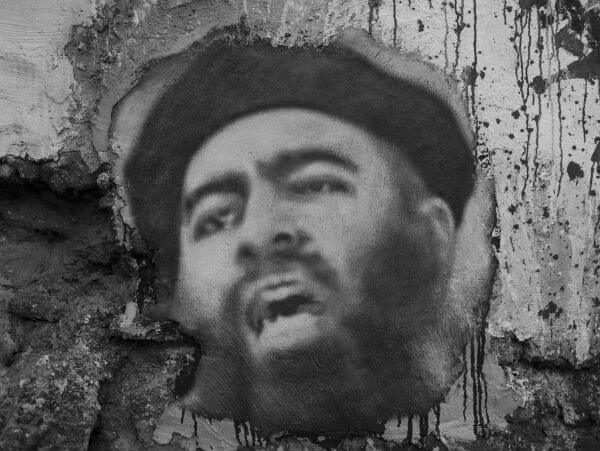
The Wall Street Journal reports: The leader of Islamic State challenged the U.S. and its European and Arab allies to confront his extremist group on the ground in Iraq and Syria, while telling his followers to persevere despite major recent battlefields setbacks, according to a purported audio message released on Saturday.

“Here are the Christian Crusaders and the nations of disbelief and their group with them, and behind them the Jews. They do not dare to come here on the ground to fight a small group of mujahedeen,” said Abu Bakr al-Baghdadi in the audio message, transcribed and translated by the U.S.-based monitoring agency Site Intelligence Group.

“They do not dare to come, because their hearts are full of fear from the mujahedeen,” he added in what is believed to be his first message since May.

In the audio message, Mr. Baghdadi consoled his followers for what he described as recent hardships and tragedies but promised them they would come out stronger and victorious if they persevered. He reminded them of the early trials of the group when it was formed in 2006 as an offshoot of al Qaeda, known as Islamic State of Iraq, only to be weakened by the U.S. and its local Iraqi allies. The group then made a major comeback starting in 2013 when it split from al Qaeda and captured large swaths of Iraq and Syria the following year.

“So the hardship must become more and the tragedies greater so that hypocrisy escapes and belief becomes stronger, and so that victory is laid down,” he said.

“So be steadfast O mujahedeen. In front of you are one of the two good things: either victory or martyrdom,” he added.

Mr. Baghdadi said the fact that major world powers have decided to destroy the group was proof Islamic State was on the righteous path. He accused the West and its allies of waging war against Islam by targeting his group and chastised Muslims everywhere for not realizing this and rising up to defend their faith.

“We are putting you all on alert everywhere and specifically the sons of the Land of the Two Holy Mosques,” he said, referring to Saudi Arabia. “Mobilize, whether you are light or heavy, old and young.”

He rebuked Saudi Arabia’s ruling family for announcing a coalition to fight Islamic State instead of defending Sunni Muslims in Iraq and Syria. [Continue reading…]

Facebooktwittermail

Syria rebel group will survive leader’s death

Hassan Hassan writes: Zahran Alloush, the former leader of Jaish Al Islam who was killed by Russian air strikes on Friday evening near Damascus, was more widely mourned than any other opposition figure since the start of the Syrian conflict. He has also been condemned for having made sectarian statements alluding to the extermination of Shia in Syria.

Sectarian statements are unjustifiable because they stoke tensions in an already polarised landscape. Jaish Al Islam was guilty of playing a cynical game of religious one-upmanship against extremist groups, especially at the height of religious polarisation in late 2013, during the Hizbollah-led offensive inside Syria. But it is a mistake to equate the group with extremist organisations, especially since such statements by no means reflect the group’s intentions or actions.

People who met Alloush and members of his faction, including members of Syria’s religious minorities, challenged such perceived views. Bassam Malouf, a Christian dissident, for example, recalled a meeting he had with Alloush, in which the former warned against targeting Christian churches in the suburbs of Damascus where the faction operated. Alloush replied, according to Mr Malouf, referring to Christians, by saying: “You are part of us and we are part of you. We will not allow anybody to violate the sanctity of homes, churches or people. Even Alawites, they are not our enemies, they are victims of the regime.”

Mr Malouf added: “His religious discourse was meant to encourage young people living under siege to join Jaish Al Islam and pull them away from ISIL.”

Alloush was one of the earliest, if not the earliest, rebel leader to unequivocally and consistently combat ISIL. Unlike other forces that reluctantly or intermittently fought ISIL, Jaish Al Islam can be credited for single-handedly preventing ISIL from establishing a foothold for itself in the areas it controlled near Damascus. If ISIL is a minor player at the outskirts of Damascus, it is because of Jaish Al Islam. [Continue reading…]

Facebooktwittermail

Syrian rebel leader killed in airstrike: Who was Zahran Alloush?

Aron Lund writes: Mohammed Zahran Alloush (1971-2015), also known as Abu Abdullah, was a salafi activist from Douma, a town east of Damascus in the Ghouta region. His father, Abdullah Alloush, is a salafi theologian resident in Saudi Arabia.

Alloush was arrested several times before the uprising for his religious and political activism and sent to the ”Islamist wing” of the Seidnaia prison north of Damascus. There, he formed close connections to many other Syrian Islamists, including people who now run large rebel factions like Ahrar al-Sham. He was released from jail in June 2011 and quickly joined the armed uprising, eventually emerging as the strongman of his home region in the Eastern Ghouta and one of the most powerful rebel leaders in all of Syria.

He was also one of the most controversial ones. His supporters were taken in by his forceful personality and his personal bravery, as a commander who lived with his men in the warzone and visited the frontline. They admired his knack for organization and politics and credited him with the semi-stability that reigned inside the besieged Eastern Ghouta enclave—a bombed out and starved suburban region that resembles nothing so much as a giant version of the Gaza Strip in Palestine. The Ghouta has been under constant pressure since the marginalized Sunni suburbs of Damascus, where hatred against Bashar al-Assad and his government ran strong, began to throw out the police and security servies in 2011 and 2012. Since then, the region has been under siege and functioned as a world of its own. Holding the frontline in Damascus, where Assad has concentrated so much of his army, was no small feat and it was much thanks to Alloush’s men. Coordinating the rebels there and limiting their infighting was no less of an achievement, especially considering the all-out chaos that reigned in other areas of Syria, where conditions were much better. For many supporters of the opposition, defending and stabilizing the Eastern Ghouta despite unceasing war and artillery bombardment, including with nerve gas, was enough to make Zahran Alloush a hero of the Syrian revolution. Continue reading

Facebooktwittermail

ISIS puts up heavy fight to slow Iraqi troop advance on Ramadi

The Associated Press reports: Islamic State fighters are putting up a tough fight in the militant-held city of Ramadi, slowing down the advance of Iraqi forces, a senior Iraqi commander said Sunday.

Iraq launched the long-awaited operation to retake the Anbar provincial capital, which was captured by IS militants in May, but after an initial push across the Euphrates River, their progress stalled.

Gen. Ismail al-Mahlawi, head of the Anbar military operations, told The Associated Press that the advance was hampered by suicide bombers, snipers and booby traps. [Continue reading…]

Facebooktwittermail

Stateless in Europe: ‘We are no people with no nation’

The Guardian reports: Sitting in the living room of her Berlin apartment, Sanaa* [her and her daughter’s name have been changed] watches proudly as her one-year-old daughter clings to the edge of a coffee table and hauls herself to her feet. Siba* squeals with delight, then drops back down with a giggle. Being a single mother is hard work, but filled with daily rewards. Sanaa, who fled the Syrian war, is just thankful for the chance to raise a child.

Experts are warning that children such as Siba could turn into a stateless generation. Though the infant was born in Berlin after her mother arrived from Damascus, there is no automatic German citizenship. And under Syrian law, a child can only inherit nationality from its father. As a single mother, Sanaa was well aware that Siba would be stateless.

“There is no paper for Siba in Syria. Because it’s the law, you don’t have any relations before you are married. People have boyfriends but it’s secret,” Sanaa says. “We just grow up and this is the rule. We didn’t know that the women in other countries can give their nationality [to their children], or we didn’t care because we would get married and the child would have a nationality.”[Continue reading…]

Facebooktwittermail

Guantánamo Bay lawyers call bluff on Obama’s promise to close prison

The Guardian reports: Lawyers representing Guantánamo Bay detainees who have been held at the camp in Cuba for up to 14 years without charge or trial have accused President Obama of stalling on his promise to close the military prison.

As the US president enters his final year in office, pressure is mounting on him to stand by his pledge to shut down the detention center by the time he leaves the White House. Numerous defense lawyers working directly with Guantánamo detainees have told the Guardian that they hold Obama and his senior officials personally responsible for the lack of action.

Obama made his vow to close Guantánamo within a year on his second day in the White House in 2009. In recent months, he has stepped up the rhetoric, promising to redouble efforts to close the prison while also heavily criticising the Republican-controlled Congress for blocking moves to transfer prisoners out of the prison to the US mainland. [Continue reading…]

Facebooktwittermail

Israeli ministers approve new restrictions on human rights groups

The Associated Press reports: Israeli Cabinet ministers on Sunday gave preliminary approval to a bill that imposes new disclosure requirements on nonprofit groups that receive foreign funding — drawing accusations it is cracking down on pro-peace groups, rattling relations with Europe and deepening an increasingly toxic divide between liberal and hawkish Israelis.

Critics said the regulations are meant to stifle dovish organizations critical of Prime Minister Benjamin Netanyahu’s government policies toward the Palestinians, since such nonprofits tend to rely heavily on donations from European countries.

In contrast, pro-government and nationalistic nonprofit groups tend to rely on wealthy private donors, who are exempt from the measures under the bill. The legislature is expected to approve the bill as early as this week.

Opposition leader Isaac Herzog quickly blasted the bill as a “muzzling law” that would bring about “thought police.” [Continue reading…]

Facebooktwittermail

Egyptian border guards gun down unarmed Palestinian man trying to escape from Gaza

The New York Times reports: Something drove Ishaq Khalil Hassan, 28, into the Mediterranean last week, to walk naked in the shallow surf, to attempt what has become all but impossible for Palestinians: an escape from the Gaza Strip.

Palestinian officials insisted that Mr. Hassan, who tried to wade across the border into Egypt on Thursday, was mentally ill. His family said he was sane, but desperate — he had been trying all year, unsuccessfully, to legally enter Egypt for medical treatment for an old injury.

“Ishaq thought that Egyptians will be like Europeans, who deal with Syrians and welcome them,” said his brother, Ibrahim Hassan.

But as soon as Mr. Hassan crossed the frontier, Egyptian border guards opened fire, spraying the sea with bullets while ignoring a Palestinian guard who whistled and frantically gestured with his hands that Mr. Hassan had mental problems. A video that captured the shooting made at least one thing clear: Mr. Hassan appeared to pose no immediate threat to anyone. [Continue reading…]

Facebooktwittermail

Did Erdogan give up Gaza in return for Israeli gas?

Kadri Gursel writes: Days before Israeli media broke the news of a preliminary Turkish-Israeli deal to normalize ties, Turkish President Recep Tayyip Erdogan had thrown a signal flare of impending moves to settle the Mavi Marmara crisis between the two countries.

Speaking to journalists on a flight back from Turkmenistan on Dec. 13, Erdogan broke with his usual hostile rhetoric against Israel, saying that “Turkish-Israeli rapprochement is vital for the region” and that normalizing ties would be “to the benefit of the whole region.” He then reiterated his three conditions for reconciliation: first, an Israeli apology for the killing of 10 Turks, including one with US citizenship, in the Israeli raid on the Mavi Marmara ferry on May 31, 2010, as it sailed in international waters in the Mediterranean with 590 activists aboard, mostly Turks, seeking to break the naval blockade of the Gaza Strip; second, the payment of compensation to the families of the victims; and third, the lifting of Israel’s naval blockade on Gaza.

Four days later, the Israeli daily Haaretz reported, “Israel and Turkey have reached understanding on the outlines of a reconciliation agreement that would put an end to the long crisis in relations between the two countries and normalize ties.” [Continue reading…]

Facebooktwittermail

Stress amplifies the illusion of control

structure5

Bob Henderson writes: I’d lost almost $200 million in October. November wasn’t looking any better.

It was 2008, after the Lehman Brothers bankruptcy. Markets were in turmoil. Banks were failing left and right. I worked at a major investment bank, and while I didn’t think the disastrous deal I’d done would cause its collapse, my losses were quickly decimating its commodities profits for the year, along with the potential pay of my more profitable colleagues. I thought my career could be over. I’d already started to feel those other traders and salespeople keeping their distance, as if I’d contracted a disease.

I landed in London on the morning of November 4, having flown overnight from New York. I was a derivatives trader, but also the supervisor of the bank’s oil options trading team, about a dozen guys split between Singapore, London, and New York. Until this point I’d managed the deal almost entirely on my own, making the decisions that led to where I … we … were now. But after a black cab ride from Heathrow to our Canary Wharf office, I got the guys off the trading floor and into a windowless conference room and confessed: I’d tried everything, but the deal was still hemorrhaging cash. Even worse, it was sprouting new and thorny risks outside my area of expertise. In any case, the world was changing so quickly that my area of expertise was fast becoming obsolete. I pleaded for everyone to pitch in. I said I was open to any ideas.

As I spoke, I noticed that one of the guys had tears welling up in his eyes. I paused for a second, stunned. Then my own eyes started to fill from a sudden wash of gratitude and relief that came, I think, from no longer being alone.

Stress testing is a standard technique derivatives traders use to test how their portfolio will perform in an imagined “worst-case” scenario. The problem is that “worst-case” is subjective, making stress testing as much of an art as a science, and exposing the trader doing the testing to something called the “illusion of control.” [Continue reading…]

Facebooktwittermail

Elon Musk: We can power America by covering a small corner of Utah with solar panels

EcoWatch reports: Billionaire entrepreneur Elon Musk has once again championed the incredible potential of renewable energy.

During an interview Tuesday at the American Geophysical Union’s fall meeting in San Francisco, the 44-year-old CEO of Tesla Motors and SpaceX said that the U.S. could meet its electricity needs just by covering a small corner of Utah or Nevada with solar panels.

His remark was captured in this tweet from Nature News reporter Lauren Morello, who was at the event:


Musk made a similar statement during his speech at the Sorbonne University in Paris on Dec. 2.

“Let’s say if the only thing we had was solar energy — if that was the only power source — if you just took a small section of Spain you could power all of Europe,” he said. “It’s a very small amount of area that’s actually needed to generate the electricity we need to power civilization. Or in the case of the U.S., like a little corner of Nevada or Utah would power the United States.”

While Musk’s statement might sound a little too good to be true, as Tech Insider reporter Rebecca Harrington noted, we already have the technology to do it. More power from the sun hits the Earth in a single hour than humanity uses in an entire year, yet solar only provided 0.39 percent of the energy used in the U.S. last year. [Continue reading…]

Facebooktwittermail

Soil loss: An unfolding disaster that will have catastrophic effects on world food production

shadow15

The Guardian reports: The world has lost a third of its arable land due to erosion or pollution in the past 40 years, with potentially disastrous consequences as global demand for food soars, scientists have warned.

New research has calculated that nearly 33% of the world’s adequate or high-quality food-producing land has been lost at a rate that far outstrips the pace of natural processes to replace diminished soil.

The University of Sheffield’s Grantham Centre for Sustainable Futures, which undertook the study by analysing various pieces of research published over the past decade, said the loss was “catastrophic” and the trend close to being irretrievable without major changes to agricultural practices.

The continual ploughing of fields, combined with heavy use of fertilizers, has degraded soils across the world, the research found, with erosion occurring at a pace of up to 100 times greater than the rate of soil formation. It takes around 500 years for just 2.5cm of topsoil to be created amid unimpeded ecological changes. [Continue reading…]

Facebooktwittermail