The migrant roots of ancient European ancestry

University of Cambridge

The first sequencing of ancient genomes extracted from human remains that date back to the Late Upper Palaeolithic period over 13,000 years ago has revealed a previously unknown “fourth strand” of ancient European ancestry.

This new lineage stems from populations of hunter-gatherers that split from western hunter-gatherers shortly after the ‘out of Africa’ expansion some 45,000 years ago and went on to settle in the Caucasus region, where southern Russia meets Georgia today.

Here these hunter-gatherers largely remained for millennia, becoming increasingly isolated as the Ice Age culminated in the last ‘Glacial Maximum’ some 25,000 years ago, which they weathered in the relative shelter of the Caucasus mountains until eventual thawing allowed movement and brought them into contact with other populations, likely from further east.

This led to a genetic mixture that resulted in the Yamnaya culture: horse-borne Steppe herders that swept into Western Europe around 5,000 years ago, arguably heralding the start of the Bronze Age and bringing with them metallurgy and animal herding skills, along with the Caucasus hunter-gatherer strand of ancestral DNA – now present in almost all populations from the European continent.

The research was conducted by an international team led by scientists from Cambridge University, Trinity College Dublin and University College Dublin. The findings were published last month in the journal Nature Communications.

Continue reading

Facebooktwittermail

What’s the biggest reason to be hopeful about the climate at the end of 2015?

lichen8

Climate Central got answers from the following climate experts:
David Titley, director of Penn State’s Center for Solutions to Weather and Climate Risk: Paris, of course, but more substantively for the U.S. domestic movement is the sense more and more different groups are seeing climate change as an issue within their domain: big business, insurance and finance, multiple major religions, the divestment movement, health, national security, movies, and the media, as well as the traditional science and environmental communities. Ultimately, we have to have enough people care enough to get Congress to engage constructively and move both policies and money to transition our energy systems to non-carbon based forms as quickly as possible. Huge task, but if we’re focused we can do this.

Richard Somerville, professor emeritus at Scripps Institution of Oceanography: The biggest reason to be hopeful about the climate at the end of 2015 is the Paris Agreement reached in December 2015 at the COP21 negotiations in Paris. This agreement provides a roadmap to reducing the risk of dangerous climate change. However, when all is said and done, sometimes more is said than done, and the future of the climate system depends on the degree to which nations obey the letter and spirit of this roadmap and work to improve it.

Marshall Shepherd, director of atmospheric sciences at the University of Georgia: I am encouraged that the notion that climate change is a political issue is starting to erode. Key conservatives, major corporations, the military and faith communities recognize the challenges and opportunities. The recent Paris agreement is a bold step. It isn’t perfect, but it is an important signal.

Simon Donner, climate scientist at the University of British Columbia: We’ve thrown down the gauntlet. In Paris, the world agreed that greenhouse gas emissions must reach net zero during the second half of the century to avoid dangerous impacts from climate change. With global emissions peaking this year, and wind and solar prices at all time lows, there’s hope we can meet the ambition of Paris with action. [Continue reading…]

Facebooktwittermail

A century after Sykes-Picot

Eugene Rogan writes: The British wartime alliance with the sharif of Mecca would be concluded after months of increasingly anxious negotiations, with both sides driven by wartime fears. Sharif Hussein had reason to believe the Young Turks sought his overthrow. Moreover, to realize his ambitious goal of carving an independent Arab kingdom from Ottoman domains, he needed Great Power support. The British feared their recent string of defeats to the Ottomans would encourage colonial Muslims to rebel against the Entente Powers. War planners in Cairo and Whitehall hoped that an alliance with the custodian of Islam’s holiest shrines would neutralize the appeal of the Ottoman sultan-caliph’s jihad at a moment when Britain’s military credibility was at its lowest point since the start of the war.

On the eve of the Arab Revolt, the Anglo-Hashemite alliance offered far less than both sides originally believed they were securing on first entering into negotiations. The British were not the invincible power they had appeared to be in early 1915 when first setting off to conquer Constantinople. The Germans had inflicted terrible casualties on the British on the western front, and even the Ottomans had dealt them humiliating defeats. Sharif Hussein and his sons had every reason to question their choice of ally.

Yet the Hashemites were in no position to bargain. All through their correspondence with Sir Henry McMahon, the high commissioner in Egypt, Sharif Hussein and his sons had presented themselves as leaders of a pan-Arab movement. By May 1916 it was apparent that there would be no broader revolt in Syria and Iraq. The most the sharifs could do was challenge Ottoman rule in the Hijaz. Success depended on their ability to mobilize the notoriously undisciplined Bedouin to their cause.

Arguably, the alliance survived because the Hashemites and the British needed each other more in the summer of 1916 than ever. Sharif Hussein had strained relations with the Young Turks to the breaking point; he knew they would seize the first opportunity to dismiss—even murder—him and his sons. The British needed the sharif’s religious authority to undermine the Ottoman jihad, which officials in Cairo and Whitehall feared recent Turkish victories had strengthened. Whatever the results of a Hashemite-led revolt, the movement would at least weaken the Ottoman war effort and force the Turks to divert troops and resources to restore order in the Hijaz and possibly in other Arab provinces. For their own reasons, both the British and the Hashemites were in a hurry to launch the revolt. [Continue reading…]

Facebooktwittermail

Life under siege: Inside Taiz, the Yemeni city being slowly strangled

Ghaith Abdul-Ahad writes: Ismail lies on green linoleum sheets, his black eyes too large for his gaunt face. Craning his neck, he tries to inspect the bandage covering his body, but weakness pulls him back. From the pillow, he whispers “hawan” (mortar).

Ismail, who says he is 12 but has the body of a six-year-old, used to make a few Yemeni riyals every day by washing graves in a new cemetery in the city of Taiz devoted to those killed in Yemen’s ongoing civil war.

Just before noon on one day in November, he and his two young cousins were sitting under a mango tree, cleaning the grave of a 10-year-old girl called Basma, when three mortar shells fell. A splatter of deep scars on the tree trunk and on the grave’s concrete surface mark the spot where one exploded. The two cousins, aged two and four, died instantly.

Ismail was severely injured and is now in the Rawdha, a hotel-turned-hospital in Taiz, Yemen’s second most populated city, a place being slowly strangled by a Houthi rebel siege. He is far from the only one here. One floor above, Amer recounts how he was hit by an explosion after dining in a restaurant and walking out into the street. The threads stitching folds of flesh on the stump of his left leg are black and new. [Continue reading…]

Facebooktwittermail

U.S. sees key goals met for Russia with bearable costs in Syria so far

Assad

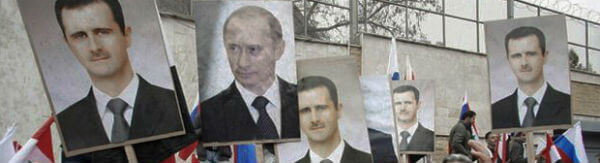
Reuters reports: Three months into his military intervention in Syria, Russian President Vladimir Putin has achieved his central goal of stabilizing the Assad government and, with the costs relatively low, could sustain military operations at this level for years, U.S. officials and military analysts say.

That assessment comes despite public assertions by President Barack Obama and top aides that Putin has embarked on an ill-conceived mission in support of Syrian President Bashar al-Assad that it will struggle to afford and that will likely fail.

“I think it’s indisputable that the Assad regime, with Russian military support, is probably in a safer position than it was,” said a senior administration official, who requested anonymity. Five other U.S. officials interviewed by Reuters concurred with the view that the Russian mission has been mostly successful so far and is facing relatively low costs.

The U.S. officials stressed that Putin could face serious problems the longer his involvement in the more than four-year-old civil war drags on.

Yet since its campaign began on Sept. 30, Russia has suffered minimal casualties and, despite domestic fiscal woes, is handily covering the operation’s cost, which analysts estimate at $1-2 billion a year. The war is being funded from Russia’s regular annual defense budget of about $54 billion, a U.S. intelligence official said. [Continue reading…]

Facebooktwittermail

Homs: Syria’s Stalingrad

Homs

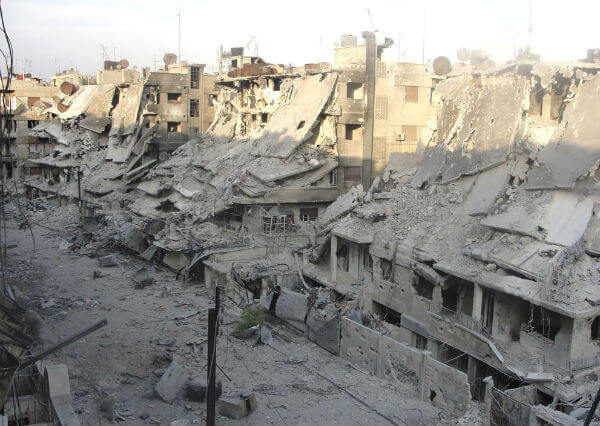
Thanassis Cambanis writes: More than four years of relentless shelling and shooting have ravaged beyond recognition this city, which once served as the symbolic capital of the revolution.

The buildings hang in tatters, concrete floors collapsed like sandcastles, twisted reinforced metal bars and window frames creaking in the wind like weather vanes. The only humans are occasional military guards, huddling in the foundations of stripped buildings. Deep trenches have been dug in thoroughfares to expose rebel tunnels. Everywhere the guts of buildings and homes face the street, their private contents slowly melting in the elements. Ten-foot weeds have erupted through the concrete.

As far as the government of Syria is concerned, the war in Homs is over. Rebel factions were defeated more than a year ago in the Old City, and the last holdouts, who carried on the revolt from the suburb of al-Waer, signed a cease-fire agreement this month. A few weeks before Christmas, busloads of fighters quit al-Waer for rebel-held villages to the north, under what the Syrian government and the United Nations hailed as a breakthrough cease-fire agreement to bring peace to one of the Syrian war’s most symbolic battlefields.

Gov. Talal al-Barazi, an energetic Assad-supporting Sunni, has been instrumental in pushing the cease-fires in Homs’s Old City and recently in al-Waer district. But almost none of the pro-uprising Sunnis who once filled its center have returned, and at times he seems to be presiding over a graveyard — an epic ruin destined to join Hiroshima, Dresden, and Stalingrad in the historical lexicon of siege and destruction.

By the end of a two-year siege of the Old City, the entire population of about 200,000 had fled, and more than 70 percent of the buildings in the area were destroyed. Today, according to the Syrian government, less than one-third of those who left have returned to the Homs area — but the ravaged city center is largely uninhabitable. Barazi said the cost of physically rebuilding the city would be enormous; without help from Russia, Iran, China, and other international donors, he said, full reconstruction would be impossible. Experts estimate it will cost upwards of $200 billion to rebuild across the entire country, or three times the country’s pre-war GDP.

And yet the Syrian government hopes to turn this shattered city into a symbol of its resurgent fortunes. Authorities showcase the reconstruction of Homs to spread a clear message: They intend to regain full control of the country. If they can tame Homs, a Sunni city where the majority of people actively embraced the revolt, they can do it anywhere.

There’s another more menacing message in the Homs settlement, however, as the neighborhoods that wholeheartedly sided with the revolution were entirely destroyed and have been left to collapse after the government’s victory. Almost no Sunnis have been allowed to return. Displaced supporters of the revolt from Homs understand that this is the regime’s second wave of punishment — they might never be allowed to go home. [Continue reading…]

Facebooktwittermail

Forget the sympathy – asylum is a refugee’s right

By Renos Papadopoulos, University of Essex

This year, the media has been full of tragic images of people risking their lives in a desperate attempt to flee their troubled countries. This phenomenon is not new, by any means, but the number of people involved has increased dramatically over a short period.

The statistics – which change almost daily – are staggering. It is estimated that more than 130,000 refugees and migrants have entered the European Union this year and more than 3,000 are known to have perished during their perilous crossing in the Mediterranean from Libya. Around 7,200 landed on just one Greek island, Lesvos, during May 2015. The numbers are equally shocking in other known crossings, notably from Somalia to Yemen and in the Far East to Indonesia and Australia.

The phenomenon is truly overwhelming. Whenever we are overwhelmed, we tend to oversimplify our perception in order to minimise our discomfort.

Perhaps the most common form of oversimplification is polarisation – and this is what we are witnessing around us now in relation to these images and statistics. On one side, some strongly oppose the uncontrolled influx of foreigners, arguing that developed countries can ill afford to host hordes of people. On the other are those who base their argument on compassion, urging governments to offer people dignified assistance in their hour of need.

In fact, neither view hits the mark.

Continue reading

Facebooktwittermail

Syria refugees: Family’s tragedy goes beyond one boy

refugees3

The New York Times reports: When Alan Kurdi’s tiny body washed up on a beach in Turkey, forcing the world to grasp the pain of Syria’s refugees, the 2-year-old boy was just one member of a family on the run, scattered by nearly five years of upheaval.

As a Turkish officer lifted the boy from the shallow waves at the edge of the Mediterranean Sea, one of Alan’s teenage cousins was alone on a bus in Hungary, fleeing the fighting back home in Damascus.

An aunt was stuck in Istanbul, nursing a baby, as her son and daughter worked 18-hour shifts in a sweatshop so the family could eat. Dozens of other relatives — aunts, uncles and cousins — had fled the war in Syria or were making plans to flee.

And just weeks after Alan’s image shocked the world in September, another aunt prepared to do what she had promised herself to avoid: set sail with four of her children on the same perilous journey.

“We die together, or we live together and make a future,” her 15-year-old daughter said, concluding, as have hundreds of thousands of other Syrians, that there was no going back, and that the way to security led through great risk. [Continue reading…]

Facebooktwittermail

Armed with intel, U.S. strikes curtail ISIS oil sector

Iraq Oil Report reports: An intensifying campaign of U.S. air strikes on the self-proclaimed Islamic State (IS) has nearly shut down its oil operations in Iraq and has hampered its more lucrative business in Syria, eroding the group’s largest source of financing and threatening its ability to govern territory.

Iraq Oil Report has compiled a comprehensive history of the IS oil sector based on the organization’s own records, details of which have just been declassified by the U.S. government and are being published here for the first time. Those accounts have been broadly corroborated by the first-hand testimony of residents and oil workers in IS-occupied territory.

They show that, until recently, nearly 2,000 IS oil workers, many recruited from abroad, were able to outfox early U.S. attempts to derail the group’s oil operations. From the end of 2014 through May 2015, even after being hit by a series of air strikes, the highly bureaucratic and organized operation generated as much as $40 million per month from the sale of crude oil. (The IS organization generated millions more by taxing transportation and refining, though the U.S. officials declined to give more detailed figures.)

“From the documents, we see this: oil has traditionally been approaching 50 percent of their profits. And the other 50 percent was the total of all the other things,” said Amos Hochstein, the State Department’s Special Envoy for International Energy Affairs, who is at the center of the U.S. government’s efforts to identify weaknesses in the IS group’s oil sector. [Continue reading…]

Facebooktwittermail

Seized documents reveal ISIS’s department of ‘war spoils’

Reuters reports: Islamic State has set up departments to handle “war spoils,” including slaves, and the exploitation of natural resources such as oil, creating the trappings of government that enable it to manage large swaths of Syria and Iraq and other areas.

The hierarchical bureaucracy, including petty rivalries between officials, and legal codes in the form of religious fatwas are detailed in a cache of documents seized by U.S. Special Operations Forces in a May raid in Syria that killed top IS financial official Abu Sayyaf. Reuters has reviewed some of the documents.

U.S. officials say the documents have helped deepen their understanding of a militant group whose skill in controlling the territory it has seized has surprised many. They provide insight into how a once small insurgent group has developed a complex bureaucracy to manage revenue streams – from pillaged oil to stolen antiquities – and oversee subjugated populations.

“This really kind of brings it out. The level of bureaucratization, organization, the diwans, the committees,” Brett McGurk, President Barack Obama’s special envoy for the anti-IS coalition, told Reuters. [Continue reading…]

Facebooktwittermail

Apostates can be killed for food or organ transplants, ISIS says

Baghdadi

By Brian Whitaker, December 28, 2015

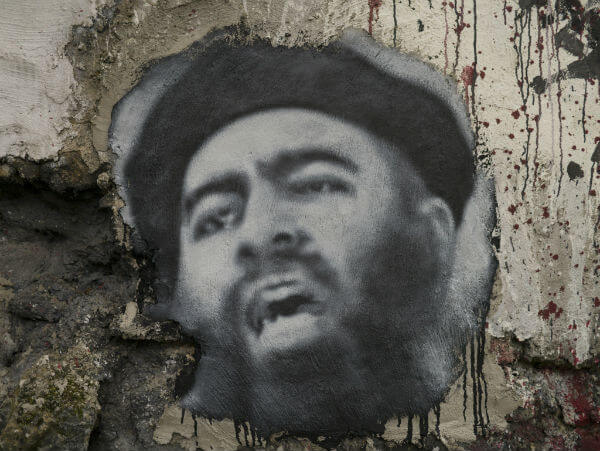
Documents reportedly captured from the Islamic State and circulated by the US government include what appears to be an official fatwa authorising the killing of “apostates” for food or organ transplants.

According to a US government translation, IS’s Research and Fatwa Committee was asked to consider whether it is “permissible to take the captured apostate’s body organs and give them to Muslims who are in need of them”.

The committee’s reply, issued last January as Fatwa Number 68, was as follows:

“Saving a Muslim from death or deterioration is an Islamic legal duty that should be performed with every legitimate way or financial means.

“The jurists of the Shafi’i and Hanbali schools [of Islamic jurisprudence] and others permitted, when necessary, the killing of the infidel combatant or the apostate should one need to consume their flesh for the purpose of saving his own life. 

“If the jurists had permitted, when necessary, the consumption of human flesh as a means to counter death or harm, then it is even more appropriate to transplant organs from the apostate to save the life of the latter. This is especially the case since it was ruled that the apostate’s life and organs are not protected. On the contrary, the apostate’s life and organs don’t have to be respected and may be taken with impunity.”

Killing an apostate by removing body parts for use in transplants is “not prohibited”, it said.

Continue reading

Facebooktwittermail

Israel warns Brazil faces diplomatic downgrade unless it accepts settler as ambassador

Reuters reports: Brazil’s reluctance to accept an Israeli ambassador who is a West Bank settler has led to a standoff with Israel now warning it could downgrade diplomatic relations.

The appointment four months ago of Dani Dayan, a former head of the Jewish settlement movement, did not go down well with Brazil’s left-leaning government, which has supported Palestinian statehood in recent years.

Most world powers deem the Jewish settlements illegal.

Israel’s previous ambassador, Reda Mansour, left Brasilia last week and the Israeli government said on Sunday Brazil risked degrading bilateral relations if Dayan were not allowed to succeed him. [Continue reading…]

Facebooktwittermail

Turkey sees no normalization of Israel ties without end to Gaza blockade

Reuters reports: Turkey sees no normalization in ties with Israel unless its conditions for ending the Gaza blockade and compensation for the deaths of 10 Turkish activists in 2010 are met, a presidential spokesman said on Monday.

Relations between Turkey and Israel soured when the activists were killed in a raid by Israeli commandos on a Turkish boat, the Mavi Marmara, which was trying to breach the blockade.

Expectations of a breakthrough were intensified after senior officials met this month to try to repair ties. The talks have raised hopes of progress in negotiations to import Israeli natural gas, particularly since Turkey’s relationship with major energy producer Russia has worsened over Syria.

But comments from Presidential spokesman Ibrahim Kalin suggest Turkey may be trying to play tough in the negotiations. [Continue reading…]

Facebooktwittermail

Pentagon thwarts Obama’s effort to close Guantanamo

Reuters reports: In September, U.S. State Department officials invited a foreign delegation to the Guantanamo Bay detention center to persuade the group to take detainee Tariq Ba Odah to their country. If they succeeded, the transfer would mark a small step toward realizing President Barack Obama’s goal of closing the prison before he leaves office.

The foreign officials told the administration they would first need to review Ba Odah’s medical records, according to U.S. officials with knowledge of the episode. The Yemeni has been on a hunger strike for seven years, dropping to 74 pounds from 148, and the foreign officials wanted to make sure they could care for him.

For the next six weeks, Pentagon officials declined to release the records, citing patient privacy concerns, according to the U.S. officials. The delegation, from a country administration officials declined to identify, canceled its visit. After the administration promised to deliver the records, the delegation traveled to Guantanamo and appeared set to take the prisoner off U.S. hands, the officials said. The Pentagon again withheld Ba Odah’s full medical file.

Today, nearly 14 years since he was placed in the prison and five years since he was cleared for release by U.S. military, intelligence and diplomatic officials, Ba Odah remains in Guantanamo. [Continue reading…]

Facebooktwittermail

To what extent might Stephen Hawking and Elon Musk be right about the dangers of artificial intelligence?

structure3

Suzanne Sadedin, an evolutionary biologist, writes: I think they are right that AI is dangerous, and they are dangerously wrong about why. I see two fairly likely futures.

Future 1: AI destroys itself, humanity and most or all life on earth, probably a lot sooner than in 1000 years.

Future 2: Humanity radically restructures its institutions to empower individuals, probably via transhumanist modification that effectively merges us with AI. We go to the stars.

Right now, we are headed for Future 1, but we could change this. Much as I admire Elon Musk, his plan to democratise AI actually makes Future 1 more, not less, likely.

Here’s why:

There’s a sense in which humans are already building a specific kind of AI; indeed, we’ve been gradually building it for centuries. This kind of AI consists of systems that we construct and endow with legal, real-world power. These systems create their own internal structures of rules and traditions, while humans perform fuzzy brain-based tasks specified by the system. The system as a whole can act with an appearance of purpose, intelligence and values entirely distinct from anything exhibited by its human components.

All nations, corporations and organisations can be considered as this kind of AI. I realise at this point it may seem like I’m bending the definition of AI. To be clear, I’m not suggesting organisations are sentient, self-aware or conscious, but simply that they show emergent, purpose-driven behaviour equivalent to that of autonomous intelligent agents. For example, we talk very naturally about how “the US did X”, and that means something entirely different from “the people of the US did X” or “the president of the US did X”, or even “the US government did X”.

These systems can be entirely ruthless toward individuals (just check the answers to What are some horrifying examples of corporate evil/greed? and What are the best examples of actions that are moral, even uplifting, but illegal? if you don’t believe me). Such ruthlessness is often advantageous — even necessary, because these systems exist in a competitive environment. They compete for human effort, involvement and commitment. Money and power. That’s how they survive and grow. New organisations, and less successful ones, copy the features of dominant organisations in order to compete. This places them under Darwinian selection, as Milton Friedman noted long ago.

Until recently, however, organisations have always relied upon human consent and participation; human brains always ultimately made the decisions, whether it was a decision to manufacture 600 rubber duckies or drop a nuclear bomb. So their competitive success has been somewhat constrained by human values and morals; there are not enough Martin Shkrelis to go around.

With the advent of machine learning, this changes. We now have algorithms that can make complex decisions better and faster than any human, about practically any specific domain. They are being applied to big data problems far beyond human comprehension. Yet these algorithms are still stupid in some ways. They are designed to optimise specific parameters for specific datasets, but they’re oblivious to the complexity of the real-world, long-term ramifications of their choices. [Continue reading…]

Facebooktwittermail

Terror: After Paris, Tunisia and California, can we stop it spreading?

shadow7

Jason Burke writes: On a bleak day in November, Annelise Augustyns led her two children to the playground near their home in Brussels. Just over a week before, Islamist militants had killed 130 people and injured many more in a series of attacks in Paris. The Belgian capital had been under unprecedented lockdown for three days amid fears of a new attack there. Several of the Paris attackers had been traced to the Brussels neighbourhood of Molenbeek, a few miles from Augustyns’ apartment. They included at least one man who was now on the run.

To protect the population, the Belgian government had shut schools, cancelled sporting events and deployed soldiers on the streets. If the scenes were reminiscent of earlier conflicts, the enemy now was very different: a hybrid terrorist and insurgent entity in the Middle East calling itself the Islamic State.

Augustyns, a local government administrator, glanced at the armoured vehicle posted outside the entrance of the Gare du Midi. “We are worried of course,” she told me. “But what to do? We have to get on with our lives.”

Her words summed up the feelings of many across Europe that week, and indeed across much of the world last year. If 2014 was a year that set a grisly new record in the number of casualties inflicted by terrorist attacks – 33,000 people were killed, almost double the year before – then 2015 appears to have been worse. [Continue reading…]

Facebooktwittermail