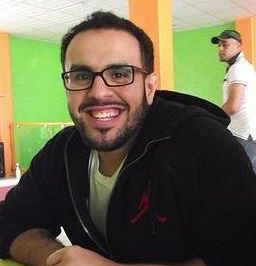
Conor Friedersdorf writes: Some of the most powerful people in the U.S. government wanted to kill Mohanad Mahmoud Al Farekh. The military, the CIA, and an influential Republican member of Congress all argued that a drone should be sent to kill the American.
Now he is in custody.
And if convicted of all charges that he faces, he’ll get a maximum of 15 years in prison–the same sentence that a brother and sister in Missouri got for growing marijuana.
How can a person narrowly escape extrajudicial assassination, get extradited to the United States, appear inside our judicial system, and face just 15 years in prison? Powerful people were prepared to end his life, but the extent of what they’re willing to prove beyond a reasonable doubt wouldn’t even draw a life sentence. [Continue reading…]
Pakistan could end up charging CIA officials with murder over drone strikes
Time: A landmark case may open the door for a possible multibillion-dollar class-action lawsuit launched by relatives of the alleged 960 civilian victims of U.S. drone strikes in Pakistan
A senior judge in Pakistan has ordered police to formally investigate former CIA agents for allegedly authorizing a 2009 drone strike.
If the case moves forward, it may subject the U.S. embassy in Islamabad to sensitive police investigations and even result in U.S. citizens for the first time being charged with murder for covert drone strikes in the South Asian nation.
Last Tuesday, the Islamabad High Court ordered police to open a criminal case against former CIA Islamabad Station Chief Jonathan Bank and ex-CIA legal counsel John A. Rizzo for murder, conspiracy, terrorism and waging war against Pakistan.
New studies reveal climate extremes from fire to ice
Climate Central: Climate scientists don’t just rely on computer models and contemporary observations to understand the intimate relationship between CO2 in the atmosphere and environmental conditions on Earth. They also look to the ancient past — and two reports in recent days have made it clear how intimate that relationship is. One chronicles an episode 2.4 billion years in the past, when the entire planet was covered in a layer of ice hundreds of feet thick, oceans and all, while global average temperatures hovered around 40° F below zero.
A massive infusion of heat-trapping CO2 from powerful volcanoes — more CO2 than we’re likely to emit in many hundreds of years, to be sure — saved the planet from this so-called Snowball Earth environment. The second report covers an event that happened about 250 million years ago, and this time the effects weren’t so benign. Another set of gigantic eruptions poured enough CO2 into the air not only to warm the planet drastically, but also to acidify the oceans so profoundly that some 90 percent of all ocean species died off, followed by two-thirds of land species. It’s the worst mass extinction, as far as we know, in history.
These monumental episodes of climate change, both linked intimately to levels of CO2 in the atmosphere, are a testament to the dramatic effects this greenhouse gas has on the entire planet. So it’s no surprise that the smaller amounts we’re emitting could have a significant effect as well. [Continue reading…]
How to live with regrets
Pacific Standard spoke to psychologist Edward Chang about the nature of regret and what our modern culture could learn from Nietzsche about living with our mistakes.
Is there anything new about the current philosophy of no regrets?
I have a young daughter who listens to music, and there’s a song out there by Kesha called “Die Young.” It’s about teenagers and living the night like it’s the last night of their lives. We find this theme everywhere in our history and culture. Think of Dead Poets Society, with its emphasis on the notion of carpe diem [“seize the day”]. There’s a tendency in human civilization to put an emphasis on living for that day, to its fullest. It extends back to ancient Greece, where citizens never had a notion of “human beings,” but of “mortals” and “immortals.” If you read any text from the ancient world, they all center on how a human being can live like the gods, forever. It’s this notion of mortality, embedded in us by religion, that drives not just aspiration, but also fuels a cycle of regret — a sense that no matter how hard you try, you’ll fail to live like the gods.
It was Nietzsche who really wanted to develop a coherent philosophy of “no regrets.” This starts, really, with Nietzsche’s “formula” for human greatness and the principle of amor fati, or “love of [one’s] fate.” Nietzsche wrote that “My formula for greatness in a human being is amor fati: that one wants nothing to be different, not forward, not backward, not in all eternity. Not merely bear what is necessary, still less conceal it — all idealism is mendaciousness in the face of what is necessary — but love it.”
Nietzsche was struggling with the question, driven by the specter of mortality, with how humans should live a good life. He had two extreme positions in front of him: the ancient ascetic position, which dictates that to live a good life you must forgo human desire, and the more hedonistic carpe diem philosophy that we see crop up in pop culture. But really, Nietzsche wasn’t arguing for either position. When he talks about amor fati, there’s a higher level of uber-morality going on there, that goes beyond carpe diem or asceticism, that’s really asking us to embrace our mortality rather than shy from it with regret.
So I guess Nietzsche was the originator of YOLO (“you only live once”), then?
Sort of. In a way, amor fati and the “will to power” aren’t just abstract philosophy; I’d argue that Nietzsche is actually one of the first and most powerful psychologists. Nietzsche asks: How am I going to get people to wake up from their day-to-day habits, the iron cage of daily life that makes us creatures of comfortable habit, and how should we be truly living our lives?
The vehicle for people to wake themselves up and change their lives, Nietzsche says, is regret. In reality, the YOLO and carpe diem culture is a misinterpretation of the “will to power” that made him famous. I’ve seen so many pop psychology books that suggest abandoning regret to live a good life; purging regret from your thought process. But none of these books have the backbone that Nietzsche did, to advocate that we face our mortality and the certainty of regret as a motivation for changing your life. [Continue reading…]
Music: Shankar Tucker with Rohini Ravada — ‘Aaj Jaane Ki Zid Na Karo’
Michael Klare: Is the age of renewable energy already upon us?
Consider the extremes of our present climate moment by the numbers. Recently, Michael Greenstone, the Milton Friedman professor of economics at the University of Chicago and the former chief economist of President Obama’s Council of Economic Advisers, did a little calculating. He was curious to find out just how much the planet’s temperature might rise if we managed to burn all the fossil fuel reserves that “can be extracted with today’s technology.” Without beating around the (burning) bush, the answer he came up with was a staggering 16.2 degrees Fahrenheit. To put that in perspective, climate science suggests that unless we keep the temperature rise from the burning of fossil fuels under 3.6 degrees Fahrenheit (2 degrees Celsius) catastrophic changes are likely to occur, including, as Greenstone points out, the melting of the Greenland ice sheet, which will reshape human life on this planet in grim ways. And even that 3.6-degree mark might be too high. Add in another nearly 13 degrees of warming and you could have the definition of an uninhabitable planet (at least by humans). It should give us all the chills — or more appropriately, leave us with fever dreams of a future in which humanity was incapable of getting itself together, dealing with entrenched fossil fuel interests, and saving a planet that had for so many tens of thousands of years been the rather habitable home of our species.
On the other hand, look at Spain: as Juan Cole reported recently at his Informed Comment website, that country is now getting almost 70% of its electricity in ways that do not generate carbon dioxide. That’s little short of extraordinary. It’s possible that somewhere down the line that country could even become “the first net-carbon-zero G-20 state”! As of this March, it received 22.5% of its electricity from wind power (with solar trailing badly behind), 17.5% from hydro power, and 23.8% from nuclear power (which will make some environmentalists uneasy). And the country hopes to almost double its wind power contribution to 40% in the next five years.
In other words, depending on what you care to look at, this planet offers a grim vision of humanity preparing to scourge and flood its own home or — and this is a new development — a more hopeful one. In that, humanity, under pressure and moving too slowly by half, is nonetheless beginning to reshape our world yet again in unexpected ways, using new technology that is quickly becoming ever cheaper and easier to employ. TomDispatch energy expert Michael Klare suggests today that while nothing may be settled, damage is clearly being done, and the fossil fuel machine remains deeply entrenched and determined, there are nonetheless unexpected signs that we, like the cavalry of movie fame, may finally be saddling up to ride to our own rescue. This is the sort of news that should stir the blood and soul in all of us. It should leave us thankful for the years of toil in the wilderness by climate activists like those at 350.org who have worked so hard to bring us to awareness of the dangers ahead, and of activists like those in the fossil fuel divestment movement who want to shake what may be the most profitable industry in history to its core. Tom Engelhardt
The renewable revolution
Four reasons why the transition from fossil fuels to a green energy era is gaining traction
By Michael T. KlareDon’t hold your breath, but future historians may look back on 2015 as the year that the renewable energy ascendancy began, the moment when the world started to move decisively away from its reliance on fossil fuels. Those fuels — oil, natural gas, and coal — will, of course, continue to dominate the energy landscape for years to come, adding billions of tons of heat-trapping carbon to the atmosphere. For the first time, however, it appears that a shift to renewable energy sources is gaining momentum. If sustained, it will have momentous implications for the world economy — as profound as the shift from wood to coal or coal to oil in previous centuries.
In Yemen chaos, al Qaeda may be the biggest winners
Harriet Salem and Sama’a al Hamdani report: Standing beneath an ornate chandelier, Khaled Batarfi, a high-ranking member of al Qaeda in the Arabian Peninsula (AQAP), poses for a snapshot in the governor’s palatial residence in the port city of al Mukalla. Trampling on the Yemeni national flag, the bespectacled jihadi raises his index finger in salute as he grins at the cameraman.
After years of relentless drones strikes, #Qaeda in Yemen appears stronger and more defiant. #Yemen pic.twitter.com/BBl6xVVrZR
— Saeed Al-Batati (@saeedalBatati) April 3, 2015
Batarfi has plenty to smile about. As Yemen descends into a full-scale war between Shia Houthi rebels and the Saudi Arabia-backed forces of its president-in-exile, Abd Rabbuh Mansur Hadi, dormant AQAP factions — backed by a handful of Sunni tribes — have surged out of their heartlands into towns and cities across the country’s central and southern provinces.Last week, in a lightning offensive, fighters from the group stormed al Mukalla, capital of the oil-rich Hadhramaut province. Entering in the dead of night by morning they had taken over government buildings, emptied the city’s bank vaults of the equivalent of $80 million, and freed 300 prisoners, including Batarfi and several other high-ranking members of AQAP, from the local jail.
But for the power hungry group, the snatch of al Mukalla is just the tip of the iceberg. The lawlessness that followed the revolution of 2011, coupled with the recent outbreak of war, has enabled AQAP to secure a stronghold in at least seven governorates: ‘Ibb, Al-Jawf, Ma’rib, Hadhramout, Lahj, Abyan, and Shabwah. [Continue reading…]
Congress can’t stop Iran sanctions unraveling
Barbara Slavin writes: For months now, Russia has been a constructive member of the international consortium negotiating with Iran, often proposing creative fixes to technical hurdles.
But this week, just as the Senate Foreign Relations Committee was taking up sensitive Iran-related legislation, Russia announced that it was going forward with an old contract to sell Iran an air defense missile system that could make it less vulnerable to foreign attack.
The deal to supply the S-300 is not illegal under UN sanctions, which prohibit selling offensive heavy weaponry to Iran. The message the Kremlin is sending is that Russia is not willing to wait for the conclusion of negotiations on Iran’s nuclear program to lock in the benefits of resumed trade with the Islamic Republic.
It is unfortunate that the government of Vladimir Putin didn’t wait a few months longer. Critics of the Iran deal have been quick to pounce on the announcement as proof that the Barack Obama administration was somehow duped by Moscow and that the Iran framework so laboriously negotiated over the past 13 months is a “sucker’s deal.”
A more insightful way to read Russia’s act is to see it as a recognition of reality that the elaborate web of multilateral sanctions imposed on Iran over the past five years is unraveling and only an egregious Iranian effort to break out and build a nuclear weapon could arrest that momentum. [Continue reading…]
Jihad: How British Muslims have been drawn to Syria
Mary Anne Weaver writes: He was a dreamer, with Che Guevara looks — a jet-black beard and eyes — who built a new persona online, as a Muslim warrior riding into battle in the back of an open-bed truck, dressed in black, his long hair blowing in the breeze, with an AK-47 hanging from his shoulder, strapped to his back. He had just turned 22 — the product of British private schools, a computer aficionado working in customer service at Sky News — when he decided to turn his dream into reality.
In May 2013, Ifthekar Jaman left his comfortable home in Portsmouth, England, explaining to his parents, who emigrated years earlier from Bangladesh, that he wanted to learn Arabic in the Middle East. Instead, he booked a one-way ticket to Turkey. The next time his parents, Enu and Hena, heard from him, he had crossed the Turkish border into Syria and joined the Islamic State in Iraq and al-Sham — also known as ISIS or ISIL — the most brutal, and now the most powerful, of a dozen or so militant Sunni Islamist groups arrayed against President Bashar al-Assad of Syria and his equally brutal Alawite government.
Ifthekar was part of the first wave of foreign fighters, whose motives were primarily humanitarian. Everyone — not just Muslims — was outraged by the atrocities of the Assad regime. Both the U.S. and the British governments were calling for Assad to step down. So were France, and Turkey, and a number of nations in the Middle East.
The foreign fighters were arriving by the hundreds to join one of the various rebel groups challenging Assad’s military-backed dictatorship. Many were as naïve and inexperienced as Ifthekar was. Some recruits were fervent believers; others showed scant knowledge of Islam. Ifthekar was pious, though not doctrinaire. He embraced his Bengali traditions, but he appeared well integrated into British life and was popular among his classmates and his non-Muslim friends. As a boy, he spent hours immersed in the tales of “Harry Potter” and “The Lord of the Rings.” As a teenager, he played the guitar and was a member of the Portsmouth Dawah Team, which, on weekends, distributed free copies of the Quran. He had a cat, Bilai, that he adored and that, on occasion, would follow him to dawn prayers at the Portsmouth Jami mosque.
Dressed, as he’d planned, all in black, a long, Salafist beard framing his face, a black prayer cap on his head, Ifthekar set out for Syria alone — there were no established routes or support networks then, as there are now — following the dusty road from the Turkish border town Reyhanli to the Bab al-Hawa crossing into Syria. He was intent on joining Jabhat al-Nusra, Al Qaeda’s Syrian branch, which was the pre-eminent Islamist group in the early stages of the anti-Assad campaign. The only problem was, he didn’t know how.
A chance encounter with a bearded man would provide the key: As he boarded a bus near the Turkish border, Ifthekar, still lacking any plan, quickly scanned the faces of his companions. “Turkey is a pretty secular country,” he would later explain, “and I only spotted one man with a beard.” Ifthekar approached the man and, as the bus careered down the road, offered him a small bottle of attar, an alcohol-free musk oil popular with Muslims. The two began to talk. The bearded man, a Syrian from Aleppo, asked Ifthekar if he was en route to Syria to do jihad. Ifthekar responded that he was. When the bus stopped on the other side of the border, the bearded man drove him, in his waiting car, to the recruitment office of Jabhat — also known as the Nusra Front.
Ifthekar was devastated when the group turned him down. He didn’t have the required letters of recommendation.
“I got teary,” he later recalled. “This is what I’d come for!” He pleaded with the Tunisian jihadist manning the recruitment desk, even offering to be held prisoner by the Nusra Front while it did a background check on him. It was all to no avail. Finally the Tunisian offered to help him join another Islamist group, Ahrar al-Sham. Ifthekar refused. He knew that Ahrar permitted smoking, of which he most strenuously disapproved.
And so it was that Ifthekar, after being vetted for a fortnight by the group, joined ISIS.
His major complaint — which echoed the complaints of many of the foreigners who had come to these battlefields — was that of boredom. Weeks turned into months, and he and many of his fellow fighters had yet to wage jihad. Many manned roadblocks or checkpoints; others performed menial tasks. Ifthekar, whose father owned a takeout restaurant, had traveled to Syria, at considerable risk, to be drafted as a chef.
Then, in December 2013, seven months after he arrived, Ifthekar was finally sent into battle in the eastern province of Deir Ezzor.
He was killed almost immediately. [Continue reading…]

Mohamed Soltan — an American citizen abandoned by President Obama
In an open letter to President Obama on his 26th birthday, November 16, 2013, Mohamed Soltan wrote from a cell in Cairo’s infamous Tora Prison:
Dear President Obama,
Last week, I underwent a procedure to remove two 13” metal nails that were placed in my left arm to help support and repair the damage sustained from a gunshot wound I suffered at the hands of Egyptian security forces. The bullet that punctured my arm was paid for by our tax dollars. I was forced to undergo this procedure without any anesthesia or sterilization because the Egyptian authorities refused to transfer me to a hospital for proper surgical care.
After the nails penetrated the skin at my elbow from below, and ripped through my shoulder muscle from above. The doctor who performed this procedure is a cellmate. He used pliers and a straight razor in lieu of a scalpel. I laid on a dirty mat as my other cellmates held me down to ensure I did not jolt from the pain and risk permanent loss of feeling and function in that arm. The pain was so excruciating, it felt like my brain could explode at any given point. I was finally given two aspirin pills almost an hour later when the guards found my cellmates screams for help unbearable.

I share these details here because my mind drifted to 2007 as I stared at the ceiling of my cramped cell after surgery. During your first presidential campaign, I was moved by your message. I was so passionate about everything you represented. Finally, “change we can believe in.” I saw you, as many Americans did then, a true civil servant looking to put the disadvantaged first, and to pioneer a new model of governance. I felt I was part of the making of a great chapter in my country’s history. You were someone I wanted to stand behind, someone I wanted to support, so I volunteered and worked for your campaign in Ohio, a crucial swing state. As an O.S.U. student, I went door-to-door, made phone call after phone call, urged people to join the movement that would revolutionize American politics. It was time to go back to a government “for the people, of the people.”
Now as I sit in this crowded cell, I can’t help but ask myself, was I naïve to think you were a departure from the norm? As domestic and foreign policies I disagreed with passed during your terms, I chalked it up to the negative consequence of bipartisanship, but now after months of being held without cause in Egypt’s infamous prisons and so little [regard for] my Americanness, let alone humanity, shown, I am beginning to think I was just another silly, idealistic college kid who believed the world can look a whole lot different, with a leader such as yourself at the head of it.
Your abandonment of me, an American citizen who worked tirelessly towards your election, and a staunch supporter and defender of your presidency, has left a sting in me that is almost as intense as the sharp pain emanating from my recently sliced arm.
Last weekend Soltan was sentenced to life imprisonment:
An Egyptian court on Saturday sentenced an American citizen, Mohamed Soltan, to life imprisonment for supporting an Islamist protest against the military ouster of President Mohamed Morsi of the Muslim Brotherhood in the summer of 2013.
The presiding judge, Mohammed Nagi Shehata, sentenced more than 35 other defendants in the case to the same penalty and also confirmed death sentences in the same case for about a dozen defendants, including the Muslim Brotherhood’s top spiritual guide, Mohamed Badie, 71, as well as Mr. Soltan’s father, Salah Soltan.
Gehad el-Haddad, a spokesman for the Muslim Brotherhood, was also sentenced to life in prison. Members of the Soltan family have said they will appeal the decision, and other defendants are expected to appeal as well.
The verdict is the latest in a long series of similarly harsh sentences handed down at mass trials of dozens or hundreds of defendants accused of participating in violent protests or riots in the aftermath of the military takeover, often based on only police testimony or cursory evidence. Thousands more remain imprisoned without convictions. The sweeping penalties have drawn outraged denunciations from rights groups and milder rebukes from Western diplomats.
But the case of the younger Mr. Soltan, 27, is exceptional because he is an American citizen.
The verdict comes just days after President Obama released hundreds of millions of dollars in military aid for Egypt that had previously been suspended in response to the military takeover and subsequent repression.
The White House released a brief statement:
The United States condemns the life sentence issued today in Egypt against American citizen Mohamed Soltan. We call for Mr. Soltan’s immediate release from prison. We remain deeply concerned about Mr. Soltan’s health, which has suffered during his 20 month-long incarceration. The President is deeply committed to the welfare of all U.S. citizens abroad and we will ensure that Mr. Soltan continues to receive consular support until he can return safely to the United States, per his wishes.
Why won’t Obama help my Syrian Christian family?
Hadil Kouki writes: In 2011, I was one of a group that dreamed about living under the shadow of freedom, liberty, and the pursuit of happiness. Unfortunately, a dream does not always come true. Mine turned into a nightmare, as I spent 40 days in prison because of a dream.
I was 19 years of age, a law student at the University of Aleppo. In early March 2011, before anyone had marched against the dictator in Syria, I was sneaking with my friends from one venue to another distributing flyers that called on Syrians to march in the street for their freedom. As a result, my freedom was taken a few hours after that. I was tortured and placed in solitary confinement. I had no access to a lawyer and denied the right of visitation. My family was almost mourning me until a Syrian Secret Service patrol forced me out of my cell to direct them to my apartment in Aleppo. There I made sure to be seen by a man who knew my family, who later told them that he saw me with the “Visitors of the Night,” as we call them in Syria.
In prison I was denied all of my basic needs. I was denied any products for hygiene, and the cell was rotten and full of rodents. I said to myself, “How foolish you are; freedom, liberty, and pursuit of happiness? Are you getting all of that in this cell now?” Yes, this is Syria. [Continue reading…]
ISIS’ attack on Ramadi just upended U.S. war plans
Nancy A. Youssef reports: ISIS is reportedly marching on key Iraqi city of Ramadi—upending the momentum that the U.S.-led military coalition seemed to have just days ago, and threatening to shatter an already delicate recent power shift that both the U.S. and Iraq hoped to exploit.
Until Wednesday’s reports about Ramadi both U.S. and Iraqi officials were examining what effects ISIS’ recent losses could have in future battles. The officials were even talking about where they would take down ISIS next. During his visit to Washington, Iraqi Prime Minister Haider al Abadi suggested in an interview Wednesday with reporters that his troops could move on both Anbar province—where Ramadi in the local capital—and the oil-rich city of Baiji.
But that was before, according to residents, three cities near Ramadi fell into ISIS hands. Hours later, area security forces reportedly asked for more support from the central government to retain control of the city. Pentagon officials stopped short of saying the city was on the brink of falling. But they didn’t sound confident it would hold, either. [Continue reading…]
The Night Wolves — Putin’s biker friends — plan to descend on Berlin

The New York Times reports: Several hundred leather-clad motorcyclists from the Night Wolves, a club closely allied with President Vladimir V. Putin of Russia, plan to roar from Moscow to Berlin this month for the 70th anniversary of the Soviets’ victory over Nazi Germany.
Like the Red Army before them, the Night Wolves will have several countries to cross on the way, including Poland. And given the current tensions over Ukraine and widespread worries that Mr. Putin may have other aggressive designs on his neighbors, the prospect of hundreds of Russian bikers’ roaring across the Polish countryside — not to mention Slovakia, the Czech Republic, Austria or Germany — is not being greeted with joy in all quarters.
“I wish they would never come here,” said Monika Trzcinska, the mayor of Braniewo, a small Polish town a stone’s throw from the Russian border, which will be the first stop in Poland for some of the riders on April 25.
A Facebook page opposing the event had 11,000 likes by Wednesday afternoon with a logo featuring a Polish eagle with a lit match chasing a flaming wolf. Meanwhile, a petition calling for the motorcycle rally to be banned had attracted 4,000 signatures, and some Polish lawmakers were calling on their government to find some way to block the event.
Prime Minister Ewa Kopacz called the rally a “provocation” in an interview Tuesday on Polish radio, and said it would be up to Polish border guards to decide whether Russian bikers would be allowed into the country.
Some Polish biker groups said they intended to take to the highways to block the Russians, but others were more welcoming. [Continue reading…]
Turkey’s century of denial about the Armenian genocide
The New York Times reports: The crumbling stone monastery, built into the hillside, stands as a forlorn monument to an awful past. So, too, does the decaying church on the other side of this mountain village. Farther out, a crevice is sliced into the earth, so deep that peering into it, one sees only blackness. Haunting for its history, it was there that a century ago, an untold number of Armenians were tossed to their deaths.
“They threw them in that hole, all the men,” said Vahit Sahin, 78, sitting at a cafe in the center of the village, reciting the stories that have passed through generations.
Mr. Sahin turned in his chair and pointed toward the monastery. “That side was Armenian.” He turned back. “This side was Muslim. At first, they were really friendly with each other.”
A hundred years ago, amid the upheaval of World War I, this village and countless others across eastern Anatolia became killing fields as the desperate leadership of the Ottoman Empire, having lost the Balkans and facing the prospect of losing its Arab territories as well, saw a threat closer to home.
Worried that the Christian Armenian population was planning to align with Russia, a primary enemy of the Ottoman Turks, officials embarked on what historians have called the first genocide of the 20th century: Nearly 1.5 million Armenians were killed, some in massacres like the one here, others in forced marches to the Syrian desert that left them starved to death.
The genocide was the greatest atrocity of the Great War. It also remains that conflict’s most bitterly contested legacy, having been met by the Turkish authorities with 100 years of silence and denial. For surviving Armenians and their descendants, the genocide became a central marker of their identity, the psychic wounds passed through generations.
“Armenians have passed one whole century, screaming to the world that this happened,” said Gaffur Turkay, whose grandfather, as a young boy, survived the genocide and was taken in by a Muslim family. Mr. Turkay, in recent years, after discovering his heritage, began identifying as an Armenian and converted to Christianity. “We want to be part of this country with our original identities, just as we were a century ago,” he said.
The 100th anniversary will be commemorated on April 24, the date the Ottomans rounded up a group of Armenian notables in Istanbul in 1915 as the first step in what historians now agree was a wider plan of annihilation. Armenians from Turkey and the diaspora are preparing to gather in Istanbul’s central Taksim Square to honor the dead. They will also hold a concert featuring Armenian and Turkish musicians.
Similar ceremonies will be held in capitals around the world, including in Yerevan, the capital of Armenia, where Kim Kardashian, who is of Armenian descent, recently visited with her husband, the rapper Kanye West, to highlight the genocide.
The Turkish government acknowledges that atrocities were committed, but says they happened in wartime, when plenty of other people were dying. Officials stoutly deny there was ever any plan to systematically wipe out the Armenian population — the commonly accepted definition of genocide. [Continue reading…]
Turkish army clashes with PKK
Fehim Taştekin writes: Guns had fallen silent thanks to a de facto cease-fire and the peace process had been moving along, if not at desired pace. The country was preparing for general elections when clashes broke out between the Turkish Armed Forces (TSK) and the Kurdistan Workers Party (PKK) at Agri, a province near the border with Iran. Suddenly, Turkey found itself experiencing terror and chaos. The clashes in Agri followed warnings that the ruling Justice and Development Party (AKP) might resort to provocation as it tries to set up a presidential system and ensure that the pro-Kurdish People’s Democracy Party (HDP) does not cross the 10% electoral threshold.
Mayhem ensued. Even before the clashes ended, President Recep Tayyip Erdogan accused the HDP of politicking under the shadow of guns. HDP Co-chair Selahattin Demirtas accused the AKP of panicking over unfavorable opinion polls, saying, “What happened at Agri was a pre-planned provocation.”
What was the incident that amplified political tensions so much?
According to the government version, in the village of Yukaritufek of Diyadin township in Agri province, PKK members organized a spring festival. The government received intelligence that the terror outfit would use the occasion to spread propaganda and pressure people to vote for the HDP in coming elections. The governor of Agri instructed the provincial gendarmerie command to send a special forces detachment of 15 soldiers to the location. It was reported that terrorists opened rifle fire on soldiers deployed near the village. After 12 hours of combat, the TSK announced that four soldiers had been wounded, five PKK members had been killed and one had been captured. [Continue reading…]
Dark matter discovery may open a new frontier in physics
Christian Science Monitor reports: A quartet of colliding galaxies in a vast cluster 1.4 billion light-years away may prompt scientists to rethink their notions about the nature of dark matter – a hidden form of matter that makes up some 85 percent of all the matter in the universe.
Dark matter forms cocoons in which galaxies and clusters of galaxies form. Its gravity holds galaxies together. It’s “dark” because, as currently conceived, it rarely, if ever, interacts with ordinary matter, or even itself, other than through gravity.
Out at the cluster, known as Abell 3827, hints have emerged that dark matter may be less reclusive than previously believed. Three of the four merging galaxies appear to be sitting in the middle of their own dark-matter halos, as theory predicts. The fourth halo, however, appears to be trailing its galaxy like a reluctant retriever tugging at the end of a 5,000-light-year-long leash.
Unless astrophysicists can come up with and verify a more prosaic reason for the offset, which still could happen, this could be the first hint that dark matter does interact with other dark matter and by a means other than gravity.
If dark matter turns out to interact with itself, the implications could be profound, researchers say.
It would provide confirmation at the cosmic level that a new physics frontier lies beyond the standard model of physics, which describes a zoo of subatomic particles and their interactions. The standard model has no candidates for dark-matter particles, explains Dan Hooper, an astrophysicist at the Fermi National Accelerator Laboratory (Fermilab) in Batavia, Ill.
Confronted with self-interacting dark matter, physics then would have to do more than identify the subatomic particle associated with dark matter itself. They also would have to propose particles that in effect govern the interactions.
“There is a huge difference between zero interactions and even teeny tiny interactions,” explains Richard Massey, an astrophysicist at the Institute for Computational Cosmology at Durham University in Britain and the lead author of a formal description of the Abell 3827 observation, published this week in the Monthly Notices of the Royal Astronomical Society. [Continue reading…]
Music: Shankar Tucker with Amit Mishra — ‘Night Monsoon’
Iranians cannot build democracy in the shadow of war
Akbar Ganji writes: The vast majority of the Iranian people aspire to have democracy and, thus, want to make a peaceful transition from an Islamic theocracy to a democratic state. They deserve to have democracy and no one should put obstacles in their way. The Iranians know that they must build democracy in Iran. They also know that they cannot walk on water, or create a peaceful democracy in the shadow and threat of war.
But there are western governments, as well as members of the Iranian opposition in diaspora that want Iranians to go through hellfire to achieve their aspirations. More Iranians reject this, because they have closely followed the experiences of other nations in their region over the past decade or so, and see that the Middle East is soaked with blood. They know the fates of Afghanistan, Iraq, Libya, Syria and Yemen – nations that were either invaded by the United States, bombed back to the Medieval age (Libya) or destroyed by a sectarian war instigated by US allies in the Middle East (Syria).
None of these nations has become a democratic state. The state of human rights in all of these nations is far worse than before their crippling wars. Their national security systems have collapsed and terrorism has spread. The only “fruits” of the military intervention in the Middle East and North Africa over the past 15 years have been civil wars, terrorism and disintegration of nation states. Since the attacks of 11 September 2001, at least 1.3 million people have been killed in Afghanistan, Iraq and Pakistan. Millions of people have either been injured or have become internal refugees within their own countries or abroad.
Iranian people want democracy, but they are keenly aware that security and peace are the prerequisites for building democracy and respect for human rights. Iranians rejoiced after the joint political statement by Iran and P5+1 was read in Lausanne, Switzerland by Federica Mogherini, the High Representative of the European Union for Foreign Affairs, outlining the framework of the agreement between the two sides over Iran’s nuclear programme.
Why were the Iranian people so happy and celebrating in the streets? Was the announcement a great victory for their nation? It surely was not politically, because Iran made many concessions, and received comparatively little in return.
But it was indeed a great victory for Iran and Iranians, if we look at it from a democracy angle. In the view of Iranians, the negotiations between Iran and P5+1 was a “wrestling match” between war and peace. War was defeated by peace, and its threat was destroyed. It was a hopeful sign for Iranians everywhere.
When a nation such as Iran is threatened by the US and Israel for over two decades, and suffers from the most crippling economic sanctions in history, democracy becomes an impossible dream for its people, who live instead in terror and fear of war. Even now, after the announcement of the Lausanne agreement, Israeli leaders continue to threaten Iran with military attacks. [Continue reading…]

After the nails penetrated the skin at my elbow from below, and ripped through my shoulder muscle from above. The doctor who performed this procedure is a cellmate. He used pliers and a straight razor in lieu of a scalpel. I laid on a dirty mat as my other cellmates held me down to ensure I did not jolt from the pain and risk permanent loss of feeling and function in that arm. The pain was so excruciating, it felt like my brain could explode at any given point. I was finally given two aspirin pills almost an hour later when the guards found my cellmates screams for help unbearable.