Syrian Electronic Army attacks linked to Obama’s mentions of Syria

Mashable reports: The frequency of attacks that the infamous Syrian Electronic Army carries out may correlate with the number of President Obama’s public statements about Syria and its civil war.

Researchers at Recorded Future, a firm that analyzes publicly available data to assess and predict cyberattacks, call the link a “remarkable correlation.”

To put it simply, the more Obama talks about Syria, the more the Syrian hackers strike American media targets. It’s a full-blown propaganda war.

In fact, when Obama discussed military action in retaliation against the alleged chemical attack in Damascus, the SEA ramped up its campaign against American media, hitting the New York Times, Twitter and others.

After the United States and Russia agreed on a diplomatic solution to the crisis, which requires Syria to destroy its chemical arsenal, the SEA backed off and remained relatively quiet. [Continue reading…]

Facebooktwittermail

Britain and Iran pave way for reopening of London and Tehran embassies

The Guardian reports: Britain and Iran have taken a significant step toward reopening their respective embassies in Tehran and London by appointing chargés d’affaires and holding talks about staffing on the eve of new negotiations over Iran’s nuclear programme.

William Hague, the UK foreign secretary, revealed to MPs that on Tuesday that talks with the Iranian government had taken place last week in a much more positive atmosphere following intensifying diplomatic contacts in the wake of the election of the moderate President Hassan Rouhani last June.

Progress would have to take place on a “step-by-step reciprocal basis”, Hague said, but he made clear he hoped the moves would pave the way to reopen the British embassy. “We are open to more direct contact,” he said, adding that the coming months “may be unusually significant” in British-Iranian relations.

A non-resident diplomat is to be appointed by both countries and talks have already been held about the key issues of numbers and conditions for local staff – often harassed in the past by the Iranian authorities. Inspection of premises was another matter being addressed. [Continue reading…]

Facebooktwittermail

Iran readies offer to limit its nuclear program

The Wall Street Journal reports: Iran is preparing a package of proposals to halt production of near-weapons-grade nuclear fuel, a key demand of the U.S. and other global powers, according to officials briefed on diplomacy ahead of talks in Geneva next week.

Tehran in return will request that the U.S. and European Union begin scaling back sanctions that have left it largely frozen out of the international financial system and isolated its oil industry, the officials said.

“The Iranians are preparing to go to Geneva with a serious package,” said a former Western diplomat who has discussed the incentives with senior Iranian diplomats in recent weeks. “These include limits on the numbers of centrifuges operating, enrichment amounts and the need for verification.”

The package from the new government of President Hasan Rouhani could revitalize long-stalled negotiations over Iran’s nuclear program and underpin an emerging diplomatic thaw between Washington and Tehran.

But it also stands to test the unity of the U.S. and other international powers meeting with Iranian diplomats in Geneva in a bid to reach an accord to curtail Iran’s nuclear work.

By falling short of a complete shutdown of enrichment, the anticipated Iranian offer could divide the U.S. from its closest Middle East allies, particularly Israel, Saudi Arabia and the United Arab Emirates, who have cautioned the White House against moving too quickly to improve ties with Tehran, according to American and Mideast officials.

In an opening salvo in the negotiations, Tehran is expected to offer to stop enriching uranium to levels of 20% purity, which international powers consider dangerously close to a weapons-grade capability.

Iran is also expected to offer to open the country’s nuclear facilities to more intrusive international inspections, the officials said. And Iran is considering offering the closure of an underground uranium-enrichment facility near the holy city of Qom, which the U.S. and Israel have charged is part of a covert Iranian weapons program, which Tehran denies. [Continue reading…]

Facebooktwittermail

Saudis brace for ‘nightmare’ of U.S.-Iran rapprochement

Reuters reports: When Saudi Arabia’s veteran foreign minister, Prince Saud al-Faisal, made no annual address to the United Nations General Assembly last week for the first time ever, his unspoken message could hardly have been louder.

For most countries, refusing to give a scheduled speech would count as little more than a diplomatic slap on the wrist, but for staid Saudi Arabia, which prefers backroom politicking to the public arena, it was uncharacteristically forthright.

Engaged in what they see as a life-and-death struggle for the future of the Middle East with arch-rival Iran, Saudi rulers are furious that the international body has taken no action over Syria, where they and Tehran back opposing sides.

Unlike in years past, they are not only angry with permanent Security Council members China and Russia, however, but with the United States, which they believe has repeatedly let down its Arab friends with policies they see as both weak and naive.

Like Washington’s other main Middle Eastern ally, Israel, the Saudis fear that President Barack Obama has in the process allowed mutual enemies to gain an upper hand. [Continue reading…]

Facebooktwittermail

Libyan PM freed after being seized over U.S. raid

Reuters reports: Former rebel gunmen freed Libya’s prime minister on Thursday after holding him for several hours in reprisal for the capture by U.S. forces at the weekend of a Libyan al Qaeda suspect in Tripoli, officials said.

“The prime minister has been released,” a government official confirmed. A security source also said Zeidan was free.

A Reuters journalist outside the Interior Ministry building where the prime minister was held by militiamen linked to the government said people demanding his release had opened fire at one point. Zeidan was seized at dawn from a luxury hotel where he lives under tight security and was held for about six hours.

Two years after a revolution ended Muammar Gaddafi’s 42-year rule, Libya is in turmoil, with its vulnerable central government and nascent armed forces struggling to contain rival tribal militias and Islamist militants who control parts of the country.

The militia, which had been hired by the government to provide security in Tripoli, said it “arrested” Zeidan after U.S. Secretary of State John Kerry said Libya had a role in the weekend capture in the city of Abu Anas al-Liby.

“His arrest comes after … (Kerry) said the Libyan government was aware of the operation,” a spokesman for the group, known as the Operations Room of Libya’s Revolutionaries, told Reuters.

Geoff Porter of North Africa Risk consulting said: “His kidnapping clearly indicates that his government is not cohesive, and that not only is his government not in control of the country, but that he is not in control of his government.” [Continue reading…]

Facebooktwittermail

The Assad smokescreen

In an interview with Der Spiegel this week, Bashar al-Assad was questioned about the August 21 chemical weapons attack outside Damascus:

SPIEGEL: President Obama said after the investigation into this crime by the United Nations that there was “no doubt” that your regime used chemical weapons on Aug. 21 in an attack that killed more than 1,000 people.

Assad: Once again, I dare Obama to give a single piece of evidence, a single shred. The only thing he has is lies.

SPIEGEL: But the conclusions of the UN inspectors …

Assad: What conclusions? When the inspectors came to Syria, we asked them to continue the investigation. We are hoping for an explanation of who is responsible for this act.

SPIEGEL: Based on the trajectory of the rockets, it is possible to calculate where they were fired from — namely the positions of your Fourth Division.

Assad: That doesn’t prove anything, because the terrorists could be anywhere. You can find them in Damascus now. They could even launch a missile from near my house.

SPIEGEL: But your opponents are not capable of firing weapons containing Sarin. That requires military equipment, training and precision.

Assad: Who said that they are not capable? In the 1990s, terrorists used Sarin gas in an attack in Tokyo. They call it “kitchen gas” because it can be made anywhere.

SPIEGEL: But you really can’t compare these two Sarin attacks — they aren’t comparable. This was a military action.

Assad: No one can say with certainty that rockets were used — we do not have any evidence. The only thing certain is that Sarin was released. Perhaps that happened when one of our rockets struck one of the terrorists’ positions? Or perhaps they made an error while they were handling it and something happened.

“… some of the fighters handled the weapons improperly and set off the explosions” — remember that line?

It comes from the infamous Mint Press report that has since been disowned by Dale Gavlak, but whose name still appears in the byline.

So, here we have the Syrian president on the one hand asserting that there isn’t a “single piece of evidence” implicating his regime in the chemical attack, while on the other hand churning rumors about the attack first promulgated by a small website in Minnesota.

The Syrian state still retains significant power, yet apparently when it comes to the challenge of gathering evidence about the August attack it’s only tool of investigation is the internet.

Some observers might counter that in this case, since the location of the attack remains under rebel control, the regime can do no more than cite media reports, but this method of deflecting accusations by citing contrary claims from the media, long predates the revolution.

Back in 2007, after it was revealed in the Western media that on September 6, Israel had launched an attack on what was claimed to be a nuclear reactor under construction in the Deir ez-Zor region, the Syrian Vice-President Faruq Al Shara refuted the claim by asserting that the Arab Center for the Studies of Arid zones and Dry lands had in fact been the target. AFP quoted him:

“The images prove that the target that was attacked by air force jets in Syria was an academic research centre for the study of arid soil,” Shara told a news conference in Damascus.

“The last report appeared in European, American, and also a few Arab media outlets, and it noted that the attack was carried out at a research centre in Deir Ezzor.

“When I saw the photograph, it became evident that we were talking about the Desert Lands Research Center, a center that belongs to the Arab League. This is the picture, you can see it, and it proves that everything that was said about this attack was wrong.”

When the center itself denied that it had been attacked, Assad — in an interview with the BBC — claimed that the target had been an unused military building.

But if the Syrian government genuinely had nothing to hide, it had no need to rely on second-hand evidence or unsubstantiated claims — it could have swiftly invited international media to visit the site of the Israeli attack and also brought in UN inspectors to confirm that a nuclear reactor had not been under construction. After all, the IAEA strongly objected to Israel’s unilateral action, arguing that Israeli and U.S. concerns should have triggered IAEA inspections while the facility was still intact.

But instead of jumping on an opportunity to show the world that Syria had been the victim of unprovoked aggression, Assad sent in bulldozers to bury the evidence.

Facebooktwittermail

‘Sex jihad’ and other lies: Assad’s elaborate disinformation campaign

Der Spiegel reports: Syrian President Assad’s regime is waging a PR campaign to spread stories that discredit its rivals and distract from its own crimes. Aided by gullible networks and foreign media, it has included tales of rebels engaging in “sex jihad” and massacring Christians.

Sex sells. And al-Qaida is eager to grab attention. But the combination of the two — sex jihad — is simply irresistible. Scores of young women are reportedly offering themselves to jihadists, according to one of the latest horror news stories coming out of Syria. A sheik from Saudi Arabia has allegedly issued a fatwa that allows teenage girls to provide relief to sexually frustrated fighters.

In late September, 16-year-old Rawan Qadah appeared on Syrian TV and gave a detailed account of how she had to sexually satisfy a radical insurgent. After the Tunisian interior minister stated that young women from his country were traveling to Syria for sex jihad — and having sex with 20, 30 and even up to 100 rebels — the story started to make headlines in Germany, as well. In Germany, the websites of the mass circulation Bild newspaper and Focus magazine have titillated readers with articles about this supposed “bizarre practice.”

In the wake of the poison gas massacre on Aug. 21, the regime in Damascus has launched a major PR offensive. Beyond the official line of propaganda, though, there is a second campaign: a secret and elaborately staged effort to sow doubt and confusion — and divert attention away from the Syrian government’s own crimes. Like many of these bogus news stories, the sex jihad tales aim to convince supporters at home and critics abroad of the rebels’ monstrous depravity.

No other leader in the region — not Saddam Hussein in Iraq, nor Moammar Gadhafi in Libya — has relied as heavily on propaganda as Assad. His PR teams and state media are churning out a steady stream of partially or completely fabricated new stories about acts of terror against Christians, al-Qaeda’s rise to power and the imminent destabilization of the entire region. These stories are circulated by Russian and Iranian broadcasters, as well as Christian networks, and are eventually picked up by Western media. [Continue reading…]

Facebooktwittermail

Syria’s most important rebels are Islamists, and we have to work with them anyway

Shadi Hamid writes: The announcement of a new Islamist “alliance” in Syria—bringing together the largest and most influential rebel factions—is only the latest sign of a failed Western strategy. Several of these groups, including Liwa al-Islam and Liwa al-Tawhid, were previously linked to the Western-backed “moderate” Supreme Military Council (SMC). The implications are significant not just for Syria’s fractious opposition but for American strategy more broadly. As Charles Lister writes, this “effectively depletes…the SMC,” which, at least until recently, embodied Western hopes for a more palatable, more unified rebel force.

For more than two years, the U.S. and its allies have embarked on a quixotic effort to mold the political and military opposition, an effort that has only grown less effective over time. Repeatedly, the rebels were promised greater support and more arms, but it was usually a case of too little too late, if at all. After the U.S.-Russia deal on chemical weapons, Syria’s rebels had even less reason to count on Western support. They were demoralized after military strikes seemed imminent only to be scrapped at the last minute. As one rebel commander put it, “we should have known better than to believe them.” Sheikh Omar Othman, a leader in Liwa al-Tawhid, one of the constituent groups of the new “Islamic alliance,” said, “we were depending on this.”

But “this” never came and the sense of betrayal that was always there took further hold. With his seemingly eager compliance on chemical weapons, Syrian President Bashar al-Assad was looking more like a partner than an enemy, prompting John Kerry, in yet another classic Kinsley gaffe, to give “credit” to the dictator. Perhaps Assad didn’t “need to go” after all.

For some time, members of both the military and political opposition had wondered whether the United States was really on their side. It was Foreign Policy‘s Daniel Drezner who, in June, put the pieces together and popularized the idea that a bloody stalemate in Syria wasn’t evidence of the administration’s failure but its success. It sounded awfully cynical at the time, but the Obama administration did, in fact, fear an outright rebel victory. And, more recently, American officials have made the unstated rather explicit, telling the Washington Post that the CIA’s efforts to train Syrian rebels were meant to be limited and ineffectual. The goal, the Post reported, was “to provide enough support to help ensure that politically moderate, U.S.-supported militias don’t lose but not enough for them to win.” [Continue reading…]

Facebooktwittermail

U.S. officially halts millions in military aid to Egypt

CBS News reports: The U.S. is cutting hundreds of millions of dollars in aid to Egypt following the ouster of President Mohamed Morsi and the subsequent crackdown by the military-backed government.

The U.S. provides $1.5 billion in aid each year to Egypt. While the State Department did not provide a dollar amount of the aid being cut, it amounts to hundreds of millions in mostly military aid. The move had been debated for some time.
As CBS News State Department correspondent Margaret Brennan reports, how to deal with Egypt since the military coup has been one of the most vexing foreign policy questions for the Obama administration.

State Department spokeswoman Jen Psaki says the U.S. will withhold delivery of certain large-scale military systems as well as cash assistance to the Egyptian government until “credible progress” is made toward an inclusive government set up through free and fair elections.

The U.S. will continue to provide health and education assistance and money to help Egypt secure its borders, counter terrorism and ensure security in the Sinai.

Facebooktwittermail

NSA’s own hardware backdoors may still be a ‘problem from hell’

MIT Technology Review: In 2011, General Michael Hayden, who had earlier been director of both the National Security Agency and the Central Intelligence Agency, described the idea of computer hardware with hidden “backdoors” planted by an enemy as “the problem from hell.” This month, news reports based on leaked documents said that the NSA itself has used that tactic, working with U.S. companies to insert secret backdoors into chips and other hardware to aid its surveillance efforts.

That revelation particularly concerned security experts because Hayden’s assessment is widely held to be true. Compromised hardware is difficult, and often impossible, to detect. Hardware can do things such as access data in ways invisible to the software on a computer, even security software. The possibility that computer hardware in use around the world might be littered with NSA backdoors raises the prospect that other nations’ agencies are doing the same thing, or that groups other than the NSA might find and exploit the NSA’s backdoors. Critics of the NSA say the untraceable nature of hardware flaws, and the potential for building them into many systems, also increases the risk that intelligence agencies that place them will be tempted to exceed legal restrictions on surveillance.

“Hardware is like a public good because everybody has to rely on it,” says Simha Sethumadhavan, an associate professor at Columbia University who researches ways to detect backdoors in computer chips. “If hardware is compromised in some way, you lose security in a very fundamental way.” [Continue reading…]

Facebooktwittermail

In speech to telecom industry, NSA chief criticizes coverage of surveillance

The Washington Post reports: Gen. Keith Alexander, head of the National Security Agency and the military’s Cyber Command, on Wednesday asked the telecommunications industry to help set the record straight on what he believes is a media mischaracterization of government surveillance programs.

Alexander said that the programs, first revealed in reports from The Washington Post and The Guardian, have strict oversight and are vital to preventing future terrorist attacks. In a speech at the Telecommunciations Industry Association conference, Alexander said that the revelations about surveillance programs run by the NSA have badly hurt the foundation of trust that the agency needs to do its work, and provided valuable information about the country’s security programs to the country’s enemies.

Alexander said that he agreed with public statements from the director general of of Britain’s Security Service, Andrew Parker, who said that the leaks were a “gift” for terrorists, according to reporting from The Guardian.

“I think Andrew Parker’s message is right,” Alexander said, calling media leaks “irresponsible” and saying that the leaks will cause “irreversible damage to our nation.”

He added that the leaks, have “impacted that foundation of trust that industry has with NSA, and that the NSA has with the American people.” [Continue reading…]

Facebooktwittermail

Are Americans dumb? No, it’s the inequality, stupid

Sadhbh Walshe asks: Are Americans dumb? This is a question that has been debated by philosophers, begrudging foreigners and late night TV talk show hosts for decades. Anyone who has ever watched the Tonight Show’s “Jaywalking” segment in which host Jay Leno stops random passersby and asks them rudimentary questions like “What is Julius Caesar famous for?” (Answer: “Um, is it the salad?”) might already have made their minds up on this issue. But for those of you who prefer to reserve judgement until definitive proof is on hand, then I’m afraid I have some depressing news. America does indeed have a problem in the smarts department and it appears to be getting worse, not better.

On Tuesday, the Organization for Economic Co-operation and Development (OECD) released the results of a two-year study in which thousands of adults in 23 countries were tested for their skills in literacy, basic math and technology. The US fared badly in all three fields, ranking somewhere in the middle for literacy but way down at the bottom for technology and math.

This shouldn’t be all that surprising as there is a well documented pattern of American school kids failing to keep up with their tiger cub counterparts in other countries. But these results are the first concrete proof that this skill gap is extending well beyond school and into adulthood. The question is, do the study’s results imply, as the New York Post so delicately put it, that “US adults are dumber than your average human“? Hardly, but it does suggest that many Americans may not be putting the smarts they have to good use, or, more likely, that they are not getting the opportunity to do so. Put another way: it’s inequality, stupid. [Continue reading…]

Facebooktwittermail

Chomsky on Syria

Truth Out: [I]t seems as though news about Syria has effectively vanished from the mainstream media since the agreement was reached to confiscate Assad’s chemical weapons arsenal. Can you comment on this silence? Does it reflect Western apathy vis-à-vis foreign conflicts, which are mostly viewed through sanitized television news programs?

Noam Chomsky: In the United States, and to a certain extent in Canada, there’s very little interest in what happens outside their borders. The United States is a very insular society. Most people know very little about the outside world and don’t care that much. They’re concerned with their own affairs. People don’t have knowledge and understanding about the outside world, or about history. It’s limited, and there are a lot of reasons for this, but it’s a fact. So when something isn’t constantly drummed-up by the media, they just don’t know about it.

Syria is bad enough, it’s a pretty terrible atrocity. But there are much worse ones in the world. So for example, the worst atrocities in the past decade have been in the Congo, the Eastern Congo, where maybe 5 million people have been killed. Horrible atrocities, and we’re [the United States] involved, not directly but indirectly. The main mineral in your cellphone, coltan [a black metallic ore], comes from the Eastern Congo. Multinational corporations are there exploiting the very rich mineral resources of the region. A lot of them are backing militias which are fighting one other to gain control of the resources or a piece of the resources. The government of Rwanda, which is a US client, is intervening massively, and Uganda to an extent. It’s almost an international war in Africa. Well, how many people know about this? It is the worst atrocity underway. But it’s barely in the media, and people just don’t know about it. And that’s quite generally true.

What happened in Syria was, President Obama had made a statement announcing what he called his “red line”: You can’t use chemical weapons, you can do anything else but [use] chemical weapons. Credible reports came through that Syria had used chemical weapons. Whether it’s true actually is still open to question, but it’s very probably true. At that point, what was at stake was what is called credibility. So if you read the political actors, political leadership, foreign policy commentary, they constantly point out accurately that US credibility was at stake, and we have to maintain US credibility. So therefore something had to be done to show you can’t violate our orders. So a bombing was planned, which would probably make the situation worse, but would at least establish US credibility.

And so what is “credibility”? It’s a very familiar notion. It’s basically the notion that is central to the Mafia. So suppose say the Godfather produces some kind of edict and says you’re going to have to pay protection money. Well, he has to back up that statement. It doesn’t matter whether he needs the money or not. If some small storekeeper somewhere decides he’s not going to pay the money, the Godfather doesn’t let him get away with it. The money doesn’t mean anything to him, but he sends in his goons to beat him to a pulp. You have to establish credibility, otherwise conformity to your orders will tend to erode. International affairs runs in much the same way. The United States is the Godfather when it establishes edicts. Others had better live up to them, or else. We have to demonstrate that. So that’s what the bombing of Syria was to have demonstrated.

Obama was reaching a point where he might not have been able to carry it off. There was very little international support, even England wouldn’t support it, which is amazing. He was losing support internally, and was compelled to send the vote to Congress, and it looked as if he was going to be defeated, which would have been a very serious blow to his presidency, to his authority. Luckily for Obama, the Russians came along and rescued him with this proposal [to confiscate Assad’s chemical weapons] which he quickly accepted – it was a way out of the embarrassment of facing likely defeat. They still have the option of bombing if they want to. And incidentally, to add one comment about this, you’ll notice that this would be a very good moment to institute a call for imposing the Chemical Weapons Convention on the Middle East. The actual Chemical Weapons Convention. Not the version that Obama presented in his address to the nation and that media commentators repeat. What he said is that the convention bars the use of chemical weapons. He knows better. And so do the commentators. The Chemical Weapons Convention calls for banning the production, storage and use of chemical weapons, not just the use. So why omit production and storage? Reason: Israel produces and stores chemical weapons. So therefore the US will prevent the Chemical Weapons Convention from being imposed on the Middle East. But it’s necessary to evade this by misrepresenting the convention, and I think maybe 100 percent of the media, or close to it, go along. But that’s a critical issue. Actually, Syria’s chemical weapons were developed largely as a deterrent to Israeli nuclear weapons. Also, not mentioned. [Continue reading…]

Facebooktwittermail

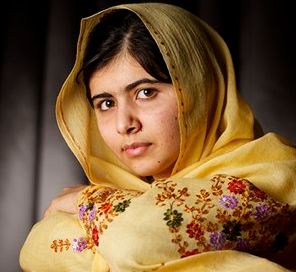
Malala Yousafzai: ‘It’s hard to kill. Maybe that’s why his hand was shaking’

Malala-YousafzaiKamila Shamsie writes: Malala Yousafzai says she’s lost herself. “In Swat [district], I studied in the same school for 10 years and there I was just considered to be Malala. Here I’m famous, here people think of me as the girl who was shot by the Taliban. The real Malala is gone somewhere, and I can’t find her.”

We are sitting in a boardroom on the seventh floor of the new Birmingham library, the glass walls allowing us a view of a city draped in mist, a sharp contrast to the “paradise” of Swat, with its tall mountains and clear rivers which Malala recalls wistfully. It should be desperately sad but the world’s most famous 16-year-old makes it difficult for you to feel sorry for her. In part, it is because she is so poised, in a way that suggests an enviable self-assurance rather than an overconstructed persona. But more than that, it is to do with how much of her conversation is punctuated by laughter.

The laughter takes many forms: self-deprecating when I ask her why she thinks the Taliban feel threatened by her; delighted when she talks of Skyping her best friend, Muniba, to get the latest gossip from her old school; wry when she recalls a Taliban commander’s advice that she return to Pakistan and enter a madrassa; giggly when she talks about her favourite cricketers (“Shahid Afridi, of course, and I also like Shane Watson”). And it’s at its most full-throated when she is teasing her father, who is present for part of our interview. It happens during a conversation about her mother: “She loves my father,” Malala says. Then, lowering her voice, she adds: “They had a love marriage.” Her father, involved in making tea for Malala and me, looks up. “Hmmm? Are you sure?” he says, mock-stern. “Learn from your parents!” Malala says to me, and bursts into laughter.

Learning from her parents is something Malala knows a great deal about. Her mother was never formally educated and an awareness of the constraints this placed on her life have made her a great supporter of Malala and her father in their campaign against the Taliban’s attempts to stop female education. One of the more moving details in I Am Malala, the memoir Malala has written with the journalist Christina Lamb, is that her mother was due to start learning to read and write on the day Malala was shot – 9 October 2012. When I suggest that Malala’s campaign for female education may have played a role in encouraging her mother, she says: “That might be.” But she is much happier giving credit to her mother’s determined character, and the example provided by her father, Ziauddin, who long ago set up a school where girls could study as well as boys, in a part of the world where the gender gap in education is vast.

It is hard to refrain from asking Ziauddin Yousafzai the “do you wish you hadn’t …?” question about his daughter, whose passion for reform clearly owes a lot to the desire to emulate her education-activist father. But it’s a cruel question, and unfair, too, given my own inability to work out what constitutes responsible parenting in a world where girls are told that the safest way to live is to stay away from school, and preferably disappear entirely.

It is perhaps because of criticism levelled at her father that Malala mentions more than once in her book that no one believed the Taliban would target a schoolgirl, even if that schoolgirl had been speaking and writing against the Taliban’s ban on female education since the age of 12. If any member of the family was believed to be in danger, it was Ziauddin Yousafzai, as much a part of the campaign as his daughter. And it was the daughter who urged the father to keep on when he suggested they both “go into hibernation” after receiving particularly worrisome threats. The most interesting detail to emerge about Ziauddin from his daughter’s book is his own early flirtation with militancy. He was only 12 years old when Sufi Mohammad, who would later be a leading figure among the extremists in Swat, came to his village to recruit young boys to join the jihad against the Soviets in Afghanistan. Although Ziauddin was too young to fight then, within a few years he was preparing to become a jihadi, and praying for martyrdom. He later came to recognise what he experienced as brainwashing – and was saved from it by his questioning mind and the influence of his future brother-in-law, a secular nationalist.

The information about her father’s semi-brainwashing forms an interesting backdrop to Malala’s comments when I ask if she ever wonders about the man who tried to kill her on her way back from school that day in October last year, and why his hands were shaking as he held the gun – a detail she has picked up from the girls in the school bus with her at the time; she herself has no memory of the shooting. There is no trace of rancour in her voice when she says: “He was young, in his 20s … he was quite young, we may call him a boy. And it’s hard to have a gun and kill people. Maybe that’s why his hand was shaking. Maybe he didn’t know if he could do it. But people are brainwashed. That’s why they do things like suicide attacks and killing people. I can’t imagine it – that boy who shot me, I can’t imagine hurting him even with a needle. I believe in peace. I believe in mercy.” [Continue reading…]

Facebooktwittermail

Egyptian court sets trial date for ex-president Morsi

The Associated Press reports: The trial of Egypt’s ousted President Mohammed Morsi will begin on Nov. 4, authorities announced Wednesday, launching a politically charged prosecution of the country’s first democratically elected leader on charges he incited the killing of opponents while in office — and taking the crackdown against the Islamist leader and his Muslim Brotherhood to a new level.

The trial threatens to add to the turmoil gripping Egypt since the July 3 popularly supported coup that removed Morsi, as his Islamist supporters are likely to hold protests around his court appearances that could easily spiral into violence. Over past months, Brotherhood-led protests against the military have repeatedly turned to clashes with police that have left hundreds dead.

For the military-backed government, the trial is an opportunity to show justification for the broad crackdown it has waged against the Brotherhood — and ultimately for the removal of Morsi — by bringing out details of one of the tensest periods of Morsi’s presidency, when the president was clashing openly with the judiciary and coming under accusations of using Islamist mobs to suppress dissent.

But the military, which now dominates the country’s politics, also opens itself up to potential criticism it is merely carrying out show trials, trying to put a nail in the coffin of the Brotherhood, which accuses the army and its supporters of wrecking Egypt’s fledgling democracy.

Already there are questions whether the trial, in which Morsi and 14 other members of his Brotherhood are defendants, can be fair. Morsi has been held in secret military detention since his ouster, with almost no contact with the outside world beyond two phone calls with his family. His defense lawyers have not been allowed to talk to him yet, and they say they have not been shown the documentation of the prosecution’s case against him. [Continue reading…]

Facebooktwittermail