U.S. and Iran officials make diplomatic history

Barbara Slavin reports: The United States and Iran made diplomatic history Thursday as Secretary of State John Kerry and Iranian Foreign Minister Mohammad Javad Zarif talked for a half hour on the sidelines of a multilateral meeting on Iran’s nuclear program.

The meeting, which Zarif described as “more than a chat,” took place at the United Nations, and marked the highest-level and most-substantive encounter between officials of the two sides since the 1979 Islamic Revolution.

Zarif made the announcement at a gathering of think tankers and journalists addressed by Iranian President Hassan Rouhani. The comments upstaged the president, who, when asked his reaction, told his interlocutor, Josette Sheeran, president of the Asia Society, “You ask for the first step. They [Kerry and Zarif] took it.”

Afterward, Zarif told Al-Monitor: “I’m optimistic. I have to be. Political leaders need to be optimistic about the future and make every commitment to go forward for the cause of peace. This was a good beginning. I sense that Secretary Kerry and President [Barack] Obama want to resolve this.”

The only previous meeting between a US Secretary of State and an Iranian foreign minister since the 1979 revolution took place in 2001 between Colin Powell and Kamal Kharrazi at a UN meeting about Afghanistan, but it was only a handshake and an exchange of courtesies. Condoleezza Rice, Powell’s successor, made several attempts at such encounters but came up short. [Continue reading…]

Facebooktwittermail

Senators push to preserve NSA phone surveillance

The New York Times reports: The Senate Intelligence Committee appears to be moving toward swift passage of a bill that would “change but preserve” the once-secret National Security Agency program that is keeping logs of every American’s phone calls, Senator Dianne Feinstein, the California Democrat who leads the panel, said Thursday.

Ms. Feinstein, speaking at a rare public hearing of the committee, said she and the top Republican on the panel, Senator Saxby Chambliss of Georgia, are drafting a bill that would be marked up — meaning that lawmakers could propose amendments to it before voting it out of committee — as early as next week.

After the existence of the program became public by leaks from the former N.S.A. contractor Edward J. Snowden, critics called for it to be dismantled. Ms. Feinstein said her bill would be aimed at increasing public confidence in the program, which she said she believed was lawful.

The measure would require public reports of how often the N.S.A. had used the calling log database, she said. It would also reduce the number of years — currently five — that the domestic calling log data is kept before it is deleted. It would also require the N.S.A. to send lists of the phone numbers it searches, and its rationale for doing so, to the Foreign Intelligence Surveillance Court for review.

By contrast, a rival bill drafted by skeptics of government surveillance, including two members of the committee, Senators Ron Wyden of Oregon and Mark Udall of Colorado, would ban the mass call log collection program. [Continue reading…]

Facebooktwittermail

Most of Syria’s toxins can be destroyed more easily than officials initially thought

The Washington Post reports: U.S. and Russian officials now believe that the vast majority of Syria’s nerve agent stockpile consists of “unweaponized” liquid precursors that could be neutralized relatively quickly, lowering the risk that the toxins could be hidden away by the regime or stolen by terrorists.

A confidential assessment by the United States and Russia also concludes that Syria’s entire arsenal could be destroyed in about nine months, assuming that Syrian officials honor promises to cede control of the chemical assets to international inspectors, according to two people briefed on the analysis.

The assessment, thought to be the most authoritative to date, reflects the consensus view of Russian and U.S. analysts who compared their governments’ intelligence on Syria during meetings in Geneva this month. The Obama administration has since briefed independent experts on the key findings.

The insights into Syria’s arsenal have been bolstered further by the Damascus government’s own accounting, which lists the types of chemical agents and delivery systems it possesses, and was presented Saturday to the Organization for the Prohibition of Chemical Weapons in The Hague. U.S. officials have reviewed the Syrian inventory, which has not been publicly released, and “found it quite good,” a senior State Department official told reporters. [Continue reading…]

Facebooktwittermail

Rouhani says nuclear deal can be reached in ‘months not years’

David Ignatius interviewed Iranian President Hassan Rouhani and noted these hightlights:

  • Rouhani stressed that he is “fully empowered to finalize the nuclear talks” by Iran’s supreme leader, Ali Khamenei, a claim confirmed by Western intelligence reports. Analysts say Khamenei was surprised and rebuffed by the popular wave of support for Rouhani’s moderate policies and has given him a chance to cut a deal.
  • The Iranian president wants to move very quickly to resolve the nuclear issue, through negotiations. Rouhani said his “choice” would be a three-month timetable, and that six months would still be “good,” but this should be a matter of “months, not years.” The speedy timeline may reflect the pressure of sanctions on the Iranian economy or Rouhani’s fear of a political backlash from conservative rivals. Whatever the reason, the time is short.
  • Rouhani said he was prepared to offer extensive “transparency” measures to reassure the West that Iran doesn’t intend to build a bomb. He likened these measures to what Iran allowed from 2003 to 2005, when he was the country’s chief negotiator, including acceptance of intrusive “additional protocols” from the International Atomic Energy Agency, as well as inspections to assess what the IAEA calls “possible military dimensions.”
  • He didn’t discuss the level of uranium enrichment that Iran would adopt as part of a deal. But a knowledgeable Iranian source said this week that he might be willing to cap enrichment at 5 percent and limit Iran’s stockpile of enriched material; those moves would seek to address U.S. and Israeli worries about a future “breakout” capability.
  • Rouhani said Iran wants to join a new round of Geneva negotiations for a political transition in Syria so long as there are no preconditions on Iranian participation. The Obama administration has tentatively decided to offer Iran a seat at these talks, reasoning that a stable political transition would be impossible if the Iranians weren’t a co-guarantor. He said that, in terms of a future government in Damascus, Iran would let Syrians decide at the ballot box; that’s the standard Iranian formula.
  • He stressed his desire to first resolve the nuclear issue, where he has the most expertise and authority from Khamenei. After that, he said, the United States and Iran can discuss broader issues of normalization. “Once the nuclear file is settled, we can turn to other issues,” he said. “We need a beginning point.”
Facebooktwittermail

Assad: chemical weapons arsenal is a ‘burden’ — Syria has much more powerful weapons to defend itself against Israel

The Times of Israel reports: Syria has deterrent weapons, more advanced than anything in its chemical arsenal, that could blindside Israel in mere moments, Syrian President Bashar Assad claimed Thursday.

“Originally, we produced chemical weapons in the 1980s as a deterrent to Israel’s nuclear capabilities,” Assad said in an interview with the Hezbollah-affiliated, Lebanon-based Al-Akhbar newspaper, adding that “today, we have weapons that are far more important and sophisticated and that can blindside Israel in the blink of an eye.”

The Syrian president also charged that the West was not really concerned with stripping Syria of its weapons stockpile in order to safeguard the country’s civilians but, rather, that its goal was to tip the balance of power in the Middle East in Israel’s favor.

“They wanted to change the balance of power to protect Israel, but we turned the table on them and now the ball is in their court,” said Assad.

Referring to his regime’s chemical weapons arsenal, which, under a US-Russian agreement reached earlier this month, is due to be destroyed by mid-2014, Assad said that his stockpile, of about 1,000 tons, is a burden and will be costly and time-consuming to dispose of.

The Syrian president went on to mock President Barack Obama as “hesitant” and “weak.” He called the US administration’s handling of the threat to attack Syria — in response to the regime’s alleged chemical attack in Damascus on August 21 that killed over 1,400 people according to US officials — an “embarrassment.”

“The steps we’ve taken embarrassed the US government in the eyes of the American and European publics. Obama lost in his own home [turf]. where [he] lost the ability to maneuver internally,” Assad added. [Continue reading…]

Facebooktwittermail

Hezbollah’s fight for Assad — and survival

Reuters reports: In the photograph the two robed men stand shoulder-to-shoulder, one tall and erect, the other more heavyset. Both smile for the camera. The picture from Tehran is a rare record of Iran’s Supreme Leader Ayatollah Ali Khamenei meeting Sayyed Hassan Nasrallah, the head of Hezbollah, the Lebanese Shi’ite paramilitary group.

Taken in April during a discreet visit by the Hezbollah chief to his financial and ideological masters, the photograph captured a turning point in Syria’s civil war and the broader struggle between Sunnis and Shi’ites, the two main branches of Islam. It was the moment when Iran made public its desire for Hezbollah to join the battle to help save Syria’s President Bashar al-Assad, diplomats said. At the time, Assad and his Alawite sect, an offshoot of Shi’ite Islam, were losing ground to an advancing Sunni insurgency.

Within days of returning home, Nasrallah gave a televised speech making it clear that Hezbollah would fight alongside Assad to prevent Syria falling “into the hands” of Sunni jihadi radicals, the United States and Israel. The very survival of the Shi’ites was at stake, he said.

Soon afterwards, fighters from Hezbollah – which until then had largely stayed out of its neighbour’s civil war – entered Syria. In June they helped Assad’s forces recapture the strategic town of Qusair and other territory, turning the war in Assad’s favour.

Regional security officials told Reuters there are now between 2,000 and 4,000 Hezbollah fighters, experts and reservists in Syria. One Lebanese security official said a central command in Iran led by the Revolutionary Guards directs Hezbollah operations in Syria in close coordination with the Syrian authorities. Another source said Hezbollah had “hit squads” of highly trained fighters in Syria whose task is to assassinate military leaders among the Sunni rebels.

Hezbollah declined to comment for this report on its involvement in Syria. Nasrallah has previously said it is necessary for Hezbollah to fight Sunni radicals allied to al Qaeda.

Officials in Iran did not respond to requests for comment. Last week, Iran’s foreign ministry spokeswoman, Marzieh Afkham, said that Iran had no official military presence in Syria, but was providing humanitarian assistance. Last September, Mohammad Ali Jafari, head of the Revolutionary Guards, said some members of Iran’s elite Quds force were in Syria but that it did not constitute “a military presence.”

Hezbollah’s role in Syria has ramifications not just in its home in Lebanon but across the region. If Assad wins, Iran’s influence along the shores of the Mediterranean will grow. If he loses, Hezbollah and Iran’s reach will likely be damaged. For some members of the group, the fight is an existential one. [Continue reading…]

Facebooktwittermail

Like David Miranda, I was interrogated at a British airport

Baraa Shiban writes: On Monday night I was held and questioned at an airport because of my work investigating western counter-terrorism abuses in Yemen. But this did not happen in Sanaa or at the hands of some tyrannical regime. It happened at Gatwick. British officials interrogated me under the controversial schedule 7 provision of the Terrorism Act 2000 – the same provision recently used to chilling effect to detain David Miranda.

Not satisfied with clamping down on attempts to report on blanket surveillance and the “war on terror”, the UK government seems to have branched out to people like me – activists working to uncover and prevent such abuses.

I have visited the UK before without incident. I have long admired British culture – I spent part of my education in Wales. This time I came at the invitation of Chatham House to speak at a seminar on Yemen. Standing at passport control, bleary eyed from the long flight, I expected another routine trip.

The border agent asked what my job is. When I explained I was the Yemen project co-ordinator for London-based legal charity Reprieve he said, “Sir, please come with me. We have a Terrorism Act and I have some questions I need to ask you.”

I was then taken away from the desk and interrogated for over an hour. The suited man quizzed me about my political opinions. When I suggested that these should have no bearing on whether I am allowed into the country, the agent threatened to hold me for the maximum extent of his powers. “I am authorised to detain you for up to nine hours,” he said. “We have only been here for an hour, but we can be here for up to nine. So you understand what this can lead to.”

He took my Reprieve business card and disappeared. When he returned – I would guess having made use of a computer and a popular search engine – he suggested he had detained me not merely because I was from Yemen, but also because of Reprieve’s work investigating and criticising the efficacy of US drone strikes in my country.

A telling exchange followed: “So,” he asked, “does your organisation have anything to do with terrorism in Yemen?”

I replied, “My organisation addresses counter-terrorism abuses inside the country.”

“Exactly!” He said. “Why doesn’t your organisation do something about the terrorism that happens in your country, instead of focusing on the counter-terrorism abuses?”

What could I reply? Of course I oppose terrorism. But I also oppose the secret air war in my country – waged by the US, apparently with covert support from the UK and others. [Continue reading…]

Facebooktwittermail

To reform the NSA, fire officials who lie

James Goodale writes: The NSA has lied to the Congress, the courts, and perhaps even to the president himself, but no one seems to care.

The Director of National Intelligence James R Clapper admitted he lied to Congress about the NSA metadata collection program. He said the NSA had no such program – and then added that that was the least “untruthful” remark he could make. General Keith Alexander, director of the National Security Agency, lied in 2012 that the NSA does not hold data on US citizens, and repeated similar misstatements, under oath, to Congress about the program:

We’re not authorized to do it [data collection on US citizens], nor do we do it.

NSA lawyers lied to secret Fisa court Judges John D Bates and Reggie B Walton. In recently released opinions, Bates said he had been lied to on three separate occasions and Walton said he had been lied to several times also.

But Clapper and Alexander have not been held in contempt of Congress. Nor have the Justice Department attorneys, who lied to Judges Walton and Bates, been disciplined. Part of the answer as to why this is so came out last week. [Continue reading…]

Facebooktwittermail

Pope attacks global economics for worshipping ‘god of money’

Reuters reports: Pope Francis made one of his strongest attacks on the global economic system on Sunday, saying it could no longer be based on a “god called money” and urged the unemployed to fight for work.

Francis, at the start of a day-long trip to the Sardinian capital, Cagliari, put aside his prepared text at a meeting with unemployed workers, including miners in hard hats who told him of their situation, and improvised for nearly 20 minutes.

“I find suffering here … It weakens you and robs you of hope,” he said. “Excuse me if I use strong words, but where there is no work there is no dignity.”

He discarded his prepared speech after listening to Francesco Mattana, a 45-year-old married father of three who lost his job with an alternative energy company four years ago.

Mattana, his voice trembling, told the pope that unemployment “oppresses you and wears you out to the depths of your soul”.

The crowd of about 20,000 people in a square near the city port chanted what Francis called a prayer for “work, work, work”. They cheered each time he spoke of the rights of workers and the personal devastation caused by joblessness.

The pope, who later celebrated Mass for some 300,000 people outside the city’s cathedral, told them: “We don’t want this globalised economic system which does us so much harm. Men and women have to be at the centre (of an economic system) as God wants, not money.”

“The world has become an idolator of this god called money,” he said.

Sardinia’s coast is famous for its idyllic beaches, exclusive resorts and seaside palatial residences of some of the world’s richest people, including former Italian prime minister Silvio Berlusconi and a host of Hollywood actors.

But much of the island, particularly its large cities and the vast agricultural and industrial interior, has been blighted by the economic crisis, with factories closed and mines operating at low capacity. [Continue reading…]

Facebooktwittermail

Is war natural?

There are all kinds of problems in posing the question, is war natural? If we conclude it is unnatural, then we are likely to treat it as an aberration that might be avoided if we were to simply know better — that in some sense all wars happen by mistake.

If we conclude that war-making is an intrinsic feature of human nature, then we assume a kind of fatalism that views war as ugly but unavoidable.

In an essay which probes the question of whether humans have the instinct to make war, the evolutionary biologist, David P Barash, makes an important distinction between violence and war — the former being an adaptation, while the latter a capacity. He explains the distinction between adaptation and capacity in this way:

Language is almost certainly an adaptation, something that all normal human beings can do, although the details vary with circumstance. By contrast, reading and writing are capacities, derivative traits that are unlikely to have been directly selected for, but have developed through cultural processes. Similarly, walking and probably running are adaptations; doing cartwheels or handstands are capacities.

Barash writes:

[Napoleon Chagnon’s] best-selling book The Fierce People (1968) [on the Yanomami people of the Venezuelan/Brazilian Amazon] has been especially influential in enshrining an image of tribal humanity as living in a state of ‘chronic warfare’.

Chagnon has been the subject of intense criticism but, to my mind, there is simply no question about the empirical validity and theoretical value of his research. In a field (call it evolutionary psychology or, as I prefer, human sociobiology) that has often been criticised for a relative absence of hard data, his findings, however politically distasteful, have been welcome indeed. Among these, one of the most convincing has been Chagnon’s demonstration that, among the Yanomami, not only is inter-village ‘warfare’ frequent and lethal, but that Yanomami men who have killed other men experience significantly higher reproductive success — evolutionary fitness — than do non-killers. His data, although disputed by other specialists, appear altogether reliable and robust.

So I admire the man, and his work, but I have a growing sense of discomfort about the way that Chagnon’s Yanomami research has been interpreted and the inferences that have been drawn from it.

I fear that many of my colleagues have failed, as previously have I, to distinguish between the relatively straightforward evolutionary roots of human violence and the more complex, multifaceted and politically fraught question of human war. To be blunt, violence is almost certainly deeply entrenched in human nature; warfare, not so much. A fascination with the remarkably clear correlation between Yanomami violence and male fitness has blinded us to the full range of human non-violence, causing us to ignore and undervalue realms of peacemaking in favour of a focus on exciting and attention-grabbing patterns of war-making.

As an evolutionary scientist, I have been enthusiastic about identifying the adaptive significance — the evolutionary imprint — of apparently universal human traits. For a long time, it seemed that Chagnon’s finding of the reproductive success of Yanomami men who were killers was one of the most robust pieces of evidence for this. Now I am not so sure, and this is my mea culpa.

There has also been a tendency among evolutionary thinkers to fix upon certain human groups as uniquely revelatory, not simply because the research about them is robust, but also because their stories are both riveting and consistent with our pre-existing expectations. They are just plain fun to talk about, especially for men.

Remember, too, the journalists’ edict: ‘If it bleeds, it leads.’ You are unlikely to see a newspaper headline announcing that ‘France and Germany Did Not Go To War’, whereas a single lethal episode, anywhere in the world, is readily pounced upon as news. Language conventions speak volumes, too. It is said that the Bedouin have nearly 100 different words for camels, distinguishing between those that are calm, energetic, aggressive, smooth-gaited, or rough, etc. Although we carefully identify a multitude of wars — the Hundred Years War, the Thirty Years War, the American Civil War, the Vietnam War, and so forth — we don’t have a plural form for peace.

It makes evolutionary sense that human beings pay special attention to episodes of violence, whether interpersonal or international: they are matters of life and death, after all. But when serious scientists do the same and, what is more, when they base ‘normative’ conclusions about the human species on what is simply a consequence of their selective attention, we all have a problem.

The most serious problem with Chagnon’s influence on our understanding of human nature is one familiar to many branches of science: generalising from one data set — however intensive — to a wider universe of phenomena. Academic psychologists, for example, are still reeling from a 2010 study by the University of British Columbia which found that the majority of psychological research derives from college students who are ‘Western, Educated, Industrialised, Rich, and Democratic’ — in short, WEIRD. [See “The Weirdest People in the World“.] Similarly, the Yanomami are only one of a large number of very different, tribal human societies. Given the immense diversity of human cultural traditions, any single group of Homo sapiens must be considered profoundly unrepresentative of the species as a whole.

Just as the Yanomami can legitimately be cited as notably violence-prone — at both the individual and group level — many other comparable tribal peoples do not engage in anything remotely resembling warfare. These include the Batek of Malaysia, the Hadza of Tanzania, the Martu of Australia, a half-dozen or more indigenous South Indian forager societies, and numerous others, each of whom are no less human than those regularly trotted out to ‘prove’ our inherent war-proneness.

In the Dark Ages of biology, taxonomists used to identify a ‘type species’ thought to represent each genus, but the idea no longer has any currency in biology. The great evolutionary biologist Ernst Mayr effectively demonstrated that statistical and population thinking trumps the idea of a Platonic concept of ‘types’, independent of the actual diversity of living things, not least Homo sapiens. Yet anthropologists (and biologists, who should know better) seem to have fallen into the trap of seizing upon a few human societies, and generalising them as representative of Homo sapiens as a whole. Regrettably, this tendency to identify ‘type societies’ has been especially acute when it comes to establishing the supposed prevalence of human warfare.

In his justly admired book The Better Angels of our Nature (2011), the evolutionary psychologist Steven Pinker made a powerful case that human violence — interpersonal as well as warring — has diminished substantially in recent times. But in his eagerness to emphasise the ameliorating effects of historically recent social norms, Pinker exaggerated our pre-existing ‘natural’ level of war-proneness, claiming that ‘chronic raiding and feuding characterised life in a state of nature’. The truth is otherwise. As recent studies by the anthropologist Douglas Fry and others have shown, the overwhelmingly predominant way of life for most of our evolutionary history — in fact, pretty much the only one prior to the Neolithic revolution — was that of nomadic hunter-gatherers. And although such people engage in their share of interpersonal violence, warfare in the sense of group-based lethal violence directed at other groups is almost non-existent, having emerged only with early agricultural surpluses and the elaboration of larger-scale, tribal organisation, complete with a warrior ethos and proto-military leadership. [Continue reading…]

Facebooktwittermail

Europe really, really doesn’t trust the NSA

Pacific Standard reports: A few days ago the European Parliament’s Office of Citizens’ Rights and Constitutional Affairs released a notably pointed briefing paper arguing for Europe to stop trusting American Internet services. The briefing and the committee are the latest forum to suggest that European states create domestic cloud computing capacities to provide member states legal protection for NSA data surveillance. The report has the not-at-all-subtle title “The US National Security Agency Surveillance Programmes (PRISM) Foreign Intelligence Surveillance (FISA) Activities and Their Impact on EU Citizens’ Fundamental Rights.” Among the findings:

Prominent notices should be displayed by every US web site offering services in the EU to inform consent to collect data from EU citizens. The users should be made aware that the data may be subject to surveillance (under FISA 702) by the US government for any purpose which furthers US foreign policy.

The argument there being that people will have an incentive to find other websites to use. Particularly for e-commerce. Companies like Amazon, and U.S. airlines and ticketing agencies—Expedia and the like—won’t be pleased, and that in turn will create economic pressure to alter surveillance strategy, the report argues.

A consent requirement will raise EU citizen awareness and favour growth of services solely within EU jurisdiction. This will thus have economic impact on US business and increase pressure on the US government to reach a settlement.

That isn’t all. The report argues for the European Union to simply swear off U.S.-based cloud computing, and to develop local capacity. [Continue reading…]

Facebooktwittermail

AIPAC goes to war with Obama — to get a U.S. war with Iran

M.J. Rosenberg writes: Barack Obama and Hassan Rouhani have spoken. And they are on the same page. By that I mean not they agree about the issues dividing the two countries but that they are both ready to move forward, to test each other and see if an agreement is possible.

As tentative as all this is, it is a major breakthrough – as anyone who has paid even a little attention over the past 34 years knows.

However, I do not see this process leading anywhere because the Netanyahu government and its lobby, the American Israel Public Affairs Committee (AIPAC), are determined to end the process and they have the ability to do it.

They intend to use the United States Congress to pass resolutions that will cause Rouhani to walk away by making clear that Congress will accept nothing short of an Iranian surrender on nuclear issues. Although President Obama wants to negotiate with Iran about ensuring that Iran’s nuclear program is not used to produce weapons, the lobby, which writes the laws imposing sanctions on Iran, insists that Iran give up its nuclear program entirely.

AIPAC listed its demands in a statement last week.

The bottom line was this: Congress must not consider lifting economic sanctions until the Iranians stop uranium enrichment, stop work on installing new centrifuges, allow international inspection of nuclear sites, and move out of the country its stockpile of highly enriched uranium. In contrast to the administration which, recognizing that Iran (like every other country) has the right to nuclear power for peaceful purposes, AIPAC says that Iran has no such right. (Israel, of course, has a large stockpile of nuclear weapons but, hey, that’s different.) [Continue reading…]

Facebooktwittermail

A chemical weapons expert responds to the Al Akhbar article ‘Questions plague UN report on Syria’

Brown Moses Blog: Earlier this week an article was published by Al Akhbar, Questions Plague UN Report on Syria, making a number of claims about the UN report, including “There is not a single environmental sample in Moadamiyah that tested positive for Sarin.” and “It is scientifically improbable that survivors would test that highly for exposure to Sarin without a single trace of environmental evidence testing positive for the chemical agent.“. This is then used to claim that the 140mm artillery rockets fired at Moadamiyah were not carrying Sarin, as widely reported, and that the trajectory of these rockets, as per the UN report, which crosses over with the trajectory of other rockets fired at Eastern Ghouta over the Syrian army’s Republican Guard 104th Brigade base, is indicative of nothing, as the munitions did not contain Sarin.

One of the chemical weapon experts quoted in the article is Dan Kaszeta, who has responded to the article with a FAQ he’ll be publishing online shortly.

Q: The article claims “not a single environmental sample in Moadamiyah that tested positive for Sarin.” – What is your reaction to this?

I consider this statement to be a misleading half-truth that “cherry picks” from the UN report. It is true in respect to the fact that no actual Sarin was found in the 13 environmental samples taken from Moadamiyah. But the samples show DIMP, IMPA, and MPA, all of which are strong indicators of Sarin. The environmental samples are clear indicators that Sarin was used because of the clear presence of chemicals that are clearly decomposition products (IMPA, MPA) and impurities (DIMP), all of which persist longer in the environment than Sarin itself. [Continue reading…]

Facebooktwittermail

A war in which both people and ideas have become casualties

Gabriele Del Grande writes: This is my third visit to Aleppo in the last year, but the first time that I saw fear in the eyes of my Syrian activist friends accompanying me. They are not afraid of Bashar al-Assad’s regime or of bombs or of the Free Syrian Army (FSA). Rather, what scares them are the checkpoints manned by fighters from the Islamic State in Iraq and al-Sham (ISIS — also known as the Islamic State in Iraq and Syria), the main al-Qaeda force in Syria. Kidnappings and executions have been steadily increasing.

Hazim al-Azizi, a photographer at the media center in Azaz, was the latest Syrian activist to be killed by al-Qaeda. An ISIS sniper shot him on Sept. 18, when the town of Azaz, 3 kilometers (1.8 miles) from the border with Turkey, became the scene of two days of heavy fighting between the ISIS and FSA. On the same day, ISIS gunmen kidnapped Mohammed Nur Amuri, director of the Azaz media center, along with nine other activists in his office. One man, Abu Mohammad, managed to save himself.

Abu Mohammad was supposed to go to Azaz to install an aerial for a free radio network, Radio Nevroz, which was to begin broadcasting in Kurdish and Arabic to the opposition-controlled areas of northern Syria. When he heard that the ISIS was involved in fighting there, he canceled everything. In his opinion, the presence of al-Qaeda in Syria poses a serious threat to the entire civilian activist movement.

In an interview in Kilis, a Turkish town on the border with Syria, Abu Mohammad told Al-Monitor, “For us, it is extremely dangerous even just to move around. We are civilians, without any military escort when we travel. The areas in the countryside of Aleppo and Idlib have become a no-man’s-land, and the slightest suspicion is enough to get you killed by the men of ISIS.”

According to Wassim, however, the real problem is not al-Qaeda, but the ever-widening rift with the FSA. An activist living in Aleppo, Wassim explained, “When the revolution started, we used to sing ‘One, one, one. The Syrian people are one.’ Nowadays, the most popular song goes like this: ‘Alawites wait for us! We are coming to slaughter you! We will cut your throats.’ The activists abroad will tell you that it is not true, that we are a moderate people and sectarianism will not prevail. But this is true only of us civilians, not for those who fight. [Continue reading…]

Facebooktwittermail

Syrian rebel groups reject exiled National Coalition

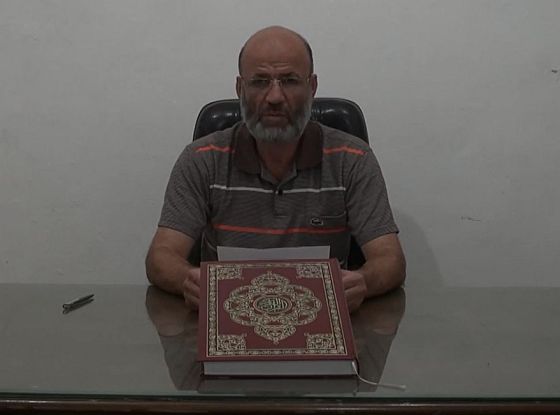
islamic-alliance

The formation of a coalition of rebel groups under an “Islamic framework” that rejects the authority and legitimacy of the Western-backed and Istanbul-based National Coalition, is going to be widely seen as further evidence of the “Islamisation” of the Syrian opposition. On that basis, it will also generally be viewed as reflecting a trend towards greater extremism, but that judgement might be premature.

The group which has not officially been named yet but is being referred to by some of its members as the “Islamic Alliance” appears to have coalesced around some core principles that seem to be more strategic than ideological, namely, that it rejects the authority and legitimacy of an exiled group that has assumed the role of a kind of government-in-waiting but whose members are safely removed from the fighting; that those who are fighting “own” the revolution; and that their success will depend on solidarity.

An indication that this new coalition might not signal further radicalization of the opposition is the fact that it does not include the most radical group in Syria: the Islamic State of Iraq and al-Sham (ISIS) which is most closely affiliated with al Qaeda. Al Qaeda leader Ayman al-Zawahri recently called on Syria’s Islamist fighters to shun secularists, but this new coalition might have more to do with shunning outsiders.

By raising expectations that a U.S. intervention might decisively tip the balance of power in the rebels’ favor, only to then see President Obama sign on to a chemical weapons disarmament plan whose most likely effect will be to ensure the continuation of Bashar al-Assad’s rule, the lesson that gets repeatedly driven home to Syrians is that there is no one they can rely upon but themselves.

Aron Lund writes for Syria Comment: Abdelaziz Salame, the highest political leader of the Tawhid Brigade in Aleppo, has issued a statement online where he claims to speak for 13 different rebel factions. You can see the video or read it in Arabic here. The statement is titled “communiqué number one” – making it slightly ominous right off the bat – and what it purports to do is to gut Western strategy on Syria and put an end to the exiled opposition.

The statements has four points, some of them a little rambling. My summary:

  • All military and civilian forces should unify their ranks in an “Islamic framwork” which is based on “the rule of sharia and making it the sole source of legislation”.
  • The undersigned feel that they can only be represented by those who lived and sacrificed for the revolution.
  • Therefore, they say, they are not represented by the exile groups. They go on to specify that this applies to the National Coalition and the planned exile government of Ahmed Touma, stressing that these groups “do not represent them” and they “do not recognize them”.
  • In closing, the undersigned call on everyone to unite and avoid conflict, and so on, and so on.

The following groups are listed as signatories to the statement.

  1. Jabhat al-Nosra
  2. Islamic Ahrar al-Sham Movement
  3. Tawhid Brigade
  4. Islam Brigade
  5. Suqour al-Sham Brigades
  6. Islamic Dawn Movement
  7. Islamic Light Movement
  8. Noureddin al-Zengi Battalions
  9. Haqq Brigade – Homs
  10. Furqan Brigade – Quneitra
  11. Fa-staqim Kama Ummirat Gathering – Aleppo
  12. 19th Division
  13. Ansar Brigade

Who are these people?

The alleged signatories make up a major part of the northern rebel force, plus big chunks also of the Homs and Damascus rebel scene, as well as a bit of it elsewhere. Some of them are among the biggest armed groups in the country, and I’m thinking now mostly of numbers one through five. All together, they control at least a few tens of thousand fighters, and if you trust their own estimates (don’t) it must be way above 50,000 fighters.

Most of the major insurgent alliances are included. Liwa al-Tawhid, Liwa al-Islam and Suqour al-Sham are in both the Western- and Gulf-backed Supreme Military Council (SMC a.k.a. FSA) and the SILF, sort-of-moderate Islamists. Ahrar al-Sham and Haqq are in the SIF, very hardline Islamists. Jabhat al-Nosra, of course, is an al-Qaida faction. Noureddin al-Zengi are in the Asala wa-Tanmiya alliance (which is led by quietist salafis, more or less) as well as in the SMC. And so on. More groups may join, but already at this stage, it looks – on paper, at least – like the most powerful insurgent alliance in Syria.

What does this mean?

Is this a big deal? Yes, if the statement proves to accurately represent the groups mentioned and they do not immediately fall apart again, it is a very big deal. It represents the rebellion of a large part of the “mainstream FSA” against its purported political leadership, and openly aligns these factions with more hardline Islamist forces.

That means that all of these groups now formally state that they do not recognize the opposition leadership that has been molded and promoted by the USA, Turkey, France, Great Britain, other EU countries, Qatar, and – especially, as of late – Saudi Arabia.

That they also formally commit themselves to sharia as the “sole source of legislation” is not as a big a deal as it may seem. Most of these factions already were on record as saying that, and for most of the others, it’s more like a slight tweak of language. Bottom line, they were all Islamist anyway. And, of course, they can still mean different things when they talk about sharia.

Why now? According to a Tawhid Brigade spokesperson, it is because of the “conspiracies and compromises that are being forced on the Syrian people by way of the [National] Coalition”. So there.

Mohammed Alloush of the Islam Brigade (led by his relative, Mohammed Zahran Alloush), who is also a leading figure in the SILF alliance, was up late tweeting tonight. He had a laundry list of complaints against the National Coalition, including the fact that its members are all, he says, “appointed”, i.e. by foreign powers. He also opposed its planned negotiations with the regime. This may have been in reference to a (widely misinterpreted) recent statement by the Coalition president Ahmed Jerba. Alloush also referred to the recent deal between the National Coalition and the Kurdish National Council, and was upset that this will (he thinks) splinter Syria and change its name from the Syrian Arab Republic to the Syrian Republic.

Is this a one-off thing?

The fellow from the Tawhid Brigade informed me that more statements are in the making. According to him, this is not just an ad hoc formation set up to make a single point about the National Coalition. He hinted that it’s the beginning of a more structured group, but when I asked, he said it has no name yet. On the other hand, Abdulqader Saleh – Tawhid’s powerful military chief – referred to it on Twitter as al-Tahaluf al-Islami or the Islamic Alliance, but that may have been just descriptive, rather than a formal name.

Mohammed Alloush also wrote on Twitter, somewhat ambiguously, that the member groups have their own offices and political bureaus, and there’s a political program different from the National Coalition. He, too, hinted that there’s more coming: “wait for the announcement of the new army”.

Who’s missing?

These are of course not all the rebels; far from it. Dozens or hundreds of small and local groups are missing from this alliance, just like they’ve been missing from every other alliance before it. Some really big groups are also not in there, like the Farouq Battalions or the Ahfad al-Rasoul Brigades, both of them quite closely aligned with the SMC and the National Coalition.

Most notably, the Islamic State of Iraq and al-Sham – Syria’s most querulous al-Qaida faction – is absent from the list. Given the recent surge in tension between the Islamic State and other factions, that seems significant. [Continue reading…]

Facebooktwittermail