Daily Archives: January 19, 2008

EDITORIAL: Having reason to doubt the CIA

Having reason to doubt the CIA

On the basis of an interview with CIA director Michael V. Hayden, the Washington Post reports that “The CIA has concluded that members of al-Qaeda and allies of Pakistani tribal leader Baitullah Mehsud were responsible for last month’s assassination of former Pakistani prime minister Benazir Bhutto, and that they also stand behind a new wave of violence threatening that country’s stability.” Describing this as the “most definitive public assessment by a U.S. intelligence official,” the Post says that Hayden’s “view mirrors the Pakistani government’s assertions.” The New York Times cites an anonymous American intelligence official who “said that ‘different pieces of information‘ had pointed toward Mr. Mehsud’s responsibility, but he would not provide any details.” The Los Angeles Times says that, “The CIA assessment concurred with that of Pakistani officials.” Washington and Musharraf see eye to eye when it comes to the Bhutto assassination.

What the leading American newspaper’s have done is to gently massage a story in such a way that they avoid pointing out that either the director of the CIA is a fool or that he regards the reporters he talks to as suckers. Hayden told the Post that the assassination “was done by that network around Baitullah Mehsud. We have no reason to question that.” An intelligence official told the New York Times that there were “powerful reasons” for believing this, and the Los Angeles Times was told that “There is certainly no reason to doubt that Mahsud was behind this.”

This is the epitome of faith-based intelligence. It is no more conclusive than any other expression of faith. To report Hayden’s statement as a “definitive public assessment,” is to dress up an opinion with the trappings of authority for no other reason than that it came out of the mouth of the director of the CIA. Hayden said it. It is therefore a definitive statement. He’s bald and appears to have a big brain. It must be true.

In response to demands for an international inquiry into Bhutto’s assassination, President Musharraf acquiesed by allowing investigators from Scotland Yard to visit Pakistan. In the parts of the Hayden interview that were reported, he made no reference to that inquiry. That should perhaps come as no surprise, since according to Raw Story‘s Larisa Alexandrovna, “British investigators are not examining the question of who killed Benazir Bhutto. They were only charged with identifying the cause of her death.” She cites both Scotland Yard and an MI6 spokesman as her sources.

There seems little reason to doubt that the CIA and the White House think that their interests are not going to be served by efforts to unravel the mystery around this event. But even if that is the case, General Hayden could boost his own credibility and that of the Agency by avoiding treating conjecture as conclusive. Intelligence might be described as a craft of informed conjecture, but speculation is only as good as the information on which it is based. If Hayden can only say that he has no reason to doubt that Meshud was behind the killing, it seems reasonable to infer that he has yet to be shown any compelling evidence for reaching that conclusion.

Facebooktwittermail

NEWS & ANALYSIS: Developments in Pakistan and Afghanistan

Pakistan military retreats from Musharraf’s influence

As President Pervez Musharraf grows more unpopular in Pakistan, his newly named successor as army chief is seeking to distance the institution from the Musharraf regime and pull back its virtual occupation of the top senior ranks of civilian ministries and state corporations.

Gen. Ashfaq Parvez Kayani, who was named to the top military job in late November, took two steps this week. First, he barred all senior military officers from meeting directly with Musharraf without prior approval and prohibited officers from having any direct involvement in politics. Second, he recalled many army officers from civilian job assignments.

Kayani’s new path could help restore the image of a military that’s bruised by association with Musharraf’s excesses during eight years of rule since a 1999 coup and weakened by the worsening domestic security situation. [complete article]

Frontier insurgency spills Into Peshawar

At the core of the troubles here, many say, lie demands by the United States that the Pakistani military, generously financed by Washington, join in its campaign against terrorism, which means killing fellow Pakistanis in the tribal areas. Even if those Pakistanis are extremists, the people here say, they do not like a policy of killing fellow tribesmen, and fellow countrymen, particularly on behalf of the United States.

The Bush administration is convinced that Al Qaeda and the Taliban have gained new strength in the past two years, particularly in the tribal regions of North and South Waziristan and Bajaur. It has said it is considering sending American forces to help the Pakistani soldiers in those areas. Mr. Musharraf has scoffed at the idea.

Any direct intervention by American forces would only strengthen the backlash now under way against soldiers and the police in Peshawar, said Farook Adam Khan, a lawyer here. That reaction spread last week to Lahore, the capital of Punjab Province, where a suicide bomber killed almost two dozen policemen at a lawyers’ rally, he said.

“Pakistani soldiers never used to be targets,” Mr. Khan said. “Now we have the radicals antagonized by Musharraf and his politics of cozying up to the United States.” [complete article]

Militants make a claim for talks

Islamabad has tried to defuse the situation by negotiating with selected Taliban leaders. Most recently, a Pakistani Taliban shura (council) headed by Hafiz Gul Bahadur in North Waziristan responded positively to a government offer of a ceasefire, despite opposition from Takfiri elements who view non-practicing Muslims as infidels.

The backlash was immediate. Militants launched attacks in Mohmand Agency, followed by Wednesday’s mass assault.

This response is orchestrated by al-Qaeda from its camps around the town of Mir Ali in North Waziristan. Al-Qaeda views any peace agreements with the Pakistani Taliban as a government maneuver to split the militants, and also says Islamabad has been consistently intransigent over the years.

Al-Qaeda demands that it be the chief interlocutor in any peace talks, and it has set its bottom line: guarantees of the withdrawal of all security forces from the tribal areas; enforcement of sharia law, the release of Maulana Abdul Aziz of the radical Lal Masjid (Red Mosque), who was apprehended last year; and that President Pervez Musharraf step down. [complete article]

Talking to the wrong people

Throughout 2007, the British Embassy in Kabul under Sherard Cowper Coles made desperate overtures in southwestern Afghanistan to find a political solution with the Taliban, but without Mullah Omar. Multiple clandestine operations were launched and millions of dollars were funneled to the Taliban.

However, it all came to nothing and only caused serious differences between the two major allies – Britain and the US. And all the time the Taliban consolidated their position in the south.
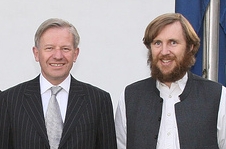
michael-semple-and-amb-sherard-cowper-coles.jpgThe case of Irishman Michael Semple, who was acting head of the European Union mission in Kabul, is instructive. The fluent Dari-speaking Semple had spent over 18 years in Afghanistan in various capacities, including with the United Nations and as an advisor to the British Embassy in Kabul, before being expelled last month after being accused of talking to the Taliban. [complete article]

See also, Pakistani forces say kill up to 90 militants (Reuters) and Taliban now seriously in the fight, war begins: NGO (AFP).

NATO hears ‘noise before defeat’

Ashdown’s real mission [– Paddy Ashdown is the UN’s newly appointed special envoy to Afghanistan –] lies elsewhere, in addressing the core issue: What do we do with the Taliban? No doubt, the Taliban’s exclusion from the Bonn conference seven years ago proved to be a horrible mistake. That was also how the Afghan and Pakistan problem came to be joined at the hips.

Pakistan President Pervez Musharraf made a valid point in his interview with the German weekly magazine Der Spiegel this week when he said al-Qaeda isn’t the real problem that faces Pakistan. “I don’t deny the fact that al-Qaeda is operating here [Pakistan]. They are carrying out terrorism in the tribal areas; they are the masterminds behind these suicide bombings. While all of this is true, one thing is for sure: the fanatics can never take over Pakistan. This is not possible. They are militarily not so strong they can defeat our army, with its 500,000 soldiers, nor politically – and they do not stand a chance of winning the elections. They are much too weak for that,” Musharraf said.

The heart of the matter is Pashtun alienation. The Taliban represent Pashtun aspirations. As long as Pashtuns are denied their historical role in Kabul, Afghanistan cannot be stabilized and Pakistan will remain in turmoil. Musharraf said, “There should be a change of strategy right away. You [NATO] should make political overtures to win the Pashtuns over.”

This may also be the raison d’etre of UN secretary general Ban Ki-moon’s intriguing choice of a Briton as his new special representative. Conceivably, the inscrutable Ban has been told by Washington that Ashdown is just the right man to walk on an upcoming secretive bridge, which will intricately connect New York, Washington, London, Riyadh, Islamabad and Kabul. [complete article]

Facebooktwittermail

REVIEW: Leaderless Jihad, by Marc Sageman

A fresh look at terrorism’s roots

Among Sageman’s most useful points is his description of al-Qaeda both as a social movement and an ideology. The most important thing the United States can do, in countering global Islamic terrorism, is to avoid the mistakes of the early Cold War era when policymakers assumed that communism was one global monolithic movement. It wasn’t and neither is al-Qaeda. Even before September 11 it had evolved beyond the group that had first formed in the aftermath of fighting the Soviets in Afghanistan and it has evolved several times since, and will continue to do so. Increasingly, to paraphrase, the old cliche about politics, all terrorism is local.

Leaderless JihadSageman also does an excellent job of debunking the conventional wisdom as to how people become terrorists, ie, that they are brainwashed when they are immature children or teenagers, that they lack family obligations, act out of sexual frustration, that there is something intrinsically wrong with them (the “bad seed” school of thought).

Sageman finds that one of the greatest motivators for joining an Islamic terrorist social movement is the one that is most easily understood; relationships with friends and kin. In other words, there is no to-down recruitment into al-Qaeda. Rather, the movement forms through the spontaneous self-organization of informal, trusted friends. [complete article]

Facebooktwittermail

NEWS & OPINION: New torture tapes?

Lawyers for detainee refer in filing to more CIA tapes

Attorneys for a former detainee at a secret CIA prison said in a court filing this week that intelligence officials had falsely claimed in public statements that his interrogations were not videotaped, that all videotaped interrogations stopped in 2002 and that only a small number of CIA detainees were subjected to unusually harsh interrogation techniques.

The basis of the assertions was redacted from the filing by the Bush administration, under an unusually stringent security order that blocks the attorneys for Majid Khan from disclosing evidence of the alleged falsehoods or detailing how Khan was treated while in CIA custody.

Khan, one of 14 detainees whom the CIA secretly imprisoned before transferring them last year to the U.S. military prison at Guantanamo Bay, Cuba, has said he was systematically tortured. His attorneys at the New York-based Center for Constitutional Rights have been pressing for a court order to prevent the government from destroying evidence of his treatment. [complete article]

The official story unfolds

The destruction of the CIA torture tapes is still a fairly young scandal as Washington scandals go. It hasn’t even acquired a “gate” suffix. But the Administration is already busily choreographing it, with the dozens of shiny metal parts clicking away in synchronicity, like a finely designed mechanical watch. There is an admirable efficiency to the political process. If only these people were a fraction as good at the work of government as they are at political shenanigans, I keep thinking. The Bush Administration plan is simple: let’s think of this as a movie–Abu Ghraib, The Sequel. Instead of offering up a group of young grunts for the sacrifice, this time it will be a retired senior management figure at the CIA and some of his subordinates. And this sacrifice will, in the White House’s view, divert attention from the real source of both scandals, which is high in the upper reaches of the Executive Branch. Inside the White House, in fact. [complete article]

Facebooktwittermail

FEATURE: The war on diplomacy

Off target

Linda Gallini, one of the State Department’s leading experts on nuclear nonproliferation, stepped into an empty room at the International Atomic Energy Agency’s headquarters in Vienna, Austria, and placed a call to Washington. A senior delegate to the iaea, she’d spent the past week strategizing how to keep dangerous materials out of the hands of rogue states and terrorists. But as dusk settled over the Danube that evening in September 2005, Gallini was more worried about what was brewing back home.

When she got her boss, deputy assistant secretary for nuclear nonproliferation Andrew Semmel, on the phone, he confirmed her worst fears. Carrying out a plan announced two months earlier by Secretary of State Condoleezza Rice, neoconservative political appointees were about to replace some of State’s most knowledgeable wmd experts with Republican loyalists. Gallini’s heart sank. “If that’s what they’re going to do, pretty much everyone else is going to leave,” she said. “Yeah,” she recalls Semmel telling her. “That’s what they want.”

As she resigned a year later, Gallini gave a series of interviews to Mother Jones, providing an insider’s view of how the Bush administration has gutted the nation’s expertise on wmd. Presidents come and go, but State Department staff like Gallini have long been the backbone of U.S. foreign policy—the “ballast,” as she puts it—that keeps political appointees grounded in reality. “Our job is to be the informed, helpful, supportive folks who guide them when they arrive clueless to the issues,” she explains. [complete article]

See also, Burns’ departure muddles nuclear deal (AP).

Facebooktwittermail

NEWS: White House cover-up

White House missing CIA, Iraq e-mails

Apparent gaps in White House e-mail archives coincide with dates in late 2003 and early 2004 when the administration was struggling to deal with the CIA leak investigation and the possibility of a congressional probe into Iraq intelligence failures.

The gaps — 473 days over a period of 20 months — are cited in a chart prepared by White House computer technicians and shared in September with the House Reform and Government Oversight Committee, which has been looking into reports of missing e-mail.

Among the times for which e-mail may not have been archived from Vice President Dick Cheney’s office are four days in early October 2003, just as a federal probe was beginning into the leak of Valerie Plame’s CIA identity, an inquiry that eventually ensnared Cheney’s chief of staff.

Contents of the chart — which the White House now disputes — were disclosed Thursday by Rep. Henry Waxman, a California Democrat who chairs the House committee, as he announced plans for a Feb. 15 hearing. [complete article]

Facebooktwittermail

NEWS & OPINION: Iraq’s illusive political solution

Federalism, not partition

Overall, Shiites see their future based on two fundamental “rights”: Power must be exercised by the political majority through control of governmental institutions, and institutional sectarian discrimination must be eliminated. Kurds see their future bound to their “rights” of linguistic, cultural, financial and resource control within Kurdistan. Sunni Arabs are driven by resistance to their loss of power, as well as fear of revenge for past wrongs and the potential for reverse discrimination.

The current political framework is based on a pluralistic democratic vision that, while admirable, is entirely unsuited to resolving this three-way divide. It ignores underlying issues and expects that a consensus will emerge simply by enacting a liberal constitutional legal order.

Pluralistic democracy will not take root unless the national political compact recognizes and accommodates the fears and aspirations of Iraq’s communities. Resolution can be achieved only through a system that incorporates regional federalism, with clear, mutually acceptable distributions of power between the regions and the central government. Such a system is in the interest of all Iraqis and is necessary if Iraq is to avoid partition or further civil strife. [complete article]

Iraq faces ‘slide back to conflict’ without rapid reconstruction

Iraq’s government must rapidly raise its game to cement the country’s fragile new peace, the United States ambassador in Baghdad has declared.

Iraq was “immeasurably better” than a year ago, Ryan Crocker told The Times, but Nouri al-Maliki’s administration had to provide jobs and services to undercut the militias and prevent a slide back to conflict. “Failure to consolidate security gains with progress in other areas would be highly dangerous.”

In a wide-ranging interview Mr Crocker also urged Britain to maintain a force near Basra, saying it still had an important role advising Iraqi commanders, supporting reconstruction efforts, and guarding American supply routes. [complete article]

Iraq may need military help for years, officials say

Senior U.S. military officials projected yesterday that the Iraqi army and police will grow to an estimated 580,000 members by the end of the year but that shortages of key personnel, equipment, weaponry and logistical capabilities mean that Iraq’s security forces will probably require U.S. military support for as long as a decade.

“The truth is that they simply cannot fix, supply, arm or fuel themselves completely enough at this point,” said U.S. Army Lt. Gen. James Dubik, head of the Multi-National Security Transition Command in Iraq.

The Iraqi government has been increasing its forces “much more aggressively” in response to the high violence levels witnessed in 2006 and early 2007, Dubik said in testimony before the House Armed Services Committee. [complete article]

Facebooktwittermail

NEWS: Bush coddles tyrants

Bush lauds Egypt leader, avoiding record on dissent

President Bush lavished praise on President Hosni Mubarak of Egypt on Wednesday, emphasizing the country’s role in regional security and the Israeli-Palestinian peace process while publicly avoiding mention of the government’s actions in jailing or exiling opposition leaders and its severe restrictions on opposition political activities.

Ending an eight-day trip through the Middle East in which he highlighted democratic change as the foundation for peace and security throughout the region, Mr. Bush strikingly avoided direct criticism of Mr. Mubarak, an autocratic leader in power since late 1981. In the past, Mr. Bush criticized Egypt for arresting political dissidents.

“I appreciate very much the long and proud tradition that you’ve had for a vibrant civil society,” said Mr. Bush, whose appearance with Mr. Mubarak was unannounced and, according to the White House, had been uncertain until the last minute.

Mr. Bush’s remarks reflected some of the contradictions evident in the issues he addressed on his trip.

He spoke passionately at times about the birth of liberty and justice in countries that restrict them and the role of women in societies that still largely sequester them.

And yet he avoided public disputes with monarchical leaders widely accused of limiting freedoms as he sought Arab support for the peace talks between the Israelis and Palestinians, the war in Iraq, diplomatic efforts to isolate Iran and easing the strain on the American economy caused by high oil prices. [complete article]

Facebooktwittermail